Identification
- Summary
Venlafaxine is a selective serotonin and norepinephrine reuptake inhibitor (SNRI) used for the treatment of major depression, generalized or social anxiety disorder, and panic disorder.
- Brand Names
- Effexor
- Generic Name
- Venlafaxine
- DrugBank Accession Number
- DB00285
- Background
Venlafaxine is an antidepressant and a serotonin and norepinephrine reuptake inhibitor (SNRI). Its active metabolite, desvenlafaxine, works by blocking the reuptake of serotonin and norepinephrine, which are key neurotransmitters in mood regulation. Venlafaxine is officially approved to treat major depressive disorder (MDD), generalized anxiety disorder (GAD), social anxiety disorder, and panic disorder in adults.17 The immediate formulation of the drug, marketed as Effexor, was first approved by the FDA in 1993 and the extended-release formulation, Effexor XR, was later introduced in 1997.11
Venlafaxine has been used as a first-line treatment for MDD, GAD, social anxiety disorder, and panic disorder in Canada for many years. It was also considered a second-line treatment for obsessive-compulsive disorder (OCD).2,5 Venlafaxine was also investigated in off-label uses for the prophylaxis of migraine headaches,1,3 for reduction of vasomotor symptoms associated with menopause,6 and for the management of neuropathic pain (although there is only minimal evidence of efficacy for this condition).4
- Type
- Small Molecule
- Groups
- Approved
- Structure
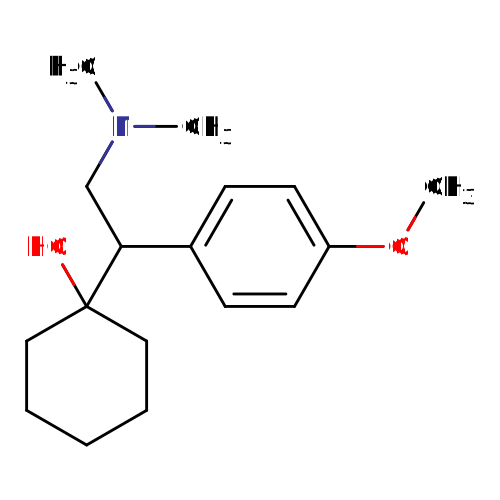
Structure for Venlafaxine (DB00285)
- Weight
- Average: 277.4018
Monoisotopic: 277.204179113 - Chemical Formula
- C17H27NO2
- Synonyms
- Venlafaxina
- Venlafaxine
- Venlafaxinum

Pharmacology
- Indication
Venlafaxine is indicated for the management of major depressive disorder (MDD), generalized anxiety disorder (GAD), social anxiety disorder (SAD), and panic disorder.17
 Reduce drug development failure ratesBuild, train, & validate machine-learning modelswith evidence-based and structured datasets.Build, train, & validate predictive machine-learning models with structured datasets.
- Associated Conditions
Indication Type Indication Combined Product Details Approval Level Age Group Patient Characteristics Dose Form Management of Generalized anxiety disorder •••••••••••• ••••• •••••••• •••••••• •••••••• ••••••• •••••••• ••••••• Management of Major depressive disorder (mdd) •••••••••••• ••••• •••••••• •••••••• •••••••• ••••••• •••••••• ••••••• Prophylaxis of Migraine ••• ••••• Management of Neuropathic pain ••• ••••• Management of Panic disorder •••••••••••• ••••• •••••••• •••••••• ••••••• - Contraindications & Blackbox Warnings
 Prevent Adverse Drug Events TodayTap into our Clinical API for life-saving information on contraindications & blackbox warnings, population restrictions, harmful risks, & more.Avoid life-threatening adverse drug events with our Clinical API
- Pharmacodynamics
Venlafaxine is an antidepressant agent that works to ameliorate the symptoms of various psychiatric disorders by increasing the level of neurotransmitters in the synapse. Venlafaxine does not mediate muscarinic, histaminergic, or adrenergic effects.17
- Mechanism of action
The exact mechanism of action of venlafaxine in the treatment of various psychiatric conditions has not been fully elucidated; however, it is understood that venlafaxine and its active metabolite O-desmethylvenlafaxine (ODV) potently and selectively inhibits the reuptake of both serotonin and norepinephrine at the presynaptic terminal.7,11,17 This results in increased levels of neurotransmitters available at the synapse that can stimulate postsynaptic receptors.13 It is suggested that venlafaxine has a 30-fold selectivity for serotonin compared to norepinephrine: venlafaxine initially inhibits serotonin reuptake at low doses, and with higher doses, it inhibits norepinephrine reuptake in addition to serotonin.11,12 Venlafaxine and ODV are also weak inhibitors of dopamine reuptake.17
Target Actions Organism ASodium-dependent serotonin transporter inhibitorHumans ASodium-dependent noradrenaline transporter inhibitorHumans USodium-dependent dopamine transporter inhibitorHumans - Absorption
Venlafaxine is well absorbed after oral administration with an absolute bioavailability of approximately 45%. In mass balance studies, at least 92% of a single oral dose of venlafaxine was absorbed. After twice-daily oral administration of immediate-release formulation of 150 mg venlafaxine, Cmax was 150 ng/mL and Tmax was 5.5 hours. Cmax and Tmax of ODV were 260 ng/mL and nine hours, respectively. The extended-release formulation of venlafaxine has a slower rate of absorption, but the same extent of absorption as the immediate-release formulation. After once-daily administration of extended-release formulation of 75 mg venlafaxine, Cmax was 225 ng/mL and Tmax was two hours. Cmax and Tmax of ODV were 290 ng/mL and three hours, respectively.17
Food does not affect the bioavailability of venlafaxine or its active metabolite, O-desmethylvenlafaxine (ODV).17
- Volume of distribution
The apparent volume of distribution at steady-state is 7.5 ± 3.7 L/kg for venlafaxine and 5.7 ± 1.8 L/kg for ODV.17
- Protein binding
Venlafaxine and ODV is 27% and 30% bound to plasma proteins, respectively.17
- Metabolism
Following absorption, venlafaxine undergoes extensive presystemic metabolism in the liver. It primarily undergoes CYP2D6-mediated demethylation to form its active metabolite O-desmethylvenlafaxine (ODV).17 Venlafaxine can also undergo N-demethylation mediated by CYP2C9, and CYP2C19, and CYP3A4 to form N-desmethylvenlafaxine (NDV) but this is a minor metabolic pathway.8 ODV and NDV further metabolized by CYP2C19, CYP2D6 and/or CYP3A4 to form N,O-didesmethylvenlafaxine (NODV) 9 and NODV can be further metabolized to form N, N, O-tridesmethylvenlafaxine, followed by a possible glucuronidation.10
Hover over products below to view reaction partners
- Route of elimination
Approximately 87% of a venlafaxine dose is recovered in the urine within 48 hours as unchanged venlafaxine (5%), unconjugated ODV (29%), conjugated ODV (26%), or other minor inactive metabolites (27%).17
- Half-life
The apparent elimination half-life is 5 ± 2 hours for venlafaxine and 11 ± 2 hours for ODV.17
- Clearance
Mean ± SD plasma apparent clearance at steady-state is 1.3 ± 0.6 L/h/kg for venlafaxine and 0.4 ± 0.2 L/h/kg for ODV.17
- Adverse Effects
 Improve decision support & research outcomesWith structured adverse effects data, including: blackbox warnings, adverse reactions, warning & precautions, & incidence rates. View sample adverse effects data in our new Data Library!Improve decision support & research outcomes with our structured adverse effects data.
- Toxicity
Oral LD50 was 350 mg/kg in female rats and 700 mg/kg in male rats.16
There are reports of acute overdosage with venlafaxine either alone or in combination with other drugs including alcohol. Doses up to several-fold higher than the usual therapeutic dose have been ingested in these cases of acute overdosage. Somnolence is the most commonly reported symptom, along with other symptoms such as paresthesia of the extremities, moderate dizziness, altered consciousness, nausea, vomiting, numb hands and feet, hot-cold spells (which occur a few days after the overdose event), hypotension, convulsions, sinus and ventricular tachycardia, rhabdomyolysis, vertigo, liver necrosis, electrocardiogram changes (e.g., prolongation of QT interval, bundle branch block, QRS prolongation), serotonin syndrome, and death.17
There is no known antidote for venlafaxine overdose. Cases of overdose have been managed with or without symptomatic treatment, hospitalization, and activated charcoal.17
Retrospective studies suggest that the risk of fatal outcomes from venlafaxine overdosage is higher than that of SSRI antidepressants, but lower than that of tricyclic antidepressants.17
- Pathways
Pathway Category Venlafaxine Metabolism Pathway Drug metabolism - Pharmacogenomic Effects/ADRs
Interacting Gene/Enzyme Allele name Genotype(s) Defining Change(s) Type(s) Description Details Cytochrome P450 2D6 CYP2D6*4 (A;A) A Allele Effect Directly Studied Patients with this genotype have reduced metabolism of venlafaxine. Details Cytochrome P450 2D6 CYP2D6*6 (-;T) / (-;-) T deletion / T deletion, homozygote Effect Directly Studied Patients with this genotype have reduced metabolism of venlafaxine. Details Cytochrome P450 2D6 CYP2D6*5 Not Available Whole gene deletion, homozygote Effect Directly Studied Patients with this genotype have reduced metabolism of venlafaxine. Details Multidrug resistance protein 1 --- (C;C) / (C;T) C Allele Effect Directly Studied Patients with this genotype have an increased likelihood of remission when using venlafaxine to treat major depressive disorder Details Multidrug resistance protein 1 --- (C;C) / (C;T) T > C Effect Directly Studied Patients with this genotype have increased risk of adverse events with venlafaxine Details Cytochrome P450 2D6 CYP2D6*3 Not Available C allele Effect Inferred Poor drug metabolizer, lower dose requirements, nausea, vomiting and diarrhea Details Cytochrome P450 2D6 CYP2D6*7 Not Available 2935A>C Effect Inferred Poor drug metabolizer, lower dose requirements, nausea, vomiting and diarrhea Details Cytochrome P450 2D6 CYP2D6*8 Not Available 1758G>T Effect Inferred Poor drug metabolizer, lower dose requirements, nausea, vomiting and diarrhea Details Cytochrome P450 2D6 CYP2D6*11 Not Available 883G>C Effect Inferred Poor drug metabolizer, lower dose requirements, nausea, vomiting and diarrhea Details Cytochrome P450 2D6 CYP2D6*12 Not Available 124G>A Effect Inferred Poor drug metabolizer, lower dose requirements, nausea, vomiting and diarrhea Details Cytochrome P450 2D6 CYP2D6*13 Not Available CYP2D7/2D6 hybrid gene structure Effect Inferred Poor drug metabolizer, lower dose requirements, nausea, vomiting and diarrhea Details Cytochrome P450 2D6 CYP2D6*14A Not Available 1758G>A Effect Inferred Poor drug metabolizer, lower dose requirements, nausea, vomiting and diarrhea Details Cytochrome P450 2D6 CYP2D6*15 Not Available 137insT, 137_138insT Effect Inferred Poor drug metabolizer, lower dose requirements, nausea, vomiting and diarrhea Details Cytochrome P450 2D6 CYP2D6*19 Not Available 2539_2542delAACT Effect Inferred Poor drug metabolizer, lower dose requirements, nausea, vomiting and diarrhea Details Cytochrome P450 2D6 CYP2D6*20 Not Available 1973_1974insG Effect Inferred Poor drug metabolizer, lower dose requirements, nausea, vomiting and diarrhea Details Cytochrome P450 2D6 CYP2D6*21 Not Available 2573insC Effect Inferred Poor drug metabolizer, lower dose requirements, nausea, vomiting and diarrhea Details Cytochrome P450 2D6 CYP2D6*31 Not Available -1770G>A / -1584C>G … show all Effect Inferred Poor drug metabolizer, lower dose requirements, nausea, vomiting and diarrhea Details Cytochrome P450 2D6 CYP2D6*36 Not Available 100C>T / -1426C>T … show all Effect Inferred Poor drug metabolizer, lower dose requirements, nausea, vomiting and diarrhea Details Cytochrome P450 2D6 CYP2D6*38 Not Available 2587_2590delGACT Effect Inferred Poor drug metabolizer, lower dose requirements, nausea, vomiting and diarrhea Details Cytochrome P450 2D6 CYP2D6*40 Not Available 1863_1864ins(TTT CGC CCC)2 Effect Inferred Poor drug metabolizer, lower dose requirements, nausea, vomiting and diarrhea Details Cytochrome P450 2D6 CYP2D6*42 Not Available 3259_3260insGT Effect Inferred Poor drug metabolizer, lower dose requirements, nausea, vomiting and diarrhea Details Cytochrome P450 2D6 CYP2D6*44 Not Available 2950G>C Effect Inferred Poor drug metabolizer, lower dose requirements, nausea, vomiting and diarrhea Details Cytochrome P450 2D6 CYP2D6*47 Not Available 100C>T / -1426C>T … show all Effect Inferred Poor drug metabolizer, lower dose requirements, nausea, vomiting and diarrhea Details Cytochrome P450 2D6 CYP2D6*51 Not Available -1584C>G / -1235A>G … show all Effect Inferred Poor drug metabolizer, lower dose requirements, nausea, vomiting and diarrhea Details Cytochrome P450 2D6 CYP2D6*56 Not Available 3201C>T Effect Inferred Poor drug metabolizer, lower dose requirements, nausea, vomiting and diarrhea Details Cytochrome P450 2D6 CYP2D6*57 Not Available 100C>T / 310G>T … show all Effect Inferred Poor drug metabolizer, lower dose requirements, nausea, vomiting and diarrhea Details Cytochrome P450 2D6 CYP2D6*62 Not Available 4044C>T Effect Inferred Poor drug metabolizer, lower dose requirements, nausea, vomiting and diarrhea Details Cytochrome P450 2D6 CYP2D6*68A Not Available -1426C>T / -1235A>G … show all Effect Inferred Poor drug metabolizer, lower dose requirements, nausea, vomiting and diarrhea Details Cytochrome P450 2D6 CYP2D6*68B Not Available Similar but not identical switch region compared to CYP2D6*68A. Found in tandem arrangement with CYP2D6*4. Effect Inferred Poor drug metabolizer, lower dose requirements, nausea, vomiting and diarrhea Details Cytochrome P450 2D6 CYP2D6*69 Not Available 2988G>A / -1426C>T … show all Effect Inferred Poor drug metabolizer, lower dose requirements, nausea, vomiting and diarrhea Details Cytochrome P450 2D6 CYP2D6*92 Not Available 1995delC Effect Inferred Poor drug metabolizer, lower dose requirements, nausea, vomiting and diarrhea Details Cytochrome P450 2D6 CYP2D6*100 Not Available -1426C>T / -1235A>G … show all Effect Inferred Poor drug metabolizer, lower dose requirements, nausea, vomiting and diarrhea Details Cytochrome P450 2D6 CYP2D6*101 Not Available -1426C>T / -1235A>G … show all Effect Inferred Poor drug metabolizer, lower dose requirements, nausea, vomiting and diarrhea Details
Interactions
- Drug Interactions
- This information should not be interpreted without the help of a healthcare provider. If you believe you are experiencing an interaction, contact a healthcare provider immediately. The absence of an interaction does not necessarily mean no interactions exist.
Drug Interaction Integrate drug-drug
interactions in your software1,2-Benzodiazepine The risk or severity of CNS depression can be increased when Venlafaxine is combined with 1,2-Benzodiazepine. Abacavir Venlafaxine may decrease the excretion rate of Abacavir which could result in a higher serum level. Abametapir The serum concentration of Venlafaxine can be increased when it is combined with Abametapir. Abatacept The metabolism of Venlafaxine can be increased when combined with Abatacept. Abciximab The risk or severity of bleeding can be increased when Abciximab is combined with Venlafaxine. - Food Interactions
- Avoid alcohol. The safety of using venlafaxine with other CNS-active drugs, including alcohol, has not been evaluated.
- Avoid St. John's Wort. Co-administration of St. John's Wort may lead to additive serotonergic activity and an increased risk of serotonin syndrome.
- Take with food. Co-administration with food helps to alleviate or mitigate gastrointestinal upset.
Products
 Drug product information from 10+ global regionsOur datasets provide approved product information including:dosage, form, labeller, route of administration, and marketing period.Access drug product information from over 10 global regions.
- Product Ingredients
Ingredient UNII CAS InChI Key Venlafaxine besylate monohydrate 18XP3YT5NH 609345-59-7 XHPQSXIKZWZGIP-UHFFFAOYSA-N Venlafaxine hydrochloride 7D7RX5A8MO 99300-78-4 QYRYFNHXARDNFZ-UHFFFAOYSA-N - Product Images
- International/Other Brands
- Elafax
- Brand Name Prescription Products
Name Dosage Strength Route Labeller Marketing Start Marketing End Region Image Act Venlafaxine XR Capsule, extended release 150 mg Oral TEVA Canada Limited 2008-02-13 Not applicable Canada 
Act Venlafaxine XR Capsule, extended release 75 mg Oral TEVA Canada Limited 2008-02-13 Not applicable Canada Act Venlafaxine XR Capsule, extended release 37.5 mg Oral TEVA Canada Limited 2008-02-13 Not applicable Canada Effexor Tablet 37.5 mg/1 Oral Physicians Total Care, Inc. 1993-12-01 2011-05-31 US 
Effexor Tablet 25 mg/1 Oral Wyeth Pharmaceuticals Company, a subsidiary of Pfizer Inc. 1993-12-01 2011-05-01 US - Generic Prescription Products
Name Dosage Strength Route Labeller Marketing Start Marketing End Region Image Apo-venlafaxine XR Capsule, extended release 150 mg Oral Apotex Corporation 2013-04-16 Not applicable Canada Apo-venlafaxine XR Capsule, extended release 75 mg Oral Apotex Corporation 2013-04-16 Not applicable Canada Apo-venlafaxine XR Capsule, extended release 37.5 mg Oral Apotex Corporation 2013-04-16 Not applicable Canada Auro-venlafaxine XR Capsule, extended release 150 mg Oral Auro Pharma Inc 2016-03-14 Not applicable Canada Auro-venlafaxine XR Capsule, extended release 75 mg Oral Auro Pharma Inc 2016-03-14 Not applicable Canada


Categories
- ATC Codes
- N06AX16 — Venlafaxine
- Drug Categories
- Agents producing tachycardia
- Agents that reduce seizure threshold
- Amines
- Antidepressive Agents
- Antidepressive Agents Indicated for Depression
- Antidepressive Agents, Second-Generation
- BCRP/ABCG2 Inducers
- Central Nervous System Agents
- Central Nervous System Depressants
- Combined Inhibitors of Serotonin/Norepinephrine Reuptake
- Cyclohexanes
- Cyclohexanols
- Cycloparaffins
- Cytochrome P-450 CYP2C19 Substrates
- Cytochrome P-450 CYP2C9 Substrates
- Cytochrome P-450 CYP2D6 Inhibitors
- Cytochrome P-450 CYP2D6 Inhibitors (moderate)
- Cytochrome P-450 CYP2D6 Inhibitors (weak)
- Cytochrome P-450 CYP2D6 Substrates
- Cytochrome P-450 CYP3A Substrates
- Cytochrome P-450 CYP3A4 Substrates
- Cytochrome P-450 Enzyme Inhibitors
- Cytochrome P-450 Substrates
- Drugs that are Mainly Renally Excreted
- Ethylamines
- Hexanols
- Hypoglycemia-Associated Agents
- Membrane Transport Modulators
- Nervous System
- Neurotransmitter Agents
- Neurotransmitter Uptake Inhibitors
- Norepinephrine Uptake Inhibitors
- P-glycoprotein inhibitors
- P-glycoprotein substrates
- Phenethylamines
- Potential QTc-Prolonging Agents
- Psychoanaleptics
- Psychotropic Drugs
- QTc Prolonging Agents
- Serotonergic Drugs Shown to Increase Risk of Serotonin Syndrome
- Serotonin Agents
- Serotonin and Noradrenaline Reuptake Inhibitors
- Serotonin Modulators
- Chemical TaxonomyProvided by Classyfire
- Description
- This compound belongs to the class of organic compounds known as anisoles. These are organic compounds containing a methoxybenzene or a derivative thereof.
- Kingdom
- Organic compounds
- Super Class
- Benzenoids
- Class
- Phenol ethers
- Sub Class
- Anisoles
- Direct Parent
- Anisoles
- Alternative Parents
- Phenoxy compounds / Methoxybenzenes / Cyclohexanols / Aralkylamines / Alkyl aryl ethers / Tertiary alcohols / 1,3-aminoalcohols / Trialkylamines / Cyclic alcohols and derivatives / Organopnictogen compounds show 1 more
- Substituents
- 1,3-aminoalcohol / Alcohol / Alkyl aryl ether / Amine / Anisole / Aralkylamine / Aromatic homomonocyclic compound / Cyclic alcohol / Cyclohexanol / Ether show 12 more
- Molecular Framework
- Aromatic homomonocyclic compounds
- External Descriptors
- tertiary alcohol, tertiary amino compound, monomethoxybenzene, cyclohexanols (CHEBI:9943)
- Affected organisms
- Humans and other mammals
Chemical Identifiers
- UNII
- GRZ5RCB1QG
- CAS number
- 93413-69-5
- InChI Key
- PNVNVHUZROJLTJ-UHFFFAOYSA-N
- InChI
- InChI=1S/C17H27NO2/c1-18(2)13-16(17(19)11-5-4-6-12-17)14-7-9-15(20-3)10-8-14/h7-10,16,19H,4-6,11-13H2,1-3H3
- IUPAC Name
- 1-[2-(dimethylamino)-1-(4-methoxyphenyl)ethyl]cyclohexan-1-ol
- SMILES
- COC1=CC=C(C=C1)C(CN(C)C)C1(O)CCCCC1
References
- Synthesis Reference
Thomas P. Jerussi, Chrisantha H. Senanayake, "Derivatives of (+)-venlafaxine and methods of preparing and using the same." U.S. Patent US6197828, issued June, 1994.
US6197828- General References
- Ozyalcin SN, Talu GK, Kiziltan E, Yucel B, Ertas M, Disci R: The efficacy and safety of venlafaxine in the prophylaxis of migraine. Headache. 2005 Feb;45(2):144-52. [Article]
- Kennedy SH, Lam RW, McIntyre RS, Tourjman SV, Bhat V, Blier P, Hasnain M, Jollant F, Levitt AJ, MacQueen GM, McInerney SJ, McIntosh D, Milev RV, Muller DJ, Parikh SV, Pearson NL, Ravindran AV, Uher R: Canadian Network for Mood and Anxiety Treatments (CANMAT) 2016 Clinical Guidelines for the Management of Adults with Major Depressive Disorder: Section 3. Pharmacological Treatments. Can J Psychiatry. 2016 Sep;61(9):540-60. doi: 10.1177/0706743716659417. Epub 2016 Aug 2. [Article]
- Pringsheim T, Davenport W, Mackie G, Worthington I, Aube M, Christie SN, Gladstone J, Becker WJ: Canadian Headache Society guideline for migraine prophylaxis. Can J Neurol Sci. 2012 Mar;39(2 Suppl 2):S1-59. [Article]
- Gallagher HC, Gallagher RM, Butler M, Buggy DJ, Henman MC: Venlafaxine for neuropathic pain in adults. Cochrane Database Syst Rev. 2015 Aug 23;(8):CD011091. doi: 10.1002/14651858.CD011091.pub2. [Article]
- Katzman MA, Bleau P, Blier P, Chokka P, Kjernisted K, Van Ameringen M, Antony MM, Bouchard S, Brunet A, Flament M, Grigoriadis S, Mendlowitz S, O'Connor K, Rabheru K, Richter PM, Robichaud M, Walker JR: Canadian clinical practice guidelines for the management of anxiety, posttraumatic stress and obsessive-compulsive disorders. BMC Psychiatry. 2014;14 Suppl 1:S1. doi: 10.1186/1471-244X-14-S1-S1. Epub 2014 Jul 2. [Article]
- Handley AP, Williams M: The efficacy and tolerability of SSRI/SNRIs in the treatment of vasomotor symptoms in menopausal women: a systematic review. J Am Assoc Nurse Pract. 2015 Jan;27(1):54-61. doi: 10.1002/2327-6924.12137. Epub 2014 Jun 19. [Article]
- Bymaster FP, Dreshfield-Ahmad LJ, Threlkeld PG, Shaw JL, Thompson L, Nelson DL, Hemrick-Luecke SK, Wong DT: Comparative affinity of duloxetine and venlafaxine for serotonin and norepinephrine transporters in vitro and in vivo, human serotonin receptor subtypes, and other neuronal receptors. Neuropsychopharmacology. 2001 Dec;25(6):871-80. [Article]
- Fogelman SM, Schmider J, Venkatakrishnan K, von Moltke LL, Harmatz JS, Shader RI, Greenblatt DJ: O- and N-demethylation of venlafaxine in vitro by human liver microsomes and by microsomes from cDNA-transfected cells: effect of metabolic inhibitors and SSRI antidepressants. Neuropsychopharmacology. 1999 May;20(5):480-90. [Article]
- Preskorn S, Patroneva A, Silman H, Jiang Q, Isler JA, Burczynski ME, Ahmed S, Paul J, Nichols AI: Comparison of the pharmacokinetics of venlafaxine extended release and desvenlafaxine in extensive and poor cytochrome P450 2D6 metabolizers. J Clin Psychopharmacol. 2009 Feb;29(1):39-43. doi: 10.1097/JCP.0b013e318192e4c1. [Article]
- Howell SR, Husbands GE, Scatina JA, Sisenwine SF: Metabolic disposition of 14C-venlafaxine in mouse, rat, dog, rhesus monkey and man. Xenobiotica. 1993 Apr;23(4):349-59. [Article]
- Sansone RA, Sansone LA: Serotonin norepinephrine reuptake inhibitors: a pharmacological comparison. Innov Clin Neurosci. 2014 Mar;11(3-4):37-42. [Article]
- Stahl SM, Grady MM, Moret C, Briley M: SNRIs: their pharmacology, clinical efficacy, and tolerability in comparison with other classes of antidepressants. CNS Spectr. 2005 Sep;10(9):732-47. doi: 10.1017/s1092852900019726. [Article]
- Singh D, Saadabadi A: Venlafaxine . [Article]
- FDA Approved Drug Products: Effexor XR® extended-release capsules [Link]
- FDA Approved Drug Products: EFFEXOR XR (venlafaxine) Extended-Release Capsules (November 2021) [Link]
- Pfizer: EFFEXOR (Venlafaxine Hydrochloride Modified Release) MSDS [Link]
- FDA Approved Drug Products: EFFEXOR XR (venlafaxine extended-release) capsules, for oral use (August 2022) [Link]
- FDA Approved Drug Products: EFFEXOR XR (venlafaxine extended-release) capsules, for oral use (August 2023) [Link]
- External Links
- Human Metabolome Database
- HMDB0005016
- KEGG Drug
- D08670
- KEGG Compound
- C07187
- PubChem Compound
- 5656
- PubChem Substance
- 46504593
- ChemSpider
- 5454
- BindingDB
- 82071
- 39786
- ChEBI
- 9943
- ChEMBL
- CHEMBL637
- Therapeutic Targets Database
- DAP000054
- PharmGKB
- PA451866
- RxList
- RxList Drug Page
- Drugs.com
- Drugs.com Drug Page
- PDRhealth
- PDRhealth Drug Page
- Wikipedia
- Venlafaxine
Clinical Trials
- Clinical Trials
Phase Status Purpose Conditions Count 4 Completed Not Available Roux-en-Y Gastric Bypass / Sleeve Gastrectomy 1 4 Completed Basic Science Depression 1 4 Completed Basic Science Healthy Volunteers (HV) 1 4 Completed Other Depression 1 4 Completed Other Healthy (Controls) / Major Depressive Disorder (MDD) 1
Pharmacoeconomics
- Manufacturers
- Wyeth pharmaceuticals inc
- Teva pharmaceuticals usa inc
- Osmotica pharmaceutical corp
- Actavis totowa llc
- Amneal pharmaceuticals
- Aurobindo pharma ltd
- Caraco pharmaceutical laboratories ltd
- Dr reddys laboratories ltd
- Mylan pharmaceuticals inc
- Pliva hrvatska doo
- Sandoz inc
- Vintage pharmaceuticals llc
- Zydus pharmaceuticals usa inc
- Wyeth
- Packagers
- Advanced Pharmaceutical Services Inc.
- Amerisource Health Services Corp.
- AQ Pharmaceuticals Inc.
- A-S Medication Solutions LLC
- Bryant Ranch Prepack
- Cadila Healthcare Ltd.
- Caraco Pharmaceutical Labs
- Cardinal Health
- Caremark LLC
- Direct Pharmaceuticals Inc.
- Dispensing Solutions
- Diversified Healthcare Services Inc.
- Doctor Reddys Laboratories Ltd.
- Heartland Repack Services LLC
- Innoviant Pharmacy Inc.
- Kaiser Foundation Hospital
- Lake Erie Medical and Surgical Supply
- Murfreesboro Pharmaceutical Nursing Supply
- Mylan
- Nucare Pharmaceuticals Inc.
- Palmetto Pharmaceuticals Inc.
- PD-Rx Pharmaceuticals Inc.
- Physicians Total Care Inc.
- Prepackage Specialists
- Prepak Systems Inc.
- Rebel Distributors Corp.
- Remedy Repack
- Resource Optimization and Innovation LLC
- Schwarz Pharma Inc.
- Southwood Pharmaceuticals
- Stat Rx Usa
- Teva Pharmaceutical Industries Ltd.
- Tya Pharmaceuticals
- UDL Laboratories
- Upstate Pharma LLC
- Vangard Labs Inc.
- Wyeth Pharmaceuticals
- Zydus Pharmaceuticals
- Dosage Forms
Form Route Strength Capsule Oral 75.000 mg Capsule Oral 75.000 mg Capsule Oral Capsule, delayed release Oral 150 mg Capsule, delayed release Oral 75 mg Tablet Oral 25 MG Capsule, extended release Oral Capsule, extended release Oral 84.85 MG Capsule, extended release Oral 150 mg Capsule, coated pellets 150 mg Capsule, coated pellets 37.5 mg Capsule, extended release Oral 37.5 mg Capsule Oral 37.5 MG Capsule, coated pellets 75 mg Capsule, extended release Oral 75 mg Capsule Oral 150 mg Capsule Oral 75 mg Tablet Oral 50 mg/1 Tablet Oral 75 mg/1 Tablet Oral 37.5 mg Tablet Oral 50 mg Tablet Oral 75 mg Capsule, extended release Oral 150 mg/1 Capsule, extended release Oral 37.5 mg/1 Capsule, extended release Oral 75 mg/1 Tablet Oral 150.000 mg Capsule Oral 42.429 mg Tablet, film coated, extended release Oral Tablet, film coated, extended release Oral 75 mg Capsule Oral 169.724 mg Tablet, coated Oral 75 mg Tablet Oral 50.00 mg Capsule Oral 84.850 mg Capsule Oral Capsule, extended release Oral 225 MG Tablet, extended release Oral 225 MG Tablet, film coated Oral 37.5 MG Tablet, film coated Oral 75 MG Tablet Oral Tablet, extended release Oral 37.5 mg Tablet, extended release Oral 300 mg Solution Oral Tablet, extended release Oral Tablet, coated Oral 150 mg/1 Tablet, coated Oral 225 mg/1 Tablet, coated Oral 75 mg/1 Tablet, extended release Oral 112.5 mg/1 Tablet, extended release Oral 150 mg/1 Tablet, extended release Oral 225 mg/1 Tablet, extended release Oral 37.5 mg/1 Tablet, extended release Oral 75 mg/1 Capsule, delayed release Oral 75 mg/1 Tablet Oral 100 mg/1 Tablet Oral 150 mg/1 Tablet Oral 225 mg/1 Tablet Oral 25 mg/1 Tablet Oral 37.5 mg/1 Tablet, film coated Oral 100 mg/1 Tablet, film coated Oral 25 mg/1 Tablet, film coated Oral 37.5 mg/1 Tablet, film coated Oral 50 mg/1 Tablet, film coated Oral 75 mg/1 Tablet, film coated, extended release Oral 150 mg/1 Tablet, film coated, extended release Oral 225 mg/1 Tablet, film coated, extended release Oral 37.5 mg/1 Tablet, film coated, extended release Oral 75 mg/1 Capsule, extended release Oral 150.0 mg Capsule, extended release Oral 75.0 mg Capsule Oral 37.50 mg Tablet, extended release Oral 150 mg Tablet, extended release Oral 75 mg Capsule Oral 42.430 mg Solution Oral 75 MG/ML - Prices
Unit description Cost Unit Venlafaxine HCl 30 225 mg 24 Hour tablet Bottle 276.98USD bottle Effexor XR 30 37.5 mg 24 Hour Capsule Bottle 144.33USD bottle Venlafaxine HCl 30 37.5 mg 24 Hour tablet Bottle 114.46USD bottle Effexor 30 75 mg tablet Bottle 87.83USD bottle Effexor 30 25 mg tablet Bottle 74.82USD bottle Effexor XR 150 mg 24 Hour Capsule 5.87USD capsule Effexor xr 150 mg capsule 5.65USD capsule Effexor XR 75 mg 24 Hour Capsule 5.39USD capsule Effexor xr 75 mg capsule 4.76USD capsule Venlafaxine HCl 150 mg 24 Hour tablet 4.72USD tablet Effexor xr 37.5 mg capsule 4.63USD capsule Venlafaxine HCl 75 mg 24 Hour tablet 4.42USD tablet Effexor 100 mg tablet 2.92USD tablet Effexor 75 mg tablet 2.7USD tablet Effexor 50 mg tablet 2.6USD tablet Effexor 37.5 mg tablet 2.5USD tablet Effexor 25 mg tablet 2.4USD tablet Venlafaxine hcl 100 mg tablet 2.36USD tablet Venlafaxine hcl 75 mg tablet 2.23USD tablet Effexor Xr 150 mg Extended-Release Capsule 2.16USD capsule Venlafaxine hcl 50 mg tablet 2.1USD tablet Effexor Xr 75 mg Extended-Release Capsule 2.05USD capsule Venlafaxine hcl 37.5 mg tablet 2.04USD tablet Venlafaxine hcl 25 mg tablet 1.98USD tablet Apo-Venlafaxine Xr 150 mg Extended-Release Capsule 1.2USD capsule Co Venlafaxine Xr 150 mg Extended-Release Capsule 1.2USD capsule Mylan-Venlafaxine Xr 150 mg Extended-Release Capsule 1.2USD capsule Novo-Venlafaxine Xr 150 mg Extended-Release Capsule 1.2USD capsule Pms-Venlafaxine Xr 150 mg Extended-Release Capsule 1.2USD capsule Ratio-Venlafaxine Xr 150 mg Extended-Release Capsule 1.2USD capsule Sandoz Venlafaxine Xr 150 mg Extended-Release Capsule 1.2USD capsule Apo-Venlafaxine Xr 75 mg Extended-Release Capsule 1.14USD capsule Co Venlafaxine Xr 75 mg Extended-Release Capsule 1.14USD capsule Mylan-Venlafaxine Xr 75 mg Extended-Release Capsule 1.14USD capsule Novo-Venlafaxine Xr 75 mg Extended-Release Capsule 1.14USD capsule Pms-Venlafaxine Xr 75 mg Extended-Release Capsule 1.14USD capsule Ratio-Venlafaxine Xr 75 mg Extended-Release Capsule 1.14USD capsule Sandoz Venlafaxine Xr 75 mg Extended-Release Capsule 1.14USD capsule Effexor Xr 37.5 mg Extended-Release Capsule 1.02USD capsule Apo-Venlafaxine Xr 37.5 mg Extended-Release Capsule 0.57USD capsule Co Venlafaxine Xr 37.5 mg Extended-Release Capsule 0.57USD capsule Mylan-Venlafaxine Xr 37.5 mg Extended-Release Capsule 0.57USD capsule Novo-Venlafaxine Xr 37.5 mg Extended-Release Capsule 0.57USD capsule Pms-Venlafaxine Xr 37.5 mg Extended-Release Capsule 0.57USD capsule Ratio-Venlafaxine Xr 37.5 mg Extended-Release Capsule 0.57USD capsule Sandoz Venlafaxine Xr 37.5 mg Extended-Release Capsule 0.57USD capsule DrugBank does not sell nor buy drugs. Pricing information is supplied for informational purposes only.- Patents
Patent Number Pediatric Extension Approved Expires (estimated) Region US5916923 No 1999-06-29 2013-06-28 US CA2126305 No 2006-10-17 2014-06-20 Canada CA2199778 No 2005-12-20 2017-03-12 Canada US6403120 Yes 2002-06-11 2017-09-20 US US6419958 Yes 2002-07-16 2017-09-20 US US6274171 Yes 2001-08-14 2017-09-20 US US6717015 No 2004-04-06 2023-03-27 US US7776358 No 2010-08-17 2028-05-16 US
Properties
- State
- Solid
- Experimental Properties
Property Value Source water solubility 572 mg/mL https://www.accessdata.fda.gov/drugsatfda_docs/label/2022/020699s112lbl.pdf - Predicted Properties
Property Value Source Water Solubility 0.23 mg/mL ALOGPS logP 2.69 ALOGPS logP 2.74 Chemaxon logS -3.1 ALOGPS pKa (Strongest Acidic) 14.42 Chemaxon pKa (Strongest Basic) 8.91 Chemaxon Physiological Charge 1 Chemaxon Hydrogen Acceptor Count 3 Chemaxon Hydrogen Donor Count 1 Chemaxon Polar Surface Area 32.7 Å2 Chemaxon Rotatable Bond Count 5 Chemaxon Refractivity 83.02 m3·mol-1 Chemaxon Polarizability 32.33 Å3 Chemaxon Number of Rings 2 Chemaxon Bioavailability 1 Chemaxon Rule of Five Yes Chemaxon Ghose Filter Yes Chemaxon Veber's Rule Yes Chemaxon MDDR-like Rule No Chemaxon - Predicted ADMET Features
Property Value Probability Human Intestinal Absorption + 0.9782 Blood Brain Barrier + 0.9382 Caco-2 permeable + 0.852 P-glycoprotein substrate Substrate 0.6534 P-glycoprotein inhibitor I Inhibitor 0.7031 P-glycoprotein inhibitor II Inhibitor 0.8031 Renal organic cation transporter Non-inhibitor 0.5792 CYP450 2C9 substrate Non-substrate 0.7583 CYP450 2D6 substrate Substrate 0.8919 CYP450 3A4 substrate Substrate 0.7407 CYP450 1A2 substrate Non-inhibitor 0.7664 CYP450 2C9 inhibitor Non-inhibitor 0.6876 CYP450 2D6 inhibitor Inhibitor 0.7287 CYP450 2C19 inhibitor Non-inhibitor 0.7199 CYP450 3A4 inhibitor Non-inhibitor 0.8308 CYP450 inhibitory promiscuity Low CYP Inhibitory Promiscuity 0.8666 Ames test Non AMES toxic 0.8 Carcinogenicity Non-carcinogens 0.6762 Biodegradation Not ready biodegradable 0.9941 Rat acute toxicity 2.5404 LD50, mol/kg Not applicable hERG inhibition (predictor I) Weak inhibitor 0.5486 hERG inhibition (predictor II) Inhibitor 0.6627
Spectra
- Mass Spec (NIST)
- Not Available
- Spectra
- Chromatographic Properties
Collision Cross Sections (CCS)
Adduct CCS Value (Å2) Source type Source [M-H]- 178.5903564 predictedDarkChem Lite v0.1.0 [M-H]- 178.1703564 predictedDarkChem Lite v0.1.0 [M-H]- 167.74342 predictedDeepCCS 1.0 (2019) [M+H]+ 178.6951564 predictedDarkChem Lite v0.1.0 [M+H]+ 178.6077564 predictedDarkChem Lite v0.1.0 [M+H]+ 170.10143 predictedDeepCCS 1.0 (2019) [M+Na]+ 178.5258564 predictedDarkChem Lite v0.1.0 [M+Na]+ 178.4840564 predictedDarkChem Lite v0.1.0 [M+Na]+ 176.19458 predictedDeepCCS 1.0 (2019)
Targets

- Kind
- Protein
- Organism
- Humans
- Pharmacological action
- Yes
- Actions
- Inhibitor
- Curator comments
- K(i)=82nM
- General Function
- Serotonin:sodium symporter activity
- Specific Function
- Serotonin transporter whose primary function in the central nervous system involves the regulation of serotonergic signaling via transport of serotonin molecules from the synaptic cleft back into t...
- Gene Name
- SLC6A4
- Uniprot ID
- P31645
- Uniprot Name
- Sodium-dependent serotonin transporter
- Molecular Weight
- 70324.165 Da
References
- Chen F, Larsen MB, Sanchez C, Wiborg O: The S-enantiomer of R,S-citalopram, increases inhibitor binding to the human serotonin transporter by an allosteric mechanism. Comparison with other serotonin transporter inhibitors. Eur Neuropsychopharmacol. 2005 Mar;15(2):193-8. [Article]
- Gould GG, Altamirano AV, Javors MA, Frazer A: A comparison of the chronic treatment effects of venlafaxine and other antidepressants on serotonin and norepinephrine transporters. Biol Psychiatry. 2006 Mar 1;59(5):408-14. Epub 2005 Sep 2. [Article]
- Shang Y, Gibbs MA, Marek GJ, Stiger T, Burstein AH, Marek K, Seibyl JP, Rogers JF: Displacement of serotonin and dopamine transporters by venlafaxine extended release capsule at steady state: a [123I]2beta-carbomethoxy-3beta-(4-iodophenyl)-tropane single photon emission computed tomography imaging study. J Clin Psychopharmacol. 2007 Feb;27(1):71-5. [Article]
- Malizia AL, Melichar JM, Brown DJ, Gunn RN, Reynolds A, Jones T, Nutt DJ: Demonstration of clomipramine and venlafaxine occupation at serotonin reuptake sites in man in vivo. J Psychopharmacol. 1997;11(3):279-81. [Article]
- Tatsumi M, Groshan K, Blakely RD, Richelson E: Pharmacological profile of antidepressants and related compounds at human monoamine transporters. Eur J Pharmacol. 1997 Dec 11;340(2-3):249-58. [Article]
- Van Ameringen M, Mancini C, Patterson B, Simpson W: Pharmacotherapy for social anxiety disorder: an update. Isr J Psychiatry Relat Sci. 2009;46(1):53-61. [Article]
- Beique J, de Montigny C, Blier P, Debonnel G: Effects of sustained administration of the serotonin and norepinephrine reuptake inhibitor venlafaxine: I. in vivo electrophysiological studies in the rat. Neuropharmacology. 2000 Jul 24;39(10):1800-12. [Article]
- Westenberg HG: Recent advances in understanding and treating social anxiety disorder. CNS Spectr. 2009 Feb;14(2 Suppl 3):24-33. [Article]
- Sindrup SH, Otto M, Finnerup NB, Jensen TS: Antidepressants in the treatment of neuropathic pain. Basic Clin Pharmacol Toxicol. 2005 Jun;96(6):399-409. [Article]
- Bymaster FP, Dreshfield-Ahmad LJ, Threlkeld PG, Shaw JL, Thompson L, Nelson DL, Hemrick-Luecke SK, Wong DT: Comparative affinity of duloxetine and venlafaxine for serotonin and norepinephrine transporters in vitro and in vivo, human serotonin receptor subtypes, and other neuronal receptors. Neuropsychopharmacology. 2001 Dec;25(6):871-80. [Article]
- Kind
- Protein
- Organism
- Humans
- Pharmacological action
- Yes
- Actions
- Inhibitor
- Curator comments
- K(i)=2480nM
- General Function
- Norepinephrine:sodium symporter activity
- Specific Function
- Amine transporter. Terminates the action of noradrenaline by its high affinity sodium-dependent reuptake into presynaptic terminals.
- Gene Name
- SLC6A2
- Uniprot ID
- P23975
- Uniprot Name
- Sodium-dependent noradrenaline transporter
- Molecular Weight
- 69331.42 Da
References
- Vaishnavi SN, Nemeroff CB, Plott SJ, Rao SG, Kranzler J, Owens MJ: Milnacipran: a comparative analysis of human monoamine uptake and transporter binding affinity. Biol Psychiatry. 2004 Feb 1;55(3):320-2. [Article]
- Mitchell HA, Ahern TH, Liles LC, Javors MA, Weinshenker D: The effects of norepinephrine transporter inactivation on locomotor activity in mice. Biol Psychiatry. 2006 Nov 15;60(10):1046-52. Epub 2006 Aug 7. [Article]
- Beique JC, Lavoie N, de Montigny C, Debonnel G: Affinities of venlafaxine and various reuptake inhibitors for the serotonin and norepinephrine transporters. Eur J Pharmacol. 1998 May 15;349(1):129-32. [Article]
- Van Ameringen M, Mancini C, Patterson B, Simpson W: Pharmacotherapy for social anxiety disorder: an update. Isr J Psychiatry Relat Sci. 2009;46(1):53-61. [Article]
- Beique J, de Montigny C, Blier P, Debonnel G: Effects of sustained administration of the serotonin and norepinephrine reuptake inhibitor venlafaxine: I. in vivo electrophysiological studies in the rat. Neuropharmacology. 2000 Jul 24;39(10):1800-12. [Article]
- Westenberg HG: Recent advances in understanding and treating social anxiety disorder. CNS Spectr. 2009 Feb;14(2 Suppl 3):24-33. [Article]
- Sindrup SH, Otto M, Finnerup NB, Jensen TS: Antidepressants in the treatment of neuropathic pain. Basic Clin Pharmacol Toxicol. 2005 Jun;96(6):399-409. [Article]
- Bymaster FP, Dreshfield-Ahmad LJ, Threlkeld PG, Shaw JL, Thompson L, Nelson DL, Hemrick-Luecke SK, Wong DT: Comparative affinity of duloxetine and venlafaxine for serotonin and norepinephrine transporters in vitro and in vivo, human serotonin receptor subtypes, and other neuronal receptors. Neuropsychopharmacology. 2001 Dec;25(6):871-80. [Article]
- Kind
- Protein
- Organism
- Humans
- Pharmacological action
- Unknown
- Actions
- Inhibitor
- General Function
- Monoamine transmembrane transporter activity
- Specific Function
- Amine transporter. Terminates the action of dopamine by its high affinity sodium-dependent reuptake into presynaptic terminals.
- Gene Name
- SLC6A3
- Uniprot ID
- Q01959
- Uniprot Name
- Sodium-dependent dopamine transporter
- Molecular Weight
- 68494.255 Da
References
- Dawson LA, Nguyen HQ, Geiger A: Effects of venlafaxine on extracellular concentrations of 5-HT and noradrenaline in the rat frontal cortex: augmentation via 5-HT1A receptor antagonism. Neuropharmacology. 1999 Aug;38(8):1153-63. [Article]
- Bourin M: [Psychopharmacological profile of venlafaxine]. Encephale. 1999 Jun;25 Spec No 2:21-2; discussion 23-5. [Article]
- Barkin RL, Fawcett J: The management challenges of chronic pain: the role of antidepressants. Am J Ther. 2000 Jan;7(1):31-47. [Article]
- Lemke MR: [Antidepressant effects of dopamine agonists. Experimental and clinical findings]. Nervenarzt. 2007 Jan;78(1):31-8. [Article]
Enzymes
- Kind
- Protein
- Organism
- Humans
- Pharmacological action
- Unknown
- Actions
- SubstrateInhibitor
- General Function
- Steroid hydroxylase activity
- Specific Function
- Responsible for the metabolism of many drugs and environmental chemicals that it oxidizes. It is involved in the metabolism of drugs such as antiarrhythmics, adrenoceptor antagonists, and tricyclic...
- Gene Name
- CYP2D6
- Uniprot ID
- P10635
- Uniprot Name
- Cytochrome P450 2D6
- Molecular Weight
- 55768.94 Da
References
- Fogelman SM, Schmider J, Venkatakrishnan K, von Moltke LL, Harmatz JS, Shader RI, Greenblatt DJ: O- and N-demethylation of venlafaxine in vitro by human liver microsomes and by microsomes from cDNA-transfected cells: effect of metabolic inhibitors and SSRI antidepressants. Neuropsychopharmacology. 1999 May;20(5):480-90. [Article]
- Lin XQ, Wang P, Cai WK, Xu GL, Yang M, Zhou MD, Sun M, He F, He GH: The Associations Between CYP2D6 Metabolizer Status and Pharmacokinetics and Clinical Outcomes of Venlafaxine: A Systematic Review and Meta-Analysis. Pharmacopsychiatry. 2018 Nov 28. doi: 10.1055/a-0792-1340. [Article]
- Flockhart Table of Drug Interactions [Link]
- FDA Approved Drug Products: EFFEXOR XR (venlafaxine extended-release) capsules, for oral use (August 2022) [Link]
- Kind
- Protein
- Organism
- Humans
- Pharmacological action
- Unknown
- Actions
- Substrate
- General Function
- Vitamin d3 25-hydroxylase activity
- Specific Function
- Cytochromes P450 are a group of heme-thiolate monooxygenases. In liver microsomes, this enzyme is involved in an NADPH-dependent electron transport pathway. It performs a variety of oxidation react...
- Gene Name
- CYP3A4
- Uniprot ID
- P08684
- Uniprot Name
- Cytochrome P450 3A4
- Molecular Weight
- 57342.67 Da
References
- Zhou SF, Zhou ZW, Yang LP, Cai JP: Substrates, inducers, inhibitors and structure-activity relationships of human Cytochrome P450 2C9 and implications in drug development. Curr Med Chem. 2009;16(27):3480-675. Epub 2009 Sep 1. [Article]
- Otton SV, Ball SE, Cheung SW, Inaba T, Rudolph RL, Sellers EM: Venlafaxine oxidation in vitro is catalysed by CYP2D6. Br J Clin Pharmacol. 1996 Feb;41(2):149-56. [Article]
- Ciusani E, Zullino DF, Eap CB, Brawand-Amey M, Brocard M, Baumann P: Combination therapy with venlafaxine and carbamazepine in depressive patients not responding to venlafaxine: pharmacokinetic and clinical aspects. J Psychopharmacol. 2004 Dec;18(4):559-66. doi: 10.1177/026988110401800414. [Article]
- FDA Approved Drug Products: EFFEXOR XR (venlafaxine extended-release) capsules, for oral use (August 2022) [Link]
- Kind
- Protein
- Organism
- Humans
- Pharmacological action
- No
- Actions
- Substrate
- General Function
- Steroid hydroxylase activity
- Specific Function
- Cytochromes P450 are a group of heme-thiolate monooxygenases. In liver microsomes, this enzyme is involved in an NADPH-dependent electron transport pathway. It oxidizes a variety of structurally un...
- Gene Name
- CYP2C9
- Uniprot ID
- P11712
- Uniprot Name
- Cytochrome P450 2C9
- Molecular Weight
- 55627.365 Da
References
- Fogelman SM, Schmider J, Venkatakrishnan K, von Moltke LL, Harmatz JS, Shader RI, Greenblatt DJ: O- and N-demethylation of venlafaxine in vitro by human liver microsomes and by microsomes from cDNA-transfected cells: effect of metabolic inhibitors and SSRI antidepressants. Neuropsychopharmacology. 1999 May;20(5):480-90. [Article]
- Kind
- Protein
- Organism
- Humans
- Pharmacological action
- No
- Actions
- Substrate
- General Function
- Steroid hydroxylase activity
- Specific Function
- Responsible for the metabolism of a number of therapeutic agents such as the anticonvulsant drug S-mephenytoin, omeprazole, proguanil, certain barbiturates, diazepam, propranolol, citalopram and im...
- Gene Name
- CYP2C19
- Uniprot ID
- P33261
- Uniprot Name
- Cytochrome P450 2C19
- Molecular Weight
- 55930.545 Da
References
- Fogelman SM, Schmider J, Venkatakrishnan K, von Moltke LL, Harmatz JS, Shader RI, Greenblatt DJ: O- and N-demethylation of venlafaxine in vitro by human liver microsomes and by microsomes from cDNA-transfected cells: effect of metabolic inhibitors and SSRI antidepressants. Neuropsychopharmacology. 1999 May;20(5):480-90. [Article]
Transporters
- Kind
- Protein
- Organism
- Humans
- Pharmacological action
- Unknown
- Actions
- SubstrateInhibitor
- General Function
- Xenobiotic-transporting atpase activity
- Specific Function
- Energy-dependent efflux pump responsible for decreased drug accumulation in multidrug-resistant cells.
- Gene Name
- ABCB1
- Uniprot ID
- P08183
- Uniprot Name
- Multidrug resistance protein 1
- Molecular Weight
- 141477.255 Da
References
- Weiss J, Dormann SM, Martin-Facklam M, Kerpen CJ, Ketabi-Kiyanvash N, Haefeli WE: Inhibition of P-glycoprotein by newer antidepressants. J Pharmacol Exp Ther. 2003 Apr;305(1):197-204. [Article]
- Uhr M, Grauer MT, Holsboer F: Differential enhancement of antidepressant penetration into the brain in mice with abcb1ab (mdr1ab) P-glycoprotein gene disruption. Biol Psychiatry. 2003 Oct 15;54(8):840-6. [Article]
- Karlsson L, Schmitt U, Josefsson M, Carlsson B, Ahlner J, Bengtsson F, Kugelberg FC, Hiemke C: Blood-brain barrier penetration of the enantiomers of venlafaxine and its metabolites in mice lacking P-glycoprotein. Eur Neuropsychopharmacol. 2010 Sep;20(9):632-40. doi: 10.1016/j.euroneuro.2010.04.004. Epub 2010 May 13. [Article]
- Bachmeier CJ, Beaulieu-Abdelahad D, Ganey NJ, Mullan MJ, Levin GM: Induction of drug efflux protein expression by venlafaxine but not desvenlafaxine. Biopharm Drug Dispos. 2011 May;32(4):233-44. doi: 10.1002/bdd.753. Epub 2011 Mar 28. [Article]
- Zhou Y, Zhang G, Rao Z, Yang Y, Zhou Q, Qin H, Wei Y, Wu X: Increased brain uptake of venlafaxine loaded solid lipid nanoparticles by overcoming the efflux function and expression of P-gp. Arch Pharm Res. 2015 Jul;38(7):1325-35. doi: 10.1007/s12272-014-0539-6. Epub 2015 Jan 8. [Article]
- Kind
- Protein
- Organism
- Humans
- Pharmacological action
- Unknown
- Actions
- Inducer
- General Function
- Xenobiotic-transporting atpase activity
- Specific Function
- High-capacity urate exporter functioning in both renal and extrarenal urate excretion. Plays a role in porphyrin homeostasis as it is able to mediates the export of protoporhyrin IX (PPIX) both fro...
- Gene Name
- ABCG2
- Uniprot ID
- Q9UNQ0
- Uniprot Name
- ATP-binding cassette sub-family G member 2
- Molecular Weight
- 72313.47 Da
References
- Bachmeier CJ, Beaulieu-Abdelahad D, Ganey NJ, Mullan MJ, Levin GM: Induction of drug efflux protein expression by venlafaxine but not desvenlafaxine. Biopharm Drug Dispos. 2011 May;32(4):233-44. doi: 10.1002/bdd.753. Epub 2011 Mar 28. [Article]

Drug created at June 13, 2005 13:24 / Updated at April 24, 2024 14:30