Identification
- Summary
Pyridoxine is a vitamin used to correct vitamin B6 deficiency and to treat nausea during pregnancy.
- Brand Names
- Alertonic, Animi-3 With Vitamin D, Bonjesta, Citranatal B-calm Kit, Citranatal Harmony, Concept Ob, Diclectin, Diclegis, Folbic, Foltabs, Fortaplex, Infuvite, Infuvite Pediatric, Irospan 24/6 Kit, Isotamine B, Mvc-fluoride, Mvi Pediatric, Natafort, Neo-bex, Pregvit, Tandem Plus, Vitafol-one
- Generic Name
- Pyridoxine
- DrugBank Accession Number
- DB00165
- Background
Pyridoxine is the 4-methanol form of vitamin B6, an important water-soluble vitamin that is naturally present in many foods. As its classification as a vitamin implies, Vitamin B6 (and pyridoxine) are essential nutrients required for normal functioning of many biological systems within the body. While many plants and microorganisms are able to synthesize pyridoxine through endogenous biological processes, animals must obtain it through their diet.
More specifically, pyridoxine is converted to pyridoxal 5-phosphate in the body, which is an important coenzyme for synthesis of amino acids, neurotransmitters (serotonin, norepinephrine), sphingolipids, and aminolevulinic acid. It's important to note that Vitamin B6 is the collective term for a group of three related compounds, pyridoxine, pyridoxal, and pyridoxamine, and their phosphorylated derivatives, pyridoxine 5'-phosphate, pyridoxal 5'-phosphate and pyridoxamine 5'-phosphate. Although all six of these compounds should technically be referred to as vitamin B6, the term vitamin B6 is commonly used interchangeably with just one of them, pyridoxine 1.
Vitamin B6, principally in its biologically active coenzyme form pyridoxal 5'-phosphate, is involved in a wide range of biochemical reactions, including the metabolism of amino acids and glycogen, the synthesis of nucleic acids, hemogloblin, sphingomyelin and other sphingolipids, and the synthesis of the neurotransmitters serotonin, dopamine, norepinephrine and gamma-aminobutyric acid (GABA) 2.
Pyridoxine is used medically for the treatment of vitamin B6 deficiency and for the prophylaxis of isoniazid-induced peripheral neuropathy (due to Isoniazid's mechanism of action which competitively inhibits the action of pyridoxine in the above-mentioned metabolic functions). It is also used in combination with Doxylamine (as the commercially available product Diclectin) for the treatment of nausea and vomiting in pregnancy.
- Type
- Small Molecule
- Groups
- Approved, Investigational, Nutraceutical, Vet approved
- Structure
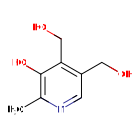
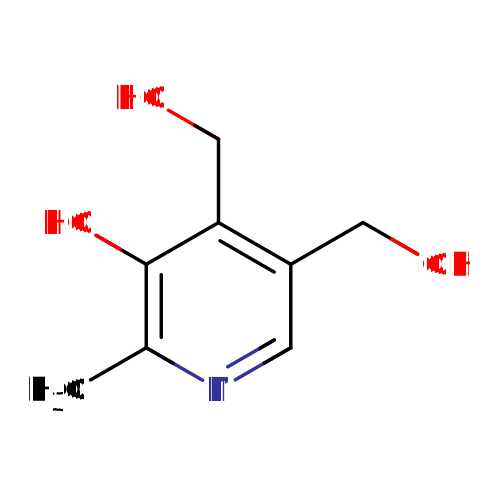
Structure for Pyridoxine (DB00165)
- Weight
- Average: 169.1778
Monoisotopic: 169.073893223 - Chemical Formula
- C8H11NO3
- Synonyms
- 2-methyl-3-hydroxy-4,5-dihydroxymethylpyridine
- 3-hydroxy-4,5-bis(hydroxymethyl)-2-methylpyridine
- 3-hydroxy-4,5-dimethylol-α-picoline
- 5-hydroxy-6-methyl-3,4-pyridinedimethanol
- Piridoxina
- Pyridoxine
- Pyridoxinum
- Pyridoxol
- Vitamin B6

Pharmacology
- Indication
Pyridoxine is indicated for the treatment of vitamin B6 deficiency and for the prophylaxis of Isoniazid-induced peripheral neuropathy. It is also approved by Health Canada for the treatment of nausea and vomiting in pregnancy in a combination product with Doxylamine (as the commercially available product Diclectin).
 Reduce drug development failure ratesBuild, train, & validate machine-learning modelswith evidence-based and structured datasets.Build, train, & validate predictive machine-learning models with structured datasets.
- Associated Conditions
Indication Type Indication Combined Product Details Approval Level Age Group Patient Characteristics Dose Form Used in combination for symptomatic treatment of Backache Combination Product in combination with: Thiamine (DB00152), Cyanocobalamin (DB00115), Acetaminophen (DB00316) ••• ••• •••••••• ••••••• •••• •••••• Used in combination for prophylaxis of Dizziness Combination Product in combination with: Meclizine (DB00737) •••••••••••• •••••• Used in combination for symptomatic treatment of Dizziness Combination Product in combination with: Meclizine (DB00737) •••••••••••• •••••• Used in combination for symptomatic treatment of Dizziness Combination Product in combination with: Meclizine (DB00737) •••••••••••• •••••• Used in combination for prophylaxis of Dizziness Combination Product in combination with: Meclizine (DB00737) •••••••••••• •••••• - Associated Therapies
- Contraindications & Blackbox Warnings
 Prevent Adverse Drug Events TodayTap into our Clinical API for life-saving information on contraindications & blackbox warnings, population restrictions, harmful risks, & more.Avoid life-threatening adverse drug events with our Clinical API
- Pharmacodynamics
Vitamin B6 (pyridoxine) is a water-soluble vitamin used in the prophylaxis and treatment of vitamin B6 deficiency and peripheral neuropathy in those receiving isoniazid (isonicotinic acid hydrazide, INH). Vitamin B6 has been found to lower systolic and diastolic blood pressure in a small group of subjects with essential hypertension. Hypertension is another risk factor for atherosclerosis and coronary heart disease. Another study showed pyridoxine hydrochloride to inhibit ADP- or epinephrine-induced platelet aggregation and to lower total cholesterol levels and increase HDL-cholesterol levels, again in a small group of subjects. Vitamin B6, in the form of pyridoxal 5'-phosphate, was found to protect vascular endothelial cells in culture from injury by activated platelets. Endothelial injury and dysfunction are critical initiating events in the pathogenesis of atherosclerosis. Human studies have demonstrated that vitamin B6 deficiency affects cellular and humoral responses of the immune system. Vitamin B6 deficiency results in altered lymphocyte differentiation and maturation, reduced delayed-type hypersensitivity (DTH) responses, impaired antibody production, decreased lymphocyte proliferation and decreased interleukin (IL)-2 production, among other immunologic activities.
- Mechanism of action
Vitamin B6 is the collective term for a group of three related compounds, pyridoxine (PN), pyridoxal (PL) and pyridoxamine (PM), and their phosphorylated derivatives, pyridoxine 5'-phosphate (PNP), pyridoxal 5'-phosphate (PLP) and pyridoxamine 5'-phosphate (PMP). Although all six of these compounds should technically be referred to as vitamin B6, the term vitamin B6 is commonly used interchangeably with just one of them, pyridoxine. Vitamin B6, principally in its biologically active coenzyme form pyridoxal 5'-phosphate, is involved in a wide range of biochemical reactions, including the metabolism of amino acids and glycogen, the synthesis of nucleic acids, hemogloblin, sphingomyelin and other sphingolipids, and the synthesis of the neurotransmitters serotonin, dopamine, norepinephrine and gamma-aminobutyric acid (GABA).
Target Actions Organism APyridoxal kinase ligandHumans - Absorption
The B vitamins are readily absorbed from the gastrointestinal tract, except in malabsorption syndromes. Pyridoxine is absorbed mainly in the jejunum. The Cmax of pyridoxine is achieved within 5.5 hours.
- Volume of distribution
Pyridoxine main active metabolite, pyridoxal 5’-phosphate, is released into the circulation (accounting for at least 60% of circulating vitamin B6) and is highly protein bound, primarily to albumin.
- Protein binding
Pyridoxine main active metabolite, pyridoxal 5’-phosphate, is released into the circulation (accounting for at least 60% of circulating vitamin B6) and is highly protein bound, primarily to albumin.
- Metabolism
Pyridoxine is a prodrug primarily metabolized in the liver. The metabolic scheme for pyridoxine is complex, with formation of primary and secondary metabolites along with interconversion back to pyridoxine. Pyridoxine's major metabolite is 4-pyridoxic acid.
- Route of elimination
The major metabolite of pyridoxine, 4-pyridoxic acid, is inactive and is excreted in urine
- Half-life
The total adult body pool consists of 16 to 25 mg of pyridoxine. Its half-life appears to be 15 to 20 days.
- Clearance
Not Available
- Adverse Effects
 Improve decision support & research outcomesWith structured adverse effects data, including: blackbox warnings, adverse reactions, warning & precautions, & incidence rates. View sample adverse effects data in our new Data Library!Improve decision support & research outcomes with our structured adverse effects data.
- Toxicity
Oral Rat LD50 = 4 gm/kg. Toxic effects include convulsions, dyspnea, hypermotility, diarrhea, ataxia and muscle weakness.
- Pathways
Pathway Category Vitamin B6 Metabolism Metabolic Hypophosphatasia Disease - Pharmacogenomic Effects/ADRs
- Not Available
Interactions
- Drug Interactions
- This information should not be interpreted without the help of a healthcare provider. If you believe you are experiencing an interaction, contact a healthcare provider immediately. The absence of an interaction does not necessarily mean no interactions exist.
Drug Interaction Integrate drug-drug
interactions in your softwareAbacavir Pyridoxine may decrease the excretion rate of Abacavir which could result in a higher serum level. Aceclofenac Aceclofenac may decrease the excretion rate of Pyridoxine which could result in a higher serum level. Acemetacin Acemetacin may decrease the excretion rate of Pyridoxine which could result in a higher serum level. Acetazolamide Acetazolamide may increase the excretion rate of Pyridoxine which could result in a lower serum level and potentially a reduction in efficacy. Acetylsalicylic acid Acetylsalicylic acid may decrease the excretion rate of Pyridoxine which could result in a higher serum level. - Food Interactions
- No interactions found.
Products
 Drug product information from 10+ global regionsOur datasets provide approved product information including:dosage, form, labeller, route of administration, and marketing period.Access drug product information from over 10 global regions.
- Product Ingredients
Ingredient UNII CAS InChI Key Pyridoxine hydrochloride 68Y4CF58BV 58-56-0 ZUFQODAHGAHPFQ-UHFFFAOYSA-N - Product Images
- International/Other Brands
- Becilan / Beesix / Benadon / Bonasanit / Hexa-Betalin / Hexobion / Nestrex
- Brand Name Prescription Products
Name Dosage Strength Route Labeller Marketing Start Marketing End Region Image Pyridoxine HCl Inj 100mg/ml Liquid 100 mg / mL Intramuscular; Intravenous Kripps Pharmacy Ltd. 1979-12-31 Not applicable Canada 
Pyridoxine Hydrochloride Injection 100mg/ml Solution 100 mg / mL Intramuscular; Intravenous Hospira Healthcare Ulc 1981-12-31 2018-09-10 Canada Pyridoxine Hydrochloride Injection USP 100 mg/ml Solution 100 mg / mL Intramuscular; Intravenous Alveda Pharmaceuticals Inc Not applicable Not applicable Canada Pyridoxine Hydrochloride Injection, USP Solution 100 mg / mL Intramuscular; Intravenous Mylan Pharmaceuticals 2002-06-01 Not applicable Canada - Generic Prescription Products
Name Dosage Strength Route Labeller Marketing Start Marketing End Region Image Pyridoxine Hci Injection, solution 100 mg/1mL Intramuscular; Intravenous HF Acquisition Co LLC, DBA HealthFirst 2019-10-08 Not applicable US 
Pyridoxine Hydrochloride Injection, solution 100 mg/1mL Intramuscular; Intravenous Fresenius Kabi USA, LLC 1972-08-14 Not applicable US Pyridoxine Hydrochloride Injection, solution 100 mg/1mL Intramuscular; Intravenous Mylan Institutional LLC 2016-09-01 2018-04-30 US - Over the Counter Products
Name Dosage Strength Route Labeller Marketing Start Marketing End Region Image B-6 500mg Continuous Released Tablet, extended release 500 mg / tab Oral Gahler Enterprises Ltd. 1981-12-31 2007-08-07 Canada B-6 Caps 250mg Capsule 250 mg / cap Oral Twin Laboratories Inc. 1995-12-31 1999-11-10 Canada B6 100mg Pyridoxine HCl Tablet 100 mg Oral Wn Pharmaceuticals Ltd. 2001-10-01 2009-09-28 Canada B6 25 Tab 25mg Tablet 25 mg / tab Oral Le Naturiste J.M.B. Inc. 1990-12-31 1997-07-23 Canada B6 250 Caplet 250mg Tablet 250 mg / tab Oral Health Wise Nutrition Inc. 1996-11-13 1997-08-07 Canada - Mixture Products
Name Ingredients Dosage Route Labeller Marketing Start Marketing End Region Image 24 Multivitamins + Minerals Pyridoxine hydrochloride (25 mg) + Ascorbic acid (150 mg) + Beta carotene (10000 unit) + Biotin (25 mcg) + Calcium (130 mg) + Cholecalciferol (400 unit) + Choline bitartrate (25 mg) + Chromium (20 mcg) + Copper (1 mg) + Cyanocobalamin (25 mcg) + Ferrous fumarate (15 mg) + Folic acid (.8 mg) + Inositol (25 mg) + Magnesium (65 mg) + Manganese (2 mg) + Molybdenum (20 mcg) + Niacin (25 mg) + Calcium pantothenate (25 mg) + Potassium (15 mg) + Potassium Iodide (.1 mg) + Racemethionine (25 mg) + Riboflavin (25 mg) + Selenium (20 mcg) + Thiamine hydrochloride (25 mg) + Vanadium (20 mcg) + Vitamin A palmitate (5000 unit) + Vitamin E (50 unit) + Zinc (10 mg) Tablet Oral Stanley Pharmaceuticals, A Division Of Vita Health Products Inc. 1997-04-30 2002-07-31 Canada 50 Plus Pyridoxine hydrochloride (20 mg) + Ascorbic acid (200 mg) + Biotin (20 mcg) + Choline bitartrate (20 mg) + Cyanocobalamin (20 mcg) + Folic acid (.2 mg) + Inositol (20 mg) + Niacin (20 mg) + Calcium pantothenate (20 mg) + Racemethionine (20 mg) + Riboflavin (20 mg) + Thiamine hydrochloride (20 mg) + Vitamin A palmitate (10000 unit) + Vitamin D (400 unit) + Vitamin E (20 unit) Tablet Oral Quest Vitamins A Div Of Purity Life Health Products 1998-08-04 2001-07-06 Canada 50 Plus Multiple Vitamins & Minerals Pyridoxine hydrochloride (3 mg) + Ascorbic acid (90 mg) + Biotin (45 mcg) + Calcium (200 mg) + Cholecalciferol (400 unit) + Chromium (10 mcg) + Copper (2 mg) + Cyanocobalamin (25 mcg) + Folic acid (0.4 mg) + Magnesium (100 mg) + Manganese (5 mg) + Molybdenum (25 mcg) + Nicotinamide (40 mg) + Pantothenic acid (10 mg) + Potassium Iodide (0.15 mg) + Riboflavin (3.2 mg) + Selenium (25 mcg) + Thiamine mononitrate (2.25 mg) + Vanadium (10 mcg) + Vitamin A palmitate (6000 unit) + Zinc (15 mg) Tablet Oral Gfr Pharma Ltd. 2002-10-20 2004-06-15 Canada A.R.T.H. Away Formula Pyridoxine hydrochloride (0.5 mg) + Calcium (24 mg) + Cholecalciferol (45 unit) + Copper (0.232 mg) + Folic acid (0.025 mg) + Manganese (0.58 mg) + Selenium (1.54 mcg) + Zinc (0.63 mg) Capsule Oral Abundance Naturally Ltd 1999-02-01 2006-06-16 Canada Acetabolan III Vitamin and Mineral Supplement Pyridoxine hydrochloride (2.63 mg) + Ascorbic acid (250.0 mg) + Magnesium (112.5 mg) + Zinc (7.5 mg) Capsule Oral Iovate Health Sciences International Inc. 2003-12-05 2007-07-18 Canada - Unapproved/Other Products
Name Ingredients Dosage Route Labeller Marketing Start Marketing End Region Image Active FE Pyridoxine hydrochloride (20 mg/1) + Ascorbic acid (160 mg/1) + Beta carotene (2100 [iU]/1) + Cholecalciferol (400 [iU]/1) + Cupric oxide (1 mg/1) + Cyanocobalamin (30 ug/1) + DL-alpha tocopheryl acetate (40 [iU]/1) + Folic acid (1250 ug/1) + Iron (75 mg/1) + Magnesium oxide (30 mg/1) + Nicotinamide (20 mg/1) + Riboflavin (4 mg/1) + Thiamine hydrochloride (4 mg/1) + Zinc oxide (20 mg/1) Tablet Oral Gm Pharmaceuticals 2013-11-11 Not applicable US Active OB Pyridoxine hydrochloride (20 mg/1) + Ascorbic acid (100 mg/1) + Cholecalciferol (400 [iU]/1) + Cupric sulfate pentahydrate (2 mg/1) + Cyanocobalamin (30 ug/1) + D-alpha-Tocopherol acetate (30 [iU]/1) + Doconexent (320 mg/1) + Folic acid (1 mg/1) + Iron (20 mg/1) + Riboflavin (4 mg/1) + Thiamine mononitrate (2 mg/1) + Zinc oxide (30 mg/1) Capsule, liquid filled Oral Gm Pharmaceuticals 2013-10-28 2017-03-31 US Animi-3 Pyridoxine hydrochloride (12.5 mg/1) + Cholecalciferol (1000 [iU]/1) + Cyanocobalamin (500 ug/1) + Doconexent (250 mg/1) + Folic acid (1 mg/1) + Icosapent (35 mg/1) + Omega-3 fatty acids (500 mg/1) + Soy sterol (200 mg/1) Capsule Oral Pbm Pharmaceuticals Inc. 2011-06-01 Not applicable US Animi-3 with Vitamin D Pyridoxine hydrochloride (12.5 mg/1) + Cholecalciferol (1000 [iU]/1) + Cyanocobalamin (500 ug/1) + Doconexent (250 mg/1) + Folic acid (1 mg/1) + Icosapent (35 mg/1) + Omega-3 fatty acids (500 mg/1) + Soy sterol (200 mg/1) Capsule Oral Pbm Pharmaceuticals Inc. 2011-06-01 Not applicable US Av-VITE FB Pyridoxine hydrochloride (25 mg/1) + Cyanocobalamin (1 mg/1) + Folic acid (2.5 mg/1) Tablet Oral Av Kare, Inc. 2015-11-05 2016-01-13 US


Categories
- ATC Codes
- J04AM08 — Isoniazid, sulfamethoxazole, trimethoprim and pyridoxine
- J04AM — Combinations of drugs for treatment of tuberculosis
- J04A — DRUGS FOR TREATMENT OF TUBERCULOSIS
- J04 — ANTIMYCOBACTERIALS
- J — ANTIINFECTIVES FOR SYSTEMIC USE
- Drug Categories
- Chemical TaxonomyProvided by Classyfire
- Description
- This compound belongs to the class of organic compounds known as pyridoxines. These are pyridoxal derivatives in which the carbaldehyde group at position 2 of the pyridoxal moiety is replaced by a hydroxymethyl group.
- Kingdom
- Organic compounds
- Super Class
- Organoheterocyclic compounds
- Class
- Pyridines and derivatives
- Sub Class
- Pyridoxines
- Direct Parent
- Pyridoxines
- Alternative Parents
- Methylpyridines / Hydroxypyridines / Heteroaromatic compounds / Azacyclic compounds / Primary alcohols / Organopnictogen compounds / Organonitrogen compounds / Hydrocarbon derivatives / Aromatic alcohols
- Substituents
- Alcohol / Aromatic alcohol / Aromatic heteromonocyclic compound / Azacycle / Heteroaromatic compound / Hydrocarbon derivative / Hydroxypyridine / Methylpyridine / Organic nitrogen compound / Organic oxygen compound
- Molecular Framework
- Aromatic heteromonocyclic compounds
- External Descriptors
- monohydroxypyridine, methylpyridines, vitamin B6, hydroxymethylpyridine (CHEBI:16709) / Water-soluble vitamins (C00314) / a vitamin B6 (PYRIDOXINE)
- Affected organisms
- Humans and other mammals
Chemical Identifiers
- UNII
- KV2JZ1BI6Z
- CAS number
- 65-23-6
- InChI Key
- LXNHXLLTXMVWPM-UHFFFAOYSA-N
- InChI
- InChI=1S/C8H11NO3/c1-5-8(12)7(4-11)6(3-10)2-9-5/h2,10-12H,3-4H2,1H3
- IUPAC Name
- 4,5-bis(hydroxymethyl)-2-methylpyridin-3-ol
- SMILES
- CC1=C(O)C(CO)=C(CO)C=N1
References
- Synthesis Reference
Harumi Kita, "Production of pyridoxine." U.S. Patent US4339586, issued October, 1972.
US4339586- General References
- Sang Y, Barbosa JM, Wu H, Locy RD, Singh NK: Identification of a pyridoxine (pyridoxamine) 5'-phosphate oxidase from Arabidopsis thaliana. FEBS Lett. 2007 Feb 6;581(3):344-8. doi: 10.1016/j.febslet.2006.12.028. Epub 2007 Jan 3. [Article]
- Tambasco-Studart M, Titiz O, Raschle T, Forster G, Amrhein N, Fitzpatrick TB: Vitamin B6 biosynthesis in higher plants. Proc Natl Acad Sci U S A. 2005 Sep 20;102(38):13687-92. doi: 10.1073/pnas.0506228102. Epub 2005 Sep 12. [Article]
- Cohen M, Bendich A: Safety of pyridoxine--a review of human and animal studies. Toxicol Lett. 1986 Dec;34(2-3):129-39. doi: 10.1016/0378-4274(86)90202-x. [Article]
- DailyMed: Pyridoxine hydrochloride tablets [Link]
- FDA Approved Products: Diclegis (doxylamine succinate and pyridoxine hydrochloride) [Link]
- Vitamin B6: Health professionals fact sheet [Link]
- Pyridoxine, DailyMed [Link]
- External Links
- Human Metabolome Database
- HMDB0000239
- KEGG Compound
- C00314
- PubChem Compound
- 1054
- PubChem Substance
- 46508560
- ChemSpider
- 1025
- BindingDB
- 50103505
- 42954
- ChEBI
- 16709
- ChEMBL
- CHEMBL1364
- ZINC
- ZINC000000049154
- Therapeutic Targets Database
- DAP000869
- PharmGKB
- PA451897
- PDBe Ligand
- UEG
- Drugs.com
- Drugs.com Drug Page
- PDRhealth
- PDRhealth Drug Page
- Wikipedia
- Pyridoxine
- PDB Entries
- 4c5l / 4c5n / 5eb3 / 6k91
- FDA label
- Download (516 KB)
- MSDS
- Download (51.5 KB)
Clinical Trials
- Clinical Trials
Phase Status Purpose Conditions Count 4 Completed Other Alcohol Abuse / Human Immunodeficiency Virus Infection(HIV)/Acquired Immunodeficiency Syndrome (AIDS) / Tuberculosis (TB) 1 4 Completed Prevention Dyslipidemia / Homocystinaemia / Menopause 1 4 Completed Prevention Vincristine Induced Peripheral Neuropathy (VIPN) 1 4 Completed Treatment Acute Schizophrenia 1 4 Completed Treatment Anemia, Pernicious / Megaloblastic anemia 1
Pharmacoeconomics
- Manufacturers
- Eli lilly and co
- Akorn inc
- App pharmaceuticals llc
- Bel mar laboratories inc
- Dell laboratories inc
- Elkins sinn div ah robins co inc
- Luitpold pharmaceuticals inc
- Watson laboratories inc
- Packagers
- Accucaps Industries Ltd.
- Alaven Pharmaceutical
- Allan Pharmaceutical LLC
- APP Pharmaceuticals
- Breckenridge Pharmaceuticals
- Carlisle Laboratories Inc.
- Chemins Co. Inc.
- Consolidated Midland Corp.
- Contract Pharm
- CVS Pharmacy
- Darby Dental Supply Co. Inc.
- Diversified Healthcare Services Inc.
- Everett Laboratories Inc.
- Heartland Repack Services LLC
- Ivax Pharmaceuticals
- J T Baker
- Key Co.
- KV Pharmaceutical Co.
- Larken Laboratories Inc.
- Martica Enterprises Inc.
- Martin Surgical Supply
- Mason Distributors
- Midlothian Labs
- Murfreesboro Pharmaceutical Nursing Supply
- Nexgen Pharma Inc.
- Pamlab LLC
- Particle Dynamics Co.
- Patheon Inc.
- Perrigo Co.
- Pharmetics Inc.
- Phoenix Labs Rising LLC
- Physicians Total Care Inc.
- PlusPharma Inc.
- Prescript Pharmaceuticals
- Primedics Laboratories
- Provident Pharmaceuticals LLC
- Puretek Corp.
- Red River Pharma Manufacturing
- Respa Pharmaceuticals Inc.
- Rising Pharmaceuticals
- River's Edge Pharmaceuticals
- Rugby Laboratories
- Sciele Pharma Inc.
- SJ Pharmaceuticals LLC
- Upsher Smith Laboratories
- US Pharmaceutical Corp.
- Walgreen Co.
- Zylera Pharmaceuticals LLC
- Dosage Forms
Form Route Strength Powder, for solution Intramuscular Capsule; liquid Oral Capsule Oral Liquid Cutaneous Solution Intramuscular Solution Intravenous 1.914 mg Bar, chewable Oral Solution Intramuscular; Intravenous 250 mg Tablet, extended release Oral 500 mg / tab Patch Transdermal Tablet, extended release Oral 400 mg / tab Tablet Oral 40 mg Capsule Oral 100 mg / cap Tablet, sugar coated Oral 300 MG Tablet Oral 40.000 mg Tablet, delayed release Tablet, coated Powder, for solution Intramuscular; Intravenous Powder, for solution Intravenous Injection, solution Suppository Tablet, delayed release Oral Tablet, delayed release Oral 300 MG Tablet, film coated Oral 300 mg Solution Parenteral 5.000 g Granule, effervescent Oral Injection, solution Intramuscular Suppository Rectal Capsule, liquid filled Oral 50 mg Tablet, extended release Oral Tablet Oral 2 mg / tab Injection, powder, for solution Intramuscular; Intravenous Injection, powder, for solution Parenteral Injection, solution Parenteral Kit; tablet; tablet, film coated Oral Solution Intramuscular 100.000 mg Solution Parenteral 4.00 mg Tablet, coated Oral 50 mg Injection, powder, for solution Intravenous Injection, powder, lyophilized, for solution Intramuscular Tablet, film coated Syrup Oral Capsule Spray Topical Capsule Cutaneous; Oral Tablet, delayed release Oral 10 mg Solution Intramuscular 75.000 mg Tablet Oral 50 mg Solution Parenteral 100.000 mg Solution Intramuscular 1.000 mg Tablet Oral 0.250 mg Tablet Oral 1.000 mg Tablet Oral 1.00 mg Tablet Oral 50.000 mg Tablet, delayed release Oral Paste, dentifrice Topical Tablet, sugar coated Oral Liquid Oral Tablet Capsule, liquid filled; kit; tablet Oral Tablet Oral 8.45 mg / tab Liquid Intramuscular; Intravenous Tablet Oral 50.0000 mg Tablet Oral 100.000 mg Tablet, sugar coated Oral 75 mcg Gel Oral Tablet, coated Oral 150 mcg Tablet Oral 17 mg Tablet, coated Oral Patch Topical Tablet Oral 6 mg Tablet Oral 8.33 mg / tab Injection, solution Intramuscular; Intravenous 300 mg/2ml Injection 300 mg/2mL Injection Intramuscular Solution / drops Ophthalmic Lozenge Oral Injection, solution, concentrate; kit Intravenous Injection, powder, lyophilized, for solution Intravenous Kit Intravenous Cream Topical Injection, powder, for solution Intramuscular Liquid Topical Elixir Oral Tablet, chewable Oral Solution Intravenous Solution Oral Tablet Oral Liquid Intravenous Solution Intramuscular; Intravenous Tablet, orally disintegrating Oral Capsule, gelatin coated; kit; tablet Oral Solution Parenteral 200 mg Solution Parenteral Injection Tablet, sugar coated Oral 100 mcg Tablet, film coated Oral 1000 mcg Tablet; tablet, film coated Oral Tablet, film coated Oral 200 mcg Tablet, sugar coated Oral 250 mcg Gum, chewing Oral Injection, solution Parenteral 25 MG Capsule, delayed release Oral Solution Parenteral 15.000 mg Tablet, film coated Oral 100 mcg Capsule, liquid filled; kit; tablet, film coated Oral Powder Injection, solution; kit Intravenous Injection, solution Intravenous Paste Dental Capsule, liquid filled Oral 100 mg Tablet, coated Oral 50 mg Solution Parenteral 100 mg Injection Parenteral Suspension / drops Oral Solution / drops Oral Capsule, liquid filled; kit; tablet, coated Oral Tablet, film coated Oral Capsule, gelatin coated Oral Pill Oral Injection Liquid Intramuscular; Intravenous 100 mg / mL Tablet Oral 25 mg Injection, solution Intramuscular; Intravenous 100 mg/1mL Tablet Oral 25 mg/1 Tablet Oral 50 mg/1 Solution Intramuscular; Intravenous 100 mg / mL Wafer Oral Tablet, effervescent Oral Tablet Oral 250.000 mg Tablet Oral 20 MG Syrup Capsule; kit; tablet, coated Oral Injection, powder, for solution Intravenous 100 mg Powder, for solution Oral Tablet Oral 300 mg Liquid; tablet Oral Capsule, extended release Oral Kit; tablet; tablet, coated Oral Solution Intramuscular 5.0000 mg Solution Parenteral 75.000 mg Injection, solution Injection, powder, lyophilized, for solution Parenteral Capsule; kit; tablet, film coated Oral Capsule, coated Oral Capsule Oral 0.50 mg Capsule; kit; tablet Oral Injection, powder, lyophilized, for solution Intramuscular; Intravenous Injection, solution 200 mg Injection, solution 250 mg Injection, solution 50 mg Tablet, extended release Oral 100 mg / tab Tablet Oral 50 mg / tab Capsule Oral 250 mg / cap Strip Oral Capsule, liquid filled; kit Oral Capsule, liquid filled Oral Injection Intramuscular; Intravenous Injection Intravenous Capsule Oral 100 mg Tablet Oral 17 mg / tab Capsule Oral 200 mg Tablet Oral 200 mg Injection, solution Intramuscular; Intravenous Tablet Oral Capsule Oral 3.5 mg / cap Tablet, film coated Oral 40 MG Tablet Oral 250 mg / tab Tablet Oral 250 mg Capsule, coated Oral 100 mg Tablet Oral 100 mg / tab Tablet Oral 100 mg Tablet Oral 25 mg / tab Kit Oral Solution Intramuscular 100.00 mg Solution Intramuscular 15.000 mg Powder Oral Granule Oral Tablet, film coated Oral 50 mg Injection, solution 100 mg/1ml Tablet Oral 10 mg Tablet Oral 50 mg Solution - Prices
Unit description Cost Unit Pyridoxine HCl 100 50 mg tablet Bottle 12.99USD bottle Pyridoxine HCl 100 mg/ml vial 11.69USD vial Pyridoxine 100 mg/ml vial 10.79USD ml Pyridoxine hcl crystals 6.94USD g Pyridoxine 500 mg tablet 0.18USD tablet Pyridoxine 25 mg tablet 0.14USD tablet Neuro k 500 mg tablet 0.13USD tablet Pyridoxine 250 mg tablet 0.13USD tablet CVS Pharmacy vitamin b-6 200 mg tablet 0.07USD tablet Neuro-k 250 mg tablet 0.06USD tablet Pyridoxine 50 mg tablet 0.06USD tablet Vitamin b-6 100 mg tablet 0.04USD tablet CVS Pharmacy vitamin b-6 100 mg tablet 0.03USD tablet Pyridoxine 100 mg tablet 0.03USD tablet Vitamin b6 50 mg tablet 0.03USD tablet Vitamin b-6 50 mg tablet 0.03USD tablet CVS Pharmacy vitamin b-6 50 mg tablet 0.02USD tablet Vitamin b-6 25 mg tablet 0.02USD tablet DrugBank does not sell nor buy drugs. Pricing information is supplied for informational purposes only.- Patents
Patent Number Pediatric Extension Approved Expires (estimated) Region US6340695 No 2002-01-22 2021-06-21 US US7560122 No 2009-07-14 2019-01-25 US US9526703 No 2016-12-27 2033-02-18 US US9375404 No 2016-06-28 2033-02-18 US US9089489 No 2015-07-28 2033-02-18 US US9937132 No 2018-04-10 2033-02-18 US
Properties
- State
- Solid
- Experimental Properties
Property Value Source melting point (°C) 159-162 °C PhysProp water solubility 2.2E+005 mg/L Not Available logP -0.77 SANGSTER (1993) - Predicted Properties
Property Value Source Water Solubility 16.1 mg/mL ALOGPS logP -0.57 ALOGPS logP -0.95 Chemaxon logS -1 ALOGPS pKa (Strongest Acidic) 9.4 Chemaxon pKa (Strongest Basic) 5.58 Chemaxon Physiological Charge 0 Chemaxon Hydrogen Acceptor Count 4 Chemaxon Hydrogen Donor Count 3 Chemaxon Polar Surface Area 73.58 Å2 Chemaxon Rotatable Bond Count 2 Chemaxon Refractivity 44.11 m3·mol-1 Chemaxon Polarizability 17.11 Å3 Chemaxon Number of Rings 1 Chemaxon Bioavailability 1 Chemaxon Rule of Five Yes Chemaxon Ghose Filter No Chemaxon Veber's Rule No Chemaxon MDDR-like Rule No Chemaxon - Predicted ADMET Features
Property Value Probability Human Intestinal Absorption + 0.9728 Blood Brain Barrier + 0.6889 Caco-2 permeable - 0.8958 P-glycoprotein substrate Non-substrate 0.5579 P-glycoprotein inhibitor I Non-inhibitor 0.9723 P-glycoprotein inhibitor II Non-inhibitor 0.9221 Renal organic cation transporter Non-inhibitor 0.8177 CYP450 2C9 substrate Non-substrate 0.7386 CYP450 2D6 substrate Non-substrate 0.781 CYP450 3A4 substrate Non-substrate 0.7104 CYP450 1A2 substrate Non-inhibitor 0.9046 CYP450 2C9 inhibitor Non-inhibitor 0.9071 CYP450 2D6 inhibitor Non-inhibitor 0.923 CYP450 2C19 inhibitor Non-inhibitor 0.9025 CYP450 3A4 inhibitor Non-inhibitor 0.8648 CYP450 inhibitory promiscuity Low CYP Inhibitory Promiscuity 0.695 Ames test Non AMES toxic 0.9133 Carcinogenicity Non-carcinogens 0.9418 Biodegradation Not ready biodegradable 0.5678 Rat acute toxicity 1.6573 LD50, mol/kg Not applicable hERG inhibition (predictor I) Weak inhibitor 0.8454 hERG inhibition (predictor II) Non-inhibitor 0.8734
Spectra
- Mass Spec (NIST)
- Not Available
- Spectra
- Chromatographic Properties
Collision Cross Sections (CCS)
Adduct CCS Value (Å2) Source type Source [M-H]- 138.8527961 predictedDarkChem Lite v0.1.0 [M-H]- 138.6959961 predictedDarkChem Lite v0.1.0 [M-H]- 133.15846 predictedDeepCCS 1.0 (2019) [M+H]+ 139.2779961 predictedDarkChem Lite v0.1.0 [M+H]+ 139.4088961 predictedDarkChem Lite v0.1.0 [M+H]+ 136.98581 predictedDeepCCS 1.0 (2019) [M+Na]+ 139.0034961 predictedDarkChem Lite v0.1.0 [M+Na]+ 138.7445961 predictedDarkChem Lite v0.1.0 [M+Na]+ 146.13814 predictedDeepCCS 1.0 (2019)
Targets

- Kind
- Protein
- Organism
- Humans
- Pharmacological action
- Yes
- Actions
- Ligand
- General Function
- Zinc ion binding
- Specific Function
- Required for synthesis of pyridoxal-5-phosphate from vitamin B6.
- Gene Name
- PDXK
- Uniprot ID
- O00764
- Uniprot Name
- Pyridoxal kinase
- Molecular Weight
- 35102.105 Da
References
- Adams JB, George F, Audhya T: Abnormally high plasma levels of vitamin B6 in children with autism not taking supplements compared to controls not taking supplements. J Altern Complement Med. 2006 Jan-Feb;12(1):59-63. [Article]
- Newman JA, Das SK, Sedelnikova SE, Rice DW: The crystal structure of an ADP complex of Bacillus subtilis pyridoxal kinase provides evidence for the parallel emergence of enzyme activity during evolution. J Mol Biol. 2006 Oct 20;363(2):520-30. Epub 2006 Aug 12. [Article]
- Kim SY, An JJ, Kim DW, Choi SH, Lee SH, Hwang SI, Kwon OS, Kang TC, Won MH, Cho SW, Park J, Eum WS, Lee KS, Choi SY: Tat-mediated protein transduction of human brain pyridoxine-5-P oxidase into PC12 cells. J Biochem Mol Biol. 2006 Jan 31;39(1):76-83. [Article]
- Nagahashi Y, Tazoe M, Hoshino T: Cloning of the pyridoxine 5'-phosphate phosphatase gene (pdxP) and vitamin B6 production in pdxP recombinant Sinorhizobium meliloti. Biosci Biotechnol Biochem. 2008 Feb;72(2):421-7. Epub 2008 Feb 7. [Article]
- Musayev FN, di Salvo ML, Ko TP, Gandhi AK, Goswami A, Schirch V, Safo MK: Crystal Structure of human pyridoxal kinase: structural basis of M(+) and M(2+) activation. Protein Sci. 2007 Oct;16(10):2184-94. doi: 10.1110/ps.073022107. Epub 2007 Aug 31. [Article]
Enzymes
- Kind
- Protein
- Organism
- Humans
- Pharmacological action
- No
- Actions
- Inhibitor
- Curator comments
- These data have been found in mouse animal model studies. Relevance to humans is unknown.
- General Function
- Vitamin d 24-hydroxylase activity
- Specific Function
- Cytochromes P450 are a group of heme-thiolate monooxygenases. In liver microsomes, this enzyme is involved in an NADPH-dependent electron transport pathway. It oxidizes a variety of structurally un...
- Gene Name
- CYP1A1
- Uniprot ID
- P04798
- Uniprot Name
- Cytochrome P450 1A1
- Molecular Weight
- 58164.815 Da
References
- Tangjarukij C, Navasumrit P, Zelikoff JT, Ruchirawat M: The effects of pyridoxine deficiency and supplementation on hematological profiles, lymphocyte function, and hepatic cytochrome P450 in B6C3F1 mice. J Immunotoxicol. 2009 Sep;6(3):147-60. doi: 10.1080/15476910903083866. [Article]
- Kind
- Protein
- Organism
- Humans
- Pharmacological action
- No
- Actions
- Substrate
- General Function
- Zinc ion binding
- Specific Function
- Required for synthesis of pyridoxal-5-phosphate from vitamin B6.
- Gene Name
- PDXK
- Uniprot ID
- O00764
- Uniprot Name
- Pyridoxal kinase
- Molecular Weight
- 35102.105 Da
References
- Merrill AH Jr, Henderson JM: Vitamin B6 metabolism by human liver. Ann N Y Acad Sci. 1990;585:110-7. doi: 10.1111/j.1749-6632.1990.tb28047.x. [Article]
- Kind
- Protein
- Organism
- Humans
- Pharmacological action
- Unknown
- Actions
- Substrate
- General Function
- Pyridoxal phosphatase activity
- Specific Function
- Protein serine phosphatase that dephosphorylates 'Ser-3' in cofilin and probably also dephosphorylates phospho-serine residues in DSTN. Regulates cofilin-dependent actin cytoskeleton reorganization...
- Gene Name
- PDXP
- Uniprot ID
- Q96GD0
- Uniprot Name
- Pyridoxal phosphate phosphatase
- Molecular Weight
- 31697.735 Da
References
- Kind
- Protein
- Organism
- Humans
- Pharmacological action
- Unknown
- Actions
- Substrate
- General Function
- Pyrophosphatase activity
- Specific Function
- This isozyme may play a role in skeletal mineralization.
- Gene Name
- ALPL
- Uniprot ID
- P05186
- Uniprot Name
- Alkaline phosphatase, tissue-nonspecific isozyme
- Molecular Weight
- 57304.435 Da
References
- Whyte MP, Mahuren JD, Vrabel LA, Coburn SP: Markedly increased circulating pyridoxal-5'-phosphate levels in hypophosphatasia. Alkaline phosphatase acts in vitamin B6 metabolism. J Clin Invest. 1985 Aug;76(2):752-6. doi: 10.1172/JCI112031. [Article]
- Ueland PM, Ulvik A, Rios-Avila L, Midttun O, Gregory JF: Direct and Functional Biomarkers of Vitamin B6 Status. Annu Rev Nutr. 2015;35:33-70. doi: 10.1146/annurev-nutr-071714-034330. Epub 2015 May 13. [Article]
Carriers
- Kind
- Protein
- Organism
- Humans
- Pharmacological action
- Unknown
- Actions
- Binder
- General Function
- Toxic substance binding
- Specific Function
- Serum albumin, the main protein of plasma, has a good binding capacity for water, Ca(2+), Na(+), K(+), fatty acids, hormones, bilirubin and drugs. Its main function is the regulation of the colloid...
- Gene Name
- ALB
- Uniprot ID
- P02768
- Uniprot Name
- Serum albumin
- Molecular Weight
- 69365.94 Da
References
- Parra M, Stahl S, Hellmann H: Vitamin B(6) and Its Role in Cell Metabolism and Physiology. Cells. 2018 Jul 22;7(7). pii: cells7070084. doi: 10.3390/cells7070084. [Article]
- Fonda ML, Trauss C, Guempel UM: The binding of pyridoxal 5'-phosphate to human serum albumin. Arch Biochem Biophys. 1991 Jul;288(1):79-86. doi: 10.1016/0003-9861(91)90167-h. [Article]
Transporters
- Kind
- Protein
- Organism
- Humans
- Pharmacological action
- Unknown
- Actions
- Substrate
- General Function
- Pyrophosphatase activity
- Specific Function
- This isozyme may play a role in skeletal mineralization.
- Gene Name
- ALPL
- Uniprot ID
- P05186
- Uniprot Name
- Alkaline phosphatase, tissue-nonspecific isozyme
- Molecular Weight
- 57304.435 Da
References
- Coburn SP: Vitamin B-6 Metabolism and Interactions with TNAP. Subcell Biochem. 2015;76:207-38. doi: 10.1007/978-94-017-7197-9_11. [Article]
- Whyte MP, Mahuren JD, Vrabel LA, Coburn SP: Markedly increased circulating pyridoxal-5'-phosphate levels in hypophosphatasia. Alkaline phosphatase acts in vitamin B6 metabolism. J Clin Invest. 1985 Aug;76(2):752-6. doi: 10.1172/JCI112031. [Article]

Drug created at June 13, 2005 13:24 / Updated at April 18, 2024 09:15