Identification
- Summary
Enflurane is a halogenated inhalational anesthetic agent used for the induction and maintenance of anesthesia and for analgesia during labor and delivery.
- Generic Name
- Enflurane
- DrugBank Accession Number
- DB00228
- Background
Enflurane is a halogenated inhalational anesthetic initially approved by the FDA in 1972. Since this date, it has been withdrawn from the US market.18,19 Unlike its other inhalational anesthetic counterparts including isoflurane and halothane, enflurane is known to induce seizure activity. In addition, it is known to cause increased cardio depressant effects when compared to other inhaled anesthetics.5
- Type
- Small Molecule
- Groups
- Approved, Investigational, Vet approved
- Structure

Structure for Enflurane (DB00228)
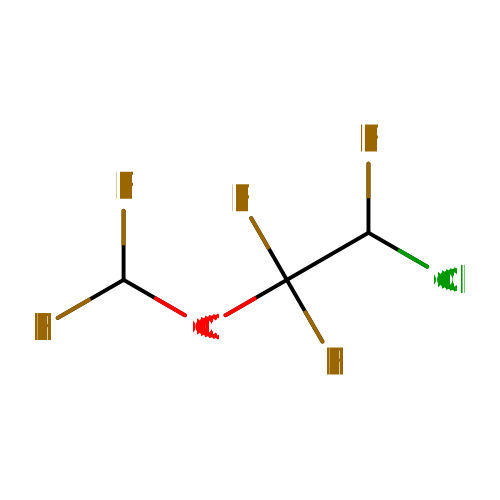
- Weight
- Average: 184.492
Monoisotopic: 183.971433418 - Chemical Formula
- C3H2ClF5O
- Synonyms
- 2-chloro-1,1,2-trifluoroethyl difluoromethyl ether
- Alyrane
- Efrane
- Enflurane
- Enflurano
- Enfluranum
- Methylflurether
- External IDs
- Anesthetic 347
- OHIO 347
- R-E-235CA2

Pharmacology
- Indication
Enflurane may be used for both the induction and maintenance of general anesthesia. It can also be used to induce analgesia for vaginal delivery. Low concentrations of enflurane can also be used as an adjunct to general anesthetic drugs during delivery by Cesarean section.18
 Reduce drug development failure ratesBuild, train, & validate machine-learning modelswith evidence-based and structured datasets.Build, train, & validate predictive machine-learning models with structured datasets.
- Associated Conditions
Indication Type Indication Combined Product Details Approval Level Age Group Patient Characteristics Dose Form Used as adjunct in combination for therapy Analgesia •••••••••••• •••••• Maintenance of Analgesia •••••••••••• •••••• Maintenance of Analgesia •••••••••••• •••••• Maintenance of General anaesthesia •••••••••••• •••••• - Associated Therapies
- Contraindications & Blackbox Warnings
 Prevent Adverse Drug Events TodayTap into our Clinical API for life-saving information on contraindications & blackbox warnings, population restrictions, harmful risks, & more.Avoid life-threatening adverse drug events with our Clinical API
- Pharmacodynamics
Enflurane rapidly induces anesthesia via the stimulation of inhibitory neural channels and the inhibition of excitatory neural channels. Muscle relaxation, obtundation of pharyngeal and laryngeal reflexes, and lowering of blood pressure are some of the main pharmacodynamic effects of this drug.17 Enflurane also decreases cardiac muscle contractility.5
High concentrations of enflurane may lead to uterine relaxation and increase the risk of uterine bleeding during delivery.17 Rare but clinically significant elevations in ALT may indicate hepatoxicity from the use of enflurane.3 In some susceptible patients, enflurane may cause malignant hyperthermia.17
- Mechanism of action
The mechanism of action of enflurane is not completely established.17 Studies on rats indicate that enflurane binds to GABAA and glycine receptors, causing depressant effects at the ventral neural horn. It has been reported that 30% of the central nervous system depressant effects on the spinal cord after enflurane is administered are caused by the (GABA-A) receptor while binding to glycine receptors is responsible for about 20 % of the depressant effects.2 The relevance of these findings to humans is unknown. Other studies have found that enflurane binds to the calcium channels in the cardiac sarcoplasmic reticulum causing cardio depressant effects.7,8,9 Other studies support that this drug potentiates glycine receptors, which results in central nervous system depressant effects.12,11
Target Actions Organism AGABA(A) Receptor potentiatorHumans AVoltage-dependent calcium channel inhibitoractivatorHumans AGlycine receptor subunit alpha-1 potentiatorHumans UVoltage-gated Potassium Channels inhibitoractivatorUCalcium-transporting ATPase type 2C member 1 inhibitorHumans UGlutamate (NMDA) receptor antagonistHumans USarcoplasmic/endoplasmic reticulum calcium ATPase 1 inhibitorstimulatorHumans - Absorption
Enflurane is rapidly absorbed into the circulation through the lungs.14,18 The minimum alveolar concentration is oxygen is 1.68%.5
- Volume of distribution
Enflurane distributes to the brain, blood, and subcutaneous fat.13
- Protein binding
The plasma protein binding for enflurane is 97%.16
- Metabolism
Enflurane is metabolized by the CYP2E1 enzyme in the liver to produce inorganic fluoride ions, the major metabolite of enflurane metabolism.10 One reference indicates that enflurane is only 2-5% eliminated after oxidative metabolism in the liver, however more recent evidence suggests that about 9% is eliminated via hepatic oxidation.5
Hover over products below to view reaction partners
- Route of elimination
Metabolism accounts for 5-9% of enflurane elimination, sometimes causing nephrotoxicity. Excretion through the skin is believed to be minimal.5
- Half-life
Not Available
- Clearance
Not Available
- Adverse Effects
 Improve decision support & research outcomesWith structured adverse effects data, including: blackbox warnings, adverse reactions, warning & precautions, & incidence rates. View sample adverse effects data in our new Data Library!Improve decision support & research outcomes with our structured adverse effects data.
- Toxicity
The LD50 of enflurane in rats is 14000 ppm/3 hour(s) when inhaled.20 There is limited information in the literature about enflurane overdose. Hepatotoxicity, cardiotoxicity, nephrotoxicity, and neurotoxicity are expected.18 One report in the literature of an enflurane overdose describes an accidental fatal overdose in a 21-year-old male.13 About 72 hours after death, high amounts of enflurane were found in the brain, blood, and subcutaneous fat. Gas chromatographic studies revealed enflurane concentrations of 350 mg/l-1 in the brain, 130 mg/l-1 in the blood, and 100 mg/l-1 in the subcutaneous fat.13
In the event of an enflurane overdose, immediately stop the administration of enflurane, establish a patent airway, and administer pure oxygen by assisted or controlled ventilation.18
- Pathways
- Not Available
- Pharmacogenomic Effects/ADRs
- Not Available
Interactions
- Drug Interactions
- This information should not be interpreted without the help of a healthcare provider. If you believe you are experiencing an interaction, contact a healthcare provider immediately. The absence of an interaction does not necessarily mean no interactions exist.
Drug Interaction Integrate drug-drug
interactions in your software1,2-Benzodiazepine The risk or severity of CNS depression can be increased when Enflurane is combined with 1,2-Benzodiazepine. Abatacept The metabolism of Enflurane can be increased when combined with Abatacept. Acebutolol Enflurane may increase the cardiodepressant activities of Acebutolol. Acetaminophen Enflurane may increase the hepatotoxic activities of Acetaminophen. Acetazolamide The risk or severity of CNS depression can be increased when Enflurane is combined with Acetazolamide. - Food Interactions
- No interactions found.
Products
 Drug product information from 10+ global regionsOur datasets provide approved product information including:dosage, form, labeller, route of administration, and marketing period.Access drug product information from over 10 global regions.
- International/Other Brands
- Alyrane (Baxter) / Compound 347 (Dexa Medica) / Endurane (Singapore Pharmawealth Lifesciences) / Enfluran (Cristália)
- Brand Name Prescription Products
Name Dosage Strength Route Labeller Marketing Start Marketing End Region Image Enflurane Liquid 99.9 % Respiratory (inhalation) Abbvie 1993-12-31 2012-11-02 Canada 
Ethrane Liquid 125 mL/125mL Respiratory (inhalation) Baxter Laboratories 1972-08-28 2012-12-01 US 
Ethrane Liq Inh Liquid 100 % Respiratory (inhalation) Ohmeda Pharmaceutical Products, Division Of Boc Canada Limited 1996-09-18 1997-08-25 Canada Ethrane Liquid Inh Liquid 100 % Respiratory (inhalation) Baxter Laboratories 1997-02-20 2004-08-05 Canada - Generic Prescription Products
Name Dosage Strength Route Labeller Marketing Start Marketing End Region Image Enflurane Liquid 1 mL/1mL Respiratory (inhalation) Piramal Critical Care Inc 1994-07-29 2014-09-28 US
Categories
- ATC Codes
- N01AB04 — Enflurane
- Drug Categories
- Chemical TaxonomyProvided by Classyfire
- Description
- This compound belongs to the class of organic compounds known as organofluorides. These are compounds containing a chemical bond between a carbon atom and a fluorine atom.
- Kingdom
- Organic compounds
- Super Class
- Organohalogen compounds
- Class
- Organofluorides
- Sub Class
- Not Available
- Direct Parent
- Organofluorides
- Alternative Parents
- Organooxygen compounds / Organochlorides / Hydrocarbon derivatives / Alkyl fluorides / Alkyl chlorides
- Substituents
- Aliphatic acyclic compound / Alkyl chloride / Alkyl fluoride / Alkyl halide / Hydrocarbon derivative / Organic oxygen compound / Organochloride / Organofluoride / Organooxygen compound
- Molecular Framework
- Aliphatic acyclic compounds
- External Descriptors
- organofluorine compound, organochlorine compound, ether (CHEBI:4792)
- Affected organisms
- Humans and other mammals
Chemical Identifiers
- UNII
- 91I69L5AY5
- CAS number
- 13838-16-9
- InChI Key
- JPGQOUSTVILISH-UHFFFAOYSA-N
- InChI
- InChI=1S/C3H2ClF5O/c4-1(5)3(8,9)10-2(6)7/h1-2H
- IUPAC Name
- 2-chloro-1-(difluoromethoxy)-1,1,2-trifluoroethane
- SMILES
- FC(F)OC(F)(F)C(F)Cl
References
- Synthesis Reference
Terrell, R.C.; U.S. Patents 3,469,011; September 23,1969 and 3,527,813; September 8, 1970; both assigned to Air Reduction Company, Incorporated.
- General References
- Quail AW: Modern inhalational anaesthetic agents. A review of halothane, isoflurane and enflurane. Med J Aust. 1989 Jan 16;150(2):95-102. [Article]
- Grasshoff C, Antkowiak B: Effects of isoflurane and enflurane on GABAA and glycine receptors contribute equally to depressant actions on spinal ventral horn neurones in rats. Br J Anaesth. 2006 Nov;97(5):687-94. doi: 10.1093/bja/ael239. Epub 2006 Sep 13. [Article]
- Authors unspecified: Enflurane . [Article]
- Berger JM, Stirt JA, Sullivan SF: Enflurane, halothane, and aminophylline--uptake and pharmacokinetics. Anesth Analg. 1983 Aug;62(8):733-7. [Article]
- Dale O, Brown BR Jr: Clinical pharmacokinetics of the inhalational anaesthetics. Clin Pharmacokinet. 1987 Mar;12(3):145-67. doi: 10.2165/00003088-198712030-00001. [Article]
- Sleigh JW, Vizuete JA, Voss L, Steyn-Ross A, Steyn-Ross M, Marcuccilli CJ, Hudetz AG: The electrocortical effects of enflurane: experiment and theory. Anesth Analg. 2009 Oct;109(4):1253-62. doi: 10.1213/ANE.0b013e3181add06b. [Article]
- Connelly TJ, Coronado R: Activation of the Ca2+ release channel of cardiac sarcoplasmic reticulum by volatile anesthetics. Anesthesiology. 1994 Aug;81(2):459-69. doi: 10.1097/00000542-199408000-00025. [Article]
- Eskinder H, Rusch NJ, Supan FD, Kampine JP, Bosnjak ZJ: The effects of volatile anesthetics on L- and T-type calcium channel currents in canine cardiac Purkinje cells. Anesthesiology. 1991 May;74(5):919-26. doi: 10.1097/00000542-199105000-00018. [Article]
- Haworth RA, Goknur AB: Inhibition of sodium/calcium exchange and calcium channels of heart cells by volatile anesthestics. Anesthesiology. 1995 May;82(5):1255-65. doi: 10.1097/00000542-199505000-00021. [Article]
- Kharasch ED, Thummel KE, Mautz D, Bosse S: Clinical enflurane metabolism by cytochrome P450 2E1. Clin Pharmacol Ther. 1994 Apr;55(4):434-40. doi: 10.1038/clpt.1994.53. [Article]
- Krasowski MD, Harrison NL: The actions of ether, alcohol and alkane general anaesthetics on GABAA and glycine receptors and the effects of TM2 and TM3 mutations. Br J Pharmacol. 2000 Feb;129(4):731-43. [Article]
- Borghese CM: The molecular pharmacology of volatile anesthetics. Int Anesthesiol Clin. 2015 Spring;53(2):28-39. doi: 10.1097/AIA.0000000000000060. [Article]
- Jacob B, Heller C, Daldrup T, Burrig KF, Barz J, Bonte W: Fatal accidental enflurane intoxication. J Forensic Sci. 1989 Nov;34(6):1408-12. [Article]
- Torri G: Uptake and elimination of enflurane (Ethrane) at constant inspired and alveolar concentration. Acta Anaesthesiol Belg. 1974 May;25(2):190-7. [Article]
- Njoku D, Laster MJ, Gong DH, Eger EI 2nd, Reed GF, Martin JL: Biotransformation of halothane, enflurane, isoflurane, and desflurane to trifluoroacetylated liver proteins: association between protein acylation and hepatic injury. Anesth Analg. 1997 Jan;84(1):173-8. doi: 10.1097/00000539-199701000-00031. [Article]
- John D. Current M.D. (n/A). Pharmacology for Anesthetists: anesthesia and adjuvants. N/A.
- NIH StatPearls: Enflurane [Link]
- FDA Approved Products: Efrane (enflurane) liquid for inhalation [Link]
- FDA approval status, Enflurane [Link]
- Matheson Gas MSDS: Enflurane [Link]
- External Links
- MSDS
- Download (64.9 KB)
Clinical Trials
- Clinical Trials
Phase Status Purpose Conditions Count Not Available Completed Treatment General Anesthesia 1
Pharmacoeconomics
- Manufacturers
- Abbott laboratories hosp products div
- Piramal critical care inc
- Baxter healthcare corp anesthesia critical care
- Packagers
- Apothecon
- Baxter International Inc.
- Minrad Inc.
- Rx Elite
- Dosage Forms
Form Route Strength Liquid Respiratory (inhalation) 1 mL/1mL Liquid Respiratory (inhalation) 99.9 % Solution Respiratory (inhalation) 250 ml Solution Respiratory (inhalation) 100 mL Solution Oral 100 mL Liquid Respiratory (inhalation) 125 mL/125mL Liquid Respiratory (inhalation) 100 % - Prices
Unit description Cost Unit Ethrane inhalation 0.55USD ml DrugBank does not sell nor buy drugs. Pricing information is supplied for informational purposes only.- Patents
- Not Available
Properties
- State
- Liquid
- Experimental Properties
Property Value Source melting point (°C) 48.5 https://www.chemicalbook.com/ChemicalProductProperty_US_CB8437691.aspx boiling point (°C) 56.5 Terrell, R.C.; U.S. Patents 3,469,011; September 23,1969 and 3,527,813; September 8, 1970; both assigned to Air Reduction Company, Incorporated. logP 2.10 HANSCH,C & LEO,AJ (1985) - Predicted Properties
Property Value Source Water Solubility 3.9 mg/mL ALOGPS logP 2.24 ALOGPS logP 2.8 Chemaxon logS -1.7 ALOGPS pKa (Strongest Basic) -5 Chemaxon Physiological Charge 0 Chemaxon Hydrogen Acceptor Count 1 Chemaxon Hydrogen Donor Count 0 Chemaxon Polar Surface Area 9.23 Å2 Chemaxon Rotatable Bond Count 3 Chemaxon Refractivity 23.07 m3·mol-1 Chemaxon Polarizability 9.74 Å3 Chemaxon Number of Rings 0 Chemaxon Bioavailability 1 Chemaxon Rule of Five Yes Chemaxon Ghose Filter No Chemaxon Veber's Rule Yes Chemaxon MDDR-like Rule No Chemaxon - Predicted ADMET Features
Property Value Probability Human Intestinal Absorption + 1.0 Blood Brain Barrier + 0.994 Caco-2 permeable + 0.6125 P-glycoprotein substrate Non-substrate 0.8919 P-glycoprotein inhibitor I Non-inhibitor 0.9553 P-glycoprotein inhibitor II Non-inhibitor 0.9297 Renal organic cation transporter Non-inhibitor 0.9293 CYP450 2C9 substrate Non-substrate 0.8407 CYP450 2D6 substrate Non-substrate 0.9116 CYP450 3A4 substrate Non-substrate 0.7179 CYP450 1A2 substrate Non-inhibitor 0.5701 CYP450 2C9 inhibitor Non-inhibitor 0.8112 CYP450 2D6 inhibitor Non-inhibitor 0.9408 CYP450 2C19 inhibitor Non-inhibitor 0.5794 CYP450 3A4 inhibitor Non-inhibitor 0.9604 CYP450 inhibitory promiscuity Low CYP Inhibitory Promiscuity 0.8702 Ames test Non AMES toxic 0.9132 Carcinogenicity Carcinogens 0.7574 Biodegradation Not ready biodegradable 0.9642 Rat acute toxicity 1.3804 LD50, mol/kg Not applicable hERG inhibition (predictor I) Weak inhibitor 0.9576 hERG inhibition (predictor II) Non-inhibitor 0.9032
Spectra
- Mass Spec (NIST)
- Download (7.54 KB)
- Spectra
- Chromatographic Properties
Collision Cross Sections (CCS)
Adduct CCS Value (Å2) Source type Source [M-H]- 104.9977594 predictedDarkChem Lite v0.1.0 [M-H]- 132.50061 predictedDeepCCS 1.0 (2019) [M+H]+ 105.7755594 predictedDarkChem Lite v0.1.0 [M+H]+ 134.80386 predictedDeepCCS 1.0 (2019) [M+Na]+ 105.4604594 predictedDarkChem Lite v0.1.0 [M+Na]+ 143.08226 predictedDeepCCS 1.0 (2019)
Targets

- Kind
- Protein group
- Organism
- Humans
- Pharmacological action
- Yes
- Actions
- Potentiator
- General Function
- Inhibitory extracellular ligand-gated ion channel activity
- Specific Function
- Component of the heteropentameric receptor for GABA, the major inhibitory neurotransmitter in the vertebrate brain. Functions also as histamine receptor and mediates cellular responses to histamine...
Components:
References
- Franks NP: Molecular targets underlying general anaesthesia. Br J Pharmacol. 2006 Jan;147 Suppl 1:S72-81. [Article]
- Grasshoff C, Antkowiak B: Effects of isoflurane and enflurane on GABAA and glycine receptors contribute equally to depressant actions on spinal ventral horn neurones in rats. Br J Anaesth. 2006 Nov;97(5):687-94. doi: 10.1093/bja/ael239. Epub 2006 Sep 13. [Article]
- Greenblatt EP, Meng X: Divergence of volatile anesthetic effects in inhibitory neurotransmitter receptors. Anesthesiology. 2001 Jun;94(6):1026-33. [Article]
- ChEMBL Compound Report Card [Link]
- NIH StatPearls: Enflurane [Link]
- FDA Approved Products: Efrane (enflurane) liquid for inhalation [Link]
- Kind
- Protein group
- Organism
- Humans
- Pharmacological action
- Yes
- Actions
- InhibitorActivator
- Curator comments
- Enflurane has been shown to increase the opening of the calcium channel in cardiac cells during in vitro studies.
- General Function
- Voltage-gated calcium channel activity
- Specific Function
- This protein is a subunit of the dihydropyridine (DHP) sensitive calcium channel. Plays a role in excitation-contraction coupling. The skeletal muscle DHP-sensitive Ca(2+) channel may function only...
Components:
References
- Connelly TJ, Coronado R: Activation of the Ca2+ release channel of cardiac sarcoplasmic reticulum by volatile anesthetics. Anesthesiology. 1994 Aug;81(2):459-69. doi: 10.1097/00000542-199408000-00025. [Article]
- Eskinder H, Rusch NJ, Supan FD, Kampine JP, Bosnjak ZJ: The effects of volatile anesthetics on L- and T-type calcium channel currents in canine cardiac Purkinje cells. Anesthesiology. 1991 May;74(5):919-26. doi: 10.1097/00000542-199105000-00018. [Article]
- Haworth RA, Goknur AB: Inhibition of sodium/calcium exchange and calcium channels of heart cells by volatile anesthestics. Anesthesiology. 1995 May;82(5):1255-65. doi: 10.1097/00000542-199505000-00021. [Article]
- Kind
- Protein
- Organism
- Humans
- Pharmacological action
- Yes
- Actions
- Potentiator
- General Function
- Transmitter-gated ion channel activity
- Specific Function
- The glycine receptor is a neurotransmitter-gated ion channel. Binding of glycine to its receptor increases the chloride conductance and thus produces hyperpolarization (inhibition of neuronal firing).
- Gene Name
- GLRA1
- Uniprot ID
- P23415
- Uniprot Name
- Glycine receptor subunit alpha-1
- Molecular Weight
- 52623.35 Da
References
- Borghese CM: The molecular pharmacology of volatile anesthetics. Int Anesthesiol Clin. 2015 Spring;53(2):28-39. doi: 10.1097/AIA.0000000000000060. [Article]
- Krasowski MD, Harrison NL: The actions of ether, alcohol and alkane general anaesthetics on GABAA and glycine receptors and the effects of TM2 and TM3 mutations. Br J Pharmacol. 2000 Feb;129(4):731-43. [Article]
- Grasshoff C, Antkowiak B: Effects of isoflurane and enflurane on GABAA and glycine receptors contribute equally to depressant actions on spinal ventral horn neurones in rats. Br J Anaesth. 2006 Nov;97(5):687-94. doi: 10.1093/bja/ael239. Epub 2006 Sep 13. [Article]
- NIH StatPearls: Enflurane [Link]
- ChEMBL Compound Report Card [Link]
- Kind
- Protein group
- Organism
- Not Available
- Pharmacological action
- Unknown
- Actions
- InhibitorActivator
- General Function
- Voltage-gated potassium channel activity
- Specific Function
- Voltage-gated potassium channel that mediates transmembrane potassium transport in excitable membranes, primarily in the brain and the central nervous system, but also in the kidney (PubMed:1990381...
Components:
References
- Matchett GA, Allard MW, Martin RD, Zhang JH: Neuroprotective effect of volatile anesthetic agents: molecular mechanisms. Neurol Res. 2009 Mar;31(2):128-34. doi: 10.1179/174313209X393546. [Article]
- Friederich P, Benzenberg D, Trellakis S, Urban BW: Interaction of volatile anesthetics with human Kv channels in relation to clinical concentrations. Anesthesiology. 2001 Oct;95(4):954-8. doi: 10.1097/00000542-200110000-00026. [Article]
- Namba T, Ishii TM, Ikeda M, Hisano T, Itoh T, Hirota K, Adelman JP, Fukuda K: Inhibition of the human intermediate conductance Ca(2+)-activated K(+) channel, hIK1, by volatile anesthetics. Eur J Pharmacol. 2000 Apr 28;395(2):95-101. [Article]
- Kind
- Protein
- Organism
- Humans
- Pharmacological action
- Unknown
- Actions
- Inhibitor
- General Function
- Signal transducer activity
- Specific Function
- This magnesium-dependent enzyme catalyzes the hydrolysis of ATP coupled with the transport of the calcium.
- Gene Name
- ATP2C1
- Uniprot ID
- P98194
- Uniprot Name
- Calcium-transporting ATPase type 2C member 1
- Molecular Weight
- 100576.42 Da
References
- Kind
- Protein group
- Organism
- Humans
- Pharmacological action
- Unknown
- Actions
- Antagonist
- General Function
- Voltage-gated cation channel activity
- Specific Function
- NMDA receptor subtype of glutamate-gated ion channels with high calcium permeability and voltage-dependent sensitivity to magnesium. Mediated by glycine. This protein plays a key role in synaptic p...
Components:
References
- Dildy-Mayfield JE, Eger EI 2nd, Harris RA: Anesthetics produce subunit-selective actions on glutamate receptors. J Pharmacol Exp Ther. 1996 Mar;276(3):1058-65. [Article]
- Cheng G, Kendig JJ: Enflurane directly depresses glutamate AMPA and NMDA currents in mouse spinal cord motor neurons independent of actions on GABAA or glycine receptors. Anesthesiology. 2000 Oct;93(4):1075-84. doi: 10.1097/00000542-200010000-00032. [Article]
- Kind
- Protein
- Organism
- Humans
- Pharmacological action
- Unknown
- Actions
- InhibitorStimulator
- Curator comments
- Data regarding this target action are limited in the literature.
- General Function
- Protein homodimerization activity
- Specific Function
- Key regulator of striated muscle performance by acting as the major Ca(2+) ATPase responsible for the reuptake of cytosolic Ca(2+) into the sarcoplasmic reticulum. Catalyzes the hydrolysis of ATP c...
- Gene Name
- ATP2A1
- Uniprot ID
- O14983
- Uniprot Name
- Sarcoplasmic/endoplasmic reticulum calcium ATPase 1
- Molecular Weight
- 110251.36 Da
References
- Kosk-Kosicka D, Roszczynska G: Inhibition of plasma membrane Ca(2+)-ATPase activity by volatile anesthetics. Anesthesiology. 1993 Oct;79(4):774-80. [Article]
- Blanck TJ, Peterson CV, Baroody B, Tegazzin V, Lou J: Halothane, enflurane, and isoflurane stimulate calcium leakage from rabbit sarcoplasmic reticulum. Anesthesiology. 1992 May;76(5):813-21. doi: 10.1097/00000542-199205000-00021. [Article]
Enzymes
- Kind
- Protein
- Organism
- Humans
- Pharmacological action
- Unknown
- Actions
- Substrate
- General Function
- Steroid hydroxylase activity
- Specific Function
- Metabolizes several precarcinogens, drugs, and solvents to reactive metabolites. Inactivates a number of drugs and xenobiotics and also bioactivates many xenobiotic substrates to their hepatotoxic ...
- Gene Name
- CYP2E1
- Uniprot ID
- P05181
- Uniprot Name
- Cytochrome P450 2E1
- Molecular Weight
- 56848.42 Da
References
- Garton KJ, Yuen P, Meinwald J, Thummel KE, Kharasch ED: Stereoselective metabolism of enflurane by human liver cytochrome P450 2E1. Drug Metab Dispos. 1995 Dec;23(12):1426-30. [Article]
- Kharasch ED, Thummel KE, Mautz D, Bosse S: Clinical enflurane metabolism by cytochrome P450 2E1. Clin Pharmacol Ther. 1994 Apr;55(4):434-40. doi: 10.1038/clpt.1994.53. [Article]
- Njoku D, Laster MJ, Gong DH, Eger EI 2nd, Reed GF, Martin JL: Biotransformation of halothane, enflurane, isoflurane, and desflurane to trifluoroacetylated liver proteins: association between protein acylation and hepatic injury. Anesth Analg. 1997 Jan;84(1):173-8. doi: 10.1097/00000539-199701000-00031. [Article]
- Flockhart Table of Drug Interactions [Link]
Carriers
- Kind
- Protein
- Organism
- Humans
- Pharmacological action
- Unknown
- Actions
- Binder
- General Function
- Toxic substance binding
- Specific Function
- Serum albumin, the main protein of plasma, has a good binding capacity for water, Ca(2+), Na(+), K(+), fatty acids, hormones, bilirubin and drugs. Its main function is the regulation of the colloid...
- Gene Name
- ALB
- Uniprot ID
- P02768
- Uniprot Name
- Serum albumin
- Molecular Weight
- 69365.94 Da
References
- Liu R, Eckenhoff RG: Weak polar interactions confer albumin binding site selectivity for haloether anesthetics. Anesthesiology. 2005 Apr;102(4):799-805. [Article]
- Sawas AH, Pentyala SN, Rebecchi MJ: Binding of volatile anesthetics to serum albumin: measurements of enthalpy and solvent contributions. Biochemistry. 2004 Oct 5;43(39):12675-85. [Article]
- Dale O, Nilsen OG: Displacement of some basic drugs from human serum proteins by enflurane, halothane and their major metabolites. An in vitro study. Br J Anaesth. 1984 May;56(5):535-42. doi: 10.1093/bja/56.5.535. [Article]


Drug created at June 13, 2005 13:24 / Updated at April 09, 2024 18:13