Identification
- Summary
Aminosalicylic acid is an aminosalicylate drug used to induce remission in ulcerative colitis.
- Brand Names
- Granupas, Paser D/r
- Generic Name
- Aminosalicylic acid
- DrugBank Accession Number
- DB00233
- Background
An antitubercular agent often administered in association with isoniazid. The sodium salt of the drug is better tolerated than the free acid.
- Type
- Small Molecule
- Groups
- Approved
- Structure
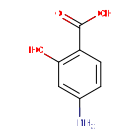
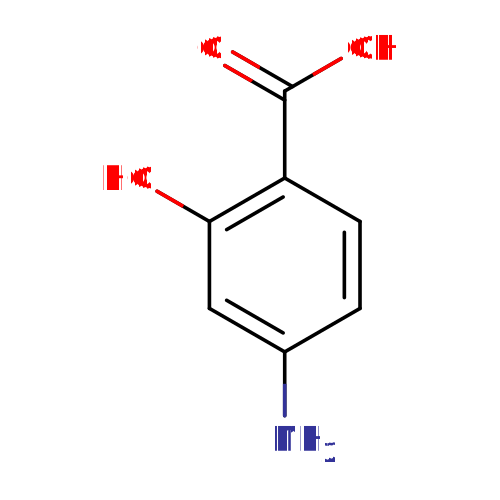
Structure for Aminosalicylic acid (DB00233)
- Weight
- Average: 153.1354
Monoisotopic: 153.042593095 - Chemical Formula
- C7H7NO3
- Synonyms
- 4-amino-2-hydroxybenzoic acid
- 4-aminosalicylate
- 4-aminosalicylic acid
- Aminosalicylic acid
- p-aminosalicylic acid
- para-amino salicylic acid
- para-aminosalicylic acid
- PAS

Pharmacology
- Indication
For the treatment of tuberculosis
 Reduce drug development failure ratesBuild, train, & validate machine-learning modelswith evidence-based and structured datasets.Build, train, & validate predictive machine-learning models with structured datasets.
- Associated Conditions
Indication Type Indication Combined Product Details Approval Level Age Group Patient Characteristics Dose Form Used in combination to treat Tuberculosis •••••••••••• - Contraindications & Blackbox Warnings
 Prevent Adverse Drug Events TodayTap into our Clinical API for life-saving information on contraindications & blackbox warnings, population restrictions, harmful risks, & more.Avoid life-threatening adverse drug events with our Clinical API
- Pharmacodynamics
Aminosalicylic acid is an anti-mycobacterial agent used with other anti-tuberculosis drugs (most often isoniazid) for the treatment of all forms of active tuberculosis due to susceptible strains of tubercle bacilli. The two major considerations in the clinical pharmacology of aminosalicylic acid are the prompt production of a toxic inactive metabolite under acid conditions and the short serum half life of one hour for the free drug. Aminosalicylic acid is bacteriostatic against Mycobacterium tuberculosis (prevents the multiplying of bacteria without destroying them). It also inhibits the onset of bacterial resistance to streptomycin and isoniazid.
- Mechanism of action
There are two mechanisms responsible for aminosalicylic acid's bacteriostatic action against Mycobacterium tuberculosis. Firstly, aminosalicylic acid inhibits folic acid synthesis (without potentiation with antifolic compounds). The binding of para-aminobenzoic acid to pteridine synthetase acts as the first step in folic acid synthesis. Aminosalicylic acid binds pteridine synthetase with greater affinity than para-aminobenzoic acid, effectively inhibiting the synthesis of folic acid. As bacteria are unable to use external sources of folic acid, cell growth and multiplication slows. Secondly, aminosalicylic acid may inhibit the synthesis of the cell wall component, mycobactin, thus reducing iron uptake by M. tuberculosis.
Target Actions Organism UProstaglandin G/H synthase 2 inhibitorHumans UInhibitor of nuclear factor kappa-B kinase subunit alpha inhibitorHumans UArachidonate 5-lipoxygenase inhibitorHumans UGroup IIE secretory phospholipase A2 unknownHumans - Absorption
Not Available
- Volume of distribution
Not Available
- Protein binding
50-60%
- Metabolism
Hepatic.
- Route of elimination
Not Available
- Half-life
Not Available
- Clearance
Not Available
- Adverse Effects
 Improve decision support & research outcomesWith structured adverse effects data, including: blackbox warnings, adverse reactions, warning & precautions, & incidence rates. View sample adverse effects data in our new Data Library!Improve decision support & research outcomes with our structured adverse effects data.
- Toxicity
LD50=4 gm/kg (orally in mice); LD50=3650 mg/kg (orally in rabbits)
- Pathways
- Not Available
- Pharmacogenomic Effects/ADRs
- Not Available
Interactions
- Drug Interactions
- This information should not be interpreted without the help of a healthcare provider. If you believe you are experiencing an interaction, contact a healthcare provider immediately. The absence of an interaction does not necessarily mean no interactions exist.
Drug Interaction Integrate drug-drug
interactions in your softwareAbciximab The risk or severity of bleeding can be increased when Aminosalicylic acid is combined with Abciximab. Acarbose Aminosalicylic acid may increase the hypoglycemic activities of Acarbose. Aceclofenac The therapeutic efficacy of Aminosalicylic acid can be decreased when used in combination with Aceclofenac. Acenocoumarol Aminosalicylic acid may increase the anticoagulant activities of Acenocoumarol. Acetaminophen The risk or severity of adverse effects can be increased when Acetaminophen is combined with Aminosalicylic acid. - Food Interactions
- Take with or without food. The absorption is unaffected by food.
Products
 Drug product information from 10+ global regionsOur datasets provide approved product information including:dosage, form, labeller, route of administration, and marketing period.Access drug product information from over 10 global regions.
- Product Ingredients
Ingredient UNII CAS InChI Key Aminosalicylate calcium 73I4QDW01W 133-15-3 XDWVNCOPMIEDJK-UHFFFAOYSA-L Aminosalicylate sodium anhydrous T9ZKL3TNQF 133-10-8 FVVDKUPCWXUVNP-UHFFFAOYSA-M Calcium aminosalicylate trihydrate 9VF16M7FWU 6059-16-1 IPLQYSPEGHNJCQ-UHFFFAOYSA-L Potassium aminosalicylate 7N21461LKD 133-09-5 PRZJIMSXCLZGLT-UHFFFAOYSA-M Sodium aminosalicylate dihydrate S38B9W6AXW 6018-19-5 GMUQJDAYXZXBOT-UHFFFAOYSA-M - International/Other Brands
- Pamisyl (Parke-Davis) / Rexipas (Bristol-Myers Squibb) / Rezipas (Bristol-Myers Squibb)
- Brand Name Prescription Products
Name Dosage Strength Route Labeller Marketing Start Marketing End Region Image Granupas Granule, delayed release 4 g Oral Eurocept International B. V. 2016-09-08 Not applicable EU 
Nemasol Sodium Tab 500mg Tablet 500 mg Oral Icn Pharmaceuticals 1966-12-31 2005-04-26 Canada 
- Generic Prescription Products
Name Dosage Strength Route Labeller Marketing Start Marketing End Region Image Paser Granule, delayed release 4 g/1 Oral Jacobus Pharmaceutical 1995-02-15 Not applicable US 
Categories
- ATC Codes
- J04AA02 — Sodium aminosalicylate
- J04AA — Aminosalicylic acid and derivatives
- J04A — DRUGS FOR TREATMENT OF TUBERCULOSIS
- J04 — ANTIMYCOBACTERIALS
- J — ANTIINFECTIVES FOR SYSTEMIC USE
- J04AA — Aminosalicylic acid and derivatives
- J04A — DRUGS FOR TREATMENT OF TUBERCULOSIS
- J04 — ANTIMYCOBACTERIALS
- J — ANTIINFECTIVES FOR SYSTEMIC USE
- Drug Categories
- Acids, Carbocyclic
- Aminobenzoates
- Aminosalicylic Acid and Derivatives
- Aminosalicylic Acids
- Anti-Bacterial Agents
- Anti-Infective Agents
- Antiinfectives for Systemic Use
- Antimycobacterials
- Benzene Derivatives
- Benzoates
- Drugs for Treatment of Tuberculosis
- Hydroxy Acids
- Hydroxybenzoates
- Methemoglobinemia Associated Agents
- para-Aminobenzoates
- Phenols
- Salicylates
- Chemical TaxonomyProvided by Classyfire
- Description
- This compound belongs to the class of organic compounds known as aminosalicylic acids. These are salicylic acids carrying an amino group on the benzene ring.
- Kingdom
- Organic compounds
- Super Class
- Benzenoids
- Class
- Benzene and substituted derivatives
- Sub Class
- Benzoic acids and derivatives
- Direct Parent
- Aminosalicylic acids
- Alternative Parents
- 4-aminosalicylic acids / Salicylic acids / Aminobenzoic acids / Benzoic acids / m-Aminophenols / Benzoyl derivatives / Aniline and substituted anilines / 1-hydroxy-2-unsubstituted benzenoids / 1-hydroxy-4-unsubstituted benzenoids / Vinylogous acids show 8 more
- Substituents
- 1-hydroxy-2-unsubstituted benzenoid / 1-hydroxy-4-unsubstituted benzenoid / 4-aminosalicylic acid / Amine / Amino acid / Amino acid or derivatives / Aminobenzoic acid / Aminobenzoic acid or derivatives / Aminophenol / Aminosalicylic acid show 19 more
- Molecular Framework
- Aromatic homomonocyclic compounds
- External Descriptors
- phenols, aminobenzoic acid (CHEBI:27565)
- Affected organisms
- Mycobacteria
Chemical Identifiers
- UNII
- 5B2658E0N2
- CAS number
- 65-49-6
- InChI Key
- WUBBRNOQWQTFEX-UHFFFAOYSA-N
- InChI
- InChI=1S/C7H7NO3/c8-4-1-2-5(7(10)11)6(9)3-4/h1-3,9H,8H2,(H,10,11)
- IUPAC Name
- 4-amino-2-hydroxybenzoic acid
- SMILES
- NC1=CC(O)=C(C=C1)C(O)=O
References
- Synthesis Reference
Thomas M. Parkinson, Joseph P. Brown, Robert E. Wingard, Jr., "Pharmaceutical preparations containing a polymeric agent for releasing 5-aminosalicylic acid or its salts into the gastrointestinal tract." U.S. Patent US4298595, issued January, 1975.
US4298595- General References
- Not Available
- External Links
- Human Metabolome Database
- HMDB0014378
- KEGG Drug
- D00162
- KEGG Compound
- C02518
- PubChem Compound
- 4649
- PubChem Substance
- 46505572
- ChemSpider
- 4488
- BindingDB
- 48319
- 7833
- ChEBI
- 27565
- ChEMBL
- CHEMBL1169
- ZINC
- ZINC000000000922
- PharmGKB
- PA448382
- PDBe Ligand
- BHA
- RxList
- RxList Drug Page
- Drugs.com
- Drugs.com Drug Page
- Wikipedia
- 4-Aminosalicylic_acid
- PDB Entries
- 1pbc / 1pbf / 1sxk / 5rue / 5x7z
- MSDS
- Download (73.6 KB)
Clinical Trials
- Clinical Trials
Phase Status Purpose Conditions Count 3 Recruiting Treatment Pulmonary Tuberculosis (TB) / Rifampicin Resistant Tuberculosis 1 2 Completed Treatment Ulcerative Colitis 1 2 Terminated Treatment Crohn's Disease (CD) 2 1 Completed Treatment Healthy Volunteers (HV) 1 1 Unknown Status Screening Healthy Volunteers (HV) 1
Pharmacoeconomics
- Manufacturers
- Century pharmaceuticals inc
- Hexcel chemical products
- Panray corp sub ormont drug and chemical co inc
- Lannett co inc
- Consolidated midland corp
- Jacobus pharmaceutical co
- Bristol myers squibb co
- Packagers
- Jacobus Pharmaceutical Co.
- Medisca Inc.
- Professional Co.
- Spectrum Pharmaceuticals
- Dosage Forms
Form Route Strength Granule Oral 4 G Granule, delayed release Oral 4 g Granule Oral 60 g Tablet Oral 500 mg Tablet, delayed release Oral 1 g Tablet Oral 1 g Tablet Oral 1 gr Granule, delayed release Oral 4 g/1 - Prices
Unit description Cost Unit Paser granules 4 gm packet 3.59USD packet Aminosalicylic acid powder 2.4USD g DrugBank does not sell nor buy drugs. Pricing information is supplied for informational purposes only.- Patents
- Not Available
Properties
- State
- Solid
- Experimental Properties
Property Value Source melting point (°C) 150.5 dec °C PhysProp water solubility 1690 mg/L (at 23 °C) YALKOWSKY,SH & DANNENFELSER,RM (1992) logP 0.89 SANGSTER (1994) pKa 2.05 (at 25 °C) KORTUM,G ET AL (1961) - Predicted Properties
Property Value Source Water Solubility 11.8 mg/mL ALOGPS logP 0.62 ALOGPS logP 0.83 Chemaxon logS -1.1 ALOGPS pKa (Strongest Acidic) 3.68 Chemaxon pKa (Strongest Basic) 2.19 Chemaxon Physiological Charge -1 Chemaxon Hydrogen Acceptor Count 4 Chemaxon Hydrogen Donor Count 3 Chemaxon Polar Surface Area 83.55 Å2 Chemaxon Rotatable Bond Count 1 Chemaxon Refractivity 40 m3·mol-1 Chemaxon Polarizability 14.29 Å3 Chemaxon Number of Rings 1 Chemaxon Bioavailability 1 Chemaxon Rule of Five Yes Chemaxon Ghose Filter No Chemaxon Veber's Rule No Chemaxon MDDR-like Rule No Chemaxon - Predicted ADMET Features
Property Value Probability Human Intestinal Absorption + 0.9356 Blood Brain Barrier - 0.7101 Caco-2 permeable - 0.852 P-glycoprotein substrate Non-substrate 0.8405 P-glycoprotein inhibitor I Non-inhibitor 0.9777 P-glycoprotein inhibitor II Non-inhibitor 0.9905 Renal organic cation transporter Non-inhibitor 0.9337 CYP450 2C9 substrate Non-substrate 0.8174 CYP450 2D6 substrate Non-substrate 0.8358 CYP450 3A4 substrate Non-substrate 0.7782 CYP450 1A2 substrate Non-inhibitor 0.8645 CYP450 2C9 inhibitor Non-inhibitor 0.8281 CYP450 2D6 inhibitor Non-inhibitor 0.9627 CYP450 2C19 inhibitor Inhibitor 0.5778 CYP450 3A4 inhibitor Non-inhibitor 0.7324 CYP450 inhibitory promiscuity Low CYP Inhibitory Promiscuity 0.9157 Ames test Non AMES toxic 0.9388 Carcinogenicity Non-carcinogens 0.8045 Biodegradation Ready biodegradable 0.6246 Rat acute toxicity 1.5761 LD50, mol/kg Not applicable hERG inhibition (predictor I) Weak inhibitor 0.9689 hERG inhibition (predictor II) Non-inhibitor 0.9676
Spectra
- Mass Spec (NIST)
- Download (9.18 KB)
- Spectra
- Chromatographic Properties
Collision Cross Sections (CCS)
Adduct CCS Value (Å2) Source type Source [M-H]- 131.9815263 predictedDarkChem Lite v0.1.0 [M-H]- 125.19328 predictedDeepCCS 1.0 (2019) [M+H]+ 132.8860263 predictedDarkChem Lite v0.1.0 [M+H]+ 129.0232 predictedDeepCCS 1.0 (2019) [M+Na]+ 132.3060263 predictedDarkChem Lite v0.1.0 [M+Na]+ 138.0341 predictedDeepCCS 1.0 (2019)
Targets

- Kind
- Protein
- Organism
- Humans
- Pharmacological action
- Unknown
- Actions
- Inhibitor
- General Function
- Prostaglandin-endoperoxide synthase activity
- Specific Function
- Converts arachidonate to prostaglandin H2 (PGH2), a committed step in prostanoid synthesis. Constitutively expressed in some tissues in physiological conditions, such as the endothelium, kidney and...
- Gene Name
- PTGS2
- Uniprot ID
- P35354
- Uniprot Name
- Prostaglandin G/H synthase 2
- Molecular Weight
- 68995.625 Da
References
- Mifflin RC, Saada JI, Di Mari JF, Valentich JD, Adegboyega PA, Powell DW: Aspirin-mediated COX-2 transcript stabilization via sustained p38 activation in human intestinal myofibroblasts. Mol Pharmacol. 2004 Feb;65(2):470-8. [Article]
- Generini S, Fiori G, Matucci Cerinic M: Therapy of spondylarthropathy in inflammatory bowel disease. Clin Exp Rheumatol. 2002 Nov-Dec;20(6 Suppl 28):S88-94. [Article]
- Distrutti E, Sediari L, Mencarelli A, Renga B, Orlandi S, Russo G, Caliendo G, Santagada V, Cirino G, Wallace JL, Fiorucci S: 5-Amino-2-hydroxybenzoic acid 4-(5-thioxo-5H-[1,2]dithiol-3yl)-phenyl ester (ATB-429), a hydrogen sulfide-releasing derivative of mesalamine, exerts antinociceptive effects in a model of postinflammatory hypersensitivity. J Pharmacol Exp Ther. 2006 Oct;319(1):447-58. Epub 2006 Jul 19. [Article]
- Cipolla G, Crema F, Sacco S, Moro E, de Ponti F, Frigo G: Nonsteroidal anti-inflammatory drugs and inflammatory bowel disease: current perspectives. Pharmacol Res. 2002 Jul;46(1):1-6. [Article]
- Pruzanski W, Stefanski E, Vadas P, Ramamurthy NS: Inhibition of extracellular release of proinflammatory secretory phospholipase A2 (sPLA2) by sulfasalazine: a novel mechanism of anti-inflammatory activity. Biochem Pharmacol. 1997 Jun 15;53(12):1901-7. [Article]
- Kind
- Protein
- Organism
- Humans
- Pharmacological action
- Unknown
- Actions
- Inhibitor
- General Function
- Scaffold protein binding
- Specific Function
- Serine kinase that plays an essential role in the NF-kappa-B signaling pathway which is activated by multiple stimuli such as inflammatory cytokines, bacterial or viral products, DNA damages or oth...
- Gene Name
- CHUK
- Uniprot ID
- O15111
- Uniprot Name
- Inhibitor of nuclear factor kappa-B kinase subunit alpha
- Molecular Weight
- 84638.88 Da
References
- Bantel H, Berg C, Vieth M, Stolte M, Kruis W, Schulze-Osthoff K: Mesalazine inhibits activation of transcription factor NF-kappaB in inflamed mucosa of patients with ulcerative colitis. Am J Gastroenterol. 2000 Dec;95(12):3452-7. [Article]
- Allgayer H: Review article: mechanisms of action of mesalazine in preventing colorectal carcinoma in inflammatory bowel disease. Aliment Pharmacol Ther. 2003 Sep;18 Suppl 2:10-4. [Article]
- Weber CK, Liptay S, Wirth T, Adler G, Schmid RM: Suppression of NF-kappaB activity by sulfasalazine is mediated by direct inhibition of IkappaB kinases alpha and beta. Gastroenterology. 2000 Nov;119(5):1209-18. [Article]
- Kind
- Protein
- Organism
- Humans
- Pharmacological action
- Unknown
- Actions
- Inhibitor
- General Function
- Iron ion binding
- Specific Function
- Catalyzes the first step in leukotriene biosynthesis, and thereby plays a role in inflammatory processes.
- Gene Name
- ALOX5
- Uniprot ID
- P09917
- Uniprot Name
- Arachidonate 5-lipoxygenase
- Molecular Weight
- 77982.595 Da
References
- Nielsen OH, Bukhave K, Elmgreen J, Ahnfelt-Ronne I: Inhibition of 5-lipoxygenase pathway of arachidonic acid metabolism in human neutrophils by sulfasalazine and 5-aminosalicylic acid. Dig Dis Sci. 1987 Jun;32(6):577-82. [Article]
- Allgayer H, Eisenburg J, Paumgartner G: Soybean lipoxygenase inhibition: studies with the sulphasalazine metabolites N-acetylaminosalicylic acid, 5-aminosalicylic acid and sulphapyridine. Eur J Clin Pharmacol. 1984;26(4):449-51. [Article]
- Sircar JC, Schwender CF, Carethers ME: Inhibition of soybean lipoxygenase by sulfasalazine and 5-aminosalicylic acid: a possible mode of action in ulcerative colitis. Biochem Pharmacol. 1983 Jan 1;32(1):170-2. [Article]
- Kind
- Protein
- Organism
- Humans
- Pharmacological action
- Unknown
- Actions
- Unknown
- General Function
- Phospholipase a2 activity
- Specific Function
- PA2 catalyzes the calcium-dependent hydrolysis of the 2-acyl groups in 3-sn-phosphoglycerides. Has a preference for arachidonic-containing phospholipids.
- Gene Name
- PLA2G2E
- Uniprot ID
- Q9NZK7
- Uniprot Name
- Group IIE secretory phospholipase A2
- Molecular Weight
- 15988.525 Da
References
- Berman HM, Westbrook J, Feng Z, Gilliland G, Bhat TN, Weissig H, Shindyalov IN, Bourne PE: The Protein Data Bank. Nucleic Acids Res. 2000 Jan 1;28(1):235-42. [Article]
Enzymes
- Kind
- Protein
- Organism
- Humans
- Pharmacological action
- Unknown
- Actions
- Inhibitor
- General Function
- Peroxidase activity
- Specific Function
- Part of the host defense system of polymorphonuclear leukocytes. It is responsible for microbicidal activity against a wide range of organisms. In the stimulated PMN, MPO catalyzes the production o...
- Gene Name
- MPO
- Uniprot ID
- P05164
- Uniprot Name
- Myeloperoxidase
- Molecular Weight
- 83867.71 Da
References
- von Ritter C, Grisham MB, Granger DN: Sulfasalazine metabolites and dapsone attenuate formyl-methionyl-leucyl-phenylalanine-induced mucosal injury in rat ileum. Gastroenterology. 1989 Mar;96(3):811-6. [Article]
- Gorgulu S, Yagci G, Kaymakcioglu N, Ozkara M, Kurt B, Ozcan A, Kaya O, Sadir S, Tufan T: Hyperbaric oxygen enhances the efficiency of 5-aminosalicylic acid in acetic acid-induced colitis in rats. Dig Dis Sci. 2006 Mar;51(3):480-7. [Article]


Drug created at June 13, 2005 13:24 / Updated at April 18, 2024 12:55