Identification
- Summary
Milrinone is a PDE-III inhibitor with inotropic, lusitropic, and vasodilatory properties used for the short-term treatment of acute decompensated heart failure.
- Generic Name
- Milrinone
- DrugBank Accession Number
- DB00235
- Background
Heart failure is a multifactorial condition that affects roughly 1-2% of the adult population. Often the result of long-term myocardial ischemia, cardiomyopathy, or other cardiac insults, heart failure results from an inability of the heart to perfuse peripheral tissues with sufficient oxygen and metabolites, resulting in complex systemic pathologies. Heart failure is underpinned by numerous physiological changes, including alteration in β-adrenergic signalling and cyclic adenosine monophosphate (cAMP) production, which affects the heart's contractile function and cardiac output.1 Milrinone is a second-generation bipyridine phosphodiesterase (PDE) inhibitor created through chemical modification of amrinone.2 As a PDE-III inhibitor, milrinone results in increased cAMP levels and improves cardiac function and peripheral vasodilation in acute decongested heart failure.3,7,1,2,4,8
Milrinone was originally synthesized at the Sterling Winthrop Research Institute in the 1980s.2 It was approved by the FDA on December 31, 1987, and was marketed under the trademark PRIMACOR® by Sanofi-Aventis US before being discontinued.8
- Type
- Small Molecule
- Groups
- Approved
- Structure

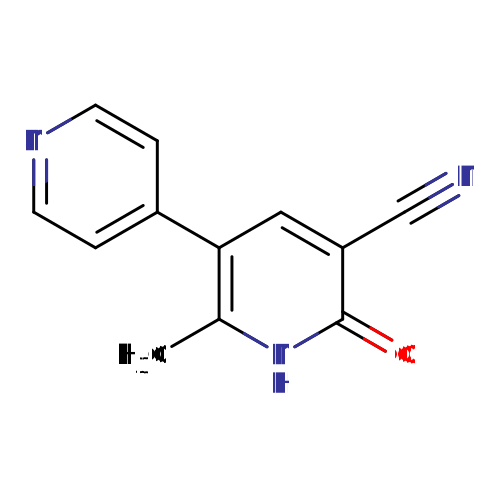
Structure for Milrinone (DB00235)
- Weight
- Average: 211.2194
Monoisotopic: 211.074561925 - Chemical Formula
- C12H9N3O
- Synonyms
- 1,6-Dihydro-2-methyl-6-oxo(3,4'-bipyridine)-5-carbonitrile
- Milrinona
- Milrinone
- Milrinonum
- External IDs
- WIN 47,203-2

Pharmacology
- Indication
Milrinone is indicated for the short-term (48 hours or less) treatment of patients with acute decompensated heart failure. Milrinone administration should occur together with close monitoring using appropriate electrocardiographic equipment and should occur in a facility equipped for the immediate treatment of potential cardiac events, including ventricular arrhythmias.8
 Reduce drug development failure ratesBuild, train, & validate machine-learning modelswith evidence-based and structured datasets.Build, train, & validate predictive machine-learning models with structured datasets.
- Associated Conditions
Indication Type Indication Combined Product Details Approval Level Age Group Patient Characteristics Dose Form Treatment of Acute decompensated heart failure •••••••••••• ••••••• •••••••••• •••••••• Treatment of Congestive heart failure •••••••••••• - Contraindications & Blackbox Warnings
 Prevent Adverse Drug Events TodayTap into our Clinical API for life-saving information on contraindications & blackbox warnings, population restrictions, harmful risks, & more.Avoid life-threatening adverse drug events with our Clinical API
- Pharmacodynamics
Milrinone is a bipyridine derivative with positive inotropic and lusitropic effects that also results in peripheral vasodilation with minimal chronotropic effects over a therapeutic range of 100 to 300 ng/mL.8,6 As such, milrinone is used in decompensated congestive heart failure.8 Studies have demonstrated that milrinone exhibits sigmoidal effects, such that increasing milrinone plasma concentrations beyond a certain level results in no further hemodynamic changes.6 Despite milrinone's benefits, both intravenous and oral use has been associated with increased frequency of ventricular arrhythmias, and long-term oral use has been associated with an increased risk of sudden death; in general, there are no data to support the safety or efficacy of milrinone use beyond 48 hours and patients should be monitored closely for cardiac dysfunction.8 Also, as milrinone is primarily excreted renally, dose adjustments may be required in patients with impaired renal function.8
- Mechanism of action
Heart failure is a condition characterized by the heart's inability to provide adequate perfusion to the peripheral tissues, resulting in systemic symptoms including pulmonary, gastrointestinal, renal, and cerebral dysfunction.1 Although the biochemical and physiological processes underlying heart failure complex and variable, one such physiological response regulated by the sympathetic nervous system involves the eventual downregulation of cardiac β-receptors, decreased catecholamine sensitivity, and a corresponding decrease in adenylyl-cyclase-mediated signalling pathways.1 Increased intracellular cAMP, mainly acting through protein kinase A, increases sarcolemmal calcium release through L-type calcium channels as well as calcium re-uptake mediated by phospholamban and troponin I; these actions correspond to positive inotropic and lusitropic effects, respectively.1,2
Milrinone is a partial competitive inhibitor of phosphodiesterase III (PDE-III), with a measured IC50 value of between 0.66 and 1.3 μM.3,7 As a PDE-III inhibitor, milrinone results in an increase in intracellular cAMP, responsible for its pharmacological effects, including positive inotropy, positive lusitropy, and vasodilation.1,2,4 As milrinone affects cAMP levels through PDE-III and not through β-adrenergic receptors, it is effective in patients who have downregulated or otherwise desensitized β-adrenergic receptors and can be administered together with β-agonists/antagonists.5,6
Target Actions Organism AcGMP-inhibited 3',5'-cyclic phosphodiesterase A inhibitorHumans - Absorption
When administered as an IV bolus dose of 10-100 μg/kg, milrinone induces hemodynamic effects within 60 seconds reaching a peak effect by 2-5 minutes.2 The plasma AUC is significantly dose-dependent.8
- Volume of distribution
Milrinone administered intravenously to congestive heart failure patients had a volume of distribution of 0.38 L/kg (injections between 12.5-125 μg/kg) and 0.45 L/kg (infusions between 0.2-0.7 μg/kg/min.8
- Protein binding
Milrinone is approximately 70% bound to human plasma proteins.8
- Metabolism
Animal studies suggest that two oxidative pathways are involved in milrinone metabolism, albeit only involving a small proportion of the administered dose. The major metabolite is the O-glucuronide metabolite.2,8
- Route of elimination
Milrinone is primarily excreted in the urine, with 60% of a dose recovered after two hours and 90% within eight hours. Approximately 83% of milrinone recovered in urine is unchanged while 12% is present as the main O-glucuronide metabolite.2,6,8
- Half-life
Milrinone administered intravenously to congestive heart failure patients had a mean terminal elimination half-life of 2.3 hours (injections between 12.5-125 μg/kg) and 2.4 hours (infusions between 0.2-0.7 μg/kg/min.8
- Clearance
Milrinone administered intravenously to congestive heart failure patients had a clearance of 0.13 L/kg/hr (injections between 12.5-125 μg/kg) and 0.14 L/kg/hr (infusions between 0.2-0.7 μg/kg/min.8
- Adverse Effects
 Improve decision support & research outcomesWith structured adverse effects data, including: blackbox warnings, adverse reactions, warning & precautions, & incidence rates. View sample adverse effects data in our new Data Library!Improve decision support & research outcomes with our structured adverse effects data.
- Toxicity
Toxicity information regarding milrinone is not readily available. Patients experiencing an overdose are at an increased risk of severe adverse effects such as hypotension and adverse cardiac events such as ventricular arrhythmias. Symptomatic and supportive measures are recommended.8
- Pathways
- Not Available
- Pharmacogenomic Effects/ADRs
- Not Available
Interactions
- Drug Interactions
- This information should not be interpreted without the help of a healthcare provider. If you believe you are experiencing an interaction, contact a healthcare provider immediately. The absence of an interaction does not necessarily mean no interactions exist.
Drug Interaction Integrate drug-drug
interactions in your softwareAbacavir Milrinone may decrease the excretion rate of Abacavir which could result in a higher serum level. Aceclofenac Aceclofenac may decrease the excretion rate of Milrinone which could result in a higher serum level. Acemetacin Acemetacin may decrease the excretion rate of Milrinone which could result in a higher serum level. Acetaminophen Milrinone may decrease the excretion rate of Acetaminophen which could result in a higher serum level. Acetazolamide Acetazolamide may increase the excretion rate of Milrinone which could result in a lower serum level and potentially a reduction in efficacy. - Food Interactions
- No interactions found.
Products
 Drug product information from 10+ global regionsOur datasets provide approved product information including:dosage, form, labeller, route of administration, and marketing period.Access drug product information from over 10 global regions.
- Product Ingredients
Ingredient UNII CAS InChI Key Milrinone lactate 9K8XR81MO8 100286-97-3 VWUPWEAFIOQCGF-UHFFFAOYSA-N - International/Other Brands
- Corotrop / Corotrope / Milrila
- Brand Name Prescription Products
Name Dosage Strength Route Labeller Marketing Start Marketing End Region Image Milrinone Injection Solution 1 mg / mL Intravenous TEVA Canada Limited 2003-05-25 2015-07-22 Canada 
Milrinone Lactate Injection, solution 1 mg/1mL Intravenous Hospira, Inc. 2006-07-17 2006-07-17 US 
Milrinone Lactate in Dextrose Injection 200 ug/1mL Intravenous Baxter Healthcare Corporation 2006-07-27 2006-07-27 US Milrinone Lactate Injection Solution 1 mg / mL Intravenous Auro Pharma Inc 2018-12-24 Not applicable Canada Milrinone Lactate Injection Solution 1 mg / mL Intravenous Strides Pharma Canada Inc Not applicable Not applicable Canada - Generic Prescription Products
Name Dosage Strength Route Labeller Marketing Start Marketing End Region Image Apo-milrinone Injectable Solution 1.0 mg / mL Intravenous Apotex Corporation 2005-07-29 2013-08-02 Canada Milrinone Lactate Injection 1 mg/1mL Intravenous Bedford Pharmaceuticals 2002-05-27 2015-05-31 US Milrinone Lactate Injection, solution 200 ug/1mL Intravenous Hospira, Inc. 2005-06-24 Not applicable US Milrinone Lactate Injection, solution 1 mg/1mL Intravenous Shandong New Time Pharmaceutical Co., Ltd. 2023-02-28 Not applicable US Milrinone Lactate Injection, solution 1 mg/1mL Intravenous Hikma Farmaceutica 2010-12-03 2010-12-03 US - Mixture Products
Name Ingredients Dosage Route Labeller Marketing Start Marketing End Region Image Milrinone Lactate in Dextrose Milrinone lactate (200 ug/1mL) + D-glucose monohydrate (49.4 mg/1mL) Injection Intravenous B. Braun Medical Inc. 2007-10-29 Not applicable US
Categories
- ATC Codes
- C01CE02 — Milrinone
- Drug Categories
- Amines
- Aminopyridines
- Cardiac Stimulants Excl. Cardiac Glycosides
- Cardiac Therapy
- Cardiotonic Agents
- Cardiovascular Agents
- Compounds used in a research, industrial, or household setting
- Drugs that are Mainly Renally Excreted
- Enzyme Inhibitors
- Hematologic Agents
- Phosphodiesterase 3 Inhibitors
- Phosphodiesterase Inhibitors
- Protective Agents
- Pyridines
- Vasodilating Agents
- Chemical TaxonomyProvided by Classyfire
- Description
- This compound belongs to the class of organic compounds known as bipyridines and oligopyridines. These are organic compounds containing two pyridine rings linked to each other.
- Kingdom
- Organic compounds
- Super Class
- Organoheterocyclic compounds
- Class
- Pyridines and derivatives
- Sub Class
- Bipyridines and oligopyridines
- Direct Parent
- Bipyridines and oligopyridines
- Alternative Parents
- 3-pyridinecarbonitriles / Methylpyridines / Hydroxypyridines / Heteroaromatic compounds / Nitriles / Azacyclic compounds / Organopnictogen compounds / Organooxygen compounds / Hydrocarbon derivatives
- Substituents
- 3-pyridinecarbonitrile / Aromatic heteromonocyclic compound / Azacycle / Bipyridine / Carbonitrile / Heteroaromatic compound / Hydrocarbon derivative / Hydroxypyridine / Methylpyridine / Nitrile
- Molecular Framework
- Aromatic heteromonocyclic compounds
- External Descriptors
- nitrile, pyridone, bipyridines (CHEBI:50693)
- Affected organisms
- Humans and other mammals
Chemical Identifiers
- UNII
- JU9YAX04C7
- CAS number
- 78415-72-2
- InChI Key
- PZRHRDRVRGEVNW-UHFFFAOYSA-N
- InChI
- InChI=1S/C12H9N3O/c1-8-11(9-2-4-14-5-3-9)6-10(7-13)12(16)15-8/h2-6H,1H3,(H,15,16)
- IUPAC Name
- 2-methyl-6-oxo-1,6-dihydro-[3,4'-bipyridine]-5-carbonitrile
- SMILES
- CC1=C(C=C(C#N)C(=O)N1)C1=CC=NC=C1
References
- Synthesis Reference
Baldev Singh, "Preparation of 1,2-dihydro-6-(lower alkyl)-2-oxo-5-(pyridinyl)nicotinonitriles." U.S. Patent US4413127A, issued November 1, 1983.
- General References
- Tanai E, Frantz S: Pathophysiology of Heart Failure. Compr Physiol. 2015 Dec 15;6(1):187-214. doi: 10.1002/cphy.c140055. [Article]
- Shipley JB, Tolman D, Hastillo A, Hess ML: Milrinone: basic and clinical pharmacology and acute and chronic management. Am J Med Sci. 1996 Jun;311(6):286-91. doi: 10.1097/00000441-199606000-00011. [Article]
- Kariya T, Wille LJ, Dage RC: Biochemical studies on the mechanism of cardiotonic activity of MDL 17,043. J Cardiovasc Pharmacol. 1982 May-Jun;4(3):509-14. doi: 10.1097/00005344-198205000-00024. [Article]
- Colucci WS: Myocardial and vascular actions of milrinone. Eur Heart J. 1989 Aug;10 Suppl C:32-8. doi: 10.1093/eurheartj/10.suppl_c.32. [Article]
- Kislitsina ON, Rich JD, Wilcox JE, Pham DT, Churyla A, Vorovich EB, Ghafourian K, Yancy CW: Shock - Classification and Pathophysiological Principles of Therapeutics. Curr Cardiol Rev. 2019;15(2):102-113. doi: 10.2174/1573403X15666181212125024. [Article]
- Chong LYZ, Satya K, Kim B, Berkowitz R: Milrinone Dosing and a Culture of Caution in Clinical Practice. Cardiol Rev. 2018 Jan/Feb;26(1):35-42. doi: 10.1097/CRD.0000000000000165. [Article]
- Zhang W, Ke H, Colman RW: Identification of interaction sites of cyclic nucleotide phosphodiesterase type 3A with milrinone and cilostazol using molecular modeling and site-directed mutagenesis. Mol Pharmacol. 2002 Sep;62(3):514-20. [Article]
- FDA Approved Drug Products: PRIMACOR (milrinone) injection [Link]
- MSDS: milrinone [Link]
- External Links
- Human Metabolome Database
- HMDB0014380
- KEGG Drug
- D00417
- KEGG Compound
- C07224
- PubChem Compound
- 4197
- PubChem Substance
- 46507838
- ChemSpider
- 4052
- BindingDB
- 15296
- 52769
- ChEBI
- 50693
- ChEMBL
- CHEMBL189
- ZINC
- ZINC000009224016
- Therapeutic Targets Database
- DAP000150
- PharmGKB
- PA164749171
- PDBe Ligand
- MIL
- RxList
- RxList Drug Page
- Drugs.com
- Drugs.com Drug Page
- Wikipedia
- Milrinone
- PDB Entries
- 1tlm
- FDA label
- Download (491 KB)
- MSDS
- Download (34.8 KB)
Clinical Trials
- Clinical Trials
Phase Status Purpose Conditions Count 4 Completed Treatment Acute Coronary Syndrome (ACS) / Low Cardiac Output Syndrome / Pulmonary Edemas / Shock, Cardiogenic 1 4 Recruiting Supportive Care Pulmonary Hypertension Due to Left Heart Disease 1 4 Recruiting Treatment Anesthesia therapy 1 4 Recruiting Treatment Shock, Cardiogenic 1 4 Unknown Status Treatment Cardiomyopathy / Septic Shock 1
Pharmacoeconomics
- Manufacturers
- App pharmaceuticals llc
- Baxter healthcare corp anesthesia and critical care
- Baxter healthcare corp anesthesia critical care
- Bedford laboratories div ben venue laboratories inc
- Bioniche pharma usa llc
- Claris lifesciences ltd
- Gland pharma ltd
- Hospira inc
- International medicated systems ltd
- B braun medical inc
- Baxter healthcare corp
- Bedford laboratories
- Hikma farmaceutica (portugal) sa
- Sanofi aventis us llc
- Packagers
- Alchymars SPA
- Apotex Inc.
- APP Pharmaceuticals
- B. Braun Melsungen AG
- Baxter International Inc.
- Bedford Labs
- Ben Venue Laboratories Inc.
- Bioniche Pharma
- Cardinal Health
- Hospira Inc.
- Sanofi-Aventis Inc.
- Teva Pharmaceutical Industries Ltd.
- Dosage Forms
Form Route Strength Solution Intravenous 1.0 mg / mL Solution Intravenous 10.00 mg Injection, solution Parenteral 10 mg Solution Intravenous 1000000 mg Injection Intravenous Solution Intravenous 10 mg/10ml Injection, solution Intravenous 1 mg/ml Injection, solution Parenteral 1 mg/ml Solution Intravenous 20 mg Solution Intravenous 10 mg Solution Intravenous 0.01 g Solution Intravenous 1 mg Solution Intravenous 22.5 mg/150ml Injection Intravenous 1 mg/1mL Injection Intravenous 20 mg/100mL Injection, solution Intravenous 200 ug/1mL Injection Intravenous Injection Intravenous 200 ug/1mL Injection, solution Intravenous 0.2 mg/1mL Solution Intravenous 1 mg / mL Injection, solution, concentrate Intravenous 1 mg/mL Tablet Oral 10 mg Injection, solution Intravenous 20 mg/100ml Solution Intravenous 20.0 mg Injection, solution Intravenous 1 mg/1mL Solution Intravenous 1 mg/1ml Solution Intravenous 1.000 mg Injection Intravenous 1 mg Injection Intravenous 1 MG/ML Solution Intravenous 10.000 mg Solution Intravenous 20.000 mg - Prices
Unit description Cost Unit Primacor 0.2 mg/ml-d5w 100 ml 1.6USD ml Milrinone-d5w 20 mg/100 ml 1.45USD ml Milrinone lact 20 mg/20 ml vial 1.44USD ml Milrinone lact 10 mg/10 ml vial 1.31USD ml DrugBank does not sell nor buy drugs. Pricing information is supplied for informational purposes only.- Patents
- Not Available
Properties
- State
- Solid
- Experimental Properties
Property Value Source melting point (°C) >300 °C ChemSpider water solubility <1 mg/mL ChemSpider - Predicted Properties
Property Value Source Water Solubility 0.209 mg/mL ALOGPS logP 1.04 ALOGPS logP 0.33 Chemaxon logS -3 ALOGPS pKa (Strongest Acidic) 7.54 Chemaxon pKa (Strongest Basic) 4.82 Chemaxon Physiological Charge 0 Chemaxon Hydrogen Acceptor Count 3 Chemaxon Hydrogen Donor Count 1 Chemaxon Polar Surface Area 65.78 Å2 Chemaxon Rotatable Bond Count 1 Chemaxon Refractivity 61.14 m3·mol-1 Chemaxon Polarizability 21.45 Å3 Chemaxon Number of Rings 2 Chemaxon Bioavailability 1 Chemaxon Rule of Five Yes Chemaxon Ghose Filter Yes Chemaxon Veber's Rule No Chemaxon MDDR-like Rule No Chemaxon - Predicted ADMET Features
Property Value Probability Human Intestinal Absorption + 1.0 Blood Brain Barrier + 0.9807 Caco-2 permeable + 0.6889 P-glycoprotein substrate Non-substrate 0.8041 P-glycoprotein inhibitor I Non-inhibitor 0.7835 P-glycoprotein inhibitor II Non-inhibitor 0.9799 Renal organic cation transporter Non-inhibitor 0.8614 CYP450 2C9 substrate Non-substrate 0.7016 CYP450 2D6 substrate Non-substrate 0.8411 CYP450 3A4 substrate Non-substrate 0.5641 CYP450 1A2 substrate Inhibitor 0.5399 CYP450 2C9 inhibitor Non-inhibitor 0.9071 CYP450 2D6 inhibitor Non-inhibitor 0.9816 CYP450 2C19 inhibitor Non-inhibitor 0.9025 CYP450 3A4 inhibitor Non-inhibitor 0.8827 CYP450 inhibitory promiscuity Low CYP Inhibitory Promiscuity 0.7866 Ames test Non AMES toxic 0.7822 Carcinogenicity Non-carcinogens 0.9351 Biodegradation Not ready biodegradable 0.993 Rat acute toxicity 2.5820 LD50, mol/kg Not applicable hERG inhibition (predictor I) Weak inhibitor 0.991 hERG inhibition (predictor II) Non-inhibitor 0.8941
Spectra
- Mass Spec (NIST)
- Not Available
- Spectra
- Chromatographic Properties
Collision Cross Sections (CCS)
Adduct CCS Value (Å2) Source type Source [M-H]- 156.6722367 predictedDarkChem Lite v0.1.0 [M-H]- 151.3873217 predictedDarkChem Lite v0.1.0 [M-H]- 156.6249367 predictedDarkChem Lite v0.1.0 [M-H]- 149.42928 predictedDeepCCS 1.0 (2019) [M+H]+ 157.0736367 predictedDarkChem Lite v0.1.0 [M+H]+ 149.6248963 predictedDarkChem Lite v0.1.0 [M+H]+ 157.5863367 predictedDarkChem Lite v0.1.0 [M+H]+ 151.82484 predictedDeepCCS 1.0 (2019) [M+Na]+ 156.5707367 predictedDarkChem Lite v0.1.0 [M+Na]+ 178.6183122 predictedDarkChem Lite v0.1.0 [M+Na]+ 156.5325367 predictedDarkChem Lite v0.1.0 [M+Na]+ 157.75722 predictedDeepCCS 1.0 (2019)
Targets

- Kind
- Protein
- Organism
- Humans
- Pharmacological action
- Yes
- Actions
- Inhibitor
- Curator comments
- Milrinone has a measured IC50 value of between 0.66 and 1.3 μM.
- General Function
- Metal ion binding
- Specific Function
- Cyclic nucleotide phosphodiesterase with a dual-specificity for the second messengers cAMP and cGMP, which are key regulators of many important physiological processes.
- Gene Name
- PDE3A
- Uniprot ID
- Q14432
- Uniprot Name
- cGMP-inhibited 3',5'-cyclic phosphodiesterase A
- Molecular Weight
- 124978.06 Da
References
- Cone J, Wang S, Tandon N, Fong M, Sun B, Sakurai K, Yoshitake M, Kambayashi J, Liu Y: Comparison of the effects of cilostazol and milrinone on intracellular cAMP levels and cellular function in platelets and cardiac cells. J Cardiovasc Pharmacol. 1999 Oct;34(4):497-504. [Article]
- Kuthe A, Magert H, Uckert S, Forssmann WG, Stief CG, Jonas U: Gene expression of the phosphodiesterases 3A and 5A in human corpus cavernosum penis. Eur Urol. 2000 Jul;38(1):108-14. [Article]
- Lefievre L, de Lamirande E, Gagnon C: Presence of cyclic nucleotide phosphodiesterases PDE1A, existing as a stable complex with calmodulin, and PDE3A in human spermatozoa. Biol Reprod. 2002 Aug;67(2):423-30. [Article]
- Zhang W, Ke H, Colman RW: Identification of interaction sites of cyclic nucleotide phosphodiesterase type 3A with milrinone and cilostazol using molecular modeling and site-directed mutagenesis. Mol Pharmacol. 2002 Sep;62(3):514-20. [Article]
- Shakur Y, Fong M, Hensley J, Cone J, Movsesian MA, Kambayashi J, Yoshitake M, Liu Y: Comparison of the effects of cilostazol and milrinone on cAMP-PDE activity, intracellular cAMP and calcium in the heart. Cardiovasc Drugs Ther. 2002 Sep;16(5):417-27. [Article]
- Chen X, Ji ZL, Chen YZ: TTD: Therapeutic Target Database. Nucleic Acids Res. 2002 Jan 1;30(1):412-5. [Article]
- Kariya T, Wille LJ, Dage RC: Biochemical studies on the mechanism of cardiotonic activity of MDL 17,043. J Cardiovasc Pharmacol. 1982 May-Jun;4(3):509-14. doi: 10.1097/00005344-198205000-00024. [Article]

Drug created at June 13, 2005 13:24 / Updated at April 24, 2024 14:30