Identification
- Summary
Dexrazoxane is a cytoprotective drug used to prevent and improve cardiomyopathy associated with doxorubicin treatment for metastatic breast cancer.
- Brand Names
- Cardioxane, Savene, Totect, Zinecard
- Generic Name
- Dexrazoxane
- DrugBank Accession Number
- DB00380
- Background
An antimitotic agent with immunosuppressive properties. Dexrazoxane, the (+)-enantiomorph of razoxane, provides cardioprotection against anthracycline toxicity. It appears to inhibit formation of a toxic iron-anthracycline complex. [PubChem] The Food and Drug Administration has designated dexrazoxane as an orphan drug for use in the prevention or reduction in the incidence and severity of anthracycline-induced cardiomyopathy.
- Type
- Small Molecule
- Groups
- Approved, Withdrawn
- Structure
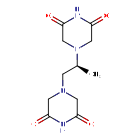
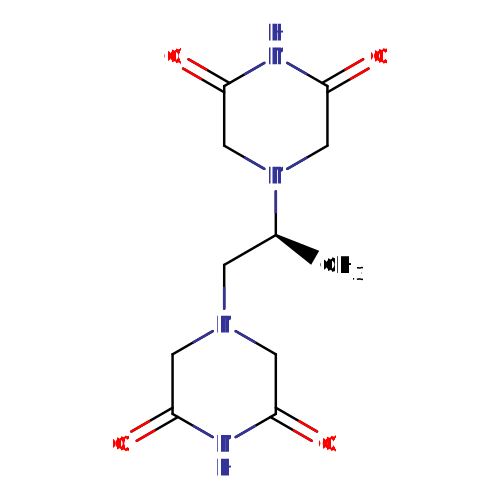
Structure for Dexrazoxane (DB00380)
- Weight
- Average: 268.2691
Monoisotopic: 268.11715502 - Chemical Formula
- C11H16N4O4
- Synonyms
- (+)-(S)-4,4'-Propylenedi-2,6-piperazinedione
- (+)-1,2-Bis(3,5-dioxo-1-piperazinyl)propane
- 4-[(2S)-2-(3,5-dioxopiperazin-1-yl)propyl]piperazine-2,6-dione
- Dexrazoxan
- Dexrazoxane
- Dexrazoxano
- Dexrazoxanum
- Dextrorazoxane
- External IDs
- ADR 529
- ADR-529
- ICRF-187
- NSC 169780
- NSC-169780

Pharmacology
- Indication
For reducing the incidence and severity of cardiomyopathy associated with doxorubicin administration in women with metastatic breast cancer who have received a cumulative doxorubicin hydrochloride dose of 300 mg/m^2 and would benefit from continued doxorubicin therapy. Also approved for the treatment of extravasation from intravenous anthracyclines.
 Reduce drug development failure ratesBuild, train, & validate machine-learning modelswith evidence-based and structured datasets.Build, train, & validate predictive machine-learning models with structured datasets.
- Associated Conditions
Indication Type Indication Combined Product Details Approval Level Age Group Patient Characteristics Dose Form Prophylaxis of Doxorubicin induced cardiomyopathy •••••••••••• •••••••••• •••••• •••••• Treatment of Drug extravasation •••••••••••• - Contraindications & Blackbox Warnings
 Prevent Adverse Drug Events TodayTap into our Clinical API for life-saving information on contraindications & blackbox warnings, population restrictions, harmful risks, & more.Avoid life-threatening adverse drug events with our Clinical API
- Pharmacodynamics
Dexrazoxane is a cardioprotective agent for use in conjunction with doxorubicin indicated for reducing the incidence and severity of cardiomyopathy associated with doxorubicin administration in women with metastatic breast cancer who have received a cumulative doxorubicin dose. Patients receiving anthracycline-derivative antineoplastic agents may experience three types of cardiotoxicity: acute transient type; chronic, subacute type (related to cumulative dose and has a more indolent onset later on); and a late-onset type that manifests years after therapy, mainly in patients that have been exposed to the drug as a child. Although the exact mechanism of anthracycline-induced cardiotoxicity is not known, it has shown to exert a variety of actions that may result in the development of cardiotoxicity. In animals, anthracyclines cause a selective inhibition of cardiac muscle gene expression for α-actin, troponin, myosin light-chain 2, and the M isoform of creatine kinase. This may lead to myofibrillar loss associated with anthracycline-induced cardiotoxicity. Anthracyclines may also cause myocyte damage via calcium overload, altered myocardial adrenergic function, release of vasoactive amines, and proinflammatory cytokines. Furthermore, it has been suggested that the main cause of anthracycline-induced cardiotoxicity is associated with free-radical damage to DNA. The drugs intercalate DNA, chelate metal ions to produce drug-metal complexes, and generate superoxide radicals via oxidation-reduction reactions. Anthracyclines also contain a quinone structure that can undergo reduction via NADPH-dependent reactions to produce a semiquinone free radical that initiates a cascade of superoxide and hydroxide radical generation. Chelation of metal ions, particularly iron, by anthracyclines results in an anthracycline-metal complex that catalyzes the generation of reactive oxygen free radicals. This complex is a powerful oxidant that can initiate lipid peroxidation in the absence of oxygen free radicals. The toxicity induced by antrhacyclines may be exacerbated in cardiac cells, as these cells do not possess sufficient amounts of certain enzymes (e.g., superoxide dismutase, catalase, glutathione peroxidase) involved in detoxifying free radicals and protecting the cells from subsequent damage.
- Mechanism of action
The mechanism by which dexrazoxane exerts its cardioprotective activity is not fully understood. Dexrazoxane is a cyclic derivative of EDTA that readily penetrates cell membranes. Results of laboratory studies suggest that dexrazoxane (a prodrug) is converted intracellularly to a ring-opened bidentate chelating agent that chelates to free iron and interferes with iron-mediated free radical generation thought to be responsible, in part, for anthracycline-induced cardiomyopathy. It should be noted that dexrazoxane may also be protective through its inhibitory effect on topoisomerase II.
Target Actions Organism ADNA topoisomerase 2-alpha inhibitorHumans UDNA topoisomerase 2-beta Not Available Humans - Absorption
IV administration results in complete bioavailability.
- Volume of distribution
- 9 to 22.6 L/m^2
- Protein binding
Very low (< 2%)
- Metabolism
Dexrazoxane is hydrolysed by the enzyme dihydropyrimidine amidohydrolase in the liver and kidney to active metabolites that are capable of binding to metal ions.
- Route of elimination
Urinary excretion plays an important role in the elimination of dexrazoxane. Forty-two percent of the 500 mg/m2 dose of dexrazoxane was excreted in the urine.
- Half-life
2.5 hours
- Clearance
- 7.88 L/h/m2 [dose of 50 mg/m2 Doxorubicin and 500 mg/m2 Dexrazoxane]
- 6.25 L/h/m2 [dose of 60 mg/m2 Doxorubicin and 600 mg/m2 Dexrazoxane]
- Adverse Effects
 Improve decision support & research outcomesWith structured adverse effects data, including: blackbox warnings, adverse reactions, warning & precautions, & incidence rates. View sample adverse effects data in our new Data Library!Improve decision support & research outcomes with our structured adverse effects data.
- Toxicity
Intraperitoneal, mouse LD10 = 500 mg/kg. Intravenous, dog LD10 = 2 gm/kg.
- Pathways
- Not Available
- Pharmacogenomic Effects/ADRs
- Not Available
Interactions
- Drug Interactions
- This information should not be interpreted without the help of a healthcare provider. If you believe you are experiencing an interaction, contact a healthcare provider immediately. The absence of an interaction does not necessarily mean no interactions exist.
Drug Interaction Integrate drug-drug
interactions in your softwareAbacavir Dexrazoxane may decrease the excretion rate of Abacavir which could result in a higher serum level. Abatacept The risk or severity of adverse effects can be increased when Dexrazoxane is combined with Abatacept. Abciximab The risk or severity of bleeding can be increased when Abciximab is combined with Dexrazoxane. Aceclofenac Aceclofenac may decrease the excretion rate of Dexrazoxane which could result in a higher serum level. Acemetacin Acemetacin may decrease the excretion rate of Dexrazoxane which could result in a higher serum level. - Food Interactions
- No interactions found.
Products
 Drug product information from 10+ global regionsOur datasets provide approved product information including:dosage, form, labeller, route of administration, and marketing period.Access drug product information from over 10 global regions.
- Product Ingredients
Ingredient UNII CAS InChI Key Dexrazoxane hydrochloride 5346058Q7S 149003-01-0 BIFMNMPSIYHKDN-FJXQXJEOSA-N - International/Other Brands
- Ao Nuo Xian (AosaiKang Pharmaceutical) / Cardioxane (Novartis)
- Brand Name Prescription Products
Name Dosage Strength Route Labeller Marketing Start Marketing End Region Image Cardioxane Injection, powder, for solution 500 mg/1 Intravenous Clinigen Healthcare Ltd 2017-07-28 Not applicable US 
Dexrazoxane for Injection Powder, for solution 500 mg / vial Intravenous Juno Pharmaceuticals Corp. Not applicable Not applicable Canada 
Dexrazoxane for Injection Powder, for solution 250 mg / vial Intravenous Juno Pharmaceuticals Corp. Not applicable Not applicable Canada Savene Injection, solution, concentrate 20 mg/ml Intravenous Clinigen Healthcare B.V. 2016-09-08 Not applicable EU 
Totect Injection, powder, lyophilized, for solution 500 mg/1 Intravenous Clinigen Limited 2020-01-01 2022-11-30 US - Generic Prescription Products
Name Dosage Strength Route Labeller Marketing Start Marketing End Region Image Dexrazoxane Injection, powder, lyophilized, for solution 250 mg/25mL Intravenous Gland Pharma Limited 2019-12-16 Not applicable US Dexrazoxane Injection, powder, lyophilized, for solution 250 mg/25mL Intravenous Fosun Pharma USA Inc. 2021-11-01 Not applicable US Dexrazoxane Kit 10 mg/1mL Intravenous Bedford Pharmaceuticals 2005-03-31 2013-05-31 US Dexrazoxane Injection, powder, lyophilized, for solution 500 mg/50mL Intravenous Alvogen Inc. 2017-09-01 2021-12-01 US Dexrazoxane Injection, powder, lyophilized, for solution; Kit 500 mg/50mL Intravenous Eugia US LLC 2016-05-12 Not applicable US - Unapproved/Other Products
Name Ingredients Dosage Route Labeller Marketing Start Marketing End Region Image Cardioxane Dexrazoxane hydrochloride (500 mg/1) Injection, powder, for solution Intravenous Clinigen Healthcare Ltd 2017-07-28 Not applicable US
Categories
- ATC Codes
- V03AF02 — Dexrazoxane
- Drug Categories
- Cardiotonic Agents
- Cardiovascular Agents
- Compounds used in a research, industrial, or household setting
- Cytoprotective Agent
- Detoxifying Agents for Antineoplastic Treatment
- Diketopiperazines
- Drugs that are Mainly Renally Excreted
- Enzyme Inhibitors
- Immunosuppressive Agents
- Miscellaneous Therapeutic Agents
- Myelosuppressive Agents
- Piperazines
- Protective Agents
- Topoisomerase II Inhibitors
- Topoisomerase Inhibitors
- Chemical TaxonomyProvided by Classyfire
- Description
- This compound belongs to the class of organic compounds known as alpha amino acids and derivatives. These are amino acids in which the amino group is attached to the carbon atom immediately adjacent to the carboxylate group (alpha carbon), or a derivative thereof.
- Kingdom
- Organic compounds
- Super Class
- Organic acids and derivatives
- Class
- Carboxylic acids and derivatives
- Sub Class
- Amino acids, peptides, and analogues
- Direct Parent
- Alpha amino acids and derivatives
- Alternative Parents
- Dioxopiperazines / N-alkylpiperazines / N-unsubstituted carboxylic acid imides / Dicarboximides / Trialkylamines / Azacyclic compounds / Organopnictogen compounds / Organic oxides / Hydrocarbon derivatives / Carbonyl compounds
- Substituents
- 1,4-diazinane / Aliphatic heteromonocyclic compound / Alpha-amino acid or derivatives / Amine / Azacycle / Carbonyl group / Carboxylic acid imide / Carboxylic acid imide, n-unsubstituted / Dicarboximide / Dioxopiperazine
- Molecular Framework
- Aliphatic heteromonocyclic compounds
- External Descriptors
- razoxane (CHEBI:50223)
- Affected organisms
- Humans and other mammals
Chemical Identifiers
- UNII
- 048L81261F
- CAS number
- 24584-09-6
- InChI Key
- BMKDZUISNHGIBY-ZETCQYMHSA-N
- InChI
- InChI=1S/C11H16N4O4/c1-7(15-5-10(18)13-11(19)6-15)2-14-3-8(16)12-9(17)4-14/h7H,2-6H2,1H3,(H,12,16,17)(H,13,18,19)/t7-/m0/s1
- IUPAC Name
- 4-[(2S)-1-(3,5-dioxopiperazin-1-yl)propan-2-yl]piperazine-2,6-dione
- SMILES
- C[C@@H](CN1CC(=O)NC(=O)C1)N1CC(=O)NC(=O)C1
References
- General References
- Hasinoff BB, Herman EH: Dexrazoxane: how it works in cardiac and tumor cells. Is it a prodrug or is it a drug? Cardiovasc Toxicol. 2007;7(2):140-4. [Article]
- Hasinoff BB: The use of dexrazoxane for the prevention of anthracycline extravasation injury. Expert Opin Investig Drugs. 2008 Feb;17(2):217-23. doi: 10.1517/13543784.17.2.217. [Article]
- Kik K, Szmigiero L: [Dexrazoxane (ICRF-187)--a cardioprotectant and modulator of action of some anticancer drugs]. Postepy Hig Med Dosw (Online). 2006;60:584-90. [Article]
- Weiss G, Loyevsky M, Gordeuk VR: Dexrazoxane (ICRF-187). Gen Pharmacol. 1999 Jan;32(1):155-8. [Article]
- Langer SW: Dexrazoxane for anthracycline extravasation. Expert Rev Anticancer Ther. 2007 Aug;7(8):1081-8. [Article]
- External Links
- Human Metabolome Database
- HMDB0014524
- KEGG Drug
- D03730
- PubChem Compound
- 71384
- PubChem Substance
- 46505982
- ChemSpider
- 64479
- 42736
- ChEBI
- 50223
- ChEMBL
- CHEMBL1738
- ZINC
- ZINC000087515509
- Therapeutic Targets Database
- DAP000649
- PharmGKB
- PA449259
- PDBe Ligand
- CDX
- RxList
- RxList Drug Page
- Drugs.com
- Drugs.com Drug Page
- Wikipedia
- Dexrazoxane
- FDA label
- Download (162 KB)
- MSDS
- Download (161 KB)
Clinical Trials
- Clinical Trials
Phase Status Purpose Conditions Count 3 Active Not Recruiting Treatment Acute Lymphoblastic Leukemia, Pediatric 1 3 Active Not Recruiting Treatment Acute Myeloid Leukemia 1 3 Active Not Recruiting Treatment Ganglioneuroblastoma / Neuroblastoma (NB) 1 3 Active Not Recruiting Treatment Localized Extraskeletal Ewing Sarcoma / Peripheral primitive neuroectodermal bone tumour / Peripheral Primitive Neuroectodermal Tumor of Soft Tissues 1 3 Active Not Recruiting Treatment PRETEXT I Hepatoblastoma / PRETEXT II Hepatoblastoma / PRETEXT III Hepatoblastoma / PRETEXT IV Hepatoblastoma 1
Pharmacoeconomics
- Manufacturers
- Bedford laboratories div ben venue laboratories inc
- Topotarget as
- Pharmacia and upjohn co
- Packagers
- Bedford Labs
- Cardinal Health
- Catalent Pharma Solutions
- Oso Biopharmaceuticals Manufacturing LLC
- Pharmacia Inc.
- Dosage Forms
Form Route Strength Injection, powder, for solution Intravenous 500 mg/1 Powder, for solution Parenteral 500 MG Injection, powder, lyophilized, for solution Intravenous 500 mg Powder, for solution Injection, powder, for solution Parenteral 20 mg/ml Solution Intravenous 567.954 mg Injection, powder, lyophilized, for solution Intravenous 10 mg/1mL Injection, powder, lyophilized, for solution Intravenous 500 mg/50mL Injection, powder, lyophilized, for solution; kit Intravenous 250 mg/25mL Injection, powder, lyophilized, for solution; kit Intravenous 500 mg/50mL Injection, solution Intravenous 500 mg/50mL Kit Intravenous 10 mg/1mL Kit Intravenous 250 mg/25mL Kit Intravenous 500 mg/50mL Solution Intravenous 500.000 mg Injection Intravenous Injection, solution, concentrate Intravenous 20 mg/ml Injection, powder, lyophilized, for solution Intravenous 500 mg/1 Kit Intravenous 500 mg/1 Injection, powder, lyophilized, for solution Intravenous 250 mg/25mL Kit Intravenous Powder, for solution Intravenous 250 mg / vial Powder, for solution Intravenous 500 mg / vial Solution Parenteral 500.00 mg - Prices
Unit description Cost Unit Zinecard 500 mg vial 517.18USD vial Dexrazoxane 500 mg vial 492.55USD vial Zinecard 250 mg vial 258.59USD vial Dexrazoxane 250 mg vial 246.28USD vial DrugBank does not sell nor buy drugs. Pricing information is supplied for informational purposes only.- Patents
Patent Number Pediatric Extension Approved Expires (estimated) Region US5242901 No 1993-09-07 2010-09-07 US US6727253 No 2004-04-27 2020-03-13 US
Properties
- State
- Solid
- Experimental Properties
Property Value Source melting point (°C) 191-197 °C Not Available water solubility Sparingly soluble Not Available logP -2.6 Not Available pKa 2.1 Not Available - Predicted Properties
Property Value Source Water Solubility 10.4 mg/mL ALOGPS logP -1 ALOGPS logP -2.7 Chemaxon logS -1.4 ALOGPS pKa (Strongest Acidic) 11.2 Chemaxon pKa (Strongest Basic) 3.2 Chemaxon Physiological Charge 0 Chemaxon Hydrogen Acceptor Count 6 Chemaxon Hydrogen Donor Count 2 Chemaxon Polar Surface Area 98.82 Å2 Chemaxon Rotatable Bond Count 3 Chemaxon Refractivity 64.25 m3·mol-1 Chemaxon Polarizability 26.12 Å3 Chemaxon Number of Rings 2 Chemaxon Bioavailability 1 Chemaxon Rule of Five Yes Chemaxon Ghose Filter No Chemaxon Veber's Rule No Chemaxon MDDR-like Rule No Chemaxon - Predicted ADMET Features
Property Value Probability Human Intestinal Absorption + 0.8518 Blood Brain Barrier + 0.6387 Caco-2 permeable - 0.6144 P-glycoprotein substrate Substrate 0.8766 P-glycoprotein inhibitor I Inhibitor 0.6576 P-glycoprotein inhibitor II Non-inhibitor 0.9653 Renal organic cation transporter Non-inhibitor 0.7348 CYP450 2C9 substrate Non-substrate 0.8399 CYP450 2D6 substrate Non-substrate 0.7872 CYP450 3A4 substrate Substrate 0.5139 CYP450 1A2 substrate Non-inhibitor 0.9458 CYP450 2C9 inhibitor Non-inhibitor 0.8828 CYP450 2D6 inhibitor Non-inhibitor 0.9348 CYP450 2C19 inhibitor Non-inhibitor 0.7777 CYP450 3A4 inhibitor Non-inhibitor 0.9666 CYP450 inhibitory promiscuity Low CYP Inhibitory Promiscuity 0.9741 Ames test Non AMES toxic 0.9132 Carcinogenicity Non-carcinogens 0.9077 Biodegradation Not ready biodegradable 0.991 Rat acute toxicity 2.4267 LD50, mol/kg Not applicable hERG inhibition (predictor I) Weak inhibitor 0.941 hERG inhibition (predictor II) Non-inhibitor 0.8929
Spectra
- Mass Spec (NIST)
- Not Available
- Spectra
Spectrum Spectrum Type Splash Key Predicted GC-MS Spectrum - GC-MS Predicted GC-MS splash10-0m2c-4910000000-46d13032d5f2c6472d9b Predicted MS/MS Spectrum - 10V, Positive (Annotated) Predicted LC-MS/MS splash10-0a4i-0900000000-9e1b04817c90f98306f4 Predicted MS/MS Spectrum - 10V, Negative (Annotated) Predicted LC-MS/MS splash10-014i-0090000000-afb87782d39b2c50eaf1 Predicted MS/MS Spectrum - 20V, Positive (Annotated) Predicted LC-MS/MS splash10-0a4i-3970000000-10b9a5dbbecd6fd7d882 Predicted MS/MS Spectrum - 20V, Negative (Annotated) Predicted LC-MS/MS splash10-0q4r-2890000000-2b7449d1e888abd162f6 Predicted MS/MS Spectrum - 40V, Positive (Annotated) Predicted LC-MS/MS splash10-0abc-6930000000-a32ad929c662f0dbf311 Predicted MS/MS Spectrum - 40V, Negative (Annotated) Predicted LC-MS/MS splash10-02ec-5940000000-a28bf93c039c3a0189b7 Predicted 1H NMR Spectrum 1D NMR Not Applicable Predicted 13C NMR Spectrum 1D NMR Not Applicable - Chromatographic Properties
Collision Cross Sections (CCS)
Adduct CCS Value (Å2) Source type Source [M-H]- 170.0846928 predictedDarkChem Lite v0.1.0 [M-H]- 168.2896928 predictedDarkChem Lite v0.1.0 [M-H]- 155.53235 predictedDeepCCS 1.0 (2019) [M+H]+ 171.1213928 predictedDarkChem Lite v0.1.0 [M+H]+ 168.5235928 predictedDarkChem Lite v0.1.0 [M+H]+ 157.8925 predictedDeepCCS 1.0 (2019) [M+Na]+ 170.5930928 predictedDarkChem Lite v0.1.0 [M+Na]+ 168.1259928 predictedDarkChem Lite v0.1.0 [M+Na]+ 164.0317 predictedDeepCCS 1.0 (2019)
Targets

- Kind
- Protein
- Organism
- Humans
- Pharmacological action
- Yes
- Actions
- Inhibitor
- General Function
- Ubiquitin binding
- Specific Function
- Control of topological states of DNA by transient breakage and subsequent rejoining of DNA strands. Topoisomerase II makes double-strand breaks. Essential during mitosis and meiosis for proper segr...
- Gene Name
- TOP2A
- Uniprot ID
- P11388
- Uniprot Name
- DNA topoisomerase 2-alpha
- Molecular Weight
- 174383.88 Da
References
- Hasinoff BB, Chee GL, Thampatty P, Allan WP, Yalowich JC: The cardioprotective and DNA topoisomerase II inhibitory agent dexrazoxane (ICRF-187) antagonizes camptothecin-mediated growth inhibition of Chinese hamster ovary cells by inhibition of DNA synthesis. Anticancer Drugs. 1999 Jan;10(1):47-54. [Article]
- Hasinoff BB, Abram ME, Barnabe N, Khelifa T, Allan WP, Yalowich JC: The catalytic DNA topoisomerase II inhibitor dexrazoxane (ICRF-187) induces differentiation and apoptosis in human leukemia K562 cells. Mol Pharmacol. 2001 Mar;59(3):453-61. [Article]
- Langer SW, Sehested M, Jensen PB: Dexrazoxane is a potent and specific inhibitor of anthracycline induced subcutaneous lesions in mice. Ann Oncol. 2001 Mar;12(3):405-10. [Article]
- Hasinoff BB, Takeda K, Ferrans VJ, Yu ZX: The doxorubicin cardioprotective agent dexrazoxane (ICRF-187) induces endopolyploidy in rat neonatal myocytes through inhibition of DNA topoisomerase II. Anticancer Drugs. 2002 Mar;13(3):255-8. [Article]
- Renodon-Corniere A, Jensen LH, Nitiss JL, Jensen PB, Sehested M: Analysis of bisdioxopiperazine dexrazoxane binding to human DNA topoisomerase II alpha: decreased binding as a mechanism of drug resistance. Biochemistry. 2003 Aug 19;42(32):9749-54. [Article]
- Chen X, Ji ZL, Chen YZ: TTD: Therapeutic Target Database. Nucleic Acids Res. 2002 Jan 1;30(1):412-5. [Article]
- Hasinoff BB, Herman EH: Dexrazoxane: how it works in cardiac and tumor cells. Is it a prodrug or is it a drug? Cardiovasc Toxicol. 2007;7(2):140-4. [Article]
- Kik K, Szmigiero L: [Dexrazoxane (ICRF-187)--a cardioprotectant and modulator of action of some anticancer drugs]. Postepy Hig Med Dosw (Online). 2006;60:584-90. [Article]
- Hasinoff BB, Abram ME, Chee GL, Huebner E, Byard EH, Barnabe N, Ferrans VJ, Yu ZX, Yalowich JC: The catalytic DNA topoisomerase II inhibitor dexrazoxane (ICRF-187) induces endopolyploidy in Chinese hamster ovary cells. J Pharmacol Exp Ther. 2000 Nov;295(2):474-83. [Article]
- Kind
- Protein
- Organism
- Humans
- Pharmacological action
- Unknown
- General Function
- Protein kinase c binding
- Specific Function
- Control of topological states of DNA by transient breakage and subsequent rejoining of DNA strands. Topoisomerase II makes double-strand breaks.
- Gene Name
- TOP2B
- Uniprot ID
- Q02880
- Uniprot Name
- DNA topoisomerase 2-beta
- Molecular Weight
- 183265.825 Da
References
- Overington JP, Al-Lazikani B, Hopkins AL: How many drug targets are there? Nat Rev Drug Discov. 2006 Dec;5(12):993-6. [Article]
- Imming P, Sinning C, Meyer A: Drugs, their targets and the nature and number of drug targets. Nat Rev Drug Discov. 2006 Oct;5(10):821-34. [Article]
- Berman HM, Westbrook J, Feng Z, Gilliland G, Bhat TN, Weissig H, Shindyalov IN, Bourne PE: The Protein Data Bank. Nucleic Acids Res. 2000 Jan 1;28(1):235-42. [Article]

Drug created at June 13, 2005 13:24 / Updated at April 19, 2024 20:55