Identification
- Summary
Carisoprodol is a centrally acting muscle relaxant used to relieve the discomfort associated with various musculoskeletal conditions.
- Brand Names
- Soma, Vanadom
- Generic Name
- Carisoprodol
- DrugBank Accession Number
- DB00395
- Background
Originally approved by the FDA in 1959 Label, carisoprodol is a centrally acting muscle relaxant used in painful musculoskeletal conditions in conjunction with physical therapy and other medications 4. This drug is available by itself in an oral tablet or combined with aspirin, or in a fixed-dose combination with both aspirin and codeine Label,16,17.
In January 2012, this drug was classified as a Schedule IV substance under the controlled substances act in several US states due to alarming rates of abuse 5,8 despite having a low potential for abuse in addition to a low risk of dependence 13.
- Type
- Small Molecule
- Groups
- Approved
- Structure
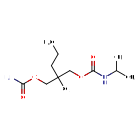
Structure for Carisoprodol (DB00395)

- Weight
- Average: 260.33
Monoisotopic: 260.173607266 - Chemical Formula
- C12H24N2O4
- Synonyms
- (±)-2-methyl-2-propyl-1,3-propanediol carbamate isopropylcarbamate
- (1-methylethyl)carbamic acid 2-(((aminocarbonyl)oxy)methyl)-2-methylpentyl ester
- (RS)-2-{[(aminocarbonyl)oxy]methyl}-2-methylpentyl isopropylcarbamate
- 2-methyl-2-propyl-1,3-propanediol carbamate isopropylcarbamate
- 2-methyl-2-propyltrimethylene carbamate isopropylcarbamate
- carbamic acid 2-isopropylcarbamoyloxymethyl-2-methyl-pentyl ester
- Carisoprodol
- Carisoprodolo
- Carisoprodolum
- Isobamate
- Isomeprobamate
- Isopropyl meprobamate
- Isopropylmeprobamate
- N-isopropy-2-methyl-2-propyl-1,3-propanediol dicarbamate

Pharmacology
- Indication
Carisoprodol is indicated for the relief of discomfort related to acute, painful musculoskeletal conditions Label.
Important limitations of use Label:
• Should only be used for acute treatment periods up to two or three weeks
• Adequate evidence of effectiveness for more prolonged use has not been established
• Not recommended in pediatric patients less than 16 years of age
 Reduce drug development failure ratesBuild, train, & validate machine-learning modelswith evidence-based and structured datasets.Build, train, & validate predictive machine-learning models with structured datasets.
- Associated Conditions
Indication Type Indication Combined Product Details Approval Level Age Group Patient Characteristics Dose Form Management of Acute pain •••••••••••• ••••• Used in combination for symptomatic treatment of Acute discomfort Combination Product in combination with: Acetylsalicylic acid (DB00945), Codeine (DB00318) •••••••••••• ••••• Used in combination for symptomatic treatment of Acute discomfort Combination Product in combination with: Acetylsalicylic acid (DB00945) •••••••••••• ••••• - Contraindications & Blackbox Warnings
 Prevent Adverse Drug Events TodayTap into our Clinical API for life-saving information on contraindications & blackbox warnings, population restrictions, harmful risks, & more.Avoid life-threatening adverse drug events with our Clinical API
- Pharmacodynamics
Carisoprodol is a centrally acting skeletal muscle relaxant that does not act directly on skeletal muscle but acts directly on the central nervous system (CNS). This drug relieves the painful effects of muscle spasm 12,19. A metabolite of carisoprodol, meprobamate, possesses both anxiolytic and sedative properties Label. Clinical studies have shown that this drug causes impairment of psychomotor performance in neuropsychological tests.5,10
- Mechanism of action
The mechanism of action of carisoprodol in relieving discomfort associated with acute painful musculoskeletal conditions has not been confirmed. In studies using animal models, the muscle relaxation that is induced by carisoprodol is associated with a change in the interneuronal activity of the spinal cord and of the descending reticular formation, located in the brain.Label
The abuse potential of this drug is attributed to its ability to alter GABAA function.8 This drug has been shown to modulate a variety of GABAA receptor subunits.5,6 GABAA receptor modulation can lead to anxiolysis due to inhibitory effects on neurotransmission.11
Target Actions Organism UGamma-aminobutyric acid receptor subunit alpha-1 activatormodulatorHumans UGamma-aminobutyric acid receptor subunit beta-2 modulatorHumans UGamma-aminobutyric acid receptor subunit gamma-2 Not Available Humans UGamma-aminobutyric acid receptor subunit alpha-5 modulatorHumans UGamma-aminobutyric acid receptor subunit alpha-3 modulatorHumans - Absorption
The absolute bioavailability of carisoprodol has not yet been established. The mean time to peak plasma concentrations (Tmax) of this drug was about 1.5-2 hours in clinical studies Label. Co-administration of a fatty meal with carisoprodol (350 mg tablet) had no impact on carisoprodol pharmacokinetics Label.
- Volume of distribution
0.93 to 1.3 L/kg, according to 4 different clinical studies 6.
- Protein binding
Approximately 60% 14.
- Metabolism
The main pathway of carisoprodol is liver metabolism is by the cytochrome enzyme CYP2C19 to form meprobamate. This enzyme exhibits genetic polymorphism, which may affect the metabolism of this drug Label.
Hover over products below to view reaction partners
- Route of elimination
Carisoprodol is eliminated by the kidneys as well as other routes. The half-life of meprobamate is approximately 10 hours Label.
- Half-life
The terminal half-life is approximately 2 hours Label.
- Clearance
Following an oral dose of carisoprodol, the oral clearance (Cl/F) was 39.52 ± 16.83 L/hour 15.
- Adverse Effects
 Improve decision support & research outcomesWith structured adverse effects data, including: blackbox warnings, adverse reactions, warning & precautions, & incidence rates. View sample adverse effects data in our new Data Library!Improve decision support & research outcomes with our structured adverse effects data.
- Toxicity
LD50 values
The LD50 values of carisoprodol for rats are 450 mg/kg for intravenous (IV) and intraperitoneal injection, and 1,320 mg/kg for gavage dosing. In mice, the LD50 values are 165 mg/kg for intravenous injection, 980 mg/kg for intraperitoneal injection, and 2,340 mg/kg for gavage dosing. The LD50 value for rabbits given carisoprodol by intravenous injection is 124 mg/kg 18.
Overdose
An overdose of carisoprodol leads to CNS depression, and in severe cases, induction of a coma. Shock, depression of respiratory function, seizures and death have also been reported in rare cases. Several symptoms may be associated with carisoprodol overdose, such as horizontal and vertical nystagmus, blurred vision, mydriasis, mild tachycardia and hypotension, respiratory depression, euphoria, CNS stimulation, muscular incoordination, and/or rigidity, confusion, headache, hallucinations, and dystonic reactions. Alcohol or other CNS depressants or psychotropic agents can exert additive effects on carisoprodol even when one of the agents has been ingested at the normal, therapeutic dose. Fatal accidental and non-accidental overdoses have both been reported with carisoprodol ingestion alone or ingestion of carisoprodol in combination with alcohol or psychotropic drugs 15.
A note on dependence and withdrawal
In the postmarketing reports after carisoprodol use, cases of dependence, withdrawal, and abuse have been reported with long-term use. The majority of dependence and withdrawal cases, as well as abuse, have occurred in patients with a history of addiction or who have used this drug in combination with other drugs having abuse potential. However, multiple post-marketing adverse event reports have been made of carisodopril-associated abuse when used without other drugs possessing abuse potential. Withdrawal symptoms have been observed and reported following sudden abrupt cessation after long-term carisodoprol use. To reduce the chance of carisodopril dependence, withdrawal, or abuse, carisodopril should be used with caution in addiction-prone patients and in patients taking other CNS depressants including alcohol. This drug should not be taken for longer than 2 to 3 weeks for symptomatic relief of acute musculoskeletal discomfort Label.
Use in pregnancy
This drug has been classified as Pregnancy Category C. There are no clinical trial data on the use of carisoprodol during human pregnancy. Animal studies show that carisoprodol crosses the placenta and leads to adverse effects on fetal growth and postnatal survival. In postmarketing reports, the main metabolite, meprobamate, has not demonstrated a consistent association between maternal use and an increased risk for specific congenital malformations Label.
Use in nursing
Limited data in humans demonstrate that this is found excreted in breast milk and may reach concentrations in breast milk of 2-4 times the maternal plasma concentrations Label. It is therefore advisable to exercise caution when this drug is used during breastfeeding Label.
- Pathways
- Not Available
- Pharmacogenomic Effects/ADRs
Interacting Gene/Enzyme Allele name Genotype(s) Defining Change(s) Type(s) Description Details Cytochrome P450 2C19 CYP2C19*2A Not Available 681G>A Effect Inferred Poor drug metabolizer. Details Cytochrome P450 2C19 CYP2C19*2B Not Available 681G>A Effect Inferred Poor drug metabolizer. Details Cytochrome P450 2C19 CYP2C19*3 Not Available 636G>A Effect Inferred Poor drug metabolizer. Details Cytochrome P450 2C19 CYP2C19*4 Not Available 1A>G Effect Inferred Poor drug metabolizer. Details Cytochrome P450 2C19 CYP2C19*5 Not Available 1297C>T Effect Inferred Poor drug metabolizer. Details Cytochrome P450 2C19 CYP2C19*6 Not Available 395G>A Effect Inferred Poor drug metabolizer. Details Cytochrome P450 2C19 CYP2C19*7 Not Available 19294T>A Effect Inferred Poor drug metabolizer. Details Cytochrome P450 2C19 CYP2C19*22 Not Available 557G>C / 991A>G Effect Inferred Poor drug metabolizer. Details Cytochrome P450 2C19 CYP2C19*24 Not Available 99C>T / 991A>G … show all Effect Inferred Poor drug metabolizer. Details Cytochrome P450 2C19 CYP2C19*35 Not Available 12662A>G Effect Inferred Poor drug metabolizer. Details
Interactions
- Drug Interactions
- This information should not be interpreted without the help of a healthcare provider. If you believe you are experiencing an interaction, contact a healthcare provider immediately. The absence of an interaction does not necessarily mean no interactions exist.
Drug Interaction Integrate drug-drug
interactions in your software1,2-Benzodiazepine The risk or severity of adverse effects can be increased when Carisoprodol is combined with 1,2-Benzodiazepine. Abatacept The metabolism of Carisoprodol can be increased when combined with Abatacept. Abrocitinib The metabolism of Abrocitinib can be decreased when combined with Carisoprodol. Acenocoumarol The metabolism of Acenocoumarol can be decreased when combined with Carisoprodol. Acetazolamide The risk or severity of adverse effects can be increased when Carisoprodol is combined with Acetazolamide. - Food Interactions
- Avoid alcohol.
- Take with or without food. The absorption is unaffected by food.
Products
 Drug product information from 10+ global regionsOur datasets provide approved product information including:dosage, form, labeller, route of administration, and marketing period.Access drug product information from over 10 global regions.
- Product Images
- International/Other Brands
- Carisoma / Gencari (Genovate) / Genesafe (Genovate) / Hiranin (Hwang's) / Listaflex (Finadiet) / Sanoma / Tensaprin (Newport)
- Brand Name Prescription Products
Name Dosage Strength Route Labeller Marketing Start Marketing End Region Image Carisoprodol Tablet 350 mg/1 Oral Vintage Pharmaceuticals, LLC 2007-08-02 2007-08-02 US 
Soma Tablet 350 mg/1 Oral Meda Pharmaceuticals Inc. 1995-11-01 Not applicable US Soma Tablet 250 mg/1 Oral Lake Erie Medical Dba Quality Care Produts Llc 2007-09-01 2015-01-01 US Soma Tablet 250 mg/1 Oral Rebel Distributors 2007-09-01 Not applicable US 
Soma Tablet 250 mg/1 Oral Meda Pharmaceuticals Inc. 2007-09-08 Not applicable US 
- Generic Prescription Products
Name Dosage Strength Route Labeller Marketing Start Marketing End Region Image Carisoprodol Tablet 350 mg/1 Oral bryant ranch prepack 2019-08-08 Not applicable US Carisoprodol Tablet 350 mg/1 Oral Amerincan Health Packaging 2009-12-21 2019-02-28 US Carisoprodol Tablet 350 mg/1 Oral Aphena Pharma Solutions - Tennessee, LLC 2014-07-31 Not applicable US Carisoprodol Tablet 350 mg/1 Oral A-S Medication Solutions 2015-06-01 Not applicable US Carisoprodol Tablet 350 mg/1 Oral Blenheim Pharmacal, Inc. 2011-01-31 Not applicable US - Mixture Products
Name Ingredients Dosage Route Labeller Marketing Start Marketing End Region Image Carisoprodol and Aspirin Carisoprodol (200 mg/1) + Acetylsalicylic acid (325 mg/1) Tablet Oral Par Pharmaceutical 1989-03-31 2012-11-30 US Carisoprodol and Aspirin Carisoprodol (200 mg/1) + Acetylsalicylic acid (325 mg/1) Tablet Oral Ingenus Pharmaceuticals Nj, Llc 2011-06-09 2011-06-09 US Carisoprodol and Aspirin Carisoprodol (200 mg/1) + Acetylsalicylic acid (325 mg/1) Tablet Oral Actavis Totowa LLC 1998-01-01 2008-06-20 US Carisoprodol and Aspirin Carisoprodol (200 mg/1) + Acetylsalicylic acid (325 mg/1) Tablet Oral Eon Labs, Inc. 1996-04-25 2020-02-29 US Carisoprodol and Aspirin Carisoprodol (200 mg/1) + Acetylsalicylic acid (325 mg/1) Tablet Oral Physicians Total Care, Inc. 1992-01-14 2011-06-30 US - Unapproved/Other Products
Name Ingredients Dosage Route Labeller Marketing Start Marketing End Region Image Prazolamine Carisoprodol (350 mg/1) + gamma-Aminobutyric acid (100 mg/1) Kit Oral Physician Therapeutics Llc 2011-07-07 Not applicable US


Categories
- ATC Codes
- M03BA02 — Carisoprodol
- M03BA — Carbamic acid esters
- M03B — MUSCLE RELAXANTS, CENTRALLY ACTING AGENTS
- M03 — MUSCLE RELAXANTS
- M — MUSCULO-SKELETAL SYSTEM
- M03BA — Carbamic acid esters
- M03B — MUSCLE RELAXANTS, CENTRALLY ACTING AGENTS
- M03 — MUSCLE RELAXANTS
- M — MUSCULO-SKELETAL SYSTEM
- Drug Categories
- Chemical TaxonomyProvided by Classyfire
- Description
- This compound belongs to the class of organic compounds known as carbamate esters. These are compounds containing an ester of carbamic acid with the general structure R2NC(=O)OR' (R' not H). They are esters of carbamic acids.
- Kingdom
- Organic compounds
- Super Class
- Organic acids and derivatives
- Class
- Carboxylic acids and derivatives
- Sub Class
- Amino acids, peptides, and analogues
- Direct Parent
- Carbamate esters
- Alternative Parents
- Organic carbonic acids and derivatives / Organopnictogen compounds / Organonitrogen compounds / Organic oxides / Hydrocarbon derivatives / Carbonyl compounds
- Substituents
- Aliphatic acyclic compound / Carbamic acid ester / Carbonic acid derivative / Carbonyl group / Hydrocarbon derivative / Organic nitrogen compound / Organic oxide / Organic oxygen compound / Organonitrogen compound / Organooxygen compound
- Molecular Framework
- Aliphatic acyclic compounds
- External Descriptors
- carbamate ester (CHEBI:3419)
- Affected organisms
- Humans and other mammals
Chemical Identifiers
- UNII
- 21925K482H
- CAS number
- 78-44-4
- InChI Key
- OFZCIYFFPZCNJE-UHFFFAOYSA-N
- InChI
- InChI=1S/C12H24N2O4/c1-5-6-12(4,7-17-10(13)15)8-18-11(16)14-9(2)3/h9H,5-8H2,1-4H3,(H2,13,15)(H,14,16)
- IUPAC Name
- 2-[(carbamoyloxy)methyl]-2-methylpentyl N-(propan-2-yl)carbamate
- SMILES
- CCCC(C)(COC(N)=O)COC(=O)NC(C)C
References
- Synthesis Reference
Berger, F.M. and Ludwig, B.J.; U S . Patent 2,937,119; May 17,1960; assigned to Carter Products, Inc.
- General References
- Toth PP, Urtis J: Commonly used muscle relaxant therapies for acute low back pain: a review of carisoprodol, cyclobenzaprine hydrochloride, and metaxalone. Clin Ther. 2004 Sep;26(9):1355-67. [Article]
- Chou R, Peterson K, Helfand M: Comparative efficacy and safety of skeletal muscle relaxants for spasticity and musculoskeletal conditions: a systematic review. J Pain Symptom Manage. 2004 Aug;28(2):140-75. [Article]
- Littrell RA, Hayes LR, Stillner V: Carisoprodol (Soma): a new and cautious perspective on an old agent. South Med J. 1993 Jul;86(7):753-6. [Article]
- Owens C, Pugmire B, Salness T, Culbertson V, Force R, Cady P, Steiner J: Abuse potential of carisoprodol: a retrospective review of Idaho Medicaid pharmacy and medical claims data. Clin Ther. 2007 Oct;29(10):2222-5. doi: 10.1016/j.clinthera.2007.10.003. [Article]
- Gonzalez LA, Gatch MB, Forster MJ, Dillon GH: Abuse Potential of Soma: the GABA(A) Receptor as a Target. Mol Cell Pharmacol. 2009 Jan 1;1(4):180-186. [Article]
- Lewandowski TA: Pharmacokinetic modeling of carisoprodol and meprobamate disposition in adults. Hum Exp Toxicol. 2017 Aug;36(8):846-853. doi: 10.1177/0960327116672912. Epub 2016 Oct 10. [Article]
- Dalen P, Alvan G, Wakelkamp M, Olsen H: Formation of meprobamate from carisoprodol is catalysed by CYP2C19. Pharmacogenetics. 1996 Oct;6(5):387-94. [Article]
- Reeves RR, Burke RS: Carisoprodol: abuse potential and withdrawal syndrome. Curr Drug Abuse Rev. 2010 Mar;3(1):33-8. [Article]
- Zacny JP, Paice JA, Coalson DW: Characterizing the subjective and psychomotor effects of carisoprodol in healthy volunteers. Pharmacol Biochem Behav. 2011 Nov;100(1):138-43. doi: 10.1016/j.pbb.2011.08.011. Epub 2011 Aug 23. [Article]
- Raffel SC, Swink R, Lampton TD: The influence of chlorphenesin carbamate and carisoprodol on psychological test scores. Curr Ther Res Clin Exp. 1969 Sep;11(9):553-60. [Article]
- Bowery NG, Smart TG: GABA and glycine as neurotransmitters: a brief history. Br J Pharmacol. 2006 Jan;147 Suppl 1:S109-19. doi: 10.1038/sj.bjp.0706443. [Article]
- Serfer GT, Wheeler WJ, Sacks HJ: Randomized, double-blind trial of carisoprodol 250 mg compared with placebo and carisoprodol 350 mg for the treatment of low back spasm. Curr Med Res Opin. 2010 Jan;26(1):91-9. doi: 10.1185/03007990903382428. [Article]
- Drug Scheduling: United States Drug Enforcement Administration (DEA) [Link]
- Muscle relaxants for lower back pain: What is the evidence (article, Journal of Pain Management) [Link]
- Carisoprodol Monograph [File]
- Carisoprodol-Aspirin compound [File]
- Soma compound with codeine [File]
- Toxicity studies of carisoprodol: National Toxicology Program [File]
- Skeletal muscle relaxants therapeutic class review [File]
- External Links
- Human Metabolome Database
- HMDB0014539
- KEGG Drug
- D00768
- KEGG Compound
- C07927
- PubChem Compound
- 2576
- PubChem Substance
- 46506377
- ChemSpider
- 2478
- 2101
- ChEBI
- 3419
- ChEMBL
- CHEMBL1233
- PharmGKB
- PA448809
- RxList
- RxList Drug Page
- Drugs.com
- Drugs.com Drug Page
- Wikipedia
- Carisoprodol
- FDA label
- Download (111 KB)
- MSDS
- Download (73.3 KB)
Clinical Trials
- Clinical Trials
Phase Status Purpose Conditions Count 3 Completed Treatment Back Pain Lower Back 2
Pharmacoeconomics
- Manufacturers
- Meda pharmaceuticals meda pharmaceuticals inc
- Able laboratories inc
- Actavis totowa llc
- Advent pharmaceuticals inc
- Aurobindo pharma ltd
- Concord laboratories inc
- Corepharma llc
- Mutual pharmaceutical co inc
- Pioneer pharmaceuticals inc
- Sandoz inc
- Sun pharmaceutical industries ltd
- Vintage pharmaceuticals inc
- Watson laboratories inc
- West ward pharmaceutical corp
- Schering corp sub schering plough corp
- Packagers
- Aidarex Pharmacuticals LLC
- Amerisource Health Services Corp.
- Apotheca Inc.
- A-S Medication Solutions LLC
- Aurobindo Pharma Ltd.
- Blenheim Pharmacal
- Bryant Ranch Prepack
- Cardinal Health
- Carlisle Laboratories Inc.
- Chattem Chemicals Inc.
- Corepharma LLC
- Darby Dental Supply Co. Inc.
- Direct Dispensing Inc.
- Dispensing Solutions
- Diversified Healthcare Services Inc.
- Duramed
- Eon Labs
- Gm Pharmaceuticals Inc.
- H and H Laboratories
- H.J. Harkins Co. Inc.
- Heartland Repack Services LLC
- Innoviant Pharmacy Inc.
- Kaiser Foundation Hospital
- Keltman Pharmaceuticals Inc.
- Lake Erie Medical and Surgical Supply
- Major Pharmaceuticals
- Mckesson Corp.
- Meda AB
- Medisca Inc.
- Murfreesboro Pharmaceutical Nursing Supply
- Mutual Pharmaceutical Co.
- Nucare Pharmaceuticals Inc.
- Palmetto Pharmaceuticals Inc.
- PCA LLC
- PD-Rx Pharmaceuticals Inc.
- Pharmaceutical Utilization Management Program VA Inc.
- Pharmedix
- Physicians Total Care Inc.
- Preferred Pharmaceuticals Inc.
- Prepackage Specialists
- Prepak Systems Inc.
- Prescription Dispensing Service Inc.
- Qualitest
- Ranbaxy Laboratories
- Rebel Distributors Corp.
- Redpharm Drug
- Sandhills Packaging Inc.
- Sandoz
- Southwood Pharmaceuticals
- St Mary's Medical Park Pharmacy
- Stat Rx Usa
- Sun Pharmaceutical Industries Ltd.
- UDL Laboratories
- Vintage Pharmaceuticals Inc.
- Vision Pharma LLC
- Wallace Pharmaceuticals Inc.
- Watson Pharmaceuticals
- West-Ward Pharmaceuticals
- Dosage Forms
Form Route Strength Capsule Oral Tablet Oral 350 mg/1 Tablet Oral Kit Oral Tablet Oral 250 mg/1 Tablet, film coated Oral 350 mg/1 Tablet Oral 350 mg Tablet Oral 350.000 mg - Prices
Unit description Cost Unit Soma 350 mg tablet 5.75USD tablet Soma Compound 200-325 mg tablet 4.58USD tablet Soma 250 mg tablet 3.24USD tablet Carisoprodol powder 1.17USD g Carisoprodol 350 mg tablet 0.57USD tablet Flexall plus gel 0.08USD g Flexall 16% gel 0.06USD g Flexall 7% gel 0.05USD g DrugBank does not sell nor buy drugs. Pricing information is supplied for informational purposes only.- Patents
- Not Available
Properties
- State
- Solid
- Experimental Properties
Property Value Source melting point (°C) 92 https://www.lookchem.com/Carisoprodol/ boiling point (°C) 423.412 https://www.lookchem.com/Carisoprodol/ water solubility slightly soluble https://www.lookchem.com/Carisoprodol/ logP 2.1 http://www.t3db.ca/toxins/T3D3491 logS -2.5 http://www.t3db.ca/toxins/T3D3491 pKa 15.06 (Strongest acidic) http://www.t3db.ca/toxins/T3D3491 - Predicted Properties
Property Value Source Water Solubility 0.792 mg/mL ALOGPS logP 1.76 ALOGPS logP 1.92 Chemaxon logS -2.5 ALOGPS pKa (Strongest Acidic) 15.06 Chemaxon Physiological Charge 0 Chemaxon Hydrogen Acceptor Count 2 Chemaxon Hydrogen Donor Count 2 Chemaxon Polar Surface Area 90.65 Å2 Chemaxon Rotatable Bond Count 9 Chemaxon Refractivity 67.1 m3·mol-1 Chemaxon Polarizability 28.77 Å3 Chemaxon Number of Rings 0 Chemaxon Bioavailability 1 Chemaxon Rule of Five Yes Chemaxon Ghose Filter Yes Chemaxon Veber's Rule No Chemaxon MDDR-like Rule No Chemaxon - Predicted ADMET Features
Property Value Probability Human Intestinal Absorption + 0.9626 Blood Brain Barrier + 0.9679 Caco-2 permeable - 0.5533 P-glycoprotein substrate Substrate 0.5 P-glycoprotein inhibitor I Non-inhibitor 0.8014 P-glycoprotein inhibitor II Non-inhibitor 0.8381 Renal organic cation transporter Non-inhibitor 0.9519 CYP450 2C9 substrate Non-substrate 0.9041 CYP450 2D6 substrate Non-substrate 0.9116 CYP450 3A4 substrate Non-substrate 0.6418 CYP450 1A2 substrate Non-inhibitor 0.9046 CYP450 2C9 inhibitor Non-inhibitor 0.9071 CYP450 2D6 inhibitor Non-inhibitor 0.923 CYP450 2C19 inhibitor Non-inhibitor 0.9025 CYP450 3A4 inhibitor Non-inhibitor 0.8309 CYP450 inhibitory promiscuity Low CYP Inhibitory Promiscuity 0.8659 Ames test Non AMES toxic 0.9132 Carcinogenicity Non-carcinogens 0.6872 Biodegradation Not ready biodegradable 0.973 Rat acute toxicity 2.3261 LD50, mol/kg Not applicable hERG inhibition (predictor I) Weak inhibitor 0.9957 hERG inhibition (predictor II) Non-inhibitor 0.9362
Spectra
- Mass Spec (NIST)
- Not Available
- Spectra
- Chromatographic Properties
Collision Cross Sections (CCS)
Adduct CCS Value (Å2) Source type Source [M-H]- 169.3233515 predictedDarkChem Lite v0.1.0 [M-H]- 163.79927 predictedDeepCCS 1.0 (2019) [M+H]+ 170.7737515 predictedDarkChem Lite v0.1.0 [M+H]+ 166.15726 predictedDeepCCS 1.0 (2019) [M+Na]+ 169.1262515 predictedDarkChem Lite v0.1.0 [M+Na]+ 172.25041 predictedDeepCCS 1.0 (2019)
Targets
- Kind
- Protein
- Organism
- Humans
- Pharmacological action
- Unknown
- Actions
- ActivatorModulator
- General Function
- Inhibitory extracellular ligand-gated ion channel activity
- Specific Function
- Component of the heteropentameric receptor for GABA, the major inhibitory neurotransmitter in the vertebrate brain. Functions also as histamine receptor and mediates cellular responses to histamine...
- Gene Name
- GABRA1
- Uniprot ID
- P14867
- Uniprot Name
- Gamma-aminobutyric acid receptor subunit alpha-1
- Molecular Weight
- 51801.395 Da
References
- Gonzalez LA, Gatch MB, Taylor CM, Bell-Horner CL, Forster MJ, Dillon GH: Carisoprodol-mediated modulation of GABAA receptors: in vitro and in vivo studies. J Pharmacol Exp Ther. 2009 May;329(2):827-37. doi: 10.1124/jpet.109.151142. Epub 2009 Feb 24. [Article]
- Gonzalez LA, Gatch MB, Forster MJ, Dillon GH: Abuse Potential of Soma: the GABA(A) Receptor as a Target. Mol Cell Pharmacol. 2009 Jan 1;1(4):180-186. [Article]
- Kumar M, Dillon GH: Assessment of direct gating and allosteric modulatory effects of meprobamate in recombinant GABA(A) receptors. Eur J Pharmacol. 2016 Mar 15;775:149-58. doi: 10.1016/j.ejphar.2016.02.031. Epub 2016 Feb 9. [Article]
- Kind
- Protein
- Organism
- Humans
- Pharmacological action
- Unknown
- Actions
- Modulator
- General Function
- Inhibitory extracellular ligand-gated ion channel activity
- Specific Function
- Component of the heteropentameric receptor for GABA, the major inhibitory neurotransmitter in the vertebrate brain. Functions also as histamine receptor and mediates cellular responses to histamine...
- Gene Name
- GABRB2
- Uniprot ID
- P47870
- Uniprot Name
- Gamma-aminobutyric acid receptor subunit beta-2
- Molecular Weight
- 59149.895 Da
References
- Gonzalez LA, Gatch MB, Taylor CM, Bell-Horner CL, Forster MJ, Dillon GH: Carisoprodol-mediated modulation of GABAA receptors: in vitro and in vivo studies. J Pharmacol Exp Ther. 2009 May;329(2):827-37. doi: 10.1124/jpet.109.151142. Epub 2009 Feb 24. [Article]
- Kumar M, Dillon GH: Assessment of direct gating and allosteric modulatory effects of meprobamate in recombinant GABA(A) receptors. Eur J Pharmacol. 2016 Mar 15;775:149-58. doi: 10.1016/j.ejphar.2016.02.031. Epub 2016 Feb 9. [Article]
- Gonzalez LA, Gatch MB, Forster MJ, Dillon GH: Abuse Potential of Soma: the GABA(A) Receptor as a Target. Mol Cell Pharmacol. 2009 Jan 1;1(4):180-186. [Article]
- Kind
- Protein
- Organism
- Humans
- Pharmacological action
- Unknown
- General Function
- Inhibitory extracellular ligand-gated ion channel activity
- Specific Function
- Component of the heteropentameric receptor for GABA, the major inhibitory neurotransmitter in the vertebrate brain. Functions also as histamine receptor and mediates cellular responses to histamine...
- Gene Name
- GABRG2
- Uniprot ID
- P18507
- Uniprot Name
- Gamma-aminobutyric acid receptor subunit gamma-2
- Molecular Weight
- 54161.78 Da
References
- Gonzalez LA, Gatch MB, Taylor CM, Bell-Horner CL, Forster MJ, Dillon GH: Carisoprodol-mediated modulation of GABAA receptors: in vitro and in vivo studies. J Pharmacol Exp Ther. 2009 May;329(2):827-37. doi: 10.1124/jpet.109.151142. Epub 2009 Feb 24. [Article]
- Gonzalez LA, Gatch MB, Forster MJ, Dillon GH: Abuse Potential of Soma: the GABA(A) Receptor as a Target. Mol Cell Pharmacol. 2009 Jan 1;1(4):180-186. [Article]
- Kumar M, Kumar M, Freund JM, Dillon GH: A Single Amino Acid Residue at Transmembrane Domain 4 of the alpha Subunit Influences Carisoprodol Direct Gating Efficacy at GABAA Receptors. J Pharmacol Exp Ther. 2017 Sep;362(3):395-404. doi: 10.1124/jpet.117.242156. Epub 2017 Jun 22. [Article]
- Kind
- Protein
- Organism
- Humans
- Pharmacological action
- Unknown
- Actions
- Modulator
- Curator comments
- Data regarding this target action are based on the results of in vitro studies, and information regarding this action is limited in the literature.
- General Function
- Transporter activity
- Specific Function
- GABA, the major inhibitory neurotransmitter in the vertebrate brain, mediates neuronal inhibition by binding to the GABA/benzodiazepine receptor and opening an integral chloride channel.
- Gene Name
- GABRA5
- Uniprot ID
- P31644
- Uniprot Name
- Gamma-aminobutyric acid receptor subunit alpha-5
- Molecular Weight
- 52145.645 Da
References
- Kumar M, Dillon GH: Assessment of direct gating and allosteric modulatory effects of meprobamate in recombinant GABA(A) receptors. Eur J Pharmacol. 2016 Mar 15;775:149-58. doi: 10.1016/j.ejphar.2016.02.031. Epub 2016 Feb 9. [Article]
- Kind
- Protein
- Organism
- Humans
- Pharmacological action
- Unknown
- Actions
- Modulator
- General Function
- Inhibitory extracellular ligand-gated ion channel activity
- Specific Function
- GABA, the major inhibitory neurotransmitter in the vertebrate brain, mediates neuronal inhibition by binding to the GABA/benzodiazepine receptor and opening an integral chloride channel.
- Gene Name
- GABRA3
- Uniprot ID
- P34903
- Uniprot Name
- Gamma-aminobutyric acid receptor subunit alpha-3
- Molecular Weight
- 55164.055 Da
References
- Kumar M, Dillon GH: Assessment of direct gating and allosteric modulatory effects of meprobamate in recombinant GABA(A) receptors. Eur J Pharmacol. 2016 Mar 15;775:149-58. doi: 10.1016/j.ejphar.2016.02.031. Epub 2016 Feb 9. [Article]
- Kumar M, Kumar M, Freund JM, Dillon GH: A Single Amino Acid Residue at Transmembrane Domain 4 of the alpha Subunit Influences Carisoprodol Direct Gating Efficacy at GABAA Receptors. J Pharmacol Exp Ther. 2017 Sep;362(3):395-404. doi: 10.1124/jpet.117.242156. Epub 2017 Jun 22. [Article]
Enzymes
- Kind
- Protein
- Organism
- Humans
- Pharmacological action
- Unknown
- Actions
- Substrate
- General Function
- Steroid hydroxylase activity
- Specific Function
- Responsible for the metabolism of a number of therapeutic agents such as the anticonvulsant drug S-mephenytoin, omeprazole, proguanil, certain barbiturates, diazepam, propranolol, citalopram and im...
- Gene Name
- CYP2C19
- Uniprot ID
- P33261
- Uniprot Name
- Cytochrome P450 2C19
- Molecular Weight
- 55930.545 Da
References
- Bramness JG, Skurtveit S, Fauske L, Grung M, Molven A, Morland J, Steen VM: Association between blood carisoprodol:meprobamate concentration ratios and CYP2C19 genotype in carisoprodol-drugged drivers: decreased metabolic capacity in heterozygous CYP2C19*1/CYP2C19*2 subjects? Pharmacogenetics. 2003 Jul;13(7):383-8. doi: 10.1097/01.fpc.0000054098.48725.88. [Article]
- Dean L: Carisoprodol Therapy and CYP2C19 Genotype . [Article]
- Carisoprodol FDA label [File]

Drug created at June 13, 2005 13:24 / Updated at March 03, 2024 02:25