Identification
- Summary
Trifluridine is a nucleoside metabolic inhibitor used to treat keratoconjunctivitis and epithelial keratitis caused by simplex virus, and as a part of chemotherapy for certain types of metastatic gastrointestinal cancers.
- Brand Names
- Lonsurf, Viroptic
- Generic Name
- Trifluridine
- DrugBank Accession Number
- DB00432
- Background
Trifluridine is a fluorinated pyrimidine nucleoside that is structurally related to idoxuridine 1. It is an active antiviral agent in ophthalmic solutions used mainly in the treatment of primary keratoconjunctivitis and recurrent epithelial keratitis due to herpes simplex virus. It displays effective antiviral activity against Herpes simplex virus type 1 and 2 1.
The combination product of trifluridine with tipiracil marketed as Lonsurf has been approved in Japan, the United States, and the European Union for the treatment of adult patients with metastatic colorectal cancer who have been previously treated with fluoropyrimidine-, oxaliplatin- and irinotecan-based chemotherapy, an anti-VEGF biological therapy, and if RAS wild-type, an anti-EGFR therapy. In the anticancer therapy, trifluridine acts as a thymidine-based nucleoside metabolic inhibitor that gets incorporated into DNA of cancer cells following cell uptake to aberrate DNA function during cell replication 10.
- Type
- Small Molecule
- Groups
- Approved, Investigational
- Structure
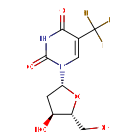
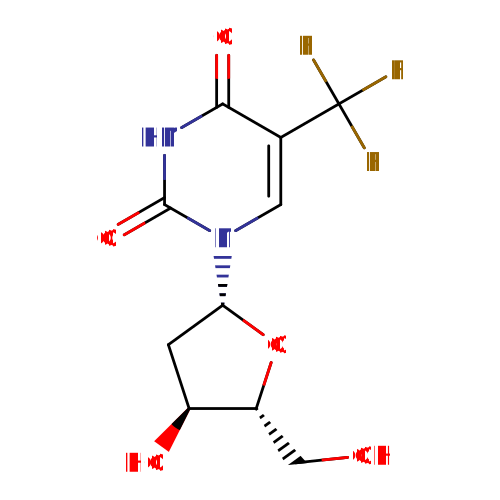
Structure for Trifluridine (DB00432)
- Weight
- Average: 296.1999
Monoisotopic: 296.062006087 - Chemical Formula
- C10H11F3N2O5
- Synonyms
- 5-(Trifluoromethyl)deoxyuridine
- 5-Trifluoromethyl-2-deoxyuridine
- F₃T
- TFT
- Trifluoromethyldeoxyuridine
- Trifluorothymidine
- Trifluorothymine deoxyriboside
- Trifluridin
- Trifluridina
- Trifluridine
- Trifluridinum

Pharmacology
- Indication
As a standalone product, trifluridine is used for the ophthalmic treatment of primay keratoconjunctivitis and recurrent epithelial keratitis due to herpes simplex virus, types 1 and 2.7
Trifluridine is also available as a combination product with tipiracil, which is indicated either alone or in combination with bevacizumab for the treatment of adult patients with metastatic colorectal cancer who have been previously treated with fluoropyrimidine-, oxaliplatin- and irinotecan-based chemotherapy, an anti-VEGF biological therapy, and if RAS wild-type, an anti-EGFR therapy.8 This combination product is also used for adult patients with metastatic gastric or gastroesophageal junction adenocarcinoma and were previously treated with at least two prior lines of chemotherapy that included a fluoropyrimidine, a platinum, either a taxane or irinotecan, and if appropriate, HER2/neu-targeted therapy.8
 Reduce drug development failure ratesBuild, train, & validate machine-learning modelswith evidence-based and structured datasets.Build, train, & validate predictive machine-learning models with structured datasets.
- Associated Conditions
Indication Type Indication Combined Product Details Approval Level Age Group Patient Characteristics Dose Form Used in combination to treat Metastatic colorectal cancer Regimen in combination with: Bevacizumab (DB00112), Tipiracil (DB09343) •••••••••••• ••••• •••••••• ••••••••• •••• ••••••••••••••••• ••••••••••• ••• ••••••••••• ••• ••••••••• •••• •••••••• •• ••••••••• •••••••• •••••••••• ••••••• •••• ••••••••• •••••• Used in combination to treat Metastatic colorectal cancer Combination Product in combination with: Tipiracil (DB09343) •••••••••••• ••••• •••••••••• ••••••• •••• •••••••••• ••• ••••••••• •••• •••••••• •• ••••••••• •••••••• •••••••• ••••••••• •••• ••••••••••••••••• ••••••••••• ••• •••••••••• •••••• Used in combination to treat Metastatic gastric cancers Combination Product in combination with: Tipiracil (DB09343) •••••••••••• ••••• •••••••• ••••••••• •••• •• ••••••••••••••• •••••••• •••••••• •••••••••••••• ••••••••••••• •••••••••• ••••••• •••• •••••••••••••••• ••••••••••••• •••••••• •••••• •• •••••••••••••••• ••••••••••••• ••••• •• ••••• •• •••••••• ••••••• •••••• Used in combination to treat Metastatic gastroesophageal junction adenocarcinoma Combination Product in combination with: Tipiracil (DB09343) •••••••••••• ••••• •••••••• •••••••••••••• ••••••••••••• •••••••• ••••••••• •••• •• ••••••••••••••• •••••••• •••••••••• ••••••• •••• •••••••••••••••• ••••••••••••• ••••• •• ••••• •• •••••••• •••••••• •••••••• •••••• •• •••••••••••••••• •••••••••••• •••••• Treatment of Primary keratoconjunctivitis caused by herpes simplex virus type 1 •••••••••••• ••••••••• - Contraindications & Blackbox Warnings
 Prevent Adverse Drug Events TodayTap into our Clinical API for life-saving information on contraindications & blackbox warnings, population restrictions, harmful risks, & more.Avoid life-threatening adverse drug events with our Clinical API
- Pharmacodynamics
Trifluridine exhibits an antiviral effect against herpes simplex virus, types 1 and 2 and vacciniavirus both in vitro and in vivo 1. Some strains of adenovirus that contribute to the pathology of keratoconjunctivitis were shown to be susceptible to trifluridine in vitro 1. While there is evidence from a study that cross-resistance may develop between trifluridine and idoxuridine or vidarabine, trifluridine was shown to effective in treating dendritic ulcers in patients with herpetic keratitis who are unresponsive to idoxuridine or vidarabine based on the results from masked comparative trials 1. In nonclinical studies, trifluridine/tipiracil hydrochloride demonstrated antitumour activity against both 5-fluorouracil (5-FU) sensitive and resistant colorectal cancer cell lines 10. The cytotoxic activity of trifluridine and tipiracil against several human tumour xenografts show high correlation with the amount of trifluridine incorporated into DNA, indicating that the primary mechanism of action of trifluridine involves the direct incorporation into the cancer cell DNA 10. Trifluridine and tipiracil demonstrated anti-tumor activity against KRAS wild-type and mutant human colorectal cancer xenografts in mice Label.
In clinical studies comprised of patients with previously treated metastatic colorectal cancer, treatment of trifluridine in combination with tipiracil in addition to best supportive care over a 5- or 7-month period resulted in increased progression-free survival (PFS), overall response rate (ORR) and disease control rate (DCR) compared to placebo 10. In an open-label study, administration of trifluridine at the recommended dosage in patients with advanced solid tumors had no clinically relevant effect on QT/QTc prolongation compared with placebo Label. Two out of 48 patients displayed had QTc greater than 500 msec and 1 of 42 patients (2.4%) had a QTc increase from baseline greater than 60 msec Label.
- Mechanism of action
The mechanism of action of trifluridine as an antiviral agent has not been fully elucidated, but appears to involve the inhibition of viral replication. Trifluridine gets incorporated into viral DNA during replication, which leads to the formation of defective proteins and an increased mutation rate. Trifluridine also mediates antineoplastic activities via this mechanism; following uptake into cancer cells, trifluridine is rapidly phosphorylated by thymidine kinase to its active monophosphate form 2. Subsequent phosphorylation produces trifluridine triphosphate 2, which is readily incorporated into the DNA of tumour cells in place of thymidine bases to perturb DNA function, DNA synthesis, and tumour cell proliferation Label. As trifluridine is subject to rapid degradation by TPase and readily metabolised by a first-pass effect following oral administration, tipiracil is added in the antineoplastic combination product as an inhibitor of TPase to increase the bioavailability of trifluridine 10. Trifluridine monophosphate also reversibly inhibits thymidylate synthetase (TS), an enzyme that is necessary for DNA synthesis and which levels are shown to be elevated different cancer cell lines 3. Up-regulation of the expression of the TS enzyme may also lead to the resistance to antineoplastic therapies, such as 5-fluorouracil (5-FU). [A35289 However, this inhibitory effect is not considered to be sufficient enough to fully contribute to the cytotoxicity in cancer cells. 2
Target Actions Organism ADNA other/unknownHumans AThymidylate synthase inhibitorHumans - Absorption
After oral administration of LONSURF with [14C]-trifluridine, at least 57% of the administered trifluridine was absorbed. Following a single dose of LONSURF (35 mg/m2) in patients with advanced solid tumors, the mean times to peak plasma concentrations (Tmax) of trifluridine was around 2 hours.9 Trifluridine area under the concentration-time curve from time 0 to the last measurable concentration (AUC0-last) was approximately 3-fold higher and maximum concentration (Cmax) was approximately 2-fold higher after multiple dose administration (twice daily for 5 days a week with 2 days rest for 2 weeks followed by a 14-day rest, repeated every 4 weeks) than after single-dose administration.9
Following a single oral administration of LONSURF at 35 mg/m2 in patients with cancer, the mean time to peak plasma concentration (Tmax) of trifluridine was around 2 hours.8 For the ophthalmic formulation, systemic absorption appears to be negligible.7 A standardized high-fat, high-calorie meal decreased trifluridine Cmax by approximately 40% but did not change trifluridine AUC compared to those in a fasting state in patients with cancer following administration of a single dose of LONSURF 35 mg/m2.7
In a dose finding study (15 to 35 mg/m2 twice daily), the AUC from time 0 to 10 hours (AUC0-10) of trifluridine tended to increase more than expected based on the increase in dose.9
- Volume of distribution
Following a single dose of LONSURF (35 mg/m2) in patients with advanced solid tumours, the apparent volume of distribution (Vd/F) for trifluridine was 21 L.9
- Protein binding
In vitro findings suggest that the protein binding of trifluridine in human plasma is greater than 96%, where it is mainly bound to human serum albumin. Protein binding of trifluridine is independent of drug concentration and presence of tipiracil.8
- Metabolism
Trifluridine is not metabolized by cytochrome P450 (CYP) enzymes. Trifluridine is mainly eliminated by metabolism via thymidine phosphorylase to form an inactive metabolite, 5-(trifluoromethyl) uracil (FTY). No other major metabolites were detected in plasma or urine.8 Other minor metabolites, such as 5-carboxy-2'-deoxyuridine found on the endothelial side of the cornea or 5-carboxyuraci, were also detected, but only at low or trace level in plasma and urine.4,9
Hover over products below to view reaction partners
- Route of elimination
After single oral administration of LONSURF (60 mg) with [14C]-trifluridine, the total cumulative excretion of radioactivity was 60% of the administered dose. The majority of recovered radioactivity was eliminated into urine (55% of the dose) as FTY and trifluridine glucuronide isomers within 24 hours and the excretion into feces and expired air was <3% for both. The unchanged trifluridine was <3% of administered dose recovered in the urine and feces.8
- Half-life
After administration of LONSURF 35 mg/m2, the mean elimination and steady-state half-life (t1/2) of trifluridine was 1.4 hours and 2.1 hours respectively.8 For the ophthalmic formulation, the half-life is significantly shorter, approximately only 12 minutes.7
- Clearance
Following a single dose of LONSURF (35 mg/m2) in patients with advanced solid tumours, the oral clearance (CL/F) for trifluridine was 10.5 L/hr.9
- Adverse Effects
 Improve decision support & research outcomesWith structured adverse effects data, including: blackbox warnings, adverse reactions, warning & precautions, & incidence rates. View sample adverse effects data in our new Data Library!Improve decision support & research outcomes with our structured adverse effects data.
- Toxicity
Intravenous LD50 in rat was 2946 mg/kg MSDS. Oral LD50 in rat and mouse were > 4379mg/kg MSDS. Overdosage via ocular instillation is unlikely. The highest dose of orally-administered Lonsurf, trifluridine in combination with tipiracil, administered in clinical studies was 180 mg/m^2 per day. The primary anticipated complication of an overdose is bone marrow suppression. There is no known antidote for trifluridine overdose: in case of an overdose, management should include customary therapeutic and supportive medical intervention aimed at correcting the presenting clinical manifestations and preventing their possible complications 10. Based on the findings from animal studies, trifluridine may cause fetal toxicity when administered to pregnant patients 10.
- Pathways
- Not Available
- Pharmacogenomic Effects/ADRs
- Not Available
Interactions
- Drug Interactions
- This information should not be interpreted without the help of a healthcare provider. If you believe you are experiencing an interaction, contact a healthcare provider immediately. The absence of an interaction does not necessarily mean no interactions exist.
Drug Interaction Integrate drug-drug
interactions in your softwareAbacavir Trifluridine may decrease the excretion rate of Abacavir which could result in a higher serum level. Abatacept The risk or severity of adverse effects can be increased when Trifluridine is combined with Abatacept. Aceclofenac Aceclofenac may decrease the excretion rate of Trifluridine which could result in a higher serum level. Acemetacin Acemetacin may decrease the excretion rate of Trifluridine which could result in a higher serum level. Acetaminophen Acetaminophen may decrease the excretion rate of Trifluridine which could result in a higher serum level. - Food Interactions
- Take with food.
Products
 Drug product information from 10+ global regionsOur datasets provide approved product information including:dosage, form, labeller, route of administration, and marketing period.Access drug product information from over 10 global regions.
- International/Other Brands
- Thilol (Pharmex) / Triflumann (Dr. Gerhard Mann) / Triherpine (Medivis) / Virophta (Horus)
- Brand Name Prescription Products
Name Dosage Strength Route Labeller Marketing Start Marketing End Region Image Viroptic Solution 1 % Ophthalmic Bausch & Lomb Inc 1987-12-31 Not applicable Canada 
Viroptic Solution 1 g/100mL Ophthalmic Pfizer Laboratories Div Pfizer Inc 1980-04-10 2018-04-03 US 
Viroptic Solution 1 g/100mL Ophthalmic Physicians Total Care, Inc. 1980-04-10 2012-06-30 US - Generic Prescription Products
Name Dosage Strength Route Labeller Marketing Start Marketing End Region Image Apo-trifluridine Ophthalmic Solution Solution 1 % Ophthalmic Apotex Corporation Not applicable Not applicable Canada Sandoz Trifluridine Solution 1 % Ophthalmic Sandoz Canada Incorporated 2004-01-23 2019-08-01 Canada Trifluridine Solution 1 g/100mL Ophthalmic Greenstone LLC 1980-04-10 2018-06-05 US Trifluridine Solution 10 mg/1mL Ophthalmic Sandoz Inc 2001-05-14 Not applicable US Trifluridine Solution / drops 10 mg/1mL Ophthalmic Hi-Tech Pharmacal Co., Inc. 2017-07-28 Not applicable US - Mixture Products
Name Ingredients Dosage Route Labeller Marketing Start Marketing End Region Image Lonsurf Trifluridine (20 mg) + Tipiracil hydrochloride (8.19 mg) Tablet, film coated Oral Les Laboratoires Servier 2016-09-08 Not applicable EU 
Lonsurf Trifluridine (15 mg) + Tipiracil hydrochloride (6.14 mg) Tablet, film coated Oral Les Laboratoires Servier 2016-09-08 Not applicable EU LONSURF Trifluridine (20 MG) + Tipiracil (8.19 MG) Tablet, film coated Oral Les Laboratoires Servier 2016-09-22 Not applicable Italy 
LONSURF Trifluridine (15 MG) + Tipiracil (6.14 MG) Tablet, film coated Oral Les Laboratoires Servier 2016-09-22 Not applicable Italy Lonsurf Trifluridine (20 mg) + Tipiracil hydrochloride (8.19 mg) Tablet Oral Taiho Pharma Canada, Inc. 2018-03-22 Not applicable Canada
Categories
- ATC Codes
- L01BC59 — Trifluridine, combinations
- L01BC — Pyrimidine analogues
- L01B — ANTIMETABOLITES
- L01 — ANTINEOPLASTIC AGENTS
- L — ANTINEOPLASTIC AND IMMUNOMODULATING AGENTS
- Drug Categories
- Anti-Infective Agents
- Antimetabolites
- Antineoplastic Agents
- Antineoplastic and Immunomodulating Agents
- Antiviral Agents
- Deoxyribonucleosides
- Drugs that are Mainly Renally Excreted
- Immunosuppressive Agents
- Noxae
- Nucleic Acid Synthesis Inhibitors
- Nucleic Acids, Nucleotides, and Nucleosides
- Nucleoside Analog Antiviral
- Nucleoside Metabolic Inhibitor
- Nucleosides
- OAT1/SLC22A6 inhibitors
- OAT1/SLC22A6 Substrates
- OAT3/SLC22A8 Substrates
- Ophthalmologicals
- Pyrimidine Analogues
- Pyrimidine Nucleosides
- Pyrimidines
- Sensory Organs
- Toxic Actions
- Chemical TaxonomyProvided by Classyfire
- Description
- This compound belongs to the class of organic compounds known as pyrimidine 2'-deoxyribonucleosides. These are compounds consisting of a pyrimidine linked to a ribose which lacks a hydroxyl group at position 2.
- Kingdom
- Organic compounds
- Super Class
- Nucleosides, nucleotides, and analogues
- Class
- Pyrimidine nucleosides
- Sub Class
- Pyrimidine 2'-deoxyribonucleosides
- Direct Parent
- Pyrimidine 2'-deoxyribonucleosides
- Alternative Parents
- Pyrimidones / Hydroxypyrimidines / Hydropyrimidines / Tetrahydrofurans / Heteroaromatic compounds / Secondary alcohols / Oxacyclic compounds / Azacyclic compounds / Primary alcohols / Organopnictogen compounds show 5 more
- Substituents
- Alcohol / Alkyl fluoride / Alkyl halide / Aromatic heteromonocyclic compound / Azacycle / Heteroaromatic compound / Hydrocarbon derivative / Hydropyrimidine / Hydroxypyrimidine / Organic nitrogen compound show 15 more
- Molecular Framework
- Aromatic heteromonocyclic compounds
- External Descriptors
- organofluorine compound, nucleoside analogue, pyrimidine 2'-deoxyribonucleoside (CHEBI:75179)
- Affected organisms
- Human Herpes Virus
Chemical Identifiers
- UNII
- RMW9V5RW38
- CAS number
- 70-00-8
- InChI Key
- VSQQQLOSPVPRAZ-RRKCRQDMSA-N
- InChI
- InChI=1S/C10H11F3N2O5/c11-10(12,13)4-2-15(9(19)14-8(4)18)7-1-5(17)6(3-16)20-7/h2,5-7,16-17H,1,3H2,(H,14,18,19)/t5-,6+,7+/m0/s1
- IUPAC Name
- 1-[(2R,4S,5R)-4-hydroxy-5-(hydroxymethyl)oxolan-2-yl]-5-(trifluoromethyl)-1,2,3,4-tetrahydropyrimidine-2,4-dione
- SMILES
- OC[C@H]1O[C@H](C[C@@H]1O)N1C=C(C(=O)NC1=O)C(F)(F)F
References
- General References
- Carmine AA, Brogden RN, Heel RC, Speight TM, Avery GS: Trifluridine: a review of its antiviral activity and therapeutic use in the topical treatment of viral eye infections. Drugs. 1982 May;23(5):329-53. [Article]
- Burness CB, Duggan ST: Trifluridine/Tipiracil: A Review in Metastatic Colorectal Cancer. Drugs. 2016 Sep;76(14):1393-402. doi: 10.1007/s40265-016-0633-9. [Article]
- Matsuoka K, Nakagawa F, Kobunai T, Takechi T: Trifluridine/tipiracil overcomes the resistance of human gastric 5-fluorouracil-refractory cells with high thymidylate synthase expression. Oncotarget. 2018 Feb 5;9(17):13438-13450. doi: 10.18632/oncotarget.24412. eCollection 2018 Mar 2. [Article]
- Pavan-Langston D, Nelson DJ: Intraocular penetration of trifluridine. Am J Ophthalmol. 1979 Jun;87(6):814-8. [Article]
- Altmann S, Brandt CR, Murphy CJ, Patnaikuni R, Takla T, Toomey M, Nesbit B, McIntyre K, Covert J, Dubielzig R, Leatherberry G, Adkins E, Kodihalli S: Evaluation of therapeutic interventions for vaccinia virus keratitis. J Infect Dis. 2011 Mar 1;203(5):683-90. doi: 10.1093/infdis/jiq103. Epub 2011 Jan 28. [Article]
- FDA Approved Drug Products: LONSURF (trifluridine and tipiracil) tablets, for oral use [Link]
- FDA Approved Drug Products: TRIFLURIDINE solution for ophthalmic use [Link]
- FDA Approved Drug Products: LONSURF (trifluridine and tipiracil) tablets, for oral use (August 2023) [Link]
- EMA Product Information: LONSURF (trifluridine and tipiracil) tablets, for oral use [Link]
- Lonsurf Summary of Product Characteristics- European Medicines Agency - Europa EU [File]
- DailyMed Label: VIROPTIC® Ophthalmic Solution, 1% Sterile (trifluridine ophthalmic solution) [File]
- External Links
- Human Metabolome Database
- HMDB0014576
- KEGG Drug
- D00391
- PubChem Compound
- 6256
- PubChem Substance
- 46506192
- ChemSpider
- 6020
- BindingDB
- 50132298
- 10803
- ChEBI
- 75179
- ChEMBL
- CHEMBL1129
- ZINC
- ZINC000003842753
- Therapeutic Targets Database
- DAP000760
- PharmGKB
- PA451775
- RxList
- RxList Drug Page
- Drugs.com
- Drugs.com Drug Page
- Wikipedia
- Trifluridine
- FDA label
- Download (490 KB)
- MSDS
- Download (50.8 KB)
Clinical Trials
- Clinical Trials
Phase Status Purpose Conditions Count 3 Active Not Recruiting Treatment Colorectal Cancer 3 3 Active Not Recruiting Treatment Colorectal Neoplasms 2 3 Active Not Recruiting Treatment Metastatic Colorectal Cancer (CRC) 1 3 Completed Treatment Metastatic Colorectal Cancer (CRC) 1 3 Completed Treatment Refractory, metastatic Colorectal cancer 1
Pharmacoeconomics
- Manufacturers
- Alcon laboratories inc
- Monarch pharmaceuticals inc
- Packagers
- Alcon Laboratories
- DSM Corp.
- Falcon Pharmaceuticals Ltd.
- Monarch Pharmacy
- Pharmedix
- Physicians Total Care Inc.
- Professional Compounding Centers America LLC
- Watson Pharmaceuticals
- Dosage Forms
Form Route Strength Tablet Oral Tablet, film coated Oral Solution Ophthalmic 10 mg/1mL Solution / drops Ophthalmic 10 mg/1mL Ointment Topical 10 mg Solution / drops Ophthalmic Solution Conjunctival; Ophthalmic 10 mg Solution Ophthalmic 1 % Solution Ophthalmic 1 g/100mL - Prices
Unit description Cost Unit Viroptic 1% Solution 7.5ml Bottle 160.07USD bottle Trifluridine 1% Solution 7.5ml Bottle 153.4USD bottle Trifluridine 1% eye drops 19.69USD ml Viroptic 1% eye drops 18.63USD ml Trifluridine 1 % opth soln 15.21USD ml Sandoz Trifluridine 1 % Solution 3.41USD ml DrugBank does not sell nor buy drugs. Pricing information is supplied for informational purposes only.- Patents
Patent Number Pediatric Extension Approved Expires (estimated) Region US7799783 No 2010-09-21 2026-12-16 US US5744475 No 1998-04-28 2016-03-28 US US6479500 No 2002-11-12 2020-03-16 US US9527833 No 2016-12-27 2034-06-17 US USRE46284 No 2017-01-24 2026-12-16 US US10456399 No 2019-10-29 2037-02-03 US US10457666 No 2019-10-29 2034-06-17 US US10960004 No 2021-03-30 2037-02-03 US US9943537 No 2018-04-17 2034-09-05 US
Properties
- State
- Solid
- Experimental Properties
Property Value Source melting point (°C) 186-189 PhysProp water solubility Soluble MSDS logP -0.46 HANSCH,C ET AL. (1995) pKa 7.95 SANGSTER (1994) - Predicted Properties
Property Value Source Water Solubility 6.69 mg/mL ALOGPS logP -0.45 ALOGPS logP -0.75 Chemaxon logS -1.6 ALOGPS pKa (Strongest Acidic) 8.5 Chemaxon pKa (Strongest Basic) -3 Chemaxon Physiological Charge 0 Chemaxon Hydrogen Acceptor Count 5 Chemaxon Hydrogen Donor Count 3 Chemaxon Polar Surface Area 99.1 Å2 Chemaxon Rotatable Bond Count 3 Chemaxon Refractivity 56.34 m3·mol-1 Chemaxon Polarizability 23.55 Å3 Chemaxon Number of Rings 2 Chemaxon Bioavailability 1 Chemaxon Rule of Five Yes Chemaxon Ghose Filter No Chemaxon Veber's Rule No Chemaxon MDDR-like Rule No Chemaxon - Predicted ADMET Features
Property Value Probability Human Intestinal Absorption + 0.9636 Blood Brain Barrier + 0.7348 Caco-2 permeable - 0.8782 P-glycoprotein substrate Non-substrate 0.7103 P-glycoprotein inhibitor I Non-inhibitor 0.8788 P-glycoprotein inhibitor II Non-inhibitor 0.8078 Renal organic cation transporter Non-inhibitor 0.9088 CYP450 2C9 substrate Non-substrate 0.7706 CYP450 2D6 substrate Non-substrate 0.8588 CYP450 3A4 substrate Non-substrate 0.5276 CYP450 1A2 substrate Non-inhibitor 0.9046 CYP450 2C9 inhibitor Non-inhibitor 0.9071 CYP450 2D6 inhibitor Non-inhibitor 0.9231 CYP450 2C19 inhibitor Non-inhibitor 0.9025 CYP450 3A4 inhibitor Non-inhibitor 0.8903 CYP450 inhibitory promiscuity Low CYP Inhibitory Promiscuity 0.8652 Ames test AMES toxic 0.9108 Carcinogenicity Non-carcinogens 0.7552 Biodegradation Not ready biodegradable 0.9698 Rat acute toxicity 2.4696 LD50, mol/kg Not applicable hERG inhibition (predictor I) Weak inhibitor 0.9897 hERG inhibition (predictor II) Non-inhibitor 0.7454
Spectra
- Mass Spec (NIST)
- Not Available
- Spectra
Spectrum Spectrum Type Splash Key Predicted GC-MS Spectrum - GC-MS Predicted GC-MS splash10-002f-9070000000-5b0bc8f23d4e75143939 Predicted MS/MS Spectrum - 10V, Negative (Annotated) Predicted LC-MS/MS splash10-0a4j-0090000000-ab5fcfff44302c75169b Predicted MS/MS Spectrum - 10V, Positive (Annotated) Predicted LC-MS/MS splash10-0002-0090000000-29274348cb9fb3333727 Predicted MS/MS Spectrum - 20V, Positive (Annotated) Predicted LC-MS/MS splash10-01pk-7900000000-da39d725617ebd7d33f1 Predicted MS/MS Spectrum - 20V, Negative (Annotated) Predicted LC-MS/MS splash10-00n0-1970000000-c5de29c967465d2a8d4b Predicted MS/MS Spectrum - 40V, Positive (Annotated) Predicted LC-MS/MS splash10-0r00-0590000000-9ea67cbe3b3d0426c103 Predicted MS/MS Spectrum - 40V, Negative (Annotated) Predicted LC-MS/MS splash10-002f-7920000000-effccb223ba81d21c6ba Predicted 1H NMR Spectrum 1D NMR Not Applicable Predicted 13C NMR Spectrum 1D NMR Not Applicable - Chromatographic Properties
Collision Cross Sections (CCS)
Adduct CCS Value (Å2) Source type Source [M-H]- 165.3156645 predictedDarkChem Lite v0.1.0 [M-H]- 165.69609 predictedDeepCCS 1.0 (2019) [M+H]+ 165.4855645 predictedDarkChem Lite v0.1.0 [M+H]+ 168.09166 predictedDeepCCS 1.0 (2019) [M+Na]+ 165.4976645 predictedDarkChem Lite v0.1.0 [M+Na]+ 174.31265 predictedDeepCCS 1.0 (2019)
Targets

References
- Bijnsdorp IV, Kruyt FA, Fukushima M, Smid K, Gokoel S, Peters GJ: Molecular mechanism underlying the synergistic interaction between trifluorothymidine and the epidermal growth factor receptor inhibitor erlotinib in human colorectal cancer cell lines. Cancer Sci. 2010 Feb;101(2):440-7. doi: 10.1111/j.1349-7006.2009.01375.x. Epub 2009 Sep 29. [Article]
- Bijnsdorp IV, Peters GJ, Temmink OH, Fukushima M, Kruyt FA: Differential activation of cell death and autophagy results in an increased cytotoxic potential for trifluorothymidine compared to 5-fluorouracil in colon cancer cells. Int J Cancer. 2010 May 15;126(10):2457-68. doi: 10.1002/ijc.24943. [Article]
- Bijnsdorp IV, Kruyt FA, Fukushima M, Peters GJ: Trifluorothymidine induces cell death independently of p53. Nucleosides Nucleotides Nucleic Acids. 2008 Jun;27(6):699-703. doi: 10.1080/15257770802145017. [Article]
- Madeira VM, Antunes-Madeira MC: Chemical composition of sarcolemma isolated from rabbit skeletal muscle. Biochim Biophys Acta. 1973 Mar 16;298(2):230-8. [Article]
- Temmink OH, Hoogeland MF, Fukushima M, Peters GJ: Low folate conditions may enhance the interaction of trifluorothymidine with antifolates in colon cancer cells. Cancer Chemother Pharmacol. 2006 Jan;57(2):171-9. Epub 2005 Jul 12. [Article]
- Oberg B, Johansson NG: The relative merits and drawbacks of new nucleoside analogues with clinical potential. J Antimicrob Chemother. 1984 Aug;14 Suppl A:5-26. [Article]
- Emura T, Nakagawa F, Fujioka A, Ohshimo H, Kitazato K: Thymidine kinase and thymidine phosphorylase level as the main predictive parameter for sensitivity to TAS-102 in a mouse model. Oncol Rep. 2004 Feb;11(2):381-7. [Article]
- Overman MJ, Kopetz S, Varadhachary G, Fukushima M, Kuwata K, Mita A, Wolff RA, Hoff P, Xiong H, Abbruzzese JL: Phase I clinical study of three times a day oral administration of TAS-102 in patients with solid tumors. Cancer Invest. 2008 Oct;26(8):794-9. doi: 10.1080/07357900802087242. [Article]
- Hong DS, Abbruzzese JL, Bogaard K, Lassere Y, Fukushima M, Mita A, Kuwata K, Hoff PM: Phase I study to determine the safety and pharmacokinetics of oral administration of TAS-102 in patients with solid tumors. Cancer. 2006 Sep 15;107(6):1383-90. [Article]
- Temmink OH, Prins HJ, van Gelderop E, Peters GJ: The Hollow Fibre Assay as a model for in vivo pharmacodynamics of fluoropyrimidines in colon cancer cells. Br J Cancer. 2007 Jan 15;96(1):61-6. Epub 2006 Dec 19. [Article]
- Bassler R, Buchwald W: [Experimental inflammation and fibrosis of the lung framework caused by ionizing rays. Light and electron microscopic studies]. Fortschr Geb Rontgenstr Nuklearmed. 1966 Feb;104(2):192-206. [Article]
- Kind
- Protein
- Organism
- Humans
- Pharmacological action
- Yes
- Actions
- Inhibitor
- General Function
- Thymidylate synthase activity
- Specific Function
- Contributes to the de novo mitochondrial thymidylate biosynthesis pathway.
- Gene Name
- TYMS
- Uniprot ID
- P04818
- Uniprot Name
- Thymidylate synthase
- Molecular Weight
- 35715.65 Da
References
- Chen X, Ji ZL, Chen YZ: TTD: Therapeutic Target Database. Nucleic Acids Res. 2002 Jan 1;30(1):412-5. [Article]
- De Clercq E: Antiviral drugs in current clinical use. J Clin Virol. 2004 Jun;30(2):115-33. [Article]
- Bijnsdorp IV, Kruyt FA, Fukushima M, Smid K, Gokoel S, Peters GJ: Molecular mechanism underlying the synergistic interaction between trifluorothymidine and the epidermal growth factor receptor inhibitor erlotinib in human colorectal cancer cell lines. Cancer Sci. 2010 Feb;101(2):440-7. doi: 10.1111/j.1349-7006.2009.01375.x. Epub 2009 Sep 29. [Article]
- Bijnsdorp IV, Peters GJ, Temmink OH, Fukushima M, Kruyt FA: Differential activation of cell death and autophagy results in an increased cytotoxic potential for trifluorothymidine compared to 5-fluorouracil in colon cancer cells. Int J Cancer. 2010 May 15;126(10):2457-68. doi: 10.1002/ijc.24943. [Article]
- Bijnsdorp IV, Kruyt FA, Fukushima M, Peters GJ: Trifluorothymidine induces cell death independently of p53. Nucleosides Nucleotides Nucleic Acids. 2008 Jun;27(6):699-703. doi: 10.1080/15257770802145017. [Article]
- Madeira VM, Antunes-Madeira MC: Chemical composition of sarcolemma isolated from rabbit skeletal muscle. Biochim Biophys Acta. 1973 Mar 16;298(2):230-8. [Article]
- Temmink OH, Hoogeland MF, Fukushima M, Peters GJ: Low folate conditions may enhance the interaction of trifluorothymidine with antifolates in colon cancer cells. Cancer Chemother Pharmacol. 2006 Jan;57(2):171-9. Epub 2005 Jul 12. [Article]
- Oberg B, Johansson NG: The relative merits and drawbacks of new nucleoside analogues with clinical potential. J Antimicrob Chemother. 1984 Aug;14 Suppl A:5-26. [Article]
- Temmink OH, Comijn EM, Fukushima M, Peters GJ: Intracellular thymidylate synthase inhibition by trifluorothymidine in FM3A cells. Nucleosides Nucleotides Nucleic Acids. 2004 Oct;23(8-9):1491-4. [Article]
- Shintani M, Urano M, Takakuwa Y, Kuroda M, Kamoshida S: Immunohistochemical characterization of pyrimidine synthetic enzymes, thymidine kinase-1 and thymidylate synthase, in various types of cancer. Oncol Rep. 2010 May;23(5):1345-50. [Article]
- Emura T, Nakagawa F, Fujioka A, Ohshimo H, Kitazato K: Thymidine kinase and thymidine phosphorylase level as the main predictive parameter for sensitivity to TAS-102 in a mouse model. Oncol Rep. 2004 Feb;11(2):381-7. [Article]
- Overman MJ, Kopetz S, Varadhachary G, Fukushima M, Kuwata K, Mita A, Wolff RA, Hoff P, Xiong H, Abbruzzese JL: Phase I clinical study of three times a day oral administration of TAS-102 in patients with solid tumors. Cancer Invest. 2008 Oct;26(8):794-9. doi: 10.1080/07357900802087242. [Article]
- Hong DS, Abbruzzese JL, Bogaard K, Lassere Y, Fukushima M, Mita A, Kuwata K, Hoff PM: Phase I study to determine the safety and pharmacokinetics of oral administration of TAS-102 in patients with solid tumors. Cancer. 2006 Sep 15;107(6):1383-90. [Article]
- Temmink OH, Prins HJ, van Gelderop E, Peters GJ: The Hollow Fibre Assay as a model for in vivo pharmacodynamics of fluoropyrimidines in colon cancer cells. Br J Cancer. 2007 Jan 15;96(1):61-6. Epub 2006 Dec 19. [Article]
- Bassler R, Buchwald W: [Experimental inflammation and fibrosis of the lung framework caused by ionizing rays. Light and electron microscopic studies]. Fortschr Geb Rontgenstr Nuklearmed. 1966 Feb;104(2):192-206. [Article]
Enzymes
- Kind
- Protein
- Organism
- Humans
- Pharmacological action
- Unknown
- Actions
- Substrate
- General Function
- Zinc ion binding
- Specific Function
- Not Available
- Gene Name
- TK1
- Uniprot ID
- P04183
- Uniprot Name
- Thymidine kinase, cytosolic
- Molecular Weight
- 25468.455 Da
References
- Temmink OH, Comijn EM, Fukushima M, Peters GJ: Intracellular thymidylate synthase inhibition by trifluorothymidine in FM3A cells. Nucleosides Nucleotides Nucleic Acids. 2004 Oct;23(8-9):1491-4. [Article]
- Shintani M, Urano M, Takakuwa Y, Kuroda M, Kamoshida S: Immunohistochemical characterization of pyrimidine synthetic enzymes, thymidine kinase-1 and thymidylate synthase, in various types of cancer. Oncol Rep. 2010 May;23(5):1345-50. [Article]
- Emura T, Nakagawa F, Fujioka A, Ohshimo H, Yokogawa T, Okabe H, Kitazato K: An optimal dosing schedule for a novel combination antimetabolite, TAS-102, based on its intracellular metabolism and its incorporation into DNA. Int J Mol Med. 2004 Feb;13(2):249-55. [Article]
- Emura T, Nakagawa F, Fujioka A, Ohshimo H, Kitazato K: Thymidine kinase and thymidine phosphorylase level as the main predictive parameter for sensitivity to TAS-102 in a mouse model. Oncol Rep. 2004 Feb;11(2):381-7. [Article]
- Kind
- Protein
- Organism
- Humans
- Pharmacological action
- Unknown
- Actions
- Substrate
- General Function
- Transferase activity, transferring pentosyl groups
- Specific Function
- May have a role in maintaining the integrity of the blood vessels. Has growth promoting activity on endothelial cells, angiogenic activity in vivo and chemotactic activity on endothelial cells in v...
- Gene Name
- TYMP
- Uniprot ID
- P19971
- Uniprot Name
- Thymidine phosphorylase
- Molecular Weight
- 49954.965 Da
References
- Temmink OH, Comijn EM, Fukushima M, Peters GJ: Intracellular thymidylate synthase inhibition by trifluorothymidine in FM3A cells. Nucleosides Nucleotides Nucleic Acids. 2004 Oct;23(8-9):1491-4. [Article]
- Emura T, Nakagawa F, Fujioka A, Ohshimo H, Kitazato K: Thymidine kinase and thymidine phosphorylase level as the main predictive parameter for sensitivity to TAS-102 in a mouse model. Oncol Rep. 2004 Feb;11(2):381-7. [Article]
- Overman MJ, Kopetz S, Varadhachary G, Fukushima M, Kuwata K, Mita A, Wolff RA, Hoff P, Xiong H, Abbruzzese JL: Phase I clinical study of three times a day oral administration of TAS-102 in patients with solid tumors. Cancer Invest. 2008 Oct;26(8):794-9. doi: 10.1080/07357900802087242. [Article]
- Hong DS, Abbruzzese JL, Bogaard K, Lassere Y, Fukushima M, Mita A, Kuwata K, Hoff PM: Phase I study to determine the safety and pharmacokinetics of oral administration of TAS-102 in patients with solid tumors. Cancer. 2006 Sep 15;107(6):1383-90. [Article]
- Temmink OH, Prins HJ, van Gelderop E, Peters GJ: The Hollow Fibre Assay as a model for in vivo pharmacodynamics of fluoropyrimidines in colon cancer cells. Br J Cancer. 2007 Jan 15;96(1):61-6. Epub 2006 Dec 19. [Article]
- Bassler R, Buchwald W: [Experimental inflammation and fibrosis of the lung framework caused by ionizing rays. Light and electron microscopic studies]. Fortschr Geb Rontgenstr Nuklearmed. 1966 Feb;104(2):192-206. [Article]
Carriers
- Kind
- Protein
- Organism
- Humans
- Pharmacological action
- Unknown
- Actions
- Binder
- General Function
- Toxic substance binding
- Specific Function
- Serum albumin, the main protein of plasma, has a good binding capacity for water, Ca(2+), Na(+), K(+), fatty acids, hormones, bilirubin and drugs. Its main function is the regulation of the colloid...
- Gene Name
- ALB
- Uniprot ID
- P02768
- Uniprot Name
- Serum albumin
- Molecular Weight
- 69365.94 Da
Transporters
- Kind
- Protein
- Organism
- Humans
- Pharmacological action
- Unknown
- Actions
- SubstrateInhibitor
- Curator comments
- Substrate profile was investigated in vitro using rat OAT1 expressed on Xenopus Laevis.
- General Function
- Sodium-independent organic anion transmembrane transporter activity
- Specific Function
- Involved in the renal elimination of endogenous and exogenous organic anions. Functions as organic anion exchanger when the uptake of one molecule of organic anion is coupled with an efflux of one ...
- Gene Name
- SLC22A6
- Uniprot ID
- Q4U2R8
- Uniprot Name
- Solute carrier family 22 member 6
- Molecular Weight
- 61815.78 Da
References
- Wada S, Tsuda M, Sekine T, Cha SH, Kimura M, Kanai Y, Endou H: Rat multispecific organic anion transporter 1 (rOAT1) transports zidovudine, acyclovir, and other antiviral nucleoside analogs. J Pharmacol Exp Ther. 2000 Sep;294(3):844-9. [Article]
- VanWert AL, Gionfriddo MR, Sweet DH: Organic anion transporters: discovery, pharmacology, regulation and roles in pathophysiology. Biopharm Drug Dispos. 2010 Jan;31(1):1-71. doi: 10.1002/bdd.693. [Article]
- Kind
- Protein
- Organism
- Humans
- Pharmacological action
- Unknown
- Actions
- Substrate
- General Function
- Pyrimidine- and adenine-specific:sodium symporter activity
- Specific Function
- Sodium-dependent and pyrimidine-selective. Exhibits the transport characteristics of the nucleoside transport system cit or N2 subtype (N2/cit) (selective for pyrimidine nucleosides and adenosine)....
- Gene Name
- SLC28A1
- Uniprot ID
- O00337
- Uniprot Name
- Sodium/nucleoside cotransporter 1
- Molecular Weight
- 71583.18 Da
References
- Lonsurf Summary of Product Characteristics- European Medicines Agency - Europa EU [File]
- Kind
- Protein
- Organism
- Humans
- Pharmacological action
- Unknown
- Actions
- Substrate
- General Function
- Nucleoside transmembrane transporter activity
- Specific Function
- Mediates both influx and efflux of nucleosides across the membrane (equilibrative transporter). It is sensitive (ES) to low concentrations of the inhibitor nitrobenzylmercaptopurine riboside (NBMPR...
- Gene Name
- SLC29A1
- Uniprot ID
- Q99808
- Uniprot Name
- Equilibrative nucleoside transporter 1
- Molecular Weight
- 50218.805 Da
References
- Lonsurf Summary of Product Characteristics- European Medicines Agency - Europa EU [File]
- Kind
- Protein
- Organism
- Humans
- Pharmacological action
- Unknown
- Actions
- Substrate
- General Function
- Nucleoside transmembrane transporter activity
- Specific Function
- Mediates equilibrative transport of purine, pyrimidine nucleosides and the purine base hypoxanthine. Very less sensitive than SLC29A1 to inhibition by nitrobenzylthioinosine (NBMPR), dipyridamole, ...
- Gene Name
- SLC29A2
- Uniprot ID
- Q14542
- Uniprot Name
- Equilibrative nucleoside transporter 2
- Molecular Weight
- 50112.335 Da
References
- Lonsurf Summary of Product Characteristics- European Medicines Agency - Europa EU [File]

Drug created at June 13, 2005 13:24 / Updated at April 24, 2024 14:30