Identification
- Summary
Nabumetone is an NSAID used to treat osteoarthritis and rheumatoid arthritis.
- Brand Names
- Relafen
- Generic Name
- Nabumetone
- DrugBank Accession Number
- DB00461
- Background
Nabumetone was originally developed as a non-acidic non-steroidal anti-inflammatory drug (NSAID).Label It was thought to avoid trapping of the drug in the stomach by making it unable to dissociate into ions which was believed to reduce GI toxicity by limiting local action.8 While slightly reduced, possibly due to a degree of cyclooxygenase-2 selectivity (COX-2), nabumetone still produces significant adverse effects in the GI tract.Label,1 The molecule itself is a pro-drug with its 6-methoxy-2-naphthylacetic acid (6-MNA) metabolite acting as a potent COX inhibitor similar in structure to naproxen. Nabumetone was developed by Smithkline Beecham under the trade name Relafen and first received FDA approval in December, 1991.12
- Type
- Small Molecule
- Groups
- Approved
- Structure
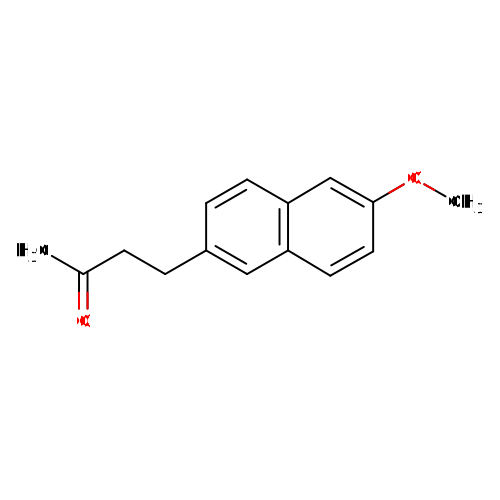
Structure for Nabumetone (DB00461)
- Weight
- Average: 228.2863
Monoisotopic: 228.115029756 - Chemical Formula
- C15H16O2
- Synonyms
- 4-(6-Methoxy-2-naphthalenyl)-2-butanone
- 4-(6-Methoxy-2-naphthyl)-2-butanone
- Nabumeton
- Nabumetona
- Nabumétone
- Nabumetone
- Nabumetonum
- External IDs
- BRL 14777
- BRL-14777

Pharmacology
- Indication
Indicated for:Label
1) Symptomatic relief in rheumatoid arthritis.
2) Symptomatic relief in osteoarthritis.
 Reduce drug development failure ratesBuild, train, & validate machine-learning modelswith evidence-based and structured datasets.Build, train, & validate predictive machine-learning models with structured datasets.
- Associated Conditions
Indication Type Indication Combined Product Details Approval Level Age Group Patient Characteristics Dose Form Symptomatic treatment of Osteoarthritis •••••••••••• Symptomatic treatment of Rheumatoid arthritis •••••••••••• - Contraindications & Blackbox Warnings
 Prevent Adverse Drug Events TodayTap into our Clinical API for life-saving information on contraindications & blackbox warnings, population restrictions, harmful risks, & more.Avoid life-threatening adverse drug events with our Clinical API
- Pharmacodynamics
NSAIDs, like nabumetone, are well established as analgesics. NSAIDs reduce both peripheral and central sensitization of nociceptive neurons due to inflammation which contribute to hyperalgesia and allodynia.9,6 This sensitization occurs through reducing the action potential threshold in peripheral neurons, reducing the intensity of painful stimuli needed to produce a painful sensation. Centrally, activation of dorsal horn neurons occurs along with increased release of glutamate, calcitonin gene-related peptide (CGRP), and substance P which increase the transmission of painful stimuli. Coupled with this is an inhibition glycinergic neurons which normally inhibit pain transmission, a phenomenon known as disinhibition. Increased activity ofn-methyl d-aspartate (NMDA) and α-amino-3-hydroxy-5-methyl-4-isoxazolepropionic acid (AMPA) receptors leads to the establishment of central sensitization, allowing both mild painful and innocuous stimuli to produce action potentials in nociceptive projection neurons. NSAIDs are effective in reducing mild-moderate acute and chronic nociceptive pain, however, the usefulness of NSAIDs in neuropathic pain is limited.
The anti-inflammatory effect of NSAIDs is mediated by preventing vasodilation, increases in vascular permeability, and the release of cytokines from endothelial cells.9,7 These three effects together prevent immunocompetent cells from migrating to the site of injury thereby preventing additional damage and inflammation due to activation of the immune system at the site of damage. PGs also modulate T-helper cell activation and differentiation, an activity which is thought to be of importance in arthritic conditions.
The anti-pyretic effect of NSAIDs is mediated through preventing increases in temperature by prostaglandins (PGs) via the hypothalamus.9 Activation of this process by other inflammatory mediators relies upon subsequent action by PGs, therefore NSAIDs are able to reduce fever due to these mediators as well.
The adverse effects of NSAIDs are related to their therapeutic effects.9 The same vasodilatory action which occurs in inflammation also serves to regulate blood flow to the kidneys through the afferent renal arteries. NSAIDs are widely known as nephrotoxic agents as the reduction in PGs produces vasoconstriction of these arteries resulting in reduced blood flow to the kidneys and a subsequent decline in renal function. Reductions in mucus and HCO3- secretion in the stomach increases the risk of ulceration by limiting the protection mediated by PGs. Lastly, COX-2 selective agents like nabumetone can unbalance prothrombotic and antithrombotic prostanoid generation leading to increased platelet aggregation and increased risk of thrombosis.
- Mechanism of action
Nabumetone's active metabolite, 6-MNA, is an inhibitor of both COX-1 and COX-2 although it exhibits some COX-2 selectivity.Label,1 Inhibition of COX-1 and COX-2 reduces conversion of arachidonic acid to PGs and thromboxane (TXA2). This reduction in prostanoid production is the common mechanism that mediates the effects of nambutone.
PGE2 is the primary PG involved in modulation of nociception.6 It mediates peripheral sensitization through a variety of effects.9,6 PGE2 activates the Gq-coupled EP1 receptor leading to increased activity of the inositol trisphosphate/phospholipase C pathway. Activation of this pathway releases intracellular stores of calcium which directly reduces action potential threshold and activates protein kinase C (PKC) which contributes to several indirect mechanisms. PGE2 also activates the EP4 receptor, coupled to Gs, which activates the adenylyl cyclase/protein kinase A (AC/PKA) signaling pathway. PKA and PKC both contribute to the potentiation of transient receptor potential cation channel subfamily V member 1 (TRPV1) potentiation, which increases sensitivity to heat stimuli. They also activate tetrodotoxin-resistant sodium channels and inhibit inward potassium currents. PKA further contributes to the activation of the P2X3 purine receptor and sensitization of T-type calcium channels. The activation and sensitization of depolarizing ion channels and inhibition of inward potassium currents serve to reduce the intensity of stimulus necessary to generate action potentials in nociceptive sensory afferents. PGE2 act via EP3 to increase sensitivity to bradykinin and via EP2 to further increase heat sensitivity. Central sensitization occurs in the dorsal horn of the spinal cord and is mediated by the EP2 receptor which couples to Gs. Pre-synaptically, this receptor increases the release of pro-nociceptive neurotransmitters glutamate, CGRP, and substance P. Post-synaptically it increases the activity of AMPA and NMDA receptors and produces inhibition of inhibitory glycinergic neurons. Together these lead to a reduced threshold of activating, allowing low intensity stimuli to generate pain signals. PGI2 is known to play a role via its Gs-coupled IP receptor although the magnitude of its contribution varies. It has been proposed to be of greater importance in painful inflammatory conditions such as arthritis. By limiting sensitization, both peripheral and central, via these pathways NSAIDs can effectively reduce inflammatory pain.
PGI2 and PGE2 contribute to acute inflammation via their IP and EP2 receptors.9,7 Similarly to β adrenergic receptors these are Gs-coupled and mediate vasodilation through the AC/PKA pathway. PGE2 also contributes by increasing leukocyte adhesion to the endothelium and attracts the cells to the site of injury.9 PGD2 plays a role in the activation of endothelial cell release of cytokines through its DP1 receptor.7 PGI2 and PGE2 modulate T-helper cell activation and differentiation through IP, EP2, and EP4 receptors which is believed to be an important activity in the pathology of arthritic conditions. By limiting the production of these PGs at the site of injury, NSAIDs can reduce inflammation.
PGE2 can cross the blood-brain barrier and act on excitatory Gq EP3 receptors on thermoregulatory neurons in the hypothalamus.9 This activation triggers an increase in heat-generation and a reduction in heat-loss to produce a fever. NSAIDs prevent the generation of PGE2 thereby reducing the activity of these neurons.
The adverse effects of NSAIDs stem from the protective and regulatory roles of prostanoids which have been well-characterized.9 PGI2 and PGE2 regulate blood flow to the kidney by similar mechanisms to the vasodilation they produce in inflammation. Prevention of this regulation by NSAIDs produces vasoconstriction which limits renal function by reducing blood flow and the hydrostatic pressure which drives filtration. PGE2 also regulates gastric protection via EP3 receptors which are, in this location, coupled to Gi which inhibits the AC/PKA pathway. This reduces the secretion of protons by H+/K+ ATPase in parietal cells and increases the secretion of mucus and HCO3- by superficial endothelial cells. Disruption of this protective action by NSAIDs lead to ulceration of the gastric mucosa. Lastly, disruption of PGI2, which opposes platelet aggregation, generation by COX-2 selective agents leads to an imbalance with TXA2 generated by COX-1, which promotes aggregation of platelets, leading to increased risk of thrombosis. Since nabumetone is somewhat COX-2 selective it is thought to promote this imbalance and increase thrombotic risk.1
Target Actions Organism AProstaglandin G/H synthase 2 inhibitorHumans UProstaglandin G/H synthase 1 inhibitorHumans - Absorption
Nabumetone is well-absorbed from the GI tract and undergoes significant first pass metabolism resulting in approximately 35% being converted to the active metabolite, 6-MNA.Label,1 Tmax for 6-MNA varies widely with a mean values of 3 and 11 hours reported in official product monographs, and described as 9-12 hours in published literature Label,10,1 Administration with food increases Cmax by 33% and increases absorption rate.Label,1 If formulated as a suspension the Cmax increases and the Tmax is reduced by 0.8 hours while the all other pharmacokinetic parameters remain unchanged.1
- Volume of distribution
The Vd of 6-MNA reported after administration of a single dose is 0.1-0.2 L/kg or approximately 5-10 L.1 Vdss reported in official product labeling is approximately 53 L.Label,10
- Protein binding
6-MNA is over 99% bound to plasma proteins, likely albumin.Label,1 The unbound fraction is 0.1-0.2% and remains proportional in the dose range of 1000-2000mg
- Metabolism
Nabumetone is reduced to 3-hydroxy nabumetone by the aldo-keto reductase-1C family and by corticosteroid 11-beta-dehydrogenase2,3. It then undergoes oxidative cleavage by CYP1A2 to 6-MNA, the active metabolite.4,3 6-MNA is eliminated by O-demethylation by CYP2C9 to 6-hydroxy-2-naphthylacetic acid (6-HNA).2,3 Both 6-MNA and 6-HNA are further converted to conjugates.3 Other metabolites are generated through a mix of ketone reduction and O-demethylation along with subsequent conjugation. Glucuronide conjugates of several metabolites have been found to become further conjugated to glycine residues.5
Hover over products below to view reaction partners
- Route of elimination
Most drug is eliminated via hepatic metabolism with minimal to no parent drug detectable in the plasma.Label,1 80% of the dose is then excreted by the kidneys and 10% in the feces. It does not appear to undergo enterohepatic recirculation.
- Half-life
6-MNA has a mean half-life of 24 hours with a range of 19-36 hours.Label
- Clearance
6-MNA has an apparent steady-state clearance of 20 - 30 mL/min.Label
- Adverse Effects
 Improve decision support & research outcomesWith structured adverse effects data, including: blackbox warnings, adverse reactions, warning & precautions, & incidence rates. View sample adverse effects data in our new Data Library!Improve decision support & research outcomes with our structured adverse effects data.
- Toxicity
LD50 Values
Mouse: 4290 mg/kg (Oral), 2380 mg/kg (IP)11
Rat: 3880 mg/kg (Oral), 1520 mg/kg (IP), >10 g/kg (SC)11
Monkey: 3200 mg/kg (Oral)11
Overdose
Signs and symptoms of nabumetone overdose include lethargy, drowsiness, nausea, vomiting, and epigastric pain.Label These are considered reversible with supportive care. GI bleeding, hypertension, acute kidney injury, respiratory depression, and coma are rare but can occur. No antidote exists for nabumetone overdose although administration of activated charcoal and/or induction of emesis can reduce absorption if the nabumetone dose was taken less than 4 hours prior.Label,10 6-MNA is cannot be cleared by dialysis.
Carcinogenicity & Mutagenicity
Nabumetone was not significantly carcinogenic in rats or mice studied over 2 years.Label Neither the Ames test nor mouse micronucleus test showed nabumetone or it's active metabolite, 6-MNA, to be mutagenic. Chromosomal abberation has been observed in cultured lymphocytes exposed to concentrations of 80 mcg/mL and higher of nabumetone or 6-MNA equivalent to the maximum recommended human dose.
Reproductive Toxicity
No adverse effects on fertility have been observed in male and female rats at doses of 320 mg/kg/day.Label,10] No teratogenicity has been observed in pregnant rabbits or rats. Dystocia and delayed parturition have been noted in rats resulting in reduced survival of offspring. This has been attributed to the role of prostaglandins in uterine contraction. NSAIDs can also cause premature closure of the ductus ateriosus.
Lactation
6-MNA has been detected in the milk of lactating rats.Label,10 While no data is available in humans, 6-MNA is both highly protein bound and exists in its anionic form in circulation. For these reasons partitioning into breast milk is expected to be limited.
- Pathways
Pathway Category Nabumetone Action Pathway Drug action - Pharmacogenomic Effects/ADRs
- Not Available
Interactions
- Drug Interactions
- This information should not be interpreted without the help of a healthcare provider. If you believe you are experiencing an interaction, contact a healthcare provider immediately. The absence of an interaction does not necessarily mean no interactions exist.
Drug Interaction Integrate drug-drug
interactions in your softwareAbacavir Nabumetone may decrease the excretion rate of Abacavir which could result in a higher serum level. Abametapir The serum concentration of Nabumetone can be increased when it is combined with Abametapir. Abatacept The metabolism of Nabumetone can be increased when combined with Abatacept. Abciximab The risk or severity of bleeding and hemorrhage can be increased when Nabumetone is combined with Abciximab. Abiraterone The serum concentration of Nabumetone can be increased when it is combined with Abiraterone. - Food Interactions
- Avoid alcohol. Alcohol use may aggravate the gastrointestinal irritation caused by this drug.
- Take with food. Food increases the rate of absorption.
Products
 Drug product information from 10+ global regionsOur datasets provide approved product information including:dosage, form, labeller, route of administration, and marketing period.Access drug product information from over 10 global regions.
- Product Images
- International/Other Brands
- Arthaxan (SmithKline Beecham (Germany; discontinued)) / Balmox (Beecham (Portugal), Meda (Switzerland)) / Dolsinal (Ferrer (Spain; discontinued)) / Listran (Uriach (Spain)) / Mebutan (Meda (Netherlands)) / Nabuser (Geymonat (Italy)) / Relif (Meda (Spain)) / Relifen (Sanwa (Japan), GSK (South Africa)) / Relifex (Meda (Czeck Republic, Denmark, Finland, Germany, Greece, Hungary, Ireland, Italy, Norway, Sweden, United Kingdom), GSK (Israel, Mexico, Poland, Thailand, Turkey), SmithKline Beecham (Philippines))
- Brand Name Prescription Products
Name Dosage Strength Route Labeller Marketing Start Marketing End Region Image Nabumetone Tablet 500 mg Oral Aa Pharma Inc 1998-08-21 Not applicable Canada 
Nabumetone Tablet 500 mg Oral Sanis Health Inc 2010-02-16 2017-02-08 Canada Nabumetone Tablet 500 mg Oral Apotex Corporation Not applicable Not applicable Canada Nabumetone-500 Tablet 500 mg Oral Pro Doc Limitee 2008-04-07 2010-07-13 Canada Relafen Tablet, film coated 750 mg/1 Oral Glaxosmithkline Inc 2006-02-02 2011-02-11 US 
- Generic Prescription Products
Name Dosage Strength Route Labeller Marketing Start Marketing End Region Image Mylan-nabumetone Tablet 500 mg Oral Mylan Pharmaceuticals 2002-02-20 2017-01-09 Canada Nabumetone Tablet, film coated 750 mg/1 Oral Rxchange Co 2014-11-13 Not applicable US 
Nabumetone Tablet, film coated 750 mg/1 Oral A-S Medication Solutions 2019-03-06 Not applicable US Nabumetone Tablet, film coated 500 mg/1 Oral Amneal Pharmaceuticals of New York Llc 2001-08-20 Not applicable US Nabumetone Tablet, film coated 500 mg/1 Oral Mylan Pharmaceuticals 2012-08-21 2013-08-31 US - Mixture Products
Name Ingredients Dosage Route Labeller Marketing Start Marketing End Region Image NuDroxiPAK N-500 Nabumetone (500 mg/1) + Capsaicin (0.25 mg/1mL) + Menthol (60 mg/1mL) + Methyl salicylate (250 mg/1mL) Kit Oral; Topical Nucare Pharmaceuticals,inc. 2018-03-16 Not applicable US - Unapproved/Other Products
Name Ingredients Dosage Route Labeller Marketing Start Marketing End Region Image Relafen Nabumetone (500 mg/1) Tablet, film coated Oral Physicians Total Care, Inc. 1993-05-12 2011-05-31 US


Categories
- ATC Codes
- M01AX01 — Nabumetone
- Drug Categories
- Agents causing hyperkalemia
- Agents that produce hypertension
- Analgesics
- Analgesics, Non-Narcotic
- Anti-Inflammatory Agents
- Anti-Inflammatory Agents, Non-Steroidal
- Anti-Inflammatory Agents, Non-Steroidal (Non-Selective)
- Antiinflammatory and Antirheumatic Products
- Antiinflammatory and Antirheumatic Products, Non-Steroids
- Antirheumatic Agents
- Butanones
- COX-2 Inhibitors
- Cyclooxygenase Inhibitors
- Cytochrome P-450 CYP1A2 Substrates
- Cytochrome P-450 CYP2C9 Substrates
- Cytochrome P-450 Substrates
- Drugs causing inadvertant photosensitivity
- Enzyme Inhibitors
- Ketones
- Musculo-Skeletal System
- Nephrotoxic agents
- Other Nonsteroidal Anti-inflammatory Agents
- Photosensitizing Agents
- Selective Cyclooxygenase 2 Inhibitors (NSAIDs)
- Chemical TaxonomyProvided by Classyfire
- Description
- This compound belongs to the class of organic compounds known as naphthalenes. These are compounds containing a naphthalene moiety, which consists of two fused benzene rings.
- Kingdom
- Organic compounds
- Super Class
- Benzenoids
- Class
- Naphthalenes
- Sub Class
- Not Available
- Direct Parent
- Naphthalenes
- Alternative Parents
- Anisoles / Alkyl aryl ethers / Ketones / Organic oxides / Hydrocarbon derivatives
- Substituents
- Alkyl aryl ether / Anisole / Aromatic homopolycyclic compound / Carbonyl group / Ether / Hydrocarbon derivative / Ketone / Naphthalene / Organic oxide / Organic oxygen compound
- Molecular Framework
- Aromatic homopolycyclic compounds
- External Descriptors
- methyl ketone, methoxynaphthalene (CHEBI:7443)
- Affected organisms
- Humans and other mammals
Chemical Identifiers
- UNII
- LW0TIW155Z
- CAS number
- 42924-53-8
- InChI Key
- BLXXJMDCKKHMKV-UHFFFAOYSA-N
- InChI
- InChI=1S/C15H16O2/c1-11(16)3-4-12-5-6-14-10-15(17-2)8-7-13(14)9-12/h5-10H,3-4H2,1-2H3
- IUPAC Name
- 4-(6-methoxynaphthalen-2-yl)butan-2-one
- SMILES
- COC1=CC2=C(C=C1)C=C(CCC(C)=O)C=C2
References
- Synthesis Reference
Brian F. Becnel, Mahmood Sabahi, Kevin J. Theriot, "Production of nabumetone or precursors thereof." U.S. Patent US5907069, issued December, 1985.
US5907069- General References
- Davies NM: Clinical pharmacokinetics of nabumetone. The dawn of selective cyclo-oxygenase-2 inhibition? Clin Pharmacokinet. 1997 Dec;33(6):404-16. doi: 10.2165/00003088-199733060-00001. [Article]
- Matsumoto K, Hasegawa T, Koyanagi J, Takahashi T, Akimoto M, Sugibayashi K: Reductive metabolism of nabumetone by human liver microsomal and cytosolic fractions: exploratory prediction using inhibitors and substrates as marker probes. Eur J Drug Metab Pharmacokinet. 2015 Jun;40(2):127-35. doi: 10.1007/s13318-014-0190-0. [Article]
- Nobilis M, Mikusek J, Szotakova B, Jirasko R, Holcapek M, Chamseddin C, Jira T, Kucera R, Kunes J, Pour M: Analytical power of LLE-HPLC-PDA-MS/MS in drug metabolism studies: identification of new nabumetone metabolites. J Pharm Biomed Anal. 2013 Jun;80:164-72. doi: 10.1016/j.jpba.2013.03.006. Epub 2013 Mar 19. [Article]
- Turpeinen M, Hofmann U, Klein K, Murdter T, Schwab M, Zanger UM: A predominate role of CYP1A2 for the metabolism of nabumetone to the active metabolite, 6-methoxy-2-naphthylacetic acid, in human liver microsomes. Drug Metab Dispos. 2009 May;37(5):1017-24. doi: 10.1124/dmd.108.025700. Epub 2009 Feb 9. [Article]
- Ceslova L, Holcapek M, Nobilis M: Identification of combined conjugation of nabumetone phase I metabolites with glucuronic acid and glycine in minipig biotransformation using coupling high-performance liquid chromatography with electrospray ionization mass spectrometry. J Pharm Biomed Anal. 2014 Jan;88:221-4. doi: 10.1016/j.jpba.2013.08.053. Epub 2013 Sep 12. [Article]
- Chen L, Yang G, Grosser T: Prostanoids and inflammatory pain. Prostaglandins Other Lipid Mediat. 2013 Jul-Aug;104-105:58-66. doi: 10.1016/j.prostaglandins.2012.08.006. Epub 2012 Sep 3. [Article]
- Hirata T, Narumiya S: Prostanoids as regulators of innate and adaptive immunity. Adv Immunol. 2012;116:143-74. doi: 10.1016/B978-0-12-394300-2.00005-3. [Article]
- Blower PR: The unique pharmacologic profile of nabumetone. J Rheumatol Suppl. 1992 Nov;36:13-9. [Article]
- Emer M. Smyth; Tilo Grosser; Garret A. FitzGerald (2018). 37 & 38. In Goodman & Gilman's: The Pharmacological Basis of Therapeutics (13th ed.). McGraw-Hill Education. [ISBN:978-1-25-958473-2]
- Nabumetone Health Canada Monograph [Link]
- ChemIDplus: Nabumetone [Link]
- FDA: Relafen [Link]
- FDA Approved Products: Relafen (nabumetone) tablets [Link]
- External Links
- Human Metabolome Database
- HMDB0014604
- KEGG Drug
- D00425
- PubChem Compound
- 4409
- PubChem Substance
- 46507729
- ChemSpider
- 4256
- BindingDB
- 40128
- 31448
- ChEBI
- 7443
- ChEMBL
- CHEMBL1070
- ZINC
- ZINC000000020221
- Therapeutic Targets Database
- DAP000735
- PharmGKB
- PA450572
- PDBe Ligand
- NBO
- RxList
- RxList Drug Page
- Drugs.com
- Drugs.com Drug Page
- PDRhealth
- PDRhealth Drug Page
- Wikipedia
- Nabumetone
- PDB Entries
- 3taj / 6ci6
- FDA label
- Download (243 KB)
- MSDS
- Download (29.8 KB)
Clinical Trials
- Clinical Trials
Phase Status Purpose Conditions Count 4 Completed Treatment Osteoarthritis of the Knee 1 1 Completed Not Available Healthy Volunteers (HV) 1 1 Completed Other Healthy Volunteers (HV) 1 1 Completed Treatment Healthy Volunteers (HV) 2 Not Available Completed Treatment Osteoarthritis of the Knee 1
Pharmacoeconomics
- Manufacturers
- Actavis elizabeth llc
- Copley pharmaceutical inc
- Dr reddys laboratories ltd
- Invagen pharmaceuticals inc
- Matrix laboratories ltd
- Par pharmaceutical
- Sandoz inc
- Teva pharmaceuticals usa inc
- Smithkline beecham corp dba glaxosmithkline
- Packagers
- Altura Pharmaceuticals Inc.
- Amerisource Health Services Corp.
- Apotheca Inc.
- A-S Medication Solutions LLC
- Blenheim Pharmacal
- Bryant Ranch Prepack
- Cardinal Health
- Caremark LLC
- Corepharma LLC
- Direct Dispensing Inc.
- Dispensing Solutions
- Diversified Healthcare Services Inc.
- Doctor Reddys Laboratories Ltd.
- Eon Labs
- Glenmark Generics Ltd.
- H.J. Harkins Co. Inc.
- Heartland Repack Services LLC
- Innoviant Pharmacy Inc.
- InvaGen Pharmaceuticals Inc.
- Kaiser Foundation Hospital
- Keltman Pharmaceuticals Inc.
- Lake Erie Medical and Surgical Supply
- Major Pharmaceuticals
- Murfreesboro Pharmaceutical Nursing Supply
- Mylan
- Novopharm Ltd.
- Nucare Pharmaceuticals Inc.
- Palmetto Pharmaceuticals Inc.
- Par Pharmaceuticals
- PD-Rx Pharmaceuticals Inc.
- Physicians Total Care Inc.
- Preferred Pharmaceuticals Inc.
- Prescription Dispensing Service Inc.
- Quality Care
- Rebel Distributors Corp.
- Redpharm Drug
- Sandoz
- Southwood Pharmaceuticals
- St Mary's Medical Park Pharmacy
- Stat Rx Usa
- Teva Pharmaceutical Industries Ltd.
- UDL Laboratories
- Vangard Labs Inc.
- Dosage Forms
Form Route Strength Tablet Oral 1 g Tablet Oral Granule, for suspension Oral 1 g Suspension Oral 1 g/10ml Tablet, chewable Oral 1 g Tablet Oral 1.0 G Tablet, film coated Oral Tablet, coated Oral 0.5 g Tablet Oral 500 mg/1 Tablet Oral 750 mg/1 Tablet, film coated Oral 500 1/1 Tablet, film coated Oral 750 mg/1 Tablet, film coated Oral 750 1/1 Tablet, film coated Oral 1000 mg/1 Tablet Oral 500 MG Tablet, coated Oral 1 G Kit Oral; Topical Tablet Oral 500 mg / tab Tablet Oral 750 mg / tab Tablet, film coated Oral 500 mg/1 Tablet Oral 1000 mg/1 Tablet Oral 750 mg Granule, for suspension Oral Solution Oral Tablet, chewable Oral Tablet Oral 1000 mg Tablet, coated Oral 500 mg Tablet, film coated Oral 500 mg - Prices
Unit description Cost Unit Relafen 750 mg tablet 2.91USD tablet Relafen 500 mg tablet 2.82USD tablet Nabumetone 750 mg tablet 1.56USD tablet Nabumetone 500 mg tablet 1.32USD tablet Apo-Nabumetone 500 mg Tablet 0.39USD tablet Mylan-Nabumetone 500 mg Tablet 0.39USD tablet Novo-Nabumetone 500 mg Tablet 0.39USD tablet DrugBank does not sell nor buy drugs. Pricing information is supplied for informational purposes only.- Patents
- Not Available
Properties
- State
- Solid
- Experimental Properties
Property Value Source melting point (°C) 78-82 Health Canada Product Monograph, AA Pharma Inc. water solubility Practically insoluble FDA Label, Eon Labs Inc. logP 2400 FDA Label, Eon Labs Inc. - Predicted Properties
Property Value Source Water Solubility 0.00193 mg/mL ALOGPS logP 3.41 ALOGPS logP 3.22 Chemaxon logS -5.1 ALOGPS pKa (Strongest Acidic) 19.59 Chemaxon pKa (Strongest Basic) -4.8 Chemaxon Physiological Charge 0 Chemaxon Hydrogen Acceptor Count 2 Chemaxon Hydrogen Donor Count 0 Chemaxon Polar Surface Area 26.3 Å2 Chemaxon Rotatable Bond Count 4 Chemaxon Refractivity 68.43 m3·mol-1 Chemaxon Polarizability 26.17 Å3 Chemaxon Number of Rings 2 Chemaxon Bioavailability 1 Chemaxon Rule of Five Yes Chemaxon Ghose Filter Yes Chemaxon Veber's Rule Yes Chemaxon MDDR-like Rule No Chemaxon - Predicted ADMET Features
Property Value Probability Human Intestinal Absorption + 1.0 Blood Brain Barrier + 0.9401 Caco-2 permeable + 0.9049 P-glycoprotein substrate Substrate 0.5 P-glycoprotein inhibitor I Non-inhibitor 0.5653 P-glycoprotein inhibitor II Inhibitor 0.5656 Renal organic cation transporter Non-inhibitor 0.7143 CYP450 2C9 substrate Non-substrate 0.7664 CYP450 2D6 substrate Non-substrate 0.7329 CYP450 3A4 substrate Substrate 0.614 CYP450 1A2 substrate Inhibitor 0.959 CYP450 2C9 inhibitor Non-inhibitor 0.9071 CYP450 2D6 inhibitor Non-inhibitor 0.9231 CYP450 2C19 inhibitor Non-inhibitor 0.8591 CYP450 3A4 inhibitor Non-inhibitor 0.8235 CYP450 inhibitory promiscuity Low CYP Inhibitory Promiscuity 0.6443 Ames test Non AMES toxic 0.8942 Carcinogenicity Non-carcinogens 0.8745 Biodegradation Not ready biodegradable 0.8489 Rat acute toxicity 1.7384 LD50, mol/kg Not applicable hERG inhibition (predictor I) Weak inhibitor 0.7536 hERG inhibition (predictor II) Non-inhibitor 0.8059
Spectra
- Mass Spec (NIST)
- Not Available
- Spectra
- Chromatographic Properties
Collision Cross Sections (CCS)
Adduct CCS Value (Å2) Source type Source [M-H]- 166.4135864 predictedDarkChem Lite v0.1.0 [M-H]- 166.5326864 predictedDarkChem Lite v0.1.0 [M-H]- 156.72418 predictedDeepCCS 1.0 (2019) [M+H]+ 167.5110864 predictedDarkChem Lite v0.1.0 [M+H]+ 167.6450864 predictedDarkChem Lite v0.1.0 [M+H]+ 159.08217 predictedDeepCCS 1.0 (2019) [M+Na]+ 166.3463864 predictedDarkChem Lite v0.1.0 [M+Na]+ 166.6696864 predictedDarkChem Lite v0.1.0 [M+Na]+ 165.17532 predictedDeepCCS 1.0 (2019)
Targets

- Kind
- Protein
- Organism
- Humans
- Pharmacological action
- Yes
- Actions
- Inhibitor
- General Function
- Prostaglandin-endoperoxide synthase activity
- Specific Function
- Converts arachidonate to prostaglandin H2 (PGH2), a committed step in prostanoid synthesis. Constitutively expressed in some tissues in physiological conditions, such as the endothelium, kidney and...
- Gene Name
- PTGS2
- Uniprot ID
- P35354
- Uniprot Name
- Prostaglandin G/H synthase 2
- Molecular Weight
- 68995.625 Da
References
- Fackovcova D, Kristova V, Kriska M: Renal damage induced by the treatment with non-opioid analgesics--theoretical assumption or clinical significance. Bratisl Lek Listy. 2000;101(8):417-22. [Article]
- Roy HK, Karolski WJ, Ratashak A: Distal bowel selectivity in the chemoprevention of experimental colon carcinogenesis by the non-steroidal anti-inflammatory drug nabumetone. Int J Cancer. 2001 May 15;92(4):609-15. [Article]
- van Kraaij DJ, Hovestad-Witterland AH, de Metz M, Vollaard EJ: A comparison of the effects of nabumetone vs meloxicam on serum thromboxane B2 and platelet function in healthy volunteers. Br J Clin Pharmacol. 2002 Jun;53(6):644-7. [Article]
- Hedner T, Samulesson O, Wahrborg P, Wadenvik H, Ung KA, Ekbom A: Nabumetone: therapeutic use and safety profile in the management of osteoarthritis and rheumatoid arthritis. Drugs. 2004;64(20):2315-43; discussion 2344-5. [Article]
- Elliott SN, McKnight W, Cirino G, Wallace JL: A nitric oxide-releasing nonsteroidal anti-inflammatory drug accelerates gastric ulcer healing in rats. Gastroenterology. 1995 Aug;109(2):524-30. [Article]
- Chen X, Ji ZL, Chen YZ: TTD: Therapeutic Target Database. Nucleic Acids Res. 2002 Jan 1;30(1):412-5. [Article]
- Kind
- Protein
- Organism
- Humans
- Pharmacological action
- Unknown
- Actions
- Inhibitor
- General Function
- Prostaglandin-endoperoxide synthase activity
- Specific Function
- Converts arachidonate to prostaglandin H2 (PGH2), a committed step in prostanoid synthesis. Involved in the constitutive production of prostanoids in particular in the stomach and platelets. In gas...
- Gene Name
- PTGS1
- Uniprot ID
- P23219
- Uniprot Name
- Prostaglandin G/H synthase 1
- Molecular Weight
- 68685.82 Da
References
- Giuliano F, Ferraz JG, Pereira R, de Nucci G, Warner TD: Cyclooxygenase selectivity of non-steroid anti-inflammatory drugs in humans: ex vivo evaluation. Eur J Pharmacol. 2001 Aug 24;426(1-2):95-103. [Article]
- Takeuchi K, Smale S, Premchand P, Maiden L, Sherwood R, Thjodleifsson B, Bjornsson E, Bjarnason I: Prevalence and mechanism of nonsteroidal anti-inflammatory drug-induced clinical relapse in patients with inflammatory bowel disease. Clin Gastroenterol Hepatol. 2006 Feb;4(2):196-202. [Article]
- Cipollone F, Ganci A, Panara MR, Greco A, Cuccurullo F, Patrono C, Patrignani P: Effects of nabumetone on prostanoid biosynthesis in humans. Clin Pharmacol Ther. 1995 Sep;58(3):335-41. [Article]
- Bensen W, Zizzo A: Newer, safer nonsteroidal anti-inflammatory drugs. Rational NSAID selection for arthritis. Can Fam Physician. 1998 Jan;44:101-2, 105-7. [Article]
Enzymes
- Kind
- Protein
- Organism
- Humans
- Pharmacological action
- Unknown
- Actions
- Inhibitor
- General Function
- Peroxidase activity
- Specific Function
- Part of the host defense system of polymorphonuclear leukocytes. It is responsible for microbicidal activity against a wide range of organisms. In the stimulated PMN, MPO catalyzes the production o...
- Gene Name
- MPO
- Uniprot ID
- P05164
- Uniprot Name
- Myeloperoxidase
- Molecular Weight
- 83867.71 Da
References
- Saleh TS, Calixto JB, Medeiros YS: Effects of anti-inflammatory drugs upon nitrate and myeloperoxidase levels in the mouse pleurisy induced by carrageenan. Peptides. 1999;20(8):949-56. [Article]
- Kind
- Protein
- Organism
- Humans
- Pharmacological action
- Unknown
- Actions
- Substrate
- Curator comments
- Data supporting this enzyme action are limited to one in vitro study.
- General Function
- Oxidoreductase activity, acting on paired donors, with incorporation or reduction of molecular oxygen, reduced flavin or flavoprotein as one donor, and incorporation of one atom of oxygen
- Specific Function
- Cytochromes P450 are a group of heme-thiolate monooxygenases. In liver microsomes, this enzyme is involved in an NADPH-dependent electron transport pathway. It oxidizes a variety of structurally un...
- Gene Name
- CYP1A2
- Uniprot ID
- P05177
- Uniprot Name
- Cytochrome P450 1A2
- Molecular Weight
- 58293.76 Da
References
- Turpeinen M, Hofmann U, Klein K, Murdter T, Schwab M, Zanger UM: A predominate role of CYP1A2 for the metabolism of nabumetone to the active metabolite, 6-methoxy-2-naphthylacetic acid, in human liver microsomes. Drug Metab Dispos. 2009 May;37(5):1017-24. doi: 10.1124/dmd.108.025700. Epub 2009 Feb 9. [Article]
- Kind
- Protein
- Organism
- Humans
- Pharmacological action
- No
- Actions
- Substrate
- General Function
- Steroid hydroxylase activity
- Specific Function
- Cytochromes P450 are a group of heme-thiolate monooxygenases. In liver microsomes, this enzyme is involved in an NADPH-dependent electron transport pathway. It oxidizes a variety of structurally un...
- Gene Name
- CYP2C9
- Uniprot ID
- P11712
- Uniprot Name
- Cytochrome P450 2C9
- Molecular Weight
- 55627.365 Da
References
- Matsumoto K, Nemoto E, Hasegawa T, Akimoto M, Sugibayashi K: In vitro characterization of the cytochrome P450 isoforms involved in the metabolism of 6-methoxy-2-napthylacetic acid, an active metabolite of the prodrug nabumetone. Biol Pharm Bull. 2011;34(5):734-9. [Article]
- Kind
- Protein
- Organism
- Humans
- Pharmacological action
- Unknown
- Actions
- Substrate
- General Function
- 11-beta-hydroxysteroid dehydrogenase [nad(p)] activity
- Specific Function
- Catalyzes reversibly the conversion of cortisol to the inactive metabolite cortisone. Catalyzes reversibly the conversion of 7-ketocholesterol to 7-beta-hydroxycholesterol. In intact cells, the rea...
- Gene Name
- HSD11B1
- Uniprot ID
- P28845
- Uniprot Name
- Corticosteroid 11-beta-dehydrogenase isozyme 1
- Molecular Weight
- 32400.665 Da
References
- Matsumoto K, Hasegawa T, Koyanagi J, Takahashi T, Akimoto M, Sugibayashi K: Reductive metabolism of nabumetone by human liver microsomal and cytosolic fractions: exploratory prediction using inhibitors and substrates as marker probes. Eur J Drug Metab Pharmacokinet. 2015 Jun;40(2):127-35. doi: 10.1007/s13318-014-0190-0. [Article]
- Kind
- Protein
- Organism
- Humans
- Pharmacological action
- Unknown
- Actions
- Substrate
- General Function
- Trans-1,2-dihydrobenzene-1,2-diol dehydrogenase activity
- Specific Function
- Converts progesterone to its inactive form, 20-alpha-dihydroxyprogesterone (20-alpha-OHP). In the liver and intestine, may have a role in the transport of bile. May have a role in monitoring the in...
- Gene Name
- AKR1C1
- Uniprot ID
- Q04828
- Uniprot Name
- Aldo-keto reductase family 1 member C1
- Molecular Weight
- 36788.02 Da
References
- Matsumoto K, Hasegawa T, Koyanagi J, Takahashi T, Akimoto M, Sugibayashi K: Reductive metabolism of nabumetone by human liver microsomal and cytosolic fractions: exploratory prediction using inhibitors and substrates as marker probes. Eur J Drug Metab Pharmacokinet. 2015 Jun;40(2):127-35. doi: 10.1007/s13318-014-0190-0. [Article]
- Kind
- Protein
- Organism
- Humans
- Pharmacological action
- Unknown
- Actions
- Substrate
- General Function
- Trans-1,2-dihydrobenzene-1,2-diol dehydrogenase activity
- Specific Function
- Works in concert with the 5-alpha/5-beta-steroid reductases to convert steroid hormones into the 3-alpha/5-alpha and 3-alpha/5-beta-tetrahydrosteroids. Catalyzes the inactivation of the most potent...
- Gene Name
- AKR1C2
- Uniprot ID
- P52895
- Uniprot Name
- Aldo-keto reductase family 1 member C2
- Molecular Weight
- 36734.97 Da
References
- Matsumoto K, Hasegawa T, Koyanagi J, Takahashi T, Akimoto M, Sugibayashi K: Reductive metabolism of nabumetone by human liver microsomal and cytosolic fractions: exploratory prediction using inhibitors and substrates as marker probes. Eur J Drug Metab Pharmacokinet. 2015 Jun;40(2):127-35. doi: 10.1007/s13318-014-0190-0. [Article]
- Kind
- Protein
- Organism
- Humans
- Pharmacological action
- Unknown
- Actions
- Substrate
- General Function
- Retinal dehydrogenase activity
- Specific Function
- Catalyzes the transformation of the potent androgen dihydrotestosterone (DHT) into the less active form, 5-alpha-androstan-3-alpha,17-beta-diol (3-alpha-diol). Also has some 20-alpha-hydroxysteroid...
- Gene Name
- AKR1C4
- Uniprot ID
- P17516
- Uniprot Name
- Aldo-keto reductase family 1 member C4
- Molecular Weight
- 37066.52 Da
References
- Matsumoto K, Hasegawa T, Koyanagi J, Takahashi T, Akimoto M, Sugibayashi K: Reductive metabolism of nabumetone by human liver microsomal and cytosolic fractions: exploratory prediction using inhibitors and substrates as marker probes. Eur J Drug Metab Pharmacokinet. 2015 Jun;40(2):127-35. doi: 10.1007/s13318-014-0190-0. [Article]
Carriers
- Kind
- Protein
- Organism
- Humans
- Pharmacological action
- Unknown
- General Function
- Toxic substance binding
- Specific Function
- Serum albumin, the main protein of plasma, has a good binding capacity for water, Ca(2+), Na(+), K(+), fatty acids, hormones, bilirubin and drugs. Its main function is the regulation of the colloid...
- Gene Name
- ALB
- Uniprot ID
- P02768
- Uniprot Name
- Serum albumin
- Molecular Weight
- 69365.94 Da
References
- Davies NM: Clinical pharmacokinetics of nabumetone. The dawn of selective cyclo-oxygenase-2 inhibition? Clin Pharmacokinet. 1997 Dec;33(6):404-16. doi: 10.2165/00003088-199733060-00001. [Article]

Drug created at June 13, 2005 13:24 / Updated at April 18, 2024 09:15