Identification
- Summary
Ketorolac is an NSAID used to treat moderate to severe pain, rheumatoid arthritis, osteoarthritis, ankylosing spondylitis, menstrual disorders, and headaches.
- Brand Names
- Acular, Acuvail, Omidria, Readysharp Anesthetics Plus Ketorolac, Sprix, Toradol, Toronova Suik
- Generic Name
- Ketorolac
- DrugBank Accession Number
- DB00465
- Background
Ketorolac is a Non-steroidal anti-inflammatory drug (NSAID) and is commercially available as an oral tablet, injectable, nasal spray and as an ophthalmic solution.910131415
It's analgesic properties make it a useful pain management tool across many settings including postoperative pain, rheumatoid arthritis, osteoarthritis, menstrual disorders, headaches, spinal and soft tissue pain, and ankylosing spondylitis.12 Impressively, ketorolac has a similar efficacy to standard doses of morphine and meperidine making it a useful opioid sparing agent.11
- Type
- Small Molecule
- Groups
- Approved
- Structure
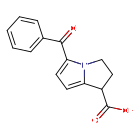
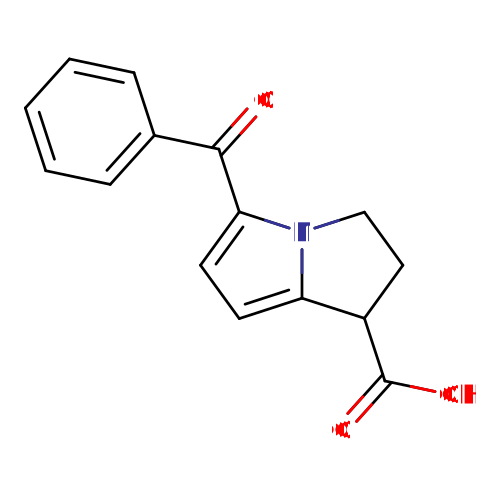
Structure for Ketorolac (DB00465)
- Weight
- Average: 255.2686
Monoisotopic: 255.089543287 - Chemical Formula
- C15H13NO3
- Synonyms
- Ketorolac
- Kétorolac
- Ketorolaco
- Ketorolacum
- rac-Ketorolac
- External IDs
- BPPC

Pharmacology
- Indication
Ketorolac is a Non-steroidal anti-inflammatory drug (NSAID) and has antipyretic, analgesic and anti-inflammatory properties.2 It is indicated for short term management of acute pain that requires the calibre of pain management offered by opioids.14 Clinicians may choose to initiate ketorolac to manage post-operative pain, spinal and soft tissue pain, rheumatoid arthritis, osteoarthritis, ankylosing spondylitis, menstrual disorders and headaches among other ailments.12 Regardless of the etiology of pain, patients should use the lowest possible dose, and avoid using ketorolac for an extended period of time (ideally ≤ 5 days).14 A benefit of choosing ketorolac over other analgesics with similar potency is that that there does not appear to be a risk of dependence or tolerance with ketorolac use.2
 Reduce drug development failure ratesBuild, train, & validate machine-learning modelswith evidence-based and structured datasets.Build, train, & validate predictive machine-learning models with structured datasets.
- Associated Conditions
Indication Type Indication Combined Product Details Approval Level Age Group Patient Characteristics Dose Form Treatment of Acute migraine ••• ••••• ••••• ••••••••• Treatment of Cystoid macular edema ••• ••••• ••••••••• •••••••• • ••••• Prevention of Cystoid macular edema ••• ••••• ••••••••• •••••••• • ••••• Treatment of Inflammation •••••••••••• •••••••••• Treatment of Ocular itching •••••••••••• •••••••••• - Contraindications & Blackbox Warnings
 Prevent Adverse Drug Events TodayTap into our Clinical API for life-saving information on contraindications & blackbox warnings, population restrictions, harmful risks, & more.Avoid life-threatening adverse drug events with our Clinical API
- Pharmacodynamics
Ketorolac is a non-selective NSAID and acts by inhibiting both COX-1 and COX-2 enzymes which are normally responsible for converting arachidonic acid to prostaglandins. The COX-1 enzyme is constitutively active and can be found in platelets, gastric mucosa, and vascular endothelium. On the other hand, the COX-2 enzyme is inducible and mediates inflammation, pain and fever.
As a result, inhibition of the COX-1 enzyme is linked to an increased risk of bleeding and risk of gastric ulceration, while the desired anti-inflammatory and analgesic properties are linked to inhibition of the COX-2 enzyme.3 Therefore, despite it's effectiveness in pain management, ketorolac should not be used long-term since this increases the risk of serious adverse effects such as gastrointestinal bleeding, peptic ulcers, and perforations.7
- Mechanism of action
Ketorolac inhibits key pathways in prostaglandin synthesis which is crucial to it's mechanism of action.4 Although ketorolac is non-selective and inhibits both COX-1 and COX-2 enzymes, it's clinical efficacy is derived from it's COX-2 inhibition. The COX-2 enzyme is inducible and is responsible for converting arachidonic acid to prostaglandins that mediate inflammation and pain. By blocking this pathway, ketorolac achieves analgesia and reduces inflammation.3 Ketorolac is administered as a racemic mixture; however, the "S" enantiomer is largely responsible for it's pharmacological activity.6
Target Actions Organism AProstaglandin G/H synthase 2 inhibitorHumans UProstaglandin G/H synthase 1 inhibitorHumans - Absorption
Ketorolac is rapidly, and completely absorbed after oral administration with a bioavailability of 80% after oral administration.14,14,144 Cmax is attained 20-60 minutes after administration, and after intramuscular administration, the area under the plasma concentration-time curve (AUC) is proportional to the dose administered.1
After intramuscular administration, ketorolac demonstrates a time to maximal plasma concentration (tmax) of approximately 45-50 minutes, and a tmax of 30-40 minutes after oral administration.4 The rate of absorption may be reduced by food; however, the extent of absorption remains unaffected.4
- Volume of distribution
The apparent volume of distribution of ketorolac in healthy human subjects is 0.25 L/kg or less.4
- Protein binding
>99% of Ketorolac is plasma protein bound.1
- Metabolism
Ketorolac is heavily metabolized via hydroxylation or conjugation in the liver; however, it appears that the key metabolic pathway is glucuronic acid conjugation.14,4 Enzymes involved in phase I metabolism include CYP2C8 and CYP2C9, while phase II metabolism is carried out by UDP-glucuronosyltransferase (UGT) 2B7.8
Hover over products below to view reaction partners
- Route of elimination
Ketorolac is primarily renally eliminated and approximately 92% of the dose can be recovered in the urine with 60% of this proportion recovered unchanged, and 40% recovered as metabolites. In addition 6% of a single dose is eliminated in the feces.14
- Half-life
Ketorolac tromethamine is administered as a racemic mixture, therefore the half-life of each enantiomer must be considered. The half life of the S-enantiomer is ~2.5 hours, while the half life of the R-enantiomer is ~5 hours. Based on this data, the S enantiomer is cleared about twice as fast as the R enantiomer.14
- Clearance
The plasma clearance of ketorolac is 0.021 to 0.037 L/h/kg.4 Further, studies have illustrated that clearance of oral, IM and IV doses of ketorolac are comparable which suggests linear kinetics.14 It should also be noted that clearance in children is about double the clearance found in adults. 5
- Adverse Effects
 Improve decision support & research outcomesWith structured adverse effects data, including: blackbox warnings, adverse reactions, warning & precautions, & incidence rates. View sample adverse effects data in our new Data Library!Improve decision support & research outcomes with our structured adverse effects data.
- Toxicity
The rate of adverse effects increases with higher doses of ketorolac. The most frequently observed adverse effects in patients occurring with an incidence of greater than 10% include: abdominal pain, dyspepsia, nausea, and headaches.13 Most adverse effects associated with short term use are mild in nature, related to the gastrointestinal tract and nervous system, and occur in roughly 39% of patients.2 Common symptoms of ketorolac overdose include nausea, vomiting, epigastric pain, gastrointestinal bleeding, lethargy and drowsiness. More rare symptoms of overdose include acute renal failure, hypertension, respiratory depression, and coma.14
Ketorolac is classified as Pregnancy Category C since there is a lack of evidence demonstrating safety in pregnant women.15 NSAIDs including ketorolac increase the risk of premature closure of the fetal ductus arteriosus in the 3rd trimester; therefore, beginning at 30 weeks gestation, pregnant women should avoid ketorolac.15
Ketorolac has been shown to be excreted in breast milk, and although available data has not demonstrated any adverse effects in nursing infants, practitioners should proceed with caution when suggesting ketorolac for nursing mothers.13,14 The benefits should outweigh the risks and the mother should be counselled to monitor the infant closely and to contact the infant's healthcare provider should any adverse effects arise.13,14
Women who are trying to conceive are not advised to take ketorolac since it's effect on prostaglandin synthesis may impair fertility.13,13
- Pathways
Pathway Category Ketorolac Action Pathway Drug action - Pharmacogenomic Effects/ADRs
- Not Available
Interactions
- Drug Interactions
- This information should not be interpreted without the help of a healthcare provider. If you believe you are experiencing an interaction, contact a healthcare provider immediately. The absence of an interaction does not necessarily mean no interactions exist.
Drug Interaction Integrate drug-drug
interactions in your softwareAbacavir Ketorolac may decrease the excretion rate of Abacavir which could result in a higher serum level. Abatacept The metabolism of Ketorolac can be increased when combined with Abatacept. Abciximab The risk or severity of bleeding and hemorrhage can be increased when Ketorolac is combined with Abciximab. Abiraterone The metabolism of Ketorolac can be decreased when combined with Abiraterone. Abrocitinib The metabolism of Abrocitinib can be decreased when combined with Ketorolac. - Food Interactions
- Take with food. Food reduces GI irritation.
Products
 Drug product information from 10+ global regionsOur datasets provide approved product information including:dosage, form, labeller, route of administration, and marketing period.Access drug product information from over 10 global regions.
- Product Ingredients
Ingredient UNII CAS InChI Key Ketorolac tromethamine 4EVE5946BQ 74103-07-4 BWHLPLXXIDYSNW-UHFFFAOYSA-N - Product Images
- International/Other Brands
- Bedoral (Be-Tabs Pharmaceuticals) / Dolten (Pfizer) / Dolten SL (Pfizer) / Dorixina forte NF (Roemmers) / Emodol (Jayson) / Etorac (Incepta) / Ketonic (Eskayef) / Ketora (Medicon) / Lixidol (Roche) / Syndol (Roche) / Taradyl (Roche) / Tarasyn (Roche)
- Brand Name Prescription Products
Name Dosage Strength Route Labeller Marketing Start Marketing End Region Image Acular Solution / drops 50 mg/1mL Ophthalmic Physicians Total Care, Inc. 2002-10-17 2011-06-30 US 
Acular Solution / drops 5 mg/1mL Ophthalmic Allergan, Inc. 1992-12-01 Not applicable US Acular Solution 0.5 % Ophthalmic Abbvie 1992-12-31 Not applicable Canada 
Acular Solution / drops 5 mg/1mL Ophthalmic Stat Rx USA 1992-12-01 Not applicable US Acular Solution 5 mg/1mL Ophthalmic Rebel Distributors 1992-11-09 Not applicable US - Generic Prescription Products
Name Dosage Strength Route Labeller Marketing Start Marketing End Region Image Acunivive 15 Injection, solution 15 mg/1mL Intramuscular; Intravenous It3 Medical Llc 2019-02-01 Not applicable US Acunivive 30 Injection, solution 30 mg/1mL Intramuscular; Intravenous It3 Medical Llc 2017-03-01 Not applicable US Acunivive 60 Injection, solution 30 mg/1mL Intramuscular It3 Medical Llc 2017-03-01 Not applicable US Apo-ketorolac Tablet 10 mg Oral Apotex Corporation 1998-07-03 Not applicable Canada Apo-ketorolac Injectable Solution 30 mg / mL Intramuscular Apotex Corporation 2001-12-04 Not applicable Canada - Over the Counter Products
Name Dosage Strength Route Labeller Marketing Start Marketing End Region Image Toradol Tab 10mg Tablet 10 mg / tab Oral Syntex Inc. 1991-12-31 1996-09-30 Canada - Mixture Products
Name Ingredients Dosage Route Labeller Marketing Start Marketing End Region Image Acunistat-30 Ketorolac tromethamine (30 mg/1mL) + Isopropyl alcohol (0.7 mL/1mL) + Lidocaine hydrochloride (10 mg/1mL) Injection, solution; Kit Infiltration; Intramuscular; Intravenous; Perineural; Topical It3 Medical Llc 2017-03-01 Not applicable US Acunistat-60 Ketorolac tromethamine (30 mg/1mL) + Isopropyl alcohol (0.7 mL/1mL) + Lidocaine hydrochloride (10 mg/1mL) Injection, solution; Kit Infiltration; Intramuscular; Perineural; Topical It3 Medical Llc 2017-03-01 Not applicable US Acunivive 90 Ketorolac tromethamine (30 mg/1mL) + Ketorolac tromethamine (30 mg/1mL) + Isopropyl alcohol (0.7 mL/1mL) Injection, solution; Kit Intramuscular; Intravenous; Topical It3 Medical Llc 2017-03-01 Not applicable US Acunivive 90 Ketorolac tromethamine (30 mg/1mL) + Ketorolac tromethamine (30 mg/1mL) + Isopropyl alcohol (0.7 mL/1mL) Injection, solution; Kit Intramuscular; Intravenous; Topical It3 Medical Llc 2017-03-01 Not applicable US OMIDRIA Ketorolac (2.88 MG/ML) + Phenylephrine (10.2 MG/ML) Solution, concentrate Ophthalmic Rayner Surgical (Ireland) Limited 2015-10-14 Not applicable Italy 
- Unapproved/Other Products
Name Ingredients Dosage Route Labeller Marketing Start Marketing End Region Image Chi-Myst Resolve Topical Ketorolac tromethamine (0.3 g/100mL) + Bupivacaine hydrochloride (0.3 g/100mL) + Chitosan low molecular weight (20-200 mpa.s) (0.1 g/100mL) + Lidocaine hydrochloride (5 g/100mL) Spray, metered Topical Prescription Care Llc 2016-06-01 Not applicable US Chi-Myst Resolve Topical Ketorolac tromethamine (0.09 g/30mL) + Bupivacaine hydrochloride (0.09 g/30mL) + Chitosan low molecular weight (20-200 mpa.s) (0.03 g/30mL) + Lidocaine hydrochloride (50 g/30mL) Spray, metered Topical Prescription Care Llc 2016-06-01 Not applicable US Chi-Myst Synergy Topical Ketorolac tromethamine (1.5 g/100mL) + Bupivacaine hydrochloride (0.3 g/100mL) + Chitosan low molecular weight (20-200 mpa.s) (0.1 g/100mL) + Lidocaine hydrochloride (5 g/100mL) Spray, metered Topical Prescription Care Llc 2016-06-01 Not applicable US Chi-Myst Synergy Topical Ketorolac tromethamine (0.45 g/30mL) + Bupivacaine hydrochloride (0.09 g/30mL) + Chitosan low molecular weight (20-200 mpa.s) (0.03 g/30mL) + Lidocaine hydrochloride (1.5 g/30mL) Spray, metered Topical Prescription Care Llc 2016-06-01 Not applicable US Chi-Myst Topical Ketorolac tromethamine (0.09 g/30mL) + Bupivacaine hydrochloride (0.09 g/30mL) + Chitosan low molecular weight (20-200 mpa.s) (0.03 g/30mL) Spray, metered Topical Prescription Care Llc 2016-08-19 Not applicable US


Categories
- ATC Codes
- M01AB15 — Ketorolac
- M01AB — Acetic acid derivatives and related substances
- M01A — ANTIINFLAMMATORY AND ANTIRHEUMATIC PRODUCTS, NON-STEROIDS
- M01 — ANTIINFLAMMATORY AND ANTIRHEUMATIC PRODUCTS
- M — MUSCULO-SKELETAL SYSTEM
- S01FB — Sympathomimetics excl. antiglaucoma preparations
- S01F — MYDRIATICS AND CYCLOPLEGICS
- S01 — OPHTHALMOLOGICALS
- S — SENSORY ORGANS
- Drug Categories
- Acetic Acid Derivatives and Related Substances
- Agents causing hyperkalemia
- Agents that produce hypertension
- Analgesics
- Analgesics, Non-Narcotic
- Anti-Inflammatory Agents
- Anti-Inflammatory Agents, Non-Steroidal
- Anti-Inflammatory Agents, Non-Steroidal (Non-Selective)
- Antiinflammatory and Antirheumatic Products
- Antiinflammatory and Antirheumatic Products, Non-Steroids
- Antirheumatic Agents
- Cyclooxygenase Inhibitors
- Cytochrome P-450 CYP2C8 Substrates
- Cytochrome P-450 CYP2C9 Substrates
- Cytochrome P-450 Substrates
- Drugs causing inadvertant photosensitivity
- Enzyme Inhibitors
- Heterocyclic Compounds, Fused-Ring
- Musculo-Skeletal System
- Mydriatics
- Mydriatics and Cycloplegics
- Nephrotoxic agents
- Non COX-2 selective NSAIDS
- Ophthalmologicals
- Other Nonsteroidal Anti-inflammatory Agents
- Photosensitizing Agents
- Sensory Organs
- Sympathomimetics Excl. Antiglaucoma Preparations
- UGT2B7 substrates
- Chemical TaxonomyProvided by Classyfire
- Description
- This compound belongs to the class of organic compounds known as aryl-phenylketones. These are aromatic compounds containing a ketone substituted by one aryl group, and a phenyl group.
- Kingdom
- Organic compounds
- Super Class
- Organic oxygen compounds
- Class
- Organooxygen compounds
- Sub Class
- Carbonyl compounds
- Direct Parent
- Aryl-phenylketones
- Alternative Parents
- Pyrrolizines / Benzoyl derivatives / Substituted pyrroles / Heteroaromatic compounds / Monocarboxylic acids and derivatives / Carboxylic acids / Azacyclic compounds / Organopnictogen compounds / Organonitrogen compounds / Organic oxides show 1 more
- Substituents
- Aromatic heteropolycyclic compound / Aryl-phenylketone / Azacycle / Benzenoid / Benzoyl / Carboxylic acid / Carboxylic acid derivative / Heteroaromatic compound / Hydrocarbon derivative / Monocarboxylic acid or derivatives show 9 more
- Molecular Framework
- Aromatic heteropolycyclic compounds
- External Descriptors
- monocarboxylic acid, aromatic ketone, amino acid, pyrrolizines (CHEBI:76223)
- Affected organisms
- Humans and other mammals
Chemical Identifiers
- UNII
- YZI5105V0L
- CAS number
- 74103-06-3
- InChI Key
- OZWKMVRBQXNZKK-UHFFFAOYSA-N
- InChI
- InChI=1S/C15H13NO3/c17-14(10-4-2-1-3-5-10)13-7-6-12-11(15(18)19)8-9-16(12)13/h1-7,11H,8-9H2,(H,18,19)
- IUPAC Name
- 5-benzoyl-2,3-dihydro-1H-pyrrolizine-1-carboxylic acid
- SMILES
- OC(=O)C1CCN2C1=CC=C2C(=O)C1=CC=CC=C1
References
- Synthesis Reference
Peter J. Harrington, Hiralal N. Khatri, George C. Schloemer, "Preparation of ketorolac." U.S. Patent US6323344, issued October, 1989.
US6323344- General References
- Brocks DR, Jamali F: Clinical pharmacokinetics of ketorolac tromethamine. Clin Pharmacokinet. 1992 Dec;23(6):415-27. doi: 10.2165/00003088-199223060-00003. [Article]
- Litvak KM, McEvoy GK: Ketorolac, an injectable nonnarcotic analgesic. Clin Pharm. 1990 Dec;9(12):921-35. [Article]
- Macario A, Lipman AG: Ketorolac in the era of cyclo-oxygenase-2 selective nonsteroidal anti-inflammatory drugs: a systematic review of efficacy, side effects, and regulatory issues. Pain Med. 2001 Dec;2(4):336-51. doi: 10.1046/j.1526-4637.2001.01043.x. [Article]
- Buckley MM, Brogden RN: Ketorolac. A review of its pharmacodynamic and pharmacokinetic properties, and therapeutic potential. Drugs. 1990 Jan;39(1):86-109. doi: 10.2165/00003495-199039010-00008. [Article]
- Kauffman RE, Lieh-Lai MW, Uy HG, Aravind MK: Enantiomer-selective pharmacokinetics and metabolism of ketorolac in children. Clin Pharmacol Ther. 1999 Apr;65(4):382-8. doi: 10.1016/S0009-9236(99)70131-1. [Article]
- Hayball PJ, Wrobel J, Tamblyn JG, Nation RL: The pharmacokinetics of ketorolac enantiomers following intramuscular administration of the racemate. Br J Clin Pharmacol. 1994 Jan;37(1):75-8. [Article]
- Yarboro TL Sr: Intramuscular Toradol, gastrointestinal bleeding, and peptic ulcer perforation: a case report. J Natl Med Assoc. 1995 Mar;87(3):225-7. [Article]
- Valitalo PA, Kemppainen H, Kulo A, Smits A, van Calsteren K, Olkkola KT, de Hoon J, Knibbe CAJ, Allegaert K: Body weight, gender and pregnancy affect enantiomer-specific ketorolac pharmacokinetics. Br J Clin Pharmacol. 2017 Sep;83(9):1966-1975. doi: 10.1111/bcp.13311. Epub 2017 May 14. [Article]
- Acular FDA Label [Link]
- Ketorolac Tromethamine IV/IM [Link]
- Ketorolac: A Reappraisal of its Pharmacodynamic and Pharmacokinetic Properties and Therapeutic Use In Pain Management [Link]
- Ketorolac for Pain Management: A Review of the Clinical Evidence) [Link]
- FDA Approved Drug Products: Ketorolac tromethamine oral tablets [Link]
- FDA Approved Drug Products: Toradol (ketorolac tromethamine) oral tablets [Link]
- FDA Approved Drug Products: Sprix (ketorolac tromethamine) nasal spray [Link]
- FDA Approved Drug Products: ACULAR LS (ketorolac tromethamine) ophthalmic solution [Link]
- FDA Approved Drug Products: ketorolac tromethamine injection [Link]
- FDA Approved Drug Products: Sprix (ketorolac tromethamine) nasal spray [Link]
- FDA Approved Drug Products: OMIDRIA (phenylephrine and ketorolac) intraocular solution [Link]
- External Links
- Human Metabolome Database
- HMDB0014608
- KEGG Compound
- C07062
- PubChem Compound
- 3826
- PubChem Substance
- 46507019
- ChemSpider
- 3694
- BindingDB
- 85511
- 35827
- ChEBI
- 76223
- ChEMBL
- CHEMBL469
- Therapeutic Targets Database
- DAP000618
- PharmGKB
- PA450150
- RxList
- RxList Drug Page
- Drugs.com
- Drugs.com Drug Page
- PDRhealth
- PDRhealth Drug Page
- Wikipedia
- Ketorolac
- MSDS
- Download (76.4 KB)
Clinical Trials
- Clinical Trials
Phase Status Purpose Conditions Count 4 Active Not Recruiting Treatment Acute Pain 1 4 Active Not Recruiting Treatment Adenotonsillar Hypertrophy / Obstructive Sleep Apnea (OSA) / Postoperative Pain, Acute / Sleep Disordered Breathing (SDB) 1 4 Active Not Recruiting Treatment Coagulation Defect; Postpartum / Ketorolac Adverse Reaction / Nonsteroidals (NSAIDs)Toxicity / Obstetrical analgesia therapy / Postoperative Hemorrhages / Postoperative pain / Postpartum Haemorrhage (PPH) 1 4 Active Not Recruiting Treatment DeQuervain's Tendinopathy 1 4 Completed Not Available Cataract Surgery 1
Pharmacoeconomics
- Manufacturers
- Akorn strides llc
- Amphastar pharmaceutical inc
- Apotex inc richmond hill
- Apothecon inc div bristol myers squibb
- App pharmaceuticals llc
- Baxter healthcare corp anesthesia and critical care
- Baxter healthcare corp anesthesia critical care
- Bedford laboratories div ben venue laboratories inc
- Claris lifesciences ltd
- Gland pharma ltd
- Hospira inc
- Luitpold pharmaceuticals inc
- Sandoz canada inc
- Sun pharma global inc
- Wockhardt ltd
- Roche palo alto llc
- Allergan inc
- Allergan
- Akorn inc
- Alcon inc
- Roxro pharma inc
- Mylan pharmaceuticals inc
- Pliva inc
- Roxane laboratories inc
- Teva pharmaceuticals usa inc
- Watson laboratories inc
- Packagers
- Akorn Inc.
- Allergan Inc.
- Amerisource Health Services Corp.
- Apotex Inc.
- Apotheca Inc.
- Apothecary Shop Wholesale
- APP Pharmaceuticals
- A-S Medication Solutions LLC
- Baxter International Inc.
- Bedford Labs
- Ben Venue Laboratories Inc.
- Bryant Ranch Prepack
- Cardinal Health
- Corepharma LLC
- Cura Pharmaceutical Co. Inc.
- Direct Dispensing Inc.
- Dispensing Solutions
- Diversified Healthcare Services Inc.
- Ethex Corp.
- F Hoffmann-La Roche Ltd.
- Falcon Pharmaceuticals Ltd.
- General Injectables and Vaccines Inc.
- H.J. Harkins Co. Inc.
- Hospira Inc.
- Innoviant Pharmacy Inc.
- Kaiser Foundation Hospital
- Keltman Pharmaceuticals Inc.
- Lake Erie Medical and Surgical Supply
- Mckesson Corp.
- Murfreesboro Pharmaceutical Nursing Supply
- Mylan
- Neuman Distributors Inc.
- Novex Pharma
- Nucare Pharmaceuticals Inc.
- Palmetto Pharmaceuticals Inc.
- PD-Rx Pharmaceuticals Inc.
- Physicians Total Care Inc.
- Pliva Inc.
- Preferred Pharmaceuticals Inc.
- Prescript Pharmaceuticals
- Rebel Distributors Corp.
- Redpharm Drug
- Resource Optimization and Innovation LLC
- Southwood Pharmaceuticals
- Spectrum Pharmaceuticals
- St Mary's Medical Park Pharmacy
- Stat Rx Usa
- Strides Arcolab Limited
- Sun Pharmaceutical Industries Ltd.
- Syntex SA
- Taylor Pharmaceuticals
- Teva Pharmaceutical Industries Ltd.
- Wockhardt Ltd.
- Dosage Forms
Form Route Strength Solution Ophthalmic 0.5 % Solution Ophthalmic 5 mg/1mL Solution / drops Ophthalmic 50 mg/1mL Solution / drops Ophthalmic 0.5 % Solution Ophthalmic 0.4 % Solution Ophthalmic 40 mg/1mL Solution Ophthalmic 4 mg Solution Ophthalmic 0.5 % w/v Solution / drops Ophthalmic 5 mg/1mL Solution Conjunctival; Ophthalmic 4 mg Solution Ophthalmic 4.000 mg Injection, solution; kit Infiltration; Intramuscular; Intravenous; Perineural; Topical Injection, solution; kit Infiltration; Intramuscular; Perineural; Topical Injection, solution; kit Intramuscular; Intravenous; Topical Solution / drops Ophthalmic Solution / drops Ophthalmic 0.45 % Solution Ophthalmic 0.45 % W/V Solution Conjunctival; Ophthalmic 4.5 mg Injection, solution Ophthalmic 30 mg/ml Tablet Oral 25.000 mg Spray, metered Topical Capsule, coated Oral Solution Intramuscular; Intravenous Injection, solution Ophthalmic Injection, solution Intraocular Tablet, delayed release Oral 10 mg Solution Oral Solution Parenteral Injection, solution Parenteral 30 MG/ML Solution / drops Oral 20 MG/ML Gel Cutaneous Capsule Oral 10 mg Solution Ophthalmic 5.000 mg Kit Ophthalmic Solution Intravenous 30.000 mg Solution Conjunctival; Ophthalmic 500000 mg Tablet Oral 10. mg Tablet Oral 20 mg Tablet, coated Oral 10 mg Tablet, film coated Oral 10 mg Injection Solution 30 mg/1ml Kit Infiltration; Intramuscular; Intravenous; Topical Kit Epidural; Infiltration; Intramuscular; Intravenous; Topical Injection, solution 10 MG/ML Injection, solution 30 MG/ML Tablet, film coated Oral Aerosol Intramuscular; Intravenous 60 mg/1mL Injection Intramuscular 15 mg/1mL Injection Intramuscular 30 mg/1mL Injection Intramuscular 60 mg/2mL Injection Intramuscular; Intravenous 15 mg/1mL Injection Intramuscular; Intravenous 30 mg/1mL Injection Intramuscular; Intravenous 60 mg/1mL Injection Intramuscular; Intravenous 60 mg/2mL Injection, solution Intramuscular 30 mg/1mL Injection, solution Intramuscular 60 mg/2mL Injection, solution Intramuscular; Intravenous 15 mg/2mL Injection, solution Intramuscular; Intravenous 15 mg/1mL Injection, solution Intramuscular; Intravenous 30 mg/1mL Injection, solution Intramuscular; Intravenous 60 mg/2mL Injection, solution Intravenous 30 mg/1mL Powder Not applicable 1 g/1g Solution Ophthalmic 0.5 mg/1mL Solution Ophthalmic 4 mg/1mL Solution Ophthalmic 5 mg/1 Solution / drops Ophthalmic 4 mg/1mL Solution / drops Ophthalmic 4.5 mg/1mL Tablet Oral 10 mg/1 Tablet, film coated Oral 10 mg/1 Injection Intramuscular; Intravenous 30 mg/ml Solution Intramuscular 30 mg / mL Capsule, coated Oral 10 mg Injection Intramuscular; Intravenous 30 mg Solution Conjunctival; Ophthalmic 5 mg Solution Parenteral 30.000 mg Gel Topical 2.1 g Gel Topical 2 g Solution / drops Ophthalmic 5 MG/ML Gel Topical 2.000 g Tablet Sublingual 30.00 mg Injection 30 mg/ml Injection, solution Intramuscular 10 mg/mL Injection, solution Intramuscular 10 mg Injection, solution Intramuscular 30 mg/mL Injection, solution Intramuscular 30 mg Tablet Sublingual 30.000 mg Injection, solution Intramuscular; Intravenous 30 mg/ml Tablet Oral 300 mg Solution Intramuscular 30.00 mg Solution Parenteral 10 mg Solution / drops Ophthalmic Tablet Sublingual 30 mg Tablet Oral 10 mg Injection, solution, concentrate Intraocular Solution, concentrate Ophthalmic Solution, concentrate Intraocular; Irrigation Solution Parenteral 60.000 mg Tablet 10.000 mg Solution Intravenous Solution Ophthalmic; Topical 5 mg Capsule Oral 10.00 mg Solution Parenteral 30 mg Tablet Oral 10.0 mg Kit Intramuscular; Intravenous Injection, solution Solution / drops Oral Solution Intramuscular Solution / drops Ophthalmic 0.4 % Solution Parenteral 20 mg Solution Parenteral 10.00 mg Capsule Oral Tablet Sublingual Spray, metered Nasal 15.75 mg/1 Tablet Oral Solution Intravenous 30.00 mg Solution Intramuscular 30.000 mg Tablet Oral 30.000 mg Injection, solution Parenteral 10 MG/ML Suppository Rectal 30 MG Solution Intramuscular 10 mg / mL Liquid Intramuscular 30 mg / mL Liquid Intramuscular 10 mg / mL Tablet Oral 10 mg / tab Solution Intramuscular; Intravenous 15 mg Solution Intramuscular; Intravenous 30 mg Solution Parenteral 30.0000 mg Tablet Oral 10.00 mg Tablet Sublingual 30.0000 mg Solution Intramuscular 15.000 mg Tablet Oral 10.000 mg Solution Intramuscular; Intravenous Tablet, orally disintegrating Oral 10 Mg Injection, solution Intramuscular; Intravenous bolus 30 mg/ml Injection, solution 30 mg/1ml - Prices
Unit description Cost Unit Acular 0.5% Solution 10ml Bottle 254.39USD bottle Acular 0.5% Solution 5ml Bottle 122.36USD bottle Ketorolac Tromethamine 0.4% Solution 5ml Bottle 109.72USD bottle Ketorolac tromethamine powder 71.05USD g Acular 0.5% Solution 3ml Bottle 59.34USD bottle Acular ls 0.4% ophth sol 24.46USD ml Acular 0.5% eye drops 18.68USD ml Ketorolac 30 mg/ml syringe 8.77USD ml Ketorolac 15 mg/ml syringe 8.39USD ml Acuvail 0.45% ophth solution 4.17USD each Ketorolac Tromethamine 30 mg/ml 3.9USD ml Acular 0.5 % Solution 3.78USD ml Toradol 10 mg/ml 2.52USD ml Ketorolac im 30 mg/ml syring 2.11USD ml Apo-Ketorolac 0.5 % Solution 2.11USD ml Ratio-Ketorolac 0.5 % Solution 2.11USD ml Toradol 10 mg tablet 1.53USD tablet Ketorolac Tromethamine 10 mg tablet 1.06USD tablet Ketorolac 10 mg tablet 0.93USD tablet Toradol 10 mg Tablet 0.76USD tablet Apo-Ketorolac 10 mg Tablet 0.43USD tablet Novo-Ketorolac 10 mg Tablet 0.43USD tablet Nu-Ketorolac 10 mg Tablet 0.43USD tablet DrugBank does not sell nor buy drugs. Pricing information is supplied for informational purposes only.- Patents
Patent Number Pediatric Extension Approved Expires (estimated) Region US5110493 No 1992-05-05 2009-11-05 US CA1328614 No 1994-04-19 2011-04-19 Canada US9216127 No 2015-12-22 2024-05-28 US US8008338 Yes 2011-08-30 2027-11-24 US US8207215 Yes 2012-06-26 2024-11-28 US US8377982 Yes 2013-02-19 2024-11-28 US US8541463 Yes 2013-09-24 2024-11-28 US US8906950 No 2014-12-09 2024-05-28 US US9216167 No 2015-12-22 2024-05-28 US US8946281 No 2015-02-03 2024-05-28 US US8648107 No 2014-02-11 2024-05-28 US US6333044 No 2001-12-25 2018-12-25 US US7842714 No 2010-11-30 2029-08-15 US US9192571 No 2015-11-24 2028-03-07 US US8512717 No 2013-08-20 2028-03-07 US US8992952 No 2015-03-31 2024-08-05 US US8173707 Yes 2012-05-08 2024-01-30 US US9278101 Yes 2016-03-08 2024-01-30 US US8586633 Yes 2013-11-19 2024-01-30 US US9066856 Yes 2015-06-30 2034-04-23 US US9399040 Yes 2016-07-26 2024-01-30 US US9486406 Yes 2016-11-08 2034-04-23 US US9855246 No 2018-01-02 2033-10-23 US
Properties
- State
- Solid
- Experimental Properties
Property Value Source melting point (°C) 162-165 °C (tromethamine salt) Ketorolac tromethamine MSDS water solubility 200 g/l (tromethamine salt) Ketorolac thromethamine MSDS logP 2.1 Not Available - Predicted Properties
Property Value Source Water Solubility 0.513 mg/mL ALOGPS logP 2.66 ALOGPS logP 2.28 Chemaxon logS -2.7 ALOGPS pKa (Strongest Acidic) 3.84 Chemaxon pKa (Strongest Basic) -7.8 Chemaxon Physiological Charge -1 Chemaxon Hydrogen Acceptor Count 3 Chemaxon Hydrogen Donor Count 1 Chemaxon Polar Surface Area 59.3 Å2 Chemaxon Rotatable Bond Count 3 Chemaxon Refractivity 70.19 m3·mol-1 Chemaxon Polarizability 26.67 Å3 Chemaxon Number of Rings 3 Chemaxon Bioavailability 1 Chemaxon Rule of Five Yes Chemaxon Ghose Filter Yes Chemaxon Veber's Rule No Chemaxon MDDR-like Rule No Chemaxon - Predicted ADMET Features
Property Value Probability Human Intestinal Absorption + 0.9919 Blood Brain Barrier + 0.7918 Caco-2 permeable - 0.8957 P-glycoprotein substrate Non-substrate 0.7127 P-glycoprotein inhibitor I Non-inhibitor 0.9624 P-glycoprotein inhibitor II Non-inhibitor 0.8684 Renal organic cation transporter Non-inhibitor 0.6042 CYP450 2C9 substrate Non-substrate 0.7845 CYP450 2D6 substrate Non-substrate 0.7046 CYP450 3A4 substrate Non-substrate 0.6338 CYP450 1A2 substrate Inhibitor 0.5483 CYP450 2C9 inhibitor Non-inhibitor 0.9081 CYP450 2D6 inhibitor Non-inhibitor 0.9333 CYP450 2C19 inhibitor Non-inhibitor 0.9225 CYP450 3A4 inhibitor Non-inhibitor 0.9621 CYP450 inhibitory promiscuity Low CYP Inhibitory Promiscuity 0.9467 Ames test Non AMES toxic 0.7615 Carcinogenicity Non-carcinogens 0.9592 Biodegradation Not ready biodegradable 0.5254 Rat acute toxicity 2.5902 LD50, mol/kg Not applicable hERG inhibition (predictor I) Weak inhibitor 0.9478 hERG inhibition (predictor II) Non-inhibitor 0.9298
Spectra
- Mass Spec (NIST)
- Not Available
- Spectra
- Chromatographic Properties
Collision Cross Sections (CCS)
Adduct CCS Value (Å2) Source type Source [M-H]- 169.6314661 predictedDarkChem Lite v0.1.0 [M-H]- 151.71138 predictedDeepCCS 1.0 (2019) [M+H]+ 171.9207661 predictedDarkChem Lite v0.1.0 [M+H]+ 154.10695 predictedDeepCCS 1.0 (2019) [M+Na]+ 169.6840661 predictedDarkChem Lite v0.1.0 [M+Na]+ 160.03764 predictedDeepCCS 1.0 (2019)
Targets

- Kind
- Protein
- Organism
- Humans
- Pharmacological action
- Yes
- Actions
- Inhibitor
- General Function
- Prostaglandin-endoperoxide synthase activity
- Specific Function
- Converts arachidonate to prostaglandin H2 (PGH2), a committed step in prostanoid synthesis. Constitutively expressed in some tissues in physiological conditions, such as the endothelium, kidney and...
- Gene Name
- PTGS2
- Uniprot ID
- P35354
- Uniprot Name
- Prostaglandin G/H synthase 2
- Molecular Weight
- 68995.625 Da
References
- Blais V, Zhang J, Rivest S: In altering the release of glucocorticoids, ketorolac exacerbates the effects of systemic immune stimuli on expression of proinflammatory genes in the brain. Endocrinology. 2002 Dec;143(12):4820-7. [Article]
- Ma W, Eisenach JC: Cyclooxygenase 2 in infiltrating inflammatory cells in injured nerve is universally up-regulated following various types of peripheral nerve injury. Neuroscience. 2003;121(3):691-704. [Article]
- Padi SS, Jain NK, Singh S, Kulkarni SK: Pharmacological profile of parecoxib: a novel, potent injectable selective cyclooxygenase-2 inhibitor. Eur J Pharmacol. 2004 Apr 26;491(1):69-76. [Article]
- Dionne RA, Khan AA, Gordon SM: Analgesia and COX-2 inhibition. Clin Exp Rheumatol. 2001 Nov-Dec;19(6 Suppl 25):S63-70. [Article]
- Kind
- Protein
- Organism
- Humans
- Pharmacological action
- Unknown
- Actions
- Inhibitor
- General Function
- Prostaglandin-endoperoxide synthase activity
- Specific Function
- Converts arachidonate to prostaglandin H2 (PGH2), a committed step in prostanoid synthesis. Involved in the constitutive production of prostanoids in particular in the stomach and platelets. In gas...
- Gene Name
- PTGS1
- Uniprot ID
- P23219
- Uniprot Name
- Prostaglandin G/H synthase 1
- Molecular Weight
- 68685.82 Da
References
- Dionne RA, Khan AA, Gordon SM: Analgesia and COX-2 inhibition. Clin Exp Rheumatol. 2001 Nov-Dec;19(6 Suppl 25):S63-70. [Article]
- Uzan A: The unexpected side effects of new nonsteroidal anti-inflammatory drugs. Expert Opin Emerg Drugs. 2005 Nov;10(4):687-8. [Article]
- Blais V, Turrin NP, Rivest S: Cyclooxygenase 2 (COX-2) inhibition increases the inflammatory response in the brain during systemic immune stimuli. J Neurochem. 2005 Dec;95(6):1563-74. Epub 2005 Nov 8. [Article]
Enzymes
- Kind
- Protein
- Organism
- Humans
- Pharmacological action
- Unknown
- Actions
- Substrate
- General Function
- Glucuronosyltransferase activity
- Specific Function
- UDPGT is of major importance in the conjugation and subsequent elimination of potentially toxic xenobiotics and endogenous compounds.Its unique specificity for 3,4-catechol estrogens and estriol su...
- Gene Name
- UGT2B7
- Uniprot ID
- P16662
- Uniprot Name
- UDP-glucuronosyltransferase 2B7
- Molecular Weight
- 60694.12 Da
References
- Kulo A, Smits A, Maleskic S, Van de Velde M, Van Calsteren K, De Hoon J, Verbesselt R, Deprest J, Allegaert K: Enantiomer-specific ketorolac pharmacokinetics in young women, including pregnancy and postpartum period. Bosn J Basic Med Sci. 2017 Feb 21;17(1):54-60. doi: 10.17305/bjbms.2016.1515. [Article]
- Valitalo PA, Kemppainen H, Kulo A, Smits A, van Calsteren K, Olkkola KT, de Hoon J, Knibbe CAJ, Allegaert K: Body weight, gender and pregnancy affect enantiomer-specific ketorolac pharmacokinetics. Br J Clin Pharmacol. 2017 Sep;83(9):1966-1975. doi: 10.1111/bcp.13311. Epub 2017 May 14. [Article]
- Kind
- Protein
- Organism
- Humans
- Pharmacological action
- Unknown
- Actions
- Substrate
- General Function
- Steroid hydroxylase activity
- Specific Function
- Cytochromes P450 are a group of heme-thiolate monooxygenases. In liver microsomes, this enzyme is involved in an NADPH-dependent electron transport pathway. It oxidizes a variety of structurally un...
- Gene Name
- CYP2C8
- Uniprot ID
- P10632
- Uniprot Name
- Cytochrome P450 2C8
- Molecular Weight
- 55824.275 Da
References
- Valitalo PA, Kemppainen H, Kulo A, Smits A, van Calsteren K, Olkkola KT, de Hoon J, Knibbe CAJ, Allegaert K: Body weight, gender and pregnancy affect enantiomer-specific ketorolac pharmacokinetics. Br J Clin Pharmacol. 2017 Sep;83(9):1966-1975. doi: 10.1111/bcp.13311. Epub 2017 May 14. [Article]
- Kind
- Protein
- Organism
- Humans
- Pharmacological action
- Unknown
- Actions
- Substrate
- General Function
- Steroid hydroxylase activity
- Specific Function
- Cytochromes P450 are a group of heme-thiolate monooxygenases. In liver microsomes, this enzyme is involved in an NADPH-dependent electron transport pathway. It oxidizes a variety of structurally un...
- Gene Name
- CYP2C9
- Uniprot ID
- P11712
- Uniprot Name
- Cytochrome P450 2C9
- Molecular Weight
- 55627.365 Da
References
- Valitalo PA, Kemppainen H, Kulo A, Smits A, van Calsteren K, Olkkola KT, de Hoon J, Knibbe CAJ, Allegaert K: Body weight, gender and pregnancy affect enantiomer-specific ketorolac pharmacokinetics. Br J Clin Pharmacol. 2017 Sep;83(9):1966-1975. doi: 10.1111/bcp.13311. Epub 2017 May 14. [Article]

Drug created at June 13, 2005 13:24 / Updated at April 18, 2024 09:15