Identification
- Summary
Trandolapril is a prodrug of an ACE inhibitor used to treat hypertension, congestive heart failure, and to improve survival following a myocardial infarction.
- Brand Names
- Mavik, Tarka
- Generic Name
- Trandolapril
- DrugBank Accession Number
- DB00519
- Background
Trandolapril is a non-sulhydryl prodrug that belongs to the angiotensin-converting enzyme (ACE) inhibitor class of medications. It is metabolized to its biologically active diacid form, trandolaprilat, in the liver. Trandolaprilat inhibits ACE, the enzyme responsible for the conversion of angiotensin I (ATI) to angiotensin II (ATII). ATII regulates blood pressure and is a key component of the renin-angiotensin-aldosterone system (RAAS). Trandolapril may be used to treat mild to moderate hypertension, to improve survival following myocardial infarction in clinically stable patients with left ventricular dysfunction, as an adjunct treatment for congestive heart failure, and to slow the rate of progression of renal disease in hypertensive individuals with diabetes mellitus and microalbuminuria or overt nephropathy.
- Type
- Small Molecule
- Groups
- Approved
- Structure

Structure for Trandolapril (DB00519)
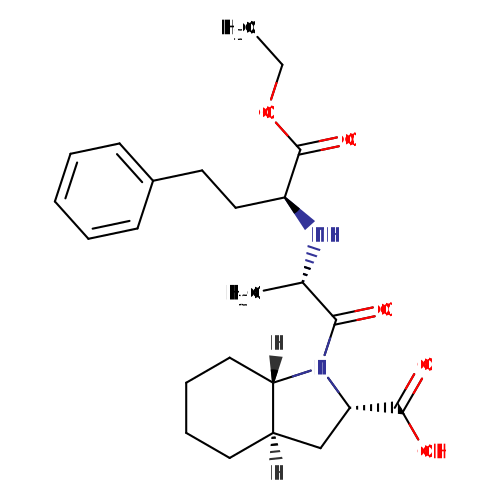
- Weight
- Average: 430.5372
Monoisotopic: 430.246772208 - Chemical Formula
- C24H34N2O5
- Synonyms
- Trandolapril
- Trandolaprilum
- External IDs
- RU 44570
- RU-44570

Pharmacology
- Indication
For the treatment of mild to moderate hypertension, as an adjunct in the treatment of congestive heart failure (CHF), to improve survival following myocardial infarction (MI) in individuals who are hemodynamically stable and demonstrate symptoms of left ventricular systolic dysfunction or signs of CHF within a few days following acute MI, and to slow progression of renal disease in hypertensive patients with diabetes mellitus and microalbuminuria or overt nephropathy.
 Reduce drug development failure ratesBuild, train, & validate machine-learning modelswith evidence-based and structured datasets.Build, train, & validate predictive machine-learning models with structured datasets.
- Associated Conditions
Indication Type Indication Combined Product Details Approval Level Age Group Patient Characteristics Dose Form Symptomatic treatment of Heart failure •••••••••••• •••••• Used in combination to manage High blood pressure (hypertension) •••••••••••• •••••• Management of High blood pressure (hypertension) •••••••••••• •••••• Used in combination to manage Hypertension Combination Product in combination with: Verapamil (DB00661) •••••••••••• ••••••• •••••••• ••••••• Symptomatic treatment of Left ventricular dysfunction •••••••••••• •••••• - Contraindications & Blackbox Warnings
 Prevent Adverse Drug Events TodayTap into our Clinical API for life-saving information on contraindications & blackbox warnings, population restrictions, harmful risks, & more.Avoid life-threatening adverse drug events with our Clinical API
- Pharmacodynamics
Trandolapril is the ethyl ester prodrug of a nonsulfhydryl ACE inhibitor, trandolaprilat. Trandolapril is deesterified in the liver to the diacid metabolite, trandolaprilat, which is approximately eight times more active as an inhibitor of ACE than its parent compound. ACE is a peptidyl dipeptidase that is part of the RAAS. The RAAS is a homeostatic mechanism for regulating hemodynamics, water and electrolyte balance. During sympathetic stimulation or when renal blood pressure or blood flow is reduced, renin is released from the granular cells of the juxtaglomerular apparatus in the kidneys. In the blood stream, renin cleaves circulating angiotensinogen to ATI, which is subsequently cleaved to ATII by ACE. ATII increases blood pressure via a number of mechanisms. First, it stimulates the secretion of aldosterone from the adrenal cortex. Aldosterone travels to the distal convoluted tubule (DCT) and collecting tubule of nephrons where it increases sodium and water reabsorption by increasing the number of sodium channels and sodium-potassium ATPases on cell membranes. Second, ATII stimulates the secretion of vasopressin (also known as antidiuretic hormone or ADH) from the posterior pituitary gland. ADH stimulates further water reabsorption from the kidneys via insertion of aquaporin-2 channels on the apical surface of cells of the DCT and collecting tubules. Third, ATII increases blood pressure through direct arterial vasoconstriction. Stimulation of the Type 1 ATII receptor on vascular smooth muscle cells leads to a cascade of events resulting in myocyte contraction and vasoconstriction. In addition to these major effects, ATII induces the thirst response via stimulation of hypothalamic neurons. ACE inhibitors inhibit the rapid conversion of ATI to ATII and antagonize RAAS-induced increases in blood pressure. ACE (also known as kininase II) is also involved in the enzymatic deactivation of bradykinin, a vasodilator. Inhibiting the deactivation of bradykinin increases bradykinin levels and may further sustain the effects of trandolaprilat by causing increased vasodilation and decreased blood pressure. The blood pressure lowering effect of trandolaprilat is due to a decrease in peripheral vascular resistance, which is not accompanied by significant changes in urinary excretion of chloride or potassium or water or sodium retention.
- Mechanism of action
There are two isoforms of ACE: the somatic isoform, which exists as a glycoprotein comprised of a single polypeptide chain of 1277; and the testicular isoform, which has a lower molecular mass and is thought to play a role in sperm maturation and binding of sperm to the oviduct epithelium. Somatic ACE has two functionally active domains, N and C, which arise from tandem gene duplication. Although the two domains have high sequence similarity, they play distinct physiological roles. The C-domain is predominantly involved in blood pressure regulation while the N-domain plays a role in hematopoietic stem cell differentiation and proliferation. ACE inhibitors bind to and inhibit the activity of both domains, but have much greater affinity for and inhibitory activity against the C-domain. Trandolaprilat, the active metabolite of trandolapril, competes with ATI for binding to ACE and inhibits and enzymatic proteolysis of ATI to ATII. Decreasing ATII levels in the body decreases blood pressure by inhibiting the pressor effects of ATII as described in the Pharmacology section above. Trandolaprilat also causes an increase in plasma renin activity likely due to a loss of feedback inhibition mediated by ATII on the release of renin and/or stimulation of reflex mechanisms via baroreceptors.
Target Actions Organism AAngiotensin-converting enzyme inhibitorHumans - Absorption
~ 40-60% absorbed; extensive first pass metabolism results in a low bioavailability of 4-14%
- Volume of distribution
- 18 L
- Protein binding
Serum protein binding of trandolapril is ~ 80% (independent of concentration and not saturable) while that of trandolaprilat is 65 to 94% (concentration-dependent and saturable).
- Metabolism
Cleavage of the ester group of trandolapril, primarily in the liver, is responsible for conversion to trandolaprilat, the active metabolite. Seven other metabolites, including diketopiperazine and glucuronide conjugated derivatives of trandolapril and trandolaprilat, have been identified.
Hover over products below to view reaction partners
- Route of elimination
After oral administration of trandolapril, about 33% of parent drug and metabolites are recovered in urine, mostly as trandolaprilat, with about 66% in feces.
- Half-life
The elimination half lives of trandolapril and trandolaprilat are about 6 and 10 hours, respectively, but, similar to all ACE inhibitors, trandolaprilat also has a prolonged terminal elimination phase that involves a small fraction of administered drug. This likely represents drug binding to plasma and tissue ACE. The effective half life of elimination for trandolaprilat is 16-24 hours.
- Clearance
- 52 L/h [After approximately 2 mg IV doses]
- Adverse Effects
 Improve decision support & research outcomesWith structured adverse effects data, including: blackbox warnings, adverse reactions, warning & precautions, & incidence rates. View sample adverse effects data in our new Data Library!Improve decision support & research outcomes with our structured adverse effects data.
- Toxicity
Most likely clinical manifestations of overdose are symptoms of severe hypotension. Most common adverse effects include cough, headache and dizziness. The oral LD50 of trandolapril in mice was 4875 mg/kg in males and 3990 mg/kg in females. In rats, an oral dose of 5000 mg/kg caused low mortality (1 male out of 5; 0 females). In dogs, an oral dose of 1000 mg/kg did not cause mortality and abnormal clinical signs were not observed.
- Pathways
Pathway Category Trandolapril Action Pathway Drug action Trandolapril Metabolism Pathway Drug metabolism - Pharmacogenomic Effects/ADRs
- Not Available
Interactions
- Drug Interactions
- This information should not be interpreted without the help of a healthcare provider. If you believe you are experiencing an interaction, contact a healthcare provider immediately. The absence of an interaction does not necessarily mean no interactions exist.
Drug Interaction Integrate drug-drug
interactions in your softwareAbaloparatide The risk or severity of adverse effects can be increased when Trandolapril is combined with Abaloparatide. Acebutolol Trandolapril may increase the hypotensive activities of Acebutolol. Aceclofenac The risk or severity of renal failure, hyperkalemia, and hypertension can be increased when Aceclofenac is combined with Trandolapril. Acemetacin The risk or severity of renal failure, hyperkalemia, and hypertension can be increased when Acemetacin is combined with Trandolapril. Acetylsalicylic acid The therapeutic efficacy of Trandolapril can be decreased when used in combination with Acetylsalicylic acid. - Food Interactions
- Avoid hypertensive herbs (e.g. bayberry, blue cohosh, cayenne, ephedra, and licorice).
- Avoid potassium-containing products. Potassium products increase the risk of hyperkalemia.
- Limit salt intake. Salt may attenuate the antihypertensive effect.
- Take with or without food. The absorption is unaffected by food.
Products
 Drug product information from 10+ global regionsOur datasets provide approved product information including:dosage, form, labeller, route of administration, and marketing period.Access drug product information from over 10 global regions.
- Product Ingredients
Ingredient UNII CAS InChI Key Trandolapril hydrochloride 3EY8XK2J4T 87725-72-2 QNSWMJYOGMUVGO-REWXTUPXSA-N - Active Moieties
Name Kind UNII CAS InChI Key Trandolaprilat prodrug RR6866VL0O 87679-71-8 AHYHTSYNOHNUSH-HXFGRODQSA-N - Product Images
- Brand Name Prescription Products
Name Dosage Strength Route Labeller Marketing Start Marketing End Region Image Mavik Capsule 1 mg Oral Bgp Pharma Ulc 1998-01-07 Not applicable Canada 
Mavik Tablet 4 mg/1 Oral AbbVie Inc. 1996-04-26 2016-04-30 US 
Mavik Tablet 4 mg/1 Oral Physicians Total Care, Inc. 2004-06-25 Not applicable US Mavik Capsule 0.5 mg Oral Bgp Pharma Ulc 1998-01-28 Not applicable Canada Mavik Tablet 2 mg/1 Oral AbbVie Inc. 1996-04-26 2017-07-31 US - Generic Prescription Products
Name Dosage Strength Route Labeller Marketing Start Marketing End Region Image Apo-trandolapril Capsule 4 mg Oral Apotex Corporation Not applicable Not applicable Canada Apo-trandolapril Capsule 0.5 mg Oral Apotex Corporation Not applicable Not applicable Canada Apo-trandolapril Capsule 2 mg Oral Apotex Corporation Not applicable Not applicable Canada Apo-trandolapril Capsule 1 mg Oral Apotex Corporation Not applicable Not applicable Canada Auro-trandolapril Capsule 1 mg Oral Auro Pharma Inc 2018-09-27 Not applicable Canada - Mixture Products
Name Ingredients Dosage Route Labeller Marketing Start Marketing End Region Image Tarka Trandolapril (4 mg/1) + Verapamil hydrochloride (240 mg/1) Tablet, film coated, extended release Oral AbbVie Inc. 1996-10-22 2021-08-18 US 
Tarka Trandolapril (2 mg/1) + Verapamil hydrochloride (180 mg/1) Tablet, film coated, extended release Oral Physicians Total Care, Inc. 2009-01-01 Not applicable US Tarka Trandolapril (1 mg) + Verapamil hydrochloride (240 mg) Tablet, extended release Oral Abbott 2002-07-15 2010-11-12 Canada Tarka Trandolapril (1 mg/1) + Verapamil hydrochloride (240 mg/1) Tablet, film coated, extended release Oral AbbVie Inc. 1996-10-22 2018-02-28 US Tarka Trandolapril (4 mg/1) + Verapamil hydrochloride (240 mg/1) Tablet, film coated, extended release Oral Physicians Total Care, Inc. 2009-06-25 Not applicable US 


Categories
- ATC Codes
- C09AA10 — Trandolapril
- C09AA — ACE inhibitors, plain
- C09A — ACE INHIBITORS, PLAIN
- C09 — AGENTS ACTING ON THE RENIN-ANGIOTENSIN SYSTEM
- C — CARDIOVASCULAR SYSTEM
- Drug Categories
- ACE Inhibitors and Calcium Channel Blockers
- Agents Acting on the Renin-Angiotensin System
- Agents causing angioedema
- Agents causing hyperkalemia
- Angiotensin-Converting Enzyme Inhibitors
- Antihypertensive Agents
- Antihypertensive Agents Indicated for Hypertension
- Cardiovascular Agents
- Enzyme Inhibitors
- Heterocyclic Compounds, Fused-Ring
- Hypotensive Agents
- Protease Inhibitors
- Chemical TaxonomyProvided by Classyfire
- Description
- This compound belongs to the class of organic compounds known as dipeptides. These are organic compounds containing a sequence of exactly two alpha-amino acids joined by a peptide bond.
- Kingdom
- Organic compounds
- Super Class
- Organic acids and derivatives
- Class
- Carboxylic acids and derivatives
- Sub Class
- Amino acids, peptides, and analogues
- Direct Parent
- Dipeptides
- Alternative Parents
- Alpha amino acid esters / N-acyl-L-alpha-amino acids / Alpha amino acid amides / Indoles and derivatives / Pyrrolidine carboxylic acids / N-acylpyrrolidines / Aralkylamines / Fatty acid esters / Benzene and substituted derivatives / Dicarboxylic acids and derivatives show 10 more
- Substituents
- Alpha-amino acid amide / Alpha-amino acid ester / Alpha-amino acid or derivatives / Alpha-dipeptide / Amine / Amino acid / Amino acid or derivatives / Aralkylamine / Aromatic heteropolycyclic compound / Azacycle show 28 more
- Molecular Framework
- Aromatic heteropolycyclic compounds
- External Descriptors
- Not Available
- Affected organisms
- Humans and other mammals
Chemical Identifiers
- UNII
- 1T0N3G9CRC
- CAS number
- 87679-37-6
- InChI Key
- VXFJYXUZANRPDJ-WTNASJBWSA-N
- InChI
- InChI=1S/C24H34N2O5/c1-3-31-24(30)19(14-13-17-9-5-4-6-10-17)25-16(2)22(27)26-20-12-8-7-11-18(20)15-21(26)23(28)29/h4-6,9-10,16,18-21,25H,3,7-8,11-15H2,1-2H3,(H,28,29)/t16-,18+,19-,20-,21-/m0/s1
- IUPAC Name
- (2S,3aR,7aS)-1-[(2S)-2-{[(2S)-1-ethoxy-1-oxo-4-phenylbutan-2-yl]amino}propanoyl]-octahydro-1H-indole-2-carboxylic acid
- SMILES
- [H][C@@]12C[C@H](N(C(=O)[C@H](C)N[C@@H](CCC3=CC=CC=C3)C(=O)OCC)[C@@]1([H])CCCC2)C(O)=O
References
- Synthesis Reference
Narendra Joshi, Shekhar Bhirud, Buddhavarapu Ramam, Arjun Bodkhe, "Process for the preparation of intermediates of trandolapril and use thereof for the preparation of trandolapril." U.S. Patent US20060079698, issued April 13, 2006.
US20060079698- General References
- Berl T: Review: renal protection by inhibition of the renin-angiotensin-aldosterone system. J Renin Angiotensin Aldosterone Syst. 2009 Mar;10(1):1-8. doi: 10.1177/1470320309102747. [Article]
- Conen H, Brunner HR: Pharmacologic profile of trandolapril, a new angiotensin-converting enzyme inhibitor. Am Heart J. 1993 May;125(5 Pt 2):1525-31. [Article]
- Diaz A, Ducharme A: Update on the use of trandolapril in the management of cardiovascular disorders. Vasc Health Risk Manag. 2008;4(6):1147-58. [Article]
- Guay DR: Trandolapril: a newer angiotensin-converting enzyme inhibitor. Clin Ther. 2003 Mar;25(3):713-75. [Article]
- Jouquey S, Stepniewski JP, Hamon G: Trandolapril dose-response in spontaneously hypertensive rats: effects on ACE activity, blood pressure, and cardiac hypertrophy. J Cardiovasc Pharmacol. 1994;23 Suppl 4:S16-8. [Article]
- Reynolds NA, Wagstaff AJ, Keam SJ: Trandolapril/verapamil sustained release: a review of its use in the treatment of essential hypertension. Drugs. 2005;65(13):1893-914. [Article]
- Rubio-Guerra AF, Vargas-Robles H, Vargas-Ayala G, Rodriguez-Lopez L, Escalante-Acosta BA: The effect of trandolapril and its fixed-dose combination with verapamil on circulating adhesion molecules levels in hypertensive patients with type 2 diabetes. Clin Exp Hypertens. 2008 Oct;30(7):682-8. doi: 10.1080/10641960802251941. [Article]
- Sanbe A, Tanonaka K, Kobayasi R, Takeo S: Effects of long-term therapy with ACE inhibitors, captopril, enalapril and trandolapril, on myocardial energy metabolism in rats with heart failure following myocardial infarction. J Mol Cell Cardiol. 1995 Oct;27(10):2209-22. [Article]
- Torp-Pedersen C, Kober L: Effect of ACE inhibitor trandolapril on life expectancy of patients with reduced left-ventricular function after acute myocardial infarction. TRACE Study Group. Trandolapril Cardiac Evaluation. Lancet. 1999 Jul 3;354(9172):9-12. [Article]
- Authors unspecified: Trandolapril: an ACE inhibitor for treatment of hypertension. Med Lett Drugs Ther. 1996 Nov 22;38(988):104-5. [Article]
- Wiseman LR, McTavish D: Trandolapril. A review of its pharmacodynamic and pharmacokinetic properties, and therapeutic use in essential hypertension. Drugs. 1994 Jul;48(1):71-90. [Article]
- Zannad F: Trandolapril. How does it differ from other angiotensin converting enzyme inhibitors? Drugs. 1993;46 Suppl 2:172-81; discussion 182. [Article]
- FDA Approved Drug Products: Mavik (trandolapril) tablets for oral use [Link]
- FDA Approved Drugs: Tarka® extended-release tablets [Link]
- External Links
- Human Metabolome Database
- HMDB0014660
- KEGG Drug
- D00383
- PubChem Compound
- 5484727
- PubChem Substance
- 46508300
- ChemSpider
- 4588590
- BindingDB
- 50369775
- 38454
- ChEBI
- 9649
- ChEMBL
- CHEMBL1519
- ZINC
- ZINC000001853205
- Therapeutic Targets Database
- DAP000583
- PharmGKB
- PA451737
- RxList
- RxList Drug Page
- Drugs.com
- Drugs.com Drug Page
- PDRhealth
- PDRhealth Drug Page
- Wikipedia
- Trandolapril
- MSDS
- Download (57.2 KB)
Clinical Trials
- Clinical Trials
Phase Status Purpose Conditions Count 4 Completed Treatment Coronary Artery Disease (CAD) / Hypertension 1 4 Completed Treatment Diabetes / Hypertension 1 4 Completed Treatment Diabetes / Hypertension / Proteinuria 1 4 Completed Treatment Heart Failure / Left Ventricular Dysfunction 1 4 Completed Treatment Hypertension 3
Pharmacoeconomics
- Manufacturers
- Abbott laboratories pharmaceutical products div
- Aurobindo pharma ltd
- Cipla ltd
- Corepharma llc
- Dr reddys laboratories ltd
- Epic pharma llc
- Invagen pharmaceuticals inc
- Lupin ltd
- Mylan pharmaceuticals inc
- Teva pharmaceuticals usa
- Watson laboratories inc
- Packagers
- Abbott Laboratories Ltd.
- Arrow Pharm Malta Ltd.
- Aurobindo Pharma Ltd.
- BASF Corp.
- Cipla Ltd.
- Cobalt Pharmaceuticals Inc.
- Corepharma LLC
- DAVA Pharmaceuticals
- Doctor Reddys Laboratories Ltd.
- Glenmark Generics Ltd.
- Greenstone LLC
- InvaGen Pharmaceuticals Inc.
- Lupin Pharmaceuticals Inc.
- Murfreesboro Pharmaceutical Nursing Supply
- Mylan
- Physicians Total Care Inc.
- Resource Optimization and Innovation LLC
- Sandoz
- Teva Pharmaceutical Industries Ltd.
- West-Ward Pharmaceuticals
- Dosage Forms
Form Route Strength Capsule Oral Capsule Oral 0.5 mg Capsule Oral 1 mg Capsule Oral 2 mg Capsule Oral 4 mg Tablet, extended release Oral Tablet, film coated, extended release Oral Tablet, film coated Oral Tablet, delayed release Oral Capsule, coated Oral Tablet Oral 1 mg/1 Tablet Oral 2 mg/1 Tablet Oral 4 mg/1 Capsule Oral - Prices
Unit description Cost Unit Tarka 1-240 mg Controlled Release Tabs 3.46USD tab Tarka 4-240 mg Controlled Release Tabs 3.4USD tab Tarka 1-240 mg tablet sa 3.33USD tablet Tarka 2-180 mg tablet sa 3.33USD tablet Tarka 2-240 mg Controlled Release Tabs 3.33USD tab Tarka 2-240 mg tablet sa 3.33USD tablet Tarka 4-240 mg tablet sa 3.33USD tablet Tarka 2-180 mg Controlled Release Tabs 3.29USD tab Mavik 2 mg tablet 1.61USD tablet Mavik 4 mg tablet 1.61USD tablet Mavik 1 mg tablet 1.47USD tablet Trandolapril 1 mg tablet 1.24USD tablet Trandolapril 2 mg tablet 1.23USD tablet Trandolapril 4 mg tablet 1.23USD tablet Mavik 4 mg Capsule 1.03USD capsule Mavik 2 mg Capsule 0.83USD capsule Mavik 1 mg Capsule 0.72USD capsule Mavik 0.5 mg Capsule 0.42USD capsule DrugBank does not sell nor buy drugs. Pricing information is supplied for informational purposes only.- Patents
Patent Number Pediatric Extension Approved Expires (estimated) Region US5744496 No 1998-04-28 2015-04-28 US CA2023089 No 2003-01-14 2010-08-10 Canada CA1341206 No 2001-03-20 2018-03-20 Canada
Properties
- State
- Solid
- Experimental Properties
Property Value Source melting point (°C) 119-123 °C Not Available logP 3.5 Not Available - Predicted Properties
Property Value Source Water Solubility 0.0207 mg/mL ALOGPS logP 1.31 ALOGPS logP 1.95 Chemaxon logS -4.3 ALOGPS pKa (Strongest Acidic) 3.8 Chemaxon pKa (Strongest Basic) 5.21 Chemaxon Physiological Charge -1 Chemaxon Hydrogen Acceptor Count 5 Chemaxon Hydrogen Donor Count 2 Chemaxon Polar Surface Area 95.94 Å2 Chemaxon Rotatable Bond Count 10 Chemaxon Refractivity 115.79 m3·mol-1 Chemaxon Polarizability 46.96 Å3 Chemaxon Number of Rings 3 Chemaxon Bioavailability 1 Chemaxon Rule of Five Yes Chemaxon Ghose Filter Yes Chemaxon Veber's Rule No Chemaxon MDDR-like Rule Yes Chemaxon - Predicted ADMET Features
Property Value Probability Human Intestinal Absorption + 0.9303 Blood Brain Barrier - 0.8908 Caco-2 permeable - 0.8501 P-glycoprotein substrate Substrate 0.7744 P-glycoprotein inhibitor I Inhibitor 0.5527 P-glycoprotein inhibitor II Inhibitor 0.7759 Renal organic cation transporter Non-inhibitor 0.8336 CYP450 2C9 substrate Non-substrate 0.8227 CYP450 2D6 substrate Non-substrate 0.8935 CYP450 3A4 substrate Substrate 0.5515 CYP450 1A2 substrate Non-inhibitor 0.915 CYP450 2C9 inhibitor Non-inhibitor 0.785 CYP450 2D6 inhibitor Non-inhibitor 0.9018 CYP450 2C19 inhibitor Non-inhibitor 0.796 CYP450 3A4 inhibitor Non-inhibitor 0.5339 CYP450 inhibitory promiscuity High CYP Inhibitory Promiscuity 0.6906 Ames test Non AMES toxic 0.9133 Carcinogenicity Non-carcinogens 0.9188 Biodegradation Not ready biodegradable 0.9587 Rat acute toxicity 2.2048 LD50, mol/kg Not applicable hERG inhibition (predictor I) Weak inhibitor 0.9811 hERG inhibition (predictor II) Non-inhibitor 0.5531
Spectra
- Mass Spec (NIST)
- Not Available
- Spectra
Spectrum Spectrum Type Splash Key Predicted GC-MS Spectrum - GC-MS Predicted GC-MS splash10-001l-9134000000-c52f8386e44b6f3e4183 Predicted MS/MS Spectrum - 10V, Positive (Annotated) Predicted LC-MS/MS splash10-001i-0525900000-d9c0915ea98e09dcb1f2 Predicted MS/MS Spectrum - 10V, Negative (Annotated) Predicted LC-MS/MS splash10-004i-1124900000-5eee64e8c1e5f75edd90 Predicted MS/MS Spectrum - 20V, Positive (Annotated) Predicted LC-MS/MS splash10-08gi-1943200000-de24c6ad53cb95ac9a7d Predicted MS/MS Spectrum - 20V, Negative (Annotated) Predicted LC-MS/MS splash10-00kf-6904200000-405b8d0e54d6867217cc Predicted MS/MS Spectrum - 40V, Positive (Annotated) Predicted LC-MS/MS splash10-06vl-4922000000-aba8aed6f26b832aed82 Predicted MS/MS Spectrum - 40V, Negative (Annotated) Predicted LC-MS/MS splash10-014i-2910000000-f746a379c603b8b0333c Predicted 1H NMR Spectrum 1D NMR Not Applicable Predicted 13C NMR Spectrum 1D NMR Not Applicable - Chromatographic Properties
Collision Cross Sections (CCS)
Adduct CCS Value (Å2) Source type Source [M-H]- 216.9686721 predictedDarkChem Lite v0.1.0 [M-H]- 223.2352721 predictedDarkChem Lite v0.1.0 [M-H]- 202.76476 predictedDeepCCS 1.0 (2019) [M+H]+ 217.2796721 predictedDarkChem Lite v0.1.0 [M+H]+ 223.8521721 predictedDarkChem Lite v0.1.0 [M+H]+ 205.16034 predictedDeepCCS 1.0 (2019) [M+Na]+ 216.6994721 predictedDarkChem Lite v0.1.0 [M+Na]+ 223.4460721 predictedDarkChem Lite v0.1.0 [M+Na]+ 211.07362 predictedDeepCCS 1.0 (2019)
Targets

- Kind
- Protein
- Organism
- Humans
- Pharmacological action
- Yes
- Actions
- Inhibitor
- General Function
- Zinc ion binding
- Specific Function
- Converts angiotensin I to angiotensin II by release of the terminal His-Leu, this results in an increase of the vasoconstrictor activity of angiotensin. Also able to inactivate bradykinin, a potent...
- Gene Name
- ACE
- Uniprot ID
- P12821
- Uniprot Name
- Angiotensin-converting enzyme
- Molecular Weight
- 149713.675 Da
References
- Chen X, Ji ZL, Chen YZ: TTD: Therapeutic Target Database. Nucleic Acids Res. 2002 Jan 1;30(1):412-5. [Article]
- Piepho RW: Overview of the angiotensin-converting-enzyme inhibitors. Am J Health Syst Pharm. 2000 Oct 1;57 Suppl 1:S3-7. [Article]
- Song JC, White CM: Clinical pharmacokinetics and selective pharmacodynamics of new angiotensin converting enzyme inhibitors: an update. Clin Pharmacokinet. 2002;41(3):207-24. [Article]
Enzymes
- Kind
- Protein
- Organism
- Humans
- Pharmacological action
- Unknown
- Actions
- Substrate
- General Function
- Triglyceride lipase activity
- Specific Function
- Involved in the detoxification of xenobiotics and in the activation of ester and amide prodrugs. Hydrolyzes aromatic and aliphatic esters, but has no catalytic activity toward amides or a fatty acy...
- Gene Name
- CES1
- Uniprot ID
- P23141
- Uniprot Name
- Liver carboxylesterase 1
- Molecular Weight
- 62520.62 Da
References
- Zhu HJ, Appel DI, Johnson JA, Chavin KD, Markowitz JS: Role of carboxylesterase 1 and impact of natural genetic variants on the hydrolysis of trandolapril. Biochem Pharmacol. 2009 Apr 1;77(7):1266-72. doi: 10.1016/j.bcp.2008.12.017. Epub 2009 Jan 6. [Article]
Transporters
- Kind
- Protein
- Organism
- Humans
- Pharmacological action
- Unknown
- Actions
- Substrate
- General Function
- Proton-dependent oligopeptide secondary active transmembrane transporter activity
- Specific Function
- Proton-coupled intake of oligopeptides of 2 to 4 amino acids with a preference for dipeptides. May constitute a major route for the absorption of protein digestion end-products.
- Gene Name
- SLC15A1
- Uniprot ID
- P46059
- Uniprot Name
- Solute carrier family 15 member 1
- Molecular Weight
- 78805.265 Da
References
- Knutter I, Wollesky C, Kottra G, Hahn MG, Fischer W, Zebisch K, Neubert RH, Daniel H, Brandsch M: Transport of angiotensin-converting enzyme inhibitors by H+/peptide transporters revisited. J Pharmacol Exp Ther. 2008 Nov;327(2):432-41. doi: 10.1124/jpet.108.143339. Epub 2008 Aug 19. [Article]
- Kind
- Protein
- Organism
- Humans
- Pharmacological action
- Unknown
- Actions
- Substrate
- General Function
- Peptide:proton symporter activity
- Specific Function
- Proton-coupled intake of oligopeptides of 2 to 4 amino acids with a preference for dipeptides.
- Gene Name
- SLC15A2
- Uniprot ID
- Q16348
- Uniprot Name
- Solute carrier family 15 member 2
- Molecular Weight
- 81782.77 Da
References
- Knutter I, Wollesky C, Kottra G, Hahn MG, Fischer W, Zebisch K, Neubert RH, Daniel H, Brandsch M: Transport of angiotensin-converting enzyme inhibitors by H+/peptide transporters revisited. J Pharmacol Exp Ther. 2008 Nov;327(2):432-41. doi: 10.1124/jpet.108.143339. Epub 2008 Aug 19. [Article]

Drug created at June 13, 2005 13:24 / Updated at April 19, 2024 20:55