Identification
- Summary
Rofecoxib is a COX-2 inhibitor NSAID used to treat osteoarthritis, rheumatoid arthritis, acute pain, primary dysmenorrhea, and migraine attacks.
- Generic Name
- Rofecoxib
- DrugBank Accession Number
- DB00533
- Background
Rofecoxib is used for the treatment of osteoarthritis, rheumatoid arthritis, acute pain in adults, and primary dysmenorrhea, as well as acute treatment of migraine attacks with or without auras. Rofecoxib is a solid. This compound belongs to the stilbenes. These are organic compounds containing a 1,2-diphenylethylene moiety. Stilbenes (C6-C2-C6 ) are derived from the common phenylpropene (C6-C3) skeleton building block. The introduction of one or more hydroxyl groups to a phenyl ring lead to stilbenoids. Rofecoxib has a half-life of 17 hours and its mean oral bioavailability at therapeutically recommended doses of 125, 25, and 50 mg is approximately 93%. The proteins that rofecoxib target include elastin and prostaglandin G/H synthase 2. Cytochrome P450 1A2, Cytochrome P450 3A4, Cytochrome P450 2C9, Cytochrome P450 2C8, and Prostaglandin G/H synthase 1 are known to metabolize rofecoxib. On September 30, 2004, Merck voluntarily withdrew rofecoxib from the market because of concerns about increased risk of heart attack and stroke associated with long-term, high-dosage use.
- Type
- Small Molecule
- Groups
- Approved, Investigational, Withdrawn
- Structure
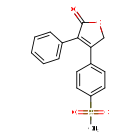
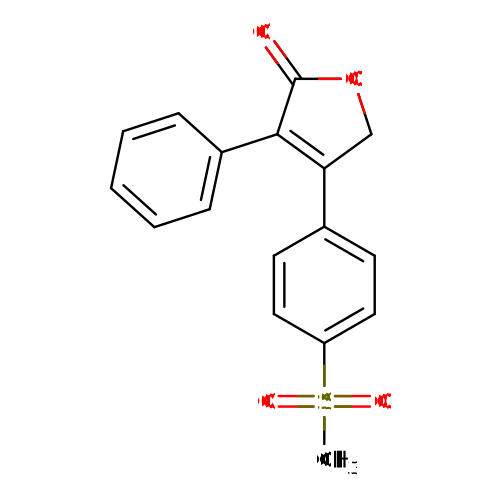
Structure for Rofecoxib (DB00533)
- Weight
- Average: 314.356
Monoisotopic: 314.061279626 - Chemical Formula
- C17H14O4S
- Synonyms
- 3-phenyl-4-[4-(methylsulfonyl)phenyl]-2(5H)-furanone
- 4-[4-(methylsulfonyl)phenyl]-3-phenyl-2(5H)-furanone
- Rofecoxib
- Rofécoxib
- Rofecoxibum
- External IDs
- MK 966
- MK 996
- MK-0966
- MK0966

Pharmacology
- Indication
For the treatment of osteoarthritis, rheumatoid arthritis, acute pain in adults, and primary dysmenorrhea, as well as acute treatment of migraine attacks with or without auras.
 Reduce drug development failure ratesBuild, train, & validate machine-learning modelswith evidence-based and structured datasets.Build, train, & validate predictive machine-learning models with structured datasets.
- Contraindications & Blackbox Warnings
 Prevent Adverse Drug Events TodayTap into our Clinical API for life-saving information on contraindications & blackbox warnings, population restrictions, harmful risks, & more.Avoid life-threatening adverse drug events with our Clinical API
- Pharmacodynamics
Rofecoxib, a selective cyclooxygenase-2 (COX-2) inhibitor, is classified as a nonsteroidal anti-inflammatory drug (NSAID). Unlike celecoxib, rofecoxib lacks a sulfonamide chain and does not require CYP450 enzymes for metabolism. Like other NSAIDs, rofecoxib exhibits anti-inflammatory, analgesic, and antipyretic activity. NSAIDs appear to inhibit prostaglandin synthesis via the inhibition of cyclooxygenase (COX), which are responsible for catalyzing the formation of prostaglandins in the arachidonic acid pathyway. There are at least two isoenzymes, COX-1 and COX-2, that have been identified. Although the exact mechanisms have not been clearly established, NSAIDs exert their anti-inflammatory, analgesic, and antipyretic primarily through the inhibition of COX-2. The inhibition of COX-1 is principally responsible for the negative effects on the GI mucosa. As rofecoxib is selective for COX-2, it may be potentially associated with a decreased risk of certain adverse events, but more data is needed to fully evaulate the drug.
- Mechanism of action
The anti-inflammatory, analgesic, and antipyretic effects of NSAIDs appear to result from the inhibition of prostaglandin synthesis. Although the exact mechanism of action has not been determined, these effects appear to be mediated through the inhibition of the COX-2 isoenzyme at the sites of inflammation with subsequent reduction in the synthesis of certain prostaglandins from their arachidonic acid precursors. Rofecoxib selectively inhibits the cyclooxygenase-2 (COX-2) enzyme, which is important for the mediation of inflammation and pain. Unlike non-selective NSAIDs, rofecoxib does not inhibit platelet aggregation. It also has little to no affinity for COX-1.
Target Actions Organism AProstaglandin G/H synthase 2 inhibitorHumans UElastin other/unknownHumans - Absorption
The mean oral bioavailability of rofecoxib at therapeutically recommended doses of 12.5, 25, and 50 mg is approximately 93%.
- Volume of distribution
Not Available
- Protein binding
87%
- Metabolism
Hepatic. Metabolism of rofecoxib is primarily mediated through reduction by cytosolic enzymes. The principal metabolic products are the cis-dihydro and trans-dihydro derivatives of rofecoxib, which account for nearly 56% of recovered radioactivity in the urine. An additional 8.8% of the dose was recovered as the glucuronide of the hydroxy derivative, a product of oxidative metabolism. The biotransformation of rofecoxib and this metabolite is reversible in humans to a limited extent (< 5%). These metabolites are inactive as COX-1 or COX-2 inhibitors. Cytochrome P450 plays a minor role in metabolism of rofecoxib.
Hover over products below to view reaction partners
- Route of elimination
Not Available
- Half-life
17 hours
- Clearance
Not Available
- Adverse Effects
 Improve decision support & research outcomesWith structured adverse effects data, including: blackbox warnings, adverse reactions, warning & precautions, & incidence rates. View sample adverse effects data in our new Data Library!Improve decision support & research outcomes with our structured adverse effects data.
- Toxicity
No overdoses of rofecoxib were reported during clinical trials. Administration of single doses of rofecoxib 1000 mg to 6 healthy volunteers and multiple doses of 250 mg/day for 14 days to 75 healthy volunteers did not result in serious toxicity.
- Pathways
Pathway Category Rofecoxib Action Pathway Drug action - Pharmacogenomic Effects/ADRs
- Not Available
Interactions
- Drug Interactions
- This information should not be interpreted without the help of a healthcare provider. If you believe you are experiencing an interaction, contact a healthcare provider immediately. The absence of an interaction does not necessarily mean no interactions exist.
Drug Interaction Integrate drug-drug
interactions in your softwareAbacavir Rofecoxib may decrease the excretion rate of Abacavir which could result in a higher serum level. Abametapir The serum concentration of Rofecoxib can be increased when it is combined with Abametapir. Abatacept The metabolism of Rofecoxib can be increased when combined with Abatacept. Abciximab The risk or severity of bleeding and hemorrhage can be increased when Rofecoxib is combined with Abciximab. Abemaciclib The metabolism of Abemaciclib can be increased when combined with Rofecoxib. - Food Interactions
- Take separate from antacids. Taking rofecoxib with antacids can reduce the AUC and Cmax of rofecoxib, therefore consider separating their administration for optimal efficacy.
- Take with or without food. The AUC and Cmax of rofecoxib tablets are not impacted by administration with food, however, the Tmax may be delayed. The food effect on the absorption of rofecoxib suspension formulation has not been studied according to the official product labeling.
Products
 Drug product information from 10+ global regionsOur datasets provide approved product information including:dosage, form, labeller, route of administration, and marketing period.Access drug product information from over 10 global regions.
- International/Other Brands
- Vioxx
- Brand Name Prescription Products
Name Dosage Strength Route Labeller Marketing Start Marketing End Region Image Vioxx Suspension 12.5mg/5ml Suspension 12.5 mg / 5 mL Oral Merck Frosst Canada & Cie, Merck Frosst Canada & Co. 2000-05-08 2004-09-30 Canada 
Vioxx Tab 12.5mg Tablet 12.5 mg / tab Oral Merck Frosst Canada & Cie, Merck Frosst Canada & Co. 1999-11-08 2004-09-30 Canada Vioxx Tab 25mg Tablet 25 mg / tab Oral Merck Frosst Canada & Cie, Merck Frosst Canada & Co. 1999-11-08 2004-09-30 Canada
Categories
- ATC Codes
- M01AH02 — Rofecoxib
- Drug Categories
- Agents causing hyperkalemia
- Agents that produce hypertension
- Analgesics
- Analgesics, Non-Narcotic
- Anti-Inflammatory Agents
- Anti-Inflammatory Agents, Non-Steroidal
- Antiinflammatory and Antirheumatic Products
- Antiinflammatory and Antirheumatic Products, Non-Steroids
- Antirheumatic Agents
- COX-2 Inhibitors
- Cyclooxygenase Inhibitors
- Cytochrome P-450 CYP1A2 Inhibitors
- Cytochrome P-450 CYP1A2 Inhibitors (strong)
- Cytochrome P-450 CYP1A2 Substrates
- Cytochrome P-450 CYP2C8 Inhibitors
- Cytochrome P-450 CYP2C8 Inhibitors (weak)
- Cytochrome P-450 CYP2C9 Substrates
- Cytochrome P-450 CYP3A Inducers
- Cytochrome P-450 CYP3A Substrates
- Cytochrome P-450 CYP3A4 Inducers
- Cytochrome P-450 CYP3A4 Inducers (strength unknown)
- Cytochrome P-450 CYP3A4 Substrates
- Cytochrome P-450 Enzyme Inducers
- Cytochrome P-450 Enzyme Inhibitors
- Cytochrome P-450 Substrates
- Enzyme Inhibitors
- Musculo-Skeletal System
- Nephrotoxic agents
- Peripheral Nervous System Agents
- Selective Cyclooxygenase 2 Inhibitors (NSAIDs)
- Sensory System Agents
- Sulfur Compounds
- Chemical TaxonomyProvided by Classyfire
- Description
- This compound belongs to the class of organic compounds known as stilbenes. These are organic compounds containing a 1,2-diphenylethylene moiety. Stilbenes (C6-C2-C6 ) are derived from the common phenylpropene (C6-C3) skeleton building block. The introduction of one or more hydroxyl groups to a phenyl ring lead to stilbenoids.
- Kingdom
- Organic compounds
- Super Class
- Phenylpropanoids and polyketides
- Class
- Stilbenes
- Sub Class
- Not Available
- Direct Parent
- Stilbenes
- Alternative Parents
- Benzenesulfonyl compounds / Butenolides / Sulfones / Enoate esters / Lactones / Oxacyclic compounds / Monocarboxylic acids and derivatives / Organic oxides / Hydrocarbon derivatives / Carbonyl compounds
- Substituents
- 2-furanone / Alpha,beta-unsaturated carboxylic ester / Aromatic heteromonocyclic compound / Benzenesulfonyl group / Benzenoid / Carbonyl group / Carboxylic acid derivative / Carboxylic acid ester / Dihydrofuran / Enoate ester
- Molecular Framework
- Aromatic heteromonocyclic compounds
- External Descriptors
- sulfone, butenolide (CHEBI:8887)
- Affected organisms
- Humans and other mammals
Chemical Identifiers
- UNII
- 0QTW8Z7MCR
- CAS number
- 162011-90-7
- InChI Key
- RZJQGNCSTQAWON-UHFFFAOYSA-N
- InChI
- InChI=1S/C17H14O4S/c1-22(19,20)14-9-7-12(8-10-14)15-11-21-17(18)16(15)13-5-3-2-4-6-13/h2-10H,11H2,1H3
- IUPAC Name
- 4-(4-methanesulfonylphenyl)-3-phenyl-2,5-dihydrofuran-2-one
- SMILES
- CS(=O)(=O)C1=CC=C(C=C1)C1=C(C(=O)OC1)C1=CC=CC=C1
References
- General References
- Bombardier C, Laine L, Reicin A, Shapiro D, Burgos-Vargas R, Davis B, Day R, Ferraz MB, Hawkey CJ, Hochberg MC, Kvien TK, Schnitzer TJ: Comparison of upper gastrointestinal toxicity of rofecoxib and naproxen in patients with rheumatoid arthritis. VIGOR Study Group. N Engl J Med. 2000 Nov 23;343(21):1520-8, 2 p following 1528. [Article]
- Bresalier RS, Sandler RS, Quan H, Bolognese JA, Oxenius B, Horgan K, Lines C, Riddell R, Morton D, Lanas A, Konstam MA, Baron JA: Cardiovascular events associated with rofecoxib in a colorectal adenoma chemoprevention trial. N Engl J Med. 2005 Mar 17;352(11):1092-102. Epub 2005 Feb 15. [Article]
- Curfman GD, Morrissey S, Drazen JM: Expression of concern reaffirmed. N Engl J Med. 2006 Mar 16;354(11):1193. Epub 2006 Feb 22. [Article]
- Fitzgerald GA: Coxibs and cardiovascular disease. N Engl J Med. 2004 Oct 21;351(17):1709-11. Epub 2004 Oct 6. [Article]
- Karha J, Topol EJ: The sad story of Vioxx, and what we should learn from it. Cleve Clin J Med. 2004 Dec;71(12):933-4, 936, 938-9. [Article]
- Baron JA, Sandler RS, Bresalier RS, Lanas A, Morton DG, Riddell R, Iverson ER, Demets DL: Cardiovascular events associated with rofecoxib: final analysis of the APPROVe trial. Lancet. 2008 Nov 15;372(9651):1756-64. doi: 10.1016/S0140-6736(08)61490-7. Epub 2008 Oct 14. [Article]
- Matheson AJ, Figgitt DP: Rofecoxib: a review of its use in the management of osteoarthritis, acute pain and rheumatoid arthritis. Drugs. 2001;61(6):833-65. [Article]
- Hillson JL, Furst DE: Rofecoxib. Expert Opin Pharmacother. 2000 Jul;1(5):1053-66. [Article]
- External Links
- PDB Entries
- 5kir
- FDA label
- Download (291 KB)
Clinical Trials
- Clinical Trials
Phase Status Purpose Conditions Count 4 Completed Treatment Analgesia 1 4 Completed Treatment Barrett's Esophagus 1 4 Completed Treatment Rheumatoid Arthritis 1 4 Terminated Treatment Acute Pain 1 4 Terminated Treatment Adenomatous Polyps 1
Pharmacoeconomics
- Manufacturers
- Merck research laboratories div merck co inc
- Packagers
- AQ Pharmaceuticals Inc.
- Cardinal Health
- Direct Dispensing Inc.
- Dispensing Solutions
- Murfreesboro Pharmaceutical Nursing Supply
- Nucare Pharmaceuticals Inc.
- PCA LLC
- PD-Rx Pharmaceuticals Inc.
- Redpharm Drug
- Southwood Pharmaceuticals
- Va Cmop Dallas
- Dosage Forms
Form Route Strength Suspension Oral 0.5 mg Capsule, liquid filled Oral 25 mg Tablet, film coated Oral 50 mg Capsule, liquid filled Oral 50 mg Suspension Oral 0.25 g Suspension Oral 0.5 g Tablet Oral 50 mg Tablet Oral 12.5 mg Tablet Oral 25 mg Tablet Oral 250000 mg Suspension Oral Tablet Oral Suspension Oral 2.5 mg Suspension Oral 12.5 mg / 5 mL Tablet Oral 12.5 mg / tab Tablet Oral 25 mg / tab - Prices
- Not Available
- Patents
Patent Number Pediatric Extension Approved Expires (estimated) Region US5474995 No 1995-12-12 2013-06-24 US 
US6063811 Yes 2000-05-16 2017-11-06 US US5691374 Yes 1997-11-25 2015-11-18 US
Properties
- State
- Solid
- Experimental Properties
Property Value Source water solubility Insoluble Not Available logP 3.2 Not Available - Predicted Properties
Property Value Source Water Solubility 0.0106 mg/mL ALOGPS logP 2.32 ALOGPS logP 2.56 Chemaxon logS -4.5 ALOGPS pKa (Strongest Acidic) 13.12 Chemaxon pKa (Strongest Basic) -7 Chemaxon Physiological Charge 0 Chemaxon Hydrogen Acceptor Count 3 Chemaxon Hydrogen Donor Count 0 Chemaxon Polar Surface Area 60.44 Å2 Chemaxon Rotatable Bond Count 3 Chemaxon Refractivity 84.08 m3·mol-1 Chemaxon Polarizability 31.73 Å3 Chemaxon Number of Rings 3 Chemaxon Bioavailability 1 Chemaxon Rule of Five Yes Chemaxon Ghose Filter Yes Chemaxon Veber's Rule No Chemaxon MDDR-like Rule No Chemaxon - Predicted ADMET Features
Property Value Probability Human Intestinal Absorption + 0.9938 Blood Brain Barrier + 0.6296 Caco-2 permeable - 0.5696 P-glycoprotein substrate Non-substrate 0.7186 P-glycoprotein inhibitor I Non-inhibitor 0.5401 P-glycoprotein inhibitor II Non-inhibitor 0.922 Renal organic cation transporter Non-inhibitor 0.7846 CYP450 2C9 substrate Non-substrate 0.5807 CYP450 2D6 substrate Non-substrate 0.9116 CYP450 3A4 substrate Non-substrate 0.5941 CYP450 1A2 substrate Inhibitor 0.5426 CYP450 2C9 inhibitor Inhibitor 0.6668 CYP450 2D6 inhibitor Non-inhibitor 0.889 CYP450 2C19 inhibitor Inhibitor 0.6214 CYP450 3A4 inhibitor Non-inhibitor 0.8508 CYP450 inhibitory promiscuity High CYP Inhibitory Promiscuity 0.7596 Ames test Non AMES toxic 0.6152 Carcinogenicity Non-carcinogens 0.5754 Biodegradation Not ready biodegradable 0.7716 Rat acute toxicity 2.4527 LD50, mol/kg Not applicable hERG inhibition (predictor I) Weak inhibitor 0.9848 hERG inhibition (predictor II) Non-inhibitor 0.8932
Spectra
- Mass Spec (NIST)
- Not Available
- Spectra
- Chromatographic Properties
Collision Cross Sections (CCS)
Adduct CCS Value (Å2) Source type Source [M-H]- 186.2284341 predictedDarkChem Lite v0.1.0 [M-H]- 185.5702341 predictedDarkChem Lite v0.1.0 [M-H]- 187.2760341 predictedDarkChem Lite v0.1.0 [M-H]- 168.17377 predictedDeepCCS 1.0 (2019) [M+H]+ 186.5210341 predictedDarkChem Lite v0.1.0 [M+H]+ 185.7012341 predictedDarkChem Lite v0.1.0 [M+H]+ 187.0254341 predictedDarkChem Lite v0.1.0 [M+H]+ 170.53175 predictedDeepCCS 1.0 (2019) [M+Na]+ 186.2572341 predictedDarkChem Lite v0.1.0 [M+Na]+ 185.3622341 predictedDarkChem Lite v0.1.0 [M+Na]+ 187.1303341 predictedDarkChem Lite v0.1.0 [M+Na]+ 177.63387 predictedDeepCCS 1.0 (2019)
Targets

- Kind
- Protein
- Organism
- Humans
- Pharmacological action
- Yes
- Actions
- Inhibitor
- General Function
- Prostaglandin-endoperoxide synthase activity
- Specific Function
- Converts arachidonate to prostaglandin H2 (PGH2), a committed step in prostanoid synthesis. Constitutively expressed in some tissues in physiological conditions, such as the endothelium, kidney and...
- Gene Name
- PTGS2
- Uniprot ID
- P35354
- Uniprot Name
- Prostaglandin G/H synthase 2
- Molecular Weight
- 68995.625 Da
References
- Ehrich EW, Schnitzer TJ, McIlwain H, Levy R, Wolfe F, Weisman M, Zeng Q, Morrison B, Bolognese J, Seidenberg B, Gertz BJ: Effect of specific COX-2 inhibition in osteoarthritis of the knee: a 6 week double blind, placebo controlled pilot study of rofecoxib. Rofecoxib Osteoarthritis Pilot Study Group. J Rheumatol. 1999 Nov;26(11):2438-47. [Article]
- Malmstrom K, Daniels S, Kotey P, Seidenberg BC, Desjardins PJ: Comparison of rofecoxib and celecoxib, two cyclooxygenase-2 inhibitors, in postoperative dental pain: a randomized, placebo- and active-comparator-controlled clinical trial. Clin Ther. 1999 Oct;21(10):1653-63. [Article]
- Langman MJ, Jensen DM, Watson DJ, Harper SE, Zhao PL, Quan H, Bolognese JA, Simon TJ: Adverse upper gastrointestinal effects of rofecoxib compared with NSAIDs. JAMA. 1999 Nov 24;282(20):1929-33. [Article]
- Pascucci RA: COX-2-specific inhibition: implications for clinical practice. J Am Osteopath Assoc. 1999 Nov;99(11 Suppl):S18-22. [Article]
- Hawkey C, Laine L, Simon T, Beaulieu A, Maldonado-Cocco J, Acevedo E, Shahane A, Quan H, Bolognese J, Mortensen E: Comparison of the effect of rofecoxib (a cyclooxygenase 2 inhibitor), ibuprofen, and placebo on the gastroduodenal mucosa of patients with osteoarthritis: a randomized, double-blind, placebo-controlled trial. The Rofecoxib Osteoarthritis Endoscopy Multinational Study Group. Arthritis Rheum. 2000 Feb;43(2):370-7. [Article]
- Chen X, Ji ZL, Chen YZ: TTD: Therapeutic Target Database. Nucleic Acids Res. 2002 Jan 1;30(1):412-5. [Article]
- Ashok V, Dash C, Rohan TE, Sprafka JM, Terry PD: Selective cyclooxygenase-2 (COX-2) inhibitors and breast cancer risk. Breast. 2011 Feb;20(1):66-70. doi: 10.1016/j.breast.2010.07.004. Epub 2010 Aug 17. [Article]
- Baron JA, Sandler RS, Bresalier RS, Lanas A, Morton DG, Riddell R, Iverson ER, Demets DL: Cardiovascular events associated with rofecoxib: final analysis of the APPROVe trial. Lancet. 2008 Nov 15;372(9651):1756-64. doi: 10.1016/S0140-6736(08)61490-7. Epub 2008 Oct 14. [Article]
- Chakraborti AK, Garg SK, Kumar R, Motiwala HF, Jadhavar PS: Progress in COX-2 inhibitors: a journey so far. Curr Med Chem. 2010;17(15):1563-93. [Article]
- Matheson AJ, Figgitt DP: Rofecoxib: a review of its use in the management of osteoarthritis, acute pain and rheumatoid arthritis. Drugs. 2001;61(6):833-65. [Article]
- Kind
- Protein
- Organism
- Humans
- Pharmacological action
- Unknown
- Actions
- Other/unknown
- General Function
- Extracellular matrix structural constituent
- Specific Function
- Major structural protein of tissues such as aorta and nuchal ligament, which must expand rapidly and recover completely. Molecular determinant of the late arterial morphogenesis, stabilizing arteri...
- Gene Name
- ELN
- Uniprot ID
- P15502
- Uniprot Name
- Elastin
- Molecular Weight
- 68468.375 Da
References
- Oitate M, Hirota T, Koyama K, Inoue S, Kawai K, Ikeda T: Covalent binding of radioactivity from [14C]rofecoxib, but not [14C]celecoxib or [14C]CS-706, to the arterial elastin of rats. Drug Metab Dispos. 2006 Aug;34(8):1417-22. Epub 2006 May 5. [Article]
- Oitate M, Hirota T, Takahashi M, Murai T, Miura S, Senoo A, Hosokawa T, Oonishi T, Ikeda T: Mechanism for covalent binding of rofecoxib to elastin of rat aorta. J Pharmacol Exp Ther. 2007 Mar;320(3):1195-203. Epub 2006 Dec 12. [Article]
- Oitate M, Hirota T, Murai T, Miura S, Ikeda T: Covalent binding of rofecoxib, but not other cyclooxygenase-2 inhibitors, to allysine aldehyde in elastin of human aorta. Drug Metab Dispos. 2007 Oct;35(10):1846-52. Epub 2007 Jul 9. [Article]
Enzymes
- Kind
- Protein
- Organism
- Humans
- Pharmacological action
- Unknown
- Actions
- Substrate
- General Function
- Prostaglandin-endoperoxide synthase activity
- Specific Function
- Converts arachidonate to prostaglandin H2 (PGH2), a committed step in prostanoid synthesis. Involved in the constitutive production of prostanoids in particular in the stomach and platelets. In gas...
- Gene Name
- PTGS1
- Uniprot ID
- P23219
- Uniprot Name
- Prostaglandin G/H synthase 1
- Molecular Weight
- 68685.82 Da
References
- Zhou SF, Zhou ZW, Yang LP, Cai JP: Substrates, inducers, inhibitors and structure-activity relationships of human Cytochrome P450 2C9 and implications in drug development. Curr Med Chem. 2009;16(27):3480-675. Epub 2009 Sep 1. [Article]
- Kind
- Protein
- Organism
- Humans
- Pharmacological action
- Unknown
- Actions
- Inhibitor
- General Function
- Steroid hydroxylase activity
- Specific Function
- Cytochromes P450 are a group of heme-thiolate monooxygenases. In liver microsomes, this enzyme is involved in an NADPH-dependent electron transport pathway. It oxidizes a variety of structurally un...
- Gene Name
- CYP2C8
- Uniprot ID
- P10632
- Uniprot Name
- Cytochrome P450 2C8
- Molecular Weight
- 55824.275 Da
References
- Backman JT, Filppula AM, Niemi M, Neuvonen PJ: Role of Cytochrome P450 2C8 in Drug Metabolism and Interactions. Pharmacol Rev. 2016 Jan;68(1):168-241. doi: 10.1124/pr.115.011411. [Article]
- Kind
- Protein
- Organism
- Humans
- Pharmacological action
- Unknown
- Actions
- Substrate
- General Function
- Steroid hydroxylase activity
- Specific Function
- Cytochromes P450 are a group of heme-thiolate monooxygenases. In liver microsomes, this enzyme is involved in an NADPH-dependent electron transport pathway. It oxidizes a variety of structurally un...
- Gene Name
- CYP2C9
- Uniprot ID
- P11712
- Uniprot Name
- Cytochrome P450 2C9
- Molecular Weight
- 55627.365 Da
References
- Rodrigues AD: Impact of CYP2C9 genotype on pharmacokinetics: are all cyclooxygenase inhibitors the same? Drug Metab Dispos. 2005 Nov;33(11):1567-75. Epub 2005 Aug 23. [Article]
- Kind
- Protein
- Organism
- Humans
- Pharmacological action
- Unknown
- Actions
- SubstrateInducer
- General Function
- Vitamin d3 25-hydroxylase activity
- Specific Function
- Cytochromes P450 are a group of heme-thiolate monooxygenases. In liver microsomes, this enzyme is involved in an NADPH-dependent electron transport pathway. It performs a variety of oxidation react...
- Gene Name
- CYP3A4
- Uniprot ID
- P08684
- Uniprot Name
- Cytochrome P450 3A4
- Molecular Weight
- 57342.67 Da
References
- Zhou SF, Zhou ZW, Yang LP, Cai JP: Substrates, inducers, inhibitors and structure-activity relationships of human Cytochrome P450 2C9 and implications in drug development. Curr Med Chem. 2009;16(27):3480-675. Epub 2009 Sep 1. [Article]
- VIOXX® (rofecoxib tablets and oral suspension) - FDA Label [Link]
- Kind
- Protein
- Organism
- Humans
- Pharmacological action
- Unknown
- Actions
- SubstrateInhibitor
- General Function
- Oxidoreductase activity, acting on paired donors, with incorporation or reduction of molecular oxygen, reduced flavin or flavoprotein as one donor, and incorporation of one atom of oxygen
- Specific Function
- Cytochromes P450 are a group of heme-thiolate monooxygenases. In liver microsomes, this enzyme is involved in an NADPH-dependent electron transport pathway. It oxidizes a variety of structurally un...
- Gene Name
- CYP1A2
- Uniprot ID
- P05177
- Uniprot Name
- Cytochrome P450 1A2
- Molecular Weight
- 58293.76 Da
References
- Wang B, Zhou SF: Synthetic and natural compounds that interact with human cytochrome P450 1A2 and implications in drug development. Curr Med Chem. 2009;16(31):4066-218. [Article]
- Zhou SF, Zhou ZW, Yang LP, Cai JP: Substrates, inducers, inhibitors and structure-activity relationships of human Cytochrome P450 2C9 and implications in drug development. Curr Med Chem. 2009;16(27):3480-675. Epub 2009 Sep 1. [Article]
- Backman JT, Karjalainen MJ, Neuvonen M, Laitila J, Neuvonen PJ: Rofecoxib is a potent inhibitor of cytochrome P450 1A2: studies with tizanidine and caffeine in healthy subjects. Br J Clin Pharmacol. 2006 Sep;62(3):345-57. doi: 10.1111/j.1365-2125.2006.02653.x. [Article]
Transporters
- Kind
- Protein
- Organism
- Humans
- Pharmacological action
- Unknown
- Actions
- Inhibitor
- General Function
- Atpase activity, coupled to transmembrane movement of substances
- Specific Function
- May be an organic anion pump relevant to cellular detoxification.
- Gene Name
- ABCC4
- Uniprot ID
- O15439
- Uniprot Name
- Multidrug resistance-associated protein 4
- Molecular Weight
- 149525.33 Da
References
- Reid G, Wielinga P, Zelcer N, van der Heijden I, Kuil A, de Haas M, Wijnholds J, Borst P: The human multidrug resistance protein MRP4 functions as a prostaglandin efflux transporter and is inhibited by nonsteroidal antiinflammatory drugs. Proc Natl Acad Sci U S A. 2003 Aug 5;100(16):9244-9. Epub 2003 Jun 30. [Article]

Drug created at June 13, 2005 13:24 / Updated at March 03, 2024 02:27