Identification
- Summary
Malathion is a parasympathomimetic organophosphate used to treat head lice.
- Brand Names
- Ovide
- Generic Name
- Malathion
- DrugBank Accession Number
- DB00772
- Background
Malathion is a parasympathomimetic organophosphate compound that is used as an insecticide for the treatment of head lice. Malathion is an irreversible cholinesterase inhibitor and has low human toxicity.
- Type
- Small Molecule
- Groups
- Approved, Investigational
- Structure
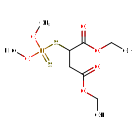
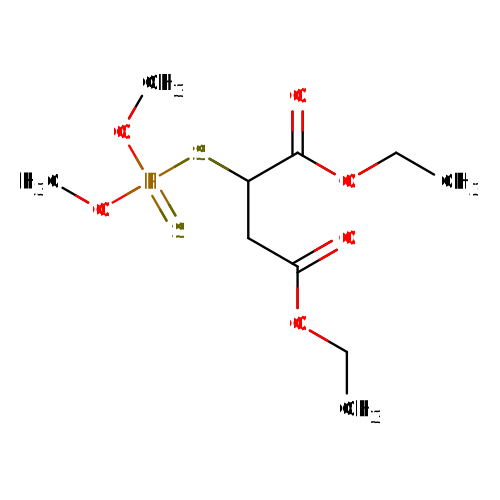
Structure for Malathion (DB00772)
- Weight
- Average: 330.358
Monoisotopic: 330.036066232 - Chemical Formula
- C10H19O6PS2
- Synonyms
- [(dimethoxyphosphinothioyl)thio]butanedioic acid diethyl ester
- Carbophos
- diethyl (dimethoxyphosphinothioylthio)succinate
- Karbofos
- Malathion
- Maldison
- Mercaptothion
- O,O-dimethyl S-(1,2-bis(ethoxycarbonyl)ethyl)
- O,O-dimethyl S-(1,2-dicarbethoxyethyl) dithiophosphate
- O,O-dimethyl S-(1,2-dicarbethoxyethyl)phosphorodithioate
- O,O-dimethyl S-1,2-di(ethoxycarbamyl)ethyl
- O,O-dimethyldithiophosphate diethylmercaptosuccinate
- External IDs
- ENT 17,034
- ENT-17034
- NSC-6524

Pharmacology
- Indication
For patients infected with Pediculus humanus capitis (head lice and their ova) of the scalp hair.
 Reduce drug development failure ratesBuild, train, & validate machine-learning modelswith evidence-based and structured datasets.Build, train, & validate predictive machine-learning models with structured datasets.
- Associated Conditions
Indication Type Indication Combined Product Details Approval Level Age Group Patient Characteristics Dose Form Treatment of Head lice •••••••••••• - Contraindications & Blackbox Warnings
 Prevent Adverse Drug Events TodayTap into our Clinical API for life-saving information on contraindications & blackbox warnings, population restrictions, harmful risks, & more.Avoid life-threatening adverse drug events with our Clinical API
- Pharmacodynamics
Malathion is an organophosphate insecticide commonly used to control mosquitos and other flying insects. Pharmaceutically, malathion is used to eliminate head lice. The principal toxicological effect of malathion is cholinesterase inhibition, due primarily to malaoxon and to phosphorus thionate impurities.
- Mechanism of action
Malathion is a nonsystemic, wide-spectrum organophosphate insecticide. It inhibits acetylcholinesterase activity of most eukaryotes. Malathion is toxic to aquatic organisms, but has a relatively low toxicity for birds and mammals. The major metabolites of malathion are mono- and di-carboxylic acid derivatives, and malaoxon is a minor metabolite. However, it is malaoxon that is the strongest cholinesterase inhibitor. Cholinesterases catalyze the hydrolysis of the neurotransmitter acetylcholine into choline and acetic acid, a reaction necessary to allow a cholinergic neuron to return to its resting state after activation. Because of its essential function, chemicals that interfere with the action of cholinesterase are potent neurotoxins, causing muscle spasms and ultimately death.
Target Actions Organism ACholinesterase inhibitorHumans - Absorption
Malathion in an acetone vehicle has been reported to be absorbed through normal human skin only to the extent of 8% of the applied dose. Absorption may be increased when malathion is applied to damaged skin. Malathion is rapidly and effectively absorbed by practically all routes including the gastrointestinal tract, skin, mucous membranes, and lungs. However, it is readily excreted in the urine, and does not accumulate in organs or tissues.
- Volume of distribution
Not Available
- Protein binding
Not Available
- Metabolism
The major metabolites of malathion are the diacid and monoacid metabolites, namely, malathion dicarboxylic acid (DCA) and malathion monocarboxylic acid (MCA). Malaoxon, the active cholinesterase-inhibiting metabolite of malathion, is a minor metabolite. Both malathion and malaoxon are detoxified by carboxyesterases leading to polar, water-soluble compounds that are excreted.
Hover over products below to view reaction partners
- Route of elimination
Not Available
- Half-life
8-24 hours
- Clearance
Not Available
- Adverse Effects
 Improve decision support & research outcomesWith structured adverse effects data, including: blackbox warnings, adverse reactions, warning & precautions, & incidence rates. View sample adverse effects data in our new Data Library!Improve decision support & research outcomes with our structured adverse effects data.
- Toxicity
Malathion is slightly toxic via the oral route, with reported oral LD50 values of 1000 mg/kg to greater than 10,000 mg/kg in the rat. It is also slightly toxic via the dermal route, with reported dermal LD50 values of greater than 4000 mg/kg in rats. Moderate poisoning can result in chest tightness, difficulty breathing, bradycardia, tachycardia, tremor/ataxia, blurred vision, and confusion. Severe, life-threatening signs include coma, seizures, respiratory arrest, and paralysis. Malathion may also be irritating to the skin and eyes.
- Pathways
- Not Available
- Pharmacogenomic Effects/ADRs
- Not Available
Interactions
- Drug Interactions
- This information should not be interpreted without the help of a healthcare provider. If you believe you are experiencing an interaction, contact a healthcare provider immediately. The absence of an interaction does not necessarily mean no interactions exist.
Drug Interaction Integrate drug-drug
interactions in your softwareAbametapir The serum concentration of Malathion can be increased when it is combined with Abametapir. Bedaquiline The risk or severity of QTc prolongation can be increased when Malathion is combined with Bedaquiline. Citalopram The risk or severity of QTc prolongation can be increased when Malathion is combined with Citalopram. Clozapine The risk or severity of QTc prolongation can be increased when Malathion is combined with Clozapine. Dabrafenib The serum concentration of Malathion can be decreased when it is combined with Dabrafenib. - Food Interactions
- No interactions found.
Products
 Drug product information from 10+ global regionsOur datasets provide approved product information including:dosage, form, labeller, route of administration, and marketing period.Access drug product information from over 10 global regions.
- International/Other Brands
- Derbac-M (SSL) / Noury (Alfaco) / Prioderm (Norpharma)
- Brand Name Prescription Products
Name Dosage Strength Route Labeller Marketing Start Marketing End Region Image Malathion Lotion 0.005 g/1mL Topical Taro Pharmaceuticals U.S.A., Inc. 2009-08-02 2020-01-17 US 
Ovide Lotion 0.005 g/1mL Topical TARO PHARMACEUTICALS USA, INC. 1982-08-02 2020-01-17 US - Generic Prescription Products
Name Dosage Strength Route Labeller Marketing Start Marketing End Region Image Malathion Lotion 0.0005 g/1mL Topical Taro Pharmaceuticals U.S.A., Inc. 2014-01-31 Not applicable US Malathion Lotion 0.005 g/1mL Topical Suven Pharmaceuticals Limited 2014-02-20 Not applicable US Malathion Lotion 0.005 g/1mL Topical Synerx Pharma, Llc 2010-03-05 2014-03-05 US Malathion lotion, 0.5% Lotion 5 mg/1mL Topical Karalex Pharma, Llc, Woodcliff Lake, Nj 07677 2009-05-13 2009-05-13 US Ovide Lotion 0.0005 g/1mL Topical Taro Pharmaceuticals U.S.A., Inc. 2014-01-31 Not applicable US - Over the Counter Products
Name Dosage Strength Route Labeller Marketing Start Marketing End Region Image A-FLEAZ SHAMPOO 1% w/w Shampoo Topical HOE PHARMACEUTICALS SDN. BHD. 2020-09-08 Not applicable Malaysia 
LICE CARE LOTION 0.5% w/v Emulsion 0.5 % w/v Topical ICM PHARMA PTE. LTD. 1997-02-05 Not applicable Singapore 
Categories
- ATC Codes
- P03AX03 — Malathion
- Drug Categories
- Agrochemicals
- Antiparasitic Products, Insecticides and Repellents
- Cholinergic Agents
- Cholinesterase Inhibitors
- Compounds used in a research, industrial, or household setting
- Cytochrome P-450 CYP1A2 Substrates
- Cytochrome P-450 CYP2B6 Substrates
- Cytochrome P-450 Substrates
- Ectoparasiticides, Incl. Scabicides
- Ectoparasiticides, Incl. Scabicides, Insecticides and Repellents
- Enzyme Inhibitors
- Insecticides
- Neurotransmitter Agents
- Organophosphates
- Organophosphorus Compounds
- Organothiophosphates
- Organothiophosphorus Compounds
- Pesticides
- Potential QTc-Prolonging Agents
- QTc Prolonging Agents
- Sulfur Compounds
- Toxic Actions
- Chemical TaxonomyProvided by Classyfire
- Description
- This compound belongs to the class of organic compounds known as fatty acid esters. These are carboxylic ester derivatives of a fatty acid.
- Kingdom
- Organic compounds
- Super Class
- Lipids and lipid-like molecules
- Class
- Fatty Acyls
- Sub Class
- Fatty acid esters
- Direct Parent
- Fatty acid esters
- Alternative Parents
- Dithiophosphate S-esters / Dithiophosphate O-esters / Dicarboxylic acids and derivatives / Carboxylic acid esters / Sulfenyl compounds / Organothiophosphorus compounds / Organic oxides / Hydrocarbon derivatives / Carbonyl compounds
- Substituents
- Aliphatic acyclic compound / Carbonyl group / Carboxylic acid derivative / Carboxylic acid ester / Dicarboxylic acid or derivatives / Dithiophosphate o-ester / Dithiophosphate s-ester / Fatty acid ester / Hydrocarbon derivative / Organic dithiophosphate
- Molecular Framework
- Aliphatic acyclic compounds
- External Descriptors
- ethyl ester, diester, organic thiophosphate, carboxyalkyl phosphate (CHEBI:6651) / Organophosphorus insecticides (C07497) / a small molecule (CPD-13116)
- Affected organisms
- Head lice
Chemical Identifiers
- UNII
- U5N7SU872W
- CAS number
- 121-75-5
- InChI Key
- JXSJBGJIGXNWCI-UHFFFAOYSA-N
- InChI
- InChI=1S/C10H19O6PS2/c1-5-15-9(11)7-8(10(12)16-6-2)19-17(18,13-3)14-4/h8H,5-7H2,1-4H3
- IUPAC Name
- 1,4-diethyl 2-{[dimethoxy(sulfanylidene)-lambda5-phosphanyl]sulfanyl}butanedioate
- SMILES
- CCOC(=O)CC(SP(=S)(OC)OC)C(=O)OCC
References
- Synthesis Reference
Noel Rouy, Georges Gros, "Process for the preparation of malathion." U.S. Patent US4367180, issued August, 1969.
US4367180- General References
- Baker EL Jr, Warren M, Zack M, Dobbin RD, Miles JW, Miller S, Alderman L, Teeters WR: Epidemic malathion poisoning in Pakistan malaria workers. Lancet. 1978 Jan 7;1(8054):31-4. [Article]
- Bonner MR, Coble J, Blair A, Beane Freeman LE, Hoppin JA, Sandler DP, Alavanja MC: Malathion exposure and the incidence of cancer in the agricultural health study. Am J Epidemiol. 2007 Nov 1;166(9):1023-34. Epub 2007 Aug 23. [Article]
- Edwards JW, Lee SG, Heath LM, Pisaniello DL: Worker exposure and a risk assessment of malathion and fenthion used in the control of Mediterranean fruit fly in South Australia. Environ Res. 2007 Jan;103(1):38-45. Epub 2006 Aug 17. [Article]
- External Links
- Human Metabolome Database
- HMDB0014910
- KEGG Drug
- D00534
- KEGG Compound
- C07497
- PubChem Compound
- 4004
- PubChem Substance
- 46505287
- ChemSpider
- 3864
- BindingDB
- 85372
- 6606
- ChEBI
- 141474
- ChEMBL
- CHEMBL1200468
- Therapeutic Targets Database
- DAP000895
- PharmGKB
- PA164748092
- RxList
- RxList Drug Page
- Drugs.com
- Drugs.com Drug Page
- Wikipedia
- Malathion
- FDA label
- Download (133 KB)
- MSDS
- Download (57.9 KB)
Clinical Trials
- Clinical Trials
Phase Status Purpose Conditions Count 3 Completed Treatment Head Lice Infestation / Scabies 1 3 Completed Treatment Lice Infestations 4 2 Completed Treatment Head Lice Infestation 1 2, 3 Completed Treatment Lice Infestations 1 1 Completed Treatment Lice Infestations 1
Pharmacoeconomics
- Manufacturers
- Synerx pharma llc
- Taro pharmaceuticals north america inc
- Packagers
- DPT Laboratories Ltd.
- Karalex Pharmaceuticals
- Medicis Pharmaceutical Co.
- Taro Pharmaceuticals USA
- Dosage Forms
Form Route Strength Shampoo Topical Emulsion Topical 0.5 % w/v Lotion Topical 0.0005 g/1mL Lotion Topical 0.005 g/1mL Lotion Topical 5 mg/1mL - Prices
Unit description Cost Unit Ovide 0.5% Lotion 59ml Bottle 180.8USD bottle Ovide 0.5% lotion 2.95USD ml Malathion 0.5% lotion 2.65USD ml DrugBank does not sell nor buy drugs. Pricing information is supplied for informational purposes only.- Patents
Patent Number Pediatric Extension Approved Expires (estimated) Region US7560445 No 2009-07-14 2027-02-01 US US7977324 No 2011-07-12 2026-08-14 US
Properties
- State
- Liquid
- Experimental Properties
Property Value Source melting point (°C) 2.8 °C PhysProp boiling point (°C) 156-157 °C at 7.00E-01 mm Hg PhysProp water solubility 143 mg/L (at 20 °C) BOWMAN,BT & SANS,WW (1983) logP 2.36 HANSCH,C ET AL. (1995) - Predicted Properties
Property Value Source Water Solubility 0.165 mg/mL ALOGPS logP 2.67 ALOGPS logP 1.86 Chemaxon logS -3.3 ALOGPS pKa (Strongest Basic) -6.8 Chemaxon Physiological Charge 0 Chemaxon Hydrogen Acceptor Count 2 Chemaxon Hydrogen Donor Count 0 Chemaxon Polar Surface Area 71.06 Å2 Chemaxon Rotatable Bond Count 11 Chemaxon Refractivity 78.18 m3·mol-1 Chemaxon Polarizability 31.66 Å3 Chemaxon Number of Rings 0 Chemaxon Bioavailability 1 Chemaxon Rule of Five Yes Chemaxon Ghose Filter Yes Chemaxon Veber's Rule No Chemaxon MDDR-like Rule No Chemaxon - Predicted ADMET Features
Property Value Probability Human Intestinal Absorption + 0.9031 Blood Brain Barrier + 0.9236 Caco-2 permeable - 0.5579 P-glycoprotein substrate Non-substrate 0.7901 P-glycoprotein inhibitor I Non-inhibitor 0.6817 P-glycoprotein inhibitor II Non-inhibitor 0.9522 Renal organic cation transporter Non-inhibitor 0.9414 CYP450 2C9 substrate Non-substrate 0.8308 CYP450 2D6 substrate Non-substrate 0.9116 CYP450 3A4 substrate Non-substrate 0.6132 CYP450 1A2 substrate Non-inhibitor 0.8415 CYP450 2C9 inhibitor Non-inhibitor 0.7963 CYP450 2D6 inhibitor Non-inhibitor 0.9114 CYP450 2C19 inhibitor Non-inhibitor 0.748 CYP450 3A4 inhibitor Non-inhibitor 0.5673 CYP450 inhibitory promiscuity Low CYP Inhibitory Promiscuity 0.8504 Ames test Non AMES toxic 0.9132 Carcinogenicity Carcinogens 0.6261 Biodegradation Not ready biodegradable 0.8429 Rat acute toxicity 3.0259 LD50, mol/kg Not applicable hERG inhibition (predictor I) Weak inhibitor 0.9228 hERG inhibition (predictor II) Non-inhibitor 0.8641
Spectra
- Mass Spec (NIST)
- Download (10.5 KB)
- Spectra
- Chromatographic Properties
Collision Cross Sections (CCS)
Adduct CCS Value (Å2) Source type Source [M-H]- 182.2377707 predictedDarkChem Lite v0.1.0 [M-H]- 162.83472 predictedDeepCCS 1.0 (2019) [M+H]+ 185.1560707 predictedDarkChem Lite v0.1.0 [M+H]+ 165.19272 predictedDeepCCS 1.0 (2019) [M+Na]+ 182.0948707 predictedDarkChem Lite v0.1.0 [M+Na]+ 171.28587 predictedDeepCCS 1.0 (2019)
Targets

- Kind
- Protein
- Organism
- Humans
- Pharmacological action
- Yes
- Actions
- Inhibitor
- General Function
- Identical protein binding
- Specific Function
- Esterase with broad substrate specificity. Contributes to the inactivation of the neurotransmitter acetylcholine. Can degrade neurotoxic organophosphate esters.
- Gene Name
- BCHE
- Uniprot ID
- P06276
- Uniprot Name
- Cholinesterase
- Molecular Weight
- 68417.575 Da
References
- Overington JP, Al-Lazikani B, Hopkins AL: How many drug targets are there? Nat Rev Drug Discov. 2006 Dec;5(12):993-6. [Article]
- Imming P, Sinning C, Meyer A: Drugs, their targets and the nature and number of drug targets. Nat Rev Drug Discov. 2006 Oct;5(10):821-34. [Article]
- Ramos ZR, Fortunato JJ, Agostinho FR, Martins MR, Correa M, Schetinger MR, Dal-Pizzol F, Quevedo J: Influence of malathion on acetylcholinesterase activity in rats submitted to a forced swimming test. Neurotox Res. 2006 Jun;9(4):285-90. [Article]
- Ahmed M, Rocha JB, Mazzanti CM, Morsch AL, Cargnelutti D, Correa M, Loro V, Morsch VM, Schetinger MR: Malathion, carbofuran and paraquat inhibit Bungarus sindanus (krait) venom acetylcholinesterase and human serum butyrylcholinesterase in vitro. Ecotoxicology. 2007 May;16(4):363-9. Epub 2007 Mar 16. [Article]
- da Silva AP, Meotti FC, Santos AR, Farina M: Lactational exposure to malathion inhibits brain acetylcholinesterase in mice. Neurotoxicology. 2006 Dec;27(6):1101-5. Epub 2006 Apr 28. [Article]
- Berman HM, Westbrook J, Feng Z, Gilliland G, Bhat TN, Weissig H, Shindyalov IN, Bourne PE: The Protein Data Bank. Nucleic Acids Res. 2000 Jan 1;28(1):235-42. [Article]
Enzymes
- Kind
- Protein
- Organism
- Humans
- Pharmacological action
- Unknown
- Actions
- Substrate
- General Function
- Oxidoreductase activity, acting on paired donors, with incorporation or reduction of molecular oxygen, reduced flavin or flavoprotein as one donor, and incorporation of one atom of oxygen
- Specific Function
- Cytochromes P450 are a group of heme-thiolate monooxygenases. In liver microsomes, this enzyme is involved in an NADPH-dependent electron transport pathway. It oxidizes a variety of structurally un...
- Gene Name
- CYP1A2
- Uniprot ID
- P05177
- Uniprot Name
- Cytochrome P450 1A2
- Molecular Weight
- 58293.76 Da
References
- Kind
- Protein
- Organism
- Humans
- Pharmacological action
- Unknown
- Actions
- Substrate
- General Function
- Steroid hydroxylase activity
- Specific Function
- Cytochromes P450 are a group of heme-thiolate monooxygenases. In liver microsomes, this enzyme is involved in an NADPH-dependent electron transport pathway. It oxidizes a variety of structurally un...
- Gene Name
- CYP2B6
- Uniprot ID
- P20813
- Uniprot Name
- Cytochrome P450 2B6
- Molecular Weight
- 56277.81 Da
References
- Buratti FM, D'Aniello A, Volpe MT, Meneguz A, Testai E: Malathion bioactivation in the human liver: the contribution of different cytochrome p450 isoforms. Drug Metab Dispos. 2005 Mar;33(3):295-302. Epub 2004 Nov 22. [Article]


Drug created at June 13, 2005 13:24 / Updated at December 02, 2023 06:55