Identification
- Summary
Menthol is an organic compound used to treat mild to moderate muscle and joint pain.
- Brand Names
- Absorbine Jr Antifungal, Mentholatum
- Generic Name
- Levomenthol
Commonly known or available as Menthol - DrugBank Accession Number
- DB00825
- Background
Menthol is a covalent organic compound made synthetically or obtained from peppermint or other mint oils. Forming clear or white waxy, crystalline substance, menthol is typically solid at room temperature. (-)-Menthol is the naturally-occurring and main form of menthol, and is assigned the (1R,2S,5R) configuration. Menthol mediates anesthetic properties and anti-irritating properties locally, thus it is widely used to relieve minor throat irritations.
- Type
- Small Molecule
- Groups
- Approved
- Structure
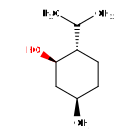
Structure for Levomenthol (DB00825)

- Weight
- Average: 156.2652
Monoisotopic: 156.151415262 - Chemical Formula
- C10H20O
- Synonyms
- (-)-Menthol
- (−)-(1R,3R,4S)-menthol
- (−)-menthol
- (1alpha,2beta,5alpha)-5-methyl-2(1-methylethyl)cyclohexanol
- (1R-(1-α,2-β,5-α))-5-methyl-2-(1-methylethyl)cyclohexanol
- (1R,3R,4S)-(−)-menthol
- L-menthol
- Levomenthol
- Lévomenthol
- Levomentholum
- Levomentol
- Mentol
- External IDs
- FEMA NO. 2665, (-)-
- NPO-11
- NSC-62788

Pharmacology
- Indication
Used to treat occasional minor irritation, pain, sore mouth, and sore throat as well as cough associated with a cold or inhaled irritants.
 Reduce drug development failure ratesBuild, train, & validate machine-learning modelswith evidence-based and structured datasets.Build, train, & validate predictive machine-learning models with structured datasets.
- Associated Conditions
Indication Type Indication Combined Product Details Approval Level Age Group Patient Characteristics Dose Form Used in combination to treat Allergies Combination Product in combination with: Ammonium chloride (DB06767), Diphenhydramine (DB01075) •••••••••••• •••••••• Used in combination for symptomatic treatment of Arthritis Combination Product in combination with: Mentha arvensis top (DB14346), Eucalyptus oil (DB11114), Camphor (DB01744) ••• ••• ••••••• Used in combination for symptomatic treatment of Arthritis Combination Product in combination with: Camphor (DB01744), Methyl salicylate (DB09543) ••• ••• ••••••• Used in combination for symptomatic treatment of Arthritis Combination Product in combination with: Eucalyptus oil (DB11114), Camphor (DB01744), Methyl salicylate (DB09543) ••• ••• •••••• Used in combination to treat Back pain lower back Combination Product in combination with: alpha-Tocopherol acetate (DB14003), Glycol salicylate (DB11323), Nonivamide (DB11324) ••• ••• ••••• - Associated Therapies
- Contraindications & Blackbox Warnings
 Prevent Adverse Drug Events TodayTap into our Clinical API for life-saving information on contraindications & blackbox warnings, population restrictions, harmful risks, & more.Avoid life-threatening adverse drug events with our Clinical API
- Pharmacodynamics
Menthol is a covalent organic compound made synthetically or obtained from peppermint or other mint oils. Menthol induces a cooling sensation on the skin upon inhalation, oral ingestion, or topical application by stimulating the cold-sensitive receptors expressed on the skin, without actually causing a drop in the skin temperature.
- Mechanism of action
Menthol primarily activates the cold-sensitive TRPM8 receptors in the skin. Menthol, after topical application, causes a feeling of coolness due to stimulation of 'cold' receptors by inhibiting Ca++ currents of neuronal membranes. It may also yield analgesic properties via kappa-opioid receptor agonism.
Target Actions Organism ATransient receptor potential cation channel subfamily M member 8 inducerHumans ATransient receptor potential cation channel subfamily A member 1 inducerHumans ATransient receptor potential cation channel subfamily V member 3 inducerHumans AVoltage-dependent L-type calcium channel antagonistHumans UKappa-type opioid receptor agonistHumans - Absorption
Not Available
- Volume of distribution
Not Available
- Protein binding
Not Available
- Metabolism
Hover over products below to view reaction partners
- Route of elimination
Not Available
- Half-life
Not Available
- Clearance
Not Available
- Adverse Effects
 Improve decision support & research outcomesWith structured adverse effects data, including: blackbox warnings, adverse reactions, warning & precautions, & incidence rates. View sample adverse effects data in our new Data Library!Improve decision support & research outcomes with our structured adverse effects data.
- Toxicity
Menthol, DL: ORAL (LD50): Acute: 2900 mg/kg [Rat], 3100 mg/kg [Mouse]. DERMAL (LD50): Acute: 5001 mg/kg Rabbit.
- Pathways
- Not Available
- Pharmacogenomic Effects/ADRs
- Not Available
Interactions
- Drug Interactions
- This information should not be interpreted without the help of a healthcare provider. If you believe you are experiencing an interaction, contact a healthcare provider immediately. The absence of an interaction does not necessarily mean no interactions exist.
Drug Interaction Integrate drug-drug
interactions in your softwareAbametapir The serum concentration of Levomenthol can be increased when it is combined with Abametapir. Acebutolol Levomenthol may increase the arrhythmogenic activities of Acebutolol. Aceclofenac The risk or severity of hyperkalemia can be increased when Levomenthol is combined with Aceclofenac. Acemetacin The risk or severity of hyperkalemia can be increased when Levomenthol is combined with Acemetacin. Acetyldigitoxin Acetyldigitoxin may increase the arrhythmogenic activities of Levomenthol. - Food Interactions
- No interactions found.
Products
 Drug product information from 10+ global regionsOur datasets provide approved product information including:dosage, form, labeller, route of administration, and marketing period.Access drug product information from over 10 global regions.
- Over the Counter Products
Name Dosage Strength Route Labeller Marketing Start Marketing End Region Image 21ST CENTURY CHILDREN'S VAPOR BALM Ointment Topical 21ST CENTURY PRODUCTS SDN. BHD. 2020-09-08 Not applicable Malaysia 
Absorbine Back Patch 5000 mg/8h Transdermal DSE Healthcare Solutions, LLC 2013-10-15 2013-10-01 US 
AK47 Cooling Roll-On Liquid 1.05 g/84g Topical Renu Laboratories, Inc. 2020-06-01 Not applicable US AK47 Cooling Roll-On Liquid 4.2 g/84g Topical Renu Laboratories, Inc. 2020-06-01 Not applicable US Antiphlogistine Rub A-535 Ice Gel 4% Gel 4 % Topical Carter Products, Division Of Carter Wallace Ns Inc. 1993-12-31 1997-08-14 Canada 
- Mixture Products
Name Ingredients Dosage Route Labeller Marketing Start Marketing End Region Image Absorbine Jr Antifungal Liq Levomenthol (200 mg / 100 mL) + Tolnaftate (1 g / 100 mL) Liquid Topical Clarion Brands, Llc 1994-12-31 Not applicable Canada Absorbine Jr Extra Strength Liniment Levomenthol (4.0 %) + Chloroxylenol (0.5 %) Liquid Topical Bridges Consumer Healthcare Llc 1992-12-31 Not applicable Canada Absorbine Jr Liniment Levomenthol (1.25 %) + Chloroxylenol (0.5 %) Solution Topical Bridges Consumer Healthcare Llc 1993-12-31 Not applicable Canada Absorbine Power Gel Levomenthol (4 %) + Chloroxylenol (.5 %) Gel Topical W.F. Young, Inc. 1993-12-31 Not applicable Canada Aflexeryl-LC Levomenthol (1 g/100g) + Lidocaine hydrochloride (4 g/100g) Patch Topical Easy Distributors, Llc 2015-01-14 2016-01-05 US - Unapproved/Other Products
Name Ingredients Dosage Route Labeller Marketing Start Marketing End Region Image Antiphlamine Levomenthol (8 mg/1g) + (S)-camphor (59 mg/1g) + Methyl salicylate (46 mg/1g) Lotion Topical Lydia Co., Ltd. 2022-01-02 Not applicable US Antiphlamine Coin Plaster Levomenthol (2.769 mg/0.2832g) + Diphenhydramine (0.246 mg/0.2832g) + Synthetic camphor (1.108 mg/0.2832g) Patch Topical Hanul Trading Co., Ltd. 2016-10-10 2017-04-14 US Antiphlamine Coin Plaster Levomenthol (2.769 mg/0.2832g) + DL-alpha-Tocopherol (0.308 mg/0.2832g) + Diphenhydramine (0.246 mg/0.2832g) + Methyl salicylate (5.541 mg/0.2832g) + Nonivamide (0.046 mg/0.2832g) + Peppermint oil (0.693 mg/0.2832g) + Synthetic camphor (1.108 mg/0.2832g) Patch Topical Hanul Trading Co., Ltd. 2016-10-10 Not applicable US Atomy Herbal Hair Tonic Levomenthol (0.6 mL/200mL) + Dexpanthenol (0.4 mL/200mL) + Salicylic acid (0.5 mL/200mL) Liquid Topical Atomy Co., Ltd. 2010-04-29 Not applicable US Benzocaine Levomenthol (1 mg/1g) + Benzocaine (20 mg/1g) Swab Topical McKesson 2020-01-16 2024-06-01 US
Categories
- Drug Categories
- Agents causing hyperkalemia
- Antiarrhythmic agents
- Antipruritics
- Antipruritics and Local Anesthetics
- Basic Lotions and Liniments
- Bradycardia-Causing Agents
- Calcium Channel Blockers
- Cyclohexanes
- Cyclohexanols
- Cytochrome P-450 CYP3A Substrates
- Cytochrome P-450 CYP3A4 Substrates
- Cytochrome P-450 Substrates
- EENT Drugs, Miscellaneous
- Herbs and Natural Products
- Other Analgesics
- Other Cold and Cough Preparations
- Potential QTc-Prolonging Agents
- QTc Prolonging Agents
- Vasodilating Agents
- Chemical TaxonomyProvided by Classyfire
- Description
- This compound belongs to the class of organic compounds known as menthane monoterpenoids. These are monoterpenoids with a structure based on the o-, m-, or p-menthane backbone. P-menthane consists of the cyclohexane ring with a methyl group and a (2-methyl)-propyl group at the 1 and 4 ring position, respectively. The o- and m- menthanes are much rarer, and presumably arise by alkyl migration of p-menthanes.
- Kingdom
- Organic compounds
- Super Class
- Lipids and lipid-like molecules
- Class
- Prenol lipids
- Sub Class
- Monoterpenoids
- Direct Parent
- Menthane monoterpenoids
- Alternative Parents
- Monocyclic monoterpenoids / Cyclohexanols / Cyclic alcohols and derivatives / Hydrocarbon derivatives
- Substituents
- Alcohol / Aliphatic homomonocyclic compound / Cyclic alcohol / Cyclohexanol / Hydrocarbon derivative / Monocyclic monoterpenoid / Organic oxygen compound / Organooxygen compound / P-menthane monoterpenoid / Secondary alcohol
- Molecular Framework
- Aliphatic homomonocyclic compounds
- External Descriptors
- p-menthan-3-ol (CHEBI:15409) / Menthane monoterpenoids, Cyclic monoterpenes (C00400) / Menthane monoterpenoids (LMPR0102090001)
- Affected organisms
- Humans and other mammals
Chemical Identifiers
- UNII
- BZ1R15MTK7
- CAS number
- 2216-51-5
- InChI Key
- NOOLISFMXDJSKH-KXUCPTDWSA-N
- InChI
- InChI=1S/C10H20O/c1-7(2)9-5-4-8(3)6-10(9)11/h7-11H,4-6H2,1-3H3/t8-,9+,10-/m1/s1
- IUPAC Name
- (1R,2S,5R)-5-methyl-2-(propan-2-yl)cyclohexan-1-ol
- SMILES
- CC(C)[C@@H]1CC[C@@H](C)C[C@H]1O
References
- Synthesis Reference
Tatsuo Higashiyama, Isao Sakata, "Menthol glycoside, process for preparing the same and method for releasing menthol therefrom." U.S. Patent US4038270, issued December, 1972.
US4038270- General References
- Not Available
- External Links
- Human Metabolome Database
- HMDB0003352
- KEGG Drug
- D00064
- KEGG Compound
- C00400
- PubChem Compound
- 16666
- PubChem Substance
- 46506513
- ChemSpider
- 15803
- BindingDB
- 50318482
- 236388
- ChEBI
- 15409
- ChEMBL
- CHEMBL470670
- ZINC
- ZINC000001482164
- Therapeutic Targets Database
- DAP000876
- PharmGKB
- PA164776605
- Guide to Pharmacology
- GtP Drug Page
- Drugs.com
- Drugs.com Drug Page
- Wikipedia
- Menthol
- MSDS
- Download (73.2 KB)
Clinical Trials
- Clinical Trials
Phase Status Purpose Conditions Count 4 Completed Basic Science Acute Exercise / Heat Exposure 1 4 Completed Treatment Actinic Keratosis (AK) 1 4 Completed Treatment Diaper Rash 1 4 Completed Treatment Smoking / Smoking, Cessation 1 4 Completed Treatment Tonsillopharyngitis / Viral Respiratory Tract Infection 1
Pharmacoeconomics
- Manufacturers
- Not Available
- Packagers
- Active and Innovative Inc.
- Bergen Brunswig
- Chain Drug
- Chattem Chemicals Inc.
- CVS Pharmacy
- Dofs Laboratories
- Gold Mints Products Co. Ltd.
- Herbion Pakistan Pvt Ltd.
- Hisamitsu Pharmaceuticals
- Humco
- Major Pharmaceuticals
- Medicine Shop
- Mentholatum Co.
- Nutri Dyn Products Limited
- Pfizer Inc.
- Walgreen Co.
- Dosage Forms
Form Route Strength Ointment Topical Ointment Nasal Patch Transdermal 5000 mg/8h Spray Topical Liquid Topical 1.05 g/84g Liquid Topical 4.2 g/84g Liquid Buccal Kit Oral; Topical Gel Topical 4 % Lotion Topical 1 g/100g Cream Topical 8.5 mg/85g Aerosol Topical Liquid Respiratory (inhalation) 6 % Oil Topical Oil Percutaneous; Topical; Transdermal Gel Topical 2.5 g Gel Topical 2.5 % Tablet Transmucosal Cream Topical 100 mg / g Lozenge Oral 2.7 mg / loz Tablet, chewable Oral Swab Topical Gel Topical 3.5 %W/W Spray Topical 10 %W/W Solution Topical 10 % Gel Topical 3.5 g Cream Topical 10 g/100g Ointment Respiratory (inhalation); Topical Liquid Oral Solution Respiratory (inhalation) Lozenge Oral 1 mg / loz Lozenge Oral 1.5 mg / loz Stick Topical Oil Mouthwash Buccal; Oral Gel Transdermal Patch Transdermal Lotion Topical 160 mg/1mL Lozenge Oral 5 mg / loz Lozenge Oral 7 mg/1 Gel Topical Shampoo Topical Plaster Transdermal Suppository Rectal Lotion Topical Lozenge Oral 8.4 mg / loz Lozenge Oral 6.1 mg / loz Ointment Topical Solution / drops Buccal Patch Topical 750 mg/1 Lozenge Oral 8.5 mg/1 Liquid Respiratory (inhalation) 1 %w/v Spray Topical Solution Buccal; Oral Syrup Oral Capsule Plaster Lozenge Oral Lozenge Oral 5.75 MG Tablet Lozenge Oral 4.6 MG Jelly Topical 10 % Gel Topical 16 % Gel Topical 7 % Gel Topical 6 % Lozenge Oral 3 mg Lozenge Oral 6.0 mg Liniment Topical Patch Cutaneous; Topical; Transdermal Solution, concentrate Oral Powder Topical Lozenge Oral 10 mg/1 Tablet Oral Lozenge Oral 5.6 mg/1 Lotion Topical 4 g/100g Ointment Rectal Lozenge Oral Pastille Oral 0.281 mg/1 Plaster Topical Jelly Topical 2 % Drug delivery system Topical 5 g Gel Topical 1.25 mL/100mL Shampoo Topical 0.0025 g/500g Pastille Oral Liquid Respiratory (inhalation) Lotion Topical 3.5 g/100g Plaster; swab Topical Plaster Transdermal Gel Topical 0.23 mg/1mL Lozenge Oral 2.5 mg/1 Lotion Topical 11.2 g/224g Jelly Topical Patch Topical 20 mg/11.7g Lozenge Oral 17.3 mg Lozenge Oral 1.7 mg / loz Inhalant Nasal Powder Topical Powder Topical 1 % Powder Cutaneous Rinse Oral Cream Topical Gel Topical 25 mg/1g Gel Topical 5 % Cream Topical 1.25 % Plaster Transdermal 5.0 %w/w Gel Dental Kit Oral Gel Topical 3 % Gel Topical Gel Oral; Topical Patch Topical Lotion Topical 0.5 g/100g Gel Topical 2 g/100g Solution Topical Paste Topical Liquid Topical Capsule Oral Solution Cutaneous Cream Rectal Spray Cutaneous Aerosol, spray Topical Liquid Cutaneous; Topical; Transdermal Stick Topical 0.5 % Gel Topical 2 % Plaster Cutaneous Ointment Cream Cutaneous Ointment Cutaneous Oil Topical Solution Intrasinal; Respiratory (inhalation) Solution Nasal Lozenge Oral .3 % Lozenge Oral .307 % Stick Nasal Lozenge Oral 5 mg Ointment Topical 5 % Liquid Oral .125 % Gum, chewing Oral Paste, dentifrice Topical Lozenge Oral 2.68 mg Emulsion Oral Suspension Oral Pill Liquid Dental Solution Oral Gel Topical 4 %w/w Gel Topical 7 %w/w Emulsion Topical - Prices
Unit description Cost Unit Cool & heat patch 1.2USD patch Icy hot medicated 5% patch 1.2USD patch Bengay pain relieving patch 1.13USD patch CVS Pharmacy pain relieving patch 1.11USD patch Cold & hot pain rel patch 1.05USD patch Nuprin muscle & joint patch 1.03USD patch Mentholatum pain patch 0.93USD patch CVS Pharmacy cold & hot medicated patch 0.89USD patch Salonsip aqua-patch 0.69USD patch Menthol crystal 0.49USD g Menthol cough drops 0.06USD each CVS Pharmacy menthol drops 0.03USD each Pv menthol cough drops 0.02USD each DrugBank does not sell nor buy drugs. Pricing information is supplied for informational purposes only.- Patents
Patent Number Pediatric Extension Approved Expires (estimated) Region US8809615 No 2014-08-19 2030-01-03 US US9233184 No 2016-01-12 2027-08-01 US
Properties
- State
- Solid
- Experimental Properties
Property Value Source melting point (°C) 43 °C PhysProp boiling point (°C) 212 °C PhysProp water solubility 490 mg/L (at 25 °C) CHEM INSPECT TEST INST (1992) logP 3.40 GRIFFIN,S ET AL. (1999) - Predicted Properties
Property Value Source Water Solubility 0.558 mg/mL ALOGPS logP 2.68 ALOGPS logP 2.66 Chemaxon logS -2.4 ALOGPS pKa (Strongest Acidic) 19.55 Chemaxon pKa (Strongest Basic) -0.81 Chemaxon Physiological Charge 0 Chemaxon Hydrogen Acceptor Count 1 Chemaxon Hydrogen Donor Count 1 Chemaxon Polar Surface Area 20.23 Å2 Chemaxon Rotatable Bond Count 1 Chemaxon Refractivity 47.45 m3·mol-1 Chemaxon Polarizability 19.69 Å3 Chemaxon Number of Rings 1 Chemaxon Bioavailability 1 Chemaxon Rule of Five Yes Chemaxon Ghose Filter No Chemaxon Veber's Rule Yes Chemaxon MDDR-like Rule No Chemaxon - Predicted ADMET Features
Property Value Probability Human Intestinal Absorption + 0.9944 Blood Brain Barrier + 0.9408 Caco-2 permeable + 0.8127 P-glycoprotein substrate Non-substrate 0.569 P-glycoprotein inhibitor I Non-inhibitor 0.8765 P-glycoprotein inhibitor II Non-inhibitor 0.9397 Renal organic cation transporter Non-inhibitor 0.8591 CYP450 2C9 substrate Non-substrate 0.7798 CYP450 2D6 substrate Non-substrate 0.746 CYP450 3A4 substrate Substrate 0.5912 CYP450 1A2 substrate Non-inhibitor 0.7188 CYP450 2C9 inhibitor Non-inhibitor 0.8484 CYP450 2D6 inhibitor Non-inhibitor 0.9451 CYP450 2C19 inhibitor Non-inhibitor 0.9185 CYP450 3A4 inhibitor Non-inhibitor 0.9458 CYP450 inhibitory promiscuity Low CYP Inhibitory Promiscuity 0.9546 Ames test Non AMES toxic 0.9132 Carcinogenicity Non-carcinogens 0.8439 Biodegradation Not ready biodegradable 0.7808 Rat acute toxicity 1.7142 LD50, mol/kg Not applicable hERG inhibition (predictor I) Weak inhibitor 0.8439 hERG inhibition (predictor II) Non-inhibitor 0.7727
Spectra
- Mass Spec (NIST)
- Download (2.96 KB)
- Spectra
- Chromatographic Properties
Collision Cross Sections (CCS)
Adduct CCS Value (Å2) Source type Source [M-H]- 140.0633104 predictedDarkChem Lite v0.1.0 [M-H]- 139.9219104 predictedDarkChem Lite v0.1.0 [M-H]- 140.0505104 predictedDarkChem Lite v0.1.0 [M-H]- 139.6656104 predictedDarkChem Lite v0.1.0 [M-H]- 140.84752 predictedDeepCCS 1.0 (2019) [M+H]+ 141.0563104 predictedDarkChem Lite v0.1.0 [M+H]+ 140.5826104 predictedDarkChem Lite v0.1.0 [M+H]+ 140.9995104 predictedDarkChem Lite v0.1.0 [M+H]+ 140.4126104 predictedDarkChem Lite v0.1.0 [M+H]+ 143.20552 predictedDeepCCS 1.0 (2019) [M+Na]+ 140.1742104 predictedDarkChem Lite v0.1.0 [M+Na]+ 140.0658104 predictedDarkChem Lite v0.1.0 [M+Na]+ 140.1341104 predictedDarkChem Lite v0.1.0 [M+Na]+ 139.7901104 predictedDarkChem Lite v0.1.0 [M+Na]+ 150.21269 predictedDeepCCS 1.0 (2019)
Targets

- Kind
- Protein
- Organism
- Humans
- Pharmacological action
- Yes
- Actions
- Inducer
- General Function
- Calcium channel activity
- Specific Function
- Receptor-activated non-selective cation channel involved in detection of sensations such as coolness, by being activated by cold temperature below 25 degrees Celsius. Activated by icilin, eucalypto...
- Gene Name
- TRPM8
- Uniprot ID
- Q7Z2W7
- Uniprot Name
- Transient receptor potential cation channel subfamily M member 8
- Molecular Weight
- 127684.035 Da
References
- Story GM, Peier AM, Reeve AJ, Eid SR, Mosbacher J, Hricik TR, Earley TJ, Hergarden AC, Andersson DA, Hwang SW, McIntyre P, Jegla T, Bevan S, Patapoutian A: ANKTM1, a TRP-like channel expressed in nociceptive neurons, is activated by cold temperatures. Cell. 2003 Mar 21;112(6):819-29. [Article]
- Behrendt HJ, Germann T, Gillen C, Hatt H, Jostock R: Characterization of the mouse cold-menthol receptor TRPM8 and vanilloid receptor type-1 VR1 using a fluorometric imaging plate reader (FLIPR) assay. Br J Pharmacol. 2004 Feb;141(4):737-45. Epub 2004 Feb 2. [Article]
- Bandell M, Story GM, Hwang SW, Viswanath V, Eid SR, Petrus MJ, Earley TJ, Patapoutian A: Noxious cold ion channel TRPA1 is activated by pungent compounds and bradykinin. Neuron. 2004 Mar 25;41(6):849-57. [Article]
- Andersson DA, Chase HW, Bevan S: TRPM8 activation by menthol, icilin, and cold is differentially modulated by intracellular pH. J Neurosci. 2004 Jun 9;24(23):5364-9. [Article]
- Stein RJ, Santos S, Nagatomi J, Hayashi Y, Minnery BS, Xavier M, Patel AS, Nelson JB, Futrell WJ, Yoshimura N, Chancellor MB, De Miguel F: Cool (TRPM8) and hot (TRPV1) receptors in the bladder and male genital tract. J Urol. 2004 Sep;172(3):1175-8. [Article]
- Eccles R: Menthol and related cooling compounds. J Pharm Pharmacol. 1994 Aug;46(8):618-30. [Article]
- Chen X, Ji ZL, Chen YZ: TTD: Therapeutic Target Database. Nucleic Acids Res. 2002 Jan 1;30(1):412-5. [Article]
- Kind
- Protein
- Organism
- Humans
- Pharmacological action
- Yes
- Actions
- Inducer
- General Function
- Temperature-gated cation channel activity
- Specific Function
- Receptor-activated non-selective cation channel involved in detection of pain and possibly also in cold perception and inner ear function (PubMed:25389312, PubMed:25855297). Has a central role in t...
- Gene Name
- TRPA1
- Uniprot ID
- O75762
- Uniprot Name
- Transient receptor potential cation channel subfamily A member 1
- Molecular Weight
- 127499.88 Da
References
- Story GM, Peier AM, Reeve AJ, Eid SR, Mosbacher J, Hricik TR, Earley TJ, Hergarden AC, Andersson DA, Hwang SW, McIntyre P, Jegla T, Bevan S, Patapoutian A: ANKTM1, a TRP-like channel expressed in nociceptive neurons, is activated by cold temperatures. Cell. 2003 Mar 21;112(6):819-29. [Article]
- Namer B, Seifert F, Handwerker HO, Maihofner C: TRPA1 and TRPM8 activation in humans: effects of cinnamaldehyde and menthol. Neuroreport. 2005 Jun 21;16(9):955-9. [Article]
- Macpherson LJ, Hwang SW, Miyamoto T, Dubin AE, Patapoutian A, Story GM: More than cool: promiscuous relationships of menthol and other sensory compounds. Mol Cell Neurosci. 2006 Aug;32(4):335-43. Epub 2006 Jul 7. [Article]
- Chen X, Ji ZL, Chen YZ: TTD: Therapeutic Target Database. Nucleic Acids Res. 2002 Jan 1;30(1):412-5. [Article]
- Kind
- Protein
- Organism
- Humans
- Pharmacological action
- Yes
- Actions
- Inducer
- General Function
- Calcium channel activity
- Specific Function
- Putative receptor-activated non-selective calcium permeant cation channel. It is activated by innocuous (warm) temperatures and shows an increased response at noxious temperatures greater than 39 d...
- Gene Name
- TRPV3
- Uniprot ID
- Q8NET8
- Uniprot Name
- Transient receptor potential cation channel subfamily V member 3
- Molecular Weight
- 90635.115 Da
References
- Macpherson LJ, Hwang SW, Miyamoto T, Dubin AE, Patapoutian A, Story GM: More than cool: promiscuous relationships of menthol and other sensory compounds. Mol Cell Neurosci. 2006 Aug;32(4):335-43. Epub 2006 Jul 7. [Article]
- Kind
- Protein group
- Organism
- Humans
- Pharmacological action
- Yes
- Actions
- Antagonist
- General Function
- Voltage-gated calcium channel activity
- Specific Function
- Voltage-sensitive calcium channels (VSCC) mediate the entry of calcium ions into excitable cells and are also involved in a variety of calcium-dependent processes, including muscle contraction, hor...
Components:
References
- Grigoleit HG, Grigoleit P: Pharmacology and preclinical pharmacokinetics of peppermint oil. Phytomedicine. 2005 Aug;12(8):612-6. doi: 10.1016/j.phymed.2004.10.007. [Article]
- Hawthorn M, Ferrante J, Luchowski E, Rutledge A, Wei XY, Triggle DJ: The actions of peppermint oil and menthol on calcium channel dependent processes in intestinal, neuronal and cardiac preparations. Aliment Pharmacol Ther. 1988 Apr;2(2):101-18. [Article]
- Kind
- Protein
- Organism
- Humans
- Pharmacological action
- Unknown
- Actions
- Agonist
- General Function
- Opioid receptor activity
- Specific Function
- G-protein coupled opioid receptor that functions as receptor for endogenous alpha-neoendorphins and dynorphins, but has low affinity for beta-endorphins. Also functions as receptor for various synt...
- Gene Name
- OPRK1
- Uniprot ID
- P41145
- Uniprot Name
- Kappa-type opioid receptor
- Molecular Weight
- 42644.665 Da
References
- Galeotti N, Di Cesare Mannelli L, Mazzanti G, Bartolini A, Ghelardini C: Menthol: a natural analgesic compound. Neurosci Lett. 2002 Apr 12;322(3):145-8. [Article]
- Taniguchi Y, Deguchi Y, Saita M, Noda K: [Antinociceptive effects of counterirritants]. Nihon Yakurigaku Zasshi. 1994 Dec;104(6):433-46. [Article]
Enzymes
- Kind
- Protein
- Organism
- Humans
- Pharmacological action
- No
- Actions
- Substrate
- General Function
- Vitamin d3 25-hydroxylase activity
- Specific Function
- Cytochromes P450 are a group of heme-thiolate monooxygenases. In liver microsomes, this enzyme is involved in an NADPH-dependent electron transport pathway. It performs a variety of oxidation react...
- Gene Name
- CYP3A4
- Uniprot ID
- P08684
- Uniprot Name
- Cytochrome P450 3A4
- Molecular Weight
- 57342.67 Da
References
- Uesawa Y, Takeuchi T, Mohri K: Integrated analysis on the physicochemical properties of dihydropyridine calcium channel blockers in grapefruit juice interactions. Curr Pharm Biotechnol. 2012 Jul;13(9):1705-17. [Article]


Drug created at June 13, 2005 13:24 / Updated at April 24, 2024 14:30