Identification
- Summary
Levamisole is levamisole is a nicotinic receptor agonist used to treat helminth infections and some skin infections.
- Generic Name
- Levamisole
- DrugBank Accession Number
- DB00848
- Background
Levamisole is an antihelminthic drug that was commonly used for the treatment of parasitic, viral, and bacterial infections. 4 It was manufactured by Janssen and first used in 1969 as an agent to treat worm infestations6 Levamisole was approved by the FDA in 1990 as an adjuvant treatment for colon cancer.7 Prior to this, levamisole was used as an antirheumatic therapy in the 1970s and 1980s for patients with rheumatoid arthritis.6
Because of its immunomodulatory effects, this drug has been studied in the treatment of various immune-mediated diseases, with some studies showing positive results. 4 This drug has also been used in combination with other drugs for the treatment of various cancers. 4,6
Levamisole was withdrawn from the American market in 2000 due to its ability to cause serious adverse effects, including agranulocytosis. 6 Interestingly, levamisole has been found as an adulterant in cocaine and can lead to a variety of adverse effects in individuals using this drug.5
- Type
- Small Molecule
- Groups
- Approved, Investigational, Vet approved, Withdrawn
- Structure
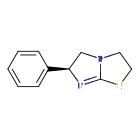
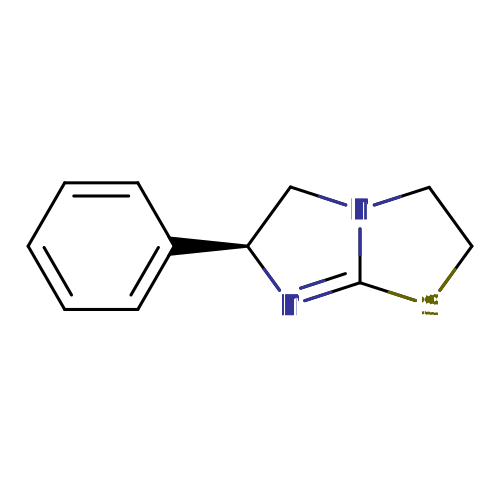
Structure for Levamisole (DB00848)
- Weight
- Average: 204.291
Monoisotopic: 204.072119084 - Chemical Formula
- C11H12N2S
- Synonyms
- Levamisol
- Levamisole
- Levamisolum
- External IDs
- R12564

Pharmacology
- Indication
For adjuvant treatment in combination with fluorouracil after surgical resection in patients with Dukes' stage C colon cancer. Also used to treat malignant melanoma and head/neck cancer.
 Reduce drug development failure ratesBuild, train, & validate machine-learning modelswith evidence-based and structured datasets.Build, train, & validate predictive machine-learning models with structured datasets.
- Associated Conditions
Indication Type Indication Combined Product Details Approval Level Age Group Patient Characteristics Dose Form Treatment of Adenocarcinoma of colon •••••••••••• •••••• Treatment of Ancylostoma duodenale infection •••••••••••• •••••• Treatment of Ascaris lumbricoides infection •••••••••••• •••••• Treatment of Carcinoma, colorectal •••••••••••• •••••• Treatment of Enterobius vermicularis infection •••••••••••• •••••• - Contraindications & Blackbox Warnings
 Prevent Adverse Drug Events TodayTap into our Clinical API for life-saving information on contraindications & blackbox warnings, population restrictions, harmful risks, & more.Avoid life-threatening adverse drug events with our Clinical API
- Pharmacodynamics
Levamisole is a synthetic imidazothiazole derivative that has been widely used in treatment of worm infestations in both humans and animals. As an anthelmintic, it probably works by targeting the nematode nicotinergic acetylcholine receptor. As an immunomodulator, it appears that Levamisole is an immunostimulant which has been shown to increase NK cells and activated T-cells in patients receiving this adjuvantly along with 5FU for Stage III colon cancer.
- Mechanism of action
The mechanism of action of levamisole as an antiparasitic agent appears to be tied to its agnositic activity towards the L-subtype nicotinic acetylcholine receptors in nematode muscles. This agonistic action reduces the capacity of the males to control their reproductive muscles and limits their ability to copulate. The mechanism of action of Levamisole as an anticancer drug in combination with fluorouracil is unknown. The effects of levamisole on the immune system are complex. The drug appears to restore depressed immune function rather than to stimulate response to above-normal levels. Levamisole can stimulate formation of antibodies to various antigens, enhance T-cell responses by stimulating T-cell activation and proliferation, potentiate monocyte and macrophage functions including phagocytosis and chemotaxis, and increase neutrophil mobility, adherence, and chemotaxis.
Target Actions Organism ANeuronal acetylcholine receptor subunit alpha-3 agonistHumans UAlkaline phosphatase, germ cell type inhibitorHumans UAcetylcholine receptor subunit alpha-type unc-38 activatorCaenorhabditis elegans UAcetylcholine receptor subunit alpha-type unc-63 activatorCaenorhabditis elegans UAcetylcholine receptor subunit beta-type lev-1 activatorCaenorhabditis elegans UAcetylcholine receptor subunit beta-type unc-29 activatorCaenorhabditis elegans - Absorption
Levamisole is rapidly absorbed (2 hours) from the gastrointestinal tract.
- Volume of distribution
Not Available
- Protein binding
20-25%
- Metabolism
Primarily hepatic (extensive) with both active and inactive metabolites.
- Route of elimination
Not Available
- Half-life
4.4-5.6 hours (biphasic)
- Clearance
Not Available
- Adverse Effects
 Improve decision support & research outcomesWith structured adverse effects data, including: blackbox warnings, adverse reactions, warning & precautions, & incidence rates. View sample adverse effects data in our new Data Library!Improve decision support & research outcomes with our structured adverse effects data.
- Toxicity
LD50 = 40 mg/kg (Pigs, subcutaneous); LD50 = 180 mg/kg (rat, oral)
- Pathways
- Not Available
- Pharmacogenomic Effects/ADRs
- Not Available
Interactions
- Drug Interactions
- This information should not be interpreted without the help of a healthcare provider. If you believe you are experiencing an interaction, contact a healthcare provider immediately. The absence of an interaction does not necessarily mean no interactions exist.
Drug Interaction Integrate drug-drug
interactions in your softwareAlbendazole The bioavailability of Albendazole can be increased when combined with Levamisole. Ivermectin The bioavailability of Ivermectin can be increased when combined with Levamisole. - Food Interactions
- Take on an empty stomach.
Products
 Drug product information from 10+ global regionsOur datasets provide approved product information including:dosage, form, labeller, route of administration, and marketing period.Access drug product information from over 10 global regions.
- Product Ingredients
Ingredient UNII CAS InChI Key Levamisole hydrochloride DL9055K809 16595-80-5 LAZPBGZRMVRFKY-HNCPQSOCSA-N Levamisole phosphate FIG89N8AZY 32093-35-9 QEMMFDPTLWDHKP-HNCPQSOCSA-N Levamisole resinate Not Available Not Available Not applicable - International/Other Brands
- Ergamisol (Janssen) / Ketrax (AstraZeneca)
- Brand Name Prescription Products
Name Dosage Strength Route Labeller Marketing Start Marketing End Region Image Ergamisol Tab 50mg Tablet 50 mg Oral Janssen Pharmaceuticals 1990-12-31 2003-10-17 Canada 
- Generic Prescription Products
Name Dosage Strength Route Labeller Marketing Start Marketing End Region Image Novo-levamisole Tablet 50 mg Oral Novopharm Limited 1997-10-17 2005-08-10 Canada
Categories
- ATC Codes
- P02CE01 — Levamisole
- Drug Categories
- Chemical TaxonomyProvided by Classyfire
- Description
- This compound belongs to the class of organic compounds known as imidazothiazoles. These are organic polycyclic compounds containing an imidazole ring fused to a thiazole ring. Imidazole is 5-membered ring consisting of three carbon atoms, and two nitrogen centers at the 1- and 3-positions. Thiazole is a 6-membered ring that contains both sulfur and nitrogen.
- Kingdom
- Organic compounds
- Super Class
- Organoheterocyclic compounds
- Class
- Imidazothiazoles
- Sub Class
- Not Available
- Direct Parent
- Imidazothiazoles
- Alternative Parents
- Benzene and substituted derivatives / Thiazolidines / Imidazolines / Isothioureas / Propargyl-type 1,3-dipolar organic compounds / Carboximidamides / Azacyclic compounds / Organopnictogen compounds / Hydrocarbon derivatives
- Substituents
- 2-imidazoline / Aromatic heteropolycyclic compound / Azacycle / Benzenoid / Carboximidamide / Hydrocarbon derivative / Imidazothiazole / Isothiourea / Monocyclic benzene moiety / Organic 1,3-dipolar compound
- Molecular Framework
- Aromatic heteropolycyclic compounds
- External Descriptors
- 6-phenyl-2,3,5,6-tetrahydroimidazo[2,1-b][1,3]thiazole (CHEBI:6432)
- Affected organisms
- Humans and other mammals
Chemical Identifiers
- UNII
- 2880D3468G
- CAS number
- 14769-73-4
- InChI Key
- HLFSDGLLUJUHTE-SNVBAGLBSA-N
- InChI
- InChI=1S/C11H12N2S/c1-2-4-9(5-3-1)10-8-13-6-7-14-11(13)12-10/h1-5,10H,6-8H2/t10-/m1/s1
- IUPAC Name
- (6S)-6-phenyl-2H,3H,5H,6H-imidazo[2,1-b][1,3]thiazole
- SMILES
- C1CN2C[C@@H](N=C2S1)C1=CC=CC=C1
References
- Synthesis Reference
U.S. Patents 3,274,209; 3,364,112; 3,463,786; 3,579,530 and 3,646,051.
US3274209- General References
- Grishchenko SV, Lavrukhina LA, Ketiladze ES, Krylov VF, Ershov FI: [Results of combined therapy using levamisole for patients with influenza complicated by pneumonia]. Vopr Virusol. 1984 Mar-Apr;29(2):175-9. [Article]
- Authors unspecified: Levamisole for corticosteroid-dependent nephrotic syndrome in childhood. British Association for Paediatric Nephrology. Lancet. 1991 Jun 29;337(8757):1555-7. [Article]
- Van Belle H: Alkaline phosphatase. I. Kinetics and inhibition by levamisole of purified isoenzymes from humans. Clin Chem. 1976 Jul;22(7):972-6. [Article]
- Scheinfeld N, Rosenberg JD, Weinberg JM: Levamisole in dermatology : a review. Am J Clin Dermatol. 2004;5(2):97-104. doi: 10.2165/00128071-200405020-00004. [Article]
- Brunt TM, van den Berg J, Pennings E, Venhuis B: Adverse effects of levamisole in cocaine users: a review and risk assessment. Arch Toxicol. 2017 Jun;91(6):2303-2313. doi: 10.1007/s00204-017-1947-4. Epub 2017 Mar 17. [Article]
- Lee KC, Ladizinski B, Federman DG: Complications associated with use of levamisole-contaminated cocaine: an emerging public health challenge. Mayo Clin Proc. 2012 Jun;87(6):581-6. doi: 10.1016/j.mayocp.2012.03.010. [Article]
- FDA approval: Levamisole [Link]
- External Links
- Human Metabolome Database
- HMDB0014986
- KEGG Drug
- D08114
- KEGG Compound
- C07070
- PubChem Compound
- 26879
- PubChem Substance
- 46509052
- ChemSpider
- 25037
- BindingDB
- 50241179
- 6371
- ChEBI
- 6432
- ChEMBL
- CHEMBL1454
- ZINC
- ZINC000000119839
- Therapeutic Targets Database
- DAP000570
- PharmGKB
- PA450205
- RxList
- RxList Drug Page
- Drugs.com
- Drugs.com Drug Page
- Wikipedia
- Levamisole
- MSDS
- Download (75.3 KB)
Clinical Trials
- Clinical Trials
Phase Status Purpose Conditions Count 4 Completed Treatment Ascariasis / Trichuriasis 1 4 Recruiting Treatment Nephrotic Syndrome in Children 1 3 Completed Treatment Colorectal Cancer 3 3 Completed Treatment First Manifestation of Steroid Sensitive Nephrotic Syndrome 1 3 Completed Treatment Stage III Colon Cancer 1
Pharmacoeconomics
- Manufacturers
- Janssen pharmaceutica products lp
- Packagers
- Professional Co.
- Dosage Forms
Form Route Strength Tablet Oral Tablet Oral 50 mg Solution Oral Powder Oral Tablet Oral 40 mg Syrup Solution Topical Tablet, coated 40 mg Syrup 40 mg/5ml - Prices
Unit description Cost Unit Levamisole hcl powder 7.5USD g DrugBank does not sell nor buy drugs. Pricing information is supplied for informational purposes only.- Patents
- Not Available
Properties
- State
- Solid
- Experimental Properties
Property Value Source melting point (°C) 227-227.5 U.S. Patents 3,274,209; 3,364,112; 3,463,786; 3,579,530 and 3,646,051. water solubility 210 mg/mL Not Available logP 1.84 BIOBYTE (1995) - Predicted Properties
Property Value Source Water Solubility 1.44 mg/mL ALOGPS logP 2.2 ALOGPS logP 2.36 Chemaxon logS -2.2 ALOGPS pKa (Strongest Basic) 6.98 Chemaxon Physiological Charge 0 Chemaxon Hydrogen Acceptor Count 2 Chemaxon Hydrogen Donor Count 0 Chemaxon Polar Surface Area 15.6 Å2 Chemaxon Rotatable Bond Count 1 Chemaxon Refractivity 60.08 m3·mol-1 Chemaxon Polarizability 22.35 Å3 Chemaxon Number of Rings 3 Chemaxon Bioavailability 1 Chemaxon Rule of Five Yes Chemaxon Ghose Filter Yes Chemaxon Veber's Rule Yes Chemaxon MDDR-like Rule No Chemaxon - Predicted ADMET Features
Property Value Probability Human Intestinal Absorption + 0.9868 Blood Brain Barrier + 0.9513 Caco-2 permeable + 0.5286 P-glycoprotein substrate Substrate 0.6429 P-glycoprotein inhibitor I Non-inhibitor 0.7329 P-glycoprotein inhibitor II Non-inhibitor 0.8382 Renal organic cation transporter Inhibitor 0.728 CYP450 2C9 substrate Non-substrate 0.8531 CYP450 2D6 substrate Non-substrate 0.5639 CYP450 3A4 substrate Non-substrate 0.7161 CYP450 1A2 substrate Inhibitor 0.9107 CYP450 2C9 inhibitor Non-inhibitor 0.9071 CYP450 2D6 inhibitor Inhibitor 0.8026 CYP450 2C19 inhibitor Non-inhibitor 0.9026 CYP450 3A4 inhibitor Non-inhibitor 0.9238 CYP450 inhibitory promiscuity High CYP Inhibitory Promiscuity 0.837 Ames test Non AMES toxic 0.6514 Carcinogenicity Non-carcinogens 0.935 Biodegradation Not ready biodegradable 1.0 Rat acute toxicity 2.6601 LD50, mol/kg Not applicable hERG inhibition (predictor I) Weak inhibitor 0.7472 hERG inhibition (predictor II) Non-inhibitor 0.8734
Spectra
- Mass Spec (NIST)
- Not Available
- Spectra
- Chromatographic Properties
Collision Cross Sections (CCS)
Adduct CCS Value (Å2) Source type Source [M-H]- 148.8375071 predictedDarkChem Lite v0.1.0 [M-H]- 148.8479071 predictedDarkChem Lite v0.1.0 [M-H]- 139.50072 predictedDeepCCS 1.0 (2019) [M+H]+ 148.9302071 predictedDarkChem Lite v0.1.0 [M+H]+ 148.6483071 predictedDarkChem Lite v0.1.0 [M+H]+ 141.89629 predictedDeepCCS 1.0 (2019) [M+Na]+ 148.9877071 predictedDarkChem Lite v0.1.0 [M+Na]+ 149.3811071 predictedDarkChem Lite v0.1.0 [M+Na]+ 147.80882 predictedDeepCCS 1.0 (2019)
Targets

- Kind
- Protein
- Organism
- Humans
- Pharmacological action
- Yes
- Actions
- Agonist
- General Function
- Ligand-gated ion channel activity
- Specific Function
- After binding acetylcholine, the AChR responds by an extensive change in conformation that affects all subunits and leads to opening of an ion-conducting channel across the plasma membrane.
- Gene Name
- CHRNA3
- Uniprot ID
- P32297
- Uniprot Name
- Neuronal acetylcholine receptor subunit alpha-3
- Molecular Weight
- 57479.54 Da
References
- Overington JP, Al-Lazikani B, Hopkins AL: How many drug targets are there? Nat Rev Drug Discov. 2006 Dec;5(12):993-6. [Article]
- Imming P, Sinning C, Meyer A: Drugs, their targets and the nature and number of drug targets. Nat Rev Drug Discov. 2006 Oct;5(10):821-34. [Article]
- Culetto E, Baylis HA, Richmond JE, Jones AK, Fleming JT, Squire MD, Lewis JA, Sattelle DB: The Caenorhabditis elegans unc-63 gene encodes a levamisole-sensitive nicotinic acetylcholine receptor alpha subunit. J Biol Chem. 2004 Oct 8;279(41):42476-83. Epub 2004 Jul 27. [Article]
- Rayes D, Flamini M, Hernando G, Bouzat C: Activation of single nicotinic receptor channels from Caenorhabditis elegans muscle. Mol Pharmacol. 2007 May;71(5):1407-15. Epub 2007 Feb 21. [Article]
- Parker S, Peterkin HS, Baylis HA: Muscular dystrophy associated mutations in caveolin-1 induce neurotransmission and locomotion defects in Caenorhabditis elegans. Invert Neurosci. 2007 Sep;7(3):157-64. Epub 2007 Jul 13. [Article]
- Hu Y, Xiao SH, Aroian RV: The new anthelmintic tribendimidine is an L-type (levamisole and pyrantel) nicotinic acetylcholine receptor agonist. PLoS Negl Trop Dis. 2009 Aug 11;3(8):e499. doi: 10.1371/journal.pntd.0000499. [Article]
- Berman HM, Westbrook J, Feng Z, Gilliland G, Bhat TN, Weissig H, Shindyalov IN, Bourne PE: The Protein Data Bank. Nucleic Acids Res. 2000 Jan 1;28(1):235-42. [Article]
- Kind
- Protein
- Organism
- Humans
- Pharmacological action
- Unknown
- Actions
- Inhibitor
- General Function
- Metal ion binding
- Specific Function
- Not Available
- Gene Name
- ALPPL2
- Uniprot ID
- P10696
- Uniprot Name
- Alkaline phosphatase, placental-like
- Molecular Weight
- 57376.515 Da
References
- Chang YL, Stanford CM, Keller JC: Calcium and phosphate supplementation promotes bone cell mineralization: implications for hydroxyapatite (HA)-enhanced bone formation. J Biomed Mater Res. 2000 Nov;52(2):270-8. [Article]
- Funk CJ: Alkaline phosphatase activity in whitefly salivary glands and saliva. Arch Insect Biochem Physiol. 2001 Apr;46(4):165-74. [Article]
- de Aguiar Matos JA, Borges FP, Tasca T, Bogo MR, De Carli GA, da Graca Fauth M, Dias RD, Bonan CD: Characterisation of an ATP diphosphohydrolase (Apyrase, EC 3.6.1.5) activity in Trichomonas vaginalis. Int J Parasitol. 2001 Jun;31(8):770-5. [Article]
- McDougall K, Plumb C, King WA, Hahnel A: Inhibitor profiles of alkaline phosphatases in bovine preattachment embryos and adult tissues. J Histochem Cytochem. 2002 Mar;50(3):415-22. [Article]
- Soory M, Suchak A: Effects of alkaline phosphatase and its inhibitor levamisole on the modulation of androgen metabolism by nicotine and minocycline in human gingival and oral periosteal fibroblasts. Arch Oral Biol. 2003 Jan;48(1):69-76. [Article]
- Mota A, Silva P, Neves D, Lemos C, Calhau C, Torres D, Martel F, Fraga H, Ribeiro L, Alcada MN, Pinho MJ, Negrao MR, Pedrosa R, Guerreiro S, Guimaraes JT, Azevedo I, Martins MJ: Characterization of rat heart alkaline phosphatase isoenzymes and modulation of activity. Braz J Med Biol Res. 2008 Jul;41(7):600-9. [Article]
- Kind
- Protein
- Organism
- Caenorhabditis elegans
- Pharmacological action
- Unknown
- Actions
- Activator
- General Function
- Acetylcholine-activated cation-selective channel activity
- Specific Function
- Acetylcholine receptor.
- Gene Name
- unc-38
- Uniprot ID
- Q23022
- Uniprot Name
- Acetylcholine receptor subunit alpha-type unc-38
- Molecular Weight
- 59453.83 Da
References
- Culetto E, Baylis HA, Richmond JE, Jones AK, Fleming JT, Squire MD, Lewis JA, Sattelle DB: The Caenorhabditis elegans unc-63 gene encodes a levamisole-sensitive nicotinic acetylcholine receptor alpha subunit. J Biol Chem. 2004 Oct 8;279(41):42476-83. Epub 2004 Jul 27. [Article]
- Rayes D, Flamini M, Hernando G, Bouzat C: Activation of single nicotinic receptor channels from Caenorhabditis elegans muscle. Mol Pharmacol. 2007 May;71(5):1407-15. Epub 2007 Feb 21. [Article]
- Kind
- Protein
- Organism
- Caenorhabditis elegans
- Pharmacological action
- Unknown
- Actions
- Activator
- General Function
- Acetylcholine-gated cation channel activity
- Specific Function
- Acetylcholine receptor.
- Gene Name
- unc-63
- Uniprot ID
- Q9N587
- Uniprot Name
- Acetylcholine receptor subunit alpha-type unc-63
- Molecular Weight
- 57390.645 Da
References
- Culetto E, Baylis HA, Richmond JE, Jones AK, Fleming JT, Squire MD, Lewis JA, Sattelle DB: The Caenorhabditis elegans unc-63 gene encodes a levamisole-sensitive nicotinic acetylcholine receptor alpha subunit. J Biol Chem. 2004 Oct 8;279(41):42476-83. Epub 2004 Jul 27. [Article]
- Rayes D, Flamini M, Hernando G, Bouzat C: Activation of single nicotinic receptor channels from Caenorhabditis elegans muscle. Mol Pharmacol. 2007 May;71(5):1407-15. Epub 2007 Feb 21. [Article]
- Kind
- Protein
- Organism
- Caenorhabditis elegans
- Pharmacological action
- Unknown
- Actions
- Activator
- General Function
- Acetylcholine-activated cation-selective channel activity
- Specific Function
- Acetylcholine receptor.
- Gene Name
- lev-1
- Uniprot ID
- Q27218
- Uniprot Name
- Acetylcholine receptor subunit beta-type lev-1
- Molecular Weight
- 58025.88 Da
References
- Culetto E, Baylis HA, Richmond JE, Jones AK, Fleming JT, Squire MD, Lewis JA, Sattelle DB: The Caenorhabditis elegans unc-63 gene encodes a levamisole-sensitive nicotinic acetylcholine receptor alpha subunit. J Biol Chem. 2004 Oct 8;279(41):42476-83. Epub 2004 Jul 27. [Article]
- Rayes D, Flamini M, Hernando G, Bouzat C: Activation of single nicotinic receptor channels from Caenorhabditis elegans muscle. Mol Pharmacol. 2007 May;71(5):1407-15. Epub 2007 Feb 21. [Article]
- Kind
- Protein
- Organism
- Caenorhabditis elegans
- Pharmacological action
- Unknown
- Actions
- Activator
- General Function
- Acetylcholine-activated cation-selective channel activity
- Specific Function
- Acetylcholine receptor.
- Gene Name
- unc-29
- Uniprot ID
- P48181
- Uniprot Name
- Acetylcholine receptor subunit beta-type unc-29
- Molecular Weight
- 56496.52 Da
References
- Culetto E, Baylis HA, Richmond JE, Jones AK, Fleming JT, Squire MD, Lewis JA, Sattelle DB: The Caenorhabditis elegans unc-63 gene encodes a levamisole-sensitive nicotinic acetylcholine receptor alpha subunit. J Biol Chem. 2004 Oct 8;279(41):42476-83. Epub 2004 Jul 27. [Article]
- Rayes D, Flamini M, Hernando G, Bouzat C: Activation of single nicotinic receptor channels from Caenorhabditis elegans muscle. Mol Pharmacol. 2007 May;71(5):1407-15. Epub 2007 Feb 21. [Article]

Drug created at June 13, 2005 13:24 / Updated at March 03, 2024 02:34