Identification
- Summary
Dacarbazine is an antineoplastic agent used to treat malignant melanoma and Hodgkin's disease.
- Generic Name
- Dacarbazine
- DrugBank Accession Number
- DB00851
- Background
An antineoplastic agent. It has significant activity against melanomas. (from Martindale, The Extra Pharmacopoeia, 31st ed, p564). Dacarbazine with Oblimersen is in clinical trials for the treatment of malignant melanoma.
- Type
- Small Molecule
- Groups
- Approved, Investigational
- Structure
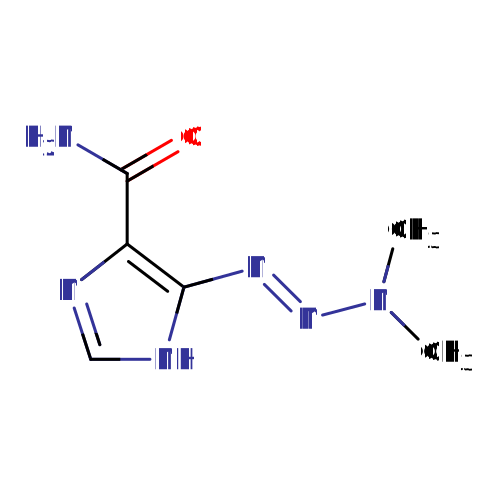
Structure for Dacarbazine (DB00851)
- Weight
- Average: 182.187
Monoisotopic: 182.091608966 - Chemical Formula
- C6H10N6O
- Synonyms
- 4-(3,3-dimethyl-1-triazeno)imidazole-5-carboxamide
- 4-(5)-(3,3-dimethyl-1-triazeno)imidazole-5(4)-carboxamide
- 4-(dimethyltriazeno)imidazole-5-carboxamide
- 5-(3,3-dimethyl-1-triazeno)imidazole-4-carboxamide
- 5-(3,3-dimethyltriazeno)imidazole-4-carboxamide
- 5-(dimethyltriazeno)imidazole-4-carboxamide
- Biocarbazine
- Dacarbazin
- Dacarbazina
- Dacarbazine
- Dacarbazinum
- DIC
- DTIC
- ICDMT
- External IDs
- HSDB 3219
- NCI C04717
- NCI-C04717
- NSC 45 388
- NSC 45388
- NSC-45388

Pharmacology
- Indication
For the treatment of metastatic malignant melanoma. In addition, dacarbazine is also indicated for Hodgkin's disease as a secondary-line therapy when used in combination with other antineoplastic agents.
 Reduce drug development failure ratesBuild, train, & validate machine-learning modelswith evidence-based and structured datasets.Build, train, & validate predictive machine-learning models with structured datasets.
- Associated Conditions
Indication Type Indication Combined Product Details Approval Level Age Group Patient Characteristics Dose Form Used in combination to treat Advanced soft tissue sarcoma ••• ••••• Used in combination to treat Hodgkin lymphoma •••••••••••• Treatment of Metastatic melanoma •••••••••••• Used in combination to treat Pheochromocytoma ••• ••••• Used in combination to treat Advanced medullary thyroid cancer ••• ••••• - Contraindications & Blackbox Warnings
 Prevent Adverse Drug Events TodayTap into our Clinical API for life-saving information on contraindications & blackbox warnings, population restrictions, harmful risks, & more.Avoid life-threatening adverse drug events with our Clinical API
- Pharmacodynamics
Dacarbazine is a synthetic analog of naturally occurring purine precursor 5-amino-1H-imidazole-4-carboxamide (AIC). After intravenous administration of dacarbazine, the volume of distribution exceeds total body water content suggesting localization in some body tissue, probably the liver. Its disappearance from the plasma is biphasic with initial half-life of 19 minutes and a terminal half-life of 5 hours. 1 In a patient with renal and hepatic dysfunctions, the half-lives were lengthened to 55 minutes and 7.2 hours. 1 The average cumulative excretion of unchanged DTIC in the urine is 40% of the injected dose in 6 hours. 1 DTIC is subject to renal tubular secretion rather than glomerular filtration. At therapeutic concentrations dacarbazine is not appreciably bound to human plasma protein.
- Mechanism of action
The mechanism of action is not known, but appears to exert cytotoxic effects via its action as an alkylating agent. Other theories include DNA synthesis inhibition by its action as a purine analog, and interaction with SH groups. Dacarbazine is not cell cycle-phase specific.
Target Actions Organism ADNA cross-linking/alkylationHumans UDNA polymerase alpha subunit B other/unknownHumans U6-phosphogluconate dehydrogenase, decarboxylating inhibitorHumans - Absorption
Erratic, slow and incomplete.
- Volume of distribution
Not Available
- Protein binding
Less than 5%
- Metabolism
Hepatic
- Route of elimination
Dacarbazine is subject to renal tubular secretion rather than glomerular filtration. In man, dacarbazine is extensively degraded. Besides unchanged dacarbazine, 5-aminoimidazole -4 carboxamide (AIC) is a major metabolite of dacarbazine excreted in the urine.
- Half-life
5 hours
- Clearance
Not Available
- Adverse Effects
 Improve decision support & research outcomesWith structured adverse effects data, including: blackbox warnings, adverse reactions, warning & precautions, & incidence rates. View sample adverse effects data in our new Data Library!Improve decision support & research outcomes with our structured adverse effects data.
- Toxicity
LD50=350mg/kg (orally in mice)
- Pathways
- Not Available
- Pharmacogenomic Effects/ADRs
- Not Available
Interactions
- Drug Interactions
- This information should not be interpreted without the help of a healthcare provider. If you believe you are experiencing an interaction, contact a healthcare provider immediately. The absence of an interaction does not necessarily mean no interactions exist.
Drug Interaction Integrate drug-drug
interactions in your softwareAbacavir Dacarbazine may decrease the excretion rate of Abacavir which could result in a higher serum level. Abametapir The serum concentration of Dacarbazine can be increased when it is combined with Abametapir. Abatacept The metabolism of Dacarbazine can be increased when combined with Abatacept. Abciximab The risk or severity of bleeding can be increased when Abciximab is combined with Dacarbazine. Abiraterone The serum concentration of Dacarbazine can be increased when it is combined with Abiraterone. - Food Interactions
- Take on an empty stomach. Fasting for four to six hours before treatment may be beneficial to reduce nausea and vomiting associated with Dacarbazine therapy.
Products
 Drug product information from 10+ global regionsOur datasets provide approved product information including:dosage, form, labeller, route of administration, and marketing period.Access drug product information from over 10 global regions.
- International/Other Brands
- Dacatic (Orion Corporation) / Déticène (Sanofi-Aventis) / Deticene (Sanofi-Aventis) / Detimedac (medac GmbH) / DTIC (Bayer AG) / DTIC-Dome (Bayer Schering)
- Brand Name Prescription Products
Name Dosage Strength Route Labeller Marketing Start Marketing End Region Image Dacarbazine for Injection BP Powder, for solution 600 mg / vial Intravenous Pfizer Canada Ulc 2000-04-04 Not applicable Canada 
Dtic Dome Inj 200mg/vial Liquid 200 mg / vial Intravenous Miles Canada Inc. Pharmaceutical Division 1976-12-31 1998-09-25 Canada Dtic-dome -pws IV 200mg/vial Powder, for solution 10 mg / mL Intravenous Bayer 1996-10-10 2005-05-31 Canada - Generic Prescription Products
Name Dosage Strength Route Labeller Marketing Start Marketing End Region Image Dacarbazine Injection, powder, lyophilized, for solution 10 mg/1mL Intravenous Bedford Pharmaceuticals 2001-08-08 2013-05-31 US 
Dacarbazine Injection, powder, for solution 200 mg/20mL Intravenous Teva Parenteral Medicines, Inc. 1998-08-27 2024-05-31 US Dacarbazine Injection, powder, for solution 10 mg/1mL Intravenous Hospira, Inc. 2003-07-01 Not applicable US Dacarbazine Injection, powder, for solution 10 mg/1mL Intravenous Fresenius Kabi USA, LLC 2001-09-07 Not applicable US Dacarbazine Injection, powder, lyophilized, for solution 200 mg/20mL Intravenous Bedford Pharmaceuticals 2008-03-03 2012-12-31 US
Categories
- ATC Codes
- L01AX04 — Dacarbazine
- Drug Categories
- Alkylating Activity
- Alkylating Drugs
- Antineoplastic Agents
- Antineoplastic Agents, Alkylating
- Antineoplastic and Immunomodulating Agents
- Cytochrome P-450 CYP1A2 Substrates
- Cytochrome P-450 CYP1A2 Substrates with a Narrow Therapeutic Index
- Cytochrome P-450 CYP2E1 Substrates
- Cytochrome P-450 CYP2E1 Substrates with a Narrow Therapeutic Index
- Cytochrome P-450 Substrates
- Drugs that are Mainly Renally Excreted
- Imidazoles
- Immunosuppressive Agents
- Myelosuppressive Agents
- Narrow Therapeutic Index Drugs
- Noxae
- Toxic Actions
- Triazenes
- Chemical TaxonomyProvided by Classyfire
- Description
- This compound belongs to the class of organic compounds known as 2-heteroaryl carboxamides. These are compounds containing a heteroaromatic ring that carries a carboxamide group.
- Kingdom
- Organic compounds
- Super Class
- Organic acids and derivatives
- Class
- Carboxylic acids and derivatives
- Sub Class
- Carboxylic acid derivatives
- Direct Parent
- 2-heteroaryl carboxamides
- Alternative Parents
- Carbonylimidazoles / Vinylogous amides / Heteroaromatic compounds / Primary carboxylic acid amides / Propargyl-type 1,3-dipolar organic compounds / Azacyclic compounds / Organooxygen compounds / Organonitrogen compounds / Organic oxides / Hydrocarbon derivatives
- Substituents
- 2-heteroaryl carboxamide / Aromatic heteromonocyclic compound / Azacycle / Azole / Heteroaromatic compound / Hydrocarbon derivative / Imidazole / Imidazole-4-carbonyl group / Organic 1,3-dipolar compound / Organic nitrogen compound
- Molecular Framework
- Aromatic heteromonocyclic compounds
- External Descriptors
- Not Available
- Affected organisms
- Humans and other mammals
Chemical Identifiers
- UNII
- 7GR28W0FJI
- CAS number
- 4342-03-4
- InChI Key
- FDKXTQMXEQVLRF-ZHACJKMWSA-N
- InChI
- InChI=1S/C6H10N6O/c1-12(2)11-10-6-4(5(7)13)8-3-9-6/h3H,1-2H3,(H2,7,13)(H,8,9)/b11-10+
- IUPAC Name
- 5-[(1E)-3,3-dimethyltriaz-1-en-1-yl]-1H-imidazole-4-carboxamide
- SMILES
- CN(C)\N=N\C1=C(N=CN1)C(N)=O
References
- General References
- Not Available
- External Links
- KEGG Drug
- D00288
- KEGG Compound
- C06936
- PubChem Compound
- 5351166
- PubChem Substance
- 46507029
- ChemSpider
- 10481959
- BindingDB
- 50238687
- 3098
- ChEBI
- 177836
- ChEMBL
- CHEMBL476
- ZINC
- ZINC000100019007
- Therapeutic Targets Database
- DAP000533
- PharmGKB
- PA449197
- RxList
- RxList Drug Page
- Drugs.com
- Drugs.com Drug Page
- Wikipedia
- Dacarbazine
Clinical Trials
- Clinical Trials
Phase Status Purpose Conditions Count 4 Recruiting Treatment Pediatric Hodgkin's Disease 1 4 Unknown Status Treatment Metastatic Melanoma 1 4 Unknown Status Treatment Non-Hodgkin's Lymphoma (NHL) 1 3 Active Not Recruiting Treatment Alveolar Soft Part Sarcoma (ASPS) / Leiomyosarcoma (LMS) / Soft Tissue Sarcoma / Synovial Sarcoma 1 3 Active Not Recruiting Treatment Ann Arbor Stage III Hodgkin Lymphoma / Ann Arbor Stage III Lymphocyte-Depleted Classic Hodgkin Lymphoma / Ann Arbor Stage III Mixed Cellularity Classic Hodgkin Lymphoma / Ann Arbor Stage III Nodular Sclerosis Classic Hodgkin Lymphoma / Ann Arbor Stage IV Hodgkin Lymphoma / Ann Arbor Stage IV Lymphocyte-Depleted Classic Hodgkin Lymphoma / Ann Arbor Stage IV Mixed Cellularity Classic Hodgkin Lymphoma / Ann Arbor Stage IV Nodular Sclerosis Classic Hodgkin Lymphoma / Classical Hodgkin's Lymphoma / Lymphocyte-Rich Classical Hodgkin Lymphoma 1
Pharmacoeconomics
- Manufacturers
- Abraxis pharmaceutical products
- App pharmaceuticals llc
- Bedford laboratories div ben venue laboratories inc
- Hospira inc
- Teva parenteral medicines inc
- Bayer healthcare pharmaceuticals inc
- Packagers
- APP Pharmaceuticals
- Bedford Labs
- Ben Venue Laboratories Inc.
- Hospira Inc.
- Sicor Pharmaceuticals
- Teva Pharmaceutical Industries Ltd.
- Dosage Forms
Form Route Strength Injection, powder, for solution Intravenous Injection, powder, lyophilized, for solution Intravenous 20000000 mg Injection, powder, lyophilized, for solution Intravenous 200 mg Injection, powder, for solution Intravenous 200 mg Injection, powder, for solution Parenteral 1000 mg Injection, powder, for solution Parenteral 200 mg Injection, powder, for solution Parenteral 500 mg Injection, powder, lyophilized, for solution Intravenous 100 mg Injection, powder, for solution Intravenous 10 mg/1mL Injection, powder, for solution Intravenous 200 mg/20mL Injection, powder, lyophilized, for solution Intravenous 10 mg/1mL Injection, powder, lyophilized, for solution Intravenous 200 mg/20mL Powder, for solution Intravenous 600 mg / vial Injection, powder, for solution Parenteral 100 mg Powder Intravenous 100 mg Powder Intravenous 200 mg Injection, powder, for solution Powder, for solution Intravenous Liquid Intravenous 200 mg / vial Powder, for solution Intravenous 10 mg / mL Solution Intravenous 200.000 mg Solution Parenteral 200.000 mg Powder Intravenous 100 mg/1vial Powder Intravenous 200 mg/1vial Powder Intravenous 500 mg/1vial Injection, powder, for solution 200 mg/1vial Injection, powder, for solution 100 mg/1vial - Prices
Unit description Cost Unit Dacarbazine 200 mg vial 22.21USD each Dacarbazine 100 mg vial 11.34USD vial DrugBank does not sell nor buy drugs. Pricing information is supplied for informational purposes only.- Patents
- Not Available
Properties
- State
- Solid
- Experimental Properties
Property Value Source melting point (°C) 205 °C PhysProp water solubility 4220 mg/L Not Available logP -0.24 HANSCH,C ET AL. (1995) - Predicted Properties
Property Value Source Water Solubility 1.36 mg/mL ALOGPS logP -0.32 ALOGPS logP -0.43 Chemaxon logS -2.1 ALOGPS pKa (Strongest Acidic) 6.64 Chemaxon pKa (Strongest Basic) 1.72 Chemaxon Physiological Charge -1 Chemaxon Hydrogen Acceptor Count 5 Chemaxon Hydrogen Donor Count 2 Chemaxon Polar Surface Area 99.73 Å2 Chemaxon Rotatable Bond Count 3 Chemaxon Refractivity 49.71 m3·mol-1 Chemaxon Polarizability 17.78 Å3 Chemaxon Number of Rings 1 Chemaxon Bioavailability 1 Chemaxon Rule of Five Yes Chemaxon Ghose Filter No Chemaxon Veber's Rule No Chemaxon MDDR-like Rule No Chemaxon - Predicted ADMET Features
Property Value Probability Human Intestinal Absorption + 0.9923 Blood Brain Barrier + 0.9382 Caco-2 permeable + 0.5278 P-glycoprotein substrate Non-substrate 0.6608 P-glycoprotein inhibitor I Non-inhibitor 0.8478 P-glycoprotein inhibitor II Non-inhibitor 0.9363 Renal organic cation transporter Non-inhibitor 0.9125 CYP450 2C9 substrate Non-substrate 0.7898 CYP450 2D6 substrate Non-substrate 0.9116 CYP450 3A4 substrate Non-substrate 0.579 CYP450 1A2 substrate Non-inhibitor 0.9045 CYP450 2C9 inhibitor Non-inhibitor 0.9496 CYP450 2D6 inhibitor Non-inhibitor 0.9413 CYP450 2C19 inhibitor Non-inhibitor 0.9025 CYP450 3A4 inhibitor Non-inhibitor 0.99 CYP450 inhibitory promiscuity Low CYP Inhibitory Promiscuity 0.8208 Ames test AMES toxic 0.9107 Carcinogenicity Non-carcinogens 0.7624 Biodegradation Not ready biodegradable 0.9879 Rat acute toxicity 1.9602 LD50, mol/kg Not applicable hERG inhibition (predictor I) Weak inhibitor 0.9812 hERG inhibition (predictor II) Non-inhibitor 0.7856
Spectra
- Mass Spec (NIST)
- Not Available
- Spectra
Spectrum Spectrum Type Splash Key Predicted GC-MS Spectrum - GC-MS Predicted GC-MS splash10-0006-9700000000-9b99bc85a34147e09f49 Predicted MS/MS Spectrum - 10V, Positive (Annotated) Predicted LC-MS/MS splash10-014i-0900000000-3566f6c152f409e9bece Predicted MS/MS Spectrum - 10V, Negative (Annotated) Predicted LC-MS/MS splash10-001c-5900000000-a4876bd3a6477b8313de Predicted MS/MS Spectrum - 20V, Positive (Annotated) Predicted LC-MS/MS splash10-007t-4900000000-fe264af651c080de5dfc Predicted MS/MS Spectrum - 20V, Negative (Annotated) Predicted LC-MS/MS splash10-0006-9100000000-5306442cf9cf457d4501 Predicted MS/MS Spectrum - 40V, Negative (Annotated) Predicted LC-MS/MS splash10-0006-9000000000-7fcabed063d340a402c4 Predicted MS/MS Spectrum - 40V, Positive (Annotated) Predicted LC-MS/MS splash10-05fs-9400000000-fdb6f79f513097d6f4f6 Predicted 1H NMR Spectrum 1D NMR Not Applicable Predicted 13C NMR Spectrum 1D NMR Not Applicable - Chromatographic Properties
Collision Cross Sections (CCS)
Adduct CCS Value (Å2) Source type Source [M-H]- 137.70042 predictedDeepCCS 1.0 (2019) [M+H]+ 140.0584 predictedDeepCCS 1.0 (2019) [M+Na]+ 147.9605 predictedDeepCCS 1.0 (2019)
Targets

References
- Lonn U, Lohn S: Prevention of dacarbazine damage of human neoplastic cell DNA by aphidicolin. Cancer Res. 1987 Jan 1;47(1):26-30. [Article]
- Kind
- Protein
- Organism
- Humans
- Pharmacological action
- Unknown
- Actions
- Other/unknown
- General Function
- Protein heterodimerization activity
- Specific Function
- May play an essential role at the early stage of chromosomal DNA replication by coupling the polymerase alpha/primase complex to the cellular replication machinery.
- Gene Name
- POLA2
- Uniprot ID
- Q14181
- Uniprot Name
- DNA polymerase alpha subunit B
- Molecular Weight
- 65947.165 Da
References
- Overington JP, Al-Lazikani B, Hopkins AL: How many drug targets are there? Nat Rev Drug Discov. 2006 Dec;5(12):993-6. [Article]
- Imming P, Sinning C, Meyer A: Drugs, their targets and the nature and number of drug targets. Nat Rev Drug Discov. 2006 Oct;5(10):821-34. [Article]
- Lonn U, Lohn S: Prevention of dacarbazine damage of human neoplastic cell DNA by aphidicolin. Cancer Res. 1987 Jan 1;47(1):26-30. [Article]
- Kind
- Protein
- Organism
- Humans
- Pharmacological action
- Unknown
- Actions
- Inhibitor
- General Function
- Phosphogluconate dehydrogenase (decarboxylating) activity
- Specific Function
- Catalyzes the oxidative decarboxylation of 6-phosphogluconate to ribulose 5-phosphate and CO(2), with concomitant reduction of NADP to NADPH.
- Gene Name
- PGD
- Uniprot ID
- P52209
- Uniprot Name
- 6-phosphogluconate dehydrogenase, decarboxylating
- Molecular Weight
- 53139.56 Da
References
- Akkemik E, Budak H, Ciftci M: Effects of some drugs on human erythrocyte 6-phosphogluconate dehydrogenase: an in vitro study. J Enzyme Inhib Med Chem. 2010 Aug;25(4):476-9. doi: 10.3109/14756360903257900. [Article]
- Berman HM, Westbrook J, Feng Z, Gilliland G, Bhat TN, Weissig H, Shindyalov IN, Bourne PE: The Protein Data Bank. Nucleic Acids Res. 2000 Jan 1;28(1):235-42. [Article]
Enzymes
- Kind
- Protein
- Organism
- Humans
- Pharmacological action
- Unknown
- Actions
- Substrate
- General Function
- Vitamin d 24-hydroxylase activity
- Specific Function
- Cytochromes P450 are a group of heme-thiolate monooxygenases. In liver microsomes, this enzyme is involved in an NADPH-dependent electron transport pathway. It oxidizes a variety of structurally un...
- Gene Name
- CYP1A1
- Uniprot ID
- P04798
- Uniprot Name
- Cytochrome P450 1A1
- Molecular Weight
- 58164.815 Da
References
- Reid JM, Kuffel MJ, Miller JK, Rios R, Ames MM: Metabolic activation of dacarbazine by human cytochromes P450: the role of CYP1A1, CYP1A2, and CYP2E1. Clin Cancer Res. 1999 Aug;5(8):2192-7. [Article]
- Lewis BC, Mackenzie PI, Miners JO: Application of homology modeling to generate CYP1A1 mutants with enhanced activation of the cancer chemotherapeutic prodrug dacarbazine. Mol Pharmacol. 2011 Nov;80(5):879-88. doi: 10.1124/mol.111.072124. Epub 2011 Aug 4. [Article]
- BC Cancer website [Link]
- Kind
- Protein
- Organism
- Humans
- Pharmacological action
- Unknown
- Actions
- Substrate
- General Function
- Oxidoreductase activity, acting on paired donors, with incorporation or reduction of molecular oxygen, reduced flavin or flavoprotein as one donor, and incorporation of one atom of oxygen
- Specific Function
- Cytochromes P450 are a group of heme-thiolate monooxygenases. In liver microsomes, this enzyme is involved in an NADPH-dependent electron transport pathway. It oxidizes a variety of structurally un...
- Gene Name
- CYP1A2
- Uniprot ID
- P05177
- Uniprot Name
- Cytochrome P450 1A2
- Molecular Weight
- 58293.76 Da
References
- Reid JM, Kuffel MJ, Miller JK, Rios R, Ames MM: Metabolic activation of dacarbazine by human cytochromes P450: the role of CYP1A1, CYP1A2, and CYP2E1. Clin Cancer Res. 1999 Aug;5(8):2192-7. [Article]
- Kantrowitz-Gordon I, Hays K, Kayode O, Kumar AR, Kaplan HG, Reid JM, Safgren SL, Ames MM, Easterling TR, Hebert MF: Pharmacokinetics of dacarbazine (DTIC) in pregnancy. Cancer Chemother Pharmacol. 2018 Mar;81(3):455-460. doi: 10.1007/s00280-017-3511-6. Epub 2018 Jan 5. [Article]
- Dacarbazine monograph [File]
- Kind
- Protein
- Organism
- Humans
- Pharmacological action
- Unknown
- Actions
- Substrate
- General Function
- Steroid hydroxylase activity
- Specific Function
- Metabolizes several precarcinogens, drugs, and solvents to reactive metabolites. Inactivates a number of drugs and xenobiotics and also bioactivates many xenobiotic substrates to their hepatotoxic ...
- Gene Name
- CYP2E1
- Uniprot ID
- P05181
- Uniprot Name
- Cytochrome P450 2E1
- Molecular Weight
- 56848.42 Da
References
- Reid JM, Kuffel MJ, Miller JK, Rios R, Ames MM: Metabolic activation of dacarbazine by human cytochromes P450: the role of CYP1A1, CYP1A2, and CYP2E1. Clin Cancer Res. 1999 Aug;5(8):2192-7. [Article]
- Long L, Dolan ME: Role of cytochrome P450 isoenzymes in metabolism of O(6)-benzylguanine: implications for dacarbazine activation. Clin Cancer Res. 2001 Dec;7(12):4239-44. [Article]

Drug created at June 13, 2005 13:24 / Updated at April 18, 2024 09:15