Identification
- Summary
Fexofenadine is a selective H1-antagonist for the symptomatic treatment of seasonal allergic rhinitis and chronic idiopathic urticaria.
- Brand Names
- Allegra, Allegra-D, Mucinex Non-drowsy Allergy, Wal-fex
- Generic Name
- Fexofenadine
- DrugBank Accession Number
- DB00950
- Background
Fexofenadine is an over-the-counter second-generation antihistamine used in the treatment of various allergic symptoms.10 It is selective for the H1 receptor, carries little-to-no activity at off-targets, and does not cross the blood-brain barrier9 - this is in contrast to previous first-generation antihistamines, such as diphenhydramine, which readily bind to off-targets that contribute to side effects such as sedation.1 Fexofenadine is the major active metabolite of terfenadine7 and is administered as a racemic mixture in which both enantiomers display approximately equivalent antihistamine activity.9
- Type
- Small Molecule
- Groups
- Approved, Investigational
- Structure

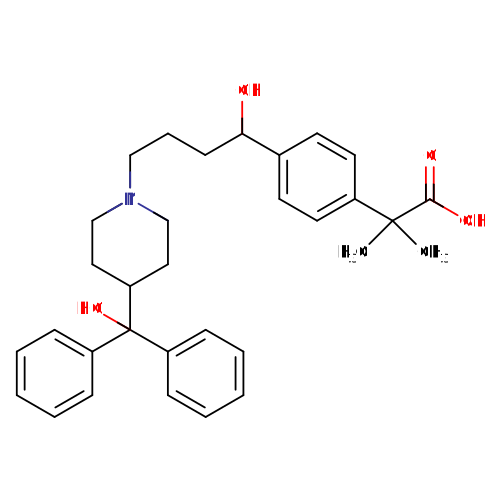
Structure for Fexofenadine (DB00950)
- Weight
- Average: 501.6564
Monoisotopic: 501.287908741 - Chemical Formula
- C32H39NO4
- Synonyms
- 4-(1-Hydroxy-4-(4-(hydroxydiphenylmethyl)-1-piperidinyl)butyl)-alpha,alpha-dimethylbenzeneacetic acid
- Carboxyterfenadine
- Fexofenadina
- Fexofenadine
- Terfenadine acid metabolite
- Terfenadine carboxylate
- Terfenadine-COOH
- External IDs
- MDL 16455

Pharmacology
- Indication
In the United States, fexofenadine is indicated for the symptomatic treatment of allergic rhinitis in patients ≥2 years old and chronic idiopathic urticaria in patients ≥6 months old.10 In Canada, fexofenadine carries the same indications but is approved only for patients ≥12 years old.9 Fexofenadine is also available in combination with pseudoephedrine for the symptomatic treatment of season allergic rhinitis in patients ≥12 years old.11
 Reduce drug development failure ratesBuild, train, & validate machine-learning modelswith evidence-based and structured datasets.Build, train, & validate predictive machine-learning models with structured datasets.
- Associated Conditions
Indication Type Indication Combined Product Details Approval Level Age Group Patient Characteristics Dose Form Used in combination for symptomatic treatment of Allergic rhinitis (ar) Combination Product in combination with: Phenylephrine (DB00388) ••• ••• •••••••••• Symptomatic treatment of Allergic rhinitis (ar) ••• ••• Symptomatic treatment of Chronic idiopathic urticaria ••• ••• Symptomatic treatment of Chronic idiopathic urticaria ••• ••• Used in combination for symptomatic treatment of Seasonal allergic rhinitis Combination Product in combination with: Pseudoephedrine (DB00852) ••• ••• ••••••• ••••••• •••••••• ••••••• - Associated Therapies
- Contraindications & Blackbox Warnings
 Prevent Adverse Drug Events TodayTap into our Clinical API for life-saving information on contraindications & blackbox warnings, population restrictions, harmful risks, & more.Avoid life-threatening adverse drug events with our Clinical API
- Pharmacodynamics
Fexofenadine relieves allergy symptoms by antagonizing the actions of histamine, an endogenous compound predominantly responsible for allergic symptomatology.10 The relatively long duration of action of fexofenadine (approximately 24 hours)7 allows for once or twice daily dosing, and its rapid absorption allows for an onset of action within 1-3 hours. Fexofenadine should not be taken with fruit juice, as this may impair its absorption.10
- Mechanism of action
The H1 histamine receptor is responsible for mediating hypersensitivity and allergic reactions. Exposure to an allergen results in degranulation of mast cells and basophils, which then release histamine and other inflammatory mediators. Histamine binds to, and activates, H1 receptors, which results in the further release of pro-inflammatory cytokines, such as interleukins, from basophils and mast cells. These downstream effects of histamine binding are responsible for a wide variety of allergic symptoms, such as pruritus, rhinorrhea, and watery eyes.7
Fexofenadine is considered an “inverse agonist” of the H1 receptor because it binds to and stabilizes the inactive form of the receptor, preventing its activation and subsequent downstream effects.7 It has a potent and selective affinity for H1 receptors, and there is no evidence that it carries antidopaminergic, antiserotonergic, anticholinergic, sedative, or adrenergic blocking activity.9 Fexofenadine does not cross the blood-brain barrier and thus is unlikely to cause significant CNS effects.9
Target Actions Organism AHistamine H1 receptor antagonistHumans - Absorption
Fexofenadine is rapidly absorbed following oral administration and its absolute bioavailability is approximately 33%.9 The Tmax following oral administration is approximately 1-3 hours.9,7 The steady-state AUCss(0-12h) and Cmax following twice daily dosing of 60mg are 1367 ng/mL.h and 299 ng/mL, respectively.9
Fexofenadine AUC is decreased by >20% when coadministered with fruit juices (e.g. apple, orange, grapefruit) due to their inhibition of OATP transporters - for this reason, prescribing information recommends administering fexofenadine only with water.8 Similarly, coadministration of fexofenadine with a high-fat meal appears to decrease AUC and Cmax by >20%.10
- Volume of distribution
The volume of distribution is approximately 5.4-5.8 L/kg.7
- Protein binding
Fexofenadine is 60-70% bound to plasma proteins,10 primarily to albumin and α1-acid glycoprotein. The extent of protein binding is decreased to 56-68% and 56-75% in patients with renal and hepatic impairment, respectively.9
- Metabolism
Fexofenadine is very minimally metabolized, with only 5% of an ingested dose undergoing hepatic metabolism.10,7 The only identified metabolites are a methyl ester of fexofenadine (3.6% of the total dose) and MDL 4829 (1.5% of the total dose).9 The enzymes responsible for this metabolism have not been elucidated.
Hover over products below to view reaction partners
- Route of elimination
Approximately 80% of an ingested dose is eliminated in the feces, likely largely unchanged due to fexofenadine's limited metabolism, and 11% is eliminated in the urine.7 The principal pathways of fexofenadine elimination are biliary and renal.9
- Half-life
The terminal elimination half-life is approximately 11-15 hours.9,7
- Clearance
The oral clearance of fexofenadine is approximately 50.6 L/h and the renal clearance is approximately 4.32 L/h.9
- Adverse Effects
 Improve decision support & research outcomesWith structured adverse effects data, including: blackbox warnings, adverse reactions, warning & precautions, & incidence rates. View sample adverse effects data in our new Data Library!Improve decision support & research outcomes with our structured adverse effects data.
- Toxicity
No deaths were observed following the oral administration of up to 5000 mg/kg in both mice and rats (equivalent to approximately 100-200x the recommended human dose). Single doses of up to 800 mg and chronic exposure of up to 690 mg twice daily for 1 month in humans did not result in clinically significant adverse events. Symptoms of overdosage are consistent with fexofenadine's adverse effect profile and are likely to include dizziness, drowsiness, and dry mouth.10
If overdosage occurs, employ symptomatic and supportive treatment. Hemodialysis does not effectively remove fexofenadine from the blood and is therefore of no benefit.10
- Pathways
Pathway Category Fexofenadine H1-Antihistamine Action Drug action - Pharmacogenomic Effects/ADRs
- Not Available
Interactions
- Drug Interactions
- This information should not be interpreted without the help of a healthcare provider. If you believe you are experiencing an interaction, contact a healthcare provider immediately. The absence of an interaction does not necessarily mean no interactions exist.
Drug Interaction Integrate drug-drug
interactions in your softwareAbemaciclib The serum concentration of Abemaciclib can be increased when it is combined with Fexofenadine. Abrocitinib The serum concentration of Fexofenadine can be increased when it is combined with Abrocitinib. Acetylcysteine The excretion of Fexofenadine can be decreased when combined with Acetylcysteine. Acetylsalicylic acid The excretion of Fexofenadine can be decreased when combined with Acetylsalicylic acid. Acyclovir The excretion of Fexofenadine can be decreased when combined with Acyclovir. - Food Interactions
- Avoid fruit juice. Fruit juices like grapefruit, orange, and apple may reduce bioavailability and overall exposure to the medication.
- Take with or without food. Co-administration with food does not significantly affect absorption.
Products
 Drug product information from 10+ global regionsOur datasets provide approved product information including:dosage, form, labeller, route of administration, and marketing period.Access drug product information from over 10 global regions.
- Product Ingredients
Ingredient UNII CAS InChI Key Fexofenadine hydrochloride 2S068B75ZU 153439-40-8 RRJFVPUCXDGFJB-UHFFFAOYSA-N - Product Images
- International/Other Brands
- Fastofen / Fexidine / Telfast / Vifas
- Brand Name Prescription Products
Name Dosage Strength Route Labeller Marketing Start Marketing End Region Image Allegra Tablet, film coated 60 mg/1 Oral Physicians Total Care, Inc. 2002-06-04 2011-06-30 US 
Allegra Tablet, film coated 180 mg/1 Oral sanofi-aventis U.S. LLC 2000-02-25 2013-02-28 US Allegra Tablet, orally disintegrating 30 mg/1 Oral sanofi-aventis U.S. LLC 2007-07-26 2013-06-30 US Allegra Tablet, film coated 180 mg/1 Oral Sanofi-Synthelabo Limited 2010-03-13 Not applicable US Allegra Tablet, film coated 60 mg/1 Oral sanofi-aventis U.S. LLC 2000-02-25 2012-08-31 US - Generic Prescription Products
Name Dosage Strength Route Labeller Marketing Start Marketing End Region Image Fexofenadine HCl Tablet, film coated 60 mg/1 Oral bryant ranch prepack 2021-08-26 Not applicable US Fexofenadine Hydrochloride Tablet, film coated 60 mg/1 Oral TEVA Pharmaceutical Industries Ltd. 2010-09-17 2013-12-26 US Fexofenadine Hydrochloride Tablet, film coated 30 mg/1 Oral Prasco, Laboratories 2005-09-01 2013-01-31 US Fexofenadine Hydrochloride Tablet, film coated 60 mg/1 Oral Dr Reddy's Laboratories 2006-04-12 2011-01-25 US 
Fexofenadine Hydrochloride Tablet, film coated 30 mg/1 Oral Physicians Total Care, Inc. 2005-11-09 Not applicable US - Over the Counter Products
Name Dosage Strength Route Labeller Marketing Start Marketing End Region Image 12HR Allergy Relief Tablet 60 mg/1 Oral Cardinal Health 2021-09-24 Not applicable US 24 Hour Allergy Tablet 180 mg/1 Oral LIVE BETTER (The Great Atlantic & Pacific Tea Company) 2013-03-20 Not applicable US 24HR Allergy Relief Tablet 180 mg/1 Oral LEADER/ Cardinal Health 110, Inc. 2018-04-27 Not applicable US 7 Select Allergy Relief Tablet, film coated 180 mg/1 Oral 7-Eleven 2014-04-17 2020-07-31 US Allegra 12 Hour Tablet 60 mg Oral Sanofi Consumer Health Inc Sanofi Sante Grand Public Inc 1997-07-10 Not applicable Canada 
- Mixture Products
Name Ingredients Dosage Route Labeller Marketing Start Marketing End Region Image 12HR Allergy and Congestion Relief Fexofenadine hydrochloride (60 mg/1) + Pseudoephedrine hydrochloride (120 mg/1) Tablet, extended release Oral Cardinal Health 2019-10-08 Not applicable US 12hr Allergy and Congestion Relief Fexofenadine hydrochloride (60 mg/1) + Pseudoephedrine hydrochloride (120 mg/1) Tablet, extended release Oral LEADER/ Cardinal Health 110, Inc. 2022-03-31 Not applicable US ALERFAST ® D TABLETA RECUBIERTA Fexofenadine hydrochloride (60 mg) + Phenylephrine hydrochloride (25 mg) Tablet, coated Oral TECNOQUIMICAS S.A. (PLANTA JAMUNDI) 2021-10-27 Not applicable Colombia 
ALERFAST D SUSPENSION ORAL. Fexofenadine hydrochloride (0.6 g) + Phenylephrine hydrochloride (0.3 g) Suspension Oral TECNOFAR TQ S.A.S 2016-06-29 Not applicable Colombia ALERMED® D Fexofenadine (60 mg) + Phenylephrine (25 mg) Tablet, coated Oral C.I. FARMACAPSULAS S.A.S (SEDE 4) 2021-07-30 Not applicable Colombia


Categories
- ATC Codes
- R06AX26 — Fexofenadine
- Drug Categories
- Anti-Allergic Agents
- Antihistamines for Systemic Use
- Benzene Derivatives
- Benzhydryl Compounds
- Histamine Agents
- Histamine Antagonists
- Histamine H1 Antagonists
- Histamine H1 Antagonists, Non-Sedating
- Neurotransmitter Agents
- OAT3/SLC22A8 Substrates
- OATP1B1/SLCO1B1 Substrates
- OATP1B3 substrates
- OATP2B1/SLCO2B1 substrates
- P-glycoprotein substrates
- Piperidines
- Chemical TaxonomyProvided by Classyfire
- Description
- This compound belongs to the class of organic compounds known as diphenylmethanes. These are compounds containing a diphenylmethane moiety, which consists of a methane wherein two hydrogen atoms are replaced by two phenyl groups.
- Kingdom
- Organic compounds
- Super Class
- Benzenoids
- Class
- Benzene and substituted derivatives
- Sub Class
- Diphenylmethanes
- Direct Parent
- Diphenylmethanes
- Alternative Parents
- Phenylbutylamines / Phenylpropanes / Aralkylamines / Piperidines / Tertiary alcohols / Trialkylamines / Secondary alcohols / Amino acids / Monocarboxylic acids and derivatives / Azacyclic compounds show 6 more
- Substituents
- Alcohol / Amine / Amino acid / Amino acid or derivatives / Aralkylamine / Aromatic alcohol / Aromatic heteromonocyclic compound / Azacycle / Carbonyl group / Carboxylic acid show 18 more
- Molecular Framework
- Aromatic heteromonocyclic compounds
- External Descriptors
- piperidines, tertiary amine (CHEBI:5050)
- Affected organisms
- Humans and other mammals
Chemical Identifiers
- UNII
- E6582LOH6V
- CAS number
- 83799-24-0
- InChI Key
- RWTNPBWLLIMQHL-UHFFFAOYSA-N
- InChI
- InChI=1S/C32H39NO4/c1-31(2,30(35)36)25-17-15-24(16-18-25)29(34)14-9-21-33-22-19-28(20-23-33)32(37,26-10-5-3-6-11-26)27-12-7-4-8-13-27/h3-8,10-13,15-18,28-29,34,37H,9,14,19-23H2,1-2H3,(H,35,36)
- IUPAC Name
- 2-(4-{1-hydroxy-4-[4-(hydroxydiphenylmethyl)piperidin-1-yl]butyl}phenyl)-2-methylpropanoic acid
- SMILES
- CC(C)(C(O)=O)C1=CC=C(C=C1)C(O)CCCN1CCC(CC1)C(O)(C1=CC=CC=C1)C1=CC=CC=C1
References
- Synthesis Reference
Federico Milla, "Processes for the production of fexofenadine." U.S. Patent US20030166682, issued September 04, 2003.
US20030166682- General References
- Smith SM, Gums JG: Fexofenadine: biochemical, pharmacokinetic and pharmacodynamic properties and its unique role in allergic disorders. Expert Opin Drug Metab Toxicol. 2009 Jul;5(7):813-22. doi: 10.1517/17425250903044967. [Article]
- Bachert C: A review of the efficacy of desloratadine, fexofenadine, and levocetirizine in the treatment of nasal congestion in patients with allergic rhinitis. Clin Ther. 2009 May;31(5):921-44. doi: 10.1016/j.clinthera.2009.05.017. [Article]
- Markham A, Wagstaff AJ: Fexofenadine. Drugs. 1998 Feb;55(2):269-74; discussion 275-6. [Article]
- Golightly LK, Greos LS: Second-generation antihistamines: actions and efficacy in the management of allergic disorders. Drugs. 2005;65(3):341-84. [Article]
- Molimard M, Diquet B, Benedetti MS: Comparison of pharmacokinetics and metabolism of desloratadine, fexofenadine, levocetirizine and mizolastine in humans. Fundam Clin Pharmacol. 2004 Aug;18(4):399-411. [Article]
- Akamine Y, Miura M: An update on the clinical pharmacokinetics of fexofenadine enantiomers. Expert Opin Drug Metab Toxicol. 2018 Apr;14(4):429-434. doi: 10.1080/17425255.2018.1459565. Epub 2018 Apr 11. [Article]
- Devillier P, Roche N, Faisy C: Clinical pharmacokinetics and pharmacodynamics of desloratadine, fexofenadine and levocetirizine : a comparative review. Clin Pharmacokinet. 2008;47(4):217-30. [Article]
- Yu J, Zhou Z, Tay-Sontheimer J, Levy RH, Ragueneau-Majlessi I: Intestinal Drug Interactions Mediated by OATPs: A Systematic Review of Preclinical and Clinical Findings. J Pharm Sci. 2017 Sep;106(9):2312-2325. doi: 10.1016/j.xphs.2017.04.004. Epub 2017 Apr 13. [Article]
- DPD Approved Drugs: Allegra® oral tablets [Link]
- Allegra (Fexofenadine Hydrochloride) FDA Label [Link]
- FDA Approved Drug Products: Allegra-D® extended-release tablets [Link]
- External Links
- Human Metabolome Database
- HMDB0005030
- KEGG Drug
- D07958
- KEGG Compound
- C06999
- PubChem Compound
- 3348
- PubChem Substance
- 46504676
- ChemSpider
- 3231
- BindingDB
- 22874
- 87636
- ChEBI
- 5050
- ChEMBL
- CHEMBL914
- Therapeutic Targets Database
- DAP000330
- PharmGKB
- PA449621
- RxList
- RxList Drug Page
- Drugs.com
- Drugs.com Drug Page
- Wikipedia
- Fexofenadine
- FDA label
- Download (43.7 KB)
Clinical Trials
- Clinical Trials
Phase Status Purpose Conditions Count 4 Completed Other Seasonal Allergic Rhinitis 3 4 Completed Treatment Allergic Reaction 1 4 Completed Treatment Allergic Rhinitis (AR) 5 4 Completed Treatment Allergic Rhinitis (AR) / Chronic Urticaria / Pruritus 1 4 Completed Treatment Cat Induced Allergic Rhinitis 1
Pharmacoeconomics
- Manufacturers
- Sanofi aventis us llc
- Barr laboratories inc
- Dr reddys laboratories ltd
- Mylan pharmaceuticals inc
- Teva pharmaceuticals usa inc
- Sanofi-Aventis
- Packagers
- Amerisource Health Services Corp.
- Apotheca Inc.
- A-S Medication Solutions LLC
- Cardinal Health
- Caremark LLC
- Cima Laboratories Inc.
- DHHS Program Support Center Supply Service Center
- Direct Dispensing Inc.
- Direct Pharmaceuticals Inc.
- Dispensing Solutions
- Diversified Healthcare Services Inc.
- Doctor Reddys Laboratories Ltd.
- H.J. Harkins Co. Inc.
- Heartland Repack Services LLC
- Kaiser Foundation Hospital
- Lake Erie Medical and Surgical Supply
- Liberty Pharmaceuticals
- Major Pharmaceuticals
- Mckesson Corp.
- Murfreesboro Pharmaceutical Nursing Supply
- Mylan
- Novopharm Ltd.
- Nucare Pharmaceuticals Inc.
- Palmetto Pharmaceuticals Inc.
- PCA LLC
- PD-Rx Pharmaceuticals Inc.
- Physicians Total Care Inc.
- Prasco Labs
- Prepackage Specialists
- Prepak Systems Inc.
- Rebel Distributors Corp.
- Redpharm Drug
- Resource Optimization and Innovation LLC
- Sanofi-Aventis Inc.
- Southwood Pharmaceuticals
- St Mary's Medical Park Pharmacy
- Stat Rx Usa
- Teva Pharmaceutical Industries Ltd.
- UDL Laboratories
- Va Cmop Dallas
- Vangard Labs Inc.
- Dosage Forms
Form Route Strength Tablet Oral 120.000 mg Tablet Oral 180.000 mg Capsule, coated Oral 120 mg Tablet, coated Oral Suspension Oral Capsule Oral 60 mg/1 Suspension Oral 6 mg/1mL Suspension Oral 600.000 mg Tablet Oral 60 mg Tablet Oral 120 mg Capsule, coated Oral 60 mg Tablet, coated Oral 180 mg/1 Tablet, extended release Oral Tablet, film coated Oral Capsule, coated Oral 180 mg/1 Tablet, coated Oral 60 mg/1 Capsule Oral 180 mg/1 Tablet, film coated Oral 60 mg Tablet, orally disintegrating Oral 30 mg/1 Tablet Oral 30 mg/1 Suspension Oral 30 mg/5mL Tablet Oral 180.00 mg Tablet, film coated Oral 120 mg Tablet, film coated Oral 180 mg Tablet, film coated Oral 180.00 mg Syrup 30 mg/5ml Tablet, coated Oral 120 mg Suspension Oral 60000000 mg Capsule Oral 40 MG Tablet, coated Oral 40 MG Suspension Oral 0.6 g Suspension Oral 600 mg Tablet Not applicable 180 mg/1 Tablet Oral 180 mg/1 Tablet Oral 60 mg/1 Tablet, film coated Oral 180 mg/1 Tablet, film coated Oral 30 mg/1 Tablet, film coated Oral 60 mg/1 Tablet, film coated, extended release Oral Tablet, multilayer, extended release Oral Tablet, coated Oral 18000000 mg Tablet, coated Oral 12000000 mg Tablet Oral 30.000 mg Tablet, film coated Oral Tablet, film coated Oral 20 MG Tablet, film coated Oral 40 MG Suspension Oral 6 mg/5ml Tablet Oral 180 MG Tablet, film coated Oral 30 MG Tablet, coated Oral 180 mg Tablet, coated Oral 60 mg - Prices
Unit description Cost Unit Allegra ODT 60 30 mg Dispersible Tablet Box 126.0USD box Allegra-D 24 Hour 180-240 mg 24 Hour tablet 5.01USD tablet Allegra-d 24 hour tablet 4.98USD tablet Allegra 180 mg tablet 2.89USD tablet Allegra-D 12 Hour 60-120 mg 12 Hour tablet 2.72USD tablet Allegra-d 12 hour tablet 2.49USD tablet Fexofenadine hcl 180 mg tablet 2.47USD tablet Allegra odt 30 mg tablet 1.98USD tablet Allegra 60 mg tablet 1.64USD tablet Fexofenadine hcl 60 mg tablet 1.43USD tablet Allegra 30 mg tablet 0.81USD tablet Fexofenadine hcl 30 mg tablet 0.71USD tablet Allegra 30 mg/5ml Suspension 0.25USD ml DrugBank does not sell nor buy drugs. Pricing information is supplied for informational purposes only.- Patents
Patent Number Pediatric Extension Approved Expires (estimated) Region US5178878 No 1993-01-12 2010-01-12 US CA2301267 No 2004-07-13 2018-07-21 Canada CA2134211 No 1999-06-29 2013-04-06 Canada US6037353 Yes 2000-03-14 2017-09-14 US US6039974 No 2000-03-21 2018-07-31 US US6723348 No 2004-04-20 2021-11-26 US US6613357 No 2003-09-02 2020-12-25 US USRE39069 No 2006-04-18 2018-05-29 US US8933097 No 2015-01-13 2032-08-16 US US6113942 Yes 2000-09-05 2015-08-28 US US5855912 Yes 1999-01-05 2015-08-28 US US5932247 Yes 1999-08-03 2015-08-28 US US5738872 Yes 1998-04-14 2015-08-28 US
Properties
- State
- Solid
- Experimental Properties
Property Value Source melting point (°C) 142.5 °C PhysProp water solubility Slightly soluble Canadian Label - Predicted Properties
Property Value Source Water Solubility 0.00266 mg/mL ALOGPS logP 5.02 ALOGPS logP 2.94 Chemaxon logS -5.3 ALOGPS pKa (Strongest Acidic) 4.04 Chemaxon pKa (Strongest Basic) 9.01 Chemaxon Physiological Charge 0 Chemaxon Hydrogen Acceptor Count 5 Chemaxon Hydrogen Donor Count 3 Chemaxon Polar Surface Area 81 Å2 Chemaxon Rotatable Bond Count 10 Chemaxon Refractivity 147.98 m3·mol-1 Chemaxon Polarizability 57.42 Å3 Chemaxon Number of Rings 4 Chemaxon Bioavailability 1 Chemaxon Rule of Five No Chemaxon Ghose Filter No Chemaxon Veber's Rule No Chemaxon MDDR-like Rule Yes Chemaxon - Predicted ADMET Features
Property Value Probability Human Intestinal Absorption + 0.7881 Blood Brain Barrier - 0.8574 Caco-2 permeable + 0.5 P-glycoprotein substrate Substrate 0.8641 P-glycoprotein inhibitor I Non-inhibitor 0.6791 P-glycoprotein inhibitor II Non-inhibitor 0.8779 Renal organic cation transporter Non-inhibitor 0.5166 CYP450 2C9 substrate Non-substrate 0.836 CYP450 2D6 substrate Non-substrate 0.9116 CYP450 3A4 substrate Substrate 0.6458 CYP450 1A2 substrate Non-inhibitor 0.9046 CYP450 2C9 inhibitor Non-inhibitor 0.9162 CYP450 2D6 inhibitor Non-inhibitor 0.9231 CYP450 2C19 inhibitor Non-inhibitor 0.9026 CYP450 3A4 inhibitor Non-inhibitor 0.8421 CYP450 inhibitory promiscuity Low CYP Inhibitory Promiscuity 0.9756 Ames test Non AMES toxic 0.9122 Carcinogenicity Non-carcinogens 0.9163 Biodegradation Not ready biodegradable 0.8428 Rat acute toxicity 2.3481 LD50, mol/kg Not applicable hERG inhibition (predictor I) Weak inhibitor 0.8469 hERG inhibition (predictor II) Inhibitor 0.6258
Spectra
- Mass Spec (NIST)
- Not Available
- Spectra
- Chromatographic Properties
Collision Cross Sections (CCS)
Adduct CCS Value (Å2) Source type Source [M-H]- 251.6655081 predictedDarkChem Lite v0.1.0 [M-H]- 208.83687 predictedDeepCCS 1.0 (2019) [M-H]- 251.6655081 predictedDarkChem Lite v0.1.0 [M-H]- 208.83687 predictedDeepCCS 1.0 (2019) [M+H]+ 251.1017081 predictedDarkChem Lite v0.1.0 [M+H]+ 211.23244 predictedDeepCCS 1.0 (2019) [M+H]+ 251.1017081 predictedDarkChem Lite v0.1.0 [M+H]+ 211.23244 predictedDeepCCS 1.0 (2019) [M+Na]+ 252.2669081 predictedDarkChem Lite v0.1.0 [M+Na]+ 217.14494 predictedDeepCCS 1.0 (2019) [M+Na]+ 252.2669081 predictedDarkChem Lite v0.1.0 [M+Na]+ 217.14494 predictedDeepCCS 1.0 (2019)
Targets

- Kind
- Protein
- Organism
- Humans
- Pharmacological action
- Yes
- Actions
- Antagonist
- General Function
- Histamine receptor activity
- Specific Function
- In peripheral tissues, the H1 subclass of histamine receptors mediates the contraction of smooth muscles, increase in capillary permeability due to contraction of terminal venules, and catecholamin...
- Gene Name
- HRH1
- Uniprot ID
- P35367
- Uniprot Name
- Histamine H1 receptor
- Molecular Weight
- 55783.61 Da
References
- Devillier P, Roche N, Faisy C: Clinical pharmacokinetics and pharmacodynamics of desloratadine, fexofenadine and levocetirizine : a comparative review. Clin Pharmacokinet. 2008;47(4):217-30. [Article]
- Smith SM, Gums JG: Fexofenadine: biochemical, pharmacokinetic and pharmacodynamic properties and its unique role in allergic disorders. Expert Opin Drug Metab Toxicol. 2009 Jul;5(7):813-22. doi: 10.1517/17425250903044967. [Article]
- Allegra (Fexofenadine Hydrochloride) FDA Label [Link]
- DPD Approved Drugs: Allegra® oral tablets [Link]
Carriers
- Kind
- Protein
- Organism
- Humans
- Pharmacological action
- Unknown
- Actions
- Substrate
- General Function
- Toxic substance binding
- Specific Function
- Serum albumin, the main protein of plasma, has a good binding capacity for water, Ca(2+), Na(+), K(+), fatty acids, hormones, bilirubin and drugs. Its main function is the regulation of the colloid...
- Gene Name
- ALB
- Uniprot ID
- P02768
- Uniprot Name
- Serum albumin
- Molecular Weight
- 69365.94 Da
References
- Kind
- Protein group
- Organism
- Humans
- Pharmacological action
- Unknown
- Actions
- Substrate
- General Function
- Not Available
- Specific Function
- Functions as transport protein in the blood stream. Binds various ligands in the interior of its beta-barrel domain. Also binds synthetic drugs and influences their distribution and availability in...
Components:
References
Transporters
- Kind
- Protein
- Organism
- Humans
- Pharmacological action
- Unknown
- Actions
- Substrate
- General Function
- Xenobiotic-transporting atpase activity
- Specific Function
- Energy-dependent efflux pump responsible for decreased drug accumulation in multidrug-resistant cells.
- Gene Name
- ABCB1
- Uniprot ID
- P08183
- Uniprot Name
- Multidrug resistance protein 1
- Molecular Weight
- 141477.255 Da
References
- Cvetkovic M, Leake B, Fromm MF, Wilkinson GR, Kim RB: OATP and P-glycoprotein transporters mediate the cellular uptake and excretion of fexofenadine. Drug Metab Dispos. 1999 Aug;27(8):866-71. [Article]
- Soldner A, Christians U, Susanto M, Wacher VJ, Silverman JA, Benet LZ: Grapefruit juice activates P-glycoprotein-mediated drug transport. Pharm Res. 1999 Apr;16(4):478-85. [Article]
- Petri N, Tannergren C, Rungstad D, Lennernas H: Transport characteristics of fexofenadine in the Caco-2 cell model. Pharm Res. 2004 Aug;21(8):1398-404. [Article]
- FDA Drug Development and Drug Interactions: Table of Substrates, Inhibitors and Inducers [Link]
- Kind
- Protein
- Organism
- Humans
- Pharmacological action
- Unknown
- Actions
- Substrate
- General Function
- Sodium-independent organic anion transmembrane transporter activity
- Specific Function
- Mediates the Na(+)-independent uptake of organic anions such as pravastatin, taurocholate, methotrexate, dehydroepiandrosterone sulfate, 17-beta-glucuronosyl estradiol, estrone sulfate, prostagland...
- Gene Name
- SLCO1B1
- Uniprot ID
- Q9Y6L6
- Uniprot Name
- Solute carrier organic anion transporter family member 1B1
- Molecular Weight
- 76447.99 Da
References
- Kind
- Protein
- Organism
- Humans
- Pharmacological action
- Unknown
- Actions
- Substrate
- General Function
- Sodium-independent organic anion transmembrane transporter activity
- Specific Function
- Mediates the Na(+)-independent uptake of organic anions such as 17-beta-glucuronosyl estradiol, taurocholate, triiodothyronine (T3), leukotriene C4, dehydroepiandrosterone sulfate (DHEAS), methotre...
- Gene Name
- SLCO1B3
- Uniprot ID
- Q9NPD5
- Uniprot Name
- Solute carrier organic anion transporter family member 1B3
- Molecular Weight
- 77402.175 Da
References
- Shimizu M, Fuse K, Okudaira K, Nishigaki R, Maeda K, Kusuhara H, Sugiyama Y: Contribution of OATP (organic anion-transporting polypeptide) family transporters to the hepatic uptake of fexofenadine in humans. Drug Metab Dispos. 2005 Oct;33(10):1477-81. Epub 2005 Jul 13. [Article]
- FDA Drug Development and Drug Interactions: Table of Substrates, Inhibitors and Inducers [Link]
- Kind
- Protein
- Organism
- Humans
- Pharmacological action
- Unknown
- Actions
- Substrate
- General Function
- Sodium-independent organic anion transmembrane transporter activity
- Specific Function
- Mediates the Na(+)-independent transport of organic anions such as taurocholate, the prostaglandins PGD2, PGE1, PGE2, leukotriene C4, thromboxane B2 and iloprost.
- Gene Name
- SLCO2B1
- Uniprot ID
- O94956
- Uniprot Name
- Solute carrier organic anion transporter family member 2B1
- Molecular Weight
- 76709.98 Da
References
- Yu J, Zhou Z, Tay-Sontheimer J, Levy RH, Ragueneau-Majlessi I: Intestinal Drug Interactions Mediated by OATPs: A Systematic Review of Preclinical and Clinical Findings. J Pharm Sci. 2017 Sep;106(9):2312-2325. doi: 10.1016/j.xphs.2017.04.004. Epub 2017 Apr 13. [Article]
- Kind
- Protein
- Organism
- Humans
- Pharmacological action
- Unknown
- Actions
- Substrate
- General Function
- Sodium-independent organic anion transmembrane transporter activity
- Specific Function
- Mediates the Na(+)-independent transport of organic anions such as sulfobromophthalein (BSP) and conjugated (taurocholate) and unconjugated (cholate) bile acids (By similarity). Selectively inhibit...
- Gene Name
- SLCO1A2
- Uniprot ID
- P46721
- Uniprot Name
- Solute carrier organic anion transporter family member 1A2
- Molecular Weight
- 74144.105 Da
References
- Cvetkovic M, Leake B, Fromm MF, Wilkinson GR, Kim RB: OATP and P-glycoprotein transporters mediate the cellular uptake and excretion of fexofenadine. Drug Metab Dispos. 1999 Aug;27(8):866-71. [Article]
- Yu J, Zhou Z, Tay-Sontheimer J, Levy RH, Ragueneau-Majlessi I: Intestinal Drug Interactions Mediated by OATPs: A Systematic Review of Preclinical and Clinical Findings. J Pharm Sci. 2017 Sep;106(9):2312-2325. doi: 10.1016/j.xphs.2017.04.004. Epub 2017 Apr 13. [Article]
- Kind
- Protein
- Organism
- Humans
- Pharmacological action
- Unknown
- Actions
- Substrate
- General Function
- Organic anion transmembrane transporter activity
- Specific Function
- Mediates hepatobiliary excretion of numerous organic anions. May function as a cellular cisplatin transporter.
- Gene Name
- ABCC2
- Uniprot ID
- Q92887
- Uniprot Name
- Canalicular multispecific organic anion transporter 1
- Molecular Weight
- 174205.64 Da
References
- FDA Drug Development and Drug Interactions: Table of Substrates, Inhibitors and Inducers [Link]
- Kind
- Protein
- Organism
- Humans
- Pharmacological action
- Unknown
- Actions
- Substrate
- General Function
- Organic anion transmembrane transporter activity
- Specific Function
- May act as an inducible transporter in the biliary and intestinal excretion of organic anions. Acts as an alternative route for the export of bile acids and glucuronides from cholestatic hepatocyte...
- Gene Name
- ABCC3
- Uniprot ID
- O15438
- Uniprot Name
- Canalicular multispecific organic anion transporter 2
- Molecular Weight
- 169341.14 Da
References
- FDA Drug Development and Drug Interactions: Table of Substrates, Inhibitors and Inducers [Link]
- Kind
- Protein
- Organism
- Humans
- Pharmacological action
- Unknown
- Actions
- Substrate
- Curator comments
- Substrate profile was investigated in vitro using human OAT3 expressed on HEK293 cells. Reported Km was 70.2 ± 2.7 μM.
- General Function
- Sodium-independent organic anion transmembrane transporter activity
- Specific Function
- Plays an important role in the excretion/detoxification of endogenous and exogenous organic anions, especially from the brain and kidney. Involved in the transport basolateral of steviol, fexofenad...
- Gene Name
- SLC22A8
- Uniprot ID
- Q8TCC7
- Uniprot Name
- Solute carrier family 22 member 8
- Molecular Weight
- 59855.585 Da
References
- VanWert AL, Gionfriddo MR, Sweet DH: Organic anion transporters: discovery, pharmacology, regulation and roles in pathophysiology. Biopharm Drug Dispos. 2010 Jan;31(1):1-71. doi: 10.1002/bdd.693. [Article]

Drug created at June 13, 2005 13:24 / Updated at April 18, 2024 09:15