Identification
- Summary
Rizatriptan is a triptan used to treat migraines with or without aura.
- Brand Names
- Maxalt, RizaFilm, Rizaport
- Generic Name
- Rizatriptan
- DrugBank Accession Number
- DB00953
- Background
Rizatriptan is a second-generation triptan 3 and a selective 5-HT1B and 5-HT1D receptor agonist.9 Used in the treatment of migraines, rizatriptan was first approved in the US in 1998.9 Rizatriptan is available in oral tablets, orally disintegrating tablets (wafers), and oral film formulations.
- Type
- Small Molecule
- Groups
- Approved
- Structure

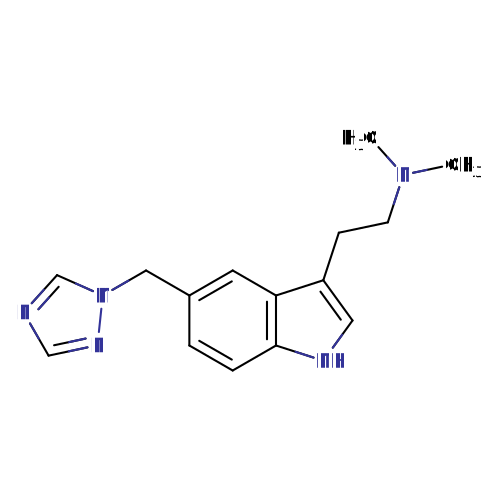
Structure for Rizatriptan (DB00953)
- Weight
- Average: 269.3449
Monoisotopic: 269.164045633 - Chemical Formula
- C15H19N5
- Synonyms
- N,N-Dimethyl-2-[5-(1,2,4-triazol-1-ylmethyl)-1H-indol-3-yl]-ethanamine
- N,N-Dimethyl-5-(1H-1,2,4-triazol-1-ylmethyl)-1H-indole-3-ethanamine
- Risatriptan
- Rizatriptán
- Rizatriptan
- Rizatriptanum
- External IDs
- L-705126
- MK 462 Free Base
- MK-462 FREE BASE

Pharmacology
- Indication
Rizatriptan is indicated for the acute treatment of diagnosed migraine with or without aura.9,10,12,13 Rizatriptan is not indicated for the prophylactic therapy of migraine nor the treatment of cluster headache.9
In Canada, rizatriptan is approved in adults.12,13 In the US, the oral tablet formulations are used in patients six years of age and older 9 and the oral film formation is approved for patients 12 years of age and older weighing 40 kg or more.10
 Reduce drug development failure ratesBuild, train, & validate machine-learning modelswith evidence-based and structured datasets.Build, train, & validate predictive machine-learning models with structured datasets.
- Associated Conditions
Indication Type Indication Combined Product Details Approval Level Age Group Patient Characteristics Dose Form Treatment of Migraine with aura •••••••••••• ••••••••••• ••••• •••••• •• •• •• •••• •••• Treatment of Migraine with aura •••••••••••• ••••••••••• •••••• ••••••••• ••••••• ••••••• •••••• •••••••••••••• Treatment of Migraine without aura •••••••••••• ••••••••••• ••••• •••••• •• •• •• •••• •••• Treatment of Migraine without aura •••••••••••• ••••••••••• •••••• ••••••••• ••••••• ••••••• •••••• •••••••••••••• Treatment of Acute migraine with aura •••••••••••• - Associated Therapies
- Contraindications & Blackbox Warnings
 Prevent Adverse Drug Events TodayTap into our Clinical API for life-saving information on contraindications & blackbox warnings, population restrictions, harmful risks, & more.Avoid life-threatening adverse drug events with our Clinical API
- Pharmacodynamics
Rizatriptan relieves migraine-associated symptoms.1,5,9 Rizatriptan is reported to reach the maximum plasma concentrations more quickly and produces a more rapid onset of pain relief than other triptans, such as sumatriptan;2,3,5 however, it has a relatively shorter elimination half-life than other triptans.5 Rizatriptan causes transient increases in blood pressure to some extent.1 In vitro, rizatriptan was shown to contract isolated human coronary arteries; however, since the EC50 for this effect is high, rizatriptan is not expected to cause myocardial ischemia at therapeutic plasma concentrations in patients with normal coronary circulation.3
Rizatriptan has a weak affinity for other 5-HT1 receptor subtypes (5-HT1A, 5-HT1E, 5-HT1F) and the 5-HT7 receptor but has no significant activity at 5-HT2, 5-HT3, alpha- and beta-adrenergic, dopaminergic, histaminergic, muscarinic or benzodiazepine receptors.12
- Mechanism of action
There are several physiological and molecular processes implicated in the pathophysiology of migraine. Vasodilation of intracranial extracerebral blood vessels, particularly those supplying the dura mater, has been associated with migraine pain.1,5 Activation of the trigeminovascular system leads to the release of vasoactive neuropeptides (such as substance P, calcitonin gene-related peptide (CGRP), and neurokinin A) from the trigeminal nerve innervating the intracranial vessels and dura mater. Vasoactive neuropeptides cause perivascular inflammation and vasodilation in the periphery. Migraine-associated nausea and vomiting are thought to arise from the activation of central and nociceptive sensory neurons that project to autonomic brain-stem nuclei and higher subcortical and cortical pain processing centres.1 An imbalance in serotonin (5-HT) levels has also been documented: 5-HT binds to 5-HT1B and 5-HT1D receptors to promote trigeminal neuronal firing and vasoconstriction.1,8
Rizatriptan is a selective agonist at the 5-HT1B and 5-HT1D receptors on intracranial blood vessels and sensory nerves of the trigeminal system. It binds to these receptors with high affinity.9 The exact mechanism of action of rizatriptan has not been fully elucidated; however, several documented pharmacological actions of rizatriptan may contribute to its antimigraine effects. Rizatriptan causes vasoconstriction of intracranial extracerebral blood vessels, which is thought to occur primarily via 5-HT1B receptors. Rizatriptan also inhibits nociceptive neurotransmission in trigeminal pain pathways. It attenuates the release of vasoactive neuropeptides by the trigeminal nerve, which is thought to occur via neurogenic and central 5-HT1D receptors.1,3,5 Rizatriptan inhibited neurogenic dural vasodilation and plasma protein extravasation in animal studies.1,7,3,5
Target Actions Organism A5-hydroxytryptamine receptor 1B agonistHumans A5-hydroxytryptamine receptor 1D agonistHumans U5-hydroxytryptamine receptor 1A agonistHumans U5-hydroxytryptamine receptor 1E agonistHumans U5-hydroxytryptamine receptor 1F agonistHumans U5-hydroxytryptamine receptor 7 agonistHumans - Absorption
Rizatriptan is readily absorbed (approximately 90%) following oral administration;1 however, the mean oral absolute bioavailability of the rizatriptan tablet is about 45%, owing to extensive first-pass metabolism. The Tmax is approximately one to 1.5 hours. The presence of a migraine headache did not appear to affect the absorption or pharmacokinetics of rizatriptan. Food has no significant effect on the bioavailability of rizatriptan but delays the time to reach peak concentration by an hour. In clinical trials, rizatriptan was administered without regard to food.9
The bioavailability and Cmax of rizatriptan were similar following the administration of rizatriptan tablets and rizatriptan orally disintegrating tablets. Still, the absorption rate is somewhat slower with orally disintegrating tablets, with Tmax delayed by up to 0.7 hours. The AUC of rizatriptan is approximately 30% higher in females than males. No accumulation occurred on multiple dosing.9
- Volume of distribution
The mean volume of distribution is approximately 140 L in male subjects and 110 L in female subjects.9
- Protein binding
Rizatriptan is minimally bound (14%) to plasma proteins.9
- Metabolism
Rizatriptan primarily undergoes oxidative deamination mediated by monoamine oxidase-A (MAO-A) to form triazolomethyl-indole-3-acetic acid, which is not pharmacologically active. N-monodesmethyl-rizatriptan is a minor metabolite with a pharmacological activity comparable to the parent compound's. Plasma concentrations of N-monodesmethyl-rizatriptan are approximately 14% of those of the parent compound, which is eliminated at a similar rate. Other pharmacologically inactive minor metabolites include the N-oxide, the 6-hydroxy compound, and the sulfate conjugate of the 6-hydroxy metabolite.1,6,9
Hover over products below to view reaction partners
- Route of elimination
Following oral administration of a single 10 mg of 14C-rizatriptan, the total radioactivity of the administered dose recovered over 120 hours in urine and feces was 82% and 12%, respectively. Following oral administration of 14C-rizatriptan, rizatriptan accounted for about 17% of circulating plasma radioactivity. Approximately 14% of an oral dose is excreted in urine as unchanged rizatriptan, while 51% is excreted as indole acetic acid metabolite, indicating substantial first-pass metabolism.9
- Half-life
The plasma half-life of rizatriptan in males and females ranges from two to three hours.9
- Clearance
An early study involving healthy subject reported plasma clearance of 1042 mL/min in males and 821 mL/min in females; however, this difference in clearance rates is not thought to be clinically relevant.3,4
- Adverse Effects
 Improve decision support & research outcomesWith structured adverse effects data, including: blackbox warnings, adverse reactions, warning & precautions, & incidence rates. View sample adverse effects data in our new Data Library!Improve decision support & research outcomes with our structured adverse effects data.
- Toxicity
The acute oral toxicity (LD50) was 2,227 mg/kg in rats and 700-1,631 mg/kg in mice.11
No overdoses of rizatriptan were reported in clinical trials. Some adult patients who received 40 mg of rizatriptan either a single dose or as two doses with a two-hour interdose interval had dizziness and somnolence. Syncope, dizziness, bradycardia including third degree AV block, vomiting, and/or incontinence were experienced by two adults who received a total cumulative doses of 80 mg (given within four hours) in a clinical pharmacology study. Some adolescent patients (aged 12 to 17 years old) receiving two 10-mg doses of orally disintegrating tablets of rizatriptan experienced abdominal discomfort, fatigue, and dyspnea.9
Based on the pharmacological properties of rizatriptan, hypertension and myocardial ischemia are possible after overdosage. Gastrointestinal decontamination, (i.e., gastric lavage followed by activated charcoal) should be considered in patients suspected of an overdose with rizatriptan. Clinical and electrocardiographic monitoring should be continued for at least 12 hours, even if clinical symptoms are not observed. The effects of hemo- or peritoneal dialysis on serum concentrations of rizatriptan are unknown.9
- Pathways
- Not Available
- Pharmacogenomic Effects/ADRs
Interacting Gene/Enzyme Allele name Genotype(s) Defining Change(s) Type(s) Description Details Guanine nucleotide-binding protein G(I)/G(S)/G(T) subunit beta-3 --- (T;T) / (C;T) T Allele Effect Directly Studied Patients with this genotype have an increased likelihood of responding to rizatriptan when treating (condition: cluster headache). Details
Interactions
- Drug Interactions
- This information should not be interpreted without the help of a healthcare provider. If you believe you are experiencing an interaction, contact a healthcare provider immediately. The absence of an interaction does not necessarily mean no interactions exist.
Drug Interaction Integrate drug-drug
interactions in your softwareAbacavir Rizatriptan may decrease the excretion rate of Abacavir which could result in a higher serum level. Acebutolol Rizatriptan may decrease the antihypertensive activities of Acebutolol. Aceclofenac The risk or severity of hypertension can be increased when Rizatriptan is combined with Aceclofenac. Acemetacin The risk or severity of hypertension can be increased when Rizatriptan is combined with Acemetacin. Acetaminophen Acetaminophen may decrease the excretion rate of Rizatriptan which could result in a higher serum level. - Food Interactions
- Take with or without food. Food has no significant effect on the bioavailability of rizatriptan but delays the time to reach peak concentration by an hour.
Products
 Drug product information from 10+ global regionsOur datasets provide approved product information including:dosage, form, labeller, route of administration, and marketing period.Access drug product information from over 10 global regions.
- Product Ingredients
Ingredient UNII CAS InChI Key Rizatriptan benzoate WR978S7QHH 145202-66-0 JPRXYLQNJJVCMZ-UHFFFAOYSA-N - Product Images
- International/Other Brands
- Maxalt MLT / RizaFilm
- Brand Name Prescription Products
Name Dosage Strength Route Labeller Marketing Start Marketing End Region Image Act Rizatriptan Tablet 5 mg Oral TEVA Canada Limited Not applicable Not applicable Canada 
Act Rizatriptan Tablet 10 mg Oral TEVA Canada Limited 2012-06-14 Not applicable Canada Act Rizatriptan ODT Tablet, orally disintegrating 10 mg Oral Actavis Pharma Company 2012-01-30 2019-08-08 Canada Act Rizatriptan ODT Tablet, orally disintegrating 5 mg Oral Actavis Pharma Company 2012-01-30 2019-08-08 Canada Maxalt Tablet 5 mg/1 Oral Merck Sharp & Dohme Corp. 1998-06-29 2017-12-31 US 
- Generic Prescription Products
Name Dosage Strength Route Labeller Marketing Start Marketing End Region Image Accel-rizatriptan ODT Tablet, orally disintegrating 10 mg Oral Accel Pharma Inc 2019-10-07 Not applicable Canada Accel-rizatriptan ODT Tablet, orally disintegrating 5 mg Oral Accel Pharma Inc 2019-10-07 Not applicable Canada Ag-rizatriptan ODT Tablet, orally disintegrating 5 mg Oral Angita Pharma Inc. 2021-08-06 Not applicable Canada Ag-rizatriptan ODT Tablet, orally disintegrating 10 mg Oral Angita Pharma Inc. 2020-01-27 Not applicable Canada Apo-rizatriptan Tablet 5 mg Oral Apotex Corporation 2013-03-06 Not applicable Canada


Categories
- ATC Codes
- N02CC04 — Rizatriptan
- Drug Categories
- Agents that produce hypertension
- Amines
- Analgesics
- Antidepressive Agents
- Antimigraine Preparations
- Biogenic Amines
- Biogenic Monoamines
- Central Nervous System Depressants
- Cytochrome P-450 CYP2D6 Inhibitors
- Cytochrome P-450 CYP2D6 Inhibitors (strength unknown)
- Cytochrome P-450 Enzyme Inhibitors
- Drugs that are Mainly Renally Excreted
- Heterocyclic Compounds, Fused-Ring
- Indoles
- Migraine Disorders
- Monoamine Oxidase A Substrates
- Nervous System
- Neurotransmitter Agents
- Selective Serotonin 5-HT1 Receptor Agonists
- Selective Serotonin Agonists
- Serotonergic Drugs Shown to Increase Risk of Serotonin Syndrome
- Serotonin 1b Receptor Agonists
- Serotonin 1d Receptor Agonists
- Serotonin 5-HT1 Receptor Agonists
- Serotonin Agents
- Serotonin Modulators
- Serotonin Receptor Agonists
- Serotonin-1b and Serotonin-1d Receptor Agonist
- Triptans
- Chemical TaxonomyProvided by Classyfire
- Description
- This compound belongs to the class of organic compounds known as tryptamines and derivatives. These are compounds containing the tryptamine backbone, which is structurally characterized by an indole ring substituted at the 3-position by an ethanamine.
- Kingdom
- Organic compounds
- Super Class
- Organoheterocyclic compounds
- Class
- Indoles and derivatives
- Sub Class
- Tryptamines and derivatives
- Direct Parent
- Tryptamines and derivatives
- Alternative Parents
- 3-alkylindoles / Aralkylamines / Substituted pyrroles / Benzenoids / Triazoles / Heteroaromatic compounds / Trialkylamines / Azacyclic compounds / Organopnictogen compounds / Hydrocarbon derivatives
- Substituents
- 1,2,4-triazole / 3-alkylindole / Amine / Aralkylamine / Aromatic heteropolycyclic compound / Azacycle / Azole / Benzenoid / Heteroaromatic compound / Hydrocarbon derivative
- Molecular Framework
- Aromatic heteropolycyclic compounds
- External Descriptors
- tryptamines (CHEBI:48273)
- Affected organisms
- Humans and other mammals
Chemical Identifiers
- UNII
- 51086HBW8G
- CAS number
- 144034-80-0
- InChI Key
- ULFRLSNUDGIQQP-UHFFFAOYSA-N
- InChI
- InChI=1S/C15H19N5/c1-19(2)6-5-13-8-17-15-4-3-12(7-14(13)15)9-20-11-16-10-18-20/h3-4,7-8,10-11,17H,5-6,9H2,1-2H3
- IUPAC Name
- dimethyl(2-{5-[(1H-1,2,4-triazol-1-yl)methyl]-1H-indol-3-yl}ethyl)amine
- SMILES
- CN(C)CCC1=CNC2=C1C=C(CN1C=NC=N1)C=C2
References
- Synthesis Reference
Montserrat Armengol Asparo, Pere Dalmases Barjoan, "Process for preparing a rizatriptan." U.S. Patent US20050148778, issued July 07, 2005.
US20050148778- General References
- Wellington K, Plosker GL: Rizatriptan: an update of its use in the management of migraine. Drugs. 2002;62(10):1539-74. [Article]
- Tfelt-Hansen P, De Vries P, Saxena PR: Triptans in migraine: a comparative review of pharmacology, pharmacokinetics and efficacy. Drugs. 2000 Dec;60(6):1259-87. [Article]
- Lainez MJ: Rizatriptan in the treatment of migraine. Neuropsychiatr Dis Treat. 2006 Sep;2(3):247-59. doi: 10.2147/nedt.2006.2.3.247. [Article]
- Lee Y, Conroy JA, Stepanavage ME, Mendel CM, Somers G, McLoughlin DA, Olah TV, De Smet M, Keymeulen B, Rogers JD: Pharmacokinetics and tolerability of oral rizatriptan in healthy male and female volunteers. Br J Clin Pharmacol. 1999 Apr;47(4):373-8. doi: 10.1046/j.1365-2125.1999.00917.x. [Article]
- Nicolas S, Nicolas D: Triptans. . [Article]
- Vyas KP, Halpin RA, Geer LA, Ellis JD, Liu L, Cheng H, Chavez-Eng C, Matuszewski BK, Varga SL, Guiblin AR, Rogers JD: Disposition and pharmacokinetics of the antimigraine drug, rizatriptan, in humans. Drug Metab Dispos. 2000 Jan;28(1):89-95. [Article]
- Williamson DJ, Hill RG, Shepheard SL, Hargreaves RJ: The anti-migraine 5-HT(1B/1D) agonist rizatriptan inhibits neurogenic dural vasodilation in anaesthetized guinea-pigs. Br J Pharmacol. 2001 Aug;133(7):1029-34. [Article]
- Deen M, Christensen CE, Hougaard A, Hansen HD, Knudsen GM, Ashina M: Serotonergic mechanisms in the migraine brain - a systematic review. Cephalalgia. 2017 Mar;37(3):251-264. doi: 10.1177/0333102416640501. Epub 2016 Jul 11. [Article]
- FDA Approved Drug Products: MAXALT (rizatriptan benzoate) tablets, for oral use and MAXALT-MLT (rizatriptan benzoate) orally disintegrating tablets (October 2019) [Link]
- FDA Approved Drug Products: RizaFilm (rizatriptan) oral film [Link]
- Organon: Rizatriptan MSDS [Link]
- Health Canada Approved Drug Products: ACT RIZATRIPTAN (Rizatriptan) Oral Tablets [Link]
- Health Canada Approved Drug Products: ACCEL-RIZATRIPTAN ODT (Rizatriptan) Orally Disintegrating Tablets [Link]
- External Links
- Human Metabolome Database
- HMDB0015088
- KEGG Drug
- D00675
- PubChem Compound
- 5078
- PubChem Substance
- 46506557
- ChemSpider
- 4900
- BindingDB
- 50033437
- 88014
- ChEBI
- 48273
- ChEMBL
- CHEMBL905
- ZINC
- ZINC000000005895
- Therapeutic Targets Database
- DAP000220
- PharmGKB
- PA451264
- Guide to Pharmacology
- GtP Drug Page
- RxList
- RxList Drug Page
- Drugs.com
- Drugs.com Drug Page
- PDRhealth
- PDRhealth Drug Page
- Wikipedia
- Rizatriptan
- MSDS
- Download (57.7 KB)
Clinical Trials
- Clinical Trials
Phase Status Purpose Conditions Count 4 Completed Basic Science Episodic Migraine 1 4 Completed Other Workplace Migraine Treatment 1 4 Completed Treatment Migraine 3 3 Completed Treatment Acute Migraine 2 3 Completed Treatment Acute Migraine With or Without Aura in Adolescents 1
Pharmacoeconomics
- Manufacturers
- Merck and co inc
- Packagers
- Catalent Pharma Solutions
- Chunghwa Chemical Synthesis and Biotech Co. Ltd.
- Diversified Healthcare Services Inc.
- Lake Erie Medical and Surgical Supply
- Merck & Co.
- Nucare Pharmaceuticals Inc.
- Physicians Total Care Inc.
- Scherer Drug Delivery Systems Ltd.
- Dosage Forms
Form Route Strength Tablet Oral 5 mg Film, soluble Oral Tablet Oral Tablet Oral 10 mg Tablet Oral 10 mg/1 Tablet 10 MG Tablet 5 MG Film Buccal 5.000 mg Tablet, orally disintegrating Oral 10 mg Tablet, orally disintegrating Oral 5 mg Tablet, orally disintegrating Oral 10 mg/1 Tablet, orally disintegrating Oral 5 mg/1 Tablet, effervescent Tablet, effervescent 10 mg Gel Oral 10 MG Film Oral 10 mg/1 Film, soluble Oral 10 mg Film, soluble Oral 5 mg Film, soluble Oral 10 mg/1 Film, soluble Oral 5 mg/1 Tablet, film coated Oral 10 mg/1 Tablet, film coated Oral 5 mg/1 Tablet, orally disintegrating Oral Tablet Oral 5 mg/1 Tablet Oropharyngeal 10 mg/1 Tablet - Prices
Unit description Cost Unit Maxalt 12 10 mg tablet Box 333.27USD box Maxalt 12 5 mg tablet Box 333.27USD box Maxalt-MLT 3 5 mg Dispersible Tablet Box 286.96USD box Maxalt 9 5 mg tablet Box 203.46USD box Maxalt 6 5 mg tablet Box 107.44USD box Maxalt-MLT 3 10 mg Dispersible Tablet Box 83.32USD box Maxalt mlt 10 mg tablet 26.7USD tablet Maxalt mlt 5 mg tablet 26.7USD tablet Maxalt 10 mg tablet 25.31USD tablet Maxalt 5 mg tablet 22.98USD tablet DrugBank does not sell nor buy drugs. Pricing information is supplied for informational purposes only.- Patents
Patent Number Pediatric Extension Approved Expires (estimated) Region US5602162 No 1997-02-11 2014-02-11 US US5298520 No 1994-03-29 2012-06-29 US CA2060139 No 1998-12-01 2012-01-28 Canada US9301948 No 2016-04-05 2034-07-30 US
Properties
- State
- Solid
- Experimental Properties
Property Value Source melting point (°C) 178-180 https://www.fishersci.com/store/msds?partNumber=AC462940010&productDescription=RIZATRIPTAN+BENZOATE+1GR&vendorId=VN00032119&countryCode=US&language=en water solubility 42 mg/mL https://www.accessdata.fda.gov/drugsatfda_docs/label/2019/020864s023,020865s024lbl.pdf - Predicted Properties
Property Value Source Water Solubility 0.338 mg/mL ALOGPS logP 1.67 ALOGPS logP 1.77 Chemaxon logS -2.9 ALOGPS pKa (Strongest Acidic) 17.23 Chemaxon pKa (Strongest Basic) 9.56 Chemaxon Physiological Charge 1 Chemaxon Hydrogen Acceptor Count 3 Chemaxon Hydrogen Donor Count 1 Chemaxon Polar Surface Area 49.74 Å2 Chemaxon Rotatable Bond Count 5 Chemaxon Refractivity 93.13 m3·mol-1 Chemaxon Polarizability 30 Å3 Chemaxon Number of Rings 3 Chemaxon Bioavailability 1 Chemaxon Rule of Five Yes Chemaxon Ghose Filter Yes Chemaxon Veber's Rule No Chemaxon MDDR-like Rule No Chemaxon - Predicted ADMET Features
Property Value Probability Human Intestinal Absorption + 1.0 Blood Brain Barrier + 0.9406 Caco-2 permeable + 0.5547 P-glycoprotein substrate Substrate 0.7478 P-glycoprotein inhibitor I Non-inhibitor 0.8752 P-glycoprotein inhibitor II Non-inhibitor 0.7244 Renal organic cation transporter Inhibitor 0.7394 CYP450 2C9 substrate Non-substrate 0.8572 CYP450 2D6 substrate Non-substrate 0.6765 CYP450 3A4 substrate Substrate 0.5574 CYP450 1A2 substrate Non-inhibitor 0.9149 CYP450 2C9 inhibitor Non-inhibitor 0.9063 CYP450 2D6 inhibitor Non-inhibitor 0.8913 CYP450 2C19 inhibitor Non-inhibitor 0.9515 CYP450 3A4 inhibitor Non-inhibitor 0.9688 CYP450 inhibitory promiscuity Low CYP Inhibitory Promiscuity 0.956 Ames test AMES toxic 0.5644 Carcinogenicity Non-carcinogens 0.9133 Biodegradation Not ready biodegradable 0.9439 Rat acute toxicity 2.5433 LD50, mol/kg Not applicable hERG inhibition (predictor I) Weak inhibitor 0.7051 hERG inhibition (predictor II) Non-inhibitor 0.7265
Spectra
- Mass Spec (NIST)
- Not Available
- Spectra
- Chromatographic Properties
Collision Cross Sections (CCS)
Adduct CCS Value (Å2) Source type Source [M-H]- 179.2105007 predictedDarkChem Lite v0.1.0 [M-H]- 179.3003007 predictedDarkChem Lite v0.1.0 [M-H]- 156.72168 predictedDeepCCS 1.0 (2019) [M+H]+ 180.4142007 predictedDarkChem Lite v0.1.0 [M+H]+ 181.0856007 predictedDarkChem Lite v0.1.0 [M+H]+ 159.07968 predictedDeepCCS 1.0 (2019) [M+Na]+ 179.8996007 predictedDarkChem Lite v0.1.0 [M+Na]+ 179.3407007 predictedDarkChem Lite v0.1.0 [M+Na]+ 165.17284 predictedDeepCCS 1.0 (2019)
Targets

- Kind
- Protein
- Organism
- Humans
- Pharmacological action
- Yes
- Actions
- Agonist
- General Function
- Serotonin receptor activity
- Specific Function
- G-protein coupled receptor for 5-hydroxytryptamine (serotonin). Also functions as a receptor for ergot alkaloid derivatives, various anxiolytic and antidepressant drugs and other psychoactive subst...
- Gene Name
- HTR1B
- Uniprot ID
- P28222
- Uniprot Name
- 5-hydroxytryptamine receptor 1B
- Molecular Weight
- 43567.535 Da
References
- Wellington K, Plosker GL: Rizatriptan: an update of its use in the management of migraine. Drugs. 2002;62(10):1539-74. [Article]
- Wellington K, Jarvis B: Spotlight on rizatriptan in migraine. CNS Drugs. 2002;16(10):715-20. [Article]
- Ikemoto F, Toru T, Aijima H, Natsumeda Y: [Rizatriptan (Maxalt), a new entity of triptan for migraine: pharmacology and therapeutic relevance]. Nihon Yakurigaku Zasshi. 2004 Apr;123(4):295-302. [Article]
- Pauwels PJ, Palmier C, Dupuis DS, Colpaert FC: Interaction of 5-HT1B/D ligands with recombinant h 5-HT1A receptors: intrinsic activity and modulation by G-protein activation state. Naunyn Schmiedebergs Arch Pharmacol. 1998 May;357(5):490-9. [Article]
- Chen X, Ji ZL, Chen YZ: TTD: Therapeutic Target Database. Nucleic Acids Res. 2002 Jan 1;30(1):412-5. [Article]
- Williamson DJ, Hill RG, Shepheard SL, Hargreaves RJ: The anti-migraine 5-HT(1B/1D) agonist rizatriptan inhibits neurogenic dural vasodilation in anaesthetized guinea-pigs. Br J Pharmacol. 2001 Aug;133(7):1029-34. [Article]
- Wackenfors A, Jarvius M, Ingemansson R, Edvinsson L, Malmsjo M: Triptans induce vasoconstriction of human arteries and veins from the thoracic wall. J Cardiovasc Pharmacol. 2005 May;45(5):476-84. [Article]
- Health Canada Approved Drug Products: ACT RIZATRIPTAN (Rizatriptan) Oral Tablets [Link]
- Kind
- Protein
- Organism
- Humans
- Pharmacological action
- Yes
- Actions
- Agonist
- General Function
- Serotonin receptor activity
- Specific Function
- G-protein coupled receptor for 5-hydroxytryptamine (serotonin). Also functions as a receptor for ergot alkaloid derivatives, various anxiolytic and antidepressant drugs and other psychoactive subst...
- Gene Name
- HTR1D
- Uniprot ID
- P28221
- Uniprot Name
- 5-hydroxytryptamine receptor 1D
- Molecular Weight
- 41906.38 Da
References
- Chen X, Ji ZL, Chen YZ: TTD: Therapeutic Target Database. Nucleic Acids Res. 2002 Jan 1;30(1):412-5. [Article]
- Longmore J, Hargreaves RJ, Boulanger CM, Brown MJ, Desta B, Ferro A, Schofield WN, Taylor AA, Hill RG: Comparison of the vasoconstrictor properties of the 5-HT1D-receptor agonists rizatriptan (MK-462) and sumatriptan in human isolated coronary artery: outcome of two independent studies using different experimental protocols. Funct Neurol. 1997 Jan-Feb;12(1):3-9. [Article]
- Longmore J, Boulanger CM, Desta B, Hill RG, Schofield WN, Taylor AA: 5-HT1D receptor agonists and human coronary artery reactivity in vitro: crossover comparisons of 5-HT and sumatriptan with rizatriptan and L-741,519. Br J Clin Pharmacol. 1996 Oct;42(4):431-41. [Article]
- Sciberras DG, Polvino WJ, Gertz BJ, Cheng H, Stepanavage M, Wittreich J, Olah T, Edwards M, Mant T: Initial human experience with MK-462 (rizatriptan): a novel 5-HT1D agonist. Br J Clin Pharmacol. 1997 Jan;43(1):49-54. [Article]
- Williamson DJ, Hill RG, Shepheard SL, Hargreaves RJ: The anti-migraine 5-HT(1B/1D) agonist rizatriptan inhibits neurogenic dural vasodilation in anaesthetized guinea-pigs. Br J Pharmacol. 2001 Aug;133(7):1029-34. [Article]
- Wackenfors A, Jarvius M, Ingemansson R, Edvinsson L, Malmsjo M: Triptans induce vasoconstriction of human arteries and veins from the thoracic wall. J Cardiovasc Pharmacol. 2005 May;45(5):476-84. [Article]
- Wellington K, Plosker GL: Rizatriptan: an update of its use in the management of migraine. Drugs. 2002;62(10):1539-74. [Article]
- Wellington K, Jarvis B: Spotlight on rizatriptan in migraine. CNS Drugs. 2002;16(10):715-20. [Article]
- Ikemoto F, Toru T, Aijima H, Natsumeda Y: [Rizatriptan (Maxalt), a new entity of triptan for migraine: pharmacology and therapeutic relevance]. Nihon Yakurigaku Zasshi. 2004 Apr;123(4):295-302. [Article]
- Health Canada Approved Drug Products: ACT RIZATRIPTAN (Rizatriptan) Oral Tablets [Link]
- Kind
- Protein
- Organism
- Humans
- Pharmacological action
- Unknown
- Actions
- Agonist
- General Function
- Serotonin receptor activity
- Specific Function
- G-protein coupled receptor for 5-hydroxytryptamine (serotonin). Also functions as a receptor for various drugs and psychoactive substances. Ligand binding causes a conformation change that triggers...
- Gene Name
- HTR1A
- Uniprot ID
- P08908
- Uniprot Name
- 5-hydroxytryptamine receptor 1A
- Molecular Weight
- 46106.335 Da
References
- Health Canada Approved Drug Products: ACT RIZATRIPTAN (Rizatriptan) Oral Tablets [Link]
- Kind
- Protein
- Organism
- Humans
- Pharmacological action
- Unknown
- Actions
- Agonist
- General Function
- Serotonin receptor activity
- Specific Function
- G-protein coupled receptor for 5-hydroxytryptamine (serotonin). Also functions as a receptor for various alkaloids and psychoactive substances. Ligand binding causes a conformation change that trig...
- Gene Name
- HTR1E
- Uniprot ID
- P28566
- Uniprot Name
- 5-hydroxytryptamine receptor 1E
- Molecular Weight
- 41681.57 Da
References
- Health Canada Approved Drug Products: ACT RIZATRIPTAN (Rizatriptan) Oral Tablets [Link]
- Kind
- Protein
- Organism
- Humans
- Pharmacological action
- Unknown
- Actions
- Agonist
- General Function
- Serotonin receptor activity
- Specific Function
- G-protein coupled receptor for 5-hydroxytryptamine (serotonin). Also functions as a receptor for various alkaloids and psychoactive substances. Ligand binding causes a conformation change that trig...
- Gene Name
- HTR1F
- Uniprot ID
- P30939
- Uniprot Name
- 5-hydroxytryptamine receptor 1F
- Molecular Weight
- 41708.505 Da
References
- Chen X, Ji ZL, Chen YZ: TTD: Therapeutic Target Database. Nucleic Acids Res. 2002 Jan 1;30(1):412-5. [Article]
- Villalon CM, Centurion D, Valdivia LF, de Vries P, Saxena PR: Migraine: pathophysiology, pharmacology, treatment and future trends. Curr Vasc Pharmacol. 2003 Mar;1(1):71-84. [Article]
- Villalon CM, Centurion D, Valdivia LF, De Vries P, Saxena PR: An introduction to migraine: from ancient treatment to functional pharmacology and antimigraine therapy. Proc West Pharmacol Soc. 2002;45:199-210. [Article]
- Wainscott DB, Johnson KW, Phebus LA, Schaus JM, Nelson DL: Human 5-HT1F receptor-stimulated [35S]GTPgammaS binding: correlation with inhibition of guinea pig dural plasma protein extravasation. Eur J Pharmacol. 1998 Jul 3;352(1):117-24. [Article]
- Goadsby PJ, Classey JD: Evidence for serotonin (5-HT)1B, 5-HT1D and 5-HT1F receptor inhibitory effects on trigeminal neurons with craniovascular input. Neuroscience. 2003;122(2):491-8. [Article]
- Health Canada Approved Drug Products: ACT RIZATRIPTAN (Rizatriptan) Oral Tablets [Link]
- Kind
- Protein
- Organism
- Humans
- Pharmacological action
- Unknown
- Actions
- Agonist
- General Function
- Serotonin receptor activity
- Specific Function
- This is one of the several different receptors for 5-hydroxytryptamine (serotonin), a biogenic hormone that functions as a neurotransmitter, a hormone, and a mitogen. The activity of this receptor ...
- Gene Name
- HTR7
- Uniprot ID
- P34969
- Uniprot Name
- 5-hydroxytryptamine receptor 7
- Molecular Weight
- 53554.43 Da
References
- Health Canada Approved Drug Products: ACT RIZATRIPTAN (Rizatriptan) Oral Tablets [Link]
Enzymes
- Kind
- Protein
- Organism
- Humans
- Pharmacological action
- Unknown
- Actions
- Substrate
- General Function
- Serotonin binding
- Specific Function
- Catalyzes the oxidative deamination of biogenic and xenobiotic amines and has important functions in the metabolism of neuroactive and vasoactive amines in the central nervous system and peripheral...
- Gene Name
- MAOA
- Uniprot ID
- P21397
- Uniprot Name
- Amine oxidase [flavin-containing] A
- Molecular Weight
- 59681.27 Da
References
- Iwasa T, Sano H, Sugiura A, Uchiyama N, Hara K, Okochi H, Nakagawa K, Yasumori T, Ishizaki T: An in vitro interethnic comparison of monoamine oxidase activities between Japanese and Caucasian livers using rizatriptan, a serotonin receptor 1B/1D agonist, as a model drug. Br J Clin Pharmacol. 2003 Nov;56(5):537-44. [Article]
- Van Haarst AD, Van Gerven JM, Cohen AF, De Smet M, Sterrett A, Birk KL, Fisher AL, De Puy ME, Goldberg MR, Musson DG: The effects of moclobemide on the pharmacokinetics of the 5-HT1B/1D agonist rizatriptan in healthy volunteers. Br J Clin Pharmacol. 1999 Aug;48(2):190-6. [Article]
- FDA Approved Drug Products: MAXALT (rizatriptan benzoate) tablets, for oral use and MAXALT-MLT (rizatriptan benzoate) orally disintegrating tablets (October 2019) [Link]
- Health Canada Approved Drug Products: ACT RIZATRIPTAN (Rizatriptan) Oral Tablets [Link]
- Kind
- Protein
- Organism
- Humans
- Pharmacological action
- No
- Actions
- Inhibitor
- Curator comments
- Rizatriptan is a competitive inhibitor (Ki=1400 nM) of cytochrome P450 2D6, but only at high, clinically irrelevant concentrations.
- General Function
- Steroid hydroxylase activity
- Specific Function
- Responsible for the metabolism of many drugs and environmental chemicals that it oxidizes. It is involved in the metabolism of drugs such as antiarrhythmics, adrenoceptor antagonists, and tricyclic...
- Gene Name
- CYP2D6
- Uniprot ID
- P10635
- Uniprot Name
- Cytochrome P450 2D6
- Molecular Weight
- 55768.94 Da
References

Drug created at June 13, 2005 13:24 / Updated at April 24, 2024 14:30