Identification
- Summary
Metyrapone is a steroid 11-beta-monooxygenase inhibitor used to test hypothalamic-pituitary ACTH function.
- Brand Names
- Metopirone
- Generic Name
- Metyrapone
- DrugBank Accession Number
- DB01011
- Background
An inhibitor of the enzyme steroid 11-beta-monooxygenase. It is used as a test of the feedback hypothalamic-pituitary mechanism in the diagnosis of cushing syndrome.
- Type
- Small Molecule
- Groups
- Approved, Investigational
- Structure
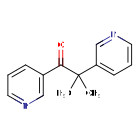
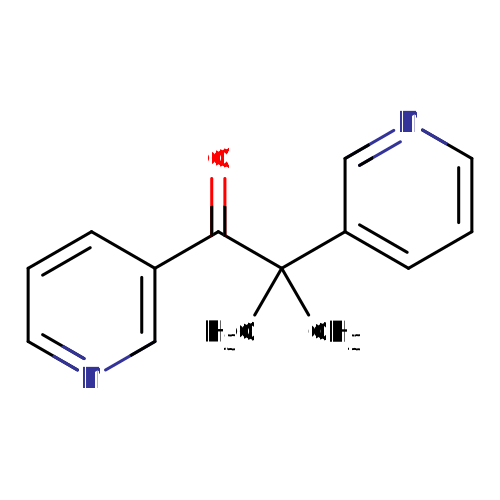
Structure for Metyrapone (DB01011)
- Weight
- Average: 226.2738
Monoisotopic: 226.11061308 - Chemical Formula
- C14H14N2O
- Synonyms
- Metirapona
- Metyrapone
- Métyrapone
- Metyraponum

Pharmacology
- Indication
Used as a diagnostic drug for testing hypothalamic-pituitary ACTH function. Occasionally used in Cushing's syndrome.
 Reduce drug development failure ratesBuild, train, & validate machine-learning modelswith evidence-based and structured datasets.Build, train, & validate predictive machine-learning models with structured datasets.
- Contraindications & Blackbox Warnings
 Prevent Adverse Drug Events TodayTap into our Clinical API for life-saving information on contraindications & blackbox warnings, population restrictions, harmful risks, & more.Avoid life-threatening adverse drug events with our Clinical API
- Pharmacodynamics
Metopirone is an inhibitor of endogenous adrenal corticosteroid synthesis.
- Mechanism of action
The pharmacological effect of Metopirone is to reduce cortisol and corticosterone production by inhibiting the 11-ß-hydroxylation reaction in the adrenal cortex. Removal of the strong inhibitory feedback mechanism exerted by cortisol results in an increase in adrenocorticotropic hormone (ACTH) production by the pituitary. With continued blockade of the enzymatic steps leading to production of cortisol and corticosterone, there is a marked increase in adrenocortical secretion of their immediate precursors, 11-desoxycortisol and desoxycorticosterone, which are weak suppressors of ACTH release, and a corresponding elevation of these steroids in the plasma and of their metabolites in the urine. These metabolites are readily determined by measuring urinary 17-hydroxycorticosteroids (17-OHCS) or 17-ketogenic steroids (17-KGS). Because of these actions, metopirone is used as a diagnostic test, with urinary 17-OHCS measured as an index of pituitary ACTH responsiveness. Metopirone may also suppress biosynthesis of aldosterone, resulting in a mild natriuresis.
Target Actions Organism ACytochrome P450 11B1, mitochondrial inhibitorHumans UCamphor 5-monooxygenase other/unknownPseudomonas putida - Absorption
Absorbed rapidly and well when administered orally. Peak plasma concentrations are usually reached 1 hour after administration.
- Volume of distribution
Not Available
- Protein binding
Not Available
- Metabolism
Hepatic. The major biotransformation is reduction of the ketone to metyrapol, an active alcohol metabolite. Metyrapone and metyrapol are both conjugated with glucuronide.
Hover over products below to view reaction partners
- Route of elimination
After administration of 4.5 g metyrapone (750 mg every 4 hours), an average of 5.3% of the dose was excreted in the urine in the form of metyrapone (9.2% free and 90.8% as glucuronide) and 38.5% in the form of metyrapol (8.1% free and 91.9% as glucuronide) within 72 hours after the first dose was given.
- Half-life
1.9 ±0.7 hours.
- Clearance
Not Available
- Adverse Effects
 Improve decision support & research outcomesWith structured adverse effects data, including: blackbox warnings, adverse reactions, warning & precautions, & incidence rates. View sample adverse effects data in our new Data Library!Improve decision support & research outcomes with our structured adverse effects data.
- Toxicity
Oral LD50 in rats is 521 mg/kg. One case has been recorded in which a 6-year-old girl died after two doses of Metopirone, 2 g. Symptoms of overdose include cardiac arrhythmias, hypotension, dehydration, anxiety, confusion, weakness, impairment of consciousness, nausea, vomiting, epigastric pain, and diarrhea.
- Pathways
- Not Available
- Pharmacogenomic Effects/ADRs
- Not Available
Interactions
- Drug Interactions
- This information should not be interpreted without the help of a healthcare provider. If you believe you are experiencing an interaction, contact a healthcare provider immediately. The absence of an interaction does not necessarily mean no interactions exist.
Drug Interaction Integrate drug-drug
interactions in your softwareAbacavir Metyrapone may decrease the excretion rate of Abacavir which could result in a higher serum level. Abemaciclib The metabolism of Abemaciclib can be increased when combined with Metyrapone. Acalabrutinib The metabolism of Acalabrutinib can be increased when combined with Metyrapone. Aceclofenac Aceclofenac may decrease the excretion rate of Metyrapone which could result in a higher serum level. Acemetacin Acemetacin may decrease the excretion rate of Metyrapone which could result in a higher serum level. - Food Interactions
- Take with food. Take metyrapone with milk or a snack according to the specific instructions for a single or multi-dose test.
Products
 Drug product information from 10+ global regionsOur datasets provide approved product information including:dosage, form, labeller, route of administration, and marketing period.Access drug product information from over 10 global regions.
- International/Other Brands
- Metopiron
- Brand Name Prescription Products
Name Dosage Strength Route Labeller Marketing Start Marketing End Region Image Metopirone Capsule, gelatin coated 250 mg/1 Oral Novartis Pharmaceuticals Corporation 2006-01-04 2006-01-04 US 
Metopirone Capsule, gelatin coated 250 mg/1 Oral Novartis 1962-01-25 2012-11-30 US Metopirone Capsule, gelatin coated 250 mg/1 Oral HRA Pharma Rare Diseases 1962-01-25 Not applicable US
Categories
- ATC Codes
- V04CD01 — Metyrapone
- Drug Categories
- Cytochrome P-450 CYP2A6 Inhibitors
- Cytochrome P-450 CYP2A6 Inhibitors (strength unknown)
- Cytochrome P-450 CYP2E1 Inhibitors
- Cytochrome P-450 CYP2E1 Inhibitors (strength unknown)
- Cytochrome P-450 CYP3A Inducers
- Cytochrome P-450 CYP3A Inhibitors
- Cytochrome P-450 CYP3A4 Inducers
- Cytochrome P-450 CYP3A4 Inducers (strength unknown)
- Cytochrome P-450 CYP3A4 Inhibitors
- Cytochrome P-450 CYP3A4 Inhibitors (strength unknown)
- Cytochrome P-450 Enzyme Inducers
- Cytochrome P-450 Enzyme Inhibitors
- Diagnostic Agents
- Drugs that are Mainly Renally Excreted
- Enzyme Inhibitors
- Noxae
- Pyridines
- Steroid Synthesis Inhibitors
- Tests for Pituitary Function
- Toxic Actions
- Chemical TaxonomyProvided by Classyfire
- Description
- This compound belongs to the class of organic compounds known as aryl alkyl ketones. These are ketones have the generic structure RC(=O)R', where R = aryl group and R'=alkyl group.
- Kingdom
- Organic compounds
- Super Class
- Organic oxygen compounds
- Class
- Organooxygen compounds
- Sub Class
- Carbonyl compounds
- Direct Parent
- Aryl alkyl ketones
- Alternative Parents
- Pyridines and derivatives / Heteroaromatic compounds / Azacyclic compounds / Organopnictogen compounds / Organonitrogen compounds / Organic oxides / Hydrocarbon derivatives
- Substituents
- Aromatic heteromonocyclic compound / Aryl alkyl ketone / Azacycle / Heteroaromatic compound / Hydrocarbon derivative / Organic nitrogen compound / Organic oxide / Organoheterocyclic compound / Organonitrogen compound / Organopnictogen compound
- Molecular Framework
- Aromatic heteromonocyclic compounds
- External Descriptors
- aromatic ketone (CHEBI:44241) / a small molecule (CPD-7023)
- Affected organisms
- Humans and other mammals
Chemical Identifiers
- UNII
- ZS9KD92H6V
- CAS number
- 54-36-4
- InChI Key
- FJLBFSROUSIWMA-UHFFFAOYSA-N
- InChI
- InChI=1S/C14H14N2O/c1-14(2,12-6-4-8-16-10-12)13(17)11-5-3-7-15-9-11/h3-10H,1-2H3
- IUPAC Name
- 2-methyl-1,2-bis(pyridin-3-yl)propan-1-one
- SMILES
- CC(C)(C(=O)C1=CN=CC=C1)C1=CC=CN=C1
References
- General References
- Not Available
- External Links
- Human Metabolome Database
- HMDB0015146
- KEGG Drug
- D00410
- KEGG Compound
- C07205
- PubChem Compound
- 4174
- PubChem Substance
- 46504862
- ChemSpider
- 4030
- BindingDB
- 50028166
- 6923
- ChEBI
- 44241
- ChEMBL
- CHEMBL934
- ZINC
- ZINC000000001728
- Therapeutic Targets Database
- DAP000424
- PharmGKB
- PA450486
- PDBe Ligand
- MYT
- RxList
- RxList Drug Page
- Drugs.com
- Drugs.com Drug Page
- Wikipedia
- Metyrapone
- PDB Entries
- 1phg / 1w0g / 4zf8 / 6ma6 / 7e7f
Clinical Trials
- Clinical Trials
Phase Status Purpose Conditions Count 4 Unknown Status Treatment Depressive Disorder / Hormone Disturbance 1 4 Unknown Status Treatment Obesity / Resistance, Insulin / Syndrome, Metabolic 1 3 Completed Treatment Cushing's Syndrome 1 3 Completed Treatment Depression 1 2 Completed Treatment Major Depressive Disorder (MDD) 1
Pharmacoeconomics
- Manufacturers
- Novartis pharmaceuticals corp
- Packagers
- Novartis AG
- R.P. Scherer GmbH and Co. KG
- Dosage Forms
Form Route Strength Capsule Oral 250 MG Capsule, gelatin coated Oral 250 mg/1 - Prices
Unit description Cost Unit Metopirone 250 mg capsule 3.39USD capsule DrugBank does not sell nor buy drugs. Pricing information is supplied for informational purposes only.- Patents
- Not Available
Properties
- State
- Solid
- Experimental Properties
Property Value Source melting point (°C) 50.5 °C PhysProp water solubility Sparingly soluble Not Available logP 1.8 Not Available - Predicted Properties
Property Value Source Water Solubility 0.427 mg/mL ALOGPS logP 2.09 ALOGPS logP 2.03 Chemaxon logS -2.7 ALOGPS pKa (Strongest Basic) 4.87 Chemaxon Physiological Charge 0 Chemaxon Hydrogen Acceptor Count 3 Chemaxon Hydrogen Donor Count 0 Chemaxon Polar Surface Area 42.85 Å2 Chemaxon Rotatable Bond Count 3 Chemaxon Refractivity 65.94 m3·mol-1 Chemaxon Polarizability 23.98 Å3 Chemaxon Number of Rings 2 Chemaxon Bioavailability 1 Chemaxon Rule of Five Yes Chemaxon Ghose Filter Yes Chemaxon Veber's Rule No Chemaxon MDDR-like Rule No Chemaxon - Predicted ADMET Features
Property Value Probability Human Intestinal Absorption + 0.9872 Blood Brain Barrier + 0.985 Caco-2 permeable + 0.7108 P-glycoprotein substrate Non-substrate 0.6099 P-glycoprotein inhibitor I Non-inhibitor 0.6787 P-glycoprotein inhibitor II Non-inhibitor 0.9579 Renal organic cation transporter Non-inhibitor 0.8039 CYP450 2C9 substrate Non-substrate 0.8174 CYP450 2D6 substrate Non-substrate 0.9116 CYP450 3A4 substrate Non-substrate 0.6282 CYP450 1A2 substrate Inhibitor 0.9107 CYP450 2C9 inhibitor Non-inhibitor 0.9071 CYP450 2D6 inhibitor Non-inhibitor 0.9484 CYP450 2C19 inhibitor Non-inhibitor 0.9026 CYP450 3A4 inhibitor Inhibitor 0.7959 CYP450 inhibitory promiscuity High CYP Inhibitory Promiscuity 0.5382 Ames test Non AMES toxic 0.907 Carcinogenicity Non-carcinogens 0.8616 Biodegradation Not ready biodegradable 0.9518 Rat acute toxicity 2.6066 LD50, mol/kg Not applicable hERG inhibition (predictor I) Weak inhibitor 0.9786 hERG inhibition (predictor II) Non-inhibitor 0.8202
Spectra
- Mass Spec (NIST)
- Not Available
- Spectra
- Chromatographic Properties
Collision Cross Sections (CCS)
Adduct CCS Value (Å2) Source type Source [M-H]- 160.5717056 predictedDarkChem Lite v0.1.0 [M-H]- 159.7210056 predictedDarkChem Lite v0.1.0 [M-H]- 156.25461 predictedDeepCCS 1.0 (2019) [M+H]+ 160.9069056 predictedDarkChem Lite v0.1.0 [M+H]+ 160.4763056 predictedDarkChem Lite v0.1.0 [M+H]+ 158.61261 predictedDeepCCS 1.0 (2019) [M+Na]+ 160.4450056 predictedDarkChem Lite v0.1.0 [M+Na]+ 159.8473056 predictedDarkChem Lite v0.1.0 [M+Na]+ 164.70576 predictedDeepCCS 1.0 (2019)
Targets

- Kind
- Protein
- Organism
- Humans
- Pharmacological action
- Yes
- Actions
- Inhibitor
- General Function
- Steroid 11-beta-monooxygenase activity
- Specific Function
- Has steroid 11-beta-hydroxylase activity. In addition to this activity, the 18 or 19-hydroxylation of steroids and the aromatization of androstendione to estrone have also been ascribed to cytochro...
- Gene Name
- CYP11B1
- Uniprot ID
- P15538
- Uniprot Name
- Cytochrome P450 11B1, mitochondrial
- Molecular Weight
- 57572.44 Da
References
- Young EA, Ribeiro SC, Ye W: Sex differences in ACTH pulsatility following metyrapone blockade in patients with major depression. Psychoneuroendocrinology. 2007 Jun;32(5):503-7. Epub 2007 Apr 25. [Article]
- Johansson MK, Sanderson JT, Lund BO: Effects of 3-MeSO2-DDE and some CYP inhibitors on glucocorticoid steroidogenesis in the H295R human adrenocortical carcinoma cell line. Toxicol In Vitro. 2002 Apr;16(2):113-21. [Article]
- Hermansson V, Asp V, Bergman A, Bergstrom U, Brandt I: Comparative CYP-dependent binding of the adrenocortical toxicants 3-methylsulfonyl-DDE and o,p'-DDD in Y-1 adrenal cells. Arch Toxicol. 2007 Nov;81(11):793-801. Epub 2007 May 9. [Article]
- Chen X, Ji ZL, Chen YZ: TTD: Therapeutic Target Database. Nucleic Acids Res. 2002 Jan 1;30(1):412-5. [Article]
- Kind
- Protein
- Organism
- Pseudomonas putida
- Pharmacological action
- Unknown
- Actions
- Other/unknown
- General Function
- Iron ion binding
- Specific Function
- Involved in a camphor oxidation system.
- Gene Name
- camC
- Uniprot ID
- P00183
- Uniprot Name
- Camphor 5-monooxygenase
- Molecular Weight
- 46668.8 Da
References
- Overington JP, Al-Lazikani B, Hopkins AL: How many drug targets are there? Nat Rev Drug Discov. 2006 Dec;5(12):993-6. [Article]
- Imming P, Sinning C, Meyer A: Drugs, their targets and the nature and number of drug targets. Nat Rev Drug Discov. 2006 Oct;5(10):821-34. [Article]
- Bistolas N, Christenson A, Ruzgas T, Jung C, Scheller FW, Wollenberger U: Spectroelectrochemistry of cytochrome P450cam. Biochem Biophys Res Commun. 2004 Feb 13;314(3):810-6. [Article]
- Shiro Y, Fujii M, Isogai Y, Adachi S, Iizuka T, Obayashi E, Makino R, Nakahara K, Shoun H: Iron-ligand structure and iron redox property of nitric oxide reductase cytochrome P450nor from Fusarium oxysporum: relevance to its NO reduction activity. Biochemistry. 1995 Jul 18;34(28):9052-8. [Article]
- Schunemann V, Jung C, Terner J, Trautwein AX, Weiss R: Spectroscopic studies of peroxyacetic acid reaction intermediates of cytochrome P450cam and chloroperoxidase. J Inorg Biochem. 2002 Sep 20;91(4):586-96. [Article]
Enzymes
- Kind
- Protein
- Organism
- Humans
- Pharmacological action
- Unknown
- Actions
- Inhibitor
- General Function
- Steroid 11-beta-monooxygenase activity
- Specific Function
- Has steroid 11-beta-hydroxylase activity. In addition to this activity, the 18 or 19-hydroxylation of steroids and the aromatization of androstendione to estrone have also been ascribed to cytochro...
- Gene Name
- CYP11B1
- Uniprot ID
- P15538
- Uniprot Name
- Cytochrome P450 11B1, mitochondrial
- Molecular Weight
- 57572.44 Da
References
- Johansson MK, Sanderson JT, Lund BO: Effects of 3-MeSO2-DDE and some CYP inhibitors on glucocorticoid steroidogenesis in the H295R human adrenocortical carcinoma cell line. Toxicol In Vitro. 2002 Apr;16(2):113-21. [Article]
- Denner K, Vogel R, Schmalix W, Doehmer J, Bernhardt R: Cloning and stable expression of the human mitochondrial cytochrome P45011B1 cDNA in V79 Chinese hamster cells and their application for testing of potential inhibitors. Pharmacogenetics. 1995 Apr;5(2):89-96. [Article]
- Kind
- Protein
- Organism
- Humans
- Pharmacological action
- Unknown
- Actions
- Inhibitor
- General Function
- Steroid hydroxylase activity
- Specific Function
- Metabolizes several precarcinogens, drugs, and solvents to reactive metabolites. Inactivates a number of drugs and xenobiotics and also bioactivates many xenobiotic substrates to their hepatotoxic ...
- Gene Name
- CYP2E1
- Uniprot ID
- P05181
- Uniprot Name
- Cytochrome P450 2E1
- Molecular Weight
- 56848.42 Da
References
- Heit C, Dong H, Chen Y, Thompson DC, Deitrich RA, Vasiliou VK: The role of CYP2E1 in alcohol metabolism and sensitivity in the central nervous system. Subcell Biochem. 2013;67:235-47. doi: 10.1007/978-94-007-5881-0_8. [Article]
- Montoliu C, Valles S, Renau-Piqueras J, Guerri C: Ethanol-induced oxygen radical formation and lipid peroxidation in rat brain: effect of chronic alcohol consumption. J Neurochem. 1994 Nov;63(5):1855-62. [Article]
- Kind
- Protein
- Organism
- Humans
- Pharmacological action
- Unknown
- Actions
- Inhibitor
- General Function
- Steroid 11-beta-monooxygenase activity
- Specific Function
- Preferentially catalyzes the conversion of 11-deoxycorticosterone to aldosterone via corticosterone and 18-hydroxycorticosterone.
- Gene Name
- CYP11B2
- Uniprot ID
- P19099
- Uniprot Name
- Cytochrome P450 11B2, mitochondrial
- Molecular Weight
- 57559.62 Da
References
- Roumen L, Sanders MP, Pieterse K, Hilbers PA, Plate R, Custers E, de Gooyer M, Smits JF, Beugels I, Emmen J, Ottenheijm HC, Leysen D, Hermans JJ: Construction of 3D models of the CYP11B family as a tool to predict ligand binding characteristics. J Comput Aided Mol Des. 2007 Aug;21(8):455-71. Epub 2007 Jul 24. [Article]
- Gomez-Sanchez CE, Zhou MY, Cozza EN, Morita H, Foecking MF, Gomez-Sanchez EP: Aldosterone biosynthesis in the rat brain. Endocrinology. 1997 Aug;138(8):3369-73. [Article]
- Kind
- Protein
- Organism
- Humans
- Pharmacological action
- Unknown
- Actions
- Inhibitor
- General Function
- Steroid hydroxylase activity
- Specific Function
- Exhibits a high coumarin 7-hydroxylase activity. Can act in the hydroxylation of the anti-cancer drugs cyclophosphamide and ifosphamide. Competent in the metabolic activation of aflatoxin B1. Const...
- Gene Name
- CYP2A6
- Uniprot ID
- P11509
- Uniprot Name
- Cytochrome P450 2A6
- Molecular Weight
- 56501.005 Da
References
- Pelkonen O, Sotaniemi EA, Ahokas JT: Coumarin 7-hydroxylase activity in human liver microsomes. Properties of the enzyme and interspecies comparisons. Br J Clin Pharmacol. 1985 Jan;19(1):59-66. doi: 10.1111/j.1365-2125.1985.tb02613.x. [Article]
- Liu C, Zhuo X, Gonzalez FJ, Ding X: Baculovirus-mediated expression and characterization of rat CYP2A3 and human CYP2a6: role in metabolic activation of nasal toxicants. Mol Pharmacol. 1996 Oct;50(4):781-8. [Article]
- Draper AJ, Madan A, Parkinson A: Inhibition of coumarin 7-hydroxylase activity in human liver microsomes. Arch Biochem Biophys. 1997 May 1;341(1):47-61. doi: 10.1006/abbi.1997.9964. [Article]
- Kind
- Protein
- Organism
- Humans
- Pharmacological action
- Unknown
- Actions
- InhibitorInducer
- General Function
- Vitamin d3 25-hydroxylase activity
- Specific Function
- Cytochromes P450 are a group of heme-thiolate monooxygenases. In liver microsomes, this enzyme is involved in an NADPH-dependent electron transport pathway. It performs a variety of oxidation react...
- Gene Name
- CYP3A4
- Uniprot ID
- P08684
- Uniprot Name
- Cytochrome P450 3A4
- Molecular Weight
- 57342.67 Da
References
- Brandon EF, Meijerman I, Klijn JS, den Arend D, Sparidans RW, Lazaro LL, Beijnen JH, Schellens JH: In-vitro cytotoxicity of ET-743 (Trabectedin, Yondelis), a marine anti-cancer drug, in the Hep G2 cell line: influence of cytochrome P450 and phase II inhibition, and cytochrome P450 induction. Anticancer Drugs. 2005 Oct;16(9):935-43. [Article]
- Sevrioukova I: Interaction of Human Drug-Metabolizing CYP3A4 with Small Inhibitory Molecules. Biochemistry. 2019 Feb 19;58(7):930-939. doi: 10.1021/acs.biochem.8b01221. Epub 2019 Jan 24. [Article]
- Harvey JL, Paine AJ, Maurel P, Wright MC: Effect of the adrenal 11-beta-hydroxylase inhibitor metyrapone on human hepatic cytochrome P-450 expression: induction of cytochrome P-450 3A4. Drug Metab Dispos. 2000 Jan;28(1):96-101. [Article]
Transporters
- Kind
- Protein
- Organism
- Humans
- Pharmacological action
- Unknown
- Actions
- Inducer
- General Function
- Organic anion transmembrane transporter activity
- Specific Function
- May act as an inducible transporter in the biliary and intestinal excretion of organic anions. Acts as an alternative route for the export of bile acids and glucuronides from cholestatic hepatocyte...
- Gene Name
- ABCC3
- Uniprot ID
- O15438
- Uniprot Name
- Canalicular multispecific organic anion transporter 2
- Molecular Weight
- 169341.14 Da
References
- Teng S, Jekerle V, Piquette-Miller M: Induction of ABCC3 (MRP3) by pregnane X receptor activators. Drug Metab Dispos. 2003 Nov;31(11):1296-9. [Article]

Drug created at June 13, 2005 13:24 / Updated at February 02, 2024 22:47