Identification
- Summary
Vitamin K1 is a fat soluble vitamin used to treat hemorrhagic conditions in infants and coumarin overdoses.
- Brand Names
- Aquamephyton, Infuvite, Infuvite Pediatric, Mephyton, Mvi Pediatric, Phytonadione
- Generic Name
- Phylloquinone
Commonly known or available as Vitamin K1 - DrugBank Accession Number
- DB01022
- Background
Vitamin K1, also called phylloquinone or phytonadione, is a fat soluble vitamin.17,18 Phylloquinone is a cofactor of the enzyme γ-carboxylase, which modifies and activates precursors to coagulation factors II, VII, IX, and X.7,8,6 It is indicated in the treatment of coagulation disorders due to faulty formation of coagulation factors II, VII, IX, and X caused by deficiency or interference in the activity of vitamin K.17
Phylloquinone has been synthesized since at least 1939,16 and was approved by the FDA prior to 1955.19
- Type
- Small Molecule
- Groups
- Approved, Investigational
- Structure
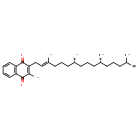
Structure for Phylloquinone (DB01022)

- Weight
- Average: 450.6957
Monoisotopic: 450.349780716 - Chemical Formula
- C31H46O2
- Synonyms
- 2-Methyl-3-(3,7,11,15-tetramethyl-2-hexadecenyl)-1,4-naphthalenedione
- 2-Methyl-3-[(2E)-3,7,11,15-tetramethyl-2-hexadecenyl]naphthoquinone
- 2-Methyl-3-phytyl-1,4-naphthochinon
- 2-Methyl-3-phytyl-1,4-naphthoquinone
- 3-Phytylmenadione
- alpha-Phylloquinone
- Fitomenadiona
- Phyllochinon
- Phyllochinonum
- Phylloquinone
- Phythyl-menadion
- Phytomenadione
- Phytomenadionum
- Phytonadione
- Phytonadionum
- Phytylmenadione
- trans-Phylloquinone
- Vitamin K
- Vitamin K1
- α-phylloquinone
- External IDs
- NSC-270681

Pharmacology
- Indication
Oral phylloquinone is indicated to treat prothrombin deficiency caused by coumarin or indanedione derivatives; and hypoprothrombinemia secondary to antibacterial therapy, salicylates, or obstructive jaundice or biliary fistulas with concomitant bile salt administration.18
Parenteral (intravenous, intramuscular, and subcutaneous) phylloquinone is indicated to treat coagulation disorders due to faulty formation of coagulation factors II, VII, IX, and X caused by vitamin K deficiency or some interference with vitamin K activity.17 These indications include the above indications as well as hypoprothrombinemia secondary to sprue, ulcerative colitis, celiac disease, intestinal resection, pancreatic cystic fibrosis, or regional enteritis; or hypoprothrombinemia caused by interference with vitamin k metabolism.17
 Reduce drug development failure ratesBuild, train, & validate machine-learning modelswith evidence-based and structured datasets.Build, train, & validate predictive machine-learning models with structured datasets.
- Associated Conditions
Indication Type Indication Combined Product Details Approval Level Age Group Patient Characteristics Dose Form Treatment of Coagulation disorders •••••••••••• ••••••••• Treatment of Hypoprothrombinemia ••• ••••• Treatment of Hypoprothrombinemia •••••••••••• ••••••••••••• ••••••• •••••••••• •••••• Treatment of Hypoprothrombinemia •••••••••••• ••••••••• Treatment of Hypoprothrombinemia •••••••••••• ••••••••• - Associated Therapies
- Contraindications & Blackbox Warnings
 Prevent Adverse Drug Events TodayTap into our Clinical API for life-saving information on contraindications & blackbox warnings, population restrictions, harmful risks, & more.Avoid life-threatening adverse drug events with our Clinical API
- Pharmacodynamics
Phylloquinone is a vitamin K indicated in the treatment of coagulation disorders due to faulty formation of coagulation factors II, VII, IX, and X caused by deficiency or interference in the activity of vitamin K.17 It has a long duration of action as vitamin K is cycled in the body,6 and a wide therapeutic index as large doses can be tolerated.9,18 Patients should have their prothrombin time monitored during therapy and healthcare professionals should be aware of the increased risk of hypersensitivity reactions with parenteral administration.18
- Mechanism of action
Vitamin K is a cofactor of gamma-carboxylase.7,8 Gamma carboxylase attaches carboxylic acid functional groups to glutamate, allowing precursors of factors II, VII, IX, and X to bind calcium ions.6 Binding of calcium ions converts these clotting factors to their active form, which are then secreted from hepatocytes into the blood, restoring normal clotting function.18
Vitamin K may also carboxylate matrix proteins in chondrocytes, inhibiting calcification of joints, and may increase type II collagen.10 The role of vitamin K in osteroarthritis,10 bone density,11 and vascular calcification12 is currently under investigation.
Target Actions Organism AVitamin K-dependent gamma-carboxylase substrateinducercofactorHumans UOsteocalcin agonistHumans - Absorption
A 4 µg oral dose of phylloquinone is 13% ± 9% bioavailable, with a Tmax of 4.7 ± 0.8 hours.7 1.5 ± 0.8 nmol is found in the plasma compartment, and 3.6 ± 3.4 nmol is found in the second compartment.7
A 10 mg intramuscular phylloquinone dose is 89.2% ± 25.4% bioavailable.14 The same dose reaches a mean Cmax of 67 ± 30 ng/mL, with a mean Tmax of 9.2 ± 6.6 hours, and an AUC of 1700 ± 500 h*ng/mL.14
A 10 mg intravenous phylloquinone dose has a mean AUC of 1950 ± 450 h*ng/mL.14
- Volume of distribution
The steady state volume of distribution of phylloquinone is 20 ± 6 L in subjects who are also taking phenprocoumon therapy.15
- Protein binding
Not Available
- Metabolism
Phylloquinone's phytyl side chain is omega hydroxylated by CYP4F2.5 The side chain is then cleaved to 5 or 7 carbons long, and then glucuronidated prior to elimination.1,2,3,4
Vitamin Ks in general undergo a cycle of reduction to vitamin K hydroquinone by vitamin K epoxide reductase (VKOR), oxidation to vitamin K epoxide by gamma-glutamyl carboxylase, and converted back to vitamin K by VKOR.6
Hover over products below to view reaction partners
- Route of elimination
Intravenous phylloquinone is 36% eliminated in the feces in 5 days and 22% recovered in urine in 3 days.1,13
- Half-life
Intravenous phylloquinone has an initial half life of 22 minutes, followed by a half life of 125 minutes.1
- Clearance
Intravenous phylloquinone is 90% cleared in 2 hours, and 99% cleared in 8 hours.1,13 A 10 mg intravenous dose of phylloquinone has a mean clearance of 91 ± 24 mL/min.14
- Adverse Effects
 Improve decision support & research outcomesWith structured adverse effects data, including: blackbox warnings, adverse reactions, warning & precautions, & incidence rates. View sample adverse effects data in our new Data Library!Improve decision support & research outcomes with our structured adverse effects data.
- Toxicity
High doses of vitamin K1 are not associated with toxicity.6 Intravenous administration has been associated with an increased risk of toxicity.9 These patients should be treated with symptomatic and supportive measures.
The intravenous LD50 in mice is 1170 mg/kg and the oral LD50 is >24180 mg/kg.18
- Pathways
Pathway Category Enoxaparin Action Pathway Drug action Fondaparinux Action Pathway Drug action Lepirudin Action Pathway Drug action Alteplase Action Pathway Drug action Anistreplase Action Pathway Drug action Urokinase Action Pathway Drug action Phenindione Action Pathway Drug action Warfarin Action Pathway Drug action Acenocoumarol Action Pathway Drug action Dicumarol Action Pathway Drug action Argatroban Action Pathway Drug action Ximelagatran Action Pathway Drug action Tenecteplase Action Pathway Drug action Aminocaproic Acid Action Pathway Drug action Dicoumarol Action Pathway Drug action Phenprocoumon Action Pathway Drug action Heparin Action Pathway Drug action Ardeparin Action Pathway Drug action Bivalirudin Action Pathway Drug action Streptokinase Action Pathway Drug action Reteplase Action Pathway Drug action Tranexamic Acid Action Pathway Drug action Aprotinin Action Pathway Drug action Vitamin K Metabolism Metabolic Coagulation Physiological - Pharmacogenomic Effects/ADRs
- Not Available
Interactions
- Drug Interactions
- This information should not be interpreted without the help of a healthcare provider. If you believe you are experiencing an interaction, contact a healthcare provider immediately. The absence of an interaction does not necessarily mean no interactions exist.
Drug Interaction Integrate drug-drug
interactions in your softwareAbacavir Phylloquinone may decrease the excretion rate of Abacavir which could result in a higher serum level. Aceclofenac Aceclofenac may decrease the excretion rate of Phylloquinone which could result in a higher serum level. Acemetacin Acemetacin may decrease the excretion rate of Phylloquinone which could result in a higher serum level. Acenocoumarol The therapeutic efficacy of Acenocoumarol can be decreased when used in combination with Phylloquinone. Acetaminophen Acetaminophen may decrease the excretion rate of Phylloquinone which could result in a higher serum level. - Food Interactions
- No interactions found.
Products
 Drug product information from 10+ global regionsOur datasets provide approved product information including:dosage, form, labeller, route of administration, and marketing period.Access drug product information from over 10 global regions.
- Product Images
- International/Other Brands
- Aqua-Mephyton / Konakion
- Brand Name Prescription Products
Name Dosage Strength Route Labeller Marketing Start Marketing End Region Image AquaMEPHYTON Injection, emulsion 10 mg/1mL Intramuscular; Intravenous; Subcutaneous Teligent Pharma, Inc. 2018-03-07 Not applicable US 
AquaMEPHYTON Injection, emulsion 2 mg/1mL Intramuscular; Intravenous; Subcutaneous Teligent Pharma, Inc. 2018-03-07 Not applicable US Mephyton Tablet 5 mg/1 Oral Physicians Total Care, Inc. 2006-03-21 Not applicable US Mephyton Tablet 5 mg/1 Oral A-S Medication Solutions 2013-03-19 Not applicable US 
Mephyton Tablet 5 mg/1 Oral Carilion Materials Management 2013-03-19 Not applicable US 
- Generic Prescription Products
Name Dosage Strength Route Labeller Marketing Start Marketing End Region Image Phytonadione Tablet 5 mg/1 Oral Exelan Pharmaceuticals, Inc. 2023-12-01 Not applicable US Phytonadione Tablet 5 mg/1 Oral American Health Packaging 2021-05-01 Not applicable US Phytonadione Injection, emulsion 1 mg/0.5mL Parenteral General Injectables & Vaccines 2012-09-14 Not applicable US Phytonadione Tablet 5 mg/1 Oral Zydus Lifesciences Limited 2019-02-22 Not applicable US Phytonadione Tablet 5 mg/1 Oral American Health Packaging 2018-06-21 Not applicable US - Over the Counter Products
Name Dosage Strength Route Labeller Marketing Start Marketing End Region Image KONAKION MM INJECTION 10 mg/ml Injection 10 mg/ml Intravenous ROCHE SINGAPORE PTE. LTD. 1996-01-27 Not applicable Singapore 
KONAKION MM PAEDIATRIC INJECTION 2 mg/0.2 ml Injection 2 mg/0.2ml Intramuscular; Intravenous ROCHE SINGAPORE PTE. LTD. 1997-07-23 Not applicable Singapore - Mixture Products
Name Ingredients Dosage Route Labeller Marketing Start Marketing End Region Image Adeks - Dps Phylloquinone (0.1 mg / mL) + Ascorbic acid (45 mg / mL) + Beta carotene (1 mg / mL) + Biotin (15 mcg / mL) + Cyanocobalamin (4 mcg / mL) + Nicotinamide (6 mg / mL) + Panthenol (3 mg / mL) + Pyridoxine hydrochloride (0.6 mg / mL) + Riboflavin (0.6 mg / mL) + Thiamine (0.5 mg / mL) + Vitamin A palmitate (1500 unit / mL) + Vitamin D (400 unit / mL) + Vitamin E (40 unit / mL) + Zinc sulfate (5 mg / mL) Solution / drops Oral Axcan Pharma 1995-12-31 2007-10-01 Canada 
Adeks Tablets Phylloquinone (0.15 mg) + Ascorbic acid (60 mg) + Beta carotene (3 mg) + Biotin (50 mcg) + Cholecalciferol (400 unit) + Cyanocobalamin (12 mcg) + Folic acid (0.2 mg) + Niacin (10 mg) + Calcium pantothenate (10 mg) + Pyridoxine (1.5 mg) + Riboflavin (1.3 mg) + Thiamine (1.2 mg) + Vitamin A palmitate (4000 unit) + Vitamin E (150 unit) + Zinc gluconate (7.5 mg) Tablet Oral Axcan Pharma 1998-01-20 2011-04-20 Canada Adult Infuvite Multiple Vitamins Phylloquinone (150 ug/10mL) + Ascorbic acid (200 mg/10mL) + Biotin (60 ug/10mL) + Cholecalciferol (200 [iU]/10mL) + Cyanocobalamin (5 ug/10mL) + Dexpanthenol (15 mg/10mL) + Riboflavin-5'-phosphate sodium salt dihydrate (3.6 mg/10mL) + Folic acid (600 ug/10mL) + Nicotinamide (40 mg/10mL) + Pyridoxine hydrochloride (6 mg/10mL) + Thiamine hydrochloride (6 mg/10mL) + Vitamin A palmitate (3300 [iU]/10mL) + alpha-Tocopherol acetate (10 [iU]/10mL) Injection, solution Intravenous Sandoz Inc 2003-06-16 Not applicable US Adult Infuvite Multiple Vitamins Phylloquinone (150 ug/10mL) + Ascorbic acid (200 mg/10mL) + Biotin (60 ug/10mL) + Cholecalciferol (200 [iU]/10mL) + Cyanocobalamin (5 ug/10mL) + Dexpanthenol (15 mg/10mL) + Riboflavin-5'-phosphate sodium salt dihydrate (3.6 mg/10mL) + Folic acid (600 ug/10mL) + Nicotinamide (40 mg/10mL) + Pyridoxine hydrochloride (6 mg/10mL) + Thiamine hydrochloride (6 mg/10mL) + Vitamin A palmitate (3300 [iU]/10mL) + alpha-Tocopherol acetate (10 [iU]/10mL) Injection, solution Intravenous Sandoz Inc 2005-05-18 Not applicable US Adult Infuvite Multiple Vitamins Phylloquinone (150 ug/10mL) + Ascorbic acid (200 mg/10mL) + Biotin (60 ug/10mL) + Cholecalciferol (200 [iU]/10mL) + Cyanocobalamin (5 ug/10mL) + Dexpanthenol (15 mg/10mL) + Riboflavin-5'-phosphate sodium salt dihydrate (3.6 mg/10mL) + Folic acid (600 ug/10mL) + Nicotinamide (40 mg/10mL) + Pyridoxine hydrochloride (6 mg/10mL) + Thiamine hydrochloride (6 mg/10mL) + Vitamin A palmitate (3300 [iU]/10mL) + alpha-Tocopherol acetate (10 [iU]/10mL) Injection, solution Intravenous Sandoz Inc 2005-05-18 Not applicable US - Unapproved/Other Products
Name Ingredients Dosage Route Labeller Marketing Start Marketing End Region Image Phytonadione Phylloquinone (1 mg/0.5mL) Injection, emulsion Parenteral Square Pharmaceuticals Ltd. 2018-04-10 Not applicable US Phytonadione Phylloquinone (10 mg/1mL) Injection, emulsion Parenteral Square Pharmaceuticals Ltd. 2018-04-10 Not applicable US Vitalipid N Phylloquinone (20 ug/1mL) + DL-alpha-Tocopherol (0.7 [iU]/1mL) + Ergocalciferol (40 [iU]/1mL) + Vitamin A palmitate (230 [iU]/1mL) Emulsion Intravenous Fresenius Kabi USA, LLC 2023-08-18 Not applicable US Vitalipid N Phylloquinone (15 ug/1mL) + DL-alpha-Tocopherol (1 [iU]/1mL) + Ergocalciferol (20 [iU]/1mL) + Vitamin A palmitate (330 [iU]/1mL) Emulsion Intravenous Fresenius Kabi USA, LLC 2023-08-18 Not applicable US Vitalipid N Phylloquinone (20 ug/1mL) + DL-alpha-Tocopherol (0.7 [iU]/1mL) + Ergocalciferol (40 [iU]/1mL) + Vitamin A palmitate (230 [iU]/1mL) Emulsion Intravenous Fresenius Kabi USA, LLC 2023-08-18 Not applicable US


Categories
- ATC Codes
- B02BA01 — Phytomenadione
- Drug Categories
- Blood and Blood Forming Organs
- Coagulants
- Diet, Food, and Nutrition
- Diterpenes
- Drugs that are Mainly Renally Excreted
- Fibrin Modulating Agents
- Food
- Growth Substances
- Hematologic Agents
- Hemostatics
- Increased Prothrombin Activity
- Micronutrients
- Naphthalenes
- Naphthoquinones
- Physiological Phenomena
- Phytol
- Quinones
- Reversed Anticoagulation Activity
- Terpenes
- Vitamin K
- Vitamins
- Vitamins (Fat Soluble)
- Warfarin Reversal Agent
- Chemical TaxonomyProvided by Classyfire
- Description
- This compound belongs to the class of organic compounds known as vitamin k compounds. These are quinone lipids containing a methylated naphthoquinone ring structure, and vary in the aliphatic side chain attached at the 3-position.
- Kingdom
- Organic compounds
- Super Class
- Lipids and lipid-like molecules
- Class
- Prenol lipids
- Sub Class
- Quinone and hydroquinone lipids
- Direct Parent
- Vitamin K compounds
- Alternative Parents
- Diterpenoids / Naphthoquinones / Quinones / Aryl ketones / Organic oxides / Hydrocarbon derivatives
- Substituents
- Aromatic homopolycyclic compound / Aryl ketone / Benzenoid / Diterpenoid / Hydrocarbon derivative / Ketone / Naphthalene / Naphthoquinone / Organic oxide / Organic oxygen compound
- Molecular Framework
- Aromatic homopolycyclic compounds
- External Descriptors
- phylloquinones (CHEBI:18067) / Vitamin K (LMPR02030028)
- Affected organisms
- Humans and other mammals
Chemical Identifiers
- UNII
- S5Z3U87QHF
- CAS number
- 84-80-0
- InChI Key
- MBWXNTAXLNYFJB-NKFFZRIASA-N
- InChI
- InChI=1S/C31H46O2/c1-22(2)12-9-13-23(3)14-10-15-24(4)16-11-17-25(5)20-21-27-26(6)30(32)28-18-7-8-19-29(28)31(27)33/h7-8,18-20,22-24H,9-17,21H2,1-6H3/b25-20+/t23-,24-/m1/s1
- IUPAC Name
- 2-methyl-3-[(2E,7R,11R)-3,7,11,15-tetramethylhexadec-2-en-1-yl]-1,4-dihydronaphthalene-1,4-dione
- SMILES
- CC(C)CCC[C@@H](C)CCC[C@@H](C)CCC\C(C)=C\CC1=C(C)C(=O)C2=C(C=CC=C2)C1=O
References
- Synthesis Reference
Manfred Dorner, "Method of making vitamin K1." U.S. Patent US5744624, issued June, 1964.
US5744624- General References
- Barkhan P, Shearer MJ: Metabolism of vitamin K1 (phylloquinone) in man. Proc R Soc Med. 1977 Feb;70(2):93-6. [Article]
- McBurney A, Shearer MJ, Barkhan P: Preparative isolation and characterization of the urinary aglycones of vitamin K1 (phylloquinone in man. Biochem Med. 1980 Dec;24(3):250-67. doi: 10.1016/0006-2944(80)90020-4. [Article]
- Shearer MJ, Fu X, Booth SL: Vitamin K nutrition, metabolism, and requirements: current concepts and future research. Adv Nutr. 2012 Mar 1;3(2):182-95. doi: 10.3945/an.111.001800. [Article]
- Turck D, Bresson JL, Burlingame B, Dean T, Fairweather-Tait S, Heinonen M, Hirsch-Ernst KI, Mangelsdorf I, McArdle HJ, Naska A, Nowicka G, Pentieva K, Sanz Y, Siani A, Sjodin A, Stern M, Tome D, Van Loveren H, Vinceti M, Willatts P, Lamberg-Allardt C, Przyrembel H, Tetens I, Dumas C, Fabiani L, Ioannidou S, Neuhauser-Berthold M: Dietary reference values for vitamin K. EFSA J. 2017 May 22;15(5):e04780. doi: 10.2903/j.efsa.2017.4780. eCollection 2017 May. [Article]
- Edson KZ, Prasad B, Unadkat JD, Suhara Y, Okano T, Guengerich FP, Rettie AE: Cytochrome P450-dependent catabolism of vitamin K: omega-hydroxylation catalyzed by human CYP4F2 and CYP4F11. Biochemistry. 2013 Nov 19;52(46):8276-85. doi: 10.1021/bi401208m. Epub 2013 Nov 7. [Article]
- Imbrescia K, Moszczynski Z: Vitamin K . [Article]
- Jones KS, Bluck LJ, Wang LY, Coward WA: A stable isotope method for the simultaneous measurement of vitamin K1 (phylloquinone) kinetics and absorption. Eur J Clin Nutr. 2008 Nov;62(11):1273-81. doi: 10.1038/sj.ejcn.1602859. Epub 2007 Aug 1. [Article]
- Shearer MJ, Newman P: Recent trends in the metabolism and cell biology of vitamin K with special reference to vitamin K cycling and MK-4 biosynthesis. J Lipid Res. 2014 Mar;55(3):345-62. doi: 10.1194/jlr.R045559. Epub 2014 Jan 31. [Article]
- Ingold CJ, Sergent SR: Phytonadione (Vitamin K1) . [Article]
- Chin KY: The Relationship between Vitamin K and Osteoarthritis: A Review of Current Evidence. Nutrients. 2020 Apr 25;12(5). pii: nu12051208. doi: 10.3390/nu12051208. [Article]
- Weber P: Vitamin K and bone health. Nutrition. 2001 Oct;17(10):880-7. doi: 10.1016/s0899-9007(01)00709-2. [Article]
- Shioi A, Morioka T, Shoji T, Emoto M: The Inhibitory Roles of Vitamin K in Progression of Vascular Calcification. Nutrients. 2020 Feb 23;12(2). pii: nu12020583. doi: 10.3390/nu12020583. [Article]
- Shearer MJ, Mallinson CN, Webster GR, Barkhan P: Clearance from plasma and excretion in urine, faeces and bile of an intravenous dose of tritiated vitamin K 1 in man. Br J Haematol. 1972 May;22(5):579-88. doi: 10.1111/j.1365-2141.1972.tb05704.x. [Article]
- Soedirman JR, De Bruijn EA, Maes RA, Hanck A, Gruter J: Pharmacokinetics and tolerance of intravenous and intramuscular phylloquinone (vitamin K1) mixed micelles formulation. Br J Clin Pharmacol. 1996 Jun;41(6):517-23. doi: 10.1046/j.1365-2125.1996.03847.x. [Article]
- Øie S, Trenk D, Guentert TW, Mosberg H, Jähnchen E: Disposition of vitamin K1 after intravenous and oral administration to subjects on phenprocoumon therapy International Journal of Pharmaceutics. 1988 Jun 15;48(1-3):223-230. [Article]
- Fieser LF: Synthesis of Vitamin K1 J Am Chem Soc. 1939 Dec 1;61(12):3467-3475. [Article]
- FDA Review: Vitamin K1 Subcutaneous, Intramuscular, and Intravenous Injection [Link]
- Dailymed: Phytonadione Oral Tablet [Link]
- FDA Approved Drug Products: Mephyton (Phylloquinone) Oral Tablet [Link]
- External Links
- Human Metabolome Database
- HMDB0003555
- KEGG Drug
- D00148
- KEGG Compound
- C02059
- PubChem Compound
- 5284607
- PubChem Substance
- 46504528
- ChemSpider
- 4447652
- BindingDB
- 24782
- 8308
- ChEBI
- 18067
- ChEMBL
- CHEMBL1550
- ZINC
- ZINC000003831332
- Therapeutic Targets Database
- DNC001500
- PharmGKB
- PA450961
- PDBe Ligand
- PQN
- RxList
- RxList Drug Page
- Drugs.com
- Drugs.com Drug Page
- Wikipedia
- Phytomenadione
- PDB Entries
- 1c51 / 1jb0 / 1qzv / 2o01 / 2pps / 2wsc / 2wse / 2wsf / 3lw5 / 3pcq … show 111 more
- MSDS
- Download (72 KB)
Clinical Trials
- Clinical Trials
Phase Status Purpose Conditions Count 4 Active Not Recruiting Treatment Renal Failure, Chronic Renal Failure 1 4 Completed Other Acute Coronary Syndrome (ACS) 1 4 Completed Prevention Antibiotic Side Effect 1 4 Completed Prevention Atrial Fibrillation 1 4 Completed Prevention Kidney Diseases 1
Pharmacoeconomics
- Manufacturers
- Eli lilly and co
- Hoffmann la roche inc
- Aton pharma inc
- Glaxosmithkline
- International medication system
- Hospira inc
- Packagers
- Amphastar Pharmaceuticals
- Apotheca Inc.
- Aton Pharma Inc.
- Baxter International Inc.
- Bimeda Inc.
- Cardinal Health
- Comprehensive Consultant Services Inc.
- Draxis Specialty Pharmaceuticals Inc.
- Gallipot
- General Injectables and Vaccines Inc.
- GRB SRL
- H.J. Harkins Co. Inc.
- Hospira Inc.
- Kaiser Foundation Hospital
- Merck & Co.
- Murfreesboro Pharmaceutical Nursing Supply
- Neuman Distributors Inc.
- PD-Rx Pharmaceuticals Inc.
- Physicians Total Care Inc.
- Professional Co.
- Rebel Distributors Corp.
- Remedy Repack
- Resource Optimization and Innovation LLC
- Sandoz
- Southwood Pharmaceuticals
- Spectrum Pharmaceuticals
- Dosage Forms
Form Route Strength Solution / drops Oral Solution Parenteral 10.000 mg Injection, emulsion Intramuscular; Intravenous; Subcutaneous 10 mg/1mL Injection, emulsion Intramuscular; Intravenous; Subcutaneous 2 mg/1mL Tablet, effervescent Oral Tablet, effervescent Oral 2500 mg Powder, for solution Intravenous Solution Intramuscular 1000000 mg Solution Intramuscular 1 mg Injection Intramuscular; Intravenous; Subcutaneous 1 mg Injection Intramuscular; Intravenous 10 mg Solution Intramuscular 10 mg Tablet Oral Syrup 100 mg/5ml Injection Intravenous Solution Intravenous; Oral 10 mg Solution Intravenous; Oral 10 MG/ML Solution Oral 10 MG/ML Solution Oral 2 MG/0.2ML Solution / drops Oral 20 MG/ML Tablet, coated 10 MG Solution Intravenous; Oral 1000000 mg Solution Intravenous; Oral 10 mg/1ml Solution Intramuscular; Intravenous; Oral 2 mg/0.2ml Injection Intravenous 10 mg/ml Injection Intramuscular; Intravenous 2 mg/0.2ml Injection Intravenous 2 mg/0.2ml Solution Intramuscular; Intravenous; Oral 10 mg Solution Intramuscular; Intravenous; Oral 1000000 mg Injection, solution, concentrate; kit Intravenous Injection, powder, lyophilized, for solution Intravenous Tablet Oral 5 mg/1 Solution Intravenous Liquid Intravenous Solution Parenteral 2.000 mg Tablet, chewable Oral Kit Oral Powder Injection, solution; kit Intravenous Injection, solution Intravenous Tablet, sugar coated Oral Tablet, film coated Oral Tablet, sugar coated Oral 10 Mg Injection, emulsion Intramuscular; Intravenous; Subcutaneous 1 mg/0.5mL Injection, emulsion Intramuscular; Parenteral; Subcutaneous 1 mg/0.5mL Injection, emulsion Parenteral 1 mg/0.5mL Injection, emulsion Parenteral 10 mg/1mL Liquid Intramuscular 2 mg / mL Capsule, coated Oral Injection Capsule Oral Injection 1 MG/0.5ML Injection, emulsion Intramuscular 10 mg/10mg Injection, powder, for solution Parenteral Injection, solution Tablet Oral Injection Intravenous 330 iu/ml Injection, solution, concentrate Intravenous Injection Intravenous 230 iu/ml Injection, emulsion Intravenous Emulsion Intravenous Liquid Oral Injection Intramuscular; Intravenous; Subcutaneous Solution Intramuscular; Intravenous; Subcutaneous 10 mg / mL Emulsion Intramuscular; Intravenous; Subcutaneous 10 mg / mL Emulsion Intramuscular; Intravenous; Subcutaneous 2 mg / mL Solution Intramuscular; Intravenous; Subcutaneous 2 mg / mL Solution 10 mg/1ml Injection Intramuscular 10 mg/2ml Injection Intramuscular 50 mg/2ml Injection, solution 10 MG/2ML Injection Parenteral 10 mg Solution Parenteral 10 mg Emulsion Intramuscular; Intravenous; Subcutaneous 10 mg Solution Intramuscular; Intravenous; Subcutaneous 1 mg Injection Intramuscular; Intravenous; Subcutaneous 10 mg Tablet Oral 100 mcg Capsule Solution 2 mg/1ml Injection, suspension 10 mg/1ml Injection, solution 10 mg/1ml - Prices
Unit description Cost Unit Phytonadione crystal 111.13USD g Phytonadione liquid 66.0USD g Vitamin k1 liquid 35.0USD g Mephyton 5 mg tablet 5.95USD tablet Vitamin K1 Pediatric 2 mg/ml 4.79USD ml Vitamin K1 10 mg/ml 2.76USD ml DrugBank does not sell nor buy drugs. Pricing information is supplied for informational purposes only.- Patents
- Not Available
Properties
- State
- Liquid
- Experimental Properties
Property Value Source melting point (°C) -20 °C PhysProp boiling point (°C) 142.5 °C at 1.00E-03 mm Hg PhysProp water solubility Insoluble in water FDA Review: Vitamine K1 - Predicted Properties
Property Value Source Water Solubility 5.92e-05 mg/mL ALOGPS logP 8.48 ALOGPS logP 9.7 Chemaxon logS -6.9 ALOGPS pKa (Strongest Basic) -7.2 Chemaxon Physiological Charge 0 Chemaxon Hydrogen Acceptor Count 2 Chemaxon Hydrogen Donor Count 0 Chemaxon Polar Surface Area 34.14 Å2 Chemaxon Rotatable Bond Count 14 Chemaxon Refractivity 142.96 m3·mol-1 Chemaxon Polarizability 55.92 Å3 Chemaxon Number of Rings 2 Chemaxon Bioavailability 0 Chemaxon Rule of Five No Chemaxon Ghose Filter No Chemaxon Veber's Rule No Chemaxon MDDR-like Rule No Chemaxon - Predicted ADMET Features
Property Value Probability Human Intestinal Absorption + 1.0 Blood Brain Barrier + 0.8941 Caco-2 permeable + 0.7993 P-glycoprotein substrate Substrate 0.6643 P-glycoprotein inhibitor I Inhibitor 0.8581 P-glycoprotein inhibitor II Inhibitor 0.9503 Renal organic cation transporter Non-inhibitor 0.7232 CYP450 2C9 substrate Non-substrate 0.7852 CYP450 2D6 substrate Non-substrate 0.827 CYP450 3A4 substrate Substrate 0.6854 CYP450 1A2 substrate Inhibitor 0.9107 CYP450 2C9 inhibitor Inhibitor 0.8949 CYP450 2D6 inhibitor Non-inhibitor 0.9231 CYP450 2C19 inhibitor Inhibitor 0.8994 CYP450 3A4 inhibitor Non-inhibitor 0.8309 CYP450 inhibitory promiscuity High CYP Inhibitory Promiscuity 0.7542 Ames test Non AMES toxic 0.8945 Carcinogenicity Non-carcinogens 0.9183 Biodegradation Not ready biodegradable 0.9051 Rat acute toxicity 1.1603 LD50, mol/kg Not applicable hERG inhibition (predictor I) Weak inhibitor 0.5675 hERG inhibition (predictor II) Inhibitor 0.5
Spectra
- Mass Spec (NIST)
- Not Available
- Spectra
- Chromatographic Properties
Collision Cross Sections (CCS)
Adduct CCS Value (Å2) Source type Source [M-H]- 237.4831176 predictedDarkChem Lite v0.1.0 [M-H]- 237.7804176 predictedDarkChem Lite v0.1.0 [M-H]- 240.9278176 predictedDarkChem Lite v0.1.0 [M-H]- 245.3295176 predictedDarkChem Lite v0.1.0 [M-H]- 215.58968 predictedDeepCCS 1.0 (2019) [M+H]+ 237.1698176 predictedDarkChem Lite v0.1.0 [M+H]+ 237.6792176 predictedDarkChem Lite v0.1.0 [M+H]+ 240.8118176 predictedDarkChem Lite v0.1.0 [M+H]+ 245.1318176 predictedDarkChem Lite v0.1.0 [M+H]+ 217.98523 predictedDeepCCS 1.0 (2019) [M+Na]+ 237.7496176 predictedDarkChem Lite v0.1.0 [M+Na]+ 237.6764176 predictedDarkChem Lite v0.1.0 [M+Na]+ 241.6418176 predictedDarkChem Lite v0.1.0 [M+Na]+ 223.89777 predictedDeepCCS 1.0 (2019)
Targets

- Kind
- Protein
- Organism
- Humans
- Pharmacological action
- Yes
- Actions
- SubstrateInducerCofactor
- General Function
- Gamma-glutamyl carboxylase activity
- Specific Function
- Mediates the vitamin K-dependent carboxylation of glutamate residues to calcium-binding gamma-carboxyglutamate (Gla) residues with the concomitant conversion of the reduced hydroquinone form of vit...
- Gene Name
- GGCX
- Uniprot ID
- P38435
- Uniprot Name
- Vitamin K-dependent gamma-carboxylase
- Molecular Weight
- 87560.065 Da
References
- Morris DP, Soute BA, Vermeer C, Stafford DW: Characterization of the purified vitamin K-dependent gamma-glutamyl carboxylase. J Biol Chem. 1993 Apr 25;268(12):8735-42. [Article]
- Tuan RS: Vitamin K-dependent gamma-glutamyl carboxylase activity in the chick embryonic chorioallantoic membrane. J Biol Chem. 1979 Feb 25;254(4):1356-64. [Article]
- Reedstrom CK, Suttie JW: Comparative distribution, metabolism, and utilization of phylloquinone and menaquinone-9 in rat liver. Proc Soc Exp Biol Med. 1995 Sep;209(4):403-9. [Article]
- Tasatargil A, Cadir B, Dalaklioglu S, Yurdakonar E, Caglar S, Turkay C: Effects of vitamin K1 supplementation on vascular responsiveness and oxidative stress in a rat femoral osteotomy model. Cell Biochem Funct. 2007 Sep-Oct;25(5):485-90. [Article]
- Olson RE: The function and metabolism of vitamin K. Annu Rev Nutr. 1984;4:281-337. [Article]
- Chen X, Ji ZL, Chen YZ: TTD: Therapeutic Target Database. Nucleic Acids Res. 2002 Jan 1;30(1):412-5. [Article]
- Shearer MJ, Newman P: Recent trends in the metabolism and cell biology of vitamin K with special reference to vitamin K cycling and MK-4 biosynthesis. J Lipid Res. 2014 Mar;55(3):345-62. doi: 10.1194/jlr.R045559. Epub 2014 Jan 31. [Article]
- Imbrescia K, Moszczynski Z: Vitamin K . [Article]
- Kind
- Protein
- Organism
- Humans
- Pharmacological action
- Unknown
- Actions
- Agonist
- General Function
- Structural molecule activity
- Specific Function
- Constitutes 1-2% of the total bone protein. It binds strongly to apatite and calcium.
- Gene Name
- BGLAP
- Uniprot ID
- P02818
- Uniprot Name
- Osteocalcin
- Molecular Weight
- 10962.445 Da
References
- Sato Y, Tsuru T, Oizumi K, Kaji M: Vitamin K deficiency and osteopenia in disuse-affected limbs of vitamin D-deficient elderly stroke patients. Am J Phys Med Rehabil. 1999 Jul-Aug;78(4):317-22. [Article]
- Schurgers LJ, Dissel PE, Spronk HM, Soute BA, Dhore CR, Cleutjens JP, Vermeer C: Role of vitamin K and vitamin K-dependent proteins in vascular calcification. Z Kardiol. 2001;90 Suppl 3:57-63. [Article]
- Vermeer C, Wolf J, Craciun AM, Knapen MH: Bone markers during a 6-month space flight: effects of vitamin K supplementation. J Gravit Physiol. 1998 Oct;5(2):65-9. [Article]
- Askim M: [Vitamin K in the Norwegian diet and osteoporosis]. Tidsskr Nor Laegeforen. 2001 Sep 20;121(22):2614-6. [Article]
- Kawana K, Takahashi M, Hoshino H, Kushida K: Circulating levels of vitamin K1, menaquinone-4, and menaquinone-7 in healthy elderly Japanese women and patients with vertebral fractures and patients with hip fractures. Endocr Res. 2001 Aug;27(3):337-43. [Article]
- Hauschka PV, Reid ML: Vitamin K dependence of a calcium-binding protein containing gamma-carboxyglutamic acid in chicken bone. J Biol Chem. 1978 Dec 25;253(24):9063-8. [Article]
Enzymes
- Kind
- Protein
- Organism
- Humans
- Pharmacological action
- Unknown
- Actions
- Substrate
- General Function
- Not Available
- Specific Function
- Not Available
- Gene Name
- CYP4F2
- Uniprot ID
- P78329
- Uniprot Name
- Phylloquinone omega-hydroxylase CYP4F2
- Molecular Weight
- 59852.825 Da
References
- Edson KZ, Prasad B, Unadkat JD, Suhara Y, Okano T, Guengerich FP, Rettie AE: Cytochrome P450-dependent catabolism of vitamin K: omega-hydroxylation catalyzed by human CYP4F2 and CYP4F11. Biochemistry. 2013 Nov 19;52(46):8276-85. doi: 10.1021/bi401208m. Epub 2013 Nov 7. [Article]
- Kind
- Protein
- Organism
- Humans
- Pharmacological action
- Unknown
- Actions
- Substrate
- General Function
- Prenyltransferase that mediates the formation of menaquinone-4 (MK-4) and coenzyme Q10. MK-4 is a vitamin K2 isoform present at high concentrations in the brain, kidney and pancreas, and is required for endothelial cell development. Mediates the conversion of phylloquinone (PK) into MK-4, probably by cleaving the side chain of phylloquinone (PK) to release 2-methyl-1,4-naphthoquinone (menadione; K3) and then prenylating it with geranylgeranyl pyrophosphate (GGPP) to form MK-4. Also plays a role in cardiovascular development independently of MK-4 biosynthesis, by acting as a coenzyme Q10 biosynthetic enzyme: coenzyme Q10, also named ubiquinone, plays an important antioxidant role in the cardiovascular system. Mediates biosynthesis of coenzyme Q10 in the Golgi membrane, leading to protect cardiovascular tissues from NOS3/eNOS-dependent oxidative stress.
- Specific Function
- Antioxidant activity
- Gene Name
- UBIAD1
- Uniprot ID
- Q9Y5Z9
- Uniprot Name
- UbiA prenyltransferase domain-containing protein 1
- Molecular Weight
- 36830.745 Da
References
- Shearer MJ, Newman P: Recent trends in the metabolism and cell biology of vitamin K with special reference to vitamin K cycling and MK-4 biosynthesis. J Lipid Res. 2014 Mar;55(3):345-62. doi: 10.1194/jlr.R045559. Epub 2014 Jan 31. [Article]
- Kind
- Protein
- Organism
- Humans
- Pharmacological action
- Unknown
- Actions
- SubstrateProduct of
- General Function
- Vitamin-k-epoxide reductase (warfarin-sensitive) activity
- Specific Function
- Involved in vitamin K metabolism. Catalytic subunit of the vitamin K epoxide reductase (VKOR) complex which reduces inactive vitamin K 2,3-epoxide to active vitamin K. Vitamin K is required for the...
- Gene Name
- VKORC1
- Uniprot ID
- Q9BQB6
- Uniprot Name
- Vitamin K epoxide reductase complex subunit 1
- Molecular Weight
- 18234.3 Da
References
- Shearer MJ, Newman P: Recent trends in the metabolism and cell biology of vitamin K with special reference to vitamin K cycling and MK-4 biosynthesis. J Lipid Res. 2014 Mar;55(3):345-62. doi: 10.1194/jlr.R045559. Epub 2014 Jan 31. [Article]
- Begent LA, Hill AP, Steventon GB, Hutt AJ, Pallister CJ, Cowell DC: Characterization and purification of the vitamin K1 2,3 epoxide reductases system from rat liver. J Pharm Pharmacol. 2001 Apr;53(4):481-6. doi: 10.1211/0022357011775776. [Article]

Drug created at June 13, 2005 13:24 / Updated at April 24, 2024 14:30