Identification
- Generic Name
- Cerulenin
- DrugBank Accession Number
- DB01034
- Background
Cerulenin is an antifungal agent whose activity interferes with or otherwise acts to prevent the formation of fatty acids and sterols. In fatty acid synthesis, reported to bind in equimolar ratio to b-keto-acyl-ACP synthase. In sterol synthesis, inhibits HMG-CoA synthetase activity. It is also shown to inhibit feeding and induce dramatic weight loss in mice. It is found naturally in the Cephalosporium caerulensfungus.
- Type
- Small Molecule
- Groups
- Experimental
- Structure
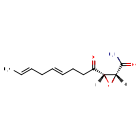
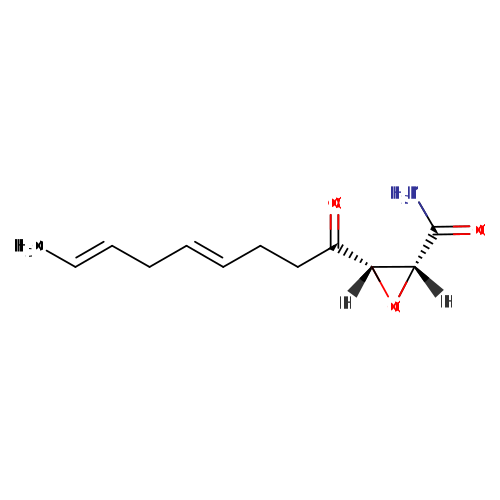
Structure for Cerulenin (DB01034)
- Weight
- Average: 223.272
Monoisotopic: 223.120843411 - Chemical Formula
- C12H17NO3
- Synonyms
- (2R,3S)-3-((4E,7E)-Nona-4,7-dienoyl)-oxirane-2-carboxylic acid amide
- (2R,3S)-3-((4E,7E)-nona-4,7-dienoyl)oxirane-2-carboxamide
- Cerulenin
- External IDs
- NSC-116069

Pharmacology
- Indication
For use as a biochemical tool, Cerulenin is shown to cause dramatic weight loss in animals
 Reduce drug development failure ratesBuild, train, & validate machine-learning modelswith evidence-based and structured datasets.Build, train, & validate predictive machine-learning models with structured datasets.
- Contraindications & Blackbox Warnings
 Prevent Adverse Drug Events TodayTap into our Clinical API for life-saving information on contraindications & blackbox warnings, population restrictions, harmful risks, & more.Avoid life-threatening adverse drug events with our Clinical API
- Pharmacodynamics
Cerulenin is an antifungal antibiotic isolated from Cephalosporium caerulens. It interrupts fungal growth by inhibiting the biosynthesis of sterols and fatty acids (inhibits bacterial fatty acid synthesis). It also inhibits HMG-CoA synthetase activity. Cerulenin produces metabolic effects similar to effects of leptin, but through mechanisms that are independent of, or down-stream from, both leptin and melanocortin receptors.
- Mechanism of action
Irreversibly binds to fatty acid synthase, specifically b-ketoacyl-acyl carrier protein synthase (FabH, FabB and FabF condensation enzymes). A number of tumor cells and cell lines have been observed to have highly upregulated expression and activity of fatty acid synthase (FAS). Inhibition of FAS by cerulenin leads to cytotoxicity and apoptosis in human cancer cell lines, an effect believed to be mediated by the accumulation of malonyl-coenzyme A in cells with an upregulated FAS pathway.
Target Actions Organism A3-oxoacyl-[acyl-carrier-protein] synthase 1 inhibitorEscherichia coli (strain K12) A3-oxoacyl-[acyl-carrier-protein] synthase 2 inhibitorEscherichia coli (strain K12) A3-oxoacyl-[acyl-carrier-protein] synthase 3 inhibitorEscherichia coli (strain K12) AFatty acid synthase inhibitorHumans - Absorption
Not Available
- Volume of distribution
Not Available
- Protein binding
Not Available
- Metabolism
- Not Available
- Route of elimination
Not Available
- Half-life
Not Available
- Clearance
Not Available
- Adverse Effects
 Improve decision support & research outcomesWith structured adverse effects data, including: blackbox warnings, adverse reactions, warning & precautions, & incidence rates. View sample adverse effects data in our new Data Library!Improve decision support & research outcomes with our structured adverse effects data.
- Toxicity
Oral, mouse LD50: 547 mg/kg. Symptoms of overexposure include moderate to severe erythema (redness) and moderate edema (raised skin), nausea, vomiting, and headache.
- Pathways
- Not Available
- Pharmacogenomic Effects/ADRs
- Not Available
Interactions
- Drug Interactions
- This information should not be interpreted without the help of a healthcare provider. If you believe you are experiencing an interaction, contact a healthcare provider immediately. The absence of an interaction does not necessarily mean no interactions exist.
Drug Interaction Integrate drug-drug
interactions in your softwareAcenocoumarol The therapeutic efficacy of Acenocoumarol can be increased when used in combination with Cerulenin. Dicoumarol The therapeutic efficacy of Dicoumarol can be increased when used in combination with Cerulenin. Fluindione The therapeutic efficacy of Fluindione can be increased when used in combination with Cerulenin. Phenindione The therapeutic efficacy of Phenindione can be increased when used in combination with Cerulenin. Phenprocoumon The therapeutic efficacy of Phenprocoumon can be increased when used in combination with Cerulenin. - Food Interactions
- Not Available
Products
 Drug product information from 10+ global regionsOur datasets provide approved product information including:dosage, form, labeller, route of administration, and marketing period.Access drug product information from over 10 global regions.
- International/Other Brands
- Helicocerin
Categories
- Drug Categories
- Classification
- Not classified
- Affected organisms
- Humans and other mammals
- Fungi
- Mycobacterium tuberculosis
- Bacteria
Chemical Identifiers
- UNII
- MF286Y830Q
- CAS number
- 17397-89-6
- InChI Key
- GVEZIHKRYBHEFX-NQQPLRFYSA-N
- InChI
- InChI=1S/C12H17NO3/c1-2-3-4-5-6-7-8-9(14)10-11(16-10)12(13)15/h2-3,5-6,10-11H,4,7-8H2,1H3,(H2,13,15)/b3-2+,6-5+/t10-,11-/m1/s1
- IUPAC Name
- (2R,3S)-3-[(4E,7E)-nona-4,7-dienoyl]oxirane-2-carboximidic acid
- SMILES
- [H][C@]1(O[C@]1([H])C(=O)CC\C=C\C\C=C\C)C(N)=O
References
- Synthesis Reference
Garfield P. Royer, Craig A. Townsend, "Cerulenin compounds for fatty acid synthesis inhibition." U.S. Patent US5539132, issued July, 1975.
US5539132- General References
- Huang P, Zhu S, Lu S, Dai Z, Jin Y: [An experimental study on cerulenin induced apoptosis of human colonic cancer cells]. Zhonghua Bing Li Xue Za Zhi. 2000 Apr;29(2):115-8. [Article]
- Straub SG, Yajima H, Komatsu M, Aizawa T, Sharp GW: The effects of cerulenin, an inhibitor of protein acylation, on the two phases of glucose-stimulated insulin secretion. Diabetes. 2002 Feb;51 Suppl 1:S91-5. [Article]
- External Links
- KEGG Compound
- C12058
- PubChem Compound
- 28517
- PubChem Substance
- 46508217
- ChemSpider
- 4445281
- BindingDB
- 50009248
- ChEBI
- 171741
- ChEMBL
- CHEMBL45627
- ZINC
- ZINC000004102315
- Therapeutic Targets Database
- DAP000659
- PharmGKB
- PA164764551
- PDBe Ligand
- 1X9
- Wikipedia
- Cerulenin
- PDB Entries
- 4ls7
- MSDS
- Download (25.4 KB)
Clinical Trials
Pharmacoeconomics
- Manufacturers
- Not Available
- Packagers
- Not Available
- Dosage Forms
- Not Available
- Prices
- Not Available
- Patents
- Not Available
Properties
- State
- Solid
- Experimental Properties
Property Value Source melting point (°C) 93.5 °C PhysProp water solubility Slightly soluble Not Available logP 1.2 Not Available - Predicted Properties
Property Value Source Water Solubility 1.6 mg/mL ALOGPS logP 1.38 ALOGPS logP -0.33 Chemaxon logS -2.1 ALOGPS pKa (Strongest Acidic) -3.4 Chemaxon pKa (Strongest Basic) 12.56 Chemaxon Physiological Charge 0 Chemaxon Hydrogen Acceptor Count 4 Chemaxon Hydrogen Donor Count 2 Chemaxon Polar Surface Area 73.68 Å2 Chemaxon Rotatable Bond Count 7 Chemaxon Refractivity 73.48 m3·mol-1 Chemaxon Polarizability 23.62 Å3 Chemaxon Number of Rings 1 Chemaxon Bioavailability 1 Chemaxon Rule of Five Yes Chemaxon Ghose Filter Yes Chemaxon Veber's Rule No Chemaxon MDDR-like Rule No Chemaxon - Predicted ADMET Features
Property Value Probability Human Intestinal Absorption + 0.9957 Blood Brain Barrier + 0.9711 Caco-2 permeable - 0.8957 P-glycoprotein substrate Non-substrate 0.7289 P-glycoprotein inhibitor I Non-inhibitor 0.5928 P-glycoprotein inhibitor II Non-inhibitor 0.8271 Renal organic cation transporter Non-inhibitor 0.9197 CYP450 2C9 substrate Non-substrate 0.8017 CYP450 2D6 substrate Non-substrate 0.8147 CYP450 3A4 substrate Non-substrate 0.6391 CYP450 1A2 substrate Non-inhibitor 0.6305 CYP450 2C9 inhibitor Non-inhibitor 0.7838 CYP450 2D6 inhibitor Non-inhibitor 0.9346 CYP450 2C19 inhibitor Non-inhibitor 0.64 CYP450 3A4 inhibitor Non-inhibitor 0.9438 CYP450 inhibitory promiscuity Low CYP Inhibitory Promiscuity 0.8871 Ames test AMES toxic 0.6488 Carcinogenicity Non-carcinogens 0.8611 Biodegradation Not ready biodegradable 0.8853 Rat acute toxicity 2.0415 LD50, mol/kg Not applicable hERG inhibition (predictor I) Weak inhibitor 0.9659 hERG inhibition (predictor II) Non-inhibitor 0.9698
Spectra
- Mass Spec (NIST)
- Not Available
- Spectra
Spectrum Spectrum Type Splash Key Predicted MS/MS Spectrum - 10V, Positive (Annotated) Predicted LC-MS/MS splash10-00di-3930000000-6bad10b3714f7078328a Predicted MS/MS Spectrum - 10V, Negative (Annotated) Predicted LC-MS/MS splash10-00dm-5690000000-3ab38a41eb1c15e7892b Predicted MS/MS Spectrum - 20V, Positive (Annotated) Predicted LC-MS/MS splash10-014i-9400000000-11acbd42145692853619 Predicted MS/MS Spectrum - 20V, Negative (Annotated) Predicted LC-MS/MS splash10-006x-9310000000-3517bbda6b54ff020efd Predicted MS/MS Spectrum - 40V, Negative (Annotated) Predicted LC-MS/MS splash10-0006-9000000000-9252e6096066257d7cbd Predicted MS/MS Spectrum - 40V, Positive (Annotated) Predicted LC-MS/MS splash10-014i-9300000000-3e1f54d4bbb1d1adf93c Predicted 1H NMR Spectrum 1D NMR Not Applicable Predicted 13C NMR Spectrum 1D NMR Not Applicable - Chromatographic Properties
Collision Cross Sections (CCS)
Adduct CCS Value (Å2) Source type Source [M-H]- 173.1440532 predictedDarkChem Lite v0.1.0 [M-H]- 172.4236532 predictedDarkChem Lite v0.1.0 [M-H]- 165.9132 predictedDeepCCS 1.0 (2019) [M+H]+ 173.6002532 predictedDarkChem Lite v0.1.0 [M+H]+ 172.7873532 predictedDarkChem Lite v0.1.0 [M+H]+ 168.30876 predictedDeepCCS 1.0 (2019) [M+Na]+ 172.3956532 predictedDarkChem Lite v0.1.0 [M+Na]+ 172.4103532 predictedDarkChem Lite v0.1.0 [M+Na]+ 175.2827 predictedDeepCCS 1.0 (2019)
Targets

- Kind
- Protein
- Organism
- Escherichia coli (strain K12)
- Pharmacological action
- Yes
- Actions
- Inhibitor
- General Function
- 3-oxoacyl-[acyl-carrier-protein] synthase activity
- Specific Function
- Catalyzes the condensation reaction of fatty acid synthesis by the addition to an acyl acceptor of two carbons from malonyl-ACP. Specific for elongation from C-10 to unsaturated C-16 and C-18 fatty...
- Gene Name
- fabB
- Uniprot ID
- P0A953
- Uniprot Name
- 3-oxoacyl-[acyl-carrier-protein] synthase 1
- Molecular Weight
- 42612.995 Da
References
- Kauppinen S, Siggaard-Andersen M, von Wettstein-Knowles P: beta-Ketoacyl-ACP synthase I of Escherichia coli: nucleotide sequence of the fabB gene and identification of the cerulenin binding residue. Carlsberg Res Commun. 1988;53(6):357-70. [Article]
- Price AC, Choi KH, Heath RJ, Li Z, White SW, Rock CO: Inhibition of beta-ketoacyl-acyl carrier protein synthases by thiolactomycin and cerulenin. Structure and mechanism. J Biol Chem. 2001 Mar 2;276(9):6551-9. Epub 2000 Oct 24. [Article]
- Slabaugh MB, Leonard JM, Knapp SJ: Condensing enzymes from Cuphea wrightii associated with medium chain fatty acid biosynthesis. Plant J. 1998 Mar;13(5):611-20. [Article]
- Heath RJ, Rock CO: Fatty acid biosynthesis as a target for novel antibacterials. Curr Opin Investig Drugs. 2004 Feb;5(2):146-53. [Article]
- Khandekar SS, Daines RA, Lonsdale JT: Bacterial beta-ketoacyl-acyl carrier protein synthases as targets for antibacterial agents. Curr Protein Pept Sci. 2003 Feb;4(1):21-9. [Article]
- Omura S: The antibiotic cerulenin, a novel tool for biochemistry as an inhibitor of fatty acid synthesis. Bacteriol Rev. 1976 Sep;40(3):681-97. [Article]
- Heath RJ, White SW, Rock CO: Lipid biosynthesis as a target for antibacterial agents. Prog Lipid Res. 2001 Nov;40(6):467-97. [Article]
- Kind
- Protein
- Organism
- Escherichia coli (strain K12)
- Pharmacological action
- Yes
- Actions
- Inhibitor
- General Function
- Beta-ketoacyl-acyl-carrier-protein synthase ii activity
- Specific Function
- Catalyzes the condensation reaction of fatty acid synthesis by the addition to an acyl acceptor of two carbons from malonyl-ACP. Has a preference for short chain acid substrates and may function to...
- Gene Name
- fabF
- Uniprot ID
- P0AAI5
- Uniprot Name
- 3-oxoacyl-[acyl-carrier-protein] synthase 2
- Molecular Weight
- 43045.39 Da
References
- Heath RJ, White SW, Rock CO: Inhibitors of fatty acid synthesis as antimicrobial chemotherapeutics. Appl Microbiol Biotechnol. 2002 May;58(6):695-703. Epub 2002 Mar 7. [Article]
- Schujman GE, Choi KH, Altabe S, Rock CO, de Mendoza D: Response of Bacillus subtilis to cerulenin and acquisition of resistance. J Bacteriol. 2001 May;183(10):3032-40. [Article]
- Heath RJ, Rock CO: Fatty acid biosynthesis as a target for novel antibacterials. Curr Opin Investig Drugs. 2004 Feb;5(2):146-53. [Article]
- Khandekar SS, Daines RA, Lonsdale JT: Bacterial beta-ketoacyl-acyl carrier protein synthases as targets for antibacterial agents. Curr Protein Pept Sci. 2003 Feb;4(1):21-9. [Article]
- Omura S: The antibiotic cerulenin, a novel tool for biochemistry as an inhibitor of fatty acid synthesis. Bacteriol Rev. 1976 Sep;40(3):681-97. [Article]
- Heath RJ, White SW, Rock CO: Lipid biosynthesis as a target for antibacterial agents. Prog Lipid Res. 2001 Nov;40(6):467-97. [Article]
- Price AC, Choi KH, Heath RJ, Li Z, White SW, Rock CO: Inhibition of beta-ketoacyl-acyl carrier protein synthases by thiolactomycin and cerulenin. Structure and mechanism. J Biol Chem. 2001 Mar 2;276(9):6551-9. Epub 2000 Oct 24. [Article]
- Kind
- Protein
- Organism
- Escherichia coli (strain K12)
- Pharmacological action
- Yes
- Actions
- Inhibitor
- General Function
- Beta-ketoacyl-acyl-carrier-protein synthase iii activity
- Specific Function
- Catalyzes the condensation reaction of fatty acid synthesis by the addition to an acyl acceptor of two carbons from malonyl-ACP. Catalyzes the first condensation reaction which initiates fatty acid...
- Gene Name
- fabH
- Uniprot ID
- P0A6R0
- Uniprot Name
- 3-oxoacyl-[acyl-carrier-protein] synthase 3
- Molecular Weight
- 33514.78 Da
References
- Young K, Jayasuriya H, Ondeyka JG, Herath K, Zhang C, Kodali S, Galgoci A, Painter R, Brown-Driver V, Yamamoto R, Silver LL, Zheng Y, Ventura JI, Sigmund J, Ha S, Basilio A, Vicente F, Tormo JR, Pelaez F, Youngman P, Cully D, Barrett JF, Schmatz D, Singh SB, Wang J: Discovery of FabH/FabF inhibitors from natural products. Antimicrob Agents Chemother. 2006 Feb;50(2):519-26. [Article]
- Heath RJ, White SW, Rock CO: Inhibitors of fatty acid synthesis as antimicrobial chemotherapeutics. Appl Microbiol Biotechnol. 2002 May;58(6):695-703. Epub 2002 Mar 7. [Article]
- Price AC, Choi KH, Heath RJ, Li Z, White SW, Rock CO: Inhibition of beta-ketoacyl-acyl carrier protein synthases by thiolactomycin and cerulenin. Structure and mechanism. J Biol Chem. 2001 Mar 2;276(9):6551-9. Epub 2000 Oct 24. [Article]
- Heath RJ, Rock CO: Fatty acid biosynthesis as a target for novel antibacterials. Curr Opin Investig Drugs. 2004 Feb;5(2):146-53. [Article]
- Khandekar SS, Daines RA, Lonsdale JT: Bacterial beta-ketoacyl-acyl carrier protein synthases as targets for antibacterial agents. Curr Protein Pept Sci. 2003 Feb;4(1):21-9. [Article]
- Omura S: The antibiotic cerulenin, a novel tool for biochemistry as an inhibitor of fatty acid synthesis. Bacteriol Rev. 1976 Sep;40(3):681-97. [Article]
- Heath RJ, White SW, Rock CO: Lipid biosynthesis as a target for antibacterial agents. Prog Lipid Res. 2001 Nov;40(6):467-97. [Article]
- Kind
- Protein
- Organism
- Humans
- Pharmacological action
- Yes
- Actions
- Inhibitor
- General Function
- Poly(a) rna binding
- Specific Function
- Fatty acid synthetase catalyzes the formation of long-chain fatty acids from acetyl-CoA, malonyl-CoA and NADPH. This multifunctional protein has 7 catalytic activities and an acyl carrier protein.
- Gene Name
- FASN
- Uniprot ID
- P49327
- Uniprot Name
- Fatty acid synthase
- Molecular Weight
- 273424.06 Da
References
- Oskouian B, Saba JD: YAP1 confers resistance to the fatty acid synthase inhibitor cerulenin through the transporter Flr1p in Saccharomyces cerevisiae. Mol Gen Genet. 1999 Mar;261(2):346-53. [Article]
- Li JN, Gorospe M, Chrest FJ, Kumaravel TS, Evans MK, Han WF, Pizer ES: Pharmacological inhibition of fatty acid synthase activity produces both cytostatic and cytotoxic effects modulated by p53. Cancer Res. 2001 Feb 15;61(4):1493-9. [Article]
- Heiligtag SJ, Bredehorst R, David KA: Key role of mitochondria in cerulenin-mediated apoptosis. Cell Death Differ. 2002 Sep;9(9):1017-25. [Article]
- Chen X, Ji ZL, Chen YZ: TTD: Therapeutic Target Database. Nucleic Acids Res. 2002 Jan 1;30(1):412-5. [Article]
- Flavin R, Peluso S, Nguyen PL, Loda M: Fatty acid synthase as a potential therapeutic target in cancer. Future Oncol. 2010 Apr;6(4):551-62. doi: 10.2217/fon.10.11. [Article]
- Lupu R, Menendez JA: Pharmacological inhibitors of Fatty Acid Synthase (FASN)--catalyzed endogenous fatty acid biogenesis: a new family of anti-cancer agents? Curr Pharm Biotechnol. 2006 Dec;7(6):483-93. [Article]
- Ronnett GV, Kim EK, Landree LE, Tu Y: Fatty acid metabolism as a target for obesity treatment. Physiol Behav. 2005 May 19;85(1):25-35. [Article]

Drug created at June 13, 2005 13:24 / Updated at February 02, 2024 22:47