Identification
- Summary
Gatifloxacin is a fourth generation fluoroquinolone used to treat a wide variety of infections in the body.
- Brand Names
- Zymar, Zymaxid
- Generic Name
- Gatifloxacin
- DrugBank Accession Number
- DB01044
- Background
Gatifloxacin is an antibiotic agent and a member of the fourth-generation fluoroquinolone family. It works by inhibiting the bacterial enzymes DNA gyrase and topoisomerase IV. It was first introduced by Bristol-Myers Squibb in 1999 under the brand name Tequin® for the treatment of respiratory tract infections. Gatifloxacin is available as tablets and in various aqueous solutions for intravenous therapy. It is also available as eye drops under the brand name Zymar® marketed by Allergan.
The FDA withdrew its approval for the use of non-ophthalmic drug products containing gatifloxacin due to the high prevalence of gatifloxacin-associated dysglycemia adverse event reports and the high incidence of hyperglycemic and hypoglycemic episodes in patients taking gatifloxacin compared to those on macrolide antibiotics.5,6
- Type
- Small Molecule
- Groups
- Approved, Investigational, Withdrawn
- Structure
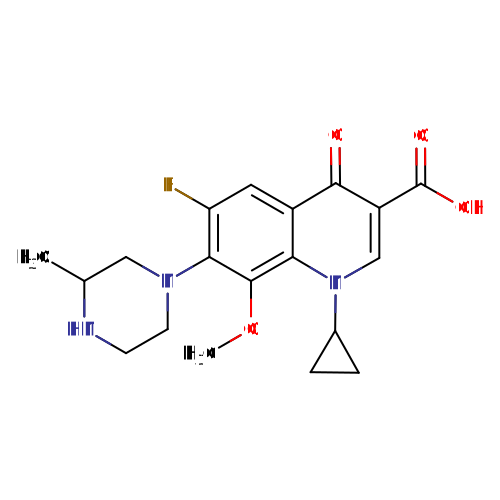
Structure for Gatifloxacin (DB01044)
- Weight
- Average: 375.3941
Monoisotopic: 375.159434412 - Chemical Formula
- C19H22FN3O4
- Synonyms
- 1-Cyclopropyl-1,4-dihydro-6-fluoro-8-methoxy-7-(3-methyl-1-piperazinyl)-4-oxo-3-quinolinecarboxylic acid
- 1-cyclopropyl-6-fluoro- 8-methoxy-7-(3-methylpiperazin-1-yl)- 4-oxo-quinoline-3-carboxylic acid
- Gatifloxacin
- Gatifloxacin anhydrous
- Gatifloxacine
- Gatifloxacino
- Gatifloxacinum

Pharmacology
- Indication
For the treatment of bronchitis, sinusitis, community-acquired pneumonia, and skin infections (abscesses, wounds) caused by S. pneumoniae, H. influenzae, S. aureus, M. pneumoniae, C. pneumoniae, L. pneumophila, S. pyogenes
 Reduce drug development failure ratesBuild, train, & validate machine-learning modelswith evidence-based and structured datasets.Build, train, & validate predictive machine-learning models with structured datasets.
- Associated Conditions
Indication Type Indication Combined Product Details Approval Level Age Group Patient Characteristics Dose Form Treatment of Bacterial conjunctivitis •••••••••••• ••••••••• •••••••••• Used in combination to treat Ocular infections, irritations and inflammations Combination Product in combination with: Prednisolone acetate (DB15566) •••••••••••• •••••• Used in combination to treat Ocular infections, irritations and inflammations Combination Product in combination with: Dexamethasone (DB01234) •••••••••••• •••••• - Contraindications & Blackbox Warnings
 Prevent Adverse Drug Events TodayTap into our Clinical API for life-saving information on contraindications & blackbox warnings, population restrictions, harmful risks, & more.Avoid life-threatening adverse drug events with our Clinical API
- Pharmacodynamics
Gatifloxacin is a synthetic broad-spectrum 8-methoxyfluoroquinolone antibacterial agent for oral or intravenous administration. is bactericidal and its mode of action depends on blocking of bacterial DNA replication by binding itself to an enzyme called DNA gyrase, which allows the untwisting required to replicate one DNA double helix into two. Notably the drug has 100 times higher affinity for bacterial DNA gyrase than for mammalian. Gatifloxacin is a broad-spectrum antibiotic that is active against both Gram-positive and Gram-negative bacteria. It should be used only to treat or prevent infections that are proven or strongly suspected to be caused by bacteria.
- Mechanism of action
The bactericidal action of Gatifloxacin results from inhibition of the enzymes topoisomerase II (DNA gyrase) and topoisomerase IV, which are required for bacterial DNA replication, transcription, repair, and recombination.
Target Actions Organism ADNA gyrase subunit A inhibitorStreptococcus pneumoniae serotype 4 (strain ATCC BAA-334 / TIGR4) ADNA gyrase subunit B inhibitorStreptococcus pneumoniae serotype 4 (strain ATCC BAA-334 / TIGR4) ADNA topoisomerase 4 subunit A inhibitorStreptococcus pneumoniae serotype 4 (strain ATCC BAA-334 / TIGR4) ADNA topoisomerase 4 subunit B inhibitorStreptococcus pneumoniae serotype 4 (strain ATCC BAA-334 / TIGR4) - Absorption
Well absorbed from the gastrointestinal tract after oral administration with absolute bioavailability of gatifloxacin is 96%
- Volume of distribution
Not Available
- Protein binding
20%
- Metabolism
Gatifloxacin undergoes limited biotransformation in humans with less than 1% of the dose excreted in the urine as ethylenediamine and methylethylenediamine metabolites
Hover over products below to view reaction partners
- Route of elimination
Not Available
- Half-life
7-14 hours
- Clearance
Not Available
- Adverse Effects
 Improve decision support & research outcomesWith structured adverse effects data, including: blackbox warnings, adverse reactions, warning & precautions, & incidence rates. View sample adverse effects data in our new Data Library!Improve decision support & research outcomes with our structured adverse effects data.
- Toxicity
Not Available
- Pathways
- Not Available
- Pharmacogenomic Effects/ADRs
- Not Available
Interactions
- Drug Interactions
- This information should not be interpreted without the help of a healthcare provider. If you believe you are experiencing an interaction, contact a healthcare provider immediately. The absence of an interaction does not necessarily mean no interactions exist.
Drug Interaction Integrate drug-drug
interactions in your softwareAcarbose The therapeutic efficacy of Acarbose can be increased when used in combination with Gatifloxacin. Aceclofenac Aceclofenac may increase the neuroexcitatory activities of Gatifloxacin. Acemetacin Acemetacin may increase the neuroexcitatory activities of Gatifloxacin. Acenocoumarol The therapeutic efficacy of Acenocoumarol can be increased when used in combination with Gatifloxacin. Acetaminophen The metabolism of Acetaminophen can be decreased when combined with Gatifloxacin. - Food Interactions
- Drink plenty of fluids.
- Take with or without food. The absorption is unaffected by food.
Products
 Drug product information from 10+ global regionsOur datasets provide approved product information including:dosage, form, labeller, route of administration, and marketing period.Access drug product information from over 10 global regions.
- Product Ingredients
Ingredient UNII CAS InChI Key Gatifloxacin hemihydrate AN201CY09J 404858-36-2 ISCAXBHESPTGIQ-UHFFFAOYSA-N Gatifloxacin sesquihydrate L4618BD7KJ 180200-66-2 RMJMZKDEVNTXHE-UHFFFAOYSA-N - Brand Name Prescription Products
Name Dosage Strength Route Labeller Marketing Start Marketing End Region Image Tequin Tablet 400 mg Oral Bristol Myers Squibb 2001-02-21 2006-06-29 Canada 
Tequin Tablet 200 mg Oral Bristol Myers Squibb 2004-01-16 2006-06-29 Canada Tequin IV Liquid 10 mg / mL Intravenous Bristol Myers Squibb 2001-03-14 2006-06-29 Canada Tequin IV Solution 2 mg / mL Intravenous Bristol Myers Squibb 2002-01-05 2006-06-29 Canada Zymar Solution / drops 3 mg/1mL Ophthalmic Allergan, Inc. 2003-04-11 Not applicable US 
- Generic Prescription Products
Name Dosage Strength Route Labeller Marketing Start Marketing End Region Image Apo-gatifloxacin Solution 0.3 % Ophthalmic Apotex Corporation 2019-11-15 Not applicable Canada Gatifloxacin Solution / drops 5 mg/1mL Ophthalmic Sandoz Inc 2016-10-03 Not applicable US Gatifloxacin Solution / drops 5 mg/1mL Ophthalmic Akorn 2014-10-06 Not applicable US Gatifloxacin Solution / drops 5 mg/1mL Ophthalmic Torrent Pharmaceuticals Limited 2021-11-03 Not applicable US Gatifloxacin Solution / drops 5 mg/1mL Ophthalmic Pacific Pharma, Inc. 2015-04-15 Not applicable US - Mixture Products
Name Ingredients Dosage Route Labeller Marketing Start Marketing End Region Image GATIPHARM - D® (GATIFLOXACINA 0.3% + DEXAMETASONA 0.1% SOLUCIÓN OFTÁLMICA ESTERIL) Gatifloxacin sesquihydrate (3 mg) + Dexamethasone (1 mg) Solution Conjunctival; Ophthalmic OPHARM LTDA 2015-05-06 2021-10-01 Colombia 
NORIGRAN® Gatifloxacin sesquihydrate (3 mg) + Dexamethasone sodium phosphate (1 mg) Solution Ophthalmic; Topical OPHARM LTDA. 2020-05-29 Not applicable Colombia - Unapproved/Other Products
Name Ingredients Dosage Route Labeller Marketing Start Marketing End Region Image Gati-Dex Gatifloxacin sesquihydrate (5 mg/1mL) + Dexamethasone sodium phosphate (1 mg/1mL) Solution / drops Ophthalmic Imprimis Njof, Llc 2018-01-05 2019-02-01 US Pred Phos - Gati Gatifloxacin sesquihydrate (5 mg/1mL) + Prednisolone sodium phosphate (10 mg/1mL) Solution / drops Ophthalmic Imprimis Njof, Llc 2018-07-02 2019-07-01 US Pred Phos-Gati-Brom Gatifloxacin sesquihydrate (5 mg/1mL) + Bromfenac (0.75 mg/1mL) + Prednisolone sodium phosphate (10 mg/1mL) Solution / drops Ophthalmic Imprimis Njof, Llc 2018-07-02 2019-07-01 US Pred-Gati Gatifloxacin sesquihydrate (5 mg/1mL) + Prednisolone acetate (10 mg/1mL) Suspension / drops Ophthalmic Imprimis Njof, Llc 2018-01-05 2019-07-01 US Pred-Gati Gatifloxacin hemihydrate (5 mg/1mL) + Prednisolone acetate (10 mg/1mL) Suspension Ophthalmic ImprimisRx NJ 2018-03-01 Not applicable US
Categories
- ATC Codes
- S01AE06 — GatifloxacinJ01MA16 — Gatifloxacin
- Drug Categories
- Anti-Bacterial Agents
- Anti-Infective Agents
- Antibacterials for Systemic Use
- Antiinfectives for Systemic Use
- Compounds used in a research, industrial, or household setting
- Cytochrome P-450 CYP1A2 Inhibitors
- Cytochrome P-450 CYP1A2 Inhibitors (moderate)
- Cytochrome P-450 Enzyme Inhibitors
- Enzyme Inhibitors
- Fluoroquinolones
- Heterocyclic Compounds, Fused-Ring
- Hypoglycemia-Associated Agents
- Ophthalmic Solutions
- Ophthalmologicals
- Pharmaceutical Preparations
- Pharmaceutical Solutions
- Potential QTc-Prolonging Agents
- QTc Prolonging Agents
- Quinolines
- Quinolone Antimicrobial
- Quinolones
- Sensory Organs
- Solutions
- Topoisomerase II Inhibitors
- Topoisomerase Inhibitors
- Chemical TaxonomyProvided by Classyfire
- Description
- This compound belongs to the class of organic compounds known as quinoline carboxylic acids. These are quinolines in which the quinoline ring system is substituted by a carboxyl group at one or more positions.
- Kingdom
- Organic compounds
- Super Class
- Organoheterocyclic compounds
- Class
- Quinolines and derivatives
- Sub Class
- Quinoline carboxylic acids
- Direct Parent
- Quinoline carboxylic acids
- Alternative Parents
- N-arylpiperazines / Fluoroquinolones / Aminoquinolines and derivatives / Hydroquinolones / Haloquinolines / Hydroquinolines / Pyridinecarboxylic acids / Methoxyanilines / Anisoles / Dialkylarylamines show 13 more
- Substituents
- 1,4-diazinane / Alkyl aryl ether / Amine / Amino acid / Amino acid or derivatives / Aminoquinoline / Anisole / Aromatic heteropolycyclic compound / Aryl fluoride / Aryl halide show 33 more
- Molecular Framework
- Aromatic heteropolycyclic compounds
- External Descriptors
- organofluorine compound, N-arylpiperazine, quinolone antibiotic, quinolone, quinolinemonocarboxylic acid (CHEBI:5280)
- Affected organisms
- Enteric bacteria and other eubacteria
- Mycobacterium
- Chlamydia pneumoniae
- Chlamydia trachomatis
- Mycoplasma pneumoniae
- Legionella pneumophila
- Chlamydia psittaci
Chemical Identifiers
- UNII
- 81485Y3A9A
- CAS number
- 112811-59-3
- InChI Key
- XUBOMFCQGDBHNK-UHFFFAOYSA-N
- InChI
- InChI=1S/C19H22FN3O4/c1-10-8-22(6-5-21-10)16-14(20)7-12-15(18(16)27-2)23(11-3-4-11)9-13(17(12)24)19(25)26/h7,9-11,21H,3-6,8H2,1-2H3,(H,25,26)
- IUPAC Name
- 1-cyclopropyl-6-fluoro-8-methoxy-7-(3-methylpiperazin-1-yl)-4-oxo-1,4-dihydroquinoline-3-carboxylic acid
- SMILES
- COC1=C2N(C=C(C(O)=O)C(=O)C2=CC(F)=C1N1CCNC(C)C1)C1CC1
References
- Synthesis Reference
- US4980470
- General References
- Park-Wyllie LY, Juurlink DN, Kopp A, Shah BR, Stukel TA, Stumpo C, Dresser L, Low DE, Mamdani MM: Outpatient gatifloxacin therapy and dysglycemia in older adults. N Engl J Med. 2006 Mar 30;354(13):1352-61. Epub 2006 Mar 1. [Article]
- Gurwitz JH: Serious adverse drug effects--seeing the trees through the forest. N Engl J Med. 2006 Mar 30;354(13):1413-5. Epub 2006 Mar 1. [Article]
- MedEx: Gatidex (gatifloxacin/dexamethasone) ophthalmic solution [Link]
- Vademecum: Zypred (gatifloxacin/prednisolone acetate) ophthalmic suspension [Link]
- Code of Federal Regulations 216.24: Drug products withdrawn or removed from the market for reasons of safety or effectiveness. [Link]
- Federal Register: Determination That TEQUIN (Gatifloxacin) Was Withdrawn From Sale for Reasons of Safety or Effectiveness [Link]
- External Links
- Human Metabolome Database
- HMDB0015178
- KEGG Drug
- D08011
- KEGG Compound
- C07661
- PubChem Compound
- 5379
- PubChem Substance
- 46506159
- ChemSpider
- 5186
- BindingDB
- 50117914
- 1546025
- ChEBI
- 5280
- ChEMBL
- CHEMBL31
- Therapeutic Targets Database
- DAP001387
- PharmGKB
- PA449738
- RxList
- RxList Drug Page
- Drugs.com
- Drugs.com Drug Page
- PDRhealth
- PDRhealth Drug Page
- Wikipedia
- Gatifloxacin
- FDA label
- Download (134 KB)
- MSDS
- Download (57.3 KB)
Clinical Trials
- Clinical Trials
Phase Status Purpose Conditions Count 4 Completed Not Available Cataract Surgery 1 4 Completed Not Available Macula Thickening 1 4 Completed Basic Science Antibiotic Resistance, Bacterial 1 4 Completed Basic Science Healthy Volunteers (HV) 1 4 Completed Other Injections / Intravitreous 1
Pharmacoeconomics
- Manufacturers
- Not Available
- Packagers
- Allergan Inc.
- AQ Pharmaceuticals Inc.
- Bristol-Myers Squibb Co.
- Cardinal Health
- Lake Erie Medical and Surgical Supply
- Mead Johnson and Co.
- PD-Rx Pharmaceuticals Inc.
- Dosage Forms
Form Route Strength Solution Ophthalmic 5 mg Solution / drops Ophthalmic Suspension Conjunctival; Ophthalmic Solution Ophthalmic 3 mg/1mL Solution Conjunctival; Ophthalmic Solution Ophthalmic; Topical 0.003 g Solution / drops Ophthalmic Solution Ophthalmic 0.3 % w/v Solution Ophthalmic 3.000 mg Solution Ophthalmic; Topical Solution Conjunctival; Ophthalmic 3 mg Solution Conjunctival; Ophthalmic 300000 mg Suspension Ophthalmic Suspension / drops Ophthalmic Solution Ophthalmic 3 mg / mL Tablet, film coated Oral 400 mg Tablet Oral 200 mg Tablet Oral 400 mg Liquid Intravenous 10 mg / mL Solution Intravenous 2 mg / mL Solution Ophthalmic 0.3 % Solution / drops Ophthalmic 3 mg/1mL Liquid Ophthalmic 3 mg/1ml Solution Ophthalmic 3 mg/ml Solution / drops Ophthalmic 5 mg/1mL - Prices
Unit description Cost Unit Zymar 0.3% Solution 5ml Bottle 87.53USD bottle Zymar 0.3% eye drops 16.75USD ml DrugBank does not sell nor buy drugs. Pricing information is supplied for informational purposes only.- Patents
Patent Number Pediatric Extension Approved Expires (estimated) Region US4980470 No 1990-12-25 2009-12-15 US CA2307632 No 2007-05-22 2019-08-20 Canada CA1340316 No 1999-01-12 2016-01-12 Canada US6333045 Yes 2001-12-25 2020-02-20 US US5880283 Yes 1999-03-09 2016-06-05 US
Properties
- State
- Solid
- Experimental Properties
Property Value Source melting point (°C) 182-185 °C Not Available water solubility 60 mg/mL (at pH 4) Not Available logP 2.6 Not Available - Predicted Properties
Property Value Source Water Solubility 0.631 mg/mL ALOGPS logP -0.23 ALOGPS logP -0.62 Chemaxon logS -2.8 ALOGPS pKa (Strongest Acidic) 5.49 Chemaxon pKa (Strongest Basic) 8.82 Chemaxon Physiological Charge 0 Chemaxon Hydrogen Acceptor Count 7 Chemaxon Hydrogen Donor Count 2 Chemaxon Polar Surface Area 82.11 Å2 Chemaxon Rotatable Bond Count 4 Chemaxon Refractivity 98.82 m3·mol-1 Chemaxon Polarizability 38.29 Å3 Chemaxon Number of Rings 4 Chemaxon Bioavailability 1 Chemaxon Rule of Five Yes Chemaxon Ghose Filter No Chemaxon Veber's Rule No Chemaxon MDDR-like Rule No Chemaxon - Predicted ADMET Features
Property Value Probability Human Intestinal Absorption + 0.9279 Blood Brain Barrier - 0.9869 Caco-2 permeable + 0.5 P-glycoprotein substrate Substrate 0.9116 P-glycoprotein inhibitor I Non-inhibitor 0.7838 P-glycoprotein inhibitor II Non-inhibitor 0.6997 Renal organic cation transporter Non-inhibitor 0.804 CYP450 2C9 substrate Non-substrate 0.8257 CYP450 2D6 substrate Non-substrate 0.9116 CYP450 3A4 substrate Non-substrate 0.6231 CYP450 1A2 substrate Non-inhibitor 0.8535 CYP450 2C9 inhibitor Non-inhibitor 0.8479 CYP450 2D6 inhibitor Non-inhibitor 0.9124 CYP450 2C19 inhibitor Non-inhibitor 0.8598 CYP450 3A4 inhibitor Non-inhibitor 0.8804 CYP450 inhibitory promiscuity Low CYP Inhibitory Promiscuity 0.7502 Ames test AMES toxic 0.605 Carcinogenicity Non-carcinogens 0.8678 Biodegradation Not ready biodegradable 1.0 Rat acute toxicity 2.3029 LD50, mol/kg Not applicable hERG inhibition (predictor I) Weak inhibitor 0.8994 hERG inhibition (predictor II) Non-inhibitor 0.7207
Spectra
- Mass Spec (NIST)
- Not Available
- Spectra
- Chromatographic Properties
Collision Cross Sections (CCS)
Adduct CCS Value (Å2) Source type Source [M-H]- 199.2223624 predictedDarkChem Lite v0.1.0 [M-H]- 180.13356 predictedDeepCCS 1.0 (2019) [M+H]+ 199.5098624 predictedDarkChem Lite v0.1.0 [M+H]+ 182.49156 predictedDeepCCS 1.0 (2019) [M+Na]+ 198.8002624 predictedDarkChem Lite v0.1.0 [M+Na]+ 189.1271 predictedDeepCCS 1.0 (2019)
Targets

- Kind
- Protein
- Organism
- Streptococcus pneumoniae serotype 4 (strain ATCC BAA-334 / TIGR4)
- Pharmacological action
- Yes
- Actions
- Inhibitor
- General Function
- Dna topoisomerase type ii (atp-hydrolyzing) activity
- Specific Function
- DNA gyrase negatively supercoils closed circular double-stranded DNA in an ATP-dependent manner and also catalyzes the interconversion of other topological isomers of double-stranded DNA rings, inc...
- Gene Name
- gyrA
- Uniprot ID
- P72524
- Uniprot Name
- DNA gyrase subunit A
- Molecular Weight
- 92052.595 Da
References
- Harding I, Simpson I: Fluoroquinolones: is there a different mechanism of action and resistance against Streptococcus pneumoniae? J Chemother. 2000 Oct;12 Suppl 4:7-15. [Article]
- Rafii F, Park M, Novak JS: Alterations in DNA gyrase and topoisomerase IV in resistant mutants of Clostridium perfringens found after in vitro treatment with fluoroquinolones. Antimicrob Agents Chemother. 2005 Feb;49(2):488-92. [Article]
- Kays MB, Zhanel GG, Reimann MA, Jacobi J, Denys GA, Smith DW, Wack MF: Selection of a gyrA mutation and treatment failure with gatifloxacin in a patient with Streptococcus pneumoniae with a preexisting parC mutation. Pharmacotherapy. 2007 Feb;27(2):221-6. [Article]
- Kim OK, Ohemeng K, Barrett JF: Advances in DNA gyrase inhibitors. Expert Opin Investig Drugs. 2001 Feb;10(2):199-212. [Article]
- Hosaka M: [Antibacterial property and clinical effect of gatifloxacin, a novel quinolone antibacterial agent]. Nihon Yakurigaku Zasshi. 2003 Jun;121(6):447-56. [Article]
- Mdluli K, Ma Z: Mycobacterium tuberculosis DNA gyrase as a target for drug discovery. Infect Disord Drug Targets. 2007 Jun;7(2):159-68. [Article]
- Kind
- Protein
- Organism
- Streptococcus pneumoniae serotype 4 (strain ATCC BAA-334 / TIGR4)
- Pharmacological action
- Yes
- Actions
- Inhibitor
- General Function
- Magnesium ion binding
- Specific Function
- DNA gyrase negatively supercoils closed circular double-stranded DNA in an ATP-dependent manner and also catalyzes the interconversion of other topological isomers of double-stranded DNA rings, inc...
- Gene Name
- gyrB
- Uniprot ID
- P0A4L9
- Uniprot Name
- DNA gyrase subunit B
- Molecular Weight
- 72237.025 Da
References
- Harding I, Simpson I: Fluoroquinolones: is there a different mechanism of action and resistance against Streptococcus pneumoniae? J Chemother. 2000 Oct;12 Suppl 4:7-15. [Article]
- Rafii F, Park M, Novak JS: Alterations in DNA gyrase and topoisomerase IV in resistant mutants of Clostridium perfringens found after in vitro treatment with fluoroquinolones. Antimicrob Agents Chemother. 2005 Feb;49(2):488-92. [Article]
- Kays MB, Zhanel GG, Reimann MA, Jacobi J, Denys GA, Smith DW, Wack MF: Selection of a gyrA mutation and treatment failure with gatifloxacin in a patient with Streptococcus pneumoniae with a preexisting parC mutation. Pharmacotherapy. 2007 Feb;27(2):221-6. [Article]
- Kim OK, Ohemeng K, Barrett JF: Advances in DNA gyrase inhibitors. Expert Opin Investig Drugs. 2001 Feb;10(2):199-212. [Article]
- Hosaka M: [Antibacterial property and clinical effect of gatifloxacin, a novel quinolone antibacterial agent]. Nihon Yakurigaku Zasshi. 2003 Jun;121(6):447-56. [Article]
- Mdluli K, Ma Z: Mycobacterium tuberculosis DNA gyrase as a target for drug discovery. Infect Disord Drug Targets. 2007 Jun;7(2):159-68. [Article]
- Kind
- Protein
- Organism
- Streptococcus pneumoniae serotype 4 (strain ATCC BAA-334 / TIGR4)
- Pharmacological action
- Yes
- Actions
- Inhibitor
- General Function
- Dna topoisomerase type ii (atp-hydrolyzing) activity
- Specific Function
- Topoisomerase IV is essential for chromosome segregation. It relaxes supercoiled DNA. Performs the decatenation events required during the replication of a circular DNA molecule.
- Gene Name
- parC
- Uniprot ID
- P72525
- Uniprot Name
- DNA topoisomerase 4 subunit A
- Molecular Weight
- 93132.2 Da
References
- Harding I, Simpson I: Fluoroquinolones: is there a different mechanism of action and resistance against Streptococcus pneumoniae? J Chemother. 2000 Oct;12 Suppl 4:7-15. [Article]
- Rafii F, Park M, Novak JS: Alterations in DNA gyrase and topoisomerase IV in resistant mutants of Clostridium perfringens found after in vitro treatment with fluoroquinolones. Antimicrob Agents Chemother. 2005 Feb;49(2):488-92. [Article]
- Kays MB, Zhanel GG, Reimann MA, Jacobi J, Denys GA, Smith DW, Wack MF: Selection of a gyrA mutation and treatment failure with gatifloxacin in a patient with Streptococcus pneumoniae with a preexisting parC mutation. Pharmacotherapy. 2007 Feb;27(2):221-6. [Article]
- Hosaka M: [Antibacterial property and clinical effect of gatifloxacin, a novel quinolone antibacterial agent]. Nihon Yakurigaku Zasshi. 2003 Jun;121(6):447-56. [Article]
- Mdluli K, Ma Z: Mycobacterium tuberculosis DNA gyrase as a target for drug discovery. Infect Disord Drug Targets. 2007 Jun;7(2):159-68. [Article]
- Kind
- Protein
- Organism
- Streptococcus pneumoniae serotype 4 (strain ATCC BAA-334 / TIGR4)
- Pharmacological action
- Yes
- Actions
- Inhibitor
- General Function
- Magnesium ion binding
- Specific Function
- Topoisomerase IV is essential for chromosome segregation. It relaxes supercoiled DNA. Performs the decatenation events required during the replication of a circular DNA molecule.
- Gene Name
- parE
- Uniprot ID
- Q59961
- Uniprot Name
- DNA topoisomerase 4 subunit B
- Molecular Weight
- 71663.86 Da
References
- Harding I, Simpson I: Fluoroquinolones: is there a different mechanism of action and resistance against Streptococcus pneumoniae? J Chemother. 2000 Oct;12 Suppl 4:7-15. [Article]
- Rafii F, Park M, Novak JS: Alterations in DNA gyrase and topoisomerase IV in resistant mutants of Clostridium perfringens found after in vitro treatment with fluoroquinolones. Antimicrob Agents Chemother. 2005 Feb;49(2):488-92. [Article]
- Kays MB, Zhanel GG, Reimann MA, Jacobi J, Denys GA, Smith DW, Wack MF: Selection of a gyrA mutation and treatment failure with gatifloxacin in a patient with Streptococcus pneumoniae with a preexisting parC mutation. Pharmacotherapy. 2007 Feb;27(2):221-6. [Article]
- Hosaka M: [Antibacterial property and clinical effect of gatifloxacin, a novel quinolone antibacterial agent]. Nihon Yakurigaku Zasshi. 2003 Jun;121(6):447-56. [Article]
- Mdluli K, Ma Z: Mycobacterium tuberculosis DNA gyrase as a target for drug discovery. Infect Disord Drug Targets. 2007 Jun;7(2):159-68. [Article]
Enzymes
- Kind
- Protein
- Organism
- Humans
- Pharmacological action
- No
- Actions
- Inhibitor
- General Function
- Oxidoreductase activity, acting on paired donors, with incorporation or reduction of molecular oxygen, reduced flavin or flavoprotein as one donor, and incorporation of one atom of oxygen
- Specific Function
- Cytochromes P450 are a group of heme-thiolate monooxygenases. In liver microsomes, this enzyme is involved in an NADPH-dependent electron transport pathway. It oxidizes a variety of structurally un...
- Gene Name
- CYP1A2
- Uniprot ID
- P05177
- Uniprot Name
- Cytochrome P450 1A2
- Molecular Weight
- 58293.76 Da
References
- Zhou SF, Yang LP, Zhou ZW, Liu YH, Chan E: Insights into the substrate specificity, inhibitors, regulation, and polymorphisms and the clinical impact of human cytochrome P450 1A2. AAPS J. 2009 Sep;11(3):481-94. doi: 10.1208/s12248-009-9127-y. Epub 2009 Jul 10. [Article]
Carriers
- Kind
- Protein
- Organism
- Humans
- Pharmacological action
- Unknown
- Actions
- Other/unknown
- General Function
- Toxic substance binding
- Specific Function
- Serum albumin, the main protein of plasma, has a good binding capacity for water, Ca(2+), Na(+), K(+), fatty acids, hormones, bilirubin and drugs. Its main function is the regulation of the colloid...
- Gene Name
- ALB
- Uniprot ID
- P02768
- Uniprot Name
- Serum albumin
- Molecular Weight
- 69365.94 Da
References
- Guo M, Zou JW, Yi PG, Shang ZC, Hu GX, Yu QS: Binding interaction of gatifloxacin with bovine serum albumin. Anal Sci. 2004 Mar;20(3):465-70. [Article]
- Tan F, Guo M, Yu Q: Studies on interaction between gatifloxacin and human serum albumin as well as effect of copper(II) on the reaction. Spectrochim Acta A Mol Biomol Spectrosc. 2005 Oct;61(13-14):3006-12. Epub 2004 Dec 19. [Article]

Drug created at June 13, 2005 13:24 / Updated at April 18, 2024 09:15