Identification
- Summary
Diphenidol is an antiemetic agent used for the prevention and symptomatic treatment of nausea and vomiting associated with various conditions as Meniere's disease and surgery of the middle and inner ear.
- Generic Name
- Diphenidol
- DrugBank Accession Number
- DB01231
- Background
Diphenidol is an antiemetic agent used in the treatment of vomiting and vertigo. Diphenidol overdose may result in serious toxicity in children.
- Type
- Small Molecule
- Groups
- Approved, Investigational, Withdrawn
- Structure

Structure for Diphenidol (DB01231)
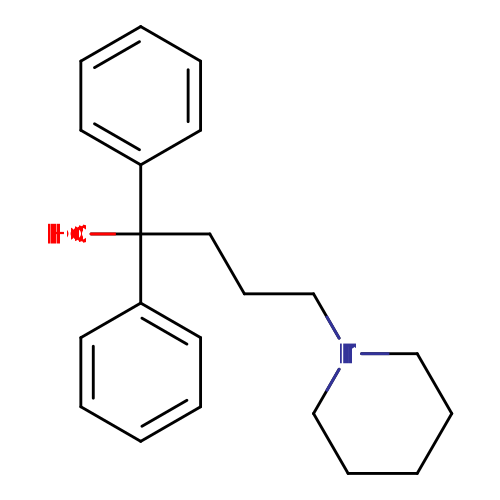
- Weight
- Average: 309.4452
Monoisotopic: 309.209264491 - Chemical Formula
- C21H27NO
- Synonyms
- alpha,alpha-Diphenyl-1-piperidinebutanol
- Difenidol
- Difénidol
- Difenidolo
- Difenidolum
- Diphenidol
- Diphenyl(3-(1-piperidyl)propyl)carbinol
- External IDs
- SK&F 478
- SK&F-478

Pharmacology
- Indication
For use in the prevention and symptomatic treatment of peripheral (labyrinthine) vertigo and associated nausea and vomiting that occur in such conditions as Meniere's disease and surgery of the middle and inner ear. Also for the control of nausea and vomiting associated with postoperative states, malignant neoplasms, labyrinthine disturbances, antineoplastic agent therapy, radiation sickness, and infectious diseases.
 Reduce drug development failure ratesBuild, train, & validate machine-learning modelswith evidence-based and structured datasets.Build, train, & validate predictive machine-learning models with structured datasets.
- Associated Conditions
Indication Type Indication Combined Product Details Approval Level Age Group Patient Characteristics Dose Form Treatment of Dizziness •••••••••••• •••••• Treatment of Dizziness •••••••••••• •••••• Treatment of Menière's disease •••••••••••• •••••• Treatment of Nausea, postoperative •••••••••••• •••••• Prevention of Nausea, postoperative •••••••••••• •••••• - Associated Therapies
- Contraindications & Blackbox Warnings
 Prevent Adverse Drug Events TodayTap into our Clinical API for life-saving information on contraindications & blackbox warnings, population restrictions, harmful risks, & more.Avoid life-threatening adverse drug events with our Clinical API
- Pharmacodynamics
Diphenidol is used for control of nausea and vomiting. It has an antivertigo effect on the vestibular apparatus, inhibiting the chemoreceptor trigger zone to control nausea and vomiting, thus preventing motion sickness.
- Mechanism of action
The mechanism by which diphenidol exerts its antiemetic and antivertigo effects is not precisely known. It is thought to diminish vestibular stimulation and depress labyrinthine function and as an antimuscarinic agent. An action on the medullary chemoreceptive trigger zone may also be involved in the antiemetic effect. Diphenidol has no significant sedative, tranquilizing, or antihistaminic action. It has a weak peripheral anticholinergic effect.
Target Actions Organism AMuscarinic acetylcholine receptor M2 antagonistHumans AMuscarinic acetylcholine receptor M1 antagonistHumans AMuscarinic acetylcholine receptor M3 antagonistHumans - Absorption
Well absorbed from gastrointestinal tract following oral administration.
- Volume of distribution
Not Available
- Protein binding
Not Available
- Metabolism
- Not Available
- Route of elimination
Not Available
- Half-life
4 hours
- Clearance
Not Available
- Adverse Effects
 Improve decision support & research outcomesWith structured adverse effects data, including: blackbox warnings, adverse reactions, warning & precautions, & incidence rates. View sample adverse effects data in our new Data Library!Improve decision support & research outcomes with our structured adverse effects data.
- Toxicity
Symptoms of overdose include drowsiness (severe); shortness of breath or troubled breathing; unusual tiredness or weakness (severe).
- Pathways
- Not Available
- Pharmacogenomic Effects/ADRs
- Not Available
Interactions
- Drug Interactions
- This information should not be interpreted without the help of a healthcare provider. If you believe you are experiencing an interaction, contact a healthcare provider immediately. The absence of an interaction does not necessarily mean no interactions exist.
Drug Interaction Integrate drug-drug
interactions in your softwareAclidinium The risk or severity of adverse effects can be increased when Diphenidol is combined with Aclidinium. Adenosine The risk or severity of Tachycardia can be increased when Adenosine is combined with Diphenidol. Albuterol The risk or severity of Tachycardia can be increased when Salbutamol is combined with Diphenidol. Alfentanil The risk or severity of adverse effects can be increased when Diphenidol is combined with Alfentanil. Alloin The therapeutic efficacy of Alloin can be decreased when used in combination with Diphenidol. - Food Interactions
- No interactions found.
Products
 Drug product information from 10+ global regionsOur datasets provide approved product information including:dosage, form, labeller, route of administration, and marketing period.Access drug product information from over 10 global regions.
- Product Ingredients
Ingredient UNII CAS InChI Key Diphenidol hydrochloride DG355XWQ4T 3254-89-5 AVZIYZHXZAYGJS-UHFFFAOYSA-N - International/Other Brands
- Satanolon (Tatsumi Kagaku) / Verterge / Yesdol
- Brand Name Prescription Products
Name Dosage Strength Route Labeller Marketing Start Marketing End Region Image Vontrol Tablet 25 mg/1 Oral UNSPECIFIED 2006-06-06 2006-10-13 US 
Categories
- Drug Categories
- Chemical TaxonomyProvided by Classyfire
- Description
- This compound belongs to the class of organic compounds known as diphenylmethanes. These are compounds containing a diphenylmethane moiety, which consists of a methane wherein two hydrogen atoms are replaced by two phenyl groups.
- Kingdom
- Organic compounds
- Super Class
- Benzenoids
- Class
- Benzene and substituted derivatives
- Sub Class
- Diphenylmethanes
- Direct Parent
- Diphenylmethanes
- Alternative Parents
- Phenylbutylamines / Aralkylamines / Piperidines / Tertiary alcohols / Trialkylamines / Azacyclic compounds / Organopnictogen compounds / Hydrocarbon derivatives / Aromatic alcohols
- Substituents
- Alcohol / Amine / Aralkylamine / Aromatic alcohol / Aromatic heteromonocyclic compound / Azacycle / Diphenylmethane / Hydrocarbon derivative / Organic nitrogen compound / Organic oxygen compound
- Molecular Framework
- Aromatic heteromonocyclic compounds
- External Descriptors
- piperidines, tertiary alcohol, benzenes (CHEBI:4638)
- Affected organisms
- Humans and other mammals
Chemical Identifiers
- UNII
- NQO8R319LY
- CAS number
- 972-02-1
- InChI Key
- OGAKLTJNUQRZJU-UHFFFAOYSA-N
- InChI
- InChI=1S/C21H27NO/c23-21(19-11-4-1-5-12-19,20-13-6-2-7-14-20)15-10-18-22-16-8-3-9-17-22/h1-2,4-7,11-14,23H,3,8-10,15-18H2
- IUPAC Name
- 1,1-diphenyl-4-(piperidin-1-yl)butan-1-ol
- SMILES
- OC(CCCN1CCCCC1)(C1=CC=CC=C1)C1=CC=CC=C1
References
- Synthesis Reference
Miescher, K. and Marxer, A.; U.S. Patent 2,411,664; November 26, 1946; assigned to Ciba Pharmaceutical Products, Inc.
- General References
- Link [Link]
- External Links
- Human Metabolome Database
- HMDB0015361
- KEGG Drug
- D03858
- KEGG Compound
- C06961
- PubChem Compound
- 3055
- PubChem Substance
- 46506486
- ChemSpider
- 2947
- BindingDB
- 50225701
- 23370
- ChEBI
- 4638
- ChEMBL
- CHEMBL936
- ZINC
- ZINC000000968266
- Therapeutic Targets Database
- DAP001133
- PharmGKB
- PA164746037
- Drugs.com
- Drugs.com Drug Page
- Wikipedia
- Diphenidol
- FDA label
- Download (374 KB)
- MSDS
- Download (73.5 KB)
Clinical Trials
- Clinical Trials
Phase Status Purpose Conditions Count 4 Completed Treatment Menière's Disease / Vertigo 1
Pharmacoeconomics
- Manufacturers
- Not Available
- Packagers
- Professional Co.
- Dosage Forms
Form Route Strength Solution Parenteral 40.000 mg Tablet, coated Oral 25 mg Tablet Oral 25.000 mg Solution Parenteral 40.00 mg Tablet Oral 25.00 mg Solution Parenteral 40 mg Tablet Oral 25 mg Tablet Oral 25 mg/1 Tablet Oral 100.000 mg - Prices
Unit description Cost Unit Diphenidol hcl powder 32.4USD g DrugBank does not sell nor buy drugs. Pricing information is supplied for informational purposes only.- Patents
- Not Available
Properties
- State
- Solid
- Experimental Properties
Property Value Source melting point (°C) 212-214 Miescher, K. and Marxer, A.; U.S. Patent 2,411,664; November 26, 1946; assigned to Ciba Pharmaceutical Products, Inc. logP 4.3 Not Available - Predicted Properties
Property Value Source Water Solubility 0.00587 mg/mL ALOGPS logP 4.08 ALOGPS logP 4.22 Chemaxon logS -4.7 ALOGPS pKa (Strongest Acidic) 13.4 Chemaxon pKa (Strongest Basic) 9.23 Chemaxon Physiological Charge 1 Chemaxon Hydrogen Acceptor Count 2 Chemaxon Hydrogen Donor Count 1 Chemaxon Polar Surface Area 23.47 Å2 Chemaxon Rotatable Bond Count 6 Chemaxon Refractivity 96.92 m3·mol-1 Chemaxon Polarizability 36.66 Å3 Chemaxon Number of Rings 3 Chemaxon Bioavailability 1 Chemaxon Rule of Five Yes Chemaxon Ghose Filter Yes Chemaxon Veber's Rule Yes Chemaxon MDDR-like Rule Yes Chemaxon - Predicted ADMET Features
Property Value Probability Human Intestinal Absorption + 0.9296 Blood Brain Barrier + 0.9606 Caco-2 permeable + 0.6951 P-glycoprotein substrate Substrate 0.7254 P-glycoprotein inhibitor I Inhibitor 0.5603 P-glycoprotein inhibitor II Non-inhibitor 0.7523 Renal organic cation transporter Inhibitor 0.7647 CYP450 2C9 substrate Non-substrate 0.8378 CYP450 2D6 substrate Non-substrate 0.7102 CYP450 3A4 substrate Non-substrate 0.5631 CYP450 1A2 substrate Non-inhibitor 0.9046 CYP450 2C9 inhibitor Non-inhibitor 0.9255 CYP450 2D6 inhibitor Inhibitor 0.9373 CYP450 2C19 inhibitor Non-inhibitor 0.9025 CYP450 3A4 inhibitor Non-inhibitor 0.7862 CYP450 inhibitory promiscuity Low CYP Inhibitory Promiscuity 0.9362 Ames test Non AMES toxic 0.8763 Carcinogenicity Non-carcinogens 0.924 Biodegradation Not ready biodegradable 0.9177 Rat acute toxicity 2.6101 LD50, mol/kg Not applicable hERG inhibition (predictor I) Strong inhibitor 0.6086 hERG inhibition (predictor II) Inhibitor 0.6009
Spectra
- Mass Spec (NIST)
- Not Available
- Spectra
Spectrum Spectrum Type Splash Key Predicted GC-MS Spectrum - GC-MS Predicted GC-MS splash10-053r-5920000000-7247e900fea04f33d6a4 Predicted MS/MS Spectrum - 10V, Positive (Annotated) Predicted LC-MS/MS splash10-0006-0090000000-c1fda4bf01ccd46ff768 Predicted MS/MS Spectrum - 20V, Positive (Annotated) Predicted LC-MS/MS splash10-052f-0390000000-c38e3789fa0270cb23a2 Predicted MS/MS Spectrum - 10V, Negative (Annotated) Predicted LC-MS/MS splash10-0a4i-0309000000-7bf2e17258e36822b6f7 Predicted MS/MS Spectrum - 20V, Negative (Annotated) Predicted LC-MS/MS splash10-0a4i-1859000000-edbe4e1c86eb77fb0ef9 Predicted MS/MS Spectrum - 40V, Positive (Annotated) Predicted LC-MS/MS splash10-029t-3791000000-d79c96fd284244b3eba7 Predicted MS/MS Spectrum - 40V, Negative (Annotated) Predicted LC-MS/MS splash10-0a4i-0920000000-95f3b9339db2e602a9b4 Predicted 1H NMR Spectrum 1D NMR Not Applicable Predicted 13C NMR Spectrum 1D NMR Not Applicable - Chromatographic Properties
Collision Cross Sections (CCS)
Adduct CCS Value (Å2) Source type Source [M-H]- 184.0645635 predictedDarkChem Lite v0.1.0 [M-H]- 183.7277635 predictedDarkChem Lite v0.1.0 [M-H]- 172.27814 predictedDeepCCS 1.0 (2019) [M+H]+ 184.2231635 predictedDarkChem Lite v0.1.0 [M+H]+ 184.4046635 predictedDarkChem Lite v0.1.0 [M+H]+ 174.63612 predictedDeepCCS 1.0 (2019) [M+Na]+ 184.6380635 predictedDarkChem Lite v0.1.0 [M+Na]+ 183.6824635 predictedDarkChem Lite v0.1.0 [M+Na]+ 180.7293 predictedDeepCCS 1.0 (2019)
Targets

- Kind
- Protein
- Organism
- Humans
- Pharmacological action
- Yes
- Actions
- Antagonist
- General Function
- G-protein coupled acetylcholine receptor activity
- Specific Function
- The muscarinic acetylcholine receptor mediates various cellular responses, including inhibition of adenylate cyclase, breakdown of phosphoinositides and modulation of potassium channels through the...
- Gene Name
- CHRM2
- Uniprot ID
- P08172
- Uniprot Name
- Muscarinic acetylcholine receptor M2
- Molecular Weight
- 51714.605 Da
References
- Pelat M, Lazartigues E, Tran MA, Gharib C, Montastruc JL, Montastruc P, Rascol O: Characterization of the central muscarinic cholinoceptors involved in the cholinergic pressor response in anesthetized dogs. Eur J Pharmacol. 1999 Aug 27;379(2-3):117-24. [Article]
- Lazartigues E, Freslon JL, Tellioglu T, Brefel-Courbon C, Pelat M, Tran MA, Montastruc JL, Rascol O: Pressor and bradycardic effects of tacrine and other acetylcholinesterase inhibitors in the rat. Eur J Pharmacol. 1998 Nov 13;361(1):61-71. [Article]
- Kovacs I, Yamamura HI, Waite SL, Varga EV, Roeske WR: Pharmacological comparison of the cloned human and rat M2 muscarinic receptor genes expressed in the murine fibroblast (B82) cell line. J Pharmacol Exp Ther. 1998 Feb;284(2):500-7. [Article]
- Pavia J, Munoz M, Jimenez E, Martos F, Gonzalez-Correa JA, De la Cruz JP, Garcia V, Sanchez de la Cuesta F: Pharmacological characterization and distribution of muscarinic receptors in human placental syncytiotrophoblast brush-border and basal plasma membranes. Eur J Pharmacol. 1997 Feb 12;320(2-3):209-14. [Article]
- Jovanovic A, Grbovic L, Tulic I: Endothelium-dependent relaxation in response to acetylcholine in the human uterine artery. Eur J Pharmacol. 1994 Apr 21;256(2):131-9. [Article]
- Braverman AS, Tallarida RJ, Ruggieri MR Sr: Interaction between muscarinic receptor subtype signal transduction pathways mediating bladder contraction. Am J Physiol Regul Integr Comp Physiol. 2002 Sep;283(3):R663-8. [Article]
- Varoli L, Angeli P, Burnelli S, Marucci G, Recanatini M: Synthesis and antagonistic activity at muscarinic receptor subtypes of some 2-carbonyl derivatives of diphenidol. Bioorg Med Chem. 1999 Sep;7(9):1837-44. [Article]
- Waelbroeck M, Camus J, Tastenoy M, Mutschler E, Strohmann C, Tacke R, Lambrecht G, Christophe J: Stereoselectivity of (R)- and (S)-hexahydro-difenidol binding to neuroblastoma M1, cardiac M2, pancreatic M3, and striatum M4 muscarinic receptors. Chirality. 1991;3(2):118-23. [Article]
- Kind
- Protein
- Organism
- Humans
- Pharmacological action
- Yes
- Actions
- Antagonist
- General Function
- Phosphatidylinositol phospholipase c activity
- Specific Function
- The muscarinic acetylcholine receptor mediates various cellular responses, including inhibition of adenylate cyclase, breakdown of phosphoinositides and modulation of potassium channels through the...
- Gene Name
- CHRM1
- Uniprot ID
- P11229
- Uniprot Name
- Muscarinic acetylcholine receptor M1
- Molecular Weight
- 51420.375 Da
References
- Overington JP, Al-Lazikani B, Hopkins AL: How many drug targets are there? Nat Rev Drug Discov. 2006 Dec;5(12):993-6. [Article]
- Imming P, Sinning C, Meyer A: Drugs, their targets and the nature and number of drug targets. Nat Rev Drug Discov. 2006 Oct;5(10):821-34. [Article]
- Waelbroeck M, Camus J, Tastenoy M, Mutschler E, Strohmann C, Tacke R, Lambrecht G, Christophe J: Stereoselectivity of (R)- and (S)-hexahydro-difenidol binding to neuroblastoma M1, cardiac M2, pancreatic M3, and striatum M4 muscarinic receptors. Chirality. 1991;3(2):118-23. [Article]
- Kind
- Protein
- Organism
- Humans
- Pharmacological action
- Yes
- Actions
- Antagonist
- General Function
- Receptor activity
- Specific Function
- The muscarinic acetylcholine receptor mediates various cellular responses, including inhibition of adenylate cyclase, breakdown of phosphoinositides and modulation of potassium channels through the...
- Gene Name
- CHRM3
- Uniprot ID
- P20309
- Uniprot Name
- Muscarinic acetylcholine receptor M3
- Molecular Weight
- 66127.445 Da
References
- Overington JP, Al-Lazikani B, Hopkins AL: How many drug targets are there? Nat Rev Drug Discov. 2006 Dec;5(12):993-6. [Article]
- Imming P, Sinning C, Meyer A: Drugs, their targets and the nature and number of drug targets. Nat Rev Drug Discov. 2006 Oct;5(10):821-34. [Article]
- Braverman AS, Tallarida RJ, Ruggieri MR Sr: Interaction between muscarinic receptor subtype signal transduction pathways mediating bladder contraction. Am J Physiol Regul Integr Comp Physiol. 2002 Sep;283(3):R663-8. [Article]
- Varoli L, Angeli P, Burnelli S, Marucci G, Recanatini M: Synthesis and antagonistic activity at muscarinic receptor subtypes of some 2-carbonyl derivatives of diphenidol. Bioorg Med Chem. 1999 Sep;7(9):1837-44. [Article]
- Waelbroeck M, Camus J, Tastenoy M, Mutschler E, Strohmann C, Tacke R, Lambrecht G, Christophe J: Stereoselectivity of (R)- and (S)-hexahydro-difenidol binding to neuroblastoma M1, cardiac M2, pancreatic M3, and striatum M4 muscarinic receptors. Chirality. 1991;3(2):118-23. [Article]

Drug created at June 13, 2005 13:24 / Updated at March 03, 2024 02:31