Identification
- Summary
Bismuth subsalicylate is an antidiarrheal and anti-inflammatory agent used for symptomatic treatment of nausea, indigestion, upset stomach, diarrhea, and other temporary discomforts of the stomach and gastrointestinal tract.
- Brand Names
- Diphen, Kaopectate Reformulated Aug 2006, Kola-pectin, Pepto-bismol, Percy Medicine
- Generic Name
- Bismuth subsalicylate
- DrugBank Accession Number
- DB01294
- Background
Bismuth subsalicylate is an antacid and anti-diarrheal agent. Exhibiting antibacterial and gastroprotective properties, bismuth subsalicylate is an insoluble salt of salicylic acid linked to trivalent bismuth cation. Each molecule of bismuth subsalicylate contains 58% bismuth and 42% salicylate by weight.3 Bismuth subsalicylate has been around for over 100 years: it was originally developed in 1901 for hygienic use and sanitation for cholera infection.2,7
Bismuth subsalicylate was first approved by the FDA in 1939 and is now mainly used to relieve nausea, diarrhea, and gastrointestinal discomfort.2 It is an active ingredient found in Pepto-Bismol, a common over-the-counter medication that is used to temporarily treat discomforts of the stomach and gastrointestinal tract.10 Bismuth subsalicylate is a component of HELIDAC Therapy (bismuth subsalicylate, metronidazole, and tetracycline), which is a treatment regimen indicated for the eradication of H. pylori for treatment of patients with H. pylori infection and duodenal ulcer disease.13
- Type
- Small Molecule
- Groups
- Approved, Vet approved
- Structure
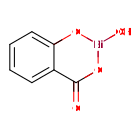
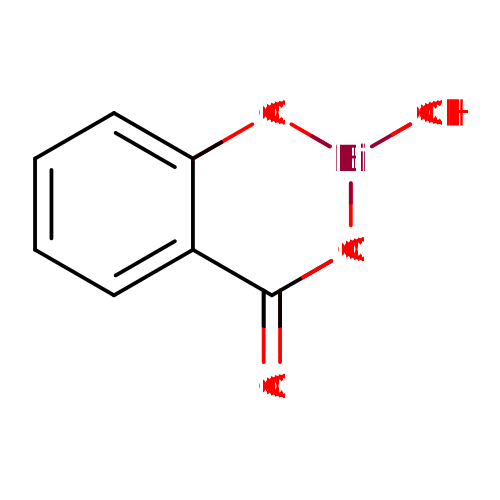
Structure for Bismuth subsalicylate (DB01294)
- Weight
- Average: 362.0926
Monoisotopic: 361.999166889 - Chemical Formula
- C7H5BiO4
- Synonyms
- 2-Hydroxy-benzo[1,3,2]dioxabismin-4-one
- Basic bismuth salicylate
- Bismuth oxide salicylate
- Bismuth oxysalicylate
- Bismuth subsalicylate
- Pink bismuth
- Wismutsubsalicylat

Pharmacology
- Indication
Bismuth subsalicylate is indicated to temporarily relieve diarrhea, travelers' diarrhea, and upset stomach due to overindulgence in food and drink, including heartburn, indigestion, nausea, gas, belching, and fullness.10
Bismuth subsalicylate is a component of HELIDAC Therapy (bismuth subsalicylate, metronidazole, and tetracycline), which is a treatment regimen indicated for the eradication of H. pylori for treatment of patients with H. pylori infection and duodenal ulcer disease.13
 Reduce drug development failure ratesBuild, train, & validate machine-learning modelswith evidence-based and structured datasets.Build, train, & validate predictive machine-learning models with structured datasets.
- Associated Conditions
Indication Type Indication Combined Product Details Approval Level Age Group Patient Characteristics Dose Form Symptomatic treatment of Diarrhea ••• ••• Symptomatic treatment of Dyspepsia ••• ••• Symptomatic treatment of Gas ••• ••• Symptomatic treatment of Heartburn ••• ••• Used in combination to treat Heartburn Combination Product in combination with: Calcium carbonate (DB06724) ••• ••• - Contraindications & Blackbox Warnings
 Prevent Adverse Drug Events TodayTap into our Clinical API for life-saving information on contraindications & blackbox warnings, population restrictions, harmful risks, & more.Avoid life-threatening adverse drug events with our Clinical API
- Pharmacodynamics
Bismuth subsalicylate is an antacid and antimicrobial, gastroprotective, anti-secretory, and anti-inflammatory actions.1,2,4 It works to reduce the severity and incidence of flatulence and diarrhea, and consequently relieving gastrointestinal discomfort.2 In one study, bismuth subsalicylate was prevented traveler's diarrhea with a protection rate >60%.8
Organobismuth compounds, formed by the breakdown of bismuth subsalicylate in the gastrointestinal tract, inhibit the growth of Helicobacter pylori and other bacteria implicated in gastrointestinal disorders, and some fungi.5 In one study, bismuth subsalicylate was shown to eradicate up to 90% of H. pylori infection when used as part of a quadruple therapy regimen containing a proton pump inhibitor, tetracycline, and metronidazole.2,6 Bismuth subsalicylate exhibited antimicrobial activity against Clostridium difficile, enterotoxigenic Escherichia coli O157:H7, norovirus, and other common enteric pathogens such as Salmonella and Shigella.8
- Mechanism of action
The exact mechanism of bismuth subsalicylate is not fully understood. Bismuth subsalicylate is an insoluble complex that constitutes salicylic acid and trivalent bismuth. Once orally administered, bismuth subsalicylate hydrolyzes in the stomach into bismuth oxychloride, which is minimally absorbed into the bloodstream, and salicylic acid, which is almost completely absorbed. Bismuth interacts with other anions and compounds, such as hydrochloric acid, bicarbonate, phosphate, and hydrogen sulfide, in the gastrointestinal tract to form bismuth salts such as bismuth oxychloride, bismuth subcarbonate, bismuth phosphate, and bismuth sulfide.2,3 Bismuth salts possess bactericidal and antimicrobial activity, mainly by preventing bacteria from binding and growing on the mucosal cells of the stomach. It has no effects on normal gut flora. By preventing bacteria from binding to mucosal cells, bismuth subsalicylate prevents intestinal secretion and fluid loss, promotes fluid and electrolyte reabsorption, reduces gastrointestinal inflammation, and promotes the healing of pre-existing ulcer in the stomach. Salicylic acid from dissociated bismuth subsalicylate adds to the anti-inflammatory actions of bismuth salts by inhibiting the cyclooxygenase enzyme and limiting the formation of prostaglandin, a pro-inflammatory mediator. Bismuth subsalicylate exhibits cytoprotective and demulcent activity, which makes it an effective drug in peptic ulcer disease. It blocks the adhesion of H. pylori to the gastric epithelial cells and blocks the bacteria's enzyme activities, including phospholipase, protease, and urease.2
- Absorption
Following oral administration, bismuth subsalicylate hydrolyzes into bismuth and salicylic acid in the stomach. Salicylic acid is almost completely absorbed in the small intestine and reaches plasma peak levels one to two hours after dosing. In one study involving healthy male subjects, oral administration of 60 mL Pepto-Bismol, a common over-the-counter product of bismuth subsalicylate, equivalent to 1050 mg of bismuth subsalicylate, resulted in the peak plasma concentration of salicylate of 40.1 μg/mL, with a time to peak concentration (Tmax) of 1.8 hours.3
Less than 1% of bismuth from bismuth subsalicylate is absorbed from the gastrointestinal tract into the systemic circulation. In one study, oral administration of 787 mg bismuth subsalicylate in the chewable tablet form for two weeks resulted in the mean trough blood bismuth concentration was 5.1 ± 3.1 ng/mL. In another study, the mean trough blood bismuth concentration ranged from five to 32 ng/mL following oral administration of 525 mg bismuth subsalicylate in the liquid suspension form.13
- Volume of distribution
There is no information available.
- Protein binding
Salicylic acid is about 90% plasma protein bound. Bismuth is about >90% bound to plasma proteins.13
- Metabolism
Bismuth subsalicylate undergo hydrolysis at pH levels lesser than three. It is largely hydrolyzed in the stomach to bismuth oxychloride and salicylic acid. In the small intestine, unchanged bismuth subsalicylate reacts with other anions such as bicarbonate and phosphate to form insoluble bismuth salts. In the colon, unchanged bismuth subsalicylate and other bismuth salts react with hydrogen sulfide produced by anaerobic bacteria to form bismuth sulfide, a highly insoluble black salt responsible for the darkening of the stools.3
Hover over products below to view reaction partners
- Route of elimination
Following oral administration, salicylate dissociated from bismuth subsalicylate is excreted in the urine.3 Bismuth is primarily eliminated via urinary and biliary routes.13
- Half-life
The terminal half-life of salicylic acid following a single oral dose of 525 mg bismuth subsalicylate is ranges from two to five hours. Bismuth has an intermediate half-life of 5 to 11 days and a terminal half-life of 21 to 72 days.13
- Clearance
The renal clearance of bismuth is 50 ± 18 mL/min.13
- Adverse Effects
 Improve decision support & research outcomesWith structured adverse effects data, including: blackbox warnings, adverse reactions, warning & precautions, & incidence rates. View sample adverse effects data in our new Data Library!Improve decision support & research outcomes with our structured adverse effects data.
- Toxicity
Lowest Lethal Dose (LDLo) in humans is 700 mg/kg. LD50 in rats is 1200 mg/kg via oral route, 542 mg/kg via intraperitoneal route, and 980 mg/kg via subcutaneous route.11
Overdose of bismuth subsalicylate over an extended period of time and consequently, bismuth toxicity, can lead to blackening of the tongue and teeth, fatigue, mood changes, deterioration of mental status, and neurotoxicity. Other signs and symptoms include impaired cognition, tremors, lethargy, somnolence, insomnia, delirium, myoclonus, seizures, depressed mood, anxiety, and a depressed mood.2 Salicylate toxicity can occur from chronic bismuth subsalicylate use 9: it mostly occurs from ingestion of more than 150 mg/kg of salicylates (or >6.5 g of aspirin equivalent).2 As there are no specific antidotes for bismuth salicylate toxicity, overdose should be managed with supportive care, with or without decontamination with activated charcoal. Hemodialysis may be considered in more severe cases and with the presence of altered mental status and metabolic acidosis.2
- Pathways
- Not Available
- Pharmacogenomic Effects/ADRs
- Not Available
Interactions
- Drug Interactions
- This information should not be interpreted without the help of a healthcare provider. If you believe you are experiencing an interaction, contact a healthcare provider immediately. The absence of an interaction does not necessarily mean no interactions exist.
Drug Interaction Integrate drug-drug
interactions in your softwareAbciximab The risk or severity of bleeding can be increased when Bismuth subsalicylate is combined with Abciximab. Acarbose Bismuth subsalicylate may increase the hypoglycemic activities of Acarbose. Aceclofenac The therapeutic efficacy of Bismuth subsalicylate can be decreased when used in combination with Aceclofenac. Acenocoumarol Bismuth subsalicylate may increase the anticoagulant activities of Acenocoumarol. Acetaminophen The risk or severity of adverse effects can be increased when Acetaminophen is combined with Bismuth subsalicylate. - Food Interactions
- No interactions found.
Products
 Drug product information from 10+ global regionsOur datasets provide approved product information including:dosage, form, labeller, route of administration, and marketing period.Access drug product information from over 10 global regions.
- Active Moieties
Name Kind UNII CAS InChI Key Salicylic acid unknown O414PZ4LPZ 69-72-7 YGSDEFSMJLZEOE-UHFFFAOYSA-N Bismuth cation ionic ZS9CD1I8YE 23713-46-4 JDIBGQFKXXXXPN-UHFFFAOYSA-N - International/Other Brands
- Maalox Multi-Action
- Over the Counter Products
Name Dosage Strength Route Labeller Marketing Start Marketing End Region Image 24 / 7 Life Stomach Relief Tablet, chewable 262 mg/1 Oral Lil' Drug Store Products, Inc. 2020-12-17 Not applicable US 
7 Select Pink Bismuth Suspension 1050 mg/30mL Oral 7-Eleven 2014-04-17 2019-10-31 US 7-Select Pepto Bismol Tablet, chewable 262 mg/1 Oral Lil' Drug Store Products, Inc. 2011-08-01 2017-12-31 US Anti-Diarrheal Tablet 262 mg/1 Oral Lil' Drug Store Products, Inc. 2019-02-21 Not applicable US Anti-Diarrheal Maximum Strength Tablet 525 mg/1 Oral WAL-MART STORES INC 2020-04-06 Not applicable US - Mixture Products
Name Ingredients Dosage Route Labeller Marketing Start Marketing End Region Image Bismed Chewable Tablets Bismuth subsalicylate (300 mg) + Calcium carbonate (350 mg) Tablet Oral Technilab Pharma Inc. 1993-12-31 1998-09-14 Canada 
Bismuth + Antacid (chewable Tablets) Bismuth subsalicylate (262 mg) + Calcium carbonate (675 mg) Tablet, chewable Oral Perrigo International 2000-09-27 2021-07-22 Canada Bismuth Chewable Tablets Bismuth subsalicylate (262 mg) + Calcium carbonate (308 mg) Tablet Oral Vita Health Products Inc 2001-04-01 2004-07-26 Canada Bismuth Subsalicylate/Metronidazole/Tetracycline Hydrochloride Bismuth subsalicylate (262.4 mg/1) + Metronidazole (250 mg/1) + Tetracycline hydrochloride (500 mg/1) Kit Oral Ailex Pharmaceuticals, Llc 2018-11-30 Not applicable US Bismuth Tablets With Calcium Carbonate Bismuth subsalicylate (262 mg) + Calcium carbonate (350 mg) Tablet, chewable Oral Tanta Pharmaceuticals Inc Not applicable Not applicable Canada
Categories
- Drug Categories
- Acids, Carbocyclic
- Antacids and Adsorbents
- Antidiarrheals
- Benzene Derivatives
- Benzoates
- Bismuth containing drugs
- Elements
- Elements, Radioactive
- Gastrointestinal Agents
- Helicobacter Infections
- Hydroxy Acids
- Hydroxybenzoates
- Isotopes
- Metals
- Metals, Heavy
- Neurotoxic agents
- Phenols
- Radioisotopes
- Salicylates
- Chemical TaxonomyProvided by Classyfire
- Description
- This compound belongs to the class of organic compounds known as benzenoids. These are aromatic compounds containing one or more benzene rings.
- Kingdom
- Organic compounds
- Super Class
- Benzenoids
- Class
- Not Available
- Sub Class
- Not Available
- Direct Parent
- Benzenoids
- Alternative Parents
- Carboxylic acid salts / Oxacyclic compounds / Organic metal salts / Monocarboxylic acids and derivatives / Metalloheterocyclic compounds / Organooxygen compounds / Organic oxides / Hydrocarbon derivatives
- Substituents
- Aromatic heteropolycyclic compound / Benzenoid / Carboxylic acid derivative / Carboxylic acid salt / Hydrocarbon derivative / Metalloheterocycle / Monocarboxylic acid or derivatives / Organic metal salt / Organic oxide / Organic oxygen compound
- Molecular Framework
- Aromatic heteropolycyclic compounds
- External Descriptors
- salicylates, bismuth coordination entity (CHEBI:261649)
- Affected organisms
- Humans and other mammals
- Enteric bacteria and other eubacteria
- Bacteria
- Helicobacter pylori
- Shigella
- Escherichia coli O157:H7
- Clostridium difficile (strain 630)
- Salmonella spp.
Chemical Identifiers
- UNII
- 62TEY51RR1
- CAS number
- 14882-18-9
- InChI Key
- ZREIPSZUJIFJNP-UHFFFAOYSA-K
- InChI
- InChI=1S/C7H6O3.Bi.H2O/c8-6-4-2-1-3-5(6)7(9)10;;/h1-4,8H,(H,9,10);;1H2/q;+3;/p-3
- IUPAC Name
- 2-hydroxy-2H,4H-benzo[d]1,3-dioxa-2-bismacyclohexan-4-one
- SMILES
- O[Bi]1OC(=O)C2=CC=CC=C2O1
References
- Synthesis Reference
Richard William Hess, "Pigmentary bright primrose yellow monoclinic bismuth vanadate and processes for the preparation thereof." U.S. Patent US4115142, issued December, 1925.
US4115142- General References
- Goldenberg MM, Honkomp LJ, Burrous SE, Castellion AW: Protective effect of Pepto-Bismol liquid on the gastric mucosa of rats. Gastroenterology. 1975 Sep;69(3):636-40. [Article]
- Budisak P, Abbas M: Bismuth Subsalicylate . [Article]
- Bierer DW: Bismuth subsalicylate: history, chemistry, and safety. Rev Infect Dis. 1990 Jan-Feb;12 Suppl 1:S3-8. doi: 10.1093/clinids/12.supplement_1.s3. [Article]
- DuPont HL: Bismuth subsalicylate in the treatment and prevention of diarrheal disease. Drug Intell Clin Pharm. 1987 Sep;21(9):687-93. doi: 10.1177/106002808702100901. [Article]
- Dodge AG, Wackett LP: Metabolism of bismuth subsalicylate and intracellular accumulation of bismuth by Fusarium sp. strain BI. Appl Environ Microbiol. 2005 Feb;71(2):876-82. doi: 10.1128/AEM.71.2.876-882.2005. [Article]
- Graham DY, Hoffman J, el-Zimaity HM, Graham DP, Osato M: Twice a day quadruple therapy (bismuth subsalicylate, tetracycline, metronidazole plus lansoprazole) for treatment of Helicobacter pylori infection. Aliment Pharmacol Ther. 1997 Oct;11(5):935-8. doi: 10.1046/j.1365-2036.1997.00219.x. [Article]
- Keogan DM, Griffith DM: Current and potential applications of bismuth-based drugs. Molecules. 2014 Sep 23;19(9):15258-97. doi: 10.3390/molecules190915258. [Article]
- Pitz AM, Park GW, Lee D, Boissy YL, Vinje J: Antimicrobial activity of bismuth subsalicylate on Clostridium difficile, Escherichia coli O157:H7, norovirus, and other common enteric pathogens. Gut Microbes. 2015;6(2):93-100. doi: 10.1080/19490976.2015.1008336. [Article]
- Halani S, Wu PE: Salicylate toxicity from chronic bismuth subsalicylate use. BMJ Case Rep. 2020 Nov 30;13(11). pii: 13/11/e236929. doi: 10.1136/bcr-2020-236929. [Article]
- DailyMed Label: PEPTO-BISMOL (bismuth subsalicylate) kit, for oral use [Link]
- Santa Cruz Biotechnology: Bismuth(III) subsalicylate Safety Data Sheet [Link]
- Spectrum Chemical: Bismuth salicylate Safety Data Sheet [Link]
- FDA Approved Drug Products: HELIDAC Therapy (bismuth subsalicylate, metronidazole, and tetracycline) [Link]
- External Links
- Human Metabolome Database
- HMDB0015408
- KEGG Drug
- D00728
- KEGG Compound
- C07870
- PubChem Compound
- 16682734
- PubChem Substance
- 46507128
- ChemSpider
- 17215772
- 19478
- ChEBI
- 261649
- ChEMBL
- CHEMBL1120
- PharmGKB
- PA164774805
- RxList
- RxList Drug Page
- Drugs.com
- Drugs.com Drug Page
- Wikipedia
- Bismuth_subsalicylate
- MSDS
- Download (73.6 KB)
Clinical Trials
- Clinical Trials
Phase Status Purpose Conditions Count 4 Completed Prevention Helicobacter Pylori Infection / Obesity, Morbid 1 4 Completed Treatment Coronavirus Disease 2019 (COVID‑19) / Diarrhea 1 4 Completed Treatment Cure Rate of Helicobacter Pylori Infection 1 4 Completed Treatment Helicobacter Pylori Infection 1 4 Recruiting Treatment Dry Eyes 1
Pharmacoeconomics
- Manufacturers
- Not Available
- Packagers
- Amend
- Chattem Chemicals Inc.
- Dispensing Solutions
- Kroger Co.
- Major Pharmaceuticals
- Novartis AG
- Pharma Pac LLC
- Procter & Gamble
- Publix Super Markets
- Walgreen Co.
- Dosage Forms
Form Route Strength Suspension Oral 1.7 g Tablet, chewable Buccal 262 mg Tablet, chewable Buccal 26200000 mg Suspension Oral 1750 mg Tablet Oral Liquid Oral 17.66 mg / mL Tablet Oral 262 mg/434mg Suspension Oral 1.747 g Suspension Oral 17.6 mg / mL Tablet Oral 262 mg Liquid Oral 17.5 mg / mL Liquid Oral 17.6 mg / mL Capsule, gelatin coated Oral 262 mg/1 Suspension Oral 17.5 mg / mL Tablet, chewable Oral 262 mg/1 Cream; kit; liquid; ointment; tablet; tablet, chewable; tablet, film coated Oral; Topical Tablet, chewable Buccal 262.5 mg Suspension Oral Tablet Buccal Drug delivery system Oral Powder Oral 262 mg/1 Liquid Oral 35 mg / mL Suspension Oral 35 mg / mL Liquid Oral 1050 mg/30mL Kit Oral Tablet Oral 262.00 mg Tablet, coated Oral 262 mg/1 Liquid Oral 35.0 mg/1mL Liquid Oral 17.47 mg/1mL Liquid Oral 525 mg/15mL Syrup Oral 525 mg/15mL Suspension Oral 1050 mg/30mL Tablet, film coated Oral Tablet Oral 125 MG Suspension Oral 17.5 mg/1mL Suspension Oral 262 mg/15mL Tablet Oral 262 mg/1 Suspension Oral 525 mg/15mL Suspension Oral 1.75 g Suspension Oral 3500.000 mg Tablet Oral 131.250 mg Suspension Oral 17.500 mg Suspension Oral 3.5000 g Tablet Oral 262.400 mg Capsule Oral 262 mg Capsule, liquid filled Oral 262 mg/1 Kit; suspension; tablet Oral Kit; suspension; tablet, chewable Oral Liquid Oral 525 mg/30mL Tablet Oral 262.500 mg Tablet Oral 525 mg/21 Tablet, chewable Oral Suspension Oral 35.2 mg / mL Tablet Oral 524 mg / tab Tablet Oral 262.4 mg Tablet Oral 525 mg/1 Liquid Oral 1050 mg/10mL Liquid Oral 262 mg/15mL Liquid Oral 1.7 % Tablet, film coated Oral 262 mg/1 Tablet Oral 375 MG Suspension Oral 1.750 g Liquid Oral 262 mg/30mL Suspension Oral 525 mg/30mL Powder Oral 525 mg/1 Suspension Oral 1750.000 mg Liquid Oral Tablet, chewable Oral 262 mg/1g Tablet, chewable Oral 262 mg Tablet Oral 524 mg Suspension Oral 524 mg/15ml Tablet, chewable Oral 524 mg Tablet Oral 1048 mg - Prices
Unit description Cost Unit Kaopectate 262 mg caplet 0.37USD caplet Gas-x with maalox chew tablet 0.25USD tablet Bismuth subsalicylate powdr 0.17USD g Jr maalox plus antigas tablet chew 0.17USD tablet Calcium carb 500 mg tablet chew 0.14USD tablet Pepto-bismol caplet 0.14USD caplet Soothe caplets 0.12USD caplet Bismatrol 262 mg tablet 0.09USD tablet Maalox advanced tablet chew 0.09USD tablet Maalox quick dissolve tablet 0.09USD tablet Maalox max quick dissolve tablet 0.06USD tablet Stomach relief tablet 0.06USD tablet Magnesium-aluminum suspension 0.03USD ml Bismuth 262 mg/15ml susp 0.02USD ml Maalox max strength multi symp 0.02USD ml Maalox maximum strength susp 0.02USD ml Pepto-bismol max str susp 0.02USD ml Pub calcium carb 1000 mg tablet 0.02USD tablet Maalox plus x-strength susp 0.01USD ml Maalox total relief (bismuth) 0.01USD ml DrugBank does not sell nor buy drugs. Pricing information is supplied for informational purposes only.- Patents
- Not Available
Properties
- State
- Solid
- Experimental Properties
Property Value Source melting point (°C) >350 Spectrum Chemical Safety Data Sheet - Predicted Properties
Property Value Source Water Solubility 59.7 mg/mL ALOGPS logP 0.37 ALOGPS logP 1.11 Chemaxon logS -0.78 ALOGPS pKa (Strongest Acidic) 14.3 Chemaxon pKa (Strongest Basic) -3.1 Chemaxon Physiological Charge 0 Chemaxon Hydrogen Acceptor Count 3 Chemaxon Hydrogen Donor Count 1 Chemaxon Polar Surface Area 55.76 Å2 Chemaxon Rotatable Bond Count 0 Chemaxon Refractivity 35.72 m3·mol-1 Chemaxon Polarizability 15.66 Å3 Chemaxon Number of Rings 2 Chemaxon Bioavailability 1 Chemaxon Rule of Five Yes Chemaxon Ghose Filter No Chemaxon Veber's Rule No Chemaxon MDDR-like Rule No Chemaxon - Predicted ADMET Features
Property Value Probability Human Intestinal Absorption + 0.9086 Blood Brain Barrier + 0.9387 Caco-2 permeable + 0.5187 P-glycoprotein substrate Non-substrate 0.7003 P-glycoprotein inhibitor I Non-inhibitor 0.8865 P-glycoprotein inhibitor II Non-inhibitor 0.9885 Renal organic cation transporter Non-inhibitor 0.9091 CYP450 2C9 substrate Non-substrate 0.7983 CYP450 2D6 substrate Non-substrate 0.8434 CYP450 3A4 substrate Non-substrate 0.6608 CYP450 1A2 substrate Non-inhibitor 0.5106 CYP450 2C9 inhibitor Non-inhibitor 0.6648 CYP450 2D6 inhibitor Non-inhibitor 0.8639 CYP450 2C19 inhibitor Non-inhibitor 0.7378 CYP450 3A4 inhibitor Non-inhibitor 0.7081 CYP450 inhibitory promiscuity Low CYP Inhibitory Promiscuity 0.887 Ames test Non AMES toxic 0.6317 Carcinogenicity Non-carcinogens 0.8734 Biodegradation Not ready biodegradable 0.8052 Rat acute toxicity 2.6494 LD50, mol/kg Not applicable hERG inhibition (predictor I) Weak inhibitor 0.7517 hERG inhibition (predictor II) Non-inhibitor 0.9359
Spectra
- Mass Spec (NIST)
- Not Available
- Spectra
Spectrum Spectrum Type Splash Key Predicted GC-MS Spectrum - GC-MS Predicted GC-MS splash10-03di-0109000000-0b549b564332c3fb7da9 - Chromatographic Properties
Collision Cross Sections (CCS)
Adduct CCS Value (Å2) Source type Source [M-H]- 125.8041905 predictedDarkChem Lite v0.1.0 [M+H]+ 126.5466905 predictedDarkChem Lite v0.1.0 [M+Na]+ 125.8294905 predictedDarkChem Lite v0.1.0
Carriers
- Kind
- Protein
- Organism
- Humans
- Pharmacological action
- No
- Actions
- Binder
- General Function
- Toxic substance binding
- Specific Function
- Serum albumin, the main protein of plasma, has a good binding capacity for water, Ca(2+), Na(+), K(+), fatty acids, hormones, bilirubin and drugs. Its main function is the regulation of the colloid...
- Gene Name
- ALB
- Uniprot ID
- P02768
- Uniprot Name
- Serum albumin
- Molecular Weight
- 69365.94 Da
References
- Sun H, Li H, Mason AB, Woodworth RC, Sadler PJ: Competitive binding of bismuth to transferrin and albumin in aqueous solution and in blood plasma. J Biol Chem. 2001 Mar 23;276(12):8829-35. Epub 2000 Dec 7. [Article]
- Sun H, Szeto KY: Binding of bismuth to serum proteins: implication for targets of Bi(III) in blood plasma. J Inorg Biochem. 2003 Feb 1;94(1-2):114-20. [Article]
- Chen X, Ji ZL, Chen YZ: TTD: Therapeutic Target Database. Nucleic Acids Res. 2002 Jan 1;30(1):412-5. [Article]
- Sox TE, Olson CA: Binding and killing of bacteria by bismuth subsalicylate. Antimicrob Agents Chemother. 1989 Dec;33(12):2075-82. doi: 10.1128/aac.33.12.2075. [Article]
- Kind
- Protein
- Organism
- Humans
- Pharmacological action
- Unknown
- General Function
- Transferrin receptor binding
- Specific Function
- Transferrins are iron binding transport proteins which can bind two Fe(3+) ions in association with the binding of an anion, usually bicarbonate. It is responsible for the transport of iron from si...
- Gene Name
- TF
- Uniprot ID
- P02787
- Uniprot Name
- Serotransferrin
- Molecular Weight
- 77063.195 Da
References
- Sun H, Li H, Mason AB, Woodworth RC, Sadler PJ: Competitive binding of bismuth to transferrin and albumin in aqueous solution and in blood plasma. J Biol Chem. 2001 Mar 23;276(12):8829-35. Epub 2000 Dec 7. [Article]
- Sun H, Szeto KY: Binding of bismuth to serum proteins: implication for targets of Bi(III) in blood plasma. J Inorg Biochem. 2003 Feb 1;94(1-2):114-20. [Article]
- Zhang M, Gumerov DR, Kaltashov IA, Mason AB: Indirect detection of protein-metal binding: interaction of serum transferrin with In3+ and Bi3+. J Am Soc Mass Spectrom. 2004 Nov;15(11):1658-64. [Article]
- Miquel G, Nekaa T, Kahn PH, Hemadi M, El Hage Chahine JM: Mechanism of formation of the complex between transferrin and bismuth, and interaction with transferrin receptor 1. Biochemistry. 2004 Nov 23;43(46):14722-31. [Article]
- Ge R, Sun H: Bioinorganic chemistry of bismuth and antimony: target sites of metallodrugs. Acc Chem Res. 2007 Apr;40(4):267-74. Epub 2007 Mar 2. [Article]

Drug created at June 30, 2007 14:17 / Updated at April 18, 2024 09:15