Identification
- Summary
Ethylmorphine is an opioid analgesic and antitussive agent used to reduce coughs caused by colds and lung infections in combination with codeine.
- Generic Name
- Ethylmorphine
- DrugBank Accession Number
- DB01466
- Background
A narcotic analgesic and antitussive. It is metabolized in the liver by ethylmorphine-N-demethylase and used as an indicator of liver function. It is not marketed in the US but is approved for use in various countries around the world. In the US it is a schedule II drug (single-entity) and schedule III drug (in combination products).
- Type
- Small Molecule
- Groups
- Experimental, Illicit
- Structure
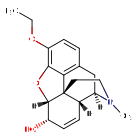
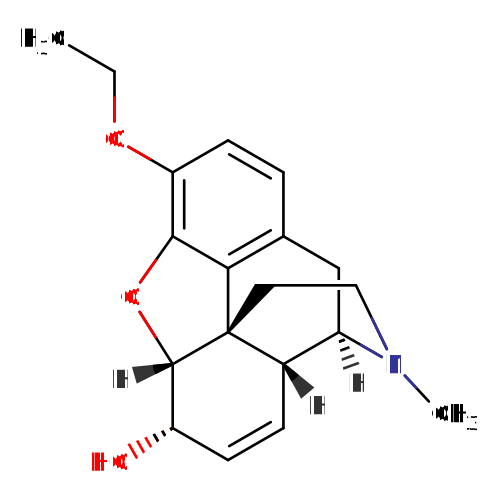
Structure for Ethylmorphine (DB01466)
- Weight
- Average: 313.3908
Monoisotopic: 313.167793607 - Chemical Formula
- C19H23NO3
- Synonyms
- 3-ethoxymorphine
- 3-O-Ethylmorphine
- Dionine
- Ethylmorphine
- External IDs
- DEA No. 9190
- IDS-NE-005(SECT.2)

Pharmacology
- Indication
Ethylmorphine is an analgesic used for pain relief.
 Reduce drug development failure ratesBuild, train, & validate machine-learning modelswith evidence-based and structured datasets.Build, train, & validate predictive machine-learning models with structured datasets.
- Associated Conditions
Indication Type Indication Combined Product Details Approval Level Age Group Patient Characteristics Dose Form Used in combination for symptomatic treatment of Coughing Combination Product in combination with: Codeine (DB00318) •••••••••••• ••••••••••• ••••• •••••• Used in combination for symptomatic treatment of Coughing Combination Product in combination with: Codeine (DB00318) •••••••••••• ••••••••••• ••••• •••••• - Contraindications & Blackbox Warnings
 Prevent Adverse Drug Events TodayTap into our Clinical API for life-saving information on contraindications & blackbox warnings, population restrictions, harmful risks, & more.Avoid life-threatening adverse drug events with our Clinical API
- Pharmacodynamics
Ethylmorphine is metabolized by the enzyme cytochrome P450 2D6 to morphine. Morphine is a narcotic pain management agent indicated for the relief of pain in patients who require opioid analgesics for more than a few days. Morphine interacts predominantly with the opioid mu-receptor. These mu-binding sites are discretely distributed in the human brain, with high densities in the posterior amygdala, hypothalamus, thalamus, nucleus caudatus, putamen, and certain cortical areas. They are also found on the terminal axons of primary afferents within laminae I and II (substantia gelatinosa) of the spinal cord and in the spinal nucleus of the trigeminal nerve. In clinical settings, morphine exerts its principal pharmacological effect on the central nervous system and gastrointestinal tract. Its primary actions of therapeutic value are analgesia and sedation. Morphine appears to increase the patient's tolerance for pain and to decrease discomfort, although the presence of the pain itself may still be recognized. In addition to analgesia, alterations in mood, euphoria and dysphoria, and drowsiness commonly occur. Opioids also produce respiratory depression by direct action on brain stem respiratory centers.
- Mechanism of action
Ethylmorphine is metabolized by the liver enzyme cytochrome P450 2D6 to morphine. The precise mechanism of the analgesic action of morphine is unknown. However, specific CNS opiate receptors have been identified and likely play a role in the expression of analgesic effects. Morphine first acts on the mu-opioid receptors. The mechanism of respiratory depression involves a reduction in the responsiveness of the brain stem respiratory centers to increases in carbon dioxide tension and to electrical stimulation. It has been shown that morphine binds to and inhibits GABA inhibitory interneurons. These interneurons normally inhibit the descending pain inhibition pathway. So, without the inhibitory signals, pain modulation can proceed downstream.
Target Actions Organism AMu-type opioid receptor agonistHumans - Absorption
Not Available
- Volume of distribution
Not Available
- Protein binding
Not Available
- Metabolism
After ingestion, ethylmorphine is converted to morphine in the human liver by the CYP450-isozyme CYP2D6, similarly to codeine.
- Route of elimination
Not Available
- Half-life
Not Available
- Clearance
Not Available
- Adverse Effects
 Improve decision support & research outcomesWith structured adverse effects data, including: blackbox warnings, adverse reactions, warning & precautions, & incidence rates. View sample adverse effects data in our new Data Library!Improve decision support & research outcomes with our structured adverse effects data.
- Toxicity
Not Available
- Pathways
Pathway Category Ethylmorphine Action Pathway Drug action - Pharmacogenomic Effects/ADRs
- Not Available
Interactions
- Drug Interactions
- This information should not be interpreted without the help of a healthcare provider. If you believe you are experiencing an interaction, contact a healthcare provider immediately. The absence of an interaction does not necessarily mean no interactions exist.
Drug Interaction Integrate drug-drug
interactions in your software1,2-Benzodiazepine The risk or severity of adverse effects can be increased when Ethylmorphine is combined with 1,2-Benzodiazepine. Abametapir The serum concentration of Ethylmorphine can be increased when it is combined with Abametapir. Abatacept The metabolism of Ethylmorphine can be increased when combined with Abatacept. Abiraterone The metabolism of Ethylmorphine can be decreased when combined with Abiraterone. Acebutolol The metabolism of Ethylmorphine can be decreased when combined with Acebutolol. - Food Interactions
- Not Available
Products
 Drug product information from 10+ global regionsOur datasets provide approved product information including:dosage, form, labeller, route of administration, and marketing period.Access drug product information from over 10 global regions.
- Product Ingredients
Ingredient UNII CAS InChI Key Ethylmorphine hydrochloride MFM5450P3T 125-30-4 ZPPBASOODYCKDP-YZZSNFJZSA-N - International/Other Brands
- Codethyline (Erfa) / Dionina (Merck) / Lepheton (Meda)
- Mixture Products
Name Ingredients Dosage Route Labeller Marketing Start Marketing End Region Image ARKODIN TABLET, 15 ADET Ethylmorphine (10 mg) + Codeine (20 mg) Tablet Oral GÜNSA GÜNEY İLAÇ VE HAMMADDELER SAN. VE TİC. A.Ş. 1972-03-16 Not applicable Turkey 
FENOKODIN 20 MG / 10 MG TABLET, 20 ADET Ethylmorphine (10 mg) + Codeine (20 mg) Tablet Oral ADEKA İLAÇ SAN. VE TİC. A.Ş. 1965-12-07 Not applicable Turkey LUDICODINE TABLET, 15 ADET Ethylmorphine (10 mg) + Codeine (20 mg) Tablet Oral LİBA LABORATUARLARI A.Ş. 1984-09-19 Not applicable Turkey
Categories
- ATC Codes
- S01XA06 — Ethylmorphine
- S01XA — Other ophthalmologicals
- S01X — OTHER OPHTHALMOLOGICALS
- S01 — OPHTHALMOLOGICALS
- S — SENSORY ORGANS
- Drug Categories
- Alkaloids
- Analgesics
- Antitussive Agents
- Central Nervous System Agents
- Central Nervous System Depressants
- Cough and Cold Preparations
- Cytochrome P-450 CYP2B6 Substrates
- Cytochrome P-450 CYP2D6 Substrates
- Cytochrome P-450 CYP3A Substrates
- Cytochrome P-450 CYP3A4 Substrates
- Cytochrome P-450 Substrates
- Heterocyclic Compounds, Fused-Ring
- Morphinans
- Morphine Derivatives
- Narcotics
- Ophthalmologicals
- Opiate Alkaloids
- Opioids
- Opium Alkaloids and Derivatives
- Peripheral Nervous System Agents
- Phenanthrenes
- Respiratory System Agents
- Sensory Organs
- Sensory System Agents
- Serotonergic Drugs Shown to Increase Risk of Serotonin Syndrome
- Chemical TaxonomyProvided by Classyfire
- Description
- This compound belongs to the class of organic compounds known as morphinans. These are polycyclic compounds with a four-ring skeleton with three condensed six-member rings forming a partially hydrogenated phenanthrene moiety, one of which is aromatic while the two others are alicyclic.
- Kingdom
- Organic compounds
- Super Class
- Alkaloids and derivatives
- Class
- Morphinans
- Sub Class
- Not Available
- Direct Parent
- Morphinans
- Alternative Parents
- Phenanthrenes and derivatives / Tetralins / Coumarans / Aralkylamines / Alkyl aryl ethers / Piperidines / Trialkylamines / Secondary alcohols / Oxacyclic compounds / Azacyclic compounds show 2 more
- Substituents
- Alcohol / Alkyl aryl ether / Amine / Aralkylamine / Aromatic heteropolycyclic compound / Azacycle / Benzenoid / Coumaran / Ether / Hydrocarbon derivative show 14 more
- Molecular Framework
- Aromatic heteropolycyclic compounds
- External Descriptors
- morphinane alkaloid (CHEBI:4902)
- Affected organisms
- Humans and other mammals
Chemical Identifiers
- UNII
- RWO67D87EU
- CAS number
- 76-58-4
- InChI Key
- OGDVEMNWJVYAJL-LEPYJNQMSA-N
- InChI
- InChI=1S/C19H23NO3/c1-3-22-15-7-4-11-10-13-12-5-6-14(21)18-19(12,8-9-20(13)2)16(11)17(15)23-18/h4-7,12-14,18,21H,3,8-10H2,1-2H3/t12-,13+,14-,18-,19-/m0/s1
- IUPAC Name
- (1S,5R,13R,14S,17R)-10-ethoxy-4-methyl-12-oxa-4-azapentacyclo[9.6.1.0^{1,13}.0^{5,17}.0^{7,18}]octadeca-7(18),8,10,15-tetraen-14-ol
- SMILES
- [H][C@@]12OC3=C(OCC)C=CC4=C3[C@@]11CCN(C)[C@]([H])(C4)[C@]1([H])C=C[C@@H]2O
References
- General References
- Aasmundstad TA, Xu BQ, Johansson I, Ripel A, Bjorneboe A, Christophersen AS, Bodd E, Morland J: Biotransformation and pharmacokinetics of ethylmorphine after a single oral dose. Br J Clin Pharmacol. 1995 Jun;39(6):611-20. [Article]
- Xu BQ, Aasmundstad TA, Lillekjendlie B, Bjorneboe A, Christophersen AS, Morland J: Effects of ethanol on ethylmorphine metabolism in isolated rat hepatocytes: characterization by means of a multicompartmental model. Pharmacol Toxicol. 1997 Apr;80(4):171-81. [Article]
- External Links
- Human Metabolome Database
- HMDB0015509
- KEGG Drug
- D07929
- KEGG Compound
- C07537
- PubChem Compound
- 5359271
- PubChem Substance
- 46505092
- ChemSpider
- 4514250
- 4166
- ChEBI
- 4902
- ChEMBL
- CHEMBL1712170
- ZINC
- ZINC000003629718
- Wikipedia
- Ethylmorphine
Clinical Trials
Pharmacoeconomics
- Manufacturers
- Not Available
- Packagers
- Not Available
- Dosage Forms
Form Route Strength Tablet Oral - Prices
- Not Available
- Patents
- Not Available
Properties
- State
- Solid
- Experimental Properties
Property Value Source melting point (°C) 199-201 °C PhysProp water solubility 2610 mg/L (at 20 °C) SEIDELL,A (1941) - Predicted Properties
Property Value Source Water Solubility 0.835 mg/mL ALOGPS logP 1.72 ALOGPS logP 1.7 Chemaxon logS -2.6 ALOGPS pKa (Strongest Acidic) 13.78 Chemaxon pKa (Strongest Basic) 9.19 Chemaxon Physiological Charge 1 Chemaxon Hydrogen Acceptor Count 4 Chemaxon Hydrogen Donor Count 1 Chemaxon Polar Surface Area 41.93 Å2 Chemaxon Rotatable Bond Count 2 Chemaxon Refractivity 89.35 m3·mol-1 Chemaxon Polarizability 34.15 Å3 Chemaxon Number of Rings 5 Chemaxon Bioavailability 1 Chemaxon Rule of Five Yes Chemaxon Ghose Filter Yes Chemaxon Veber's Rule No Chemaxon MDDR-like Rule No Chemaxon - Predicted ADMET Features
Property Value Probability Human Intestinal Absorption + 0.995 Blood Brain Barrier + 0.9981 Caco-2 permeable + 0.7931 P-glycoprotein substrate Substrate 0.8987 P-glycoprotein inhibitor I Inhibitor 0.682 P-glycoprotein inhibitor II Non-inhibitor 0.6396 Renal organic cation transporter Inhibitor 0.6561 CYP450 2C9 substrate Non-substrate 0.8039 CYP450 2D6 substrate Substrate 0.8919 CYP450 3A4 substrate Substrate 0.7344 CYP450 1A2 substrate Non-inhibitor 0.7851 CYP450 2C9 inhibitor Non-inhibitor 0.8693 CYP450 2D6 inhibitor Inhibitor 0.6878 CYP450 2C19 inhibitor Non-inhibitor 0.8318 CYP450 3A4 inhibitor Non-inhibitor 0.8273 CYP450 inhibitory promiscuity Low CYP Inhibitory Promiscuity 0.5795 Ames test Non AMES toxic 0.8526 Carcinogenicity Non-carcinogens 0.9453 Biodegradation Not ready biodegradable 0.9962 Rat acute toxicity 2.6192 LD50, mol/kg Not applicable hERG inhibition (predictor I) Weak inhibitor 0.7839 hERG inhibition (predictor II) Non-inhibitor 0.6518
Spectra
- Mass Spec (NIST)
- Not Available
- Spectra
Spectrum Spectrum Type Splash Key Predicted GC-MS Spectrum - GC-MS Predicted GC-MS splash10-0671-1090000000-ee6bb48baf50c5f0670d Predicted MS/MS Spectrum - 10V, Positive (Annotated) Predicted LC-MS/MS splash10-03di-0039000000-4c9619092801c25295a1 Predicted MS/MS Spectrum - 10V, Negative (Annotated) Predicted LC-MS/MS splash10-03di-0019000000-2c2b6f836610d7212f0a Predicted MS/MS Spectrum - 20V, Positive (Annotated) Predicted LC-MS/MS splash10-03di-0079000000-4ccf765453672c466c63 Predicted MS/MS Spectrum - 20V, Negative (Annotated) Predicted LC-MS/MS splash10-03di-0049000000-cc3bb64009eb724fbad7 Predicted MS/MS Spectrum - 40V, Positive (Annotated) Predicted LC-MS/MS splash10-0bta-1091000000-32a29af097b563383fbe Predicted MS/MS Spectrum - 40V, Negative (Annotated) Predicted LC-MS/MS splash10-03yi-0092000000-e89c5fce6f1bc7e434ee Predicted 1H NMR Spectrum 1D NMR Not Applicable Predicted 13C NMR Spectrum 1D NMR Not Applicable - Chromatographic Properties
Collision Cross Sections (CCS)
Adduct CCS Value (Å2) Source type Source [M-H]- 180.6947501 predictedDarkChem Lite v0.1.0 [M-H]- 175.8053501 predictedDarkChem Lite v0.1.0 [M-H]- 178.8297501 predictedDarkChem Lite v0.1.0 [M-H]- 178.91994 predictedDeepCCS 1.0 (2019) [M+H]+ 182.8725501 predictedDarkChem Lite v0.1.0 [M+H]+ 177.5653501 predictedDarkChem Lite v0.1.0 [M+H]+ 180.6339501 predictedDarkChem Lite v0.1.0 [M+H]+ 181.57976 predictedDeepCCS 1.0 (2019) [M+Na]+ 180.8951501 predictedDarkChem Lite v0.1.0 [M+Na]+ 176.3413501 predictedDarkChem Lite v0.1.0 [M+Na]+ 178.9659501 predictedDarkChem Lite v0.1.0 [M+Na]+ 189.09969 predictedDeepCCS 1.0 (2019)
Targets

- Kind
- Protein
- Organism
- Humans
- Pharmacological action
- Yes
- Actions
- Agonist
- General Function
- Voltage-gated calcium channel activity
- Specific Function
- Receptor for endogenous opioids such as beta-endorphin and endomorphin. Receptor for natural and synthetic opioids including morphine, heroin, DAMGO, fentanyl, etorphine, buprenorphin and methadone...
- Gene Name
- OPRM1
- Uniprot ID
- P35372
- Uniprot Name
- Mu-type opioid receptor
- Molecular Weight
- 44778.855 Da
References
- Yamada H, Shimoyama N, Sora I, Uhl GR, Fukuda Y, Moriya H, Shimoyama M: Morphine can produce analgesia via spinal kappa opioid receptors in the absence of mu opioid receptors. Brain Res. 2006 Apr 14;1083(1):61-9. Epub 2006 Mar 10. [Article]
- Choi HS, Kim CS, Hwang CK, Song KY, Wang W, Qiu Y, Law PY, Wei LN, Loh HH: The opioid ligand binding of human mu-opioid receptor is modulated by novel splice variants of the receptor. Biochem Biophys Res Commun. 2006 May 19;343(4):1132-40. Epub 2006 Mar 23. [Article]
- Castro RR, Cunha FQ, Silva FS Jr, Rocha FA: A quantitative approach to measure joint pain in experimental osteoarthritis--evidence of a role for nitric oxide. Osteoarthritis Cartilage. 2006 Aug;14(8):769-76. Epub 2006 Mar 31. [Article]
- Johnson EA, Oldfield S, Braksator E, Gonzalez-Cuello A, Couch D, Hall KJ, Mundell SJ, Bailey CP, Kelly E, Henderson G: Agonist-selective mechanisms of mu-opioid receptor desensitization in human embryonic kidney 293 cells. Mol Pharmacol. 2006 Aug;70(2):676-85. Epub 2006 May 8. [Article]
- Chen X, Ji ZL, Chen YZ: TTD: Therapeutic Target Database. Nucleic Acids Res. 2002 Jan 1;30(1):412-5. [Article]
Enzymes
- Kind
- Protein
- Organism
- Humans
- Pharmacological action
- Unknown
- Actions
- Substrate
- General Function
- Steroid hydroxylase activity
- Specific Function
- Cytochromes P450 are a group of heme-thiolate monooxygenases. In liver microsomes, this enzyme is involved in an NADPH-dependent electron transport pathway. It oxidizes a variety of structurally un...
- Gene Name
- CYP2B6
- Uniprot ID
- P20813
- Uniprot Name
- Cytochrome P450 2B6
- Molecular Weight
- 56277.81 Da
References
- Rendic S: Summary of information on human CYP enzymes: human P450 metabolism data. Drug Metab Rev. 2002 Feb-May;34(1-2):83-448. [Article]
- Yang TJ, Krausz KW, Shou M, Yang SK, Buters JT, Gonzalez FJ, Gelboin HV: Inhibitory monoclonal antibody to human cytochrome P450 2B6. Biochem Pharmacol. 1998 May 15;55(10):1633-40. doi: 10.1016/s0006-2952(98)00018-5. [Article]
- Kind
- Protein
- Organism
- Humans
- Pharmacological action
- Unknown
- Actions
- Substrate
- General Function
- Vitamin d3 25-hydroxylase activity
- Specific Function
- Cytochromes P450 are a group of heme-thiolate monooxygenases. In liver microsomes, this enzyme is involved in an NADPH-dependent electron transport pathway. It performs a variety of oxidation react...
- Gene Name
- CYP3A4
- Uniprot ID
- P08684
- Uniprot Name
- Cytochrome P450 3A4
- Molecular Weight
- 57342.67 Da
References
- Liu Z, Mortimer O, Smith CA, Wolf CR, Rane A: Evidence for a role of cytochrome P450 2D6 and 3A4 in ethylmorphine metabolism. Br J Clin Pharmacol. 1995 Jan;39(1):77-80. doi: 10.1111/j.1365-2125.1995.tb04413.x. [Article]
- Kind
- Protein
- Organism
- Humans
- Pharmacological action
- Unknown
- Actions
- Substrate
- General Function
- Steroid hydroxylase activity
- Specific Function
- Responsible for the metabolism of many drugs and environmental chemicals that it oxidizes. It is involved in the metabolism of drugs such as antiarrhythmics, adrenoceptor antagonists, and tricyclic...
- Gene Name
- CYP2D6
- Uniprot ID
- P10635
- Uniprot Name
- Cytochrome P450 2D6
- Molecular Weight
- 55768.94 Da
References
- Aasmundstad TA, Xu BQ, Johansson I, Ripel A, Bjorneboe A, Christophersen AS, Bodd E, Morland J: Biotransformation and pharmacokinetics of ethylmorphine after a single oral dose. Br J Clin Pharmacol. 1995 Jun;39(6):611-20. [Article]
- Liu Z, Mortimer O, Smith CA, Wolf CR, Rane A: Evidence for a role of cytochrome P450 2D6 and 3A4 in ethylmorphine metabolism. Br J Clin Pharmacol. 1995 Jan;39(1):77-80. doi: 10.1111/j.1365-2125.1995.tb04413.x. [Article]
- Kind
- Protein
- Organism
- Humans
- Pharmacological action
- Unknown
- Actions
- Inducer
- Curator comments
- This enzyme action is supported by evidence in rats, and may not be relevant to humans.
- General Function
- Oxidoreductase activity, acting on paired donors, with incorporation or reduction of molecular oxygen, nad(p)h as one donor, and incorporation of one atom of oxygen
- Specific Function
- This enzyme is required for electron transfer from NADP to cytochrome P450 in microsomes. It can also provide electron transfer to heme oxygenase and cytochrome B5.
- Gene Name
- POR
- Uniprot ID
- P16435
- Uniprot Name
- NADPH--cytochrome P450 reductase
- Molecular Weight
- 76689.12 Da
References
- Holtzman JL, Rumack BH: The kinetics of ethylmorphine activation of the NADPH-cytochrome P-450 reductase activity of hepatic microsomes from male and female rats. Chem Biol Interact. 1971 Aug;3(4):279-81. doi: 10.1016/0009-2797(71)90060-3. [Article]
- Thompson JA, Holtzman JL: Kinetics of ethylmorphine N-demethylase at low substrate concentrations and its implications concerning the role of the stimulation of NADPH-cytochrome P-450 reductase activity in mixed-function oxidase activity. Biochem Pharmacol. 1977 Oct 1;26(19):1803-7. doi: 10.1016/0006-2952(77)90349-5. [Article]

Drug created at July 31, 2007 13:09 / Updated at May 05, 2021 20:30