Identification
- Summary
Dextroamphetamine is a sympathomimetic agent used in the treatment of attention deficit hyperactivity disorder (ADHD) and narcolepsy.
- Brand Names
- Adderall, Dexedrine, Mydayis, Procentra, Xelstrym, Zenzedi
- Generic Name
- Dextroamphetamine
- DrugBank Accession Number
- DB01576
- Background
Dextroamphetamine is the dextrorotatory enantiomer of amphetamine5. Dextroamphetamine was approved by the FDA in 2001 for the treatment of attention deficit hyperactivity disorder6,Label.
- Type
- Small Molecule
- Groups
- Approved, Illicit
- Structure
Structure for Dextroamphetamine (DB01576)
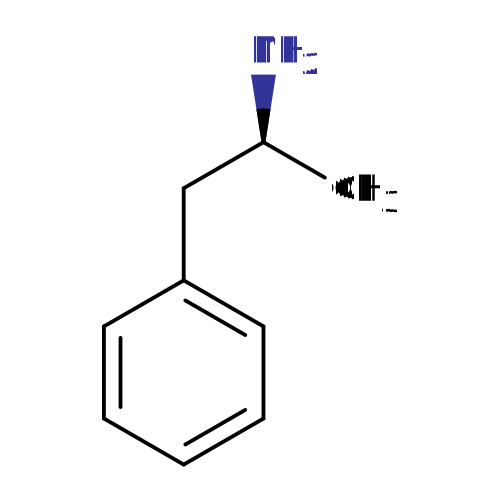
- Weight
- Average: 135.2062
Monoisotopic: 135.104799421 - Chemical Formula
- C9H13N
- Synonyms
- (+)-(S)-amphetamine
- (+)-amphetamine
- (+)-α-methylphenethylamine
- (+)-α-methylphenylethylamine
- (S)-(+)-amphetamine
- (S)-(+)-β-phenylisopropylamine
- (S)-1-phenyl-2-aminopropane
- (S)-1-phenyl-2-propylamine
- (S)-amphetamine
- (S)-α-methylbenzeneethanamine
- (αS)-α-methylbenzeneethanamine
- d-amphetamine
- Desamfetamina
- Dexamfetamina
- Dexamfetamine
- Dexamfetaminum
- Dexamphetamine
- Dexanfetamina
- Dextroamphetamine
- External IDs
- NSC-73713

Pharmacology
- Indication
Dextroamphetamine is indicated for the treatment of attention deficit hyperactivity disorder (ADHD).Label
 Reduce drug development failure ratesBuild, train, & validate machine-learning modelswith evidence-based and structured datasets.Build, train, & validate predictive machine-learning models with structured datasets.
- Associated Conditions
Indication Type Indication Combined Product Details Approval Level Age Group Patient Characteristics Dose Form Used in combination to manage Attention deficit hyperactivity disorder Combination Product in combination with: Amphetamine (DB00182) •••••••••••• ••••• Used in combination to manage Attention deficit hyperactivity disorder Combination Product in combination with: Amphetamine (DB00182) •••••••••••• •••••••••• Used in combination to manage Attention deficit hyperactivity disorder Combination Product in combination with: Amphetamine (DB00182) •••••••••••• •••••••• Management of Attention deficit hyperactivity disorder •••••••••••• Management of Narcolepsy •••••••••••• - Contraindications & Blackbox Warnings
 Prevent Adverse Drug Events TodayTap into our Clinical API for life-saving information on contraindications & blackbox warnings, population restrictions, harmful risks, & more.Avoid life-threatening adverse drug events with our Clinical API
- Pharmacodynamics
Dextroamphetamine is a noncatecholamine, sympathomimetic amine that acts as a CNS stimulant.Label Dextroamphetamine raises systolic and diastolic blood pressure, acts as a weak bronchodilator, and also acts as a respiratory stimulant.Label The general mechanism of action of dextroamphetamine has not been well established.Label
- Mechanism of action
The exact mechanism of amphetamines as a class is not known. Dextroamphetamine acts by preventing reuptake, increasing release, and stimulating reverse-transport of dopamine in synaptic clefts in the striatum.4 Newer evidence shows amphetamines may also alter the number of dopamine transporters in synaptic clefts.2
Target Actions Organism ASynaptic vesicular amine transporter inducerHumans ASodium-dependent noradrenaline transporter negative modulatorHumans ASodium-dependent dopamine transporter negative modulatorHumans UTrace amine-associated receptor 1 agonistHumans UAlpha-1B adrenergic receptor antagonistHumans UAlpha adrenergic receptor inhibitorinducerHumans - Absorption
Bioavailability data of dextroamphetamine is not readily available, however there is no difference in bioavailability when taken with or without a meal.Label
- Volume of distribution
195L.3
- Protein binding
Not Available
- Metabolism
Dextroamphetamine is metabolized by cytochrome P-450 2D6 in the liver to 4-hydroxyamphetamine and later conjugated by sulfotransferase or glucoronyltransferase.1
Hover over products below to view reaction partners
- Route of elimination
A third of the drug is eliminated renally.5
- Half-life
11.75 hours.Label In a study of post-stroke patients the half life was 16.0 hours in females and 12.4 hours in males.5 Studies in healthy populations show a half life of 7.9 hours.3
- Clearance
17L/h.3
- Adverse Effects
 Improve decision support & research outcomesWith structured adverse effects data, including: blackbox warnings, adverse reactions, warning & precautions, & incidence rates. View sample adverse effects data in our new Data Library!Improve decision support & research outcomes with our structured adverse effects data.
- Toxicity
Dextroamphetamine has been shown to be teratogenic and embryotoxic in mice at 41 times the maximum human dose.Label These effects were not seen in rat or rabbit studies, and the effects on human pregnancy have not been studied.Label The risk and benefit of use during pregnancy should be weighed as bone deformities, tracheoesophageal fistula, anal atresia, low birthweight, and withdrawl have been reported in the children of mothers who were taking dextroamphetamine during pregnancy.Label Mothers should not take amphetamines while nursing as the drug is excreted in breast milk.Label Long term effects of dextroamphetamine have not bee determined in pediatric patients and dextroamphetamine should be avoided in children under 3 years.Label
- Pathways
- Not Available
- Pharmacogenomic Effects/ADRs
- Not Available
Interactions
- Drug Interactions
- This information should not be interpreted without the help of a healthcare provider. If you believe you are experiencing an interaction, contact a healthcare provider immediately. The absence of an interaction does not necessarily mean no interactions exist.
Drug Interaction Integrate drug-drug
interactions in your softwareAbatacept The metabolism of Dextroamphetamine can be increased when combined with Abatacept. Abiraterone The metabolism of Dextroamphetamine can be decreased when combined with Abiraterone. Acebutolol The therapeutic efficacy of Acebutolol can be decreased when used in combination with Dextroamphetamine. Aceclofenac The risk or severity of hypertension can be increased when Dextroamphetamine is combined with Aceclofenac. Acemetacin The risk or severity of hypertension can be increased when Dextroamphetamine is combined with Acemetacin. - Food Interactions
- Avoid fruit juice. Fruit juice may acidify the gastrointestinal tract, decreasing absorption of amphetamines.
Products
 Drug product information from 10+ global regionsOur datasets provide approved product information including:dosage, form, labeller, route of administration, and marketing period.Access drug product information from over 10 global regions.
- Product Ingredients
Ingredient UNII CAS InChI Key Dextroamphetamine adipate YYI1A8W4TQ 64770-52-1 OFCJKOOVFDGTLY-QRPNPIFTSA-N Dextroamphetamine saccharate G83415V073 350708-40-6 CXFNVDBOUVJOQO-OUDZKKFGSA-N Dextroamphetamine sulfate JJ768O327N 51-63-8 SOFQDLYSFOWTJX-QRPNPIFTSA-N - Product Images
- International/Other Brands
- Attentin (Medice) / Dexamphetamine (Sigma)
- Brand Name Prescription Products
Name Dosage Strength Route Labeller Marketing Start Marketing End Region Image Act Dextroamphetamine SR Capsule, extended release 10 mg Oral TEVA Canada Limited 2017-10-06 Not applicable Canada 
Act Dextroamphetamine SR Capsule, extended release 15 mg Oral TEVA Canada Limited 2017-10-06 Not applicable Canada Adderall XR Capsule, extended release 6.25 mg Oral Takeda 2004-01-30 Not applicable Canada Adderall XR Capsule, extended release 6.25 mg Oral Takeda 2004-01-30 Not applicable Canada Dexedrine Tablet 5 mg/1 Oral GlaxoSmithKline 2007-04-10 Not applicable US 
- Generic Prescription Products
Name Dosage Strength Route Labeller Marketing Start Marketing End Region Image Apo-dextroamphetamine SR Capsule, extended release 15 mg Oral Apotex Corporation Not applicable Not applicable Canada Apo-dextroamphetamine SR Capsule, extended release 10 mg Oral Apotex Corporation Not applicable Not applicable Canada Dexedrine Tablet 10 mg/1 Oral Amedra Pharmaceuticals LLC 2014-07-01 2016-09-30 US Dexedrine Tablet 5 mg/1 Oral Amedra Pharmaceuticals LLC 2014-07-01 2016-09-30 US Dexedrine Tablet 5 mg/1 Oral Physicians Total Care, Inc. 2004-12-16 2011-05-31 US - Mixture Products
Name Ingredients Dosage Route Labeller Marketing Start Marketing End Region Image Adderall Dextroamphetamine saccharate (5 mg/1) + Dextroamphetamine sulfate (5 mg/1) + Amphetamine aspartate (5 mg/1) + Amphetamine sulfate (5 mg/1) Tablet Oral bryant ranch prepack 1996-02-13 Not applicable US 
Adderall Dextroamphetamine saccharate (5 mg/1) + Dextroamphetamine sulfate (5 mg/1) + Amphetamine aspartate (5 mg/1) + Amphetamine sulfate (5 mg/1) Tablet Oral bryant ranch prepack 1996-02-13 Not applicable US Adderall Dextroamphetamine saccharate (2.5 mg/1) + Dextroamphetamine sulfate (2.5 mg/1) + Amphetamine aspartate (2.5 mg/1) + Amphetamine sulfate (2.5 mg/1) Tablet Oral bryant ranch prepack 1996-02-13 Not applicable US 
Adderall Dextroamphetamine saccharate (2.5 mg/1) + Dextroamphetamine sulfate (2.5 mg/1) + Amphetamine aspartate (2.5 mg/1) + Amphetamine sulfate (2.5 mg/1) Tablet Oral bryant ranch prepack 1996-02-13 Not applicable US Adderall Dextroamphetamine saccharate (1.25 mg/1) + Dextroamphetamine sulfate (1.25 mg/1) + Amphetamine aspartate (1.25 mg/1) + Amphetamine sulfate (1.25 mg/1) Tablet Oral Physicians Total Care, Inc. 1997-10-02 2011-07-31 US


Categories
- ATC Codes
- N06BA02 — Dexamfetamine
- Drug Categories
- Agents producing tachycardia
- Agents that produce hypertension
- Amines
- Amphetamines
- Central Nervous System Agents
- Central Nervous System Stimulants
- Central Nervous System Stimulation
- Centrally Acting Sympathomimetics
- Cytochrome P-450 CYP2D6 Substrates
- Cytochrome P-450 Substrates
- Dopamine Agents
- Dopamine Uptake Inhibitors
- Ethylamines
- Membrane Transport Modulators
- Nervous System
- Neurotransmitter Agents
- Neurotransmitter Uptake Inhibitors
- Phenethylamines
- Psychoanaleptics
- Psychostimulants, Agents Used for ADHD and Nootropics
- Serotonergic Drugs Shown to Increase Risk of Serotonin Syndrome
- Sympathomimetics
- Chemical TaxonomyProvided by Classyfire
- Description
- This compound belongs to the class of organic compounds known as amphetamines and derivatives. These are organic compounds containing or derived from 1-phenylpropan-2-amine.
- Kingdom
- Organic compounds
- Super Class
- Benzenoids
- Class
- Benzene and substituted derivatives
- Sub Class
- Phenethylamines
- Direct Parent
- Amphetamines and derivatives
- Alternative Parents
- Phenylpropanes / Aralkylamines / Organopnictogen compounds / Monoalkylamines / Hydrocarbon derivatives
- Substituents
- Amine / Amphetamine or derivatives / Aralkylamine / Aromatic homomonocyclic compound / Hydrocarbon derivative / Organic nitrogen compound / Organonitrogen compound / Organopnictogen compound / Phenylpropane / Primary aliphatic amine
- Molecular Framework
- Aromatic homomonocyclic compounds
- External Descriptors
- amphetamine (CHEBI:4469)
- Affected organisms
- Humans and other mammals
Chemical Identifiers
- UNII
- TZ47U051FI
- CAS number
- 51-64-9
- InChI Key
- KWTSXDURSIMDCE-QMMMGPOBSA-N
- InChI
- InChI=1S/C9H13N/c1-8(10)7-9-5-3-2-4-6-9/h2-6,8H,7,10H2,1H3/t8-/m0/s1
- IUPAC Name
- (2S)-1-phenylpropan-2-amine
- SMILES
- C[C@H](N)CC1=CC=CC=C1
References
- Synthesis Reference
Nabenhauer, F.P.; US. Patent 2,276,508; March 17,1942; assigned to Smith, Kline & French Laboratories.
- General References
- de la Torre R, Farre M, Navarro M, Pacifici R, Zuccaro P, Pichini S: Clinical pharmacokinetics of amfetamine and related substances: monitoring in conventional and non-conventional matrices. Clin Pharmacokinet. 2004;43(3):157-85. doi: 10.2165/00003088-200443030-00002. [Article]
- Saunders C, Galli A: Insights in how amphetamine ROCKs (Rho-associated containing kinase) membrane protein trafficking. Proc Natl Acad Sci U S A. 2015 Dec 22;112(51):15538-9. doi: 10.1073/pnas.1520960112. Epub 2015 Nov 25. [Article]
- Dolder PC, Strajhar P, Vizeli P, Hammann F, Odermatt A, Liechti ME: Pharmacokinetics and Pharmacodynamics of Lisdexamfetamine Compared with D-Amphetamine in Healthy Subjects. Front Pharmacol. 2017 Sep 7;8:617. doi: 10.3389/fphar.2017.00617. eCollection 2017. [Article]
- Calipari ES, Ferris MJ: Amphetamine mechanisms and actions at the dopamine terminal revisited. J Neurosci. 2013 May 22;33(21):8923-5. doi: 10.1523/JNEUROSCI.1033-13.2013. [Article]
- Martinsson L, Yang X, Beck O, Wahlgren NG, Eksborg S: Pharmacokinetics of dexamphetamine in acute stroke. Clin Neuropharmacol. 2003 Sep-Oct;26(5):270-6. [Article]
- FDA Drug Approval Package for Dextroamphetamine [Link]
- FDA Approved Drug Products: Adderall (dextroamphetamine) capsule [Link]
- External Links
- Human Metabolome Database
- HMDB0015516
- KEGG Drug
- D03740
- KEGG Compound
- C07884
- PubChem Compound
- 5826
- PubChem Substance
- 46506252
- ChemSpider
- 5621
- BindingDB
- 50022723
- 3288
- ChEBI
- 4469
- ChEMBL
- CHEMBL612
- ZINC
- ZINC000006021033
- Therapeutic Targets Database
- DAP001470
- PharmGKB
- PA449269
- Guide to Pharmacology
- GtP Drug Page
- PDBe Ligand
- 1WE
- RxList
- RxList Drug Page
- Drugs.com
- Drugs.com Drug Page
- Wikipedia
- Dextroamphetamine
- PDB Entries
- 4lar / 4xp9 / 8jso / 8tgh
- FDA label
- Download (97.5 KB)
- MSDS
- Download (145 KB)
Clinical Trials
- Clinical Trials
Phase Status Purpose Conditions Count 4 Completed Health Services Research Expectancy Versus Pharmacotherapy Effect of Adderall 1 4 Completed Treatment Alzheimer's Disease (AD) / Dementia 1 4 Completed Treatment Attention Deficit Hyperactivity Disorder (ADHD) 2 4 Completed Treatment Attention Deficit Hyperactivity Disorder (ADHD) / Defiant Disorder, Oppositional 1 4 Completed Treatment Attention Deficit Hyperactivity Disorder (ADHD) / Deficient Emotional Self-Regulation (DESR) 1
Pharmacoeconomics
- Manufacturers
- Not Available
- Packagers
- Abbott Laboratories Ltd.
- Actavis Group
- Auriga Pharmaceuticals LLC
- Barr Pharmaceuticals
- Bryant Ranch Prepack
- Cardinal Health
- Catalent Pharma Solutions
- Corepharma LLC
- D.M. Graham Laboratories Inc.
- Dispensing Solutions
- DSM Corp.
- Eon Labs
- Ethex Corp.
- GlaxoSmithKline Inc.
- Global Pharmaceuticals
- Lundbeck Inc.
- Mallinckrodt Inc.
- Mikart Inc.
- Nucare Pharmaceuticals Inc.
- PD-Rx Pharmaceuticals Inc.
- Physicians Total Care Inc.
- Professional Co.
- Ranbaxy Laboratories
- Shire Inc.
- Stat Rx Usa
- Tiber Pharmaceuticals LLC
- Dosage Forms
Form Route Strength Capsule, extended release Oral 6.25 mg Capsule, extended release Oral 10 mg/1 Capsule, extended release Oral 15 mg/1 Capsule, extended release Oral 5 mg/1 Tablet Oral 5 mg/1 Capsule, extended release Oral 10 mg Capsule, extended release Oral 15 mg Tablet Oral 5 mg Capsule Oral Capsule, extended release Oral Tablet Oral Solution Oral 5 mg/5mL Tablet Oral 10 mg/1 Liquid Oral 5 mg/5mL Patch, extended release Transdermal 13.5 mg/1 Patch, extended release Transdermal 18 mg/1 Patch, extended release Transdermal 4.5 mg/1 Patch, extended release Transdermal 9 mg/1 Tablet Oral 15 mg/1 Tablet Oral 2.5 mg/1 Tablet Oral 20 mg/1 Tablet Oral 30 mg/1 Tablet Oral 7.5 mg/1 - Prices
Unit description Cost Unit D-amphetamine sulfate powder 900.0USD g Desoxyn 5 mg tablet 5.1USD tablet Dexedrine 15 mg 24 Hour Capsule 4.22USD capsule Dextroamphetamine Sulfate CR 15 mg 24 Hour Capsule 3.47USD capsule Dexedrine 10 mg 24 Hour Capsule 3.23USD capsule Dexedrine 5 mg 24 Hour Capsule 3.0USD capsule Dextroamphetamine Sulfate CR 10 mg 24 Hour Capsule 2.96USD capsule Dexedrine spansule 15 mg 2.45USD each Dextroamphetamine Sulfate CR 5 mg 24 Hour Capsule 2.06USD capsule Dexedrine spansule 10 mg 1.91USD each Dexedrine spansule 5 mg 1.91USD each Dexedrine 15 mg Sustained-Release Capsule 1.08USD capsule Dextroamphetamine Sulfate 10 mg tablet 0.92USD tablet Dexedrine 10 mg Sustained-Release Capsule 0.89USD capsule Dextroamphetamine Sulfate 5 mg tablet 0.65USD tablet Dexedrine 5 mg Tablet 0.62USD tablet Dextroamphetamine 10 mg tablet 0.56USD tablet Dextrostat 10 mg tablet 0.48USD tablet Dextroamphetamine 5 mg tablet 0.28USD tablet Dextrostat 5 mg tablet 0.25USD tablet DrugBank does not sell nor buy drugs. Pricing information is supplied for informational purposes only.- Patents
Patent Number Pediatric Extension Approved Expires (estimated) Region US6384020 Yes 2002-05-07 2021-01-06 US USRE42096 Yes 2011-02-01 2019-04-21 US US6605300 Yes 2003-08-12 2019-04-21 US US6322819 Yes 2001-11-27 2019-04-21 US USRE41148 Yes 2010-02-23 2019-04-21 US US8632802 No 2014-01-21 2025-10-07 US US9034370 No 2015-05-19 2025-10-07 US US9173857 No 2015-11-03 2026-05-12 US US6913768 No 2005-07-05 2023-05-24 US US8846100 No 2014-09-30 2029-08-24 US US9456993 No 2016-10-04 2033-10-24 US US9474722 No 2016-10-25 2033-10-24 US US8591941 No 2013-11-26 2025-10-07 US US11559501 No 2022-01-06 2042-01-06 US
Properties
- State
- Liquid
- Experimental Properties
Property Value Source melting point (°C) -98 [MSDS] boiling point (°C) 64.7 [MSDS] water solubility Moderately Soluble [MSDS] - Predicted Properties
Property Value Source Water Solubility 1.74 mg/mL ALOGPS logP 1.85 ALOGPS logP 1.8 Chemaxon logS -1.9 ALOGPS pKa (Strongest Basic) 10.01 Chemaxon Physiological Charge 1 Chemaxon Hydrogen Acceptor Count 1 Chemaxon Hydrogen Donor Count 1 Chemaxon Polar Surface Area 26.02 Å2 Chemaxon Rotatable Bond Count 2 Chemaxon Refractivity 43.71 m3·mol-1 Chemaxon Polarizability 16.08 Å3 Chemaxon Number of Rings 1 Chemaxon Bioavailability 1 Chemaxon Rule of Five Yes Chemaxon Ghose Filter No Chemaxon Veber's Rule Yes Chemaxon MDDR-like Rule No Chemaxon - Predicted ADMET Features
Property Value Probability Human Intestinal Absorption + 0.9972 Blood Brain Barrier + 0.9565 Caco-2 permeable + 0.8395 P-glycoprotein substrate Non-substrate 0.7379 P-glycoprotein inhibitor I Non-inhibitor 0.9519 P-glycoprotein inhibitor II Non-inhibitor 0.9859 Renal organic cation transporter Non-inhibitor 0.8002 CYP450 2C9 substrate Non-substrate 0.8114 CYP450 2D6 substrate Substrate 0.8919 CYP450 3A4 substrate Non-substrate 0.795 CYP450 1A2 substrate Non-inhibitor 0.5697 CYP450 2C9 inhibitor Non-inhibitor 0.9313 CYP450 2D6 inhibitor Inhibitor 0.657 CYP450 2C19 inhibitor Non-inhibitor 0.8445 CYP450 3A4 inhibitor Non-inhibitor 0.8709 CYP450 inhibitory promiscuity Low CYP Inhibitory Promiscuity 0.8732 Ames test Non AMES toxic 0.93 Carcinogenicity Non-carcinogens 0.6869 Biodegradation Not ready biodegradable 0.6575 Rat acute toxicity 3.2491 LD50, mol/kg Not applicable hERG inhibition (predictor I) Weak inhibitor 0.9452 hERG inhibition (predictor II) Non-inhibitor 0.9231
Spectra
- Mass Spec (NIST)
- Download (6.85 KB)
- Spectra
- Chromatographic Properties
Collision Cross Sections (CCS)
Adduct CCS Value (Å2) Source type Source [M-H]- 130.813261 predictedDarkChem Lite v0.1.0 [M-H]- 129.93782 predictedDeepCCS 1.0 (2019) [M+H]+ 131.854361 predictedDarkChem Lite v0.1.0 [M+H]+ 133.15218 predictedDeepCCS 1.0 (2019) [M+Na]+ 131.248361 predictedDarkChem Lite v0.1.0 [M+Na]+ 142.44734 predictedDeepCCS 1.0 (2019)
Targets

- Kind
- Protein
- Organism
- Humans
- Pharmacological action
- Yes
- Actions
- Inducer
- General Function
- Monoamine transmembrane transporter activity
- Specific Function
- Involved in the ATP-dependent vesicular transport of biogenic amine neurotransmitters. Pumps cytosolic monoamines including dopamine, norepinephrine, serotonin, and histamine into synaptic vesicles...
- Gene Name
- SLC18A2
- Uniprot ID
- Q05940
- Uniprot Name
- Synaptic vesicular amine transporter
- Molecular Weight
- 55712.075 Da
References
- Sulzer D, Chen TK, Lau YY, Kristensen H, Rayport S, Ewing A: Amphetamine redistributes dopamine from synaptic vesicles to the cytosol and promotes reverse transport. J Neurosci. 1995 May;15(5 Pt 2):4102-8. [Article]
- Sulzer D, Sonders MS, Poulsen NW, Galli A: Mechanisms of neurotransmitter release by amphetamines: a review. Prog Neurobiol. 2005 Apr;75(6):406-33. [Article]
- Kind
- Protein
- Organism
- Humans
- Pharmacological action
- Yes
- Actions
- Negative modulator
- General Function
- Norepinephrine:sodium symporter activity
- Specific Function
- Amine transporter. Terminates the action of noradrenaline by its high affinity sodium-dependent reuptake into presynaptic terminals.
- Gene Name
- SLC6A2
- Uniprot ID
- P23975
- Uniprot Name
- Sodium-dependent noradrenaline transporter
- Molecular Weight
- 69331.42 Da
References
- Dlugos A, Freitag C, Hohoff C, McDonald J, Cook EH, Deckert J, de Wit H: Norepinephrine transporter gene variation modulates acute response to D-amphetamine. Biol Psychiatry. 2007 Jun 1;61(11):1296-305. Epub 2007 Jan 17. [Article]
- Dlugos AM, Hamidovic A, Palmer AA, de Wit H: Further evidence of association between amphetamine response and SLC6A2 gene variants. Psychopharmacology (Berl). 2009 Oct;206(3):501-11. doi: 10.1007/s00213-009-1628-y. [Article]
- Burnette WB, Bailey MD, Kukoyi S, Blakely RD, Trowbridge CG, Justice JB Jr: Human norepinephrine transporter kinetics using rotating disk electrode voltammetry. Anal Chem. 1996 Sep 1;68(17):2932-8. [Article]
- Kind
- Protein
- Organism
- Humans
- Pharmacological action
- Yes
- Actions
- Negative modulator
- General Function
- Monoamine transmembrane transporter activity
- Specific Function
- Amine transporter. Terminates the action of dopamine by its high affinity sodium-dependent reuptake into presynaptic terminals.
- Gene Name
- SLC6A3
- Uniprot ID
- Q01959
- Uniprot Name
- Sodium-dependent dopamine transporter
- Molecular Weight
- 68494.255 Da
References
- Zhen J, Chen N, Reith ME: Differences in interactions with the dopamine transporter as revealed by diminishment of Na(+) gradient and membrane potential: dopamine versus other substrates. Neuropharmacology. 2005 Nov;49(6):769-79. Epub 2005 Aug 24. [Article]
- Kuczenski R, Segal DS, Cho AK, Melega W: Hippocampus norepinephrine, caudate dopamine and serotonin, and behavioral responses to the stereoisomers of amphetamine and methamphetamine. J Neurosci. 1995 Feb;15(2):1308-17. [Article]
- Rothman RB, Dersch CM, Ananthan S, Partilla JS: Studies of the biogenic amine transporters. 13. Identification of "agonist" and "antagonist" allosteric modulators of amphetamine-induced dopamine release. J Pharmacol Exp Ther. 2009 May;329(2):718-28. doi: 10.1124/jpet.108.149088. Epub 2009 Feb 24. [Article]
- Kind
- Protein
- Organism
- Humans
- Pharmacological action
- Unknown
- Actions
- Agonist
- General Function
- Trace-amine receptor activity
- Specific Function
- Receptor for trace amines, including beta-phenylethylamine (b-PEA), p-tyramine (p-TYR), octopamine and tryptamine, with highest affinity for b-PEA and p-TYR. Unresponsive to classical biogenic amin...
- Gene Name
- TAAR1
- Uniprot ID
- Q96RJ0
- Uniprot Name
- Trace amine-associated receptor 1
- Molecular Weight
- 39091.34 Da
References
- Reese EA, Bunzow JR, Arttamangkul S, Sonders MS, Grandy DK: Trace amine-associated receptor 1 displays species-dependent stereoselectivity for isomers of methamphetamine, amphetamine, and para-hydroxyamphetamine. J Pharmacol Exp Ther. 2007 Apr;321(1):178-86. Epub 2007 Jan 11. [Article]
- Xie Z, Westmoreland SV, Bahn ME, Chen GL, Yang H, Vallender EJ, Yao WD, Madras BK, Miller GM: Rhesus monkey trace amine-associated receptor 1 signaling: enhancement by monoamine transporters and attenuation by the D2 autoreceptor in vitro. J Pharmacol Exp Ther. 2007 Apr;321(1):116-27. Epub 2007 Jan 18. [Article]
- Wolinsky TD, Swanson CJ, Smith KE, Zhong H, Borowsky B, Seeman P, Branchek T, Gerald CP: The Trace Amine 1 receptor knockout mouse: an animal model with relevance to schizophrenia. Genes Brain Behav. 2007 Oct;6(7):628-39. Epub 2006 Dec 21. [Article]
- Xie Z, Miller GM: Trace amine-associated receptor 1 is a modulator of the dopamine transporter. J Pharmacol Exp Ther. 2007 Apr;321(1):128-36. Epub 2007 Jan 18. [Article]
- Miller GM, Verrico CD, Jassen A, Konar M, Yang H, Panas H, Bahn M, Johnson R, Madras BK: Primate trace amine receptor 1 modulation by the dopamine transporter. J Pharmacol Exp Ther. 2005 Jun;313(3):983-94. Epub 2005 Mar 11. [Article]
- Kind
- Protein
- Organism
- Humans
- Pharmacological action
- Unknown
- Actions
- Antagonist
- General Function
- Protein heterodimerization activity
- Specific Function
- This alpha-adrenergic receptor mediates its action by association with G proteins that activate a phosphatidylinositol-calcium second messenger system. Its effect is mediated by G(q) and G(11) prot...
- Gene Name
- ADRA1B
- Uniprot ID
- P35368
- Uniprot Name
- Alpha-1B adrenergic receptor
- Molecular Weight
- 56835.375 Da
References
- Overington JP, Al-Lazikani B, Hopkins AL: How many drug targets are there? Nat Rev Drug Discov. 2006 Dec;5(12):993-6. [Article]
- Imming P, Sinning C, Meyer A: Drugs, their targets and the nature and number of drug targets. Nat Rev Drug Discov. 2006 Oct;5(10):821-34. [Article]
- Chen X, Ji ZL, Chen YZ: TTD: Therapeutic Target Database. Nucleic Acids Res. 2002 Jan 1;30(1):412-5. [Article]
- Kind
- Protein group
- Organism
- Humans
- Pharmacological action
- Unknown
- Actions
- InhibitorInducer
- Curator comments
- There are limited data in the literature to support this target action. Adrenergic receptors are possible targets for dextroamphetamine based on indirect evidence.
- General Function
- Protein heterodimerization activity
- Specific Function
- This alpha-adrenergic receptor mediates its action by association with G proteins that activate a phosphatidylinositol-calcium second messenger system. Its effect is mediated by G(q) and G(11) prot...
Components:
References
- Nakamura S, Tepper JM, Young SJ, Groves PM: Changes in noradrenergic terminal excitability induced by amphetamine and their relation to impulse traffic. Neuroscience. 1982;7(9):2217-24. doi: 10.1016/0306-4522(82)90132-4. [Article]
- Shekim WO, Bylund DB, Hodges K, Glaser R, Ray-Prenger C, Oetting G: Platelet alpha 2-adrenergic receptor binding and the effects of d-amphetamine in boys with attention deficit hyperactivity disorder. Neuropsychobiology. 1994;29(3):120-4. doi: 10.1159/000119074. [Article]
Enzymes
- Kind
- Protein
- Organism
- Humans
- Pharmacological action
- No
- Actions
- Substrate
- General Function
- Steroid hydroxylase activity
- Specific Function
- Responsible for the metabolism of many drugs and environmental chemicals that it oxidizes. It is involved in the metabolism of drugs such as antiarrhythmics, adrenoceptor antagonists, and tricyclic...
- Gene Name
- CYP2D6
- Uniprot ID
- P10635
- Uniprot Name
- Cytochrome P450 2D6
- Molecular Weight
- 55768.94 Da
- Kind
- Protein
- Organism
- Escherichia coli (strain K12)
- Pharmacological action
- No
- Actions
- Substrate
- General Function
- Tryptamine:oxygen oxidoreductase (deaminating) activity
- Specific Function
- The enzyme prefers aromatic over aliphatic amines.
- Gene Name
- tynA
- Uniprot ID
- P46883
- Uniprot Name
- Primary amine oxidase
- Molecular Weight
- 84378.17 Da
References
- Kumar K, Dhoke GV, Sharma AK, Jaiswal SK, Sharma VK: Mechanistic elucidation of amphetamine metabolism by tyramine oxidase from human gut microbiota using molecular dynamics simulations. J Cell Biochem. 2019 Jan 30. doi: 10.1002/jcb.28396. [Article]
Transporters
- Kind
- Protein
- Organism
- Humans
- Pharmacological action
- Unknown
- General Function
- Monoamine transmembrane transporter activity
- Specific Function
- Amine transporter. Terminates the action of dopamine by its high affinity sodium-dependent reuptake into presynaptic terminals.
- Gene Name
- SLC6A3
- Uniprot ID
- Q01959
- Uniprot Name
- Sodium-dependent dopamine transporter
- Molecular Weight
- 68494.255 Da
References
- Saunders C, Galli A: Insights in how amphetamine ROCKs (Rho-associated containing kinase) membrane protein trafficking. Proc Natl Acad Sci U S A. 2015 Dec 22;112(51):15538-9. doi: 10.1073/pnas.1520960112. Epub 2015 Nov 25. [Article]


Drug created at August 29, 2007 14:50 / Updated at April 24, 2024 14:30