Identification
- Generic Name
- Adenosine phosphate
- DrugBank Accession Number
- DB00131
- Background
Adenosine phosphate, or adenylic acid, is an adenine nucleotide containing one phosphate group esterified to the sugar moiety in the 2'-, 3'-, or 5'-position. Adenosine phosphate was withdrawn by the FDA since it was considered neither safe nor effective for its intended uses as a vasodilator and an anti-inflammatory.1
- Type
- Small Molecule
- Groups
- Approved, Investigational, Nutraceutical, Withdrawn
- Structure
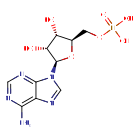
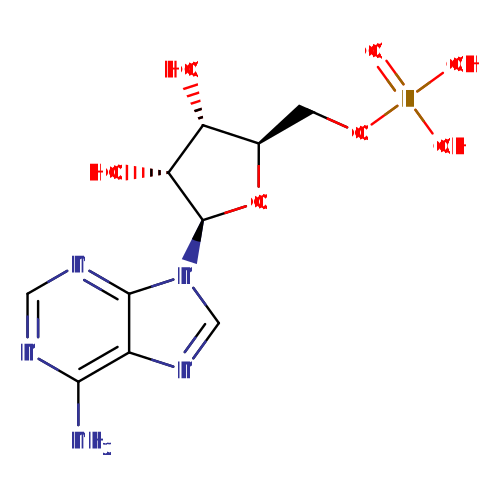
Structure for Adenosine phosphate (DB00131)
- Weight
- Average: 347.2212
Monoisotopic: 347.063084339 - Chemical Formula
- C10H14N5O7P
- Synonyms
- 5'-Adenosine monophosphate
- 5'-Adenylic acid
- 5'-AMP
- 5'-O-Phosphonoadenosine
- Adenosine 5'-(dihydrogen phosphate)
- Adenosine 5'-monophosphate
- Adenosine 5'-phosphate
- Adenosine monophosphate
- Adenosine phosphate
- Adenosine-5'-Monophosphate
- Adenosine-5'-monophosphoric acid
- Adenosine-5'P
- Adenosini phosphas
- Adenylate
- Adenylic acid
- Ado5'P
- AMP
- Fosfato de adenosina
- PAdo
- Phosphate d'adénosine
- External IDs
- NSC-20264

Pharmacology
- Indication
For nutritional supplementation, also for treating dietary shortage or imbalance
 Reduce drug development failure ratesBuild, train, & validate machine-learning modelswith evidence-based and structured datasets.Build, train, & validate predictive machine-learning models with structured datasets.
- Contraindications & Blackbox Warnings
 Prevent Adverse Drug Events TodayTap into our Clinical API for life-saving information on contraindications & blackbox warnings, population restrictions, harmful risks, & more.Avoid life-threatening adverse drug events with our Clinical API
- Pharmacodynamics
Adenosine monophosphate, also known as 5'-adenylic acid and abbreviated AMP, is a nucleotide that is found in RNA. It is an ester of phosphoric acid with the nucleoside adenosine. AMP consists of the phosphate group, the pentose sugar ribose, and the nucleobase adenine. AMP is used as a dietary supplement to boost immune activity, and is also used as a substitute sweetener to aid in the maintenance of a low-calorie diet.
- Mechanism of action
Nucleotides such as Adenosine-5'-Monophosphate affect a number of immune functions, including the reversal of malnutrition and starvation-induced immunosuppression, the enhancement of T-cell maturation and function, the enhancement of natural killer cell activity, the improvement of delayed cutaneous hypersensitivity, helping resistance to such infectious agents as Staphylococcus aureus and Candida albicans, and finally the modulation of T-cell responses toward type 1 CD4 helper lymphocytes or Th1 cells. Studies have shown that mice fed a nucleotide-free diet have both impaired humoral and cellular immune responses. The addition of dietary nucleotides normalizes both types of responses. RNA, a delivery form of nucleotides, and ribonucleotides were used in these studies. The mechanism of the immune-enhancing activity of nucleic acids/nucleotides is not clear.
Target Actions Organism A5'-AMP-activated protein kinase activatorHumans UAdenosine kinase product ofHumans U5'-AMP-activated protein kinase subunit beta-1 activatorHumans UAcetyl-coenzyme A synthetase, cytoplasmic product ofHumans U5'-AMP-activated protein kinase catalytic subunit alpha-1 activatorHumans UAdenylate cyclase type 1 product ofHumans ULong-chain-fatty-acid--CoA ligase 1 product ofHumans UCyclic AMP-responsive element-binding protein 1 activatorHumans UDNA component ofHumans UcAMP-specific 3',5'-cyclic phosphodiesterase 4B product ofHumans UGlycogen phosphorylase, liver form activatorHumans UHistidine triad nucleotide-binding protein 1 product ofHumans UcAMP-specific 3',5'-cyclic phosphodiesterase 4D product ofHumans UFructose-1,6-bisphosphatase 1 antagonistHumans - Absorption
Not Available
- Volume of distribution
Not Available
- Protein binding
Not Available
- Metabolism
- Not Available
- Route of elimination
Not Available
- Half-life
Not Available
- Clearance
Not Available
- Adverse Effects
 Improve decision support & research outcomesWith structured adverse effects data, including: blackbox warnings, adverse reactions, warning & precautions, & incidence rates. View sample adverse effects data in our new Data Library!Improve decision support & research outcomes with our structured adverse effects data.
- Toxicity
Not Available
- Pathways
- Pharmacogenomic Effects/ADRs
- Not Available
Interactions
- Drug Interactions
- This information should not be interpreted without the help of a healthcare provider. If you believe you are experiencing an interaction, contact a healthcare provider immediately. The absence of an interaction does not necessarily mean no interactions exist.Not Available
- Food Interactions
- Not Available
Products
 Drug product information from 10+ global regionsOur datasets provide approved product information including:dosage, form, labeller, route of administration, and marketing period.Access drug product information from over 10 global regions.
- International/Other Brands
- My-B-Den
Categories
- Drug Categories
- Chemical TaxonomyProvided by Classyfire
- Description
- This compound belongs to the class of organic compounds known as purine ribonucleoside monophosphates. These are nucleotides consisting of a purine base linked to a ribose to which one monophosphate group is attached.
- Kingdom
- Organic compounds
- Super Class
- Nucleosides, nucleotides, and analogues
- Class
- Purine nucleotides
- Sub Class
- Purine ribonucleotides
- Direct Parent
- Purine ribonucleoside monophosphates
- Alternative Parents
- Pentose phosphates / Glycosylamines / 6-aminopurines / Monosaccharide phosphates / Monoalkyl phosphates / Aminopyrimidines and derivatives / N-substituted imidazoles / Imidolactams / Heteroaromatic compounds / Tetrahydrofurans show 8 more
- Substituents
- 1,2-diol / 6-aminopurine / Alcohol / Alkyl phosphate / Amine / Aminopyrimidine / Aromatic heteropolycyclic compound / Azacycle / Azole / Glycosyl compound show 29 more
- Molecular Framework
- Aromatic heteropolycyclic compounds
- External Descriptors
- adenosine 5'-phosphate, purine ribonucleoside 5'-monophosphate (CHEBI:16027) / Ribonucleotides (C00020)
- Affected organisms
- Humans and other mammals
Chemical Identifiers
- UNII
- 415SHH325A
- CAS number
- 61-19-8
- InChI Key
- UDMBCSSLTHHNCD-KQYNXXCUSA-N
- InChI
- InChI=1S/C10H14N5O7P/c11-8-5-9(13-2-12-8)15(3-14-5)10-7(17)6(16)4(22-10)1-21-23(18,19)20/h2-4,6-7,10,16-17H,1H2,(H2,11,12,13)(H2,18,19,20)/t4-,6-,7-,10-/m1/s1
- IUPAC Name
- {[(2R,3S,4R,5R)-5-(6-amino-9H-purin-9-yl)-3,4-dihydroxyoxolan-2-yl]methoxy}phosphonic acid
- SMILES
- NC1=C2N=CN([C@@H]3O[C@H](COP(O)(O)=O)[C@@H](O)[C@H]3O)C2=NC=N1
References
- Synthesis Reference
Shigehiro Kataoka, Ayako Nasu, Nobuyuki Yamaji, Motohiko Kato, "Process for preparation of N.sup.6 -substituted 3',5'-cyclic adenosine monophosphate and salt thereof." U.S. Patent US4751293, issued July, 1984.
US4751293- General References
- FDA Briefing Document: Pharmacy Compounding Advisory Committee (PCAC) Meeting February 23-24, 2015 [Link]
- External Links
- Human Metabolome Database
- HMDB0000045
- KEGG Drug
- D02769
- KEGG Compound
- C00020
- PubChem Compound
- 6083
- PubChem Substance
- 46507628
- ChemSpider
- 5858
- BindingDB
- 18137
- 309
- ChEBI
- 16027
- ChEMBL
- CHEMBL752
- ZINC
- ZINC000003860156
- Therapeutic Targets Database
- DAP001319
- PharmGKB
- PA164744376
- PDBe Ligand
- AMP
- Wikipedia
- Adenosine_monophosphate
- PDB Entries
- 12as / 1aer / 1am0 / 1amu / 1ank / 1aw4 / 1c0a / 1cja / 1ct9 / 1del … show 878 more
- MSDS
- Download (73.8 KB)
Clinical Trials
Pharmacoeconomics
- Manufacturers
- Not Available
- Packagers
- Spectrum Pharmaceuticals
- Dosage Forms
- Not Available
- Prices
Unit description Cost Unit Adenosine-5 monophosphate 19.74USD g DrugBank does not sell nor buy drugs. Pricing information is supplied for informational purposes only.- Patents
- Not Available
Properties
- State
- Solid
- Experimental Properties
Property Value Source melting point (°C) 195 dec °C PhysProp water solubility 1E+004 mg/L (at 20 °C) BEILSTEIN logP -3.1 Not Available - Predicted Properties
Property Value Source logP -4.7 Chemaxon pKa (Strongest Acidic) 1.23 Chemaxon pKa (Strongest Basic) 3.92 Chemaxon Physiological Charge -2 Chemaxon Hydrogen Acceptor Count 10 Chemaxon Hydrogen Donor Count 5 Chemaxon Polar Surface Area 186.07 Å2 Chemaxon Rotatable Bond Count 4 Chemaxon Refractivity 74.07 m3·mol-1 Chemaxon Polarizability 29.96 Å3 Chemaxon Number of Rings 3 Chemaxon Bioavailability 1 Chemaxon Rule of Five Yes Chemaxon Ghose Filter No Chemaxon Veber's Rule No Chemaxon MDDR-like Rule No Chemaxon - Predicted ADMET Features
Property Value Probability Human Intestinal Absorption - 0.6115 Blood Brain Barrier + 0.9402 Caco-2 permeable - 0.7398 P-glycoprotein substrate Non-substrate 0.6874 P-glycoprotein inhibitor I Non-inhibitor 0.9111 P-glycoprotein inhibitor II Non-inhibitor 0.9852 Renal organic cation transporter Non-inhibitor 0.947 CYP450 2C9 substrate Non-substrate 0.848 CYP450 2D6 substrate Non-substrate 0.8331 CYP450 3A4 substrate Non-substrate 0.5462 CYP450 1A2 substrate Non-inhibitor 0.9078 CYP450 2C9 inhibitor Non-inhibitor 0.9419 CYP450 2D6 inhibitor Non-inhibitor 0.921 CYP450 2C19 inhibitor Non-inhibitor 0.9293 CYP450 3A4 inhibitor Non-inhibitor 0.9296 CYP450 inhibitory promiscuity Low CYP Inhibitory Promiscuity 0.9633 Ames test Non AMES toxic 0.8718 Carcinogenicity Non-carcinogens 0.9239 Biodegradation Not ready biodegradable 0.9793 Rat acute toxicity 2.0220 LD50, mol/kg Not applicable hERG inhibition (predictor I) Weak inhibitor 0.976 hERG inhibition (predictor II) Non-inhibitor 0.8625
Spectra
- Mass Spec (NIST)
- Not Available
- Spectra
- Chromatographic Properties
Collision Cross Sections (CCS)
Adduct CCS Value (Å2) Source type Source [M-H]- 188.4277586 predictedDarkChem Lite v0.1.0 [M-H]- 183.8340586 predictedDarkChem Lite v0.1.0 [M-H]- 189.3852586 predictedDarkChem Lite v0.1.0 [M-H]- 187.7681586 predictedDarkChem Lite v0.1.0 [M-H]- 169.3063 predictedDeepCCS 1.0 (2019) [M-H]- 188.4277586 predictedDarkChem Lite v0.1.0 [M-H]- 183.8340586 predictedDarkChem Lite v0.1.0 [M-H]- 189.3852586 predictedDarkChem Lite v0.1.0 [M-H]- 187.7681586 predictedDarkChem Lite v0.1.0 [M-H]- 188.4277586 predictedDarkChem Lite v0.1.0 [M-H]- 183.8340586 predictedDarkChem Lite v0.1.0 [M-H]- 189.3852586 predictedDarkChem Lite v0.1.0 [M-H]- 187.7681586 predictedDarkChem Lite v0.1.0 [M-H]- 169.3063 predictedDeepCCS 1.0 (2019) [M-H]- 169.3063 predictedDeepCCS 1.0 (2019) [M+H]+ 188.4433586 predictedDarkChem Lite v0.1.0 [M+H]+ 184.4388586 predictedDarkChem Lite v0.1.0 [M+H]+ 188.1702586 predictedDarkChem Lite v0.1.0 [M+H]+ 189.2912586 predictedDarkChem Lite v0.1.0 [M+H]+ 171.70187 predictedDeepCCS 1.0 (2019) [M+H]+ 188.4433586 predictedDarkChem Lite v0.1.0 [M+H]+ 184.4388586 predictedDarkChem Lite v0.1.0 [M+H]+ 188.1702586 predictedDarkChem Lite v0.1.0 [M+H]+ 189.2912586 predictedDarkChem Lite v0.1.0 [M+H]+ 188.4433586 predictedDarkChem Lite v0.1.0 [M+H]+ 184.4388586 predictedDarkChem Lite v0.1.0 [M+H]+ 188.1702586 predictedDarkChem Lite v0.1.0 [M+H]+ 189.2912586 predictedDarkChem Lite v0.1.0 [M+H]+ 171.70187 predictedDeepCCS 1.0 (2019) [M+H]+ 171.70187 predictedDeepCCS 1.0 (2019) [M+Na]+ 187.8845586 predictedDarkChem Lite v0.1.0 [M+Na]+ 184.4345586 predictedDarkChem Lite v0.1.0 [M+Na]+ 187.7342586 predictedDarkChem Lite v0.1.0 [M+Na]+ 189.3767586 predictedDarkChem Lite v0.1.0 [M+Na]+ 177.7541 predictedDeepCCS 1.0 (2019) [M+Na]+ 187.8845586 predictedDarkChem Lite v0.1.0 [M+Na]+ 184.4345586 predictedDarkChem Lite v0.1.0 [M+Na]+ 187.7342586 predictedDarkChem Lite v0.1.0 [M+Na]+ 189.3767586 predictedDarkChem Lite v0.1.0 [M+Na]+ 187.8845586 predictedDarkChem Lite v0.1.0 [M+Na]+ 184.4345586 predictedDarkChem Lite v0.1.0 [M+Na]+ 187.7342586 predictedDarkChem Lite v0.1.0 [M+Na]+ 189.3767586 predictedDarkChem Lite v0.1.0 [M+Na]+ 177.7541 predictedDeepCCS 1.0 (2019) [M+Na]+ 177.7541 predictedDeepCCS 1.0 (2019)
Targets

- Kind
- Protein group
- Organism
- Humans
- Pharmacological action
- Yes
- Actions
- Activator
- Curator comments
- Adenosine phosphate activates AMPK.
- General Function
- Tau-protein kinase activity
- Specific Function
- Catalytic subunit of AMP-activated protein kinase (AMPK), an energy sensor protein kinase that plays a key role in regulating cellular energy metabolism. In response to reduction of intracellular A...
Components:
References
- Marin-Aguilar F, Pavillard LE, Giampieri F, Bullon P, Cordero MD: Adenosine Monophosphate (AMP)-Activated Protein Kinase: A New Target for Nutraceutical Compounds. Int J Mol Sci. 2017 Jan 29;18(2). pii: ijms18020288. doi: 10.3390/ijms18020288. [Article]
- Kind
- Protein
- Organism
- Humans
- Pharmacological action
- Unknown
- Actions
- Product of
- General Function
- Poly(a) rna binding
- Specific Function
- ATP dependent phosphorylation of adenosine and other related nucleoside analogs to monophosphate derivatives. Serves as a potential regulator of concentrations of extracellular adenosine and intrac...
- Gene Name
- ADK
- Uniprot ID
- P55263
- Uniprot Name
- Adenosine kinase
- Molecular Weight
- 40545.075 Da
References
- Park J, Gupta RS: Adenosine kinase and ribokinase--the RK family of proteins. Cell Mol Life Sci. 2008 Sep;65(18):2875-96. doi: 10.1007/s00018-008-8123-1. [Article]
- Leoncini R, Vannoni D, Santoro A, Giglioni S, Carli R, Marinello E: Adenosine kinase from rat liver: new biochemical properties. Nucleosides Nucleotides Nucleic Acids. 2006;25(9-11):1107-12. [Article]
- Kind
- Protein
- Organism
- Humans
- Pharmacological action
- Unknown
- Actions
- Activator
- General Function
- Protein kinase activity
- Specific Function
- Non-catalytic subunit of AMP-activated protein kinase (AMPK), an energy sensor protein kinase that plays a key role in regulating cellular energy metabolism. In response to reduction of intracellul...
- Gene Name
- PRKAB1
- Uniprot ID
- Q9Y478
- Uniprot Name
- 5'-AMP-activated protein kinase subunit beta-1
- Molecular Weight
- 30382.085 Da
References
- Richter EA, Kiens B, Wojtaszewski JF: [5'-adenosine monophosphate-activated protein kinase and lifestyle-mediated diseases]. Ugeskr Laeger. 2006 Feb 27;168(9):896-900. [Article]
- Neurath KM, Keough MP, Mikkelsen T, Claffey KP: AMP-dependent protein kinase alpha 2 isoform promotes hypoxia-induced VEGF expression in human glioblastoma. Glia. 2006 May;53(7):733-43. [Article]
- McGee SL, Hargreaves M: Exercise and skeletal muscle glucose transporter 4 expression: molecular mechanisms. Clin Exp Pharmacol Physiol. 2006 Apr;33(4):395-9. [Article]
- Whitehead JP, Richards AA, Hickman IJ, Macdonald GA, Prins JB: Adiponectin--a key adipokine in the metabolic syndrome. Diabetes Obes Metab. 2006 May;8(3):264-80. [Article]
- Ruderman NB, Saha AK: Metabolic syndrome: adenosine monophosphate-activated protein kinase and malonyl coenzyme A. Obesity (Silver Spring). 2006 Feb;14 Suppl 1:25S-33S. [Article]
- Kind
- Protein
- Organism
- Humans
- Pharmacological action
- Unknown
- Actions
- Product of
- General Function
- Atp binding
- Specific Function
- Activates acetate so that it can be used for lipid synthesis or for energy generation.
- Gene Name
- ACSS2
- Uniprot ID
- Q9NR19
- Uniprot Name
- Acetyl-coenzyme A synthetase, cytoplasmic
- Molecular Weight
- 78579.11 Da
References
- Ingram-Smith C, Smith KS: AMP-forming acetyl-CoA synthetases in Archaea show unexpected diversity in substrate utilization. Archaea. 2007 May;2(2):95-107. [Article]
- Linne U, Schafer A, Stubbs MT, Marahiel MA: Aminoacyl-coenzyme A synthesis catalyzed by adenylation domains. FEBS Lett. 2007 Mar 6;581(5):905-10. Epub 2007 Feb 7. [Article]
- Ingram-Smith C, Woods BI, Smith KS: Characterization of the acyl substrate binding pocket of acetyl-CoA synthetase. Biochemistry. 2006 Sep 26;45(38):11482-90. [Article]
- Reger AS, Carney JM, Gulick AM: Biochemical and crystallographic analysis of substrate binding and conformational changes in acetyl-CoA synthetase. Biochemistry. 2007 Jun 5;46(22):6536-46. Epub 2007 May 12. [Article]
- Kind
- Protein
- Organism
- Humans
- Pharmacological action
- Unknown
- Actions
- Activator
- General Function
- Tau-protein kinase activity
- Specific Function
- Catalytic subunit of AMP-activated protein kinase (AMPK), an energy sensor protein kinase that plays a key role in regulating cellular energy metabolism. In response to reduction of intracellular A...
- Gene Name
- PRKAA1
- Uniprot ID
- Q13131
- Uniprot Name
- 5'-AMP-activated protein kinase catalytic subunit alpha-1
- Molecular Weight
- 64008.64 Da
References
- Mayes MA, Laforest MF, Guillemette C, Gilchrist RB, Richard FJ: Adenosine 5'-monophosphate kinase-activated protein kinase (PRKA) activators delay meiotic resumption in porcine oocytes. Biol Reprod. 2007 Apr;76(4):589-97. Epub 2006 Dec 13. [Article]
- Kind
- Protein
- Organism
- Humans
- Pharmacological action
- Unknown
- Actions
- Product of
- General Function
- Metal ion binding
- Specific Function
- Catalyzes the formation of the signaling molecule cAMP in response to G-protein signaling. Mediates responses to increased cellular Ca(2+)/calmodulin levels (By similarity). May be involved in regu...
- Gene Name
- ADCY1
- Uniprot ID
- Q08828
- Uniprot Name
- Adenylate cyclase type 1
- Molecular Weight
- 123438.85 Da
References
- Yang ZF, Sun Y, Li CZ, Wang HW, Wang XJ, Zheng YQ, Liu K, Liu YM: Reduced sinoatrial cAMP content plays a role in postnatal heart rate slowing in the rabbit. Clin Exp Pharmacol Physiol. 2006 Aug;33(8):757-62. [Article]
- Nicol X, Bennis M, Ishikawa Y, Chan GC, Reperant J, Storm DR, Gaspar P: Role of the calcium modulated cyclases in the development of the retinal projections. Eur J Neurosci. 2006 Dec;24(12):3401-14. [Article]
- Chen X, Ji ZL, Chen YZ: TTD: Therapeutic Target Database. Nucleic Acids Res. 2002 Jan 1;30(1):412-5. [Article]
- Kind
- Protein
- Organism
- Humans
- Pharmacological action
- Unknown
- Actions
- Product of
- General Function
- Long-chain fatty acid-coa ligase activity
- Specific Function
- Activation of long-chain fatty acids for both synthesis of cellular lipids, and degradation via beta-oxidation. Preferentially uses palmitoleate, oleate and linoleate.
- Gene Name
- ACSL1
- Uniprot ID
- P33121
- Uniprot Name
- Long-chain-fatty-acid--CoA ligase 1
- Molecular Weight
- 77942.685 Da
References
- Ingram-Smith C, Woods BI, Smith KS: Characterization of the acyl substrate binding pocket of acetyl-CoA synthetase. Biochemistry. 2006 Sep 26;45(38):11482-90. [Article]
- Ingram-Smith C, Smith KS: AMP-forming acetyl-CoA synthetases in Archaea show unexpected diversity in substrate utilization. Archaea. 2007 May;2(2):95-107. [Article]
- Kind
- Protein
- Organism
- Humans
- Pharmacological action
- Unknown
- Actions
- Activator
- General Function
- Transcriptional activator activity, rna polymerase ii transcription factor binding
- Specific Function
- Phosphorylation-dependent transcription factor that stimulates transcription upon binding to the DNA cAMP response element (CRE), a sequence present in many viral and cellular promoters. Transcript...
- Gene Name
- CREB1
- Uniprot ID
- P16220
- Uniprot Name
- Cyclic AMP-responsive element-binding protein 1
- Molecular Weight
- 36687.86 Da
References
- Ulfhammer E, Larsson P, Karlsson L, Hrafnkelsdottir T, Bokarewa M, Tarkowski A, Jern S: TNF-alpha mediated suppression of tissue type plasminogen activator expression in vascular endothelial cells is NF-kappaB- and p38 MAPK-dependent. J Thromb Haemost. 2006 Aug;4(8):1781-9. [Article]
- Saha B, Singh SK, Sarkar C, Bera R, Ratha J, Tobin DJ, Bhadra R: Activation of the Mitf promoter by lipid-stimulated activation of p38-stress signalling to CREB. Pigment Cell Res. 2006 Dec;19(6):595-605. [Article]
- Kozinn J, Mao L, Arora A, Yang L, Fibuch EE, Wang JQ: Inhibition of glutamatergic activation of extracellular signal-regulated protein kinases in hippocampal neurons by the intravenous anesthetic propofol. Anesthesiology. 2006 Dec;105(6):1182-91. [Article]
- Perlis RH, Purcell S, Fagerness J, Cusin C, Yamaki L, Fava M, Smoller JW: Clinical and genetic dissection of anger expression and CREB1 polymorphisms in major depressive disorder. Biol Psychiatry. 2007 Sep 1;62(5):536-40. Epub 2007 Feb 14. [Article]
- Brenhouse HC, Howe ML, Stellar JR: Differential activation of cAMP response element binding protein in discrete nucleus accumbens subregions during early and late cocaine sensitization. Behav Neurosci. 2007 Feb;121(1):212-7. [Article]
References
- Kostylina G, Simon D, Fey MF, Yousefi S, Simon HU: Neutrophil apoptosis mediated by nicotinic acid receptors (GPR109A). Cell Death Differ. 2008 Jan;15(1):134-42. Epub 2007 Oct 12. [Article]
- Kind
- Protein
- Organism
- Humans
- Pharmacological action
- Unknown
- Actions
- Product of
- General Function
- Metal ion binding
- Specific Function
- Hydrolyzes the second messenger cAMP, which is a key regulator of many important physiological processes. May be involved in mediating central nervous system effects of therapeutic agents ranging f...
- Gene Name
- PDE4B
- Uniprot ID
- Q07343
- Uniprot Name
- cAMP-specific 3',5'-cyclic phosphodiesterase 4B
- Molecular Weight
- 83342.695 Da
References
- Siuciak JA, Chapin DS, McCarthy SA, Martin AN: Antipsychotic profile of rolipram: efficacy in rats and reduced sensitivity in mice deficient in the phosphodiesterase-4B (PDE4B) enzyme. Psychopharmacology (Berl). 2007 Jun;192(3):415-24. Epub 2007 Mar 2. [Article]
- Porteous DJ, Thomson P, Brandon NJ, Millar JK: The genetics and biology of DISC1--an emerging role in psychosis and cognition. Biol Psychiatry. 2006 Jul 15;60(2):123-31. [Article]
- Terrin A, Di Benedetto G, Pertegato V, Cheung YF, Baillie G, Lynch MJ, Elvassore N, Prinz A, Herberg FW, Houslay MD, Zaccolo M: PGE(1) stimulation of HEK293 cells generates multiple contiguous domains with different [cAMP]: role of compartmentalized phosphodiesterases. J Cell Biol. 2006 Nov 6;175(3):441-51. [Article]
- Kind
- Protein
- Organism
- Humans
- Pharmacological action
- Unknown
- Actions
- Activator
- Curator comments
- Evidence was found in rabbits and the relevance to humans is unknown.
- General Function
- Vitamin binding
- Specific Function
- Phosphorylase is an important allosteric enzyme in carbohydrate metabolism. Enzymes from different sources differ in their regulatory mechanisms and in their natural substrates. However, all known ...
- Gene Name
- PYGL
- Uniprot ID
- P06737
- Uniprot Name
- Glycogen phosphorylase, liver form
- Molecular Weight
- 97147.82 Da
References
- Oikonomakos NG, Kosmopoulou MN, Chrysina ED, Leonidas DD, Kostas ID, Wendt KU, Klabunde T, Defossa E: Crystallographic studies on acyl ureas, a new class of glycogen phosphorylase inhibitors, as potential antidiabetic drugs. Protein Sci. 2005 Jul;14(7):1760-71. doi: 10.1110/ps.051432405. [Article]
- Kind
- Protein
- Organism
- Humans
- Pharmacological action
- Unknown
- Actions
- Product of
- General Function
- Protein kinase c binding
- Specific Function
- Hydrolyzes purine nucleotide phosphoramidates with a single phosphate group, including adenosine 5'monophosphoramidate (AMP-NH2), adenosine 5'monophosphomorpholidate (AMP-morpholidate) and guanosin...
- Gene Name
- HINT1
- Uniprot ID
- P49773
- Uniprot Name
- Histidine triad nucleotide-binding protein 1
- Molecular Weight
- 13801.815 Da
References
- Chou TF, Tikh IB, Horta BA, Ghosh B, De Alencastro RB, Wagner CR: Engineered monomeric human histidine triad nucleotide-binding protein 1 hydrolyzes fluorogenic acyl-adenylate and lysyl-tRNA synthetase-generated lysyl-adenylate. J Biol Chem. 2007 May 18;282(20):15137-47. Epub 2007 Mar 2. [Article]
- Chou TF, Wagner CR: Lysyl-tRNA synthetase-generated lysyl-adenylate is a substrate for histidine triad nucleotide binding proteins. J Biol Chem. 2007 Feb 16;282(7):4719-27. Epub 2006 Dec 8. [Article]
- Chou TF, Baraniak J, Kaczmarek R, Zhou X, Cheng J, Ghosh B, Wagner CR: Phosphoramidate pronucleotides: a comparison of the phosphoramidase substrate specificity of human and Escherichia coli histidine triad nucleotide binding proteins. Mol Pharm. 2007 Mar-Apr;4(2):208-17. Epub 2007 Jan 12. [Article]
- Kind
- Protein
- Organism
- Humans
- Pharmacological action
- Unknown
- Actions
- Product of
- General Function
- Ubiquitin protein ligase binding
- Specific Function
- Hydrolyzes the second messenger cAMP, which is a key regulator of many important physiological processes.
- Gene Name
- PDE4D
- Uniprot ID
- Q08499
- Uniprot Name
- cAMP-specific 3',5'-cyclic phosphodiesterase 4D
- Molecular Weight
- 91114.1 Da
References
- Terrin A, Di Benedetto G, Pertegato V, Cheung YF, Baillie G, Lynch MJ, Elvassore N, Prinz A, Herberg FW, Houslay MD, Zaccolo M: PGE(1) stimulation of HEK293 cells generates multiple contiguous domains with different [cAMP]: role of compartmentalized phosphodiesterases. J Cell Biol. 2006 Nov 6;175(3):441-51. [Article]
- Kind
- Protein
- Organism
- Humans
- Pharmacological action
- Unknown
- Actions
- Antagonist
- Curator comments
- Inhibitory allosteric modulator
- General Function
- Monosaccharide binding
- Specific Function
- Catalyzes the hydrolysis of fructose 1,6-bisphosphate to fructose 6-phosphate in the presence of divalent cations, acting as a rate-limiting enzyme in gluconeogenesis. Plays a role in regulating gl...
- Gene Name
- FBP1
- Uniprot ID
- P09467
- Uniprot Name
- Fructose-1,6-bisphosphatase 1
- Molecular Weight
- 36842.145 Da
References
- Xue Y, Huang S, Liang JY, Zhang Y, Lipscomb WN: Crystal structure of fructose-1,6-bisphosphatase complexed with fructose 2,6-bisphosphate, AMP, and Zn2+ at 2.0-A resolution: aspects of synergism between inhibitors. Proc Natl Acad Sci U S A. 1994 Dec 20;91(26):12482-6. [Article]
- Hebeisen P, Kuhn B, Kohler P, Gubler M, Huber W, Kitas E, Schott B, Benz J, Joseph C, Ruf A: Allosteric FBPase inhibitors gain 10(5) times in potency when simultaneously binding two neighboring AMP sites. Bioorg Med Chem Lett. 2008 Aug 15;18(16):4708-12. doi: 10.1016/j.bmcl.2008.06.103. Epub 2008 Jul 5. [Article]
Enzymes
- Kind
- Protein
- Organism
- Humans
- Pharmacological action
- Unknown
- Actions
- Substrate
- General Function
- Metal ion binding
- Specific Function
- AMP deaminase plays a critical role in energy metabolism.
- Gene Name
- AMPD1
- Uniprot ID
- P23109
- Uniprot Name
- AMP deaminase 1
- Molecular Weight
- 90218.455 Da
References
- Hanisch F, Hellsten Y, Zierz S: Ecto- and cytosolic 5'-nucleotidases in normal and AMP deaminase-deficient human skeletal muscle. Biol Chem. 2006 Jan;387(1):53-8. [Article]
- Palecz D, Jaszczuk E, Gabryelak T: In vitro study of AMP-deaminase from fish (Cyprinus carpio) treated with hydrolyzable tannins. Acta Biol Hung. 2006 Mar;57(1):49-56. [Article]
- Kind
- Protein
- Organism
- Humans
- Pharmacological action
- Unknown
- Actions
- Substrate
- General Function
- Amp binding
- Specific Function
- Catalyzes a salvage reaction resulting in the formation of AMP, that is energically less costly than de novo synthesis.
- Gene Name
- APRT
- Uniprot ID
- P07741
- Uniprot Name
- Adenine phosphoribosyltransferase
- Molecular Weight
- 19607.535 Da
References
- Barrett C, Alley J, Pulido JC, Spurling H, Li P, Parsons T, Mallender WD, Bembenek ME: Configuration of a scintillation proximity assay for the activity assessment of recombinant human adenine phosphoribosyltransferase. Assay Drug Dev Technol. 2006 Dec;4(6):661-9. [Article]

Drug created at June 13, 2005 13:24 / Updated at April 09, 2024 18:11