Identification
- Summary
Sapropterin is a cofactor used as an adjunct to phenylalanine restriction in the treatment of phenylketonuria (PKU).
- Brand Names
- Javygtor, Kuvan
- Generic Name
- Sapropterin
- DrugBank Accession Number
- DB00360
- Background
Sapropterin (tetrahydrobiopterin or BH4) is a cofactor in the synthesis of nitric oxide. It is also essential in the conversion of phenylalanine to tyrosine by the enzyme phenylalanine-4-hydroxylase; the conversion of tyrosine to L-dopa by the enzyme tyrosine hydroxylase; and conversion of tryptophan to 5-hydroxytryptophan via tryptophan hydroxylase.
- Type
- Small Molecule
- Groups
- Approved, Investigational
- Structure
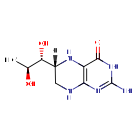
Structure for Sapropterin (DB00360)

- Weight
- Average: 241.2471
Monoisotopic: 241.117489371 - Chemical Formula
- C9H15N5O3
- Synonyms
- (−)-(6R)-2-amino-6-((1R,2S)-1,2-dihydroxypropyl)-5,6,7,8-tetrahydro-4(3H)-pteridinone
- (6R)-L-erythro-5,6,7,8-tetrahydrobiopterin
- (6R)-L-erythro-tetrahydrobiopterin
- 2-Amino-6-(1,2-dihydroxypropyl)-5,6,7,8-tetrahydoro-4(1H)-pteridinone
- 5,6,7,8-Tetrahydrobiopterin
- 6R-5,6,7,8-tetrahydrobiopterin
- 6R-BH4
- 6R-L-5,6,7,8-tetrahydrobiopterin
- R-THBP
- Sapropterin
- Sapropterina
- sapropterinum
- Tetrahydrobiopterin
- External IDs
- 17528-72-2
- 27070-47-9
- Sun 0588

Pharmacology
- Indication
For the treatment of tetrahydrobiopterin (BH4) deficiency.
 Reduce drug development failure ratesBuild, train, & validate machine-learning modelswith evidence-based and structured datasets.Build, train, & validate predictive machine-learning models with structured datasets.
- Associated Conditions
Indication Type Indication Combined Product Details Approval Level Age Group Patient Characteristics Dose Form Adjunct therapy in management of Hyperphenylalaninemia •••••••••••• - Contraindications & Blackbox Warnings
 Prevent Adverse Drug Events TodayTap into our Clinical API for life-saving information on contraindications & blackbox warnings, population restrictions, harmful risks, & more.Avoid life-threatening adverse drug events with our Clinical API
- Pharmacodynamics
Tetrahydrobiopterin (BH4) is used to convert several amino acids, including phenylalanine, to other essential molecules in the body including neurotransmitters. Tetrahydrobiopterin deficiency can be caused by mutations in GTP cyclohydrolase 1 (GCH1), 6-pyruvoyl-tetrahydropterin synthase/dimerization cofactor of hepatocyte nuclear factor 1 alpha (PCBD1), 6-pyruvoyltetrahydropterin synthase (PTS), and quinoid dihydropteridine reductase (QDPR) genes. These genes make the enzymes that are critical for producing and recycling tetrahydrobiopterin. If one of the enzymes fails to function correctly because of a gene mutation, little or no tetrahydrobiopterin is produced. As a result, phenylalanine from the diet builds up in the bloodstream and other tissues and can damage nerve cells in the brain. High levels of phenylalanine can result in signs and symptoms ranging from temporary low muscle tone to mental retardation, movement disorders, difficulty swallowing, seizures, behavioral problems, progressive problems with development, and an inability to control body temperature.
- Mechanism of action
Tetrahydrobiopterin (BH4) is a natural co-factor or co-enzyme for phenylalanine-4-hydroxylase (PAH),Tetrahydrobiopterine, and tryptophan-5-hydroxylase. Tetrahydrobiopterin is also a natural co-factor for nitrate oxide synthase. Therefore BH4 is required for the conversion of phenylalanine to tyrosine, for the production of epinephrine (adrenaline) and the synthesis of the monoamine neuro-transmitters, serotonin, dopamine, and norepinephrine (noradrenaline). It is also involved in apoptosis and other cellular events mediated by nitric oxide production. As a coenzyme, BH4 reacts with molecular oxygen to form an active oxygen intermediate that can hydroxylate substrates. In the hydroxylation process, the co-enzyme loses two electrons and is regenerated in vivo in an NADH-dependent reaction. As a co-factor for PAH, tetrahydrobiopterin allows the conversion of phenylalanine to tyrosine and reduces the level of phenylalanine in the bloodstream, thereby reducing the toxic effects of of this amino acid. Normal serum concentrations of phenylalanine are 100 micomolar, while elevated (toxic) levels are typically >1200 micromolar. Individuals with a deficiency in tetrahydrobiopterin are not able to efficiently convert phenylalanine to tyrosine. The excess levels provided by tetrahydrobiopterin supplementation help improve enzyme efficiency. As a co-factor for tyrosine hydroxylase, BH4 facilitates the conversion of tyrosine to L-dopa while as a co-factor for tryptophan hydroxylase, BH4 allows the conversion of tryptophan to 5-hydroxytryptophan, which is then converted to serotonin.
Target Actions Organism APhenylalanine-4-hydroxylase cofactorHumans ANitric oxide synthase, endothelial cofactorHumans ATyrosine 3-monooxygenase cofactorHumans ATryptophan 5-hydroxylase 1 cofactorHumans - Absorption
Not Available
- Volume of distribution
Not Available
- Protein binding
Not Available
- Metabolism
- Not Available
- Route of elimination
Not Available
- Half-life
Not Available
- Clearance
Not Available
- Adverse Effects
 Improve decision support & research outcomesWith structured adverse effects data, including: blackbox warnings, adverse reactions, warning & precautions, & incidence rates. View sample adverse effects data in our new Data Library!Improve decision support & research outcomes with our structured adverse effects data.
- Toxicity
Not Available
- Pathways
- Pharmacogenomic Effects/ADRs
- Not Available
Interactions
- Drug Interactions
- This information should not be interpreted without the help of a healthcare provider. If you believe you are experiencing an interaction, contact a healthcare provider immediately. The absence of an interaction does not necessarily mean no interactions exist.
Drug Interaction Integrate drug-drug
interactions in your softwareAbemaciclib The serum concentration of Abemaciclib can be increased when it is combined with Sapropterin. Afatinib The serum concentration of Afatinib can be increased when it is combined with Sapropterin. Ambrisentan The serum concentration of Ambrisentan can be increased when it is combined with Sapropterin. Apixaban The serum concentration of Apixaban can be increased when it is combined with Sapropterin. Avanafil Sapropterin may increase the hypotensive activities of Avanafil. - Food Interactions
- Take at the same time every day.
- Take with food. Taking sapropterin with food increases oral absorption. Sapropterin may be dissolved in water, juice, or dispersed in applesauce.
Products
 Drug product information from 10+ global regionsOur datasets provide approved product information including:dosage, form, labeller, route of administration, and marketing period.Access drug product information from over 10 global regions.
- Product Ingredients
Ingredient UNII CAS InChI Key Sapropterin dihydrochloride RG277LF5B3 69056-38-8 RKSUYBCOVNCALL-NTVURLEBSA-N - International/Other Brands
- BH4 (Excelsior) / Biopten (Daiichi Sankyo)
- Brand Name Prescription Products
Name Dosage Strength Route Labeller Marketing Start Marketing End Region Image Kuvan Tablet 100 mg/1 Oral BioMarin Pharmaceutical Inc. 2007-12-14 Not applicable US 
Kuvan Tablet 100 mg Oral Biomarin International Limited 2020-12-16 Not applicable EU 
Kuvan Powder, for solution 100 mg Oral Biomarin International Limited 2020-12-16 Not applicable EU Kuvan Powder 100 mg / sachet Oral Biomarin International Limited 2019-12-05 Not applicable Canada 
Kuvan Powder, for solution 500 mg/1 Oral BioMarin Pharmaceutical Inc. 2015-05-27 Not applicable US - Generic Prescription Products
Name Dosage Strength Route Labeller Marketing Start Marketing End Region Image Javygtor Tablet 100 mg/1 Oral Dr. Reddys Laboratories Inc 2022-10-03 Not applicable US Javygtor Powder, for solution 500 mg/1 Oral Dr. Reddys Laboratories Inc 2022-11-16 Not applicable US Javygtor Powder, for solution 100 mg/1 Oral Dr. Reddys Laboratories Inc 2022-09-16 Not applicable US Reddy-sapropterin Powder 500 mg / sachet Oral Dr Reddy's Laboratories Ltd 2023-12-19 Not applicable Canada Reddy-sapropterin Powder 100 mg / sachet Oral Dr Reddy's Laboratories Ltd 2023-12-11 Not applicable Canada
Categories
- ATC Codes
- A16AX07 — Sapropterin
- Drug Categories
- Alimentary Tract and Metabolism
- Amines
- BCRP/ABCG2 Inhibitors
- Coenzymes
- Dietary Supplements
- Enzymes and Coenzymes
- Ethylamines
- Heterocyclic Compounds, Fused-Ring
- Nitric Oxide Synthase
- Other Miscellaneous Therapeutic Agents
- P-glycoprotein inhibitors
- Phenethylamines
- Phenylalanine Hydroxylase Activator
- Phenylalanine Hydroxylase Activators
- Pteridines
- Pterins
- Supplements
- Various Alimentary Tract and Metabolism Products
- Chemical TaxonomyProvided by Classyfire
- Description
- This compound belongs to the class of organic compounds known as biopterins and derivatives. These are coenzymes containing a 2-amino-pteridine-4-one derivative. They are mainly synthesized in several parts of the body, including the pineal gland.
- Kingdom
- Organic compounds
- Super Class
- Organoheterocyclic compounds
- Class
- Pteridines and derivatives
- Sub Class
- Pterins and derivatives
- Direct Parent
- Biopterins and derivatives
- Alternative Parents
- Secondary alkylarylamines / Pyrimidones / Aminopyrimidines and derivatives / Vinylogous amides / Heteroaromatic compounds / 1,3-aminoalcohols / Secondary alcohols / 1,2-diols / 1,2-aminoalcohols / Azacyclic compounds show 4 more
- Substituents
- 1,2-aminoalcohol / 1,2-diol / 1,3-aminoalcohol / Alcohol / Amine / Aminopyrimidine / Aromatic heteropolycyclic compound / Azacycle / Biopterin / Heteroaromatic compound show 14 more
- Molecular Framework
- Aromatic heteropolycyclic compounds
- External Descriptors
- 5,6,7,8-tetrahydrobiopterin (CHEBI:59560) / Coenzymes (C00272)
- Affected organisms
- Humans and other mammals
Chemical Identifiers
- UNII
- EGX657432I
- CAS number
- 62989-33-7
- InChI Key
- FNKQXYHWGSIFBK-RPDRRWSUSA-N
- InChI
- InChI=1S/C9H15N5O3/c1-3(15)6(16)4-2-11-7-5(12-4)8(17)14-9(10)13-7/h3-4,6,12,15-16H,2H2,1H3,(H4,10,11,13,14,17)/t3-,4+,6-/m0/s1
- IUPAC Name
- (6R)-2-amino-6-[(1R,2S)-1,2-dihydroxypropyl]-3,4,5,6,7,8-hexahydropteridin-4-one
- SMILES
- [H][C@@]1(CNC2=C(N1)C(=O)NC(N)=N2)[C@@H](O)[C@H](C)O
References
- Synthesis Reference
Steven S. Gross, "Blocking utilization of tetrahydrobiopterin to block induction of nitric oxide synthesis." U.S. Patent US5502050, issued October, 1984.
US5502050- General References
- External Links
- Human Metabolome Database
- HMDB0000027
- KEGG Drug
- D08505
- KEGG Compound
- C00272
- PubChem Compound
- 44257
- PubChem Substance
- 46508597
- ChemSpider
- 40270
- BindingDB
- 50373697
- 753340
- ChEBI
- 59560
- ChEMBL
- CHEMBL1201774
- ZINC
- ZINC000013585233
- Therapeutic Targets Database
- DNC000425
- PharmGKB
- PA161990676
- PDBe Ligand
- H4B
- Wikipedia
- Tetrahydrobiopterin
- PDB Entries
- 1d1v / 1d1w / 1d1x / 1df1 / 1dm8 / 1dwx / 1fop / 1j8u / 1jwj / 1k2r … show 606 more
Clinical Trials
- Clinical Trials
Phase Status Purpose Conditions Count 4 Completed Treatment Phenylketonuria (PKU) 4 4 Unknown Status Treatment PAH Deficiency / Phenylketonuria (PKU) 1 4 Withdrawn Treatment Peripheral Arterial Disease (PAD) 1 3 Completed Treatment Phenylketonuria (PKU) 8 2 Completed Other Cystic Fibrosis (CF) 1
Pharmacoeconomics
- Manufacturers
- Biomarin pharmaceutical inc
- Packagers
- BioMarin Pharmaceuticals Inc.
- Lyne Laboratories Inc.
- Dosage Forms
Form Route Strength Powder Oral 100 mg / sachet Powder Oral 500 mg / sachet Powder, for solution Oral 100 mg/1 Powder, for solution Oral 100 MG Powder, for solution Oral 500 mg/1 Powder, for solution Oral 500 MG Tablet Oral 100 mg Tablet Oral 100 mg/1 Tablet Oral Tablet, soluble Oral 100 mg - Prices
Unit description Cost Unit Kuvan 100 mg tablet 36.5USD tablet DrugBank does not sell nor buy drugs. Pricing information is supplied for informational purposes only.- Patents
Patent Number Pediatric Extension Approved Expires (estimated) Region CA2545968 No 2010-03-09 2024-11-17 Canada US7566714 Yes 2009-07-28 2025-05-17 US US7612073 Yes 2009-11-03 2025-05-17 US US8067416 Yes 2011-11-29 2025-05-17 US USRE43797 Yes 2012-11-06 2025-05-17 US US7947681 Yes 2011-05-24 2025-05-17 US US7566462 Yes 2009-07-28 2026-05-16 US US8318745 Yes 2012-11-27 2025-05-17 US US8003126 Yes 2011-08-23 2026-05-16 US US7727987 Yes 2010-06-01 2025-05-17 US US9216178 Yes 2015-12-22 2033-05-01 US US9433624 Yes 2016-09-06 2025-05-17 US
Properties
- State
- Solid
- Experimental Properties
Property Value Source melting point (°C) 250-255 °C (hydrochloride salt) Not Available water solubility >20 mg/mL (dichloride salt) Not Available logP -1.7 Not Available - Predicted Properties
Property Value Source Water Solubility 2.03 mg/mL ALOGPS logP -1.8 ALOGPS logP -2.3 Chemaxon logS -2.1 ALOGPS pKa (Strongest Acidic) 7.82 Chemaxon pKa (Strongest Basic) 0.82 Chemaxon Physiological Charge 0 Chemaxon Hydrogen Acceptor Count 7 Chemaxon Hydrogen Donor Count 6 Chemaxon Polar Surface Area 132 Å2 Chemaxon Rotatable Bond Count 2 Chemaxon Refractivity 68.63 m3·mol-1 Chemaxon Polarizability 23.61 Å3 Chemaxon Number of Rings 2 Chemaxon Bioavailability 1 Chemaxon Rule of Five No Chemaxon Ghose Filter No Chemaxon Veber's Rule No Chemaxon MDDR-like Rule No Chemaxon - Predicted ADMET Features
Property Value Probability Human Intestinal Absorption + 0.9938 Blood Brain Barrier + 0.5558 Caco-2 permeable - 0.6674 P-glycoprotein substrate Substrate 0.785 P-glycoprotein inhibitor I Non-inhibitor 0.9599 P-glycoprotein inhibitor II Non-inhibitor 0.9881 Renal organic cation transporter Non-inhibitor 0.8946 CYP450 2C9 substrate Non-substrate 0.768 CYP450 2D6 substrate Non-substrate 0.78 CYP450 3A4 substrate Non-substrate 0.5278 CYP450 1A2 substrate Non-inhibitor 0.91 CYP450 2C9 inhibitor Non-inhibitor 0.907 CYP450 2D6 inhibitor Non-inhibitor 0.9231 CYP450 2C19 inhibitor Non-inhibitor 0.9025 CYP450 3A4 inhibitor Non-inhibitor 0.9227 CYP450 inhibitory promiscuity Low CYP Inhibitory Promiscuity 0.9348 Ames test Non AMES toxic 0.6328 Carcinogenicity Non-carcinogens 0.9271 Biodegradation Not ready biodegradable 0.9607 Rat acute toxicity 2.4428 LD50, mol/kg Not applicable hERG inhibition (predictor I) Weak inhibitor 0.993 hERG inhibition (predictor II) Non-inhibitor 0.6937
Spectra
- Mass Spec (NIST)
- Not Available
- Spectra
- Chromatographic Properties
Collision Cross Sections (CCS)
Adduct CCS Value (Å2) Source type Source [M-H]- 160.4127641 predictedDarkChem Lite v0.1.0 [M-H]- 157.5944641 predictedDarkChem Lite v0.1.0 [M-H]- 155.83078 predictedDeepCCS 1.0 (2019) [M+H]+ 161.5925641 predictedDarkChem Lite v0.1.0 [M+H]+ 158.4304641 predictedDarkChem Lite v0.1.0 [M+H]+ 158.18878 predictedDeepCCS 1.0 (2019) [M+Na]+ 160.8729641 predictedDarkChem Lite v0.1.0 [M+Na]+ 157.6414641 predictedDarkChem Lite v0.1.0 [M+Na]+ 165.07834 predictedDeepCCS 1.0 (2019)
Targets

- Kind
- Protein
- Organism
- Humans
- Pharmacological action
- Yes
- Actions
- Cofactor
- General Function
- Phenylalanine 4-monooxygenase activity
- Specific Function
- Not Available
- Gene Name
- PAH
- Uniprot ID
- P00439
- Uniprot Name
- Phenylalanine-4-hydroxylase
- Molecular Weight
- 51861.565 Da
References
- Zekanowski C, Nowacka M, Sendecka E, Sowik M, Cabalska B, Bal J: Identification of Mutations Causing 6-Pyruvoyl- Tetrahydrobiopterin Synthase Deficiency in Polish Patients With Variant Hyperphenylalaninemia. Mol Diagn. 1998 Dec;3(4):237-239. [Article]
- Werner ER, Habisch HJ, Gorren AC, Schmidt K, Canevari L, Werner-Felmayer G, Mayer B: Contrasting effects of N5-substituted tetrahydrobiopterin derivatives on phenylalanine hydroxylase, dihydropteridine reductase and nitric oxide synthase. Biochem J. 2000 Jun 15;348 Pt 3:579-83. [Article]
- Fitzpatrick PF: Tetrahydropterin-dependent amino acid hydroxylases. Annu Rev Biochem. 1999;68:355-81. [Article]
- Ayling JE, Bailey SW, Boerth SR, Giugliani R, Braegger CP, Thony B, Blau N: Hyperphenylalaninemia and 7-pterin excretion associated with mutations in 4a-hydroxy-tetrahydrobiopterin dehydratase/DCoH: analysis of enzyme activity in intestinal biopsies. Mol Genet Metab. 2000 Jul;70(3):179-88. [Article]
- Jennings IG, Teh T, Kobe B: Essential role of the N-terminal autoregulatory sequence in the regulation of phenylalanine hydroxylase. FEBS Lett. 2001 Jan 19;488(3):196-200. [Article]
- Kind
- Protein
- Organism
- Humans
- Pharmacological action
- Yes
- Actions
- Cofactor
- General Function
- Tetrahydrobiopterin binding
- Specific Function
- Produces nitric oxide (NO) which is implicated in vascular smooth muscle relaxation through a cGMP-mediated signal transduction pathway. NO mediates vascular endothelial growth factor (VEGF)-induce...
- Gene Name
- NOS3
- Uniprot ID
- P29474
- Uniprot Name
- Nitric oxide synthase, endothelial
- Molecular Weight
- 133287.62 Da
References
- Heller R, Munscher-Paulig F, Grabner R, Till U: L-Ascorbic acid potentiates nitric oxide synthesis in endothelial cells. J Biol Chem. 1999 Mar 19;274(12):8254-60. [Article]
- Huang A, Vita JA, Venema RC, Keaney JF Jr: Ascorbic acid enhances endothelial nitric-oxide synthase activity by increasing intracellular tetrahydrobiopterin. J Biol Chem. 2000 Jun 9;275(23):17399-406. [Article]
- Berka V, Tsai AL: Characterization of interactions among the heme center, tetrahydrobiopterin, and L-arginine binding sites of ferric eNOS using imidazole, cyanide, and nitric oxide as probes. Biochemistry. 2000 Aug 8;39(31):9373-83. [Article]
- Gorren AC, Bec N, Schrammel A, Werner ER, Lange R, Mayer B: Low-temperature optical absorption spectra suggest a redox role for tetrahydrobiopterin in both steps of nitric oxide synthase catalysis. Biochemistry. 2000 Sep 26;39(38):11763-70. [Article]
- Shinozaki K, Nishio Y, Okamura T, Yoshida Y, Maegawa H, Kojima H, Masada M, Toda N, Kikkawa R, Kashiwagi A: Oral administration of tetrahydrobiopterin prevents endothelial dysfunction and vascular oxidative stress in the aortas of insulin-resistant rats. Circ Res. 2000 Sep 29;87(7):566-73. [Article]
- Gorren AC, Mayer B: Tetrahydrobiopterin in nitric oxide synthesis: a novel biological role for pteridines. Curr Drug Metab. 2002 Apr;3(2):133-57. [Article]
- Kind
- Protein
- Organism
- Humans
- Pharmacological action
- Yes
- Actions
- Cofactor
- General Function
- Tyrosine 3-monooxygenase activity
- Specific Function
- Plays an important role in the physiology of adrenergic neurons.
- Gene Name
- TH
- Uniprot ID
- P07101
- Uniprot Name
- Tyrosine 3-monooxygenase
- Molecular Weight
- 58599.545 Da
References
- Koshimura K, Tanaka J, Murakami Y, Kato Y: Enhancement of neuronal survival by 6R-tetrahydrobiopterin. Neuroscience. 1999 Jan;88(2):561-9. [Article]
- Flatmark T, Almas B, Knappskog PM, Berge SV, Svebak RM, Chehin R, Muga A, Martinez A: Tyrosine hydroxylase binds tetrahydrobiopterin cofactor with negative cooperativity, as shown by kinetic analyses and surface plasmon resonance detection. Eur J Biochem. 1999 Jun;262(3):840-9. [Article]
- Ichinose H, Ohye T, Suzuki T, Inagaki H, Nagatsu T: [The relation between metabolism of biopterin and dystonia-parkinsonism]. Nihon Shinkei Seishin Yakurigaku Zasshi. 1999 Apr;19(2):85-9. [Article]
- Schwarz EJ, Alexander GM, Prockop DJ, Azizi SA: Multipotential marrow stromal cells transduced to produce L-DOPA: engraftment in a rat model of Parkinson disease. Hum Gene Ther. 1999 Oct 10;10(15):2539-49. [Article]
- Schallreuter KU: A review of recent advances on the regulation of pigmentation in the human epidermis. Cell Mol Biol (Noisy-le-grand). 1999 Nov;45(7):943-9. [Article]
- Chen X, Ji ZL, Chen YZ: TTD: Therapeutic Target Database. Nucleic Acids Res. 2002 Jan 1;30(1):412-5. [Article]
- Kind
- Protein
- Organism
- Humans
- Pharmacological action
- Yes
- Actions
- Cofactor
- General Function
- Tryptophan 5-monooxygenase activity
- Specific Function
- Not Available
- Gene Name
- TPH1
- Uniprot ID
- P17752
- Uniprot Name
- Tryptophan 5-hydroxylase 1
- Molecular Weight
- 50984.725 Da
References
- Chamas F, Serova L, Sabban EL: Tryptophan hydroxylase mRNA levels are elevated by repeated immobilization stress in rat raphe nuclei but not in pineal gland. Neurosci Lett. 1999 Jun 4;267(3):157-60. [Article]
- Martinez A, Knappskog PM, Haavik J: A structural approach into human tryptophan hydroxylase and its implications for the regulation of serotonin biosynthesis. Curr Med Chem. 2001 Jul;8(9):1077-91. [Article]
- Ikemoto K, Suzuki T, Ichinose H, Ohye T, Nishimura A, Nishi K, Nagatsu I, Nagatsu T: Localization of sepiapterin reductase in the human brain. Brain Res. 2002 Nov 8;954(2):237-46. [Article]
- Serova LI, Maharjan S, Huang A, Sun D, Kaley G, Sabban EL: Response of tyrosine hydroxylase and GTP cyclohydrolase I gene expression to estrogen in brain catecholaminergic regions varies with mode of administration. Brain Res. 2004 Jul 23;1015(1-2):1-8. [Article]
- Haavik J: [From butterflies to neurobiology and the diagnosis of AIDS. The 100th anniversary of the discovery of pteridines]. Tidsskr Nor Laegeforen. 1989 Jun 30;109(19-21):1986-9. [Article]
Enzymes
- Kind
- Protein
- Organism
- Humans
- Pharmacological action
- Unknown
- Actions
- Inducer
- General Function
- Prostaglandin-endoperoxide synthase activity
- Specific Function
- Converts arachidonate to prostaglandin H2 (PGH2), a committed step in prostanoid synthesis. Constitutively expressed in some tissues in physiological conditions, such as the endothelium, kidney and...
- Gene Name
- PTGS2
- Uniprot ID
- P35354
- Uniprot Name
- Prostaglandin G/H synthase 2
- Molecular Weight
- 68995.625 Da
References
- Chae SW, Bang YJ, Kim KM, Lee KY, Kang BY, Kim EM, Inoue H, Hwang O, Choi HJ: Role of cyclooxygenase-2 in tetrahydrobiopterin-induced dopamine oxidation. Biochem Biophys Res Commun. 2007 Aug 3;359(3):735-41. Epub 2007 Jun 4. [Article]
Transporters
- Kind
- Protein
- Organism
- Humans
- Pharmacological action
- Unknown
- Actions
- Inhibitor
- General Function
- Xenobiotic-transporting atpase activity
- Specific Function
- Energy-dependent efflux pump responsible for decreased drug accumulation in multidrug-resistant cells.
- Gene Name
- ABCB1
- Uniprot ID
- P08183
- Uniprot Name
- Multidrug resistance protein 1
- Molecular Weight
- 141477.255 Da
References
- EMA Summary of Product Characteristics: Kuvan (sapropterin) dissolvable tablets for oral use [Link]

Drug created at June 13, 2005 13:24 / Updated at April 23, 2024 11:38