Identification
- Summary
Clofibrate is a fibric acid derivative used to treat hypertriglyceridemia and high cholesterol.
- Generic Name
- Clofibrate
- DrugBank Accession Number
- DB00636
- Background
A fibric acid derivative used in the treatment of hyperlipoproteinemia type III and severe hypertriglyceridemia. (From Martindale, The Extra Pharmacopoeia, 30th ed, p986)
- Type
- Small Molecule
- Groups
- Approved, Investigational
- Structure
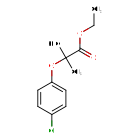
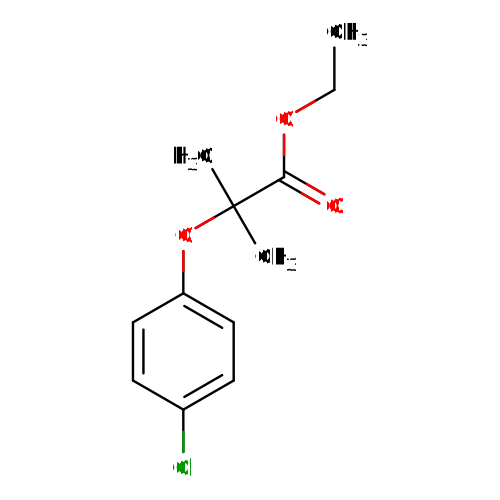
Structure for Clofibrate (DB00636)
- Weight
- Average: 242.699
Monoisotopic: 242.070972053 - Chemical Formula
- C12H15ClO3
- Synonyms
- 2-(4-Chlorophenoxy)-2-methylpropanoic acid ethyl ester
- 2-(p-Chlorophenoxy)-2-methylpropionic acid ethyl ester
- alpha-(p-Chlorophenoxy)isobutyric acid, ethyl ester
- alpha-p-Chlorophenoxyisobutyryl ethyl ester
- Clofibrate
- Clofibrato
- Clofibratum
- EPIB
- Ethyl 2-(p-chlorophenoxy)isobutyrate
- Ethyl chlorophenoxyisobutyrate
- Ethyl clofibrate
- Liprin
- External IDs
- AY-61123
- ICI 28257
- ICI-28257
- NSC-79389

Pharmacology
- Indication
For Primary Dysbetalipoproteinemia (Type III hyperlipidemia) that does not respond adequately to diet. This helps control high cholesterol and high triglyceride levels.
 Reduce drug development failure ratesBuild, train, & validate machine-learning modelswith evidence-based and structured datasets.Build, train, & validate predictive machine-learning models with structured datasets.
- Contraindications & Blackbox Warnings
 Prevent Adverse Drug Events TodayTap into our Clinical API for life-saving information on contraindications & blackbox warnings, population restrictions, harmful risks, & more.Avoid life-threatening adverse drug events with our Clinical API
- Pharmacodynamics
Clofibrate is an antilipidemic agent similar to gemfibrozil. It acts to lower elevated serum lipids by reducing the very low-density lipoprotein fraction (Sf 20-400) rich in triglycerides. Serum cholesterol may be decreased, particularly in those patients whose cholesterol elevation is due to the presence of IDL as a result of Type III hyperlipoproteinemia. Several investigators have observed in their studies that clofibrate may produce a decrease in cholesterol linoleate but an increase in palmitoleate and oleate, the latter being considered atherogenic in experimental animals. The significance of this finding is unknown at this time. Reduction of triglycerides in some patients treated with clofibrate or certain of its chemically and clinically similar analogs may be associated with an increase in LDL cholesterol. Increase in LDL cholesterol has been observed in patients whose cholesterol is initially normal. Animal studies suggest that clofibrate interrupts cholesterol biosynthesis prior to mevalonate formation.
- Mechanism of action
Clofibrate increases the activity of extrahepatic lipoprotein lipase (LL), thereby increasing lipoprotein triglyceride lipolysis. Chylomicrons are degraded, VLDLs are converted to LDLs, and LDLs are converted to HDL. This is accompanied by a slight increase in secretion of lipids into the bile and ultimately the intestine. Clofibrate also inhibits the synthesis and increases the clearance of apolipoprotein B, a carrier molecule for VLDL. Also, as a fibrate, Clofibrate is an agonist of the PPAR-α receptor[4] in muscle, liver, and other tissues. This agonism ultimately leads to modification in gene expression resulting in increased beta-oxidation, decreased triglyceride secretion, increased HDL, increased lipoprotein lipase activity.
Target Actions Organism APeroxisome proliferator-activated receptor alpha agonistHumans - Absorption
Completely but slowly absorbed from the intestine. Between 95% and 99% of an oral dose of clofibrate is excreted in the urine as free and conjugated clofibric acid; thus, the absorption of clofibrate is virtually complete.
- Volume of distribution
Not Available
- Protein binding
Highly protein-bound (95% to 97%).
- Metabolism
Hepatic and gastrointestinal: rapid de-esterification occurs in the gastrointestinal tract and/or on first-pass metabolism to produce the active form, clofibric acid (chlorophenoxy isobutyric acid [CPIB]).
- Route of elimination
Not Available
- Half-life
Half-life in normal volunteers averages 18 to 22 hours (range 14 to 35 hours) but can vary by up to 7 hours in the same subject at different times.
- Clearance
Not Available
- Adverse Effects
 Improve decision support & research outcomesWith structured adverse effects data, including: blackbox warnings, adverse reactions, warning & precautions, & incidence rates. View sample adverse effects data in our new Data Library!Improve decision support & research outcomes with our structured adverse effects data.
- Toxicity
Oral, mouse: LD50 = 1220 mg/kg; Oral, rabbit: LD50 = 1370 mg/kg; Oral, rat: LD50 = 940 mg/kg. No reported case of overdosage in humans.
- Pathways
- Not Available
- Pharmacogenomic Effects/ADRs
- Not Available
Interactions
- Drug Interactions
- This information should not be interpreted without the help of a healthcare provider. If you believe you are experiencing an interaction, contact a healthcare provider immediately. The absence of an interaction does not necessarily mean no interactions exist.
Drug Interaction Integrate drug-drug
interactions in your softwareAbametapir The serum concentration of Clofibrate can be increased when it is combined with Abametapir. Abemaciclib The metabolism of Abemaciclib can be increased when combined with Clofibrate. Acalabrutinib The metabolism of Acalabrutinib can be increased when combined with Clofibrate. Acenocoumarol The metabolism of Acenocoumarol can be increased when combined with Clofibrate. Acetaminophen Clofibrate may increase the hepatotoxic activities of Acetaminophen. - Food Interactions
- Take with food. Food decreases the risk of GI side effects.
Products
 Drug product information from 10+ global regionsOur datasets provide approved product information including:dosage, form, labeller, route of administration, and marketing period.Access drug product information from over 10 global regions.
- International/Other Brands
- Alufibrate (The Central) / Atromid-S / Binograc (Kotobuki Seiyaku) / Clobrate (Johnson) / ELPI / Hisunsero (Newai Chem) / Koliva (Golden Horse) / Lipofacton / Myanlin (Sinton)
- Brand Name Prescription Products
Name Dosage Strength Route Labeller Marketing Start Marketing End Region Image Atromid S Cap 500mg Capsule 500 mg / cap Oral Ayerst Laboratories 1968-12-31 1997-08-15 Canada 
Atromid-S 1gm Capsule 1 g / cap Oral Wyeth Ayerst Canada Inc. 1994-12-31 1998-10-20 Canada Atromid-S Cap 500mg Capsule 500 mg / cap Oral Wyeth Ayerst Canada Inc. 1996-10-25 2000-08-02 Canada - Generic Prescription Products
Name Dosage Strength Route Labeller Marketing Start Marketing End Region Image Novo-fibrate Cap 500mg Capsule 500 mg / cap Oral Novopharm Limited 1976-12-31 2005-08-10 Canada
Categories
- ATC Codes
- C10AB01 — Clofibrate
- Drug Categories
- Acids, Acyclic
- Agents Causing Muscle Toxicity
- Anticholesteremic Agents
- Benzene Derivatives
- Butyrates
- Clofibric Acid
- Cytochrome P-450 CYP2A6 Inhibitors
- Cytochrome P-450 CYP2A6 Inhibitors (strength unknown)
- Cytochrome P-450 CYP2E1 Inducers
- Cytochrome P-450 CYP2E1 Inducers (strength unknown)
- Cytochrome P-450 CYP3A Inducers
- Cytochrome P-450 CYP3A Substrates
- Cytochrome P-450 CYP3A4 Inducers
- Cytochrome P-450 CYP3A4 Inducers (strength unknown)
- Cytochrome P-450 CYP3A4 Substrates
- Cytochrome P-450 Enzyme Inducers
- Cytochrome P-450 Enzyme Inhibitors
- Cytochrome P-450 Substrates
- Ethers
- Fibric Acids
- Hypolipidemic Agents
- Isobutyrates
- Lipid Modifying Agents
- Lipid Modifying Agents, Plain
- Lipid Regulating Agents
- Phenols
- Phenyl Ethers
- Thyroxine-binding globulin inducers
- Chemical TaxonomyProvided by Classyfire
- Description
- This compound belongs to the class of organic compounds known as phenoxyacetic acid derivatives. These are compounds containing an anisole where the methane group is linked to an acetic acid or a derivative.
- Kingdom
- Organic compounds
- Super Class
- Benzenoids
- Class
- Benzene and substituted derivatives
- Sub Class
- Phenoxyacetic acid derivatives
- Direct Parent
- Phenoxyacetic acid derivatives
- Alternative Parents
- Phenoxy compounds / Phenol ethers / Chlorobenzenes / Alkyl aryl ethers / Aryl chlorides / Carboxylic acid esters / Monocarboxylic acids and derivatives / Organochlorides / Organic oxides / Hydrocarbon derivatives show 1 more
- Substituents
- Alkyl aryl ether / Aromatic homomonocyclic compound / Aryl chloride / Aryl halide / Carbonyl group / Carboxylic acid derivative / Carboxylic acid ester / Chlorobenzene / Ether / Halobenzene show 10 more
- Molecular Framework
- Aromatic homomonocyclic compounds
- External Descriptors
- ethyl ester, aromatic ether, monochlorobenzenes (CHEBI:3750)
- Affected organisms
- Humans and other mammals
Chemical Identifiers
- UNII
- HPN91K7FU3
- CAS number
- 637-07-0
- InChI Key
- KNHUKKLJHYUCFP-UHFFFAOYSA-N
- InChI
- InChI=1S/C12H15ClO3/c1-4-15-11(14)12(2,3)16-10-7-5-9(13)6-8-10/h5-8H,4H2,1-3H3
- IUPAC Name
- ethyl 2-(4-chlorophenoxy)-2-methylpropanoate
- SMILES
- CCOC(=O)C(C)(C)OC1=CC=C(Cl)C=C1
References
- Synthesis Reference
Jones, W.G.M.,Thorp, J.M. and Waring, W.S.; U.S. Patent 3,262,850; July 26, 1966; assigned to Imperial Chemical Industries Limited, England.
- General References
- Not Available
- External Links
- Human Metabolome Database
- HMDB0014774
- KEGG Drug
- D00279
- KEGG Compound
- C06916
- PubChem Compound
- 2796
- PubChem Substance
- 46504748
- ChemSpider
- 2694
- BindingDB
- 50085047
- 2594
- ChEBI
- 3750
- ChEMBL
- CHEMBL565
- ZINC
- ZINC000000056648
- Therapeutic Targets Database
- DAP000262
- PharmGKB
- PA449045
- RxList
- RxList Drug Page
- Drugs.com
- Drugs.com Drug Page
- Wikipedia
- Clofibrate
- MSDS
- Download (62.6 KB)
Clinical Trials
- Clinical Trials
Phase Status Purpose Conditions Count 3 Completed Prevention Cardiovascular Disease (CVD) / Coronary Heart Disease (CHD) / Myocardial Infarction / Myocardial Ischemia 1 Not Available Completed Prevention Cardiovascular Disease (CVD) / Coronary Heart Disease (CHD) / Myocardial Infarction / Myocardial Ischemia 1
Pharmacoeconomics
- Manufacturers
- Wyeth ayerst laboratories
- Banner pharmacaps inc
- Sandoz inc
- Teva pharmaceuticals usa inc
- Usl pharma inc
- Watson laboratories inc
- Packagers
- Banner Pharmacaps Inc.
- Major Pharmaceuticals
- Novopharm Ltd.
- Dosage Forms
Form Route Strength Capsule Oral 1 g / cap Capsule Oral Capsule Oral 500 mg / cap - Prices
- Not Available
- Patents
- Not Available
Properties
- State
- Liquid
- Experimental Properties
Property Value Source melting point (°C) 118-119 Jones, W.G.M.,Thorp, J.M. and Waring, W.S.; U.S. Patent 3,262,850; July 26, 1966; assigned to Imperial Chemical Industries Limited, England. boiling point (°C) 149 °C at 2.00E+01 mm Hg PhysProp water solubility Insoluble Not Available logP 3.3 Not Available - Predicted Properties
Property Value Source Water Solubility 0.029 mg/mL ALOGPS logP 3.99 ALOGPS logP 3.4 Chemaxon logS -3.9 ALOGPS pKa (Strongest Basic) -4.9 Chemaxon Physiological Charge 0 Chemaxon Hydrogen Acceptor Count 2 Chemaxon Hydrogen Donor Count 0 Chemaxon Polar Surface Area 35.53 Å2 Chemaxon Rotatable Bond Count 5 Chemaxon Refractivity 62.14 m3·mol-1 Chemaxon Polarizability 24.7 Å3 Chemaxon Number of Rings 1 Chemaxon Bioavailability 1 Chemaxon Rule of Five Yes Chemaxon Ghose Filter Yes Chemaxon Veber's Rule Yes Chemaxon MDDR-like Rule No Chemaxon - Predicted ADMET Features
Property Value Probability Human Intestinal Absorption + 1.0 Blood Brain Barrier + 0.9329 Caco-2 permeable + 0.717 P-glycoprotein substrate Non-substrate 0.589 P-glycoprotein inhibitor I Non-inhibitor 0.7133 P-glycoprotein inhibitor II Non-inhibitor 0.8544 Renal organic cation transporter Non-inhibitor 0.8868 CYP450 2C9 substrate Non-substrate 0.8517 CYP450 2D6 substrate Non-substrate 0.9116 CYP450 3A4 substrate Substrate 0.6692 CYP450 1A2 substrate Inhibitor 0.9107 CYP450 2C9 inhibitor Non-inhibitor 0.9071 CYP450 2D6 inhibitor Non-inhibitor 0.9231 CYP450 2C19 inhibitor Non-inhibitor 0.9026 CYP450 3A4 inhibitor Non-inhibitor 0.8861 CYP450 inhibitory promiscuity Low CYP Inhibitory Promiscuity 0.5832 Ames test Non AMES toxic 0.9132 Carcinogenicity Non-carcinogens 0.5492 Biodegradation Not ready biodegradable 0.9711 Rat acute toxicity 2.3806 LD50, mol/kg Not applicable hERG inhibition (predictor I) Weak inhibitor 0.9891 hERG inhibition (predictor II) Non-inhibitor 0.8735
Spectra
- Mass Spec (NIST)
- Download (7.78 KB)
- Spectra
- Chromatographic Properties
Collision Cross Sections (CCS)
Adduct CCS Value (Å2) Source type Source [M-H]- 154.3778988 predictedDarkChem Lite v0.1.0 [M-H]- 154.5927988 predictedDarkChem Lite v0.1.0 [M-H]- 153.29771 predictedDeepCCS 1.0 (2019) [M+H]+ 155.4228988 predictedDarkChem Lite v0.1.0 [M+H]+ 155.1726988 predictedDarkChem Lite v0.1.0 [M+H]+ 155.65572 predictedDeepCCS 1.0 (2019) [M+Na]+ 154.8313988 predictedDarkChem Lite v0.1.0 [M+Na]+ 155.0638988 predictedDarkChem Lite v0.1.0 [M+Na]+ 161.74886 predictedDeepCCS 1.0 (2019)
Targets

- Kind
- Protein
- Organism
- Humans
- Pharmacological action
- Yes
- Actions
- Agonist
- General Function
- Zinc ion binding
- Specific Function
- Ligand-activated transcription factor. Key regulator of lipid metabolism. Activated by the endogenous ligand 1-palmitoyl-2-oleoyl-sn-glycerol-3-phosphocholine (16:0/18:1-GPC). Activated by oleyleth...
- Gene Name
- PPARA
- Uniprot ID
- Q07869
- Uniprot Name
- Peroxisome proliferator-activated receptor alpha
- Molecular Weight
- 52224.595 Da
References
- Barclay TB, Peters JM, Sewer MB, Ferrari L, Gonzalez FJ, Morgan ET: Modulation of cytochrome P-450 gene expression in endotoxemic mice is tissue specific and peroxisome proliferator-activated receptor-alpha dependent. J Pharmacol Exp Ther. 1999 Sep;290(3):1250-7. [Article]
- Murata M, Kaji H, Takahashi Y, Iida K, Mizuno I, Okimura Y, Abe H, Chihara K: Stimulation by eicosapentaenoic acids of leptin mRNA expression and its secretion in mouse 3T3-L1 adipocytes in vitro. Biochem Biophys Res Commun. 2000 Apr 13;270(2):343-8. [Article]
- Hunt MC, Lindquist PJ, Peters JM, Gonzalez FJ, Diczfalusy U, Alexson SE: Involvement of the peroxisome proliferator-activated receptor alpha in regulating long-chain acyl-CoA thioesterases. J Lipid Res. 2000 May;41(5):814-23. [Article]
- Casas F, Domenjoud L, Rochard P, Hatier R, Rodier A, Daury L, Bianchi A, Kremarik-Bouillaud P, Becuwe P, Keller J, Schohn H, Wrutniak-Cabello C, Cabello G, Dauca M: A 45 kDa protein related to PPARgamma2, induced by peroxisome proliferators, is located in the mitochondrial matrix. FEBS Lett. 2000 Jul 28;478(1-2):4-8. [Article]
- Komuves LG, Hanley K, Lefebvre AM, Man MQ, Ng DC, Bikle DD, Williams ML, Elias PM, Auwerx J, Feingold KR: Stimulation of PPARalpha promotes epidermal keratinocyte differentiation in vivo. J Invest Dermatol. 2000 Sep;115(3):353-60. [Article]
- Gelosa P, Banfi C, Gianella A, Brioschi M, Pignieri A, Nobili E, Castiglioni L, Cimino M, Tremoli E, Sironi L: Peroxisome proliferator-activated receptor {alpha} agonism prevents renal damage and the oxidative stress and inflammatory processes affecting the brains of stroke-prone rats. J Pharmacol Exp Ther. 2010 Nov;335(2):324-31. doi: 10.1124/jpet.110.171090. Epub 2010 Jul 29. [Article]
- Palkar PS, Anderson CR, Ferry CH, Gonzalez FJ, Peters JM: Effect of prenatal peroxisome proliferator-activated receptor alpha (PPARalpha) agonism on postnatal development. Toxicology. 2010 Sep 30;276(1):79-84. doi: 10.1016/j.tox.2010.07.008. Epub 2010 Jul 15. [Article]
Enzymes
- Kind
- Protein
- Organism
- Humans
- Pharmacological action
- Unknown
- Actions
- Inducer
- General Function
- Vitamin d 24-hydroxylase activity
- Specific Function
- Cytochromes P450 are a group of heme-thiolate monooxygenases. In liver microsomes, this enzyme is involved in an NADPH-dependent electron transport pathway. It oxidizes a variety of structurally un...
- Gene Name
- CYP1A1
- Uniprot ID
- P04798
- Uniprot Name
- Cytochrome P450 1A1
- Molecular Weight
- 58164.815 Da
References
- Lee PC, Marquardt M, Lech JJ: Metabolism of nonylphenol by rat and human microsomes. Toxicol Lett. 1998 Oct 15;99(2):117-26. doi: 10.1016/s0378-4274(98)00153-2. [Article]
- Seree E, Villard PH, Pascussi JM, Pineau T, Maurel P, Nguyen QB, Fallone F, Martin PM, Champion S, Lacarelle B, Savouret JF, Barra Y: Evidence for a new human CYP1A1 regulation pathway involving PPAR-alpha and 2 PPRE sites. Gastroenterology. 2004 Nov;127(5):1436-45. doi: 10.1053/j.gastro.2004.08.023. [Article]
- Rey-Grobellet X, Eeckhoutte C, Sutra JF, Alvinerie M, Galtier P: Major involvement of rabbit liver cytochrome P4501A in thiabendazole 5-hydroxylation. Xenobiotica. 1996 Jul;26(7):765-78. [Article]
- Kind
- Protein
- Organism
- Humans
- Pharmacological action
- Unknown
- Actions
- SubstrateInducer
- General Function
- Leukotriene-b4 20-monooxygenase activity
- Specific Function
- Catalyzes the omega- and (omega-1)-hydroxylation of various fatty acids such as laurate, myristate and palmitate. Has little activity toward prostaglandins A1 and E1. Oxidizes arachidonic acid to 2...
- Gene Name
- CYP4A11
- Uniprot ID
- Q02928
- Uniprot Name
- Cytochrome P450 4A11
- Molecular Weight
- 59347.31 Da
References
- Li J, Li D, Tie C, Wu J, Wu Q, Li Q: Cisplatin-mediated cytotoxicity through inducing CYP4A 11 expression in human renal tubular epithelial cells. J Toxicol Sci. 2015 Dec;40(6):895-900. doi: 10.2131/jts.40.895. [Article]
- Raucy JL, Lasker J, Ozaki K, Zoleta V: Regulation of CYP2E1 by ethanol and palmitic acid and CYP4A11 by clofibrate in primary cultures of human hepatocytes. Toxicol Sci. 2004 Jun;79(2):233-41. doi: 10.1093/toxsci/kfh126. Epub 2004 Mar 31. [Article]
- Savas U, Machemer DE, Hsu MH, Gaynor P, Lasker JM, Tukey RH, Johnson EF: Opposing roles of peroxisome proliferator-activated receptor alpha and growth hormone in the regulation of CYP4A11 expression in a transgenic mouse model. J Biol Chem. 2009 Jun 12;284(24):16541-52. doi: 10.1074/jbc.M902074200. Epub 2009 Apr 14. [Article]
- Kind
- Protein
- Organism
- Humans
- Pharmacological action
- Unknown
- Actions
- SubstrateInducer
- General Function
- Vitamin d3 25-hydroxylase activity
- Specific Function
- Cytochromes P450 are a group of heme-thiolate monooxygenases. In liver microsomes, this enzyme is involved in an NADPH-dependent electron transport pathway. It performs a variety of oxidation react...
- Gene Name
- CYP3A4
- Uniprot ID
- P08684
- Uniprot Name
- Cytochrome P450 3A4
- Molecular Weight
- 57342.67 Da
References
- Donato MT, Castell JV, Gomez-Lechon MJ: Effect of model inducers on cytochrome P450 activities of human hepatocytes in primary culture. Drug Metab Dispos. 1995 May;23(5):553-8. [Article]
- Miller DB, Spence JD: Clinical pharmacokinetics of fibric acid derivatives (fibrates). Clin Pharmacokinet. 1998 Feb;34(2):155-62. doi: 10.2165/00003088-199834020-00003. [Article]
- Kind
- Protein
- Organism
- Humans
- Pharmacological action
- Unknown
- Actions
- Inhibitor
- General Function
- Glutathione transferase activity
- Specific Function
- Conjugation of reduced glutathione to a wide number of exogenous and endogenous hydrophobic electrophiles.
- Gene Name
- GSTA2
- Uniprot ID
- P09210
- Uniprot Name
- Glutathione S-transferase A2
- Molecular Weight
- 25663.675 Da
References
- Foliot A, Touchard D, Mallet L: Inhibition of liver glutathione S-transferase activity in rats by hypolipidemic drugs related or unrelated to clofibrate. Biochem Pharmacol. 1986 May 15;35(10):1685-90. [Article]
- Foliot A, Touchard D, Celier C: Impairment of hepatic glutathione S-transferase activity as a cause of reduced biliary sulfobromophthalein excretion in clofibrate-treated rats. Biochem Pharmacol. 1984 Sep 15;33(18):2829-34. [Article]
- Kind
- Protein
- Organism
- Humans
- Pharmacological action
- Unknown
- Actions
- Inducer
- General Function
- Steroid hydroxylase activity
- Specific Function
- Metabolizes several precarcinogens, drugs, and solvents to reactive metabolites. Inactivates a number of drugs and xenobiotics and also bioactivates many xenobiotic substrates to their hepatotoxic ...
- Gene Name
- CYP2E1
- Uniprot ID
- P05181
- Uniprot Name
- Cytochrome P450 2E1
- Molecular Weight
- 56848.42 Da
References
- Lee PC, Marquardt M, Lech JJ: Metabolism of nonylphenol by rat and human microsomes. Toxicol Lett. 1998 Oct 15;99(2):117-26. doi: 10.1016/s0378-4274(98)00153-2. [Article]
- Adas F, Berthou F, Picart D, Lozac'h P, Beauge F, Amet Y: Involvement of cytochrome P450 2E1 in the (omega-1)-hydroxylation of oleic acid in human and rat liver microsomes. J Lipid Res. 1998 Jun;39(6):1210-9. [Article]
Carriers
- Kind
- Protein
- Organism
- Humans
- Pharmacological action
- No
- Actions
- Inducer
- General Function
- Serine-type endopeptidase inhibitor activity
- Specific Function
- Major thyroid hormone transport protein in serum.
- Gene Name
- SERPINA7
- Uniprot ID
- P05543
- Uniprot Name
- Thyroxine-binding globulin
- Molecular Weight
- 46324.12 Da
References
- CYTOMEL (liothyronine) FDA label [File]


Drug created at June 13, 2005 13:24 / Updated at December 02, 2023 06:53