Identification
- Summary
Sufentanil is an opioid used to induce and maintain anesthesia, to act as an analgesic in labor and delivery, and to treat severe, acute pain.
- Brand Names
- Dsuvia, Sufenta
- Generic Name
- Sufentanil
- DrugBank Accession Number
- DB00708
- Background
Sufentanil is an opioid analgesic that is used as an adjunct in anesthesia, in balanced anesthesia, and as a primary anesthetic agent. It is administered by the intravenous, epidural and sublingual routes.
Also known as Dsuvia, the sublingual form is used for the management of acute pain in adults that is severe to warrant the use of an opioid analgesic in certified medically supervised healthcare settings, including hospitals, surgical centers, and emergency departments 10. Consideration may be made in the future for the use of the sublingual form in the US military in cases where analgesia is required immediately 11.
The sublingual form, manufactured by AcelRx Pharmaceuticals, Inc. (AcelRx), was approved on November 2, 2018 10. This route of administration is intended to be a simple, effective, non-invasive analgesic option to enable healthcare professionals to rapidly manage acute pain without difficult intravenous or epidural administration 10, 4.
- Type
- Small Molecule
- Groups
- Approved, Investigational
- Structure

Structure for Sufentanil (DB00708)
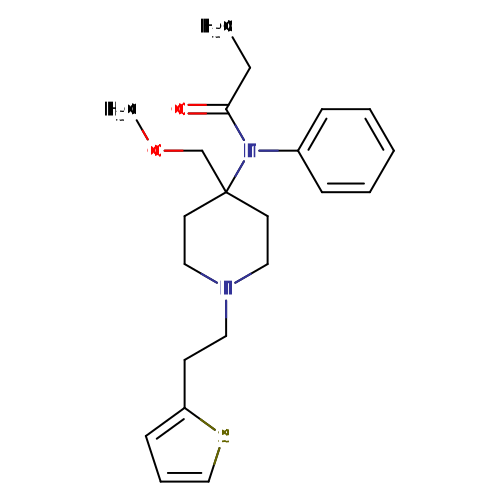
- Weight
- Average: 386.551
Monoisotopic: 386.202798904 - Chemical Formula
- C22H30N2O2S
- Synonyms
- N-(4-(Methoxymethyl)-1-(2-(2-thienyl)ethyl)-4-piperidinyl)-N-phenylpropanamide
- N-(4-(Methoxymethyl)-1-(2-(2-thienyl)ethyl)-4-piperidyl)propionanilide
- Sufentanil
- Sufentanilo
- Sufentanilum
- Sufentanyl
- External IDs
- IDS-NS-001
- R 30,730
- R 30730
- R 33800
- R-30730

Pharmacology
- Indication
The indications for this drug are as follows:
As an analgesic adjunct in the maintenance of balanced general anesthesia in patients who are intubated and ventilated.
As a primary anesthetic agent for the induction and maintenance of anesthesia with 100% oxygen in patients undergoing major surgical procedures, in patients who are intubated and ventilated, such as cardiovascular surgery or neurosurgical procedures in the sitting position, to provide favorable myocardial and cerebral oxygen balance or when extended postoperative ventilation is anticipated.
For epidural administration as an analgesic combined with low dose (usually 12.5 mg per administration) bupivacaine usually during labor and vaginal delivery
The sublingual form is indicated for the management of acute pain in adults that is severe to warrant the use of an opioid analgesic in certified medically supervised healthcare settings, including hospitals, surgical centers, and emergency departments.
 Reduce drug development failure ratesBuild, train, & validate machine-learning modelswith evidence-based and structured datasets.Build, train, & validate predictive machine-learning models with structured datasets.
- Associated Conditions
Indication Type Indication Combined Product Details Approval Level Age Group Patient Characteristics Dose Form Treatment of Acute pain •••••••••••• ••••••••••• ••••••••• •••••• ••••• ••• •••••••• ••••••• Treatment of Acute severe pain •••••••••••• - Associated Therapies
- Contraindications & Blackbox Warnings
 Prevent Adverse Drug Events TodayTap into our Clinical API for life-saving information on contraindications & blackbox warnings, population restrictions, harmful risks, & more.Avoid life-threatening adverse drug events with our Clinical API
- Pharmacodynamics
Effect on the Central Nervous System (CNS)
In clinical settings, sufentanil exerts its principal pharmacologic effects on the central nervous system. Its primary therapeutic actions are analgesia and sedation. Sufentanil may increase pain tolerance and decrease the perception of pain. This drug depresses the respiratory centers, depresses the cough reflex, and constricts the pupils 13, 9. When used in balanced general anesthesia, sufentanil has been reported to be as much as 10 times as potent as fentanyl. When administered intravenously as a primary anesthetic agent with 100% oxygen, sufentanil is approximately 5 to 7 times as potent as fentanyl Label. High doses of intravenous sufentanil have been shown to cause muscle rigidity, likely as a result of an effect on the substantia nigra and the striate nucleus in the brain. Sleep-inducing (hypnotic) activity can be demonstrated by EEG alterations Label.
Effects on the Respiratory System
Sufentanil may cause respiratory depression Label.
Effects on the Cardiovascular System
Sufentanil causes peripheral vasodilation which may result in orthostatic hypotension or syncope. Bradycardia may also occur 13. Clinical signs or symptoms of histamine release and/or peripheral vasodilation may include pruritus, flushing, red eyes and sweating and/or orthostatic hypotension Label.
Effects on the Gastrointestinal Tract
Sufentanil causes a reduction in motility associated with an increase in smooth muscle tone in both the antrum of the stomach and duodenum. Digestion of food in the small intestine may be delayed and propulsive contractions are decreased. Propulsive peristaltic waves in the colon are decreased, while tone may be increased and lead to spasm, resulting in constipation. Other opioid-induced effects may include a reduction in biliary and pancreatic secretions, spasm of the sphincter of Oddi, as well as temporary elevations in serum amylase Label.
- Mechanism of action
Sufentanil is a synthetic, potent opioid with highly selective binding to μ-opioid receptors 13. These receptors are widely distributed in the human brain, spinal cord, and other tissues 8, 9.
In general, opioids decrease cAMP (affecting neural signaling pathways), decrease neurotransmitter release, and cause membrane hyperpolarization, all of which contribute to the relief of painful symptoms 9.
Opiate receptors are coupled with G-protein receptors and function as both positive and negative regulators of synaptic neural transmission via G-proteins that activate effector proteins. Binding of the opiate receptor leads to the exchange of GTP for GDP on the G-protein complex. As the effector system is adenylate cyclase and cAMP, located at the inner surface of the plasma membrane, opioids decrease intracellular cAMP by inhibiting adenylate cyclase. The release of nociceptive neurotransmitters such as substance P, GABA, dopamine, acetylcholine, and noradrenaline is then inhibited 9.
Opioids close N-type voltage-operated calcium channels (OP2-receptor agonist), also preventing neurotransmitter release 9.
Sufentanil and other opioids open calcium-dependent inwardly rectifying potassium channels, resulting in hyperpolarization and reduced neuronal excitability 8, 9.
Target Actions Organism AMu-type opioid receptor agonistHumans UDelta-type opioid receptor agonistHumans UKappa-type opioid receptor Not Available Humans - Absorption
Bioavailability of a single sublingual tablet was 52%, decreasing to 35% with repeat dosing 5.
After epidural administration of incremental doses totaling 5 to 40 mcg sufentanil during labor and delivery, maternal and neonatal sufentanil plasma concentrations were at or near the 0.05 to 0.1 ng/mL limit of detection, and were slightly higher in mothers than in their infants Label.
- Volume of distribution
Sufentanil has a distribution time of 1.4 minutes and redistribution time of 17.1 minutes Label. The central volume of distribution after intravenous application of sufentanil is approximately 14 L and the volume of distribution at steady state is approximately 350 L 13.
- Protein binding
Plasma protein binding of sufentanil, related to the alpha acid glycoprotein concentration, was approximately 93% in healthy males, 91% in mothers and 79% in neonates Label.
- Metabolism
The liver and small intestine are the major sites of biotransformation Label. Sufentanil is rapidly metabolized to a number of inactive metabolites, with oxidative N- and O-dealkylation being the major routes of elimination 13.
- Route of elimination
Approximately 80% of the administered dose is excreted within 24 hours and only 2% of the dose is eliminated as unchanged drug Label.
- Half-life
The elimination half-life is 164 minutes in adults when administered intravenously (IV). The elimination half-life of sufentanil is shorter (e.g. 97 +/- 42 minutes) in infants and children, and longer in neonates (e.g. 434 +/- 160 minutes) compared to that of adolescents and adults Label.
After a single administration of a 15 microgram sufentanil sublingual tablet, mean terminal phase half-lives in the range of 6-10 hours have been observed. After multiple administrations, a longer average terminal half-life of up to 18 hours was measured, owing to the higher plasma concentrations of sufentanil achieved after repeated dosing and due to the possibility to quantify these concentrations over a longer time period 13.
- Clearance
The total plasma clearance after single intravenous administration is about 917 l/min 13.
The clearance of sufentanil in healthy neonates is approximately one-half that in adults and children. The clearance rate of sufentanil can be further reduced by up to a third in neonates with cardiovascular disease Label.
- Adverse Effects
 Improve decision support & research outcomesWith structured adverse effects data, including: blackbox warnings, adverse reactions, warning & precautions, & incidence rates. View sample adverse effects data in our new Data Library!Improve decision support & research outcomes with our structured adverse effects data.
- Toxicity
LD50: 18.7 mg/kg (IV in mice) MSDS
A Note on Respiratory Depression
Major, life-threatening, or fatal respiratory depression has been reported with the use of opioids, even in cases where it is used as recommended. Respiratory depression may lead to respiratory arrest and death if not diagnosed and treated appropriately. This drug should be administered only by persons specifically trained in the use of anesthetic drugs and the management of the respiratory effects of potent opioids, including respiration and cardiac resuscitation of patients in the age group being treated. This training must include the establishment and maintenance of a patent airway and assisted ventilation Label.
Carcinogenesis Long-term studies in animals to evaluate the carcinogenic potential of sufentanil have not been conducted Label.
Mutagenesis Sufentanil was not found to be genotoxic in the in vitro bacterial reverse mutation assay (Ames assay) or in the in vivo rat bone marrow micronucleous assay Label.
Reproductive Toxicity
Sufentanil caused embryolethality in rats and rabbits treated for 10-30 days during pregnancy with 2.5 times the maximum human dose by intravenous administration. The embryolethal effect was thought to be secondary to the toxicity for the mother animal model. No negative effects were noted in another study in rats that were treated with 20 times the maximum human dose in the period of organogenesis. The preclinical effects were only seen following administrations of levels significantly above the maximum human dose, which is therefore of minimal relevance for clinical use 13.
Pregnancy
May cause fetal harm Label
The Use in Lactation
Infants exposed to this drug through breast milk should be monitored for excess sedation and respiratory depression Label.
- Pathways
Pathway Category Sufentanil Action Pathway Drug action - Pharmacogenomic Effects/ADRs
- Not Available
Interactions
- Drug Interactions
- This information should not be interpreted without the help of a healthcare provider. If you believe you are experiencing an interaction, contact a healthcare provider immediately. The absence of an interaction does not necessarily mean no interactions exist.
Drug Interaction Integrate drug-drug
interactions in your software1,2-Benzodiazepine The risk or severity of adverse effects can be increased when Sufentanil is combined with 1,2-Benzodiazepine. Abaloparatide The risk or severity of adverse effects can be increased when Sufentanil is combined with Abaloparatide. Abametapir The serum concentration of Sufentanil can be increased when it is combined with Abametapir. Acebutolol Sufentanil may decrease the antihypertensive activities of Acebutolol. Aceclofenac The risk or severity of hypertension can be increased when Sufentanil is combined with Aceclofenac. - Food Interactions
- Avoid alcohol. Ingesting alcohol may potentiate the CNS depressant effects of sufentanil.
- Avoid grapefruit products. Sufentanil is a CYP3A4 substrate; therefore, concomitant ingestion of CYP3A4 inhibitors like grapefruit products may increase serum levels of sufentanil and potentiate CNS depression.
Products
 Drug product information from 10+ global regionsOur datasets provide approved product information including:dosage, form, labeller, route of administration, and marketing period.Access drug product information from over 10 global regions.
- Product Ingredients
Ingredient UNII CAS InChI Key Sufentanil citrate S9ZFX8403R 60561-17-3 OJCZPLDERGDQRJ-UHFFFAOYSA-N - International/Other Brands
- Chronogesic (DURECT) / Disufen (Angenerico) / Fastfen (Cristália) / Sufenta Forte (Janssen) / Sufenta mite (Janssen) / Sufentil (Claris Lifesciences Ltd.) / Zuftil (Pisa)
- Brand Name Prescription Products
Name Dosage Strength Route Labeller Marketing Start Marketing End Region Image Dsuvia Tablet 30 ug/1 Sublingual AcelRx Pharmaceuticals, Inc. 2018-11-02 Not applicable US 
Dzuveo Tablet 30 ?g Sublingual Laboratoire Aguettant 2020-12-16 Not applicable EU 
Dzuveo Tablet 30 ?g Sublingual Laboratoire Aguettant 2020-12-16 Not applicable EU Sufenta Solution 50 ug/1mL Intravenous Taylor Pharmaceuticals 2008-07-02 Not applicable US Sufenta Inj 50mcg/ml Liquid 50 mcg / mL Epidural; Intravenous Janssen Pharmaceuticals 1985-12-31 2007-11-26 Canada 
- Generic Prescription Products
Name Dosage Strength Route Labeller Marketing Start Marketing End Region Image Sufentanil Citrate Injection 0.05 mg/1mL Epidural; Intravenous Baxter Laboratories 2002-12-02 2014-03-31 US Sufentanil Citrate Injection 0.05 mg/1mL Epidural; Intravenous Hikma Pharmaceuticals USA Inc. 1995-12-15 Not applicable US Sufentanil Citrate Injection, solution 50 ug/1mL Epidural; Intravenous Hospira, Inc. 2005-07-26 Not applicable US Sufentanil Citrate Injection 0.05 mg/1mL Epidural; Intravenous Hikma Pharmaceuticals USA Inc. 1995-12-15 Not applicable US Sufentanil Citrate Injection 0.05 mg/1mL Epidural; Intravenous Hikma Pharmaceuticals USA Inc. 1995-12-15 Not applicable US
Categories
- ATC Codes
- N01AH03 — Sufentanil
- Drug Categories
- Adjuvants, Anesthesia
- Agents that produce hypertension
- Analgesics
- Anesthetics
- Anesthetics, General
- Anesthetics, Intravenous
- Bradycardia-Causing Agents
- Central Nervous System Agents
- Central Nervous System Depressants
- Cytochrome P-450 CYP3A Substrates
- Cytochrome P-450 CYP3A4 Substrates
- Cytochrome P-450 Substrates
- Fentanyl and fentanyl analogues
- High-risk opioids
- Hypotensive Agents
- Narcotics
- Nervous System
- Neuraxial Anesthetics
- Opiate Agonists
- Opioid Agonist
- Opioid Anesthetics
- Opioids
- Opioids, Anilidopiperidine
- Peripheral Nervous System Agents
- Phenylpiperidine opioids
- Piperidines
- Sensory System Agents
- Serotonergic Drugs Shown to Increase Risk of Serotonin Syndrome
- Chemical TaxonomyProvided by Classyfire
- Description
- This compound belongs to the class of organic compounds known as anilides. These are organic heterocyclic compounds derived from oxoacids RkE(=O)l(OH)m (l not 0) by replacing an OH group by the NHPh group or derivative formed by ring substitution.
- Kingdom
- Organic compounds
- Super Class
- Benzenoids
- Class
- Benzene and substituted derivatives
- Sub Class
- Anilides
- Direct Parent
- Anilides
- Alternative Parents
- Aralkylamines / Piperidines / Thiophenes / Tertiary carboxylic acid amides / Heteroaromatic compounds / Trialkylamines / Amino acids and derivatives / Dialkyl ethers / Azacyclic compounds / Organopnictogen compounds show 3 more
- Substituents
- Amine / Amino acid or derivatives / Anilide / Aralkylamine / Aromatic heteromonocyclic compound / Azacycle / Carbonyl group / Carboxamide group / Carboxylic acid derivative / Dialkyl ether show 15 more
- Molecular Framework
- Aromatic heteromonocyclic compounds
- External Descriptors
- piperidines, thiophenes, ether, anilide (CHEBI:9316)
- Affected organisms
- Humans and other mammals
Chemical Identifiers
- UNII
- AFE2YW0IIZ
- CAS number
- 56030-54-7
- InChI Key
- GGCSSNBKKAUURC-UHFFFAOYSA-N
- InChI
- InChI=1S/C22H30N2O2S/c1-3-21(25)24(19-8-5-4-6-9-19)22(18-26-2)12-15-23(16-13-22)14-11-20-10-7-17-27-20/h4-10,17H,3,11-16,18H2,1-2H3
- IUPAC Name
- N-[4-(methoxymethyl)-1-[2-(thiophen-2-yl)ethyl]piperidin-4-yl]-N-phenylpropanamide
- SMILES
- CCC(=O)N(C1=CC=CC=C1)C1(COC)CCN(CCC2=CC=CS2)CC1
References
- Synthesis Reference
Jacob Mathew, J. Killgore, "New methods for the synthesis of alfentanil, sufentanil, and remifentanil." U.S. Patent US20060149071, issued July 06, 2006.
US20060149071- General References
- Authors unspecified: Drug and Device News. P T. 2017 Dec;42(12):726-763. [Article]
- Miner JR, Rafique Z, Minkowitz HS, DiDonato KP, Palmer PP: Sufentanil sublingual tablet 30mcg for moderate-to-severe acute pain in the ED. Am J Emerg Med. 2018 Jun;36(6):954-961. doi: 10.1016/j.ajem.2017.10.058. Epub 2017 Oct 31. [Article]
- Willsie SK, Evashenk MA, Hamel LG, Hwang SS, Chiang YK, Palmer PP: Pharmacokinetic properties of single- and repeated-dose sufentanil sublingual tablets in healthy volunteers. Clin Ther. 2015 Jan 1;37(1):145-55. doi: 10.1016/j.clinthera.2014.11.001. Epub 2014 Dec 24. [Article]
- Ringold FG, Minkowitz HS, Gan TJ, Aqua KA, Chiang YK, Evashenk MA, Palmer PP: Sufentanil sublingual tablet system for the management of postoperative pain following open abdominal surgery: a randomized, placebo-controlled study. Reg Anesth Pain Med. 2015 Jan-Feb;40(1):22-30. doi: 10.1097/AAP.0000000000000152. [Article]
- Fisher DM, Chang P, Wada DR, Dahan A, Palmer PP: Pharmacokinetic Properties of a Sufentanil Sublingual Tablet Intended to Treat Acute Pain. Anesthesiology. 2018 May;128(5):943-952. doi: 10.1097/ALN.0000000000002145. [Article]
- Vardanyan RS, Hruby VJ: Fentanyl-related compounds and derivatives: current status and future prospects for pharmaceutical applications. Future Med Chem. 2014 Mar;6(4):385-412. doi: 10.4155/fmc.13.215. [Article]
- Pergolizzi JV Jr, LeQuang JA, Berger GK, Raffa RB: The Basic Pharmacology of Opioids Informs the Opioid Discourse about Misuse and Abuse: A Review. Pain Ther. 2017 Jun;6(1):1-16. doi: 10.1007/s40122-017-0068-3. Epub 2017 Mar 24. [Article]
- Sobczak M, Salaga M, Storr MA, Fichna J: Physiology, signaling, and pharmacology of opioid receptors and their ligands in the gastrointestinal tract: current concepts and future perspectives. J Gastroenterol. 2014 Jan;49(1):24-45. doi: 10.1007/s00535-013-0753-x. Epub 2013 Feb 9. [Article]
- Pathan H, Williams J: Basic opioid pharmacology: an update. Br J Pain. 2012 Feb;6(1):11-6. doi: 10.1177/2049463712438493. [Article]
- FDA approves Dsuvia [Link]
- Noting Military Potential, FDA Approves Powerful Painkiller Dsuvia [Link]
- FDA Approved Drug Products: DSUVIA® (sufentanil) sublingual tablet, CII [Link]
- Sufentanil EMA label [File]
- Sufentanil [File]
- External Links
- Human Metabolome Database
- HMDB0014846
- KEGG Drug
- D05938
- KEGG Compound
- C08022
- PubChem Compound
- 41693
- PubChem Substance
- 46504737
- ChemSpider
- 38043
- BindingDB
- 94503
- 56795
- ChEBI
- 9316
- ChEMBL
- CHEMBL658
- ZINC
- ZINC000000538386
- Therapeutic Targets Database
- DAP000357
- PharmGKB
- PA451527
- Guide to Pharmacology
- GtP Drug Page
- Drugs.com
- Drugs.com Drug Page
- Wikipedia
- Sufentanil
- FDA label
- Download (176 KB)
- MSDS
- Download (47.6 KB)
Clinical Trials
- Clinical Trials
Phase Status Purpose Conditions Count 4 Active Not Recruiting Prevention Analgesia / Dexmedetomidine / Elderly / Long Term Outcomes / Orthopedic Surgery / Postoperative Delirium (POD) 1 4 Active Not Recruiting Prevention Chronic Postoperative Pain / Dexmedetomidine / Esketamine / Postoperative Analgesia / Scoliosis Correction 1 4 Active Not Recruiting Treatment Driving Performance After Minor Ambulatory Surgery / Minor Surgical Procedures With Monitored Anesthesia Care 1 4 Active Not Recruiting Treatment Opioids Use / Postoperative pain / Spine Fusion 1 4 Completed Basic Science Anesthesia therapy 1
Pharmacoeconomics
- Manufacturers
- Akorn inc
- Baxter healthcare corp anesthesia and critical care
- Hospira inc
- Watson laboratories inc
- Packagers
- Akorn Inc.
- Baxter International Inc.
- Generamedix Inc.
- Hospira Inc.
- Mallinckrodt Inc.
- Taylor Pharmaceuticals
- Dosage Forms
Form Route Strength Injection, solution Intravenous; Parenteral 50 MICROGRAMMI/ML Tablet Sublingual 30 ug/1 Tablet Sublingual 30 MICROGRAMMI Tablet Sublingual 30 ?g Injection Epidural; Intravenous 0.005 MG/ML Solution Intravenous 50 ug/1mL Injection, solution Intravenous 50 μg/ml Liquid Epidural; Intravenous 50 mcg / mL Liquid Intravenous 50 mcg / mL Injection Epidural; Intravenous 0.05 mg/1mL Injection Epidural; Intravenous 50 ug/1mL Injection, solution Epidural; Intravenous 50 ug/1mL Solution Epidural; Intravenous 50 mcg / mL Injection, solution Injection, solution Parenteral 250 mcg/ml Injection, solution Parenteral 50 mcg/ml Injection, solution Parenteral 50 MICROGRAMMI/ML Injection, solution 5 MICROGRAMMI/ML Injection, solution 50 MICROGRAMMI/ML Injection, solution Parenteral 5 Mikrogramm/ml Injection, solution Parenteral 50 Mikrogramm/ml Injection, solution Parenteral 0.05 MG/ML Injection, solution Parenteral Tablet Oral; Sublingual 15 MCG Tablet Sublingual 15 μg Solution Parenteral 0.250 mg - Prices
Unit description Cost Unit Sufentanil citrate powder 18927.0USD g Sufenta 50 mcg/ml ampul 5.38USD ml Sufentanil 50 mcg/ml ampul 3.92USD ml DrugBank does not sell nor buy drugs. Pricing information is supplied for informational purposes only.- Patents
Patent Number Pediatric Extension Approved Expires (estimated) Region US8778393 No 2014-07-15 2027-01-05 US US8778394 No 2014-07-15 2027-01-05 US US8535714 No 2013-09-17 2027-01-05 US US9320710 No 2016-04-26 2027-01-05 US US8202535 No 2012-06-19 2030-10-22 US US8226978 No 2012-07-24 2027-01-05 US US8865743 No 2014-10-21 2030-10-22 US US8865211 No 2014-10-21 2027-01-05 US US8574189 No 2013-11-05 2030-03-16 US US8231900 No 2012-07-31 2027-01-05 US US8252328 No 2012-08-28 2027-01-05 US US9744129 No 2017-08-29 2027-01-05 US US8945592 No 2015-02-03 2031-07-29 US US8252329 No 2012-08-28 2027-01-05 US US10245228 No 2019-04-02 2027-01-05 US US10342762 No 2019-07-09 2027-01-05 US US10507180 No 2019-12-17 2027-01-05 US US10896751 No 2021-01-19 2030-03-16 US US11672738 No 2018-02-02 2038-02-02 US US11676691 No 2010-03-16 2030-03-16 US
Properties
- State
- Solid
- Experimental Properties
Property Value Source melting point (°C) 136.3 MSDS water solubility Soluble MSDS logP 3.95 https://pubchem.ncbi.nlm.nih.gov/compound/sufentanil#section=Solubility logS -3.71 https://pubchem.ncbi.nlm.nih.gov/compound/sufentanil#section=Solubility - Predicted Properties
Property Value Source Water Solubility 0.012 mg/mL ALOGPS logP 3.4 ALOGPS logP 3.61 Chemaxon logS -4.5 ALOGPS pKa (Strongest Basic) 8.86 Chemaxon Physiological Charge 1 Chemaxon Hydrogen Acceptor Count 3 Chemaxon Hydrogen Donor Count 0 Chemaxon Polar Surface Area 32.78 Å2 Chemaxon Rotatable Bond Count 8 Chemaxon Refractivity 111.42 m3·mol-1 Chemaxon Polarizability 43.99 Å3 Chemaxon Number of Rings 3 Chemaxon Bioavailability 1 Chemaxon Rule of Five Yes Chemaxon Ghose Filter Yes Chemaxon Veber's Rule Yes Chemaxon MDDR-like Rule Yes Chemaxon - Predicted ADMET Features
Property Value Probability Human Intestinal Absorption + 0.9875 Blood Brain Barrier + 0.9886 Caco-2 permeable + 0.5201 P-glycoprotein substrate Substrate 0.6673 P-glycoprotein inhibitor I Inhibitor 0.8275 P-glycoprotein inhibitor II Inhibitor 0.8387 Renal organic cation transporter Non-inhibitor 0.5594 CYP450 2C9 substrate Non-substrate 0.7923 CYP450 2D6 substrate Non-substrate 0.9116 CYP450 3A4 substrate Substrate 0.713 CYP450 1A2 substrate Non-inhibitor 0.8954 CYP450 2C9 inhibitor Non-inhibitor 0.7839 CYP450 2D6 inhibitor Non-inhibitor 0.8416 CYP450 2C19 inhibitor Non-inhibitor 0.5438 CYP450 3A4 inhibitor Inhibitor 0.6293 CYP450 inhibitory promiscuity Low CYP Inhibitory Promiscuity 0.6401 Ames test Non AMES toxic 0.7695 Carcinogenicity Non-carcinogens 0.8861 Biodegradation Not ready biodegradable 0.9724 Rat acute toxicity 3.0968 LD50, mol/kg Not applicable hERG inhibition (predictor I) Weak inhibitor 0.9793 hERG inhibition (predictor II) Inhibitor 0.772
Spectra
- Mass Spec (NIST)
- Not Available
- Spectra
- Chromatographic Properties
Collision Cross Sections (CCS)
Adduct CCS Value (Å2) Source type Source [M-H]- 201.426923 predictedDarkChem Lite v0.1.0 [M-H]- 186.93564 predictedDeepCCS 1.0 (2019) [M+H]+ 201.535823 predictedDarkChem Lite v0.1.0 [M+H]+ 189.35591 predictedDeepCCS 1.0 (2019) [M+Na]+ 202.362923 predictedDarkChem Lite v0.1.0 [M+Na]+ 196.51707 predictedDeepCCS 1.0 (2019)
Targets

- Kind
- Protein
- Organism
- Humans
- Pharmacological action
- Yes
- Actions
- Agonist
- General Function
- Voltage-gated calcium channel activity
- Specific Function
- Receptor for endogenous opioids such as beta-endorphin and endomorphin. Receptor for natural and synthetic opioids including morphine, heroin, DAMGO, fentanyl, etorphine, buprenorphin and methadone...
- Gene Name
- OPRM1
- Uniprot ID
- P35372
- Uniprot Name
- Mu-type opioid receptor
- Molecular Weight
- 44778.855 Da
References
- Hurle MA: Changes in the expression of G protein-coupled receptor kinases and beta-arrestin 2 in rat brain during opioid tolerance and supersensitivity. J Neurochem. 2001 Apr;77(2):486-92. [Article]
- Levron JC: [Pharmacokinetics and pharmacodynamics of morphinomimetics in the central nervous system]. Agressologie. 1991;32(6-7):318-20. [Article]
- Ilien B, Galzi JL, Mejean A, Goeldner M, Hirth C: A mu-opioid receptor-filter assay. Rapid estimation of binding affinity of ligands and reversibility of long-lasting ligand-receptor complexes. Biochem Pharmacol. 1988 Oct 15;37(20):3843-51. [Article]
- Colpaert FC, Leysen JE, Michiels M, van den Hoogen RH: Epidural and intravenous sufentanil in the rat: analgesia, opiate receptor binding, and drug concentrations in plasma and brain. Anesthesiology. 1986 Jul;65(1):41-9. [Article]
- Leysen JE, Gommeren W: In vitro binding properties of 3H-sufentanil, a superior ligand for the mu-opiate receptor. Arch Int Pharmacodyn Ther. 1982 Dec;260(2):287-9. [Article]
- Chen X, Ji ZL, Chen YZ: TTD: Therapeutic Target Database. Nucleic Acids Res. 2002 Jan 1;30(1):412-5. [Article]
- Kind
- Protein
- Organism
- Humans
- Pharmacological action
- Unknown
- Actions
- Agonist
- General Function
- Opioid receptor activity
- Specific Function
- G-protein coupled receptor that functions as receptor for endogenous enkephalins and for a subset of other opioids. Ligand binding causes a conformation change that triggers signaling via guanine n...
- Gene Name
- OPRD1
- Uniprot ID
- P41143
- Uniprot Name
- Delta-type opioid receptor
- Molecular Weight
- 40368.235 Da
References
- Freye E, Latasch L, Portoghese PS: The delta receptor is involved in sufentanil-induced respiratory depression--opioid subreceptors mediate different effects. Eur J Anaesthesiol. 1992 Nov;9(6):457-62. [Article]
- Zhu J, Xue JC, Law PY, Claude PA, Luo LY, Yin J, Chen C, Liu-Chen LY: The region in the mu opioid receptor conferring selectivity for sufentanil over the delta receptor is different from that over the kappa receptor. FEBS Lett. 1996 Apr 15;384(2):198-202. [Article]
- Kind
- Protein
- Organism
- Humans
- Pharmacological action
- Unknown
- General Function
- Opioid receptor activity
- Specific Function
- G-protein coupled opioid receptor that functions as receptor for endogenous alpha-neoendorphins and dynorphins, but has low affinity for beta-endorphins. Also functions as receptor for various synt...
- Gene Name
- OPRK1
- Uniprot ID
- P41145
- Uniprot Name
- Kappa-type opioid receptor
- Molecular Weight
- 42644.665 Da
References
- Zhu J, Xue JC, Law PY, Claude PA, Luo LY, Yin J, Chen C, Liu-Chen LY: The region in the mu opioid receptor conferring selectivity for sufentanil over the delta receptor is different from that over the kappa receptor. FEBS Lett. 1996 Apr 15;384(2):198-202. [Article]
- Chang HM, Berde CB, Holz GG 4th, Steward GF, Kream RM: Sufentanil, morphine, met-enkephalin, and kappa-agonist (U-50,488H) inhibit substance P release from primary sensory neurons: a model for presynaptic spinal opioid actions. Anesthesiology. 1989 Apr;70(4):672-7. [Article]
Enzymes
- Kind
- Protein
- Organism
- Humans
- Pharmacological action
- Unknown
- Actions
- Substrate
- General Function
- Vitamin d3 25-hydroxylase activity
- Specific Function
- Cytochromes P450 are a group of heme-thiolate monooxygenases. In liver microsomes, this enzyme is involved in an NADPH-dependent electron transport pathway. It performs a variety of oxidation react...
- Gene Name
- CYP3A4
- Uniprot ID
- P08684
- Uniprot Name
- Cytochrome P450 3A4
- Molecular Weight
- 57342.67 Da
References

Drug created at June 13, 2005 13:24 / Updated at April 27, 2024 09:44