Identification
- Summary
Isoflurane is an inhaled general anesthetic used in surgery.
- Brand Names
- Forane, Terrell
- Generic Name
- Isoflurane
- DrugBank Accession Number
- DB00753
- Background
A stable, non-explosive inhalation anesthetic, relatively free from significant side effects.
- Type
- Small Molecule
- Groups
- Approved, Vet approved
- Structure
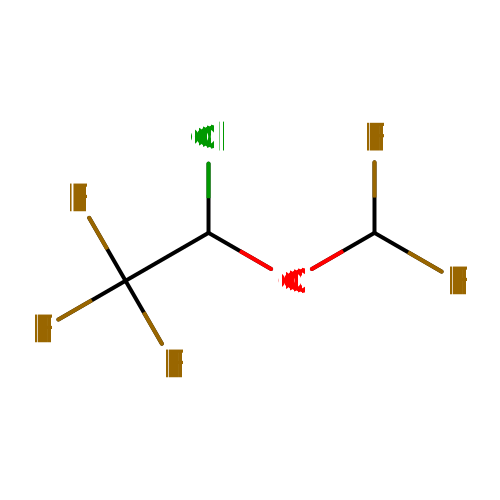
Structure for Isoflurane (DB00753)
- Weight
- Average: 184.492
Monoisotopic: 183.971433418 - Chemical Formula
- C3H2ClF5O
- Synonyms
- 1-chloro-2,2,2-trifluoroethyl difluoromethyl ether
- Isoflurane
- Isoflurano
- Isofluranum

Pharmacology
- Indication
For induction and maintenance of general anesthesia.
 Reduce drug development failure ratesBuild, train, & validate machine-learning modelswith evidence-based and structured datasets.Build, train, & validate predictive machine-learning models with structured datasets.
- Associated Therapies
- Contraindications & Blackbox Warnings
 Prevent Adverse Drug Events TodayTap into our Clinical API for life-saving information on contraindications & blackbox warnings, population restrictions, harmful risks, & more.Avoid life-threatening adverse drug events with our Clinical API
- Pharmacodynamics
Isoflurane is a general inhalation anesthetic used for induction and maintenance of general anesthesia. It induces muscle relaxation and reduces pains sensitivity by altering tissue excitability. It does so by decreasing the extent of gap junction mediated cell-cell coupling and altering the activity of the channels that underlie the action potential.
- Mechanism of action
Isoflurane induces a reduction in junctional conductance by decreasing gap junction channel opening times and increasing gap junction channel closing times. Isoflurane also activates calcium dependent ATPase in the sarcoplasmic reticulum by increasing the fluidity of the lipid membrane. Also appears to bind the D subunit of ATP synthase and NADH dehydogenase. Isoflurane also binds to the GABA receptor, the large conductance Ca2+ activated potassium channel, the glutamate receptor and the glycine receptor.
Target Actions Organism AGamma-aminobutyric acid receptor subunit alpha-1 agonistHumans ACalcium-transporting ATPase type 2C member 1 inhibitorHumans AGlycine receptor subunit alpha-1 agonistHumans AGlutamate receptor 1 antagonistHumans APotassium voltage-gated channel subfamily A member 1 inducerHumans AGABA(A) Receptor positive allosteric modulatorHumans UATP synthase subunit delta, mitochondrial unknownHumans UCalmodulin other/unknownHumans UNeuronal acetylcholine receptor subunit alpha-4 antagonistHumans UNeuronal acetylcholine receptor subunit beta-2 antagonistHumans - Absorption
Not Available
- Volume of distribution
Not Available
- Protein binding
Not Available
- Metabolism
Minimal
- Route of elimination
Not Available
- Half-life
Not Available
- Clearance
Not Available
- Adverse Effects
 Improve decision support & research outcomesWith structured adverse effects data, including: blackbox warnings, adverse reactions, warning & precautions, & incidence rates. View sample adverse effects data in our new Data Library!Improve decision support & research outcomes with our structured adverse effects data.
- Toxicity
LC50=15300 ppm/3 hrs (inhalation by rat)
- Pathways
- Not Available
- Pharmacogenomic Effects/ADRs
Interacting Gene/Enzyme Allele name Genotype(s) Defining Change(s) Type(s) Description Details Voltage-dependent L-type calcium channel subunit alpha-1S --- Not Available c.3257G>A / c.520C>T ADR Inferred Malignant hyperthermia. Details Ryanodine receptor 1 --- Not Available c.103T>C / c.487C>T … show all ADR Inferred Malignant hyperthermia. Details
Interactions
- Drug Interactions
- This information should not be interpreted without the help of a healthcare provider. If you believe you are experiencing an interaction, contact a healthcare provider immediately. The absence of an interaction does not necessarily mean no interactions exist.
Drug Interaction Integrate drug-drug
interactions in your software1,2-Benzodiazepine The risk or severity of CNS depression can be increased when Isoflurane is combined with 1,2-Benzodiazepine. Abaloparatide The risk or severity of adverse effects can be increased when Isoflurane is combined with Abaloparatide. Abametapir The serum concentration of Isoflurane can be increased when it is combined with Abametapir. Abatacept The metabolism of Isoflurane can be increased when combined with Abatacept. Acebutolol Isoflurane may decrease the antihypertensive activities of Acebutolol. - Food Interactions
- No interactions found.
Products
 Drug product information from 10+ global regionsOur datasets provide approved product information including:dosage, form, labeller, route of administration, and marketing period.Access drug product information from over 10 global regions.
- International/Other Brands
- Aerrane (Baxter) / Forene (Abbott) / Isocane (Lunan) / Isorane (Abbott)
- Brand Name Prescription Products
Name Dosage Strength Route Labeller Marketing Start Marketing End Region Image Forane Inhalant 1 mL/1mL Respiratory (inhalation) Baxter Healthcare Corporation 1979-12-18 Not applicable US 
Forane Liquid 100 % Respiratory (inhalation) Baxter Laboratories 1996-12-31 Not applicable Canada 
Forane Liq Inh Liquid 100 % Respiratory (inhalation) Ohmeda Pharmaceutical Products, Division Of Boc Canada Limited 1994-12-31 1996-09-26 Canada Isoflurane USP Liquid 100 % Respiratory (inhalation) Technilab Pharma Inc. 1999-01-21 2008-08-05 Canada Isoflurane USP Liquid 99.9 % Respiratory (inhalation) Abbvie 1993-12-31 2016-03-21 Canada - Generic Prescription Products
Name Dosage Strength Route Labeller Marketing Start Marketing End Region Image Isoflurane Liquid 1 mL/1mL Respiratory (inhalation) Piramal Critical Care, Inc. 2011-10-07 Not applicable US Isoflurane Liquid 1 mL/1mL Respiratory (inhalation) Hospira, Inc. 2005-08-01 2012-03-01 US Isoflurane Liquid 1 mL/1mL Respiratory (inhalation) Halocarbon Life Sciences, LLC 1999-10-20 Not applicable US Isoflurane Liquid 1 mL/1mL Respiratory (inhalation) Piramal Critical Care Inc 2013-11-13 Not applicable US Terrell Liquid 1 mL/1mL Respiratory (inhalation) Piramal Critical Care Inc 2010-02-28 Not applicable US
Categories
- ATC Codes
- N01AB06 — Isoflurane
- Drug Categories
- Agents that produce hypertension
- Agents that reduce seizure threshold
- Anesthetics
- Anesthetics, General
- Anesthetics, Inhalation
- Anticholinergic Agents
- Central Nervous System Agents
- Central Nervous System Depressants
- Cytochrome P-450 CYP2B6 Inducers
- Cytochrome P-450 CYP2B6 Inducers (strength unknown)
- Cytochrome P-450 CYP2B6 Substrates
- Cytochrome P-450 CYP2E1 Substrates
- Cytochrome P-450 Enzyme Inducers
- Cytochrome P-450 Substrates
- Ethers
- Hydrocarbons, Halogenated
- Hypotensive Agents
- Methyl Ethers
- Nervous System
- Nicotinic Antagonists
- Potential QTc-Prolonging Agents
- QTc Prolonging Agents
- Chemical TaxonomyProvided by Classyfire
- Description
- This compound belongs to the class of organic compounds known as organofluorides. These are compounds containing a chemical bond between a carbon atom and a fluorine atom.
- Kingdom
- Organic compounds
- Super Class
- Organohalogen compounds
- Class
- Organofluorides
- Sub Class
- Not Available
- Direct Parent
- Organofluorides
- Alternative Parents
- Organooxygen compounds / Organochlorides / Hydrocarbon derivatives / Alkyl fluorides / Alkyl chlorides
- Substituents
- Aliphatic acyclic compound / Alkyl chloride / Alkyl fluoride / Alkyl halide / Hydrocarbon derivative / Organic oxygen compound / Organochloride / Organofluoride / Organooxygen compound
- Molecular Framework
- Aliphatic acyclic compounds
- External Descriptors
- organofluorine compound (CHEBI:6015)
- Affected organisms
- Humans and other mammals
Chemical Identifiers
- UNII
- CYS9AKD70P
- CAS number
- 26675-46-7
- InChI Key
- PIWKPBJCKXDKJR-UHFFFAOYSA-N
- InChI
- InChI=1S/C3H2ClF5O/c4-1(3(7,8)9)10-2(5)6/h1-2H
- IUPAC Name
- 2-chloro-2-(difluoromethoxy)-1,1,1-trifluoroethane
- SMILES
- FC(F)OC(Cl)C(F)(F)F
References
- Synthesis Reference
Leonid A. Rozov, Fernando Quiroz, Gerald G. Vernice, "Preparation of isoflurane." U.S. Patent US5416244, issued March, 1973.
US5416244- General References
- Not Available
- External Links
- Human Metabolome Database
- HMDB0014891
- KEGG Drug
- D00545
- KEGG Compound
- C07518
- PubChem Compound
- 3763
- PubChem Substance
- 46505880
- ChemSpider
- 3631
- BindingDB
- 217353
- 6026
- ChEBI
- 6015
- ChEMBL
- CHEMBL1256
- Therapeutic Targets Database
- DAP001033
- PharmGKB
- PA450106
- PDBe Ligand
- ICF
- RxList
- RxList Drug Page
- Wikipedia
- Isoflurane
- FDA label
- Download (99.6 KB)
- MSDS
- Download (37 KB)
Clinical Trials
- Clinical Trials
Phase Status Purpose Conditions Count 4 Completed Diagnostic Alzheimer's Disease (AD) / POCD - Postoperative Cognitive Dysfunction / Postoperative Delirium (POD) 1 4 Completed Diagnostic Postoperative Delirium (POD) 1 4 Completed Diagnostic Pulmonary Hypertension (PH) 1 4 Completed Other Breast Cancer / Colorectal Cancer / Lung Cancer / Melanoma (Skin Cancer) / Other Cancers / Prostate Cancer 1 4 Completed Prevention Analgesia / Functional Endoscopic Sinus Surgery (FESS) / Premedication 1
Pharmacoeconomics
- Manufacturers
- Baxter healthcare corp anesthesia critical care
- Halocarbon products corp
- Hospira inc
- Marsam pharmaceuticals llc
- Piramal critical care inc
- Rhodia ltd
- Packagers
- Apothecon
- Baxter International Inc.
- Halocarbon Laboratories
- Hospira Inc.
- Minrad Inc.
- Nicholas Pirmal India Ltd. Uk
- Rhodia Organique Fine Ltd.
- Rx Elite
- Dosage Forms
Form Route Strength Inhalant Respiratory (inhalation) 100 % Inhalant Respiratory (inhalation) 250 % Solution Nasal 240 mL Aerosol Respiratory (inhalation) Inhalant Respiratory (inhalation) 1 mL/1mL Liquid Respiratory (inhalation) 100 % Solution Respiratory (inhalation) 100 ml/100ml Solution Respiratory (inhalation) 99.9 % Liquid Respiratory (inhalation) 1 mL/1mL Solution Nasal 100 % Liquid Respiratory (inhalation) 99.9 % Solution Respiratory (inhalation) 100 mL Solution Respiratory (inhalation) 100 % Aerosol Respiratory (inhalation) 250 ML Aerosol; solution Respiratory (inhalation) 100 % Solution Respiratory (inhalation) 100.00 mL Solution Respiratory (inhalation) 100.000 mL Solution Respiratory (inhalation) 10000000 mL Aerosol Respiratory (inhalation) 100 ml/1bottle Aerosol Respiratory (inhalation) 250 ml/1bottle Liquid Nasal 100 ml/1bottle - Prices
Unit description Cost Unit Forane liquid 0.24USD ml DrugBank does not sell nor buy drugs. Pricing information is supplied for informational purposes only.- Patents
- Not Available
Properties
- State
- Liquid
- Experimental Properties
Property Value Source melting point (°C) 48-48.5 U.S. Patent 3,535,388. boiling point (°C) 48.5 °C PhysProp water solubility 4470 mg/L (at 37 °C) YALKOWSKY,SH & DANNENFELSER,RM (1992) logP 2.06 HANSCH,C ET AL. (1995) - Predicted Properties
Property Value Source Water Solubility 3.56 mg/mL ALOGPS logP 2.3 ALOGPS logP 2.84 Chemaxon logS -1.7 ALOGPS pKa (Strongest Basic) -4.7 Chemaxon Physiological Charge 0 Chemaxon Hydrogen Acceptor Count 1 Chemaxon Hydrogen Donor Count 0 Chemaxon Polar Surface Area 9.23 Å2 Chemaxon Rotatable Bond Count 3 Chemaxon Refractivity 23.04 m3·mol-1 Chemaxon Polarizability 9.73 Å3 Chemaxon Number of Rings 0 Chemaxon Bioavailability 1 Chemaxon Rule of Five Yes Chemaxon Ghose Filter No Chemaxon Veber's Rule Yes Chemaxon MDDR-like Rule No Chemaxon - Predicted ADMET Features
Property Value Probability Human Intestinal Absorption + 1.0 Blood Brain Barrier + 0.994 Caco-2 permeable + 0.6125 P-glycoprotein substrate Non-substrate 0.8919 P-glycoprotein inhibitor I Non-inhibitor 0.9553 P-glycoprotein inhibitor II Non-inhibitor 0.9297 Renal organic cation transporter Non-inhibitor 0.9293 CYP450 2C9 substrate Non-substrate 0.8407 CYP450 2D6 substrate Non-substrate 0.9116 CYP450 3A4 substrate Non-substrate 0.7179 CYP450 1A2 substrate Non-inhibitor 0.5701 CYP450 2C9 inhibitor Non-inhibitor 0.8112 CYP450 2D6 inhibitor Non-inhibitor 0.9408 CYP450 2C19 inhibitor Non-inhibitor 0.5794 CYP450 3A4 inhibitor Non-inhibitor 0.9604 CYP450 inhibitory promiscuity Low CYP Inhibitory Promiscuity 0.8702 Ames test Non AMES toxic 0.9132 Carcinogenicity Carcinogens 0.7574 Biodegradation Not ready biodegradable 0.9642 Rat acute toxicity 1.3804 LD50, mol/kg Not applicable hERG inhibition (predictor I) Weak inhibitor 0.9576 hERG inhibition (predictor II) Non-inhibitor 0.9032
Spectra
- Mass Spec (NIST)
- Download (7.33 KB)
- Spectra
- Chromatographic Properties
Collision Cross Sections (CCS)
Adduct CCS Value (Å2) Source type Source [M-H]- 104.4471594 predictedDarkChem Lite v0.1.0 [M-H]- 132.7145 predictedDeepCCS 1.0 (2019) [M+H]+ 105.4917594 predictedDarkChem Lite v0.1.0 [M+H]+ 135.05092 predictedDeepCCS 1.0 (2019) [M+Na]+ 105.0324594 predictedDarkChem Lite v0.1.0 [M+Na]+ 143.70894 predictedDeepCCS 1.0 (2019)
Targets

- Kind
- Protein
- Organism
- Humans
- Pharmacological action
- Yes
- Actions
- Agonist
- General Function
- Inhibitory extracellular ligand-gated ion channel activity
- Specific Function
- Component of the heteropentameric receptor for GABA, the major inhibitory neurotransmitter in the vertebrate brain. Functions also as histamine receptor and mediates cellular responses to histamine...
- Gene Name
- GABRA1
- Uniprot ID
- P14867
- Uniprot Name
- Gamma-aminobutyric acid receptor subunit alpha-1
- Molecular Weight
- 51801.395 Da
References
- Overington JP, Al-Lazikani B, Hopkins AL: How many drug targets are there? Nat Rev Drug Discov. 2006 Dec;5(12):993-6. [Article]
- Imming P, Sinning C, Meyer A: Drugs, their targets and the nature and number of drug targets. Nat Rev Drug Discov. 2006 Oct;5(10):821-34. [Article]
- McCracken ML, Borghese CM, Trudell JR, Harris RA: A transmembrane amino acid in the GABAA receptor beta2 subunit critical for the actions of alcohols and anesthetics. J Pharmacol Exp Ther. 2010 Dec;335(3):600-6. doi: 10.1124/jpet.110.170472. Epub 2010 Sep 8. [Article]
- Seo K, Seino H, Yoshikawa H, Petrenko AB, Baba H, Fujiwara N, Someya G, Kawano Y, Maeda T, Matsuda M, Kanematsu T, Hirata M: Genetic reduction of GABA(A) receptor gamma2 subunit expression potentiates the immobilizing action of isoflurane. Neurosci Lett. 2010 Mar 12;472(1):1-4. doi: 10.1016/j.neulet.2010.01.031. Epub 2010 Jan 25. [Article]
- Kind
- Protein
- Organism
- Humans
- Pharmacological action
- Yes
- Actions
- Inhibitor
- General Function
- Signal transducer activity
- Specific Function
- This magnesium-dependent enzyme catalyzes the hydrolysis of ATP coupled with the transport of the calcium.
- Gene Name
- ATP2C1
- Uniprot ID
- P98194
- Uniprot Name
- Calcium-transporting ATPase type 2C member 1
- Molecular Weight
- 100576.42 Da
References
- Overington JP, Al-Lazikani B, Hopkins AL: How many drug targets are there? Nat Rev Drug Discov. 2006 Dec;5(12):993-6. [Article]
- Imming P, Sinning C, Meyer A: Drugs, their targets and the nature and number of drug targets. Nat Rev Drug Discov. 2006 Oct;5(10):821-34. [Article]
- Kosk-Kosicka D, Roszczynska G: Inhibition of plasma membrane Ca(2+)-ATPase activity by volatile anesthetics. Anesthesiology. 1993 Oct;79(4):774-80. [Article]
- Kind
- Protein
- Organism
- Humans
- Pharmacological action
- Yes
- Actions
- Agonist
- General Function
- Transmitter-gated ion channel activity
- Specific Function
- The glycine receptor is a neurotransmitter-gated ion channel. Binding of glycine to its receptor increases the chloride conductance and thus produces hyperpolarization (inhibition of neuronal firing).
- Gene Name
- GLRA1
- Uniprot ID
- P23415
- Uniprot Name
- Glycine receptor subunit alpha-1
- Molecular Weight
- 52623.35 Da
References
- Overington JP, Al-Lazikani B, Hopkins AL: How many drug targets are there? Nat Rev Drug Discov. 2006 Dec;5(12):993-6. [Article]
- Imming P, Sinning C, Meyer A: Drugs, their targets and the nature and number of drug targets. Nat Rev Drug Discov. 2006 Oct;5(10):821-34. [Article]
- Grasshoff C, Antkowiak B: Effects of isoflurane and enflurane on GABAA and glycine receptors contribute equally to depressant actions on spinal ventral horn neurones in rats. Br J Anaesth. 2006 Nov;97(5):687-94. doi: 10.1093/bja/ael239. Epub 2006 Sep 13. [Article]
- Kind
- Protein
- Organism
- Humans
- Pharmacological action
- Yes
- Actions
- Antagonist
- General Function
- Pdz domain binding
- Specific Function
- Ionotropic glutamate receptor. L-glutamate acts as an excitatory neurotransmitter at many synapses in the central nervous system. Binding of the excitatory neurotransmitter L-glutamate induces a co...
- Gene Name
- GRIA1
- Uniprot ID
- P42261
- Uniprot Name
- Glutamate receptor 1
- Molecular Weight
- 101505.245 Da
References
- Guo L, Wang Y: Glutamate stimulates glutamate receptor interacting protein 1 degradation by ubiquitin-proteasome system to regulate surface expression of GluR2. Neuroscience. 2007 Mar 2;145(1):100-9. Epub 2007 Jan 3. [Article]
- Dildy-Mayfield JE, Eger EI 2nd, Harris RA: Anesthetics produce subunit-selective actions on glutamate receptors. J Pharmacol Exp Ther. 1996 Mar;276(3):1058-65. [Article]
- Kind
- Protein
- Organism
- Humans
- Pharmacological action
- Yes
- Actions
- Inducer
- General Function
- Voltage-gated potassium channel activity
- Specific Function
- Voltage-gated potassium channel that mediates transmembrane potassium transport in excitable membranes, primarily in the brain and the central nervous system, but also in the kidney (PubMed:1990381...
- Gene Name
- KCNA1
- Uniprot ID
- Q09470
- Uniprot Name
- Potassium voltage-gated channel subfamily A member 1
- Molecular Weight
- 56465.01 Da
References
- Overington JP, Al-Lazikani B, Hopkins AL: How many drug targets are there? Nat Rev Drug Discov. 2006 Dec;5(12):993-6. [Article]
- Imming P, Sinning C, Meyer A: Drugs, their targets and the nature and number of drug targets. Nat Rev Drug Discov. 2006 Oct;5(10):821-34. [Article]
- Matchett GA, Allard MW, Martin RD, Zhang JH: Neuroprotective effect of volatile anesthetic agents: molecular mechanisms. Neurol Res. 2009 Mar;31(2):128-34. doi: 10.1179/174313209X393546. [Article]
- Kind
- Protein group
- Organism
- Humans
- Pharmacological action
- Yes
- Actions
- Positive allosteric modulator
- General Function
- Inhibitory extracellular ligand-gated ion channel activity
- Specific Function
- Component of the heteropentameric receptor for GABA, the major inhibitory neurotransmitter in the vertebrate brain. Functions also as histamine receptor and mediates cellular responses to histamine...
Components:
References
- ChEMBL Compound Report Card [Link]
- Kind
- Protein
- Organism
- Humans
- Pharmacological action
- Unknown
- Actions
- Unknown
- General Function
- Transporter activity
- Specific Function
- Mitochondrial membrane ATP synthase (F(1)F(0) ATP synthase or Complex V) produces ATP from ADP in the presence of a proton gradient across the membrane which is generated by electron transport comp...
- Gene Name
- ATP5D
- Uniprot ID
- P30049
- Uniprot Name
- ATP synthase subunit delta, mitochondrial
- Molecular Weight
- 17489.755 Da
References
- Pravdic D, Hirata N, Barber L, Sedlic F, Bosnjak ZJ, Bienengraeber M: Complex I and ATP synthase mediate membrane depolarization and matrix acidification by isoflurane in mitochondria. Eur J Pharmacol. 2012 Sep 5;690(1-3):149-57. doi: 10.1016/j.ejphar.2012.07.003. Epub 2012 Jul 11. [Article]
- Bains R, Moe MC, Vinje ML, Berg-Johnsen J: Isoflurane-induced depolarization of neural mitochondria increases with age. Acta Anaesthesiol Scand. 2009 Jan;53(1):85-92. doi: 10.1111/j.1399-6576.2008.01823.x. Epub 2008 Nov 12. [Article]
- Bains R, Moe MC, Larsen GA, Berg-Johnsen J, Vinje ML: Volatile anaesthetics depolarize neural mitochondria by inhibiton of the electron transport chain. Acta Anaesthesiol Scand. 2006 May;50(5):572-9. doi: 10.1111/j.1399-6576.2006.00988.x. [Article]
- Kind
- Protein
- Organism
- Humans
- Pharmacological action
- Unknown
- Actions
- Other/unknown
- General Function
- Titin binding
- Specific Function
- Calmodulin mediates the control of a large number of enzymes, ion channels, aquaporins and other proteins by Ca(2+). Among the enzymes to be stimulated by the calmodulin-Ca(2+) complex are a number...
- Gene Name
- CALM1
- Uniprot ID
- P0DP23
- Uniprot Name
- Calmodulin
- Molecular Weight
- 16837.47 Da
References
- Fan RS, Jacamo RO, Jiang X, Sinnett-Smith J, Rozengurt E: G protein-coupled receptor activation rapidly stimulates focal adhesion kinase phosphorylation at Ser-843. Mediation by Ca2+, calmodulin, and Ca2+/calmodulin-dependent kinase II. J Biol Chem. 2005 Jun 24;280(25):24212-20. Epub 2005 Apr 21. [Article]
- Bickler PE, Zhan X, Fahlman CS: Isoflurane preconditions hippocampal neurons against oxygen-glucose deprivation: role of intracellular Ca2+ and mitogen-activated protein kinase signaling. Anesthesiology. 2005 Sep;103(3):532-9. [Article]
- Sazonova OV, Blishchenko EY, Tolmazova AG, Khachin DP, Leontiev KV, Karelin AA, Ivanov VT: Stimulation of fibroblast proliferation by neokyotorphin requires Ca influx and activation of PKA, CaMK II and MAPK/ERK. FEBS J. 2007 Jan;274(2):474-84. [Article]
- Kind
- Protein
- Organism
- Humans
- Pharmacological action
- Unknown
- Actions
- Antagonist
- General Function
- Ligand-gated ion channel activity
- Specific Function
- After binding acetylcholine, the AChR responds by an extensive change in conformation that affects all subunits and leads to opening of an ion-conducting channel across the plasma membrane permeabl...
- Gene Name
- CHRNA4
- Uniprot ID
- P43681
- Uniprot Name
- Neuronal acetylcholine receptor subunit alpha-4
- Molecular Weight
- 69956.47 Da
References
- Brannigan G, LeBard DN, Henin J, Eckenhoff RG, Klein ML: Multiple binding sites for the general anesthetic isoflurane identified in the nicotinic acetylcholine receptor transmembrane domain. Proc Natl Acad Sci U S A. 2010 Aug 10;107(32):14122-7. doi: 10.1073/pnas.1008534107. Epub 2010 Jul 26. [Article]
- Flood P, Sonner JM, Gong D, Coates KM: Isoflurane hyperalgesia is modulated by nicotinic inhibition. Anesthesiology. 2002 Jul;97(1):192-8. [Article]
- Yamashita M, Mori T, Nagata K, Yeh JZ, Narahashi T: Isoflurane modulation of neuronal nicotinic acetylcholine receptors expressed in human embryonic kidney cells. Anesthesiology. 2005 Jan;102(1):76-84. [Article]
- Kind
- Protein
- Organism
- Humans
- Pharmacological action
- Unknown
- Actions
- Antagonist
- General Function
- Ligand-gated ion channel activity
- Specific Function
- After binding acetylcholine, the AChR responds by an extensive change in conformation that affects all subunits and leads to opening of an ion-conducting channel across the plasma membrane permeabl...
- Gene Name
- CHRNB2
- Uniprot ID
- P17787
- Uniprot Name
- Neuronal acetylcholine receptor subunit beta-2
- Molecular Weight
- 57018.575 Da
References
- Brannigan G, LeBard DN, Henin J, Eckenhoff RG, Klein ML: Multiple binding sites for the general anesthetic isoflurane identified in the nicotinic acetylcholine receptor transmembrane domain. Proc Natl Acad Sci U S A. 2010 Aug 10;107(32):14122-7. doi: 10.1073/pnas.1008534107. Epub 2010 Jul 26. [Article]
- Flood P, Sonner JM, Gong D, Coates KM: Isoflurane hyperalgesia is modulated by nicotinic inhibition. Anesthesiology. 2002 Jul;97(1):192-8. [Article]
- Yamashita M, Mori T, Nagata K, Yeh JZ, Narahashi T: Isoflurane modulation of neuronal nicotinic acetylcholine receptors expressed in human embryonic kidney cells. Anesthesiology. 2005 Jan;102(1):76-84. [Article]
Enzymes
- Kind
- Protein
- Organism
- Humans
- Pharmacological action
- Unknown
- Actions
- SubstrateInducer
- General Function
- Steroid hydroxylase activity
- Specific Function
- Cytochromes P450 are a group of heme-thiolate monooxygenases. In liver microsomes, this enzyme is involved in an NADPH-dependent electron transport pathway. It oxidizes a variety of structurally un...
- Gene Name
- CYP2B6
- Uniprot ID
- P20813
- Uniprot Name
- Cytochrome P450 2B6
- Molecular Weight
- 56277.81 Da
References
- Rendic S: Summary of information on human CYP enzymes: human P450 metabolism data. Drug Metab Rev. 2002 Feb-May;34(1-2):83-448. [Article]
- Baker MT, Olson MJ, Wang Y, Ronnenberg WC Jr, Johnson JT, Brady AN: Isoflurane-chlorodifluoroethene interaction in human liver microsomes. Role of cytochrome P4502B6 in potentiation of haloethene metabolism. Drug Metab Dispos. 1995 Jan;23(1):60-4. [Article]
- Potential CYP2B6 Substrates, Inhibitors, Inudcers (https://ctep.cancer.gov/protocoldevelopment/docs/cyp2b6.doc) [File]
- Kind
- Protein
- Organism
- Humans
- Pharmacological action
- Unknown
- Actions
- Inhibitor
- General Function
- Nadh dehydrogenase (ubiquinone) activity
- Specific Function
- Core subunit of the mitochondrial membrane respiratory chain NADH dehydrogenase (Complex I) that is believed to belong to the minimal assembly required for catalysis. Complex I functions in the tra...
- Gene Name
- MT-ND1
- Uniprot ID
- P03886
- Uniprot Name
- NADH-ubiquinone oxidoreductase chain 1
- Molecular Weight
- 35660.055 Da
References
- Overington JP, Al-Lazikani B, Hopkins AL: How many drug targets are there? Nat Rev Drug Discov. 2006 Dec;5(12):993-6. [Article]
- Imming P, Sinning C, Meyer A: Drugs, their targets and the nature and number of drug targets. Nat Rev Drug Discov. 2006 Oct;5(10):821-34. [Article]
- Hanley PJ, Ray J, Brandt U, Daut J: Halothane, isoflurane and sevoflurane inhibit NADH:ubiquinone oxidoreductase (complex I) of cardiac mitochondria. J Physiol. 2002 Nov 1;544(Pt 3):687-93. [Article]
- Kind
- Protein
- Organism
- Humans
- Pharmacological action
- Unknown
- Actions
- Substrate
- General Function
- Steroid hydroxylase activity
- Specific Function
- Metabolizes several precarcinogens, drugs, and solvents to reactive metabolites. Inactivates a number of drugs and xenobiotics and also bioactivates many xenobiotic substrates to their hepatotoxic ...
- Gene Name
- CYP2E1
- Uniprot ID
- P05181
- Uniprot Name
- Cytochrome P450 2E1
- Molecular Weight
- 56848.42 Da
References
- Kharasch ED, Thummel KE: Identification of cytochrome P450 2E1 as the predominant enzyme catalyzing human liver microsomal defluorination of sevoflurane, isoflurane, and methoxyflurane. Anesthesiology. 1993 Oct;79(4):795-807. [Article]
- Kharasch ED, Hankins DC, Cox K: Clinical isoflurane metabolism by cytochrome P450 2E1. Anesthesiology. 1999 Mar;90(3):766-71. doi: 10.1097/00000542-199903000-00019. [Article]
- Flockhart Table of Drug Interactions [Link]
Carriers
- Kind
- Protein
- Organism
- Humans
- Pharmacological action
- Unknown
- General Function
- Toxic substance binding
- Specific Function
- Serum albumin, the main protein of plasma, has a good binding capacity for water, Ca(2+), Na(+), K(+), fatty acids, hormones, bilirubin and drugs. Its main function is the regulation of the colloid...
- Gene Name
- ALB
- Uniprot ID
- P02768
- Uniprot Name
- Serum albumin
- Molecular Weight
- 69365.94 Da
References
- Liu R, Eckenhoff RG: Weak polar interactions confer albumin binding site selectivity for haloether anesthetics. Anesthesiology. 2005 Apr;102(4):799-805. [Article]
- Sawas AH, Pentyala SN, Rebecchi MJ: Binding of volatile anesthetics to serum albumin: measurements of enthalpy and solvent contributions. Biochemistry. 2004 Oct 5;43(39):12675-85. [Article]


Drug created at June 13, 2005 13:24 / Updated at April 26, 2024 00:45