Identification
- Summary
Halothane is a general inhalation anesthetic used for the induction and maintenance of general anesthesia.
- Generic Name
- Halothane
- DrugBank Accession Number
- DB01159
- Background
A nonflammable, halogenated, hydrocarbon anesthetic that provides relatively rapid induction with little or no excitement. Analgesia may not be adequate. nitrous oxide is often given concomitantly. Because halothane may not produce sufficient muscle relaxation, supplemental neuromuscular blocking agents may be required. (From AMA Drug Evaluations Annual, 1994, p178)
- Type
- Small Molecule
- Groups
- Approved, Vet approved
- Structure
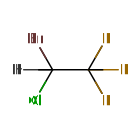
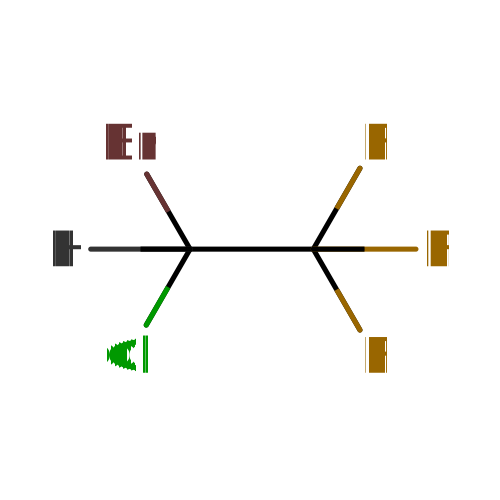
Structure for Halothane (DB01159)
- Weight
- Average: 197.382
Monoisotopic: 195.890225001 - Chemical Formula
- C2HBrClF3
- Synonyms
- 1-bromo-1-chloro-2,2,2-trifluoroethane
- 1,1,1-trifluoro-2-bromo-2-chloroethane
- 1,1,1-trifluoro-2-chloro-2-bromoethane
- 2-bromo-2-chloro-1,1,1-trifluoroethane
- 2,2,2-trifluoro-1-chloro-1-bromoethane
- Alotano
- Bromochlorotrifluoroethane
- Halotano
- Halothane
- Halothanum

Pharmacology
- Indication
For the induction and maintenance of general anesthesia
 Reduce drug development failure ratesBuild, train, & validate machine-learning modelswith evidence-based and structured datasets.Build, train, & validate predictive machine-learning models with structured datasets.
- Associated Conditions
Indication Type Indication Combined Product Details Approval Level Age Group Patient Characteristics Dose Form Maintenance of Anaesthesia therapy •••••••••••• •••••••• ••••••••• •••••• - Contraindications & Blackbox Warnings
 Prevent Adverse Drug Events TodayTap into our Clinical API for life-saving information on contraindications & blackbox warnings, population restrictions, harmful risks, & more.Avoid life-threatening adverse drug events with our Clinical API
- Pharmacodynamics
Halothane is a general inhalation anesthetic used for induction and maintenance of general anesthesia. It reduces the blood pressure and frequently decreases the pulse rate and depresses respiration. It induces muscle relaxation and reduces pains sensitivity by altering tissue excitability. It does so by decreasing the extent of gap junction mediated cell-cell coupling and altering the activity of the channels that underlie the action potential.
- Mechanism of action
Halothane causes general anaethesia due to its actions on multiple ion channels, which ultimately depresses nerve conduction, breathing, cardiac contractility. Its immobilizing effects have been attributed to its binding to potassium channels in cholinergic neurons. Halothane's effect are also likely due to binding to NMDA and calcium channels, causing hyperpolarization.
- Absorption
Not Available
- Volume of distribution
Not Available
- Protein binding
Not Available
- Metabolism
Halothane is metabolized in the liver, primarily by CYP2E1, and to a lesser extent by CYP3A4 and CYP2A6.
Hover over products below to view reaction partners
- Route of elimination
Not Available
- Half-life
Not Available
- Clearance
Not Available
- Adverse Effects
 Improve decision support & research outcomesWith structured adverse effects data, including: blackbox warnings, adverse reactions, warning & precautions, & incidence rates. View sample adverse effects data in our new Data Library!Improve decision support & research outcomes with our structured adverse effects data.
- Toxicity
Toxic effects of halothane include malignant hyperthermia and hepatitis.
- Pathways
- Not Available
- Pharmacogenomic Effects/ADRs
- Not Available
Interactions
- Drug Interactions
- This information should not be interpreted without the help of a healthcare provider. If you believe you are experiencing an interaction, contact a healthcare provider immediately. The absence of an interaction does not necessarily mean no interactions exist.
Drug Interaction Integrate drug-drug
interactions in your software1,2-Benzodiazepine The risk or severity of CNS depression can be increased when Halothane is combined with 1,2-Benzodiazepine. Abaloparatide The risk or severity of adverse effects can be increased when Halothane is combined with Abaloparatide. Abametapir The serum concentration of Halothane can be increased when it is combined with Abametapir. Abatacept The metabolism of Halothane can be increased when combined with Abatacept. Abrocitinib The metabolism of Abrocitinib can be decreased when combined with Halothane. - Food Interactions
- No interactions found.
Products
 Drug product information from 10+ global regionsOur datasets provide approved product information including:dosage, form, labeller, route of administration, and marketing period.Access drug product information from over 10 global regions.
- International/Other Brands
- Fluothane (Ayerst) / Ftorotan / Halotan (Jugoremedija) / Narcotan (Zentiva)
- Brand Name Prescription Products
Name Dosage Strength Route Labeller Marketing Start Marketing End Region Image Fluothane Anesthetic Liquid Respiratory (inhalation) Ayerst Laboratories 1958-12-31 1996-09-10 Canada 
Fluothane Liq Inh 1000mg/gm Liquid 1 g / g Respiratory (inhalation) Wyeth Ayerst Canada Inc. 1994-12-31 1997-08-14 Canada Halothane Solution 99.99 % Respiratory (inhalation) Bimeda Mtc Animal Health Inc 1975-12-31 2018-07-27 Canada Halothane Liq 99.9% Liquid 99.9 % Respiratory (inhalation) Halocarbon Laboratories, A Division Of Halocarbon Products Corp 1971-12-31 2010-06-14 Canada - Generic Prescription Products
Name Dosage Strength Route Labeller Marketing Start Marketing End Region Image Halothane Inhalant 250 mL/250mL Respiratory (inhalation) Hospira, Inc. 1975-05-30 2012-07-26 US 
Categories
- ATC Codes
- N01AB01 — Halothane
- Drug Categories
- Agents that produce hypertension
- Anesthetics
- Anesthetics, General
- Anesthetics, Inhalation
- Central Nervous System Agents
- Central Nervous System Depressants
- Cytochrome P-450 CYP2A6 Substrates
- Cytochrome P-450 CYP2B6 Substrates
- Cytochrome P-450 CYP2C9 Substrates
- Cytochrome P-450 CYP2E1 Substrates
- Cytochrome P-450 CYP3A Substrates
- Cytochrome P-450 CYP3A4 Substrates
- Cytochrome P-450 Substrates
- Hydrocarbons, Halogenated
- Hypotensive Agents
- Nervous System
- NMDA Receptor Antagonists
- Chemical TaxonomyProvided by Classyfire
- Description
- This compound belongs to the class of organic compounds known as organofluorides. These are compounds containing a chemical bond between a carbon atom and a fluorine atom.
- Kingdom
- Organic compounds
- Super Class
- Organohalogen compounds
- Class
- Organofluorides
- Sub Class
- Not Available
- Direct Parent
- Organofluorides
- Alternative Parents
- Organochlorides / Organobromides / Hydrocarbon derivatives / Alkyl fluorides / Alkyl chlorides / Alkyl bromides
- Substituents
- Aliphatic acyclic compound / Alkyl bromide / Alkyl chloride / Alkyl fluoride / Alkyl halide / Hydrocarbon derivative / Organobromide / Organochloride / Organofluoride
- Molecular Framework
- Aliphatic acyclic compounds
- External Descriptors
- haloalkane (CHEBI:5615)
- Affected organisms
- Humans and other mammals
Chemical Identifiers
- UNII
- UQT9G45D1P
- CAS number
- 151-67-7
- InChI Key
- BCQZXOMGPXTTIC-UHFFFAOYSA-N
- InChI
- InChI=1S/C2HBrClF3/c3-1(4)2(5,6)7/h1H
- IUPAC Name
- 2-bromo-2-chloro-1,1,1-trifluoroethane
- SMILES
- [H]C(Cl)(Br)C(F)(F)F
References
- Synthesis Reference
U.S. Patents 2,849,502, 2,921,098, 2,959,624, 3,082,263.
- General References
- Bovill JG: Inhalation anaesthesia: from diethyl ether to xenon. Handb Exp Pharmacol. 2008;(182):121-42. doi: 10.1007/978-3-540-74806-9_6. [Article]
- External Links
- Human Metabolome Database
- HMDB0015290
- KEGG Drug
- D00542
- KEGG Compound
- C07515
- PubChem Compound
- 3562
- PubChem Substance
- 46506589
- ChemSpider
- 3441
- BindingDB
- 50112212
- 5095
- ChEBI
- 5615
- ChEMBL
- CHEMBL931
- Therapeutic Targets Database
- DAP000692
- PharmGKB
- PA449845
- Guide to Pharmacology
- GtP Drug Page
- PDBe Ligand
- HLT
- RxList
- RxList Drug Page
- Wikipedia
- Halothane
- MSDS
- Download (55.2 KB)
Clinical Trials
- Clinical Trials
Phase Status Purpose Conditions Count Not Available Completed Treatment General Anesthesia 1
Pharmacoeconomics
- Manufacturers
- Not Available
- Packagers
- Halocarbon Laboratories
- Hospira Inc.
- Dosage Forms
Form Route Strength Aerosol Respiratory (inhalation) Liquid Respiratory (inhalation) 100 % Liquid Respiratory (inhalation) Liquid Respiratory (inhalation) 1 g / g Solution Respiratory (inhalation) 100 mL Inhalant Respiratory (inhalation) 250 mL/250mL Solution Respiratory (inhalation) 99.09 mg Solution Respiratory (inhalation) 99.99 % Liquid Respiratory (inhalation) 99.9 % - Prices
Unit description Cost Unit Halothane liquid 0.24USD ml DrugBank does not sell nor buy drugs. Pricing information is supplied for informational purposes only.- Patents
- Not Available
Properties
- State
- Liquid
- Experimental Properties
Property Value Source melting point (°C) 50-50.5 U.S. Patents 2,849,502, 2,921,098, 2,959,624, 3,082,263. boiling point (°C) 50.2 °C PhysProp water solubility 4070 mg/L (at 25 °C) HORVATH,AL ET AL. (1999) logP 2.30 HANSCH,C ET AL. (1995) logS -1.71 ADME Research, USCD - Predicted Properties
Property Value Source Water Solubility 3.81 mg/mL ALOGPS logP 2.5 ALOGPS logP 2.12 Chemaxon logS -1.7 ALOGPS Physiological Charge 0 Chemaxon Hydrogen Acceptor Count 0 Chemaxon Hydrogen Donor Count 0 Chemaxon Polar Surface Area 0 Å2 Chemaxon Rotatable Bond Count 1 Chemaxon Refractivity 24.63 m3·mol-1 Chemaxon Polarizability 9.78 Å3 Chemaxon Number of Rings 0 Chemaxon Bioavailability 1 Chemaxon Rule of Five Yes Chemaxon Ghose Filter No Chemaxon Veber's Rule Yes Chemaxon MDDR-like Rule No Chemaxon - Predicted ADMET Features
Property Value Probability Human Intestinal Absorption + 1.0 Blood Brain Barrier + 0.9895 Caco-2 permeable + 0.6141 P-glycoprotein substrate Non-substrate 0.9007 P-glycoprotein inhibitor I Non-inhibitor 0.9628 P-glycoprotein inhibitor II Non-inhibitor 0.945 Renal organic cation transporter Non-inhibitor 0.9183 CYP450 2C9 substrate Non-substrate 0.8374 CYP450 2D6 substrate Substrate 0.8031 CYP450 3A4 substrate Non-substrate 0.7086 CYP450 1A2 substrate Non-inhibitor 0.6027 CYP450 2C9 inhibitor Non-inhibitor 0.7607 CYP450 2D6 inhibitor Non-inhibitor 0.943 CYP450 2C19 inhibitor Non-inhibitor 0.6841 CYP450 3A4 inhibitor Non-inhibitor 0.9545 CYP450 inhibitory promiscuity Low CYP Inhibitory Promiscuity 0.8808 Ames test Non AMES toxic 0.9132 Carcinogenicity Carcinogens 0.711 Biodegradation Not ready biodegradable 0.9741 Rat acute toxicity 1.7199 LD50, mol/kg Not applicable hERG inhibition (predictor I) Weak inhibitor 0.9686 hERG inhibition (predictor II) Non-inhibitor 0.9034
Spectra
- Mass Spec (NIST)
- Download (8.57 KB)
- Spectra
- Chromatographic Properties
Collision Cross Sections (CCS)
Adduct CCS Value (Å2) Source type Source [M-H]- 92.2673365 predictedDarkChem Lite v0.1.0 [M-H]- 123.5616 predictedDeepCCS 1.0 (2019) [M+H]+ 125.54355 predictedDeepCCS 1.0 (2019) [M+Na]+ 133.83778 predictedDeepCCS 1.0 (2019)
Targets

- Kind
- Protein
- Organism
- Humans
- Pharmacological action
- Yes
- Actions
- Binder
- General Function
- S100 protein binding
- Specific Function
- pH-dependent, voltage-insensitive, background potassium channel protein. Rectification direction results from potassium ion concentration on either side of the membrane. Acts as an outward rectifie...
- Gene Name
- KCNK3
- Uniprot ID
- O14649
- Uniprot Name
- Potassium channel subfamily K member 3
- Molecular Weight
- 43517.665 Da
References
- Lazarenko RM, Willcox SC, Shu S, Berg AP, Jevtovic-Todorovic V, Talley EM, Chen X, Bayliss DA: Motoneuronal TASK channels contribute to immobilizing effects of inhalational general anesthetics. J Neurosci. 2010 Jun 2;30(22):7691-704. doi: 10.1523/JNEUROSCI.1655-10.2010. [Article]
- Pandit JJ, Buckler KJ: Halothane and sevoflurane exert different degrees of inhibition on carotid body glomus cell intracellular Ca2+ response to hypoxia. Adv Exp Med Biol. 2010;669:201-4. doi: 10.1007/978-1-4419-5692-7_40. [Article]
- Kind
- Protein
- Organism
- Humans
- Pharmacological action
- Yes
- Actions
- Binder
- General Function
- Voltage-gated potassium channel activity
- Specific Function
- pH-dependent, voltage-insensitive, background potassium channel protein.
- Gene Name
- KCNK9
- Uniprot ID
- Q9NPC2
- Uniprot Name
- Potassium channel subfamily K member 9
- Molecular Weight
- 42263.485 Da
References
- Lazarenko RM, Willcox SC, Shu S, Berg AP, Jevtovic-Todorovic V, Talley EM, Chen X, Bayliss DA: Motoneuronal TASK channels contribute to immobilizing effects of inhalational general anesthetics. J Neurosci. 2010 Jun 2;30(22):7691-704. doi: 10.1523/JNEUROSCI.1655-10.2010. [Article]
- Pandit JJ, Buckler KJ: Halothane and sevoflurane exert different degrees of inhibition on carotid body glomus cell intracellular Ca2+ response to hypoxia. Adv Exp Med Biol. 2010;669:201-4. doi: 10.1007/978-1-4419-5692-7_40. [Article]
- Kind
- Protein group
- Organism
- Humans
- Pharmacological action
- Yes
- Actions
- Positive allosteric modulator
- General Function
- Inhibitory extracellular ligand-gated ion channel activity
- Specific Function
- Component of the heteropentameric receptor for GABA, the major inhibitory neurotransmitter in the vertebrate brain. Functions also as histamine receptor and mediates cellular responses to histamine...
Components:
References
- ChEMBL Compound Report Card [Link]
- Kind
- Protein group
- Organism
- Humans
- Pharmacological action
- Yes
- Actions
- Inhibitor
- General Function
- Catalyzes the hydrolysis of ATP coupled with the transport of calcium from the cytoplasm to the extracellular space thereby maintaining intracellular calcium homeostasis. Plays a role in blood pressure regulation through regulation of intracellular calcium concentration and nitric oxide production leading to regulation of vascular smooth muscle cells vasoconstriction. Positively regulates bone mineralization through absorption of calcium from the intestine. Plays dual roles in osteoclast differentiation and survival by regulating RANKL-induced calcium oscillations in preosteoclasts and mediating calcium extrusion in mature osteoclasts (By similarity). Regulates insulin sensitivity through calcium/calmodulin signaling pathway by regulating AKT1 activation and NOS3 activation in endothelial cells (PubMed:29104511).
- Specific Function
- Atp binding
Components:
References
- Lopez MM, Kosk-Kosicka D: How do volatile anesthetics inhibit Ca(2+)-ATPases? J Biol Chem. 1995 Nov 24;270(47):28239-45. [Article]
- Brennan LK, Froemming GR, Ohlendieck K: Effect of halothane on the oligomerization of the sarcoplasmic reticulum Ca(2+)-ATPase. Biochem Biophys Res Commun. 2000 May 19;271(3):770-6. doi: 10.1006/bbrc.2000.2688. [Article]
- Kind
- Protein
- Organism
- Humans
- Pharmacological action
- Unknown
- Actions
- Inhibitor
- General Function
- Voltage-gated potassium channel activity
- Specific Function
- Potassium channel activated by both membrane depolarization or increase in cytosolic Ca(2+) that mediates export of K(+). It is also activated by the concentration of cytosolic Mg(2+). Its activati...
- Gene Name
- KCNMA1
- Uniprot ID
- Q12791
- Uniprot Name
- Calcium-activated potassium channel subunit alpha-1
- Molecular Weight
- 137558.115 Da
References
- Namba T, Ishii TM, Ikeda M, Hisano T, Itoh T, Hirota K, Adelman JP, Fukuda K: Inhibition of the human intermediate conductance Ca(2+)-activated K(+) channel, hIK1, by volatile anesthetics. Eur J Pharmacol. 2000 Apr 28;395(2):95-101. [Article]
- Berman HM, Westbrook J, Feng Z, Gilliland G, Bhat TN, Weissig H, Shindyalov IN, Bourne PE: The Protein Data Bank. Nucleic Acids Res. 2000 Jan 1;28(1):235-42. [Article]
- Kind
- Protein
- Organism
- Humans
- Pharmacological action
- Unknown
- Actions
- Antagonist
- General Function
- Protein phosphatase 2a binding
- Specific Function
- NMDA receptor subtype of glutamate-gated ion channels with reduced single-channel conductance, low calcium permeability and low voltage-dependent sensitivity to magnesium. Mediated by glycine. May ...
- Gene Name
- GRIN3A
- Uniprot ID
- Q8TCU5
- Uniprot Name
- Glutamate receptor ionotropic, NMDA 3A
- Molecular Weight
- 125464.07 Da
References
- Perouansky M, Kirson ED, Yaari Y: Halothane blocks synaptic excitation of inhibitory interneurons. Anesthesiology. 1996 Dec;85(6):1431-8; discussion 29A. [Article]
- Kind
- Protein
- Organism
- Humans
- Pharmacological action
- Unknown
- Actions
- Antagonist
- General Function
- Nmda glutamate receptor activity
- Specific Function
- NMDA receptor subtype of glutamate-gated ion channels with reduced single-channel conductance, low calcium permeability and low voltage-dependent sensitivity to magnesium. Mediated by glycine.
- Gene Name
- GRIN3B
- Uniprot ID
- O60391
- Uniprot Name
- Glutamate receptor ionotropic, NMDA 3B
- Molecular Weight
- 112990.98 Da
References
- Perouansky M, Kirson ED, Yaari Y: Halothane blocks synaptic excitation of inhibitory interneurons. Anesthesiology. 1996 Dec;85(6):1431-8; discussion 29A. [Article]
- Kind
- Protein
- Organism
- Humans
- Pharmacological action
- Unknown
- Actions
- Antagonist
- General Function
- Zinc ion binding
- Specific Function
- NMDA receptor subtype of glutamate-gated ion channels possesses high calcium permeability and voltage-dependent sensitivity to magnesium. Activation requires binding of agonist to both types of sub...
- Gene Name
- GRIN2A
- Uniprot ID
- Q12879
- Uniprot Name
- Glutamate receptor ionotropic, NMDA 2A
- Molecular Weight
- 165281.215 Da
References
- Perouansky M, Kirson ED, Yaari Y: Halothane blocks synaptic excitation of inhibitory interneurons. Anesthesiology. 1996 Dec;85(6):1431-8; discussion 29A. [Article]
- Kind
- Protein
- Organism
- Humans
- Pharmacological action
- Unknown
- Actions
- Allosteric modulator
- General Function
- Transmitter-gated ion channel activity
- Specific Function
- The glycine receptor is a neurotransmitter-gated ion channel. Binding of glycine to its receptor increases the chloride conductance and thus produces hyperpolarization (inhibition of neuronal firing).
- Gene Name
- GLRA1
- Uniprot ID
- P23415
- Uniprot Name
- Glycine receptor subunit alpha-1
- Molecular Weight
- 52623.35 Da
References
- Overington JP, Al-Lazikani B, Hopkins AL: How many drug targets are there? Nat Rev Drug Discov. 2006 Dec;5(12):993-6. [Article]
- Imming P, Sinning C, Meyer A: Drugs, their targets and the nature and number of drug targets. Nat Rev Drug Discov. 2006 Oct;5(10):821-34. [Article]
- Schofield CM, Trudell JR, Harrison NL: Alanine-scanning mutagenesis in the signature disulfide loop of the glycine receptor alpha 1 subunit: critical residues for activation and modulation. Biochemistry. 2004 Aug 10;43(31):10058-63. [Article]
- Kind
- Protein
- Organism
- Humans
- Pharmacological action
- Unknown
- Actions
- Other
- General Function
- Photoreceptor activity
- Specific Function
- Photoreceptor required for image-forming vision at low light intensity. Required for photoreceptor cell viability after birth. Light-induced isomerization of 11-cis to all-trans retinal triggers a ...
- Gene Name
- RHO
- Uniprot ID
- P08100
- Uniprot Name
- Rhodopsin
- Molecular Weight
- 38892.335 Da
References
- Ishizawa Y, Sharp R, Liebman PA, Eckenhoff RG: Halothane binding to a G protein coupled receptor in retinal membranes by photoaffinity labeling. Biochemistry. 2000 Jul 25;39(29):8497-502. [Article]
- Keller C, Grimm C, Wenzel A, Hafezi F, Reme C: Protective effect of halothane anesthesia on retinal light damage: inhibition of metabolic rhodopsin regeneration. Invest Ophthalmol Vis Sci. 2001 Feb;42(2):476-80. [Article]
- Kind
- Protein
- Organism
- Humans
- Pharmacological action
- Unknown
- Actions
- Inhibitor
- General Function
- Inward rectifier potassium channel activity
- Specific Function
- This potassium channel may be involved in the regulation of insulin secretion by glucose and/or neurotransmitters acting through G-protein-coupled receptors. Inward rectifier potassium channels are...
- Gene Name
- KCNJ6
- Uniprot ID
- P48051
- Uniprot Name
- G protein-activated inward rectifier potassium channel 2
- Molecular Weight
- 48450.96 Da
References
- Milovic S, Steinecker-Frohnwieser B, Schreibmayer W, Weigl LG: The sensitivity of G protein-activated K+ channels toward halothane is essentially determined by the C terminus. J Biol Chem. 2004 Aug 13;279(33):34240-9. Epub 2004 Jun 2. [Article]
- Hara K, Yamakura T, Sata T, Harris RA: The effects of anesthetics and ethanol on alpha2 adrenoceptor subtypes expressed with G protein-coupled inwardly rectifying potassium channels in Xenopus oocytes. Anesth Analg. 2005 Nov;101(5):1381-8. [Article]
- Kind
- Protein
- Organism
- Humans
- Pharmacological action
- Unknown
- Actions
- Inhibitor
- General Function
- G-protein activated inward rectifier potassium channel activity
- Specific Function
- This potassium channel is controlled by G proteins. Inward rectifier potassium channels are characterized by a greater tendency to allow potassium to flow into the cell rather than out of it. Their...
- Gene Name
- KCNJ3
- Uniprot ID
- P48549
- Uniprot Name
- G protein-activated inward rectifier potassium channel 1
- Molecular Weight
- 56602.84 Da
References
- Weigl LG, Schreibmayer W: G protein-gated inwardly rectifying potassium channels are targets for volatile anesthetics. Mol Pharmacol. 2001 Aug;60(2):282-9. [Article]
- Yamakura T, Lewohl JM, Harris RA: Differential effects of general anesthetics on G protein-coupled inwardly rectifying and other potassium channels. Anesthesiology. 2001 Jul;95(1):144-53. [Article]
- Milovic S, Steinecker-Frohnwieser B, Schreibmayer W, Weigl LG: The sensitivity of G protein-activated K+ channels toward halothane is essentially determined by the C terminus. J Biol Chem. 2004 Aug 13;279(33):34240-9. Epub 2004 Jun 2. [Article]
- Kind
- Protein
- Organism
- Humans
- Pharmacological action
- Unknown
- Actions
- Inhibitor
- General Function
- Nadh dehydrogenase (ubiquinone) activity
- Specific Function
- Core subunit of the mitochondrial membrane respiratory chain NADH dehydrogenase (Complex I) that is believed to belong to the minimal assembly required for catalysis. Complex I functions in the tra...
- Gene Name
- MT-ND1
- Uniprot ID
- P03886
- Uniprot Name
- NADH-ubiquinone oxidoreductase chain 1
- Molecular Weight
- 35660.055 Da
References
- Overington JP, Al-Lazikani B, Hopkins AL: How many drug targets are there? Nat Rev Drug Discov. 2006 Dec;5(12):993-6. [Article]
- Imming P, Sinning C, Meyer A: Drugs, their targets and the nature and number of drug targets. Nat Rev Drug Discov. 2006 Oct;5(10):821-34. [Article]
- Hanley PJ, Ray J, Brandt U, Daut J: Halothane, isoflurane and sevoflurane inhibit NADH:ubiquinone oxidoreductase (complex I) of cardiac mitochondria. J Physiol. 2002 Nov 1;544(Pt 3):687-93. [Article]
- Kind
- Protein
- Organism
- Humans
- Pharmacological action
- Unknown
- Actions
- Inhibitor
- General Function
- Protein phosphatase binding
- Specific Function
- Forms a voltage-independent potassium channel that is activated by intracellular calcium (PubMed:26148990). Activation is followed by membrane hyperpolarization which promotes calcium influx. Requi...
- Gene Name
- KCNN4
- Uniprot ID
- O15554
- Uniprot Name
- Intermediate conductance calcium-activated potassium channel protein 4
- Molecular Weight
- 47695.12 Da
References
- Overington JP, Al-Lazikani B, Hopkins AL: How many drug targets are there? Nat Rev Drug Discov. 2006 Dec;5(12):993-6. [Article]
- Imming P, Sinning C, Meyer A: Drugs, their targets and the nature and number of drug targets. Nat Rev Drug Discov. 2006 Oct;5(10):821-34. [Article]
- Namba T, Ishii TM, Ikeda M, Hisano T, Itoh T, Hirota K, Adelman JP, Fukuda K: Inhibition of the human intermediate conductance Ca(2+)-activated K(+) channel, hIK1, by volatile anesthetics. Eur J Pharmacol. 2000 Apr 28;395(2):95-101. [Article]
- Kind
- Protein
- Organism
- Humans
- Pharmacological action
- Unknown
- Actions
- Other/unknown
- General Function
- Inhibitory extracellular ligand-gated ion channel activity
- Specific Function
- Component of the heteropentameric receptor for GABA, the major inhibitory neurotransmitter in the vertebrate brain. Functions also as histamine receptor and mediates cellular responses to histamine...
- Gene Name
- GABRA1
- Uniprot ID
- P14867
- Uniprot Name
- Gamma-aminobutyric acid receptor subunit alpha-1
- Molecular Weight
- 51801.395 Da
References
- Nishikawa K, Jenkins A, Paraskevakis I, Harrison NL: Volatile anesthetic actions on the GABAA receptors: contrasting effects of alpha 1(S270) and beta 2(N265) point mutations. Neuropharmacology. 2002 Mar;42(3):337-45. doi: 10.1016/s0028-3908(01)00189-7. [Article]
- Nishikawa K, Harrison NL: The actions of sevoflurane and desflurane on the gamma-aminobutyric acid receptor type A: effects of TM2 mutations in the alpha and beta subunits. Anesthesiology. 2003 Sep;99(3):678-84. doi: 10.1097/00000542-200309000-00024. [Article]
- Kind
- Protein
- Organism
- Humans
- Pharmacological action
- Unknown
- Actions
- Other/unknown
- General Function
- Signal transducer activity
- Specific Function
- Guanine nucleotide-binding proteins (G proteins) are involved as a modulator or transducer in various transmembrane signaling systems. The beta and gamma chains are required for the GTPase activity...
- Gene Name
- GNG2
- Uniprot ID
- P59768
- Uniprot Name
- Guanine nucleotide-binding protein G(I)/G(S)/G(O) subunit gamma-2
- Molecular Weight
- 7850.03 Da
References
- Ishizawa Y, Sharp R, Liebman PA, Eckenhoff RG: Halothane binding to a G protein coupled receptor in retinal membranes by photoaffinity labeling. Biochemistry. 2000 Jul 25;39(29):8497-502. [Article]
- Zang WJ, Yu XJ, Zang YM: [Effect of halothane on the muscarinic potassium current of the heart]. Sheng Li Xue Bao. 2000 Apr;52(2):175-8. [Article]
- Yoshimura H, Jones KA, Perkins WJ, Warner DO: Dual effects of hexanol and halothane on the regulation of calcium sensitivity in airway smooth muscle. Anesthesiology. 2003 Apr;98(4):871-80. [Article]
- Streiff J, Jones K, Perkins WJ, Warner DO, Jones KA: Effect of halothane on the guanosine 5' triphosphate binding activity of G-protein alphai subunits. Anesthesiology. 2003 Jul;99(1):105-11. [Article]
- Milovic S, Steinecker-Frohnwieser B, Schreibmayer W, Weigl LG: The sensitivity of G protein-activated K+ channels toward halothane is essentially determined by the C terminus. J Biol Chem. 2004 Aug 13;279(33):34240-9. Epub 2004 Jun 2. [Article]
- Kind
- Protein
- Organism
- Humans
- Pharmacological action
- Unknown
- Actions
- Other/unknown
- General Function
- Vasopressin receptor activity
- Specific Function
- G-protein coupled receptor for neuropeptide S (NPS) (PubMed:16790440). Promotes mobilization of intracellular Ca(2+) stores (PubMed:16790440). Inhibits cell growth in response to NPS binding (PubMe...
- Gene Name
- NPSR1
- Uniprot ID
- Q6W5P4
- Uniprot Name
- Neuropeptide S receptor
- Molecular Weight
- 42686.28 Da
References
- Ishizawa Y, Sharp R, Liebman PA, Eckenhoff RG: Halothane binding to a G protein coupled receptor in retinal membranes by photoaffinity labeling. Biochemistry. 2000 Jul 25;39(29):8497-502. [Article]
- Ishizawa Y, Pidikiti R, Liebman PA, Eckenhoff RG: G protein-coupled receptors as direct targets of inhaled anesthetics. Mol Pharmacol. 2002 May;61(5):945-52. [Article]
- Streiff J, Jones K, Perkins WJ, Warner DO, Jones KA: Effect of halothane on the guanosine 5' triphosphate binding activity of G-protein alphai subunits. Anesthesiology. 2003 Jul;99(1):105-11. [Article]
Enzymes
- Kind
- Protein
- Organism
- Humans
- Pharmacological action
- Unknown
- Actions
- Substrate
- General Function
- Steroid hydroxylase activity
- Specific Function
- Metabolizes several precarcinogens, drugs, and solvents to reactive metabolites. Inactivates a number of drugs and xenobiotics and also bioactivates many xenobiotic substrates to their hepatotoxic ...
- Gene Name
- CYP2E1
- Uniprot ID
- P05181
- Uniprot Name
- Cytochrome P450 2E1
- Molecular Weight
- 56848.42 Da
References
- Restrepo JG, Garcia-Martin E, Martinez C, Agundez JA: Polymorphic drug metabolism in anaesthesia. Curr Drug Metab. 2009 Mar;10(3):236-46. [Article]
- Spracklin DK, Hankins DC, Fisher JM, Thummel KE, Kharasch ED: Cytochrome P450 2E1 is the principal catalyst of human oxidative halothane metabolism in vitro. J Pharmacol Exp Ther. 1997 Apr;281(1):400-11. [Article]
- Flockhart Table of Drug Interactions [Link]
- Kind
- Protein
- Organism
- Humans
- Pharmacological action
- Unknown
- Actions
- Substrate
- General Function
- Vitamin d3 25-hydroxylase activity
- Specific Function
- Cytochromes P450 are a group of heme-thiolate monooxygenases. In liver microsomes, this enzyme is involved in an NADPH-dependent electron transport pathway. It performs a variety of oxidation react...
- Gene Name
- CYP3A4
- Uniprot ID
- P08684
- Uniprot Name
- Cytochrome P450 3A4
- Molecular Weight
- 57342.67 Da
References
- Restrepo JG, Garcia-Martin E, Martinez C, Agundez JA: Polymorphic drug metabolism in anaesthesia. Curr Drug Metab. 2009 Mar;10(3):236-46. [Article]
- Spracklin DK, Thummel KE, Kharasch ED: Human reductive halothane metabolism in vitro is catalyzed by cytochrome P450 2A6 and 3A4. Drug Metab Dispos. 1996 Sep;24(9):976-83. [Article]
- Kind
- Protein
- Organism
- Humans
- Pharmacological action
- Unknown
- Actions
- Substrate
- General Function
- Steroid hydroxylase activity
- Specific Function
- Exhibits a high coumarin 7-hydroxylase activity. Can act in the hydroxylation of the anti-cancer drugs cyclophosphamide and ifosphamide. Competent in the metabolic activation of aflatoxin B1. Const...
- Gene Name
- CYP2A6
- Uniprot ID
- P11509
- Uniprot Name
- Cytochrome P450 2A6
- Molecular Weight
- 56501.005 Da
References
- Restrepo JG, Garcia-Martin E, Martinez C, Agundez JA: Polymorphic drug metabolism in anaesthesia. Curr Drug Metab. 2009 Mar;10(3):236-46. [Article]
- Raunio H, Rautio A, Gullsten H, Pelkonen O: Polymorphisms of CYP2A6 and its practical consequences. Br J Clin Pharmacol. 2001 Oct;52(4):357-63. [Article]
- Kind
- Protein
- Organism
- Humans
- Pharmacological action
- Unknown
- Actions
- Substrate
- General Function
- Steroid hydroxylase activity
- Specific Function
- Cytochromes P450 are a group of heme-thiolate monooxygenases. In liver microsomes, this enzyme is involved in an NADPH-dependent electron transport pathway. It oxidizes a variety of structurally un...
- Gene Name
- CYP2B6
- Uniprot ID
- P20813
- Uniprot Name
- Cytochrome P450 2B6
- Molecular Weight
- 56277.81 Da
References
- Rendic S: Summary of information on human CYP enzymes: human P450 metabolism data. Drug Metab Rev. 2002 Feb-May;34(1-2):83-448. [Article]
- Kind
- Protein
- Organism
- Humans
- Pharmacological action
- Unknown
- Actions
- Substrate
- General Function
- Steroid hydroxylase activity
- Specific Function
- Cytochromes P450 are a group of heme-thiolate monooxygenases. In liver microsomes, this enzyme is involved in an NADPH-dependent electron transport pathway. It oxidizes a variety of structurally un...
- Gene Name
- CYP2C9
- Uniprot ID
- P11712
- Uniprot Name
- Cytochrome P450 2C9
- Molecular Weight
- 55627.365 Da
References
- Rendic S: Summary of information on human CYP enzymes: human P450 metabolism data. Drug Metab Rev. 2002 Feb-May;34(1-2):83-448. [Article]
Carriers
- Kind
- Protein
- Organism
- Humans
- Pharmacological action
- Unknown
- General Function
- Toxic substance binding
- Specific Function
- Serum albumin, the main protein of plasma, has a good binding capacity for water, Ca(2+), Na(+), K(+), fatty acids, hormones, bilirubin and drugs. Its main function is the regulation of the colloid...
- Gene Name
- ALB
- Uniprot ID
- P02768
- Uniprot Name
- Serum albumin
- Molecular Weight
- 69365.94 Da
References
- Sawas AH, Pentyala SN, Rebecchi MJ: Binding of volatile anesthetics to serum albumin: measurements of enthalpy and solvent contributions. Biochemistry. 2004 Oct 5;43(39):12675-85. [Article]


Drug created at June 13, 2005 13:24 / Updated at April 27, 2024 09:44