Identification
- Summary
Desflurane is a general inhalation anesthetic for inpatient and outpatient surgery in adults.
- Brand Names
- Suprane
- Generic Name
- Desflurane
- DrugBank Accession Number
- DB01189
- Background
Desflurane, or I-653, a a volatile anesthetic that is more rapidly cleared and less metabolized than previous inhaled anesthetics such as methoxyflurane, sevoflurane, enflurane, or isoflurane.4,2,21. It was developed in the late 1980s out of a need for a more rapidly acting and rapidly cleared inhaled anesthetic.19,20
Desflurane was granted FDA approval on 18 September 1992.22
- Type
- Small Molecule
- Groups
- Approved
- Structure
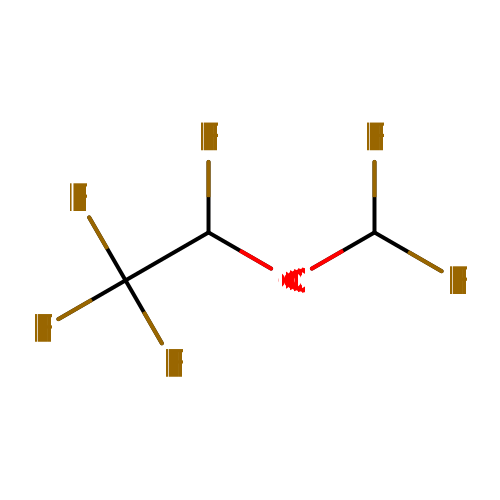
Structure for Desflurane (DB01189)
- Weight
- Average: 168.0378
Monoisotopic: 168.000983916 - Chemical Formula
- C3H2F6O
- Synonyms
- (±)-2-difluoromethyl 1,2,2,2-tetrafluoroethyl ether
- 1,1,1,2-tetrafluoro-2-(difluoromethoxy)ethane
- Desflurane
- Desflurano
- Desfluranum
- Difluoromethyl 1,2,2,2-tetrafluoroethyl ether

Pharmacology
- Indication
Desflurane is indicated for the induction and maintenance of anesthesia in adults, as well as the maintenance of anesthesia in pediatric patients.22
 Reduce drug development failure ratesBuild, train, & validate machine-learning modelswith evidence-based and structured datasets.Build, train, & validate predictive machine-learning models with structured datasets.
- Associated Therapies
- Contraindications & Blackbox Warnings
 Prevent Adverse Drug Events TodayTap into our Clinical API for life-saving information on contraindications & blackbox warnings, population restrictions, harmful risks, & more.Avoid life-threatening adverse drug events with our Clinical API
- Pharmacodynamics
Desflurane is a general inhalation anesthetic.22 It has a short duration of action as it is rapidly cleared.22 Patients should be counselled regarding the risks of malignant hyperthermia, perioperative hyperkalemia, respiratory adverse reactions in pediatric patients, QTc prolongation, hepatobiliary disorders, pediatric neurotoxicity, and postoperative agitation in children.22
- Mechanism of action
The mechanism of inhalational anesthetics is still not fully understood.5 They can block excitatory ion channels and increase the activity of inhibitory ion channels.5 The most notable agonism is at the GABAA channel.9 Desflurane is also an agonist of glycine receptors,10 antagonist of glutamate receptors,11 inducer of potassium voltage gated channels,12 and inhibits both NADH-ubiquinone oxioreductase chain 113 and calcium transporting ATPases.14
An older school of thought is the unitary theory of general anesthetic action, suggesting that desflurane affects the lipid bilayer of cells.5,7 Studies of other halogenated inhalational anesthetics have shown that the lipid bilayer spreads out more thinly as the anesthetic incorporates into the bilayer.6 However, the anesthetic does not bind to lipid heads or acyl chains of hydrocarbons in the bilayer.6 The effect of incorporating into the lipid bilayer is not well described.6,22 By incorporating into the lipid bilayer, anesthetics may introduce disorder in the lipids, leading to some indirect effect on ion channels.7 However, this theory remains controversial.8
Target Actions Organism AGABA(A) Receptor positive allosteric modulatorHumans AGlycine receptor subunit alpha-1 agonistHumans AGlutamate receptor 1 antagonistHumans APotassium voltage-gated channel subfamily A member 1 inducerHumans ANADH-ubiquinone oxidoreductase chain 1 inhibitorHumans ACalcium transporting ATPases inhibitorHumans UATP synthase subunit delta, mitochondrial other/unknownHumans - Absorption
Data regarding the Cmax, Tmax, and AUC of desflurane are not readily available.22
- Volume of distribution
Desflurane has a median volume of distribution of 612 mL/kg.18
- Protein binding
Desflurane is bound to human serum albumin in plasma.17
- Metabolism
Desflurane is minimally defluorinated by CYP2E1,2 to the extent that serum fluoride levels do not increase above baseline levels.4
Hover over products below to view reaction partners
- Route of elimination
Initially, desflurane is rapidly eliminated from the lungs.16 A small amount of the metabolite trifluoroacetic acid is eliminated in the urine3 and only 0.02% of an inhaled dose is recovered as urinary metabolites.22
- Half-life
Desflurane has a terminal elimination half life of 8.16 ± 3.15 minutes.15
- Clearance
A 26 g dose of desflurane is 90% eliminated from the brain after 33 hours.1 The metabolite trifluoroacetic acid has a urinary clearance rate of 0.169 ± 0.107 µmol/L.4
- Adverse Effects
 Improve decision support & research outcomesWith structured adverse effects data, including: blackbox warnings, adverse reactions, warning & precautions, & incidence rates. View sample adverse effects data in our new Data Library!Improve decision support & research outcomes with our structured adverse effects data.
- Toxicity
Patients experiencing a desflurane overdose may experience deepening anesthesia, cardiac or respiratory depression.22 In the event of an overdose, patients may require symptomatic and supportive treatment to maintain airway, breathing, and circulation.22 Discontinue desflurane.22
- Pathways
- Not Available
- Pharmacogenomic Effects/ADRs
Interacting Gene/Enzyme Allele name Genotype(s) Defining Change(s) Type(s) Description Details Voltage-dependent L-type calcium channel subunit alpha-1S --- Not Available c.3257G>A / c.520C>T ADR Inferred Malignant hyperthermia. Details Ryanodine receptor 1 --- Not Available c.103T>C / c.487C>T … show all ADR Inferred Malignant hyperthermia. Details
Interactions
- Drug Interactions
- This information should not be interpreted without the help of a healthcare provider. If you believe you are experiencing an interaction, contact a healthcare provider immediately. The absence of an interaction does not necessarily mean no interactions exist.
Drug Interaction Integrate drug-drug
interactions in your software1,2-Benzodiazepine The risk or severity of CNS depression can be increased when Desflurane is combined with 1,2-Benzodiazepine. Abaloparatide The risk or severity of adverse effects can be increased when Desflurane is combined with Abaloparatide. Acebutolol Desflurane may decrease the antihypertensive activities of Acebutolol. Aceclofenac The risk or severity of hypertension can be increased when Desflurane is combined with Aceclofenac. Acemetacin The risk or severity of hypertension can be increased when Desflurane is combined with Acemetacin. - Food Interactions
- No interactions found.
Products
 Drug product information from 10+ global regionsOur datasets provide approved product information including:dosage, form, labeller, route of administration, and marketing period.Access drug product information from over 10 global regions.
- Brand Name Prescription Products
Name Dosage Strength Route Labeller Marketing Start Marketing End Region Image Desflurane Liquid 100 % v/v Respiratory (inhalation) Blue Zone Technologies Ltd Not applicable Not applicable Canada 
Desflurane Liquid 250 mL/250mL Respiratory (inhalation) Piramal Critical Care Inc 2023-02-14 Not applicable US 
Suprane Liquid 240 mL/240mL Respiratory (inhalation) Henry Schein, Inc. 2022-01-12 Not applicable US Suprane Liquid 240 mL/240mL Respiratory (inhalation) General Injectables & Vaccines, Inc 2012-04-25 2025-01-31 US Suprane Liquid 240 mL/240mL Respiratory (inhalation) Baxter Healthcare Corporation 1992-09-18 Not applicable US - Generic Prescription Products
Name Dosage Strength Route Labeller Marketing Start Marketing End Region Image Desflurane Liquid 240 mL/240mL Respiratory (inhalation) Sandoz Inc. 2018-02-26 Not applicable US - Unapproved/Other Products
Name Ingredients Dosage Route Labeller Marketing Start Marketing End Region Image Desflurane Desflurane (250 mL/250mL) Liquid Respiratory (inhalation) Piramal Critical Care Inc 2023-02-14 Not applicable US
Categories
- ATC Codes
- N01AB07 — Desflurane
- Drug Categories
- Agents that produce hypertension
- Anesthetics
- Anesthetics, General
- Anesthetics, Inhalation
- Central Nervous System Agents
- Central Nervous System Depressants
- Cytochrome P-450 CYP2E1 Substrates
- Cytochrome P-450 Substrates
- Ethers
- Ethyl Ethers
- Hydrocarbons, Fluorinated
- Hydrocarbons, Halogenated
- Hypotensive Agents
- Methyl Ethers
- Nervous System
- Potential QTc-Prolonging Agents
- QTc Prolonging Agents
- Chemical TaxonomyProvided by Classyfire
- Description
- This compound belongs to the class of organic compounds known as organofluorides. These are compounds containing a chemical bond between a carbon atom and a fluorine atom.
- Kingdom
- Organic compounds
- Super Class
- Organohalogen compounds
- Class
- Organofluorides
- Sub Class
- Not Available
- Direct Parent
- Organofluorides
- Alternative Parents
- Organooxygen compounds / Hydrocarbon derivatives / Alkyl fluorides
- Substituents
- Aliphatic acyclic compound / Alkyl fluoride / Alkyl halide / Hydrocarbon derivative / Organic oxygen compound / Organofluoride / Organooxygen compound
- Molecular Framework
- Aliphatic acyclic compounds
- External Descriptors
- organofluorine compound (CHEBI:4445)
- Affected organisms
- Humans and other mammals
Chemical Identifiers
- UNII
- CRS35BZ94Q
- CAS number
- 57041-67-5
- InChI Key
- DPYMFVXJLLWWEU-UHFFFAOYSA-N
- InChI
- InChI=1S/C3H2F6O/c4-1(3(7,8)9)10-2(5)6/h1-2H
- IUPAC Name
- 2-(difluoromethoxy)-1,1,1,2-tetrafluoroethane
- SMILES
- FC(F)OC(F)C(F)(F)F
References
- Synthesis Reference
Leonid A. Rozov, Chialang Huang, Gerald G. Vernice, "Synthesis of desflurane." U.S. Patent US5205914, issued June, 1991.
US5205914- General References
- Lockwood G: Theoretical context-sensitive elimination times for inhalation anaesthetics. Br J Anaesth. 2010 May;104(5):648-55. doi: 10.1093/bja/aeq051. Epub 2010 Mar 16. [Article]
- Kharasch ED, Thummel KE: Identification of cytochrome P450 2E1 as the predominant enzyme catalyzing human liver microsomal defluorination of sevoflurane, isoflurane, and methoxyflurane. Anesthesiology. 1993 Oct;79(4):795-807. [Article]
- Koblin DD: Characteristics and implications of desflurane metabolism and toxicity. Anesth Analg. 1992 Oct;75(4 Suppl):S10-6. [Article]
- Sutton TS, Koblin DD, Gruenke LD, Weiskopf RB, Rampil IJ, Waskell L, Eger EI 2nd: Fluoride metabolites after prolonged exposure of volunteers and patients to desflurane. Anesth Analg. 1991 Aug;73(2):180-5. doi: 10.1213/00000539-199108000-00011. [Article]
- Khan J, Liu M: Desflurane . [Article]
- Tu K, Tarek M, Klein ML, Scharf D: Effects of anesthetics on the structure of a phospholipid bilayer: molecular dynamics investigation of halothane in the hydrated liquid crystal phase of dipalmitoylphosphatidylcholine. Biophys J. 1998 Nov;75(5):2123-34. doi: 10.1016/S0006-3495(98)77655-6. [Article]
- Krasowski MD: Contradicting a unitary theory of general anesthetic action: a history of three compounds from 1901 to 2001. Bull Anesth Hist. 2003 Jul;21(3):1, 4-8, 21 passim. doi: 10.1016/s1522-8649(03)50031-2. [Article]
- Herold KF, Sanford RL, Lee W, Andersen OS, Hemmings HC Jr: Clinical concentrations of chemically diverse general anesthetics minimally affect lipid bilayer properties. Proc Natl Acad Sci U S A. 2017 Mar 21;114(12):3109-3114. doi: 10.1073/pnas.1611717114. Epub 2017 Mar 6. [Article]
- Ton HT, Phan TX, Abramyan AM, Shi L, Ahern GP: Identification of a putative binding site critical for general anesthetic activation of TRPA1. Proc Natl Acad Sci U S A. 2017 Apr 4;114(14):3762-3767. doi: 10.1073/pnas.1618144114. Epub 2017 Mar 20. [Article]
- Grasshoff C, Antkowiak B: Effects of isoflurane and enflurane on GABAA and glycine receptors contribute equally to depressant actions on spinal ventral horn neurones in rats. Br J Anaesth. 2006 Nov;97(5):687-94. doi: 10.1093/bja/ael239. Epub 2006 Sep 13. [Article]
- Dildy-Mayfield JE, Eger EI 2nd, Harris RA: Anesthetics produce subunit-selective actions on glutamate receptors. J Pharmacol Exp Ther. 1996 Mar;276(3):1058-65. [Article]
- Matchett GA, Allard MW, Martin RD, Zhang JH: Neuroprotective effect of volatile anesthetic agents: molecular mechanisms. Neurol Res. 2009 Mar;31(2):128-34. doi: 10.1179/174313209X393546. [Article]
- Hanley PJ, Ray J, Brandt U, Daut J: Halothane, isoflurane and sevoflurane inhibit NADH:ubiquinone oxidoreductase (complex I) of cardiac mitochondria. J Physiol. 2002 Nov 1;544(Pt 3):687-93. [Article]
- Kosk-Kosicka D: Plasma membrane Ca(2+)-ATPase as a target for volatile anesthetics. Adv Pharmacol. 1994;31:313-22. [Article]
- Behne M, Wilke HJ, Lischke V: Recovery and pharmacokinetic parameters of desflurane, sevoflurane, and isoflurane in patients undergoing urologic procedures. J Clin Anesth. 1999 Sep;11(6):460-5. doi: 10.1016/s0952-8180(99)00082-3. [Article]
- Lu CC, Tsai CS, Hu OY, Chen RM, Chen TL, Ho ST, Gan TJ: Pharmacokinetics of desflurane elimination from respiratory gas and blood during the 20 minutes after cardiac surgery. J Formos Med Assoc. 2013 Apr;112(4):185-92. doi: 10.1016/j.jfma.2012.01.017. Epub 2012 May 20. [Article]
- Sawas AH, Pentyala SN, Rebecchi MJ: Binding of volatile anesthetics to serum albumin: measurements of enthalpy and solvent contributions. Biochemistry. 2004 Oct 5;43(39):12675-85. [Article]
- Wissing H, Kuhn I, Rietbrock S, Fuhr U: Pharmacokinetics of inhaled anaesthetics in a clinical setting: comparison of desflurane, isoflurane and sevoflurane. Br J Anaesth. 2000 Apr;84(4):443-9. doi: 10.1093/oxfordjournals.bja.a013467. [Article]
- Eger EI 2nd: Partition coefficients of I-653 in human blood, saline, and olive oil. Anesth Analg. 1987 Oct;66(10):971-3. [Article]
- Eger EI 2nd, Johnson BH: Rates of awakening from anesthesia with I-653, halothane, isoflurane, and sevoflurane: a test of the effect of anesthetic concentration and duration in rats. Anesth Analg. 1987 Oct;66(10):977-82. [Article]
- Eger EI 3rd: Stability of I-653 in soda lime. Anesth Analg. 1987 Oct;66(10):983-5. [Article]
- FDA Approved Drug Products: Suprane (Desflurane) Inhalational Liquid [Link]
- External Links
- Human Metabolome Database
- HMDB0015320
- KEGG Drug
- D00546
- KEGG Compound
- C07519
- PubChem Compound
- 42113
- PubChem Substance
- 46505270
- ChemSpider
- 38403
- 27340
- ChEBI
- 4445
- ChEMBL
- CHEMBL1200733
- Therapeutic Targets Database
- DAP000693
- PharmGKB
- PA164749136
- RxList
- RxList Drug Page
- Drugs.com
- Drugs.com Drug Page
- Wikipedia
- Desflurane
- FDA label
- Download (174 KB)
- MSDS
- Download (51.1 KB)
Clinical Trials
- Clinical Trials
Phase Status Purpose Conditions Count 4 Completed Basic Science Anesthesia therapy / Obesity 1 4 Completed Basic Science Anesthesia; Bariatric Surgery 1 4 Completed Diagnostic Anaesthesia 1 4 Completed Diagnostic Oxygen Saturation 1 4 Completed Diagnostic Postoperative Delirium (POD) 1
Pharmacoeconomics
- Manufacturers
- Not Available
- Packagers
- Baxter International Inc.
- General Injectables and Vaccines Inc.
- Dosage Forms
Form Route Strength Solution Respiratory (inhalation) 100 % Liquid Respiratory (inhalation) 250 mL/250mL Inhalant Respiratory (inhalation) Inhalant Respiratory (inhalation) 100 % Solution Respiratory (inhalation) Aerosol Respiratory (inhalation) 240 ML Aerosol Respiratory (inhalation) 100 ml/100ml Inhalant Respiratory (inhalation) 240 mL/240mL Liquid Respiratory (inhalation) 1.5 g/1mL Liquid Respiratory (inhalation) 100 % v/v Liquid Respiratory (inhalation) 240 mL/240mL Solution Respiratory (inhalation) 100.000 mL Liquid Respiratory (inhalation) 100 % Liquid Respiratory (inhalation) Solution Nasal 100 % Solution Respiratory (inhalation) 100 mL - Prices
Unit description Cost Unit Suprane inhalation liquid 0.76USD ml DrugBank does not sell nor buy drugs. Pricing information is supplied for informational purposes only.- Patents
Patent Number Pediatric Extension Approved Expires (estimated) Region US5617906 No 1997-04-08 2014-10-08 US
Properties
- State
- Liquid
- Experimental Properties
Property Value Source boiling point (°C) 22.8 °C https://imgcdn.mckesson.com/CumulusWeb/Click_and_learn/SDS_9BAXAC_SUPRANE_INH_LIQ_240ML_6CT.pdf water solubility Negligible Not Available - Predicted Properties
Property Value Source Water Solubility 3.54 mg/mL ALOGPS logP 2.19 ALOGPS logP 2.4 Chemaxon logS -1.7 ALOGPS pKa (Strongest Acidic) 18.87 Chemaxon pKa (Strongest Basic) -4.8 Chemaxon Physiological Charge 0 Chemaxon Hydrogen Acceptor Count 1 Chemaxon Hydrogen Donor Count 0 Chemaxon Polar Surface Area 9.23 Å2 Chemaxon Rotatable Bond Count 3 Chemaxon Refractivity 18.12 m3·mol-1 Chemaxon Polarizability 7.89 Å3 Chemaxon Number of Rings 0 Chemaxon Bioavailability 1 Chemaxon Rule of Five Yes Chemaxon Ghose Filter No Chemaxon Veber's Rule Yes Chemaxon MDDR-like Rule No Chemaxon - Predicted ADMET Features
Property Value Probability Human Intestinal Absorption + 0.9974 Blood Brain Barrier + 0.9941 Caco-2 permeable + 0.626 P-glycoprotein substrate Non-substrate 0.883 P-glycoprotein inhibitor I Non-inhibitor 0.9415 P-glycoprotein inhibitor II Non-inhibitor 0.9027 Renal organic cation transporter Non-inhibitor 0.9311 CYP450 2C9 substrate Non-substrate 0.8676 CYP450 2D6 substrate Non-substrate 0.919 CYP450 3A4 substrate Non-substrate 0.7556 CYP450 1A2 substrate Non-inhibitor 0.6194 CYP450 2C9 inhibitor Non-inhibitor 0.836 CYP450 2D6 inhibitor Non-inhibitor 0.9466 CYP450 2C19 inhibitor Non-inhibitor 0.707 CYP450 3A4 inhibitor Non-inhibitor 0.9604 CYP450 inhibitory promiscuity Low CYP Inhibitory Promiscuity 0.8921 Ames test Non AMES toxic 0.9042 Carcinogenicity Carcinogens 0.7045 Biodegradation Not ready biodegradable 0.9566 Rat acute toxicity 1.2690 LD50, mol/kg Not applicable hERG inhibition (predictor I) Weak inhibitor 0.9724 hERG inhibition (predictor II) Non-inhibitor 0.909
Spectra
- Mass Spec (NIST)
- Not Available
- Spectra
Spectrum Spectrum Type Splash Key Predicted GC-MS Spectrum - GC-MS Predicted GC-MS splash10-0udi-9400000000-9bfc58e3ef0acdde70c6 Predicted MS/MS Spectrum - 10V, Positive (Annotated) Predicted LC-MS/MS splash10-014i-0900000000-f05324a0ba17c1fd3d70 Predicted MS/MS Spectrum - 10V, Negative (Annotated) Predicted LC-MS/MS splash10-014i-0900000000-6f09baa237443998c9e9 Predicted MS/MS Spectrum - 20V, Negative (Annotated) Predicted LC-MS/MS splash10-014i-2900000000-f13323970286c0fd70d2 Predicted MS/MS Spectrum - 20V, Positive (Annotated) Predicted LC-MS/MS splash10-014i-1900000000-92394e36b4013c2a5d68 Predicted MS/MS Spectrum - 40V, Positive (Annotated) Predicted LC-MS/MS splash10-0002-6900000000-3ad613bc2ff08c4efb2c Predicted MS/MS Spectrum - 40V, Negative (Annotated) Predicted LC-MS/MS splash10-014i-3900000000-9a6dbc67d2d254d53d7e Predicted 1H NMR Spectrum 1D NMR Not Applicable Predicted 13C NMR Spectrum 1D NMR Not Applicable - Chromatographic Properties
Collision Cross Sections (CCS)
Adduct CCS Value (Å2) Source type Source [M-H]- 103.8089234 predictedDarkChem Lite v0.1.0 [M-H]- 131.45085 predictedDeepCCS 1.0 (2019) [M+H]+ 104.7489234 predictedDarkChem Lite v0.1.0 [M+H]+ 133.72801 predictedDeepCCS 1.0 (2019) [M+Na]+ 104.3717234 predictedDarkChem Lite v0.1.0 [M+Na]+ 142.33743 predictedDeepCCS 1.0 (2019)
Targets

- Kind
- Protein group
- Organism
- Humans
- Pharmacological action
- Yes
- Actions
- Positive allosteric modulator
- General Function
- Inhibitory extracellular ligand-gated ion channel activity
- Specific Function
- Component of the heteropentameric receptor for GABA, the major inhibitory neurotransmitter in the vertebrate brain. Functions also as histamine receptor and mediates cellular responses to histamine...
Components:
References
- Mohler H, Fritschy JM, Rudolph U: A new benzodiazepine pharmacology. J Pharmacol Exp Ther. 2002 Jan;300(1):2-8. [Article]
- Riss J, Cloyd J, Gates J, Collins S: Benzodiazepines in epilepsy: pharmacology and pharmacokinetics. Acta Neurol Scand. 2008 Aug;118(2):69-86. doi: 10.1111/j.1600-0404.2008.01004.x. Epub 2008 Mar 31. [Article]
- Kind
- Protein
- Organism
- Humans
- Pharmacological action
- Yes
- Actions
- Agonist
- General Function
- Transmitter-gated ion channel activity
- Specific Function
- The glycine receptor is a neurotransmitter-gated ion channel. Binding of glycine to its receptor increases the chloride conductance and thus produces hyperpolarization (inhibition of neuronal firing).
- Gene Name
- GLRA1
- Uniprot ID
- P23415
- Uniprot Name
- Glycine receptor subunit alpha-1
- Molecular Weight
- 52623.35 Da
References
- Overington JP, Al-Lazikani B, Hopkins AL: How many drug targets are there? Nat Rev Drug Discov. 2006 Dec;5(12):993-6. [Article]
- Imming P, Sinning C, Meyer A: Drugs, their targets and the nature and number of drug targets. Nat Rev Drug Discov. 2006 Oct;5(10):821-34. [Article]
- Grasshoff C, Antkowiak B: Effects of isoflurane and enflurane on GABAA and glycine receptors contribute equally to depressant actions on spinal ventral horn neurones in rats. Br J Anaesth. 2006 Nov;97(5):687-94. doi: 10.1093/bja/ael239. Epub 2006 Sep 13. [Article]
- Kind
- Protein
- Organism
- Humans
- Pharmacological action
- Yes
- Actions
- Antagonist
- General Function
- Pdz domain binding
- Specific Function
- Ionotropic glutamate receptor. L-glutamate acts as an excitatory neurotransmitter at many synapses in the central nervous system. Binding of the excitatory neurotransmitter L-glutamate induces a co...
- Gene Name
- GRIA1
- Uniprot ID
- P42261
- Uniprot Name
- Glutamate receptor 1
- Molecular Weight
- 101505.245 Da
References
- Overington JP, Al-Lazikani B, Hopkins AL: How many drug targets are there? Nat Rev Drug Discov. 2006 Dec;5(12):993-6. [Article]
- Imming P, Sinning C, Meyer A: Drugs, their targets and the nature and number of drug targets. Nat Rev Drug Discov. 2006 Oct;5(10):821-34. [Article]
- Dildy-Mayfield JE, Eger EI 2nd, Harris RA: Anesthetics produce subunit-selective actions on glutamate receptors. J Pharmacol Exp Ther. 1996 Mar;276(3):1058-65. [Article]
- Kind
- Protein
- Organism
- Humans
- Pharmacological action
- Yes
- Actions
- Inducer
- General Function
- Voltage-gated potassium channel activity
- Specific Function
- Voltage-gated potassium channel that mediates transmembrane potassium transport in excitable membranes, primarily in the brain and the central nervous system, but also in the kidney (PubMed:1990381...
- Gene Name
- KCNA1
- Uniprot ID
- Q09470
- Uniprot Name
- Potassium voltage-gated channel subfamily A member 1
- Molecular Weight
- 56465.01 Da
References
- Overington JP, Al-Lazikani B, Hopkins AL: How many drug targets are there? Nat Rev Drug Discov. 2006 Dec;5(12):993-6. [Article]
- Imming P, Sinning C, Meyer A: Drugs, their targets and the nature and number of drug targets. Nat Rev Drug Discov. 2006 Oct;5(10):821-34. [Article]
- Matchett GA, Allard MW, Martin RD, Zhang JH: Neuroprotective effect of volatile anesthetic agents: molecular mechanisms. Neurol Res. 2009 Mar;31(2):128-34. doi: 10.1179/174313209X393546. [Article]
- Kind
- Protein
- Organism
- Humans
- Pharmacological action
- Yes
- Actions
- Inhibitor
- Curator comments
- This action is based on the activity of other volatile anesthetics on this target. It is a potential target for desflurane.
- General Function
- Nadh dehydrogenase (ubiquinone) activity
- Specific Function
- Core subunit of the mitochondrial membrane respiratory chain NADH dehydrogenase (Complex I) that is believed to belong to the minimal assembly required for catalysis. Complex I functions in the tra...
- Gene Name
- MT-ND1
- Uniprot ID
- P03886
- Uniprot Name
- NADH-ubiquinone oxidoreductase chain 1
- Molecular Weight
- 35660.055 Da
References
- Hanley PJ, Ray J, Brandt U, Daut J: Halothane, isoflurane and sevoflurane inhibit NADH:ubiquinone oxidoreductase (complex I) of cardiac mitochondria. J Physiol. 2002 Nov 1;544(Pt 3):687-93. [Article]
- Kayser EB, Suthammarak W, Morgan PG, Sedensky MM: Isoflurane selectively inhibits distal mitochondrial complex I in Caenorhabditis elegans. Anesth Analg. 2011 Jun;112(6):1321-9. doi: 10.1213/ANE.0b013e3182121d37. Epub 2011 Apr 5. [Article]
- Kind
- Protein group
- Organism
- Humans
- Pharmacological action
- Yes
- Actions
- Inhibitor
- General Function
- Signal transducer activity
- Specific Function
- This magnesium-dependent enzyme catalyzes the hydrolysis of ATP coupled with the transport of the calcium.
Components:
References
- Kosk-Kosicka D: Plasma membrane Ca(2+)-ATPase as a target for volatile anesthetics. Adv Pharmacol. 1994;31:313-22. [Article]
- Kind
- Protein
- Organism
- Humans
- Pharmacological action
- Unknown
- Actions
- Other/unknown
- General Function
- Transporter activity
- Specific Function
- Mitochondrial membrane ATP synthase (F(1)F(0) ATP synthase or Complex V) produces ATP from ADP in the presence of a proton gradient across the membrane which is generated by electron transport comp...
- Gene Name
- ATP5D
- Uniprot ID
- P30049
- Uniprot Name
- ATP synthase subunit delta, mitochondrial
- Molecular Weight
- 17489.755 Da
References
- Kosk-Kosicka D, Roszczynska G: Inhibition of plasma membrane Ca(2+)-ATPase activity by volatile anesthetics. Anesthesiology. 1993 Oct;79(4):774-80. [Article]
Enzymes
- Kind
- Protein
- Organism
- Humans
- Pharmacological action
- No
- Actions
- Substrate
- General Function
- Steroid hydroxylase activity
- Specific Function
- Metabolizes several precarcinogens, drugs, and solvents to reactive metabolites. Inactivates a number of drugs and xenobiotics and also bioactivates many xenobiotic substrates to their hepatotoxic ...
- Gene Name
- CYP2E1
- Uniprot ID
- P05181
- Uniprot Name
- Cytochrome P450 2E1
- Molecular Weight
- 56848.42 Da
References
- Kharasch ED, Thummel KE: Identification of cytochrome P450 2E1 as the predominant enzyme catalyzing human liver microsomal defluorination of sevoflurane, isoflurane, and methoxyflurane. Anesthesiology. 1993 Oct;79(4):795-807. [Article]
Carriers
- Kind
- Protein
- Organism
- Humans
- Pharmacological action
- Unknown
- Actions
- Binder
- General Function
- Toxic substance binding
- Specific Function
- Serum albumin, the main protein of plasma, has a good binding capacity for water, Ca(2+), Na(+), K(+), fatty acids, hormones, bilirubin and drugs. Its main function is the regulation of the colloid...
- Gene Name
- ALB
- Uniprot ID
- P02768
- Uniprot Name
- Serum albumin
- Molecular Weight
- 69365.94 Da
References
- Sawas AH, Pentyala SN, Rebecchi MJ: Binding of volatile anesthetics to serum albumin: measurements of enthalpy and solvent contributions. Biochemistry. 2004 Oct 5;43(39):12675-85. [Article]

Drug created at June 13, 2005 13:24 / Updated at April 27, 2024 09:44