Identification
- Summary
Vecuronium is a nondepolarizing neuromuscular blocking agent used to relax muscles or as an adjunct in general anesthesia during surgical procedures.
- Generic Name
- Vecuronium
- DrugBank Accession Number
- DB01339
- Background
Monoquaternary homolog of pancuronium. A non-depolarizing neuromuscular blocking agent with shorter duration of action than pancuronium. Its lack of significant cardiovascular effects and lack of dependence on good kidney function for elimination as well as its short duration of action and easy reversibility provide advantages over, or alternatives to, other established neuromuscular blocking agents.
- Type
- Small Molecule
- Groups
- Approved, Investigational
- Structure
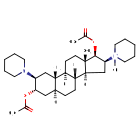
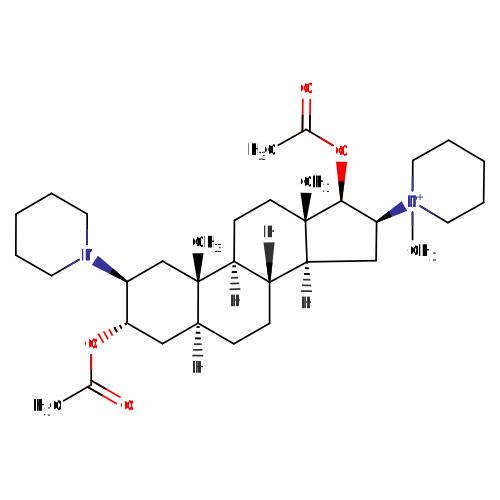
Structure for Vecuronium (DB01339)
- Weight
- Average: 557.8274
Monoisotopic: 557.431833322 - Chemical Formula
- C34H57N2O4
- Synonyms
- Vecuronio
- Vecuronium cation

Pharmacology
- Indication
Vecuronium is a muscle relaxing agent and is used as an adjunct in general anesthesia.
 Reduce drug development failure ratesBuild, train, & validate machine-learning modelswith evidence-based and structured datasets.Build, train, & validate predictive machine-learning models with structured datasets.
- Associated Therapies
- Contraindications & Blackbox Warnings
 Prevent Adverse Drug Events TodayTap into our Clinical API for life-saving information on contraindications & blackbox warnings, population restrictions, harmful risks, & more.Avoid life-threatening adverse drug events with our Clinical API
- Pharmacodynamics
The principal pharmacologic effects demonstrated by vecuronium revolve around its competitive binding of cholinergic receptors located at motor end plates. This competitive binding results in muscle relaxant effects that are typically employed as an adjunct to general anesthesia.
- Mechanism of action
Vecuronium is a bisquaternary nitrogen compound that acts by competitively binding to nicotinic cholinergic receptors. The binding of vecuronium decreases the opportunity for acetylcholine to bind to the nicotinic receptor at the postjunctional membrane of the myoneural junction. As a result, depolarization is prevented, calcium ions are not released and muscle contraction does not occur.
Target Actions Organism ANeuronal acetylcholine receptor subunit alpha-2 antagonistHumans - Absorption
Not Available
- Volume of distribution
Not Available
- Protein binding
Not Available
- Metabolism
100%
- Route of elimination
Fecal (40-75%) and renal (30% as unchanged drug and metabolites)
- Half-life
51–80 minutes
- Clearance
Not Available
- Adverse Effects
 Improve decision support & research outcomesWith structured adverse effects data, including: blackbox warnings, adverse reactions, warning & precautions, & incidence rates. View sample adverse effects data in our new Data Library!Improve decision support & research outcomes with our structured adverse effects data.
- Toxicity
Not Available
- Pathways
- Not Available
- Pharmacogenomic Effects/ADRs
- Not Available
Interactions
- Drug Interactions
- This information should not be interpreted without the help of a healthcare provider. If you believe you are experiencing an interaction, contact a healthcare provider immediately. The absence of an interaction does not necessarily mean no interactions exist.
Drug Interaction Integrate drug-drug
interactions in your software1,2-Benzodiazepine The risk or severity of CNS depression can be increased when Vecuronium is combined with 1,2-Benzodiazepine. Acetazolamide The risk or severity of CNS depression can be increased when Acetazolamide is combined with Vecuronium. Acetophenazine The risk or severity of CNS depression can be increased when Acetophenazine is combined with Vecuronium. Acetyldigitoxin The risk or severity of Cardiac Arrhythmia can be increased when Vecuronium is combined with Acetyldigitoxin. Aclidinium The risk or severity of adverse effects can be increased when Vecuronium is combined with Aclidinium. - Food Interactions
- No interactions found.
Products
 Drug product information from 10+ global regionsOur datasets provide approved product information including:dosage, form, labeller, route of administration, and marketing period.Access drug product information from over 10 global regions.
- Product Ingredients
Ingredient UNII CAS InChI Key Vecuronium bromide 7E4PHP5N1D 50700-72-6 VEPSYABRBFXYIB-PWXDFCLTSA-M - Brand Name Prescription Products
Name Dosage Strength Route Labeller Marketing Start Marketing End Region Image Norcuron Injection, powder, lyophilized, for solution 10 mg/1 Intravenous Organon 1984-04-30 2002-06-25 US 
Norcuron Inj 10mg/vial Powder, for solution 10 mg / vial Intravenous Organon Canada Ltd Ltee 1986-12-31 2009-08-04 Canada 
Vecuronium Bromide Injection, powder, lyophilized, for solution 10 mg/1 Intravenous Watson Pharmaceuticals 2007-06-25 Not applicable US Vecuronium Bromide for Injection Powder, for solution 10.00 mg / vial Intravenous Hospira Healthcare Ulc 2000-06-01 2018-11-29 Canada Vecuronium Bromide for Injection Powder, for solution 20.00 mg / vial Intravenous Hospira Healthcare Ulc 2000-01-28 2018-11-29 Canada - Generic Prescription Products
Name Dosage Strength Route Labeller Marketing Start Marketing End Region Image Vecuronium Bromide Injection, powder, lyophilized, for solution 1 mg/1mL Intravenous Cardinal Health 2009-07-21 2015-07-31 US Vecuronium Bromide Injection, powder, lyophilized, for solution 10 mg/10mL Intravenous Teva Parenteral Medicines, Inc. 2002-11-14 2023-07-31 US Vecuronium Bromide Injection, powder, lyophilized, for solution 1 mg/1mL Intravenous Sun Pharma Global Inc. 2014-12-15 2016-01-31 US Vecuronium Bromide Injection, powder, lyophilized, for solution 1 mg/1mL Intravenous Fresenius Kabi USA, LLC 2016-06-30 Not applicable US Vecuronium Bromide Injection, powder, for solution 10 mg/1 Intravenous Phlow Corp. 2019-08-01 Not applicable US
Categories
- ATC Codes
- M03AC03 — Vecuronium
- Drug Categories
- Androstanes
- Androstanols
- Anticholinergic Agents
- Central Nervous System Depressants
- Cholinergic Agents
- Fused-Ring Compounds
- Muscle Relaxants
- Muscle Relaxants, Peripherally Acting Agents
- Musculo-Skeletal System
- Neuromuscular Agents
- Neuromuscular Blocking Agents
- Neuromuscular Nondepolarizing Blockade
- Neuromuscular-Blocking Agents (Nondepolarizing)
- Neurotransmitter Agents
- Nicotinic Antagonists
- P-glycoprotein substrates
- Peripheral Nervous System Agents
- Steroids
- Chemical TaxonomyProvided by Classyfire
- Description
- This compound belongs to the class of organic compounds known as steroid esters. These are compounds containing a steroid moiety which bears a carboxylic acid ester group.
- Kingdom
- Organic compounds
- Super Class
- Lipids and lipid-like molecules
- Class
- Steroids and steroid derivatives
- Sub Class
- Steroid esters
- Direct Parent
- Steroid esters
- Alternative Parents
- Androstane steroids / Piperidines / Dicarboxylic acids and derivatives / Tetraalkylammonium salts / Trialkylamines / Carboxylic acid esters / Amino acids and derivatives / Azacyclic compounds / Organopnictogen compounds / Organic salts show 4 more
- Substituents
- Aliphatic heteropolycyclic compound / Amine / Amino acid or derivatives / Androstane-skeleton / Azacycle / Carbonyl group / Carboxylic acid derivative / Carboxylic acid ester / Dicarboxylic acid or derivatives / Hydrocarbon derivative show 15 more
- Molecular Framework
- Aliphatic heteropolycyclic compounds
- External Descriptors
- quaternary ammonium ion, acetate ester, androstane (CHEBI:9939)
- Affected organisms
- Not Available
Chemical Identifiers
- UNII
- 5438723848
- CAS number
- 86029-43-8
- InChI Key
- BGSZAXLLHYERSY-XQIGCQGXSA-N
- InChI
- InChI=1S/C34H57N2O4/c1-23(37)39-31-20-25-12-13-26-27(34(25,4)22-29(31)35-16-8-6-9-17-35)14-15-33(3)28(26)21-30(32(33)40-24(2)38)36(5)18-10-7-11-19-36/h25-32H,6-22H2,1-5H3/q+1/t25-,26+,27-,28-,29-,30-,31-,32-,33-,34-/m0/s1
- IUPAC Name
- 1-[(1R,2S,3aS,3bR,5aS,7S,8S,9aS,9bS,11aS)-1,7-bis(acetyloxy)-9a,11a-dimethyl-8-(piperidin-1-yl)-hexadecahydro-1H-cyclopenta[a]phenanthren-2-yl]-1-methylpiperidin-1-ium
- SMILES
- [H][C@@]12C[C@@H]([C@H](OC(C)=O)[C@@]1(C)CC[C@@]1([H])[C@@]2([H])CC[C@@]2([H])C[C@H](OC(C)=O)[C@H](C[C@]12C)N1CCCCC1)[N+]1(C)CCCCC1
References
- Synthesis Reference
Frans Herwig Jan Jansen, "Process to prepare pharmaceutical compositions containing vecuronium bromide and compositions produced thereby." U.S. Patent US5681573, issued January, 1969.
US5681573- General References
- FDA Approved Drug Products: vecuronium bromide injection [Link]
- External Links
- Human Metabolome Database
- HMDB0015432
- KEGG Compound
- C07553
- PubChem Compound
- 39765
- PubChem Substance
- 46507656
- ChemSpider
- 36358
- BindingDB
- 50424713
- 71535
- ChEBI
- 9939
- ChEMBL
- CHEMBL1201219
- ZINC
- ZINC000004097404
- Therapeutic Targets Database
- DAP000354
- PharmGKB
- PA164748865
- Guide to Pharmacology
- GtP Drug Page
- Drugs.com
- Drugs.com Drug Page
- Wikipedia
- Vecuronium_bromide
Clinical Trials
- Clinical Trials
Phase Status Purpose Conditions Count 4 Completed Other Arthropathy of Hip 1 4 Completed Treatment Anesthesia therapy 1 4 Completed Treatment Avascular Necrosis / Inflammatory Arthritis / Opioids Use / Osteoarthritis of the Shoulder / Rotator Cuff Tears 1 4 Completed Treatment Gall Stone Disease 1 4 Completed Treatment Neuromuscular Blockade 1
Pharmacoeconomics
- Manufacturers
- Not Available
- Packagers
- APP Pharmaceuticals
- Baxter International Inc.
- Bedford Labs
- Ben Venue Laboratories Inc.
- Cardinal Health
- Hospira Inc.
- Organon Pharmaceuticals
- Pharmedium
- Schein Pharmaceutical Inc.
- Sun Pharmaceutical Industries Ltd.
- Teva Pharmaceutical Industries Ltd.
- Watson Pharmaceuticals
- Zhejiang Xianju Pharmaceutical Co. Ltd.
- Dosage Forms
Form Route Strength Injection, solution Intravenous 10 mg Injection, powder, lyophilized, for solution Intravenous 10 mg/ml Injection, powder, lyophilized, for solution Intravenous 4 mg/ml Solution Parenteral 4.000 mg Solution Parenteral 4 mg Solution Intravenous 4.000 mg Injection, powder, for solution Intravenous Solution Parenteral 4.000 mg Injection, powder, lyophilized, for solution Intravenous 4 mg Injection, powder, for solution Intravenous 10 MG Injection, powder, for solution Intravenous 4 MG Powder Intravenous Injection, powder, lyophilized, for solution Intravenous Injection, powder, lyophilized, for solution Intravenous 4.0077 mg Powder, for solution Intravenous Injection, powder, lyophilized, for solution Intravenous 10 mg Injection, powder, lyophilized, for solution Parenteral 10 mg Injection, powder, for solution Intravenous 10 mg/1 Injection, powder, for solution Intravenous 20 mg/1 Injection, powder, lyophilized, for solution Intravenous 1 mg/1mL Injection, powder, lyophilized, for solution Intravenous 10 mg/1 Injection, powder, lyophilized, for solution Intravenous 10 mg/10mL Injection, powder, lyophilized, for solution Intravenous 20 mg/1 Injection, powder, lyophilized, for solution Intravenous 20 mg/20mL Injection, powder, lyophilized, for solution Intravenous 5 mg/1mL Powder, for solution Intravenous 10 mg / vial Powder, for solution Intravenous 10.00 mg / vial Powder, for solution Intravenous 20.00 mg / vial Solution Oral 4.00 mg - Prices
Unit description Cost Unit Vecuronium 20 mg vial 5.05USD vial Vecuronium 10 mg vial 3.64USD vial Vecuronium 10 mg/10 ml syringe 2.36USD ml DrugBank does not sell nor buy drugs. Pricing information is supplied for informational purposes only.- Patents
- Not Available
Properties
- State
- Solid
- Experimental Properties
Property Value Source melting point (°C) 228 °C PhysProp - Predicted Properties
Property Value Source Water Solubility 1.86e-05 mg/mL ALOGPS logP 2.07 ALOGPS logP 0.89 Chemaxon logS -7.5 ALOGPS pKa (Strongest Basic) 9.65 Chemaxon Physiological Charge 2 Chemaxon Hydrogen Acceptor Count 3 Chemaxon Hydrogen Donor Count 0 Chemaxon Polar Surface Area 55.84 Å2 Chemaxon Rotatable Bond Count 6 Chemaxon Refractivity 169.31 m3·mol-1 Chemaxon Polarizability 66.86 Å3 Chemaxon Number of Rings 6 Chemaxon Bioavailability 1 Chemaxon Rule of Five No Chemaxon Ghose Filter No Chemaxon Veber's Rule No Chemaxon MDDR-like Rule Yes Chemaxon - Predicted ADMET Features
Property Value Probability Human Intestinal Absorption - 0.8913 Blood Brain Barrier + 0.878 Caco-2 permeable + 0.5457 P-glycoprotein substrate Substrate 0.77 P-glycoprotein inhibitor I Inhibitor 0.6962 P-glycoprotein inhibitor II Inhibitor 0.6508 Renal organic cation transporter Non-inhibitor 0.6862 CYP450 2C9 substrate Non-substrate 0.8382 CYP450 2D6 substrate Non-substrate 0.7638 CYP450 3A4 substrate Substrate 0.742 CYP450 1A2 substrate Non-inhibitor 0.9045 CYP450 2C9 inhibitor Non-inhibitor 0.9229 CYP450 2D6 inhibitor Non-inhibitor 0.9231 CYP450 2C19 inhibitor Non-inhibitor 0.9026 CYP450 3A4 inhibitor Non-inhibitor 0.8309 CYP450 inhibitory promiscuity Low CYP Inhibitory Promiscuity 0.9368 Ames test Non AMES toxic 0.7499 Carcinogenicity Non-carcinogens 0.9265 Biodegradation Not ready biodegradable 0.8557 Rat acute toxicity 2.6653 LD50, mol/kg Not applicable hERG inhibition (predictor I) Weak inhibitor 0.9021 hERG inhibition (predictor II) Non-inhibitor 0.7784
Spectra
- Mass Spec (NIST)
- Not Available
- Spectra
- Chromatographic Properties
Collision Cross Sections (CCS)
Adduct CCS Value (Å2) Source type Source [M-H]- 227.19493 predictedDeepCCS 1.0 (2019) [M+H]+ 229.04259 predictedDeepCCS 1.0 (2019) [M+Na]+ 234.97345 predictedDeepCCS 1.0 (2019)
Targets

- Kind
- Protein
- Organism
- Humans
- Pharmacological action
- Yes
- Actions
- Antagonist
- General Function
- Drug binding
- Specific Function
- After binding acetylcholine, the AChR responds by an extensive change in conformation that affects all subunits and leads to opening of an ion-conducting channel across the plasma membrane.
- Gene Name
- CHRNA2
- Uniprot ID
- Q15822
- Uniprot Name
- Neuronal acetylcholine receptor subunit alpha-2
- Molecular Weight
- 59764.82 Da
References
- Jonsson Fagerlund M, Dabrowski M, Eriksson LI: Pharmacological characteristics of the inhibition of nondepolarizing neuromuscular blocking agents at human adult muscle nicotinic acetylcholine receptor. Anesthesiology. 2009 Jun;110(6):1244-52. doi: 10.1097/ALN.0b013e31819fade3. [Article]
- Liu M, Dilger JP: Synergy between pairs of competitive antagonists at adult human muscle acetylcholine receptors. Anesth Analg. 2008 Aug;107(2):525-33. doi: 10.1213/ane.0b013e31817b4469. [Article]
- Paul M, Fokt RM, Kindler CH, Dipp NC, Yost CS: Characterization of the interactions between volatile anesthetics and neuromuscular blockers at the muscle nicotinic acetylcholine receptor. Anesth Analg. 2002 Aug;95(2):362-7, table of contents. [Article]
Transporters
- Kind
- Protein
- Organism
- Humans
- Pharmacological action
- Unknown
- Actions
- Substrate
- General Function
- Xenobiotic-transporting atpase activity
- Specific Function
- Energy-dependent efflux pump responsible for decreased drug accumulation in multidrug-resistant cells.
- Gene Name
- ABCB1
- Uniprot ID
- P08183
- Uniprot Name
- Multidrug resistance protein 1
- Molecular Weight
- 141477.255 Da
References
- Smit JW, Weert B, Schinkel AH, Meijer DK: Heterologous expression of various P-glycoproteins in polarized epithelial cells induces directional transport of small (type 1) and bulky (type 2) cationic drugs. J Pharmacol Exp Ther. 1998 Jul;286(1):321-7. [Article]

Drug created at June 30, 2007 18:08 / Updated at April 26, 2024 00:45