Identification
- Summary
Digitoxin is a cardiac glycoside used in the treatment and management of congestive cardiac insufficiency, arrhythmias and heart failure.
- Generic Name
- Digitoxin
- DrugBank Accession Number
- DB01396
- Background
A cardiac glycoside sometimes used in place of digoxin. It has a longer half-life than digoxin; toxic effects, which are similar to those of digoxin, are longer lasting. (From Martindale, The Extra Pharmacopoeia, 30th ed, p665)
- Type
- Small Molecule
- Groups
- Approved, Investigational
- Structure
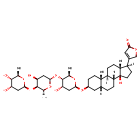
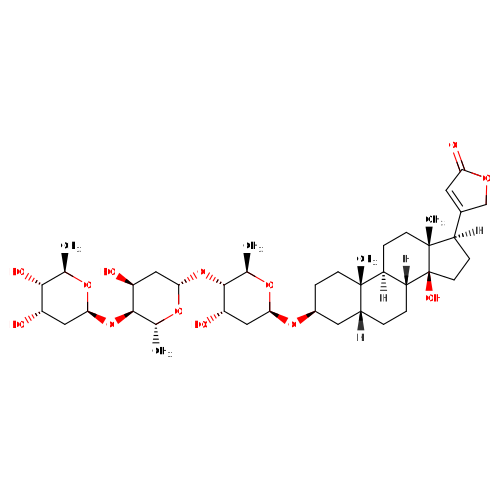
Structure for Digitoxin (DB01396)
- Weight
- Average: 764.9391
Monoisotopic: 764.434692134 - Chemical Formula
- C41H64O13
- Synonyms
- Digitoksin
- Digitoxin
- Digitoxina
- Digitoxine
- Digitoxinum
- Digitoxoside
- External IDs
- NSC-7529

Pharmacology
- Indication
For the treatment and management of congestive cardiac insufficiency, arrhythmias and heart failure.
 Reduce drug development failure ratesBuild, train, & validate machine-learning modelswith evidence-based and structured datasets.Build, train, & validate predictive machine-learning models with structured datasets.
- Associated Conditions
Indication Type Indication Combined Product Details Approval Level Age Group Patient Characteristics Dose Form Treatment of Atrial fibrillation (af) •••••••••••• •••••• Treatment of Atrial fibrillation or flutter •••••••••••• •••••• Treatment of Chronic heart failure (chf) •••••••••••• •••••• Treatment of Flutter, atrial •••••••••••• •••••• Treatment of Tachyarrhythmia •••••••••••• •••••• - Contraindications & Blackbox Warnings
 Prevent Adverse Drug Events TodayTap into our Clinical API for life-saving information on contraindications & blackbox warnings, population restrictions, harmful risks, & more.Avoid life-threatening adverse drug events with our Clinical API
- Pharmacodynamics
Digitoxin is a cardiac glycoside sometimes used in place of DIGOXIN. It has a longer half-life than digoxin; toxic effects, which are similar to those of digoxin, are longer lasting (From Martindale, The Extra Pharmacopoeia, 30th ed, p665). It is eliminated hepatically making it useful in patients with poor or erratic kidney function, although it is now rarely used in practice. Digitoxin lacks the strength of evidence that digoxin has in the management of heart failure.
- Mechanism of action
Digitoxin inhibits the Na-K-ATPase membrane pump, resulting in an increase in intracellular sodium and calcium concentrations. Increased intracellular concentrations of calcium may promote activation of contractile proteins (e.g., actin, myosin). Digitoxin also acts on the electrical activity of the heart, increasing the slope of phase 4 depolarization, shortening the action potential duration, and decreasing the maximal diastolic potential.
Target Actions Organism ASodium/potassium-transporting ATPase subunit alpha-1 inhibitorHumans - Absorption
Not Available
- Volume of distribution
Not Available
- Protein binding
Not Available
- Metabolism
Hepatic.
- Route of elimination
Not Available
- Half-life
Not Available
- Clearance
Not Available
- Adverse Effects
 Improve decision support & research outcomesWith structured adverse effects data, including: blackbox warnings, adverse reactions, warning & precautions, & incidence rates. View sample adverse effects data in our new Data Library!Improve decision support & research outcomes with our structured adverse effects data.
- Toxicity
Digitoxin exerts similar toxic effects to digoxin including anorexia, nausea, vomiting, diarrhoea, confusion, visual disturbances, and cardiac arrhythmias.
- Pathways
- Not Available
- Pharmacogenomic Effects/ADRs
- Not Available
Interactions
- Drug Interactions
- This information should not be interpreted without the help of a healthcare provider. If you believe you are experiencing an interaction, contact a healthcare provider immediately. The absence of an interaction does not necessarily mean no interactions exist.
Drug Interaction Integrate drug-drug
interactions in your softwareAbametapir The serum concentration of Digitoxin can be increased when it is combined with Abametapir. Abatacept The metabolism of Digitoxin can be increased when combined with Abatacept. Abemaciclib The serum concentration of Abemaciclib can be increased when it is combined with Digitoxin. Abrocitinib The serum concentration of Digitoxin can be increased when it is combined with Abrocitinib. Acalabrutinib The metabolism of Digitoxin can be decreased when combined with Acalabrutinib. - Food Interactions
- Avoid avocado. Persea americana (avocado) is a plant that affects the heart by interfering with the Na+, K+, ATPase, which may cause an additive effect with digitoxin.
- Do not take with bran and high fiber foods. The absorption of digitoxin is more predictable than the absorption of digoxin in the presence of high-fiber food.
Products
 Drug product information from 10+ global regionsOur datasets provide approved product information including:dosage, form, labeller, route of administration, and marketing period.Access drug product information from over 10 global regions.
- International/Other Brands
- Crystodigin / Tardigal
- Brand Name Prescription Products
Name Dosage Strength Route Labeller Marketing Start Marketing End Region Image Digitaline Welcker Tab 0.1mg Tablet .1 mg / tab Oral Welcker Lyster Ltd., Division Of Technilab Inc. 1951-12-31 2001-09-05 Canada 
Categories
- ATC Codes
- C01AA04 — Digitoxin
- Drug Categories
- Antiarrhythmic agents
- Carbohydrates
- Cardanolides
- Cardenolides
- Cardiac Glycosides
- Cardiac Therapy
- Cardiotonic Agents
- Cardiovascular Agents
- Compounds used in a research, industrial, or household setting
- Cytochrome P-450 CYP3A Substrates
- Cytochrome P-450 CYP3A4 Substrates
- Cytochrome P-450 CYP3A4 Substrates with a Narrow Therapeutic Index
- Cytochrome P-450 Substrates
- Digitalis Glycosides
- Enzyme Inhibitors
- Fused-Ring Compounds
- Glycosides
- Narrow Therapeutic Index Drugs
- P-glycoprotein substrates
- P-glycoprotein substrates with a Narrow Therapeutic Index
- Potential QTc-Prolonging Agents
- Protective Agents
- QTc Prolonging Agents
- Steroids
- Chemical TaxonomyProvided by Classyfire
- Description
- This compound belongs to the class of organic compounds known as cardenolide glycosides and derivatives. These are compounds containing a carbohydrate glycosidically bound to the cardenolide moiety.
- Kingdom
- Organic compounds
- Super Class
- Lipids and lipid-like molecules
- Class
- Steroids and steroid derivatives
- Sub Class
- Steroid lactones
- Direct Parent
- Cardenolide glycosides and derivatives
- Alternative Parents
- Steroidal glycosides / Oligosaccharides / 14-hydroxysteroids / O-glycosyl compounds / Oxanes / Butenolides / Tertiary alcohols / Enoate esters / Secondary alcohols / Cyclic alcohols and derivatives show 7 more
- Substituents
- 14-hydroxysteroid / 2-furanone / Acetal / Alcohol / Aliphatic heteropolycyclic compound / Alpha,beta-unsaturated carboxylic ester / Carbonyl group / Carboxylic acid derivative / Carboxylic acid ester / Cardanolide-glycoside show 19 more
- Molecular Framework
- Aliphatic heteropolycyclic compounds
- External Descriptors
- cardenolide glycoside (CHEBI:28544) / cardanolide, Cardanolides and derivatives, Cardanolide and derivatives, Cardiac glycosides (C06955) / Cardanolides and derivatives (LMST01120018)
- Affected organisms
- Humans and other mammals
Chemical Identifiers
- UNII
- E90NZP2L9U
- CAS number
- 71-63-6
- InChI Key
- WDJUZGPOPHTGOT-XUDUSOBPSA-N
- InChI
- InChI=1S/C41H64O13/c1-20-36(46)29(42)16-34(49-20)53-38-22(3)51-35(18-31(38)44)54-37-21(2)50-33(17-30(37)43)52-25-8-11-39(4)24(15-25)6-7-28-27(39)9-12-40(5)26(10-13-41(28,40)47)23-14-32(45)48-19-23/h14,20-22,24-31,33-38,42-44,46-47H,6-13,15-19H2,1-5H3/t20-,21-,22-,24-,25+,26-,27+,28-,29+,30+,31+,33+,34+,35+,36-,37-,38-,39+,40-,41+/m1/s1
- IUPAC Name
- 4-[(1R,3aS,3bR,5aR,7S,9aS,9bS,11aR)-7-{[(2R,4S,5S,6R)-5-{[(2S,4S,5S,6R)-5-{[(2S,4S,5S,6R)-4,5-dihydroxy-6-methyloxan-2-yl]oxy}-4-hydroxy-6-methyloxan-2-yl]oxy}-4-hydroxy-6-methyloxan-2-yl]oxy}-3a-hydroxy-9a,11a-dimethyl-hexadecahydro-1H-cyclopenta[a]phenanthren-1-yl]-2,5-dihydrofuran-2-one
- SMILES
- [H][C@@]1(CC[C@]2(O)[C@]3([H])CC[C@]4([H])C[C@H](CC[C@]4(C)[C@@]3([H])CC[C@]12C)O[C@H]1C[C@H](O)[C@H](O[C@H]2C[C@H](O)[C@H](O[C@H]3C[C@H](O)[C@H](O)[C@@H](C)O3)[C@@H](C)O2)[C@@H](C)O1)C1=CC(=O)OC1
References
- General References
- Belz GG, Breithaupt-Grogler K, Osowski U: Treatment of congestive heart failure--current status of use of digitoxin. Eur J Clin Invest. 2001;31 Suppl 2:10-7. [Article]
- Kurowski V, Iven H, Djonlagic H: Treatment of a patient with severe digitoxin intoxication by Fab fragments of anti-digitalis antibodies. Intensive Care Med. 1992;18(7):439-42. [Article]
- Johansson S, Lindholm P, Gullbo J, Larsson R, Bohlin L, Claeson P: Cytotoxicity of digitoxin and related cardiac glycosides in human tumor cells. Anticancer Drugs. 2001 Jun;12(5):475-83. [Article]
- Hippius M, Humaid B, Sicker T, Hoffmann A, Gottler M, Hasford J: Adverse drug reaction monitoring--digitoxin overdosage in the elderly. Int J Clin Pharmacol Ther. 2001 Aug;39(8):336-43. [Article]
- External Links
- Human Metabolome Database
- HMDB0015468
- KEGG Drug
- D00297
- KEGG Compound
- C06955
- PubChem Compound
- 441207
- PubChem Substance
- 46506035
- ChemSpider
- 389987
- BindingDB
- 46356
- 3403
- ChEBI
- 28544
- ChEMBL
- CHEMBL254219
- ZINC
- ZINC000095862733
- Therapeutic Targets Database
- DAP000120
- PharmGKB
- PA449316
- PDBe Ligand
- F9R
- Wikipedia
- Digitoxin
- PDB Entries
- 7ddi
- MSDS
- Download (73.4 KB)
Clinical Trials
- Clinical Trials
Phase Status Purpose Conditions Count 2 Completed Treatment Cystic Fibrosis (CF) 1
Pharmacoeconomics
- Manufacturers
- Not Available
- Packagers
- Spectrum Pharmaceuticals
- Dosage Forms
Form Route Strength Tablet Oral 0.1 mg/1 Tablet Oral Injection, solution Parenteral Tablet Oral 0.07 mg/1 Tablet Oral 0.05 mg/1 Tablet Oral .1 mg / tab Tablet Oral 0.07 MG Tablet Oral 0.1 mg - Prices
Unit description Cost Unit Digitoxin powder 486.85USD g DrugBank does not sell nor buy drugs. Pricing information is supplied for informational purposes only.- Patents
- Not Available
Properties
- State
- Solid
- Experimental Properties
Property Value Source melting point (°C) 255.5 °C PhysProp water solubility 3.9 mg/L (at 25 °C) YALKOWSKY,SH & DANNENFELSER,RM (1992) logP 1.85 SANGSTER (1993) - Predicted Properties
Property Value Source Water Solubility 0.0289 mg/mL ALOGPS logP 2.33 ALOGPS logP 3.6 Chemaxon logS -4.4 ALOGPS pKa (Strongest Acidic) 7.18 Chemaxon pKa (Strongest Basic) 0.24 Chemaxon Physiological Charge 0 Chemaxon Hydrogen Acceptor Count 12 Chemaxon Hydrogen Donor Count 5 Chemaxon Polar Surface Area 182.83 Å2 Chemaxon Rotatable Bond Count 7 Chemaxon Refractivity 191.72 m3·mol-1 Chemaxon Polarizability 83.54 Å3 Chemaxon Number of Rings 8 Chemaxon Bioavailability 0 Chemaxon Rule of Five No Chemaxon Ghose Filter No Chemaxon Veber's Rule No Chemaxon MDDR-like Rule Yes Chemaxon - Predicted ADMET Features
Property Value Probability Human Intestinal Absorption + 0.9718 Blood Brain Barrier - 0.557 Caco-2 permeable - 0.8386 P-glycoprotein substrate Substrate 0.8528 P-glycoprotein inhibitor I Inhibitor 0.5557 P-glycoprotein inhibitor II Non-inhibitor 0.6021 Renal organic cation transporter Non-inhibitor 0.8473 CYP450 2C9 substrate Non-substrate 0.8687 CYP450 2D6 substrate Non-substrate 0.9116 CYP450 3A4 substrate Substrate 0.7407 CYP450 1A2 substrate Non-inhibitor 0.8902 CYP450 2C9 inhibitor Non-inhibitor 0.9082 CYP450 2D6 inhibitor Non-inhibitor 0.9412 CYP450 2C19 inhibitor Non-inhibitor 0.9258 CYP450 3A4 inhibitor Non-inhibitor 0.901 CYP450 inhibitory promiscuity Low CYP Inhibitory Promiscuity 0.9381 Ames test Non AMES toxic 0.9233 Carcinogenicity Non-carcinogens 0.9637 Biodegradation Not ready biodegradable 0.9671 Rat acute toxicity 4.4764 LD50, mol/kg Not applicable hERG inhibition (predictor I) Weak inhibitor 0.9812 hERG inhibition (predictor II) Inhibitor 0.7759
Spectra
- Mass Spec (NIST)
- Download (12.6 KB)
- Spectra
- Chromatographic Properties
Collision Cross Sections (CCS)
Adduct CCS Value (Å2) Source type Source [M-H]- 292.538183 predictedDarkChem Lite v0.1.0 [M-H]- 294.102883 predictedDarkChem Lite v0.1.0 [M-H]- 293.705983 predictedDarkChem Lite v0.1.0 [M-H]- 295.985983 predictedDarkChem Lite v0.1.0 [M-H]- 262.88226 predictedDeepCCS 1.0 (2019) [M+H]+ 299.683883 predictedDarkChem Lite v0.1.0 [M+H]+ 297.357883 predictedDarkChem Lite v0.1.0 [M+H]+ 293.358983 predictedDarkChem Lite v0.1.0 [M+H]+ 298.888383 predictedDarkChem Lite v0.1.0 [M+H]+ 264.55496 predictedDeepCCS 1.0 (2019) [M+Na]+ 292.096583 predictedDarkChem Lite v0.1.0 [M+Na]+ 294.944983 predictedDarkChem Lite v0.1.0 [M+Na]+ 293.280983 predictedDarkChem Lite v0.1.0 [M+Na]+ 296.802983 predictedDarkChem Lite v0.1.0 [M+Na]+ 270.71182 predictedDeepCCS 1.0 (2019)
Targets

- Kind
- Protein
- Organism
- Humans
- Pharmacological action
- Yes
- Actions
- Inhibitor
- General Function
- Steroid hormone binding
- Specific Function
- This is the catalytic component of the active enzyme, which catalyzes the hydrolysis of ATP coupled with the exchange of sodium and potassium ions across the plasma membrane. This action creates th...
- Gene Name
- ATP1A1
- Uniprot ID
- P05023
- Uniprot Name
- Sodium/potassium-transporting ATPase subunit alpha-1
- Molecular Weight
- 112895.01 Da
References
- Chen JJ, Wang PS, Chien EJ, Wang SW: Direct inhibitory effect of digitalis on progesterone release from rat granulosa cells. Br J Pharmacol. 2001 Apr;132(8):1761-8. [Article]
- Marcus FI, Ryan JN, Stafford MG: The reactivity of derivatives of digoxin and digitoxin as measured by the Na-K-atpase displacement assay and by radioimmunoassay. J Lab Clin Med. 1975 Apr;85(4):610-20. [Article]
- Prignitz R, Frohlich D, Hoffmeister G: [Influence of roentgen rays on electrolyte changes and metabolism of the myocardium. VII. Radiation-induced inhibition of the sodium- and potassium--activated microscomal-trasport ATPase]. Strahlentherapie. 1976 Apr;151(4):356-65. [Article]
- Bluschke V, Bonn R, Greeff K: Increase in the (Na+ + K+)-ATPase activity in heart muscle after chronic treatment with digitoxin or potassium deficient diet. Eur J Pharmacol. 1976 May;37(1):189-91. [Article]
- Fricke U: [New aspects on the mode of action of cardiac glycosides]. Fortschr Med. 1976 Nov 11;94(32):1037-45. [Article]
- Hauck C, Potter T, Bartz M, Wittwer T, Wahlers T, Mehlhorn U, Scheiner-Bobis G, McDonough AA, Bloch W, Schwinger RH, Muller-Ehmsen J: Isoform specificity of cardiac glycosides binding to human Na+,K+-ATPase alpha1beta1, alpha2beta1 and alpha3beta1. Eur J Pharmacol. 2009 Nov 10;622(1-3):7-14. doi: 10.1016/j.ejphar.2009.08.039. Epub 2009 Sep 12. [Article]
Enzymes
- Kind
- Protein
- Organism
- Humans
- Pharmacological action
- Unknown
- Actions
- Inhibitor
- General Function
- Oxidoreductase activity, acting on paired donors, with incorporation or reduction of molecular oxygen, nad(p)h as one donor, and incorporation of one atom of oxygen
- Specific Function
- Catalyzes the side-chain cleavage reaction of cholesterol to pregnenolone.
- Gene Name
- CYP11A1
- Uniprot ID
- P05108
- Uniprot Name
- Cholesterol side-chain cleavage enzyme, mitochondrial
- Molecular Weight
- 60101.87 Da
References
- Wang SW, Lin H, Hwang JJ, Wang PS: Inhibition of testosterone secretion by digitoxin in rat testicular interstitial cells. J Cell Biochem. 1999 Jul 1;74(1):74-80. [Article]
- Kind
- Protein
- Organism
- Humans
- Pharmacological action
- Unknown
- Actions
- Substrate
- General Function
- Vitamin d3 25-hydroxylase activity
- Specific Function
- Cytochromes P450 are a group of heme-thiolate monooxygenases. In liver microsomes, this enzyme is involved in an NADPH-dependent electron transport pathway. It performs a variety of oxidation react...
- Gene Name
- CYP3A4
- Uniprot ID
- P08684
- Uniprot Name
- Cytochrome P450 3A4
- Molecular Weight
- 57342.67 Da
References
- Eberhart DC, Gemzik B, Halvorson MR, Parkinson A: Species differences in the toxicity and cytochrome P450 IIIA-dependent metabolism of digitoxin. Mol Pharmacol. 1991 Nov;40(5):859-67. [Article]
Carriers
- Kind
- Protein
- Organism
- Humans
- Pharmacological action
- No
- General Function
- Toxic substance binding
- Specific Function
- Serum albumin, the main protein of plasma, has a good binding capacity for water, Ca(2+), Na(+), K(+), fatty acids, hormones, bilirubin and drugs. Its main function is the regulation of the colloid...
- Gene Name
- ALB
- Uniprot ID
- P02768
- Uniprot Name
- Serum albumin
- Molecular Weight
- 69365.94 Da
References
- Hage DS, Sengupta A: Characterisation of the binding of digitoxin and acetyldigitoxin to human serum albumin by high-performance affinity chromatography. J Chromatogr B Biomed Sci Appl. 1999 Mar 5;724(1):91-100. [Article]
- Dasgupta A, Vega AE, Wells A, Datta P: Sensitive methods for determination of free digitoxin concentration using digitoxin immunoassays: demonstration of elevated free digitoxin concentration caused by digitoxin-phenytoin interaction by applying these new techniques. Ther Drug Monit. 1999 Dec;21(6):625-30. [Article]
- Datta P, Dasgupta A: Interactions between drugs and Asian medicine: displacement of digitoxin from protein binding site by bufalin, the constituent of Chinese medicines Chan Su and Lu-Shen-Wan. Ther Drug Monit. 2000 Apr;22(2):155-9. [Article]
- Dasgupta A, Paul A, Wells A: Uremic sera contain inhibitors that block digitoxin-valproic acid interaction. Am J Med Sci. 2001 Oct;322(4):204-8. [Article]
Transporters
- Kind
- Protein
- Organism
- Humans
- Pharmacological action
- Unknown
- Actions
- Inhibitor
- General Function
- Sodium-independent organic anion transmembrane transporter activity
- Specific Function
- Mediates the Na(+)-independent transport of organic anions such as sulfobromophthalein (BSP) and conjugated (taurocholate) and unconjugated (cholate) bile acids (By similarity). Selectively inhibit...
- Gene Name
- SLCO1A2
- Uniprot ID
- P46721
- Uniprot Name
- Solute carrier organic anion transporter family member 1A2
- Molecular Weight
- 74144.105 Da
References
- Bossuyt X, Muller M, Hagenbuch B, Meier PJ: Polyspecific drug and steroid clearance by an organic anion transporter of mammalian liver. J Pharmacol Exp Ther. 1996 Mar;276(3):891-6. [Article]
- Kind
- Protein
- Organism
- Humans
- Pharmacological action
- Unknown
- Actions
- Inhibitor
- General Function
- Sodium-independent organic anion transmembrane transporter activity
- Specific Function
- Organic anion transporter, capable of transporting pharmacological substances such as digoxin, ouabain, thyroxine, methotrexate and cAMP. May participate in the regulation of membrane transport of ...
- Gene Name
- SLCO4C1
- Uniprot ID
- Q6ZQN7
- Uniprot Name
- Solute carrier organic anion transporter family member 4C1
- Molecular Weight
- 78947.525 Da
References
- Mikkaichi T, Suzuki T, Onogawa T, Tanemoto M, Mizutamari H, Okada M, Chaki T, Masuda S, Tokui T, Eto N, Abe M, Satoh F, Unno M, Hishinuma T, Inui K, Ito S, Goto J, Abe T: Isolation and characterization of a digoxin transporter and its rat homologue expressed in the kidney. Proc Natl Acad Sci U S A. 2004 Mar 9;101(10):3569-74. Epub 2004 Mar 1. [Article]
- Kind
- Protein
- Organism
- Humans
- Pharmacological action
- Unknown
- Actions
- Substrate
- General Function
- Xenobiotic-transporting atpase activity
- Specific Function
- Energy-dependent efflux pump responsible for decreased drug accumulation in multidrug-resistant cells.
- Gene Name
- ABCB1
- Uniprot ID
- P08183
- Uniprot Name
- Multidrug resistance protein 1
- Molecular Weight
- 141477.255 Da
References
- Pauli-Magnus C, Murdter T, Godel A, Mettang T, Eichelbaum M, Klotz U, Fromm MF: P-glycoprotein-mediated transport of digitoxin, alpha-methyldigoxin and beta-acetyldigoxin. Naunyn Schmiedebergs Arch Pharmacol. 2001 Mar;363(3):337-43. [Article]


Drug created at July 08, 2007 17:03 / Updated at February 21, 2021 18:51