Identification
- Summary
Succinylcholine is a depolarizing skeletal muscle relaxant used adjunctly to anesthesia and for skeletal muscle relaxation during intubation, mechanical ventilation, and surgical procedures.
- Brand Names
- Anectine, Quelicin
- Generic Name
- Succinylcholine
- DrugBank Accession Number
- DB00202
- Background
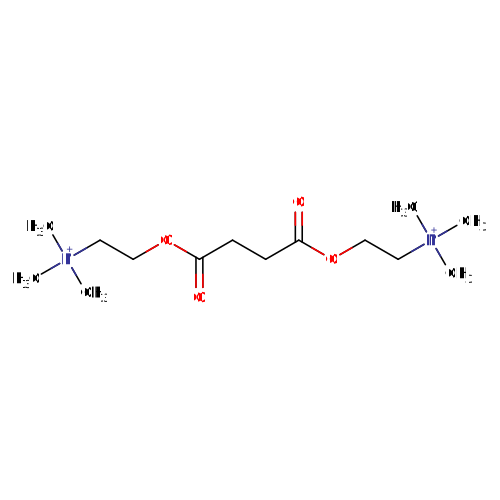
Succinylcholine is a depolarizing skeletal muscle relaxant consisting of two molecules of the endogenous neurotransmitter acetylcholine (ACh) linked by their acetyl groups.2 It has been widely used for over 50 years,1 most commonly in its chloride salt form, as a means of neuromuscular blockade during intubation and surgical procedures. Its rapid onset and offset, with effects beginning within 60 seconds of intravenous administration and lasting between four to six minutes, make succinylcholine particularly useful in the setting of short medical procedures requiring brief periods of muscle relaxation.9
- Type
- Small Molecule
- Groups
- Approved
- Structure
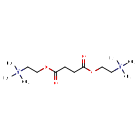
Structure for Succinylcholine (DB00202)
- Weight
- Average: 290.399
Monoisotopic: 290.220557458 - Chemical Formula
- C14H30N2O4
- Synonyms
- 2,2'-[(1,4-dioxobutane-1,4-diyl)bis(oxy)]bis(N,N,N-trimethylethanaminium)
- Dicholine succinate
- Succinocholine
- Succinoylcholine
- Succinylbischoline
- Succinyldicholine
- Suxamethonium

Pharmacology
- Indication
Succinylcholine is indicated as an adjunct to general anesthesia, to facilitate tracheal intubation, and to provide skeletal muscle relaxation during surgery or mechanical ventilation.9
 Reduce drug development failure ratesBuild, train, & validate machine-learning modelswith evidence-based and structured datasets.Build, train, & validate predictive machine-learning models with structured datasets.
- Associated Therapies
- Contraindications & Blackbox Warnings
 Prevent Adverse Drug Events TodayTap into our Clinical API for life-saving information on contraindications & blackbox warnings, population restrictions, harmful risks, & more.Avoid life-threatening adverse drug events with our Clinical API
- Pharmacodynamics
Succinylcholine's neuromuscular blockade takes effect within 60 seconds of intravenous administration and lasts between four to six minutes.2 Similar to acetylcholine, it binds to cholinergic receptors of the motor endplate to induce membrane depolarization and, eventually, muscle paralysis, which may be maintained for as long as an adequate concentration of succinylcholine remains at the receptor site.8 Succinylcholine has no direct action on smooth or cardiac muscle, nor does it appear to act on pre-synaptic or ganglionic acetylcholine receptors.5 The paralysis induced by succinylcholine has been described as "progressive", first involving the muscles of the face and glottis, then the intercostals and diaphragm, then followed by other skeletal muscles.8
Succinylcholine has no effect on consciousness or pain threshold, and must therefore be used in conjunction with adequate anesthesia.9 There have been rare reports of the development of acute rhabdomyolysis with hyperkalemia - resulting in ventricular dysrhythmias, cardiac arrest, and death - after the intravenous administration of succinylcholine to apparently healthy pediatric patients who were subsequently found to have undiagnosed skeletal myopathy (most frequently Duchenne's muscular dystrophy).9 Infants or children experiencing seemingly idiopathic cardiac arrest soon after the administration of succinylcholine should therefore be treated immediately for hyperkalemia. Given that patients may not present with any apparent risk factors, the use of succinylcholine in pediatric patients should be restricted to emergency intubation or other situations in which a suitable alternative is unavailable.9
- Mechanism of action
Succinylcholine is a depolarizing neuromuscular blocker, meaning it causes a prolonged period of membrane depolarization in order to exert its therapeutic effects. It binds to the post-synaptic cholinergic receptors found on motor endplates, thereby inducing first transient fasciculations followed by skeletal muscle paralysis.7
Target Actions Organism ANeuronal Acetylcholine (nACh) Receptor Subunits agonistHumans UMuscarinic acetylcholine receptor M2 agonistHumans UMuscarinic acetylcholine receptor M3 agonistHumans - Absorption
Not Available
- Volume of distribution
At intravenous doses of 1 mg/kg and 2 mg/kg in 14 patients, the mean apparent volumes of distribution were 16.4 ± 14.7 and 5.6 ± 6.8 mL/kg, respectively.6
- Protein binding
Not Available
- Metabolism
Succinylcholine is rapidly metabolized by plasma cholinesterase in the bloodstream to succinylmonocholine, which is then further hydrolyzed (albeit more slowly) to succinic acid and choline.8
Hover over products below to view reaction partners
- Route of elimination
Approximately 10% of an administered dose is excreted unchanged in the urine.8
- Half-life
The mean half-life of elimination following intravenous administration is 47 seconds.4
- Clearance
The mean in vivo plasma clearance of succinylcholine following an intravenous dose of 1 mg/kg in 18 patients was approximately 4.17 ± 2.37 L/min.3
- Adverse Effects
 Improve decision support & research outcomesWith structured adverse effects data, including: blackbox warnings, adverse reactions, warning & precautions, & incidence rates. View sample adverse effects data in our new Data Library!Improve decision support & research outcomes with our structured adverse effects data.
- Toxicity
Overdosage of succinylcholine is likely to extend the neuromuscular blockade beyond the time needed for surgery. Symptoms are likely to be consistent with its therapeutic effects, although more pronounced, and may therefore include skeletal muscle weakness, decreased respiratory reserve, low tidal volume, or apnea. Treatment of succinylcholine overdose involves airway and respiratory support until recovery of normal respiration is assured.9
Depending on the extent of the overdose, the characteristic depolarizing (i.e. Phase I) neuromuscular blockade may switch to resemble more closely a non-depolarizing (i.e. Phase II) neuromuscular blockade.9 This occurs primarily when succinylcholine is given over a prolonged period of time or with particularly large doses, and may result in significant respiratory muscle paralysis or weakness.
- Pathways
- Not Available
- Pharmacogenomic Effects/ADRs
Interacting Gene/Enzyme Allele name Genotype(s) Defining Change(s) Type(s) Description Details Voltage-dependent L-type calcium channel subunit alpha-1S --- Not Available c.3257G>A / c.520C>T ADR Inferred Malignant hyperthermia. Details Ryanodine receptor 1 --- Not Available c.103T>C / c.487C>T … show all ADR Inferred Malignant hyperthermia. Details
Interactions
- Drug Interactions
- This information should not be interpreted without the help of a healthcare provider. If you believe you are experiencing an interaction, contact a healthcare provider immediately. The absence of an interaction does not necessarily mean no interactions exist.
Drug Interaction Integrate drug-drug
interactions in your software1,2-Benzodiazepine The risk or severity of CNS depression can be increased when Succinylcholine is combined with 1,2-Benzodiazepine. Acebutolol The risk or severity of hyperkalemia can be increased when Succinylcholine is combined with Acebutolol. Aceclofenac The risk or severity of hyperkalemia can be increased when Succinylcholine is combined with Aceclofenac. Acemetacin The risk or severity of hyperkalemia can be increased when Succinylcholine is combined with Acemetacin. Acetazolamide The risk or severity of CNS depression can be increased when Succinylcholine is combined with Acetazolamide. - Food Interactions
- No interactions found.
Products
 Drug product information from 10+ global regionsOur datasets provide approved product information including:dosage, form, labeller, route of administration, and marketing period.Access drug product information from over 10 global regions.
- Product Ingredients
Ingredient UNII CAS InChI Key Succinylcholine chloride I9L0DDD30I 71-27-2 YOEWQQVKRJEPAE-UHFFFAOYSA-L Succinylcholine chloride dihydrate 8L0S1G435E 6101-15-1 FFSBEIRFVXGRPR-UHFFFAOYSA-L - International/Other Brands
- Scoline / Sucostrin
- Brand Name Prescription Products
Name Dosage Strength Route Labeller Marketing Start Marketing End Region Image Anectine Injection, solution 20 mg/1mL Intramuscular; Intravenous; Parenteral Sandoz 2015-10-12 2015-10-12 US 
Anectine Injection, solution 20 mg/1mL Intramuscular; Intravenous; Parenteral Sandoz Inc 2017-06-22 Not applicable US Anectine Injection, solution 20 mg/1mL Intramuscular; Intravenous; Parenteral Sandoz Inc 2019-06-12 Not applicable US Anectine Injection, solution 20 mg/1mL Intramuscular; Intravenous; Parenteral Sandoz Inc 1952-08-20 2019-05-31 US Anectine Injection, solution 20 mg/1mL Intramuscular; Intravenous; Parenteral Civica, Inc. 2020-12-11 Not applicable US - Generic Prescription Products
Name Dosage Strength Route Labeller Marketing Start Marketing End Region Image Succinylcholine Injection, solution 20 mg/1mL Intramuscular; Intravenous Medical Purchasing Solutions, Llc 2020-10-07 Not applicable US Succinylcholine Injection, solution 20 mg/1mL Intramuscular; Intravenous Dr.Reddy's Laboratories Inc., 2020-10-07 Not applicable US Succinylcholine Chloride Injection, solution 20 mg/1mL Intramuscular; Intravenous General Injectables and Vaccines, Inc. 2020-10-21 Not applicable US Succinylcholine Chloride Injection, solution 20 mg/1mL Intramuscular; Intravenous Breckenridge Pharmaceutical, Inc. 2020-03-01 2023-03-31 US Succinylcholine Chloride Injection, solution 20 mg/1mL Intramuscular; Intravenous Meitheal Pharmaceuticals Inc. 2021-10-19 Not applicable US - Unapproved/Other Products
Name Ingredients Dosage Route Labeller Marketing Start Marketing End Region Image Succinylcholine Chloride Succinylcholine chloride (20 mg/1mL) Injection, solution Intravenous Cantrell Drug Company 2015-03-12 2017-12-06 US
Categories
- ATC Codes
- M03AB01 — Suxamethonium
- Drug Categories
- Acids, Acyclic
- Agents causing hyperkalemia
- Amines
- Ammonium Compounds
- Central Nervous System Depressants
- Choline Derivatives
- Cholinesterase substrates
- Dicarboxylic Acids
- Ethanolamines
- Muscle Relaxants
- Muscle Relaxants, Peripherally Acting Agents
- Musculo-Skeletal System
- Neuromuscular Agents
- Neuromuscular Blocking Agents
- Neuromuscular Depolarizing Agents
- Neuromuscular Depolarizing Blockade
- Neurotoxic agents
- Nitrogen Compounds
- Onium Compounds
- Peripheral Nervous System Agents
- Quaternary Ammonium Compounds
- Succinates
- Trimethyl Ammonium Compounds
- Chemical TaxonomyProvided by Classyfire
- Description
- This compound belongs to the class of organic compounds known as acyl cholines. These are acylated derivatives of choline. Choline or 2-Hydroxy-N,N,N-trimethylethanaminium is a quaternary ammonium salt with the chemical formula (CH3)3N+(CH2)2OH.
- Kingdom
- Organic compounds
- Super Class
- Organic nitrogen compounds
- Class
- Organonitrogen compounds
- Sub Class
- Quaternary ammonium salts
- Direct Parent
- Acyl cholines
- Alternative Parents
- Fatty acid esters / Dicarboxylic acids and derivatives / Tetraalkylammonium salts / Carboxylic acid esters / Organopnictogen compounds / Organic salts / Organic oxides / Hydrocarbon derivatives / Carbonyl compounds / Amines show 1 more
- Substituents
- Acyl choline / Aliphatic acyclic compound / Amine / Carbonyl group / Carboxylic acid derivative / Carboxylic acid ester / Dicarboxylic acid or derivatives / Fatty acid ester / Fatty acyl / Hydrocarbon derivative show 7 more
- Molecular Framework
- Aliphatic acyclic compounds
- External Descriptors
- quaternary ammonium ion (CHEBI:45652)
- Affected organisms
- Humans and other mammals
Chemical Identifiers
- UNII
- J2R869A8YF
- CAS number
- 306-40-1
- InChI Key
- AXOIZCJOOAYSMI-UHFFFAOYSA-N
- InChI
- InChI=1S/C14H30N2O4/c1-15(2,3)9-11-19-13(17)7-8-14(18)20-12-10-16(4,5)6/h7-12H2,1-6H3/q+2
- IUPAC Name
- trimethyl[2-({4-oxo-4-[2-(trimethylazaniumyl)ethoxy]butanoyl}oxy)ethyl]azanium
- SMILES
- C[N+](C)(C)CCOC(=O)CCC(=O)OCC[N+](C)(C)C
References
- Synthesis Reference
Walter Raml, Gunther Eichberger, "Process for the preparation of succinylcholine halides." U.S. Patent US5206420, issued April 27, 1993.
US5206420- General References
- Jonsson M, Dabrowski M, Gurley DA, Larsson O, Johnson EC, Fredholm BB, Eriksson LI: Activation and inhibition of human muscular and neuronal nicotinic acetylcholine receptors by succinylcholine. Anesthesiology. 2006 Apr;104(4):724-33. [Article]
- Alvarellos ML, McDonagh EM, Patel S, McLeod HL, Altman RB, Klein TE: PharmGKB summary: succinylcholine pathway, pharmacokinetics/pharmacodynamics. Pharmacogenet Genomics. 2015 Dec;25(12):622-30. doi: 10.1097/FPC.0000000000000170. [Article]
- Kato M, Shiratori T, Yamamuro M, Haga S, Hoshi K, Matsukawa S, Jalal IM, Hashimoto Y: Comparison between in vivo and in vitro pharmacokinetics of succinylcholine in humans. J Anesth. 1999 Oct 30;13(4):189-92. doi: 10.1007/s005400050055. [Article]
- Torda TA, Graham GG, Warwick NR, Donohue P: Pharmacokinetics and pharmacodynamics of suxamethonium. Anaesth Intensive Care. 1997 Jun;25(3):272-8. doi: 10.1177/0310057X9702500312. [Article]
- Martyn J, Durieux ME: Succinylcholine: new insights into mechanisms of action of an old drug. Anesthesiology. 2006 Apr;104(4):633-4. [Article]
- Hoshi K, Hashimoto Y, Matsukawa S: Pharmacokinetics of succinylcholine in man. Tohoku J Exp Med. 1993 Aug;170(4):245-50. doi: 10.1620/tjem.170.245. [Article]
- Hager HH, Burns B: Succinylcholine Chloride . [Article]
- Health Canada Product Monograph: Quelicin (succinylcholine chloride) for injection [Link]
- FDA Approved Drug Products: Anectine (succinylcholine chloride) for intravenous injection [Link]
- Pfizer SDS: Succinylcholine Chloride injection [Link]
- External Links
- Human Metabolome Database
- HMDB0014347
- KEGG Compound
- C07546
- PubChem Compound
- 5314
- PubChem Substance
- 46506023
- ChemSpider
- 5123
- BindingDB
- 50061568
- 10154
- ChEBI
- 45652
- ChEMBL
- CHEMBL703
- ZINC
- ZINC000001530820
- Therapeutic Targets Database
- DAP001132
- PharmGKB
- PA451522
- Guide to Pharmacology
- GtP Drug Page
- PDBe Ligand
- SCK
- RxList
- RxList Drug Page
- Drugs.com
- Drugs.com Drug Page
- Wikipedia
- Suxamethonium_chloride
- PDB Entries
- 2ha2 / 2ha6 / 8f6z
- MSDS
- Download (75.1 KB)
Clinical Trials
- Clinical Trials
Phase Status Purpose Conditions Count 4 Completed Other Smooth muscle relaxation prior to radiological procedures therapy 1 4 Completed Prevention Intubation, Endotracheal 1 4 Completed Prevention Neuromuscular Blockade / Postoperative Complications 1 4 Completed Prevention The Effect of Succinylcholine on Barrier Pressure 1 4 Completed Treatment Anesthesia therapy 1
Pharmacoeconomics
- Manufacturers
- Sandoz canada inc
- Hospira inc
- International medication systems ltd
- Organon usa inc
- Apothecon inc div bristol myers squibb
- Packagers
- Hospira Inc.
- Pharmedium
- Sandoz
- Strides Arcolab Limited
- Dosage Forms
Form Route Strength Injection, solution Intramuscular; Intravenous; Parenteral 20 mg/1mL Powder, for solution Intravenous 500 mg / pck Liquid Intravenous 20 mg / mL Solution Intravenous 40.00 mg Injection Intravenous 103 mg/2mL Solution Intravenous 40 mg/ml Injection, powder, for solution Intramuscular; Intravenous 100 mg Injection, solution Parenteral 0.1 g/5ml Injection, solution Injection, solution Intramuscular; Intravenous 50 MG/ML Injection, solution Intravenous; Parenteral 100 MG/2ML Solution Intravenous 500 mg/10ml Solution Intramuscular; Intravenous 100 mg Injection, solution Intravenous Solution Injection, solution Intramuscular; Intravenous 100 mg/1mL Injection, solution Intramuscular; Intravenous 20 mg/1mL Solution Intravenous 100 mg / mL Solution Intravenous 1 g Solution Intramuscular; Intravenous 20 mg / mL Injection Intramuscular; Intravenous 20 mg/1mL Injection Intramuscular; Intravenous 200 mg/10mL Injection Parenteral 200 mg/10mL Injection, solution Intravenous 20 mg/1mL Solution Intravenous 20 mg / mL Injection, solution Parenteral 10 mg/ml Solution 50 mg/1ml Injection Solution Parenteral 40.00 mg - Prices
Unit description Cost Unit Succinylcholine-ns 140 mg/7 ml 2.08USD ml Quelicin 100 mg/ml vial 1.2USD ml Quelicin 20 mg/ml vial 0.22USD ml DrugBank does not sell nor buy drugs. Pricing information is supplied for informational purposes only.- Patents
- Not Available
Properties
- State
- Solid
- Experimental Properties
Property Value Source water solubility Very soluble https://pdf.hres.ca/dpd_pm/00058027.PDF - Predicted Properties
Property Value Source Water Solubility 0.000757 mg/mL ALOGPS logP -2.5 ALOGPS logP -8.4 Chemaxon logS -5.7 ALOGPS pKa (Strongest Basic) -6.8 Chemaxon Physiological Charge 2 Chemaxon Hydrogen Acceptor Count 2 Chemaxon Hydrogen Donor Count 0 Chemaxon Polar Surface Area 52.6 Å2 Chemaxon Rotatable Bond Count 11 Chemaxon Refractivity 100.94 m3·mol-1 Chemaxon Polarizability 33.15 Å3 Chemaxon Number of Rings 0 Chemaxon Bioavailability 1 Chemaxon Rule of Five Yes Chemaxon Ghose Filter No Chemaxon Veber's Rule No Chemaxon MDDR-like Rule No Chemaxon - Predicted ADMET Features
Property Value Probability Human Intestinal Absorption - 0.9962 Blood Brain Barrier + 0.7717 Caco-2 permeable + 0.5871 P-glycoprotein substrate Substrate 0.5916 P-glycoprotein inhibitor I Non-inhibitor 0.9036 P-glycoprotein inhibitor II Non-inhibitor 0.8503 Renal organic cation transporter Non-inhibitor 0.7974 CYP450 2C9 substrate Non-substrate 0.8434 CYP450 2D6 substrate Non-substrate 0.8173 CYP450 3A4 substrate Non-substrate 0.5158 CYP450 1A2 substrate Non-inhibitor 0.936 CYP450 2C9 inhibitor Non-inhibitor 0.9381 CYP450 2D6 inhibitor Non-inhibitor 0.9278 CYP450 2C19 inhibitor Non-inhibitor 0.9142 CYP450 3A4 inhibitor Non-inhibitor 0.9281 CYP450 inhibitory promiscuity Low CYP Inhibitory Promiscuity 0.9831 Ames test Non AMES toxic 0.8556 Carcinogenicity Carcinogens 0.5298 Biodegradation Ready biodegradable 0.7156 Rat acute toxicity 2.3010 LD50, mol/kg Not applicable hERG inhibition (predictor I) Weak inhibitor 0.9012 hERG inhibition (predictor II) Non-inhibitor 0.8418
Spectra
- Mass Spec (NIST)
- Not Available
- Spectra
Spectrum Spectrum Type Splash Key Predicted 1H NMR Spectrum 1D NMR Not Applicable Predicted 13C NMR Spectrum 1D NMR Not Applicable - Chromatographic Properties
Collision Cross Sections (CCS)
Adduct CCS Value (Å2) Source type Source [M-H]- 179.6174483 predictedDarkChem Lite v0.1.0 [M-H]- 159.97548 predictedDeepCCS 1.0 (2019) [M+H]+ 180.9065483 predictedDarkChem Lite v0.1.0 [M+H]+ 162.33345 predictedDeepCCS 1.0 (2019) [M+Na]+ 176.0752483 predictedDarkChem Lite v0.1.0 [M+Na]+ 169.95651 predictedDeepCCS 1.0 (2019)
Targets

- Kind
- Protein group
- Organism
- Humans
- Pharmacological action
- Yes
- Actions
- Agonist
- Curator comments
- Note: Nicotinic acetylcholine receptors are composed of several subunits - the specific subunit with which succinylcholine interacts is unclear.
- General Function
- Receptor binding
- Specific Function
- Ionotropic receptor with a probable role in the modulation of auditory stimuli. Agonist binding may induce an extensive change in conformation that affects all subunits and leads to opening of an i...
Components:
References
- Alvarellos ML, McDonagh EM, Patel S, McLeod HL, Altman RB, Klein TE: PharmGKB summary: succinylcholine pathway, pharmacokinetics/pharmacodynamics. Pharmacogenet Genomics. 2015 Dec;25(12):622-30. doi: 10.1097/FPC.0000000000000170. [Article]
- FDA Approved Drug Products: Anectine (succinylcholine chloride) for intravenous injection [Link]
- Health Canada Product Monograph: Quelicin (succinylcholine chloride) for injection [Link]
- Kind
- Protein
- Organism
- Humans
- Pharmacological action
- Unknown
- Actions
- Agonist
- General Function
- G-protein coupled acetylcholine receptor activity
- Specific Function
- The muscarinic acetylcholine receptor mediates various cellular responses, including inhibition of adenylate cyclase, breakdown of phosphoinositides and modulation of potassium channels through the...
- Gene Name
- CHRM2
- Uniprot ID
- P08172
- Uniprot Name
- Muscarinic acetylcholine receptor M2
- Molecular Weight
- 51714.605 Da
References
- Hou VY, Hirshman CA, Emala CW: Neuromuscular relaxants as antagonists for M2 and M3 muscarinic receptors. Anesthesiology. 1998 Mar;88(3):744-50. [Article]
- Kind
- Protein
- Organism
- Humans
- Pharmacological action
- Unknown
- Actions
- Agonist
- General Function
- Receptor activity
- Specific Function
- The muscarinic acetylcholine receptor mediates various cellular responses, including inhibition of adenylate cyclase, breakdown of phosphoinositides and modulation of potassium channels through the...
- Gene Name
- CHRM3
- Uniprot ID
- P20309
- Uniprot Name
- Muscarinic acetylcholine receptor M3
- Molecular Weight
- 66127.445 Da
References
- Hou VY, Hirshman CA, Emala CW: Neuromuscular relaxants as antagonists for M2 and M3 muscarinic receptors. Anesthesiology. 1998 Mar;88(3):744-50. [Article]
Enzymes
- Kind
- Protein
- Organism
- Humans
- Pharmacological action
- No
- Actions
- Substrate
- General Function
- Identical protein binding
- Specific Function
- Esterase with broad substrate specificity. Contributes to the inactivation of the neurotransmitter acetylcholine. Can degrade neurotoxic organophosphate esters.
- Gene Name
- BCHE
- Uniprot ID
- P06276
- Uniprot Name
- Cholinesterase
- Molecular Weight
- 68417.575 Da
References
- Alvarellos ML, McDonagh EM, Patel S, McLeod HL, Altman RB, Klein TE: PharmGKB summary: succinylcholine pathway, pharmacokinetics/pharmacodynamics. Pharmacogenet Genomics. 2015 Dec;25(12):622-30. doi: 10.1097/FPC.0000000000000170. [Article]
- FDA Approved Drug Products: Anectine (succinylcholine chloride) for intravenous injection [Link]
- Health Canada Product Monograph: Quelicin (succinylcholine chloride) for injection [Link]

Drug created at June 13, 2005 13:24 / Updated at May 10, 2024 22:30