Identification
- Summary
Nicotine is a stimulatory alkaloid found in tobacco products that is often used for the relief of nicotine withdrawal symptoms and as an aid to smoking cessation.
- Brand Names
- Habitrol, Nicoderm C-Q, Nicorelief, Nicorette, Nicotrol
- Generic Name
- Nicotine
- DrugBank Accession Number
- DB00184
- Background
Nicotine is highly toxic alkaloid. It is the prototypical agonist at nicotinic cholinergic receptors where it dramatically stimulates neurons and ultimately blocks synaptic transmission. Nicotine is also important medically because of its presence in tobacco smoke.
- Type
- Small Molecule
- Groups
- Approved
- Structure
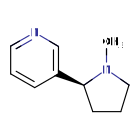
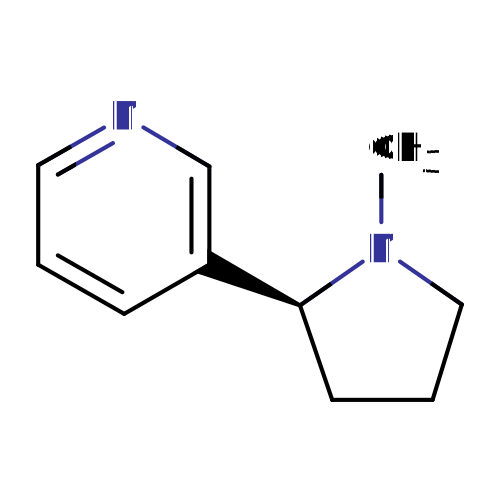
Structure for Nicotine (DB00184)
- Weight
- Average: 162.2316
Monoisotopic: 162.115698458 - Chemical Formula
- C10H14N2
- Synonyms
- (−)-nicotine
- (S)-(−)-nicotine
- (S)-3-(1-methylpyrrolidin-2-yl)pyridine
- (S)-3-(N-methylpyrrolidin-2-yl)pyridine
- (S)-Nicotine
- 3-(2-(N-methylpyrrolidinyl))pyridine
- 3-(N-methylpyrollidino)pyridine
- L(−)-nicotine
- Nicotina
- Nicotine
- Nicotine betadex
- Nicotine polacrilex
- Nikotin
- Nikotyna

Pharmacology
- Indication
For the relief of nicotine withdrawal symptoms and as an aid to smoking cessation.
 Reduce drug development failure ratesBuild, train, & validate machine-learning modelswith evidence-based and structured datasets.Build, train, & validate predictive machine-learning models with structured datasets.
- Associated Conditions
Indication Type Indication Combined Product Details Approval Level Age Group Patient Characteristics Dose Form Management of Withdrawal nicotine •••••••••••• ••••• - Associated Therapies
- Contraindications & Blackbox Warnings
 Prevent Adverse Drug Events TodayTap into our Clinical API for life-saving information on contraindications & blackbox warnings, population restrictions, harmful risks, & more.Avoid life-threatening adverse drug events with our Clinical API
- Pharmacodynamics
Nicotine, the primary alkaloid in tobacco products binds stereo-selectively to nicotinic-cholinergic receptors on autonomic ganglia, the adrenal medulla, neuromuscular junctions and in the brain. Nicotine exerts two effects, a stimulant effect exerted at the locus ceruleus and a reward effect in the limbic system. Itranvenous administration of nicotine causes release of acetylcholine, norepinephrine, dopamine, serotonine, vasopressin, beta-endorphin and ACTH. Nicotine is a highly addictive substance. Nicotine also induces peripheral vasoconstriction, tachycardia and elevated blood pressure. Nicotine inhalers and patches are used to treat smoking withdrawl syndrome. Nicotine is classified as a stimulant of autonomic ganglia.
- Mechanism of action
Nicotine is a stimulant drug that acts as an agonist at nicotinic acetylcholine receptors. These are ionotropic receptors composed up of five homomeric or heteromeric subunits. In the brain, nicotine binds to nicotinic acetylcholine receptors on dopaminergic neurons in the cortico-limbic pathways. This causes the channel to open and allow conductance of multiple cations including sodium, calcium, and potassium. This leads to depolarization, which activates voltage-gated calcium channels and allows more calcium to enter the axon terminal. Calcium stimulates vesicle trafficking towards the plasma membrane and the release of dopamine into the synapse. Dopamine binding to its receptors is responsible the euphoric and addictive properties of nicotine. Nicotine also binds to nicotinic acetylcholine receptors on the chromaffin cells in the adrenal medulla. Binding opens the ion channel allowing influx of sodium, causing depolarization of the cell, which activates voltage-gated calcium channels. Calcium triggers the release of epinephrine from intracellular vesicles into the bloodstream, which causes vasoconstriction, increased blood pressure, increased heart rate, and increased blood sugar.
Target Actions Organism ANeuronal acetylcholine receptor subunit alpha-4 agonistHumans ANeuronal acetylcholine receptor subunit alpha-7 agonistHumans ANeuronal acetylcholine receptor subunit beta-2 agonistHumans UNeuronal acetylcholine receptor subunit alpha-2 agonistHumans UNeuronal acetylcholine receptor subunit alpha-3 agonistHumans UNeuronal acetylcholine receptor subunit alpha-5 agonistHumans UNeuronal acetylcholine receptor subunit alpha-6 agonistHumans UNeuronal acetylcholine receptor subunit alpha-9 agonistHumans UNeuronal acetylcholine receptor subunit alpha-10 agonistHumans UNeuronal acetylcholine receptor subunit beta-3 agonistHumans UNeuronal acetylcholine receptor subunit beta-4 agonistHumans UCytochrome P450 19A1 inhibitorHumans UCholine O-acetyltransferase inhibitorHumans - Absorption
Absorption of nicotine through the buccal mucosa is relatively slow and the high and rapid rise followed by the decline in nicotine arterial plasma concentrations seen with cigarette smoking are not achieved with the inhaler. About 10% of absorbed nicotine is excreted unchanged in urine.
- Volume of distribution
- 2 to 3 L/kg
- Protein binding
Less than 5%
- Metabolism
Primarily hepatic, cotinine is the primary metabolite.
Hover over products below to view reaction partners
- Route of elimination
About 10% of the nicotine absorbed is excreted unchanged in the urine.
- Half-life
Cotinine has a half life of 15-20 hours, while nicotine has a half life of 1-3 hours
- Clearance
- 1.2 L/min [healthy adult smoker]
- Adverse Effects
 Improve decision support & research outcomesWith structured adverse effects data, including: blackbox warnings, adverse reactions, warning & precautions, & incidence rates. View sample adverse effects data in our new Data Library!Improve decision support & research outcomes with our structured adverse effects data.
- Toxicity
Symptoms of overdose include nausea, abdominal pain, vomiting, diarrhea, diaphoresis, flushing, dizziness, disturbed hearing and vision, confusion, weakness, palpitations, altered respiration and hypotension. LD50= 24 mg/kg (orally in mice).
- Pathways
Pathway Category Nicotine Action Pathway Drug action Nicotine Metabolism Pathway Drug metabolism - Pharmacogenomic Effects/ADRs
- Not Available
Interactions
- Drug Interactions
- This information should not be interpreted without the help of a healthcare provider. If you believe you are experiencing an interaction, contact a healthcare provider immediately. The absence of an interaction does not necessarily mean no interactions exist.
Drug Interaction Integrate drug-drug
interactions in your softwareAbametapir The serum concentration of Nicotine can be increased when it is combined with Abametapir. Abatacept The metabolism of Nicotine can be increased when combined with Abatacept. Acebutolol The risk or severity of adverse effects can be increased when Acebutolol is combined with Nicotine. Acetaminophen Nicotine may increase the hepatotoxic activities of Acetaminophen. Acetazolamide The risk or severity of adverse effects can be increased when Acetazolamide is combined with Nicotine. - Food Interactions
- Take separate from meals. For nicotine gum, lozenges, and oral sprays, avoid eating and drinking for 15 minutes before and during its use.
Products
 Drug product information from 10+ global regionsOur datasets provide approved product information including:dosage, form, labeller, route of administration, and marketing period.Access drug product information from over 10 global regions.
- Product Ingredients
Ingredient UNII CAS InChI Key Nicotine bitartrate 7892ZN5G41 65-31-6 RFEJUZJILGIRHQ-OMDKHLBYSA-N Nicotine bitartrate dihydrate R7M676M8YV 6019-06-3 LDMPZNTVIGIREC-ZGPNLCEMSA-N - Product Images

- International/Other Brands
- Habitrol / Nicoderm
- Brand Name Prescription Products
Name Dosage Strength Route Labeller Marketing Start Marketing End Region Image Nicorette Invisipatch Patch 25 mg / 16 hour Transdermal Mcneil Consumer Healthcare Division Of Johnson & Johnson Inc Not applicable Not applicable Canada 
Nicotine Polacrilex Powder 150 g/1kg Oral Nicobrand Ltd. 1994-02-01 2010-12-08 US 
Nicotine Polacrilex Powder 180 g/1kg Oral Nicobrand Ltd. 1994-02-01 2010-12-08 US Nicotine Polacrilex Powder 200 g/1kg Oral Nicobrand Ltd. 1994-02-01 2010-12-08 US Nicotine Tartrate Powder 1 kg/1kg Oral Nicobrand Ltd. 1997-07-11 Not applicable US - Over the Counter Products
Name Dosage Strength Route Labeller Marketing Start Marketing End Region Image American Fare Nicotine Transdermal System Patch, extended release 14 mg/1 Transdermal GlaxoSmithKline Consumer Healthcare Holdings (US) LLC 2012-01-02 2014-12-29 US Basic Care Nicotine Gum, chewing 4 mg/1 Oral L. Perrigo Company 2019-01-23 Not applicable US Basic Care Nicotine Lozenge 2 mg/1 Oral L. Perrigo Company 2018-10-11 Not applicable US Basic Care Nicotine Gum, chewing 2 mg/1 Oral L. Perrigo Company 2018-12-12 Not applicable US Basic Care Nicotine Lozenge 4 mg/1 Oral L. Perrigo Company 2018-10-16 Not applicable US - Mixture Products
Name Ingredients Dosage Route Labeller Marketing Start Marketing End Region Image Basic Care Nicotine Nicotine (2 mg/1) + Nicotine (2 mg/1) Kit Oral L. Perrigo Company 2019-01-16 Not applicable US Basic Care Nicotine Nicotine (2 mg/1) + Nicotine (2 mg/1) Kit Oral L. Perrigo Company 2019-01-16 Not applicable US Nicorette and Aquafresh Fruit Chill and Extreme Clean Whitening Nicotine (4 mg/1) + Sodium fluoride (1.13 mg/1g) Gum, chewing; Kit; Paste Dental; Oral GlaxoSmithKline Consumer Healthcare Holdings (US) LLC 2015-12-07 2018-06-30 US Nicotine Nicotine (4 mg/1) + Nicotine (4 mg/1) Kit; Lozenge Oral CVS PHARMACY 2018-04-09 Not applicable US Nicotine Nicotine (2 mg/1) + Nicotine (2 mg/1) Kit; Lozenge Oral CVS PHARMACY 2018-04-09 Not applicable US - Unapproved/Other Products
Name Ingredients Dosage Route Labeller Marketing Start Marketing End Region Image Nicotine Polacrilex Nicotine (150 g/1kg) Powder Oral Nicobrand Ltd. 1994-02-01 2010-12-08 US Nicotine Polacrilex Nicotine (180 g/1kg) Powder Oral Nicobrand Ltd. 1994-02-01 2010-12-08 US Nicotine Polacrilex Nicotine (200 g/1kg) Powder Oral Nicobrand Ltd. 1994-02-01 2010-12-08 US Nicotine Tartrate Nicotine bitartrate (1 kg/1kg) Powder Oral Nicobrand Ltd. 1997-07-11 Not applicable US Nicotine UN1654 Nicotine (1 L/1L) Liquid Oral Nicobrand Ltd. 1997-07-11 Not applicable US

Categories
- ATC Codes
- N07BA01 — Nicotine
- Drug Categories
- Agents producing tachycardia
- Alkaloids
- Autonomic Agents
- Cholinergic Agents
- Cholinergic Agonists
- Cholinergic Nicotinic Agonist
- Cytochrome P-450 CYP1A2 Inducers
- Cytochrome P-450 CYP1A2 Inducers (strength unknown)
- Cytochrome P-450 CYP1A2 Substrates
- Cytochrome P-450 CYP2A6 Inhibitors
- Cytochrome P-450 CYP2A6 Inhibitors (strength unknown)
- Cytochrome P-450 CYP2A6 Substrates
- Cytochrome P-450 CYP2B6 Substrates
- Cytochrome P-450 CYP2C19 Substrates
- Cytochrome P-450 CYP2C8 Substrates
- Cytochrome P-450 CYP2C9 Substrates
- Cytochrome P-450 CYP2D6 Substrates
- Cytochrome P-450 CYP2E1 Inducers
- Cytochrome P-450 CYP2E1 Inducers (strength unknown)
- Cytochrome P-450 CYP2E1 Inhibitors
- Cytochrome P-450 CYP2E1 Inhibitors (strength unknown)
- Cytochrome P-450 CYP2E1 Substrates
- Cytochrome P-450 CYP3A Substrates
- Cytochrome P-450 CYP3A4 Substrates
- Cytochrome P-450 Enzyme Inducers
- Cytochrome P-450 Enzyme Inhibitors
- Cytochrome P-450 Substrates
- Drugs Used in Addictive Disorders
- Drugs Used in Nicotine Dependence
- Ganglion Blockers
- Ganglionic Stimulants
- Miscellaneous Autonomic Drugs
- Monoamine Oxidase A Inhibitors for interaction with Monoamine Oxidase A substrates
- Nervous System
- Neurotransmitter Agents
- Nicotine, antagonists & inhibitors
- Nicotinic Agonists
- OCT1 inhibitors
- OCT2 Inhibitors
- Peripheral Nervous System Agents
- Pyridines
- Smoking Cessation Agents
- Solanaceous Alkaloids
- Chemical TaxonomyProvided by Classyfire
- Description
- This compound belongs to the class of organic compounds known as pyrrolidinylpyridines. These are compounds containing a pyrrolidinylpyridine ring system, which consists of a pyrrolidine ring linked to a pyridine ring.
- Kingdom
- Organic compounds
- Super Class
- Organoheterocyclic compounds
- Class
- Pyridines and derivatives
- Sub Class
- Pyrrolidinylpyridines
- Direct Parent
- Pyrrolidinylpyridines
- Alternative Parents
- Alkaloids and derivatives / Aralkylamines / N-alkylpyrrolidines / Heteroaromatic compounds / Trialkylamines / Azacyclic compounds / Organopnictogen compounds / Hydrocarbon derivatives
- Substituents
- Alkaloid or derivatives / Amine / Aralkylamine / Aromatic heteromonocyclic compound / Azacycle / Heteroaromatic compound / Hydrocarbon derivative / N-alkylpyrrolidine / Organic nitrogen compound / Organonitrogen compound
- Molecular Framework
- Aromatic heteromonocyclic compounds
- External Descriptors
- nicotine (CHEBI:17688) / Pesticides, Pyridine alkaloids, Alkaloids (C00745)
- Affected organisms
- Humans and other mammals
Chemical Identifiers
- UNII
- 6M3C89ZY6R
- CAS number
- 54-11-5
- InChI Key
- SNICXCGAKADSCV-JTQLQIEISA-N
- InChI
- InChI=1S/C10H14N2/c1-12-7-3-5-10(12)9-4-2-6-11-8-9/h2,4,6,8,10H,3,5,7H2,1H3/t10-/m0/s1
- IUPAC Name
- 3-[(2S)-1-methylpyrrolidin-2-yl]pyridine
- SMILES
- CN1CCC[C@H]1C1=CN=CC=C1
References
- Synthesis Reference
Charles G. Chavdarian, Edward B. Sanders, "Process for the preparation of optically active nicotine analogs." U.S. Patent US4321387, issued September, 1959.
US4321387- General References
- Nolley EP, Kelley BM: Adolescent reward system perseveration due to nicotine: studies with methylphenidate. Neurotoxicol Teratol. 2007 Jan-Feb;29(1):47-56. Epub 2006 Oct 4. [Article]
- de Leon J, Tracy J, McCann E, McGrory A, Diaz FJ: Schizophrenia and tobacco smoking: a replication study in another US psychiatric hospital. Schizophr Res. 2002 Jul 1;56(1-2):55-65. [Article]
- de Leon J, Dadvand M, Canuso C, White AO, Stanilla JK, Simpson GM: Schizophrenia and smoking: an epidemiological survey in a state hospital. Am J Psychiatry. 1995 Mar;152(3):453-5. [Article]
- Aguilar MC, Gurpegui M, Diaz FJ, de Leon J: Nicotine dependence and symptoms in schizophrenia: naturalistic study of complex interactions. Br J Psychiatry. 2005 Mar;186:215-21. [Article]
- External Links
- Human Metabolome Database
- HMDB0001934
- KEGG Drug
- D03365
- KEGG Compound
- C00745
- PubChem Compound
- 89594
- PubChem Substance
- 46506924
- ChemSpider
- 80863
- BindingDB
- 82070
- 31765
- ChEBI
- 17688
- ChEMBL
- CHEMBL3
- ZINC
- ZINC000000391812
- Therapeutic Targets Database
- DAP000175
- PharmGKB
- PA450626
- PDBe Ligand
- NCT
- RxList
- RxList Drug Page
- Drugs.com
- Drugs.com Drug Page
- PDRhealth
- PDRhealth Drug Page
- Wikipedia
- Nicotine
- PDB Entries
- 1p2y / 1p7r / 1uw6 / 2yk1 / 4ejg / 4ejj / 5kxi / 5o87 / 6c71 / 6cnj … show 10 more
- FDA label
- Download (11.2 MB)
- MSDS
- Download (77.6 KB)
Clinical Trials
- Clinical Trials
Phase Status Purpose Conditions Count 4 Active Not Recruiting Basic Science E Cigarette Use 1 4 Active Not Recruiting Health Services Research Smoking, Cessation / Smoking, Cigarette 1 4 Active Not Recruiting Prevention Smoking, Cessation 1 4 Active Not Recruiting Treatment Cigarette Smokers / Tobacco Use Disorders 1 4 Active Not Recruiting Treatment Tobacco Use Cessation 2
Pharmacoeconomics
- Manufacturers
- Novartis consumer health inc
- Sanofi aventis us llc
- Aveva drug delivery systems inc
- Mcneil consumer healthcare
- Pharmacia and upjohn co
- Pfizer inc
- Glaxosmithkline
- Ivax pharmaceuticals inc sub teva pharmaceuticals usa
- Perrigo co
- Perrigo r and d co
- Watson laboratories inc
- Glaxosmithkline consumer healthcare
- Packagers
- Aveva Drug Delivery Systems Inc.
- Cardinal Health
- CVS Pharmacy
- Dispensing Solutions
- Elan Pharmaceuticals Inc.
- Gallipot
- GlaxoSmithKline Inc.
- LTS Lohmann Therapy Systems Corp.
- Mckesson Corp.
- McNeil Laboratories
- Novartis AG
- Perrigo Co.
- Pfizer Inc.
- Pharmacia Inc.
- Physicians Total Care Inc.
- Dosage Forms
Form Route Strength Patch, extended release Transdermal 14 mg/1 Kit Oral Patch, extended release Transdermal 21 mg/1 Patch, extended release Transdermal 7 mg/1 Lozenge Oral 2 mg/1 Lozenge Oral 4 mg/1 Patch, extended release Transdermal 7 mg/24h Patch Transdermal 14 mg/1 Patch Transdermal 21 mg/1 Patch Transdermal 7 mg/1 Patch, extended release Topical 21 mg/1 Patch, extended release Topical 7 mg/1 Patch Transdermal 114 mg / pad Patch Transdermal 36 mg / pad Patch Transdermal 78 mg / pad Patch Transdermal 31.5 mg Patch Transdermal 47.3 mg Patch Transdermal 15.8 mg Spray Oral 1 mg Gum, chewing Oral Gum, chewing Oral 2 G Patch Transdermal Patch Transdermal 10 MG/16ORE Patch Transdermal 15 MG/16ORE Patch Transdermal 5 MG/16ORE Solution Solution 10 MG Tablet Plaster Transdermal 10 mg/16h Aerosol, metered Respiratory (inhalation) 15 mg Plaster Transdermal 15 mg/16h Plaster Transdermal 25 mg/16h Gum, chewing; kit; paste Dental; Oral Gum, chewing Buccal 2 mg Gum, chewing Buccal 4 mg Gum, chewing Oral 2 mg / gum Aerosol Respiratory (inhalation) 10 mg Patch Transdermal 10 mg/16hr Patch Transdermal 15 mg/16hr Patch Transdermal 25 mg/16hr Patch Transdermal 10 mg/16h Patch, extended release Transdermal 15.75 mg/9sq cm Patch Transdermal 15 mg/16h Patch, extended release Transdermal 23.62 mg/13.5sq cm Patch Transdermal 25 mg/16h Patch, extended release Transdermal 39.37 mg/22.5sq cm Patch Transdermal 25 mg / 16 hour Patch Transdermal 15.75 mg Patch Transdermal 23.62 mg Patch Transdermal 39.37 mg Patch Transdermal 25 mg Gum, chewing Oral 4 mg / gum Patch Transdermal 10 mg/20sq cm Patch Transdermal 15 mg/30sq cm Patch Transdermal 5 mg/10sq cm Spray Transmucosal Kit; lozenge Oral Patch Transdermal 14 mg/1d Patch Transdermal 14 mg/24h Patch Transdermal 21 mg/1d Patch Transdermal 21 mg/24h Patch Transdermal 7 mg/24h Patch Transdermal 7 mg/1d Gum, chewing Oral 4 mg/1 Powder Oral 150 g/1kg Powder Oral 180 g/1kg Powder Oral 200 g/1kg Gum, chewing Buccal 2 mg/1 Gum, chewing Buccal 4 mg/1 Powder Not applicable 1 kg/1kg Powder Oral 1 kg/1kg Patch Topical Kit Transdermal Patch, extended release Topical 21 mg/24h Patch, extended release Transdermal 21 mg/24h Patch, extended release Topical 14 mg/24h Patch, extended release Transdermal 14 mg/24h Patch, extended release Topical 7 mg/24h Liquid Oral 1 L/1L Tablet, extended release 2 mg Patch Transdermal 14 mg/24hr Patch Transdermal 21 mg/24hr Patch Transdermal 7 mg/24hr Gum Oral 2 mg Gum, chewing Oral 2.0 mg Gum Oral Gum, chewing Oral 4.0 mg Tablet Transmucosal Lozenge Oral 1 mg Lozenge Buccal 2 mg Plaster Transdermal 7 mg/24h Patch Transdermal 17.5 mg/10sq cm Plaster Transdermal 14 mg/24h Patch Transdermal 35 mg/20sq cm Plaster Transdermal 21 mg/24h Patch Transdermal 52.5 mg/30sq cm Patch Inhalant Respiratory (inhalation) 4 mg/1 Spray, metered Nasal 10 mg/1mL Film Oral 2.5 MG Patch Cutaneous 36.000 mg Patch Transdermal 14 mg/24ore Patch Transdermal 21 mg/24ore Patch Transdermal 7 mg/24ore Tablet Transmucosal 1.5 MG Tablet Transmucosal 2 MG Tablet Transmucosal 4 MG Patch Transdermal 14 MG Patch Transdermal 21 MG Lozenge Oral 2 mg Lozenge Oral 4 mg Patch Transdermal 7 MG Plaster Transdermal 14 mg/24stunde Plaster Transdermal 21 mg/24stunde Plaster Transdermal 7 mg/24stunde Patch Transdermal 36 mg Patch Transdermal 78 mg Tablet Buccal; Oral 2 mg Patch Topical; Transdermal 114 mg Gum, chewing Oral 2 mg/1 Gum, chewing Oral 2 mg/2h Gum, chewing Oral 4 mg/2h Tablet, chewable Oral 2 mg Tablet, chewable Oral 4 mg Gum, chewing Oral 2 mg Gum, chewing Oral 4 mg - Prices
Unit description Cost Unit Nicotrol 168 10 mg Inhalant Inhaler 223.5USD inhaler Nicotine 30 21 mg/24hr Patches Box 206.52USD box Nicotine 30 14 mg/24hr Patches Box 196.27USD box Nicotrol NS 10 mg/ml Solution 10ml Bottle 55.88USD bottle Nicotine polacrilex powder 11.25USD g Nicotrol ns 10 mg/ml spray 5.37USD ml Nicoderm cq 21 mg/24hr patch 4.08USD patch Nicoderm cq 14 mg/24hr patch 3.52USD patch Nicoderm cq 7 mg/24hr patch 3.52USD patch Nicotine 11 mg/24hr patch 3.14USD patch Nicotine 22 mg/24hr patch 3.14USD patch Nicotine transdermal system 1.83USD each Nicotrol cartridge inhaler 1.28USD each Commit 2 mg lozenge 0.55USD lozenge Commit 4 mg lozenge 0.55USD lozenge Nicorette 4 mg chewing gum 0.52USD each Nicorette 2 mg chewing gum 0.45USD each Thrive nicotine 2 mg gum 0.42USD each Thrive nicotine 4 mg gum 0.42USD each CVS Pharmacy nicotine 4 mg chewing gum 0.38USD each CVS Pharmacy nicotine 2 mg chewing gum 0.34USD each Nicotine 4 mg chewing gum 0.3USD each Nicotine 2 mg chewing gum 0.25USD each DrugBank does not sell nor buy drugs. Pricing information is supplied for informational purposes only.- Patents
Patent Number Pediatric Extension Approved Expires (estimated) Region US5656255 No 1997-08-12 2014-08-12 US US5501236 No 1996-03-26 2010-06-08 US CA1333051 No 1994-11-15 2011-11-15 Canada US8323683 No 2012-12-04 2028-04-30 US US8999379 No 2015-04-07 2020-02-13 US US9205059 No 2015-12-08 2019-12-15 US US8075911 No 2011-12-13 2021-05-22 US US8663680 No 2014-03-04 2020-02-13 US US8501164 No 2013-08-06 2029-06-14 US US8940772 No 2015-01-27 2029-04-30 US
Properties
- State
- Liquid
- Experimental Properties
Property Value Source melting point (°C) -79 °C PhysProp boiling point (°C) 247 °C PhysProp water solubility 1E+006 mg/L SEIDELL,A (1941) logP 1.17 HANSCH,C ET AL. (1995) logS 0.79 ADME Research, USCD Caco2 permeability -4.71 ADME Research, USCD pKa 8.5 http://www.surgeongeneral.gov/library/reports/50-years-of-progress/sgr50-chap-5.pdf - Predicted Properties
Property Value Source Water Solubility 93.3 mg/mL ALOGPS logP 0.87 ALOGPS logP 1.16 Chemaxon logS -0.24 ALOGPS pKa (Strongest Basic) 8.58 Chemaxon Physiological Charge 1 Chemaxon Hydrogen Acceptor Count 2 Chemaxon Hydrogen Donor Count 0 Chemaxon Polar Surface Area 16.13 Å2 Chemaxon Rotatable Bond Count 1 Chemaxon Refractivity 49.66 m3·mol-1 Chemaxon Polarizability 18.59 Å3 Chemaxon Number of Rings 2 Chemaxon Bioavailability 1 Chemaxon Rule of Five Yes Chemaxon Ghose Filter Yes Chemaxon Veber's Rule Yes Chemaxon MDDR-like Rule No Chemaxon - Predicted ADMET Features
Property Value Probability Human Intestinal Absorption + 1.0 Blood Brain Barrier + 0.9748 Caco-2 permeable + 0.8867 P-glycoprotein substrate Substrate 0.5 P-glycoprotein inhibitor I Non-inhibitor 0.8998 P-glycoprotein inhibitor II Non-inhibitor 0.9368 Renal organic cation transporter Inhibitor 0.6868 CYP450 2C9 substrate Non-substrate 0.7998 CYP450 2D6 substrate Substrate 0.8918 CYP450 3A4 substrate Non-substrate 0.5 CYP450 1A2 substrate Non-inhibitor 0.6347 CYP450 2C9 inhibitor Non-inhibitor 0.8433 CYP450 2D6 inhibitor Non-inhibitor 0.8838 CYP450 2C19 inhibitor Non-inhibitor 0.8543 CYP450 3A4 inhibitor Non-inhibitor 0.8308 CYP450 inhibitory promiscuity Low CYP Inhibitory Promiscuity 0.7589 Ames test Non AMES toxic 0.9133 Carcinogenicity Non-carcinogens 0.9626 Biodegradation Not ready biodegradable 0.9478 Rat acute toxicity 3.4798 LD50, mol/kg Not applicable hERG inhibition (predictor I) Weak inhibitor 0.8851 hERG inhibition (predictor II) Non-inhibitor 0.7978
Spectra
- Mass Spec (NIST)
- Download (2.96 KB)
- Spectra
- Chromatographic Properties
Collision Cross Sections (CCS)
Adduct CCS Value (Å2) Source type Source [M-H]- 137.2553359 predictedDarkChem Lite v0.1.0 [M-H]- 137.7063359 predictedDarkChem Lite v0.1.0 [M-H]- 137.6019359 predictedDarkChem Lite v0.1.0 [M-H]- 132.68898 predictedDeepCCS 1.0 (2019) [M+H]+ 138.5525359 predictedDarkChem Lite v0.1.0 [M+H]+ 138.2663359 predictedDarkChem Lite v0.1.0 [M+H]+ 138.6181359 predictedDarkChem Lite v0.1.0 [M+H]+ 135.03639 predictedDeepCCS 1.0 (2019) [M+Na]+ 137.6425359 predictedDarkChem Lite v0.1.0 [M+Na]+ 138.0374359 predictedDarkChem Lite v0.1.0 [M+Na]+ 137.8634359 predictedDarkChem Lite v0.1.0 [M+Na]+ 142.47316 predictedDeepCCS 1.0 (2019)
Targets

- Kind
- Protein
- Organism
- Humans
- Pharmacological action
- Yes
- Actions
- Agonist
- General Function
- Ligand-gated ion channel activity
- Specific Function
- After binding acetylcholine, the AChR responds by an extensive change in conformation that affects all subunits and leads to opening of an ion-conducting channel across the plasma membrane permeabl...
- Gene Name
- CHRNA4
- Uniprot ID
- P43681
- Uniprot Name
- Neuronal acetylcholine receptor subunit alpha-4
- Molecular Weight
- 69956.47 Da
References
- Espeseth T, Endestad T, Rootwelt H, Reinvang I: Nicotine receptor gene CHRNA4 modulates early event-related potentials in auditory and visual oddball target detection tasks. Neuroscience. 2007 Jul 29;147(4):974-85. Epub 2007 Jun 27. [Article]
- Winterer G, Musso F, Konrad A, Vucurevic G, Stoeter P, Sander T, Gallinat J: Association of attentional network function with exon 5 variations of the CHRNA4 gene. Hum Mol Genet. 2007 Sep 15;16(18):2165-74. Epub 2007 Jul 5. [Article]
- Ehringer MA, Clegg HV, Collins AC, Corley RP, Crowley T, Hewitt JK, Hopfer CJ, Krauter K, Lessem J, Rhee SH, Schlaepfer I, Smolen A, Stallings MC, Young SE, Zeiger JS: Association of the neuronal nicotinic receptor beta2 subunit gene (CHRNB2) with subjective responses to alcohol and nicotine. Am J Med Genet B Neuropsychiatr Genet. 2007 Jul 5;144B(5):596-604. [Article]
- Klaassen A, Glykys J, Maguire J, Labarca C, Mody I, Boulter J: Seizures and enhanced cortical GABAergic inhibition in two mouse models of human autosomal dominant nocturnal frontal lobe epilepsy. Proc Natl Acad Sci U S A. 2006 Dec 12;103(50):19152-7. Epub 2006 Dec 4. [Article]
- De Luca V, Voineskos S, Wong G, Kennedy JL: Genetic interaction between alpha4 and beta2 subunits of high affinity nicotinic receptor: analysis in schizophrenia. Exp Brain Res. 2006 Sep;174(2):292-6. Epub 2006 Apr 25. [Article]
- Mansvelder HD, Mertz M, Role LW: Nicotinic modulation of synaptic transmission and plasticity in cortico-limbic circuits. Semin Cell Dev Biol. 2009 Jun;20(4):432-40. doi: 10.1016/j.semcdb.2009.01.007. Epub 2009 Jan 22. [Article]
- Narahashi T, Fenster CP, Quick MW, Lester RA, Marszalec W, Aistrup GL, Sattelle DB, Martin BR, Levin ED: Symposium overview: mechanism of action of nicotine on neuronal acetylcholine receptors, from molecule to behavior. Toxicol Sci. 2000 Oct;57(2):193-202. [Article]
- Jackson KJ, Marks MJ, Vann RE, Chen X, Gamage TF, Warner JA, Damaj MI: Role of alpha5 nicotinic acetylcholine receptors in pharmacological and behavioral effects of nicotine in mice. J Pharmacol Exp Ther. 2010 Jul;334(1):137-46. doi: 10.1124/jpet.110.165738. Epub 2010 Apr 16. [Article]
- Zaniewska M, Przegalinski E, Filip M: Nicotine dependence - human and animal studies, current pharmacotherapies and future perspectives. Pharmacol Rep. 2009 Nov-Dec;61(6):957-65. [Article]
- Kind
- Protein
- Organism
- Humans
- Pharmacological action
- Yes
- Actions
- Agonist
- General Function
- Toxic substance binding
- Specific Function
- After binding acetylcholine, the AChR responds by an extensive change in conformation that affects all subunits and leads to opening of an ion-conducting channel across the plasma membrane. The cha...
- Gene Name
- CHRNA7
- Uniprot ID
- P36544
- Uniprot Name
- Neuronal acetylcholine receptor subunit alpha-7
- Molecular Weight
- 56448.925 Da
References
- Mexal S, Jenkins PM, Lautner MA, Iacob E, Crouch EL, Stitzel JA: alpha7 nicotinic receptor gene promoter polymorphisms in inbred mice affect expression in a cell type-specific fashion. J Biol Chem. 2007 May 4;282(18):13220-7. Epub 2007 Mar 14. [Article]
- Olincy A, Harris JG, Johnson LL, Pender V, Kongs S, Allensworth D, Ellis J, Zerbe GO, Leonard S, Stevens KE, Stevens JO, Martin L, Adler LE, Soti F, Kem WR, Freedman R: Proof-of-concept trial of an alpha7 nicotinic agonist in schizophrenia. Arch Gen Psychiatry. 2006 Jun;63(6):630-8. [Article]
- Mansvelder HD, Mertz M, Role LW: Nicotinic modulation of synaptic transmission and plasticity in cortico-limbic circuits. Semin Cell Dev Biol. 2009 Jun;20(4):432-40. doi: 10.1016/j.semcdb.2009.01.007. Epub 2009 Jan 22. [Article]
- Narahashi T, Fenster CP, Quick MW, Lester RA, Marszalec W, Aistrup GL, Sattelle DB, Martin BR, Levin ED: Symposium overview: mechanism of action of nicotine on neuronal acetylcholine receptors, from molecule to behavior. Toxicol Sci. 2000 Oct;57(2):193-202. [Article]
- Jackson KJ, Marks MJ, Vann RE, Chen X, Gamage TF, Warner JA, Damaj MI: Role of alpha5 nicotinic acetylcholine receptors in pharmacological and behavioral effects of nicotine in mice. J Pharmacol Exp Ther. 2010 Jul;334(1):137-46. doi: 10.1124/jpet.110.165738. Epub 2010 Apr 16. [Article]
- Zaniewska M, Przegalinski E, Filip M: Nicotine dependence - human and animal studies, current pharmacotherapies and future perspectives. Pharmacol Rep. 2009 Nov-Dec;61(6):957-65. [Article]
- Kind
- Protein
- Organism
- Humans
- Pharmacological action
- Yes
- Actions
- Agonist
- General Function
- Ligand-gated ion channel activity
- Specific Function
- After binding acetylcholine, the AChR responds by an extensive change in conformation that affects all subunits and leads to opening of an ion-conducting channel across the plasma membrane permeabl...
- Gene Name
- CHRNB2
- Uniprot ID
- P17787
- Uniprot Name
- Neuronal acetylcholine receptor subunit beta-2
- Molecular Weight
- 57018.575 Da
References
- Ehringer MA, Clegg HV, Collins AC, Corley RP, Crowley T, Hewitt JK, Hopfer CJ, Krauter K, Lessem J, Rhee SH, Schlaepfer I, Smolen A, Stallings MC, Young SE, Zeiger JS: Association of the neuronal nicotinic receptor beta2 subunit gene (CHRNB2) with subjective responses to alcohol and nicotine. Am J Med Genet B Neuropsychiatr Genet. 2007 Jul 5;144B(5):596-604. [Article]
- De Luca V, Voineskos S, Wong G, Kennedy JL: Genetic interaction between alpha4 and beta2 subunits of high affinity nicotinic receptor: analysis in schizophrenia. Exp Brain Res. 2006 Sep;174(2):292-6. Epub 2006 Apr 25. [Article]
- Mansvelder HD, Mertz M, Role LW: Nicotinic modulation of synaptic transmission and plasticity in cortico-limbic circuits. Semin Cell Dev Biol. 2009 Jun;20(4):432-40. doi: 10.1016/j.semcdb.2009.01.007. Epub 2009 Jan 22. [Article]
- Narahashi T, Fenster CP, Quick MW, Lester RA, Marszalec W, Aistrup GL, Sattelle DB, Martin BR, Levin ED: Symposium overview: mechanism of action of nicotine on neuronal acetylcholine receptors, from molecule to behavior. Toxicol Sci. 2000 Oct;57(2):193-202. [Article]
- Jackson KJ, Marks MJ, Vann RE, Chen X, Gamage TF, Warner JA, Damaj MI: Role of alpha5 nicotinic acetylcholine receptors in pharmacological and behavioral effects of nicotine in mice. J Pharmacol Exp Ther. 2010 Jul;334(1):137-46. doi: 10.1124/jpet.110.165738. Epub 2010 Apr 16. [Article]
- Zaniewska M, Przegalinski E, Filip M: Nicotine dependence - human and animal studies, current pharmacotherapies and future perspectives. Pharmacol Rep. 2009 Nov-Dec;61(6):957-65. [Article]
- Kind
- Protein
- Organism
- Humans
- Pharmacological action
- Unknown
- Actions
- Agonist
- General Function
- Drug binding
- Specific Function
- After binding acetylcholine, the AChR responds by an extensive change in conformation that affects all subunits and leads to opening of an ion-conducting channel across the plasma membrane.
- Gene Name
- CHRNA2
- Uniprot ID
- Q15822
- Uniprot Name
- Neuronal acetylcholine receptor subunit alpha-2
- Molecular Weight
- 59764.82 Da
References
- Mansvelder HD, Mertz M, Role LW: Nicotinic modulation of synaptic transmission and plasticity in cortico-limbic circuits. Semin Cell Dev Biol. 2009 Jun;20(4):432-40. doi: 10.1016/j.semcdb.2009.01.007. Epub 2009 Jan 22. [Article]
- Narahashi T, Fenster CP, Quick MW, Lester RA, Marszalec W, Aistrup GL, Sattelle DB, Martin BR, Levin ED: Symposium overview: mechanism of action of nicotine on neuronal acetylcholine receptors, from molecule to behavior. Toxicol Sci. 2000 Oct;57(2):193-202. [Article]
- Jackson KJ, Marks MJ, Vann RE, Chen X, Gamage TF, Warner JA, Damaj MI: Role of alpha5 nicotinic acetylcholine receptors in pharmacological and behavioral effects of nicotine in mice. J Pharmacol Exp Ther. 2010 Jul;334(1):137-46. doi: 10.1124/jpet.110.165738. Epub 2010 Apr 16. [Article]
- Zaniewska M, Przegalinski E, Filip M: Nicotine dependence - human and animal studies, current pharmacotherapies and future perspectives. Pharmacol Rep. 2009 Nov-Dec;61(6):957-65. [Article]
- Sullivan PF, Neale BM, van den Oord E, Miles MF, Neale MC, Bulik CM, Joyce PR, Straub RE, Kendler KS: Candidate genes for nicotine dependence via linkage, epistasis, and bioinformatics. Am J Med Genet B Neuropsychiatr Genet. 2004 Apr 1;126B(1):23-36. [Article]
- Kind
- Protein
- Organism
- Humans
- Pharmacological action
- Unknown
- Actions
- Agonist
- General Function
- Ligand-gated ion channel activity
- Specific Function
- After binding acetylcholine, the AChR responds by an extensive change in conformation that affects all subunits and leads to opening of an ion-conducting channel across the plasma membrane.
- Gene Name
- CHRNA3
- Uniprot ID
- P32297
- Uniprot Name
- Neuronal acetylcholine receptor subunit alpha-3
- Molecular Weight
- 57479.54 Da
References
- Mansvelder HD, Mertz M, Role LW: Nicotinic modulation of synaptic transmission and plasticity in cortico-limbic circuits. Semin Cell Dev Biol. 2009 Jun;20(4):432-40. doi: 10.1016/j.semcdb.2009.01.007. Epub 2009 Jan 22. [Article]
- Narahashi T, Fenster CP, Quick MW, Lester RA, Marszalec W, Aistrup GL, Sattelle DB, Martin BR, Levin ED: Symposium overview: mechanism of action of nicotine on neuronal acetylcholine receptors, from molecule to behavior. Toxicol Sci. 2000 Oct;57(2):193-202. [Article]
- Jackson KJ, Marks MJ, Vann RE, Chen X, Gamage TF, Warner JA, Damaj MI: Role of alpha5 nicotinic acetylcholine receptors in pharmacological and behavioral effects of nicotine in mice. J Pharmacol Exp Ther. 2010 Jul;334(1):137-46. doi: 10.1124/jpet.110.165738. Epub 2010 Apr 16. [Article]
- Zaniewska M, Przegalinski E, Filip M: Nicotine dependence - human and animal studies, current pharmacotherapies and future perspectives. Pharmacol Rep. 2009 Nov-Dec;61(6):957-65. [Article]
- Kind
- Protein
- Organism
- Humans
- Pharmacological action
- Unknown
- Actions
- Agonist
- General Function
- Ligand-gated ion channel activity
- Specific Function
- After binding acetylcholine, the AChR responds by an extensive change in conformation that affects all subunits and leads to opening of an ion-conducting channel across the plasma membrane.
- Gene Name
- CHRNA5
- Uniprot ID
- P30532
- Uniprot Name
- Neuronal acetylcholine receptor subunit alpha-5
- Molecular Weight
- 53053.965 Da
References
- Mansvelder HD, Mertz M, Role LW: Nicotinic modulation of synaptic transmission and plasticity in cortico-limbic circuits. Semin Cell Dev Biol. 2009 Jun;20(4):432-40. doi: 10.1016/j.semcdb.2009.01.007. Epub 2009 Jan 22. [Article]
- Narahashi T, Fenster CP, Quick MW, Lester RA, Marszalec W, Aistrup GL, Sattelle DB, Martin BR, Levin ED: Symposium overview: mechanism of action of nicotine on neuronal acetylcholine receptors, from molecule to behavior. Toxicol Sci. 2000 Oct;57(2):193-202. [Article]
- Jackson KJ, Marks MJ, Vann RE, Chen X, Gamage TF, Warner JA, Damaj MI: Role of alpha5 nicotinic acetylcholine receptors in pharmacological and behavioral effects of nicotine in mice. J Pharmacol Exp Ther. 2010 Jul;334(1):137-46. doi: 10.1124/jpet.110.165738. Epub 2010 Apr 16. [Article]
- Zaniewska M, Przegalinski E, Filip M: Nicotine dependence - human and animal studies, current pharmacotherapies and future perspectives. Pharmacol Rep. 2009 Nov-Dec;61(6):957-65. [Article]
- Kind
- Protein
- Organism
- Humans
- Pharmacological action
- Unknown
- Actions
- Agonist
- General Function
- Acetylcholine-activated cation-selective channel activity
- Specific Function
- After binding acetylcholine, the AChR responds by an extensive change in conformation that affects all subunits and leads to opening of an ion-conducting channel across the plasma membrane.
- Gene Name
- CHRNA6
- Uniprot ID
- Q15825
- Uniprot Name
- Neuronal acetylcholine receptor subunit alpha-6
- Molecular Weight
- 56897.745 Da
References
- Mansvelder HD, Mertz M, Role LW: Nicotinic modulation of synaptic transmission and plasticity in cortico-limbic circuits. Semin Cell Dev Biol. 2009 Jun;20(4):432-40. doi: 10.1016/j.semcdb.2009.01.007. Epub 2009 Jan 22. [Article]
- Narahashi T, Fenster CP, Quick MW, Lester RA, Marszalec W, Aistrup GL, Sattelle DB, Martin BR, Levin ED: Symposium overview: mechanism of action of nicotine on neuronal acetylcholine receptors, from molecule to behavior. Toxicol Sci. 2000 Oct;57(2):193-202. [Article]
- Jackson KJ, Marks MJ, Vann RE, Chen X, Gamage TF, Warner JA, Damaj MI: Role of alpha5 nicotinic acetylcholine receptors in pharmacological and behavioral effects of nicotine in mice. J Pharmacol Exp Ther. 2010 Jul;334(1):137-46. doi: 10.1124/jpet.110.165738. Epub 2010 Apr 16. [Article]
- Zaniewska M, Przegalinski E, Filip M: Nicotine dependence - human and animal studies, current pharmacotherapies and future perspectives. Pharmacol Rep. 2009 Nov-Dec;61(6):957-65. [Article]
- Kind
- Protein
- Organism
- Humans
- Pharmacological action
- Unknown
- Actions
- Agonist
- General Function
- Calcium channel activity
- Specific Function
- Ionotropic receptor with a probable role in the modulation of auditory stimuli. Agonist binding induces a conformation change that leads to the opening of an ion-conducting channel across the plasm...
- Gene Name
- CHRNA9
- Uniprot ID
- Q9UGM1
- Uniprot Name
- Neuronal acetylcholine receptor subunit alpha-9
- Molecular Weight
- 54806.63 Da
References
- Mansvelder HD, Mertz M, Role LW: Nicotinic modulation of synaptic transmission and plasticity in cortico-limbic circuits. Semin Cell Dev Biol. 2009 Jun;20(4):432-40. doi: 10.1016/j.semcdb.2009.01.007. Epub 2009 Jan 22. [Article]
- Narahashi T, Fenster CP, Quick MW, Lester RA, Marszalec W, Aistrup GL, Sattelle DB, Martin BR, Levin ED: Symposium overview: mechanism of action of nicotine on neuronal acetylcholine receptors, from molecule to behavior. Toxicol Sci. 2000 Oct;57(2):193-202. [Article]
- Jackson KJ, Marks MJ, Vann RE, Chen X, Gamage TF, Warner JA, Damaj MI: Role of alpha5 nicotinic acetylcholine receptors in pharmacological and behavioral effects of nicotine in mice. J Pharmacol Exp Ther. 2010 Jul;334(1):137-46. doi: 10.1124/jpet.110.165738. Epub 2010 Apr 16. [Article]
- Zaniewska M, Przegalinski E, Filip M: Nicotine dependence - human and animal studies, current pharmacotherapies and future perspectives. Pharmacol Rep. 2009 Nov-Dec;61(6):957-65. [Article]
- Kind
- Protein
- Organism
- Humans
- Pharmacological action
- Unknown
- Actions
- Agonist
- General Function
- Receptor binding
- Specific Function
- Ionotropic receptor with a probable role in the modulation of auditory stimuli. Agonist binding may induce an extensive change in conformation that affects all subunits and leads to opening of an i...
- Gene Name
- CHRNA10
- Uniprot ID
- Q9GZZ6
- Uniprot Name
- Neuronal acetylcholine receptor subunit alpha-10
- Molecular Weight
- 49704.295 Da
References
- Mansvelder HD, Mertz M, Role LW: Nicotinic modulation of synaptic transmission and plasticity in cortico-limbic circuits. Semin Cell Dev Biol. 2009 Jun;20(4):432-40. doi: 10.1016/j.semcdb.2009.01.007. Epub 2009 Jan 22. [Article]
- Narahashi T, Fenster CP, Quick MW, Lester RA, Marszalec W, Aistrup GL, Sattelle DB, Martin BR, Levin ED: Symposium overview: mechanism of action of nicotine on neuronal acetylcholine receptors, from molecule to behavior. Toxicol Sci. 2000 Oct;57(2):193-202. [Article]
- Jackson KJ, Marks MJ, Vann RE, Chen X, Gamage TF, Warner JA, Damaj MI: Role of alpha5 nicotinic acetylcholine receptors in pharmacological and behavioral effects of nicotine in mice. J Pharmacol Exp Ther. 2010 Jul;334(1):137-46. doi: 10.1124/jpet.110.165738. Epub 2010 Apr 16. [Article]
- Zaniewska M, Przegalinski E, Filip M: Nicotine dependence - human and animal studies, current pharmacotherapies and future perspectives. Pharmacol Rep. 2009 Nov-Dec;61(6):957-65. [Article]
- Kind
- Protein
- Organism
- Humans
- Pharmacological action
- Unknown
- Actions
- Agonist
- General Function
- Drug binding
- Specific Function
- After binding acetylcholine, the AChR responds by an extensive change in conformation that affects all subunits and leads to opening of an ion-conducting channel across the plasma membrane.
- Gene Name
- CHRNB3
- Uniprot ID
- Q05901
- Uniprot Name
- Neuronal acetylcholine receptor subunit beta-3
- Molecular Weight
- 52728.215 Da
References
- Mansvelder HD, Mertz M, Role LW: Nicotinic modulation of synaptic transmission and plasticity in cortico-limbic circuits. Semin Cell Dev Biol. 2009 Jun;20(4):432-40. doi: 10.1016/j.semcdb.2009.01.007. Epub 2009 Jan 22. [Article]
- Narahashi T, Fenster CP, Quick MW, Lester RA, Marszalec W, Aistrup GL, Sattelle DB, Martin BR, Levin ED: Symposium overview: mechanism of action of nicotine on neuronal acetylcholine receptors, from molecule to behavior. Toxicol Sci. 2000 Oct;57(2):193-202. [Article]
- Jackson KJ, Marks MJ, Vann RE, Chen X, Gamage TF, Warner JA, Damaj MI: Role of alpha5 nicotinic acetylcholine receptors in pharmacological and behavioral effects of nicotine in mice. J Pharmacol Exp Ther. 2010 Jul;334(1):137-46. doi: 10.1124/jpet.110.165738. Epub 2010 Apr 16. [Article]
- Zaniewska M, Przegalinski E, Filip M: Nicotine dependence - human and animal studies, current pharmacotherapies and future perspectives. Pharmacol Rep. 2009 Nov-Dec;61(6):957-65. [Article]
- Kind
- Protein
- Organism
- Humans
- Pharmacological action
- Unknown
- Actions
- Agonist
- General Function
- Ligand-gated ion channel activity
- Specific Function
- After binding acetylcholine, the AChR responds by an extensive change in conformation that affects all subunits and leads to opening of an ion-conducting channel across the plasma membrane.
- Gene Name
- CHRNB4
- Uniprot ID
- P30926
- Uniprot Name
- Neuronal acetylcholine receptor subunit beta-4
- Molecular Weight
- 56378.985 Da
References
- Mansvelder HD, Mertz M, Role LW: Nicotinic modulation of synaptic transmission and plasticity in cortico-limbic circuits. Semin Cell Dev Biol. 2009 Jun;20(4):432-40. doi: 10.1016/j.semcdb.2009.01.007. Epub 2009 Jan 22. [Article]
- Narahashi T, Fenster CP, Quick MW, Lester RA, Marszalec W, Aistrup GL, Sattelle DB, Martin BR, Levin ED: Symposium overview: mechanism of action of nicotine on neuronal acetylcholine receptors, from molecule to behavior. Toxicol Sci. 2000 Oct;57(2):193-202. [Article]
- Jackson KJ, Marks MJ, Vann RE, Chen X, Gamage TF, Warner JA, Damaj MI: Role of alpha5 nicotinic acetylcholine receptors in pharmacological and behavioral effects of nicotine in mice. J Pharmacol Exp Ther. 2010 Jul;334(1):137-46. doi: 10.1124/jpet.110.165738. Epub 2010 Apr 16. [Article]
- Zaniewska M, Przegalinski E, Filip M: Nicotine dependence - human and animal studies, current pharmacotherapies and future perspectives. Pharmacol Rep. 2009 Nov-Dec;61(6):957-65. [Article]
- Kind
- Protein
- Organism
- Humans
- Pharmacological action
- Unknown
- Actions
- Inhibitor
- General Function
- Oxygen binding
- Specific Function
- Catalyzes the formation of aromatic C18 estrogens from C19 androgens.
- Gene Name
- CYP19A1
- Uniprot ID
- P11511
- Uniprot Name
- Aromatase
- Molecular Weight
- 57882.48 Da
References
- Barbieri RL, Gochberg J, Ryan KJ: Nicotine, cotinine, and anabasine inhibit aromatase in human trophoblast in vitro. J Clin Invest. 1986 Jun;77(6):1727-33. [Article]
- Kind
- Protein
- Organism
- Humans
- Pharmacological action
- Unknown
- Actions
- Inhibitor
- General Function
- Choline o-acetyltransferase activity
- Specific Function
- Catalyzes the reversible synthesis of acetylcholine (ACh) from acetyl CoA and choline at cholinergic synapses.
- Gene Name
- CHAT
- Uniprot ID
- P28329
- Uniprot Name
- Choline O-acetyltransferase
- Molecular Weight
- 82535.025 Da
References
- FAHMY AR, RYMAN BE, WALSH EO: The inhibition of choline acetylase by nicotine. J Pharm Pharmacol. 1954 Sep;6(9):607-9. [Article]
Enzymes
- Kind
- Protein
- Organism
- Humans
- Pharmacological action
- Unknown
- Actions
- SubstrateInducer
- General Function
- Vitamin d 24-hydroxylase activity
- Specific Function
- Cytochromes P450 are a group of heme-thiolate monooxygenases. In liver microsomes, this enzyme is involved in an NADPH-dependent electron transport pathway. It oxidizes a variety of structurally un...
- Gene Name
- CYP1A1
- Uniprot ID
- P04798
- Uniprot Name
- Cytochrome P450 1A1
- Molecular Weight
- 58164.815 Da
References
- Wei C, Caccavale RJ, Weyand EH, Chen S, Iba MM: Induction of CYP1A1 and CYP1A2 expressions by prototypic and atypical inducers in the human lung. Cancer Lett. 2002 Apr 8;178(1):25-36. [Article]
- Zevin S, Benowitz NL: Drug interactions with tobacco smoking. An update. Clin Pharmacokinet. 1999 Jun;36(6):425-38. doi: 10.2165/00003088-199936060-00004. [Article]
- Yamazaki H, Inoue K, Hashimoto M, Shimada T: Roles of CYP2A6 and CYP2B6 in nicotine C-oxidation by human liver microsomes. Arch Toxicol. 1999 Mar;73(2):65-70. [Article]
- Kind
- Protein
- Organism
- Humans
- Pharmacological action
- Unknown
- Actions
- SubstrateInducer
- Curator comments
- Nicotine has been shown to be a CYP1A2 substrate when it is present in high concentrations.
- General Function
- Oxidoreductase activity, acting on paired donors, with incorporation or reduction of molecular oxygen, reduced flavin or flavoprotein as one donor, and incorporation of one atom of oxygen
- Specific Function
- Cytochromes P450 are a group of heme-thiolate monooxygenases. In liver microsomes, this enzyme is involved in an NADPH-dependent electron transport pathway. It oxidizes a variety of structurally un...
- Gene Name
- CYP1A2
- Uniprot ID
- P05177
- Uniprot Name
- Cytochrome P450 1A2
- Molecular Weight
- 58293.76 Da
References
- Hukkanen J, Jacob P 3rd, Peng M, Dempsey D, Benowitz NL: Effect of nicotine on cytochrome P450 1A2 activity. Br J Clin Pharmacol. 2011 Nov;72(5):836-8. doi: 10.1111/j.1365-2125.2011.04023.x. [Article]
- Zevin S, Benowitz NL: Drug interactions with tobacco smoking. An update. Clin Pharmacokinet. 1999 Jun;36(6):425-38. doi: 10.2165/00003088-199936060-00004. [Article]
- Yamazaki H, Inoue K, Hashimoto M, Shimada T: Roles of CYP2A6 and CYP2B6 in nicotine C-oxidation by human liver microsomes. Arch Toxicol. 1999 Mar;73(2):65-70. [Article]
- Pal D, Kwatra D, Minocha M, Paturi DK, Budda B, Mitra AK: Efflux transporters- and cytochrome P-450-mediated interactions between drugs of abuse and antiretrovirals. Life Sci. 2011 May 23;88(21-22):959-71. doi: 10.1016/j.lfs.2010.09.012. Epub 2010 Nov 1. [Article]
- Kind
- Protein
- Organism
- Humans
- Pharmacological action
- Unknown
- Actions
- Substrate
- General Function
- Steroid hydroxylase activity
- Specific Function
- Responsible for the metabolism of a number of therapeutic agents such as the anticonvulsant drug S-mephenytoin, omeprazole, proguanil, certain barbiturates, diazepam, propranolol, citalopram and im...
- Gene Name
- CYP2C19
- Uniprot ID
- P33261
- Uniprot Name
- Cytochrome P450 2C19
- Molecular Weight
- 55930.545 Da
References
- Yamazaki H, Inoue K, Hashimoto M, Shimada T: Roles of CYP2A6 and CYP2B6 in nicotine C-oxidation by human liver microsomes. Arch Toxicol. 1999 Mar;73(2):65-70. [Article]
- Kind
- Protein
- Organism
- Humans
- Pharmacological action
- Unknown
- Actions
- Substrate
- General Function
- Steroid hydroxylase activity
- Specific Function
- Cytochromes P450 are a group of heme-thiolate monooxygenases. In liver microsomes, this enzyme is involved in an NADPH-dependent electron transport pathway. It oxidizes a variety of structurally un...
- Gene Name
- CYP2C8
- Uniprot ID
- P10632
- Uniprot Name
- Cytochrome P450 2C8
- Molecular Weight
- 55824.275 Da
References
- Yamazaki H, Inoue K, Hashimoto M, Shimada T: Roles of CYP2A6 and CYP2B6 in nicotine C-oxidation by human liver microsomes. Arch Toxicol. 1999 Mar;73(2):65-70. [Article]
- Kind
- Protein
- Organism
- Humans
- Pharmacological action
- Unknown
- Actions
- Substrate
- Curator comments
- Nicotine has been shown to be a substrate of CYP2C9 when it is present in high concentrations. Clinical correlation is unknown.
- General Function
- Steroid hydroxylase activity
- Specific Function
- Cytochromes P450 are a group of heme-thiolate monooxygenases. In liver microsomes, this enzyme is involved in an NADPH-dependent electron transport pathway. It oxidizes a variety of structurally un...
- Gene Name
- CYP2C9
- Uniprot ID
- P11712
- Uniprot Name
- Cytochrome P450 2C9
- Molecular Weight
- 55627.365 Da
References
- Yamazaki H, Inoue K, Hashimoto M, Shimada T: Roles of CYP2A6 and CYP2B6 in nicotine C-oxidation by human liver microsomes. Arch Toxicol. 1999 Mar;73(2):65-70. [Article]
- Kind
- Protein
- Organism
- Humans
- Pharmacological action
- Unknown
- Actions
- Substrate
- General Function
- Steroid hydroxylase activity
- Specific Function
- Responsible for the metabolism of many drugs and environmental chemicals that it oxidizes. It is involved in the metabolism of drugs such as antiarrhythmics, adrenoceptor antagonists, and tricyclic...
- Gene Name
- CYP2D6
- Uniprot ID
- P10635
- Uniprot Name
- Cytochrome P450 2D6
- Molecular Weight
- 55768.94 Da
References
- Yamazaki H, Inoue K, Hashimoto M, Shimada T: Roles of CYP2A6 and CYP2B6 in nicotine C-oxidation by human liver microsomes. Arch Toxicol. 1999 Mar;73(2):65-70. [Article]
- Benowitz NL, Jacob P 3rd, Perez-Stable E: CYP2D6 phenotype and the metabolism of nicotine and cotinine. Pharmacogenetics. 1996 Jun;6(3):239-42. [Article]
- Tiili EM, Antikainen MS, Mitiushkina NV, Sukhovskaya OA, Imyanitov EN, Hirvonen AP: Effect of genotype and methylation of CYP2D6 on smoking behaviour. Pharmacogenet Genomics. 2015 Nov;25(11):531-40. doi: 10.1097/FPC.0000000000000166. [Article]
- Kind
- Protein
- Organism
- Humans
- Pharmacological action
- Unknown
- Actions
- Substrate
- General Function
- Vitamin d3 25-hydroxylase activity
- Specific Function
- Cytochromes P450 are a group of heme-thiolate monooxygenases. In liver microsomes, this enzyme is involved in an NADPH-dependent electron transport pathway. It performs a variety of oxidation react...
- Gene Name
- CYP3A4
- Uniprot ID
- P08684
- Uniprot Name
- Cytochrome P450 3A4
- Molecular Weight
- 57342.67 Da
References
- Yamazaki H, Inoue K, Hashimoto M, Shimada T: Roles of CYP2A6 and CYP2B6 in nicotine C-oxidation by human liver microsomes. Arch Toxicol. 1999 Mar;73(2):65-70. [Article]
- Kind
- Protein
- Organism
- Humans
- Pharmacological action
- Unknown
- Actions
- Inhibitor
- General Function
- Serotonin binding
- Specific Function
- Catalyzes the oxidative deamination of biogenic and xenobiotic amines and has important functions in the metabolism of neuroactive and vasoactive amines in the central nervous system and peripheral...
- Gene Name
- MAOA
- Uniprot ID
- P21397
- Uniprot Name
- Amine oxidase [flavin-containing] A
- Molecular Weight
- 59681.27 Da
References
- Lewis AJ, Truman P, Hosking MR, Miller JH: Monoamine oxidase inhibitory activity in tobacco smoke varies with tobacco type. Tob Control. 2012 Jan;21(1):39-43. doi: 10.1136/tc.2010.040287. Epub 2011 Jun 2. [Article]
- Leroy C, Bragulat V, Berlin I, Gregoire MC, Bottlaender M, Roumenov D, Dolle F, Bourgeois S, Penttila J, Artiges E, Martinot JL, Trichard C: Cerebral monoamine oxidase A inhibition in tobacco smokers confirmed with PET and [11C]befloxatone. J Clin Psychopharmacol. 2009 Feb;29(1):86-8. doi: 10.1097/JCP.0b013e31819e98f. [Article]
- Kind
- Protein
- Organism
- Humans
- Pharmacological action
- Unknown
- Actions
- Inhibitor
- General Function
- Primary amine oxidase activity
- Specific Function
- Catalyzes the oxidative deamination of biogenic and xenobiotic amines and has important functions in the metabolism of neuroactive and vasoactive amines in the central nervous system and peripheral...
- Gene Name
- MAOB
- Uniprot ID
- P27338
- Uniprot Name
- Amine oxidase [flavin-containing] B
- Molecular Weight
- 58762.475 Da
References
- Lewis AJ, Truman P, Hosking MR, Miller JH: Monoamine oxidase inhibitory activity in tobacco smoke varies with tobacco type. Tob Control. 2012 Jan;21(1):39-43. doi: 10.1136/tc.2010.040287. Epub 2011 Jun 2. [Article]
- Kind
- Protein
- Organism
- Humans
- Pharmacological action
- Unknown
- Actions
- SubstrateInhibitor
- General Function
- Steroid hydroxylase activity
- Specific Function
- Exhibits a high coumarin 7-hydroxylase activity. Can act in the hydroxylation of the anti-cancer drugs cyclophosphamide and ifosphamide. Competent in the metabolic activation of aflatoxin B1. Const...
- Gene Name
- CYP2A6
- Uniprot ID
- P11509
- Uniprot Name
- Cytochrome P450 2A6
- Molecular Weight
- 56501.005 Da
References
- Yamazaki H, Inoue K, Hashimoto M, Shimada T: Roles of CYP2A6 and CYP2B6 in nicotine C-oxidation by human liver microsomes. Arch Toxicol. 1999 Mar;73(2):65-70. [Article]
- von Weymarn LB, Retzlaff C, Murphy SE: CYP2A6- and CYP2A13-catalyzed metabolism of the nicotine Delta5'(1')iminium ion. J Pharmacol Exp Ther. 2012 Nov;343(2):307-15. doi: 10.1124/jpet.112.195255. Epub 2012 Aug 6. [Article]
- Raunio H, Rautio A, Gullsten H, Pelkonen O: Polymorphisms of CYP2A6 and its practical consequences. Br J Clin Pharmacol. 2001 Oct;52(4):357-63. [Article]
- Denton TT, Zhang X, Cashman JR: Nicotine-related alkaloids and metabolites as inhibitors of human cytochrome P-450 2A6. Biochem Pharmacol. 2004 Feb 15;67(4):751-6. [Article]
- Kind
- Protein
- Organism
- Humans
- Pharmacological action
- Unknown
- Actions
- SubstrateInhibitorInducer
- Curator comments
- References provide evidence mainly through in vitro tests. The actual role and strength of the interaction of nicotine on CYP2E1 is unclear.
- General Function
- Steroid hydroxylase activity
- Specific Function
- Metabolizes several precarcinogens, drugs, and solvents to reactive metabolites. Inactivates a number of drugs and xenobiotics and also bioactivates many xenobiotic substrates to their hepatotoxic ...
- Gene Name
- CYP2E1
- Uniprot ID
- P05181
- Uniprot Name
- Cytochrome P450 2E1
- Molecular Weight
- 56848.42 Da
References
- Howard LA, Miksys S, Hoffmann E, Mash D, Tyndale RF: Brain CYP2E1 is induced by nicotine and ethanol in rat and is higher in smokers and alcoholics. Br J Pharmacol. 2003 Apr;138(7):1376-86. doi: 10.1038/sj.bjp.0705146. [Article]
- Van Vleet TR, Bombick DW, Coulombe RA Jr: Inhibition of human cytochrome P450 2E1 by nicotine, cotinine, and aqueous cigarette tar extract in vitro. Toxicol Sci. 2001 Dec;64(2):185-91. [Article]
- Yamazaki H, Inoue K, Hashimoto M, Shimada T: Roles of CYP2A6 and CYP2B6 in nicotine C-oxidation by human liver microsomes. Arch Toxicol. 1999 Mar;73(2):65-70. [Article]
- Micu AL, Miksys S, Sellers EM, Koop DR, Tyndale RF: Rat hepatic CYP2E1 is induced by very low nicotine doses: an investigation of induction, time course, dose response, and mechanism. J Pharmacol Exp Ther. 2003 Sep;306(3):941-7. doi: 10.1124/jpet.103.052183. Epub 2003 May 15. [Article]
- Hukkanen J, Jacob Iii P, Peng M, Dempsey D, Benowitz NL: Effects of nicotine on cytochrome P450 2A6 and 2E1 activities. Br J Clin Pharmacol. 2010 Feb;69(2):152-9. doi: 10.1111/j.1365-2125.2009.03568.x. [Article]
- Nakayama H, Okuda H, Nakashima T, Imaoka S, Funae Y: Nicotine metabolism by rat hepatic cytochrome P450s. Biochem Pharmacol. 1993 Jun 22;45(12):2554-6. [Article]
- Kind
- Protein
- Organism
- Humans
- Pharmacological action
- Unknown
- Actions
- Substrate
- General Function
- Steroid hydroxylase activity
- Specific Function
- Exhibits a coumarin 7-hydroxylase activity. Active in the metabolic activation of hexamethylphosphoramide, N,N-dimethylaniline, 2'-methoxyacetophenone, N-nitrosomethylphenylamine, and the tobacco-s...
- Gene Name
- CYP2A13
- Uniprot ID
- Q16696
- Uniprot Name
- Cytochrome P450 2A13
- Molecular Weight
- 56687.095 Da
References
- von Weymarn LB, Brown KM, Murphy SE: Inactivation of CYP2A6 and CYP2A13 during nicotine metabolism. J Pharmacol Exp Ther. 2006 Jan;316(1):295-303. doi: 10.1124/jpet.105.091306. Epub 2005 Sep 27. [Article]
- He XY, Shen J, Hu WY, Ding X, Lu AY, Hong JY: Identification of Val117 and Arg372 as critical amino acid residues for the activity difference between human CYP2A6 and CYP2A13 in coumarin 7-hydroxylation. Arch Biochem Biophys. 2004 Jul 15;427(2):143-53. doi: 10.1016/j.abb.2004.03.016. [Article]
- Bao Z, He XY, Ding X, Prabhu S, Hong JY: Metabolism of nicotine and cotinine by human cytochrome P450 2A13. Drug Metab Dispos. 2005 Feb;33(2):258-61. doi: 10.1124/dmd.104.002105. Epub 2004 Nov 4. [Article]
- Kind
- Protein
- Organism
- Humans
- Pharmacological action
- Unknown
- Actions
- Substrate
- General Function
- Steroid hydroxylase activity
- Specific Function
- Cytochromes P450 are a group of heme-thiolate monooxygenases. In liver microsomes, this enzyme is involved in an NADPH-dependent electron transport pathway. It oxidizes a variety of structurally un...
- Gene Name
- CYP2B6
- Uniprot ID
- P20813
- Uniprot Name
- Cytochrome P450 2B6
- Molecular Weight
- 56277.81 Da
References
- Yamazaki H, Inoue K, Hashimoto M, Shimada T: Roles of CYP2A6 and CYP2B6 in nicotine C-oxidation by human liver microsomes. Arch Toxicol. 1999 Mar;73(2):65-70. [Article]
- Rendic S: Summary of information on human CYP enzymes: human P450 metabolism data. Drug Metab Rev. 2002 Feb-May;34(1-2):83-448. [Article]
Transporters
- Kind
- Protein
- Organism
- Humans
- Pharmacological action
- Unknown
- Actions
- Inhibitor
- General Function
- Quaternary ammonium group transmembrane transporter activity
- Specific Function
- Mediates tubular uptake of organic compounds from circulation. Mediates the influx of agmatine, dopamine, noradrenaline (norepinephrine), serotonin, choline, famotidine, ranitidine, histamin, creat...
- Gene Name
- SLC22A2
- Uniprot ID
- O15244
- Uniprot Name
- Solute carrier family 22 member 2
- Molecular Weight
- 62579.99 Da
References
- Urakami Y, Akazawa M, Saito H, Okuda M, Inui K: cDNA cloning, functional characterization, and tissue distribution of an alternatively spliced variant of organic cation transporter hOCT2 predominantly expressed in the human kidney. J Am Soc Nephrol. 2002 Jul;13(7):1703-10. [Article]
- Urakami Y, Okuda M, Masuda S, Saito H, Inui KI: Functional characteristics and membrane localization of rat multispecific organic cation transporters, OCT1 and OCT2, mediating tubular secretion of cationic drugs. J Pharmacol Exp Ther. 1998 Nov;287(2):800-5. [Article]
- Okuda M, Urakami Y, Saito H, Inui K: Molecular mechanisms of organic cation transport in OCT2-expressing Xenopus oocytes. Biochim Biophys Acta. 1999 Mar 4;1417(2):224-31. [Article]
- Kind
- Protein
- Organism
- Humans
- Pharmacological action
- Unknown
- Actions
- Inhibitor
- General Function
- Secondary active organic cation transmembrane transporter activity
- Specific Function
- Translocates a broad array of organic cations with various structures and molecular weights including the model compounds 1-methyl-4-phenylpyridinium (MPP), tetraethylammonium (TEA), N-1-methylnico...
- Gene Name
- SLC22A1
- Uniprot ID
- O15245
- Uniprot Name
- Solute carrier family 22 member 1
- Molecular Weight
- 61153.345 Da
References
- Bednarczyk D, Ekins S, Wikel JH, Wright SH: Influence of molecular structure on substrate binding to the human organic cation transporter, hOCT1. Mol Pharmacol. 2003 Mar;63(3):489-98. [Article]
- Zhang L, Schaner ME, Giacomini KM: Functional characterization of an organic cation transporter (hOCT1) in a transiently transfected human cell line (HeLa). J Pharmacol Exp Ther. 1998 Jul;286(1):354-61. [Article]
- Urakami Y, Okuda M, Masuda S, Saito H, Inui KI: Functional characteristics and membrane localization of rat multispecific organic cation transporters, OCT1 and OCT2, mediating tubular secretion of cationic drugs. J Pharmacol Exp Ther. 1998 Nov;287(2):800-5. [Article]
- Kind
- Protein
- Organism
- Humans
- Pharmacological action
- Unknown
- Actions
- Inhibitor
- General Function
- Toxin transporter activity
- Specific Function
- Mediates potential-dependent transport of a variety of organic cations. May play a significant role in the disposition of cationic neurotoxins and neurotransmitters in the brain.
- Gene Name
- SLC22A3
- Uniprot ID
- O75751
- Uniprot Name
- Solute carrier family 22 member 3
- Molecular Weight
- 61279.485 Da
References
- Kekuda R, Prasad PD, Wu X, Wang H, Fei YJ, Leibach FH, Ganapathy V: Cloning and functional characterization of a potential-sensitive, polyspecific organic cation transporter (OCT3) most abundantly expressed in placenta. J Biol Chem. 1998 Jun 26;273(26):15971-9. [Article]
- Kind
- Protein
- Organism
- Humans
- Pharmacological action
- Unknown
- Actions
- Inhibitor
- General Function
- Symporter activity
- Specific Function
- Sodium-ion dependent, high affinity carnitine transporter. Involved in the active cellular uptake of carnitine. Transports one sodium ion with one molecule of carnitine. Also transports organic cat...
- Gene Name
- SLC22A5
- Uniprot ID
- O76082
- Uniprot Name
- Solute carrier family 22 member 5
- Molecular Weight
- 62751.08 Da
References
- Wu X, Prasad PD, Leibach FH, Ganapathy V: cDNA sequence, transport function, and genomic organization of human OCTN2, a new member of the organic cation transporter family. Biochem Biophys Res Commun. 1998 May 29;246(3):589-95. [Article]
- Ohashi R, Tamai I, Yabuuchi H, Nezu JI, Oku A, Sai Y, Shimane M, Tsuji A: Na(+)-dependent carnitine transport by organic cation transporter (OCTN2): its pharmacological and toxicological relevance. J Pharmacol Exp Ther. 1999 Nov;291(2):778-84. [Article]
- Wu X, Huang W, Prasad PD, Seth P, Rajan DP, Leibach FH, Chen J, Conway SJ, Ganapathy V: Functional characteristics and tissue distribution pattern of organic cation transporter 2 (OCTN2), an organic cation/carnitine transporter. J Pharmacol Exp Ther. 1999 Sep;290(3):1482-92. [Article]
- Kind
- Protein
- Organism
- Humans
- Pharmacological action
- Unknown
- Actions
- Inhibitor
- General Function
- Symporter activity
- Specific Function
- Sodium-ion dependent, low affinity carnitine transporter. Probably transports one sodium ion with one molecule of carnitine. Also transports organic cations such as tetraethylammonium (TEA) without...
- Gene Name
- SLC22A4
- Uniprot ID
- Q9H015
- Uniprot Name
- Solute carrier family 22 member 4
- Molecular Weight
- 62154.48 Da
References
- Yabuuchi H, Tamai I, Nezu J, Sakamoto K, Oku A, Shimane M, Sai Y, Tsuji A: Novel membrane transporter OCTN1 mediates multispecific, bidirectional, and pH-dependent transport of organic cations. J Pharmacol Exp Ther. 1999 May;289(2):768-73. [Article]
- Wu X, George RL, Huang W, Wang H, Conway SJ, Leibach FH, Ganapathy V: Structural and functional characteristics and tissue distribution pattern of rat OCTN1, an organic cation transporter, cloned from placenta. Biochim Biophys Acta. 2000 Jun 1;1466(1-2):315-27. [Article]


Drug created at June 13, 2005 13:24 / Updated at April 27, 2024 09:44