Identification
- Summary
Phentermine is a sympathomimetic anorectic agent used as a short-term adjunct therapy that is included in a regimen of weight reduction in cases of exogenous obesity.
- Brand Names
- Adipex-P, Lomaira, Qsymia
- Generic Name
- Phentermine
- DrugBank Accession Number
- DB00191
- Background
Phentermine is a sympathomimetic amine anorectic agent and it was introduced in 1959 as part of an anti-obesity combination drug.1,2 It is chemically related to amphetamine and it is commonly referred to as an atypical amphetamine.4 Phentermine has not been reported an addictive potential which allows this agent to be classified under the Schedule IV drugs (low abuse potential).3
Phentermine was FDA approved for short-term weight management in 1959 and it became widely used in 1960. This initial product, formed by the combination of phentermine with fenfluramine and dexfenfluramine was discontinued after finding several reports of abnormal valves in nearly 30% of the consumers.6,8 Later on, phentermine was approved alone and in combination with topiramate in 2012 as a new alternative that required lower doses of phentermine to obtain the desired effect.5
- Type
- Small Molecule
- Groups
- Approved, Illicit
- Structure
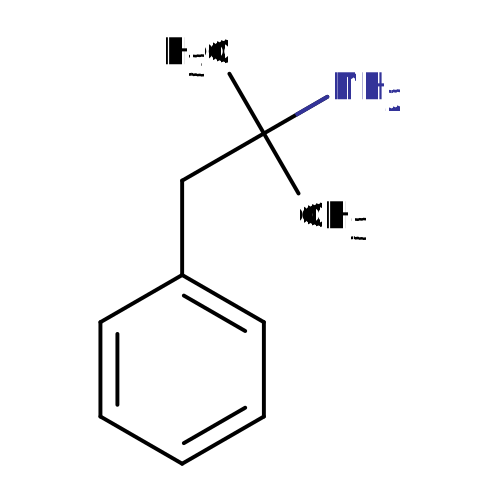
Structure for Phentermine (DB00191)
- Weight
- Average: 149.2328
Monoisotopic: 149.120449485 - Chemical Formula
- C10H15N
- Synonyms
- alpha,alpha-Dimethylphenethylamine
- Fentermina
- Phentermine
- Phentermine resin
- Phenterminum

Pharmacology
- Indication
Phentermine is indicated, alone or in combination with topiramate, as a short-term adjunct, not pass a few weeks, in a regimen of weight reduction based on exercise, behavioral modifications and caloric restriction in the management of exogenous obesity for patients with an initial body mass index (BMI) greater than 30 kg/m2 or greater than 27 kg/m2 in presence of other risk factors such as controller hypertension, diabetes or hyperlipidemia.Label
Exogenous obesity is considered when the overweight is caused by consuming more food than the person activity level warrants. This condition commonly causes an increase in fat storage. It is an epidemic condition in the United States where over two-thirds of adults are overweight or obese and one in three Americans is obese. In the world, the incidence of obesity has nearly doubled.7
 Reduce drug development failure ratesBuild, train, & validate machine-learning modelswith evidence-based and structured datasets.Build, train, & validate predictive machine-learning models with structured datasets.
- Associated Conditions
Indication Type Indication Combined Product Details Approval Level Age Group Patient Characteristics Dose Form Adjunct therapy in treatment of Obesity •••••••••••• ••• ••• •••••• ••••••••• •••••••••• ••••••••••••• •••••••••••••• •••••• Adjunct therapy in treatment of Obesity •••••••••••• ••• ••• ••••• •••••• Used in combination to manage Obesity Combination Product in combination with: Topiramate (DB00273) •••••••••••• Used in combination to manage Obesity Combination Product in combination with: Topiramate (DB00273) •••••••••••• ••• ••••••• ••••••••••• - Associated Therapies
- Contraindications & Blackbox Warnings
 Prevent Adverse Drug Events TodayTap into our Clinical API for life-saving information on contraindications & blackbox warnings, population restrictions, harmful risks, & more.Avoid life-threatening adverse drug events with our Clinical API
- Pharmacodynamics
It is reported that the main mechanism of action of phentermine is the generation of appetite suppression, maybe due to the increase in leptin, but it is considered that other mechanisms should be involved.4 Some reports have indicated that the weight loss effect is mainly due to the increase in resting energy expenditure.3
In clinical studies where phentermine was used as a monotherapy and as combination therapy, this drug has shown an average weight loss of 3.6 kg when compared with the placebo in 2-24 weeks. Patients treated with phentermine also showed increased maintenance of the weight after treatment discontinuation.3 As well, even though it is a derivative of the amphetamines, it has not been registered to produce any of the effects of amphetamine such as central nervous system stimulation, elevation of blood pressure, tachyphylaxis or QTc prolongation.4
- Mechanism of action
Phentermine is an indirect-acting sympathomimetic agent that acts by releasing noradrenaline from the presynaptic vesicles in the lateral hypothalamus. This increase in noradrenaline concentration in the synaptic cleft results in the stimulation of beta2-adrenergic receptors.3 Phentermine is classified as an indirect sympathomimetic due to the increase in the level of norepinephrine, dopamine and its indirect effect towards serotonin.10 Some reports have indicated that phentermine inhibits the neuropeptide Y which is a principal signaling pathway for the induction of hunger.8 This combined effect produces a continuous flight-or-fight response in the body which reduces the hunger signal as this state is on the immediate need for energy.8
Lastly, some reports have indicated that phentermine is a weak inhibitor of monoamine oxidase but this mechanism does not tend to produce a clinically significant response.9
Target Actions Organism ASodium-dependent noradrenaline transporter inhibitorHumans ASodium-dependent serotonin transporter inhibitorHumans ASodium-dependent dopamine transporter inhibitorHumans AAmine oxidase [flavin-containing] A antagonistHumans AAmine oxidase [flavin-containing] B antagonistHumans APro-neuropeptide Y inhibitorHumans - Absorption
Phentermine shows a dose-dependent pharmacokinetic profile. After oral administration of a dose of 15 mg, the maximal concentration was achieved after 6 hours and its bioavailability was not affected by the consumption of high-fat meals.4 The reported plasma concentration at steady-state is of around 200 ng/ml as observed in clinical trials.9
- Volume of distribution
The reported volume of distribution for phentermine is reported to be of 5 L/kg.11
- Protein binding
The protein binding of phentermine is determined to be of 17.5%.4
- Metabolism
Phentermine undergoes minimal p-hydroxylation, N-oxidation and N-hydroxylation followed by conjugation. The total proportion of the drug that goes under metabolism only represents about 6% of the administered dose where about 5% is represented by the N-oxidized and N-Hydroxylated metabolites.9
Hover over products below to view reaction partners
- Route of elimination
Phentermine is excreted mainly in the urine from which about 70-80% of the administered dose can be found as the unchanged drug.4
- Half-life
The mean terminal half-life of phentermine is reported to be of approximately 20 hours.4 In conditions where there is acidic urine (pH <5), the elimination half-life is of 7-8 hours.9
- Clearance
The reported clearance when administered orally is 8.79 L/h as observed in pharmacokinetic population studies.14
- Adverse Effects
 Improve decision support & research outcomesWith structured adverse effects data, including: blackbox warnings, adverse reactions, warning & precautions, & incidence rates. View sample adverse effects data in our new Data Library!Improve decision support & research outcomes with our structured adverse effects data.
- Toxicity
The reported LD50 after oral administration of phentermine in rats is reported to be of 151 mg/kg.12 Reports of acute overdose include restlessness, tremors, hyperreflexia, rapid respiration, confusion, assaultiveness, hallucinations and panic state followed by fatigue, and depression. In the cardiovascular system, there are reports of tachycardia, arrhythmia, hypertension, hypotension, circulatory collapse. In the GI tract, there are symptoms of nausea, vomiting, diarrhea and abdominal cramps. The management of acute overdosage includes symptomatic treatment as well as lavage and sedation with barbiturates.Label
On the other hand, chronic overdosage is marked by dermatoses, insomnia, irritability, hyperactivity and personality changes. In severe cases, it can derive into a schizophrenia-like psychosis.Label
Studies regarding the carcinogenic potential have not been performed. On the case of mutagenic assays, phentermine was shown to not be mutagenic nor clastogenic.Label
- Pathways
- Not Available
- Pharmacogenomic Effects/ADRs
- Not Available
Interactions
- Drug Interactions
- This information should not be interpreted without the help of a healthcare provider. If you believe you are experiencing an interaction, contact a healthcare provider immediately. The absence of an interaction does not necessarily mean no interactions exist.
Drug Interaction Integrate drug-drug
interactions in your softwareAbametapir The serum concentration of Phentermine can be increased when it is combined with Abametapir. Acarbose The therapeutic efficacy of Acarbose can be increased when used in combination with Phentermine. Acebutolol The therapeutic efficacy of Acebutolol can be decreased when used in combination with Phentermine. Aceclofenac The risk or severity of hypertension can be increased when Phentermine is combined with Aceclofenac. Acemetacin The risk or severity of hypertension can be increased when Phentermine is combined with Acemetacin. - Food Interactions
- Limit caffeine intake.
- Take with or without food. The absorption is unaffected by food.
Products
 Drug product information from 10+ global regionsOur datasets provide approved product information including:dosage, form, labeller, route of administration, and marketing period.Access drug product information from over 10 global regions.
- Product Ingredients
Ingredient UNII CAS InChI Key Phentermine hydrochloride 0K2I505OTV 1197-21-3 NCAIGTHBQTXTLR-UHFFFAOYSA-N - Product Images


- International/Other Brands
- Dapex (Fernidale Labs) / Duromine (iNova Pharmaceuticals) / Fastin (Hi-Tech Pharmaceuticals) / Obenix (Jones Pharma) / Obestin-30 (Fernidale Labs) / Oby-trim (Rexar) / Phentercot (Truven Health Analytics Inc) / Phentride (Truven Health Analytics Inc) / Umi-Pex (Fernidale Labs)
- Brand Name Prescription Products
Name Dosage Strength Route Labeller Marketing Start Marketing End Region Image Ionamin Capsule 30 mg/1 Oral UCB Manufacturing Inc 1959-05-04 2007-01-01 US 
Ionamin Capsule 15 mg/1 Oral UCB Manufacturing Inc 1959-05-04 2006-04-01 US Phentermine Hydrochloride Tablet 37.5 mg/1 Oral Vintage Pharmaceuticals, LLC 2007-01-26 2007-01-26 US Suprenza Tablet, orally disintegrating 37.5 mg/1 Oral Akrimax Pharmaceuticals, LLC 2012-12-14 2018-09-30 US Suprenza Tablet, orally disintegrating 15 mg/1 Oral Akrimax Pharmaceuticals, LLC 2012-12-14 2018-09-30 US - Generic Prescription Products
Name Dosage Strength Route Labeller Marketing Start Marketing End Region Image Adipex-P Tablet 37.5 mg/1 Oral PD-Rx Pharmaceuticals, Inc. 1990-09-30 Not applicable US Adipex-P Tablet 37.5 mg/1 Oral Teva Pharmaceuticals USA, Inc. 2020-12-08 Not applicable US Adipex-P Tablet 37.5 mg/1 Oral A S Medication Solutions 1990-09-30 Not applicable US 
Adipex-P Tablet 37.5 mg/1 Oral A-S Medication Solutions 1990-09-30 2015-04-30 US 
Adipex-P Capsule 37.5 mg/1 Oral Teva Pharmaceuticals USA, Inc. 1990-09-30 2024-02-29 US 
- Mixture Products
Name Ingredients Dosage Route Labeller Marketing Start Marketing End Region Image Qsymia Phentermine hydrochloride (15 mg/1) + Topiramate (92 mg/1) Capsule, extended release Oral VIVUS LLC 2012-09-17 Not applicable US Qsymia Phentermine hydrochloride (7.5 mg/1) + Topiramate (46 mg/1) Capsule, extended release Oral VIVUS LLC 2012-09-17 Not applicable US Qsymia Phentermine hydrochloride (11.25 mg/1) + Topiramate (69 mg/1) Capsule, extended release Oral VIVUS LLC 2012-09-17 Not applicable US Qsymia Phentermine hydrochloride (3.75 mg/1) + Topiramate (23 mg/1) Capsule, extended release Oral VIVUS LLC 2012-09-17 Not applicable US


Categories
- ATC Codes
- A08AA01 — Phentermine
- A08AA — Centrally acting antiobesity products
- A08A — ANTIOBESITY PREPARATIONS, EXCL. DIET PRODUCTS
- A08 — ANTIOBESITY PREPARATIONS, EXCL. DIET PRODUCTS
- A — ALIMENTARY TRACT AND METABOLISM
- Drug Categories
- Adrenergic Agents
- Agents producing tachycardia
- Agents that produce hypertension
- Alimentary Tract and Metabolism
- Amines
- Amphetamines
- Anti-Obesity Agents
- Antiobesity Preparations, Excl. Diet Products
- Appetite Depressants
- Appetite Suppression
- Autonomic Agents
- Central Nervous System Agents
- Centrally Acting Antiobesity Products
- Cytochrome P-450 CYP3A Substrates
- Cytochrome P-450 CYP3A4 Substrates
- Cytochrome P-450 CYP3A4 Substrates (strength unknown)
- Cytochrome P-450 Substrates
- Increased Sympathetic Activity
- Monoamine Oxidase A Inhibitors for interaction with Monoamine Oxidase A substrates
- Neurotransmitter Agents
- Peripheral Nervous System Agents
- Phenethylamines
- Serotonergic Drugs Shown to Increase Risk of Serotonin Syndrome
- Sympathomimetic Amine Anorectic
- Sympathomimetics
- Chemical TaxonomyProvided by Classyfire
- Description
- This compound belongs to the class of organic compounds known as amphetamines and derivatives. These are organic compounds containing or derived from 1-phenylpropan-2-amine.
- Kingdom
- Organic compounds
- Super Class
- Benzenoids
- Class
- Benzene and substituted derivatives
- Sub Class
- Phenethylamines
- Direct Parent
- Amphetamines and derivatives
- Alternative Parents
- Phenylpropanes / Aralkylamines / Organopnictogen compounds / Monoalkylamines / Hydrocarbon derivatives
- Substituents
- Amine / Amphetamine or derivatives / Aralkylamine / Aromatic homomonocyclic compound / Hydrocarbon derivative / Organic nitrogen compound / Organonitrogen compound / Organopnictogen compound / Phenylpropane / Primary aliphatic amine
- Molecular Framework
- Aromatic homomonocyclic compounds
- External Descriptors
- primary amine (CHEBI:8080)
- Affected organisms
- Humans and other mammals
Chemical Identifiers
- UNII
- C045TQL4WP
- CAS number
- 122-09-8
- InChI Key
- DHHVAGZRUROJKS-UHFFFAOYSA-N
- InChI
- InChI=1S/C10H15N/c1-10(2,11)8-9-6-4-3-5-7-9/h3-7H,8,11H2,1-2H3
- IUPAC Name
- 2-methyl-1-phenylpropan-2-amine
- SMILES
- CC(C)(N)CC1=CC=CC=C1
References
- General References
- Johnson DB, Quick J: Topiramate And Phentermine . [Article]
- Ryder JR, Kaizer A, Rudser KD, Gross A, Kelly AS, Fox CK: Effect of phentermine on weight reduction in a pediatric weight management clinic. Int J Obes (Lond). 2017 Jan;41(1):90-93. doi: 10.1038/ijo.2016.185. Epub 2016 Oct 24. [Article]
- Kiortsis DN: A review of the metabolic effects of controlled-release Phentermine/Topiramate. Hormones (Athens). 2013 Oct-Dec;12(4):507-16. [Article]
- Garvey WT: Phentermine and topiramate extended-release: a new treatment for obesity and its role in a complications-centric approach to obesity medical management. Expert Opin Drug Saf. 2013 Sep;12(5):741-56. doi: 10.1517/14740338.2013.806481. Epub 2013 Jun 6. [Article]
- Bersoux S, Byun TH, Chaliki SS, Poole KG: Pharmacotherapy for obesity: What you need to know. Cleve Clin J Med. 2017 Dec;84(12):951-958. doi: 10.3949/ccjm.84a.16094. [Article]
- Weigle DS: Pharmacological therapy of obesity: past, present, and future. J Clin Endocrinol Metab. 2003 Jun;88(6):2462-9. doi: 10.1210/jc.2003-030151. [Article]
- Adebonojo FO: Primary exogenous obesity. A conceptual classification. Clin Pediatr (Phila). 1974 Sep;13(9):715-8. doi: 10.1177/000992287401300901. [Article]
- May S. (2009). Weight-Loss Drugs. Chelsea House Publishers. [ISBN:978-1-60413-204-5]
- Barceloux D.G. (2012). Medical toxicology of drug abuse: Synthesized chemicals and psychoactive plants.. Wiley.
- EmpowerPharmacy [Link]
- Inchem [Link]
- FDA reports [Link]
- FDA Approved Drug Products: Qsymia (phentermine and topiramate), extended-release capsules for oral use [Link]
- QSYMIA (phentermine/topiramate) FDA label [File]
- External Links
- Human Metabolome Database
- HMDB0014337
- KEGG Drug
- D05458
- KEGG Compound
- C07438
- PubChem Compound
- 4771
- PubChem Substance
- 46508515
- ChemSpider
- 4607
- BindingDB
- 50246598
- 221138
- ChEBI
- 8080
- ChEMBL
- CHEMBL1574
- ZINC
- ZINC000008403947
- Therapeutic Targets Database
- DAP000719
- PharmGKB
- PA164748099
- RxList
- RxList Drug Page
- Drugs.com
- Drugs.com Drug Page
- Wikipedia
- Phentermine
- FDA label
- Download (306 KB)
- MSDS
- Download (48.2 KB)
Clinical Trials
- Clinical Trials
Phase Status Purpose Conditions Count 4 Active Not Recruiting Treatment Obesity 1 4 Active Not Recruiting Treatment Obesity / Type 2 Diabetes Mellitus 1 4 Completed Other Obesity 1 4 Completed Treatment Blood Pressures 1 4 Completed Treatment Chronic Weight Management therapy 1
Pharmacoeconomics
- Manufacturers
- Baxter healthcare corp anesthesia critical care
- Teva pharmaceuticals usa inc
- Glaxosmithkline
- Ferndale laboratories inc
- Shire richwood inc
- Mm mast and co
- Abc holding corp
- Able laboratories inc
- Actavis totowa llc
- Barr laboratories inc
- Camall co inc
- Duramed pharmaceuticals inc sub barr laboratories inc
- Ivax pharmaceuticals inc
- Kvk tech inc
- Lannett co inc
- Lannett holdings inc
- Mutual pharmaceutical co inc
- Sandoz inc
- Tg united inc
- Tg united labs llc
- Usl pharma inc
- Vitarine pharmaceuticals inc
- Watson laboratories inc
- Actavis elizabeth llc
- Caraco pharmaceutical laboratories ltd
- Vintage pharmaceuticals inc
- Solvay pharmaceuticals
- Ucb inc
- Quantum pharmics ltd
- Packagers
- Apotheca Inc.
- A-S Medication Solutions LLC
- Blenheim Pharmacal
- Bryant Ranch Prepack
- C.O. Truxton Inc.
- Calvin Scott and Co. Inc.
- Caraco Pharmaceutical Labs
- Carlisle Laboratories Inc.
- Corepharma LLC
- Darby Dental Supply Co. Inc.
- DispenseXpress Inc.
- Dispensing Solutions
- Diversified Healthcare Services Inc.
- EMS Acquisition Corp.
- Eon Labs
- Gate Pharmaceuticals
- H.J. Harkins Co. Inc.
- Keltman Pharmaceuticals Inc.
- Kraft Pharmaceutical Co. Inc.
- KVK-Tech Inc.
- Lake Erie Medical and Surgical Supply
- Lannett Co. Inc.
- Macnary Ltd.
- Major Pharmaceuticals
- MCR American Pharmaceuticals Inc.
- Medisca Inc.
- Mutual Pharmaceutical Co.
- Nucare Pharmaceuticals Inc.
- Palmetto Pharmaceuticals Inc.
- PCA LLC
- PD-Rx Pharmaceuticals Inc.
- Pharma Pac LLC
- Physicians Total Care Inc.
- Preferred Pharmaceuticals Inc.
- Prepak Systems Inc.
- Prescript Pharmaceuticals
- Qualitest
- Quality Research Pharmaceutical Inc.
- Rebel Distributors Corp.
- Redpharm Drug
- Southwood Pharmaceuticals
- Stat Rx Usa
- Superior Pharmeceuticals
- Teva Pharmaceutical Industries Ltd.
- UCB Pharma
- United Research Laboratories Inc.
- Vintage Pharmaceuticals Inc.
- Dosage Forms
Form Route Strength Tablet Oral 30.00 mg Tablet Oral Capsule Oral Capsule Oral 30 mg / cap Tablet Oral 18.750 mg Tablet Oral 30.000 mg Capsule Oral 15 mg Capsule Oral 30 mg Tablet Oral 8 mg/1 Capsule Oral 15 mg/1 Capsule Oral 30 mg/1 Capsule Oral 37.5 mg/1 Tablet Oral 30 mg/1 Tablet Oral 37.5 mg/1 Capsule, extended release Oral 15 mg/1 Capsule, extended release Oral 30 mg/1 Capsule, extended release Oral Capsule Oral 5.000 mg Tablet, orally disintegrating Oral 15 mg/1 Tablet, orally disintegrating Oral 30 mg/1 Tablet, orally disintegrating Oral 37.5 mg/1 Tablet Oral 15.00 mg - Prices
Unit description Cost Unit Phentermine hcl powder 10.71USD g Ionamin 30 mg capsule sa 2.87USD capsule Adipex-P 37.5 mg capsule 2.2USD capsule Adipex-p 37.5 mg tablet 2.15USD tablet Phentermine 37.5 mg tablet 1.54USD tablet Phentermine HCl 15 mg capsule 1.18USD capsule Phentermine HCl 30 mg capsule 1.17USD capsule Ionamin 15 mg capsule sa 1.15USD capsule Phentermine HCl 37.5 mg capsule 1.0USD capsule Phentermine HCl 37.5 mg tablet 1.0USD tablet Phentermine 8 mg tablet 0.54USD tablet DrugBank does not sell nor buy drugs. Pricing information is supplied for informational purposes only.- Patents
Patent Number Pediatric Extension Approved Expires (estimated) Region US6071537 No 2000-06-06 2017-06-23 US US8895057 No 2014-11-25 2028-06-09 US US7056890 No 2006-06-06 2020-06-14 US US7553818 No 2009-06-30 2020-06-14 US US7659256 No 2010-02-09 2020-06-14 US US7674776 No 2010-03-09 2020-06-14 US US8580299 No 2013-11-12 2029-06-14 US US9011906 No 2015-04-21 2028-06-09 US US9011905 No 2015-04-21 2028-06-09 US US8895058 No 2014-11-25 2028-06-09 US US8580298 No 2013-11-12 2029-05-15 US US6149938 No 2000-11-21 2018-07-23 US US8440170 No 2013-05-14 2029-03-14 US
Properties
- State
- Solid
- Experimental Properties
Property Value Source melting point (°C) 205 °C 'MSDS' boiling point (°C) 206 ºC Barceloux D. (2012). Medical Toxicology of Drug Abuse. water solubility 18.6 g/L Gravey W. (2013). Expert Opin Drug Saf. logP 1.90 Barceloux D. (2012). Medical Toxicology of Drug Abuse. pKa 9.84 Suprenza - package insert. (2014) - Predicted Properties
Property Value Source Water Solubility 0.757 mg/mL ALOGPS logP 2.32 ALOGPS logP 2.08 Chemaxon logS -2.3 ALOGPS pKa (Strongest Basic) 10.25 Chemaxon Physiological Charge 1 Chemaxon Hydrogen Acceptor Count 1 Chemaxon Hydrogen Donor Count 1 Chemaxon Polar Surface Area 26.02 Å2 Chemaxon Rotatable Bond Count 2 Chemaxon Refractivity 48.34 m3·mol-1 Chemaxon Polarizability 17.87 Å3 Chemaxon Number of Rings 1 Chemaxon Bioavailability 1 Chemaxon Rule of Five Yes Chemaxon Ghose Filter No Chemaxon Veber's Rule Yes Chemaxon MDDR-like Rule No Chemaxon - Predicted ADMET Features
Property Value Probability Human Intestinal Absorption + 0.9964 Blood Brain Barrier + 0.959 Caco-2 permeable + 0.7688 P-glycoprotein substrate Non-substrate 0.6477 P-glycoprotein inhibitor I Non-inhibitor 0.934 P-glycoprotein inhibitor II Non-inhibitor 0.9801 Renal organic cation transporter Non-inhibitor 0.8236 CYP450 2C9 substrate Non-substrate 0.8411 CYP450 2D6 substrate Substrate 0.7204 CYP450 3A4 substrate Non-substrate 0.6493 CYP450 1A2 substrate Non-inhibitor 0.7962 CYP450 2C9 inhibitor Non-inhibitor 0.8861 CYP450 2D6 inhibitor Inhibitor 0.7825 CYP450 2C19 inhibitor Non-inhibitor 0.8996 CYP450 3A4 inhibitor Non-inhibitor 0.7348 CYP450 inhibitory promiscuity Low CYP Inhibitory Promiscuity 0.8782 Ames test Non AMES toxic 0.9681 Carcinogenicity Non-carcinogens 0.6949 Biodegradation Not ready biodegradable 0.9303 Rat acute toxicity 2.8400 LD50, mol/kg Not applicable hERG inhibition (predictor I) Weak inhibitor 0.9867 hERG inhibition (predictor II) Non-inhibitor 0.8734
Spectra
- Mass Spec (NIST)
- Download (7.33 KB)
- Spectra
- Chromatographic Properties
Collision Cross Sections (CCS)
Adduct CCS Value (Å2) Source type Source [M-H]- 136.7536095 predictedDarkChem Lite v0.1.0 [M-H]- 135.7753095 predictedDarkChem Lite v0.1.0 [M-H]- 132.88089 predictedDeepCCS 1.0 (2019) [M+H]+ 137.2661095 predictedDarkChem Lite v0.1.0 [M+H]+ 136.4448095 predictedDarkChem Lite v0.1.0 [M+H]+ 136.18437 predictedDeepCCS 1.0 (2019) [M+Na]+ 137.2455095 predictedDarkChem Lite v0.1.0 [M+Na]+ 136.1386095 predictedDarkChem Lite v0.1.0 [M+Na]+ 145.56657 predictedDeepCCS 1.0 (2019)
Targets

- Kind
- Protein
- Organism
- Humans
- Pharmacological action
- Yes
- Actions
- Inhibitor
- General Function
- Norepinephrine:sodium symporter activity
- Specific Function
- Amine transporter. Terminates the action of noradrenaline by its high affinity sodium-dependent reuptake into presynaptic terminals.
- Gene Name
- SLC6A2
- Uniprot ID
- P23975
- Uniprot Name
- Sodium-dependent noradrenaline transporter
- Molecular Weight
- 69331.42 Da
References
- Overington JP, Al-Lazikani B, Hopkins AL: How many drug targets are there? Nat Rev Drug Discov. 2006 Dec;5(12):993-6. [Article]
- Imming P, Sinning C, Meyer A: Drugs, their targets and the nature and number of drug targets. Nat Rev Drug Discov. 2006 Oct;5(10):821-34. [Article]
- Stephens LC, Katz SG: Phentermine and anaesthesia. Anaesth Intensive Care. 2005 Aug;33(4):525-7. [Article]
- Samanin R, Garattini S: Neurochemical mechanism of action of anorectic drugs. Pharmacol Toxicol. 1993 Aug;73(2):63-8. [Article]
- Proietto J, Fam BC, Ainslie DA, Thorburn AW: Novel anti-obesity drugs. Expert Opin Investig Drugs. 2000 Jun;9(6):1317-26. [Article]
- Kind
- Protein
- Organism
- Humans
- Pharmacological action
- Yes
- Actions
- Inhibitor
- General Function
- Serotonin:sodium symporter activity
- Specific Function
- Serotonin transporter whose primary function in the central nervous system involves the regulation of serotonergic signaling via transport of serotonin molecules from the synaptic cleft back into t...
- Gene Name
- SLC6A4
- Uniprot ID
- P31645
- Uniprot Name
- Sodium-dependent serotonin transporter
- Molecular Weight
- 70324.165 Da
References
- John CE, Jones SR: Voltammetric characterization of the effect of monoamine uptake inhibitors and releasers on dopamine and serotonin uptake in mouse caudate-putamen and substantia nigra slices. Neuropharmacology. 2007 Jun;52(8):1596-605. Epub 2007 Mar 16. [Article]
- Johnson GJ, Leis LA, Dunlop PC, Weir EK: The effect of the anorectic agent, d-fenfluramine, and its primary metabolite, d-norfenfluramine, on intact human platelet serotonin uptake and efflux. J Thromb Haemost. 2003 Dec;1(12):2663-8. [Article]
- Mekontso-Dessap A, Brouri F, Pascal O, Lechat P, Hanoun N, Lanfumey L, Seif I, Benhaiem-Sigaux N, Kirsch M, Hamon M, Adnot S, Eddahibi S: Deficiency of the 5-hydroxytryptamine transporter gene leads to cardiac fibrosis and valvulopathy in mice. Circulation. 2006 Jan 3;113(1):81-9. Epub 2005 Dec 27. [Article]
- Rothman RB, Ayestas MA, Dersch CM, Baumann MH: Aminorex, fenfluramine, and chlorphentermine are serotonin transporter substrates. Implications for primary pulmonary hypertension. Circulation. 1999 Aug 24;100(8):869-75. [Article]
- Zolkowska D, Rothman RB, Baumann MH: Amphetamine analogs increase plasma serotonin: implications for cardiac and pulmonary disease. J Pharmacol Exp Ther. 2006 Aug;318(2):604-10. Epub 2006 Apr 27. [Article]
- Kind
- Protein
- Organism
- Humans
- Pharmacological action
- Yes
- Actions
- Inhibitor
- General Function
- Monoamine transmembrane transporter activity
- Specific Function
- Amine transporter. Terminates the action of dopamine by its high affinity sodium-dependent reuptake into presynaptic terminals.
- Gene Name
- SLC6A3
- Uniprot ID
- Q01959
- Uniprot Name
- Sodium-dependent dopamine transporter
- Molecular Weight
- 68494.255 Da
References
- John CE, Jones SR: Voltammetric characterization of the effect of monoamine uptake inhibitors and releasers on dopamine and serotonin uptake in mouse caudate-putamen and substantia nigra slices. Neuropharmacology. 2007 Jun;52(8):1596-605. Epub 2007 Mar 16. [Article]
- Gruner JA, Marcy VR, Lin YG, Bozyczko-Coyne D, Marino MJ, Gasior M: The roles of dopamine transport inhibition and dopamine release facilitation in wake enhancement and rebound hypersomnolence induced by dopaminergic agents. Sleep. 2009 Nov;32(11):1425-38. [Article]
- Kind
- Protein
- Organism
- Humans
- Pharmacological action
- Yes
- Actions
- Antagonist
- General Function
- Serotonin binding
- Specific Function
- Catalyzes the oxidative deamination of biogenic and xenobiotic amines and has important functions in the metabolism of neuroactive and vasoactive amines in the central nervous system and peripheral...
- Gene Name
- MAOA
- Uniprot ID
- P21397
- Uniprot Name
- Amine oxidase [flavin-containing] A
- Molecular Weight
- 59681.27 Da
References
- Rothman RB: Is phentermine an inhibitor of monoamine oxidase? A critical appraisal. Synapse. 1999 May;32(2):141-5. [Article]
- Ulus IH, Maher TJ, Wurtman RJ: Characterization of phentermine and related compounds as monoamine oxidase (MAO) inhibitors. Biochem Pharmacol. 2000 Jun 15;59(12):1611-21. [Article]
- Kilpatrick IC, Traut M, Heal DJ: Monoamine oxidase inhibition is unlikely to be relevant to the risks associated with phentermine and fenfluramine: a comparison with their abilities to evoke monoamine release. Int J Obes Relat Metab Disord. 2001 Oct;25(10):1454-8. [Article]
- Nandigama RK, Newton-Vinson P, Edmondson DE: Phentermine inhibition of recombinant human liver monoamine oxidases A and B. Biochem Pharmacol. 2002 Mar 1;63(5):865-9. [Article]
- Kind
- Protein
- Organism
- Humans
- Pharmacological action
- Yes
- Actions
- Antagonist
- General Function
- Primary amine oxidase activity
- Specific Function
- Catalyzes the oxidative deamination of biogenic and xenobiotic amines and has important functions in the metabolism of neuroactive and vasoactive amines in the central nervous system and peripheral...
- Gene Name
- MAOB
- Uniprot ID
- P27338
- Uniprot Name
- Amine oxidase [flavin-containing] B
- Molecular Weight
- 58762.475 Da
References
- Rothman RB: Does phentermine inhibit monoamine oxidase? Lancet. 1999 Apr 17;353(9161):1362-3. [Article]
- Rothman RB: Is phentermine an inhibitor of monoamine oxidase? A critical appraisal. Synapse. 1999 May;32(2):141-5. [Article]
- Ulus IH, Maher TJ, Wurtman RJ: Characterization of phentermine and related compounds as monoamine oxidase (MAO) inhibitors. Biochem Pharmacol. 2000 Jun 15;59(12):1611-21. [Article]
- Kilpatrick IC, Traut M, Heal DJ: Monoamine oxidase inhibition is unlikely to be relevant to the risks associated with phentermine and fenfluramine: a comparison with their abilities to evoke monoamine release. Int J Obes Relat Metab Disord. 2001 Oct;25(10):1454-8. [Article]
- Nandigama RK, Newton-Vinson P, Edmondson DE: Phentermine inhibition of recombinant human liver monoamine oxidases A and B. Biochem Pharmacol. 2002 Mar 1;63(5):865-9. [Article]
- Kind
- Protein
- Organism
- Humans
- Pharmacological action
- Yes
- Actions
- Inhibitor
- General Function
- Receptor binding
- Specific Function
- NPY is implicated in the control of feeding and in secretion of gonadotrophin-release hormone.
- Gene Name
- NPY
- Uniprot ID
- P01303
- Uniprot Name
- Pro-neuropeptide Y
- Molecular Weight
- 10851.29 Da
References
- May S. (2009). Weight-Loss Drugs. Chelsea House Publishers. [ISBN:978-1-60413-204-5]
Enzymes
- Kind
- Protein
- Organism
- Humans
- Pharmacological action
- No
- Actions
- Substrate
- General Function
- Vitamin d3 25-hydroxylase activity
- Specific Function
- Cytochromes P450 are a group of heme-thiolate monooxygenases. In liver microsomes, this enzyme is involved in an NADPH-dependent electron transport pathway. It performs a variety of oxidation react...
- Gene Name
- CYP3A4
- Uniprot ID
- P08684
- Uniprot Name
- Cytochrome P450 3A4
- Molecular Weight
- 57342.67 Da
References
- QSYMIA (phentermine/topiramate) FDA label [File]


Drug created at June 13, 2005 13:24 / Updated at April 09, 2024 18:20