Identification
- Summary
Acarbose is an alpha-glucosidase inhibitor used in adjunctly with diet and exercise for the management of glycemic control in patients with type 2 diabetes mellitus.
- Brand Names
- Precose
- Generic Name
- Acarbose
- DrugBank Accession Number
- DB00284
- Background
Acarbose is a complex oligosaccharide that acts as an inhibitor of several enzymes responsible for the breakdown of complex carbohydrates in the intestines. It inhibits both pancreatic alpha-amylase and membrane-bound alpha-glucosidases - including intestinal glucoamylase, sucrase, maltase, and isomaltase - which are responsible for the metabolism of complex starches and oligo-, tri-, and disaccharides into absorbable simple sugars.7,4 By inhibiting the activity of these enzymes, acarbose limits the absorption of dietary carbohydrates and the subsequent postprandial increase in blood glucose and insulin levels. Acarbose is therefore used in conjunction with diet, exercise, and other pharmacotherapies for the management of blood sugar levels in patients with type 2 diabetes.6,7
Acarbose is one of only two approved alpha-glucosidase inhibitors (the other being miglitol), receiving its first FDA approval in 1995 under the brand name Precose (since discontinued).9 This class of antidiabetic therapy is not widely used due to their relatively modest impact on A1c, their requirement for thrice-daily dosing, and the potential for significant gastrointestinal adverse effects.9
- Type
- Small Molecule
- Groups
- Approved, Investigational
- Structure
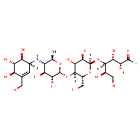
Structure for Acarbose (DB00284)

- Weight
- Average: 645.608
Monoisotopic: 645.248013549 - Chemical Formula
- C25H43NO18
- Synonyms
- Acarbosa
- Acarbose
- Acarbosum
- External IDs
- Bay g 5421
- BAY-g 5421
- BAY-G-5421
- BAYG5421
- HSDB 7984

Pharmacology
- Indication
Acarbose is indicated as an adjunct to diet and exercise to improve glycemic control in adults with type 2 diabetes mellitus.6
 Reduce drug development failure ratesBuild, train, & validate machine-learning modelswith evidence-based and structured datasets.Build, train, & validate predictive machine-learning models with structured datasets.
- Associated Conditions
Indication Type Indication Combined Product Details Approval Level Age Group Patient Characteristics Dose Form Adjunct therapy in management of Type 2 diabetes mellitus •••••••••••• •••••• - Contraindications & Blackbox Warnings
 Prevent Adverse Drug Events TodayTap into our Clinical API for life-saving information on contraindications & blackbox warnings, population restrictions, harmful risks, & more.Avoid life-threatening adverse drug events with our Clinical API
- Pharmacodynamics
Acarbose is a complex oligosaccharide that competitively inhibits the ability of brush-border alpha-glucosidase enzymes to break down ingested carbohydrates into absorbable monosaccharides, reducing carbohydrate absorption and subsequent postprandial insulin levels.4 Acarbose requires the co-administration of carbohydrates in order to exert its therapeutic effect, and as such should be taken with the first bite of a meal three times daily.7
Given its mechanism of action, acarbose in isolation poses little risk of contributing to hypoglycemia - this risk is more pronounced, however, when acarbose is used in conjunction with other antidiabetic therapies (e.g. sulfonylureas, insulin).7 Patients maintained on acarbose in addition to other antidiabetic agents should be aware of the symptoms and risks of hypoglycemia and how to treat hypoglycemic episodes. There have been rare post-marketing reports of the development of pneumatosis cystoides intestinalis following treatment with alpha-glucosidase inhibitors - patients experiencing significant diarrhea/constipation, mucus discharge, and/or rectal bleeding should be investigated and, if pneumatosis cystoides intestinalis is suspected, should discontinue therapy.6
- Mechanism of action
Alpha-glucosidase enzymes are located in the brush-border of the intestinal mucosa and serve to metabolize oligo-, tri-, and disaccharides (e.g. sucrose) into smaller monosaccharides (e.g. glucose, fructose) which are more readily absorbed.4 These work in conjunction with pancreatic alpha-amylase, an enzyme found in the intestinal lumen that hydrolyzes complex starches to oligosaccharides.7
Acarbose is a complex oligosaccharide that competitively and reversibly inhibits both pancreatic alpha-amylase and membrane-bound alpha-glucosidases - of the alpha-glucosidases, inhibitory potency appears to follow a rank order of glucoamylase > sucrase > maltase > isomaltase.7 By preventing the metabolism and subsequent absorption of dietary carbohydrates, acarbose reduces postprandial blood glucose and insulin levels.
Target Actions Organism AMaltase-glucoamylase, intestinal inhibitorHumans ASucrase-isomaltase, intestinal inhibitorHumans APancreatic alpha-amylase inhibitorHumans ULysosomal alpha-glucosidase inhibitorHumans - Absorption
The oral bioavailability of acarbose is extremely minimal, with less than 1-2% of orally administered parent drug reaching the systemic circulation. Despite this, approximately 35% of the total radioactivity from a radiolabeled and orally administered dose of acarbose reaches the systemic circulation, with peak plasma radioactivity occurring 14-24 hours after dosing - this delay is likely reflective of metabolite absorption rather than absorption of the parent drug. As acarbose is intended to work within the gut, its minimal degree of oral bioavailability is therapeutically desirable.6
- Volume of distribution
Not Available
- Protein binding
As only 1-2% of an orally administered dose is absorbed into the circulation, acarbose is unlikely to be subject to clinically relevant protein binding.7
- Metabolism
Acarbose is extensively metabolized within the gastrointestinal tract, primarily by intestinal bacteria and to a lesser extent by digestive enzymes, into at least 13 identified metabolites. Approximately 1/3 of these metabolites are absorbed into the circulation where they are subsequently renally excreted. The major metabolites appear to be methyl, sulfate, and glucuronide conjugates of 4-methylpyrogallol.6
Only one metabolite - resulting from the cleavage of a glucose molecule from acarbose - has been identified as having alpha-glucosidase inhibitory activity.6
- Route of elimination
Roughly half of an orally administered dose is excreted in the feces within 96 hours of administration.7 What little drug material is absorbed into the systemic circulation (approximately 34% of an orally administered dose) is excreted primarily by the kidneys, suggesting renal excretion would be a significant route of elimination if the parent drug was more readily absorbed - this is further supported by data in which approximately 89% of an intravenously administered dose of acarbose was excreted in the urine as active drug (in comparison to <2% following oral administration) within 48 hours.7
- Half-life
In healthy volunteers, the plasma elimination half-life of acarbose is approximately 2 hours.6
- Clearance
Not Available
- Adverse Effects
 Improve decision support & research outcomesWith structured adverse effects data, including: blackbox warnings, adverse reactions, warning & precautions, & incidence rates. View sample adverse effects data in our new Data Library!Improve decision support & research outcomes with our structured adverse effects data.
- Toxicity
The symptoms of acarbose overdose are likely to be consistent with its adverse effect profile and may therefore include significant gastrointestinal (GI) symptoms (flatulence, distension, etc), although an overdose on an empty stomach (i.e. when not co-administered with food) is less likely to result in these GI symptoms.6 In the event of an overdose, patients should be instructed to avoid carbohydrate-containing foods for 4-6 hours following administration as these can precipitate the aforementioned GI symptoms.6
- Pathways
- Not Available
- Pharmacogenomic Effects/ADRs
- Not Available
Interactions
- Drug Interactions
- This information should not be interpreted without the help of a healthcare provider. If you believe you are experiencing an interaction, contact a healthcare provider immediately. The absence of an interaction does not necessarily mean no interactions exist.
Drug Interaction Integrate drug-drug
interactions in your softwareAcebutolol The therapeutic efficacy of Acarbose can be increased when used in combination with Acebutolol. Acetazolamide The therapeutic efficacy of Acarbose can be increased when used in combination with Acetazolamide. Acetohexamide The risk or severity of hypoglycemia can be increased when Acarbose is combined with Acetohexamide. Acetyl sulfisoxazole The therapeutic efficacy of Acarbose can be increased when used in combination with Acetyl sulfisoxazole. Acetylsalicylic acid The risk or severity of hypoglycemia can be increased when Acetylsalicylic acid is combined with Acarbose. - Food Interactions
- Take with food. Each dose should be taken with the first bite of a main meal.
Products
 Drug product information from 10+ global regionsOur datasets provide approved product information including:dosage, form, labeller, route of administration, and marketing period.Access drug product information from over 10 global regions.
- Product Images
- International/Other Brands
- Glucobay / Prandase (Bayer AG) / Precose
- Brand Name Prescription Products
Name Dosage Strength Route Labeller Marketing Start Marketing End Region Image Acarbose Tablets Tablet 100 mg Oral Strides Pharma Canada Inc 2020-05-28 Not applicable Canada 
Acarbose Tablets Tablet 50 mg Oral Strides Pharma Canada Inc 2020-05-28 Not applicable Canada Glucobay Tablet 50 mg Oral Bayer 1996-02-02 2023-07-10 Canada Glucobay Tablet 100 mg Oral Bayer 1996-02-02 2023-07-10 Canada Precose Tablet 25 mg/1 Oral Bayer HealthCare Pharmaceuticals Inc. 2008-01-30 Not applicable US 
- Generic Prescription Products
Name Dosage Strength Route Labeller Marketing Start Marketing End Region Image Acarbose Tablet 100 mg/1 Oral A-S Medication Solutions 2015-02-01 Not applicable US Acarbose Tablet 100 mg/1 Oral AvKARE 2013-12-24 2023-06-30 US Acarbose Tablet 25 mg/1 Oral Proficient Rx LP 2015-02-01 Not applicable US Acarbose Tablet 100 mg/1 Oral Impax Generics 2009-05-14 2017-04-30 US Acarbose Tablet 50 mg/1 Oral Actavis Pharma, Inc. 2008-05-08 2017-07-31 US 


Categories
- ATC Codes
- A10BD17 — Metformin and acarbose
- A10BD — Combinations of oral blood glucose lowering drugs
- A10B — BLOOD GLUCOSE LOWERING DRUGS, EXCL. INSULINS
- A10 — DRUGS USED IN DIABETES
- A — ALIMENTARY TRACT AND METABOLISM
- Drug Categories
- Chemical TaxonomyProvided by Classyfire
- Description
- This compound belongs to the class of organic compounds known as aminocyclitol glycosides. These are organic compounds containing an amicocyclitol moiety glycosidically linked to a carbohydrate moiety. There are two major classes of aminoglycosides containing a 2-streptamine core. They are called 4,5- and 4,6-disubstituted 2-deoxystreptamines.
- Kingdom
- Organic compounds
- Super Class
- Organic oxygen compounds
- Class
- Organooxygen compounds
- Sub Class
- Carbohydrates and carbohydrate conjugates
- Direct Parent
- Aminocyclitol glycosides
- Alternative Parents
- Oligosaccharides / Alkyl glycosides / O-glycosyl compounds / Beta-hydroxy aldehydes / Cyclitols and derivatives / Oxanes / Alpha-hydroxyaldehydes / 1,2-aminoalcohols / Secondary alcohols / Polyols show 7 more
- Substituents
- 1,2-aminoalcohol / Acetal / Alcohol / Aldehyde / Aliphatic heteromonocyclic compound / Alkyl glycoside / Alpha-hydroxyaldehyde / Amine / Amino cyclitol glycoside / Beta-hydroxy aldehyde show 20 more
- Molecular Framework
- Aliphatic heteromonocyclic compounds
- External Descriptors
- Not Available
- Affected organisms
- Humans and other mammals
Chemical Identifiers
- UNII
- T58MSI464G
- CAS number
- 56180-94-0
- InChI Key
- CEMXHAPUFJOOSV-XGWNLRGSSA-N
- InChI
- InChI=1S/C25H43NO18/c1-7-13(26-9-2-8(3-27)14(33)18(37)15(9)34)17(36)20(39)24(41-7)44-23-12(6-30)42-25(21(40)19(23)38)43-22(11(32)5-29)16(35)10(31)4-28/h2,4,7,9-27,29-40H,3,5-6H2,1H3/t7-,9+,10+,11-,12-,13-,14-,15+,16-,17+,18+,19-,20-,21-,22-,23-,24-,25-/m1/s1
- IUPAC Name
- (2R,3R,4R,5R)-4-{[(2R,3R,4R,5S,6R)-5-{[(2R,3R,4S,5S,6R)-3,4-dihydroxy-6-methyl-5-{[(1S,4R,5S,6S)-4,5,6-trihydroxy-3-(hydroxymethyl)cyclohex-2-en-1-yl]amino}oxan-2-yl]oxy}-3,4-dihydroxy-6-(hydroxymethyl)oxan-2-yl]oxy}-2,3,5,6-tetrahydroxyhexanal
- SMILES
- [H]C(=O)[C@H](O)[C@@H](O)[C@]([H])(O[C@@]1([H])O[C@H](CO)[C@@]([H])(O[C@H]2O[C@H](C)[C@@H](N[C@@]3([H])C=C(CO)[C@@H](O)[C@H](O)[C@H]3O)[C@H](O)[C@H]2O)[C@H](O)[C@H]1O)[C@H](O)CO
References
- Synthesis Reference
Anneliese Crueger, Wolfgang Piepersberg, Jurgen Distler, Ansgar Stratmann, "Acarbose biosynthesis genes from actinoplanes sp., process for the isolation thereof and the use thereof." U.S. Patent US5753501, issued December, 1977.
US5753501- General References
- Clissold SP, Edwards C: Acarbose. A preliminary review of its pharmacodynamic and pharmacokinetic properties, and therapeutic potential. Drugs. 1988 Mar;35(3):214-43. [Article]
- McIver LA, Tripp J: Acarbose . [Article]
- Everett JA: Use of oral antidiabetic agents during breastfeeding. J Hum Lact. 1997 Dec;13(4):319-21. doi: 10.1177/089033449701300418. [Article]
- Martin AE, Montgomery PA: Acarbose: an alpha-glucosidase inhibitor. Am J Health Syst Pharm. 1996 Oct 1;53(19):2277-90; quiz 2336-7. doi: 10.1093/ajhp/53.19.2277. [Article]
- White JR Jr: A Brief History of the Development of Diabetes Medications. Diabetes Spectr. 2014 May;27(2):82-6. doi: 10.2337/diaspect.27.2.82. [Article]
- DailyMed: Acarbose oral tablets [Link]
- Health Canada Product Monograph: Acarbose oral tablets [Link]
- CaymanChem: Acarbose MSDS [Link]
- FDA Approved Drug Products: Precose (acarbose) oral tablets [discontinued] [Link]
- External Links
- KEGG Drug
- D00216
- KEGG Compound
- C06802
- PubChem Compound
- 9811704
- PubChem Substance
- 46508248
- ChemSpider
- 23264314
- 16681
- ChEBI
- 2376
- ChEMBL
- CHEMBL1566
- ZINC
- ZINC000096309558
- Therapeutic Targets Database
- DCL000309
- PharmGKB
- PA448010
- RxList
- RxList Drug Page
- Drugs.com
- Drugs.com Drug Page
- Wikipedia
- Acarbose
- FDA label
- Download (268 KB)
Clinical Trials
- Clinical Trials
Phase Status Purpose Conditions Count 4 Completed Basic Science Healthy Volunteers (HV) 1 4 Completed Prevention Acute Coronary Syndrome (ACS) / Coronary Heart Disease (CHD) / Impaired Glucose Tolerance / Type 2 Diabetes Mellitus 1 4 Completed Prevention Glucose Response / Side Effects / Tolerance 1 4 Completed Treatment Cardiovascular Risk / Decreased carbohydrate and glucose tolerance / Hyperglycemia, Postprandial 1 4 Completed Treatment Coronary Artery Disease (CAD) / Newly Diagnosed Type 2 Diabetes 1
Pharmacoeconomics
- Manufacturers
- Impax laboratories inc
- Roxane laboratories inc
- Watson laboratories inc
- Bayer healthcare pharmaceuticals inc
- Packagers
- Arrow Pharm Malta Ltd.
- A-S Medication Solutions LLC
- Bayer Healthcare
- Cobalt Pharmaceuticals Inc.
- Global Pharmaceuticals
- Impax Laboratories Inc.
- Kaiser Foundation Hospital
- Murfreesboro Pharmaceutical Nursing Supply
- PD-Rx Pharmaceuticals Inc.
- Physicians Total Care Inc.
- Preferred Pharmaceuticals Inc.
- Roxane Labs
- Dosage Forms
Form Route Strength Tablet Oral 100 mg/1 Tablet Oral 25 mg/1 Tablet Oral Tablet Oral 50.000 mg Tablet Oral 100 mg Tablet Oral 50 mg Tablet Oral 50 mg/1 Tablet Oral 100.0000 mg - Prices
Unit description Cost Unit Acarbose 100 100 mg tablet Bottle 120.62USD bottle Acarbose 100 50 mg tablet Bottle 100.71USD bottle Acarbose 100 25 mg tablet Bottle 93.54USD bottle Precose 100 mg tablet 1.28USD tablet Acarbose 100 mg tablet 1.17USD tablet Precose 50 mg tablet 1.11USD tablet Precose 25 mg tablet 1.01USD tablet Acarbose 25 mg tablet 0.91USD tablet Acarbose 50 mg tablet 0.88USD tablet Glucobay 100 mg Tablet 0.4USD tablet Glucobay 50 mg Tablet 0.29USD tablet DrugBank does not sell nor buy drugs. Pricing information is supplied for informational purposes only.- Patents
- Not Available
Properties
- State
- Solid
- Experimental Properties
Property Value Source logP -6.8 Not Available - Predicted Properties
Property Value Source Water Solubility 108.0 mg/mL ALOGPS logP -2.7 ALOGPS logP -8.3 Chemaxon logS -0.78 ALOGPS pKa (Strongest Acidic) 11.83 Chemaxon pKa (Strongest Basic) 7.03 Chemaxon Physiological Charge 1 Chemaxon Hydrogen Acceptor Count 19 Chemaxon Hydrogen Donor Count 14 Chemaxon Polar Surface Area 329.01 Å2 Chemaxon Rotatable Bond Count 13 Chemaxon Refractivity 139.02 m3·mol-1 Chemaxon Polarizability 60.87 Å3 Chemaxon Number of Rings 3 Chemaxon Bioavailability 0 Chemaxon Rule of Five No Chemaxon Ghose Filter No Chemaxon Veber's Rule No Chemaxon MDDR-like Rule Yes Chemaxon - Predicted ADMET Features
Property Value Probability Human Intestinal Absorption - 0.8467 Blood Brain Barrier - 0.9723 Caco-2 permeable - 0.725 P-glycoprotein substrate Substrate 0.5316 P-glycoprotein inhibitor I Inhibitor 0.5421 P-glycoprotein inhibitor II Non-inhibitor 0.8656 Renal organic cation transporter Non-inhibitor 0.8647 CYP450 2C9 substrate Non-substrate 0.7581 CYP450 2D6 substrate Non-substrate 0.8505 CYP450 3A4 substrate Non-substrate 0.5683 CYP450 1A2 substrate Non-inhibitor 0.8791 CYP450 2C9 inhibitor Non-inhibitor 0.8677 CYP450 2D6 inhibitor Non-inhibitor 0.8974 CYP450 2C19 inhibitor Non-inhibitor 0.8392 CYP450 3A4 inhibitor Non-inhibitor 0.986 CYP450 inhibitory promiscuity Low CYP Inhibitory Promiscuity 0.7163 Ames test Non AMES toxic 0.8054 Carcinogenicity Non-carcinogens 0.967 Biodegradation Not ready biodegradable 0.6447 Rat acute toxicity 1.4610 LD50, mol/kg Not applicable hERG inhibition (predictor I) Weak inhibitor 0.8586 hERG inhibition (predictor II) Non-inhibitor 0.8288
Spectra
- Mass Spec (NIST)
- Not Available
- Spectra
- Chromatographic Properties
Collision Cross Sections (CCS)
Adduct CCS Value (Å2) Source type Source [M-H]- 208.43285 predictedDeepCCS 1.0 (2019) [M+H]+ 210.15656 predictedDeepCCS 1.0 (2019) [M+Na]+ 216.48552 predictedDeepCCS 1.0 (2019)
Targets

- Kind
- Protein
- Organism
- Humans
- Pharmacological action
- Yes
- Actions
- Inhibitor
- General Function
- Maltose alpha-glucosidase activity
- Specific Function
- May serve as an alternate pathway for starch digestion when luminal alpha-amylase activity is reduced because of immaturity or malnutrition. May play a unique role in the digestion of malted dietar...
- Gene Name
- MGAM
- Uniprot ID
- O43451
- Uniprot Name
- Maltase-glucoamylase, intestinal
- Molecular Weight
- 209850.8 Da
References
- Zhang H, Kallwass H, Young SP, Carr C, Dai J, Kishnani PS, Millington DS, Keutzer J, Chen YT, Bali D: Comparison of maltose and acarbose as inhibitors of maltase-glucoamylase activity in assaying acid alpha-glucosidase activity in dried blood spots for the diagnosis of infantile Pompe disease. Genet Med. 2006 May;8(5):302-6. [Article]
- Yamagishi S, Matsui T, Ueda S, Fukami K, Okuda S: Clinical utility of acarbose, an alpha-glucosidase inhibitor in cardiometabolic disorders. Curr Drug Metab. 2009 Feb;10(2):159-63. [Article]
- Martin AE, Montgomery PA: Acarbose: an alpha-glucosidase inhibitor. Am J Health Syst Pharm. 1996 Oct 1;53(19):2277-90; quiz 2336-7. doi: 10.1093/ajhp/53.19.2277. [Article]
- Health Canada Product Monograph: Acarbose oral tablets [Link]
- Kind
- Protein
- Organism
- Humans
- Pharmacological action
- Yes
- Actions
- Inhibitor
- General Function
- Sucrose alpha-glucosidase activity
- Specific Function
- Plays an important role in the final stage of carbohydrate digestion. Isomaltase activity is specific for both alpha-1,4- and alpha-1,6-oligosaccharides.
- Gene Name
- SI
- Uniprot ID
- P14410
- Uniprot Name
- Sucrase-isomaltase, intestinal
- Molecular Weight
- 209451.49 Da
References
- Juretic D, Bernik S, Cop L, Hadzija M, Petlevski R, Lukac-Bajalo J: Short-term effect of acarbose on specific intestinal disaccharidase activities and hyperglycaemia in CBA diabetic mice. J Anim Physiol Anim Nutr (Berl). 2003 Aug;87(7-8):263-8. [Article]
- Samulitis BK, Goda T, Lee SM, Koldovsky O: Inhibitory mechanism of acarbose and 1-deoxynojirimycin derivatives on carbohydrases in rat small intestine. Drugs Exp Clin Res. 1987;13(8):517-24. [Article]
- Martin AE, Montgomery PA: Acarbose: an alpha-glucosidase inhibitor. Am J Health Syst Pharm. 1996 Oct 1;53(19):2277-90; quiz 2336-7. doi: 10.1093/ajhp/53.19.2277. [Article]
- Health Canada Product Monograph: Acarbose oral tablets [Link]
- Kind
- Protein
- Organism
- Humans
- Pharmacological action
- Yes
- Actions
- Inhibitor
- General Function
- Chloride ion binding
- Specific Function
- Not Available
- Gene Name
- AMY2A
- Uniprot ID
- P04746
- Uniprot Name
- Pancreatic alpha-amylase
- Molecular Weight
- 57706.51 Da
References
- Kind
- Protein
- Organism
- Humans
- Pharmacological action
- Unknown
- Actions
- Inhibitor
- General Function
- Maltose alpha-glucosidase activity
- Specific Function
- Essential for the degradation of glygogen to glucose in lysosomes.
- Gene Name
- GAA
- Uniprot ID
- P10253
- Uniprot Name
- Lysosomal alpha-glucosidase
- Molecular Weight
- 105322.935 Da
References
- Salehi A, Fan BG, Ekelund M, Nordin G, Lundquist I: TPN-evoked dysfunction of islet lysosomal activity mediates impairment of glucose-stimulated insulin release. Am J Physiol Endocrinol Metab. 2001 Jul;281(1):E171-9. [Article]
- Zhang H, Kallwass H, Young SP, Carr C, Dai J, Kishnani PS, Millington DS, Keutzer J, Chen YT, Bali D: Comparison of maltose and acarbose as inhibitors of maltase-glucoamylase activity in assaying acid alpha-glucosidase activity in dried blood spots for the diagnosis of infantile Pompe disease. Genet Med. 2006 May;8(5):302-6. [Article]
- Gelb MH, Turecek F, Scott CR, Chamoles NA: Direct multiplex assay of enzymes in dried blood spots by tandem mass spectrometry for the newborn screening of lysosomal storage disorders. J Inherit Metab Dis. 2006 Apr-Jun;29(2-3):397-404. [Article]
- Bourbon JR, Doucet E, Rieutort M: Role of alpha-glucosidase in fetal lung maturation. Biochim Biophys Acta. 1987 Jan 13;917(1):203-10. [Article]
- Calder PC, Geddes R: Acarbose is a competitive inhibitor of mammalian lysosomal acid alpha-D-glucosidases. Carbohydr Res. 1989 Aug 1;191(1):71-8. doi: 10.1016/0008-6215(89)85047-5. [Article]
- Wang M, Wang M, Zhang F, Su X: A ratiometric fluorescent biosensor for the sensitive determination of alpha-glucosidase activity and acarbose based on N-doped carbon dots. Analyst. 2020 Aug 24;145(17):5808-5815. doi: 10.1039/d0an01065k. [Article]

Drug created at June 13, 2005 13:24 / Updated at April 23, 2024 11:38