Identification
- Summary
Indinavir is a protease inhibitor used to treat HIV infection.
- Brand Names
- Crixivan
- Generic Name
- Indinavir
- DrugBank Accession Number
- DB00224
- Background
A potent and specific HIV protease inhibitor that appears to have good oral bioavailability. [PubChem]
- Type
- Small Molecule
- Groups
- Approved
- Structure
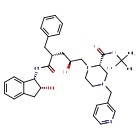
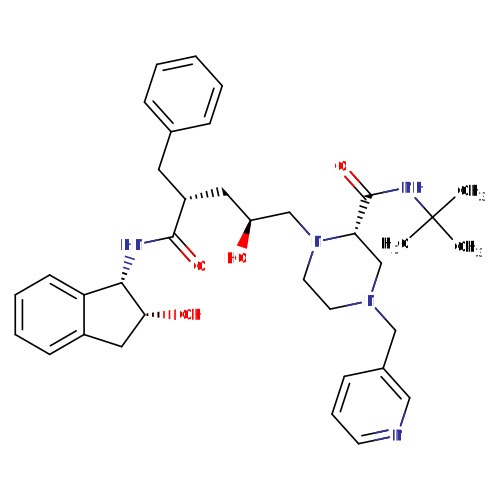
Structure for Indinavir (DB00224)
- Weight
- Average: 613.7895
Monoisotopic: 613.362805017 - Chemical Formula
- C36H47N5O4
- Synonyms
- (1(1S,2R),5(S))-2,3,5-Trideoxy-N-(2,3-dihydro-2-hydroxy-1H-inden-1-yl)-5-(2-(((1,1-dimethylethyl)amino)carbonyl)-4-(3-pyridinylmethyl)-1-piperazinyl)-2-(phenylmethyl)-D-erythro-pentonamide
- Indinavir
- Indinavir anhydrous

Pharmacology
- Indication
Indinavir is an antiretroviral drug for the treatment of HIV infection.
 Reduce drug development failure ratesBuild, train, & validate machine-learning modelswith evidence-based and structured datasets.Build, train, & validate predictive machine-learning models with structured datasets.
- Associated Conditions
Indication Type Indication Combined Product Details Approval Level Age Group Patient Characteristics Dose Form Used in combination to treat Hiv-1 infection •••••••••••• - Contraindications & Blackbox Warnings
 Prevent Adverse Drug Events TodayTap into our Clinical API for life-saving information on contraindications & blackbox warnings, population restrictions, harmful risks, & more.Avoid life-threatening adverse drug events with our Clinical API
- Pharmacodynamics
Indinavir is a protease inhibitor with activity against Human Immunodeficiency Virus Type 1 (HIV-1). Protease inhibitors block the part of HIV called protease. HIV-1 protease is an enzyme required for the proteolytic cleavage of the viral polyprotein precursors into the individual functional proteins found in infectious HIV-1. Indinavir binds to the protease active site and inhibits the activity of the enzyme. This inhibition prevents cleavage of the viral polyproteins resulting in the formation of immature non-infectious viral particles. Protease inhibitors are almost always used in combination with at least two other anti-HIV drugs.
- Mechanism of action
Indinavir inhibits the HIV viral protease enzyme which prevents cleavage of the gag-pol polyprotein, resulting in noninfectious, immature viral particles.
Target Actions Organism AHuman immunodeficiency virus type 1 protease inhibitorHuman immunodeficiency virus 1 - Absorption
Rapidly absorbed
- Volume of distribution
Not Available
- Protein binding
60%
- Metabolism
Hepatic. Seven metabolites have been identified, one glucuronide conjugate and six oxidative metabolites. In vitro studies indicate that cytochrome P-450 3A4 (CYP3A4) is the major enzyme responsible for formation of the oxidative metabolites.
Hover over products below to view reaction partners
- Route of elimination
Less than 20% of indinavir is excreted unchanged in the urine.
- Half-life
1.8 (± 0.4) hours
- Clearance
Not Available
- Adverse Effects
 Improve decision support & research outcomesWith structured adverse effects data, including: blackbox warnings, adverse reactions, warning & precautions, & incidence rates. View sample adverse effects data in our new Data Library!Improve decision support & research outcomes with our structured adverse effects data.
- Toxicity
Symptoms of overdose include myocardial infarction and angina pectoris.
- Pathways
- Not Available
- Pharmacogenomic Effects/ADRs
- Not Available
Interactions
- Drug Interactions
- This information should not be interpreted without the help of a healthcare provider. If you believe you are experiencing an interaction, contact a healthcare provider immediately. The absence of an interaction does not necessarily mean no interactions exist.
Drug Interaction Integrate drug-drug
interactions in your software1,2-Benzodiazepine The metabolism of 1,2-Benzodiazepine can be decreased when combined with Indinavir. Abacavir The metabolism of Abacavir can be decreased when combined with Indinavir. Abametapir The serum concentration of Indinavir can be increased when it is combined with Abametapir. Abatacept The metabolism of Indinavir can be increased when combined with Abatacept. Abemaciclib The metabolism of Abemaciclib can be decreased when combined with Indinavir. - Food Interactions
- Avoid excessive or chronic alcohol consumption.
- Avoid grapefruit products.
- Take on an empty stomach. Take at least 1 hour before or 2 hours after meals.
- Take with a full glass of water.
Products
 Drug product information from 10+ global regionsOur datasets provide approved product information including:dosage, form, labeller, route of administration, and marketing period.Access drug product information from over 10 global regions.
- Product Ingredients
Ingredient UNII CAS InChI Key Indinavir monohydrate 5W6YA9PKKH 180683-37-8 XTYSXGHMTNTKFH-BDEHJDMKSA-N Indinavir sulfate 771H53976Q 157810-81-6 NUBQKPWHXMGDLP-BDEHJDMKSA-N Indinavir sulfate ethanolate 34OB95C8AE Not Available QDNVAYDEAGXHTB-NOYQBWMBSA-N - International/Other Brands
- Crixivan
- Brand Name Prescription Products
Name Dosage Strength Route Labeller Marketing Start Marketing End Region Image Crixivan Capsule 400 mg Oral Merck Sharp & Dohme B.V. 2016-09-08 2022-07-12 EU 
Crixivan Capsule 400 mg/1 Oral Avera McKennan Hospital 2015-03-01 2017-05-24 US 
Crixivan Capsule 200 mg Oral Merck Sharp & Dohme B.V. 2016-09-08 2022-07-12 EU Crixivan Capsule 100 mg/1 Oral Merck Sharp & Dohme Corp. 1996-03-13 2012-12-31 US Crixivan Capsule 400 mg/1 Oral State of Florida DOH Central Pharmacy 2009-07-01 Not applicable US
Categories
- ATC Codes
- J05AE02 — Indinavir
- Drug Categories
- Agents Causing Muscle Toxicity
- Anti-HIV Agents
- Anti-Infective Agents
- Anti-Retroviral Agents
- Antiinfectives for Systemic Use
- Antiviral Agents
- Antivirals for Systemic Use
- BSEP/ABCB11 Substrates
- Cytochrome P-450 CYP2D6 Inhibitors
- Cytochrome P-450 CYP2D6 Inhibitors (strength unknown)
- Cytochrome P-450 CYP3A Inhibitors
- Cytochrome P-450 CYP3A Substrates
- Cytochrome P-450 CYP3A4 Inhibitors
- Cytochrome P-450 CYP3A4 Inhibitors (strong)
- Cytochrome P-450 CYP3A4 Substrates
- Cytochrome P-450 CYP3A5 Inhibitors
- Cytochrome P-450 CYP3A5 Inhibitors (weak)
- Cytochrome P-450 CYP3A5 Substrates
- Cytochrome P-450 CYP3A7 Inhibitors
- Cytochrome P-450 CYP3A7 Inhibitors (weak)
- Cytochrome P-450 Enzyme Inhibitors
- Cytochrome P-450 Substrates
- Direct Acting Antivirals
- Enzyme Inhibitors
- HIV Protease Inhibitors
- Hyperglycemia-Associated Agents
- OATP1B1/SLCO1B1 Inhibitors
- OCT1 inhibitors
- Organic Anion Transporting Polypeptide 2B1 Inhibitors
- P-glycoprotein inducers
- P-glycoprotein inhibitors
- P-glycoprotein substrates
- Protease Inhibitors
- Pyridines
- UGT1A1 Inhibitors
- Viral Protease Inhibitors
- Chemical TaxonomyProvided by Classyfire
- Description
- This compound belongs to the class of organic compounds known as alpha amino acid amides. These are amide derivatives of alpha amino acids.
- Kingdom
- Organic compounds
- Super Class
- Organic acids and derivatives
- Class
- Carboxylic acids and derivatives
- Sub Class
- Amino acids, peptides, and analogues
- Direct Parent
- Alpha amino acid amides
- Alternative Parents
- Indanes / Piperazine carboxamides / Aralkylamines / N-alkylpiperazines / Benzene and substituted derivatives / N-acyl amines / Pyridines and derivatives / Heteroaromatic compounds / Secondary alcohols / Trialkylamines show 7 more
- Substituents
- 1,2-aminoalcohol / 1,4-diazinane / Alcohol / Alpha-amino acid amide / Amine / Aralkylamine / Aromatic heteropolycyclic compound / Azacycle / Benzenoid / Carbonyl group show 23 more
- Molecular Framework
- Aromatic heteropolycyclic compounds
- External Descriptors
- dicarboxylic acid diamide, N-(2-hydroxyethyl)piperazine, piperazinecarboxamide (CHEBI:44032)
- Affected organisms
- Human Immunodeficiency Virus
Chemical Identifiers
- UNII
- 9MG78X43ZT
- CAS number
- 150378-17-9
- InChI Key
- CBVCZFGXHXORBI-PXQQMZJSSA-N
- InChI
- InChI=1S/C36H47N5O4/c1-36(2,3)39-35(45)31-24-40(22-26-12-9-15-37-21-26)16-17-41(31)23-29(42)19-28(18-25-10-5-4-6-11-25)34(44)38-33-30-14-8-7-13-27(30)20-32(33)43/h4-15,21,28-29,31-33,42-43H,16-20,22-24H2,1-3H3,(H,38,44)(H,39,45)/t28-,29+,31+,32-,33+/m1/s1
- IUPAC Name
- (2S)-1-[(2S,4R)-4-benzyl-2-hydroxy-4-{[(1S,2R)-2-hydroxy-2,3-dihydro-1H-inden-1-yl]carbamoyl}butyl]-N-tert-butyl-4-[(pyridin-3-yl)methyl]piperazine-2-carboxamide
- SMILES
- CC(C)(C)NC(=O)[C@@H]1CN(CC2=CN=CC=C2)CCN1C[C@@H](O)C[C@@H](CC1=CC=CC=C1)C(=O)N[C@@H]1[C@H](O)CC2=CC=CC=C12
References
- Synthesis Reference
- US5413999
- General References
- Not Available
- External Links
- Human Metabolome Database
- HMDB0014369
- KEGG Compound
- C07051
- PubChem Compound
- 5362440
- PubChem Substance
- 46506442
- ChemSpider
- 4515036
- BindingDB
- 517
- 114289
- ChEBI
- 44032
- ChEMBL
- CHEMBL115
- ZINC
- ZINC000022448696
- Therapeutic Targets Database
- DAP000168
- PharmGKB
- PA449977
- PDBe Ligand
- MK1
- RxList
- RxList Drug Page
- Drugs.com
- Drugs.com Drug Page
- Wikipedia
- Indinavir
- PDB Entries
- 1c6y / 1hsg / 1hsh / 1k6c / 1sdt / 1sdu / 1sdv / 1sgu / 2avo / 2avs … show 5 more
- FDA label
- Download (671 KB)
- MSDS
- Download (57 KB)
Clinical Trials
- Clinical Trials
Phase Status Purpose Conditions Count 4 Completed Diagnostic Cardiovascular Disease (CVD) / HIV Lipodystrophy Syndrome 1 4 Completed Treatment Healthy Volunteers (HV) / Human Immunodeficiency Virus (HIV) Infections 1 4 Completed Treatment Hemophilia A / Human Immunodeficiency Virus (HIV) Infections 1 4 Completed Treatment Human Immunodeficiency Virus (HIV) Infections 4 3 Completed Treatment Human Immunodeficiency Virus (HIV) Infections 13
Pharmacoeconomics
- Manufacturers
- Merck sharp and dohme corp
- Packagers
- Apotheca Inc.
- A-S Medication Solutions LLC
- Dispensing Solutions
- H.J. Harkins Co. Inc.
- Merck & Co.
- Murfreesboro Pharmaceutical Nursing Supply
- Nucare Pharmaceuticals Inc.
- Remedy Repack
- Stat Rx Usa
- Dosage Forms
Form Route Strength Capsule Oral 100 mg/1 Capsule Oral 200 mg/1 Capsule Oral 300 mg Capsule Oral 333 mg/1 Capsule Oral 400 mg Capsule Oral 400 mg/1 Capsule Oral 200 mg Capsule, coated Oral 400 mg - Prices
Unit description Cost Unit Crixivan 360 200 mg capsule Bottle 570.02USD bottle Crixivan 400 mg capsule 2.86USD each Crixivan 333 mg capsule 2.54USD each Crixivan 200 mg capsule 1.52USD each Crixivan 100 mg capsule 0.76USD each DrugBank does not sell nor buy drugs. Pricing information is supplied for informational purposes only.- Patents
Patent Number Pediatric Extension Approved Expires (estimated) Region US5413999 No 1995-05-09 2012-05-09 US CA2081970 No 1997-07-08 2012-11-02 Canada 
US6689761 No 2004-02-10 2021-02-10 US US6645961 No 2003-11-11 2018-03-04 US
Properties
- State
- Solid
- Experimental Properties
Property Value Source melting point (°C) 167.5-168 °C Not Available water solubility 0.015 mg/ml Not Available logP 2.9 Not Available - Predicted Properties
Property Value Source Water Solubility 0.0482 mg/mL ALOGPS logP 3.26 ALOGPS logP 2.81 Chemaxon logS -4.1 ALOGPS pKa (Strongest Acidic) 13.01 Chemaxon pKa (Strongest Basic) 6.76 Chemaxon Physiological Charge 0 Chemaxon Hydrogen Acceptor Count 7 Chemaxon Hydrogen Donor Count 4 Chemaxon Polar Surface Area 118.03 Å2 Chemaxon Rotatable Bond Count 12 Chemaxon Refractivity 175.89 m3·mol-1 Chemaxon Polarizability 68.94 Å3 Chemaxon Number of Rings 5 Chemaxon Bioavailability 0 Chemaxon Rule of Five No Chemaxon Ghose Filter No Chemaxon Veber's Rule No Chemaxon MDDR-like Rule Yes Chemaxon - Predicted ADMET Features
Property Value Probability Human Intestinal Absorption + 0.821 Blood Brain Barrier - 0.9923 Caco-2 permeable - 0.8183 P-glycoprotein substrate Substrate 0.8899 P-glycoprotein inhibitor I Inhibitor 0.7987 P-glycoprotein inhibitor II Non-inhibitor 0.5819 Renal organic cation transporter Non-inhibitor 0.8501 CYP450 2C9 substrate Non-substrate 0.7816 CYP450 2D6 substrate Substrate 0.8918 CYP450 3A4 substrate Substrate 0.7831 CYP450 1A2 substrate Non-inhibitor 0.9057 CYP450 2C9 inhibitor Non-inhibitor 0.6278 CYP450 2D6 inhibitor Non-inhibitor 0.7476 CYP450 2C19 inhibitor Non-inhibitor 0.6264 CYP450 3A4 inhibitor Inhibitor 0.6525 CYP450 inhibitory promiscuity Low CYP Inhibitory Promiscuity 0.7808 Ames test Non AMES toxic 0.8629 Carcinogenicity Non-carcinogens 0.887 Biodegradation Not ready biodegradable 0.9951 Rat acute toxicity 2.1844 LD50, mol/kg Not applicable hERG inhibition (predictor I) Weak inhibitor 0.9557 hERG inhibition (predictor II) Inhibitor 0.7265
Spectra
- Mass Spec (NIST)
- Not Available
- Spectra
- Chromatographic Properties
Collision Cross Sections (CCS)
Adduct CCS Value (Å2) Source type Source [M-H]- 265.3368174 predictedDarkChem Lite v0.1.0 [M-H]- 235.94691 predictedDeepCCS 1.0 (2019) [M+H]+ 265.3314174 predictedDarkChem Lite v0.1.0 [M+H]+ 237.80699 predictedDeepCCS 1.0 (2019) [M+Na]+ 265.4859174 predictedDarkChem Lite v0.1.0 [M+Na]+ 243.49065 predictedDeepCCS 1.0 (2019)
Targets

- Kind
- Protein
- Organism
- Human immunodeficiency virus 1
- Pharmacological action
- Yes
- Actions
- Inhibitor
- General Function
- Aspartic-type endopeptidase activity
- Specific Function
- Not Available
- Gene Name
- pol
- Uniprot ID
- Q72874
- Uniprot Name
- Pol polyprotein
- Molecular Weight
- 10778.7 Da
References
- Wittayanarakul K, Hannongbua S, Feig M: Accurate prediction of protonation state as a prerequisite for reliable MM-PB(GB)SA binding free energy calculations of HIV-1 protease inhibitors. J Comput Chem. 2008 Apr 15;29(5):673-85. [Article]
- Dandache S, Sevigny G, Yelle J, Stranix BR, Parkin N, Schapiro JM, Wainberg MA, Wu JJ: In vitro antiviral activity and cross-resistance profile of PL-100, a novel protease inhibitor of human immunodeficiency virus type 1. Antimicrob Agents Chemother. 2007 Nov;51(11):4036-43. Epub 2007 Jul 16. [Article]
- Hoetelmans RM, Meenhorst PL, Mulder JW, Burger DM, Koks CH, Beijnen JH: Clinical pharmacology of HIV protease inhibitors: focus on saquinavir, indinavir, and ritonavir. Pharm World Sci. 1997 Aug;19(4):159-75. [Article]
- Stein DS, Fish DG, Bilello JA, Preston SL, Martineau GL, Drusano GL: A 24-week open-label phase I/II evaluation of the HIV protease inhibitor MK-639 (indinavir). AIDS. 1996 May;10(5):485-92. [Article]
Enzymes
- Kind
- Protein
- Organism
- Humans
- Pharmacological action
- Unknown
- Actions
- Inhibitor
- General Function
- Steroid hydroxylase activity
- Specific Function
- Responsible for the metabolism of many drugs and environmental chemicals that it oxidizes. It is involved in the metabolism of drugs such as antiarrhythmics, adrenoceptor antagonists, and tricyclic...
- Gene Name
- CYP2D6
- Uniprot ID
- P10635
- Uniprot Name
- Cytochrome P450 2D6
- Molecular Weight
- 55768.94 Da
References
- von Moltke LL, Greenblatt DJ, Duan SX, Daily JP, Harmatz JS, Shader RI: Inhibition of desipramine hydroxylation (Cytochrome P450-2D6) in vitro by quinidine and by viral protease inhibitors: relation to drug interactions in vivo. J Pharm Sci. 1998 Oct;87(10):1184-9. doi: 10.1021/js980197h. [Article]
- Kind
- Protein
- Organism
- Humans
- Pharmacological action
- Unknown
- Actions
- Inhibitor
- General Function
- Steroid binding
- Specific Function
- UDPGT is of major importance in the conjugation and subsequent elimination of potentially toxic xenobiotics and endogenous compounds. This isoform glucuronidates bilirubin IX-alpha to form both the...
- Gene Name
- UGT1A1
- Uniprot ID
- P22309
- Uniprot Name
- UDP-glucuronosyltransferase 1-1
- Molecular Weight
- 59590.91 Da
References
- Yong WP, Ramirez J, Innocenti F, Ratain MJ: Effects of ketoconazole on glucuronidation by UDP-glucuronosyltransferase enzymes. Clin Cancer Res. 2005 Sep 15;11(18):6699-704. doi: 10.1158/1078-0432.CCR-05-0703. [Article]
- Kind
- Protein
- Organism
- Humans
- Pharmacological action
- Unknown
- Actions
- SubstrateInhibitor
- General Function
- Vitamin d3 25-hydroxylase activity
- Specific Function
- Cytochromes P450 are a group of heme-thiolate monooxygenases. In liver microsomes, this enzyme is involved in an NADPH-dependent electron transport pathway. It performs a variety of oxidation react...
- Gene Name
- CYP3A4
- Uniprot ID
- P08684
- Uniprot Name
- Cytochrome P450 3A4
- Molecular Weight
- 57342.67 Da
References
- Zhou SF, Zhou ZW, Yang LP, Cai JP: Substrates, inducers, inhibitors and structure-activity relationships of human Cytochrome P450 2C9 and implications in drug development. Curr Med Chem. 2009;16(27):3480-675. Epub 2009 Sep 1. [Article]
- Inaba T, Fischer NE, Riddick DS, Stewart DJ, Hidaka T: HIV protease inhibitors, saquinavir, indinavir and ritonavir: inhibition of CYP3A4-mediated metabolism of testosterone and benzoxazinorifamycin, KRM-1648, in human liver microsomes. Toxicol Lett. 1997 Dec;93(2-3):215-9. doi: 10.1016/s0378-4274(97)00098-2. [Article]
- Mouly S, Rizzo-Padoin N, Simoneau G, Verstuyft C, Aymard G, Salvat C, Mahe I, Bergmann JF: Effect of widely used combinations of antiretroviral therapy on liver CYP3A4 activity in HIV-infected patients. Br J Clin Pharmacol. 2006 Aug;62(2):200-9. doi: 10.1111/j.1365-2125.2006.02637.x. [Article]
- Flockhart Table of Drug Interactions [Link]
- FDA Drug Development and Drug Interactions: Table of Substrates, Inhibitors and Inducers [Link]
- Kind
- Protein
- Organism
- Humans
- Pharmacological action
- Unknown
- Actions
- SubstrateInhibitor
- General Function
- Oxygen binding
- Specific Function
- Cytochromes P450 are a group of heme-thiolate monooxygenases. In liver microsomes, this enzyme is involved in an NADPH-dependent electron transport pathway. It oxidizes a variety of structurally un...
- Gene Name
- CYP3A5
- Uniprot ID
- P20815
- Uniprot Name
- Cytochrome P450 3A5
- Molecular Weight
- 57108.065 Da
References
- Granfors MT, Wang JS, Kajosaari LI, Laitila J, Neuvonen PJ, Backman JT: Differential inhibition of cytochrome P450 3A4, 3A5 and 3A7 by five human immunodeficiency virus (HIV) protease inhibitors in vitro. Basic Clin Pharmacol Toxicol. 2006 Jan;98(1):79-85. doi: 10.1111/j.1742-7843.2006.pto_249.x. [Article]
- Koudriakova T, Iatsimirskaia E, Utkin I, Gangl E, Vouros P, Storozhuk E, Orza D, Marinina J, Gerber N: Metabolism of the human immunodeficiency virus protease inhibitors indinavir and ritonavir by human intestinal microsomes and expressed cytochrome P4503A4/3A5: mechanism-based inactivation of cytochrome P4503A by ritonavir. Drug Metab Dispos. 1998 Jun;26(6):552-61. [Article]
- Flockhart Table of Drug Interactions [Link]
- Kind
- Protein
- Organism
- Humans
- Pharmacological action
- Unknown
- Actions
- Inhibitor
- General Function
- Oxygen binding
- Specific Function
- Cytochromes P450 are a group of heme-thiolate monooxygenases. In liver microsomes, this enzyme is involved in an NADPH-dependent electron transport pathway. It oxidizes a variety of structurally un...
- Gene Name
- CYP3A7
- Uniprot ID
- P24462
- Uniprot Name
- Cytochrome P450 3A7
- Molecular Weight
- 57525.03 Da
References
- Granfors MT, Wang JS, Kajosaari LI, Laitila J, Neuvonen PJ, Backman JT: Differential inhibition of cytochrome P450 3A4, 3A5 and 3A7 by five human immunodeficiency virus (HIV) protease inhibitors in vitro. Basic Clin Pharmacol Toxicol. 2006 Jan;98(1):79-85. doi: 10.1111/j.1742-7843.2006.pto_249.x. [Article]
- Flockhart Table of Drug Interactions [Link]
Transporters
- Kind
- Protein
- Organism
- Humans
- Pharmacological action
- Unknown
- Actions
- SubstrateInhibitorInducer
- General Function
- Xenobiotic-transporting atpase activity
- Specific Function
- Energy-dependent efflux pump responsible for decreased drug accumulation in multidrug-resistant cells.
- Gene Name
- ABCB1
- Uniprot ID
- P08183
- Uniprot Name
- Multidrug resistance protein 1
- Molecular Weight
- 141477.255 Da
References
- Perloff MD, von Moltke LL, Fahey JM, Daily JP, Greenblatt DJ: Induction of P-glycoprotein expression by HIV protease inhibitors in cell culture. AIDS. 2000 Jun 16;14(9):1287-9. [Article]
- Choo EF, Leake B, Wandel C, Imamura H, Wood AJ, Wilkinson GR, Kim RB: Pharmacological inhibition of P-glycoprotein transport enhances the distribution of HIV-1 protease inhibitors into brain and testes. Drug Metab Dispos. 2000 Jun;28(6):655-60. [Article]
- Polli JW, Wring SA, Humphreys JE, Huang L, Morgan JB, Webster LO, Serabjit-Singh CS: Rational use of in vitro P-glycoprotein assays in drug discovery. J Pharmacol Exp Ther. 2001 Nov;299(2):620-8. [Article]
- Yamazaki M, Neway WE, Ohe T, Chen I, Rowe JF, Hochman JH, Chiba M, Lin JH: In vitro substrate identification studies for p-glycoprotein-mediated transport: species difference and predictability of in vivo results. J Pharmacol Exp Ther. 2001 Mar;296(3):723-35. [Article]
- Kim RB, Fromm MF, Wandel C, Leake B, Wood AJ, Roden DM, Wilkinson GR: The drug transporter P-glycoprotein limits oral absorption and brain entry of HIV-1 protease inhibitors. J Clin Invest. 1998 Jan 15;101(2):289-94. [Article]
- Hochman JH, Chiba M, Nishime J, Yamazaki M, Lin JH: Influence of P-glycoprotein on the transport and metabolism of indinavir in Caco-2 cells expressing cytochrome P-450 3A4. J Pharmacol Exp Ther. 2000 Jan;292(1):310-8. [Article]
- Kind
- Protein
- Organism
- Humans
- Pharmacological action
- Unknown
- Actions
- Inhibitor
- General Function
- Secondary active organic cation transmembrane transporter activity
- Specific Function
- Translocates a broad array of organic cations with various structures and molecular weights including the model compounds 1-methyl-4-phenylpyridinium (MPP), tetraethylammonium (TEA), N-1-methylnico...
- Gene Name
- SLC22A1
- Uniprot ID
- O15245
- Uniprot Name
- Solute carrier family 22 member 1
- Molecular Weight
- 61153.345 Da
References
- Zhang L, Gorset W, Washington CB, Blaschke TF, Kroetz DL, Giacomini KM: Interactions of HIV protease inhibitors with a human organic cation transporter in a mammalian expression system. Drug Metab Dispos. 2000 Mar;28(3):329-34. [Article]
- Kind
- Protein
- Organism
- Humans
- Pharmacological action
- Unknown
- Actions
- Inhibitor
- General Function
- Transporter activity
- Specific Function
- Mediates export of organic anions and drugs from the cytoplasm. Mediates ATP-dependent transport of glutathione and glutathione conjugates, leukotriene C4, estradiol-17-beta-o-glucuronide, methotre...
- Gene Name
- ABCC1
- Uniprot ID
- P33527
- Uniprot Name
- Multidrug resistance-associated protein 1
- Molecular Weight
- 171589.5 Da
References
- Olson DP, Scadden DT, D'Aquila RT, De Pasquale MP: The protease inhibitor ritonavir inhibits the functional activity of the multidrug resistance related-protein 1 (MRP-1). AIDS. 2002 Sep 6;16(13):1743-7. [Article]
- Kind
- Protein
- Organism
- Humans
- Pharmacological action
- Unknown
- Actions
- Inhibitor
- General Function
- Sodium-independent organic anion transmembrane transporter activity
- Specific Function
- Mediates the Na(+)-independent transport of organic anions such as sulfobromophthalein (BSP) and conjugated (taurocholate) and unconjugated (cholate) bile acids (By similarity). Selectively inhibit...
- Gene Name
- SLCO1A2
- Uniprot ID
- P46721
- Uniprot Name
- Solute carrier organic anion transporter family member 1A2
- Molecular Weight
- 74144.105 Da
References
- Cvetkovic M, Leake B, Fromm MF, Wilkinson GR, Kim RB: OATP and P-glycoprotein transporters mediate the cellular uptake and excretion of fexofenadine. Drug Metab Dispos. 1999 Aug;27(8):866-71. [Article]
- Kind
- Protein
- Organism
- Humans
- Pharmacological action
- Unknown
- Actions
- Inhibitor
- General Function
- Sodium-independent organic anion transmembrane transporter activity
- Specific Function
- Mediates the Na(+)-independent uptake of organic anions such as pravastatin, taurocholate, methotrexate, dehydroepiandrosterone sulfate, 17-beta-glucuronosyl estradiol, estrone sulfate, prostagland...
- Gene Name
- SLCO1B1
- Uniprot ID
- Q9Y6L6
- Uniprot Name
- Solute carrier organic anion transporter family member 1B1
- Molecular Weight
- 76447.99 Da
References
- Tirona RG, Leake BF, Wolkoff AW, Kim RB: Human organic anion transporting polypeptide-C (SLC21A6) is a major determinant of rifampin-mediated pregnane X receptor activation. J Pharmacol Exp Ther. 2003 Jan;304(1):223-8. [Article]
- Kind
- Protein
- Organism
- Humans
- Pharmacological action
- Unknown
- Actions
- Substrate
- General Function
- Organic anion transmembrane transporter activity
- Specific Function
- Mediates hepatobiliary excretion of numerous organic anions. May function as a cellular cisplatin transporter.
- Gene Name
- ABCC2
- Uniprot ID
- Q92887
- Uniprot Name
- Canalicular multispecific organic anion transporter 1
- Molecular Weight
- 174205.64 Da
References
- Huisman MT, Smit JW, Crommentuyn KM, Zelcer N, Wiltshire HR, Beijnen JH, Schinkel AH: Multidrug resistance protein 2 (MRP2) transports HIV protease inhibitors, and transport can be enhanced by other drugs. AIDS. 2002 Nov 22;16(17):2295-301. [Article]
- Kind
- Protein
- Organism
- Humans
- Pharmacological action
- Unknown
- Actions
- Inhibitor
- General Function
- Sodium-independent organic anion transmembrane transporter activity
- Specific Function
- Mediates the Na(+)-independent transport of organic anions such as taurocholate, the prostaglandins PGD2, PGE1, PGE2, leukotriene C4, thromboxane B2 and iloprost.
- Gene Name
- SLCO2B1
- Uniprot ID
- O94956
- Uniprot Name
- Solute carrier organic anion transporter family member 2B1
- Molecular Weight
- 76709.98 Da
References
- Annaert P, Ye ZW, Stieger B, Augustijns P: Interaction of HIV protease inhibitors with OATP1B1, 1B3, and 2B1. Xenobiotica. 2010 Mar;40(3):163-76. doi: 10.3109/00498250903509375. [Article]
- Kind
- Protein
- Organism
- Humans
- Pharmacological action
- No
- Actions
- Substrate
- General Function
- Transporter activity
- Specific Function
- Involved in the ATP-dependent secretion of bile salts into the canaliculus of hepatocytes.
- Gene Name
- ABCB11
- Uniprot ID
- O95342
- Uniprot Name
- Bile salt export pump
- Molecular Weight
- 146405.83 Da
References
- Pedersen JM, Matsson P, Bergstrom CA, Hoogstraate J, Noren A, LeCluyse EL, Artursson P: Early identification of clinically relevant drug interactions with the human bile salt export pump (BSEP/ABCB11). Toxicol Sci. 2013 Dec;136(2):328-43. doi: 10.1093/toxsci/kft197. Epub 2013 Sep 6. [Article]

Drug created at June 13, 2005 13:24 / Updated at April 26, 2024 00:45