Identification
- Summary
Abacavir is an antiviral nucleoside reverse transcriptase inhibitor used in combination with other antiretrovirals for the treatment of HIV.
- Brand Names
- Epzicom, Kivexa, Triumeq, Trizivir, Ziagen
- Generic Name
- Abacavir
- DrugBank Accession Number
- DB01048
- Background
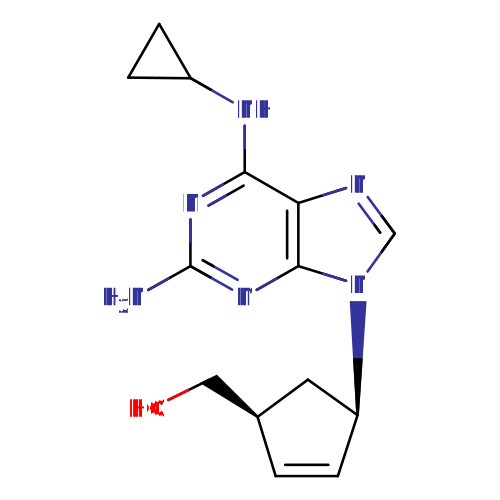
Abacavir (ABC) is a powerful nucleoside analog reverse transcriptase inhibitor (NRTI) used to treat HIV and AIDS. Chemically, it is a synthetic carbocyclic nucleoside and is the enantiomer with 1S, 4R absolute configuration on the cyclopentene ring. In vivo, abacavir sulfate dissociates to its free base, abacavir.
- Type
- Small Molecule
- Groups
- Approved, Investigational
- Structure
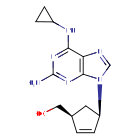
Structure for Abacavir (DB01048)
- Weight
- Average: 286.3323
Monoisotopic: 286.154209228 - Chemical Formula
- C14H18N6O
- Synonyms
- {(1S-cis)-4-[2-amino-6-(cyclopropylamino)-9H-purin-9-yl]cyclopent-2-en-1-yl}methanol
- Abacavir
- ABC
- External IDs
- 1592U89

Pharmacology
- Indication
Abacavir is indicated in combination with other anti-retroviral agents for the treatment of HIV-1 infection.4 It is available in a combination product alongside dolutegravir and lamivudine for the treatment of adult and pediatric patients with HIV-1 who weigh ≥10 kg.3
 Reduce drug development failure ratesBuild, train, & validate machine-learning modelswith evidence-based and structured datasets.Build, train, & validate predictive machine-learning models with structured datasets.
- Associated Conditions
Indication Type Indication Combined Product Details Approval Level Age Group Patient Characteristics Dose Form Used in combination to manage Hiv-1 infection Regimen in combination with: Zidovudine (DB00495), Lamivudine (DB00709) •••••••••••• Used in combination to treat Human immunodeficiency virus type 1 (hiv-1) infection Combination Product in combination with: Dolutegravir (DB08930), Lamivudine (DB00709) •••••••••••• •••••• ••••••••• •••• •••••• •• •• •• •• •••• ••••••• ••••••• ••• •••••••••• - Contraindications & Blackbox Warnings
 Prevent Adverse Drug Events TodayTap into our Clinical API for life-saving information on contraindications & blackbox warnings, population restrictions, harmful risks, & more.Avoid life-threatening adverse drug events with our Clinical API
- Pharmacodynamics
Abacavir is a nucleoside reverse transcriptase inhibitor (NRTI) with activity against Human Immunodeficiency Virus Type 1 (HIV-1). Abacavir is phosphorylated to active metabolites that compete for incorporation into viral DNA. They inhibit the HIV reverse transcriptase enzyme competitively and act as a chain terminator of DNA synthesis. The concentration of drug necessary to effect viral replication by 50 percent (EC50) ranged from 3.7 to 5.8 μM (1 μM = 0.28 mcg/mL) and 0.07 to 1.0 μM against HIV-1IIIB and HIV-1BaL, respectively, and was 0.26 ± 0.18 μM against 8 clinical isolates. Abacavir had synergistic activity in cell culture in combination with the nucleoside reverse transcriptase inhibitor (NRTI) zidovudine, the non-nucleoside reverse transcriptase inhibitor (NNRTI) nevirapine, and the protease inhibitor (PI) amprenavir; and additive activity in combination with the NRTIs didanosine, emtricitabine, lamivudine, stavudine, tenofovir, and zalcitabine.
- Mechanism of action
Abacavir is a carbocyclic synthetic nucleoside analogue and an antiviral agent. Intracellularly, abacavir is converted by cellular enzymes to the active metabolite carbovir triphosphate, an analogue of deoxyguanosine-5'-triphosphate (dGTP). Carbovir triphosphate inhibits the activity of HIV-1 reverse transcriptase (RT) both by competing with the natural substrate dGTP and by its incorporation into viral DNA. Viral DNA growth is terminated because the incorporated nucleotide lacks a 3'-OH group, which is needed to form the 5′ to 3′ phosphodiester linkage essential for DNA chain elongation.
Target Actions Organism AReverse transcriptase/RNaseH inhibitorHuman immunodeficiency virus 1 UHLA class I histocompatibility antigen, B-57 alpha chain Not Available Humans - Absorption
Rapid and extensive after oral administration (83% bioavailability, tablet). When a 300 mg tablet is given twice daily to subjects, the peak plasma concentration (Cmax) was 3.0 ± 0.89 mcg/mL and the area under the curve (AUC 0-12 hours) was 6.02 ± 1.73 mcg•hr/mL.
- Volume of distribution
- 0.86 ± 0.15 L/kg [IV administration]
- Protein binding
Moderate (approximately 50%). Binding of abacavir to plasma protein was independent of concentration.
- Metabolism
Hepatic, by alcohol dehydrogenase and glucuronosyltransferase to a 5′-carboxylic acid metabolite and 5′-glucuronide metabolite, respectively. These metabolites have no antiviral activity. Abacavir is not significantly metabolized by cytochrome P450 enzymes.
- Route of elimination
Elimination of abacavir was quantified in a mass balance study following administration of a 600-mg dose of 14C-abacavir: 99% of the radioactivity was recovered, 1.2% was excreted in the urine as abacavir, 30% as the 5′-carboxylic acid metabolite, 36% as the 5′-glucuronide metabolite, and 15% as unidentified minor metabolites in the urine. Fecal elimination accounted for 16% of the dose. Renal excretion of unchanged abacavir is a minor route of elimination in humans.
- Half-life
1.54 ± 0.63 hours
- Clearance
- 0.80 ± 0.24 L/hr/kg [asymptomatic, HIV-1-infected adult patients receiving single (IV dose of 150 mg]
- Adverse Effects
 Improve decision support & research outcomesWith structured adverse effects data, including: blackbox warnings, adverse reactions, warning & precautions, & incidence rates. View sample adverse effects data in our new Data Library!Improve decision support & research outcomes with our structured adverse effects data.
- Toxicity
Some myocardial degeneration has been noticed in rats and mice. The most commonly reported adverse reactions of at least moderate intensity (incidence ≥10%) in adult HIV-1 clinical trials were nausea, headache, malaise and fatigue, nausea and vomiting, and dreams/sleep disorders. Serious hypersensitivity reactions have been associated with abacavir which has been strongly linked to the presence of the HLA-B*57:01 allele. This reaction manifests itself in patients within the first 6 weeks of treatment. Patients should be tested for the presence of this allele as recommended by the U.S Food and Drug Administration (FDA).
- Pathways
Pathway Category Abacavir Action Pathway Drug action - Pharmacogenomic Effects/ADRs
Interacting Gene/Enzyme Allele name Genotype(s) Defining Change(s) Type(s) Description Details HLA class I histocompatibility antigen protein P5 HLA-B*5701 (G;G) G allele ADR Directly Studied Patients who carry this SNP are at a higher risk of experiencing a hypersensitivity reaction to abacavir. Details
Interactions
- Drug Interactions
- This information should not be interpreted without the help of a healthcare provider. If you believe you are experiencing an interaction, contact a healthcare provider immediately. The absence of an interaction does not necessarily mean no interactions exist.
Drug Interaction Integrate drug-drug
interactions in your softwareAceclofenac Aceclofenac may decrease the excretion rate of Abacavir which could result in a higher serum level. Acemetacin Acemetacin may decrease the excretion rate of Abacavir which could result in a higher serum level. Acetaminophen Acetaminophen may decrease the excretion rate of Abacavir which could result in a higher serum level. Acetazolamide Acetazolamide may increase the excretion rate of Abacavir which could result in a lower serum level and potentially a reduction in efficacy. Acetylsalicylic acid Acetylsalicylic acid may decrease the excretion rate of Abacavir which could result in a higher serum level. - Food Interactions
- Avoid alcohol. Alcohol increases the systemic exposure to the drug.
- Take with or without food. The absorption is unaffected by food.
Products
 Drug product information from 10+ global regionsOur datasets provide approved product information including:dosage, form, labeller, route of administration, and marketing period.Access drug product information from over 10 global regions.
- Product Ingredients
Ingredient UNII CAS InChI Key Abacavir hydrochloride RP0T719KX7 136777-48-5 QXNOPHSMRJNHHG-SCYNACPDSA-N Abacavir hydrochloride monohydrate GZP7A66C3C Not Available XYDFTVTUCLYHFD-WAZPLGGWSA-N Abacavir sulfate J220T4J9Q2 188062-50-2 WMHSRBZIJNQHKT-FFKFEZPRSA-N - Product Images
- Brand Name Prescription Products
Name Dosage Strength Route Labeller Marketing Start Marketing End Region Image Epzicom Tablet, film coated 600 mg/1 Oral Remedy Repack 2013-03-15 2014-03-15 US 
Ziagen Solution 20 mg/1mL Oral Glaxosmithkline Inc 1999-01-28 2012-10-31 US Ziagen Solution 20 mg/mL Oral Vii V Healthcare B.V. 2020-12-22 Not applicable EU 
Ziagen Tablet 300 mg Oral ViiV Healthcare ULC 1999-06-09 2024-01-31 Canada 
Ziagen Solution 20 mg/1mL Oral Glaxosmithkline Inc 1999-01-28 2018-01-29 US - Generic Prescription Products
Name Dosage Strength Route Labeller Marketing Start Marketing End Region Image Abacavir Tablet 300 mg/1 Oral XLCARE Pharmaceuticals INC. 2021-05-28 Not applicable US Abacavir Solution 20 mg/1mL Oral Camber Pharmaceuticals 2016-09-26 Not applicable US Abacavir Tablet, film coated 300 mg/1 Oral Avera McKennan Hospital 2016-02-29 2017-05-24 US Abacavir Tablet 300 mg/1 Oral AvPAK 2020-04-10 Not applicable US Abacavir Tablet, film coated 300 mg/1 Oral Major Pharmaceuticals 2012-12-17 Not applicable US - Mixture Products
Name Ingredients Dosage Route Labeller Marketing Start Marketing End Region Image ABACAVIR 600 MG + LAMIVUDINA 300 MG TABLETAS RECUBIERTAS Abacavir sulfate (600 mg) + Lamivudine (300 mg) Tablet, coated Oral NUTRI MACK S.A.S. 2015-03-18 2020-06-05 Colombia 
Abacavir and Lamivudine Abacavir sulfate (600 mg/1) + Lamivudine (300 mg/1) Tablet, film coated Oral Laurus Labs Limited 2022-07-25 Not applicable US Abacavir and Lamivudine Abacavir sulfate (600 mg/1) + Lamivudine (300 mg/1) Tablet, film coated Oral Burel Pharmaceuticals, Llc 2019-11-15 Not applicable US Abacavir and lamivudine Abacavir sulfate (600 mg/1) + Lamivudine (300 mg/1) Tablet, film coated Oral Zydus Pharmaceuticals USA Inc. 2019-03-14 Not applicable US Abacavir and Lamivudine Abacavir sulfate (600 mg/1) + Lamivudine (300 mg/1) Tablet, film coated Oral Lupin Pharmaceuticals, Inc. 2017-03-28 Not applicable US


Categories
- ATC Codes
- J05AR13 — Lamivudine, abacavir and dolutegravir
- J05AR — Antivirals for treatment of HIV infections, combinations
- J05A — DIRECT ACTING ANTIVIRALS
- J05 — ANTIVIRALS FOR SYSTEMIC USE
- J — ANTIINFECTIVES FOR SYSTEMIC USE
- J05AR — Antivirals for treatment of HIV infections, combinations
- J05A — DIRECT ACTING ANTIVIRALS
- J05 — ANTIVIRALS FOR SYSTEMIC USE
- J — ANTIINFECTIVES FOR SYSTEMIC USE
- J05AR — Antivirals for treatment of HIV infections, combinations
- J05A — DIRECT ACTING ANTIVIRALS
- J05 — ANTIVIRALS FOR SYSTEMIC USE
- J — ANTIINFECTIVES FOR SYSTEMIC USE
- Drug Categories
- Anti-HIV Agents
- Anti-Infective Agents
- Anti-Retroviral Agents
- Antiinfectives for Systemic Use
- Antiviral Agents
- Antivirals for Systemic Use
- Antivirals used in combination for the treatment of HIV infections
- Cycloparaffins
- Deoxyadenosines
- Deoxyribonucleosides
- Dideoxynucleosides
- Direct Acting Antivirals
- Drugs that are Mainly Renally Excreted
- Enzyme Inhibitors
- Heterocyclic Compounds, Fused-Ring
- Human Immunodeficiency Virus Nucleoside Analog Reverse Transcriptase Inhibitor
- Nucleic Acid Synthesis Inhibitors
- Nucleic Acids, Nucleotides, and Nucleosides
- Nucleoside and Nucleotide Reverse Transcriptase Inhibitors
- Nucleoside Reverse Transcriptase Inhibitors
- Nucleosides
- Purine Nucleosides
- Purines
- Reverse Transcriptase Inhibitors
- UGT1A1 Substrates
- Chemical TaxonomyProvided by Classyfire
- Description
- This compound belongs to the class of organic compounds known as 1,3-substituted cyclopentyl purine nucleosides. These are nucleoside analogues with a structure that consists of a cyclobutane that is substituted a the 1-position with a hydroxyl group and at the 3-position with either a purine base.
- Kingdom
- Organic compounds
- Super Class
- Nucleosides, nucleotides, and analogues
- Class
- Nucleoside and nucleotide analogues
- Sub Class
- Cyclopentyl nucleosides
- Direct Parent
- 1,3-substituted cyclopentyl purine nucleosides
- Alternative Parents
- 6-alkylaminopurines / Secondary alkylarylamines / Aminopyrimidines and derivatives / N-substituted imidazoles / Imidolactams / Heteroaromatic compounds / Azacyclic compounds / Primary amines / Primary alcohols / Organopnictogen compounds show 1 more
- Substituents
- 1,3-substituted cyclopentyl purine nucleoside / 6-alkylaminopurine / 6-aminopurine / Alcohol / Amine / Aminopyrimidine / Aromatic heteropolycyclic compound / Azacycle / Azole / Heteroaromatic compound show 17 more
- Molecular Framework
- Aromatic heteropolycyclic compounds
- External Descriptors
- 2,6-diaminopurine (CHEBI:421707)
- Affected organisms
- Human Immunodeficiency Virus
Chemical Identifiers
- UNII
- WR2TIP26VS
- CAS number
- 136470-78-5
- InChI Key
- MCGSCOLBFJQGHM-SCZZXKLOSA-N
- InChI
- InChI=1S/C14H18N6O/c15-14-18-12(17-9-2-3-9)11-13(19-14)20(7-16-11)10-4-1-8(5-10)6-21/h1,4,7-10,21H,2-3,5-6H2,(H3,15,17,18,19)/t8-,10+/m1/s1
- IUPAC Name
- [(1S,4R)-4-[2-amino-6-(cyclopropylamino)-9H-purin-9-yl]cyclopent-2-en-1-yl]methanol
- SMILES
- NC1=NC2=C(N=CN2[C@@H]2C[C@H](CO)C=C2)C(NC2CC2)=N1
References
- Synthesis Reference
- US5034394
- General References
- Zucman D, Truchis Pd, Majerholc C, Stegman S, Caillat-Zucman S: Prospective screening for human leukocyte antigen-B*5701 avoids abacavir hypersensitivity reaction in the ethnically mixed French HIV population. J Acquir Immune Defic Syndr. 2007 May 1;45(1):1-3. [Article]
- Link [Link]
- FDA Approved Drug Products: Triumeq/Triumeq PD (abacavir, dolutegravir, and lamivudine) for oral administration [Link]
- FDA Approved Drug Products: ZIAGEN (abacavir) solution or tablets, for oral use (November 2020) [Link]
- External Links
- Human Metabolome Database
- HMDB0015182
- KEGG Drug
- D07057
- KEGG Compound
- C07624
- PubChem Compound
- 441300
- PubChem Substance
- 46505718
- ChemSpider
- 390063
- BindingDB
- 50366816
- 190521
- ChEBI
- 421707
- ChEMBL
- CHEMBL1380
- ZINC
- ZINC000002015928
- Therapeutic Targets Database
- DAP000704
- PharmGKB
- PA448004
- PDBe Ligand
- 1KX
- RxList
- RxList Drug Page
- Drugs.com
- Drugs.com Drug Page
- PDRhealth
- PDRhealth Drug Page
- Wikipedia
- Abacavir
- PDB Entries
- 3upr / 3vri / 3vrj / 5u98
- FDA label
- Download (118 KB)
- MSDS
- Download (34.7 KB)
Clinical Trials
- Clinical Trials
Phase Status Purpose Conditions Count 4 Completed Not Available Human Immunodeficiency Virus (HIV) Infections 1 4 Completed Not Available Human Immunodeficiency Virus (HIV) Infections / Proteinuria 1 4 Completed Basic Science Abnormality of Adipose Tissue / Antiviral Drug Adverse Reaction / Body Fat Disorder / Cardiovascular Abnormalities / HIV Lipodystrophy Syndrome / Human Immunodeficiency Virus Type 1 (HIV-1) Infection / Vascular Diseases / Weight Changes 1 4 Completed Diagnostic Cardiovascular Disease (CVD) / HIV Lipodystrophy Syndrome 1 4 Completed Other Human Immunodeficiency Virus (HIV) Infections 1
Pharmacoeconomics
- Manufacturers
- Not Available
- Packagers
- A-S Medication Solutions LLC
- Dept Health Central Pharmacy
- GlaxoSmithKline Inc.
- Lake Erie Medical and Surgical Supply
- Murfreesboro Pharmaceutical Nursing Supply
- Physicians Total Care Inc.
- Remedy Repack
- Tya Pharmaceuticals
- ViiV Healthcare ULC
- Dosage Forms
Form Route Strength Tablet, film coated Oral 300.00 mg Tablet Oral 300 mg/1 Solution Oral 2 g Tablet, coated Oral 300 mg Tablet, film coated Oral Tablet, coated Oral Solution Oral Tablet Oral Tablet Oral 351.37 mg Solution Oral 20 mg Tablet, film coated Oral 600.0 mg Tablet, coated Oral 60 mg Tablet Oral 300.00 mg Tablet, film coated Oral Tablet, film coated Oral 600 mg/1 Tablet Oral 300.000 mg Tablet Oral 351.38 mg Tablet Oral 351.390 mg Kit; tablet, film coated Oral Tablet Oral 351.000 mg Solution Oral 20 mg / mL Solution Oral 20 mg/1mL Tablet Oral 300 mg Tablet, film coated Oral 300 mg/1 Solution Oral 300 mg/15mL Solution Oral 20 mg/ml Solution Oral 300 mg Tablet Oral Solution Oral 2000 mg Solution Oral 100 mg/5ml Tablet, film coated Oral 300 mg - Prices
Unit description Cost Unit Epzicom tablet 35.78USD tablet Ziagen 300 mg tablet 10.46USD tablet Ziagen 20 mg/ml Solution 0.7USD ml DrugBank does not sell nor buy drugs. Pricing information is supplied for informational purposes only.- Patents
Patent Number Pediatric Extension Approved Expires (estimated) Region US5089500 No 1992-02-18 2009-12-26 US CA2289753 No 2007-01-23 2018-05-14 Canada CA1340589 No 1999-06-08 2016-06-08 Canada CA2216634 No 2004-07-20 2016-03-28 Canada US9242986 Yes 2016-01-26 2030-06-08 US US5905082 Yes 1999-05-18 2016-11-18 US US6294540 Yes 2001-09-25 2018-11-14 US US6641843 Yes 2003-11-04 2019-08-04 US US6417191 Yes 2002-07-09 2016-09-28 US US8129385 Yes 2012-03-06 2028-04-05 US
Properties
- State
- Solid
- Experimental Properties
Property Value Source melting point (°C) 165 °C Not Available water solubility 77 mg/mL (sulfate salt) FDA label logP 1.20 FDA label - Predicted Properties
Property Value Source Water Solubility 1.21 mg/mL ALOGPS logP 0.61 ALOGPS logP 0.39 Chemaxon logS -2.4 ALOGPS pKa (Strongest Acidic) 15.41 Chemaxon pKa (Strongest Basic) 5.8 Chemaxon Physiological Charge 0 Chemaxon Hydrogen Acceptor Count 6 Chemaxon Hydrogen Donor Count 3 Chemaxon Polar Surface Area 101.88 Å2 Chemaxon Rotatable Bond Count 4 Chemaxon Refractivity 82.62 m3·mol-1 Chemaxon Polarizability 30.43 Å3 Chemaxon Number of Rings 4 Chemaxon Bioavailability 1 Chemaxon Rule of Five Yes Chemaxon Ghose Filter Yes Chemaxon Veber's Rule No Chemaxon MDDR-like Rule No Chemaxon - Predicted ADMET Features
Property Value Probability Human Intestinal Absorption + 1.0 Blood Brain Barrier + 0.9383 Caco-2 permeable - 0.5808 P-glycoprotein substrate Non-substrate 0.5551 P-glycoprotein inhibitor I Non-inhibitor 0.9155 P-glycoprotein inhibitor II Non-inhibitor 0.6573 Renal organic cation transporter Non-inhibitor 0.7734 CYP450 2C9 substrate Non-substrate 0.8595 CYP450 2D6 substrate Non-substrate 0.9116 CYP450 3A4 substrate Non-substrate 0.7376 CYP450 1A2 substrate Non-inhibitor 0.538 CYP450 2C9 inhibitor Non-inhibitor 0.8707 CYP450 2D6 inhibitor Non-inhibitor 0.7852 CYP450 2C19 inhibitor Non-inhibitor 0.8667 CYP450 3A4 inhibitor Non-inhibitor 0.559 CYP450 inhibitory promiscuity Low CYP Inhibitory Promiscuity 0.8683 Ames test Non AMES toxic 0.6662 Carcinogenicity Non-carcinogens 0.8649 Biodegradation Not ready biodegradable 0.9806 Rat acute toxicity 2.4758 LD50, mol/kg Not applicable hERG inhibition (predictor I) Weak inhibitor 0.8918 hERG inhibition (predictor II) Non-inhibitor 0.8734
Spectra
- Mass Spec (NIST)
- Not Available
- Spectra
Spectrum Spectrum Type Splash Key Predicted GC-MS Spectrum - GC-MS Predicted GC-MS splash10-004i-4290000000-ff09f3896a50abd46e5c Predicted MS/MS Spectrum - 10V, Positive (Annotated) Predicted LC-MS/MS splash10-000i-0090000000-4dc6311d7b8a16353e41 Predicted MS/MS Spectrum - 10V, Negative (Annotated) Predicted LC-MS/MS splash10-000i-0090000000-701d4fe3120cc7c68138 Predicted MS/MS Spectrum - 20V, Negative (Annotated) Predicted LC-MS/MS splash10-000i-0890000000-3ee175a900f025a2bee9 Predicted MS/MS Spectrum - 20V, Positive (Annotated) Predicted LC-MS/MS splash10-014l-0890000000-ebbe4b71838fe261ea76 Predicted MS/MS Spectrum - 40V, Positive (Annotated) Predicted LC-MS/MS splash10-0udi-0940000000-4e7c408ae610ccceaf9b Predicted MS/MS Spectrum - 40V, Negative (Annotated) Predicted LC-MS/MS splash10-01ot-0980000000-9f447d1dd85c25922db7 Predicted 1H NMR Spectrum 1D NMR Not Applicable Predicted 13C NMR Spectrum 1D NMR Not Applicable - Chromatographic Properties
Collision Cross Sections (CCS)
Adduct CCS Value (Å2) Source type Source [M-H]- 182.0826554 predictedDarkChem Lite v0.1.0 [M-H]- 162.7835 predictedDeepCCS 1.0 (2019) [M+H]+ 181.3721554 predictedDarkChem Lite v0.1.0 [M+H]+ 165.1415 predictedDeepCCS 1.0 (2019) [M+Na]+ 182.1054554 predictedDarkChem Lite v0.1.0 [M+Na]+ 171.89769 predictedDeepCCS 1.0 (2019)
Targets

- Kind
- Protein
- Organism
- Human immunodeficiency virus 1
- Pharmacological action
- Yes
- Actions
- Inhibitor
- General Function
- Rna-dna hybrid ribonuclease activity
- Specific Function
- Not Available
- Gene Name
- pol
- Uniprot ID
- Q72547
- Uniprot Name
- Reverse transcriptase/RNaseH
- Molecular Weight
- 65223.615 Da
References
- De Clercq E: New anti-HIV agents and targets. Med Res Rev. 2002 Nov;22(6):531-65. [Article]
- Faletto MB, Miller WH, Garvey EP, St Clair MH, Daluge SM, Good SS: Unique intracellular activation of the potent anti-human immunodeficiency virus agent 1592U89. Antimicrob Agents Chemother. 1997 May;41(5):1099-107. [Article]
- Crimmins MT, King BW: An Efficient Asymmetric Approach to Carbocyclic Nucleosides: Asymmetric Synthesis of 1592U89, a Potent Inhibitor of HIV Reverse Transcriptase. J Org Chem. 1996 Jun 26;61(13):4192-4193. [Article]
References
- Yang L, Chen J, He L: Harvesting candidate genes responsible for serious adverse drug reactions from a chemical-protein interactome. PLoS Comput Biol. 2009 Jul;5(7):e1000441. doi: 10.1371/journal.pcbi.1000441. Epub 2009 Jul 24. [Article]
Enzymes
- Kind
- Protein
- Organism
- Humans
- Pharmacological action
- Unknown
- Actions
- Substrate
- General Function
- Poly(a) rna binding
- Specific Function
- ATP dependent phosphorylation of adenosine and other related nucleoside analogs to monophosphate derivatives. Serves as a potential regulator of concentrations of extracellular adenosine and intrac...
- Gene Name
- ADK
- Uniprot ID
- P55263
- Uniprot Name
- Adenosine kinase
- Molecular Weight
- 40545.075 Da
References
- Faletto MB, Miller WH, Garvey EP, St Clair MH, Daluge SM, Good SS: Unique intracellular activation of the potent anti-human immunodeficiency virus agent 1592U89. Antimicrob Agents Chemother. 1997 May;41(5):1099-107. [Article]
- Kind
- Protein
- Organism
- Humans
- Pharmacological action
- Unknown
- Actions
- Substrate
- General Function
- Zinc ion binding
- Specific Function
- Not Available
- Gene Name
- ADH6
- Uniprot ID
- P28332
- Uniprot Name
- Alcohol dehydrogenase 6
- Molecular Weight
- 39088.335 Da
References
- Yuen GJ, Weller S, Pakes GE: A review of the pharmacokinetics of abacavir. Clin Pharmacokinet. 2008;47(6):351-71. [Article]
- Kind
- Protein
- Organism
- Humans
- Pharmacological action
- Unknown
- Actions
- Substrate
- General Function
- Steroid binding
- Specific Function
- UDPGT is of major importance in the conjugation and subsequent elimination of potentially toxic xenobiotics and endogenous compounds. This isoform glucuronidates bilirubin IX-alpha to form both the...
- Gene Name
- UGT1A1
- Uniprot ID
- P22309
- Uniprot Name
- UDP-glucuronosyltransferase 1-1
- Molecular Weight
- 59590.91 Da
References
- Yuen GJ, Weller S, Pakes GE: A review of the pharmacokinetics of abacavir. Clin Pharmacokinet. 2008;47(6):351-71. [Article]

Drug created at June 13, 2005 13:24 / Updated at April 27, 2024 09:44