Identification
- Summary
Butalbital is a barbiturate drug used for symptomatic treatment of tension-type headache in various combinations with acetaminophen, aspirin, caffeine, and codeine.
- Brand Names
- Allzital, Ascomp, Bupap, Butapap, Esgic, Fioricet, Fioricet With Codeine, Fiorinal, Orbivan, Tencon, Trianal, Trianal C, Vanatol, Vanatol S
- Generic Name
- Butalbital
- DrugBank Accession Number
- DB00241
- Background
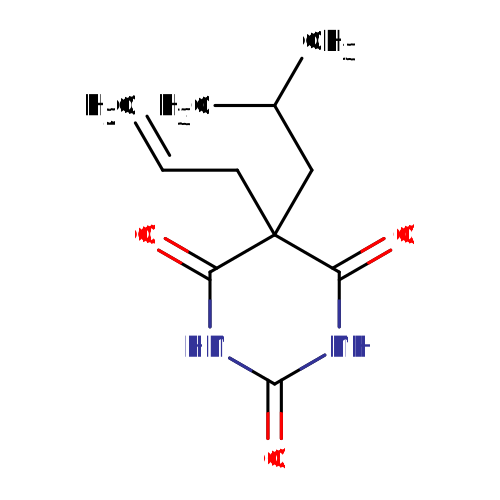
Butalbital, or 5-allyl-5-isobutylbarbituric acid, is a derivative of barbituric acid which the hydrogens at position 5 are substituted by an allyl group and an isobutyl group. It is a short-to-intermediate acting member of barbiturates that exhibit muscle-relaxing and anti-anxiety properties that produce central nervous system (CNS) depression that ranges from mild sedation to general anesthesia.1 Butalbital has a low degree of selectivity and a narrow therapeutic index.1 Typically indicated to manage tension (or muscle contraction) headaches, butalbital is often combined with one or more therapeutic agents, such as acetylsalicylic acid, acetaminophen, aspirin, and caffeine. There have not been clinical trials that evaluate the clinical efficacy of butalbital in migraines 1 thus it is not indicated for such condition. As with other barbiturates, butalbital carries a risk of abuse or misuse potential, intoxication, hangover, tolerance, dependence, and overdosage possibly leading to death.10 Butalbital‐containing analgesics can also produce a drug‐induced headache in addition to tolerance and dependence. Due to these risks, the use of butalbital-containing combination products is typically limited for use only in cases where other medications are deemed ineffective and such usage is advised to be carefully monitored.1
- Type
- Small Molecule
- Groups
- Approved, Illicit
- Structure
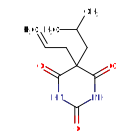
Structure for Butalbital (DB00241)
- Weight
- Average: 224.2563
Monoisotopic: 224.116092388 - Chemical Formula
- C11H16N2O3
- Synonyms
- 5-(2-methylpropyl)-5-prop-2-enyl-1,3-diazinane-2,4,6-trione
- 5-allyl-5-(2-methylpropyl)barbituric acid
- 5-allyl-5-(2'-methyl-n-propyl) barbituric acid
- 5-allyl-5-isobutyl-2,4,6(1H,3H,5H)-pyrimidinetrione
- 5-Allyl-5-isobutyl-pyrimidine-2,4,6-trione
- 5-allyl-5-isobutylbarbituric acid
- 5-isobutyl-5-allylbarbituric acid
- Allylbarbital
- Allylbarbitone
- Allylbarbituric acid
- Butalbarbital
- Butalbital
- Butalbitalum
- iso-butylallylbarbituric acid
- Itobarbital
- Tetrallobarbital

Pharmacology
- Indication
Indicated for the management of the symptom complex of tension (or muscle contraction) headache, when other non-opioid analgesics and alternative treatments are inadequate, in various combinations with acetaminophen, aspirin, caffeine, and codeine .10
 Reduce drug development failure ratesBuild, train, & validate machine-learning modelswith evidence-based and structured datasets.Build, train, & validate predictive machine-learning models with structured datasets.
- Associated Conditions
Indication Type Indication Combined Product Details Approval Level Age Group Patient Characteristics Dose Form Used in combination to manage Tension headache Combination Product in combination with: Acetaminophen (DB00316), Caffeine (DB00201) •••••••••••• Used in combination to manage Tension headache Combination Product in combination with: Acetaminophen (DB00316) •••••••••••• Used in combination to manage Tension-type headache Combination Product in combination with: Acetaminophen (DB00316), Codeine (DB00318), Caffeine (DB00201) •••••••••••• •••••••••• ••••••••• - Contraindications & Blackbox Warnings
 Prevent Adverse Drug Events TodayTap into our Clinical API for life-saving information on contraindications & blackbox warnings, population restrictions, harmful risks, & more.Avoid life-threatening adverse drug events with our Clinical API
- Pharmacodynamics
Butalbital is a short to intermediate-acting barbiturate that reversibly depresses the activity of excitable tissues, including the central nervous system in a nonselective manner.1 Barbiturates exhibit muscle-relaxing and anti-anxiety properties 3 and they are capable of producing all levels of CNS mood alteration from excitation to mild sedation, hypnosis, and deep coma.11 The sedative dose of butalbital in nontolerant individuals is 5-100 mg and the hypnotic dose is 100-200 mg.8 Pain perception and reaction are relatively unimpaired until the moment of unconsciousness.1 In some cases, an unwanted paradoxical response of excitement may be observed instead of sedation with barbiturate treatment, which may be due to their depressant effects on inhibitory centers of the CNS.1 At sufficiently high therapeutic doses, barbiturates induce anesthesia; however, barbiturates are reported to lose their effectiveness for sleep induction and sleep maintenance after 2 weeks.11 Barbiturates are habit-forming; they can produce tolerance and both dependence and addiction, which is partly explained by decreased drug concentration at the site of action due to enhanced drug metabolism by induced enzymes, or to cellular adaptive changes. In addition, butalbital may lead to analgesic overuse headache.1
While butalbital is expected to mediate similar actions as other members of the barbiturate drug class, the effects of butalbital in isolation are not well understood.3 It is suggested that butalbital is added in combination products to antagonize the unwanted central stimulating effect of stimulatory ingredients such as caffeine.3 Butalbital may decrease blood pressure and heart rate when administered at sedative and hypnotic doses.10
- Mechanism of action
Butalbital is a CNS depressant that suppresses neuronal excitability, impulse conduction, and the release of neurotransmitters, similar to actions of other barbiturates.8 Barbiturates primarily mediate suppressive actions on polysynaptic neuronal responses by diminishing facilitation while enhancing inhibition.1 Inhibition occurs at GABAergic synapses that express GABA-A receptors, which are transmembrane chloride ion channels that bind an inhibitory neurotransmitter GABA, barbiturates, benzodiazepines, neurosteroids, and ethanol.1 Upon activation, GABA-A receptors allow Cl- influx and K+ efflux into the postjunctional terminal, resulting in inhibition of the postsynaptic neuron. It is suggested that barbiturates, including butalbital, enhances GABA binding to the GABA-A receptors 11 by binding to the α+/β− interface in the intracellular domain (ICD) as an allosteric modulator.4 Additionally, barbiturates promote benzodiazepine binding to the receptor.1 Barbiturates potentiate GABA-induced increases in chloride conductance and depress voltage-activated calcium currents while prolonging the duration of GABA-induced chloride channel opening.1 Butalbital may also inhibit the excitatory effects mediated by AMPA receptors by reducing glutamate-induced depolarizations of the receptor. It is also proposed that barbiturates and opioids may potentiate the analgesic effects of each other when co-administered, although there are inconsistencies across preclinical data.1
Target Actions Organism AGamma-aminobutyric acid receptor subunit alpha-2 potentiatorHumans AGamma-aminobutyric acid receptor subunit alpha-3 potentiatorHumans AGamma-aminobutyric acid receptor subunit alpha-4 potentiatorHumans AGamma-aminobutyric acid receptor subunit alpha-5 potentiatorHumans AGamma-aminobutyric acid receptor subunit alpha-6 potentiatorHumans AGABA(A) Receptor positive allosteric modulatorHumans AGamma-aminobutyric acid receptor subunit alpha-1 potentiatorHumans UNeuronal acetylcholine receptor subunit alpha-4 antagonistHumans UNeuronal acetylcholine receptor subunit alpha-7 antagonistHumans UGlutamate receptor 2 antagonistHumans UGlutamate receptor ionotropic, kainate 2 antagonistHumans - Absorption
Butalbital gets readily and rapidly absorbed from the gastrointestinal tract.11 The time to reach the peak plasma concentrations is reported to be approximately 2 hours.1 Typical blood concentrations of butalbital peaked at 2.1 mg/L and declined to 1.5 mg/L at 24 hr.7 Plasma concentrations of 10 to 20 μg/mL have been associated with toxicity; coma and fatalities have occurred with concentrations of 25 to 30 μg/mL.1
- Volume of distribution
The volume of distribution of butalbital is reported to be approximately 0.8 L/kg.8 Butalbital is expected to distribute to most of the tissues in the body 11, including the mamillary glands and placenta.11 The plasma-to-blood concentration ratio was almost unity indicating that there is no preferential distribution of butalbital into either plasma or blood cells.10
- Protein binding
The in vitro plasma protein binding of butalbital is 45% over the concentration range of 0.5-20 mcg/mL. This falls within the range of plasma protein binding (20%-45%) reported with other barbiturates such as phenobarbital, pentobarbital, and secobarbital sodium.10
- Metabolism
Butalbital is expected to undergo nearly complete hepatic metabolism.1 It primarily undergoes C5 oxidation to form 5-isobutyl-5-(2,3-dihydroxypropyl) barbituric acid, which is the major metabolite. Butalbital may also undergo omega-hydroxylation to form 5-allyl-5(3-hydroxy-2-methyl-1-propyl) barbituric acid.6,10,8
Hover over products below to view reaction partners
- Route of elimination
Butalbital predominantly undergoes renal elimination with 59 to 88% of the total dose administered being excreted from the kidneys as unchanged parent drug or metabolites.9,10 Urinary excretion products included parent drug (about 3.6% of the dose), 5-isobutyl-5-(2,3-dihydroxypropyl) barbituric acid (about 24% of the dose), 5-allyl-5(3-hydroxy-2-methyl-1-propyl) barbituric acid (about 4.8%), products with the barbituric acid ring hydrolyzed with excretion of urea (about 14% of the dose), as well as unidentified materials.10 Of the material excreted in the urine, 32% is conjugated.10 Elimination is not complete within 24 hours, and the drug accumulates with frequent administration.1
- Half-life
The plasma half-life is about 35 hours. In a study of 5 healthy volunteers receiving 100 mg butalbital in combination with aspirin and caffeine, the mean plasma elimination half-life of butalbital was 61 hours, with the range of 35 to 88 hours.7,8
- Clearance
There is limited data on the clearance of butalbital.
- Adverse Effects
 Improve decision support & research outcomesWith structured adverse effects data, including: blackbox warnings, adverse reactions, warning & precautions, & incidence rates. View sample adverse effects data in our new Data Library!Improve decision support & research outcomes with our structured adverse effects data.
- Toxicity
Reported oral TDLO (woman) is 400 mg/kg and subcutaneous LD50 in rat is 160 mg/kg.MSDS The lowest acute dose of butalbital alone associated with death in adults is 2.0 g.1 Symptoms of acute barbiturate poisoning include drowsiness, confusion, coma, respiratory depression, hypotension, and shock. Due to the CNS depressant effects, an overdose of barbiturates may lead to death.10 Barbiturates are also associated with withdrawal reactions, which may lead to death if severe.1
- Pathways
- Not Available
- Pharmacogenomic Effects/ADRs
- Not Available
Interactions
- Drug Interactions
- This information should not be interpreted without the help of a healthcare provider. If you believe you are experiencing an interaction, contact a healthcare provider immediately. The absence of an interaction does not necessarily mean no interactions exist.
Drug Interaction Integrate drug-drug
interactions in your software1,2-Benzodiazepine The risk or severity of CNS depression can be increased when Butalbital is combined with 1,2-Benzodiazepine. Abaloparatide Butalbital may increase the hypotensive activities of Abaloparatide. Abemaciclib The metabolism of Abemaciclib can be increased when combined with Butalbital. Acalabrutinib The metabolism of Acalabrutinib can be increased when combined with Butalbital. Acebutolol Butalbital may increase the hypotensive activities of Acebutolol. - Food Interactions
- Avoid alcohol. Profound CNS depression can occur.
Products
 Drug product information from 10+ global regionsOur datasets provide approved product information including:dosage, form, labeller, route of administration, and marketing period.Access drug product information from over 10 global regions.
- Product Ingredients
Ingredient UNII CAS InChI Key Butalbital sodium BBH31P2ABJ 23554-70-3 LIZXGILRVOONMO-UHFFFAOYSA-M - Product Images
- International/Other Brands
- Sandoptal (Sandoz Pharmaceuticals Corporations)
- Mixture Products
Name Ingredients Dosage Route Labeller Marketing Start Marketing End Region Image Acetaminophen, Butalbital and Caffeine Butalbital (50 mg/1) + Acetaminophen (325 mg/1) + Caffeine (40 mg/1) Tablet Oral Stat Rx USA 1988-02-16 Not applicable US 
Alagesic LQ Butalbital (50 mg/15mL) + Acetaminophen (325 mg/15mL) + Caffeine (40 mg/15mL) Syrup Oral Poly Pharmaceuticals 2010-02-15 2015-02-06 US Allzital Butalbital (25 mg/1) + Acetaminophen (325 mg/1) Tablet Oral Phlight Pharma, Llc 2018-10-16 2020-12-07 US Allzital Butalbital (25 mg/1) + Acetaminophen (325 mg/1) Tablet Oral Skylar Laboratories, Llc 2015-12-04 2020-12-06 US Allzital Butalbital (25 mg/1mg) + Acetaminophen (325 mg/1mg) Tablet Oral Keswick Labs, Llc 2015-12-04 2017-03-13 US


Categories
- ATC Codes
- N05CB01 — Combinations of barbiturates
- Drug Categories
- Anticholinergic Agents
- Anticonvulsants
- Barbiturates
- Central Nervous System Depressants
- Cytochrome P-450 CYP3A Inducers
- Cytochrome P-450 CYP3A4 Inducers
- Cytochrome P-450 CYP3A4 Inducers (strength unknown)
- Cytochrome P-450 Enzyme Inducers
- Hypnotics and Sedatives
- Methemoglobinemia Associated Agents
- Nervous System
- Nicotinic Antagonists
- Psycholeptics
- Pyrimidines
- Pyrimidinones
- Chemical TaxonomyProvided by Classyfire
- Description
- This compound belongs to the class of organic compounds known as barbituric acid derivatives. These are compounds containing a perhydropyrimidine ring substituted at C-2, -4 and -6 by oxo groups.
- Kingdom
- Organic compounds
- Super Class
- Organoheterocyclic compounds
- Class
- Diazines
- Sub Class
- Pyrimidines and pyrimidine derivatives
- Direct Parent
- Barbituric acid derivatives
- Alternative Parents
- N-acyl ureas / Diazinanes / Dicarboximides / Azacyclic compounds / Organopnictogen compounds / Organonitrogen compounds / Organic oxides / Hydrocarbon derivatives / Carbonyl compounds
- Substituents
- 1,3-diazinane / Aliphatic heteromonocyclic compound / Azacycle / Barbiturate / Carbonic acid derivative / Carbonyl group / Carboxylic acid derivative / Dicarboximide / Hydrocarbon derivative / N-acyl urea
- Molecular Framework
- Aliphatic heteromonocyclic compounds
- External Descriptors
- barbiturates (CHEBI:102524)
- Affected organisms
- Humans and other mammals
Chemical Identifiers
- UNII
- KHS0AZ4JVK
- CAS number
- 77-26-9
- InChI Key
- UZVHFVZFNXBMQJ-UHFFFAOYSA-N
- InChI
- InChI=1S/C11H16N2O3/c1-4-5-11(6-7(2)3)8(14)12-10(16)13-9(11)15/h4,7H,1,5-6H2,2-3H3,(H2,12,13,14,15,16)
- IUPAC Name
- 5-(2-methylpropyl)-5-(prop-2-en-1-yl)-1,3-diazinane-2,4,6-trione
- SMILES
- CC(C)CC1(CC=C)C(=O)NC(=O)NC1=O
References
- General References
- Silberstein SD, McCrory DC: Butalbital in the treatment of headache: history, pharmacology, and efficacy. Headache. 2001 Nov-Dec;41(10):953-67. [Article]
- Wenzel RG, Sarvis CA: Do butalbital-containing products have a role in the management of migraine? Pharmacotherapy. 2002 Aug;22(8):1029-35. [Article]
- Bryczkowski C, Geib AJ: Combined butalbital/acetaminophen/caffeine overdose: case files of the Robert Wood Johnson Medical School Toxicology Service. J Med Toxicol. 2012 Dec;8(4):424-31. doi: 10.1007/s13181-012-0261-z. [Article]
- Puthenkalam R, Hieckel M, Simeone X, Suwattanasophon C, Feldbauer RV, Ecker GF, Ernst M: Structural Studies of GABAA Receptor Binding Sites: Which Experimental Structure Tells us What? Front Mol Neurosci. 2016 Jun 16;9:44. doi: 10.3389/fnmol.2016.00044. eCollection 2016. [Article]
- Poyant JO, Albright R, Clain J, Pandompatam G, Barreto EF: Extracorporeal elimination of butalbital in acute aspirin-butalbital-caffeine-codeine (Fiorinal with Codeine) poisoning. Clin Toxicol (Phila). 2018 Jun;56(6):439-441. doi: 10.1080/15563650.2017.1400554. Epub 2017 Nov 10. [Article]
- Dain JG, Bhuta SI, Coombs RA, Talbot KC, Dugger HA: Metabolism of butalbital, 5-allyl-5-isobutylbarbituric acid, in the dog. Drug Metab Dispos. 1980 Jul-Aug;8(4):247-52. [Article]
- Drost ML, Walter L: Blood and plasma concentrations of butalbital following single oral doses in man. J Anal Toxicol. 1988 Nov-Dec;12(6):322-4. [Article]
- 23. (2012). In Medical Toxicology of Drug Abuse: Synthesized Chemicals and Psychoactive Plants. (pp. 474-476). Hoboken, N.J: John Wiley & Sons. [ISBN:978-0-471-72760-6]
- Butalbital - National Library of Medicine HSDB Database [Link]
- Butalbital, Acetaminophen, Caffeine, and Codeine Phosphate Capsules - FDA Label [Link]
- N-FIORINAL®-C 1/4, 1/2 (acetylsalicylic acid-caffeine-codeine-butalbital) Product Information - Novartis Canada [File]
- External Links
- Human Metabolome Database
- HMDB0014386
- KEGG Drug
- D03182
- PubChem Compound
- 2481
- PubChem Substance
- 46505876
- ChemSpider
- 2387
- 19860
- ChEBI
- 102524
- ChEMBL
- CHEMBL454
- ZINC
- ZINC000003830347
- Therapeutic Targets Database
- DAP000668
- PharmGKB
- PA448695
- RxList
- RxList Drug Page
- Wikipedia
- Butalbital
- MSDS
- Download (23.7 KB)
Clinical Trials
- Clinical Trials
Phase Status Purpose Conditions Count 3 Completed Treatment Acute Migraine / Migraine 1 2, 3 Completed Treatment Idiopathic Intracranial Hypertension 1
Pharmacoeconomics
- Manufacturers
- Not Available
- Packagers
- Atley Pharmaceuticals
- Cardinal Health
- Chattem Chemicals Inc.
- D.M. Graham Laboratories Inc.
- Diversified Healthcare Services Inc.
- ECR Pharmaceuticals
- Everett Laboratories Inc.
- Innoviant Pharmacy Inc.
- International Ethical Labs Inc.
- Ivax Pharmaceuticals
- Marnel Pharmaceuticals Inc.
- MCR American Pharmaceuticals Inc.
- Medisca Inc.
- Merz Pharmaceuticals LLC
- Mikart Inc.
- Nucare Pharmaceuticals Inc.
- PD-Rx Pharmaceuticals Inc.
- Physicians Total Care Inc.
- Qualitest
- Savage Labs
- Southwood Pharmaceuticals
- Stat Rx Usa
- Va Cmop Dallas
- Valeant Ltd.
- West-Ward Pharmaceuticals
- Dosage Forms
Form Route Strength Syrup Oral Tablet, coated Oral Tablet Oral Capsule Oral Suppository Rectal - Prices
Unit description Cost Unit Butalbital powder 3.83USD g Butalbital compound tablet 1.04USD tablet DrugBank does not sell nor buy drugs. Pricing information is supplied for informational purposes only.- Patents
- Not Available
Properties
- State
- Solid
- Experimental Properties
Property Value Source melting point (°C) 138.5 Barceloux, Donald G. Medical Toxicology of Drug Abuse: Synthesized Chemicals and Psychoactive Plants. Hoboken, N.J: John Wiley & Sons, 2012. Internet resource. water solubility 1700 mg/L (at 25 °C) Barceloux, Donald G. Medical Toxicology of Drug Abuse: Synthesized Chemicals and Psychoactive Plants. Hoboken, N.J: John Wiley & Sons, 2012. Internet resource. logP 1.87 Barceloux, Donald G. Medical Toxicology of Drug Abuse: Synthesized Chemicals and Psychoactive Plants. Hoboken, N.J: John Wiley & Sons, 2012. Internet resource. - Predicted Properties
Property Value Source Water Solubility 2.23 mg/mL ALOGPS logP 1.47 ALOGPS logP 1.59 Chemaxon logS -2 ALOGPS pKa (Strongest Acidic) 7.48 Chemaxon Physiological Charge 0 Chemaxon Hydrogen Acceptor Count 3 Chemaxon Hydrogen Donor Count 2 Chemaxon Polar Surface Area 75.27 Å2 Chemaxon Rotatable Bond Count 4 Chemaxon Refractivity 58.05 m3·mol-1 Chemaxon Polarizability 22.43 Å3 Chemaxon Number of Rings 1 Chemaxon Bioavailability 1 Chemaxon Rule of Five Yes Chemaxon Ghose Filter Yes Chemaxon Veber's Rule No Chemaxon MDDR-like Rule No Chemaxon - Predicted ADMET Features
Property Value Probability Human Intestinal Absorption + 0.9112 Blood Brain Barrier + 0.9703 Caco-2 permeable - 0.5936 P-glycoprotein substrate Non-substrate 0.5365 P-glycoprotein inhibitor I Inhibitor 0.5179 P-glycoprotein inhibitor II Non-inhibitor 0.9678 Renal organic cation transporter Non-inhibitor 0.9331 CYP450 2C9 substrate Non-substrate 0.7999 CYP450 2D6 substrate Non-substrate 0.8708 CYP450 3A4 substrate Non-substrate 0.6804 CYP450 1A2 substrate Non-inhibitor 0.8535 CYP450 2C9 inhibitor Non-inhibitor 0.8768 CYP450 2D6 inhibitor Non-inhibitor 0.9324 CYP450 2C19 inhibitor Non-inhibitor 0.8354 CYP450 3A4 inhibitor Non-inhibitor 0.9074 CYP450 inhibitory promiscuity Low CYP Inhibitory Promiscuity 0.9626 Ames test Non AMES toxic 0.5716 Carcinogenicity Non-carcinogens 0.8861 Biodegradation Not ready biodegradable 0.9833 Rat acute toxicity 3.0783 LD50, mol/kg Not applicable hERG inhibition (predictor I) Weak inhibitor 0.9898 hERG inhibition (predictor II) Non-inhibitor 0.9711
Spectra
- Mass Spec (NIST)
- Not Available
- Spectra
- Chromatographic Properties
Collision Cross Sections (CCS)
Adduct CCS Value (Å2) Source type Source [M-H]- 157.8757288 predictedDarkChem Lite v0.1.0 [M-H]- 145.69432 predictedDeepCCS 1.0 (2019) [M+H]+ 158.2141288 predictedDarkChem Lite v0.1.0 [M+H]+ 148.05235 predictedDeepCCS 1.0 (2019) [M+Na]+ 158.3694288 predictedDarkChem Lite v0.1.0 [M+Na]+ 155.9666 predictedDeepCCS 1.0 (2019)
Targets

- Kind
- Protein
- Organism
- Humans
- Pharmacological action
- Yes
- Actions
- Potentiator
- General Function
- Inhibitory extracellular ligand-gated ion channel activity
- Specific Function
- GABA, the major inhibitory neurotransmitter in the vertebrate brain, mediates neuronal inhibition by binding to the GABA/benzodiazepine receptor and opening an integral chloride channel.
- Gene Name
- GABRA2
- Uniprot ID
- P47869
- Uniprot Name
- Gamma-aminobutyric acid receptor subunit alpha-2
- Molecular Weight
- 51325.85 Da
References
- Kind
- Protein
- Organism
- Humans
- Pharmacological action
- Yes
- Actions
- Potentiator
- General Function
- Inhibitory extracellular ligand-gated ion channel activity
- Specific Function
- GABA, the major inhibitory neurotransmitter in the vertebrate brain, mediates neuronal inhibition by binding to the GABA/benzodiazepine receptor and opening an integral chloride channel.
- Gene Name
- GABRA3
- Uniprot ID
- P34903
- Uniprot Name
- Gamma-aminobutyric acid receptor subunit alpha-3
- Molecular Weight
- 55164.055 Da
References
- Kind
- Protein
- Organism
- Humans
- Pharmacological action
- Yes
- Actions
- Potentiator
- General Function
- Inhibitory extracellular ligand-gated ion channel activity
- Specific Function
- GABA, the major inhibitory neurotransmitter in the vertebrate brain, mediates neuronal inhibition by binding to the GABA/benzodiazepine receptor and opening an integral chloride channel.
- Gene Name
- GABRA4
- Uniprot ID
- P48169
- Uniprot Name
- Gamma-aminobutyric acid receptor subunit alpha-4
- Molecular Weight
- 61622.645 Da
References
- Mehta AK, Ticku MK: An update on GABAA receptors. Brain Res Brain Res Rev. 1999 Apr;29(2-3):196-217. [Article]
- Kind
- Protein
- Organism
- Humans
- Pharmacological action
- Yes
- Actions
- Potentiator
- General Function
- Transporter activity
- Specific Function
- GABA, the major inhibitory neurotransmitter in the vertebrate brain, mediates neuronal inhibition by binding to the GABA/benzodiazepine receptor and opening an integral chloride channel.
- Gene Name
- GABRA5
- Uniprot ID
- P31644
- Uniprot Name
- Gamma-aminobutyric acid receptor subunit alpha-5
- Molecular Weight
- 52145.645 Da
References
- Kind
- Protein
- Organism
- Humans
- Pharmacological action
- Yes
- Actions
- Potentiator
- General Function
- Inhibitory extracellular ligand-gated ion channel activity
- Specific Function
- GABA, the major inhibitory neurotransmitter in the vertebrate brain, mediates neuronal inhibition by binding to the GABA/benzodiazepine receptor and opening an integral chloride channel.
- Gene Name
- GABRA6
- Uniprot ID
- Q16445
- Uniprot Name
- Gamma-aminobutyric acid receptor subunit alpha-6
- Molecular Weight
- 51023.69 Da
References
- Kind
- Protein group
- Organism
- Humans
- Pharmacological action
- Yes
- Actions
- Positive allosteric modulator
- General Function
- Inhibitory extracellular ligand-gated ion channel activity
- Specific Function
- Component of the heteropentameric receptor for GABA, the major inhibitory neurotransmitter in the vertebrate brain. Functions also as histamine receptor and mediates cellular responses to histamine...
Components:
References
- ChEMBL Compound Report Card [Link]
- Kind
- Protein
- Organism
- Humans
- Pharmacological action
- Yes
- Actions
- Potentiator
- General Function
- Inhibitory extracellular ligand-gated ion channel activity
- Specific Function
- Component of the heteropentameric receptor for GABA, the major inhibitory neurotransmitter in the vertebrate brain. Functions also as histamine receptor and mediates cellular responses to histamine...
- Gene Name
- GABRA1
- Uniprot ID
- P14867
- Uniprot Name
- Gamma-aminobutyric acid receptor subunit alpha-1
- Molecular Weight
- 51801.395 Da
References
- Whiting PJ: The GABAA receptor gene family: new opportunities for drug development. Curr Opin Drug Discov Devel. 2003 Sep;6(5):648-57. [Article]
- Mehta AK, Ticku MK: An update on GABAA receptors. Brain Res Brain Res Rev. 1999 Apr;29(2-3):196-217. [Article]
- Krasowski MD, Harrison NL: General anaesthetic actions on ligand-gated ion channels. Cell Mol Life Sci. 1999 Aug 15;55(10):1278-303. [Article]
- Yamakura T, Bertaccini E, Trudell JR, Harris RA: Anesthetics and ion channels: molecular models and sites of action. Annu Rev Pharmacol Toxicol. 2001;41:23-51. [Article]
- Cutrer FM, Mitsikostas DD, Ayata G, Sanchez del Rio M: Attenuation by butalbital of capsaicin-induced c-fos-like immunoreactivity in trigeminal nucleus caudalis. Headache. 1999 Nov-Dec;39(10):697-704. [Article]
- Chen X, Ji ZL, Chen YZ: TTD: Therapeutic Target Database. Nucleic Acids Res. 2002 Jan 1;30(1):412-5. [Article]
- Overington JP, Al-Lazikani B, Hopkins AL: How many drug targets are there? Nat Rev Drug Discov. 2006 Dec;5(12):993-6. [Article]
- Imming P, Sinning C, Meyer A: Drugs, their targets and the nature and number of drug targets. Nat Rev Drug Discov. 2006 Oct;5(10):821-34. [Article]
- Kind
- Protein
- Organism
- Humans
- Pharmacological action
- Unknown
- Actions
- Antagonist
- General Function
- Ligand-gated ion channel activity
- Specific Function
- After binding acetylcholine, the AChR responds by an extensive change in conformation that affects all subunits and leads to opening of an ion-conducting channel across the plasma membrane permeabl...
- Gene Name
- CHRNA4
- Uniprot ID
- P43681
- Uniprot Name
- Neuronal acetylcholine receptor subunit alpha-4
- Molecular Weight
- 69956.47 Da
References
- Yamakura T, Bertaccini E, Trudell JR, Harris RA: Anesthetics and ion channels: molecular models and sites of action. Annu Rev Pharmacol Toxicol. 2001;41:23-51. [Article]
- Arias HR, Bhumireddy P: Anesthetics as chemical tools to study the structure and function of nicotinic acetylcholine receptors. Curr Protein Pept Sci. 2005 Oct;6(5):451-72. [Article]
- Krasowski MD, Harrison NL: General anaesthetic actions on ligand-gated ion channels. Cell Mol Life Sci. 1999 Aug 15;55(10):1278-303. [Article]
- Kind
- Protein
- Organism
- Humans
- Pharmacological action
- Unknown
- Actions
- Antagonist
- General Function
- Toxic substance binding
- Specific Function
- After binding acetylcholine, the AChR responds by an extensive change in conformation that affects all subunits and leads to opening of an ion-conducting channel across the plasma membrane. The cha...
- Gene Name
- CHRNA7
- Uniprot ID
- P36544
- Uniprot Name
- Neuronal acetylcholine receptor subunit alpha-7
- Molecular Weight
- 56448.925 Da
References
- Yamakura T, Bertaccini E, Trudell JR, Harris RA: Anesthetics and ion channels: molecular models and sites of action. Annu Rev Pharmacol Toxicol. 2001;41:23-51. [Article]
- Arias HR, Bhumireddy P: Anesthetics as chemical tools to study the structure and function of nicotinic acetylcholine receptors. Curr Protein Pept Sci. 2005 Oct;6(5):451-72. [Article]
- Krasowski MD, Harrison NL: General anaesthetic actions on ligand-gated ion channels. Cell Mol Life Sci. 1999 Aug 15;55(10):1278-303. [Article]
- Kind
- Protein
- Organism
- Humans
- Pharmacological action
- Unknown
- Actions
- Antagonist
- General Function
- Ionotropic glutamate receptor activity
- Specific Function
- Receptor for glutamate that functions as ligand-gated ion channel in the central nervous system and plays an important role in excitatory synaptic transmission. L-glutamate acts as an excitatory ne...
- Gene Name
- GRIA2
- Uniprot ID
- P42262
- Uniprot Name
- Glutamate receptor 2
- Molecular Weight
- 98820.32 Da
References
- Yamakura T, Bertaccini E, Trudell JR, Harris RA: Anesthetics and ion channels: molecular models and sites of action. Annu Rev Pharmacol Toxicol. 2001;41:23-51. [Article]
- Krasowski MD, Harrison NL: General anaesthetic actions on ligand-gated ion channels. Cell Mol Life Sci. 1999 Aug 15;55(10):1278-303. [Article]
- Kind
- Protein
- Organism
- Humans
- Pharmacological action
- Unknown
- Actions
- Antagonist
- General Function
- Kainate selective glutamate receptor activity
- Specific Function
- Ionotropic glutamate receptor. L-glutamate acts as an excitatory neurotransmitter at many synapses in the central nervous system. Binding of the excitatory neurotransmitter L-glutamate induces a co...
- Gene Name
- GRIK2
- Uniprot ID
- Q13002
- Uniprot Name
- Glutamate receptor ionotropic, kainate 2
- Molecular Weight
- 102582.475 Da
References
- Yamakura T, Bertaccini E, Trudell JR, Harris RA: Anesthetics and ion channels: molecular models and sites of action. Annu Rev Pharmacol Toxicol. 2001;41:23-51. [Article]
- Krasowski MD, Harrison NL: General anaesthetic actions on ligand-gated ion channels. Cell Mol Life Sci. 1999 Aug 15;55(10):1278-303. [Article]

Drug created at June 13, 2005 13:24 / Updated at April 09, 2024 18:13