Identification
- Summary
Caffeine is a stimulant present in tea, coffee, cola beverages, analgesic drugs, and agents used to increase alertness. It is also used in to prevent and treat pulmonary complications of premature birth.
- Brand Names
- Anacin, Arthriten Inflammatory Pain, Ascomp, Bc Arthritis, Bc Original Formula, Diurex, Dvorah, Esgic, Exaprin, Excedrin, Excedrin Tension Headache, Fioricet, Fioricet With Codeine, Fiorinal, Goody's Extra Strength, Goody's Headache Relief Shot, Goody's PM, Midol Complete, Midol Cramps & Bodyaches, Migergot, Norgesic, Norgesic Forte, Orbivan, Orphengesic, Pamprin Max Formula, Peyona, Stanback Headache Powder Reformulated Jan 2011, Trezix, Trianal, Trianal C, Triatec, Triatec-8, Vanatol, Vanatol S, Vanquish, Vivarin
- Generic Name
- Caffeine
- DrugBank Accession Number
- DB00201
- Background
Caffeine is a drug of the methylxanthine class used for a variety of purposes, including certain respiratory conditions of the premature newborn, pain relief, and to combat drowsiness. Caffeine is similar in chemical structure to Theophylline and Theobromine.4,16 It can be sourced from coffee beans, but also occurs naturally in various teas and cacao beans, which are different than coffee beans.12 Caffeine is also used in a variety of cosmetic products and can be administered topically, orally, by inhalation, or by injection.12
The caffeine citrate injection, used for apnea of the premature newborn, was initially approved by the FDA in 1999.19 According to an article from 2017, more than 15 million babies are born prematurely worldwide. This correlates to about 1 in 10 births. Premature birth can lead to apnea and bronchopulmonary dysplasia, a condition that interferes with lung development and may eventually cause asthma or early onset emphysema in those born prematurely.5 Caffeine is beneficial in preventing and treating apnea and bronchopulmonary dysplasia in newborns, improving the quality of life of premature infants.12
- Type
- Small Molecule
- Groups
- Approved
- Structure
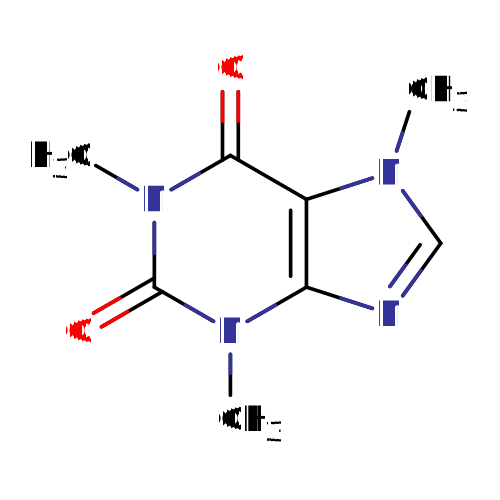
Structure for Caffeine (DB00201)
- Weight
- Average: 194.1906
Monoisotopic: 194.080375584 - Chemical Formula
- C8H10N4O2
- Synonyms
- 1-methyltheobromine
- 1,3,7-trimethyl-2,6-dioxopurine
- 1,3,7-trimethylpurine-2,6-dione
- 1,3,7-trimethylxanthine
- 3,7-Dihydro-1,3,7-trimethyl-1H-purin-2,6-dion
- 7-methyltheophylline
- Anhydrous caffeine
- Cafeína
- Caféine
- Caffeine
- Caffeinum
- Coffein
- Coffeinum
- Guaranine
- Koffein
- Mateína
- Methyltheobromine
- Teína
- Thein
- Theine
- External IDs
- Fema no. 2224
- NSC-5036

Pharmacology
- Indication
Caffeine is indicated for the short term treatment of apnea of prematurity in infants and off label for the prevention and treatment of bronchopulmonary dysplasia caused by premature birth.12,16 In addition, it is indicated in combination with sodium benzoate to treat respiratory depression resulting from an overdose with CNS depressant drugs.23 Caffeine has a broad range of over the counter uses, and is found in energy supplements, athletic enhancement products, pain relief products, as well as cosmetic products.12,17,21
 Reduce drug development failure ratesBuild, train, & validate machine-learning modelswith evidence-based and structured datasets.Build, train, & validate predictive machine-learning models with structured datasets.
- Associated Conditions
Indication Type Indication Combined Product Details Approval Level Age Group Patient Characteristics Dose Form Treatment of Apnea of prematurity •••••••••••• •••••••• Treatment of Bronchopulmonary dysplasia (bpd) ••• ••••• Prevention of Bronchopulmonary dysplasia (bpd) ••• ••••• Used in combination for symptomatic treatment of Common cold Combination Product in combination with: Acetaminophen (DB00316), Carbaspirin calcium (DB13612) ••• ••• •••••• Used in combination for symptomatic treatment of Common cold Combination Product in combination with: Phenylephrine (DB00388), Acetaminophen (DB00316), Desloratadine (DB00967) •••••••••••• •••••••• •••••••• •••••• - Associated Therapies
- Contraindications & Blackbox Warnings
 Prevent Adverse Drug Events TodayTap into our Clinical API for life-saving information on contraindications & blackbox warnings, population restrictions, harmful risks, & more.Avoid life-threatening adverse drug events with our Clinical API
- Pharmacodynamics
Caffeine stimulates the central nervous system (CNS), heightening alertness, and sometimes causing restlessness and agitation. It relaxes smooth muscle, stimulates the contraction of cardiac muscle, and enhances athletic performance.1,12,18 Caffeine promotes gastric acid secretion and increases gastrointestinal motility. It is often combined in products with analgesics and ergot alkaloids, relieving the symptoms of migraine and other types of headaches. Finally, caffeine acts as a mild diuretic.12
- Mechanism of action
The mechanism of action of caffeine is complex, as it impacts several body systems, which are listed below. The effects as they relate to various body systems are described as follows:
General and cellular actions
Caffeine exerts several actions on cells, but the clinical relevance is poorly understood. One probable mechanism is the inhibition of nucleotide phosphodiesterase enzymes, adenosine receptors, regulation of calcium handling in cells, and participates in adenosine receptor antagonism.8,18 Phosphodiesterase enzymes regulate cell function via actions on second messengers cAMP and cGMP.9 This causes lipolysis through activation of hormone-sensitive lipases, releasing fatty acids and glycerol.14
Respiratory
The exact mechanism of action of caffeine in treating apnea related to prematurity is unknown, however, there are several proposed mechanisms, including respiratory center stimulation in the central nervous system, a reduced threshold to hypercapnia with increased response, and increased consumption of oxygen, among others.16 The blocking of the adenosine receptors enhances respiratory drive via an increase in brain medullary response to carbon dioxide, stimulating ventilation and respiratory drive, while increasing contractility of the diaphragm.12
Central nervous system
Caffeine demonstrates antagonism of all 4 adenosine receptor subtypes (A1, A2a, A2b, A3) in the central nervous system.12,16 Caffeine's effects on alertness and combatting drowsiness are specifically related to the antagonism of the A2a receptor.12
Renal system
Caffeine has diuretic effects due to is stimulatory effects on renal blood flow, increase in glomerular filtration, and increase in sodium excretion.12
Cardiovascular system
Adenosine receptor antagonism at the A1 receptor by caffeine stimulates inotropic effects in the heart. Blocking of adenosine receptors promotes catecholamine release, leading to stimulatory effects occurring in the heart and the rest of the body. In the blood vessels, caffeine exerts direct antagonism of adenosine receptors, causing vasodilation. It stimulates the endothelial cells in the blood vessel wall to release nitric oxide, potentiating blood vessel relaxation. Catecholamine release, however, antagonizes this and exerts inotropic and chronotropic effects on the heart, ultimately leading to vasoconstriction. Finally, caffeine is shown to raise systolic blood pressure measurements by 5 to 10 mmHg when it is not taken regularly, versus no effect in those who consume it regularly.12 The vasoconstricting effects of caffeine are beneficial in migraines and other types of headache, which are normally caused by vasodilation in the brain.6,21
Target Actions Organism AAdenosine receptor A1 antagonistHumans AAdenosine receptor A2a antagonistHumans AAdenosine receptor A2b antagonistHumans AAdenosine receptor A3 antagonistHumans APhosphodiesterase enzymes inhibitorHumans UcAMP-specific 3',5'-cyclic phosphodiesterase 4B inhibitorHumans URyanodine receptor 1 Not Available Humans UCyclic nucleotide phosphodiesterase inhibitorHumans UDNA-dependent protein kinase catalytic subunit inhibitorHumans UPhosphatidylinositol 4,5-bisphosphate 3-kinase catalytic subunit delta isoform inhibitorHumans UPhosphatidylinositol 4,5-bisphosphate 3-kinase catalytic subunit alpha isoform inhibitorHumans UPhosphatidylinositol 4,5-bisphosphate 3-kinase catalytic subunit beta isoform inhibitorHumans UInositol 1,4,5-trisphosphate receptor inhibitorHumans USerine-protein kinase ATM inhibitorHumans - Absorption
Caffeine is rapidly absorbed after oral or parenteral administration, reaching peak plasma concentration within 30 minutes to 2 hours after administration.10 After oral administration, onset of action takes place within 45 to 1 hour.15 Food may delay caffeine absorption. The peak plasma level for caffeine ranges from 6-10mg/L.16 The absolute bioavailability is unavailable in neonates16, but reaches about 100% in adults.12
- Volume of distribution
Caffeine has the ability to rapidly cross the blood-brain barrier. It is water and fat soluble and distributes throughout the body.12,14,16 Caffeine concentrations in the cerebrospinal fluid of preterm newborns are similar to the concentrations found in the plasma. The mean volume of distribution of caffeine in infants is 0.8-0.9 L/kg and 0.6 L/kg in the adult population.16
- Protein binding
Plasma protein binding of caffeine has not been determined for neonates or infants. In vitro studies indicate a protein binding of about 10%-36%. Caffeine is reversibly bound to plasma proteins.14,16
- Metabolism
Caffeine metabolism occurs mainly in the liver via the cytochrome CYP1A2 enzyme.10 The products of caffeine metabolism include paraxanthine, theobromine, and theophylline. The first step of caffeine metabolism is demethylation, yielding paraxanthine (a major metabolite), followed by theobromine, and theophylline, which are both minor metabolites. They are then excreted in urine as urates after additional metabolism.10,12,16 The enzymes xanthine oxidase and N-acetyltransferase 2 (NAT2) also participate in the metabolism of caffeine.10
Hover over products below to view reaction partners
- Route of elimination
The major metabolites of caffeine can be found excreted in the urine.12 About 0.5% to 2% of a caffeine dose is found excreted in urine, as it because it is heavily absorbed in the renal tubules.14,10
- Half-life
In an average-sized adult or child above the age of 9, the half-life of caffeine is approximately 5 hours. Various characteristics and conditions can alter caffeine half-life. It can be reduced by up to 50% in smokers. Pregnant women show an increased half-life of 15 hours or higher, especially in the third trimester. The half-life in newborns is prolonged to about 8 hours at full-term and 100 hours in premature infants, likely due to reduced ability to metabolize it. Liver disease or drugs that inhibit CYP1A2 can increase caffeine half-life.12,14
- Clearance
The clearance of caffeine varies, but on average, is about 0.078 L/kg/h (1.3 mL/min/kg).10,14
- Adverse Effects
 Improve decision support & research outcomesWith structured adverse effects data, including: blackbox warnings, adverse reactions, warning & precautions, & incidence rates. View sample adverse effects data in our new Data Library!Improve decision support & research outcomes with our structured adverse effects data.
- Toxicity
The oral LD50 of caffeine in rats is 192 mg/kg.MSDS An acute fatal overdose of caffeine in humans is about 10–14 grams (equivalent to 150–200 mg/kg of body weight).14
Caffeine overdose
In the case of caffeine overdose, seizures may occur, as caffeine is a central nervous system stimulant. It should be used with extreme caution in those with epilepsy or other seizure disorders.16 Symptoms of overdose may include nausea, vomiting, diarrhea, and gastrointestinal upset. Intoxication with caffeine is included in the World Health Organization’s International Classification of Diseases (ICD-10). Agitation, anxiety, restlessness, insomnia, tachycardia, tremors, tachycardia, psychomotor agitation, and, in some cases, death can occur, depending on the amount of caffeine consumed. Overdose is more likely to occur in individuals who do not consume caffeine regularly but consume energy drinks.8
Overdose management
For a mild caffeine overdose, offer symptomatic treatment. In the case of a severe overdose, intubation for airway protection from changes in mental status or vomiting may be needed. Activated charcoal and hemodialysis can prevent further complications of an overdose and prevent absorption and metabolism. Benzodiazepine drugs can be administered to prevent or treat seizures. IV fluids and vasopressors may be necessary to combat hypotension associated with caffeine overdose. In addition, magnesium and beta blocking drugs can be used to treat arrhythmias that may occur, with defibrillation and resuscitation if the arrhythmias are lethal. Follow local ACLS protocols.12
- Pathways
Pathway Category Caffeine Metabolism Metabolic - Pharmacogenomic Effects/ADRs
Interacting Gene/Enzyme Allele name Genotype(s) Defining Change(s) Type(s) Description Details Cytochrome P450 1A2 --- (C;C) / (A;C) C allele ADR Directly Studied Patients with this genotype have increased risk of a non-fatal myocardial infarction with caffeine Details
Interactions
- Drug Interactions
- This information should not be interpreted without the help of a healthcare provider. If you believe you are experiencing an interaction, contact a healthcare provider immediately. The absence of an interaction does not necessarily mean no interactions exist.
Drug Interaction Integrate drug-drug
interactions in your software1,2-Benzodiazepine The therapeutic efficacy of 1,2-Benzodiazepine can be decreased when used in combination with Caffeine. Abametapir The serum concentration of Caffeine can be increased when it is combined with Abametapir. Abatacept The metabolism of Caffeine can be increased when combined with Abatacept. Abemaciclib Caffeine may decrease the excretion rate of Abemaciclib which could result in a higher serum level. Abiraterone The serum concentration of Caffeine can be increased when it is combined with Abiraterone. - Food Interactions
- No interactions found.
Products
 Drug product information from 10+ global regionsOur datasets provide approved product information including:dosage, form, labeller, route of administration, and marketing period.Access drug product information from over 10 global regions.
- Product Ingredients
Ingredient UNII CAS InChI Key Caffeine citrate U26EO4675Q 69-22-7 RCQXSQPPHJPGOF-UHFFFAOYSA-N - Product Images
- International/Other Brands
- Caffedrine / Dexitac / Durvitan / Enerjets / No-Doz / Pep-Back / Quick Pep / Wake-Up
- Brand Name Prescription Products
Name Dosage Strength Route Labeller Marketing Start Marketing End Region Image Cafcit Injection 20 mg/1mL Intravenous Bedford Pharmaceuticals 2008-11-04 2016-04-30 US 
Cafcit Solution 20 mg/1mL Oral Bedford Pharmaceuticals 2008-11-04 2016-05-29 US Caffeine and Sodium Benzoate Injection, solution 125 mg/1mL Intramuscular; Intravenous AMERICAN REGENT, INC. 1993-02-01 Not applicable US Caffeine Citrate Injection 20 mg/1mL Intravenous Hikma Pharmaceuticals USA Inc. 2024-01-11 Not applicable US Caffeine Citrate Injection 20 mg/1mL Intravenous Hikma Pharmaceuticals USA Inc. 2008-11-04 Not applicable US - Generic Prescription Products
Name Dosage Strength Route Labeller Marketing Start Marketing End Region Image Caffeine Citrate Injection, solution 60 mg/3mL Intramuscular; Intravenous Micro Labs Limited 2017-12-30 Not applicable US Caffeine Citrate Injection 20 mg/1mL Intravenous Exela Pharma Sciences, LLC 2015-03-30 Not applicable US Caffeine Citrate Solution 20 mg/1mL Oral Sagent Pharmaceuticals 2012-09-15 Not applicable US Caffeine Citrate Solution 20 mg/1mL Oral Fresenius Kabi USA, LLC 2009-11-19 Not applicable US Caffeine Citrate Solution 20 mg/1mL Oral Remedy Repack 2013-10-31 2014-10-31 US - Over the Counter Products
Name Dosage Strength Route Labeller Marketing Start Marketing End Region Image 357 Super Magnum Tablet, multilayer 200 1/1 Oral King Richard Promotions Dba Dbi 2016-05-19 Not applicable US Alert Tablet, film coated 200 mg/1 Oral Time Cap Labs, Inc 2011-11-30 Not applicable US Alert Tablet 200 mg/1 Oral DOLGENCORP, LLC 1996-11-21 Not applicable US Alert Aid Tablet 200 mg/1 Oral Amerisource Bergen 1996-11-21 Not applicable US Alert Aid Caffeine Capsules 175mg Capsule 175 mg / cap Oral Sun Products Corporation 1991-12-31 2004-03-11 Canada 
- Mixture Products
Name Ingredients Dosage Route Labeller Marketing Start Marketing End Region Image (extra Strength) Acetaminophen, Caffeine & 8mg Codeine Phosphate Caplets Caffeine (15 mg) + Acetaminophen (500 mg) + Codeine phosphate (8 mg) Tablet Oral Stanley Pharmaceuticals, A Division Of Vita Health Products Inc. 1998-07-22 2002-07-31 Canada 217 Caffeine citrate (30 mg / tab) + Acetylsalicylic acid (325 mg / tab) Tablet Oral Merck Frosst Canada & Cie, Merck Frosst Canada & Co. 1910-12-31 1998-04-21 Canada 217 Strong Tab Caffeine citrate (30 mg / tab) + Acetylsalicylic acid (500 mg / tab) Tablet Oral Merck Frosst Canada & Cie, Merck Frosst Canada & Co. 1973-12-31 1998-04-21 Canada 222 Tablets Caffeine citrate (30 mg) + Acetylsalicylic acid (375 mg) + Codeine phosphate (8 mg) Tablet Oral Mcneil Consumer Healthcare Division Of Johnson & Johnson Inc 1951-12-31 2015-08-17 Canada 282 Mep Tab Caffeine citrate (30 mg) + Acetylsalicylic acid (350 mg) + Codeine phosphate (15 mg) + Meprobamate (200 mg) Tablet Oral Merck Frosst Canada & Cie, Merck Frosst Canada & Co. 1959-12-31 1998-08-14 Canada - Unapproved/Other Products
Name Ingredients Dosage Route Labeller Marketing Start Marketing End Region Image 4229 First Aid Kit Caffeine (32.4 mg/1) + Acetaminophen (110 mg/1) + Acetaminophen (325 mg/1) + Acetylsalicylic acid (162 mg/1) + Ammonia (0.045 g/0.3mL) + Bacitracin zinc (400 [iU]/1g) + Isopropyl alcohol (0.7 mL/1mL) + Neomycin sulfate (3.5 mg/1g) + Polymyxin B sulfate (5000 [iU]/1g) + Salicylamide (152 mg/1) Kit Oral; Respiratory (inhalation); Topical Honeywell Safety Products USA, Inc 2018-10-18 Not applicable US 4248 First Aid Kit Caffeine (32.4 mg/1) + Acetaminophen (325 mg/1) + Acetaminophen (110 mg/1) + Acetylsalicylic acid (162 mg/1) + Ammonia (0.045 g/0.3mL) + Bacitracin zinc (400 [iU]/1g) + Benzalkonium chloride (1.3 mg/1mL) + Benzethonium chloride (0.2 g/100g) + Benzethonium chloride (0.2 g/100g) + Benzocaine (10 g/100g) + Benzocaine (10 g/100g) + Calcium carbonate (420 mg/1) + Ethanol (0.5 mL/1mL) + Hydrocortisone acetate (1 g/100g) + Hydrocortisone acetate (1 g/100g) + Isopropyl alcohol (0.7 mL/1mL) + Lidocaine hydrochloride (20 mg/1mL) + Menthol (0.33 g/100g) + Neomycin sulfate (3.5 mg/1g) + Phenylephrine hydrochloride (5 mg/1) + Polymyxin B sulfate (5000 [iU]/1g) + Salicylamide (152 mg/1) + Tetrahydrozoline hydrochloride (0.05 g/100mL) + Water (98.6 mL/100mL) Kit Ophthalmic; Oral; Respiratory (inhalation); Topical Honeywell Safety Products USA, Inc 2018-10-18 Not applicable US 4346 First Aid Kit Caffeine (32.4 mg/1) + Acetaminophen (110 mg/1) + Acetylsalicylic acid (162 mg/1) + Bacitracin zinc (400 [iU]/1g) + Benzalkonium chloride (1.3 mg/1mL) + Calcium carbonate (420 mg/1) + Lidocaine hydrochloride (24.64 mg/1mL) + Neomycin sulfate (3.5 mg/1g) + Polymyxin B sulfate (5000 [iU]/1g) + Salicylamide (152 mg/1) + Water (98.6 mL/100mL) Kit; Liquid; Ointment; Spray; Tablet Ophthalmic; Oral; Topical Honeywell Safety Products USA, Inc 2018-10-18 Not applicable US Caffeine and Sodium Benzoate Caffeine (125 mg/1mL) Injection, solution Intramuscular; Intravenous AMERICAN REGENT, INC. 1993-02-01 Not applicable US Cl Light Caffeine (0.63 g/100mL) + Garcinia gummi-gutta fruit (0.04 g/100mL) Cream Topical Powerful X 2018-08-30 Not applicable US


Categories
- ATC Codes
- D11AX26 — Caffeine
- D11AX — Other dermatologicals
- D11A — OTHER DERMATOLOGICAL PREPARATIONS
- D11 — OTHER DERMATOLOGICAL PREPARATIONS
- D — DERMATOLOGICALS
- R03DA — Xanthines
- R03D — OTHER SYSTEMIC DRUGS FOR OBSTRUCTIVE AIRWAY DISEASES
- R03 — DRUGS FOR OBSTRUCTIVE AIRWAY DISEASES
- R — RESPIRATORY SYSTEM
- Drug Categories
- Alkaloids
- Anorexigenic Agents & Respiratory and CNS Stimulants
- BCRP/ABCG2 Inhibitors
- Caffeine and Caffeine Containing Products
- Central Nervous System Agents
- Central Nervous System Stimulants
- Central Nervous System Stimulation
- Cytochrome P-450 CYP1A2 Inhibitors
- Cytochrome P-450 CYP1A2 Inhibitors (moderate)
- Cytochrome P-450 CYP1A2 Inhibitors (strength unknown)
- Cytochrome P-450 CYP1A2 Substrates
- Cytochrome P-450 CYP2C8 Substrates
- Cytochrome P-450 CYP2C9 Substrates
- Cytochrome P-450 CYP2D6 Substrates
- Cytochrome P-450 CYP2E1 Substrates
- Cytochrome P-450 CYP3A Substrates
- Cytochrome P-450 CYP3A4 Substrates
- Cytochrome P-450 Enzyme Inhibitors
- Cytochrome P-450 Substrates
- Dermatologicals
- Diagnostic Agents
- Drugs for Obstructive Airway Diseases
- Enzyme Inhibitors
- Heterocyclic Compounds, Fused-Ring
- Nervous System
- Neurotransmitter Agents
- Phosphodiesterase Inhibitors
- Psychoanaleptics
- Psychostimulants, Agents Used for ADHD and Nootropics
- Purinergic Agents
- Purinergic Antagonists
- Purines
- Purinones
- Respiratory and CNS Stimulants
- Tests for Gastric Secretion
- Tricarboxylic Acids
- Xanthine derivatives
- Chemical TaxonomyProvided by Classyfire
- Description
- This compound belongs to the class of organic compounds known as xanthines. These are purine derivatives with a ketone group conjugated at carbons 2 and 6 of the purine moiety.
- Kingdom
- Organic compounds
- Super Class
- Organoheterocyclic compounds
- Class
- Imidazopyrimidines
- Sub Class
- Purines and purine derivatives
- Direct Parent
- Xanthines
- Alternative Parents
- 6-oxopurines / Alkaloids and derivatives / Pyrimidones / N-substituted imidazoles / Vinylogous amides / Heteroaromatic compounds / Ureas / Lactams / Azacyclic compounds / Organopnictogen compounds show 4 more
- Substituents
- 6-oxopurine / Alkaloid or derivatives / Aromatic heteropolycyclic compound / Azacycle / Azole / Heteroaromatic compound / Hydrocarbon derivative / Imidazole / Lactam / N-substituted imidazole show 12 more
- Molecular Framework
- Aromatic heteropolycyclic compounds
- External Descriptors
- purine alkaloid, trimethylxanthine (CHEBI:27732) / Purine alkaloids (C07481) / a small molecule (1-3-7-TRIMETHYLXANTHINE)
- Affected organisms
- Humans and other mammals
Chemical Identifiers
- UNII
- 3G6A5W338E
- CAS number
- 58-08-2
- InChI Key
- RYYVLZVUVIJVGH-UHFFFAOYSA-N
- InChI
- InChI=1S/C8H10N4O2/c1-10-4-9-6-5(10)7(13)12(3)8(14)11(6)2/h4H,1-3H3
- IUPAC Name
- 1,3,7-trimethyl-2,3,6,7-tetrahydro-1H-purine-2,6-dione
- SMILES
- CN1C=NC2=C1C(=O)N(C)C(=O)N2C
References
- Synthesis Reference
Kaspar Bott, "Preparation of caffeine." U.S. Patent US4380631, issued December, 1976.
US4380631- General References
- Nehlig A, Daval JL, Debry G: Caffeine and the central nervous system: mechanisms of action, biochemical, metabolic and psychostimulant effects. Brain Res Brain Res Rev. 1992 May-Aug;17(2):139-70. [Article]
- Ding R, Shi J, Pabon K, Scotto KW: Xanthines down-regulate the drug transporter ABCG2 and reverse multidrug resistance. Mol Pharmacol. 2012 Mar;81(3):328-37. doi: 10.1124/mol.111.075556. Epub 2011 Nov 23. [Article]
- Kole J, Barnhill A: Caffeine Content Labeling: A Missed Opportunity for Promoting Personal and Public Health. J Caffeine Res. 2013 Sep;3(3):108-113. doi: 10.1089/jcr.2013.0017. [Article]
- Michael Z, Spyropoulos F, Ghanta S, Christou H: Bronchopulmonary Dysplasia: An Update of Current Pharmacologic Therapies and New Approaches. Clin Med Insights Pediatr. 2018 Dec 11;12:1179556518817322. doi: 10.1177/1179556518817322. eCollection 2018. [Article]
- Collins JJP, Tibboel D, de Kleer IM, Reiss IKM, Rottier RJ: The Future of Bronchopulmonary Dysplasia: Emerging Pathophysiological Concepts and Potential New Avenues of Treatment. Front Med (Lausanne). 2017 May 22;4:61. doi: 10.3389/fmed.2017.00061. eCollection 2017. [Article]
- Lipton RB, Diener HC, Robbins MS, Garas SY, Patel K: Caffeine in the management of patients with headache. J Headache Pain. 2017 Oct 24;18(1):107. doi: 10.1186/s10194-017-0806-2. [Article]
- Schneider E, Freundlieb S, Tapio S, Boos W: Molecular characterization of the MalT-dependent periplasmic alpha-amylase of Escherichia coli encoded by malS. J Biol Chem. 1992 Mar 15;267(8):5148-54. [Article]
- Cappelletti S, Piacentino D, Sani G, Aromatario M: Caffeine: cognitive and physical performance enhancer or psychoactive drug? Curr Neuropharmacol. 2015 Jan;13(1):71-88. doi: 10.2174/1570159X13666141210215655. [Article]
- Boswell-Smith V, Spina D, Page CP: Phosphodiesterase inhibitors. Br J Pharmacol. 2006 Jan;147 Suppl 1:S252-7. doi: 10.1038/sj.bjp.0706495. [Article]
- White JR Jr, Padowski JM, Zhong Y, Chen G, Luo S, Lazarus P, Layton ME, McPherson S: Pharmacokinetic analysis and comparison of caffeine administered rapidly or slowly in coffee chilled or hot versus chilled energy drink in healthy young adults. Clin Toxicol (Phila). 2016;54(4):308-12. doi: 10.3109/15563650.2016.1146740. [Article]
- Mandel HG: Update on caffeine consumption, disposition and action. Food Chem Toxicol. 2002 Sep;40(9):1231-4. doi: 10.1016/s0278-6915(02)00093-5. [Article]
- Justin Evans; Amanda S. Battisti (2019). Caffeine. Stat Pearls Publishing.
- IARC Working Group on the Evaluation of Carcinogenic Risk to Humans (1991). Coffee, Tea, Mate, Methylxanthines and Methylglyoxal. International Agency for Research on Cancer.
- Institute of Medicine (US) Committee on Military Nutrition Research. (2001). Caffeine for the Sustainment of Mental Task Performance: Formulations for Military Operations.. National Academic Press.
- Highly Concentrated Caffeine in Dietary Supplements: Guidance for Industry [Link]
- Caffeine citrate injection FDA label [Link]
- DailyMed Search: Caffeine [Link]
- PDB reference [Link]
- FDA approval [Link]
- Alcohol and Drug Foundation, Australia [Link]
- Migergot, DailyMed [Link]
- Caffeine pathway: Pharm GKB [Link]
- Caffeine and sodium benzoate injection [Link]
- FDA Approved Drug Products: SYNALGOS®-DC (aspirin, caffeine, and dihydrocodeine bitartrate) capsules, for oral use, CIII (Jan 2024) [Link]
- External Links
- Human Metabolome Database
- HMDB0001847
- KEGG Drug
- D00528
- KEGG Compound
- C07481
- PubChem Compound
- 2519
- PubChem Substance
- 46506408
- ChemSpider
- 2424
- BindingDB
- 10849
- 1886
- ChEBI
- 27732
- ChEMBL
- CHEMBL113
- ZINC
- ZINC000000001084
- Therapeutic Targets Database
- DAP000099
- PharmGKB
- PA448710
- Guide to Pharmacology
- GtP Drug Page
- PDBe Ligand
- CFF
- RxList
- RxList Drug Page
- Drugs.com
- Drugs.com Drug Page
- Wikipedia
- Caffeine
- PDB Entries
- 1c8l / 1gfz / 1l5q / 1l7x / 2a3b / 3dd1 / 3dds / 3ddw / 3g6m / 3rfm … show 44 more
- FDA label
- Download (37.7 KB)
- MSDS
- Download (46.9 KB)
Clinical Trials
- Clinical Trials
Phase Status Purpose Conditions Count 4 Active Not Recruiting Prevention Chronic Lung Disease of Prematurity / Hemodynamics Instability / Intubation / Primary apnea of premature newborns 1 4 Completed Basic Science Adult Population 1 4 Completed Basic Science Anxiety 1 4 Completed Basic Science Placebo Effect 1 4 Completed Basic Science Transplanted Organ Rejection 1
Pharmacoeconomics
- Manufacturers
- Mead johnson and co
- App pharmaceuticals llc
- Luitpold pharmaceuticals inc
- Paddock laboratories inc
- Sun pharmaceutical industries ltd
- Packagers
- Actavis Group
- Aidarex Pharmacuticals LLC
- Alphagen Laboratories Inc.
- American Regent
- Amerisource Health Services Corp.
- Amneal Pharmaceuticals
- Apotheca Inc.
- APP Pharmaceuticals
- A-S Medication Solutions LLC
- Athlon Pharmaceuticals Inc.
- Atley Pharmaceuticals
- Bedford Labs
- Ben Venue Laboratories Inc.
- Bioniche Pharma
- Blansett Pharmacal Co. Inc.
- Blenheim Pharmacal
- Brighton Pharmaceuticals
- Bristol-Myers Squibb Co.
- Bryant Ranch Prepack
- Cardinal Health
- Carlisle Laboratories Inc.
- Comprehensive Consultant Services Inc.
- Concord Labs
- Corepharma LLC
- CVS Pharmacy
- D.M. Graham Laboratories Inc.
- Direct Dispensing Inc.
- Dispensing Solutions
- Diversified Healthcare Services Inc.
- Everett Laboratories Inc.
- Forest Pharmaceuticals
- G & W Labs
- Gilbert Laboratories
- GlaxoSmithKline Inc.
- Goldline Laboratories Inc.
- Heartland Repack Services LLC
- Hope Pharmaceuticals
- Hospira Inc.
- Innoviant Pharmacy Inc.
- J T Baker
- Kaiser Foundation Hospital
- Keene Pharmaceuticals Inc.
- Keltman Pharmaceuticals Inc.
- Lannett Co. Inc.
- Liberty Pharmaceuticals
- Luitpold Pharmaceuticals Inc.
- Lunsco Inc.
- Major Pharmaceuticals
- Mallinckrodt Inc.
- Marlex Pharmaceuticals
- Marnel Pharmaceuticals Inc.
- MCR American Pharmaceuticals Inc.
- Mikart Inc.
- Murfreesboro Pharmaceutical Nursing Supply
- Nexgen Pharma Inc.
- Novartis AG
- Nucare Pharmaceuticals Inc.
- Paddock Labs
- Palmetto Pharmaceuticals Inc.
- Patient First Corp.
- PCA LLC
- PD-Rx Pharmaceuticals Inc.
- Perrigo Co.
- Pharmaceutical Utilization Management Program VA Inc.
- Physicians Total Care Inc.
- Poly Pharmaceuticals Inc.
- Preferred Pharmaceuticals Inc.
- Prepackage Specialists
- Prepak Systems Inc.
- Prescript Pharmaceuticals
- Prometic Pharma Inc.
- Qualitest
- Rebel Distributors Corp.
- Redpharm Drug
- Resource Optimization and Innovation LLC
- Rising Pharmaceuticals
- Rite Aid Corp.
- Sandhills Packaging Inc.
- Sciele Pharma Inc.
- Seatrace Pharmaceuticals Inc.
- Southwood Pharmaceuticals
- Stat Rx Usa
- Talbert Medical Management Corp.
- Teva Pharmaceutical Industries Ltd.
- US Pharmaceutical Corp.
- Va Cmop Dallas
- Victory Pharma
- Vintage Pharmaceuticals Inc.
- Watson Pharmaceuticals
- West-Ward Pharmaceuticals
- Xanodyne Pharmaceuticals Inc.
- Dosage Forms
Form Route Strength Tablet Oral Tablet, multilayer Oral 200 1/1 Kit Oral; Respiratory (inhalation); Topical Kit Ophthalmic; Oral; Respiratory (inhalation); Topical Kit; liquid; ointment; spray; tablet Ophthalmic; Oral; Topical Tablet Oral 4.000 mg Syrup Oral Tablet, film coated Oral 200 mg/1 Capsule Oral 175 mg / cap Tablet Oral 175 mg Tablet Oral 100 mg / tab Tablet, coated Oral 200 mg/1 Tablet Oral 500.00 mg Tablet, coated Oral Tablet, effervescent Oral Capsule Oral Suppository Rectal Tablet, multilayer Oral 200 mg/200mg Injection, solution Intramuscular; Intravenous 125 mg/1mL Injection Intravenous 20 mg/1mL Injection Intravenous 60 mg/3mL Injection, solution Intramuscular; Intravenous 60 mg/3mL Injection, solution Intravenous 20 mg/1mL Solution Intravenous 20 mg/1mL Solution Oral 20 mg/1mL Solution Oral 60 mg/3mL Solution Intravenous 20 mg / mL Solution Oral 20 mg / mL Tablet Oral 100 mg Solution Intravenous; Oral 60 mg Tablet Oral 100 mg Tablet, sugar coated Oral 15 mg Capsule Oral 30 mg Tablet Oral 4.00 mg Tablet Oral 200 mg Suppository Tablet Tablet Oral 200 mg / tab Tablet, film coated Oral 100 mg/1 Liquid Topical Tablet, coated Kit; tablet, film coated Oral Kit Oral Tablet, film coated Oral Capsule, gelatin coated Oral Granule, for solution Oral Tablet Oral 500.000 mg Solution Oral Capsule Oral 15 mg Tablet, coated Oral 250 mg Granule Oral Injection, solution 10 mg/ml Injection, solution Oral 10 MG/ML Capsule, coated Oral Tablet, film coated Topical Powder Oral Tablet Oral 15 mg Tablet Oral 325.000 mg Tablet, coated Oral 100 mg/1 Capsule, liquid filled Oral 200 mg/1 Injection, solution Intravenous 20 mg/ml Capsule Oral 25 mg Capsule, liquid filled Oral Cream Topical Cream Topical 5.0 mg/1000mL Tablet, sugar coated Oral Capsule, coated Oral 500 mg Tablet, multilayer Oral Tablet, effervescent Oral 65 mg Injection, solution Oral Injection, solution; solution Intravenous; Oral 20 mg/ml Solution Intravenous; Oral 20 mg / mL Solution Intravenous; Oral 20 mg/1ml Injection Parenteral 20 mg/ml Solution Intravenous; Oral 10 mg Capsule Oral 100 mg Tablet Oral 300.000 mg Powder Topical Liquid Oral Tablet, coated Topical Injection Parenteral Injection Intravenous Lozenge Oral 50 mg/1 Tablet Oral 12.5 mg Wafer Oral 60 mg / piece Tablet, film coated Oral 150 mg Liquid Oral 50 mg / bottle Granule, effervescent Oral Solution Intravenous; Oral 20 mg Tablet, delayed release Oral Powder, for solution Oral Tablet Oral 30 mg Tablet Oral 200 mg/1 Tablet Oral 65 mg Tablet, sugar coated Oral 30 mg - Prices
Unit description Cost Unit Migergot 12 2-100 mg Suppository Box 105.43USD box Cafcit 20 mg/ml oral soln 16.4USD ml Cafcit 20 mg/ml vial 16.4USD ml Caffeine cit 20 mg/ml oral sol 15.21USD ml Caffeine citrate 20 mg/ml vial 12.8USD ml Migergot suppository 7.39USD suppository Esgic tablet 2.5USD tablet Esgic 50-325-40 mg tablet 2.27USD tablet Darvon-n 100 mg tablet 1.95USD tablet Esgic-plus 50-500-40 mg tablet 1.95USD tablet Cafergot 1-100 mg tablet 1.9USD tablet Darvon 65 mg pulvule 1.49USD each Fioricet 50-325-40 mg tablet 1.24USD tablet Butalb-apap-caff 50-500-40 tablet 1.2USD tablet Butalb-apap-caff 50-325-40 tablet 0.44USD tablet Caffeine citrate powder 0.36USD g Propoxyphene hcl 65 mg capsule 0.33USD capsule Vivarin 200 mg caplet 0.17USD caplet Vivarin 200 mg tablet 0.17USD tablet No doz 200 mg caplet 0.16USD caplet Caffeine citrated powder purif 0.13USD g Stay awake 200 mg tablet 0.1USD tablet CVS Pharmacy caffeine 200 mg tablet 0.09USD tablet Ra stay awake 100 mg tablet 0.09USD tablet Caffeine powder 0.07USD g Caffeine 200 mg tablet 0.01USD tablet DrugBank does not sell nor buy drugs. Pricing information is supplied for informational purposes only.- Patents
Patent Number Pediatric Extension Approved Expires (estimated) Region US5972916 No 1999-10-26 2017-07-14 US
Properties
- State
- Solid
- Experimental Properties
Property Value Source melting point (°C) 235-237 https://www.sigmaaldrich.com/catalog/product/sial/41019?lang=en®ion=US boiling point (°C) 178 http://www.inchem.org/documents/icsc/icsc/eics0405.htm water solubility 2.17 g/100mL http://www.inchem.org/documents/icsc/icsc/eics0405.htm logP -0.07 http://www.inchem.org/documents/icsc/icsc/eics0405.htm logS -0.97 https://pubchem.ncbi.nlm.nih.gov/compound/Caffeine Caco2 permeability -4.41 https://pubs.acs.org/doi/full/10.1021/ci049884m?src=recsys pKa 14 https://www.sigmaaldrich.com/content/dam/sigma-aldrich/docs/Sigma-Aldrich/Product_Information_Sheet/c0750pis.pdf - Predicted Properties
Property Value Source Water Solubility 11.0 mg/mL ALOGPS logP -0.24 ALOGPS logP -0.55 Chemaxon logS -1.2 ALOGPS pKa (Strongest Basic) -1.2 Chemaxon Physiological Charge 0 Chemaxon Hydrogen Acceptor Count 3 Chemaxon Hydrogen Donor Count 0 Chemaxon Polar Surface Area 58.44 Å2 Chemaxon Rotatable Bond Count 0 Chemaxon Refractivity 49.83 m3·mol-1 Chemaxon Polarizability 18.95 Å3 Chemaxon Number of Rings 2 Chemaxon Bioavailability 1 Chemaxon Rule of Five Yes Chemaxon Ghose Filter No Chemaxon Veber's Rule No Chemaxon MDDR-like Rule No Chemaxon - Predicted ADMET Features
Property Value Probability Human Intestinal Absorption + 0.9974 Blood Brain Barrier + 0.9935 Caco-2 permeable + 0.633 P-glycoprotein substrate Non-substrate 0.7572 P-glycoprotein inhibitor I Non-inhibitor 0.8086 P-glycoprotein inhibitor II Non-inhibitor 0.8471 Renal organic cation transporter Non-inhibitor 0.8872 CYP450 2C9 substrate Non-substrate 0.7484 CYP450 2D6 substrate Non-substrate 0.5869 CYP450 3A4 substrate Non-substrate 0.5305 CYP450 1A2 substrate Non-inhibitor 0.9046 CYP450 2C9 inhibitor Non-inhibitor 0.9906 CYP450 2D6 inhibitor Non-inhibitor 0.9836 CYP450 2C19 inhibitor Non-inhibitor 0.9927 CYP450 3A4 inhibitor Non-inhibitor 0.9618 CYP450 inhibitory promiscuity Low CYP Inhibitory Promiscuity 0.9924 Ames test Non AMES toxic 0.9132 Carcinogenicity Non-carcinogens 0.9359 Biodegradation Ready biodegradable 0.6696 Rat acute toxicity 2.9741 LD50, mol/kg Not applicable hERG inhibition (predictor I) Weak inhibitor 0.8925 hERG inhibition (predictor II) Non-inhibitor 0.8702
Spectra
- Mass Spec (NIST)
- Download (8.61 KB)
- Spectra
- Chromatographic Properties
Collision Cross Sections (CCS)
Adduct CCS Value (Å2) Source type Source [M-H]- 143.751083 predictedDarkChem Lite v0.1.0 [M-H]- 143.435283 predictedDarkChem Lite v0.1.0 [M-H]- 143.531983 predictedDarkChem Lite v0.1.0 [M-H]- 143.410983 predictedDarkChem Lite v0.1.0 [M-H]- 137.65517 predictedDeepCCS 1.0 (2019) [M-H]- 143.751083 predictedDarkChem Lite v0.1.0 [M-H]- 143.435283 predictedDarkChem Lite v0.1.0 [M-H]- 143.531983 predictedDarkChem Lite v0.1.0 [M-H]- 143.410983 predictedDarkChem Lite v0.1.0 [M-H]- 137.65517 predictedDeepCCS 1.0 (2019) [M+H]+ 144.370883 predictedDarkChem Lite v0.1.0 [M+H]+ 144.198983 predictedDarkChem Lite v0.1.0 [M+H]+ 144.265983 predictedDarkChem Lite v0.1.0 [M+H]+ 144.457783 predictedDarkChem Lite v0.1.0 [M+H]+ 139.96652 predictedDeepCCS 1.0 (2019) [M+H]+ 144.370883 predictedDarkChem Lite v0.1.0 [M+H]+ 144.198983 predictedDarkChem Lite v0.1.0 [M+H]+ 144.265983 predictedDarkChem Lite v0.1.0 [M+H]+ 144.457783 predictedDarkChem Lite v0.1.0 [M+H]+ 139.96652 predictedDeepCCS 1.0 (2019) [M+Na]+ 144.331583 predictedDarkChem Lite v0.1.0 [M+Na]+ 144.207783 predictedDarkChem Lite v0.1.0 [M+Na]+ 144.069383 predictedDarkChem Lite v0.1.0 [M+Na]+ 144.316883 predictedDarkChem Lite v0.1.0 [M+Na]+ 146.58247 predictedDeepCCS 1.0 (2019) [M+Na]+ 144.331583 predictedDarkChem Lite v0.1.0 [M+Na]+ 144.207783 predictedDarkChem Lite v0.1.0 [M+Na]+ 144.069383 predictedDarkChem Lite v0.1.0 [M+Na]+ 144.316883 predictedDarkChem Lite v0.1.0 [M+Na]+ 146.58247 predictedDeepCCS 1.0 (2019)
Targets

- Kind
- Protein
- Organism
- Humans
- Pharmacological action
- Yes
- Actions
- Antagonist
- General Function
- Purine nucleoside binding
- Specific Function
- Receptor for adenosine. The activity of this receptor is mediated by G proteins which inhibit adenylyl cyclase.
- Gene Name
- ADORA1
- Uniprot ID
- P30542
- Uniprot Name
- Adenosine receptor A1
- Molecular Weight
- 36511.325 Da
References
- Gaytan SP, Saadani-Makki F, Bodineau L, Frugiere A, Larnicol N, Pasaro R: Effect of postnatal exposure to caffeine on the pattern of adenosine A1 receptor distribution in respiration-related nuclei of the rat brainstem. Auton Neurosci. 2006 Jun 30;126-127:339-46. Epub 2006 May 15. [Article]
- Wang SJ: Caffeine facilitation of glutamate release from rat cerebral cortex nerve terminals (synaptosomes) through activation protein kinase C pathway: an interaction with presynaptic adenosine A1 receptors. Synapse. 2007 Jun;61(6):401-11. [Article]
- Rieg T, Schnermann J, Vallon V: Adenosine A1 receptors determine effects of caffeine on total fluid intake but not caffeine appetite. Eur J Pharmacol. 2007 Jan 26;555(2-3):174-7. Epub 2006 Oct 25. [Article]
- Mustafa S, Venkatesh P, Pasha K, Mullangi R, Srinivas NR: Altered intravenous pharmacokinetics of topotecan in rats with acute renal failure (ARF) induced by uranyl nitrate: do adenosine A1 antagonists (selective/non-selective) normalize the altered topotecan kinetics in ARF? Xenobiotica. 2006 Dec;36(12):1239-58. [Article]
- Listos J, Malec D, Fidecka S: Adenosine receptor antagonists intensify the benzodiazepine withdrawal signs in mice. Pharmacol Rep. 2006 Sep-Oct;58(5):643-51. [Article]
- Caffeine citrate injection FDA label [Link]
- Kind
- Protein
- Organism
- Humans
- Pharmacological action
- Yes
- Actions
- Antagonist
- General Function
- Identical protein binding
- Specific Function
- Receptor for adenosine. The activity of this receptor is mediated by G proteins which activate adenylyl cyclase.
- Gene Name
- ADORA2A
- Uniprot ID
- P29274
- Uniprot Name
- Adenosine receptor A2a
- Molecular Weight
- 44706.925 Da
References
- Riksen NP, Franke B, van den Broek P, Smits P, Rongen GA: The 1976C>T polymorphism in the adenosine A2A receptor gene does not affect the vasodilator response to adenosine in humans in vivo. Pharmacogenet Genomics. 2007 Jul;17(7):551-4. [Article]
- Zhao G, Messina E, Xu X, Ochoa M, Sun HL, Leung K, Shryock J, Belardinelli L, Hintze TH: Caffeine attenuates the duration of coronary vasodilation and changes in hemodynamics induced by regadenoson (CVT-3146), a novel adenosine A2A receptor agonist. J Cardiovasc Pharmacol. 2007 Jun;49(6):369-75. [Article]
- Cornelis MC, El-Sohemy A, Campos H: Genetic polymorphism of the adenosine A2A receptor is associated with habitual caffeine consumption. Am J Clin Nutr. 2007 Jul;86(1):240-4. [Article]
- Chen X, Ji ZL, Chen YZ: TTD: Therapeutic Target Database. Nucleic Acids Res. 2002 Jan 1;30(1):412-5. [Article]
- Kind
- Protein
- Organism
- Humans
- Pharmacological action
- Yes
- Actions
- Antagonist
- General Function
- G-protein coupled adenosine receptor activity
- Specific Function
- Receptor for adenosine. The activity of this receptor is mediated by G proteins which activate adenylyl cyclase.
- Gene Name
- ADORA2B
- Uniprot ID
- P29275
- Uniprot Name
- Adenosine receptor A2b
- Molecular Weight
- 36332.655 Da
References
- Ribeiro JA, Sebastiao AM: Caffeine and adenosine. J Alzheimers Dis. 2010;20 Suppl 1:S3-15. doi: 10.3233/JAD-2010-1379. [Article]
- Justin Evans; Amanda S. Battisti (2019). Caffeine. Stat Pearls Publishing.
- Kind
- Protein
- Organism
- Humans
- Pharmacological action
- Yes
- Actions
- Antagonist
- General Function
- G-protein coupled adenosine receptor activity
- Specific Function
- Receptor for adenosine. The activity of this receptor is mediated by G proteins which inhibits adenylyl cyclase. Possible role in reproduction.
- Gene Name
- ADORA3
- Uniprot ID
- P0DMS8
- Uniprot Name
- Adenosine receptor A3
- Molecular Weight
- 36184.175 Da
References
- Ribeiro JA, Sebastiao AM: Caffeine and adenosine. J Alzheimers Dis. 2010;20 Suppl 1:S3-15. doi: 10.3233/JAD-2010-1379. [Article]
- Justin Evans; Amanda S. Battisti (2019). Caffeine. Stat Pearls Publishing.
- Kind
- Protein group
- Organism
- Humans
- Pharmacological action
- Yes
- Actions
- Inhibitor
- Curator comments
- Caffeine is a nonselective phosphodiesterase inhibitor.
- General Function
- Metal ion binding
- Specific Function
- Cyclic nucleotide phosphodiesterase with a dual-specificity for the second messengers cAMP and cGMP, which are key regulators of many important physiological processes. Has a preference for cGMP as...
Components:
References
- Boswell-Smith V, Spina D, Page CP: Phosphodiesterase inhibitors. Br J Pharmacol. 2006 Jan;147 Suppl 1:S252-7. doi: 10.1038/sj.bjp.0706495. [Article]
- Howell LL: Comparative effects of caffeine and selective phosphodiesterase inhibitors on respiration and behavior in rhesus monkeys. J Pharmacol Exp Ther. 1993 Aug;266(2):894-903. [Article]
- Caffeine citrate injection FDA label [Link]
- Kind
- Protein
- Organism
- Humans
- Pharmacological action
- Unknown
- Actions
- Inhibitor
- General Function
- Metal ion binding
- Specific Function
- Hydrolyzes the second messenger cAMP, which is a key regulator of many important physiological processes. May be involved in mediating central nervous system effects of therapeutic agents ranging f...
- Gene Name
- PDE4B
- Uniprot ID
- Q07343
- Uniprot Name
- cAMP-specific 3',5'-cyclic phosphodiesterase 4B
- Molecular Weight
- 83342.695 Da
References
- Overington JP, Al-Lazikani B, Hopkins AL: How many drug targets are there? Nat Rev Drug Discov. 2006 Dec;5(12):993-6. [Article]
- Imming P, Sinning C, Meyer A: Drugs, their targets and the nature and number of drug targets. Nat Rev Drug Discov. 2006 Oct;5(10):821-34. [Article]
- Daly JW: Caffeine analogs: biomedical impact. Cell Mol Life Sci. 2007 Aug;64(16):2153-69. [Article]
- Kind
- Protein
- Organism
- Humans
- Pharmacological action
- Unknown
- General Function
- Voltage-gated calcium channel activity
- Specific Function
- Calcium channel that mediates the release of Ca(2+) from the sarcoplasmic reticulum into the cytoplasm and thereby plays a key role in triggering muscle contraction following depolarization of T-tu...
- Gene Name
- RYR1
- Uniprot ID
- P21817
- Uniprot Name
- Ryanodine receptor 1
- Molecular Weight
- 565170.715 Da
References
- Daly JW: Caffeine analogs: biomedical impact. Cell Mol Life Sci. 2007 Aug;64(16):2153-69. [Article]
- Kind
- Protein group
- Organism
- Humans
- Pharmacological action
- Unknown
- Actions
- Inhibitor
- General Function
- Metal ion binding
- Specific Function
- Cyclic nucleotide phosphodiesterase with a dual-specificity for the second messengers cAMP and cGMP, which are key regulators of many important physiological processes. Has a higher affinity for cG...
Components:
References
- Kind
- Protein
- Organism
- Humans
- Pharmacological action
- Unknown
- Actions
- Inhibitor
- General Function
- Transcription factor binding
- Specific Function
- Serine/threonine-protein kinase that acts as a molecular sensor for DNA damage. Involved in DNA non-homologous end joining (NHEJ) required for double-strand break (DSB) repair and V(D)J recombinati...
- Gene Name
- PRKDC
- Uniprot ID
- P78527
- Uniprot Name
- DNA-dependent protein kinase catalytic subunit
- Molecular Weight
- 469084.155 Da
References
- Foukas LC, Daniele N, Ktori C, Anderson KE, Jensen J, Shepherd PR: Direct effects of caffeine and theophylline on p110 delta and other phosphoinositide 3-kinases. Differential effects on lipid kinase and protein kinase activities. J Biol Chem. 2002 Oct 4;277(40):37124-30. Epub 2002 Jul 26. [Article]
- Kind
- Protein
- Organism
- Humans
- Pharmacological action
- Unknown
- Actions
- Inhibitor
- General Function
- Phosphatidylinositol-4,5-bisphosphate 3-kinase activity
- Specific Function
- Phosphoinositide-3-kinase (PI3K) that phosphorylates PftdIns(4,5)P2 (Phosphatidylinositol 4,5-bisphosphate) to generate phosphatidylinositol 3,4,5-trisphosphate (PIP3). PIP3 plays a key role by rec...
- Gene Name
- PIK3CD
- Uniprot ID
- O00329
- Uniprot Name
- Phosphatidylinositol 4,5-bisphosphate 3-kinase catalytic subunit delta isoform
- Molecular Weight
- 119478.065 Da
References
- Foukas LC, Daniele N, Ktori C, Anderson KE, Jensen J, Shepherd PR: Direct effects of caffeine and theophylline on p110 delta and other phosphoinositide 3-kinases. Differential effects on lipid kinase and protein kinase activities. J Biol Chem. 2002 Oct 4;277(40):37124-30. Epub 2002 Jul 26. [Article]
- Kind
- Protein
- Organism
- Humans
- Pharmacological action
- Unknown
- Actions
- Inhibitor
- General Function
- Protein serine/threonine kinase activity
- Specific Function
- Phosphoinositide-3-kinase (PI3K) that phosphorylates PtdIns (Phosphatidylinositol), PtdIns4P (Phosphatidylinositol 4-phosphate) and PtdIns(4,5)P2 (Phosphatidylinositol 4,5-bisphosphate) to generate...
- Gene Name
- PIK3CA
- Uniprot ID
- P42336
- Uniprot Name
- Phosphatidylinositol 4,5-bisphosphate 3-kinase catalytic subunit alpha isoform
- Molecular Weight
- 124283.025 Da
References
- Foukas LC, Daniele N, Ktori C, Anderson KE, Jensen J, Shepherd PR: Direct effects of caffeine and theophylline on p110 delta and other phosphoinositide 3-kinases. Differential effects on lipid kinase and protein kinase activities. J Biol Chem. 2002 Oct 4;277(40):37124-30. Epub 2002 Jul 26. [Article]
- Kind
- Protein
- Organism
- Humans
- Pharmacological action
- Unknown
- Actions
- Inhibitor
- General Function
- Phosphatidylinositol-4,5-bisphosphate 3-kinase activity
- Specific Function
- Phosphoinositide-3-kinase (PI3K) that phosphorylates PtdIns (Phosphatidylinositol), PtdIns4P (Phosphatidylinositol 4-phosphate) and PtdIns(4,5)P2 (Phosphatidylinositol 4,5-bisphosphate) to generate...
- Gene Name
- PIK3CB
- Uniprot ID
- P42338
- Uniprot Name
- Phosphatidylinositol 4,5-bisphosphate 3-kinase catalytic subunit beta isoform
- Molecular Weight
- 122761.225 Da
References
- Foukas LC, Daniele N, Ktori C, Anderson KE, Jensen J, Shepherd PR: Direct effects of caffeine and theophylline on p110 delta and other phosphoinositide 3-kinases. Differential effects on lipid kinase and protein kinase activities. J Biol Chem. 2002 Oct 4;277(40):37124-30. Epub 2002 Jul 26. [Article]
- Kind
- Protein group
- Organism
- Humans
- Pharmacological action
- Unknown
- Actions
- Inhibitor
- General Function
- Phosphatidylinositol binding
- Specific Function
- Intracellular channel that mediates calcium release from the endoplasmic reticulum following stimulation by inositol 1,4,5-trisphosphate. Involved in the regulation of epithelial secretion of elect...
Components:
| Name | UniProt ID |
|---|---|
| Inositol 1,4,5-trisphosphate receptor type 1 | Q14643 |
| Inositol 1,4,5-trisphosphate receptor type 2 | Q14571 |
| Inositol 1,4,5-trisphosphate receptor type 3 | Q14573 |
References
- Parker I, Ivorra I: Caffeine inhibits inositol trisphosphate-mediated liberation of intracellular calcium in Xenopus oocytes. J Physiol. 1991 Feb;433:229-40. [Article]
- Kind
- Protein
- Organism
- Humans
- Pharmacological action
- Unknown
- Actions
- Inhibitor
- General Function
- Protein serine/threonine kinase activity
- Specific Function
- Serine/threonine protein kinase which activates checkpoint signaling upon double strand breaks (DSBs), apoptosis and genotoxic stresses such as ionizing ultraviolet A light (UVA), thereby acting as...
- Gene Name
- ATM
- Uniprot ID
- Q13315
- Uniprot Name
- Serine-protein kinase ATM
- Molecular Weight
- 350684.105 Da
References
- Sarkaria JN, Busby EC, Tibbetts RS, Roos P, Taya Y, Karnitz LM, Abraham RT: Inhibition of ATM and ATR kinase activities by the radiosensitizing agent, caffeine. Cancer Res. 1999 Sep 1;59(17):4375-82. [Article]
- Blasina A, Price BD, Turenne GA, McGowan CH: Caffeine inhibits the checkpoint kinase ATM. Curr Biol. 1999 Oct 7;9(19):1135-8. [Article]
Enzymes
- Kind
- Protein
- Organism
- Humans
- Pharmacological action
- Unknown
- Actions
- SubstrateInhibitor
- General Function
- Oxidoreductase activity, acting on paired donors, with incorporation or reduction of molecular oxygen, reduced flavin or flavoprotein as one donor, and incorporation of one atom of oxygen
- Specific Function
- Cytochromes P450 are a group of heme-thiolate monooxygenases. In liver microsomes, this enzyme is involved in an NADPH-dependent electron transport pathway. It oxidizes a variety of structurally un...
- Gene Name
- CYP1A2
- Uniprot ID
- P05177
- Uniprot Name
- Cytochrome P450 1A2
- Molecular Weight
- 58293.76 Da
References
- Brosen K: Drug interactions and the cytochrome P450 system. The role of cytochrome P450 1A2. Clin Pharmacokinet. 1995;29 Suppl 1:20-5. [Article]
- Zhou SF, Zhou ZW, Yang LP, Cai JP: Substrates, inducers, inhibitors and structure-activity relationships of human Cytochrome P450 2C9 and implications in drug development. Curr Med Chem. 2009;16(27):3480-675. Epub 2009 Sep 1. [Article]
- Hickman D, Wang JP, Wang Y, Unadkat JD: Evaluation of the selectivity of In vitro probes and suitability of organic solvents for the measurement of human cytochrome P450 monooxygenase activities. Drug Metab Dispos. 1998 Mar;26(3):207-15. [Article]
- Hartter S, Nordmark A, Rose DM, Bertilsson L, Tybring G, Laine K: Effects of caffeine intake on the pharmacokinetics of melatonin, a probe drug for CYP1A2 activity. Br J Clin Pharmacol. 2003 Dec;56(6):679-82. [Article]
- Gu L, Gonzalez FJ, Kalow W, Tang BK: Biotransformation of caffeine, paraxanthine, theobromine and theophylline by cDNA-expressed human CYP1A2 and CYP2E1. Pharmacogenetics. 1992 Apr;2(2):73-7. [Article]
- Flockhart Table of Drug Interactions [Link]
- Caffeine citrate injection FDA label [Link]
- Kind
- Protein
- Organism
- Humans
- Pharmacological action
- Unknown
- Actions
- Substrate
- General Function
- Vitamin d3 25-hydroxylase activity
- Specific Function
- Cytochromes P450 are a group of heme-thiolate monooxygenases. In liver microsomes, this enzyme is involved in an NADPH-dependent electron transport pathway. It performs a variety of oxidation react...
- Gene Name
- CYP3A4
- Uniprot ID
- P08684
- Uniprot Name
- Cytochrome P450 3A4
- Molecular Weight
- 57342.67 Da
References
- Kind
- Protein
- Organism
- Humans
- Pharmacological action
- No
- Actions
- Substrate
- General Function
- Steroid hydroxylase activity
- Specific Function
- Metabolizes several precarcinogens, drugs, and solvents to reactive metabolites. Inactivates a number of drugs and xenobiotics and also bioactivates many xenobiotic substrates to their hepatotoxic ...
- Gene Name
- CYP2E1
- Uniprot ID
- P05181
- Uniprot Name
- Cytochrome P450 2E1
- Molecular Weight
- 56848.42 Da
References
- Collom SL, Jamakhandi AP, Tackett AJ, Radominska-Pandya A, Miller GP: CYP2E1 active site residues in substrate recognition sequence 5 identified by photoaffinity labeling and homology modeling. Arch Biochem Biophys. 2007 Mar 1;459(1):59-69. doi: 10.1016/j.abb.2006.10.028. Epub 2006 Nov 2. [Article]
- Fuhr U, Rost KL, Engelhardt R, Sachs M, Liermann D, Belloc C, Beaune P, Janezic S, Grant D, Meyer UA, Staib AH: Evaluation of caffeine as a test drug for CYP1A2, NAT2 and CYP2E1 phenotyping in man by in vivo versus in vitro correlations. Pharmacogenetics. 1996 Apr;6(2):159-76. [Article]
- Gu L, Gonzalez FJ, Kalow W, Tang BK: Biotransformation of caffeine, paraxanthine, theobromine and theophylline by cDNA-expressed human CYP1A2 and CYP2E1. Pharmacogenetics. 1992 Apr;2(2):73-7. [Article]
- Kind
- Protein
- Organism
- Humans
- Pharmacological action
- Unknown
- Actions
- Substrate
- General Function
- Steroid hydroxylase activity
- Specific Function
- Cytochromes P450 are a group of heme-thiolate monooxygenases. In liver microsomes, this enzyme is involved in an NADPH-dependent electron transport pathway. It oxidizes a variety of structurally un...
- Gene Name
- CYP2C8
- Uniprot ID
- P10632
- Uniprot Name
- Cytochrome P450 2C8
- Molecular Weight
- 55824.275 Da
References
- Thorn CF, Aklillu E, McDonagh EM, Klein TE, Altman RB: PharmGKB summary: caffeine pathway. Pharmacogenet Genomics. 2012 May;22(5):389-95. doi: 10.1097/FPC.0b013e3283505d5e. [Article]
- Kot M, Daniel WA: The relative contribution of human cytochrome P450 isoforms to the four caffeine oxidation pathways: an in vitro comparative study with cDNA-expressed P450s including CYP2C isoforms. Biochem Pharmacol. 2008 Aug 15;76(4):543-51. doi: 10.1016/j.bcp.2008.05.025. Epub 2008 Jul 9. [Article]
- Kot M, Daniel WA: Caffeine as a marker substrate for testing cytochrome P450 activity in human and rat. Pharmacol Rep. 2008 Nov-Dec;60(6):789-97. [Article]
- Kind
- Protein
- Organism
- Humans
- Pharmacological action
- Unknown
- Actions
- Substrate
- General Function
- Steroid hydroxylase activity
- Specific Function
- Cytochromes P450 are a group of heme-thiolate monooxygenases. In liver microsomes, this enzyme is involved in an NADPH-dependent electron transport pathway. It oxidizes a variety of structurally un...
- Gene Name
- CYP2C9
- Uniprot ID
- P11712
- Uniprot Name
- Cytochrome P450 2C9
- Molecular Weight
- 55627.365 Da
References
- Zhou SF, Zhou ZW, Yang LP, Cai JP: Substrates, inducers, inhibitors and structure-activity relationships of human Cytochrome P450 2C9 and implications in drug development. Curr Med Chem. 2009;16(27):3480-675. Epub 2009 Sep 1. [Article]
- Utoh M, Murayama N, Uno Y, Onose Y, Hosaka S, Fujino H, Shimizu M, Iwasaki K, Yamazaki H: Monkey liver cytochrome P450 2C9 is involved in caffeine 7-N-demethylation to form theophylline. Xenobiotica. 2013 Dec;43(12):1037-42. doi: 10.3109/00498254.2013.793874. Epub 2013 May 16. [Article]
- Kot M, Daniel WA: The relative contribution of human cytochrome P450 isoforms to the four caffeine oxidation pathways: an in vitro comparative study with cDNA-expressed P450s including CYP2C isoforms. Biochem Pharmacol. 2008 Aug 15;76(4):543-51. doi: 10.1016/j.bcp.2008.05.025. Epub 2008 Jul 9. [Article]
- Kind
- Protein
- Organism
- Humans
- Pharmacological action
- Unknown
- Actions
- Inhibitor
- General Function
- Vitamin d 24-hydroxylase activity
- Specific Function
- Cytochromes P450 are a group of heme-thiolate monooxygenases. In liver microsomes, this enzyme is involved in an NADPH-dependent electron transport pathway. It oxidizes a variety of structurally un...
- Gene Name
- CYP1A1
- Uniprot ID
- P04798
- Uniprot Name
- Cytochrome P450 1A1
- Molecular Weight
- 58164.815 Da
References
- Tassaneeyakul W, Birkett DJ, Veronese ME, McManus ME, Tukey RH, Quattrochi LC, Gelboin HV, Miners JO: Specificity of substrate and inhibitor probes for human cytochromes P450 1A1 and 1A2. J Pharmacol Exp Ther. 1993 Apr;265(1):401-7. [Article]
- Kind
- Protein
- Organism
- Humans
- Pharmacological action
- Unknown
- Actions
- Substrate
- General Function
- Oxygen binding
- Specific Function
- Cytochromes P450 are a group of heme-thiolate monooxygenases. In liver microsomes, this enzyme is involved in an NADPH-dependent electron transport pathway. It oxidizes a variety of structurally un...
- Gene Name
- CYP1B1
- Uniprot ID
- Q16678
- Uniprot Name
- Cytochrome P450 1B1
- Molecular Weight
- 60845.33 Da
References
- Shimada T, Gillam EM, Sutter TR, Strickland PT, Guengerich FP, Yamazaki H: Oxidation of xenobiotics by recombinant human cytochrome P450 1B1. Drug Metab Dispos. 1997 May;25(5):617-22. [Article]
- Kind
- Protein
- Organism
- Humans
- Pharmacological action
- Unknown
- Actions
- Substrate
- General Function
- Steroid hydroxylase activity
- Specific Function
- Responsible for the metabolism of many drugs and environmental chemicals that it oxidizes. It is involved in the metabolism of drugs such as antiarrhythmics, adrenoceptor antagonists, and tricyclic...
- Gene Name
- CYP2D6
- Uniprot ID
- P10635
- Uniprot Name
- Cytochrome P450 2D6
- Molecular Weight
- 55768.94 Da
References
- Ha HR, Chen J, Krahenbuhl S, Follath F: Biotransformation of caffeine by cDNA-expressed human cytochromes P-450. Eur J Clin Pharmacol. 1996;49(4):309-15. doi: 10.1007/bf00226333. [Article]
- Ozdemir V, Naranjo CA, Shulman RW, Herrmann N, Sellers EM, Reed K, Kalow W: Determinants of interindividual variability and extent of CYP2D6 and CYP1A2 inhibition by paroxetine and fluvoxamine in vivo. J Clin Psychopharmacol. 1998 Jun;18(3):198-207. [Article]
Transporters
- Kind
- Protein
- Organism
- Humans
- Pharmacological action
- Unknown
- Actions
- Inhibitor
- General Function
- Xenobiotic-transporting atpase activity
- Specific Function
- High-capacity urate exporter functioning in both renal and extrarenal urate excretion. Plays a role in porphyrin homeostasis as it is able to mediates the export of protoporhyrin IX (PPIX) both fro...
- Gene Name
- ABCG2
- Uniprot ID
- Q9UNQ0
- Uniprot Name
- ATP-binding cassette sub-family G member 2
- Molecular Weight
- 72313.47 Da
References
- Ding R, Shi J, Pabon K, Scotto KW: Xanthines down-regulate the drug transporter ABCG2 and reverse multidrug resistance. Mol Pharmacol. 2012 Mar;81(3):328-37. doi: 10.1124/mol.111.075556. Epub 2011 Nov 23. [Article]


Drug created at June 13, 2005 13:24 / Updated at April 26, 2024 00:45