Identification
- Summary
Isradipine is a dihydropyridine calcium channel blocker used for the treatment of hypertension.
- Generic Name
- Isradipine
- DrugBank Accession Number
- DB00270
- Background
Isradipine belongs to the dihydropyridine (DHP) class of calcium channel blockers (CCBs), the most widely used class of CCBs. It is structurally related to felodipine, nifedipine, and nimodipine and is the most potent calcium-channel blocking agent of the DHP class. Isradipine binds to calcium channels with high affinity and specificity and inhibits calcium flux into cardiac and arterial smooth muscle cells. It exhibits greater selectivity towards arterial smooth muscle cells owing to alternative splicing of the alpha-1 subunit of the channel and increased prevalence of inactive channels in smooth muscle cells. Isradipine may be used to treat mild to moderate essential hypertension.
- Type
- Small Molecule
- Groups
- Approved, Investigational
- Structure
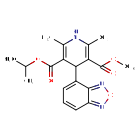
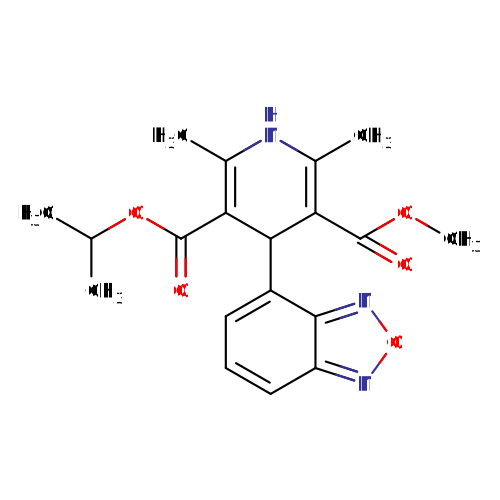
Structure for Isradipine (DB00270)
- Weight
- Average: 371.3871
Monoisotopic: 371.148120797 - Chemical Formula
- C19H21N3O5
- Synonyms
- Isradipine
- Isradipino
- Isradipinum

Pharmacology
- Indication
For the management of mild to moderate essential hypertension. It may be used alone or concurrently with thiazide-type diuretics.
 Reduce drug development failure ratesBuild, train, & validate machine-learning modelswith evidence-based and structured datasets.Build, train, & validate predictive machine-learning models with structured datasets.
- Associated Conditions
Indication Type Indication Combined Product Details Approval Level Age Group Patient Characteristics Dose Form Management of Hypertension •••••••••••• - Contraindications & Blackbox Warnings
 Prevent Adverse Drug Events TodayTap into our Clinical API for life-saving information on contraindications & blackbox warnings, population restrictions, harmful risks, & more.Avoid life-threatening adverse drug events with our Clinical API
- Pharmacodynamics
Isradipine decreases arterial smooth muscle contractility and subsequent vasoconstriction by inhibiting the influx of calcium ions through L-type calcium channels. Calcium ions entering the cell through these channels bind to calmodulin. Calcium-bound calmodulin then binds to and activates myosin light chain kinase (MLCK). Activated MLCK catalyzes the phosphorylation of the regulatory light chain subunit of myosin, a key step in muscle contraction. Signal amplification is achieved by calcium-induced calcium release from the sarcoplasmic reticulum through ryanodine receptors. Inhibition of the initial influx of calcium decreases the contractile activity of arterial smooth muscle cells and results in vasodilation. The vasodilatory effects of isradipine result in an overall decrease in blood pressure.
- Mechanism of action
Isradipine belongs to the dihydropyridine (DHP) class of calcium channel blockers (CCBs), the most widely used class of CCBs. There are at least five different types of calcium channels in Homo sapiens: L-, N-, P/Q-, R- and T-type. CCBs target L-type calcium channels, the major channel in muscle cells that mediates contraction. Similar to other DHP CCBs, isradipine binds directly to inactive calcium channels stabilizing their inactive conformation. Since arterial smooth muscle depolarizations are longer in duration than cardiac muscle depolarizations, inactive channels are more prevalent in smooth muscle cells. Alternative splicing of the alpha-1 subunit of the channel gives isradipine additional arterial selectivity. At therapeutic sub-toxic concentrations, isradipine has little effect on cardiac myocytes and conduction cells.
Target Actions Organism AVoltage-dependent L-type calcium channel subunit alpha-1C inhibitorHumans AVoltage-dependent calcium channel subunit alpha-2/delta-1 inhibitorHumans AVoltage-dependent L-type calcium channel subunit beta-2 inhibitorHumans AVoltage-dependent T-type calcium channel subunit alpha-1H inhibitorHumans AVoltage-dependent calcium channel subunit alpha-2/delta-2 inhibitorHumans AVoltage-dependent L-type calcium channel subunit alpha-1D inhibitorHumans AVoltage-dependent L-type calcium channel subunit alpha-1S inhibitorHumans - Absorption
Isradipine is 90%-95% absorbed and is subject to extensive first-pass metabolism, resulting in a bioavailability of about 15%-24%.
- Volume of distribution
Not Available
- Protein binding
95%
- Metabolism
Hepatic. Completely metabolized prior to excretion and no unchanged drug is detected in the urine.
- Route of elimination
Approximately 60% to 65% of an administered dose is excreted in the urine and 25% to 30% in the feces.
- Half-life
8 hours
- Clearance
Not Available
- Adverse Effects
 Improve decision support & research outcomesWith structured adverse effects data, including: blackbox warnings, adverse reactions, warning & precautions, & incidence rates. View sample adverse effects data in our new Data Library!Improve decision support & research outcomes with our structured adverse effects data.
- Toxicity
Symptoms of overdose include lethargy, sinus tachycardia, and transient hypotension. Significant lethality was observed in mice given oral doses of over 200 mg/kg and rabbits given about 50 mg/kg of isradipine. Rats tolerated doses of over 2000 mg/kg without effects on survival.
- Pathways
Pathway Category Isradipine Action Pathway Drug action - Pharmacogenomic Effects/ADRs
- Not Available
Interactions
- Drug Interactions
- This information should not be interpreted without the help of a healthcare provider. If you believe you are experiencing an interaction, contact a healthcare provider immediately. The absence of an interaction does not necessarily mean no interactions exist.
Drug Interaction Integrate drug-drug
interactions in your software1,2-Benzodiazepine The metabolism of 1,2-Benzodiazepine can be decreased when combined with Isradipine. Abacavir Isradipine may decrease the excretion rate of Abacavir which could result in a higher serum level. Abaloparatide The risk or severity of adverse effects can be increased when Isradipine is combined with Abaloparatide. Abametapir The serum concentration of Isradipine can be increased when it is combined with Abametapir. Abemaciclib The metabolism of Abemaciclib can be decreased when combined with Isradipine. - Food Interactions
- Take with or without food.
Products
 Drug product information from 10+ global regionsOur datasets provide approved product information including:dosage, form, labeller, route of administration, and marketing period.Access drug product information from over 10 global regions.
- Product Images


- International/Other Brands
- Clivoten (Italfarmaco (Italy)) / Esradin (Sigma-Tau (Italy)) / Lomir (Novartis (Austria, Brazil, Czech Republic, Denmark, Finland, Germany, Greece, Hungary, Netherlands, Norway, Poland, Russia, Sweden), Sankyo (Belgium, Italy), Daiichi Sankyo (Portugal, Switzerland), Mizar (Spain)) / Prescal (Novartis (United Kingdom))
- Brand Name Prescription Products
Name Dosage Strength Route Labeller Marketing Start Marketing End Region Image DynaCirc Capsule 2.5 mg/1 Oral Glaxosmithkline Inc 2007-03-01 2010-01-01 US 
DynaCirc Capsule 5 mg/1 Oral Glaxosmithkline Inc 2007-03-01 2010-01-01 US DynaCirc Capsule 5 mg/1 Oral Physicians Total Care, Inc. 1998-12-01 2011-05-31 US DynaCirc Tablet, film coated, extended release 10 mg/1 Oral Glaxosmithkline Inc 2007-03-01 2011-09-30 US DynaCirc Capsule 2.5 mg/1 Oral Physicians Total Care, Inc. 1999-03-04 2011-05-31 US - Generic Prescription Products
Name Dosage Strength Route Labeller Marketing Start Marketing End Region Image Isradipine Capsule 5 mg/1 Oral Carilion Materials Management 2006-01-05 Not applicable US Isradipine Capsule 5 mg/1 Oral Actavis Pharma, Inc. 2006-01-05 Not applicable US Isradipine Capsule 2.5 mg/1 Oral Epic Pharma, LLC 2021-03-15 Not applicable US Isradipine Capsule 5 mg/1 Oral AvPAK 2014-01-06 2022-10-31 US Isradipine Capsule 2.5 mg/1 Oral Elite Laboratories, Inc. 2022-12-28 Not applicable US


Categories
- ATC Codes
- C08CA03 — Isradipine
- Drug Categories
- Agents causing hyperkalemia
- Antiarrhythmic agents
- Antihypertensive Agents
- Antihypertensive Agents Indicated for Hypertension
- Bradycardia-Causing Agents
- BSEP/ABCB11 Substrates
- Calcium Channel Blockers
- Calcium Channel Blockers (Dihydropyridine)
- Calcium-Regulating Hormones and Agents
- Cardiovascular Agents
- Cytochrome P-450 CYP3A Inhibitors
- Cytochrome P-450 CYP3A Substrates
- Cytochrome P-450 CYP3A4 Inhibitors
- Cytochrome P-450 CYP3A4 Inhibitors (moderate)
- Cytochrome P-450 CYP3A4 Substrates
- Cytochrome P-450 Enzyme Inhibitors
- Cytochrome P-450 Substrates
- Dihydropyridine Derivatives
- Dihydropyridines
- Drugs that are Mainly Renally Excreted
- Hypotensive Agents
- Membrane Transport Modulators
- P-glycoprotein inhibitors
- Potential QTc-Prolonging Agents
- Pyridines
- QTc Prolonging Agents
- Selective Calcium Channel Blockers With Mainly Vascular Effects
- Vasodilating Agents
- Chemical TaxonomyProvided by Classyfire
- Description
- This compound belongs to the class of organic compounds known as benzoxadiazoles. These are organic compounds containing a benzene fused to an oxadiazole ring (a five-membered ring with two carbon atoms, one nitrogen atom, and one oxygen atom).
- Kingdom
- Organic compounds
- Super Class
- Organoheterocyclic compounds
- Class
- Benzoxadiazoles
- Sub Class
- Not Available
- Direct Parent
- Benzoxadiazoles
- Alternative Parents
- Dihydropyridinecarboxylic acids and derivatives / Benzenoids / Dicarboxylic acids and derivatives / Vinylogous amides / Enoate esters / Furazans / Heteroaromatic compounds / Methyl esters / Amino acids and derivatives / Enamines show 6 more
- Substituents
- Alpha,beta-unsaturated carboxylic ester / Amine / Amino acid or derivatives / Aromatic heteropolycyclic compound / Azacycle / Azole / Benzenoid / Benzoxadiazole / Carbonyl group / Carboxylic acid derivative show 21 more
- Molecular Framework
- Aromatic heteropolycyclic compounds
- External Descriptors
- Not Available
- Affected organisms
- Humans and other mammals
Chemical Identifiers
- UNII
- YO1UK1S598
- CAS number
- 75695-93-1
- InChI Key
- HMJIYCCIJYRONP-UHFFFAOYSA-N
- InChI
- InChI=1S/C19H21N3O5/c1-9(2)26-19(24)15-11(4)20-10(3)14(18(23)25-5)16(15)12-7-6-8-13-17(12)22-27-21-13/h6-9,16,20H,1-5H3
- IUPAC Name
- 3-methyl 5-propan-2-yl 4-(2,1,3-benzoxadiazol-4-yl)-2,6-dimethyl-1,4-dihydropyridine-3,5-dicarboxylate
- SMILES
- COC(=O)C1=C(C)NC(C)=C(C1C1=CC=CC2=NON=C12)C(=O)OC(C)C
References
- General References
- Fletcher H, Roberts G, Mullings A, Forrester T: An open trial comparing isradipine with hydralazine and methyl dopa in the treatment of patients with severe pre-eclampsia. J Obstet Gynaecol. 1999 May;19(3):235-8. [Article]
- Ganz M, Mokabberi R, Sica DA: Comparison of blood pressure control with amlodipine and controlled-release isradipine: an open-label, drug substitution study. J Clin Hypertens (Greenwich). 2005 Apr;7(4 Suppl 1):27-31. [Article]
- Hattori T, Wang PL: Calcium antagonist isradipine-induced calcium influx through nonselective cation channels in human gingival fibroblasts. Eur J Med Res. 2006 Mar 27;11(3):93-6. [Article]
- Johnson BA, Roache JD, Ait-Daoud N, Wallace C, Wells L, Dawes M, Wang Y: Effects of isradipine, a dihydropyridine-class calcium-channel antagonist, on d-methamphetamine's subjective and reinforcing effects. Int J Neuropsychopharmacol. 2005 Jun;8(2):203-13. [Article]
- External Links
- Human Metabolome Database
- HMDB0014415
- KEGG Drug
- D00349
- PubChem Compound
- 3784
- PubChem Substance
- 46505034
- ChemSpider
- 3652
- BindingDB
- 50436176
- 33910
- ChEBI
- 6073
- ChEMBL
- CHEMBL1648
- Therapeutic Targets Database
- DAP000134
- PharmGKB
- PA450131
- RxList
- RxList Drug Page
- Drugs.com
- Drugs.com Drug Page
- PDRhealth
- PDRhealth Drug Page
- Wikipedia
- Isradipine
- MSDS
- Download (57.4 KB)
Clinical Trials
- Clinical Trials
Phase Status Purpose Conditions Count 3 Completed Treatment Parkinson's Disease (PD) 1 2 Completed Treatment Parkinson's Disease (PD) 2 2 Terminated Treatment Bipolar Disorder (BD) 1 2, 3 Completed Prevention Hypertension Secondary to Kidney Transplant 1 1 Completed Not Available Substance Dependence 1
Pharmacoeconomics
- Manufacturers
- Smithkline beecham corp dba glaxosmithkline
- Actavis totowa llc
- Watson laboratories inc
- Glaxosmithkline llc
- Packagers
- Actavis Group
- Alza Corp.
- Amerisource Health Services Corp.
- Caremark LLC
- Cobalt Pharmaceuticals Inc.
- GlaxoSmithKline Inc.
- Murfreesboro Pharmaceutical Nursing Supply
- Novartis AG
- Patheon Inc.
- Pharmaceutical Manufacturing Research Services Inc.
- Physicians Total Care Inc.
- Watson Pharmaceuticals
- Dosage Forms
Form Route Strength Tablet Oral 2.5 mg Capsule Oral 2.5 mg/1 Capsule Oral 5 mg/1 Tablet, film coated, extended release Oral 10 mg/1 Tablet, film coated, extended release Oral 5 mg/1 Tablet Oral 0.0025 g Capsule, coated Oral 5 mg Capsule, extended release Oral Capsule Oral 2.5 MG Capsule, extended release Oral 5 MG Capsule, extended release Oral 2.5 mg - Prices
Unit description Cost Unit DynaCirc CR 10 mg 24 Hour tablet 5.59USD tablet Dynacirc cr 10 mg tablet 4.41USD tablet DynaCirc CR 5 mg 24 Hour tablet 3.0USD tablet Dynacirc cr 5 mg tablet 2.88USD tablet DynaCirc 5 mg capsule 2.31USD capsule Isradipine 5 mg capsule 2.0USD capsule DynaCirc 2.5 mg capsule 1.59USD capsule Isradipine 2.5 mg capsule 1.39USD capsule DrugBank does not sell nor buy drugs. Pricing information is supplied for informational purposes only.- Patents
- Not Available
Properties
- State
- Solid
- Experimental Properties
Property Value Source melting point (°C) 168-170 °C Not Available water solubility Practically insoluble (< 10 mg/L at 37 °C) Not Available logP 4.28 SANGSTER (1994) - Predicted Properties
Property Value Source Water Solubility 0.228 mg/mL ALOGPS logP 3 ALOGPS logP 2 Chemaxon logS -3.2 ALOGPS pKa (Strongest Acidic) 16.95 Chemaxon pKa (Strongest Basic) -3.3 Chemaxon Physiological Charge 0 Chemaxon Hydrogen Acceptor Count 5 Chemaxon Hydrogen Donor Count 1 Chemaxon Polar Surface Area 103.55 Å2 Chemaxon Rotatable Bond Count 6 Chemaxon Refractivity 100.08 m3·mol-1 Chemaxon Polarizability 37.34 Å3 Chemaxon Number of Rings 3 Chemaxon Bioavailability 1 Chemaxon Rule of Five Yes Chemaxon Ghose Filter Yes Chemaxon Veber's Rule No Chemaxon MDDR-like Rule Yes Chemaxon - Predicted ADMET Features
Property Value Probability Human Intestinal Absorption + 0.9965 Blood Brain Barrier - 0.8439 Caco-2 permeable + 0.8867 P-glycoprotein substrate Substrate 0.5855 P-glycoprotein inhibitor I Inhibitor 0.9322 P-glycoprotein inhibitor II Inhibitor 0.8669 Renal organic cation transporter Non-inhibitor 0.884 CYP450 2C9 substrate Non-substrate 0.8522 CYP450 2D6 substrate Non-substrate 0.9116 CYP450 3A4 substrate Substrate 0.6631 CYP450 1A2 substrate Inhibitor 0.9107 CYP450 2C9 inhibitor Inhibitor 0.8949 CYP450 2D6 inhibitor Non-inhibitor 0.9231 CYP450 2C19 inhibitor Inhibitor 0.8994 CYP450 3A4 inhibitor Inhibitor 0.796 CYP450 inhibitory promiscuity High CYP Inhibitory Promiscuity 0.8557 Ames test Non AMES toxic 0.5158 Carcinogenicity Non-carcinogens 0.8043 Biodegradation Not ready biodegradable 0.9747 Rat acute toxicity 2.3960 LD50, mol/kg Not applicable hERG inhibition (predictor I) Weak inhibitor 0.8699 hERG inhibition (predictor II) Non-inhibitor 0.6895
Spectra
- Mass Spec (NIST)
- Not Available
- Spectra
- Chromatographic Properties
Collision Cross Sections (CCS)
Adduct CCS Value (Å2) Source type Source [M-H]- 189.7556572 predictedDarkChem Lite v0.1.0 [M-H]- 184.51237 predictedDeepCCS 1.0 (2019) [M+H]+ 190.4361572 predictedDarkChem Lite v0.1.0 [M+H]+ 186.87038 predictedDeepCCS 1.0 (2019) [M+Na]+ 190.4851572 predictedDarkChem Lite v0.1.0 [M+Na]+ 194.17455 predictedDeepCCS 1.0 (2019)
Targets

- Kind
- Protein
- Organism
- Humans
- Pharmacological action
- Yes
- Actions
- Inhibitor
- General Function
- Voltage-gated calcium channel activity
- Specific Function
- Voltage-sensitive calcium channels (VSCC) mediate the entry of calcium ions into excitable cells and are also involved in a variety of calcium-dependent processes, including muscle contraction, hor...
- Gene Name
- CACNA1C
- Uniprot ID
- Q13936
- Uniprot Name
- Voltage-dependent L-type calcium channel subunit alpha-1C
- Molecular Weight
- 248974.1 Da
References
- Berjukow S, Marksteiner R, Gapp F, Sinnegger MJ, Hering S: Molecular mechanism of calcium channel block by isradipine. Role of a drug-induced inactivated channel conformation. J Biol Chem. 2000 Jul 21;275(29):22114-20. [Article]
- Hitzl M, Striessnig J, Neuhuber B, Flucher BE: A mutation in the beta interaction domain of the Ca(2+) channel alpha(1C) subunit reduces the affinity of the (+)-[(3)H]isradipine binding site. FEBS Lett. 2002 Jul 31;524(1-3):188-92. [Article]
- Zuhlke RD, Bouron A, Soldatov NM, Reuter H: Ca2+ channel sensitivity towards the blocker isradipine is affected by alternative splicing of the human alpha1C subunit gene. FEBS Lett. 1998 May 8;427(2):220-4. [Article]
- Kind
- Protein
- Organism
- Humans
- Pharmacological action
- Yes
- Actions
- Inhibitor
- General Function
- Voltage-gated calcium channel activity
- Specific Function
- The alpha-2/delta subunit of voltage-dependent calcium channels regulates calcium current density and activation/inactivation kinetics of the calcium channel. Plays an important role in excitation-...
- Gene Name
- CACNA2D1
- Uniprot ID
- P54289
- Uniprot Name
- Voltage-dependent calcium channel subunit alpha-2/delta-1
- Molecular Weight
- 124566.93 Da
References
- Imming P, Sinning C, Meyer A: Drugs, their targets and the nature and number of drug targets. Nat Rev Drug Discov. 2006 Oct;5(10):821-34. [Article]
- Overington JP, Al-Lazikani B, Hopkins AL: How many drug targets are there? Nat Rev Drug Discov. 2006 Dec;5(12):993-6. [Article]
- Chen X, Ji ZL, Chen YZ: TTD: Therapeutic Target Database. Nucleic Acids Res. 2002 Jan 1;30(1):412-5. [Article]
- Kind
- Protein
- Organism
- Humans
- Pharmacological action
- Yes
- Actions
- Inhibitor
- General Function
- Voltage-gated calcium channel activity
- Specific Function
- The beta subunit of voltage-dependent calcium channels contributes to the function of the calcium channel by increasing peak calcium current, shifting the voltage dependencies of activation and ina...
- Gene Name
- CACNB2
- Uniprot ID
- Q08289
- Uniprot Name
- Voltage-dependent L-type calcium channel subunit beta-2
- Molecular Weight
- 73579.925 Da
References
- Chen X, Ji ZL, Chen YZ: TTD: Therapeutic Target Database. Nucleic Acids Res. 2002 Jan 1;30(1):412-5. [Article]
- Striessnig, J. (2004). Ca 2+ channel blockers. In Encyclopedic reference of molecular pharmacology (pp. 201-207). Berlin: Springer. [ISBN:9783540298328]
- Kind
- Protein
- Organism
- Humans
- Pharmacological action
- Yes
- Actions
- Inhibitor
- General Function
- Scaffold protein binding
- Specific Function
- Voltage-sensitive calcium channels (VSCC) mediate the entry of calcium ions into excitable cells and are also involved in a variety of calcium-dependent processes, including muscle contraction, hor...
- Gene Name
- CACNA1H
- Uniprot ID
- O95180
- Uniprot Name
- Voltage-dependent T-type calcium channel subunit alpha-1H
- Molecular Weight
- 259160.2 Da
References
- Cohen CJ, Spires S, Van Skiver D: Block of T-type Ca channels in guinea pig atrial cells by antiarrhythmic agents and Ca channel antagonists. J Gen Physiol. 1992 Oct;100(4):703-28. [Article]
- Perez-Reyes E, Van Deusen AL, Vitko I: Molecular pharmacology of human Cav3.2 T-type Ca2+ channels: block by antihypertensives, antiarrhythmics, and their analogs. J Pharmacol Exp Ther. 2009 Feb;328(2):621-7. doi: 10.1124/jpet.108.145672. Epub 2008 Oct 30. [Article]
- Kind
- Protein
- Organism
- Humans
- Pharmacological action
- Yes
- Actions
- Inhibitor
- General Function
- Voltage-gated calcium channel activity
- Specific Function
- The alpha-2/delta subunit of voltage-dependent calcium channels regulates calcium current density and activation/inactivation kinetics of the calcium channel. Acts as a regulatory subunit for P/Q-t...
- Gene Name
- CACNA2D2
- Uniprot ID
- Q9NY47
- Uniprot Name
- Voltage-dependent calcium channel subunit alpha-2/delta-2
- Molecular Weight
- 129816.095 Da
References
- Cohen CJ, Spires S, Van Skiver D: Block of T-type Ca channels in guinea pig atrial cells by antiarrhythmic agents and Ca channel antagonists. J Gen Physiol. 1992 Oct;100(4):703-28. [Article]
- Perez-Reyes E, Van Deusen AL, Vitko I: Molecular pharmacology of human Cav3.2 T-type Ca2+ channels: block by antihypertensives, antiarrhythmics, and their analogs. J Pharmacol Exp Ther. 2009 Feb;328(2):621-7. doi: 10.1124/jpet.108.145672. Epub 2008 Oct 30. [Article]
- Kind
- Protein
- Organism
- Humans
- Pharmacological action
- Yes
- Actions
- Inhibitor
- General Function
- Voltage-gated calcium channel activity involved sa node cell action potential
- Specific Function
- Voltage-sensitive calcium channels (VSCC) mediate the entry of calcium ions into excitable cells and are also involved in a variety of calcium-dependent processes, including muscle contraction, hor...
- Gene Name
- CACNA1D
- Uniprot ID
- Q01668
- Uniprot Name
- Voltage-dependent L-type calcium channel subunit alpha-1D
- Molecular Weight
- 245138.75 Da
References
- Koschak A, Reimer D, Huber I, Grabner M, Glossmann H, Engel J, Striessnig J: alpha 1D (Cav1.3) subunits can form l-type Ca2+ channels activating at negative voltages. J Biol Chem. 2001 Jun 22;276(25):22100-6. Epub 2001 Apr 2. [Article]
- Sinnegger-Brauns MJ, Huber IG, Koschak A, Wild C, Obermair GJ, Einzinger U, Hoda JC, Sartori SB, Striessnig J: Expression and 1,4-dihydropyridine-binding properties of brain L-type calcium channel isoforms. Mol Pharmacol. 2009 Feb;75(2):407-14. doi: 10.1124/mol.108.049981. Epub 2008 Nov 24. [Article]
- Kind
- Protein
- Organism
- Humans
- Pharmacological action
- Yes
- Actions
- Inhibitor
- General Function
- Voltage-gated calcium channel activity
- Specific Function
- Voltage-sensitive calcium channels (VSCC) mediate the entry of calcium ions into excitable cells and are also involved in a variety of calcium-dependent processes, including muscle contraction, hor...
- Gene Name
- CACNA1S
- Uniprot ID
- Q13698
- Uniprot Name
- Voltage-dependent L-type calcium channel subunit alpha-1S
- Molecular Weight
- 212348.1 Da
References
- Peterson BZ, Catterall WA: Allosteric interactions required for high-affinity binding of dihydropyridine antagonists to Ca(V)1.1 Channels are modulated by calcium in the pore. Mol Pharmacol. 2006 Aug;70(2):667-75. Epub 2006 May 4. [Article]
Enzymes
- Kind
- Protein
- Organism
- Humans
- Pharmacological action
- Unknown
- Actions
- SubstrateInhibitor
- General Function
- Vitamin d3 25-hydroxylase activity
- Specific Function
- Cytochromes P450 are a group of heme-thiolate monooxygenases. In liver microsomes, this enzyme is involved in an NADPH-dependent electron transport pathway. It performs a variety of oxidation react...
- Gene Name
- CYP3A4
- Uniprot ID
- P08684
- Uniprot Name
- Cytochrome P450 3A4
- Molecular Weight
- 57342.67 Da
References
Transporters
- Kind
- Protein
- Organism
- Humans
- Pharmacological action
- No
- Actions
- Substrate
- General Function
- Transporter activity
- Specific Function
- Involved in the ATP-dependent secretion of bile salts into the canaliculus of hepatocytes.
- Gene Name
- ABCB11
- Uniprot ID
- O95342
- Uniprot Name
- Bile salt export pump
- Molecular Weight
- 146405.83 Da
References
- Pedersen JM, Matsson P, Bergstrom CA, Hoogstraate J, Noren A, LeCluyse EL, Artursson P: Early identification of clinically relevant drug interactions with the human bile salt export pump (BSEP/ABCB11). Toxicol Sci. 2013 Dec;136(2):328-43. doi: 10.1093/toxsci/kft197. Epub 2013 Sep 6. [Article]

Drug created at June 13, 2005 13:24 / Updated at April 09, 2024 18:14