Identification
- Summary
Nimodipine is a calcium channel blocker used to improve neurological outcomes in patients with subarachnoid hemorrhage due to a ruptured intracranial aneurysm.
- Brand Names
- Nimotop, Nymalize
- Generic Name
- Nimodipine
- DrugBank Accession Number
- DB00393
- Background
Nimodipine is a 1,4-dihydropyridine calcium channel blocker. It acts primarily on vascular smooth muscle cells by stabilizing voltage-gated L-type calcium channels in their inactive conformation. By inhibiting the influx of calcium in smooth muscle cells, nimodipine prevents calcium-dependent smooth muscle contraction and subsequent vasoconstriction. Compared to other calcium channel blocking agents, nimodipine exhibits greater effects on cerebral circulation than on peripheral circulation. Nimodipine is used to as an adjunct to improve the neurologic outcome following subarachnoid hemorrhage from ruptured intracranial aneurysm.
- Type
- Small Molecule
- Groups
- Approved, Investigational
- Structure
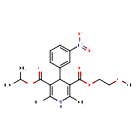
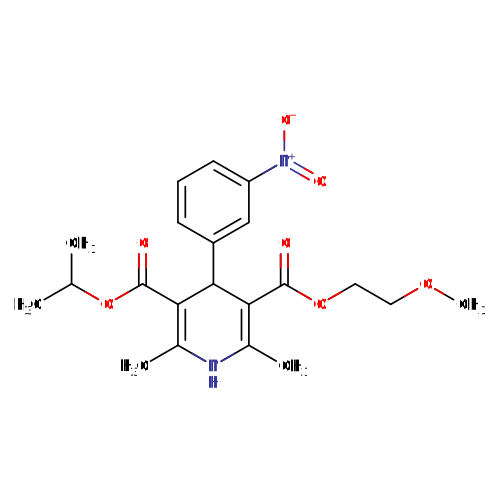
Structure for Nimodipine (DB00393)
- Weight
- Average: 418.4403
Monoisotopic: 418.174001196 - Chemical Formula
- C21H26N2O7
- Synonyms
- 2,6-dimethyl-4-(3'-nitrophenyl)-1,4-dihydropyridine-3,5-dicarboxylic acid 3-β-methoxyethyl ester 5-isopropyl ester
- isopropyl 2-methoxyethyl 1,4-dihydro-2,6-dimethyl-4-(3-nitrophenyl)-3,5-pyridinedicarboxylate
- isopropyl 2-methoxyethyl 1,4-dihydro-2,6-dimethyl-4-(m-nitrophenyl)-3,5-pyridinedicarboxylate
- Nimodipine
- Nimodipino
- Nimodipinum
- External IDs
- BAY E 9736
- BAY-E-9736

Pharmacology
- Indication
For use as an adjunct to improve neurologic outcome following subarachnoid hemorrhage (SAH) from ruptured intracranial berry aneurysms by reducing the incidence and severity of ischemic deficits.
 Reduce drug development failure ratesBuild, train, & validate machine-learning modelswith evidence-based and structured datasets.Build, train, & validate predictive machine-learning models with structured datasets.
- Associated Conditions
Indication Type Indication Combined Product Details Approval Level Age Group Patient Characteristics Dose Form Prophylaxis of Delayed ischemic neurological deficit •••••••••••• •••••••• - Contraindications & Blackbox Warnings
 Prevent Adverse Drug Events TodayTap into our Clinical API for life-saving information on contraindications & blackbox warnings, population restrictions, harmful risks, & more.Avoid life-threatening adverse drug events with our Clinical API
- Pharmacodynamics
Nimodipine belongs to the class of pharmacological agents known as calcium channel blockers. Nimodipine is indicated for the improvement of neurological outcome by reducing the incidence and severity of ischemic deficits in patients with subarachnoid hemorrhage from ruptured congenital aneurysms who are in good neurological condition post-ictus (e.g., Hunt and Hess Grades I-III). The contractile processes of smooth muscle cells are dependent upon calcium ions, which enter these cells during depolarization as slow ionic transmembrane currents. Nimodipine inhibits calcium ion transfer into these cells and thus inhibits contractions of vascular smooth muscle. In animal experiments, nimodipine had a greater effect on cerebral arteries than on arteries elsewhere in the body perhaps because it is highly lipophilic, allowing it to cross the blood brain barrier.
- Mechanism of action
Although the precise mechanism of action is not known, nimodipine blocks intracellular influx of calcium through voltage-dependent and receptor-operated slow calcium channels across the membranes of myocardial, vascular smooth muscle, and neuronal cells. By specifically binding to L-type voltage-gated calcium channels, nimodipine inhibits the calcium ion transfer, resulting in the inhibition of vascular smooth muscle contraction. Evidence suggests that the dilation of small cerebral resistance vessels, with a resultant increase in collateral circulation, and/or a direct effect involving the prevention of calcium overload in neurons may be responsible for nimodipine's clinical effect in patients with subarachnoid hemorrhage.
Target Actions Organism AVoltage-dependent L-type calcium channel subunit alpha-1C inhibitorHumans AVoltage-dependent L-type calcium channel subunit alpha-1D inhibitorHumans AVoltage-dependent L-type calcium channel subunit alpha-1F inhibitorHumans AVoltage-dependent L-type calcium channel subunit alpha-1S inhibitorHumans AVoltage-dependent L-type calcium channel subunit beta-1 inhibitorHumans AVoltage-dependent L-type calcium channel subunit beta-2 inhibitorHumans AVoltage-dependent L-type calcium channel subunit beta-3 inhibitorHumans AVoltage-dependent L-type calcium channel subunit beta-4 inhibitorHumans UMineralocorticoid receptor antagonistHumans UAryl hydrocarbon receptor agonistHumans - Absorption
In humans, nimodipine is rapidly absorbed after oral administration, and peak concentrations are generally attained within one hour. Bioavailability is 100% following intravenous administration and 3-30% following oral administration due to extensive first-pass metabolism.
- Volume of distribution
Not Available
- Protein binding
95% bound to plasma protein
- Metabolism
Hepatic metabolism via CYP 3A4.
- Route of elimination
Nimodipine is eliminated almost exclusively in the form of metabolites and less than 1% is recovered in the urine as unchanged drug. Numerous metabolites, all of which are either inactive or considerably less active than the parent compound, have been identified.
- Half-life
1.7-9 hours
- Clearance
Not Available
- Adverse Effects
 Improve decision support & research outcomesWith structured adverse effects data, including: blackbox warnings, adverse reactions, warning & precautions, & incidence rates. View sample adverse effects data in our new Data Library!Improve decision support & research outcomes with our structured adverse effects data.
- Toxicity
Symptoms of overdosage would be expected to be related to cardiovascular effects such as excessive peripheral vasodilation with marked systemic hypotension.
- Pathways
Pathway Category Nimodipine Action Pathway Drug action - Pharmacogenomic Effects/ADRs
- Not Available
Interactions
- Drug Interactions
- This information should not be interpreted without the help of a healthcare provider. If you believe you are experiencing an interaction, contact a healthcare provider immediately. The absence of an interaction does not necessarily mean no interactions exist.
Drug Interaction Integrate drug-drug
interactions in your softwareAbaloparatide The risk or severity of adverse effects can be increased when Nimodipine is combined with Abaloparatide. Abametapir The serum concentration of Nimodipine can be increased when it is combined with Abametapir. Acarbose The risk or severity of hypoglycemia can be increased when Nimodipine is combined with Acarbose. Acebutolol Nimodipine may increase the arrhythmogenic activities of Acebutolol. Aceclofenac The therapeutic efficacy of Nimodipine can be decreased when used in combination with Aceclofenac. - Food Interactions
- Avoid grapefruit products.
- Take with or without food. Take consistently at the same time in regard to meals.
Products
 Drug product information from 10+ global regionsOur datasets provide approved product information including:dosage, form, labeller, route of administration, and marketing period.Access drug product information from over 10 global regions.
- Product Images

- International/Other Brands
- Periplum
- Brand Name Prescription Products
Name Dosage Strength Route Labeller Marketing Start Marketing End Region Image Nimotop Capsule, gelatin coated 30 mg/1 Oral Bayer 1988-12-28 2009-04-30 US 
Nimotop Tablet 30 mg Oral Bayer 2009-07-24 Not applicable Canada 
Nimotop - Cap 30mg Capsule 30 mg Oral Bayer 1989-12-31 2009-08-06 Canada Nimotop Cap 30mg Capsule 30 mg Oral Miles Canada Inc. Pharmaceutical Division 1989-12-31 1996-10-02 Canada Nimotop I.V.-0.2mg/ml Liquid .2 mg / mL Intravenous Bayer 1996-10-08 2000-09-19 Canada - Generic Prescription Products
Name Dosage Strength Route Labeller Marketing Start Marketing End Region Image Nimodipine Capsule, liquid filled 30 mg/1 Oral Heritage Pharmaceuticals Inc. d/b/a Avet Pharmaceuticals Inc. 2017-11-07 Not applicable US Nimodipine Capsule 30 mg/1 Oral Sun Pharmaceutical Industries, Inc. 2007-06-28 2011-12-31 US Nimodipine Capsule, liquid filled 30 mg/1 Oral McKesson Corporation dba SKY Packaging 2015-01-01 Not applicable US Nimodipine Capsule, liquid filled 30 mg/1 Oral Ascend Laboratories, LLC 2015-01-01 Not applicable US Nimodipine Capsule, liquid filled 30 mg/1 Oral Golden State Medical Supply 2008-03-21 2018-01-01 US

Categories
- ATC Codes
- C08CA06 — Nimodipine
- Drug Categories
- Agents causing hyperkalemia
- Antiarrhythmic agents
- Antihypertensive Agents
- Bradycardia-Causing Agents
- Calcium Channel Blockers
- Calcium Channel Blockers (Dihydropyridine)
- Calcium-Regulating Hormones and Agents
- Cardiovascular Agents
- Cytochrome P-450 CYP3A Substrates
- Cytochrome P-450 CYP3A4 Substrates
- Cytochrome P-450 Substrates
- Dihydropyridine Derivatives
- Dihydropyridines
- Hypotensive Agents
- Membrane Transport Modulators
- Moderate Risk QTc-Prolonging Agents
- Nicotinic Acids
- P-glycoprotein inhibitors
- Pyridines
- QTc Prolonging Agents
- Selective Calcium Channel Blockers With Mainly Vascular Effects
- Vasodilating Agents
- Chemical TaxonomyProvided by Classyfire
- Description
- This compound belongs to the class of organic compounds known as dihydropyridinecarboxylic acids and derivatives. These are compounds containing a dihydropyridine moiety bearing a carboxylic acid group.
- Kingdom
- Organic compounds
- Super Class
- Organoheterocyclic compounds
- Class
- Pyridines and derivatives
- Sub Class
- Hydropyridines
- Direct Parent
- Dihydropyridinecarboxylic acids and derivatives
- Alternative Parents
- Nitrobenzenes / Nitroaromatic compounds / Dicarboxylic acids and derivatives / Vinylogous amides / Enoate esters / Amino acids and derivatives / Propargyl-type 1,3-dipolar organic compounds / Azacyclic compounds / Dialkyl ethers / Dialkylamines show 7 more
- Substituents
- Allyl-type 1,3-dipolar organic compound / Alpha,beta-unsaturated carboxylic ester / Amine / Amino acid or derivatives / Aromatic heteromonocyclic compound / Azacycle / Benzenoid / C-nitro compound / Carbonyl group / Carboxylic acid derivative show 25 more
- Molecular Framework
- Aromatic heteromonocyclic compounds
- External Descriptors
- C-nitro compound, diester, dihydropyridine (CHEBI:7575)
- Affected organisms
- Humans and other mammals
Chemical Identifiers
- UNII
- 57WA9QZ5WH
- CAS number
- 66085-59-4
- InChI Key
- UIAGMCDKSXEBJQ-UHFFFAOYSA-N
- InChI
- InChI=1S/C21H26N2O7/c1-12(2)30-21(25)18-14(4)22-13(3)17(20(24)29-10-9-28-5)19(18)15-7-6-8-16(11-15)23(26)27/h6-8,11-12,19,22H,9-10H2,1-5H3
- IUPAC Name
- 3-(2-methoxyethyl) 5-propan-2-yl 2,6-dimethyl-4-(3-nitrophenyl)-1,4-dihydropyridine-3,5-dicarboxylate
- SMILES
- COCCOC(=O)C1=C(C)NC(C)=C(C1C1=CC(=CC=C1)[N+]([O-])=O)C(=O)OC(C)C
References
- General References
- Janjua N, Mayer SA: Cerebral vasospasm after subarachnoid hemorrhage. Curr Opin Crit Care. 2003 Apr;9(2):113-9. [Article]
- Allen GS, Ahn HS, Preziosi TJ, Battye R, Boone SC, Boone SC, Chou SN, Kelly DL, Weir BK, Crabbe RA, Lavik PJ, Rosenbloom SB, Dorsey FC, Ingram CR, Mellits DE, Bertsch LA, Boisvert DP, Hundley MB, Johnson RK, Strom JA, Transou CR: Cerebral arterial spasm--a controlled trial of nimodipine in patients with subarachnoid hemorrhage. N Engl J Med. 1983 Mar 17;308(11):619-24. [Article]
- Belfort MA, Anthony J, Saade GR, Allen JC Jr: A comparison of magnesium sulfate and nimodipine for the prevention of eclampsia. N Engl J Med. 2003 Jan 23;348(4):304-11. [Article]
- Kim JH, Park IS, Park KB, Kang DH, Hwang SH: Intraarterial nimodipine infusion to treat symptomatic cerebral vasospasm after aneurysmal subarachnoid hemorrhage. J Korean Neurosurg Soc. 2009 Sep;46(3):239-44. doi: 10.3340/jkns.2009.46.3.239. Epub 2009 Sep 30. [Article]
- Tomassoni D, Lanari A, Silvestrelli G, Traini E, Amenta F: Nimodipine and its use in cerebrovascular disease: evidence from recent preclinical and controlled clinical studies. Clin Exp Hypertens. 2008 Nov;30(8):744-66. doi: 10.1080/10641960802580232. [Article]
- Vergouwen MD, Vermeulen M, Roos YB: Effect of nimodipine on outcome in patients with traumatic subarachnoid haemorrhage: a systematic review. Lancet Neurol. 2006 Dec;5(12):1029-32. [Article]
- FDA Approved Drug Products: Nymalize (nimodipine) oral solution [Link]
- External Links
- Human Metabolome Database
- HMDB0014537
- KEGG Drug
- D00438
- KEGG Compound
- C07267
- PubChem Compound
- 4497
- PubChem Substance
- 46508497
- ChemSpider
- 4341
- BindingDB
- 50101971
- 7426
- ChEBI
- 7575
- ChEMBL
- CHEMBL1428
- Therapeutic Targets Database
- DAP000306
- PharmGKB
- PA450633
- Guide to Pharmacology
- GtP Drug Page
- RxList
- RxList Drug Page
- Drugs.com
- Drugs.com Drug Page
- Wikipedia
- Nimodipine
- FDA label
- Download (504 KB)
- MSDS
- Download (73.3 KB)
Clinical Trials
- Clinical Trials
Phase Status Purpose Conditions Count 4 Completed Treatment Dementia 1 4 Completed Treatment Infarction Cerebral 1 4 Suspended Prevention Coronavirus Disease 2019 (COVID‑19) / Hypertension 1 4 Terminated Treatment Depression 1 4 Unknown Status Prevention Mild Cognitive Impairment (MCI) / Stroke 1
Pharmacoeconomics
- Manufacturers
- Banner pharmacaps inc
- Barr laboratories inc
- Sun pharmaceutical industries inc
- Bayer pharmaceuticals corp
- Packagers
- Amerisource Health Services Corp.
- Banner Pharmacaps Inc.
- Barr Pharmaceuticals
- Bayer Healthcare
- Caraco Pharmaceutical Labs
- Cardinal Health
- Catalent Pharma Solutions
- Heritage Pharmaceuticals
- Neuman Distributors Inc.
- Pharmaceutics International Inc.
- Sandhills Packaging Inc.
- Dosage Forms
Form Route Strength Solution Parenteral 10.00 mg Solution Intravenous 10.000 mg Tablet, film coated Oral 30 MG Injection, solution Parenteral 0.2 MG/ML Solution / drops Oral 30 MG/0.75ML Capsule Oral 30 mg/1 Capsule, liquid filled Oral 30 mg/1 Solution Intravenous 10 mg Capsule, gelatin coated Oral 30 mg/1 Granule, effervescent 30 MG Injection, solution Parenteral 10 MG/50ML Solution 0.2 mg/1ml Solution Parenteral 10.000 mg Tablet Oral 30 mg Tablet Oral 30.000 mg Tablet, coated Oral 30 mg Injection Parenteral Tablet, film coated Oral Solution Parenteral 50 mg/ml Capsule Oral 30 mg Injection Intravenous 0.02 % Liquid Intravenous .2 mg / mL Solution Intracisternal; Intravenous Liquid Intravenous 0.2 mg / mL Solution Intravenous 0.01 g Tablet, extended release Oral 120 mg Suspension Oral 600 mg Injection Intravenous Tablet Oral 60 mg Tablet, extended release Oral 90 mg Solution Parenteral 10 mg Solution Oral 30 mg/5mL Solution Oral 30 mg/10mL Solution Oral 60 mg/10mL Solution Oral 60 mg/20mL Tablet, coated Oral 3000000 mg Solution Intravenous 0.2 mg Capsule, coated Oral 90 mg Granule, effervescent Solution / drops Oral Tablet, coated Oral Injection, solution Parenteral - Prices
Unit description Cost Unit NiMODipine 100 30 mg capsule Box 952.07USD box Nimotop 30 mg capsule 9.87USD capsule Nimodipine 30 mg capsule 9.69USD capsule DrugBank does not sell nor buy drugs. Pricing information is supplied for informational purposes only.- Patents
Patent Number Pediatric Extension Approved Expires (estimated) Region US10342787 No 2019-07-09 2038-04-16 US US10576070 No 2020-03-03 2038-04-16 US US7070581 No 2006-07-04 2023-06-23 US US8517997 No 2013-08-27 2024-05-14 US US11207306 No 2021-12-28 2038-04-16 US US11413277 No 2018-04-16 2038-04-16 US US11517563 No 2018-04-16 2038-04-16 US US11759457 No 2018-04-16 2038-04-16 US US11806338 No 2018-04-16 2038-04-16 US
Properties
- State
- Solid
- Experimental Properties
Property Value Source melting point (°C) 125 °C Not Available logP 3.05 MASUMOTO,K ET AL. (1995) - Predicted Properties
Property Value Source Water Solubility 0.012 mg/mL ALOGPS logP 3.41 ALOGPS logP 2.54 Chemaxon logS -4.5 ALOGPS pKa (Strongest Acidic) 16.96 Chemaxon pKa (Strongest Basic) -4.1 Chemaxon Physiological Charge 0 Chemaxon Hydrogen Acceptor Count 6 Chemaxon Hydrogen Donor Count 1 Chemaxon Polar Surface Area 117 Å2 Chemaxon Rotatable Bond Count 10 Chemaxon Refractivity 111.37 m3·mol-1 Chemaxon Polarizability 43.07 Å3 Chemaxon Number of Rings 2 Chemaxon Bioavailability 1 Chemaxon Rule of Five Yes Chemaxon Ghose Filter Yes Chemaxon Veber's Rule No Chemaxon MDDR-like Rule No Chemaxon - Predicted ADMET Features
Property Value Probability Human Intestinal Absorption + 0.9387 Blood Brain Barrier - 0.9358 Caco-2 permeable - 0.5838 P-glycoprotein substrate Substrate 0.752 P-glycoprotein inhibitor I Inhibitor 0.9287 P-glycoprotein inhibitor II Inhibitor 0.9098 Renal organic cation transporter Non-inhibitor 0.8178 CYP450 2C9 substrate Non-substrate 0.8151 CYP450 2D6 substrate Non-substrate 0.9118 CYP450 3A4 substrate Substrate 0.7571 CYP450 1A2 substrate Inhibitor 0.9108 CYP450 2C9 inhibitor Inhibitor 0.8949 CYP450 2D6 inhibitor Non-inhibitor 0.9231 CYP450 2C19 inhibitor Inhibitor 0.8994 CYP450 3A4 inhibitor Inhibitor 0.8248 CYP450 inhibitory promiscuity High CYP Inhibitory Promiscuity 0.8557 Ames test Non AMES toxic 0.5976 Carcinogenicity Non-carcinogens 0.6953 Biodegradation Not ready biodegradable 0.8797 Rat acute toxicity 2.5326 LD50, mol/kg Not applicable hERG inhibition (predictor I) Weak inhibitor 0.6468 hERG inhibition (predictor II) Non-inhibitor 0.8734
Spectra
- Mass Spec (NIST)
- Not Available
- Spectra
Spectrum Spectrum Type Splash Key Predicted GC-MS Spectrum - GC-MS Predicted GC-MS splash10-0f6y-8009000000-df297acbb119ead19ae2 MS/MS Spectrum - , positive LC-MS/MS splash10-0006-0149000000-2a019013c0386ca13362 Predicted 1H NMR Spectrum 1D NMR Not Applicable Predicted 13C NMR Spectrum 1D NMR Not Applicable - Chromatographic Properties
Collision Cross Sections (CCS)
Adduct CCS Value (Å2) Source type Source [M-H]- 207.1608481 predictedDarkChem Lite v0.1.0 [M-H]- 198.02898 predictedDeepCCS 1.0 (2019) [M+H]+ 207.1204481 predictedDarkChem Lite v0.1.0 [M+H]+ 201.28902 predictedDeepCCS 1.0 (2019) [M+Na]+ 207.1325481 predictedDarkChem Lite v0.1.0 [M+Na]+ 208.7863 predictedDeepCCS 1.0 (2019)
Targets

- Kind
- Protein
- Organism
- Humans
- Pharmacological action
- Yes
- Actions
- Inhibitor
- General Function
- Voltage-gated calcium channel activity
- Specific Function
- Voltage-sensitive calcium channels (VSCC) mediate the entry of calcium ions into excitable cells and are also involved in a variety of calcium-dependent processes, including muscle contraction, hor...
- Gene Name
- CACNA1C
- Uniprot ID
- Q13936
- Uniprot Name
- Voltage-dependent L-type calcium channel subunit alpha-1C
- Molecular Weight
- 248974.1 Da
References
- Chen X, Ji ZL, Chen YZ: TTD: Therapeutic Target Database. Nucleic Acids Res. 2002 Jan 1;30(1):412-5. [Article]
- Marchetti C, Usai C: High affinity block by nimodipine of the internal calcium elevation in chronically depolarized rat cerebellar granule neurons. Neurosci Lett. 1996 Mar 29;207(2):77-80. [Article]
- Weant KA, Ramsey CN 3rd, Cook AM: Role of intraarterial therapy for cerebral vasospasm secondary to aneurysmal subarachnoid hemorrhage. Pharmacotherapy. 2010 Apr;30(4):405-17. doi: 10.1592/phco.30.4.405. [Article]
- Dong CJ, Guo Y, Agey P, Wheeler L, Hare WA: Nimodipine enhancement of alpha2 adrenergic modulation of NMDA receptor via a mechanism independent of Ca2+ channel blocking. Invest Ophthalmol Vis Sci. 2010 Aug;51(8):4174-80. doi: 10.1167/iovs.09-4613. Epub 2010 Mar 24. [Article]
- Kim JH, Park IS, Park KB, Kang DH, Hwang SH: Intraarterial nimodipine infusion to treat symptomatic cerebral vasospasm after aneurysmal subarachnoid hemorrhage. J Korean Neurosurg Soc. 2009 Sep;46(3):239-44. doi: 10.3340/jkns.2009.46.3.239. Epub 2009 Sep 30. [Article]
- Kumar R, Mehra R, Ray SB: L-type calcium channel blockers, morphine and pain: Newer insights. Indian J Anaesth. 2010 Mar;54(2):127-31. doi: 10.4103/0019-5049.63652. [Article]
- Keyrouz SG, Diringer MN: Clinical review: Prevention and therapy of vasospasm in subarachnoid hemorrhage. Crit Care. 2007;11(4):220. [Article]
- Striessnig, J. (2004). Ca 2+ channel blockers. In Encyclopedic reference of molecular pharmacology (pp. 201-207). Berlin: Springer. [ISBN:9783540298328]
- Kind
- Protein
- Organism
- Humans
- Pharmacological action
- Yes
- Actions
- Inhibitor
- General Function
- Voltage-gated calcium channel activity involved sa node cell action potential
- Specific Function
- Voltage-sensitive calcium channels (VSCC) mediate the entry of calcium ions into excitable cells and are also involved in a variety of calcium-dependent processes, including muscle contraction, hor...
- Gene Name
- CACNA1D
- Uniprot ID
- Q01668
- Uniprot Name
- Voltage-dependent L-type calcium channel subunit alpha-1D
- Molecular Weight
- 245138.75 Da
References
- Sinnegger-Brauns MJ, Huber IG, Koschak A, Wild C, Obermair GJ, Einzinger U, Hoda JC, Sartori SB, Striessnig J: Expression and 1,4-dihydropyridine-binding properties of brain L-type calcium channel isoforms. Mol Pharmacol. 2009 Feb;75(2):407-14. doi: 10.1124/mol.108.049981. Epub 2008 Nov 24. [Article]
- Weant KA, Ramsey CN 3rd, Cook AM: Role of intraarterial therapy for cerebral vasospasm secondary to aneurysmal subarachnoid hemorrhage. Pharmacotherapy. 2010 Apr;30(4):405-17. doi: 10.1592/phco.30.4.405. [Article]
- Dong CJ, Guo Y, Agey P, Wheeler L, Hare WA: Nimodipine enhancement of alpha2 adrenergic modulation of NMDA receptor via a mechanism independent of Ca2+ channel blocking. Invest Ophthalmol Vis Sci. 2010 Aug;51(8):4174-80. doi: 10.1167/iovs.09-4613. Epub 2010 Mar 24. [Article]
- Kim JH, Park IS, Park KB, Kang DH, Hwang SH: Intraarterial nimodipine infusion to treat symptomatic cerebral vasospasm after aneurysmal subarachnoid hemorrhage. J Korean Neurosurg Soc. 2009 Sep;46(3):239-44. doi: 10.3340/jkns.2009.46.3.239. Epub 2009 Sep 30. [Article]
- Kumar R, Mehra R, Ray SB: L-type calcium channel blockers, morphine and pain: Newer insights. Indian J Anaesth. 2010 Mar;54(2):127-31. doi: 10.4103/0019-5049.63652. [Article]
- Keyrouz SG, Diringer MN: Clinical review: Prevention and therapy of vasospasm in subarachnoid hemorrhage. Crit Care. 2007;11(4):220. [Article]
- Kind
- Protein
- Organism
- Humans
- Pharmacological action
- Yes
- Actions
- Inhibitor
- General Function
- Voltage-gated calcium channel activity
- Specific Function
- Voltage-sensitive calcium channels (VSCC) mediate the entry of calcium ions into excitable cells and are also involved in a variety of calcium-dependent processes, including muscle contraction, hor...
- Gene Name
- CACNA1F
- Uniprot ID
- O60840
- Uniprot Name
- Voltage-dependent L-type calcium channel subunit alpha-1F
- Molecular Weight
- 220675.9 Da
References
- Weant KA, Ramsey CN 3rd, Cook AM: Role of intraarterial therapy for cerebral vasospasm secondary to aneurysmal subarachnoid hemorrhage. Pharmacotherapy. 2010 Apr;30(4):405-17. doi: 10.1592/phco.30.4.405. [Article]
- Dong CJ, Guo Y, Agey P, Wheeler L, Hare WA: Nimodipine enhancement of alpha2 adrenergic modulation of NMDA receptor via a mechanism independent of Ca2+ channel blocking. Invest Ophthalmol Vis Sci. 2010 Aug;51(8):4174-80. doi: 10.1167/iovs.09-4613. Epub 2010 Mar 24. [Article]
- Kim JH, Park IS, Park KB, Kang DH, Hwang SH: Intraarterial nimodipine infusion to treat symptomatic cerebral vasospasm after aneurysmal subarachnoid hemorrhage. J Korean Neurosurg Soc. 2009 Sep;46(3):239-44. doi: 10.3340/jkns.2009.46.3.239. Epub 2009 Sep 30. [Article]
- Kumar R, Mehra R, Ray SB: L-type calcium channel blockers, morphine and pain: Newer insights. Indian J Anaesth. 2010 Mar;54(2):127-31. doi: 10.4103/0019-5049.63652. [Article]
- Kind
- Protein
- Organism
- Humans
- Pharmacological action
- Yes
- Actions
- Inhibitor
- General Function
- Voltage-gated calcium channel activity
- Specific Function
- Voltage-sensitive calcium channels (VSCC) mediate the entry of calcium ions into excitable cells and are also involved in a variety of calcium-dependent processes, including muscle contraction, hor...
- Gene Name
- CACNA1S
- Uniprot ID
- Q13698
- Uniprot Name
- Voltage-dependent L-type calcium channel subunit alpha-1S
- Molecular Weight
- 212348.1 Da
References
- Peterson BZ, Catterall WA: Allosteric interactions required for high-affinity binding of dihydropyridine antagonists to Ca(V)1.1 Channels are modulated by calcium in the pore. Mol Pharmacol. 2006 Aug;70(2):667-75. Epub 2006 May 4. [Article]
- Weant KA, Ramsey CN 3rd, Cook AM: Role of intraarterial therapy for cerebral vasospasm secondary to aneurysmal subarachnoid hemorrhage. Pharmacotherapy. 2010 Apr;30(4):405-17. doi: 10.1592/phco.30.4.405. [Article]
- Dong CJ, Guo Y, Agey P, Wheeler L, Hare WA: Nimodipine enhancement of alpha2 adrenergic modulation of NMDA receptor via a mechanism independent of Ca2+ channel blocking. Invest Ophthalmol Vis Sci. 2010 Aug;51(8):4174-80. doi: 10.1167/iovs.09-4613. Epub 2010 Mar 24. [Article]
- Kim JH, Park IS, Park KB, Kang DH, Hwang SH: Intraarterial nimodipine infusion to treat symptomatic cerebral vasospasm after aneurysmal subarachnoid hemorrhage. J Korean Neurosurg Soc. 2009 Sep;46(3):239-44. doi: 10.3340/jkns.2009.46.3.239. Epub 2009 Sep 30. [Article]
- Kumar R, Mehra R, Ray SB: L-type calcium channel blockers, morphine and pain: Newer insights. Indian J Anaesth. 2010 Mar;54(2):127-31. doi: 10.4103/0019-5049.63652. [Article]
- Keyrouz SG, Diringer MN: Clinical review: Prevention and therapy of vasospasm in subarachnoid hemorrhage. Crit Care. 2007;11(4):220. [Article]
- Kind
- Protein
- Organism
- Humans
- Pharmacological action
- Yes
- Actions
- Inhibitor
- General Function
- Voltage-gated calcium channel activity
- Specific Function
- The beta subunit of voltage-dependent calcium channels contributes to the function of the calcium channel by increasing peak calcium current, shifting the voltage dependencies of activation and ina...
- Gene Name
- CACNB1
- Uniprot ID
- Q02641
- Uniprot Name
- Voltage-dependent L-type calcium channel subunit beta-1
- Molecular Weight
- 65712.995 Da
References
- Weant KA, Ramsey CN 3rd, Cook AM: Role of intraarterial therapy for cerebral vasospasm secondary to aneurysmal subarachnoid hemorrhage. Pharmacotherapy. 2010 Apr;30(4):405-17. doi: 10.1592/phco.30.4.405. [Article]
- Dong CJ, Guo Y, Agey P, Wheeler L, Hare WA: Nimodipine enhancement of alpha2 adrenergic modulation of NMDA receptor via a mechanism independent of Ca2+ channel blocking. Invest Ophthalmol Vis Sci. 2010 Aug;51(8):4174-80. doi: 10.1167/iovs.09-4613. Epub 2010 Mar 24. [Article]
- Kim JH, Park IS, Park KB, Kang DH, Hwang SH: Intraarterial nimodipine infusion to treat symptomatic cerebral vasospasm after aneurysmal subarachnoid hemorrhage. J Korean Neurosurg Soc. 2009 Sep;46(3):239-44. doi: 10.3340/jkns.2009.46.3.239. Epub 2009 Sep 30. [Article]
- Kumar R, Mehra R, Ray SB: L-type calcium channel blockers, morphine and pain: Newer insights. Indian J Anaesth. 2010 Mar;54(2):127-31. doi: 10.4103/0019-5049.63652. [Article]
- Keyrouz SG, Diringer MN: Clinical review: Prevention and therapy of vasospasm in subarachnoid hemorrhage. Crit Care. 2007;11(4):220. [Article]
- Kind
- Protein
- Organism
- Humans
- Pharmacological action
- Yes
- Actions
- Inhibitor
- General Function
- Voltage-gated calcium channel activity
- Specific Function
- The beta subunit of voltage-dependent calcium channels contributes to the function of the calcium channel by increasing peak calcium current, shifting the voltage dependencies of activation and ina...
- Gene Name
- CACNB2
- Uniprot ID
- Q08289
- Uniprot Name
- Voltage-dependent L-type calcium channel subunit beta-2
- Molecular Weight
- 73579.925 Da
References
- Chen X, Ji ZL, Chen YZ: TTD: Therapeutic Target Database. Nucleic Acids Res. 2002 Jan 1;30(1):412-5. [Article]
- Weant KA, Ramsey CN 3rd, Cook AM: Role of intraarterial therapy for cerebral vasospasm secondary to aneurysmal subarachnoid hemorrhage. Pharmacotherapy. 2010 Apr;30(4):405-17. doi: 10.1592/phco.30.4.405. [Article]
- Kim JH, Park IS, Park KB, Kang DH, Hwang SH: Intraarterial nimodipine infusion to treat symptomatic cerebral vasospasm after aneurysmal subarachnoid hemorrhage. J Korean Neurosurg Soc. 2009 Sep;46(3):239-44. doi: 10.3340/jkns.2009.46.3.239. Epub 2009 Sep 30. [Article]
- Kumar R, Mehra R, Ray SB: L-type calcium channel blockers, morphine and pain: Newer insights. Indian J Anaesth. 2010 Mar;54(2):127-31. doi: 10.4103/0019-5049.63652. [Article]
- Keyrouz SG, Diringer MN: Clinical review: Prevention and therapy of vasospasm in subarachnoid hemorrhage. Crit Care. 2007;11(4):220. [Article]
- Striessnig, J. (2004). Ca 2+ channel blockers. In Encyclopedic reference of molecular pharmacology (pp. 201-207). Berlin: Springer. [ISBN:9783540298328]
- Kind
- Protein
- Organism
- Humans
- Pharmacological action
- Yes
- Actions
- Inhibitor
- General Function
- Voltage-gated calcium channel activity
- Specific Function
- The beta subunit of voltage-dependent calcium channels contributes to the function of the calcium channel by increasing peak calcium current, shifting the voltage dependencies of activation and ina...
- Gene Name
- CACNB3
- Uniprot ID
- P54284
- Uniprot Name
- Voltage-dependent L-type calcium channel subunit beta-3
- Molecular Weight
- 54531.425 Da
References
- Weant KA, Ramsey CN 3rd, Cook AM: Role of intraarterial therapy for cerebral vasospasm secondary to aneurysmal subarachnoid hemorrhage. Pharmacotherapy. 2010 Apr;30(4):405-17. doi: 10.1592/phco.30.4.405. [Article]
- Dong CJ, Guo Y, Agey P, Wheeler L, Hare WA: Nimodipine enhancement of alpha2 adrenergic modulation of NMDA receptor via a mechanism independent of Ca2+ channel blocking. Invest Ophthalmol Vis Sci. 2010 Aug;51(8):4174-80. doi: 10.1167/iovs.09-4613. Epub 2010 Mar 24. [Article]
- Kim JH, Park IS, Park KB, Kang DH, Hwang SH: Intraarterial nimodipine infusion to treat symptomatic cerebral vasospasm after aneurysmal subarachnoid hemorrhage. J Korean Neurosurg Soc. 2009 Sep;46(3):239-44. doi: 10.3340/jkns.2009.46.3.239. Epub 2009 Sep 30. [Article]
- Kumar R, Mehra R, Ray SB: L-type calcium channel blockers, morphine and pain: Newer insights. Indian J Anaesth. 2010 Mar;54(2):127-31. doi: 10.4103/0019-5049.63652. [Article]
- Keyrouz SG, Diringer MN: Clinical review: Prevention and therapy of vasospasm in subarachnoid hemorrhage. Crit Care. 2007;11(4):220. [Article]
- Kind
- Protein
- Organism
- Humans
- Pharmacological action
- Yes
- Actions
- Inhibitor
- General Function
- Voltage-gated calcium channel activity
- Specific Function
- The beta subunit of voltage-dependent calcium channels contributes to the function of the calcium channel by increasing peak calcium current, shifting the voltage dependencies of activation and ina...
- Gene Name
- CACNB4
- Uniprot ID
- O00305
- Uniprot Name
- Voltage-dependent L-type calcium channel subunit beta-4
- Molecular Weight
- 58168.625 Da
References
- Weant KA, Ramsey CN 3rd, Cook AM: Role of intraarterial therapy for cerebral vasospasm secondary to aneurysmal subarachnoid hemorrhage. Pharmacotherapy. 2010 Apr;30(4):405-17. doi: 10.1592/phco.30.4.405. [Article]
- Dong CJ, Guo Y, Agey P, Wheeler L, Hare WA: Nimodipine enhancement of alpha2 adrenergic modulation of NMDA receptor via a mechanism independent of Ca2+ channel blocking. Invest Ophthalmol Vis Sci. 2010 Aug;51(8):4174-80. doi: 10.1167/iovs.09-4613. Epub 2010 Mar 24. [Article]
- Kim JH, Park IS, Park KB, Kang DH, Hwang SH: Intraarterial nimodipine infusion to treat symptomatic cerebral vasospasm after aneurysmal subarachnoid hemorrhage. J Korean Neurosurg Soc. 2009 Sep;46(3):239-44. doi: 10.3340/jkns.2009.46.3.239. Epub 2009 Sep 30. [Article]
- Kumar R, Mehra R, Ray SB: L-type calcium channel blockers, morphine and pain: Newer insights. Indian J Anaesth. 2010 Mar;54(2):127-31. doi: 10.4103/0019-5049.63652. [Article]
- Keyrouz SG, Diringer MN: Clinical review: Prevention and therapy of vasospasm in subarachnoid hemorrhage. Crit Care. 2007;11(4):220. [Article]
- Kind
- Protein
- Organism
- Humans
- Pharmacological action
- Unknown
- Actions
- Antagonist
- General Function
- Zinc ion binding
- Specific Function
- Receptor for both mineralocorticoids (MC) such as aldosterone and glucocorticoids (GC) such as corticosterone or cortisol. Binds to mineralocorticoid response elements (MRE) and transactivates targ...
- Gene Name
- NR3C2
- Uniprot ID
- P08235
- Uniprot Name
- Mineralocorticoid receptor
- Molecular Weight
- 107066.575 Da
References
- Dietz JD, Du S, Bolten CW, Payne MA, Xia C, Blinn JR, Funder JW, Hu X: A number of marketed dihydropyridine calcium channel blockers have mineralocorticoid receptor antagonist activity. Hypertension. 2008 Mar;51(3):742-8. doi: 10.1161/HYPERTENSIONAHA.107.103580. Epub 2008 Feb 4. [Article]
- Kind
- Protein
- Organism
- Humans
- Pharmacological action
- Unknown
- Actions
- Agonist
- General Function
- Transcription regulatory region dna binding
- Specific Function
- Ligand-activated transcriptional activator. Binds to the XRE promoter region of genes it activates. Activates the expression of multiple phase I and II xenobiotic chemical metabolizing enzyme genes...
- Gene Name
- AHR
- Uniprot ID
- P35869
- Uniprot Name
- Aryl hydrocarbon receptor
- Molecular Weight
- 96146.705 Da
References
- Hu W, Sorrentino C, Denison MS, Kolaja K, Fielden MR: Induction of cyp1a1 is a nonspecific biomarker of aryl hydrocarbon receptor activation: results of large scale screening of pharmaceuticals and toxicants in vivo and in vitro. Mol Pharmacol. 2007 Jun;71(6):1475-86. Epub 2007 Feb 27. [Article]
Enzymes
- Kind
- Protein
- Organism
- Humans
- Pharmacological action
- Unknown
- Actions
- Substrate
- General Function
- Vitamin d3 25-hydroxylase activity
- Specific Function
- Cytochromes P450 are a group of heme-thiolate monooxygenases. In liver microsomes, this enzyme is involved in an NADPH-dependent electron transport pathway. It performs a variety of oxidation react...
- Gene Name
- CYP3A4
- Uniprot ID
- P08684
- Uniprot Name
- Cytochrome P450 3A4
- Molecular Weight
- 57342.67 Da
References
- Liu XQ, Ren YL, Qian ZY, Wang GJ: Enzyme kinetics and inhibition of nimodipine metabolism in human liver microsomes. Acta Pharmacol Sin. 2000 Aug;21(8):690-4. [Article]
- Choi JS, Burm JP: Enhanced nimodipine bioavailability after oral administration of nimodipine with morin, a flavonoid, in rabbits. Arch Pharm Res. 2006 Apr;29(4):333-8. [Article]

Drug created at June 13, 2005 13:24 / Updated at April 26, 2024 00:45