Identification
- Summary
Darifenacin is an M3 muscarinic receptor blocker used to treat urinary incontinence.
- Brand Names
- Emselex, Enablex
- Generic Name
- Darifenacin
- DrugBank Accession Number
- DB00496
- Background
Darifenacin (Enablex®, Novartis) is a medication used to treat urinary incontinence.
Darifenacin blocks M3 muscarinic acetylcholine receptors, which mediate bladder muscle contractions. This block reduces the urgency to urinate and so it should not be used in people with urinary retention.
It is unknown if M3 receptor selectivity is clinically advantageous in overactive bladder syndrome treatments.
- Type
- Small Molecule
- Groups
- Approved, Investigational
- Structure

Structure for Darifenacin (DB00496)
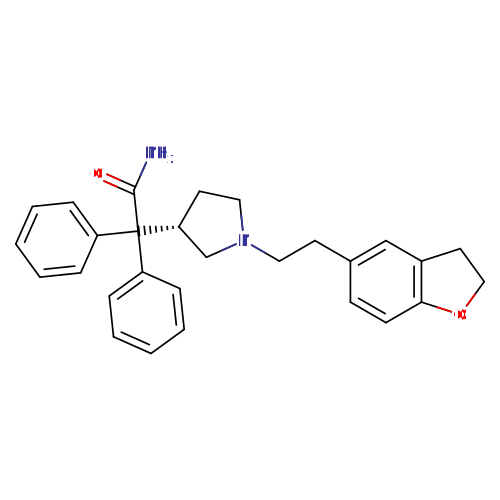
- Weight
- Average: 426.55
Monoisotopic: 426.230728214 - Chemical Formula
- C28H30N2O2
- Synonyms
- (S)-1-(2-(2,3-dihydro-5-benzofuranyl)ethyl)-α,α-diphenyl-3-pyrrolidineacetamide
- Darifenacin
- Darifenacina
- Darifénacine
- Darifenacinum
- External IDs
- UK 88525
- UK 88525-04

Pharmacology
- Indication
For the treatment of overactive bladder with symptoms of urge urinary incontinence, urgency and frequency.
 Reduce drug development failure ratesBuild, train, & validate machine-learning modelswith evidence-based and structured datasets.Build, train, & validate predictive machine-learning models with structured datasets.
- Associated Conditions
Indication Type Indication Combined Product Details Approval Level Age Group Patient Characteristics Dose Form Management of Overactive bladder •••••••••••• ••••••• •••••••• ••••••• - Contraindications & Blackbox Warnings
 Prevent Adverse Drug Events TodayTap into our Clinical API for life-saving information on contraindications & blackbox warnings, population restrictions, harmful risks, & more.Avoid life-threatening adverse drug events with our Clinical API
- Pharmacodynamics
Darifenacin is a competitive muscarinic receptor antagonist. In vitro studies using human recombinant muscarinic receptor subtypes show that darifenacin has greater affinity for the M3 receptor than for the other known muscarinic receptors (9 and 12-fold greater affinity for M3 compared to M1 and M5, respectively, and 59-fold greater affinity for M3 compared to both M2 and M4). Muscarinic receptors play an important role in several major cholinergically mediated functions, including contractions of the urinary bladder smooth muscle and stimulation of salivary secretion. Adverse drug effects such as dry mouth, constipation and abnormal vision may be mediated through effects on M3 receptors in these organs.
- Mechanism of action
Darifenacin selectively antagonizes the muscarinic M3 receptor. M3 receptors are involved in contraction of human bladder and gastrointestinal smooth muscle, saliva production, and iris sphincter function.
Target Actions Organism AMuscarinic acetylcholine receptor M3 antagonistHumans UMuscarinic acetylcholine receptor M1 antagonistHumans UMuscarinic acetylcholine receptor M2 antagonistHumans UMuscarinic acetylcholine receptor M4 antagonistHumans UMuscarinic acetylcholine receptor M5 antagonistHumans - Absorption
The mean oral bioavailability at steady state is estimated to be 15% and 19% for 7.5 mg and 15 mg tablets, respectively.
- Volume of distribution
- 163 L
- Protein binding
Darifenacin is approximately 98% bound to plasma proteins (primarily to alpha-1-acid-glycoprotein).
- Metabolism
Hepatic. Primarily mediated by the cytochrome P450 enzymes CYP2D6 and CYP3A4.
- Route of elimination
Not Available
- Half-life
The elimination half-life of darifenacin following chronic dosing is approximately 13-19 hours.
- Clearance
- 40 L/h [extensive metabolizers]
- 32 L/h [poor metabolizers]
- Adverse Effects
 Improve decision support & research outcomesWith structured adverse effects data, including: blackbox warnings, adverse reactions, warning & precautions, & incidence rates. View sample adverse effects data in our new Data Library!Improve decision support & research outcomes with our structured adverse effects data.
- Toxicity
Overdosage can potentially result in severe central anticholinergic effects.
- Pathways
- Not Available
- Pharmacogenomic Effects/ADRs
Interacting Gene/Enzyme Allele name Genotype(s) Defining Change(s) Type(s) Description Details Cytochrome P450 2D6 CYP2D6*3 Not Available C allele Effect Inferred Poor drug metabolizer. Details Cytochrome P450 2D6 CYP2D6*4 Not Available C allele Effect Inferred Poor drug metabolizer. Details Cytochrome P450 2D6 CYP2D6*5 Not Available Whole-gene deletion Effect Inferred Poor drug metabolizer. Details Cytochrome P450 2D6 CYP2D6*6 Not Available 1707delT Effect Inferred Poor drug metabolizer. Details Cytochrome P450 2D6 CYP2D6*7 Not Available 2935A>C Effect Inferred Poor drug metabolizer. Details Cytochrome P450 2D6 CYP2D6*8 Not Available 1758G>T Effect Inferred Poor drug metabolizer. Details Cytochrome P450 2D6 CYP2D6*11 Not Available 883G>C Effect Inferred Poor drug metabolizer. Details Cytochrome P450 2D6 CYP2D6*12 Not Available 124G>A Effect Inferred Poor drug metabolizer. Details Cytochrome P450 2D6 CYP2D6*13 Not Available CYP2D7/2D6 hybrid gene structure Effect Inferred Poor drug metabolizer. Details Cytochrome P450 2D6 CYP2D6*14A Not Available 1758G>A Effect Inferred Poor drug metabolizer. Details Cytochrome P450 2D6 CYP2D6*15 Not Available 137insT, 137_138insT Effect Inferred Poor drug metabolizer. Details Cytochrome P450 2D6 CYP2D6*19 Not Available 2539_2542delAACT Effect Inferred Poor drug metabolizer. Details Cytochrome P450 2D6 CYP2D6*20 Not Available 1973_1974insG Effect Inferred Poor drug metabolizer. Details Cytochrome P450 2D6 CYP2D6*21 Not Available 2573insC Effect Inferred Poor drug metabolizer. Details Cytochrome P450 2D6 CYP2D6*31 Not Available -1770G>A / -1584C>G … show all Effect Inferred Poor drug metabolizer. Details Cytochrome P450 2D6 CYP2D6*36 Not Available 100C>T / -1426C>T … show all Effect Inferred Poor drug metabolizer. Details Cytochrome P450 2D6 CYP2D6*38 Not Available 2587_2590delGACT Effect Inferred Poor drug metabolizer. Details Cytochrome P450 2D6 CYP2D6*40 Not Available 1863_1864ins(TTT CGC CCC)2 Effect Inferred Poor drug metabolizer. Details Cytochrome P450 2D6 CYP2D6*42 Not Available 3259_3260insGT Effect Inferred Poor drug metabolizer. Details Cytochrome P450 2D6 CYP2D6*44 Not Available 2950G>C Effect Inferred Poor drug metabolizer. Details Cytochrome P450 2D6 CYP2D6*47 Not Available 100C>T / -1426C>T … show all Effect Inferred Poor drug metabolizer. Details Cytochrome P450 2D6 CYP2D6*51 Not Available -1584C>G / -1235A>G … show all Effect Inferred Poor drug metabolizer. Details Cytochrome P450 2D6 CYP2D6*56 Not Available 3201C>T Effect Inferred Poor drug metabolizer. Details Cytochrome P450 2D6 CYP2D6*57 Not Available 100C>T / 310G>T … show all Effect Inferred Poor drug metabolizer. Details Cytochrome P450 2D6 CYP2D6*62 Not Available 4044C>T Effect Inferred Poor drug metabolizer. Details Cytochrome P450 2D6 CYP2D6*68A Not Available -1426C>T / -1235A>G … show all Effect Inferred Poor drug metabolizer. Details Cytochrome P450 2D6 CYP2D6*68B Not Available Similar but not identical switch region compared to CYP2D6*68A. Found in tandem arrangement with CYP2D6*4. Effect Inferred Poor drug metabolizer. Details Cytochrome P450 2D6 CYP2D6*69 Not Available 2988G>A / -1426C>T … show all Effect Inferred Poor drug metabolizer. Details Cytochrome P450 2D6 CYP2D6*92 Not Available 1995delC Effect Inferred Poor drug metabolizer. Details Cytochrome P450 2D6 CYP2D6*100 Not Available -1426C>T / -1235A>G … show all Effect Inferred Poor drug metabolizer. Details Cytochrome P450 2D6 CYP2D6*101 Not Available -1426C>T / -1235A>G … show all Effect Inferred Poor drug metabolizer. Details Cytochrome P450 3A4 CYP3A4*20 Not Available 1461_1462insA Effect Inferred Poor drug metabolizer. Details Cytochrome P450 3A4 CYP3A4*26 Not Available 802C>T Effect Inferred Poor drug metabolizer. Details
Interactions
- Drug Interactions
- This information should not be interpreted without the help of a healthcare provider. If you believe you are experiencing an interaction, contact a healthcare provider immediately. The absence of an interaction does not necessarily mean no interactions exist.
Drug Interaction Integrate drug-drug
interactions in your softwareAbametapir The serum concentration of Darifenacin can be increased when it is combined with Abametapir. Abatacept The metabolism of Darifenacin can be increased when combined with Abatacept. Abiraterone The metabolism of Darifenacin can be decreased when combined with Abiraterone. Acebutolol The metabolism of Acebutolol can be decreased when combined with Darifenacin. Acetaminophen The metabolism of Acetaminophen can be decreased when combined with Darifenacin. - Food Interactions
- Take with or without food. The absorption is unaffected by food.
Products
 Drug product information from 10+ global regionsOur datasets provide approved product information including:dosage, form, labeller, route of administration, and marketing period.Access drug product information from over 10 global regions.
- Product Ingredients
Ingredient UNII CAS InChI Key Darifenacin hydrobromide CR02EYQ8GV 133099-07-7 UQAVIASOPREUIT-VQIWEWKSSA-N - Product Images


- International/Other Brands
- Emselex (Novartis) / Xelena (Dr. Reddy's)
- Brand Name Prescription Products
Name Dosage Strength Route Labeller Marketing Start Marketing End Region Image Darifenacin Tablet, extended release 15 mg/1 Oral Actavis Pharma, Inc. 2016-03-15 2021-05-31 US 
Darifenacin Tablet, extended release 7.5 mg/1 Oral Actavis Pharma, Inc. 2016-03-15 2021-05-31 US Emselex Tablet, extended release 15 mg Oral Pharmaand Gmb H 2021-02-10 Not applicable EU 
Emselex Tablet, extended release 15 mg Oral Pharmaand Gmb H 2021-02-10 Not applicable EU Emselex Tablet, extended release 7.5 mg Oral Pharmaand Gmb H 2021-02-10 Not applicable EU - Generic Prescription Products
Name Dosage Strength Route Labeller Marketing Start Marketing End Region Image Apo-darifenacin Tablet, extended release 15 mg Oral Apotex Corporation 2021-07-28 Not applicable Canada 
Apo-darifenacin Tablet, extended release 7.5 mg Oral Apotex Corporation 2021-07-28 Not applicable Canada Darifenacin Tablet, extended release 15 mg/1 Oral Macleods Pharmaceuticals Limited 2017-07-29 Not applicable US Darifenacin Tablet, extended release 7.5 mg/1 Oral Cipla USA Inc. 2016-09-01 Not applicable US Darifenacin Tablet, extended release 15 mg/1 Oral Torrent Pharmaceuticals Limited 2016-11-18 Not applicable US


Categories
- ATC Codes
- G04BD10 — Darifenacin
- Drug Categories
- Agents producing tachycardia
- Anticholinergic Agents
- Cholinergic Agents
- Cytochrome P-450 CYP2D6 Inhibitors
- Cytochrome P-450 CYP2D6 Inhibitors (moderate)
- Cytochrome P-450 CYP2D6 Substrates
- Cytochrome P-450 CYP3A Substrates
- Cytochrome P-450 CYP3A4 Substrates
- Cytochrome P-450 Enzyme Inhibitors
- Cytochrome P-450 Substrates
- Drugs for Urinary Frequency and Incontinence
- Genito Urinary System and Sex Hormones
- Genitourinary Agents
- Heterocyclic Compounds, Fused-Ring
- Muscarinic Antagonists
- Neurotransmitter Agents
- Urological Agents
- Urologicals
- Chemical TaxonomyProvided by Classyfire
- Description
- This compound belongs to the class of organic compounds known as diphenylmethanes. These are compounds containing a diphenylmethane moiety, which consists of a methane wherein two hydrogen atoms are replaced by two phenyl groups.
- Kingdom
- Organic compounds
- Super Class
- Benzenoids
- Class
- Benzene and substituted derivatives
- Sub Class
- Diphenylmethanes
- Direct Parent
- Diphenylmethanes
- Alternative Parents
- Phenylacetamides / Phenethylamines / Coumarans / Aralkylamines / Alkyl aryl ethers / N-alkylpyrrolidines / Trialkylamines / Primary carboxylic acid amides / Amino acids and derivatives / Oxacyclic compounds show 5 more
- Substituents
- Alkyl aryl ether / Amine / Amino acid or derivatives / Aralkylamine / Aromatic heteropolycyclic compound / Azacycle / Carbonyl group / Carboxamide group / Carboxylic acid derivative / Coumaran show 18 more
- Molecular Framework
- Aromatic heteropolycyclic compounds
- External Descriptors
- monocarboxylic acid amide, 1-benzofurans, pyrrolidines (CHEBI:391960)
- Affected organisms
- Humans and other mammals
Chemical Identifiers
- UNII
- APG9819VLM
- CAS number
- 133099-04-4
- InChI Key
- HXGBXQDTNZMWGS-RUZDIDTESA-N
- InChI
- InChI=1S/C28H30N2O2/c29-27(31)28(23-7-3-1-4-8-23,24-9-5-2-6-10-24)25-14-17-30(20-25)16-13-21-11-12-26-22(19-21)15-18-32-26/h1-12,19,25H,13-18,20H2,(H2,29,31)/t25-/m1/s1
- IUPAC Name
- 2-[(3S)-1-[2-(2,3-dihydro-1-benzofuran-5-yl)ethyl]pyrrolidin-3-yl]-2,2-diphenylacetamide
- SMILES
- NC(=O)C([C@@H]1CCN(CCC2=CC3=C(OCC3)C=C2)C1)(C1=CC=CC=C1)C1=CC=CC=C1
References
- Synthesis Reference
Valeriano Merli, Augusto Canavesi, Paola Daverio, "Processes for preparing darifenacin hydrobromide." U.S. Patent US20070197631, issued August 23, 2007.
US20070197631- General References
- External Links
- Human Metabolome Database
- HMDB0014639
- KEGG Drug
- D01699
- PubChem Compound
- 444031
- PubChem Substance
- 46508104
- ChemSpider
- 392054
- BindingDB
- 50109647
- 136198
- ChEBI
- 391960
- ChEMBL
- CHEMBL1346
- ZINC
- ZINC000001996117
- Therapeutic Targets Database
- DAP001131
- PharmGKB
- PA164774901
- RxList
- RxList Drug Page
- Drugs.com
- Drugs.com Drug Page
- Wikipedia
- Darifenacin
- FDA label
- Download (394 KB)
Clinical Trials
- Clinical Trials
Phase Status Purpose Conditions Count 4 Completed Not Available Urinary Incontinence (UI) 1 4 Completed Treatment Healthy Volunteers (HV) 1 4 Completed Treatment Neurogenic Detrusor Overactivity / Spinal Cord Injuries 1 4 Completed Treatment Overactive Bladder Syndrome (OABS) 2 4 Withdrawn Not Available Nocturia 1
Pharmacoeconomics
- Manufacturers
- Novartis pharmaceuticals corp
- Packagers
- Lake Erie Medical and Surgical Supply
- Murfreesboro Pharmaceutical Nursing Supply
- Novartis AG
- Pfizer Inc.
- Physicians Total Care Inc.
- Redpharm Drug
- Dosage Forms
Form Route Strength Tablet, film coated, extended release Oral 15 mg/1 Tablet, film coated, extended release Oral 7.5 mg/1 Tablet Oral 7.500 mg Tablet Oral 15 mg Tablet Oral 7.5 mg Tablet, extended release Oral 15 mg/1 Tablet, extended release Oral 15 mg Tablet, extended release Oral 7.5 mg Tablet, extended release Oral 7.5 mg/1 Tablet, extended release Oral 17.858 mg Tablet, extended release Oral Tablet, film coated 15 mg Tablet, film coated 7.5 mg - Prices
Unit description Cost Unit Enablex 15 mg 24 Hour tablet 5.22USD tablet Enablex 7.5 mg 24 Hour tablet 5.22USD tablet Enablex 15 mg tablet 5.02USD tablet Enablex 7.5 mg tablet 5.02USD tablet DrugBank does not sell nor buy drugs. Pricing information is supplied for informational purposes only.- Patents
Patent Number Pediatric Extension Approved Expires (estimated) Region US5096890 No 1992-03-17 2015-03-13 US CA2469702 No 2010-07-06 2022-03-05 Canada CA2230314 No 2003-06-24 2016-08-21 Canada US6106864 No 2000-08-22 2016-08-21 US
Properties
- State
- Solid
- Experimental Properties
Property Value Source logP 4.5 Not Available - Predicted Properties
Property Value Source Water Solubility 0.000298 mg/mL ALOGPS logP 4.35 ALOGPS logP 4.54 Chemaxon logS -6.2 ALOGPS pKa (Strongest Acidic) 16.21 Chemaxon pKa (Strongest Basic) 10.11 Chemaxon Physiological Charge 1 Chemaxon Hydrogen Acceptor Count 3 Chemaxon Hydrogen Donor Count 1 Chemaxon Polar Surface Area 55.56 Å2 Chemaxon Rotatable Bond Count 7 Chemaxon Refractivity 128.37 m3·mol-1 Chemaxon Polarizability 48.62 Å3 Chemaxon Number of Rings 5 Chemaxon Bioavailability 1 Chemaxon Rule of Five Yes Chemaxon Ghose Filter Yes Chemaxon Veber's Rule No Chemaxon MDDR-like Rule Yes Chemaxon - Predicted ADMET Features
Property Value Probability Human Intestinal Absorption + 0.9966 Blood Brain Barrier + 0.9989 Caco-2 permeable - 0.5256 P-glycoprotein substrate Substrate 0.6385 P-glycoprotein inhibitor I Non-inhibitor 0.6329 P-glycoprotein inhibitor II Inhibitor 0.5374 Renal organic cation transporter Inhibitor 0.6441 CYP450 2C9 substrate Non-substrate 0.8774 CYP450 2D6 substrate Non-substrate 0.5946 CYP450 3A4 substrate Substrate 0.6046 CYP450 1A2 substrate Non-inhibitor 0.696 CYP450 2C9 inhibitor Non-inhibitor 0.8253 CYP450 2D6 inhibitor Inhibitor 0.5816 CYP450 2C19 inhibitor Inhibitor 0.5399 CYP450 3A4 inhibitor Inhibitor 0.5 CYP450 inhibitory promiscuity High CYP Inhibitory Promiscuity 0.6168 Ames test Non AMES toxic 0.7145 Carcinogenicity Non-carcinogens 0.8847 Biodegradation Not ready biodegradable 0.9599 Rat acute toxicity 3.0008 LD50, mol/kg Not applicable hERG inhibition (predictor I) Weak inhibitor 0.907 hERG inhibition (predictor II) Inhibitor 0.6703
Spectra
- Mass Spec (NIST)
- Not Available
- Spectra
Spectrum Spectrum Type Splash Key Predicted GC-MS Spectrum - GC-MS Predicted GC-MS splash10-00lv-2491000000-40c43db64189724fe0c2 Predicted MS/MS Spectrum - 10V, Positive (Annotated) Predicted LC-MS/MS splash10-0059-1009700000-ff9161f700ccb49d0518 Predicted MS/MS Spectrum - 10V, Negative (Annotated) Predicted LC-MS/MS splash10-0006-9000000000-b8c98e8095d3e98326c0 Predicted MS/MS Spectrum - 20V, Negative (Annotated) Predicted LC-MS/MS splash10-0006-9004000000-e55df95ea0733f1eb95a Predicted MS/MS Spectrum - 20V, Positive (Annotated) Predicted LC-MS/MS splash10-057i-0103900000-78b2f732882e81c2ac48 Predicted MS/MS Spectrum - 40V, Negative (Annotated) Predicted LC-MS/MS splash10-0006-9000000000-8114585823def9d45fa6 Predicted MS/MS Spectrum - 40V, Positive (Annotated) Predicted LC-MS/MS splash10-0002-2519200000-09970cfb9991a39e4080 Predicted 1H NMR Spectrum 1D NMR Not Applicable Predicted 13C NMR Spectrum 1D NMR Not Applicable - Chromatographic Properties
Collision Cross Sections (CCS)
Adduct CCS Value (Å2) Source type Source [M-H]- 219.6266096 predictedDarkChem Lite v0.1.0 [M-H]- 220.0873096 predictedDarkChem Lite v0.1.0 [M-H]- 195.85138 predictedDeepCCS 1.0 (2019) [M+H]+ 220.3853096 predictedDarkChem Lite v0.1.0 [M+H]+ 220.5194096 predictedDarkChem Lite v0.1.0 [M+H]+ 198.24693 predictedDeepCCS 1.0 (2019) [M+Na]+ 220.3166096 predictedDarkChem Lite v0.1.0 [M+Na]+ 220.0653096 predictedDarkChem Lite v0.1.0 [M+Na]+ 204.15947 predictedDeepCCS 1.0 (2019)
Targets

- Kind
- Protein
- Organism
- Humans
- Pharmacological action
- Yes
- Actions
- Antagonist
- General Function
- Receptor activity
- Specific Function
- The muscarinic acetylcholine receptor mediates various cellular responses, including inhibition of adenylate cyclase, breakdown of phosphoinositides and modulation of potassium channels through the...
- Gene Name
- CHRM3
- Uniprot ID
- P20309
- Uniprot Name
- Muscarinic acetylcholine receptor M3
- Molecular Weight
- 66127.445 Da
References
- Bharucha AE, Ravi K, Zinsmeister AR: Comparison of selective M3 and nonselective muscarinic receptor antagonists on gastrointestinal transit and bowel habits in humans. Am J Physiol Gastrointest Liver Physiol. 2010 Jul;299(1):G215-9. doi: 10.1152/ajpgi.00072.2010. Epub 2010 Apr 15. [Article]
- Bozkurt TE, Sahin-Erdemli I: M(1) and M(3) muscarinic receptors are involved in the release of urinary bladder-derived relaxant factor. Pharmacol Res. 2009 May;59(5):300-5. doi: 10.1016/j.phrs.2009.01.013. Epub 2009 Feb 5. [Article]
- Jha S, Parsons M: Treatment of overactive bladder in the aging population: focus on darifenacin. Clin Interv Aging. 2006;1(4):309-16. [Article]
- Chen X, Ji ZL, Chen YZ: TTD: Therapeutic Target Database. Nucleic Acids Res. 2002 Jan 1;30(1):412-5. [Article]
- Kind
- Protein
- Organism
- Humans
- Pharmacological action
- Unknown
- Actions
- Antagonist
- General Function
- Phosphatidylinositol phospholipase c activity
- Specific Function
- The muscarinic acetylcholine receptor mediates various cellular responses, including inhibition of adenylate cyclase, breakdown of phosphoinositides and modulation of potassium channels through the...
- Gene Name
- CHRM1
- Uniprot ID
- P11229
- Uniprot Name
- Muscarinic acetylcholine receptor M1
- Molecular Weight
- 51420.375 Da
References
- Jha S, Parsons M: Treatment of overactive bladder in the aging population: focus on darifenacin. Clin Interv Aging. 2006;1(4):309-16. [Article]
- Moriya H, Takagi Y, Nakanishi T, Hayashi M, Tani T, Hirotsu I: Affinity profiles of various muscarinic antagonists for cloned human muscarinic acetylcholine receptor (mAChR) subtypes and mAChRs in rat heart and submandibular gland. Life Sci. 1999;64(25):2351-8. [Article]
- Kind
- Protein
- Organism
- Humans
- Pharmacological action
- Unknown
- Actions
- Antagonist
- General Function
- G-protein coupled acetylcholine receptor activity
- Specific Function
- The muscarinic acetylcholine receptor mediates various cellular responses, including inhibition of adenylate cyclase, breakdown of phosphoinositides and modulation of potassium channels through the...
- Gene Name
- CHRM2
- Uniprot ID
- P08172
- Uniprot Name
- Muscarinic acetylcholine receptor M2
- Molecular Weight
- 51714.605 Da
References
- Jha S, Parsons M: Treatment of overactive bladder in the aging population: focus on darifenacin. Clin Interv Aging. 2006;1(4):309-16. [Article]
- Moriya H, Takagi Y, Nakanishi T, Hayashi M, Tani T, Hirotsu I: Affinity profiles of various muscarinic antagonists for cloned human muscarinic acetylcholine receptor (mAChR) subtypes and mAChRs in rat heart and submandibular gland. Life Sci. 1999;64(25):2351-8. [Article]
- Kind
- Protein
- Organism
- Humans
- Pharmacological action
- Unknown
- Actions
- Antagonist
- General Function
- Guanyl-nucleotide exchange factor activity
- Specific Function
- The muscarinic acetylcholine receptor mediates various cellular responses, including inhibition of adenylate cyclase, breakdown of phosphoinositides and modulation of potassium channels through the...
- Gene Name
- CHRM4
- Uniprot ID
- P08173
- Uniprot Name
- Muscarinic acetylcholine receptor M4
- Molecular Weight
- 53048.65 Da
References
- Jha S, Parsons M: Treatment of overactive bladder in the aging population: focus on darifenacin. Clin Interv Aging. 2006;1(4):309-16. [Article]
- Moriya H, Takagi Y, Nakanishi T, Hayashi M, Tani T, Hirotsu I: Affinity profiles of various muscarinic antagonists for cloned human muscarinic acetylcholine receptor (mAChR) subtypes and mAChRs in rat heart and submandibular gland. Life Sci. 1999;64(25):2351-8. [Article]
- Kind
- Protein
- Organism
- Humans
- Pharmacological action
- Unknown
- Actions
- Antagonist
- General Function
- Phosphatidylinositol phospholipase c activity
- Specific Function
- The muscarinic acetylcholine receptor mediates various cellular responses, including inhibition of adenylate cyclase, breakdown of phosphoinositides and modulation of potassium channels through the...
- Gene Name
- CHRM5
- Uniprot ID
- P08912
- Uniprot Name
- Muscarinic acetylcholine receptor M5
- Molecular Weight
- 60073.205 Da
References
- Moriya H, Takagi Y, Nakanishi T, Hayashi M, Tani T, Hirotsu I: Affinity profiles of various muscarinic antagonists for cloned human muscarinic acetylcholine receptor (mAChR) subtypes and mAChRs in rat heart and submandibular gland. Life Sci. 1999;64(25):2351-8. [Article]
- Jha S, Parsons M: Treatment of overactive bladder in the aging population: focus on darifenacin. Clin Interv Aging. 2006;1(4):309-16. [Article]
Enzymes
- Kind
- Protein
- Organism
- Humans
- Pharmacological action
- Unknown
- Actions
- Substrate
- General Function
- Vitamin d3 25-hydroxylase activity
- Specific Function
- Cytochromes P450 are a group of heme-thiolate monooxygenases. In liver microsomes, this enzyme is involved in an NADPH-dependent electron transport pathway. It performs a variety of oxidation react...
- Gene Name
- CYP3A4
- Uniprot ID
- P08684
- Uniprot Name
- Cytochrome P450 3A4
- Molecular Weight
- 57342.67 Da
References
- Skerjanec A: The clinical pharmacokinetics of darifenacin. Clin Pharmacokinet. 2006;45(4):325-50. [Article]
- Kind
- Protein
- Organism
- Humans
- Pharmacological action
- Unknown
- Actions
- SubstrateInhibitor
- General Function
- Steroid hydroxylase activity
- Specific Function
- Responsible for the metabolism of many drugs and environmental chemicals that it oxidizes. It is involved in the metabolism of drugs such as antiarrhythmics, adrenoceptor antagonists, and tricyclic...
- Gene Name
- CYP2D6
- Uniprot ID
- P10635
- Uniprot Name
- Cytochrome P450 2D6
- Molecular Weight
- 55768.94 Da
References
- Skerjanec A: The clinical pharmacokinetics of darifenacin. Clin Pharmacokinet. 2006;45(4):325-50. [Article]

Drug created at June 13, 2005 13:24 / Updated at April 23, 2024 11:38