Identification
- Summary
Albendazole is a benzimidazole anthelmintic used to treat parenchymal neurocysticercosis and other helminth infections.
- Brand Names
- Albenza
- Generic Name
- Albendazole
- DrugBank Accession Number
- DB00518
- Background
A benzimidazole broad-spectrum anthelmintic structurally related to mebendazole that is effective against many diseases. (From Martindale, The Extra Pharmacopoeia, 30th ed, p38)
- Type
- Small Molecule
- Groups
- Approved, Vet approved
- Structure
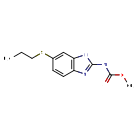
Structure for Albendazole (DB00518)
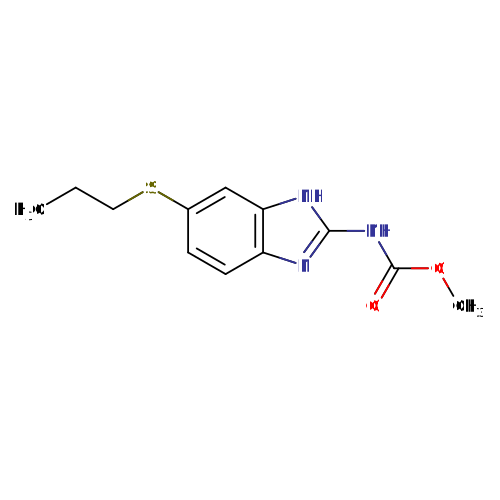
- Weight
- Average: 265.331
Monoisotopic: 265.088497429 - Chemical Formula
- C12H15N3O2S
- Synonyms
- (5-(propylthio)-1H-benzimidazol-2-yl)carbamic acid methyl ester
- 5-(propylthio)-2-carbomethoxyaminobenzimidazole
- Albendazol
- Albendazole
- Albendazolum
- Eskazole
- O-methyl N-(5-(propylthio)-2-benzimidazolyl)carbamate
- Proftril
- External IDs
- NSC-220008
- RS-8852
- SK&F-62979
- SKF 62979

Pharmacology
- Indication
For the treatment of parenchymal neurocysticercosis due to active lesions caused by larval forms of the pork tapeworm, Taenia solium and for the treatment of cystic hydatid disease of the liver, lung, and peritoneum, caused by the larval form of the dog tapeworm, Echinococcus granulosus.
 Reduce drug development failure ratesBuild, train, & validate machine-learning modelswith evidence-based and structured datasets.Build, train, & validate predictive machine-learning models with structured datasets.
- Associated Conditions
Indication Type Indication Combined Product Details Approval Level Age Group Patient Characteristics Dose Form Treatment of Hydatid disease of the liver •••••••••••• ••••••••••• •••••• •••••• Treatment of Hydatid disease of the lung •••••••••••• ••••••••••• •••••• •••••• Treatment of Hydatid disease of the peritoneum •••••••••••• ••••••••••• •••••• •••••• Treatment of Neurocysticercosis •••••••••••• ••••••••••• •••••• •••••• - Contraindications & Blackbox Warnings
 Prevent Adverse Drug Events TodayTap into our Clinical API for life-saving information on contraindications & blackbox warnings, population restrictions, harmful risks, & more.Avoid life-threatening adverse drug events with our Clinical API
- Pharmacodynamics
Albendazole is a broad-spectrum anthelmintic. The principal mode of action for albendazole is by its inhibitory effect on tubulin polymerization which results in the loss of cytoplasmic microtubules.
- Mechanism of action
Albendazole causes degenerative alterations in the tegument and intestinal cells of the worm by diminishing its energy production, ultimately leading to immobilization and death of the parasite. It works by binding to the colchicine-sensitive site of tubulin, thus inhibiting its polymerization or assembly into microtubules. As cytoplasmic microtubules are critical in promoting glucose uptake in larval and adult stages of the susceptible parasites, the glycogen stores of the parasites are depleted. Degenerative changes in the endoplasmic reticulum, the mitochondria of the germinal layer, and the subsequent release of lysosomes result in decreased production of adenosine triphosphate (ATP), which is the energy required for the survival of the helminth.
Target Actions Organism ATubulin beta-2 chain inhibitorPig roundworm NTubulin alpha-1A chain inhibitorHumans NTubulin beta-4B chain inhibitorHumans UFumarate reductase flavoprotein subunit inhibitorShewanella oneidensis (strain MR-1) - Absorption
Poorly absorbed from the gastrointestinal tract due to its low aqueous solubility. Oral bioavailability appears to be enhanced when coadministered with a fatty meal (estimated fat content 40 g)
- Volume of distribution
Not Available
- Protein binding
70% bound to plasma protein
- Metabolism
Hepatic. Rapidly converted in the liver to the primary metabolite, albendazole sulfoxide, which is further metabolized to albendazole sulfone and other primary oxidative metabolites that have been identified in human urine.
Hover over products below to view reaction partners
- Route of elimination
Albendazole is rapidly converted in the liver to the primary metabolite, albendazole sulfoxide, which is further metabolized to albendazole sulfone and other primary oxidative metabolites that have been identified in human urine. Urinary excretion of albendazole sulfoxide is a minor elimination pathway with less than 1% of the dose recovered in the urine. Biliary elimination presumably accounts for a portion of the elimination as evidenced by biliary concentrations of albendazole sulfoxide similar to those achieved in plasma.
- Half-life
Terminal elimination half-life ranges from 8 to 12 hours (single dose, 400mg).
- Clearance
Not Available
- Adverse Effects
 Improve decision support & research outcomesWith structured adverse effects data, including: blackbox warnings, adverse reactions, warning & precautions, & incidence rates. View sample adverse effects data in our new Data Library!Improve decision support & research outcomes with our structured adverse effects data.
- Toxicity
Symptoms of overdose include elevated liver enzymes, headaches, hair loss, low levels of white blood cells (neutropenia), fever, and itching.
- Pathways
- Not Available
- Pharmacogenomic Effects/ADRs
- Not Available
Interactions
- Drug Interactions
- This information should not be interpreted without the help of a healthcare provider. If you believe you are experiencing an interaction, contact a healthcare provider immediately. The absence of an interaction does not necessarily mean no interactions exist.
Drug Interaction Integrate drug-drug
interactions in your softwareAbametapir The serum concentration of Albendazole can be increased when it is combined with Abametapir. Abatacept The metabolism of Albendazole can be increased when combined with Abatacept. Abemaciclib The metabolism of Abemaciclib can be decreased when combined with Albendazole. Abiraterone The serum concentration of Albendazole can be increased when it is combined with Abiraterone. Abrocitinib The metabolism of Abrocitinib can be decreased when combined with Albendazole. - Food Interactions
- Take with a high fat meal. A high fat meal increases solubility and absorption. Take with food when treating systemic infections.
Products
 Drug product information from 10+ global regionsOur datasets provide approved product information including:dosage, form, labeller, route of administration, and marketing period.Access drug product information from over 10 global regions.
- International/Other Brands
- Abentel (Aristopharma) / ABZ (Indoco) / Acure (Pharmix) / Adazol (Roemmers) / AL (Radicura) / Band (Vensat) / Bandy (Mankind) / Bazole (Neutro Pharma) / Ben-A (Acme) / Benrod (Invision) / Bentil (Alliance) / Benzol (Mercury Lab) / Benzole (Flamingo Pharmacueticals) / Bevindazol (Vincenti) / Biwom (Zydus) / Bruzol (Bruluart) / Buxol (Buffington's) / Cental (Brisafarma) / Champs (CCM) / Ciclopar (Weider) / Cidazole (Juggat) / Clearworm (Invision) / Dalben (Krka) / Despar (Icofarma) / Eskazole (GlaxoSmithKline) / Valbazen / Zolben (Sanofi-Aventis)
- Brand Name Prescription Products
Name Dosage Strength Route Labeller Marketing Start Marketing End Region Image Albendazole Tablet, film coated 200 mg/1 Oral Lineage Therapeutics Inc 2018-09-24 2021-07-31 US 
Albendazole Tablet, film coated 200 mg/1 Oral Amneal Pharmaceuticals of New York Llc 1996-06-11 Not applicable US Albenza Tablet, film coated 200 mg/1 Oral Amedra Pharmaceuticals LLC 1996-06-11 2020-08-31 US Albenza Tablet, film coated 200 mg/1 Oral McKesson Corporation dba RX Pak 1996-06-11 2019-09-01 US Albenza Tablet, film coated 200 mg/1 Oral Glaxosmithkline Inc 1996-09-26 2012-09-30 US - Generic Prescription Products
Name Dosage Strength Route Labeller Marketing Start Marketing End Region Image Albendazole Tablet 200 mg/1 Oral Cipla USA Inc. 2018-09-24 Not applicable US Albendazole Tablet, film coated 200 mg/1 Oral Dr.Reddys Laboratories Inc 2021-01-26 Not applicable US Albendazole Tablet 200 mg/1 Oral Edenbridge Pharmaceuticals LLC. 2019-05-17 Not applicable US Albendazole Tablet, film coated 200 mg/1 Oral Actavis Pharma, Inc. 2019-06-13 Not applicable US Albendazole Tablet, film coated 200 mg/1 Oral Northstar Rx Llc. 2019-04-19 2023-02-28 US - Over the Counter Products
Name Dosage Strength Route Labeller Marketing Start Marketing End Region Image A-zole Suspension (Strawberry) 200mg/5ml Suspension 200 mg/5ml Oral WINWA MEDICAL SDN. BHD. 2020-09-08 Not applicable Malaysia 
Adazol suspension Suspension 200 mg/5ml Oral PRIME PHARMACEUTICAL SDN. BHD. 2020-09-08 Not applicable Malaysia Adazol tablets Tablet Oral PRIME PHARMACEUTICAL SDN. BHD. 2020-09-08 Not applicable Malaysia ALBENDOL-400 TABLET 400 mg Tablet 400 mg Oral NAINA MOHAMED & SONS PRIVATE LIMITED 1998-08-22 Not applicable Singapore 
ALZENTAL TABLET 400 mg Tablet, film coated 400 mg Oral ZYFAS PHARMA PTE LTD 1994-09-11 Not applicable Singapore - Unapproved/Other Products
Name Ingredients Dosage Route Labeller Marketing Start Marketing End Region Image Zentel Albendazole (400 mg/1) Tablet Oral OASIS TRADING 2018-11-15 Not applicable US
Categories
- ATC Codes
- P02CA03 — Albendazole
- Drug Categories
- Acids, Acyclic
- Anthelmintics
- Anti-Infective Agents
- Anticestodal Agents
- Antihelminthic
- Antimitotic Agents
- Antinematodal Agents
- Antiparasitic Agents
- Antiparasitic Products, Insecticides and Repellents
- Antiplatyhelmintic Agents
- Benzimidazole Derivatives
- Benzimidazoles
- Carbamates
- Cytochrome P-450 CYP1A2 Inducers
- Cytochrome P-450 CYP1A2 Inducers (strong)
- Cytochrome P-450 CYP1A2 Substrates
- Cytochrome P-450 CYP2C19 Substrates
- Cytochrome P-450 CYP3A Substrates
- Cytochrome P-450 CYP3A4 Substrates
- Cytochrome P-450 CYP3A4 Substrates (strength unknown)
- Cytochrome P-450 Enzyme Inducers
- Cytochrome P-450 Substrates
- Heterocyclic Compounds, Fused-Ring
- Mitosis Modulators
- P-glycoprotein substrates
- Tubulin Modulators
- Chemical TaxonomyProvided by Classyfire
- Description
- This compound belongs to the class of organic compounds known as 2-benzimidazolylcarbamic acid esters. These are aromatic heteropolycyclic compounds that contain a carbamic acid ester group, which is N-linked to the C2-atom of a benzimidazole moiety.
- Kingdom
- Organic compounds
- Super Class
- Organoheterocyclic compounds
- Class
- Benzimidazoles
- Sub Class
- 2-benzimidazolylcarbamic acid esters
- Direct Parent
- 2-benzimidazolylcarbamic acid esters
- Alternative Parents
- Thiophenol ethers / Alkylarylthioethers / Imidazoles / Heteroaromatic compounds / Carbamate esters / Organic carbonic acids and derivatives / Sulfenyl compounds / Azacyclic compounds / Organopnictogen compounds / Organonitrogen compounds show 3 more
- Substituents
- 2-benzimidazolylcarbamic acid ester / Alkylarylthioether / Aromatic heteropolycyclic compound / Aryl thioether / Azacycle / Azole / Benzenoid / Carbamic acid ester / Carbonic acid derivative / Carbonyl group show 13 more
- Molecular Framework
- Aromatic heteropolycyclic compounds
- External Descriptors
- carbamate ester, benzimidazoles, benzimidazolylcarbamate fungicide (CHEBI:16664) / a small molecule (ALBENDAZOLE)
- Affected organisms
- Helminthic Microorganisms
Chemical Identifiers
- UNII
- F4216019LN
- CAS number
- 54965-21-8
- InChI Key
- HXHWSAZORRCQMX-UHFFFAOYSA-N
- InChI
- InChI=1S/C12H15N3O2S/c1-3-6-18-8-4-5-9-10(7-8)14-11(13-9)15-12(16)17-2/h4-5,7H,3,6H2,1-2H3,(H2,13,14,15,16)
- IUPAC Name
- methyl N-[6-(propylsulfanyl)-1H-1,3-benzodiazol-2-yl]carbamate
- SMILES
- CCCSC1=CC2=C(C=C1)N=C(NC(=O)OC)N2
References
- Synthesis Reference
Gyurik, R.J. and Theodorides, VJ.; US. Patent 3,915,986; October 28,1975; assigned to Smith Kline Corp.
US3915986- General References
- Molina AJ, Merino G, Prieto JG, Real R, Mendoza G, Alvarez AI: Absorption and metabolism of albendazole after intestinal ischemia/reperfusion. Eur J Pharm Sci. 2007 May;31(1):16-24. Epub 2007 Feb 6. [Article]
- Oxberry ME, Reynoldson JA, Thompson RC: The binding and distribution of albendazole and its principal metabolites in Giardia duodenalis. J Vet Pharmacol Ther. 2000 Jun;23(3):113-20. [Article]
- Ramirez T, Benitez-Bribiesca L, Ostrosky-Wegman P, Herrera LA: In vitro effects of albendazole and its metabolites on the cell proliferation kinetics and micronuclei frequency of stimulated human lymphocytes. Arch Med Res. 2001 Mar-Apr;32(2):119-22. [Article]
- Haque A, Hollister WS, Willcox A, Canning EU: The antimicrosporidial activity of albendazole. J Invertebr Pathol. 1993 Sep;62(2):171-7. [Article]
- FDA Approved Drugs Products: Albendazole Oral Tablets [Link]
- External Links
- Human Metabolome Database
- HMDB0014659
- KEGG Drug
- D00134
- KEGG Compound
- C01779
- PubChem Compound
- 2082
- PubChem Substance
- 46506472
- ChemSpider
- 1998
- BindingDB
- 50241293
- 430
- ChEBI
- 16664
- ChEMBL
- CHEMBL1483
- ZINC
- ZINC000017146904
- Therapeutic Targets Database
- DAP000951
- PharmGKB
- PA164746058
- PDBe Ligand
- ALW
- RxList
- RxList Drug Page
- Drugs.com
- Drugs.com Drug Page
- Wikipedia
- Albendazole
- MSDS
- Download (74.4 KB)
Clinical Trials
- Clinical Trials
Phase Status Purpose Conditions Count 4 Completed Prevention Intestinal Diseases, Parasitic 1 4 Completed Prevention Village Children 1 4 Completed Treatment Anemia / Worm Infections 1 4 Completed Treatment Ascariasis / Trichuriasis 1 4 Completed Treatment Chronic Periodontitis (Disorder) 1
Pharmacoeconomics
- Manufacturers
- Glaxosmithkline llc
- Packagers
- GlaxoSmithKline Inc.
- Medisca Inc.
- Southwood Pharmaceuticals
- Dosage Forms
Form Route Strength Suspension Oral 2000 mg Tablet Oral 200.7 g Tablet Oral 404 mg Suspension Oral 40 mg Suspension Oral 2 g Suspension Oral 2.1 g Suspension Oral 200000 g Syrup Oral 2 g Suspension Oral Tablet Oral 200 mg/1 Tablet, chewable Oral Tablet, film coated Oral Tablet; tablet, chewable Oral Tablet, chewable Oral 400 MG Tablet, chewable Oral 200 mg/1 Tablet, film coated Oral 200 mg/1 Suspension Oral 400 mg Tablet, film coated Oral 400 mg Tablet, film coated Oral 200 mg Suspension Oral 200 mg/10ml Suspension Oral 2.000 g Suspension Oral 4 mg Suspension Oral 400000 mg Tablet, chewable Oral 200 MG Suspension Oral 200 mg Tablet, coated Oral 200 g Tablet Oral 200.000 mg Suspension Oral 20.000 mg Tablet Oral Tablet Oral 400 mg Suspension Oral 2.66 g Tablet Oral 20000000 mg Suspension Oral 400000 g Suspension Oral Tablet Oral Suspension Oral 400.000 mg Suspension Oral 200 MG/5ML Tablet Oral 200.00 mg Suspension Oral 4 % Tablet Oral 200.000 mg Tablet Oral 400 mg/1 Suspension Oral 400 mg/10ml Suspension Oral 4 g Tablet Oral 200.03 mg Syrup Oral 200 mg/5mL Tablet Oral 200 mg Tablet, coated Oral 200 mg Tablet, coated Oral 400 mg Suspension Oral 100 mg/5ml Capsule 200 mg - Prices
Unit description Cost Unit Albenza 200 mg tablet 1.91USD tablet Albendazole powder 0.41USD g DrugBank does not sell nor buy drugs. Pricing information is supplied for informational purposes only.- Patents
- Not Available
Properties
- State
- Solid
- Experimental Properties
Property Value Source melting point (°C) 208-210 Gyurik, R.J. and Theodorides, VJ.; US. Patent 3,915,986; October 28,1975; assigned to Smith Kline Corp. water solubility Practically insoluble Not Available logP 2.7 Not Available - Predicted Properties
Property Value Source Water Solubility 0.0228 mg/mL ALOGPS logP 3.22 ALOGPS logP 3.2 Chemaxon logS -4.1 ALOGPS pKa (Strongest Acidic) 9.51 Chemaxon pKa (Strongest Basic) 4.27 Chemaxon Physiological Charge 0 Chemaxon Hydrogen Acceptor Count 3 Chemaxon Hydrogen Donor Count 2 Chemaxon Polar Surface Area 67.01 Å2 Chemaxon Rotatable Bond Count 5 Chemaxon Refractivity 73.01 m3·mol-1 Chemaxon Polarizability 29.3 Å3 Chemaxon Number of Rings 2 Chemaxon Bioavailability 1 Chemaxon Rule of Five Yes Chemaxon Ghose Filter Yes Chemaxon Veber's Rule No Chemaxon MDDR-like Rule No Chemaxon - Predicted ADMET Features
Property Value Probability Human Intestinal Absorption + 0.9944 Blood Brain Barrier + 0.9381 Caco-2 permeable - 0.8957 P-glycoprotein substrate Non-substrate 0.6637 P-glycoprotein inhibitor I Non-inhibitor 0.6928 P-glycoprotein inhibitor II Non-inhibitor 0.6089 Renal organic cation transporter Non-inhibitor 0.8433 CYP450 2C9 substrate Non-substrate 0.7742 CYP450 2D6 substrate Substrate 0.8918 CYP450 3A4 substrate Non-substrate 0.6147 CYP450 1A2 substrate Inhibitor 0.9106 CYP450 2C9 inhibitor Non-inhibitor 0.907 CYP450 2D6 inhibitor Non-inhibitor 0.9231 CYP450 2C19 inhibitor Non-inhibitor 0.9025 CYP450 3A4 inhibitor Non-inhibitor 0.8347 CYP450 inhibitory promiscuity Low CYP Inhibitory Promiscuity 0.8037 Ames test Non AMES toxic 0.7894 Carcinogenicity Non-carcinogens 0.9334 Biodegradation Not ready biodegradable 1.0 Rat acute toxicity 2.0752 LD50, mol/kg Not applicable hERG inhibition (predictor I) Weak inhibitor 0.9707 hERG inhibition (predictor II) Non-inhibitor 0.8549
Spectra
- Mass Spec (NIST)
- Not Available
- Spectra
- Chromatographic Properties
Collision Cross Sections (CCS)
Adduct CCS Value (Å2) Source type Source [M-H]- 175.5507994 predictedDarkChem Lite v0.1.0 [M-H]- 174.9390994 predictedDarkChem Lite v0.1.0 [M-H]- 175.0023994 predictedDarkChem Lite v0.1.0 [M-H]- 161.4348 predictedDeepCCS 1.0 (2019) [M+H]+ 176.1008994 predictedDarkChem Lite v0.1.0 [M+H]+ 167.5103836 predictedDarkChem Lite v0.1.0 [M+H]+ 175.4887994 predictedDarkChem Lite v0.1.0 [M+H]+ 163.7928 predictedDeepCCS 1.0 (2019) [M+Na]+ 175.2756994 predictedDarkChem Lite v0.1.0 [M+Na]+ 174.4642994 predictedDarkChem Lite v0.1.0 [M+Na]+ 174.9629994 predictedDarkChem Lite v0.1.0 [M+Na]+ 169.88594 predictedDeepCCS 1.0 (2019)
Targets

- Kind
- Protein
- Organism
- Pig roundworm
- Pharmacological action
- Yes
- Actions
- Inhibitor
- General Function
- Structural constituent of cytoskeleton
- Specific Function
- Tubulin is the major constituent of microtubules. It binds two moles of GTP, one at an exchangeable site on the beta chain and one at a non-exchangeable site on the alpha chain.
- Gene Name
- Not Available
- Uniprot ID
- F1L7U3
- Uniprot Name
- Tubulin beta-2 chain
- Molecular Weight
- 51336.46 Da
References
- Solana HD, Sallovitz JM, Lanusse CE, Rodriguez JA: Enantioselective binding of albendazole sulphoxide to cytosolic proteins from helminth parasites. Methods Find Exp Clin Pharmacol. 2002 Jan-Feb;24(1):7-13. [Article]
- Kind
- Protein
- Organism
- Humans
- Pharmacological action
- No
- Actions
- Inhibitor
- General Function
- Tubulin is the major constituent of microtubules. It binds two moles of GTP, one at an exchangeable site on the beta chain and one at a non-exchangeable site on the alpha chain.
- Specific Function
- Gtp binding
- Gene Name
- TUBA1A
- Uniprot ID
- Q71U36
- Uniprot Name
- Tubulin alpha-1A chain
- Molecular Weight
- 50135.25 Da
References
- Ramirez T, Benitez-Bribiesca L, Ostrosky-Wegman P, Herrera LA: In vitro effects of albendazole and its metabolites on the cell proliferation kinetics and micronuclei frequency of stimulated human lymphocytes. Arch Med Res. 2001 Mar-Apr;32(2):119-22. [Article]
- Chu SW, Badar S, Morris DL, Pourgholami MH: Potent inhibition of tubulin polymerisation and proliferation of paclitaxel-resistant 1A9PTX22 human ovarian cancer cells by albendazole. Anticancer Res. 2009 Oct;29(10):3791-6. [Article]
- Berman HM, Westbrook J, Feng Z, Gilliland G, Bhat TN, Weissig H, Shindyalov IN, Bourne PE: The Protein Data Bank. Nucleic Acids Res. 2000 Jan 1;28(1):235-42. [Article]
- Kind
- Protein
- Organism
- Humans
- Pharmacological action
- No
- Actions
- Inhibitor
- General Function
- Unfolded protein binding
- Specific Function
- Tubulin is the major constituent of microtubules. It binds two moles of GTP, one at an exchangeable site on the beta chain and one at a non-exchangeable site on the alpha chain.
- Gene Name
- TUBB4B
- Uniprot ID
- P68371
- Uniprot Name
- Tubulin beta-4B chain
- Molecular Weight
- 49830.72 Da
References
- Solana HD, Sallovitz JM, Lanusse CE, Rodriguez JA: Enantioselective binding of albendazole sulphoxide to cytosolic proteins from helminth parasites. Methods Find Exp Clin Pharmacol. 2002 Jan-Feb;24(1):7-13. [Article]
- Chu SW, Badar S, Morris DL, Pourgholami MH: Potent inhibition of tubulin polymerisation and proliferation of paclitaxel-resistant 1A9PTX22 human ovarian cancer cells by albendazole. Anticancer Res. 2009 Oct;29(10):3791-6. [Article]
- Berman HM, Westbrook J, Feng Z, Gilliland G, Bhat TN, Weissig H, Shindyalov IN, Bourne PE: The Protein Data Bank. Nucleic Acids Res. 2000 Jan 1;28(1):235-42. [Article]
- Kind
- Protein
- Organism
- Shewanella oneidensis (strain MR-1)
- Pharmacological action
- Unknown
- Actions
- Inhibitor
- General Function
- Succinate dehydrogenase activity
- Specific Function
- Catalyzes fumarate reduction using artificial electron donors such as methyl viologen. The physiological reductant is unknown, but evidence indicates that flavocytochrome c participates in electron...
- Gene Name
- Not Available
- Uniprot ID
- P83223
- Uniprot Name
- Fumarate reductase flavoprotein subunit
- Molecular Weight
- 62447.475 Da
References
- Barrowman MM, Marriner SE, Bogan JA: The fumarate reductase system as a site of anthelmintic attack in Ascaris suum. Biosci Rep. 1984 Oct;4(10):879-83. [Article]
Enzymes
- Kind
- Protein
- Organism
- Humans
- Pharmacological action
- Unknown
- Actions
- Inducer
- General Function
- Vitamin d 24-hydroxylase activity
- Specific Function
- Cytochromes P450 are a group of heme-thiolate monooxygenases. In liver microsomes, this enzyme is involved in an NADPH-dependent electron transport pathway. It oxidizes a variety of structurally un...
- Gene Name
- CYP1A1
- Uniprot ID
- P04798
- Uniprot Name
- Cytochrome P450 1A1
- Molecular Weight
- 58164.815 Da
References
- Bapiro TE, Andersson TB, Otter C, Hasler JA, Masimirembwa CM: Cytochrome P450 1A1/2 induction by antiparasitic drugs: dose-dependent increase in ethoxyresorufin O-deethylase activity and mRNA caused by quinine, primaquine and albendazole in HepG2 cells. Eur J Clin Pharmacol. 2002 Nov;58(8):537-42. Epub 2002 Oct 2. [Article]
- Asteinza J, Camacho-Carranza R, Reyes-Reyes RE, Dorado-Gonzalez V V, Espinosa-Aguirre JJ: Induction of cytochrome P450 enzymes by albendazole treatment in the rat. Environ Toxicol Pharmacol. 2000 Dec;9(1-2):31-37. [Article]
- FDA Approved Drugs Products: Albendazole Oral Tablets [Link]
- Kind
- Protein
- Organism
- Humans
- Pharmacological action
- Unknown
- Actions
- Inducer
- Curator comments
- Data supporting these enzyme actions are limited to in vitro studies.
- General Function
- Oxidoreductase activity, acting on paired donors, with incorporation or reduction of molecular oxygen, reduced flavin or flavoprotein as one donor, and incorporation of one atom of oxygen
- Specific Function
- Cytochromes P450 are a group of heme-thiolate monooxygenases. In liver microsomes, this enzyme is involved in an NADPH-dependent electron transport pathway. It oxidizes a variety of structurally un...
- Gene Name
- CYP1A2
- Uniprot ID
- P05177
- Uniprot Name
- Cytochrome P450 1A2
- Molecular Weight
- 58293.76 Da
References
- Asteinza J, Camacho-Carranza R, Reyes-Reyes RE, Dorado-Gonzalez V V, Espinosa-Aguirre JJ: Induction of cytochrome P450 enzymes by albendazole treatment in the rat. Environ Toxicol Pharmacol. 2000 Dec;9(1-2):31-37. [Article]
- Bapiro TE, Andersson TB, Otter C, Hasler JA, Masimirembwa CM: Cytochrome P450 1A1/2 induction by antiparasitic drugs: dose-dependent increase in ethoxyresorufin O-deethylase activity and mRNA caused by quinine, primaquine and albendazole in HepG2 cells. Eur J Clin Pharmacol. 2002 Nov;58(8):537-42. Epub 2002 Oct 2. [Article]
- FDA Approved Drugs Products: Albendazole Oral Tablets [Link]
- Albendazole FDA label [File]
- Kind
- Protein
- Organism
- Humans
- Pharmacological action
- Unknown
- Actions
- Substrate
- General Function
- Vitamin d3 25-hydroxylase activity
- Specific Function
- Cytochromes P450 are a group of heme-thiolate monooxygenases. In liver microsomes, this enzyme is involved in an NADPH-dependent electron transport pathway. It performs a variety of oxidation react...
- Gene Name
- CYP3A4
- Uniprot ID
- P08684
- Uniprot Name
- Cytochrome P450 3A4
- Molecular Weight
- 57342.67 Da
References
- Li XQ, Bjorkman A, Andersson TB, Gustafsson LL, Masimirembwa CM: Identification of human cytochrome P(450)s that metabolise anti-parasitic drugs and predictions of in vivo drug hepatic clearance from in vitro data. Eur J Clin Pharmacol. 2003 Sep;59(5-6):429-42. Epub 2003 Aug 12. [Article]
- Rawden HC, Kokwaro GO, Ward SA, Edwards G: Relative contribution of cytochromes P-450 and flavin-containing monoxygenases to the metabolism of albendazole by human liver microsomes. Br J Clin Pharmacol. 2000 Apr;49(4):313-22. doi: 10.1046/j.1365-2125.2000.00170.x. [Article]
- Kind
- Protein
- Organism
- Humans
- Pharmacological action
- No
- Actions
- Substrate
- General Function
- Steroid hydroxylase activity
- Specific Function
- Responsible for the metabolism of a number of therapeutic agents such as the anticonvulsant drug S-mephenytoin, omeprazole, proguanil, certain barbiturates, diazepam, propranolol, citalopram and im...
- Gene Name
- CYP2C19
- Uniprot ID
- P33261
- Uniprot Name
- Cytochrome P450 2C19
- Molecular Weight
- 55930.545 Da
References
- Lee E, Wu Z, Shon JC, Liu KH: Danazol Inhibits Cytochrome P450 2J2 Activity in a Substrate-independent Manner. Drug Metab Dispos. 2015 Aug;43(8):1250-3. doi: 10.1124/dmd.115.064345. Epub 2015 Jun 5. [Article]
- Wu Z, Lee D, Joo J, Shin JH, Kang W, Oh S, Lee do Y, Lee SJ, Yea SS, Lee HS, Lee T, Liu KH: CYP2J2 and CYP2C19 are the major enzymes responsible for metabolism of albendazole and fenbendazole in human liver microsomes and recombinant P450 assay systems. Antimicrob Agents Chemother. 2013 Nov;57(11):5448-56. doi: 10.1128/AAC.00843-13. Epub 2013 Aug 19. [Article]
Transporters
- Kind
- Protein
- Organism
- Humans
- Pharmacological action
- No
- Actions
- Substrate
- General Function
- Xenobiotic-transporting atpase activity
- Specific Function
- Energy-dependent efflux pump responsible for decreased drug accumulation in multidrug-resistant cells.
- Gene Name
- ABCB1
- Uniprot ID
- P08183
- Uniprot Name
- Multidrug resistance protein 1
- Molecular Weight
- 141477.255 Da
References
- Merino G, Alvarez AI, Prieto JG, Kim RB: The anthelminthic agent albendazole does not interact with p-glycoprotein. Drug Metab Dispos. 2002 Apr;30(4):365-9. [Article]

Drug created at June 13, 2005 13:24 / Updated at March 03, 2024 02:27