Identification
- Summary
Clonidine is an alpha-2 adrenergic agonist used to treat hypertension and severe cancer pain, among other conditions, and to treat withdrawal symptoms from various substances. It is also used to aid in the diagnosis of pheochromocytoma and to prevent migraines.
- Brand Names
- Catapres, Catapres-TTS, Catapres-tts-1, Duraclon, Kapvay, Nexiclon XR
- Generic Name
- Clonidine
- DrugBank Accession Number
- DB00575
- Background
Clonidine is an imidazole derivate that acts as an agonist of alpha-2 adrenoceptors.2 This activity is useful for the treatment of hypertension, severe pain, and ADHD.8,9,10,11
Clonidine was granted FDA approval on 3 September 1974.8
- Type
- Small Molecule
- Groups
- Approved
- Structure

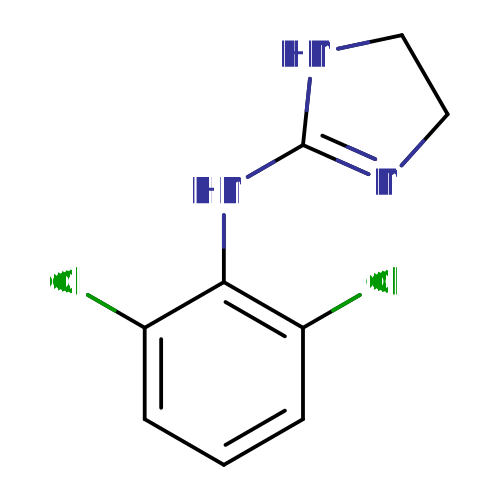
Structure for Clonidine (DB00575)
- Weight
- Average: 230.094
Monoisotopic: 229.017352717 - Chemical Formula
- C9H9Cl2N3
- Synonyms
- 2-((2,6-Dichlorophenyl)imino)imidazolidine
- 2,6-Dichloro-N-2-imidazolidinylidenebenzenamine
- Chlofazoline
- Clonidin
- Clonidina
- Clonidine
- Clonidinum
- External IDs
- M-5041T
- SKF 34427
- ST 155
- ST 155-BS

Pharmacology
- Indication
Clonidine tablets and transdermal systems are indicated for the treatment of hypertension alone or in combination with other medications.8,9 A clonidine injection is indicated for use with opiates in the treatment of severe cancer pain where opiates alone are insufficient.10 An extended release tablet of clonidine is indicated for the treatment of ADHD either alone or in combination with other medications.11
Clonidine is also used for the diagnosis of pheochromocytoma,3 treatment of nicotine dependance,4 and opiate withdrawal.5
 Reduce drug development failure ratesBuild, train, & validate machine-learning modelswith evidence-based and structured datasets.Build, train, & validate predictive machine-learning models with structured datasets.
- Associated Conditions
Indication Type Indication Combined Product Details Approval Level Age Group Patient Characteristics Dose Form Management of Adhd •••••••••••• ••• ••••••••••• •••••••• •••••••• •••••• •••••••• •••••••• ••••••• •••••••• ••••••• Diagnostic agent Growth hormone deficiency ••• ••••• Management of Hot flashes ••• ••••• Management of Hypertension •••••••••••• ••••••• ••••• Symptomatic treatment of Opioid withdrawal ••• ••••• - Associated Therapies
- Contraindications & Blackbox Warnings
 Prevent Adverse Drug Events TodayTap into our Clinical API for life-saving information on contraindications & blackbox warnings, population restrictions, harmful risks, & more.Avoid life-threatening adverse drug events with our Clinical API
- Pharmacodynamics
Clonidine functions through agonism of alpha-2 adrenoceptors which have effects such as lowering blood pressure, sedation, and hyperpolarization of nerves.2 It has a long duration of action as it is given twice daily and the therapeutic window is between 0.1mg and 2.4mg daily.8,9,10,11
- Mechanism of action
Clonidine is primarily an alpha-2 adrenoceptor agonist which causes central hypotensive and anti-arrhythmogenic effects.2 The alpha-2 adrenoceptor is coupled to the G-proteins Go and Gi.2 Gi inhibits adenylyl cyclase and activates opening of a potassium channel that causes hyperpolarization.2 Clonidine binding to the alpha-2 adrenoceptor causes structural changes in the alpha subunit of the G-protein, reducing its affinity for GDP.2 Magnesium catalyzes the replacement of GDP with GTP.2 The alpha subunit dissociates from the other subunits and associates with an effector.2
The stimulation of alpha-2 adrenoceptors in the locus coeruleus may be responsible for the hypnotic effects of clonidine as this region of the brain helps regulate wakefulness.2 Clonidine can also decrease transmission of pain signals at the spine.2 Finally clonidine can affect regulators of blood pressure in the ventromedial and rostral-ventrolateral areas of the medulla.2
Target Actions Organism AAlpha-2B adrenergic receptor agonistHumans AAlpha-2C adrenergic receptor agonistHumans AAlpha-2A adrenergic receptor agonistHumans UAlpha-1A adrenergic receptor agonistHumans UAlpha-1B adrenergic receptor agonistHumans UAlpha-1D adrenergic receptor agonistHumans - Absorption
Clonidine reaches maximum concentration in 60-90 minutes after oral administration.2,6 Race and fasting status do not influence pharmacokinetics of clonidine.8
A 100µg oral clonidine tablet reaches a Cmax of 400.72pg/mL with an AUC of 5606.78h*pg/mL and a bioavailability of 55-87%.6
- Volume of distribution
The volume of distribution of clonidine has been reported as 1.7-2.5L/kg2, 2.9L/kg9, or 2.1±0.4L/kg10 depending on the source.
- Protein binding
Clonidine is 20-40% bound to plasma proteins, especially albumin.2,10
- Metabolism
The metabolism of clonidine is poorly understood.7 The main reaction in clonidine metabolism is the 4-hydroxylation of clonidine by CYP2D6, CYP1A2, CYP3A4, CYP1A1, and CYP3A5.7
Clonidine is <50% metabolized in the liver to inactive metabolites.2,8,9,10,11
Hover over products below to view reaction partners
- Route of elimination
Approximately 50% of a clonidine dose is excreted in the urine as the unchanged drug and 20% is eliminated in the feces.2,8
- Half-life
The elimination half life after epidural administration is 30 minutes but otherwise can range from 6-23h.2
- Clearance
The clearance of clonidine is 1.9-4.3mL/min/kg.2
- Adverse Effects
 Improve decision support & research outcomesWith structured adverse effects data, including: blackbox warnings, adverse reactions, warning & precautions, & incidence rates. View sample adverse effects data in our new Data Library!Improve decision support & research outcomes with our structured adverse effects data.
- Toxicity
Oral LD50 is 126 mg/kg in rats.12 The TDLO is 70µg/kg in children, 126µg/kg in women, and 69µg/kg in men.12
Symptoms of overdose include hypertension followed by hypotension, bradycardia, respiratory depression, hypothermia, drowsiness, decreased reflexes, weakness, irritability, and miosis.8,9,10,11 Severe overdoses can cause reversible cardiac conduction defects or dysrhythmias, apnea, coma, and seizures.8,9,10,11 Induction of vomiting is not recommended due to CNS depression but gastric lavage or activated charcoal may be useful in recent ingestion.8,9,10,11 Dialysis is also unlikely to be beneficial.8,9,10,11 Overdose can be treated with supportive measures such as atropine sulfate for bradycardia, intravenous fluids or vasopressors for hypotension, vasodilators for hypertension, naloxone for respiratory depression, and blood pressure monitoring.8,9,10,11
- Pathways
- Not Available
- Pharmacogenomic Effects/ADRs
- Not Available
Interactions
- Drug Interactions
- This information should not be interpreted without the help of a healthcare provider. If you believe you are experiencing an interaction, contact a healthcare provider immediately. The absence of an interaction does not necessarily mean no interactions exist.
Drug Interaction Integrate drug-drug
interactions in your software1,2-Benzodiazepine The risk or severity of sedation can be increased when Clonidine is combined with 1,2-Benzodiazepine. Abaloparatide The risk or severity of adverse effects can be increased when Clonidine is combined with Abaloparatide. Abametapir The serum concentration of Clonidine can be increased when it is combined with Abametapir. Abatacept The metabolism of Clonidine can be increased when combined with Abatacept. Abiraterone The metabolism of Clonidine can be decreased when combined with Abiraterone. - Food Interactions
- Avoid alcohol.
- Take with or without food. The absorption is unaffected by food.
Products
 Drug product information from 10+ global regionsOur datasets provide approved product information including:dosage, form, labeller, route of administration, and marketing period.Access drug product information from over 10 global regions.
- Product Ingredients
Ingredient UNII CAS InChI Key Clonidine hydrochloride W76I6XXF06 4205-91-8 ZNIFSRGNXRYGHF-UHFFFAOYSA-N - Product Images
- International/Other Brands
- Catapresan (Boehringer Ingelheim) / Catapressan (Boehringer Ingelheim) / Catarpres-TTS / Dixarit (Boehringer Ingelheim) / Isoglaucon (Agepha) / Run Rui (Bausch & Lomb) / Velaril (Roemmers) / Winpress (Winston)
- Brand Name Prescription Products
Name Dosage Strength Route Labeller Marketing Start Marketing End Region Image Catapres Tablet .300 mg/1 Oral Boehringer Ingelheim Promeco s.a. De c.v. 1999-05-01 2013-03-25 US 
Catapres Tablet 0.100 mg/1 Oral Physicians Total Care, Inc. 1974-09-03 2011-06-30 US Catapres Tablet 0.100 mg/1 Oral Boehringer Ingelheim Pharmaceuticals Inc. 1999-05-01 Not applicable US Catapres Patch, extended release 0.1 mg/24h Transdermal Physicians Total Care, Inc. 1994-12-09 2012-06-30 US Catapres Tablet 0.200 mg/1 Oral Boehringer Ingelheim Promeco s.a. De c.v. 1999-05-01 2013-03-25 US - Generic Prescription Products
Name Dosage Strength Route Labeller Marketing Start Marketing End Region Image Apo-clonidine Tablet 0.025 mg Oral Apotex Corporation 2004-07-13 Not applicable Canada 
Apo-clonidine Tab 0.1mg Tablet 0.1 mg Oral Apotex Corporation 1990-12-31 Not applicable Canada Apo-clonidine Tab 0.2mg Tablet 0.2 mg Oral Apotex Corporation 1990-12-31 Not applicable Canada Clonidine Patch, extended release 0.1 mg/24h Transdermal Corium International, Inc. 2016-08-03 Not applicable US Clonidine Tablet 0.1 mg/1 Oral Stat Rx USA 1986-12-16 Not applicable US 
- Mixture Products
Name Ingredients Dosage Route Labeller Marketing Start Marketing End Region Image Clorpres Clonidine hydrochloride (0.1 mg/1) + Chlorthalidone (15 mg/1) Tablet Oral Physicians Total Care, Inc. 2005-01-26 2011-06-30 US Clorpres Clonidine hydrochloride (0.2 mg/1) + Chlorthalidone (15 mg/1) Tablet Oral Mylan Pharmaceuticals 1998-03-13 2018-02-28 US Clorpres Clonidine hydrochloride (0.2 mg/1) + Chlorthalidone (15 mg/1) Tablet Oral Mylan Bertek Pharmaceuticals 2015-11-01 2015-11-19 US Clorpres Clonidine hydrochloride (0.1 mg/1) + Chlorthalidone (15 mg/1) Tablet Oral Mylan Pharmaceuticals 1998-03-13 2018-02-28 US Clorpres Clonidine hydrochloride (0.1 mg/1) + Chlorthalidone (15 mg/1) Tablet Oral Mylan Bertek Pharmaceuticals 2015-11-01 2015-11-19 US


Categories
- ATC Codes
- S01EA04 — Clonidine
- S01EA — Sympathomimetics in glaucoma therapy
- S01E — ANTIGLAUCOMA PREPARATIONS AND MIOTICS
- S01 — OPHTHALMOLOGICALS
- S — SENSORY ORGANS
- C02LC — Imidazoline receptor agonists in combination with diuretics
- C02L — ANTIHYPERTENSIVES AND DIURETICS IN COMBINATION
- C02 — ANTIHYPERTENSIVES
- C — CARDIOVASCULAR SYSTEM
- C02AC — Imidazoline receptor agonists
- C02A — ANTIADRENERGIC AGENTS, CENTRALLY ACTING
- C02 — ANTIHYPERTENSIVES
- C — CARDIOVASCULAR SYSTEM
- N02CX — Other antimigraine preparations
- N02C — ANTIMIGRAINE PREPARATIONS
- N02 — ANALGESICS
- N — NERVOUS SYSTEM
- Drug Categories
- Adrenergic Agents
- Adrenergic Agonists
- Adrenergic alpha-1 Receptor Agonists
- Adrenergic alpha-2 Receptor Agonists
- Adrenergic alpha-Agonists
- Agents producing tachycardia
- Agents that produce hypertension
- Analgesics
- Anesthetics
- Anesthetics, General
- Antiadrenergic Agents, Centrally Acting
- Antiglaucoma Preparations and Miotics
- Antihypertensive Agents
- Antihypertensive Agents Indicated for Hypertension
- Antimigraine Preparations
- Autonomic Agents
- Bradycardia-Causing Agents
- Cardiovascular Agents
- Central alpha-2 Adrenergic Agonist
- Central Alpha-agonists
- Central Nervous System Agents
- Central Nervous System Depressants
- Cytochrome P-450 CYP1A2 Substrates
- Cytochrome P-450 CYP1A2 Substrates with a Narrow Therapeutic Index
- Cytochrome P-450 CYP2D6 Substrates
- Cytochrome P-450 CYP2D6 Substrates with a Narrow Therapeutic Index
- Cytochrome P-450 CYP3A Substrates
- Cytochrome P-450 CYP3A4 Substrates
- Cytochrome P-450 CYP3A4 Substrates with a Narrow Therapeutic Index
- Cytochrome P-450 CYP3A5 Substrates
- Cytochrome P-450 CYP3A5 Substrates with a Narrow Therapeutic Index
- Cytochrome P-450 Substrates
- Hypotensive Agents
- Imidazoles
- Imidazoline Receptor Agonists
- Imidazolines
- Narrow Therapeutic Index Drugs
- Nervous System
- Neurotransmitter Agents
- Ophthalmologicals
- Peripheral Nervous System Agents
- Sensory Organs
- Sensory System Agents
- Sympatholytics
- Sympathomimetics in Glaucoma Therapy
- Chemical TaxonomyProvided by Classyfire
- Description
- This compound belongs to the class of organic compounds known as dichlorobenzenes. These are compounds containing a benzene with exactly two chlorine atoms attached to it.
- Kingdom
- Organic compounds
- Super Class
- Benzenoids
- Class
- Benzene and substituted derivatives
- Sub Class
- Halobenzenes
- Direct Parent
- Dichlorobenzenes
- Alternative Parents
- Aniline and substituted anilines / Aryl chlorides / Imidazolines / Guanidines / Propargyl-type 1,3-dipolar organic compounds / Carboximidamides / Azacyclic compounds / Organopnictogen compounds / Organochlorides / Hydrocarbon derivatives
- Substituents
- 1,3-dichlorobenzene / 2-imidazoline / Aniline or substituted anilines / Aromatic heteromonocyclic compound / Aryl chloride / Aryl halide / Azacycle / Carboximidamide / Guanidine / Hydrocarbon derivative
- Molecular Framework
- Aromatic heteromonocyclic compounds
- External Descriptors
- clonidine (CHEBI:3757)
- Affected organisms
- Humans and other mammals
Chemical Identifiers
- UNII
- MN3L5RMN02
- CAS number
- 4205-90-7
- InChI Key
- GJSURZIOUXUGAL-UHFFFAOYSA-N
- InChI
- InChI=1S/C9H9Cl2N3/c10-6-2-1-3-7(11)8(6)14-9-12-4-5-13-9/h1-3H,4-5H2,(H2,12,13,14)
- IUPAC Name
- N-(2,6-dichlorophenyl)-4,5-dihydro-1H-imidazol-2-amine
- SMILES
- ClC1=CC=CC(Cl)=C1NC1=NCCN1
References
- Synthesis Reference
David R. Pierce, William D. Dean, Michael E. Deason, "Process for preparation of clonidine derivatives." U.S. Patent US5684156, issued October, 1968.
US5684156- General References
- Hossmann V, Maling TJ, Hamilton CA, Reid JL, Dollery CT: Sedative and cardiovascular effects of clonidine and nitrazepam. Clin Pharmacol Ther. 1980 Aug;28(2):167-76. [Article]
- Khan ZP, Ferguson CN, Jones RM: alpha-2 and imidazoline receptor agonists. Their pharmacology and therapeutic role. Anaesthesia. 1999 Feb;54(2):146-65. doi: 10.1046/j.1365-2044.1999.00659.x. [Article]
- Sjoberg RJ, Simcic KJ, Kidd GS: The clonidine suppression test for pheochromocytoma. A review of its utility and pitfalls. Arch Intern Med. 1992 Jun;152(6):1193-7. [Article]
- Sliwinska-Mosson M, Zielen I, Milnerowicz H: New trends in the treatment of nicotine addiction. Acta Pol Pharm. 2014 Jul-Aug;71(4):525-30. [Article]
- Fresquez-Chavez KR, Fogger S: Reduction of opiate withdrawal symptoms with use of clonidine in a county jail. J Correct Health Care. 2015 Jan;21(1):27-34. doi: 10.1177/1078345814557630. Epub 2014 Nov 26. [Article]
- Vasseur B, Dufour A, Houdas L, Goodwin H, Harries K, Emul NY, Hutchings S: Comparison of the Systemic and Local Pharmacokinetics of Clonidine Mucoadhesive Buccal Tablets with Reference Clonidine Oral Tablets in Healthy Volunteers: An Open-Label Randomised Cross-Over Trial. Adv Ther. 2017 Aug;34(8):2022-2032. doi: 10.1007/s12325-017-0585-9. Epub 2017 Jul 19. [Article]
- Claessens AJ, Risler LJ, Eyal S, Shen DD, Easterling TR, Hebert MF: CYP2D6 mediates 4-hydroxylation of clonidine in vitro: implication for pregnancy-induced changes in clonidine clearance. Drug Metab Dispos. 2010 Sep;38(9):1393-6. doi: 10.1124/dmd.110.033878. Epub 2010 Jun 22. [Article]
- FDA Approved Drug Products: Catapres Clonidine Hydrochloride Oral Tablets [Link]
- FDA Approved Drug Products: Catapres Clonidine Transdermal System [Link]
- FDA Approved Drug Products: Duraclon Clonidine Hydrochloride Injection Solution [Link]
- FDA Approved Drug Products: Kapvay (clonidine hydrochloride) Oral Extended Release Tablets [Link]
- Cayman Chemicals: Clonidine MSDS [Link]
- External Links
- Human Metabolome Database
- HMDB0014714
- KEGG Drug
- D00281
- PubChem Compound
- 2803
- PubChem Substance
- 46508119
- ChemSpider
- 2701
- BindingDB
- 14062
- 2599
- ChEBI
- 46632
- ChEMBL
- CHEMBL134
- ZINC
- ZINC000000896484
- Therapeutic Targets Database
- DAP000231
- PharmGKB
- PA449051
- Guide to Pharmacology
- GtP Drug Page
- PDBe Ligand
- CLU
- RxList
- RxList Drug Page
- Drugs.com
- Drugs.com Drug Page
- PDRhealth
- PDRhealth Drug Page
- Wikipedia
- Clonidine
- PDB Entries
- 2pnc / 7aww
- MSDS
- Download (73.8 KB)
Clinical Trials
- Clinical Trials
Phase Status Purpose Conditions Count 4 Active Not Recruiting Treatment Inguinal Hernias / Spinal Anesthesia therapy 1 4 Completed Basic Science Heart Failure 1 4 Completed Prevention Cardiovascular Disease (CVD) 1 4 Completed Prevention Diabetic Nephropathy 1 4 Completed Prevention Hypertension 1
Pharmacoeconomics
- Manufacturers
- Boehringer ingelheim
- Aveva drug delivery systems inc
- Mylan technologies inc
- Tris pharma inc
- Pharmaforce inc
- Bioniche pharma usa llc
- Actavis elizabeth llc
- American therapeutics inc
- Dava pharmaceuticals inc
- Duramed pharmaceuticals inc sub barr laboratories inc
- Impax laboratories inc
- Interpharm inc
- Mutual pharmaceutical co inc
- Mylan pharmaceuticals inc
- Par pharmaceutical inc
- Sandoz inc
- Teva pharmaceuticals usa inc
- Unichem laboratories ltd
- Vintage pharmaceuticals llc
- Warner chilcott div warner lambert co
- Watson laboratories inc
- Shionogi pharma inc
- Packagers
- AAIPharma Inc.
- Actavis Group
- Advanced Pharmaceutical Services Inc.
- Alza Corp.
- American Regent
- Amerisource Health Services Corp.
- Apotheca Inc.
- APP Pharmaceuticals
- A-S Medication Solutions LLC
- Bioniche Pharma
- Blenheim Pharmacal
- Boehringer Ingelheim Ltd.
- Bryant Ranch Prepack
- Cardinal Health
- Central Texas Community Health Centers
- Comprehensive Consultant Services Inc.
- Coupler Enterprises Inc.
- DAVA Pharmaceuticals
- Dept Health Central Pharmacy
- Direct Dispensing Inc.
- Dispensing Solutions
- Diversified Healthcare Services Inc.
- Global Pharmaceuticals
- Heartland Repack Services LLC
- Innoviant Pharmacy Inc.
- Lake Erie Medical and Surgical Supply
- Liberty Pharmaceuticals
- Major Pharmaceuticals
- Mckesson Corp.
- Medisca Inc.
- Murfreesboro Pharmaceutical Nursing Supply
- Mutual Pharmaceutical Co.
- Mylan
- Neighborcare Repackaging Inc.
- Neuman Distributors Inc.
- Nucare Pharmaceuticals Inc.
- Palmetto Pharmaceuticals Inc.
- Par Pharmaceuticals
- PCA LLC
- PD-Rx Pharmaceuticals Inc.
- Pharmaceutical Utilization Management Program VA Inc.
- Pharmaforce Inc.
- Pharmedix
- Physicians Total Care Inc.
- Preferred Pharmaceuticals Inc.
- Prepackage Specialists
- Prepak Systems Inc.
- Qualitest
- Rebel Distributors Corp.
- Redpharm Drug
- Remedy Repack
- Richmond Pharmacy
- Sandhills Packaging Inc.
- Southwood Pharmaceuticals
- Stat Rx Usa
- Tya Pharmaceuticals
- UDL Laboratories
- Unichem Laboratories Ltd.
- United Research Laboratories Inc.
- Vangard Labs Inc.
- Vintage Pharmaceuticals Inc.
- West-Ward Pharmaceuticals
- Xanodyne Pharmaceuticals Inc.
- Dosage Forms
Form Route Strength Injection Patch, extended release Transdermal 0.1 mg/24h Patch, extended release Transdermal 0.2 mg/24h Patch, extended release Transdermal 0.3 mg/24h Tablet Oral .300 mg/1 Tablet Oral 0.075 MG Capsule 0.25 MG Injection, solution 150 MICROGRAMMI/ML Tablet Oral 150 MICROGRAMMI Tablet Oral 300 MICROGRAMMI Injection, solution Parenteral 0.15 mg/ml Tablet Oral 0.15 mg/1 Tablet Oral 0.075 mg/1 Patch Transdermal 2.5 mg Patch Transdermal 5 mg Patch Transdermal 7.5 mg Tablet Oral 300 UG Capsule, extended release Oral 0.25 mg/1 Injection, solution Tablet Oral 150 mcg Tablet Oral 15000000 mcg Patch Transdermal 0.1 mg/1d Patch Transdermal 0.2 mg/1d Patch Transdermal 0.3 mg/1d Tablet Oral .2 mg Tablet Oral Injection, solution Epidural 0.5 mg/1mL Injection, solution Epidural 100 ug/1mL Injection, solution Epidural 500 ug/1mL Injection, solution Intravenous 100 ug/1mL Injection, solution Intravenous 500 ug/1mL Tablet Oral .1 mg/1 Tablet Oral .2 mg/1 Tablet Oral .3 mg/1 Tablet Oral 0.1 mg/1 Tablet Oral 0.100 mg/1 Tablet Oral 0.2 mg/1 Tablet Oral 0.200 mg/1 Tablet Oral 0.3 mg/1 Tablet Oral 0.300 mg/1 Tablet, extended release Oral 25 mg/1 Capsule, extended release Oral 0.25 MG Tablet Oral 0.3 MG Tablet Oral Injection, solution Epidural 0.1 mg/1mL Injection, solution Intravenous 0.1 mg/1mL Injection, solution Intravenous 0.5 mg/1mL Solution Parenteral 150.00 mcg Solution / drops Ophthalmic Kit Oral Tablet, extended release Oral 0.1 mg/1 Tablet, extended release Oral 0.2 mg/1 For suspension, extended release Oral 0.09 mg/1mL Suspension, extended release Oral 0.09 mg/1mL Tablet, extended release Oral 0.17 mg/1 Tablet, extended release Oral 0.26 mg/1 Tablet Oral .1 mg Tablet Oral 0.025 mg Tablet Oral 0.1 mg Tablet Oral 0.2 mg Tablet Oral 0.15 mg - Prices
Unit description Cost Unit Catapres-TTS-3 4 0.3 mg/24hr Patches Box 328.42USD box CloNIDine HCl 4 0.3 mg/24hr Patches Box 279.9USD box Catapres-TTS-2 4 0.2 mg/24hr Patches Box 236.75USD box CloNIDine HCl 4 0.2 mg/24hr Patches Box 201.75USD box Catapres-TTS-1 4 0.1 mg/24hr Patches Box 141.08USD box CloNIDine HCl 4 0.1 mg/24hr Patches Box 119.84USD box Catapres-tts 3 patch 78.95USD patch Clonidine 0.3 mg/day patch 67.28USD patch Clonidine hcl powder 53.09USD g Clonidine 0.2 mg/day patch 48.5USD patch Duraclon 500 mcg/ml vial 47.4USD ml Catapres-tts 2 patch 39.23USD patch Clonidine 0.1 mg/day patch 28.81USD patch Catapres-tts 1 patch 21.18USD patch Clonidine 5000 mcg/10 ml vial 21.0USD ml Duraclon 0.1 mg/ml vial 14.4USD ml Clonidine 1000 mcg/10 ml vial 5.04USD ml Catapres 0.3 mg tablet 2.98USD tablet Catapres 0.2 mg tablet 2.35USD tablet Catapres 0.1 mg tablet 1.57USD tablet Clonidine hcl 0.3 mg tablet 0.5USD tablet Clonidine hcl 0.2 mg tablet 0.35USD tablet Catapres 0.2 mg Tablet 0.35USD tablet Apo-Clonidine 0.2 mg Tablet 0.33USD tablet Novo-Clonidine 0.2 mg Tablet 0.33USD tablet Nu-Clonidine 0.2 mg Tablet 0.33USD tablet Dixarit 0.025 mg Tablet 0.28USD tablet Clonidine hcl 0.1 mg tablet 0.24USD tablet Catapres 0.1 mg Tablet 0.19USD tablet Apo-Clonidine 0.1 mg Tablet 0.18USD tablet Novo-Clonidine 0.1 mg Tablet 0.18USD tablet Nu-Clonidine 0.1 mg Tablet 0.18USD tablet Apo-Clonidine 0.025 mg Tablet 0.16USD tablet Novo-Clonidine 0.025 mg Tablet 0.16USD tablet DrugBank does not sell nor buy drugs. Pricing information is supplied for informational purposes only.- Patents
Patent Number Pediatric Extension Approved Expires (estimated) Region US5869100 No 1999-02-09 2013-10-13 US US8623409 No 2014-01-07 2031-09-08 US US8337890 No 2012-12-25 2027-04-17 US
Properties
- State
- Solid
- Experimental Properties
Property Value Source melting point (°C) 130 http://www.chemspider.com/Chemical-Structure.2701.html?rid=816613e6-a54a-46f0-8152-4a93e09e4170 logP 1.59 HANSCH,C & LEO,AJ (1985) Caco2 permeability -4.59 ADME Research, USCD pKa 8.05 (at 25 °C) KONTTURI,K & MURTOMAKI,L (1992) - Predicted Properties
Property Value Source Water Solubility 0.48 mg/mL ALOGPS logP 2.55 ALOGPS logP 2.49 Chemaxon logS -2.7 ALOGPS pKa (Strongest Basic) 8.16 Chemaxon Physiological Charge 1 Chemaxon Hydrogen Acceptor Count 3 Chemaxon Hydrogen Donor Count 2 Chemaxon Polar Surface Area 36.42 Å2 Chemaxon Rotatable Bond Count 1 Chemaxon Refractivity 59.09 m3·mol-1 Chemaxon Polarizability 21.7 Å3 Chemaxon Number of Rings 2 Chemaxon Bioavailability 1 Chemaxon Rule of Five Yes Chemaxon Ghose Filter Yes Chemaxon Veber's Rule Yes Chemaxon MDDR-like Rule No Chemaxon - Predicted ADMET Features
Property Value Probability Human Intestinal Absorption + 0.9632 Blood Brain Barrier + 0.9402 Caco-2 permeable + 0.8866 P-glycoprotein substrate Substrate 0.6305 P-glycoprotein inhibitor I Non-inhibitor 0.9061 P-glycoprotein inhibitor II Non-inhibitor 0.8383 Renal organic cation transporter Inhibitor 0.745 CYP450 2C9 substrate Non-substrate 0.8219 CYP450 2D6 substrate Non-substrate 0.6984 CYP450 3A4 substrate Non-substrate 0.6353 CYP450 1A2 substrate Non-inhibitor 0.8998 CYP450 2C9 inhibitor Non-inhibitor 0.7681 CYP450 2D6 inhibitor Inhibitor 0.8931 CYP450 2C19 inhibitor Non-inhibitor 0.8732 CYP450 3A4 inhibitor Non-inhibitor 0.8332 CYP450 inhibitory promiscuity Low CYP Inhibitory Promiscuity 0.803 Ames test Non AMES toxic 0.9133 Carcinogenicity Non-carcinogens 0.9303 Biodegradation Not ready biodegradable 0.9949 Rat acute toxicity 3.5030 LD50, mol/kg Not applicable hERG inhibition (predictor I) Weak inhibitor 0.7232 hERG inhibition (predictor II) Non-inhibitor 0.8905
Spectra
- Mass Spec (NIST)
- Not Available
- Spectra
- Chromatographic Properties
Collision Cross Sections (CCS)
Adduct CCS Value (Å2) Source type Source [M-H]- 141.5208735 predictedDarkChem Lite v0.1.0 [M-H]- 138.30542 predictedDeepCCS 1.0 (2019) [M+H]+ 142.1236735 predictedDarkChem Lite v0.1.0 [M+H]+ 141.04381 predictedDeepCCS 1.0 (2019) [M+Na]+ 141.6042735 predictedDarkChem Lite v0.1.0 [M+Na]+ 149.7396 predictedDeepCCS 1.0 (2019)
Targets

- Kind
- Protein
- Organism
- Humans
- Pharmacological action
- Yes
- Actions
- Agonist
- General Function
- Epinephrine binding
- Specific Function
- Alpha-2 adrenergic receptors mediate the catecholamine-induced inhibition of adenylate cyclase through the action of G proteins. The rank order of potency for agonists of this receptor is clonidine...
- Gene Name
- ADRA2B
- Uniprot ID
- P18089
- Uniprot Name
- Alpha-2B adrenergic receptor
- Molecular Weight
- 49565.8 Da
References
- Millan MJ, Dekeyne A, Newman-Tancredi A, Cussac D, Audinot V, Milligan G, Duqueyroix D, Girardon S, Mullot J, Boutin JA, Nicolas JP, Renouard-Try A, Lacoste JM, Cordi A: S18616, a highly potent, spiroimidazoline agonist at alpha(2)-adrenoceptors: I. Receptor profile, antinociceptive and hypothermic actions in comparison with dexmedetomidine and clonidine. J Pharmacol Exp Ther. 2000 Dec;295(3):1192-205. [Article]
- Hein, L. (2004). alpha-Adrenergic system. In Encyclopedic reference of molecular pharmacology (pp. 27-30). Berlin: Springer. [ISBN:9783540298328]
- Kind
- Protein
- Organism
- Humans
- Pharmacological action
- Yes
- Actions
- Agonist
- General Function
- Protein homodimerization activity
- Specific Function
- Alpha-2 adrenergic receptors mediate the catecholamine-induced inhibition of adenylate cyclase through the action of G proteins.
- Gene Name
- ADRA2C
- Uniprot ID
- P18825
- Uniprot Name
- Alpha-2C adrenergic receptor
- Molecular Weight
- 49521.585 Da
References
- Millan MJ, Dekeyne A, Newman-Tancredi A, Cussac D, Audinot V, Milligan G, Duqueyroix D, Girardon S, Mullot J, Boutin JA, Nicolas JP, Renouard-Try A, Lacoste JM, Cordi A: S18616, a highly potent, spiroimidazoline agonist at alpha(2)-adrenoceptors: I. Receptor profile, antinociceptive and hypothermic actions in comparison with dexmedetomidine and clonidine. J Pharmacol Exp Ther. 2000 Dec;295(3):1192-205. [Article]
- Hein, L. (2004). alpha-Adrenergic system. In Encyclopedic reference of molecular pharmacology (pp. 27-30). Berlin: Springer. [ISBN:9783540298328]
- Kind
- Protein
- Organism
- Humans
- Pharmacological action
- Yes
- Actions
- Agonist
- General Function
- Thioesterase binding
- Specific Function
- Alpha-2 adrenergic receptors mediate the catecholamine-induced inhibition of adenylate cyclase through the action of G proteins. The rank order of potency for agonists of this receptor is oxymetazo...
- Gene Name
- ADRA2A
- Uniprot ID
- P08913
- Uniprot Name
- Alpha-2A adrenergic receptor
- Molecular Weight
- 48956.275 Da
References
- Fairbanks CA, Stone LS, Kitto KF, Nguyen HO, Posthumus IJ, Wilcox GL: alpha(2C)-Adrenergic receptors mediate spinal analgesia and adrenergic-opioid synergy. J Pharmacol Exp Ther. 2002 Jan;300(1):282-90. [Article]
- Lavand'homme PM, Ma W, De Kock M, Eisenach JC: Perineural alpha(2A)-adrenoceptor activation inhibits spinal cord neuroplasticity and tactile allodynia after nerve injury. Anesthesiology. 2002 Oct;97(4):972-80. [Article]
- Ozdogan UK, Lahdesmaki J, Hakala K, Scheinin M: The involvement of alpha 2A-adrenoceptors in morphine analgesia, tolerance and withdrawal in mice. Eur J Pharmacol. 2004 Aug 23;497(2):161-71. [Article]
- Ozdogan UK, Lahdesmaki J, Mansikka H, Scheinin M: Loss of amitriptyline analgesia in alpha 2A-adrenoceptor deficient mice. Eur J Pharmacol. 2004 Feb 6;485(1-3):193-6. [Article]
- Wang XM, Zhang ZJ, Bains R, Mokha SS: Effect of antisense knock-down of alpha(2a)- and alpha(2c)-adrenoceptors on the antinociceptive action of clonidine on trigeminal nociception in the rat. Pain. 2002 Jul;98(1-2):27-35. [Article]
- Millan MJ, Dekeyne A, Newman-Tancredi A, Cussac D, Audinot V, Milligan G, Duqueyroix D, Girardon S, Mullot J, Boutin JA, Nicolas JP, Renouard-Try A, Lacoste JM, Cordi A: S18616, a highly potent, spiroimidazoline agonist at alpha(2)-adrenoceptors: I. Receptor profile, antinociceptive and hypothermic actions in comparison with dexmedetomidine and clonidine. J Pharmacol Exp Ther. 2000 Dec;295(3):1192-205. [Article]
- Hein, L. (2004). alpha-Adrenergic system. In Encyclopedic reference of molecular pharmacology (pp. 27-30). Berlin: Springer. [ISBN:9783540298328]
- Kind
- Protein
- Organism
- Humans
- Pharmacological action
- Unknown
- Actions
- Agonist
- General Function
- Protein heterodimerization activity
- Specific Function
- This alpha-adrenergic receptor mediates its action by association with G proteins that activate a phosphatidylinositol-calcium second messenger system. Its effect is mediated by G(q) and G(11) prot...
- Gene Name
- ADRA1A
- Uniprot ID
- P35348
- Uniprot Name
- Alpha-1A adrenergic receptor
- Molecular Weight
- 51486.005 Da
References
- Millan MJ, Dekeyne A, Newman-Tancredi A, Cussac D, Audinot V, Milligan G, Duqueyroix D, Girardon S, Mullot J, Boutin JA, Nicolas JP, Renouard-Try A, Lacoste JM, Cordi A: S18616, a highly potent, spiroimidazoline agonist at alpha(2)-adrenoceptors: I. Receptor profile, antinociceptive and hypothermic actions in comparison with dexmedetomidine and clonidine. J Pharmacol Exp Ther. 2000 Dec;295(3):1192-205. [Article]
- PDSP Ki Database [Link]
- Kind
- Protein
- Organism
- Humans
- Pharmacological action
- Unknown
- Actions
- Agonist
- General Function
- Protein heterodimerization activity
- Specific Function
- This alpha-adrenergic receptor mediates its action by association with G proteins that activate a phosphatidylinositol-calcium second messenger system. Its effect is mediated by G(q) and G(11) prot...
- Gene Name
- ADRA1B
- Uniprot ID
- P35368
- Uniprot Name
- Alpha-1B adrenergic receptor
- Molecular Weight
- 56835.375 Da
References
- Millan MJ, Dekeyne A, Newman-Tancredi A, Cussac D, Audinot V, Milligan G, Duqueyroix D, Girardon S, Mullot J, Boutin JA, Nicolas JP, Renouard-Try A, Lacoste JM, Cordi A: S18616, a highly potent, spiroimidazoline agonist at alpha(2)-adrenoceptors: I. Receptor profile, antinociceptive and hypothermic actions in comparison with dexmedetomidine and clonidine. J Pharmacol Exp Ther. 2000 Dec;295(3):1192-205. [Article]
- PDSP Ki Database [Link]
- Kind
- Protein
- Organism
- Humans
- Pharmacological action
- Unknown
- Actions
- Agonist
- General Function
- Alpha1-adrenergic receptor activity
- Specific Function
- This alpha-adrenergic receptor mediates its effect through the influx of extracellular calcium.
- Gene Name
- ADRA1D
- Uniprot ID
- P25100
- Uniprot Name
- Alpha-1D adrenergic receptor
- Molecular Weight
- 60462.205 Da
References
- Millan MJ, Dekeyne A, Newman-Tancredi A, Cussac D, Audinot V, Milligan G, Duqueyroix D, Girardon S, Mullot J, Boutin JA, Nicolas JP, Renouard-Try A, Lacoste JM, Cordi A: S18616, a highly potent, spiroimidazoline agonist at alpha(2)-adrenoceptors: I. Receptor profile, antinociceptive and hypothermic actions in comparison with dexmedetomidine and clonidine. J Pharmacol Exp Ther. 2000 Dec;295(3):1192-205. [Article]
- PDSP Ki Database [Link]
Enzymes
- Kind
- Protein
- Organism
- Humans
- Pharmacological action
- Unknown
- Actions
- Substrate
- Curator comments
- Data is limited to an in vitro study.
- General Function
- Oxidoreductase activity, acting on paired donors, with incorporation or reduction of molecular oxygen, reduced flavin or flavoprotein as one donor, and incorporation of one atom of oxygen
- Specific Function
- Cytochromes P450 are a group of heme-thiolate monooxygenases. In liver microsomes, this enzyme is involved in an NADPH-dependent electron transport pathway. It oxidizes a variety of structurally un...
- Gene Name
- CYP1A2
- Uniprot ID
- P05177
- Uniprot Name
- Cytochrome P450 1A2
- Molecular Weight
- 58293.76 Da
References
- Claessens AJ, Risler LJ, Eyal S, Shen DD, Easterling TR, Hebert MF: CYP2D6 mediates 4-hydroxylation of clonidine in vitro: implication for pregnancy-induced changes in clonidine clearance. Drug Metab Dispos. 2010 Sep;38(9):1393-6. doi: 10.1124/dmd.110.033878. Epub 2010 Jun 22. [Article]
- Kind
- Protein
- Organism
- Humans
- Pharmacological action
- Unknown
- Actions
- Substrate
- General Function
- Vitamin d3 25-hydroxylase activity
- Specific Function
- Cytochromes P450 are a group of heme-thiolate monooxygenases. In liver microsomes, this enzyme is involved in an NADPH-dependent electron transport pathway. It performs a variety of oxidation react...
- Gene Name
- CYP3A4
- Uniprot ID
- P08684
- Uniprot Name
- Cytochrome P450 3A4
- Molecular Weight
- 57342.67 Da
References
- Claessens AJ, Risler LJ, Eyal S, Shen DD, Easterling TR, Hebert MF: CYP2D6 mediates 4-hydroxylation of clonidine in vitro: implication for pregnancy-induced changes in clonidine clearance. Drug Metab Dispos. 2010 Sep;38(9):1393-6. doi: 10.1124/dmd.110.033878. Epub 2010 Jun 22. [Article]
- Kind
- Protein
- Organism
- Humans
- Pharmacological action
- Unknown
- Actions
- Substrate
- General Function
- Vitamin d 24-hydroxylase activity
- Specific Function
- Cytochromes P450 are a group of heme-thiolate monooxygenases. In liver microsomes, this enzyme is involved in an NADPH-dependent electron transport pathway. It oxidizes a variety of structurally un...
- Gene Name
- CYP1A1
- Uniprot ID
- P04798
- Uniprot Name
- Cytochrome P450 1A1
- Molecular Weight
- 58164.815 Da
References
- Claessens AJ, Risler LJ, Eyal S, Shen DD, Easterling TR, Hebert MF: CYP2D6 mediates 4-hydroxylation of clonidine in vitro: implication for pregnancy-induced changes in clonidine clearance. Drug Metab Dispos. 2010 Sep;38(9):1393-6. doi: 10.1124/dmd.110.033878. Epub 2010 Jun 22. [Article]
- Kind
- Protein
- Organism
- Humans
- Pharmacological action
- Unknown
- Actions
- Substrate
- General Function
- Oxygen binding
- Specific Function
- Cytochromes P450 are a group of heme-thiolate monooxygenases. In liver microsomes, this enzyme is involved in an NADPH-dependent electron transport pathway. It oxidizes a variety of structurally un...
- Gene Name
- CYP3A5
- Uniprot ID
- P20815
- Uniprot Name
- Cytochrome P450 3A5
- Molecular Weight
- 57108.065 Da
References
- Claessens AJ, Risler LJ, Eyal S, Shen DD, Easterling TR, Hebert MF: CYP2D6 mediates 4-hydroxylation of clonidine in vitro: implication for pregnancy-induced changes in clonidine clearance. Drug Metab Dispos. 2010 Sep;38(9):1393-6. doi: 10.1124/dmd.110.033878. Epub 2010 Jun 22. [Article]
- Kind
- Protein
- Organism
- Humans
- Pharmacological action
- Unknown
- Actions
- Substrate
- General Function
- Steroid hydroxylase activity
- Specific Function
- Responsible for the metabolism of many drugs and environmental chemicals that it oxidizes. It is involved in the metabolism of drugs such as antiarrhythmics, adrenoceptor antagonists, and tricyclic...
- Gene Name
- CYP2D6
- Uniprot ID
- P10635
- Uniprot Name
- Cytochrome P450 2D6
- Molecular Weight
- 55768.94 Da
References
- Claessens AJ, Risler LJ, Eyal S, Shen DD, Easterling TR, Hebert MF: CYP2D6 mediates 4-hydroxylation of clonidine in vitro: implication for pregnancy-induced changes in clonidine clearance. Drug Metab Dispos. 2010 Sep;38(9):1393-6. doi: 10.1124/dmd.110.033878. Epub 2010 Jun 22. [Article]
Carriers
- Kind
- Protein
- Organism
- Humans
- Pharmacological action
- Unknown
- Actions
- Binder
- General Function
- Toxic substance binding
- Specific Function
- Serum albumin, the main protein of plasma, has a good binding capacity for water, Ca(2+), Na(+), K(+), fatty acids, hormones, bilirubin and drugs. Its main function is the regulation of the colloid...
- Gene Name
- ALB
- Uniprot ID
- P02768
- Uniprot Name
- Serum albumin
- Molecular Weight
- 69365.94 Da
References
Transporters
- Kind
- Protein
- Organism
- Humans
- Pharmacological action
- Unknown
- Actions
- Inhibitor
- General Function
- Toxin transporter activity
- Specific Function
- Mediates potential-dependent transport of a variety of organic cations. May play a significant role in the disposition of cationic neurotoxins and neurotransmitters in the brain.
- Gene Name
- SLC22A3
- Uniprot ID
- O75751
- Uniprot Name
- Solute carrier family 22 member 3
- Molecular Weight
- 61279.485 Da
References
- Wu X, Huang W, Ganapathy ME, Wang H, Kekuda R, Conway SJ, Leibach FH, Ganapathy V: Structure, function, and regional distribution of the organic cation transporter OCT3 in the kidney. Am J Physiol Renal Physiol. 2000 Sep;279(3):F449-58. [Article]
- Martel F, Grundemann D, Calhau C, Schomig E: Apical uptake of organic cations by human intestinal Caco-2 cells: putative involvement of ASF transporters. Naunyn Schmiedebergs Arch Pharmacol. 2001 Jan;363(1):40-9. [Article]
- Kind
- Protein
- Organism
- Humans
- Pharmacological action
- Unknown
- Actions
- Inhibitor
- General Function
- Symporter activity
- Specific Function
- Sodium-ion dependent, high affinity carnitine transporter. Involved in the active cellular uptake of carnitine. Transports one sodium ion with one molecule of carnitine. Also transports organic cat...
- Gene Name
- SLC22A5
- Uniprot ID
- O76082
- Uniprot Name
- Solute carrier family 22 member 5
- Molecular Weight
- 62751.08 Da
References
- Ohashi R, Tamai I, Yabuuchi H, Nezu JI, Oku A, Sai Y, Shimane M, Tsuji A: Na(+)-dependent carnitine transport by organic cation transporter (OCTN2): its pharmacological and toxicological relevance. J Pharmacol Exp Ther. 1999 Nov;291(2):778-84. [Article]
- Wu X, Huang W, Prasad PD, Seth P, Rajan DP, Leibach FH, Chen J, Conway SJ, Ganapathy V: Functional characteristics and tissue distribution pattern of organic cation transporter 2 (OCTN2), an organic cation/carnitine transporter. J Pharmacol Exp Ther. 1999 Sep;290(3):1482-92. [Article]
- Kind
- Protein
- Organism
- Humans
- Pharmacological action
- Unknown
- Actions
- Inhibitor
- General Function
- Symporter activity
- Specific Function
- Sodium-ion dependent, low affinity carnitine transporter. Probably transports one sodium ion with one molecule of carnitine. Also transports organic cations such as tetraethylammonium (TEA) without...
- Gene Name
- SLC22A4
- Uniprot ID
- Q9H015
- Uniprot Name
- Solute carrier family 22 member 4
- Molecular Weight
- 62154.48 Da
References
- Yabuuchi H, Tamai I, Nezu J, Sakamoto K, Oku A, Shimane M, Sai Y, Tsuji A: Novel membrane transporter OCTN1 mediates multispecific, bidirectional, and pH-dependent transport of organic cations. J Pharmacol Exp Ther. 1999 May;289(2):768-73. [Article]

Drug created at June 13, 2005 13:24 / Updated at April 27, 2024 09:44