Identification
- Summary
Cisapride is a medication used to treat heartburn associated with GERD.
- Generic Name
- Cisapride
- DrugBank Accession Number
- DB00604
- Background
In many countries (including Canada) cisapride has been either withdrawn or has had its indications limited due to reports about long QT syndrome due to cisapride, which predisposes to arrhythmias. The FDA issued a warning letter regarding this risk to health care professionals and patients.
- Type
- Small Molecule
- Groups
- Approved, Investigational, Withdrawn
- Structure
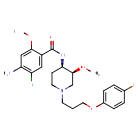
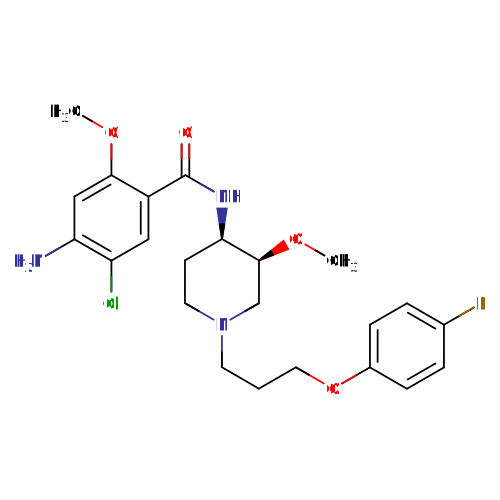
Structure for Cisapride (DB00604)
- Weight
- Average: 465.945
Monoisotopic: 465.183062343 - Chemical Formula
- C23H29ClFN3O4
- Synonyms
- Cisaprid
- Cisaprida
- Cisapride
- Cisapridum
- External IDs
- R 51619
- R-51,619
- R-51619

Pharmacology
- Indication
For the symptomatic treatment of adult patients with nocturnal heartburn due to gastroesophageal reflux disease.
 Reduce drug development failure ratesBuild, train, & validate machine-learning modelswith evidence-based and structured datasets.Build, train, & validate predictive machine-learning models with structured datasets.
- Associated Conditions
Indication Type Indication Combined Product Details Approval Level Age Group Patient Characteristics Dose Form Treatment of Gastrointestinal disorder •••••••••••• - Contraindications & Blackbox Warnings
 Prevent Adverse Drug Events TodayTap into our Clinical API for life-saving information on contraindications & blackbox warnings, population restrictions, harmful risks, & more.Avoid life-threatening adverse drug events with our Clinical API
- Pharmacodynamics
Cisapride is a parasympathomimetic which acts as a serotonin 5-HT4 agonist; upon activation of the receptor signaling pathway, cisapride promotes the release of acetylcholine neurotransmitters in the enteric nervous system. Cisapride stimulates motility of the upper gastrointestinal tract without stimulating gastric, biliary, or pancreatic secretions. Cisapride increases the tone and amplitude of gastric (especially antral) contractions, relaxes the pyloric sphincter and the duodenal bulb, and increases peristalsis of the duodenum and jejunum resulting in accelerated gastric emptying and intestinal transit. It increases the resting tone of the lower esophageal sphincter. It has little, if any, effect on the motility of the colon or gallbladder. Cisapride does not induce muscarinic or nicotinic receptor stimulation, nor does it inhibit acetylcholinesterase activity.
- Mechanism of action
Cisapride acts through the stimulation of the serotonin 5-HT4 receptors which increases acetylcholine release in the enteric nervous system (specifically the myenteric plexus). This results in increased tone and amplitude of gastric (especially antral) contractions, relaxation of the pyloric sphincter and the duodenal bulb, and increased peristalsis of the duodenum and jejunum resulting in accelerated gastric emptying and intestinal transit.
Target Actions Organism A5-hydroxytryptamine receptor 4 agonistHumans A5-hydroxytryptamine receptor 3A agonistHumans A5-hydroxytryptamine receptor 2A agonistHumans UPotassium voltage-gated channel subfamily H member 2 inhibitorHumans - Absorption
Cisapride is rapidly absorbed after oral administration, with an absolute bioavailability of 35-40%.
- Volume of distribution
Not Available
- Protein binding
97.5%
- Metabolism
Hepatic. Extensively metabolized via cytochrome P450 3A4 enzyme.
Hover over products below to view reaction partners
- Route of elimination
Not Available
- Half-life
6-12 hours
- Clearance
Not Available
- Adverse Effects
 Improve decision support & research outcomesWith structured adverse effects data, including: blackbox warnings, adverse reactions, warning & precautions, & incidence rates. View sample adverse effects data in our new Data Library!Improve decision support & research outcomes with our structured adverse effects data.
- Toxicity
Not Available
- Pathways
- Not Available
- Pharmacogenomic Effects/ADRs
- Not Available
Interactions
- Drug Interactions
- This information should not be interpreted without the help of a healthcare provider. If you believe you are experiencing an interaction, contact a healthcare provider immediately. The absence of an interaction does not necessarily mean no interactions exist.
Drug Interaction Integrate drug-drug
interactions in your software1,2-Benzodiazepine The risk or severity of CNS depression can be increased when Cisapride is combined with 1,2-Benzodiazepine. Abametapir The serum concentration of Cisapride can be increased when it is combined with Abametapir. Abatacept The metabolism of Cisapride can be increased when combined with Abatacept. Abemaciclib The metabolism of Abemaciclib can be decreased when combined with Cisapride. Abiraterone The metabolism of Cisapride can be decreased when combined with Abiraterone. - Food Interactions
- Avoid grapefruit products.
- Exercise caution with St. John's Wort.
- Take before a meal. Take at least 15 minutes before meals.
Products
 Drug product information from 10+ global regionsOur datasets provide approved product information including:dosage, form, labeller, route of administration, and marketing period.Access drug product information from over 10 global regions.
- Product Ingredients
Ingredient UNII CAS InChI Key Cisapride monohydrate VZV0A4I38W 260779-88-2 QBYYXIDJOFZORM-LBPAWUGGSA-N - International/Other Brands
- Enteropride / Kinestase / Prepulsid (Janssen-Ortho) / Pridesia / Propulsid Quicksolv (Janssen-Ortho)
- Brand Name Prescription Products
Name Dosage Strength Route Labeller Marketing Start Marketing End Region Image Prepulsid Sus 1mg/ml Suspension 1 mg / mL Oral Janssen Pharmaceutica, Division Of Janssen Ortho Inc. 1992-12-31 2000-08-25 Canada 
Prepulsid Tab 10mg Tablet 10 mg / tab Oral Janssen Pharmaceutica, Division Of Janssen Ortho Inc. 1990-12-31 2000-08-25 Canada Prepulsid Tab 20mg Tablet 20 mg / tab Oral Janssen Pharmaceutica, Division Of Janssen Ortho Inc. 1993-12-31 2000-08-25 Canada Prepulsid Tab 5mg Tablet 5 mg / tab Oral Janssen Pharmaceutica, Division Of Janssen Ortho Inc. 1990-12-31 2000-08-25 Canada Propulsid Tablet 20 mg/1 Oral Ortho-McNeil-Janssen Pharmaceuticals, Inc. 1993-07-01 2000-07-01 US 
Categories
- ATC Codes
- A03FA02 — Cisapride
- Drug Categories
- Acids, Carbocyclic
- Alimentary Tract and Metabolism
- Amides
- Aminobenzoates
- Anti-Ulcer Agents
- Antidepressive Agents
- Benzamides and benzamide derivatives
- Benzene Derivatives
- Benzoates
- Central Nervous System Depressants
- Chlorobenzoates
- Cytochrome P-450 CYP2A6 Substrates
- Cytochrome P-450 CYP2B6 Substrates
- Cytochrome P-450 CYP2C19 Inhibitors
- Cytochrome P-450 CYP2C19 Inhibitors (moderate)
- Cytochrome P-450 CYP2C19 Substrates
- Cytochrome P-450 CYP2C8 Substrates
- Cytochrome P-450 CYP2C9 Inhibitors
- Cytochrome P-450 CYP2C9 Inhibitors (strength unknown)
- Cytochrome P-450 CYP2D6 Inhibitors
- Cytochrome P-450 CYP2D6 Inhibitors (strong)
- Cytochrome P-450 CYP3A Substrates
- Cytochrome P-450 CYP3A4 Substrates
- Cytochrome P-450 CYP3A4 Substrates (strength unknown)
- Cytochrome P-450 CYP3A5 Substrates
- Cytochrome P-450 CYP3A7 Substrates
- Cytochrome P-450 Enzyme Inhibitors
- Cytochrome P-450 Substrates
- Drugs for Functional Gastrointestinal Disorders
- Gastrointestinal Agents
- Highest Risk QTc-Prolonging Agents
- Neurotransmitter Agents
- para-Aminobenzoates
- Piperidines
- Propulsives
- QTc Prolonging Agents
- Serotonergic Drugs Shown to Increase Risk of Serotonin Syndrome
- Serotonin Agents
- Serotonin Receptor Agonists
- Chemical TaxonomyProvided by Classyfire
- Description
- This compound belongs to the class of organic compounds known as aminobenzamides. These are organic compounds containing a benzamide moiety with an amine group attached to the benzene ring.
- Kingdom
- Organic compounds
- Super Class
- Benzenoids
- Class
- Benzene and substituted derivatives
- Sub Class
- Benzoic acids and derivatives
- Direct Parent
- Aminobenzamides
- Alternative Parents
- 3-halobenzoic acids and derivatives / Aminophenyl ethers / Benzamides / Methoxyanilines / Anisoles / Phenoxy compounds / Benzoyl derivatives / Methoxybenzenes / Alkyl aryl ethers / Chlorobenzenes show 15 more
- Substituents
- 3-halobenzoic acid or derivatives / Alkyl aryl ether / Amine / Amino acid or derivatives / Aminobenzamide / Aminophenyl ether / Aniline or substituted anilines / Anisole / Aromatic heteromonocyclic compound / Aryl chloride show 33 more
- Molecular Framework
- Aromatic heteromonocyclic compounds
- External Descriptors
- piperidines, organofluorine compound, aromatic ether, substituted aniline, benzamides, monochlorobenzenes (CHEBI:3720)
- Affected organisms
- Humans and other mammals
Chemical Identifiers
- UNII
- UVL329170W
- CAS number
- 81098-60-4
- InChI Key
- DCSUBABJRXZOMT-IRLDBZIGSA-N
- InChI
- InChI=1S/C23H29ClFN3O4/c1-30-21-13-19(26)18(24)12-17(21)23(29)27-20-8-10-28(14-22(20)31-2)9-3-11-32-16-6-4-15(25)5-7-16/h4-7,12-13,20,22H,3,8-11,14,26H2,1-2H3,(H,27,29)/t20-,22+/m1/s1
- IUPAC Name
- 4-amino-5-chloro-N-[(3S,4R)-1-[3-(4-fluorophenoxy)propyl]-3-methoxypiperidin-4-yl]-2-methoxybenzamide
- SMILES
- CO[C@H]1CN(CCCOC2=CC=C(F)C=C2)CC[C@H]1NC(=O)C1=CC(Cl)=C(N)C=C1OC
References
- Synthesis Reference
Alfons Gaston Maria De Knaep, Luc Jozef Raphael Moens, Max Rey, "Synthesis of cisapride." U.S. Patent US6218542, issued January, 1988.
US6218542- General References
- Pearce RE, Gotschall RR, Kearns GL, Leeder JS: Cytochrome P450 Involvement in the biotransformation of cisapride and racemic norcisapride in vitro: differential activity of individual human CYP3A isoforms. Drug Metab Dispos. 2001 Dec;29(12):1548-54. [Article]
- External Links
- Human Metabolome Database
- HMDB0014742
- KEGG Drug
- D00274
- KEGG Compound
- C06910
- PubChem Compound
- 6917698
- PubChem Substance
- 46504980
- ChemSpider
- 5292927
- BindingDB
- 50462032
- 35255
- ChEBI
- 3720
- ChEMBL
- CHEMBL560739
- ZINC
- ZINC000003775140
- Therapeutic Targets Database
- DAP000222
- PharmGKB
- PA449011
- Guide to Pharmacology
- GtP Drug Page
- RxList
- RxList Drug Page
- Drugs.com
- Drugs.com Drug Page
- Wikipedia
- Cisapride
- MSDS
- Download (74.5 KB)
Clinical Trials
- Clinical Trials
Phase Status Purpose Conditions Count 4 Terminated Treatment Diabetes Mellitus / Gastroparesis 1 4 Terminated Treatment Gastroesophageal Reflux 1 4 Terminated Treatment Gastroparesis 1 4 Terminated Treatment Infants, Premature / Newborn, Infant 1
Pharmacoeconomics
- Manufacturers
- Ortho mcneil janssen pharmaceuticals inc
- Janssen pharmaceutica products lp
- Packagers
- Janssen-Ortho Inc.
- Neuman Distributors Inc.
- Ortho Mcneil Janssen Pharmaceutical Inc.
- PD-Rx Pharmaceuticals Inc.
- Pharmaceutical Utilization Management Program VA Inc.
- Sandhills Packaging Inc.
- Dosage Forms
Form Route Strength Tablet Oral Granule, effervescent Suspension Oral Tablet, orally disintegrating Tablet, delayed release Oral 10 mg Suspension Oral 0.1 g Tablet Oral 5 MG Capsule, coated Oral Suspension Oral 1 mg / mL Tablet Oral 10 mg / tab Tablet Oral 20 mg / tab Tablet Oral 5 mg / tab Suspension Oral 1 mg/1mL Tablet Oral 10 mg/1 Tablet Oral 20 mg/1 Suspension Oral 100 mg Tablet Oral 10 mg - Prices
- Not Available
- Patents
Patent Number Pediatric Extension Approved Expires (estimated) Region US5648093 No 1997-07-15 2014-07-15 US
Properties
- State
- Solid
- Experimental Properties
Property Value Source melting point (°C) 110 °C Not Available water solubility 2.71 mg/L Not Available logP 3.3 Not Available - Predicted Properties
Property Value Source Water Solubility 0.012 mg/mL ALOGPS logP 2.95 ALOGPS logP 2.49 Chemaxon logS -4.6 ALOGPS pKa (Strongest Acidic) 14.58 Chemaxon pKa (Strongest Basic) 8.24 Chemaxon Physiological Charge 1 Chemaxon Hydrogen Acceptor Count 6 Chemaxon Hydrogen Donor Count 2 Chemaxon Polar Surface Area 86.05 Å2 Chemaxon Rotatable Bond Count 9 Chemaxon Refractivity 122.93 m3·mol-1 Chemaxon Polarizability 49.11 Å3 Chemaxon Number of Rings 3 Chemaxon Bioavailability 1 Chemaxon Rule of Five Yes Chemaxon Ghose Filter Yes Chemaxon Veber's Rule No Chemaxon MDDR-like Rule Yes Chemaxon - Predicted ADMET Features
Property Value Probability Human Intestinal Absorption + 0.9666 Blood Brain Barrier + 0.9383 Caco-2 permeable + 0.5835 P-glycoprotein substrate Substrate 0.8103 P-glycoprotein inhibitor I Inhibitor 0.5422 P-glycoprotein inhibitor II Inhibitor 0.5 Renal organic cation transporter Non-inhibitor 0.5978 CYP450 2C9 substrate Non-substrate 0.8718 CYP450 2D6 substrate Substrate 0.8918 CYP450 3A4 substrate Substrate 0.7375 CYP450 1A2 substrate Non-inhibitor 0.6912 CYP450 2C9 inhibitor Non-inhibitor 0.8868 CYP450 2D6 inhibitor Inhibitor 0.8933 CYP450 2C19 inhibitor Non-inhibitor 0.8269 CYP450 3A4 inhibitor Inhibitor 0.7959 CYP450 inhibitory promiscuity High CYP Inhibitory Promiscuity 0.524 Ames test Non AMES toxic 0.6505 Carcinogenicity Non-carcinogens 0.8915 Biodegradation Not ready biodegradable 1.0 Rat acute toxicity 2.0806 LD50, mol/kg Not applicable hERG inhibition (predictor I) Weak inhibitor 0.8918 hERG inhibition (predictor II) Inhibitor 0.8616
Spectra
- Mass Spec (NIST)
- Not Available
- Spectra
- Chromatographic Properties
Collision Cross Sections (CCS)
Adduct CCS Value (Å2) Source type Source [M-H]- 212.8542501 predictedDarkChem Lite v0.1.0 [M-H]- 216.5452501 predictedDarkChem Lite v0.1.0 [M-H]- 202.1925 predictedDeepCCS 1.0 (2019) [M+H]+ 211.8588501 predictedDarkChem Lite v0.1.0 [M+H]+ 217.1472501 predictedDarkChem Lite v0.1.0 [M+H]+ 204.55049 predictedDeepCCS 1.0 (2019) [M+Na]+ 212.3624501 predictedDarkChem Lite v0.1.0 [M+Na]+ 216.6602501 predictedDarkChem Lite v0.1.0 [M+Na]+ 210.64363 predictedDeepCCS 1.0 (2019)
Targets

- Kind
- Protein
- Organism
- Humans
- Pharmacological action
- Yes
- Actions
- Agonist
- General Function
- Serotonin receptor activity
- Specific Function
- This is one of the several different receptors for 5-hydroxytryptamine (serotonin), a biogenic hormone that functions as a neurotransmitter, a hormone, and a mitogen. The activity of this receptor ...
- Gene Name
- HTR4
- Uniprot ID
- Q13639
- Uniprot Name
- 5-hydroxytryptamine receptor 4
- Molecular Weight
- 43760.975 Da
References
- Crema F, Modini C, Croci T, Langlois M, de Ponti F: Intestinal prokinesia by two esters of 4-amino-5-chloro-2- methoxybenzoic acid: involvement of 5-hydroxytryptamine-4 receptors and dissociation from cardiac effects in vivo. J Pharmacol Exp Ther. 1999 Mar;288(3):1045-52. [Article]
- Nagakura Y, Akuzawa S, Miyata K, Kamato T, Suzuki T, Ito H, Yamaguchi T: Pharmacological properties of a novel gastrointestinal prokinetic benzamide selective for human 5-HT4 receptor versus human 5-HT3 receptor. Pharmacol Res. 1999 May;39(5):375-82. [Article]
- Rahme MM, Cotter B, Leistad E, Wadhwa MK, Mohabir R, Ford AP, Eglen RM, Feld GK: Electrophysiological and antiarrhythmic effects of the atrial selective 5-HT(4) receptor antagonist RS-100302 in experimental atrial flutter and fibrillation. Circulation. 1999 Nov 9;100(19):2010-7. [Article]
- Bharucha AE, Camilleri M, Haydock S, Ferber I, Burton D, Cooper S, Tompson D, Fitzpatrick K, Higgins R, Zinsmeister AR: Effects of a serotonin 5-HT(4) receptor antagonist SB-207266 on gastrointestinal motor and sensory function in humans. Gut. 2000 Nov;47(5):667-74. [Article]
- Bach T, Syversveen T, Kvingedal AM, Krobert KA, Brattelid T, Kaumann AJ, Levy FO: 5HT4(a) and 5-HT4(b) receptors have nearly identical pharmacology and are both expressed in human atrium and ventricle. Naunyn Schmiedebergs Arch Pharmacol. 2001 Feb;363(2):146-60. [Article]
- Chen X, Ji ZL, Chen YZ: TTD: Therapeutic Target Database. Nucleic Acids Res. 2002 Jan 1;30(1):412-5. [Article]
- Kind
- Protein
- Organism
- Humans
- Pharmacological action
- Yes
- Actions
- Agonist
- General Function
- Voltage-gated potassium channel activity
- Specific Function
- This is one of the several different receptors for 5-hydroxytryptamine (serotonin), a biogenic hormone that functions as a neurotransmitter, a hormone, and a mitogen. This receptor is a ligand-gate...
- Gene Name
- HTR3A
- Uniprot ID
- P46098
- Uniprot Name
- 5-hydroxytryptamine receptor 3A
- Molecular Weight
- 55279.835 Da
References
- Nagakura Y, Akuzawa S, Miyata K, Kamato T, Suzuki T, Ito H, Yamaguchi T: Pharmacological properties of a novel gastrointestinal prokinetic benzamide selective for human 5-HT4 receptor versus human 5-HT3 receptor. Pharmacol Res. 1999 May;39(5):375-82. [Article]
- Talley NJ: Review article: 5-hydroxytryptamine agonists and antagonists in the modulation of gastrointestinal motility and sensation: clinical implications. Aliment Pharmacol Ther. 1992 Jun;6(3):273-89. [Article]
- de Ridder WJ, Schuurkes JA: Cisapride and 5-hydroxytryptamine enhance motility in the canine antrum via separate pathways, not involving 5-hydroxytryptamine1,2,3,4 receptors. J Pharmacol Exp Ther. 1993 Jan;264(1):79-88. [Article]
- Haga N, Suzuki H, Shiba Y, Mochiki E, Mizumoto A, Itoh Z: Effect of TKS159, a novel 5-hydroxytryptamine4 agonist, on gastric contractile activity in conscious dogs. Neurogastroenterol Motil. 1998 Aug;10(4):295-303. [Article]
- Kind
- Protein
- Organism
- Humans
- Pharmacological action
- Yes
- Actions
- Agonist
- General Function
- Virus receptor activity
- Specific Function
- G-protein coupled receptor for 5-hydroxytryptamine (serotonin). Also functions as a receptor for various drugs and psychoactive substances, including mescaline, psilocybin, 1-(2,5-dimethoxy-4-iodop...
- Gene Name
- HTR2A
- Uniprot ID
- P28223
- Uniprot Name
- 5-hydroxytryptamine receptor 2A
- Molecular Weight
- 52602.58 Da
References
- Nieto JE, Snyder JR, Kollias-Baker C, Stanley S: In vitro effects of 5-hydroxytryptamine and cisapride on the circular smooth muscle of the jejunum of horses. Am J Vet Res. 2000 Dec;61(12):1561-5. [Article]
- Cushing DJ, Cohen ML: Serotonin-induced contraction in porcine coronary artery: use of ergolines to support vascular 5-hydroxytryptamine2-receptor heterogeneity. J Pharmacol Exp Ther. 1993 Jan;264(1):193-200. [Article]
- Beubler E, Coupar IM, Hardcastle J, Hardcastle PT: Stimulatory effects of 5-hydroxytryptamine on fluid secretion and transmural potential difference in rat small intestine are mediated by different receptor subtypes. J Pharm Pharmacol. 1990 Jan;42(1):35-9. [Article]
- Kind
- Protein
- Organism
- Humans
- Pharmacological action
- Unknown
- Actions
- Inhibitor
- General Function
- Voltage-gated potassium channel activity involved in ventricular cardiac muscle cell action potential repolarization
- Specific Function
- Pore-forming (alpha) subunit of voltage-gated inwardly rectifying potassium channel. Channel properties are modulated by cAMP and subunit assembly. Mediates the rapidly activating component of the ...
- Gene Name
- KCNH2
- Uniprot ID
- Q12809
- Uniprot Name
- Potassium voltage-gated channel subfamily H member 2
- Molecular Weight
- 126653.52 Da
References
- Walker BD, Singleton CB, Bursill JA, Wyse KR, Valenzuela SM, Qiu MR, Breit SN, Campbell TJ: Inhibition of the human ether-a-go-go-related gene (HERG) potassium channel by cisapride: affinity for open and inactivated states. Br J Pharmacol. 1999 Sep;128(2):444-50. [Article]
- Chen J, Seebohm G, Sanguinetti MC: Position of aromatic residues in the S6 domain, not inactivation, dictates cisapride sensitivity of HERG and eag potassium channels. Proc Natl Acad Sci U S A. 2002 Sep 17;99(19):12461-6. Epub 2002 Sep 3. [Article]
- Lin J, Guo J, Gang H, Wojciechowski P, Wigle JT, Zhang S: Intracellular K+ is required for the inactivation-induced high-affinity binding of cisapride to HERG channels. Mol Pharmacol. 2005 Sep;68(3):855-65. Epub 2005 Jun 20. [Article]
- Perrio M, Voss S, Shakir SA: Application of the bradford hill criteria to assess the causality of cisapride-induced arrhythmia: a model for assessing causal association in pharmacovigilance. Drug Saf. 2007;30(4):333-46. [Article]
- Mohammad S, Zhou Z, Gong Q, January CT: Blockage of the HERG human cardiac K+ channel by the gastrointestinal prokinetic agent cisapride. Am J Physiol. 1997 Nov;273(5 Pt 2):H2534-8. [Article]
Enzymes
- Kind
- Protein
- Organism
- Humans
- Pharmacological action
- Unknown
- Actions
- Substrate
- General Function
- Steroid hydroxylase activity
- Specific Function
- Exhibits a high coumarin 7-hydroxylase activity. Can act in the hydroxylation of the anti-cancer drugs cyclophosphamide and ifosphamide. Competent in the metabolic activation of aflatoxin B1. Const...
- Gene Name
- CYP2A6
- Uniprot ID
- P11509
- Uniprot Name
- Cytochrome P450 2A6
- Molecular Weight
- 56501.005 Da
References
- Bohets H, Lavrijsen K, Hendrickx J, van Houdt J, van Genechten V, Verboven P, Meuldermans W, Heykants J: Identification of the cytochrome P450 enzymes involved in the metabolism of cisapride: in vitro studies of potential co-medication interactions. Br J Pharmacol. 2000 Apr;129(8):1655-67. doi: 10.1038/sj.bjp.0703246. [Article]
- Di YM, Chow VD, Yang LP, Zhou SF: Structure, function, regulation and polymorphism of human cytochrome P450 2A6. Curr Drug Metab. 2009 Sep;10(7):754-80. [Article]
- Kind
- Protein
- Organism
- Humans
- Pharmacological action
- Unknown
- Actions
- Substrate
- General Function
- Steroid hydroxylase activity
- Specific Function
- Cytochromes P450 are a group of heme-thiolate monooxygenases. In liver microsomes, this enzyme is involved in an NADPH-dependent electron transport pathway. It oxidizes a variety of structurally un...
- Gene Name
- CYP2B6
- Uniprot ID
- P20813
- Uniprot Name
- Cytochrome P450 2B6
- Molecular Weight
- 56277.81 Da
References
- Desta Z, Soukhova N, Mahal SK, Flockhart DA: Interaction of cisapride with the human cytochrome P450 system: metabolism and inhibition studies. Drug Metab Dispos. 2000 Jul;28(7):789-800. [Article]
- Kind
- Protein
- Organism
- Humans
- Pharmacological action
- Unknown
- Actions
- SubstrateInhibitor
- General Function
- Steroid hydroxylase activity
- Specific Function
- Responsible for the metabolism of a number of therapeutic agents such as the anticonvulsant drug S-mephenytoin, omeprazole, proguanil, certain barbiturates, diazepam, propranolol, citalopram and im...
- Gene Name
- CYP2C19
- Uniprot ID
- P33261
- Uniprot Name
- Cytochrome P450 2C19
- Molecular Weight
- 55930.545 Da
References
- Bohets H, Lavrijsen K, Hendrickx J, van Houdt J, van Genechten V, Verboven P, Meuldermans W, Heykants J: Identification of the cytochrome P450 enzymes involved in the metabolism of cisapride: in vitro studies of potential co-medication interactions. Br J Pharmacol. 2000 Apr;129(8):1655-67. doi: 10.1038/sj.bjp.0703246. [Article]
- Desta Z, Soukhova N, Mahal SK, Flockhart DA: Interaction of cisapride with the human cytochrome P450 system: metabolism and inhibition studies. Drug Metab Dispos. 2000 Jul;28(7):789-800. [Article]
- Andersson T, Hassan-Alin M, Hasselgren G, Rohss K: Drug interaction studies with esomeprazole, the (S)-isomer of omeprazole. Clin Pharmacokinet. 2001;40(7):523-37. doi: 10.2165/00003088-200140070-00004. [Article]
- Kind
- Protein
- Organism
- Humans
- Pharmacological action
- Unknown
- Actions
- Substrate
- General Function
- Steroid hydroxylase activity
- Specific Function
- Cytochromes P450 are a group of heme-thiolate monooxygenases. In liver microsomes, this enzyme is involved in an NADPH-dependent electron transport pathway. It oxidizes a variety of structurally un...
- Gene Name
- CYP2C8
- Uniprot ID
- P10632
- Uniprot Name
- Cytochrome P450 2C8
- Molecular Weight
- 55824.275 Da
References
- Desta Z, Soukhova N, Mahal SK, Flockhart DA: Interaction of cisapride with the human cytochrome P450 system: metabolism and inhibition studies. Drug Metab Dispos. 2000 Jul;28(7):789-800. [Article]
- Kind
- Protein
- Organism
- Humans
- Pharmacological action
- Unknown
- Actions
- Inhibitor
- Curator comments
- This enzyme inhibition is weak and unlikely to cause clinically significant changes.
- General Function
- Steroid hydroxylase activity
- Specific Function
- Cytochromes P450 are a group of heme-thiolate monooxygenases. In liver microsomes, this enzyme is involved in an NADPH-dependent electron transport pathway. It oxidizes a variety of structurally un...
- Gene Name
- CYP2C9
- Uniprot ID
- P11712
- Uniprot Name
- Cytochrome P450 2C9
- Molecular Weight
- 55627.365 Da
References
- Bohets H, Lavrijsen K, Hendrickx J, van Houdt J, van Genechten V, Verboven P, Meuldermans W, Heykants J: Identification of the cytochrome P450 enzymes involved in the metabolism of cisapride: in vitro studies of potential co-medication interactions. Br J Pharmacol. 2000 Apr;129(8):1655-67. doi: 10.1038/sj.bjp.0703246. [Article]
- Kind
- Protein
- Organism
- Humans
- Pharmacological action
- Unknown
- Actions
- Inhibitor
- General Function
- Steroid hydroxylase activity
- Specific Function
- Responsible for the metabolism of many drugs and environmental chemicals that it oxidizes. It is involved in the metabolism of drugs such as antiarrhythmics, adrenoceptor antagonists, and tricyclic...
- Gene Name
- CYP2D6
- Uniprot ID
- P10635
- Uniprot Name
- Cytochrome P450 2D6
- Molecular Weight
- 55768.94 Da
References
- Desta Z, Soukhova N, Mahal SK, Flockhart DA: Interaction of cisapride with the human cytochrome P450 system: metabolism and inhibition studies. Drug Metab Dispos. 2000 Jul;28(7):789-800. [Article]
- Kind
- Protein
- Organism
- Humans
- Pharmacological action
- Unknown
- Actions
- Substrate
- General Function
- Vitamin d3 25-hydroxylase activity
- Specific Function
- Cytochromes P450 are a group of heme-thiolate monooxygenases. In liver microsomes, this enzyme is involved in an NADPH-dependent electron transport pathway. It performs a variety of oxidation react...
- Gene Name
- CYP3A4
- Uniprot ID
- P08684
- Uniprot Name
- Cytochrome P450 3A4
- Molecular Weight
- 57342.67 Da
References
- Pearce RE, Gotschall RR, Kearns GL, Leeder JS: Cytochrome P450 Involvement in the biotransformation of cisapride and racemic norcisapride in vitro: differential activity of individual human CYP3A isoforms. Drug Metab Dispos. 2001 Dec;29(12):1548-54. [Article]
- Michalets EL, Williams CR: Drug interactions with cisapride: clinical implications. Clin Pharmacokinet. 2000 Jul;39(1):49-75. doi: 10.2165/00003088-200039010-00004. [Article]
- Lowry JA, Kearns GL, Abdel-Rahman SM, Nafziger AN, Khan IS, Kashuba AD, Schuetz EG, Bertino JS Jr, van den Anker JN, Leeder JS: Cisapride: a potential model substrate to assess cytochrome P4503A4 activity in vivo. Clin Pharmacol Ther. 2003 Mar;73(3):209-22. doi: 10.1067/mcp.2003.29. [Article]
- Zhou S, Yung Chan S, Cher Goh B, Chan E, Duan W, Huang M, McLeod HL: Mechanism-based inhibition of cytochrome P450 3A4 by therapeutic drugs. Clin Pharmacokinet. 2005;44(3):279-304. doi: 10.2165/00003088-200544030-00005. [Article]
- Flockhart Table of Drug Interactions [Link]
- Kind
- Protein
- Organism
- Humans
- Pharmacological action
- Unknown
- Actions
- Substrate
- General Function
- Oxygen binding
- Specific Function
- Cytochromes P450 are a group of heme-thiolate monooxygenases. In liver microsomes, this enzyme is involved in an NADPH-dependent electron transport pathway. It oxidizes a variety of structurally un...
- Gene Name
- CYP3A5
- Uniprot ID
- P20815
- Uniprot Name
- Cytochrome P450 3A5
- Molecular Weight
- 57108.065 Da
References
- Kind
- Protein
- Organism
- Humans
- Pharmacological action
- Unknown
- Actions
- Substrate
- General Function
- Oxygen binding
- Specific Function
- Cytochromes P450 are a group of heme-thiolate monooxygenases. In liver microsomes, this enzyme is involved in an NADPH-dependent electron transport pathway. It oxidizes a variety of structurally un...
- Gene Name
- CYP3A7
- Uniprot ID
- P24462
- Uniprot Name
- Cytochrome P450 3A7
- Molecular Weight
- 57525.03 Da
References

Drug created at June 13, 2005 13:24 / Updated at December 02, 2023 07:00