Identification
- Summary
Bisoprolol is a beta-1 adrenergic blocking agent used to prevent myocardial infarction and heart failure and to treat mild to moderate hypertension.
- Brand Names
- Ziac
- Generic Name
- Bisoprolol
- DrugBank Accession Number
- DB00612
- Background
Bisoprolol is a cardioselective β1-adrenergic blocking agent used to treat high blood pressure.4,17 It is considered a potent drug with a long-half life that can be used once daily to reduce the need for multiple doses of antihypertensive drugs.4 Bisoprolol is generally well tolerated, likely due to its β1-adrenergic receptor selectivity and is a useful alternative to non-selective β-blocker drugs in the treatment of hypertension such as Carvedilol and Labetalol. It may be used alone or in combination with other drugs to manage hypertension17 and can be useful in patients with chronic obstructive pulmonary disease (COPD) due to its receptor selectivity.13
- Type
- Small Molecule
- Groups
- Approved
- Structure
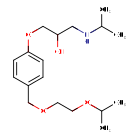
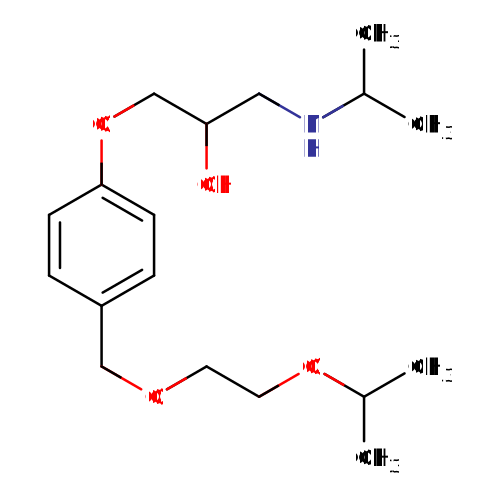
Structure for Bisoprolol (DB00612)
- Weight
- Average: 325.443
Monoisotopic: 325.225308485 - Chemical Formula
- C18H31NO4
- Synonyms
- (+-)-1-((alpha-(2-Isopropoxyethoxy)-p-tolyl)oxy)-3-(isopropylamino)-2-propanol
- (RS)-1-(4-(2-Isopropoxyethoxymethyl)phenoxy)-3-(isopropylamino)-2-propanol
- Bisoprolol
- Bisoprololum
- External IDs
- CL 297,939
- CL 297939
- EMD 33 512
- EMD 33512

Pharmacology
- Indication
Bisoprolol is indicated for the treatment of mild to moderate hypertension.17 It may be used off-label to treat heart failure, atrial fibrillation, and angina pectoris.1,2
 Reduce drug development failure ratesBuild, train, & validate machine-learning modelswith evidence-based and structured datasets.Build, train, & validate predictive machine-learning models with structured datasets.
- Associated Conditions
Indication Type Indication Combined Product Details Approval Level Age Group Patient Characteristics Dose Form Management of Atrial fibrillation ••• ••••• Prophylaxis of Cardiac event ••• ••••• Management of Heart failure ••• ••••• Used in combination to manage High blood pressure (hypertension) •••••••••••• ••••• •••••• Management of High blood pressure (hypertension) •••••••••••• ••••• •••••• - Contraindications & Blackbox Warnings
 Prevent Adverse Drug Events TodayTap into our Clinical API for life-saving information on contraindications & blackbox warnings, population restrictions, harmful risks, & more.Avoid life-threatening adverse drug events with our Clinical API
- Pharmacodynamics
Bisoprolol decreases heart rate (chronotropy), decreases contractility (inotropy), and reduces blood pressure.15,17 The results of various clinical studies indicate that bisoprolol reduces cardiovascular mortality and all-cause mortality in patients with heart failure and decreased cardiac ejection fraction (EF).3,8
- Mechanism of action
Though the mechanism of action of bisoprolol has not been fully elucidated in hypertension, it is thought that therapeutic effects are achieved through the antagonism of β-1adrenoceptors to result in lower cardiac output. Bisoprolol is a competitive, cardioselective β1-adrenergic antagonist. When β1-receptors (located mainly in the heart)15 are activated by adrenergic neurotransmitters such as epinephrine, both the blood pressure and heart rate increase, leading to greater cardiovascular work, increasing the demand for oxygen. Bisoprolol reduces cardiac workload by decreasing contractility and the need for oxygen through competitive inhibition of β1-adrenergic receptors.7,15
Bisoprolol is also thought to reduce the output of renin in the kidneys, which normally increases blood pressure. Additionally, some central nervous system effects of bisoprolol may include diminishing sympathetic nervous system output from the brain, decreasing blood pressure and heart rate.17
Target Actions Organism ABeta-1 adrenergic receptor antagonistHumans NBeta-2 adrenergic receptor antagonistHumans - Absorption
Bisoprolol is well absorbed in the gastrointestinal tract.18 The AUC is 642.87 g.hr/mL and bioavailability of bisoprolol is about 90% due to the minimal first pass effects.1 Absorption is unaffected by food intake. Peak plasma concentrations of bisoprolol are attained within 2-4 hours and steady-state concentrations are achieved within 5 days of administration.17 In a pharmacokinetic study, the mean peak concentration of bisoprolol was 52 micrograms/L.6 Cmax at steady state concentrations of bisoprolol is 64±21 ng/ml administered at 10 mg daily.18
- Volume of distribution
The volume of distribution of bisoprolol is 3.5 L/kg.18 The mean volume of distribution was found to be 230 L/kg in heart failure patients, which was similar to the volume of distribution in healthy patients.10 Bisoprolol is known to cross the placenta.16
- Protein binding
- Metabolism
Approximately 50% of the bisoprolol dose is eliminated by non-renal pathways. Bisoprolol is metabolized through oxidative metabolic pathways with no subsequent conjugation. Bisoprolol metabolites are polar and, therefore, really eliminated. Major metabolites found in plasma and urine are inactive. Bisoprolol is mainly metabolized by CYP3A4 (95%), whereas CYP2D6 plays a minor role. The CYP3A4-mediated metabolism of bisoprolol appears to be non-stereoselective.14,17,23
- Route of elimination
Bisoprolol is eliminated equally by both renal and hepatic pathways. About 50% of an oral dose is excreted unchanged in the urine with the remainder of the dose excreted as inactive bisoprolol metabolites. Under 2% of the ingested dose is found to be excreted in the feces.17,18
- Half-life
A pharmacokinetic study in 12 healthy individuals determined the mean plasma half-life of bisoprolol to be 10-12 hours.4 Another study comprised of healthy patients determined the elimination half-life to be approximately 10 hours.6 Renal impairment increased the half-life to 18.5 hours.6
- Clearance
Total body clearance in healthy patients was determined to be 14.2 L/h. In patients with renal impairment, clearance was reduced to 7.8 L/h. Hepatic dysfunction also reduced the clearance of bisoprolol.6
- Adverse Effects
 Improve decision support & research outcomesWith structured adverse effects data, including: blackbox warnings, adverse reactions, warning & precautions, & incidence rates. View sample adverse effects data in our new Data Library!Improve decision support & research outcomes with our structured adverse effects data.
- Toxicity
LD50 information Oral LD50 of bisoprolol in the mouse was 730 mg/kg.21
Overdose information
Signs of a β-blocker overdose include cardiovascular symptoms such as hypotension, congestive heart failure, and bradycardia. Other symptoms such as bronchospasm, and hypoglycemia may occur. If an overdose occurs with bisoprolol, supportive treatment should be initiated. Glucagon has been shown to be beneficial in bradycardia and hypotension associated with beta-blocker overdosage.11 Hypoglycemia may be managed by administering IV glucose.17 Monitor the patient and administer atropine in cases of bradycardia, pressors and fluids in the case of hypotension, and conventional heart failure therapy if heart failure occurs. If heart block occurs, the patient must be closely monitored and isoproterenol infusion or transvenous cardiac pacemaker insertion should take place.17 For the management of overdose-related bronchospasm, administer bronchodilators with or without IV aminophylline. Limited research suggests that bisoprolol fumarate is not removed adequately by hemodialysis sessions.12,17
- Pathways
Pathway Category Bisoprolol Action Pathway Drug action - Pharmacogenomic Effects/ADRs
- Not Available
Interactions
- Drug Interactions
- This information should not be interpreted without the help of a healthcare provider. If you believe you are experiencing an interaction, contact a healthcare provider immediately. The absence of an interaction does not necessarily mean no interactions exist.
Drug Interaction Integrate drug-drug
interactions in your softwareAbacavir Bisoprolol may decrease the excretion rate of Abacavir which could result in a higher serum level. Abaloparatide The risk or severity of adverse effects can be increased when Bisoprolol is combined with Abaloparatide. Abametapir The serum concentration of Bisoprolol can be increased when it is combined with Abametapir. Abemaciclib The serum concentration of Abemaciclib can be increased when it is combined with Bisoprolol. Abrocitinib The serum concentration of Bisoprolol can be increased when it is combined with Abrocitinib. - Food Interactions
- Take with or without food. The absorption is unaffected by food.
Products
 Drug product information from 10+ global regionsOur datasets provide approved product information including:dosage, form, labeller, route of administration, and marketing period.Access drug product information from over 10 global regions.
- Product Ingredients
Ingredient UNII CAS InChI Key Bisoprolol fumarate UR59KN573L 104344-23-2 VMDFASMUILANOL-WXXKFALUSA-N - Product Images
- International/Other Brands
- Bisocor / Cardicor (Bayer) / Concor (Merck) / Concore (Merck) / Detensiel (Merck Santé) / Emconcor (Merck) / Emcor (Merck) / Euradal (Lacer) / Isoten (Meda) / Monocor (Biovail Pharmaceuticals) / Soprol (Helsinn)
- Brand Name Prescription Products
Name Dosage Strength Route Labeller Marketing Start Marketing End Region Image Bisoprolol Tablet 10 mg Oral Sivem Pharmaceuticals Ulc 2012-06-12 2020-07-21 Canada 
Bisoprolol Tablet 5 mg Oral Sorres Pharma Inc 2009-02-26 2014-06-20 Canada Bisoprolol Tablet 10 mg Oral Sanis Health Inc 2012-10-01 Not applicable Canada Bisoprolol Tablet 10 mg Oral Sorres Pharma Inc 2009-02-26 2014-06-20 Canada Bisoprolol Tablet 5 mg Oral Sivem Pharmaceuticals Ulc 2012-06-12 2020-07-21 Canada - Generic Prescription Products
Name Dosage Strength Route Labeller Marketing Start Marketing End Region Image Ag-bisoprolol Tablet 10 mg Oral Angita Pharma Inc. 2022-03-18 Not applicable Canada Ag-bisoprolol Tablet 5 mg Oral Angita Pharma Inc. 2022-03-18 Not applicable Canada Apo-bisoprolol Tablet 5 mg Oral Apotex Corporation 2004-08-10 Not applicable Canada Apo-bisoprolol Tablet 10 mg Oral Apotex Corporation 2004-08-10 Not applicable Canada Ava-bisoprolol Tablet 10 mg Oral Avanstra Inc 2011-08-22 2014-08-21 Canada - Mixture Products
Name Ingredients Dosage Route Labeller Marketing Start Marketing End Region Image BIRAMLO 10MG/10MG Bisoprolol fumarate (10 mg/1) + Amlodipine besylate (10 mg/1) Tablet Oral 2018-10-01 Not applicable Germany 
BIRAMLO 10MG/10MG Bisoprolol fumarate (10 mg/1) + Amlodipine besylate (10 mg/1) Tablet Oral 2018-10-01 Not applicable Germany BIRAMLO 10MG/10MG Bisoprolol fumarate (10 mg/1) + Amlodipine besylate (10 mg/1) Tablet Oral 2018-10-01 Not applicable Germany BIRAMLO 10MG/5MG Bisoprolol fumarate (10 mg/1) + Amlodipine besylate (5 mg/1) Tablet Oral 2018-10-01 Not applicable Germany BIRAMLO 10MG/5MG Bisoprolol fumarate (10 mg/1) + Amlodipine besylate (5 mg/1) Tablet Oral 2018-10-01 Not applicable Germany - Unapproved/Other Products
Name Ingredients Dosage Route Labeller Marketing Start Marketing End Region Image CONCOR 10 MG 30 LAK TABLET Bisoprolol fumarate (10 mg) Tablet Oral DAİİCHİ SANKYO İLAÇ TİC. LTD. ŞTİ. 2013-01-29 Not applicable Turkey 
CONCOR 5 MG 30 LAK TABLET Bisoprolol fumarate (5 mg) Tablet Oral DAİİCHİ SANKYO İLAÇ TİC. LTD. ŞTİ. 2013-01-29 Not applicable Turkey


Categories
- ATC Codes
- C07FX04 — Bisoprolol and acetylsalicylic acid
- C07FX — Beta blocking agents, other combinations
- C07F — BETA BLOCKING AGENTS, OTHER COMBINATIONS
- C07 — BETA BLOCKING AGENTS
- C — CARDIOVASCULAR SYSTEM
- C07BB — Beta blocking agents, selective, and thiazides
- C07B — BETA BLOCKING AGENTS AND THIAZIDES
- C07 — BETA BLOCKING AGENTS
- C — CARDIOVASCULAR SYSTEM
- C07AB — Beta blocking agents, selective
- C07A — BETA BLOCKING AGENTS
- C07 — BETA BLOCKING AGENTS
- C — CARDIOVASCULAR SYSTEM
- C09BX — ACE inhibitors, other combinations
- C09B — ACE INHIBITORS, COMBINATIONS
- C09 — AGENTS ACTING ON THE RENIN-ANGIOTENSIN SYSTEM
- C — CARDIOVASCULAR SYSTEM
- C09BX — ACE inhibitors, other combinations
- C09B — ACE INHIBITORS, COMBINATIONS
- C09 — AGENTS ACTING ON THE RENIN-ANGIOTENSIN SYSTEM
- C — CARDIOVASCULAR SYSTEM
- C09BX — ACE inhibitors, other combinations
- C09B — ACE INHIBITORS, COMBINATIONS
- C09 — AGENTS ACTING ON THE RENIN-ANGIOTENSIN SYSTEM
- C — CARDIOVASCULAR SYSTEM
- Drug Categories
- Adrenergic Agents
- Adrenergic Antagonists
- Adrenergic beta-1 Receptor Antagonists
- Adrenergic beta-Antagonists
- Agents causing hyperkalemia
- Alcohols
- Amines
- Amino Alcohols
- Antiarrhythmic agents
- Antihypertensive Agents
- Antihypertensive Agents Indicated for Hypertension
- Autonomic Agents
- Beta blocking agents and calcium channel blockers
- Beta Blocking Agents and Thiazides
- Beta Blocking Agents, Selective
- Beta Blocking Agents, Selective, and Thiazides
- Beta-Blockers (Beta1 Selective)
- Bradycardia-Causing Agents
- Cardiovascular Agents
- Cytochrome P-450 CYP3A Substrates
- Cytochrome P-450 CYP3A4 Substrates
- Cytochrome P-450 Substrates
- Drugs that are Mainly Renally Excreted
- Hypotensive Agents
- Neurotransmitter Agents
- P-glycoprotein inhibitors
- P-glycoprotein substrates
- Peripheral Nervous System Agents
- Phenoxypropanolamines
- Propanolamines
- Propanols
- Sympatholytics
- Chemical TaxonomyProvided by Classyfire
- Description
- This compound belongs to the class of organic compounds known as benzylethers. These are aromatic ethers with the general formula ROCR' (R = alkyl, aryl; R'=benzene).
- Kingdom
- Organic compounds
- Super Class
- Benzenoids
- Class
- Benzene and substituted derivatives
- Sub Class
- Benzylethers
- Direct Parent
- Benzylethers
- Alternative Parents
- Phenoxy compounds / Phenol ethers / Alkyl aryl ethers / Secondary alcohols / 1,2-aminoalcohols / Dialkylamines / Dialkyl ethers / Organopnictogen compounds / Hydrocarbon derivatives
- Substituents
- 1,2-aminoalcohol / Alcohol / Alkyl aryl ether / Amine / Aromatic homomonocyclic compound / Benzylether / Dialkyl ether / Ether / Hydrocarbon derivative / Organic nitrogen compound
- Molecular Framework
- Aromatic homomonocyclic compounds
- External Descriptors
- secondary alcohol, secondary amine (CHEBI:3127)
- Affected organisms
- Humans and other mammals
Chemical Identifiers
- UNII
- Y41JS2NL6U
- CAS number
- 66722-44-9
- InChI Key
- VHYCDWMUTMEGQY-UHFFFAOYSA-N
- InChI
- InChI=1S/C18H31NO4/c1-14(2)19-11-17(20)13-23-18-7-5-16(6-8-18)12-21-9-10-22-15(3)4/h5-8,14-15,17,19-20H,9-13H2,1-4H3
- IUPAC Name
- 1-[(propan-2-yl)amino]-3-(4-{[2-(propan-2-yloxy)ethoxy]methyl}phenoxy)propan-2-ol
- SMILES
- CC(C)NCC(O)COC1=CC=C(COCCOC(C)C)C=C1
References
- Synthesis Reference
Yoshihiro Iwao, Katsuyuki Ookubo, Katsuhiro Okada, Kunihiro Minami, Shuichiro Yuasa, "Adhesive Pharmaceutical Preparation Containing Bisoprolol." U.S. Patent US20090169604, issued July 02, 2009.
US20090169604- General References
- Lancaster SG, Sorkin EM: Bisoprolol. A preliminary review of its pharmacodynamic and pharmacokinetic properties, and therapeutic efficacy in hypertension and angina pectoris. Drugs. 1988 Sep;36(3):256-85. doi: 10.2165/00003495-198836030-00002. [Article]
- Ishiguro H, Ikeda T, Abe A, Tsukada T, Mera H, Nakamura K, Yusu S, Yoshino H: Antiarrhythmic effect of bisoprolol, a highly selective beta1-blocker, in patients with paroxysmal atrial fibrillation. Int Heart J. 2008 May;49(3):281-93. [Article]
- Metra M, Nodari S, Bordonali T, Milani P, Lombardi C, Bugatti S, Fontanella B, Verzura G, Danesi R, Dei Cas L: Bisoprolol in the treatment of chronic heart failure: from pathophysiology to clinical pharmacology and trial results. Ther Clin Risk Manag. 2007 Aug;3(4):569-78. [Article]
- Leopold G, Ungethum W, Pabst J, Simane Z, Buhring KU, Wiemann H: Pharmacodynamic profile of bisoprolol, a new beta 1-selective adrenoceptor antagonist. Br J Clin Pharmacol. 1986 Sep;22(3):293-300. doi: 10.1111/j.1365-2125.1986.tb02890.x. [Article]
- Nuttall SL, Routledge HC, Kendall MJ: A comparison of the beta1-selectivity of three beta1-selective beta-blockers. J Clin Pharm Ther. 2003 Jun;28(3):179-86. [Article]
- Kirch W, Rose I, Demers HG, Leopold G, Pabst J, Ohnhaus EE: Pharmacokinetics of bisoprolol during repeated oral administration to healthy volunteers and patients with kidney or liver disease. Clin Pharmacokinet. 1987 Aug;13(2):110-7. doi: 10.2165/00003088-198713020-00003. [Article]
- Chatterjee SS: The cardioselective and hypotensive effects of bisoprolol in hypertensive asthmatics. J Cardiovasc Pharmacol. 1986;8 Suppl 11:S74-7. [Article]
- Dezsi CA, Szentes V: The Real Role of beta-Blockers in Daily Cardiovascular Therapy. Am J Cardiovasc Drugs. 2017 Oct;17(5):361-373. doi: 10.1007/s40256-017-0221-8. [Article]
- Leopold G: Balanced pharmacokinetics and metabolism of bisoprolol. J Cardiovasc Pharmacol. 1986;8 Suppl 11:S16-20. [Article]
- Cvan Trobec K, Grabnar I, Kerec Kos M, Vovk T, Trontelj J, Anker SD, Rosano G, Lainscak M: Bisoprolol pharmacokinetics and body composition in patients with chronic heart failure: a longitudinal study. Eur J Clin Pharmacol. 2016 Jul;72(7):813-22. doi: 10.1007/s00228-016-2041-1. Epub 2016 Mar 21. [Article]
- Peterson CD, Leeder JS, Sterner S: Glucagon therapy for beta-blocker overdose. Drug Intell Clin Pharm. 1984 May;18(5):394-8. [Article]
- Shroff GR, Herzog CA: beta-Blockers in dialysis patients: a nephrocardiology perspective. J Am Soc Nephrol. 2015 Apr;26(4):774-6. doi: 10.1681/ASN.2014080831. Epub 2014 Oct 30. [Article]
- Albouaini K, Andron M, Alahmar A, Egred M: Beta-blockers use in patients with chronic obstructive pulmonary disease and concomitant cardiovascular conditions. Int J Chron Obstruct Pulmon Dis. 2007;2(4):535-40. [Article]
- Zeng W, Lao S, Guo Y, Wu Y, Huang M, Tomlinson B, Zhong G: The Influence of EGCG on the Pharmacokinetics and Pharmacodynamics of Bisoprolol and a New Method for Simultaneous Determination of EGCG and Bisoprolol in Rat Plasma. Front Nutr. 2022 May 31;9:907986. doi: 10.3389/fnut.2022.907986. eCollection 2022. [Article]
- William D. Tucker; Pramod Theetha Kariyanna (2019). Selective B1 blockers. Stat Pearls Publishing.
- National Collaborating Centre for Women's and Children's Health (UK) (2010). NICE Guidelines for hypertension in pregnancy. RCOG Press.
- Bisoprolol monograph [Link]
- Summary of product characteristics [Link]
- Bisoprolol, health links AU [Link]
- CaymanChem: Bisoprolol MSDS [Link]
- Monograph, Bisoprolol [Link]
- DailyMed Label: Bisoprolol fumarate Oral Tablets [Link]
- Health Canada Approved Drug Products: BISOPROLOL (bisoprolol fumarate) tablets for oral use (January 2020) [Link]
- External Links
- Human Metabolome Database
- HMDB0014750
- KEGG Drug
- D02342
- KEGG Compound
- C06852
- PubChem Compound
- 2405
- PubChem Substance
- 46508844
- ChemSpider
- 2312
- BindingDB
- 25751
- 19484
- ChEBI
- 3127
- ChEMBL
- CHEMBL645
- Therapeutic Targets Database
- DAP000483
- PharmGKB
- PA448641
- RxList
- RxList Drug Page
- Drugs.com
- Drugs.com Drug Page
- PDRhealth
- PDRhealth Drug Page
- Wikipedia
- Bisoprolol
Clinical Trials
- Clinical Trials
Phase Status Purpose Conditions Count 4 Active Not Recruiting Treatment Acute Myocardial Infarction (AMI) / Non ST Segment Elevation Myocardial Infarction (NSTEMI) / ST Segment Elevation Myocardial Infarction (STEMI) 1 4 Completed Health Services Research Hypertension / Syndrome, Metabolic 1 4 Completed Other Cardiac Failure / Cardiovascular Disease (CVD) / Heart Failure / Heart Failure With Preserved Ejection Fraction (HFpEF) / Heart Failure, Diastolic 2 4 Completed Prevention Anesthetics Adverse Reaction / Coronary Artery Atherosclerosis / Insulin resistance syndrome 1 4 Completed Prevention Atrial Fibrillation / Coronary Artery Bypass Grafting (CABG) / Prevention 1
Pharmacoeconomics
- Manufacturers
- Aurobindo pharma ltd
- Mutual pharmaceutical co inc
- Mylan pharmaceuticals inc
- Sandoz inc
- Teva pharmaceuticals usa
- Unichem pharmaceuticals (usa) inc
- Duramed pharmaceuticals inc sub barr laboratories inc
- Packagers
- Atlantic Biologicals Corporation
- Aurobindo Pharma Ltd.
- Duramed
- Eon Labs
- Greenstone LLC
- Kaiser Foundation Hospital
- Lake Erie Medical and Surgical Supply
- Murfreesboro Pharmaceutical Nursing Supply
- Mylan
- Novopharm Ltd.
- Physicians Total Care Inc.
- Resource Optimization and Innovation LLC
- Teva Pharmaceutical Industries Ltd.
- Unichem Laboratories Ltd.
- Watson Pharmaceuticals
- Wyeth Pharmaceuticals
- Dosage Forms
Form Route Strength Tablet, film coated Oral 1.25 MG Tablet, film coated Oral 3.75 MG Tablet, film coated Oral 7.5 MG Tablet Oral 7.5 MG Tablet, film coated Oral 2.5 mg Tablet, film coated Oral 5 mg Tablet Oral 10 mg/1 Tablet Oral 5 mg/1 Tablet, coated Oral 10 mg/1 Tablet, coated Oral 5 mg/1 Tablet, film coated Oral 10 mg/1 Tablet, film coated Oral 5 mg/1 Tablet Oral Tablet, coated Oral Tablet, film coated Oral Tablet, film coated Oral Tablet, film coated Oral 1.06 MG Tablet, film coated Oral 2.50 MG Tablet Oral 1.25 MG Tablet Oral 3.75 MG Tablet Oral 10.000 mg Tablet Oral 1.250 mg Tablet, coated Oral 10 mg Tablet Oral 10 mg Tablet Oral 5 mg Tablet, coated Oral 1.25 mg Tablet, coated Oral 1000000 mg Tablet, film coated Oral 500000 mg Tablet, film coated Oral 10 mg Tablet, film coated Oral 5 mg Tablet Oral 5.00 mg Tablet Oral Tablet, film coated Oral 10 MG Tablet Oral 10 mg Tablet Oral 2.500 mg Tablet Oral 2.5 mg Tablet Oral 5 mg Tablet, coated Oral 5 mg Tablet, coated Oral 2.5 mg - Prices
Unit description Cost Unit Condylox 0.5% Gel 3.5 gm Tube 304.93USD tube Condylox 0.5% Solution 3.5ml Bottle 143.4USD bottle Condylox 0.5% gel 97.73USD g Zebeta 10 mg tablet 3.6USD tablet Zebeta 5 mg tablet 3.6USD tablet Bisoprolol fumarate 5 mg tablet 1.78USD tablet Bisoprolol fumarate 10 mg tablet 1.24USD tablet Bisoprolol-Hydrochlorothiazide 10-6.25 mg tablet 1.19USD tablet Bisoprolol-Hydrochlorothiazide 2.5-6.25 mg tablet 1.19USD tablet Bisoprolol-Hydrochlorothiazide 5-6.25 mg tablet 1.19USD tablet Apo-Bisoprolol 10 mg Tablet 0.38USD tablet Novo-Bisoprolol 10 mg Tablet 0.38USD tablet Pms-Bisoprolol 10 mg Tablet 0.38USD tablet Sandoz Bisoprolol 10 mg Tablet 0.38USD tablet Apo-Bisoprolol 5 mg Tablet 0.23USD tablet Novo-Bisoprolol 5 mg Tablet 0.23USD tablet Pms-Bisoprolol 5 mg Tablet 0.23USD tablet Sandoz Bisoprolol 5 mg Tablet 0.23USD tablet DrugBank does not sell nor buy drugs. Pricing information is supplied for informational purposes only.- Patents
- Not Available
Properties
- State
- Solid
- Experimental Properties
Property Value Source melting point (°C) 100-103 https://www.sandoz.ca/sites/www.sandoz.ca/files/Bisoprolol_TAB_Monograph.pdf boiling point (°C) 445.0±45.0 http://www.chemspider.com/Chemical-Structure.2312.html logP 2.2 http://www.hmdb.ca/metabolites/HMDB0014750 logS -3.7 http://www.hmdb.ca/metabolites/HMDB0014750 pKa 9.5 https://www.sandoz.ca/sites/www.sandoz.ca/files/Bisoprolol_TAB_Monograph.pdf - Predicted Properties
Property Value Source Water Solubility 0.0707 mg/mL ALOGPS logP 2.3 ALOGPS logP 2.2 Chemaxon logS -3.7 ALOGPS pKa (Strongest Acidic) 14.09 Chemaxon pKa (Strongest Basic) 9.67 Chemaxon Physiological Charge 1 Chemaxon Hydrogen Acceptor Count 5 Chemaxon Hydrogen Donor Count 2 Chemaxon Polar Surface Area 59.95 Å2 Chemaxon Rotatable Bond Count 12 Chemaxon Refractivity 92.15 m3·mol-1 Chemaxon Polarizability 38.5 Å3 Chemaxon Number of Rings 1 Chemaxon Bioavailability 1 Chemaxon Rule of Five Yes Chemaxon Ghose Filter Yes Chemaxon Veber's Rule No Chemaxon MDDR-like Rule No Chemaxon - Predicted ADMET Features
Property Value Probability Human Intestinal Absorption + 0.9445 Blood Brain Barrier - 0.9077 Caco-2 permeable + 0.6149 P-glycoprotein substrate Substrate 0.7785 P-glycoprotein inhibitor I Non-inhibitor 0.807 P-glycoprotein inhibitor II Non-inhibitor 0.7821 Renal organic cation transporter Non-inhibitor 0.8568 CYP450 2C9 substrate Non-substrate 0.8134 CYP450 2D6 substrate Substrate 0.8919 CYP450 3A4 substrate Non-substrate 0.6113 CYP450 1A2 substrate Non-inhibitor 0.9046 CYP450 2C9 inhibitor Non-inhibitor 0.9071 CYP450 2D6 inhibitor Non-inhibitor 0.923 CYP450 2C19 inhibitor Non-inhibitor 0.9485 CYP450 3A4 inhibitor Non-inhibitor 0.8373 CYP450 inhibitory promiscuity Low CYP Inhibitory Promiscuity 0.9766 Ames test Non AMES toxic 0.9064 Carcinogenicity Non-carcinogens 0.9267 Biodegradation Not ready biodegradable 0.8962 Rat acute toxicity 2.0089 LD50, mol/kg Not applicable hERG inhibition (predictor I) Weak inhibitor 0.7877 hERG inhibition (predictor II) Non-inhibitor 0.6611
Spectra
- Mass Spec (NIST)
- Not Available
- Spectra
- Chromatographic Properties
Collision Cross Sections (CCS)
Adduct CCS Value (Å2) Source type Source [M-H]- 200.3273317 predictedDarkChem Lite v0.1.0 [M-H]- 183.86363 predictedDeepCCS 1.0 (2019) [M+H]+ 200.0799317 predictedDarkChem Lite v0.1.0 [M+H]+ 186.22163 predictedDeepCCS 1.0 (2019) [M+Na]+ 200.3254317 predictedDarkChem Lite v0.1.0 [M+Na]+ 192.31483 predictedDeepCCS 1.0 (2019)
Targets

- Kind
- Protein
- Organism
- Humans
- Pharmacological action
- Yes
- Actions
- Antagonist
- General Function
- Receptor signaling protein activity
- Specific Function
- Beta-adrenergic receptors mediate the catecholamine-induced activation of adenylate cyclase through the action of G proteins. This receptor binds epinephrine and norepinephrine with approximately e...
- Gene Name
- ADRB1
- Uniprot ID
- P08588
- Uniprot Name
- Beta-1 adrenergic receptor
- Molecular Weight
- 51322.1 Da
References
- Breed JG, Ciampricotti R, Tromp GP, Valster FA, Lageweg E, Van Bortel LM: Quality of life perception during antihypertensive treatment: a comparative study of bisoprolol and enalapril. J Cardiovasc Pharmacol. 1992;20(5):750-5. [Article]
- Brouri F, Hanoun N, Mediani O, Saurini F, Hamon M, Vanhoutte PM, Lechat P: Blockade of beta 1- and desensitization of beta 2-adrenoceptors reduce isoprenaline-induced cardiac fibrosis. Eur J Pharmacol. 2004 Feb 6;485(1-3):227-34. [Article]
- Bruck H, Leineweber K, Temme T, Weber M, Heusch G, Philipp T, Brodde OE: The Arg389Gly beta1-adrenoceptor polymorphism and catecholamine effects on plasma-renin activity. J Am Coll Cardiol. 2005 Dec 6;46(11):2111-5. Epub 2005 Nov 4. [Article]
- Lipworth BJ, Irvine NA, McDevitt DG: A dose-ranging study to evaluate the beta 1-adrenoceptor selectivity of bisoprolol. Eur J Clin Pharmacol. 1991;40(2):135-9. [Article]
- Mauz AB, Pelzer H: Beta-adrenoceptor-binding studies of the cardioselective beta blockers bisoprolol, H-I 42 BS, and HX-CH 44 BS to heart membranes and intact ventricular myocytes of adult rats: two beta 1-binding sites for bisoprolol. J Cardiovasc Pharmacol. 1990 Mar;15(3):421-7. [Article]
- Chen X, Ji ZL, Chen YZ: TTD: Therapeutic Target Database. Nucleic Acids Res. 2002 Jan 1;30(1):412-5. [Article]
- Kind
- Protein
- Organism
- Humans
- Pharmacological action
- No
- Actions
- Antagonist
- Curator comments
- At higher doses, bisoprolol antagonizes the B2 receptors, but is normally selective for B1 receptors.
- General Function
- Protein homodimerization activity
- Specific Function
- Beta-adrenergic receptors mediate the catecholamine-induced activation of adenylate cyclase through the action of G proteins. The beta-2-adrenergic receptor binds epinephrine with an approximately ...
- Gene Name
- ADRB2
- Uniprot ID
- P07550
- Uniprot Name
- Beta-2 adrenergic receptor
- Molecular Weight
- 46458.32 Da
References
- Mark G. Papich (2016). Saunders Handbook of Veterinary Drugs (4th ed.). Saunders.
- Summary of product characteristics [Link]
Enzymes
- Kind
- Protein
- Organism
- Humans
- Pharmacological action
- Unknown
- Actions
- Substrate
- General Function
- Vitamin d3 25-hydroxylase activity
- Specific Function
- Cytochromes P450 are a group of heme-thiolate monooxygenases. In liver microsomes, this enzyme is involved in an NADPH-dependent electron transport pathway. It performs a variety of oxidation react...
- Gene Name
- CYP3A4
- Uniprot ID
- P08684
- Uniprot Name
- Cytochrome P450 3A4
- Molecular Weight
- 57342.67 Da
References
- Horikiri Y, Suzuki T, Mizobe M: Pharmacokinetics and metabolism of bisoprolol enantiomers in humans. J Pharm Sci. 1998 Mar;87(3):289-94. [Article]
- Zisaki A, Miskovic L, Hatzimanikatis V: Antihypertensive drugs metabolism: an update to pharmacokinetic profiles and computational approaches. Curr Pharm Des. 2015;21(6):806-22. [Article]
- Bisoprolol monograph [Link]
Transporters
- Kind
- Protein
- Organism
- Humans
- Pharmacological action
- Unknown
- Actions
- SubstrateInhibitor
- General Function
- Xenobiotic-transporting atpase activity
- Specific Function
- Energy-dependent efflux pump responsible for decreased drug accumulation in multidrug-resistant cells.
- Gene Name
- ABCB1
- Uniprot ID
- P08183
- Uniprot Name
- Multidrug resistance protein 1
- Molecular Weight
- 141477.255 Da
References
- Bachmakov I, Werner U, Endress B, Auge D, Fromm MF: Characterization of beta-adrenoceptor antagonists as substrates and inhibitors of the drug transporter P-glycoprotein. Fundam Clin Pharmacol. 2006 Jun;20(3):273-82. doi: 10.1111/j.1472-8206.2006.00408.x. [Article]
- Tahara K, Kagawa Y, Takaai M, Taguchi M, Hashimoto Y: Directional transcellular transport of bisoprolol in P-glycoprotein-expressed LLC-GA5-COL150 cells, but not in renal epithelial LLC-PK1 Cells. Drug Metab Pharmacokinet. 2008;23(5):340-6. [Article]
- Nehaj F, Sokol J, Ivankova J, Mokan M, Mokan M: Effect of Bisoprolol on the Level of Dabigatran. Am J Ther. 2018 Jul 12. doi: 10.1097/MJT.0000000000000786. [Article]
- Klatt S, Fromm MF, Konig J: Transporter-mediated drug-drug interactions with oral antidiabetic drugs. Pharmaceutics. 2011 Oct 12;3(4):680-705. doi: 10.3390/pharmaceutics3040680. [Article]

Drug created at June 13, 2005 13:24 / Updated at April 26, 2024 00:45